


Gaining insights into research trends, especially in emerging fields, is vital for advancing scholarly work. Accordingly, this study aims to analyze the research front of marine economy and management.
Based on the Essential Science Indicators database of highly cited papers and the Chinese Social Sciences Citation Index database from Chinese National Knowledge Infrastructure, this study analyzes marine economy and management research between 2018 and 2023, using analytical tools of CiteSpace and VOSviewer.
The bibliometric analysis reveals a growing focus on green transformation, digitization and interdisciplinary collaboration in marine economy and management, with international research emphasizing decarbonization, environmental conservation and advanced technologies. Meanwhile, Chinese scholars concentrate on land-sea integration, the maritime power strategy and marine ranching, aligning closely with national strategic objectives and regional development needs. The comparative perspective underscores both global convergences in blue economy research – such as low-carbon innovation and marine resource management – and regionally specific concerns, suggesting ample scope for cross-learning and further integration of cutting-edge technologies with policy frameworks. The United States, China and the UK are identified as major research centers in marine economy and management. However, there is room for improvement in research collaboration between countries and international research institutions.
Perform a statistical analysis, a keyword co-occurrence analysis and a cooperative institution network analysis of the marine economy and management literature.
1. Introduction
Researchers and policymakers must stay informed about the progress and dynamics of scientific research to effectively allocate limited resources and support scientific advancement. Since the concept of a research front was first introduced by Price (1965), it has evolved from a collection of recently published and widely cited literature within a citation network to encompass co-cited literature clustering, co-word clustering, and the identification of emerging research topics within a specific field over a given period. These topics attract significant scholarly attention and indicate the latest developments in research (Braam et al., 1991). Research fronts represent emerging research themes or areas with high developmental potential, characterized by novelty, dynamism, and academic activity.
Currently, extensive research has been conducted in the field of marine economy and management, encompassing diverse topics such as the marine industry, blue economy, land-sea integration, and the sustainable development of the marine economy. Additionally, research themes include marine technological innovation, marine ecosystem management, international marine cooperation, marine cultural education, and marine governance. Given the strong interdisciplinary nature and widespread theoretical research in this field, bibliometric analysis is employed using CiteSpace and VOSviewer to systematically review literature from the Essential Science Indicators (ESI) highly cited papers database and the Chinese National Knowledge Infrastructure (CNKI) Social Sciences Citation Index (CSSCI) database. The collected studies are systematically categorized, characterized, and analyzed, with findings presented across three key dimensions: publication output, international and institutional collaboration, and co-citation analysis.
Key innovations of this paper lie in its integrated bibliometric approach—combining ESI highly cited papers and CNKI-CSSCI databases to yield a comprehensive overview of marine economy and management research—and its dual application of CiteSpace and VOSviewer for in-depth co-occurrence and collaboration network analyses. Additionally, we employ a comparative perspective that distinguishes international research priorities (e.g. decarbonizing shipping and climate change) from domestic focuses (e.g. land-sea integration, maritime power strategy, and marine ranching), thereby offering nuanced insights into both global and regional academic frontiers.
2. Data sources and methodology
2.1 Data sources and search strategies
The international research front search utilizes the ESI highly cited papers database. ESI highly cited papers generally represent English-language research that has had a significant impact on the international academic community, providing a better reflection of cutting-edge research and discipline development trends. Consequently, ESI highly cited papers are preferred over the broader yet more varied Web of Science Core Collection. The search terms were set to “marine” and other marine-related keywords, including sea, ocean, wave, tide, coral, reef, harbor, coast, beach, seashore, aquatic, plankton, blue, fisheries, and port. The ESI highly cited paper analysis database was last updated on May 9, 2024, and the data was downloaded in July 2024. The selected search period spans from 2018 to 2023, yielding a total of 1,157 retrieved records, of which 229 were identified as relevant to the field of marine economy (Figure 1). A preliminary descriptive statistical analysis conducted in the Web of Science system indicates that these publications involve 200 authors and 200 research institutions across 73 countries and regions, and they have been published in 120 different journals. Collectively, these articles have been cited a total of 32,226 times. Overall, the number of highly cited articles in the international field of marine economy and management displays a fluctuating yet upward trajectory, rising from 33 in 2018 to 49 in 2023. This suggests that, in the international academic community, research on marine economy and management is steadily gaining visibility and influence, as evidenced by the year-to-year increase in highly cited papers and their growing overall impact.
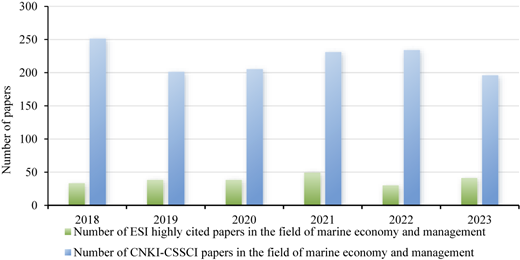
Number of papers in the field of marine economy and management (2018–2023). Source: Created by authors
Number of papers in the field of marine economy and management (2018–2023). Source: Created by authors
As for Chinese-language literature, CSSCI holds authority and representativeness in social sciences and humanities, thereby more accurately capturing high-level domestic research. Meanwhile, CNKI’s highly cited papers have broader selection criteria, making them less specialized and targeted than CSSCI in the social sciences. Therefore, the CNKI-CSSCI database was adopted for the frontier search in China, with “marine economy,” “marine management,” and “marine industry” chosen as search subject terms. The search period spanned from 2018 to 2023. By reviewing key information such as titles, abstracts, and keywords, a total of 1,318 relevant articles were identified (Figure 1, with data for Hong Kong, Macao, and Taiwan currently unavailable). Meanwhile, the number of core publications in the field of marine economy and management has shown a slight decline, decreasing from 251 in 2018 to 196 in 2023. It indicates that, within the domestic academic community, there has been a modest drop, potentially driven by shifting research priorities or changes in policy emphasis.
2.2 Selection and naming of research frontiers
This study synthesizes insights from 22 natural and social science disciplines covered by ESI highly cited papers, integrating the characteristics of marine economy and management to systematically consolidate 10 major research domains, serving as a foundation for identifying active and rapidly developing research frontiers. Regarding the selection of emerging research frontiers, the research frontiers within each ESI discipline were first merged according to broad subject areas. Subsequently, research hotspots were extracted by filtering keywords related to marine economy and management and employing the co-occurrence analysis function of VOSviewer. Next, the research frontiers in each broad discipline were reordered based on the average publication year of core papers. The youngest research frontiers were then selected, adjusted, and consolidated, ultimately identifying 10 key emerging research frontiers.
For the selection of key research frontiers, this study adopts the methodology outlined in the 2023 Research Frontiers report, calculating the Citation per Paper per Year (CPT). CPT is derived by dividing the total citation frequency (C) of core papers by the number of core papers (P) and further dividing by the number of years (T) over which citing papers were published. The number of years (T) over which citing papers were published refers to the time span between the most recently published and the earliest published citing paper in the dataset. CPT reflects the breadth and timeliness of a research frontier’s citation impact, serving as an indicator to detect breakthroughs, track developments, and predict future advancements. A higher CPT value indicates greater influence of the research frontier.
3. Interpretation of international hotspots and key research frontiers
Keyword co-occurrence frequency effectively reflects a discipline’s research domains and core content (Jiang et al., 2022). In this study, we utilized VOSviewer for co-occurrence network analysis, given its simpler, user-friendly interface that is particularly effective for constructing and visualizing co-author, co-citation, and keyword co-occurrence networks. Meanwhile, we applied CiteSpace to analyze the frequency and centrality of keywords, countries, and institutions, as well as to detect emerging trends—leveraging its strengths in deeply mining co-citation relationships, knowledge structures, and burst terms. By integrating these two tools, we present a comprehensive overview of the core research frontiers in marine economy and management.
3.1 Development trends of the top 10 research frontiers in marine economy and management
The co-occurrence network (Figure 2) highlights 10 distinct clusters—blue economy, fisheries, blue foods, maritime, marine economy, marine environment, marine ecosystem, blue carbon, marine energy, and climate change—each represented by a large node and radiating connections. Rather than merely identifying these clusters, a closer examination reveals how specific research themes interlink and evolve over time. For instance, “fisheries,” “climate change,” and “marine environment” appear as relatively larger nodes, suggesting sustained and extensive scholarly focus; their connections to terms like “impacts,” “resilience,” and “management” point to a strong emphasis on ecological vulnerability and policy measures. Meanwhile, “microplastics,” “blue carbon,” and “offshore wind” form notable sub-nodes within environmental and sustainability dialogues, reflecting heightened concern over marine pollution and carbon sequestration strategies.
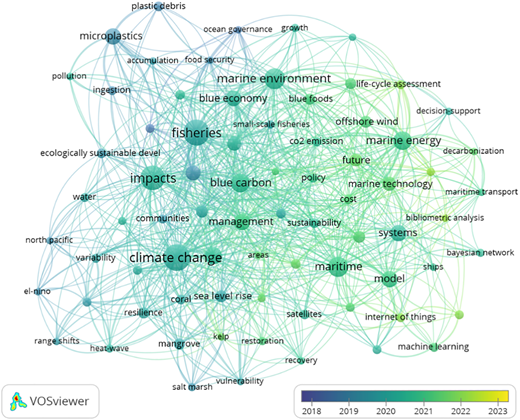
Co-occurrence network of research frontier keywords in marine economy and management. Source: Created by authors
Co-occurrence network of research frontier keywords in marine economy and management. Source: Created by authors
Notably, the color gradient—from darker hues for earlier years (2018–2019) to lighter, more vibrant shades for more recent years (2022–2023)—offers insights into emerging trends. “Machine learning,” “Internet of Things,” “bayesian network,” stand out in brighter colors, indicating newer research directions that tap into digital and intelligent technologies for marine innovation. Similarly, “decarbonization,” “maritime transport,” and “offshore wind” exhibit mid-range hues, suggesting that research on low-carbon transitions and green shipping gained momentum in the early 2020s. By juxtaposing older topics such as “pollution” or “ocean governance” with these newer, technologically driven themes, it becomes evident that the field is progressively shifting its focus: from understanding and mitigating environmental harm toward exploring advanced, data-driven solutions for a more sustainable and intelligent marine economy.
The research frontiers in the field of marine economy and management are widely distributed across ten subfields, including marine economy, marine fisheries, blue foods, maritime transport, marine technology, marine environment, marine ecology, blue carbon, marine energy, and climate change (Table 1). Green and sustainable development is a prominent theme in this field, with four research frontiers—marine economy, marine fisheries, marine ecology, and marine environment—closely related to it. The research frontier of “maritime transport” focuses on the impact of digitization, intelligence, and low-carbon transformation on marine transportation. The frontiers of “marine technology” and “marine energy” primarily emphasize the future development trends of advanced technologies and the exploration and utilization of renewable energy. “Marine environment” is the most extensively studied topic in marine economy and management, followed by “climate change” and “marine ecology”.
Top 10 hot fronts in the field of marine economy and management
| Rankings | Subfield | Number of articles | Citation frequency | Average years of publication |
|---|---|---|---|---|
| 1 | Maritime | 49 | 4,001 | 2021.2 |
| 2 | Blue foods | 11 | 1,190 | 2021.0 |
| 3 | Marine carbon sink | 14 | 1,691 | 2020.9 |
| 4 | Marine technology | 18 | 2,012 | 2020.8 |
| 5 | Marine energy | 11 | 1,265 | 2020.8 |
| 6 | Marine ecosystem | 26 | 4,176 | 2020.7 |
| 7 | Marine economy | 28 | 3,936 | 2020.2 |
| 8 | Climate change | 23 | 5,151 | 2019.9 |
| 9 | Marine environment | 25 | 5,325 | 2019.8 |
| 10 | Fisheries | 24 | 3,479 | 2019.7 |
Source(s): Created by authors
The geographical distribution of research publications facilitates the analysis of the spatial and regional dissemination of academic articles. Table 2 reveals that highly cited research is predominantly concentrated in Western nations. According to centrality rankings, the order is France, followed by the Netherlands, Germany, China, Norway, and Australia, with Canada, the United States, and the United Kingdom trailing. A higher centrality score indicates that France has more extensive collaborative ties with other nations in marine economy and management research. The United States ranks first in terms of highly cited publications in this field, with 87 occurrences (11%), followed by China with 79 (10%).
Ranking of major issuing countries (TOP 10)
| Ranking | Frequency | Centrality | Proportions (%) | Countries |
|---|---|---|---|---|
| 1 | 87 | 0.01 | 11.0 | USA |
| 2 | 79 | 0.03 | 10.0 | CHN |
| 3 | 67 | 0.01 | 8.5 | UK |
| 4 | 61 | 0.03 | 7.7 | AUS |
| 5 | 43 | 0.02 | 5.4 | CAN |
| 6 | 31 | 0.04 | 3.9 | GER |
| 7 | 29 | 0.03 | 3.7 | NOR |
| 8 | 26 | 0.25 | 3.3 | FRA |
| 9 | 22 | 0.05 | 2.8 | ESP |
| 10 | 22 | 0.12 | 2.8 | NLD |
Source(s): Created by authors
Collaborative research in this field is primarily led by universities and research institutions. Among the top ten publishing institutions, US.-based research organizations account for 40%, including the University of California, the University of Washington, the National Oceanic and Atmospheric Administration, and the University of Washington Tacoma (Table 3). The highest centrality ranking is held by the Commonwealth Scientific and Industrial Research Organization (CSIRO), indicating its close inter-institutional collaborations.
Ranking of major issuing institutions (TOP10)
| Ranking | Frequency | Centrality | Proportion (%) | Institution |
|---|---|---|---|---|
| 1 | 25 | 0.12 | 3.36 | University of California System |
| 2 | 22 | 0.21 | 2.96 | Commonwealth Scientific and Industrial Research Organization |
| 3 | 19 | 0.02 | 2.56 | University of Washington |
| 4 | 17 | 0.01 | 2.29 | National Oceanic Atmospheric Admin (NOAA) - USA |
| 5 | 16 | 0.08 | 2.15 | University of British Columbia |
| 6 | 16 | 0.00 | 2.15 | University of Washington Seattle |
| 7 | 16 | 0.12 | 2.15 | Centre National de la Recherche Scientifique (CNRS) |
| 8 | 15 | 0.06 | 2.02 | CSIRO Oceans and Atmosphere |
| 9 | 14 | 0.05 | 1.88 | University of Tasmania |
| 10 | 13 | 0.01 | 1.75 | University of New South Wales Sydney |
Source(s): Created by authors
3.2 Distribution of research hotspots in the field of marine economy and management
Maritime
There are 49 highly cited papers in the field of maritime shipping, with a total of 4,001 citations (Table 1). The research hotspots are primarily focused on six areas: decarbonization pathways in international shipping, development of low-carbon and zero-carbon fuel technologies, intelligent and digital maritime transport, green development of ships and ports, maritime safety and risk management, and policies for addressing global challenges in the shipping industry.
The keyword co-occurrence map in Figure 3 offers more than a mere snapshot of popular terms; it illustrates how research on maritime transport has progressively transitioned from traditional safety and risk-management concerns toward green, intelligent, and low-carbon solutions. For instance, earlier clusters tend to revolve around “failure mode,” “port state control,” and “trajectory prediction,” reflecting foundational research themes focused on improving operational safety and efficiency. As we move to more recent years—shown in lighter colors—terms like “alternative marine fuels”, “decarbonization,” and “green shipping” emerge at the forefront, highlighting the shipping industry’s growing commitment to sustainability and emission reductions.
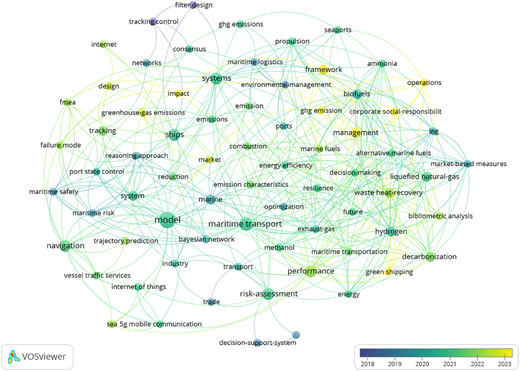
Keyword co-occurrence map of maritime research hotspots. Source: Created by authors
Keyword co-occurrence map of maritime research hotspots. Source: Created by authors
Additionally, the network reveals a parallel surge in digital and smart technologies, evidenced by keywords such as “sea 5G mobile communication,” “bayesian network.” Their connections to nodes like “performance,” “risk-assessment,” and “optimization” point to an evolving strategy that leverages data-driven methods to enhance navigational accuracy, reduce greenhouse gas emissions, and bolster overall system resilience. Collectively, these trends underscore the sector’s pivot towards comprehensive maritime reforms, intertwining environmental stewardship, technological innovation, and strategic policy-making to meet the twin imperatives of economic growth and ecological responsibility. Among the top 10 publishing countries, China ranks first, with a centrality score of 1.16, indicating strong collaborative ties with other countries (Table 4). However, among the top 10 publishing institutions, seven are Chinese research institutions.
Blue foods
Ranking of top 10 publishing countries and institutions (TOP 10)
| Ranking | Publishing countries | Publishing institutions | ||||
|---|---|---|---|---|---|---|
| Frequency | Centrality | Countries | Frequency | Centrality | Institutions | |
| 1 | 33 | 1.16 | CHN | 10 | 0.21 | Wuhan University of Technology |
| 2 | 7 | 0.00 | ENG | 8 | 0.13 | Shanghai Maritime University |
| 3 | 7 | 0.02 | SGP | 6 | 0.07 | Nanyang Technological University |
| 4 | 3 | 0.02 | UAE | 4 | 0.01 | Dalian Maritime University |
| 5 | 3 | 0.00 | AUS | 3 | 0.00 | National Engineering Research Center for Water Transport Safety |
| 6 | 2 | 0.00 | CAN | 3 | 0.00 | Shenzhen University |
| 7 | 2 | 0.26 | BEL | 2 | 0.02 | Liverpool John Moores University |
| 8 | 2 | 0.14 | PRT | 2 | 0.04 | Universidade de Lisboa |
| 9 | 2 | 0.14 | MYS | 2 | 0.00 | Harbin Engineering University |
| 10 | 2 | 0.00 | ITA | 2 | 0.00 | Khalifa University of Science and Technology |
Source(s): Created by authors
A total of 11 highly cited papers in the field of blue food have been published, with an overall citation count of 1,190 (Table 1). The keyword map in Figure 4 goes beyond a simple listing of terms by revealing how research on blue foods—in particular aquaculture and fisheries—has expanded to encompass environmental sustainability, climate-related challenges, and food safety. One prominent node is “aquaculture,” closely linked to “nutrition,” “fish consumption,” “species diversity,” and “marine aquaculture,” suggesting that initial research focused on boosting production and ensuring adequate food supply. Meanwhile, the presence of terms like “sustainability,” “emission,” and “life-cycle assessment”—often appearing in more recent clusters—reflects a growing emphasis on the environmental footprint and economic value of aquaculture practices.
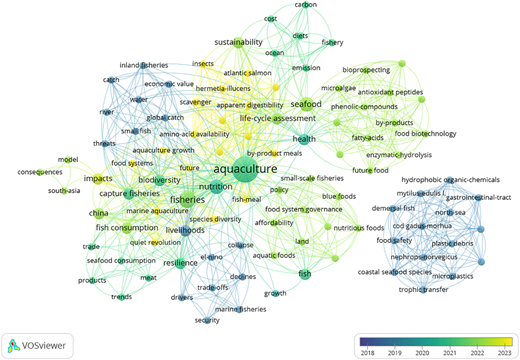
Additionally, “health,” “food safety,” and “microalgae” form another sub-network that points to the field’s increasing concern with the quality of aquaculture products, human health, and alternative protein sources. Notably, “biotechnology,” “phenolic compounds,” and “antioxidant peptides” underscore parallel efforts to enhance nutritional content and resource efficiency through scientific and technological innovation. On the periphery, blue nodes such as “microplastics,” “hydrophobic organic-chemicals,” signal a shift toward more specialized or emerging threats, including pollution and species-specific impacts. Taken together, this network highlights an evolving trajectory—from a focus on mass production and basic environmental considerations toward holistic, technology-driven approaches to sustainability, food security, and ecosystem health within the blue food sector.
Among the top ten countries by publication frequency, the United States ranks highest in terms of publication frequency, while Canada ranks highest in centrality (Table 5). Among the top ten publishing institutions, the top three are the International Food Policy Research Institute, Harvard University, and the Harvard T.H. Chan School of Public Health.
Marine carbon sinks
Ranking of major issuing countries and institutions (TOP 10)
| Ranking | Main issuing countries | Main issuing institutions | ||||
|---|---|---|---|---|---|---|
| Frequency | Centrality | Countries | Frequency | Centrality | Institutions | |
| 1 | 9 | 0.12 | USA | 4 | 0.26 | CGIAR |
| 2 | 5 | 0.07 | MYS | 4 | 0.09 | Harvard University |
| 3 | 5 | 0.07 | NOR | 4 | 0.12 | Harvard T.H. Chan School of Public Health |
| 4 | 4 | 0.45 | CAN | 3 | 0.08 | Michigan State University |
| 5 | 4 | 0.03 | CHN | 3 | 0.08 | University of California System |
| 6 | 4 | 0.03 | SWE | 3 | 0.06 | Pontificia Universidad Catolica de Chile |
| 7 | 4 | 0.3 | NLD | 3 | 0 | Worldfish |
| 8 | 3 | 0.27 | AUS | 3 | 0.12 | National Center for Ecological Analysis and Synthesis |
| 9 | 3 | 0.3 | CHL | 3 | 0.08 | University of California Santa Barbara |
| 10 | 3 | 0 | SCOT | 3 | 0.04 | American University |
Source(s): Created by authors
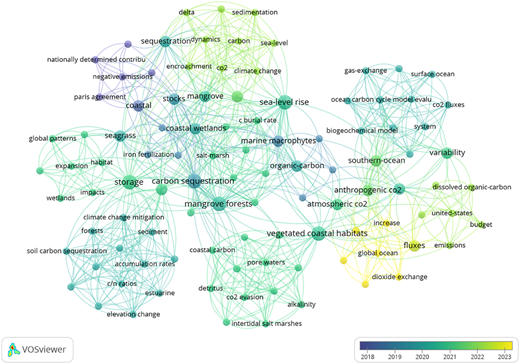
A total of 14 highly cited papers in the field of marine carbon sinks have been published, with an overall citation count of 1,691 (Table 1). The keyword co-occurrence map in Figure 5 provides a more nuanced view of the expanding research landscape around marine carbon sinks. While “mangroves,” “seagrass,” and “salt marshes” remain central nodes, there is a clear broadening of scope to include “tidal wetlands,” “coastal mudflats,” and “deep-sea carbon sinks.” Notably, terms such as “carbon sequestration,” “carbon burial,” and “atmospheric CO2” link ecological processes with climate-change discourse, while “negative emissions,” “Paris Agreement,” and “nationally determined contributions” anchor policy-related discussions. It indicates that research is no longer confined to single-ecosystem studies but increasingly adopts a multidimensional approach, spanning carbon storage, biogeochemical modeling. Interdisciplinary collaboration emerges as a hallmark of this field, as reflected by keywords connecting “marine macrophytes,” “gas exchange,” “soil carbon sequestration,” and “anthropogenic CO2.” These interconnected themes point toward a holistic, systems-level perspective on marine carbon cycling, leveraging expertise from ecology, oceanography, climate science, and environmental policy. Among the top ten countries by publication frequency, Australia ranks first with a centrality of 0.29 (Table 6).
Marine technology
Ranking of major issuing countries and institutions (TOP 10)
| Ranking | Main issuing countries | Main issuing institutions | ||||
|---|---|---|---|---|---|---|
| Frequency | Centrality | Countries | Frequency | Centrality | Institutions | |
| 1 | 8 | 0.29 | AUS | 4 | 0.05 | National University of Singapore |
| 2 | 8 | 0.02 | USA | 3 | 0.35 | Alfred Wegener Institute |
| 3 | 6 | 0.01 | DEU | 3 | 0.02 | Consejo Superior de Investigaciones Cientificas (CSIC) |
| 4 | 4 | 0.03 | BEL | 3 | 0.31 | ETH Zurich |
| 5 | 4 | 0.28 | CHN | 3 | 0.00 | Helmholtz Association |
| 6 | 4 | 0.02 | CH | 3 | 0.02 | Edith Cowan University |
| 7 | 4 | 0.30 | ENG | 3 | 0.00 | University of Queensland |
| 8 | 4 | 0.07 | SGP | 3 | 0.31 | Max Planck Society |
| 9 | 3 | 0.04 | ESP | 3 | 0.00 | King Abdullah University of Science and Technology |
| 10 | 3 | 0.34 | SWE | 2 | 0.03 | Bangor University |
Source(s): Created by authors
A total of 18 highly cited papers in the field of marine technology have been published, with an overall citation count of 2,012 (Table 1). A closer look at Figure 6 reveals multiple interlinked clusters that extend beyond traditional marine engineering, underscoring the growing convergence of advanced communication technologies and data-driven approaches. For instance, “fluid-structure interaction,” “smoothed particle hydrodynamics (SPH),” and “foundation design” form one cluster anchored in core engineering themes—vital for offshore wind turbine stability and coastal infrastructure. In contrast, a more recent and distinct cluster highlights “underwater IoT,” “5G marine communication,” and “6G-IoT,” pointing to the emergent “smart ocean” paradigm. Here, enhanced wireless sensor networks and real-time data processing techniques drive digital transformation, enabling precise monitoring and adaptive management of marine operations.
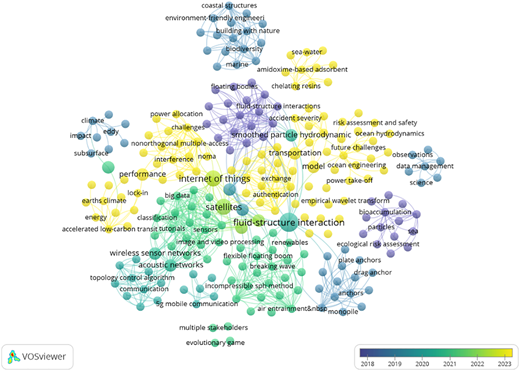
Simultaneously, keywords like “uranium extraction,” “environment-friendly engineering,” and “building with nature” underscore a shift toward sustainable resource utilization and ecological integration. These terms intersect with nodes such as “risk assessment,” “performance,” and “bioaccumulation,” reflecting a heightened awareness of both operational reliability and environmental impact. Notably, “big data,” “multiple stakeholders,” and “evolutionary game” suggest expanding interdisciplinary perspectives, incorporating social science and complex systems models to address stakeholder dynamics in marine technological innovations. Collectively, the figure indicates that the field has evolved from a focus on fundamental engineering challenges to a more holistic vision—one that combines cutting-edge communication networks, environmental considerations, and collaborative frameworks to shape the future of marine technology. Among the top ten countries by publication frequency, China ranks first with a centrality of 0.25 (Table 7). The top ten publishing institutions are listed in Table 7.
Marine energy
Ranking of major issuing countries and institutions (TOP 10)
| Ranking | Main issuing countries | Main issuing institutions | ||||
|---|---|---|---|---|---|---|
| Frequency | Centrality | Countries | Frequency | Centrality | Institutions | |
| 1 | 8 | 0.25 | CHN | 3 | 0.03 | Tsinghua University |
| 2 | 7 | 0.10 | UK | 2 | 0.00 | University of Warwick |
| 3 | 4 | 0.99 | AUS | 2 | 0.00 | University of Manchester |
| 4 | 3 | 0.15 | USA | 2 | 0.00 | Kyoto University |
| 5 | 3 | 0.34 | NOR | 2 | 0.00 | University of Oxford |
| 6 | 2 | 0.62 | DEU | 1 | 0.00 | Delft University of Technology |
| 7 | 2 | 0.00 | JPN | 1 | 0.00 | Istanbul Technical University |
| 8 | 2 | 0.24 | NLD | 1 | 0.00 | Servicio de Hidrografia Naval |
| 9 | 1 | 0.00 | FIN | 1 | 0.00 | University College London |
| 10 | 1 | 0.00 | TUR | 1 | 0.00 | Wageningen University and Research |
Source(s): Created by authors
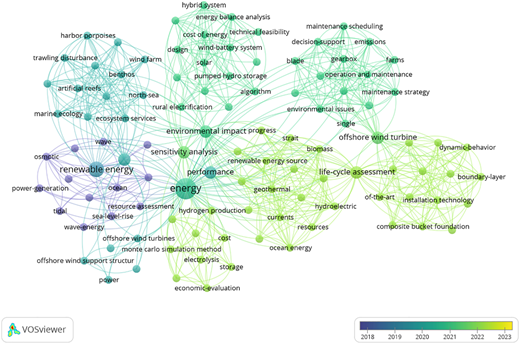
A total of 11 highly cited papers in the field of marine energy have been published, with an overall citation count of 1,265 (Table 1). From Figure 7, it is evident that “renewable energy,” “offshore wind turbines,” and “marine ecology” form three interconnected thematic clusters, highlighting the evolving scope of research in marine energy. The renewable energy cluster is closely tied to “wave energy,” “tidal,” and “power-generation,” indicating early interest in harnessing ocean currents, tidal forces, and waves. Meanwhile, the offshore wind cluster centers on “operation and maintenance,” “life-cycle assessment,” and “environmental impact,” underlining a growing recognition of both the technological and ecological dimensions of large-scale wind farm development. Links between “economic evaluation,” “resource assessment,” “maintenance scheduling,” and “emissions” suggest a more holistic perspective that combines cost-efficiency, technical feasibility, and environmental sustainability. Nodes such as “hydrogen production,” “pumped hydro storage,” and “rural electrification” point to emerging trends that expand marine energy research beyond simple electricity generation. Collectively, these interactions underscore the sector’s transition toward integrated energy systems, where innovations like “wind-battery systems” or “hydrogen production” complement traditional renewables. By bridging economic viability with ecological safeguards, the research landscape reflects a continued drive to maximize the potential of offshore renewable energy while minimizing its environmental footprint. Among the top ten countries by publication frequency, China ranks first with a centrality of 0.08 (Table 8).
Marine ecosystem
Ranking of major issuing countries and institutions (TOP10)
| Ranking | Main issuing countries | Main issuing institutions | ||||
|---|---|---|---|---|---|---|
| Frequency | Centrality | Countries | Frequency | Centrality | Institutions | |
| 1 | 5 | 0.08 | CHN | 2 | 0.02 | Shanghai Jiao Tong University |
| 2 | 2 | 0.00 | PRT | 2 | 0.00 | Universidade de Lisboa |
| 3 | 2 | 0.01 | AUS | 1 | 0.00 | Royal Belgian Institute of Natural Sciences |
| 4 | 2 | 0.10 | POL | 1 | 0.00 | Zagazig University |
| 5 | 2 | 0.10 | NLD | 1 | 0.00 | University of Gdansk |
| 6 | 2 | 0.16 | ENG | 1 | 0.09 | Centre National de la Recherche Scientifique |
| 7 | 1 | 0.00 | SWE | 1 | 0.00 | Delft University of Technology |
| 8 | 1 | 0.00 | USA | 1 | 0.00 | Gebze Technical University |
| 9 | 1 | 0.00 | TUR | 1 | 0.00 | University of Rhode Island |
| 10 | 1 | 0.00 | NOR | 1 | 0.00 | Wageningen University and Research |
Source(s): Created by authors
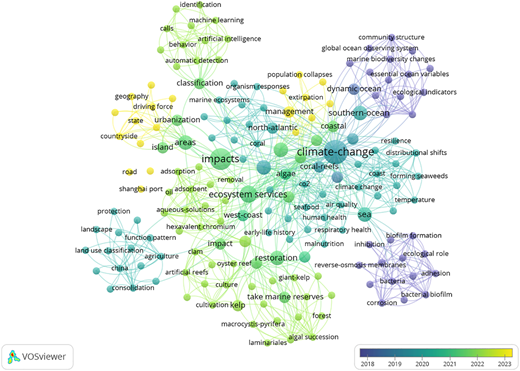
A total of 26 highly cited papers in the field of marine ecology have been published, with an overall citation count of 4,176 (Table 1). A more detailed view of Figure 8 reveals multiple interconnected clusters that go well beyond simply listing topical keywords, illustrating the field’s evolving emphasis on marine biodiversity, ecosystem services, and ecological restoration. At the center of the network, “climate change” stands out as a hub, linking to terms like “impacts,” “management,” and “ecosystem services,” underscoring the far-reaching consequences of global warming on marine ecosystems. Nearby, a prominent cluster around “restoration,” “algae,” “giant kelp,” and “marine reserves” highlights efforts to rebuild biodiversity and strengthen ecological resilience through habitat rehabilitation and protective measures. Interestingly, the network also features emerging research directions that leverage computational and data-driven approaches, as seen in the cluster of “machine learning,” “artificial intelligence,” and “classification.” These methods are increasingly employed to monitor coastal environments, predict biodiversity shifts, and optimize conservation strategies. Another noteworthy aspect is the focus on “community structure,” “distributional shifts,” and “ecological indicators,” reflecting a heightened interdisciplinary collaboration among biology, ecology, oceanography, and even remote sensing and data science. Altogether, it underscores a pivot in marine ecological research toward integrated, technology-assisted management solutions that aim to safeguard biodiversity and ecosystem services in the face of escalating climate threats. Among the top ten countries by publication frequency, Australia ranks first with a centrality of 0.23 (Table 9). The top ten publishing institutions are listed in Table 9.
Marine economy
Ranking of major issuing countries and institutions (TOP 10)
| Ranking | Main issuing countries | Main issuing institutions | ||||
|---|---|---|---|---|---|---|
| Frequency | Centrality | Countries | Frequency | Centrality | Institutions | |
| 1 | 15 | 0.23 | AUS | 6 | 0.04 | Commonwealth Scientific and Industrial Research Organization |
| 2 | 15 | 0.09 | USA | 4 | 0.09 | Centre National de la Recherche Scientifique |
| 3 | 12 | 0.10 | ENG | 4 | 0.68 | CSIRO Oceans and Atmosphere |
| 4 | 11 | 0.39 | CAN | 3 | 0.01 | University of Tasmania |
| 5 | 7 | 0.00 | CHN | 3 | 0.00 | Duke University |
| 6 | 6 | 0.14 | FRA | 3 | 0.18 | Dalhousie University |
| 7 | 6 | 0.22 | DEU | 3 | 0.00 | Nature Conservancy |
| 8 | 6 | 0.10 | JPN | 3 | 0.00 | National Oceanic Atmospheric Admin - USA |
| 9 | 4 | 0.02 | ESP | 3 | 0.01 | University of Western Australia |
| 10 | 4 | 0.00 | NOR | 3 | 0.00 | University of British Columbia |
Source(s): Created by authors
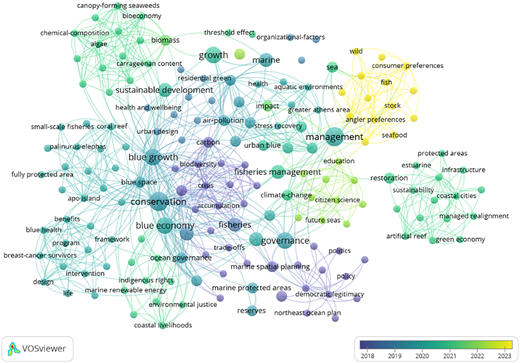
A total of 28 highly cited papers in the field of marine economics have been published, with an overall citation count of 3,936 (Table 1). A closer look at Figure 9 reveals several overlapping clusters that map out the complex interplay between blue economy, fisheries governance, and sustainable development. The blue economy cluster is strongly linked to terms like “ocean governance,” “marine protected areas,” “environmental justice,” and “coastal livelihoods,” illustrating how ecological conservation, social equity, and economic growth converge in policy discussions. Meanwhile, “sustainable development” and “bioeconomy” nodes reflect a parallel interest in integrating marine resources into broader, eco-friendly economic models, seen in keywords such as “renewable energy,” “biodiversity,” and “urban blue.” Another distinct grouping centers on “fisheries,” “fisheries management,” and “fisheries economics,” highlighting the significance of resource allocation, governance structures, and stakeholder interests in maintaining sustainable fish stocks. Notably, “green economy” and “green development” emerge in newer clusters, pointing to recent shifts in research toward environmentally responsible economic strategies. The presence of “consumer preferences,” “seafood,” and “restoration” underscores the growing recognition that demand-side factors and habitat rehabilitation are as integral to sustainable marine economies as governance and policy frameworks. Overall, Figure 9 showcases an increasingly holistic perspective—one in which economic viability, environmental conservation, and social inclusion are interwoven, driving the study and practice of marine economics toward more integrative and forward-looking approaches. Among the top ten countries by publication frequency, the United States ranks first with a centrality of 0.06 (Table 10).
Climate change
Ranking of major issuing countries and institutions (TOP10)
| Ranking | Main issuing countries | Main issuing institutions | ||||
|---|---|---|---|---|---|---|
| Frequency | Centrality | Countries | Frequency | Centrality | Institutions | |
| 1 | 10 | 0.06 | USA | 5 | 0.00 | University of British Columbia |
| 2 | 9 | 0.02 | CHN | 3 | 0.12 | Centre National de la Recherche Scientifique |
| 3 | 9 | 0.18 | UK | 3 | 0.00 | Universite Cote d'Azur |
| 4 | 7 | 0.00 | CAN | 3 | 0.00 | University of Washington |
| 5 | 6 | 0.48 | FRA | 2 | 0.00 | Ifremer |
| 6 | 6 | 0.13 | AUS | 2 | 0.05 | Pontificia Universidad Catolica de Chile |
| 7 | 5 | 0.04 | ITA | 2 | 0.00 | Aarhus University |
| 8 | 4 | 0.16 | SWE | 2 | 0.04 | Stockholm University |
| 9 | 3 | 0.11 | DEU | 2 | 0.08 | CoNISMa |
| 10 | 3 | 0.01 | ESP | 2 | 0.01 | University of Exeter |
Source(s): Created by authors
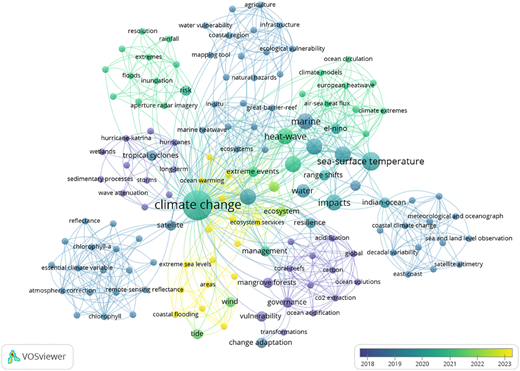
A total of 23 highly cited papers in the field of climate change have been published, with an overall citation count of 5,151 (Table 1). A closer examination of Figure 10 reveals several interwoven clusters centering on climate change, extreme events, and marine ecosystems. The most prominent node “climate change” connects to a range of terms including “heat-wave,” “sea-surface temperature,” “extreme sea levels,” and “tropical cyclones,” underscoring the urgent focus on rising ocean temperatures and more frequent, severe weather phenomena. In parallel, keywords such as “floods,” “inundation,” “risk,” and “vulnerability” highlight the socio-environmental consequences of climatic shifts, pointing to heightened concerns about coastal flooding, storm surges, and other marine disasters. Notably, another dense sub-network revolves around “resilience,” “management,” “governance,” and “adaptation,” suggesting that the field is increasingly oriented toward proactive measures—ranging from policy frameworks to ecosystem-based solutions—to mitigate climate risks. Terms like “mangrove forests,” “coastal flooding,” and “ocean acidification” further illustrate how interdisciplinary research intersects environmental restoration, hazard planning, and stakeholder-driven strategies. At the same time, the presence of “remote-sensing reflectance,” “satellite altimetry,” and “mapping tools” indicates a growing reliance on advanced monitoring technologies to track oceanic changes and guide evidence-based policy. Collectively, these interconnected themes underscore an evolving research landscape aimed at both understanding and addressing the multi-dimensional impacts of climate change on marine environments. Among the top ten countries by publication frequency, England ranks first with a centrality of 0.22 (Table 11).
Marine environment
Ranking of major issuing countries and institutions (TOP10)
| Ranking | Main issuing countries | Main issuing institutions | ||||
|---|---|---|---|---|---|---|
| Frequency | Centrality | Countries | Frequency | Centrality | Institutions | |
| 1 | 15 | 0.22 | ENG | 8 | 0.07 | Commonwealth Scientific and Industrial Research Organization |
| 2 | 13 | 0.15 | USA | 7 | 0.06 | CSIRO Oceans and Atmosphere |
| 3 | 12 | 0.23 | AUS | 6 | 0.02 | University of New South Wales Sydney |
| 4 | 7 | 0.20 | CAN | 5 | 0.00 | Dalhousie University |
| 5 | 6 | 0.13 | DEU | 5 | 0.00 | Australian Institute of Marine Science |
| 6 | 5 | 0.01 | SCOT | 5 | 0.02 | Marine Biological Association United Kingdom |
| 7 | 5 | 0.17 | NLD | 5 | 0.11 | Humboldt University of Berlin |
| 8 | 4 | 0.24 | FRA | 4 | 0.02 | UHI Millennium Institute |
| 9 | 4 | 0.01 | ESP | 4 | 0.00 | University of Washington Seattle |
| 10 | 4 | 0.09 | DNK | 4 | 0.02 | University of Western Australia |
Source(s): Created by authors
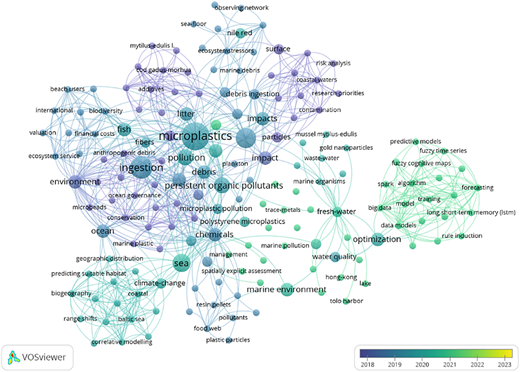
A total of 25 highly cited papers in the field of marine environment have been published, with an overall citation count of 5,325 (Table 1). Examining Figure 11 in greater depth reveals multiple tightly knit clusters focused on “microplastics,” “persistent organic pollutants,” and “chemical pollutants,” underscoring the growing body of research on contamination in marine environments. The microplastics node is closely linked to terms like “debris,” “ingestion,” and “pollution,” indicating a strong emphasis on tracking the pathways through which these particles enter marine food webs—and the corresponding environmental and health risks they pose. Meanwhile, “persistent organic pollutants” connects to broader issues such as “risk assessment,” “bioaccumulation,” and “marine pollution,” pointing to the long-term ecological impacts of chemicals with extended half-lives. Interestingly, another distinct cluster includes “litter,” “waste,” “fibers,” and “management,” reflecting efforts to address pollution sources, cleanup strategies, and policy interventions aimed at reducing plastic waste and hazardous pollutants. The presence of terms like “optimization,” “predictive models,” “big data,” and “forecasting” signals an emerging trend toward data-driven and machine learning approaches for monitoring and mitigating marine pollution. Overall, it illustrates how the field has evolved from identifying contaminants to actively seeking holistic solutions, integrating detection technologies, environmental governance, and interdisciplinary collaboration, to safeguard marine ecosystems. Among the top ten countries by publication frequency, the United States ranks first with a centrality of 0.29 (Table 12).
Fisheries
Ranking of major issuing countries and institutions (TOP 10)
| Ranking | Main issuing countries | Main issuing institutions | ||||
|---|---|---|---|---|---|---|
| Frequency | Centrality | Countries | Frequency | Centrality | Institutions | |
| 1 | 8 | 0.29 | USA | 5 | 0.00 | University of California System |
| 2 | 6 | 0.00 | CHN | 3 | 0.00 | Plymouth Marine Laboratory |
| 3 | 6 | 0.02 | ENG | 2 | 0.14 | Ifremer |
| 4 | 5 | 0.03 | NOR | 2 | 0.00 | Hong Kong Polytechnic University |
| 5 | 4 | 0.12 | DEU | 2 | 0.09 | Deltares |
| 6 | 4 | 0.00 | ESP | 2 | 0.03 | Consejo Superior de Investigaciones Cientificas |
| 7 | 4 | 0.00 | PRT | 2 | 0.00 | University of Plymouth |
| 8 | 4 | 0.05 | NLD | 2 | 0.12 | Scripps Institution of Oceanography |
| 9 | 3 | 0.11 | ITA | 1 | 0.00 | Jacksonville University |
| 10 | 3 | 0.64 | DNK | 1 | 0.00 | Umea University |
Source(s): Created by authors
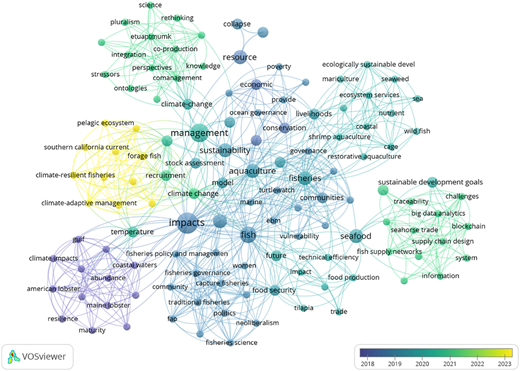
A total of 24 highly cited papers in the field of marine fisheries have been published, with an overall citation count of 3,479 (Table 1). A closer look at Figure 12 reveals a dense web of interconnected themes that extend beyond mere keyword groupings, highlighting the multifaceted nature of fisheries research in a changing climate. Central nodes like “aquaculture,” “fisheries,” “climate change,” and “sustainability” point to the core challenges: balancing production efficiency with ecological integrity while adapting to a warming planet. Terms such as “climate-resilient fisheries,” “co-management,” and “marine governance” underscore a growing recognition that fisheries policies must integrate ecosystem-based management, stakeholder collaboration, and resilience strategies. Meanwhile, newer clusters, including “big data analytics,” “blockchain,” “supply chain design,” and “traceability,” emphasize the field’s technological pivot—applying digital innovations to improve the transparency, efficiency, and sustainability of seafood production and distribution. Nodes like “food security,” “livelihoods,” and “sustainable development goals” further demonstrate the sector’s broad societal relevance, linking resource management with economic well-being and global policy frameworks. Collectively, it illustrates an evolving research landscape in which climate adaptability, advanced technologies, and equitable governance converge to secure the future of marine fisheries in a more sustainable and socially responsible manner. Among the top ten countries by publication frequency, the United States ranks first with a centrality of 0.42 (Table 13).
Ranking of major issuing countries and institutions (TOP 10)
| Ranking | Main issuing countries | Main issuing institutions | ||||
|---|---|---|---|---|---|---|
| Frequency | Centrality | Countries | Frequency | Centrality | Institutions | |
| 1 | 20 | 0.42 | USA | 9 | 0.06 | National Oceanic and Atmospheric Administration |
| 2 | 8 | 0.21 | CAN | 6 | 0.21 | University of California |
| 3 | 6 | 0.04 | AUS | 6 | 0.00 | University of Washington, Seattle |
| 4 | 5 | 0.21 | NOR | 6 | 0.00 | University of Washington |
| 5 | 4 | 0.48 | ITA | 4 | 0.07 | Duke University |
| 6 | 3 | 0.11 | FRA | 4 | 0.18 | University of California, Santa Barbara |
| 7 | 3 | 0.02 | ENG | 4 | 0.09 | Florida State University System |
| 8 | 2 | 0.05 | ZA | 3 | 0.02 | French National Center for Scientific Research |
| 9 | 2 | 0.11 | DE | 3 | 0.06 | The Nature Conservancy |
| 10 | 2 | 0.07 | ESP | 3 | 0.27 | University of California, Santa Cruz |
Source(s): Created by authors
3.3 Key hotspots and frontiers
How to decarbonize international shipping: Options for fuels, technologies and policies
International shipping carries 80–90% of global trade, and increasingly strict environmental regulations on NOx, SOx, and GHG emissions are driving a technological overhaul. Beyond slow steaming and ship-design modifications, recent studies highlight a growing interest in hydrogen, ammonia, and biofuels as potential low- or zero-carbon alternatives, as well as the use of digital twin technology to optimize vessel operations. The most frequently cited paper in this field, How to Decarbonize International Shipping: Options for Fuels, Technologies and Policies (Balcombe et al., 2019), published in Energy Conversion and Management, has been cited 242 times. However, challenges such as fuel availability, cost barriers, and the need for standardized global regulations persist. Future research thus focuses on integrating advanced propulsion systems, improving shore-based power infrastructures, and developing international policy frameworks to facilitate widespread adoption.
Properties and trends of marine heatwaves
Marine heatwaves—often driven by anthropogenic greenhouse gas emissions—can severely impact marine ecosystems and coastal communities (Smale et al., 2019). Recent observations use high-resolution satellite datasets and in situ monitoring to track heatwave onset and duration, leading to more accurate predictions of their frequency and intensity (Frölicher et al., 2018). The most frequently cited paper in this area, Longer and More Frequent Marine Heatwaves Over the Past Century (Oliver et al., 2018), published in Nature Communications, has been cited 934 times. While this improves early warning capabilities and helps mitigate economic losses in fisheries and tourism, further work is needed to clarify the long-term interactions between marine heatwaves, ocean acidification, and broader climate patterns. Enhanced climate models and adaptive management strategies are essential for reducing the ecological and socioeconomic consequences of these events.
The role of blue food in sustainable production
Growing global demand for nutritious, low-impact protein has propelled blue foods—fish, shellfish, seaweeds—into the spotlight. Recent findings emphasize innovations in aquaculture, such as integrated multi-trophic systems and recirculating aquaculture technologies, which reduce environmental impacts while improving yield (Gephart et al., 2021). However, concerns remain over disease management, habitat degradation, and equitable distribution of blue foods in food-insecure regions. The most frequently cited paper in this field, The Future of Food from the Sea (Costello et al., 2020), published in Nature, has been cited 347 times. Future efforts aim to refine feed alternatives (e.g. algae- or insect-based proteins), scale up sustainable aquaculture practices, and deepen policy integration to align blue food development with climate adaptation and public health objectives.
Spatial footprint of global fisheries capture
Although satellite observation has greatly improved understanding of forestry and agriculture, quantifying the dynamic footprint of global fisheries remains a challenge. Advances in the Automatic Identification System (AIS) have allowed real-time tracking of commercial vessels, enabling new insights into fishing effort, gear types, and potential illegal, unreported, and unregulated (IUU) activities (Hilborn et al., 2020). Recent research combines AIS with machine learning to account for data gaps, but coverage discrepancies in small-scale fisheries persist. The most frequently cited paper in this field, Tracking the Global Footprint of Fisheries (Kroodsma et al., 2018), published in Science, has been cited 537 times. Ongoing developments focus on integrating additional data sources—such as onboard sensors and mobile applications—to enhance the resolution of global capture footprints and support adaptive fisheries management.
Blue Carbon Sinks
Blue carbon, captured by coastal ecosystems like mangroves, seagrasses, and tidal marshes, is increasingly recognized as a vital component of climate change mitigation. New studies emphasize the co-benefits of coastal restoration, including habitat support and storm surge protection, and explore novel carbon verification methods to bolster carbon-credit frameworks (Macreadie et al., 2021). Nevertheless, accurately measuring carbon fluxes remains difficult, especially given land-use changes and sea-level rise. The most frequently cited paper in this field, The Future of Blue Carbon Science (Macreadie et al., 2019), published in Nature Communications, has been cited 440 times. Future research will likely refine remote-sensing techniques, develop region-specific restoration protocols, and create policy guidelines to better integrate blue carbon sinks into national and international climate strategies.
Environmental impacts of renewable energy
The push for cleaner energy sources has led to rapid expansion of solar, wind, hydroelectric, and marine-based power. Recent life-cycle assessments reveal that while these technologies can reduce greenhouse gas emissions, they also pose ecological challenges—for instance, offshore wind farms may affect marine habitats, and wave or tidal power installations can alter local sediment dynamics. To address these issues, researchers are exploring multi-use platforms that combine energy generation with aquaculture or tourism, as well as improved site selection models that factor in biodiversity and social acceptance (Duarte et al., 2020). The most frequently cited paper in this field, Environmental Impact of Renewable Energy Source-Based Electrical Power Plants: Solar, Wind, Hydroelectric, Biomass, Geothermal, Tidal, Ocean, and Osmotic (Rahman et al., 2022), published in Renewable and Sustainable Energy Reviews, has been cited 184 times. Future studies will focus on refining environmental impact assessments and optimizing system designs to balance energy gains with ecosystem integrity.
Marine microplastic pollution and its potential consequences
Microplastic pollution—now pervasive across the world’s oceans—remains difficult to quantify due to limitations in sampling methods and the tiny size of plastic particles. New research leverages microfluidic devices, AI-based image recognition, and advanced chemical analysis to improve detection and characterization of microplastics, thereby clarifying their sources and pathways. Challenges include evaluating long-term health effects on marine species and humans, as well as implementing effective waste management and plastic reduction strategies on a global scale. The most frequently cited paper in this field, Marine Microplastic Debris: An Emerging Issue for Food Security, Food Safety, and Human Health (Barboza et al., 2018), published in Marine Pollution Bulletin, has been cited 696 times. Future directions involve standardizing monitoring protocols, scaling up biodegradable plastic alternatives, and integrating microplastic assessments into broader marine conservation agendas.
4. Interpretation of hotspots and key frontiers in China
4.1 Keyword co-occurrence analysis
Keywords are used to express the thematic content of a document and reflect its core ideas. Therefore, conducting statistical and analytical studies on high-frequency keywords helps to gain a more accurate understanding of research trends in data security and identify key research hotspots. By utilizing CiteSpace software for keyword co-occurrence analysis of the sampled literature, with “Keywords” selected as the node type, a visual representation of the keyword co-occurrence network in the field of marine economy and management in China is generated (Figure 13). In this figure, the size of the circles and fonts indicates the frequency of keyword occurrences—the larger the circle and font, the higher the occurrence frequency of that keyword.
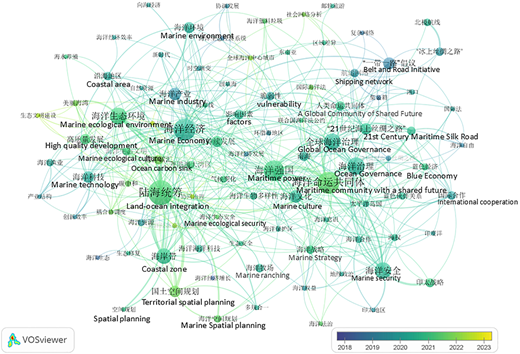
Map of hot keywords in the field of marine economy and management based on CNKI database. Source: Created by authors
Map of hot keywords in the field of marine economy and management based on CNKI database. Source: Created by authors
As shown in Table 14, the high-frequency keywords extracted from the sampled literature highlight key research themes in marine economy and management based on CNKI database. Based on frequency and centrality, highly ranked keywords such as “land-sea coordination,” “marine economy,” “maritime power,” and “marine governance” indicate that research in this field primarily focuses on marine economic growth and governance within the perspectives of land-sea coordination and maritime power strategies. Additionally, among the top 20 keywords, terms like “coastal zone,” “marine culture,” “marine security,” “marine industry,” “ecological environment,” “marine technology,” and “marine carbon sink” further emphasize the significance of environmental and ecological concerns, cooperation and security, as well as science, technology, and culture in the marine sector.
High-frequency keywords in the field of marine economy and management
| Ranking | Frequency | Centrality | Keywords |
|---|---|---|---|
| 1 | 94 | 0.30 | Land-sea Integration |
| 2 | 76 | 0.23 | Marine Economy |
| 3 | 55 | 0.15 | Maritime power |
| 4 | 50 | 0.17 | Ocean governance |
| 5 | 35 | 0.11 | Coastal Zone |
| 6 | 28 | 0.03 | Marine Culture |
| 7 | 27 | 0.10 | Maritime Security |
| 8 | 25 | 0.04 | Marine Technology |
| 9 | 21 | 0.06 | Marine Industry |
| 10 | 17 | 0.05 | Influencing Factors |
| 11 | 15 | 0.00 | Indo-Pacific Strategy |
| 12 | 14 | 0.02 | Sea Pasture |
| 13 | 13 | 0.04 | Coastal Areas |
| 14 | 13 | 0.03 | Marine Strategy |
| 15 | 13 | 0.01 | Ecological environment |
| 16 | 13 | 0.06 | Vulnerability |
| 17 | 13 | 0.05 | Shipping Networks |
| 18 | 10 | 0.03 | Marine carbon sinks |
| 19 | 9 | 0.02 | Belt and Road |
| 20 | 9 | 0.01 | Climate Change |
Source(s): Created by authors
4.2 Analysis of research institutions
Table 15 presents the top 10 institutions publishing research on marine economy and management. Ocean University of China takes the lead with 150 publications and a centrality value of 0.09, making it the most central institution among those listed. Dalian Maritime University follows with 95 publications and a centrality value of 0.03, while Liaoning Normal University ranks third with 61 publications. Overall, these centrality values are relatively low, suggesting that the publication influence or network centrality of the listed institutions within this field remains limited.
Ranking of major issuing institutions (TOP 10)
| Ranking | Frequency | Centrality | Institutions |
|---|---|---|---|
| 1 | 150 | 0.09 | Ocean University of China |
| 2 | 95 | 0.03 | Dalian Maritime University |
| 3 | 61 | 0.06 | Liaoning Normal University |
| 4 | 34 | 0.00 | Wuhan University |
| 5 | 25 | 0.03 | Nanjing University |
| 6 | 24 | 0.04 | Ningbo University |
| 7 | 22 | 0.01 | Shandong University |
| 8 | 20 | 0.02 | The First Institute of Oceanography, Ministry of Natural Resources |
| 9 | 20 | 0.00 | National Marine Environment Monitoring Center |
| 10 | 14 | 0.00 | Hainan University |
Source(s): Created by authors
4.3 Distribution of research hotspots
Marine Technology
With continuous advancements in technology, marine exploration and development techniques have significantly improved. Innovations in marine technology drive the research and development of new techniques, methodologies, and equipment, enhancing the efficiency and safety of marine resource utilization. The marine technology sector constitutes an integrated system that not only focuses on the efficiency and contribution of marine technological innovations (Lu, 2020; Lu et al., 2020; Wang et al., 2020) but also explores their impact on the development of the marine economy (Wu et al., 2019). Furthermore, it is closely linked to marine ecological and environmental protection, emphasizing the necessity of considering ecological balance and sustainable development in the innovation process (Wang and Li, 2021). International collaboration in marine technology represents another crucial aspect of this field, reflecting a global perspective and a spirit of cooperation (Zhang, 2018).
Global Marine Governance from the Perspective of a Maritime Community with a Shared Future
The strategic landscape of global maritime affairs is undergoing profound transformations. The absence of a globally coordinated governance framework for marine ecological and environmental management has led to the worsening of marine pollution. Research on marine governance in China spans multiple dimensions, primarily focusing on the current state, challenges, and solutions within the framework of the “Maritime Community with a Shared Future” initiative (Jin and Cui, 2023). Rooted in this vision, China has proposed practical solutions that integrate institutional development, cooperative advancement, and consensus-building, transforming political aspirations into legal frameworks and putting forth a series of original theories, concepts, and strategic approaches (Quan and Ye, 2019; Liao and Liu, 2022; Yang, 2022).
Marine Ranching
Marine ranching serves as a critical initiative to promote the transformation and modernization of marine fisheries while contributing to marine ecological civilization. The construction of marine ranches aims to enhance and optimize marine ecosystems through artificial interventions, improving ecosystem services and ecological benefits. Current research hotspots in this field encompass development strategies, ecological security, economic value, technological integration, environmental impacts, and regulatory policies. From an ecological perspective, studies based on ecosystem service theories have defined the connotation of ecological benefits, assessed compensation standards for different marine biological resources (Liu et al., 2021), emphasized the role of blue carbon sequestration within marine ranches (Shen and Liang, 2018), and established a regulatory framework for ensuring marine ranching ecological security (Du and Cao, 2021).
Maritime Security Cooperation Among Nations in the Context of the Indo-Pacific Strategy
With the rising prominence of the Indo-Pacific concept and the increasing strategic significance of the Indian and Pacific Oceans, the Indo-Pacific region has become a focal point of international attention and a critical arena for major power competition. In response to geopolitical shifts in the region, the United States has formulated and vigorously promoted its Indo-Pacific Strategy, significantly reshaping the region’s geopolitical landscape (Lou and Wang, 2023). Against the backdrop of shifting power dynamics between China and the US and escalating US strategic competition against China, the US and South Korea have strengthened their bilateral maritime security cooperation. Concurrently, South Korea has enhanced multilateral maritime security partnerships in the region while aligning with US efforts to bolster joint operational capabilities (Zhao, 2022). France and India, within their respective Indo-Pacific strategic frameworks, have identified maritime security in the Indian Ocean as a key priority (Liang, 2020). Additionally, under the convergence of the Indo-Pacific Strategy and the “Global Britain” strategy, Japan and the UK have deepened their security cooperation with a pronounced Indo-Pacific focus (Hu, 2019).
Coastal Zone Spatial Planning
The coastal zone, situated at the interface of land and sea, experiences continuous and high-frequency interactions of material and human activities across various boundaries. This necessitates an integrated and cross-boundary approach to spatial planning and management. The research highlights the significance of coastal zone planning and identifies shortcomings in existing spatial use regulations (Li et al., 2020). Scholars have proposed a land-sea integrated protection and utilization framework based on the principles of ecological civilization (Li et al., 2022). Additionally, studies have further explored the concept of cross-boundary coastal zone spatial planning, analyzed governance pathways for managing cross-boundary conflicts (Ma et al., 2023), and emphasized the fundamental role of land-sea coordination in coastal zone spatial planning, advocating for ecological protection and benefit-oriented planning methodologies (Lin et al., 2018).
Marine Carbon Sequestration
The ocean holds immense potential as a carbon sink. Against the backdrop of global climate change, marine carbon sequestration has emerged as a crucial component of ecological civilization construction and a viable approach to achieving carbon neutrality, garnering significant academic interest. Research hotspots in this field encompass the role of marine carbon sequestration in China’s carbon peak and carbon neutrality goals (Cao and Wu, 2022), opportunities and challenges in marine carbon sequestration initiatives (Mao et al., 2022), key elements, operational mechanisms, and critical factors of the marine carbon trading market (Zhao et al., 2021), as well as technological advancements, marine carbon sequestration construction potential (Cheng and Chen, 2021), and relevant legal and policy frameworks (Li et al., 2023). Furthermore, studies examine the dynamic and spatial spillover effects of marine carbon sequestration on economic and fisheries development (Xu et al., 2020).
Marine Industry
As marine economy development becomes a pivotal strategy for China’s economic transformation and growth, coastal regions have prioritized marine industry planning within their regional development strategies. The research on the marine industry is a multidimensional and interdisciplinary endeavor, with key research hotspots covering industrial clustering (Ji et al., 2023), industrial structure upgrading (Ji et al., 2021), modernization and innovation within the marine industry (Sheng et al., 2021; Li et al., 2024), ecological development strategies (Zeng et al., 2024), green transformation of marine manufacturing (Zhou et al., 2025) and policy guidance for the marine sector (Li et al., 2021). These studies not only explore the various dimensions of marine industry development but also delve into both internal and external factors influencing its growth.
Marine Ecological Environment
Protecting the marine environment is essential for promoting sustainable marine development and achieving maritime power ambitions. While the marine environment provides indispensable support for marine economic growth, it also imposes significant constraints. Thus, improving marine environmental quality is of paramount importance. The research and practical efforts in marine ecological and environmental protection have covered a wide range of critical issues (Xu and Yan, 2023), including marine ecological damage compensation mechanisms (Wang, 2023), marine environmental monitoring systems (Liang et al., 2022), conflicts of interest in marine ecological governance (Zhang et al., 2022a, b), and global marine ecological governance challenges and recommendations (Zhang and Jiao, 2021).
Maritime Shipping
Maritime shipping serves as the dominant mode of global trade transportation, accounting for the majority of international trade volume. However, global climate change has significantly impacted marine environments, with rising sea levels and ocean acidification posing new challenges to the shipping industry. The research on maritime shipping focuses on several key topics, including global shipping network structures (Wang and Jin, 2020), the evolution of maritime commercial law (Ma, 2023), and governance of Arctic shipping routes (Zhang, 2022c). Additionally, given the increasing environmental concerns associated with the shipping industry, research has explored the potential impacts of maritime activities on marine ecosystems and examined strategies for promoting energy-efficient and environmentally friendly green shipping initiatives (Luo et al., 2023).
5. Discussion
International research on marine economy and management predominantly focuses on decarbonizing maritime shipping, addressing marine environmental pollution and ecological conservation, examining the impacts of climate change, and exploring the application of advanced technologies in the marine sector. Research institutions are widely distributed, with Europe, North America, and Australia playing leading roles in knowledge production and collaborative networks. Keyword co-occurrence analyses reveal sustained attention to themes such as the “blue economy,” “marine technology,” “marine environment,” and “marine ecosystems,” underscoring the emphasis on green transformation, digital and intelligent upgrades, and interdisciplinary cooperation. At the same time, international studies show a high degree of concentration on the comprehensive utilization of marine resources, global ocean governance mechanisms, and multilateral collaboration.
In contrast, Chinese research hotspots place greater emphasis on the “maritime power strategy,” “land-sea integration,” and “marine ranching,” reflecting a broader strategic layout for marine economic development and governance models, as well as a targeted focus on regional marine utilization and ecological protection. Research outputs are primarily led by domestic maritime universities and research institutes, covering themes that balance marine economy, ecological environment, technological innovation, and national security needs. Recent work highlights “marine carbon sinks,” “nearshore ecological protection,” and “Maritime Silk Road.” Overall, while international research gravitates toward global collaboration and frontier technologies, Chinese research is characterized by its alignment with national strategies and regional governance practices, offering potential avenues for mutual learning in the pursuit of green and sustainable development.
6. Conclusions
This study employs CiteSpace and VOSviewer software to conduct a statistical analysis, keyword co-occurrence analysis, and cooperative institution network analysis of literature in the field of marine economy and management from 2018 to 2023, drawing from the ESI Highly Cited Papers database and the CNKI-CSSCI database. Corresponding scientific knowledge maps were generated, leading to the following conclusions:
From the overall publication trends, research interest in the field of marine economy and management has been steadily increasing over the past six years, with a notable rise in the number of highly cited international papers. In terms of collaboration networks, the United States, China, and the United Kingdom constitute the primary contributors to research in marine economy and management, with close collaboration observed among European and American countries. However, the centrality of individual institutions remains low, indicating that international cooperation and exchange among countries and institutions still require further enhancement. Keyword co-occurrence analysis reveals a high degree of interdisciplinarity in existing marine economy and management research. While traditional research topics such as marine economic growth, marine fisheries, maritime shipping, and climate change remain focal points, there is a growing emphasis on emerging topics, including marine carbon sequestration, marine ecology, marine environmental protection, blue food, and marine technology.
While summarizing the research findings, efforts should focus on translating these insights into practical policy. Building on current research hotspots and emerging trends, policymakers are advised to establish a multi-layered marine governance framework. This involves enacting regulations and incentives to foster green, low-carbon technologies—particularly in shipping decarbonization—and refining marine ecological compensation as well as carbon sink trading systems to support blue carbon restoration and sustainable utilization. Further, enhanced financial backing and policy design for nearshore ecological restoration and marine ranching are crucial to balance industrial growth and ecological considerations. At the international level, strengthening cross-border collaboration in environmental monitoring, maritime traffic governance, and blue food supply chains will effectively integrate research into marine economic strategies, laying the groundwork for a green, intelligent, and sustainable marine economy.
Although this study conducted multi-dimensional keyword co-occurrence and network visualizations in the field of marine economy and management, it remains constrained by relatively limited data sources and the potential for more diverse analytical dimensions. Future research can move forward in two main directions. First, leveraging CiteSpace within the domain of marine economy and management to conduct deeper co-citation and burst-term analyses can help track the evolutionary trajectory of research hotspots and uncover potential knowledge gaps. Second, building upon the existing network analyses, it would be beneficial to broaden the research perspective and methodologies, including incorporating interdisciplinary collaborations, scenario-based simulations, and big data approaches, to investigate the policy implications of marine economy and management more thoroughly.
We thank all referees for their constructive advice which helped to improve the completeness and clarity of this paper.
Funding: This work was supported by Humanities and Social Sciences Youth Foundation of Ministry of Education of China (24YJCZH298).

