This study investigates how organizational climate (OC) shapes organizational citizenship behavior (OCB) among university faculty. It focuses on the mediating roles of idiosyncratic deals (i-deals) and leader–member exchange (LMX) and introduces symbolic moderators, i.e. transparency and initiator identity, within a relational signaling framework.
Survey data from 651 full-time faculty members at Slovak public universities were analyzed using partial least squares structural equation modeling (PLS-SEM). The framework integrates social exchange theory, equity theory, psychological contract theory and self-enhancement theory to examine direct, mediated and moderated effects across demographic groups.
OC significantly predicts OCB, primarily via i-deals and, to a lesser extent, LMX. When mediators are included, the direct path becomes non-significant. Transparent, leader-initiated i-deals strengthen the positive effect on OCB, particularly among senior academics, by enhancing fairness and symbolic recognition.
This study offers a context-sensitive model of discretionary behavior in academia, conceptualizing i-deals as relational and symbolic signals. It contributes to theory by combining multiple frameworks and highlighting how meaning is co-constructed in academic institutions. The findings provide actionable insights for academic leaders seeking to promote engagement through customized, transparent and fair practices.
1. Introduction
Higher education systems worldwide are currently undergoing far-reaching institutional and cultural transformations. Universities face mounting pressure to demonstrate excellence across multiple dimensions, such as research productivity, teaching quality, and societal engagement, while navigating increasingly complex accreditation procedures and shifting policy expectations (Martin-Alcazar et al., 2024). These changes have profound implications for the academic profession. Performance is now more closely tied to measurable outputs, especially in research and externally funded projects, thereby intensifying competitive dynamics and fueling job insecurity. Affective consequences such as stress, demotivation, and the erosion of academic identity are becoming more pronounced (Webber, 2019; Waaijer et al., 2017; Ghasemy and Elwood, 2023; Webster, 2022). In parallel, structural pressures increasingly push academics toward specialization in either teaching or research, often at the expense of integrative academic roles (Inelmen et al., 2017; Lee et al., 2016).
At the organizational level, these developments create a growing tension between individualization and the need for collective cohesion. On the one hand, academic careers are increasingly shaped by competition, self-marketing, and strategic positioning. At the same time, academic work is grounded in collegial interaction, mutual responsibility, and long-term collaboration built on trust. Within this field of competing expectations, organizational citizenship behavior (OCB) can serve as a stabilizing element that helps reconcile institutional demands with professional norms (Taamneh et al., 2024). It channels employee behavior toward cooperation, loyalty, and a commitment to the institution that extends beyond formal role definitions. OCB has been widely studied in a variety of organizational settings, and there is broad consensus that it enhances adaptability, knowledge sharing, and organizational resilience in dynamic environments (Taye and Gebremeskel, 2023; Robbins and Judge, 2019; Henagan, 2010). It is therefore not surprising that OCB is gaining traction in higher education discourse as universities seek to strengthen internal cohesion in increasingly competitive and resource-constrained conditions (Inelmen et al., 2017; Taamneh et al., 2024; Khan et al., 2020). Recent empirical evidence confirms this trend: faculty and staff in academic institutions increasingly frame their engagement in communication, collegiality, and service as expressions of citizenship behavior (Rocker et al., 2025), while student-level research demonstrates the growing salience of discretionary engagement in university life (Meriac et al., 2025).
OCB has been the subject of substantial research in various organizational contexts. Its positive effects on organizational performance, flexibility, and resilience are well established (Inelmen et al., 2017; Khadivi et al., 2015; Hemakumara, 2020). In the higher education sector, the concept is increasingly applied under the label of academic citizenship behavior, emphasizing its relevance to teaching, research, and service. Especially under conditions of increasing competition and resource scarcity, OCB is considered a desirable behavioral trait in academic settings (Taamneh et al., 2024). It is also seen as a response to structural imbalances in the reward system that often fail to recognize the relational and invisible aspects of academic labor (McMurray and Scott, 2013; Khan et al., 2020; Danish et al., 2014).
However, OCB in academic settings cannot be taken for granted. It depends on organizational cultures and practices that support fairness, recognition, and trust (Bauwens et al., 2019). Macfarlane (2007) stresses that university management must develop strategic practices to sustain OCB, both through individualized forms of recognition, and through collective, transparent evaluation of contribution. Perceptions of unfairness and inequality are known to diminish OCB, particularly when effort and contribution are not matched by recognition or reward (Ghasemy and Elwood, 2023; Colquitt et al., 2013; Yang, 2020). At the same time, the traditional paternalistic model of university leadership is increasingly under strain, as academic governance becomes more complex and differentiated (Van Dijk et al., 2020). These developments call for alternative approaches to fostering motivation and engagement across diverse academic roles.
The theoretical basis of this study is Social Exchange Theory, which emphasizes the importance of relational quality, reciprocity, and fairness in shaping discretionary behavior. In addition, we draw on Adams’ equity theory to capture perceptions of proportionality in organizational relationships. Based on these perspectives, our model incorporates three relational constructs: individualized work arrangements (i-deals), the quality of relationships between supervisors and employees (commonly referred to as leader–member exchange), and the broader organizational climate. Rather than treating these as separate predictors, we conceptualize them as interdependent elements of a relational system that enables or constrains the emergence of OCB. Specifically, OC, which refers to the shared perceptions of fairness, support, and institutional values (Wallace et al., 2016; Kamal et al., 2020), provides the normative backdrop that shapes the quality of dyadic relationships. High-quality LMX relationships (Sa’adah and Rijanti, 2022; Eka et al., 2022) create the conditions for negotiating personalized work arrangements, or i-deals (Rousseau, 2005; Bal, 2017), which express organizational responsiveness to individual needs and aspirations. When such arrangements are enacted within a supportive climate and through trusted relationships, they carry symbolic value, enhancing employees’ sense of recognition and fairness. As such, OC, LMX, and i-deals do not operate in isolation but function as mutually reinforcing signals, shaping how employees interpret legitimacy and reciprocity, and thereby influencing the likelihood of OCB.
While these constructs have been studied extensively in private sector organizations, their interdependent operation in academic settings remains insufficiently explored. Moreover, the procedural and symbolic dynamics of i-deals, specifically their visibility and the question of who initiates them, have rarely been addressed, despite their centrality to perceptions of fairness and legitimacy in status-sensitive environments such as universities. Responding to this gap, and to the call by Ghasemy and Elwood (2023), who note that “the higher education literature has been surprisingly silent” on the need for academic citizenship, our study offers a context-sensitive and theoretically integrative extension of established organizational behavior models.
Against this background, this study contributes to advancing theoretical and empirical understanding of OCB in academic organizations by introducing a relational signaling perspective. While previous research has focused on the direct and mediated effects of constructs such as organizational climate (OC), leader–member exchange (LMX), and idiosyncratic deals (i-deals), the symbolic and communicative context in which these relationships unfold has received limited attention. In particular, higher education institutions, marked by high professional autonomy, implicit social norms, and status-sensitive governance, offer a unique context for investigating how subtle relational cues shape behavioral responses.
We propose that two such cues, i-deal transparency (i.e. the visibility of individualized arrangements to colleagues) and initiator identity (i.e. whether the leader offered the deal or the employee requested it), serve as micro-social signals that influence employees’ interpretations of fairness, recognition, and trust. These cues are embedded within broader relational processes and are crucial for understanding how employees evaluate the legitimacy and symbolic value of workplace customization. As such, we move beyond a purely structural view of organizational behavior and emphasize the interpretive processes through which relational cues affect prosocial outcomes (Rousseau et al., 2009; Khan et al., 2020; Webster, 2022).
Theoretically, we integrate three complementary frameworks. Social Exchange Theory provides a basis for understanding how strong interpersonal relationships encourage reciprocal behaviors such as OCB. Psychological Contract Theory builds on this by explaining how employees interpret deviations from expected norms, such as hidden arrangements or preferential treatment, as either breaches or affirmations of implicit agreements (Rousseau et al., 2009). Self-Enhancement Theory adds a motivational dimension, suggesting that individuals are more likely to respond positively to relational cues that affirm their value and reinforce a positive self-concept. Taken together, these perspectives help us understand transparency and initiator identity not simply as technical moderators, but as interpretive lenses through which employees make sense of individualized arrangements and relational dynamics.
On this theoretical foundation, our study makes three contributions. First, we propose and test an integrative model of OCB that reflects the specific context of higher education. By embedding i-deals, the quality of supervisor–employee relationships, and organizational climate into a single explanatory framework, we offer a more nuanced account of how organizational and relational factors interact to shape discretionary behavior. While each of these constructs has been studied in isolation, their combined effects, particularly in academia, remain underexplored. This aligns with recent studies emphasizing that informal academic leadership plays a critical role in fostering OCB and institutional commitment, beyond formal managerial authority (Ludwikowska and Zakkariya, 2024).
Second, we demonstrate that relational cues are essential boundary conditions for interpreting the effectiveness of personalized work arrangements. Transparency and initiator identity are not merely procedural details but socially meaningful signals that influence how fairness is perceived and how OCB is enacted. This contributes to a growing body of research that views OCB as contextually contingent and normatively guided, rather than as a fixed behavioral tendency (Macfarlane, 2007; Khan et al., 2020; Ghasemy and Elwood, 2023).
Third, our study advances theoretical discourse by repositioning workplace customization as a relational signaling act. In doing so, we provide a conceptual bridge between individualized employment practices and collective behavioral outcomes, thereby enriching the i-deals literature with insights from social psychology and symbolic interactionism. This perspective is particularly relevant in professional environments like universities, where formal authority is often diffuse and social meaning is constructed through tacit signals rather than explicit rules.
Taken together, these contributions emphasize the importance of understanding not only what is exchanged in organizational settings, but also how such exchanges are framed, interpreted, and experienced. In institutions shaped by high professional autonomy, informal structures, and intellectual complexity, the meaning of leadership practices and individualized work arrangements depends less on their formal content and more on how they are perceived within the relational context. By drawing attention to these symbolic and interpretive layers of organizational behavior, this study seeks to provide both a more nuanced conceptual lens and actionable guidance for strengthening citizenship behavior in higher education.
The remainder of this article is structured as follows: Section 2 presents the theoretical framework and hypotheses. Section 3 describes the methodology and measurement strategy. Section 4 reports the empirical findings, followed by a discussion of theoretical and practical implications in Section 5. Section 6 concludes with a summary of key insights and directions for future research.
2. Theory
2.1 Overview
OCB is essential for the functioning and cohesion of knowledge-intensive organizations such as universities. The growing demands made on academic institutions to demonstrate excellence across research, teaching, and societal contribution are making it increasingly important to display discretionary and prosocial behaviors (Martin-Alcazar et al., 2024; Ghasemy and Elwood, 2023; Webber, 2019). These behaviors go beyond formal job descriptions and encompass activities such as mentoring colleagues, serving on committees, sharing resources, and informally advancing institutional objectives.
Drawing on the foundational work of Organ (1988), OCB plays a vital role in enhancing institutional resilience and innovation, especially in environments where collaboration is needed to navigate complexity and resource constraints.
Yet, the drivers of OCB in higher education remain insufficiently understood. Much of the existing literature focuses on corporate settings, whose structural and relational dynamics differ markedly from those found in academia. Universities operate within institutional landscapes shaped by high degrees of professional autonomy, diffuse lines of authority, hierarchical status systems, and shifting performance expectations (Waaijer et al., 2017; Inelmen et al., 2017). These features influence not only how OCB manifests, but also how it is interpreted. As Coyle-Shapiro and Kessler (2000) note, reciprocity in professional settings is deeply embedded in relational context and cannot be assumed to operate consistently across organizational types.
Recent contributions emphasize that OCB in academia cannot be understood solely through structural predictors but must also account for symbolic, relational, and identity-relevant dynamics (Jun et al., 2025). In particular, constructs such as OC, LMX, and i-deals have been shown to influence discretionary behaviors but are often examined in isolation. Yusnita et al. (2021), Ancarani et al. (2011), and Sinaga et al. (2019) highlight the relevance of these variables, yet limited attention has been paid to their interdependence or how they are interpreted in relationally sensitive contexts such as academic institutions.
In higher education, where formal job boundaries are fluid, collegial norms carry symbolic weight, and fairness is evaluated not only by formal standards but also by shared professional expectations; this fragmentation obscures the interpretive processes through which employees decide whether and how to engage in citizenship behaviors. Warter (2019) and Lachapelle et al. (2024) highlight that behavior within academic settings is frequently shaped by informal signals, shared values, and flexible role expectations. These factors call for a more integrated understanding of how relational cues interact in daily academic life. Similar observations are made by Morrison and Phelps (1999), who stress the role of proactive behavior and individual initiative in environments where job roles are not strictly defined. Recent findings by Greven et al. (2024) further highlight that the perception of an entrepreneurial university climate, characterized by visible support mechanisms and role flexibility, can foster engagement and initiative among academic staff, underlining the role of organizational interpretation in enabling discretionary behaviors.
In response to the above, we introduce a multi-theoretical framework that accounts for how OC, LMX, and i-deals interact to shape OCB in academia. Our approach draws from Social Exchange Theory, Equity Theory, Psychological Contract Theory, and Self-Enhancement Theory to articulate a relational signaling perspective. Within this framework, employees interpret organizational signals, such as climate quality, the nature of supervisory relationships, and the presence of personalized agreements, as indicators of fairness, inclusion, and professional value. These interpretations, in turn, influence their readiness to engage in discretionary efforts on behalf of the institution.
Among the various structural features of academic institutions, organizational climate serves as a foundational signal through which employees assess fairness, inclusion, and alignment with professional norms. As such, a positive climate is expected to elicit greater discretionary engagement. Empirical research supports this relationship: Koyuncu and Gokhan (2021) show that perceptions of a high quality of work life and supportive institutional conditions significantly enhance both organizational commitment and OCB among university teaching staff. Similarly, Ng et al. (2024) demonstrate that an innovative organizational climate in higher education fosters knowledge sharing among academics, which contributes to career capital development and reinforces proactive, institutionally aligned behaviors.
On this basis, we propose:
Perceptions of a supportive and inclusive organizational climate (OC) are positively related to university teachers’ engagement in Organizational Citizenship Behavior (OCB).
2.2 Core theories
Our theoretical model is anchored in four interrelated frameworks: Social Exchange Theory (SET), Equity Theory, Psychological Contract Theory, and Self-Enhancement Theory. Together, these provide a robust basis for understanding how organizational context and social cues shape discretionary employee behaviors in academia.
Social Exchange Theory (Blau, 1964) serves as the foundation for many OCB frameworks. It suggests that workplace relationships are governed by norms of reciprocity. When employees perceive that their contributions are recognized, respected, and reciprocated, they are more likely to go beyond formal role expectations. This exchange logic is relational rather than transactional; employees do not expect immediate or equivalent rewards, but sustained fairness and mutual support. Leader–Member Exchange (LMX) theory (Graen and Uhl-Bien, 1995; Cropanzano and Mitchell, 2005) builds on this by asserting that employees develop individualized relationships with their leaders, and these relationships determine access to resources, trust, and engagement. Higher-quality LMX relationships are therefore predictive of greater willingness to perform OCB. Recent research by Ho and Le (2023) confirms this relationship in academic settings, showing that benevolent leadership fosters OCB among university staff primarily through the mediating role of high-quality LMX.
Equity Theory (Adams, 1965) complements SET by emphasizing the role of perceived fairness in shaping attitudes and behaviors. In academic environments characterized by implicit hierarchies and informal evaluation criteria, fairness is evaluated not only by formal indicators (e.g. workload, pay) but also by symbolic resources such as recognition and inclusion. When employees feel they are fairly treated in comparison to peers, they are more likely to contribute extra-role behaviors that benefit the collective. This is particularly important in academic institutions, where collegial norms and symbolic capital intensify the relevance of perceived justice and parity (Macfarlane, 2007; Warter, 2019). Moreover, as Coyle-Shapiro and Kessler (2000) argue, employees interpret fairness in light of evolving psychological contracts that incorporate both tangible and intangible elements of the exchange relationship. Supporting this view, Qiu and Dooley (2022) demonstrate that perceived procedural justice and trust function as key mediators through which leadership behavior translates into citizenship behavior, underscoring the importance of relational quality and fairness perceptions in shaping discretionary engagement.
Psychological Contract Theory (Rousseau, 1995; Robinson and Morrison, 2000) offers deeper insight into how perceived obligations, whether they are formally stated or informally understood, shape discretionary behavior. In academic environments, where role expectations often remain implicit and evolve over time, these psychological contracts play a vital role. When anchored in shared values and emotional ties to the institution, affective commitment has been shown to moderate the relationship between perceived obligations and actual behavior (Allen and Grisaffe, 2001). Violations of such contracts frequently lead to reduced effort or increased cynicism, even in the absence of formal complaints.
Self-Enhancement Theory adds a motivational dimension to this framework. It proposes that individuals engage in prosocial behavior to maintain a positive self-image, especially in environments that affirm their identity. For academics, contributing to the institution through OCB signals alignment with core professional values such as collegiality, responsibility, and knowledge sharing. As Morrison and Phelps (1999) demonstrate, initiative and proactive behavior are often rooted in identity formation and self-efficacy. This is particularly relevant in higher education, where roles are fluid and contributions beyond formal duties are central to one’s academic identity (Macfarlane, 2007; Warter, 2019). Moreover, as Ghasemy and Elwood (2023) emphasize, the long-overlooked notion of academic citizenship is increasingly seen as essential to both professional integrity and institutional sustainability. Complementing this view, Yang et al. (2023) show that developmental i-deals in academic contexts significantly enhance individuals’ sense of thriving and occupational self-efficacy, thereby strengthening their motivation to invest in institutionally aligned behaviors such as OCB. Similarly, Gómez-Jorge and Díaz-Garrido (2024) demonstrate that organizational efforts to support and enhance employee self-esteem not only improve individual well-being but also deepen identification with institutional goals, reinforcing the motivational foundation of citizenship behavior in higher education.
On this basis, we propose the following hypotheses:
The quality of leader–member exchange (LMX) is positively related to the organizational citizenship behavior (OCB) of university teachers.
The existence of i-deals is positively related to the organizational citizenship behavior (OCB) of university teachers.
In the next section, we integrate these insights into a cohesive relational framework, emphasizing the systemic interaction of these mechanisms.
2.3 Integrated framework
To move beyond examining isolated predictors, we integrate the preceding theories into a relational configuration that reflects how employees interpret the meaning of organizational signals. While each of the four theoretical perspectives provides valuable insights on its own, it is their integration that allows for a more nuanced understanding of how relational dynamics shape OCB in academia. We propose that employees interpret the presence and quality of OC, LMX, and i-deals not only through their structural attributes, but also through the signals they emit regarding trust, fairness, and individual worth.
In our model, OC sets the backdrop for relational expectations. It informs employees’ baseline assumptions about fairness, inclusivity, and recognition (Yusnita et al., 2021; Martin-Alcazar et al., 2024). When OC is perceived as inclusive and supportive, it reinforces psychological contract fulfillment and encourages employees to view discretionary contributions as aligned with collective goals (Coyle-Shapiro and Kessler, 2000).
LMX relationships help personalize these expectations. When these relationships are of high quality, they act as tangible expressions of mutual obligation and trust, reinforcing the perception of meaningful social exchange (Cropanzano and Mitchell, 2005). Within such relational contexts, employees may receive or witness the negotiation of i-deals, which are personalized work arrangements that are formally agreed upon but also carry symbolic significance. Recent research has shown that LMX can function as a critical linking mechanism that strengthens the positive impact of i-deals on employee outcomes, especially in interdependent workgroup settings (Anand et al., 2018).
The role of i-deals occupies a central place in this integrated framework. A comprehensive review by Liao et al. (2016) highlights that idiosyncratic deals serve both instrumental and symbolic purposes, and their effectiveness depends on how they are embedded in relational and organizational contexts. Recent studies have emphasized that these arrangements are assessed not only based on their practical content, but also through the lens of their visibility and the identity of the person who initiates them (Zhang and Akhtar, 2024; Lachapelle et al., 2024). These characteristics serve as interpretive signals, shaping how recipients and observers perceive the broader organizational context. For instance, an i-deal that is clearly visible and initiated by a supervisor may convey appreciation and trust. In contrast, the same arrangement, when initiated by an employee and negotiated in private, may give rise to uncertainty or even perceptions of favoritism. In this context, Liao et al. (2017) demonstrate that both the presence of i-deals and the way they are distributed across team members, that is, the degree of differentiation in leader–member relationships, plays a crucial role in how these arrangements are perceived and whether they lead to positive performance outcomes. This highlights that both the symbolic and structural dimensions of relational arrangements shape their effectiveness in organizations.
This interpretation resonates with the principles of signaling theory, which suggests that individuals rely on observable cues to infer underlying intentions or qualities, particularly in uncertain environments (Spence, 1973; Connelly et al., 2011). In academic institutions, where hierarchies are often informal and symbolic capital plays a prominent role, such interpretations are especially nuanced. The degree of transparency and the identity of the initiator serve as important lenses through which employees judge whether an arrangement reinforces, violates, or reconfigures their psychological contract with the organization (Gachayeva and Murphy, 2024).
By integrating these theories through a signaling perspective, our model treats OC, LMX, and i-deals not as isolated drivers of OCB, but as elements of a relational configuration whose effects are mediated by meaning-making processes. This approach helps explain why some employees respond to personalized arrangements with heightened engagement, while others disengage or express skepticism, not because of the objective terms of the deal but because of how those terms are socially interpreted (Organ, 1988).
While both LMX and i-deals serve as important mediating mechanisms in the relationship between OC and OCB, their combined influence requires special consideration. We propose that, in academic settings, i-deals may carry greater symbolic and motivational significance than more generalized perceptions of relational quality. These personalized arrangements often reflect deeper recognition of individual contribution and may resonate more strongly with professional identity. This is consistent with research by Rosen et al. (2013), who demonstrate that ex post i-deals serve both functional and symbolic purposes, and that their successful implementation depends on mutual understanding and perceptions of fairness. Supporting this perspective, empirical findings by Ng and Lucianetti (2016) show that employees who actively engage in goal striving are more likely to receive i-deals, and that such arrangements enhance the meaningfulness of work and foster sustained behavioral engagement. Together, these studies highlight the dynamic interplay between individual initiative and organizational responsiveness in shaping discretionary behavior. Therefore, we suggest the following hypothesis:
The positive relationship between OC and OCB is jointly mediated by LMX and i-deals, with i-deals exerting a stronger mediating effect than LMX.
Building on this foundation, the following section explores how symbolic cues such as transparency and initiator identity shape these interpretations and moderate the relational effects on OCB.
2.4 Signaled moderators: transparency and initiator identity
While the configuration of OC, LMX, and i-deals provides a relational basis for fostering OCB, employee responses depend on the presence of these constructs and on their symbolic interpretation. Drawing on signaling theory (Spence, 1973; Connelly et al., 2011), we propose that the meaning of relational arrangements emerges through interpretive cues. Specifically, transparency and initiator identity shape how OC, LMX, and i-deals are evaluated and understood, particularly in environments like academia where symbolic capital and fairness norms are prominent (Macfarlane, 2007; Van Dijk et al., 2020; Organ, 1988).
2.4.1 Transparency: clarifying intentions and enhancing legitimacy
Transparency refers to the extent to which relational arrangements are visible, accompanied by clear justification, and understood collectively within the organization. When idiosyncratic deals are openly communicated or institutionally recognized, they tend to signal procedural fairness and differentiation based on merit. This increases the likelihood that colleagues will respond positively. Research by Ding et al. (2023) shows that when idiosyncratic deals are visibly justified, they promote more constructive interpersonal behavior among coworkers and help reduce social tension. Similarly, Saleem et al. (2025) find that clarity in signaling helps protect the psychological contract of both recipients and observers by aligning expectations with organizational norms. Earlier findings by Hornung et al. (2008) and Anand et al. (2010) suggest that both the structural and symbolic visibility of i-deals matter significantly for their legitimacy. Conversely, opaque implementation breeds interpretive ambiguity. Without clarity regarding the rationale or visibility of relational arrangements, colleagues may perceive them as unfair, elitist, or even manipulative. In academic contexts characterized by high ambiguity in formal authority and frequent peer comparisons, this perception becomes even more pronounced (Yang, 2020; Ghasemy and Elwood, 2023; Martin-Alcazar et al., 2024). Research by Marescaux et al. (2019) further demonstrates that when co-workers perceive i-deals as unjust or poorly communicated, they are more likely to reduce their discretionary engagement and voice behavior, highlighting the ethical and relational risks of low transparency. In such settings, transparency functions as a signaling mechanism that transforms structural arrangements into socially meaningful messages, aligning them with prevailing expectations of fairness and inclusion. Recent findings by Van Waeyenberg et al. (2023) support this view by demonstrating that coworkers interpret flexibility i-deals through the lens of social comparison, leading to reactions that depend heavily on how visible and justified the arrangement appears. These findings underline the importance of transparent communication to mitigate perceptions of inequity and preserve trust within workgroups.
The positive relationship between OC and OCB is strengthened when i-deals are implemented transparently.
2.4.2 Initiator identity: signaling recognition versus opportunism
Initiator identity refers to whether a relational arrangement originates from the employee or is proposed by a supervisor. This distinction introduces an important interpretive layer to how such arrangements are perceived. Huang and Tang (2024) demonstrate that coworkers view leader-initiated i-deals more favorably, often interpreting them as expressions of trust and recognition. In contrast, employee-initiated deals may be seen as opportunistic unless accompanied by visible justification. Similarly, Zhang and Akhtar (2024) find that arrangements initiated by supervisors are perceived as more legitimate, particularly when they align with institutional norms and meritocratic values. Hornung et al. (2008) also observe that the perceived fairness of individualized work arrangements varies according to who initiates them.
This distinction holds particular relevance in academic institutions, where informal recognition practices and self-directed negotiation strategies frequently intersect with perceptions of symbolic legitimacy. If an i-deal is seen as self-negotiated and opaque, it may undermine perceptions of fairness, even if it is functionally similar to a leader-initiated deal. This observation aligns with psychological contract theory (Rousseau, 1995; Coyle-Shapiro and Kessler, 2000) and is further reinforced by longitudinal evidence on contract violation processes (Robinson and Morrison, 2000). Building on this, Simosi et al. (2021) emphasize that the negotiation process itself, in particular who initiates the deal, how it is communicated, and under what conditions agreement is reached, plays a decisive role in shaping perceptions of fairness and legitimacy. Their integrative framework links i-deals theory with negotiation research and highlights how interaction patterns and expectations influence the symbolic meaning of workplace customizations.
The positive relationship between LMX and OCB is stronger when i-deals are initiated by leaders rather than employees.
The positive relationship between i-deals and OCB is stronger when i-deals are initiated by leaders rather than employees.
2.4.3 Symbolic interaction and institutional framing
The interaction between transparency and initiator identity plays a central role in shaping the social meaning of relational arrangements. A relational agreement that is openly communicated and initiated by a leader may affirm institutional values and signal recognition, whereas a similar arrangement, when initiated privately by an employee, may raise concerns about favoritism or opportunism. Even when these arrangements fulfill equivalent functional purposes, their symbolic implications can diverge significantly. These cues do not simply alter the strength of statistical associations; rather, they contribute to the construction of the interpretive framework within which OC, LMX, and i-deals are understood and enacted.
By incorporating these contextual moderators, our model advances a symbolic understanding of relational dynamics. We propose that transparency and initiator identity function as mechanisms of sensemaking, helping employees interpret the fairness, intent, and legitimacy of organizational actions. Their role is not merely additive; instead, they actively shape how relational systems are experienced, either as affirming and inclusive, or as exclusionary and misaligned with institutional norms. These interpretations influence whether employees choose to engage in citizenship behaviors or withdraw from discretionary efforts.
2.5 Framework overview
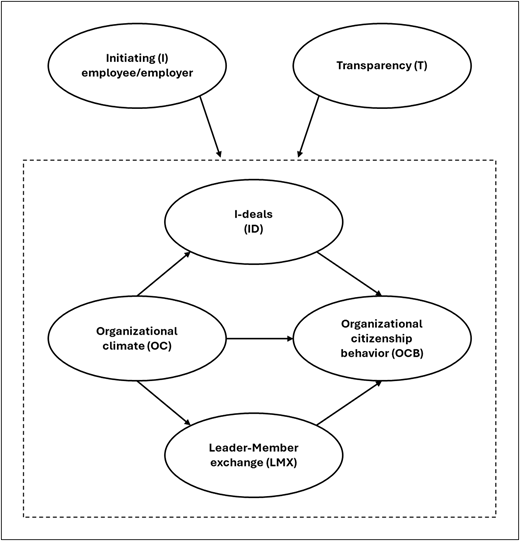
Our conceptual framework integrates OC, LMX, and i-deals as structurally distinct yet symbolically interrelated components of a relational system designed to elicit OCB. Each component holds both instrumental and symbolic value, but their influence is not merely additive. Rather, these elements operate in concert to shape a relational environment that communicates trust, recognition, and inclusion. Together, they trigger employees’ sense of belonging and discretionary engagement as core mechanisms underpinning prosocial behavior at work (Morgeson and Humphrey, 2008; Macfarlane, 2007; Organ, 1988).
Crucially, we contend that the interpretation of this relational system is not automatic. Instead, it is mediated by symbolic moderators, particularly transparency and initiator identity, which serve as cues about fairness, legitimacy, and intent. These moderators influence how employees interpret the meaning of OC, LMX, and i-deals and, by extension, the extent to which these relational signals activate or suppress OCB (Rousseau, 1995; Van Dijk et al., 2020).
As illustrated in Figure 1, the framework centers on the interplay among OC, LMX, and i-deals as relational drivers of citizenship behavior. These drivers are interpreted through transparency and initiator identity, which determine the symbolic resonance of relational practices. The outputs of this interpretive process influence both the likelihood and the character of OCB. Thus, the framework acknowledges that relational mechanisms do not act in isolation or exert universal effects (Connelly et al., 2011; Zhang and Akhtar, 2024). Rather, they are filtered through institutional and interpersonal signals that co-determine their influence.
This framework yields two core theoretical contributions. First, it introduces a relational signaling model of OCB, extending traditional models by showing how OC, LMX, and i-deals function as interpreted signals rather than merely structural predictors (Spence, 1973; Organ, 1988). Second, it identifies and theorizes symbolic moderators (i.e. transparency and initiator identity) as essential sense-making filters that explain divergent responses to similar structural arrangements. This contribution is particularly relevant in the context of higher education, where symbolic meaning, peer dynamics, and procedural fairness are deeply embedded in academic identity and organizational behavior (Macfarlane, 2007; Martin-Alcazar et al., 2024).
3. Methodology
3.1 Data collection and sample
Data for our cross-sectional study were collected using an anonymous questionnaire survey of university teachers in Slovakia. Before launching the survey, we validated the instrument with supervisors of organizational behavior courses at two Slovak universities. The content of the questionnaire was consulted in face-to-face meetings to ensure its quality. In this way, we ensured two main components of instrument validation: face validity and content validity. Concerning face validity, the guarantors mainly examined the clarity, appropriateness, logical connections, and format of the questionnaire items, along with the overall structure, including response options. In terms of content, the guarantors assessed key aspects, namely the relevance, representativeness, and comprehensiveness of the questionnaire items for the construct, or the possible redundancy or overlap of items. We also pre-tested the questionnaire with educators from the Faculty of Business Management at the University of Economics in Bratislava, who confirmed their understanding of all the questionnaire questions (Colbert et al., 2019; Willimack et al., 2023).
Subsequently, the questionnaires were sent in electronic format to the e-mail addresses of individual teachers at Slovak universities with a request to fill them in and an explanation of the meaning of the study. The sample of respondents was selected by simple probability sampling (every tenth lecturer) chosen from the list of employees available on the websites of universities and their faculties. The anonymity of the respondents was ensured. At the same time, the respondents were informed that by sending the completed questionnaire they agreed to the processing of the data. The entire survey was conducted from March to April 2023. The faculty members were selected from all public universities in the country.
There are currently 113 faculties in Slovakia, most of which are in the capital city of Bratislava (34). Twelve faculties in Bratislava were involved in the survey; in other larger Slovakian cities, which have seven to 14 faculties, three faculties from each city took part. Four faculties from smaller cities with one to four faculties participated in the survey. A total of 1,050 employees were approached and, with a return rate of 62%, we obtained 651 relevant responses forming our research sample. The respondents were full-time university employees, of whom 56% were assistant professors with PhDs, 28% were associate professors, and the remaining 16% were professors. In terms of gender, 55% were female and 45% were male. The mean age of the respondents was 45.22 years (min = 26, max = 75, SD = 10.67), with a mean experience of 16.01 years (min = 1 year, max = 48 years, SD = 10.81).
To contextualize relational constructs within academic institutions, we clarified that the term “leader” or “superior” in this study refers to department chairs, deans, or immediate institutional supervisors who hold direct influence over work conditions and the negotiation of i-deals.
We also asked respondents to indicate whether an i-deal agreement was initiated by themselves or by the employer. In the sample, more than two-thirds of the i-deals were made at the request of the employee (72%). The remainder (28%) of the i-deals were initiated by the employer. In terms of transparency, 68% of the i-deals were concluded transparently within the formal policy of the organization. The remaining deals (32%) were concluded with some degree of confidentiality.
3.2 Common method bias
Since all variables (independent, dependent, moderating, and control) were measured using a self-report questionnaire at a single point in time, the data were subject to potential common method bias (CMB) (Podsakoff et al., 2012). To minimize this risk, we implemented a series of procedural remedies, particularly suited to studies where data recollection is not possible (Podsakoff et al., 2012). These techniques align with early guidance on method bias control from Podsakoff et al. (2003), who emphasize both procedural and statistical remedies in organizational research.
First, we carefully designed the questionnaire to reduce method variance by clearly structuring the item blocks and visually separating the measurement of independent, dependent, and moderating variables. Response formats and scales were kept consistent to reduce confusion. Additionally, the items were presented in a mixed order across constructs to break any implicit response patterns. This structured approach is consistent with the survey design best practices proposed by Dillman (2000), who highlights item formatting, flow, and neutrality as key elements to reduce bias.
To further limit response bias, we included both positively and negatively worded items, as recommended by Dueber et al. (2022), and provided a neutral introductory statement to reduce social desirability pressure. Such cognitive design features have also been shown to mitigate acquiescence and satisficing effects in organizational surveys (Saks and Ashforth, 1997).
All questionnaire items were initially developed in English and subsequently translated into Slovak following a back translation procedure. Two independent bilingual experts completed the forward translation from English to Slovak, while a third expert translated the Slovak version back into English. Any discrepancies between the original and back-translated versions were discussed and resolved collaboratively to achieve conceptual equivalence. This process ensured that the items maintained semantic clarity and were culturally appropriate for the target population. This method is widely used in international survey research to ensure construct validity across linguistic contexts (Rousseau, 2001).
Statistical checks were also conducted. We assessed collinearity using the variance inflation factor (VIF). All VIF values were below 5.0, indicating no critical multicollinearity and suggesting that common method bias is unlikely to significantly distort the results (Hair et al., 2019).
Taken together, these procedural and statistical precautions strengthen the validity of the study’s findings by reducing the likelihood of inflated relationships among constructs due to method bias.
3.3 Measures
OCB was measured using a 14-item instrument based on the meta-analytical work of Podsakoff et al. (2000). This instrument captures seven well-established dimensions of OCB: Helping Behavior, Sportsmanship, Organizational Loyalty, Organizational Compliance, Individual Initiative, Civic Virtue, and Self-Development. The OCB scale has been validated in numerous studies and provides a robust operationalization of discretionary workplace behavior (LePine et al., 2002; Allen et al., 2003). This multidimensional structure aligns with the integrative models proposed by Organ (1988) and has been supported empirically in higher education contexts (Rezaei et al., 2023).
Example items include:
“I often help other team members without being asked” (Helping),
“I never complain when faced with excessive work” (Sportsmanship),
“I usually do more work than is required of me” (Initiative), and
“I can always be counted on to follow the rules” (Compliance).
Responses were recorded on a 5-point Likert scale ranging from 1 = “Strongly disagree” to 5 = “Strongly agree.”
OC was assessed using an adapted version of the instrument developed by Koys and DeCotiis (1991). This instrument was selected due to its demonstrated relevance in academic contexts, particularly as validated by McMurray and Scott (2013). In a broader organizational context, Patterson et al. (2005) confirm the construct validity and behavioral relevance of climate measures, demonstrating that specific dimensions of climate are systematically linked to leadership behavior, innovation, and organizational productivity. The scale captures five key dimensions of climate: support, trust, fairness, innovation, and recognition. Support reflects perceptions of institutional care and encouragement. Trust refers to openness in communication and mutual respect among members. Fairness addresses the consistent and impartial application of rules. Innovation reflects the institution’s openness to new ideas and practices. Recognition captures the extent to which individual contributions are acknowledged and valued. Each dimension is measured by three items. This structure reflects the findings of Wallace et al. (2016) and Kamal et al. (2020), who emphasize the relevance of symbolic climate cues in academic institutions.
Example items include:
“There is a climate of trust in my institution” (Trust),
“My efforts are appreciated and acknowledged” (Recognition), and
“New ideas are encouraged here” (Innovation).
All responses were collected using a 5-point Likert scale.
I-deals were measured using an 11-item scale developed by Hornung et al. (2010), which captures four domains of individualized work arrangements: developmental, flexibility, task, and financial. Developmental i-deals refer to personalized opportunities for growth, such as mentoring or participation in special projects. Flexibility i-deals involve tailored work schedules or remote work arrangements. Task i-deals reflect variations in the content or nature of assigned tasks to better fit individual strengths, while financial i-deals pertain to customized compensation agreements that acknowledge specific contributions. This typology aligns with the conceptual framework proposed by Rousseau (2005) and has been validated in subsequent cross-sector studies (Zhang and Akhtar, 2024; Gachayeva and Murphy, 2024). Moreover, the structure and logic of this instrument are consistent with the ex post i-deals scale developed by Rosen et al. (2013), which emphasizes post-entry, negotiated customizations that serve both functional and symbolic purposes.
Example items include:
“I have received individualized tasks that differ from those of my colleagues,”
“I have a special work schedule adapted to my needs,” and
“I have been given access to development opportunities not generally available.”
LMX was measured using the 7-item LMX-7 scale developed by Liden and Maslyn (1998). This instrument is widely used and captures the quality of the relational exchange between employees and their immediate supervisors. In the academic context, “leader” refers to department chairs, deans, or project leads — individuals with institutional authority or decision-making influence. The scale addresses dimensions of trust, support, loyalty, and professional respect. The LMX construct has demonstrated predictive validity in prosocial academic behaviors, as shown in studies by Ancarani et al. (2011) and Cropanzano and Mitchell (2005).
Example items include:
“My leader understands my job problems and needs,”
“I have a good working relationship with my leader,” and
“I can count on my leader to support me.”
Control Variables included gender, age, academic rank, and tenure. These were included due to their demonstrated relevance in shaping both relational perceptions and OCB in academic contexts (Dirican and Erdil, 2016; Hafidz et al., 2012; Turnipseed and Vandewaa, 2012). Incorporating these controls is consistent with calls for demographic sensitivity in faculty-based studies (Waaijer et al., 2017). See Table 1.
3.4 Data analysis and model testing
To test the research model and examine the relationships among the latent variables, we employed Partial Least Squares Structural Equation Modeling (PLS-SEM) using SmartPLS 3.0 (Ringle et al., 2005). PLS-SEM was selected for several methodological reasons.
First, PLS-SEM is especially suitable for exploratory models and theory development contexts where constructs may be complex, multidimensional, and not yet fully established (Hair et al., 2012). Our conceptual framework integrates multiple relational constructs (OC, LMX, i-deals), moderators (transparency, initiator identity), and a seven-dimensional outcome variable (OCB), making model complexity a key consideration. This aligns with arguments by Chin (1998), who emphasized PLS-SEM’s flexibility in developing emergent theory and handling second-order constructs.
Second, PLS-SEM is robust under conditions of non-normal data and moderate sample sizes, which matches the profile of our dataset (N = 651). Given our emphasis on identifying predictive relevance and exploring interaction effects rather than testing nested models or covariances, PLS-SEM offers strong advantages over covariance-based SEM (CB-SEM). Wold (1982) and Tenenhaus et al. (2005) similarly advocated PLS-SEM for predictive modeling in social sciences.
Before model estimation, we assessed indicator reliability, composite reliability, and average variance extracted (AVE) for all constructs to confirm convergent validity. Discriminant validity was tested using the Fornell–Larcker criterion and heterotrait–monotrait ratio (HTMT) (Henseler et al., 2015). To assess potential multicollinearity among constructs, we also examined variance inflation factors (VIFs), all of which remained well below the critical threshold of 5.0 (Hair et al., 2019). These procedures follow best practices established in psychometric validation (Nunnally and Bernstein, 1994).
As this study is based on cross-sectional survey data, causal inferences must be made with caution. While PLS-SEM supports the estimation of path relationships and complex indirect effects, it does not establish temporal order. To confirm the causal mechanisms proposed in this study and to observe how relational dynamics evolve, future research should adopt longitudinal or experimental designs (Podsakoff et al., 2012; Rindfleisch et al., 2008). This limitation is broadly recognized in the social sciences, as noted by Spector (2006) and Maxwell and Cole (2007), who emphasize the importance of temporal design in assessing causal claims. We will return to this in the limitations section.
4. Results
4.1 Measurement model
To assess the quality of the constructs used in this study, we conducted reliability and validity analyses. All conventional thresholds were met. Cronbach’s alpha values ranged from 0.867 to 0.937, while composite reliability (CR) values fell between 0.770 and 0.980. The rho_A values ranged from 0.771 to 0.949, confirming internal consistency (Ringle et al., 2020).
Convergent validity was supported, as all constructs exceeded the recommended average variance extracted (AVE) threshold of 0.50 (Chin, 1998), indicating that the constructs explained at least half of the variance in their respective indicators. Indicator reliability was also acceptable, with the majority of standardized loadings exceeding 0.70 and some within the acceptable 0.60–0.70 range.
Discriminant validity was evaluated using the Fornell–Larcker criterion, cross-loadings, and the heterotrait–monotrait ratio (HTMT). For all constructs, the square root of the AVE exceeded the correlations with other constructs, and HTMT values remained below the conservative threshold of 0.85, confirming discriminant validity (Henseler et al., 2015).
4.2 Structural model
To evaluate the model’s predictive relevance, we assessed Q2 values for all endogenous constructs. All values were positive and above zero, ranging from Q2 = 0.133 for LMX to Q2 = 0.444 for ID, thereby indicating predictive relevance (Hair et al., 2014). In addition, the R2 values for the endogenous variables ranged from 0.587 (LMX) to 0.753 (OCB), exceeding the 0.10 threshold suggested by Bernal-Conesa et al. (2017) and reflecting substantial explanatory power.
Model fit was examined using the standardized root mean square residual (SRMR), which yielded a value of 0.100. This falls within the upper bound of the acceptable threshold (Hair et al., 2014).
4.3 Hypothesis testing
The results indicate that organizational climate (OC) is positively associated with organizational citizenship behavior (OCB), supporting Hypothesis 1 (β = 0.768, p < 0.05). This finding aligns with prior studies linking supportive climates to prosocial workplace behavior, particularly in academic contexts where fairness and recognition are salient (Podsakoff et al., 2000; Turnipseed and Vandewaa, 2012).
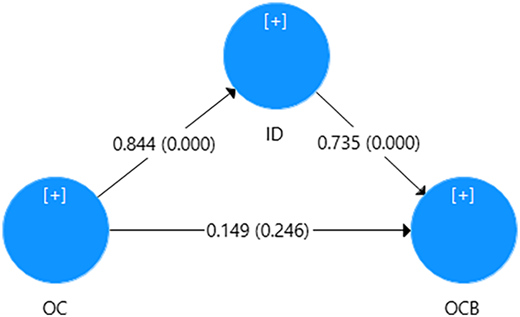
Hypothesis 2 is also supported. ID fully mediates the relationship between OC and OCB, with a significant indirect effect (β = 0.620, p < 0.05) that accounts for 80.6% of the total effect. The direct effect becomes non-significant, indicating that the influence of OC on OCB operates primarily through individualized arrangements. This is consistent with prior literature highlighting the symbolic value of tailored work arrangements in shaping perceptions of fairness and recognition (Hornung et al., 2010; Rousseau, 1995).
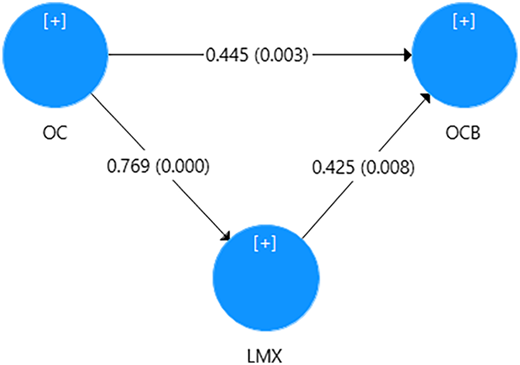
Hypothesis 3 is supported as well. LMX partially mediates the OC–OCB relationship, as evidenced by a significant indirect effect (β = 0.326, p < 0.05), which represents 42.3% of the total effect. In contrast to ID, the direct effect of OC on OCB remains significant, suggesting a complementary mediation structure. This finding resonates with prior findings that high-quality leader-member exchanges support discretionary efforts via trust and mutual obligation (Cropanzano and Mitchell, 2005; Coyle-Shapiro and Kessler, 2000).
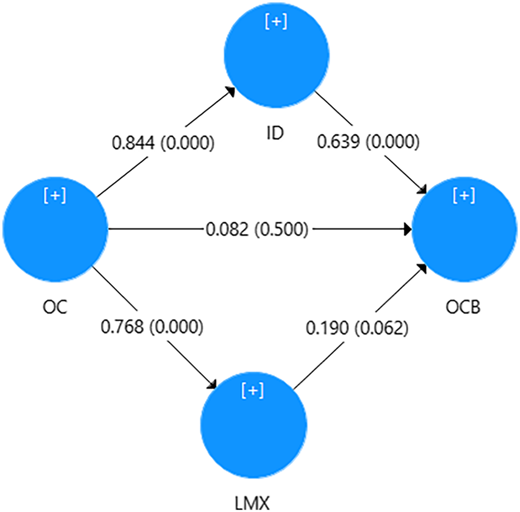
When ID and LMX are modeled jointly as mediators of the OC–OCB relationship (H4), the direct effect of OC on OCB becomes non-significant (β = 0.082, p ≥ 0.05), contributing only 10.7% to the total effect. The indirect effect through ID remains strong and significant (β = 0.539, p < 0.05), whereas the path via LMX becomes non-significant (β = 0.146, p ≥ 0.05). These results suggest that the influence of OC on OCB is largely transmitted through individualized relational mechanisms, particularly i-deals. This pattern corroborates recent research showing that in environments marked by diffuse authority and status competition, such as academia, customized work arrangements are often perceived as stronger relational signals than generalized relationship quality (Warter, 2019; Zhang and Akhtar, 2024).
Taken together, these results suggest that while both ID and LMX function as mediators, ID emerges as the dominant explanatory mechanism through which OC influences OCB. This supports our theoretical proposition that in status-sensitive academic environments, individualized arrangements serve as salient drivers of discretionary behavior, particularly when they convey recognition and professional worth (Organ, 1988; LePine et al., 2002). See Table 2 and Figures 2–4.
4.4 Moderation analysis
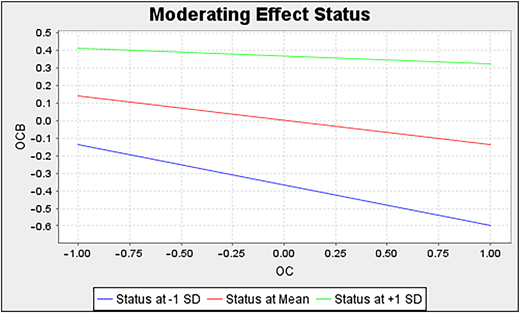
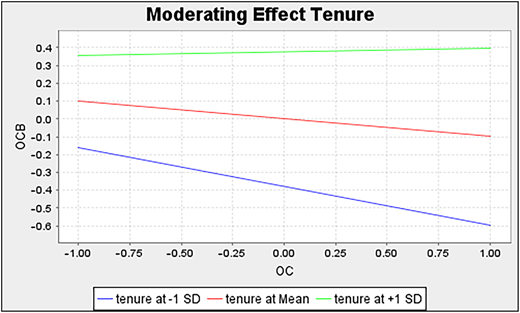
Moderation analyses were conducted to examine whether tenure and academic status moderate the relationships involving ID. No significant moderation effects were found for the direct relationship between OC and OCB, indicating that the organizational climate exerts a relatively uniform influence across faculty subgroups.
However, both tenure and status significantly moderated the indirect relationship via ID. Specifically, the mediating effect of ID was stronger among faculty members with longer tenure and higher academic rank, suggesting that individualized arrangements carry greater interpretive weight among those with embedded institutional experience and symbolic capital. This pattern aligns with findings from Turnipseed and Vandewaa (2012), who emphasized how career stage and role expectations shape discretionary behavior, and from Ghasemy and Elwood (2023), who noted that senior academics are more attuned to fairness and inclusion signals in opaque institutional environments. In a related vein, Russo and Petropoulou Ionescu (2024) highlight how academic citizenship is not experienced equally across gender lines, showing that women in Dutch academia are disproportionately expected to fulfill informal service roles while receiving less institutional recognition. This underscores the need to examine OCB not only through relational or structural lenses, but also in terms of symbolic and identity-based asymmetries embedded in academic cultures.
These findings reinforce the notion that i-deals are not universally experienced, but interpreted through the lens of positional experience. As Rousseau (1995) and Robinson and Morrison (2000) argue, employees with longer institutional exposure are more likely to hold complex psychological contracts and may therefore be more sensitive to relational cues that validate or challenge their expectations. See Figures 5 and 6.
4.5 Multigroup analysis: transparency and initiator effects
A multigroup analysis (MGA) was conducted to test for differences based on two categorical variables: i-deal initiator (employer vs. employee) and i-deal transparency (nontransparent vs. transparent). Respondents indicated whether the i-deal had been initiated by the employer (0) or by themselves (1), and whether the arrangement was transparent (1) or not (0).
While Rousseau (2005) suggested that such distinctions may sometimes be negligible, the symbolic salience of these variables in academic institutions remains underexplored. This limitation has been previously noted by Yang (2020) and Warter (2019), who argued that status-sensitive environments amplify the interpretive weight of procedural signals such as visibility and authority source.
Our analysis revealed statistically significant differences in several key path relationships based on the transparency and initiator of the i-deal. Specifically, transparency reduced the strength of the direct relationship between OC and OCB, while amplifying the indirect effects of both ID and LMX on OCB. These findings underscore the interpretive role of i-deal characteristics and lend support to a signaling perspective on relational mechanisms. They suggest that formal visibility and the source of the arrangement shape how employees assess fairness and legitimacy within the organization (Macfarlane, 2007; Connelly et al., 2011).
Hypothesis 5 predicted that the positive relationship between OC and OCB would be stronger when i-deals are implemented transparently. This hypothesis is supported: under conditions of transparency, the direct effect of OC on OCB diminishes while the mediated paths through ID and LMX are enhanced. This indicates that transparency functions as a symbolic amplifier, reinforcing employees’ interpretations of fairness and recognition associated with organizational climate.
Hypothesis 6 proposed that the positive relationship between LMX and OCB would be stronger when i-deals are initiated by leaders rather than by employees. This hypothesis is also supported: the multigroup analysis shows that leader-initiated deals significantly amplify the impact of LMX on OCB.
Hypothesis 7 proposed that the positive relationship between i-deals and OCB would likewise be stronger when i-deals are initiated by leaders. This hypothesis is supported as well. The legitimacy and perceived fairness associated with leader-initiated i-deals appear to enhance their prosocial impact, particularly in status-sensitive academic settings. See Table 3.
5. Discussion
Universities are multifaceted social organizations characterized by tensions between long-standing academic norms such as autonomy, collegiality, and scholarly freedom, and mounting external pressures for accountability, visibility, and efficiency (Warter, 2019). As performance metrics intensify, institutional effectiveness increasingly depends on discretionary, relational, and often invisible forms of work, defined by organizational literature as organizational citizenship behavior (OCB) (Organ, 1988; Macfarlane, 2007; Khan et al., 2020; Ghasemy and Elwood, 2023).
This study offers a theoretically and empirically grounded model that explains how OCB in academic contexts emerges from a system of interrelated drivers: organizational climate (OC), high-quality leader–member exchange (LMX), and personalized work arrangements (i-deals). Rather than viewing these as discrete antecedents, we conceptualize them as an interactive socio-organizational system through which discretionary work behavior is co-constructed.
Our structural model confirms a strong total effect of OC on OCB (β = 0.768, p < 0.05), in line with prior work in both public and private sector contexts (Danish et al., 2014; Yusnita et al., 2021; Sinaga et al., 2019). However, once mediators are introduced, the direct path becomes non-significant, indicating that OC serves as a contextual enabler rather than a direct behavioral driver. This supports conceptualizations by Bergeron et al. (2014), who argued that discretionary behavior is contingent on contextual activation.
Among the mediators, i-deals emerge as the primary pathway. When modeled alone, i-deals mediate 80.6% of the total effect (β = 0.620, p < 0.05). When modeled jointly with LMX, the indirect path via i-deals remains strong and significant (β = 0.539, p < 0.05), while the LMX path becomes non-significant (β = 0.146, p ≥ 0.05). This suggests that in status-sensitive academic settings, personalized work arrangements are more salient and meaningful than generalized relational quality. These findings align with recent work emphasizing the prominence of individualized resource negotiation in professionalized settings (Hornung et al., 2014).
Still, LMX should not be dismissed. When analyzed separately, LMX significantly mediates 42.3% of the total effect (β = 0.326, p < 0.05), and the direct OC–OCB relationship remains significant, indicating complementary mediation. This supports the view that relational trust and personalized work arrangements function together, with each contributing to the other rather than serving as substitutes. In academic settings, this may reflect the dual role of faculty members who are both independent professionals and integral participants in the organizational structure. This perspective resonates with the argument made by Coyle-Shapiro and Kessler (2000), who emphasize that relational obligations in professional contexts are grounded in shared expectations rather than formalized agreements.
Our moderation analyses further nuance this picture. The indirect effect of OC on OCB via i-deals is stronger among faculty with longer tenure and higher academic status. These results suggest that access to and interpretation of i-deals are shaped by one’s position within the institutional hierarchy, which highlights the interplay of agency and structure. This aligns with Macfarlane’s (2007) critique of “para-academic” roles and underscores the stratified landscape of citizenship in universities.
The multigroup analysis reveals important differences related to the initiation and transparency of i-deals. A majority of respondents (72%) reported that they themselves initiated the i-deal, while only 32% described the arrangement as transparent to others. These distinctions matter. Transparency dampens the direct OC–OCB path but amplifies the indirect effects of both i-deals and LMX. This echoes findings by Rosen et al. (2013) and Yang (2020), who show that transparency enhances legitimacy but may reduce perceptions of uniqueness. These interpretive dynamics are especially relevant in academic settings, where cues of fairness, recognition, and inclusion often substitute for formal reward structures (Gachayeva and Murphy, 2024).
Conceptualizing OC, LMX, and i-deals as an interdependent system rather than isolated predictors, our study offers a novel explanatory model for the emergence of citizenship behavior in higher education. This not only reflects the layered realities of academic work but contributes to broader debates in organizational behavior about the relational and contextual dynamics that shape discretionary action (Zhang and Akhtar, 2024). The model further illustrates the utility of signaling theory (Spence, 1973; Connelly et al., 2011) in understanding how symbolic cues—such as transparency and initiator identity—mediate the interpretation of institutional arrangements and shape behavioral outcomes.
6. Implications for theory and practice
Our findings yield several implications that extend theoretical understanding and provide actionable guidance for academic leadership operating in complex institutional environments.
From a theoretical perspective, this study advances the conversation on organizational citizenship behavior (OCB) by demonstrating that such behavior does not arise from isolated antecedents but emerges from a systemic configuration of organizational climate (OC), leader–member exchange (LMX), and idiosyncratic deals (i-deals). This systemic view challenges the traditionally sequential framing of antecedents and aligns with contemporary calls for more integrative organizational behavior models.
The originality of this study lies in linking these theoretical strands—i.e. Social Exchange Theory, Equity Theory, Self-Enhancement Theory, and Conservation of Resources Theory—into a structural model that captures how individualized work arrangements and dyadic trust relations jointly mediate the climate–behavior relationship in academic settings. This integrative perspective reflects a novel contribution to organizational behavior literature.
The findings refine and extend Social Exchange Theory by showing that trust-based leader–member relationships (LMX) are insufficient alone to drive discretionary behavior; rather, the addition of personalized, negotiated work arrangements (i-deals) substantially strengthens the explanatory power of social exchange in higher education (Rousseau, 2005; Colquitt et al., 2013). The joint operation of LMX and i-deals—especially when enacted within a supportive climate, demonstrates how discretionary effort is fostered by both relational trust and tailored recognition.
Additionally, our study enriches Equity Theory (Adams, 1965) by highlighting that fairness in organizational life is not only assessed through distributive outcomes but also through the performative and procedural dimensions of individualized treatment. The roles of transparency and initiator identity in shaping the legitimacy of i-deals point to a nuanced understanding of fairness, often overlooked in the literature (Ng and Lucianetti, 2016; Yang, 2020; Laulié et al., 2021). This finding is echoed by Turnipseed and Vandewaa (2012), who emphasized that fairness judgments in academic institutions depend not only on the content of rewards but also on how they are socially constructed and signaled.
We also contribute to Self-Enhancement Theory (Dufner et al., 2019; Srikanth et al., 2022) by demonstrating how personalized recognition embedded in i-deals can affirm professional identity and increase willingness to engage in OCB. This effect is particularly pronounced in status-sensitive environments such as academia, where symbolic recognition can amplify or diminish feelings of legitimacy and self-worth (Yang et al., 2023). Moreover, Hafidz et al. (2012) found that individual traits and perceptions of acknowledgment interact to shape citizenship behaviors, which further reinforces the motivational basis of identity-enhancing arrangements.
Finally, by positioning i-deals as both resource-generating mechanisms and symbolic acts, our findings align with and extend the Conservation of Resources Theory (Kwok et al., 2023). The evidence suggests that i-deals help mitigate job strain and facilitate sustained engagement, thus contributing to the longer-term career viability of academic staff.
From a practical standpoint, our results emphasize that academic institutions should not treat LMX and i-deals as isolated interventions. Rather, these practices ought to be embedded within a broader organizational environment characterized by fairness, inclusion, and strategic coherence. Institutions that foster such environments are more likely to retain talent, strengthen commitment, and build institutional resilience, particularly among senior faculty (Macfarlane, 2007; Warter, 2019).
Nonetheless, implementing i-deals in academic settings requires careful attention to contextual dynamics. Although customized arrangements can support professional development and autonomy (Rofcanin et al., 2018), inadequate transparency or unclear initiation processes may give rise to perceptions of favoritism or inequality (Rousseau et al., 2009; Garg and Fulmer, 2017). In our sample, 72% of i-deals were initiated by employees, and only 32% were transparent to others. This imbalance highlights the need for inclusive and communicative organizational cultures that balance individualization with procedural fairness.
To ensure sustainable implementation, university HR departments and leadership teams might consider developing formal guidelines or review mechanisms for i-deals that promote transparency and inclusivity while preserving their customized nature. Examples include optional disclosure practices, routine discussions at the team level regarding the legitimacy of arrangements, or periodic assessments to monitor perceived fairness in their distribution. These structures enable academic leaders to manage i-deals in a way that respects their individualized essence while preserving legitimacy within the broader organizational context. These practices are particularly important in high-status and tenure-based environments, where unequal access to recognition and flexibility may unintentionally reinforce structural divides (Dirican and Erdil, 2016).
Our findings reinforce prior work (Colquitt, 2001; Aggarwal et al., 2018; Assefa et al., 2024) advocating the development of relational leadership capabilities. Leadership development initiatives should train academic managers in LMX-building behaviors, transparent negotiation techniques, and fairness signaling. In doing so, institutions not only foster OCB but also lay the foundation for more sustainable academic careers and long-term organizational commitment.
7. Limitations and future research
While this study offers meaningful theoretical and practical contributions, several limitations should be acknowledged. Each limitation provides direction for future research.
First, the data were collected within Slovak higher education institutions, involving 651 academic employees. Although the sample is balanced across institutional types and career stages, the national context, characterized by a predominance of public universities and limited formalization of citizenship-related incentives, may constrain the broader generalizability of the findings. Mechanisms such as LMX and i-deals are theoretically transferable, but their operation likely varies across institutional logics, labor frameworks, and academic governance traditions (Ghasemy and Elwood, 2023). Comparative research across national contexts and university types would help assess the scope and boundary conditions of our proposed system.
Second, the study’s cross-sectional, single-source survey design presents familiar challenges regarding both causal inference and common method variance. Procedural remedies such as item randomization and guaranteed anonymity were applied to mitigate these risks (Podsakoff et al., 2012). Nevertheless, the absence of multi-wave or multi-source data limits our ability to model reciprocal dynamics and feedback loops that likely characterize evolving perceptions and relational processes over time (Rindfleisch et al., 2008). Additionally, we focused exclusively on employees’ perspectives, omitting managerial views, which represents a meaningful limitation. Future research could address this gap by adopting dyadic research designs or applying mixed-method triangulation to capture both managerial and staff interpretations of relationship quality and i-deal formation.
Third, while our model offers a robust and novel framework, it is necessarily selective in scope. Other relevant constructs, such as transformational leadership, team climate, or organizational justice, may interact with LMX and i-deals in shaping OCB (Colquitt, 2001). For instance, voice climate and collegial trust may serve as important moderators or antecedents that influence how fairness, legitimacy, and recognition are interpreted in personalized exchanges. These dimensions deserve closer examination in future modeling efforts.
Fourth, although we extended i-deal theory by introducing the dimensions of transparency and initiator identity, both constructs require further refinement. Transparency likely functions not as a binary variable but as a socially constructed perception shaped by visibility cues, power relations, and contextual norms (Yang, 2020; Spence, 1973; Connelly et al., 2011). Similarly, the ability to initiate i-deals may depend on factors such as seniority, institutional culture, or dispositional assertiveness, which merit attention in subsequent studies (Rousseau, 1995).
Looking ahead, we encourage researchers to test and expand our integrated model using longitudinal, panel-based, or experimental designs, ideally incorporating both employee and managerial perspectives. Cross-disciplinary research and comparisons across sectors could help evaluate the generalizability of the system proposed here. Furthermore, examining how variations in institutional strategy, governance structures, or resource regimes moderate these relationships could deepen our understanding of when and for whom relational trust and individualized support foster OCB.
Despite these limitations, this study offers a novel and context-sensitive framework for understanding how academic institutions may encourage discretionary effort. By conceptualizing OC, LMX, and i-deals as a relational system, and theorizing the performative and procedural dimensions of i-deals, we contribute both to organizational behavior theory and to the evolving discourse on academic citizenship. In doing so, we offer a foundation for rethinking how cooperation, identity, and fairness are mobilized in performance-driven academic environments.