This study aims to investigate the process of integrating sustainability into strategic planning and analyse inherent complexities.
Through a qualitative approach, an in-depth case study is proposed, highlighting the development process of the sustainability plan and integration with the strategic plan through the triangulation of different sources (interviews, external and internal firm documents).
The results show how the first sustainability plan originated from extracting sustainability projects already in the strategic plan. The collection in a separate document created awareness, facilitating integration with the strategic plan. Furthermore, three main types of complexity in the integration process emerged from the interviews: the trade-off between business and sustainability, difficulties in monitoring sustainability KPIs and organisational and cultural complexity.
The analysis highlights the importance of introducing responsible figures who link the highest decision-making body with the rest of the organisation, thus favouring the integration of sustainability into strategies and operations. The introduction of adequate KPIs enables the monitoring of sustainability aims.
The study represents one of the first to describe the integration process between the strategic and sustainability plans, highlighting which types of complexity emerge.
1. Introduction
Firms today must outline and make managerial, strategic and sustainability decisions in situations of uncertainty and complexity (Ammirato et al., 2022). These are essential decisions for survival over time and guaranteeing a competitive advantage. Sustainability is the subject of great attention, and companies often face high external pressures, which fundamentally require good strategic planning to deal with them (Mahsud et al., 2018).
However, integrating strategic planning and sustainability is not easy, as many factors come into play, resources are limited, and sustainability initiatives often generate impacts over the long term (Nguyen and Kanbach, 2023).
Furthermore, current trends show that more and more firms are preparing sustainability plans in synergy with traditional strategic plans and are aiming to put the social and environmental initiatives they implement on paper. The desire is to move towards full integration between general business strategy and sustainability at a practical and managerial level, but this integration can be complex (Beusch et al., 2022).
The literature on sustainability plans and integration with corporate strategy is scarce. Still, the evolving trends and ongoing regulatory pressures (like, for example, Non-Financial Reporting Directive 2014/95/EU (NFRD), EU taxonomy and the recent EU Corporate Sustainability Reporting Directive CSRD) suggest the need to deepen this line of research. The extensive regulatory activity developed in recent years, starting with the NRFD and culminating in the CSRD, represents an important pressure to increasingly integrate business strategy with sustainability.
Non-Financial Reporting Directive 2014/95/EU (NFRD) [1] aimed to improve and strengthen the social responsibility of large firms by introducing mandatory non-financial reporting. To achieve this aim, firms were asked to expand the boundaries of disclosure to include social and environmental sustainability issues and to adapt their strategies to them (Primec and Belak, 2022).
More recently, the Corporate Sustainability Reporting Directive 2022/2464 (CSRD) [2] intends to facilitate companies to disclose sustainability-related information in a more transparent, verifiable and comparable way by promoting the full inclusion of ESG issues within the company’s corporate strategy (Glaveli et al., 2023). All firms subject to CSRD must prepare their financial statements by including the new disclosures provided by the European Sustainability Reporting Standards (ESRS).
Furthermore, the CSRD stimulates firms to change their approach to sustainability issues, shifting from a backwards-looking logic aimed at catching current performance to a forward-looking logic, in which sustainability aims are considered from a future perspective (Fiandrino et al., 2022); therefore, firms need to consistently plan their core activities together with ESG activities.
Considering the limited development of sustainability planning literature and its increasing relevance, this article examines a case study of a firm well known for its sustainability commitment, focusing on its sustainability planning process in light of recent reporting regulations.
The analysis aims to investigate the integration process between sustainability strategy and strategic planning, highlighting which complexities can emerge in the integration process. In-depth, by conducting interviews and analysing firm documents, the aim is to map the main elements of complexity that firms are expected to face in the integration process of business strategy and sustainability while at the same time trying to suggest solutions experienced in a concrete case study that already dealt with these complexities.
Our paper contributes to the literature by reconsidering topics relating to strategy and corporate sustainability, i.e. the trade-offs between different strategic aims and the difficulties in establishing an effective performance measurement from the point of view of sustainability planning, inferring specific implications.
Furthermore, the research results offer valuable insights to managers and practitioners who can analyse an exemplary process model for defining the sustainability strategy and planning. In light of the new European CSRD legislation, deepening the sustainability planning process and contents may be useful to guide firms that must introduce a forward-looking approach to disclosure in compliance with new standards.
The rest of this study is organised as follows: Section 2 presents the relevant literature review. Section 3 describes the applied methodology; Section 4 presents the findings of the case study analysis. Section 5 critically discusses the results. Section 6 presents the conclusions, main theoretical, managerial and policy implications, limiting aspects and opportunities for future research.
2. Literature background
2.1 Corporate sustainability and business strategy
Corporate sustainability (CS) is a comprehensive and multidimensional concept rooted in sustainable development (Engert and Baumgartner, 2016). It can be defined as the development of strategies and activities as well as the awareness and fulfilment of the responsibilities that a firm has towards the environment and its key stakeholders, both current and future (Dyllick and Hockerts, 2002). Sustainability is linked to the strategies a firm implements to foster the development of its stakeholders, promoting their well-being economically, socially, and environmentally. Corporate sustainability embraces economic factors but especially includes social and environmental initiatives and good practices (Baumgartner, 2014). From this point of view, the concept is similar to Corporate Social Responsibility (CSR), where the three dimensions (economic, social and environmental), the stakeholder consideration and the voluntariness of initiatives appear as common aspects in most CSR definitions (Dahlsrud, 2008). Although CS and CSR literature have different origins (Montiel, 2008), recent literature reviews indicate large overlaps in construct definitions, ontological assumptions, nomological networks and constructs measurement (Bansal and Song, 2017). CSR is mainly grounded in ethics and welfare economics, whereas sustainability is grounded in systems science, but although emerging from different paradigms, CSR and CS converged toward strategic management in the last decades (Bansal and Song, 2017). This means that a renewed consideration of both CSR and CS in strategic terms is emerging.
In fact, the CS literature argues that integrating sustainability issues within the firm’s core business is a strategic task, as rooting sustainable activities and strategies in the corporate culture can be a winning move in pursuing sustainable success and competitive advantage (Lankoski, 2008; Baumgartner, 2014).
Similarly, the “business case for CSR” has been discussed in the literature to highlight how companies implement CSR practices following the logic of economic convenience (Carroll and Shabana, 2010).
Nonetheless, not all authors agree that the company must instrumentally implement social or sustainability strategies for competitive advantage (Kaplan, 2020; Vogel, 2005). Some authors explain how it is necessary to rediscover that the company’s ultimate goal is to prosper and create value for its communities, with a fundamental ethical orientation (Carroll, 2021). Further, the business case resolves the conflict between business and sustainability when stakeholders' interests are also considered in defining practices (Schaltegger et al., 2019), going beyond the sole financial benefit of the company and embracing win-win strategies in the fundamental relationship between companies and stakeholders (Busch et al., 2024).
These strategies have been referred to in the literature as suitable for integrating sustainability into firms at the cultural, organisational, and long-term levels (Galbreath, 2010; Nguyen and Kanbach, 2023). A comprehensive view of strategy requires that firms consider both short-term and medium-to long-term effects, which contributes to creating a link with corporate sustainability issues (Anthony, 2019). Friedman and Segev (1976) have already discussed the difficulty of integrating a long-term vision within the plans, as the circumstances are indeterminate over a very long period. For this reason, even today, the evidence mainly shows a short-term orientation of strategies (Sampson and Shi, 2023). However, sustainability and transition issues require a long-term temporal vision (Bansal and DesJardine, 2014).
Moreover, the literature concerned with understanding and analysing the mechanisms of integration between sustainability and strategy has adopted qualitative research methods, mainly surveys or interviews and business document analysis (Nguyen and Kanbach, 2023). Most studies have approached sustainability in its most general sense and by understanding how it is integrated with strategy (Daugaard, 2020). Studies in recent years have identified organisational capabilities and competencies (Neumüller et al., 2016), sustainability culture diffusion, business processes, actors and their roles as essential factors for sustainability integration strategies (Nguyen and Kanbach, 2023). Employee engagement, coupled with the diffusion of sustainability-oriented organisational skills, competencies, and inclinations, enables the corporate strategy to react and respond effectively to environmental and social stimuli, thus fostering a better integration of sustainability into the process (Nguyen and Kanbach, 2023). Creating transversal working groups in the organisation implies having an organisation capable of disseminating sustainability issues at all levels. Galpin et al. (2015) show how various actions are necessary for managers and employees to spread the culture of sustainability and how these activities are crucial for achieving sustainable corporate success.
Other studies have identified sustainability as a core principle reflected in the beliefs and plans a firm puts in place to pursue its business strategy (Christ et al., 2017). Sustainability is developed as a strategy to gain a better competitive advantage and to stand out within its target market, differentiating itself from its competitors (Christ et al., 2017). Teixeira and Junior (2019) explain in more depth how it is necessary to start from rethinking “traditional” products to 'sustainable' products to integrate sustainability into corporate strategic planning. Reconceiving products and markets to meet new societal needs is the main way to create shared value (Porter and Kramer, 2011). Creating shared value means reconciling economic success with social progress, that is, pursuing policies and practices that strengthen the firm’s competitive position while improving society’s social and economic conditions (Porter and Kramer, 2011). To do so, firms must adopt a strategic CSR that limits negative impacts and follows initiatives that bring large and distinctive benefits to businesses. The shared value literature argues that firms must find the intersections between society and business rather than consider trade-offs to reach corporate social integration (Porter and Kramer, 2006). This integration requires defining which social issues to prioritise, from those more related to the competitive context to generic social issues. Strategy integration requires introducing the prioritised social issues in planning. Still, while this could be straightforward for issues related to the core business, a specific sustainability planning process could be required for the others (Nguyen and Kanbach, 2023). The critics of shared value also highlight that this concept is a “sweet spot” between business and society (Dembek et al., 2016), while the tensions and trade-offs between sustainability and business continue to exist in the real world.
Sometimes, the pursuit of integration between sustainability and business can become difficult due to the lack of appropriate business skills (Deyassa, 2018). Previous studies have identified that the presence of specific skills is the starting point for implementing efficient CSR practices and policies that create higher value for both the company and society than those who do not use specific skills (Deyassa, 2018). Social responsibility in today’s world is increasingly present in every business activity, so it is useful for companies to know what skills and knowledge are essential to create value for stakeholders and, simultaneously, for the company itself (Osagie et al., 2016). This generates greater trust at all company levels, generating consensus and a shared vision of business success.
2.2 Strategic planning and monitoring
Strategic planning is one of the firm’s most widely used management tools (Wolf and Floyd, 2017; Rigby, 2001); it refers to the programmatic translation of strategy by evaluating a specific future time horizon (Mintzberg, 1993; Glaister and Falshaw, 1999).
Although each firm has its structural nature depending on its size and industry, and consequently, strategic planning processes may also differ, the literature agrees that strategic planning is a dynamic process by which firms use the resources they possess to implement new strategic alternatives and measure their effectiveness over time (Barron and Chou, 2017).
Preparing an effective strategic plan means planning under uncertainty and thinking ahead. In the past, the changes to which firms were subject occurred less frequently. There were fewer uncontrollable variables, and the process was more straightforward (McConkey, 2001).
Today’s environment, instead, requires speed of formulation and execution, agility, and prompt decision-making. Firms often face multiple situations under time constraints that lead to a lack of clarity when faced with opportunities or threats in the market in which they operate. An effective strategic plan must be easily consulted, clear, transparent, and not too verbose (Benkovà et al., 2019). If this is followed, the strategic plan allows the firm to achieve considerable expected results in terms of better performance, greater understanding, and clarity of its competitive potential, as well as responding to stimuli from the external environment effectively and profitably and without losing sight of its intended future goals (Daniel, 1992; Papke-Shields and Boyer-Wright, 2017).
In addition to the important relationship between strategic planning and implementation, a topic of interest in scientific research also concerns the integration of sustainability into strategic planning (Nguyen and Kanbach, 2023; Roche and Baumgartner, 2023). Relevant scientific efforts have been made in the literature to define specific strategies that are not only concerned with strictly business aspects with financial implications but are also oriented toward sustainability (Baumgartner and Ebner, 2010).
Integrating strategic planning and sustainability means supporting social causes, relationships within the value chain, and attention to the surrounding environment. Adopting such a vision can lead the company to adopt an increasingly integrated view, mechanising it within each business area and function and seizing the opportunity to manage potential conflict situations to improve the achievement of goals (Nguyen and Kanbach, 2023; Roche and Baumgartner, 2023).
Integration should be based on an explicit statement of intent related to sustainability (Baumgartner, 2014), in which the contribution of sustainability to the development and implementation of corporate strategy should be highlighted. The social and environmental dimensions should be balanced consistently with the economic dimension so that all pillars of sustainability are effectively integrated into strategic planning (Baumgartner, 2014).
Integrating strategic planning with corporate sustainability management requires the identification of all potential positive (opportunities and benefits) and negative (risks and problems) aspects associated with sustainability implementation (Baumgartner and Rauter, 2017; Wijethilake and Ekanayake, 2018). Some studies have argued that there are numerous factors, both internal (choice of sustainability indicators and monitoring, organisational capacity and collaboration, dissemination of culture on ESG issues) and external (surrounding environment and regulations), that influence such integration and mapping them all is difficult and leads to mixed results (Donkor et al., 2018; Engert and Baumgartner, 2016).
In this regard, companies, partly because of current regulations, are increasingly aware of the importance of responding to sustainability issues by taking a proactive approach (Torugsa et al., 2013) and integrating all dimensions of sustainability into strategic planning and operational processes (Wijethilake and Ekanayake, 2018).
The first aspect strictly concerns the choice, sometimes difficult, of appropriate indicators to monitor sustainability progress over time. The literature discussing the integration of sustainability into strategic planning has also focused on the indicators companies should include in their sustainability reports or implementation tools (Mio et al., 2020a). Specifically, the literature has discussed indicators related to executing sustainability strategies for implementing the United Nations Sustainable Development Goals (SDGs) at the corporate level (Van Zanten and Van Tulder, 2018). Other studies have analysed the determinants that can lead companies to ensure that their sustainability strategies contribute to sustainable development and the implementation of the SDGs (Smith et al., 2022), pointing out that companies implementing the SDGs sometimes experience tensions between corporate strategy and sustainable development goals (Vildåsen, 2018).
Still, other studies have addressed the propensity of firms to develop quantitative aims for the effective achievement of the SDGs they claim to be pursuing. It has emerged that many firms symbolically contribute to the SDGs and need help to implement quantitative indicators to monitor the achievement of the stated SDGs’ aims (Calabrese et al., 2022).
However, few studies have investigated the diffusion and monitoring processes of the SDGs and other sustainability indicators that firms use in sustainability plans (Izzo et al., 2020).
Although relevant questions remain about the most popular indicators for monitoring ESG practices within sustainability plans and how these indicators influence corporate performance, the literature has provided ample evidence suggesting that planning contributes positively to the achievement of essential business outcomes not only in economic terms but also in environmental and social terms (Wolf and Floyd, 2017).
Some studies have found that strategic planning positively influences organisational structure and how companies deal with difficulties, allowing them to conduct various scenario analyses and choose the best strategy to pursue initial objectives and maintain high competitiveness (Prange and Hennig, 2019). Other research has identified the potential of planning as a critical mechanism for coordinating and integrating business decisions and collaboration between different business functions to establish standard guidelines for pursuing sustainable success (Puglieri et al., 2022).
In particular, Weigand et al. (2014) explain that the collaboration between different organisational levels in the definition of the strategic plan can be beneficial even with a medium-long time horizon: this happens because the transversal skills of the different levels (strategic and operational) allow for detail more accurately the actions to be undertaken, the budget and monitoring.
Another equally important aspect of the strategic planning process for ESG issues lies in the diffusion of a corporate culture oriented towards sustainability (Weigand et al., 2014).
The most innovative sustainability activities that generate profitable results for both the environment and people depend on companies' willingness to internally foster an authentic culture of sustainability at all company levels (Galpin et al., 2015). Indeed, previous studies have shown that corporate culture develops and operates at multiple levels, and each level must be involved in strategic and sustainability planning dynamics for the company to achieve business success (Galpin et al., 2015).
2.3 Research purpose and research questions
This study aims to investigate the integration process between sustainability strategy and strategic planning, highlighting the elements of complexity emerging from the integration process. The breadth of the related literature, the present and emerging regulations on reporting, and the shared awareness of the opportunity to use appropriate indicators to monitor ESG issues indicate that the integration of sustainability into strategic planning is a pressing need but also that different factors of complexity may occur in its realisation. However, these elements of complexity that firms may face have not been deeply explored in the literature. This study aims to fill this gap by addressing the following research questions:
How can a strategic goal-setting process for sustainability be structured?
What complexities do companies encounter in integrating strategic business objectives with sustainability, and how do they address them?
3. Methodology
3.1 Data collection and analysis
This study was conducted through a qualitative approach to investigate the complexity of integrating sustainability into strategies and planning. In particular, the analysis was conducted through an in-depth case study (Yin, 2012) on a firm strongly oriented towards sustainability, SIT.
Given the firm’s strong sustainability orientation and recent experience in drawing up a sustainability plan, SIT is a significant case study that responds to purposive sampling aims (Suri, 2011).
It was selected to highlight the observed phenomenon’s significant characteristics (Ritchie et al., 2014). The information was collected from different perspectives, analysing firm documents that are both externally disclosed or used for internal purposes (i.e. the 2023 sustainability report, the 2022 sustainability plan and its 2023 update).
Furthermore, seven interviews were conducted with the main firm figures at different levels of the sustainability strategy and plan decision process. Table 1 reports the list of interviews.
The analysis of the interviews was preceded by the creation of a general analysis protocol based on the main themes that emerged from the literature (De Villiers et al., 2019). In particular, the theme of the trade-off between business and sustainability (Busch et al., 2024), the measurement of sustainability performance (Wolf and Floyd, 2017) and organisational culture (Nguyen and Kanbach, 2023) emerged as prevalent.
These themes emerged in the general context of business sustainability literature, but not specifically in the sustainability planning literature, that is already scant. Therefore, analysing these themes is useful for understanding their impact on the integration process. However, to avoid bias and to intercept other types of complexity different from the those mentioned above, the researchers left room for the interviewees to speak freely about the sustainability planning and the integration process to bring out further possible themes. Moreover, the presence of additional themes in the coding process or other particular features of complexity is verified.
After that, the analysis was conducted in two main phases following an iterative process, as proposed by Gioia et al. (2013). First, the researchers individually analysed all the interviews and documents available, tracing a first hypothesis of the primary emerging constructs on how complexity is expressed in creating a sustainability plan. In this first phase, sentences from the interviews that could be matched to the macro-themes identified in the literature were identified, thus creating first-order constructs. Then, data triangulation was used to analyse various documents and interviews to ensure robust interpretation (Hopper and Hoque, 2006; Modell, 2005). Later, a specific meeting between the researchers was led to verify the coherence of the identified themes, discuss and identify further themes that emerged from the analysis of the interviews, and highlight second-order constructs. After this, the researchers found complete agreement with the identified topics, giving consistency to the results and reducing the subjectivity of the interpretation (Gioia et al., 2013).
The results were collected in a final document where emerging complexity elements were reported, and key sentences from the interviews most representative of the identified constructs were extracted (Siltaoja, 2006).
3.2 Case description
SIT is a leading creator of intelligent environmental control and metering solutions for a more sustainable world and operates in key areas of enabling technologies for the energy transition (Link to the website).
It is a multinational leader in the reference markets and is listed in the Euronext Milan segment. The group has production sites in Italy, Mexico, Holland, Romania, China, Tunisia, and Portugal and a commercial structure covering all the reference world markets. It is environmentally sensitive as it operates in the heating sector and is integrated into international supply chains. However, its sustainability orientation starts from afar and is not exclusively driven by market dynamics. SIT is committed to upholding the United Nations Global Compact principles and advocating for responsible business practices. The firm actively participates in the European Heating Industry, the European Clean Hydrogen Alliance, and the Valore Acqua for Italy Community. Originating as a family business, SIT maintains its identity even after 70 years of history and a stock market listing. Retracing the salient steps of the sustainability journey of recent years, the firm has undertaken significant initiatives and projects addressing sustainability and environmental, social, and governance (ESG) issues. In 2018, SIT published its first sustainability report in alignment with the 2014/95/EU directive. By 2019, the firm redefined its mission and vision, highlighting sustainability as a fundamental value to be promoted within and beyond the organisation. This culminated in creating the “Green Paper” in 2020, which declared SIT’s ESG commitment. As derived from the firm’s mission and vision, the document outlines five sustainability pillars aligning with the SDGs. SIT established a sustainable governance structure in 2021, demonstrating a proactive approach to sustainable success. The primary task of the newly formed sustainability governance team was to formulate a sustainability plan. This plan consolidates the ESG endeavours and projects of individual firm divisions, defining critical objectives for the implementation phase and establishing key performance indicators for performance measurement.
SIT holds numerous awards and recognitions on sustainability issues. In 2022 and 2023, it ranked second and first in the Integrated Governance Index developed by ETicaNews [3] in the Top 5 Extra 100 category. This quantitative index measures the level of integration of Sustainability in Corporate Governance.
In June 2023, SIT obtained the Italian certification on gender equality because of its commitment to equity through concrete policies and actions to protect diversity, while in October 2023, it received the first prize at the Sustainability Award 2023 in the TOP 100 ESG Score >250 category [4].
4. Findings
4.1 SIT sustainability plan development process
In 2019, SIT reformulated its mission and vision in terms of sustainability, and this subsequently led to the need to draft a sustainability plan to give space and visibility to specific initiatives on social and environmental issues that did not find a suitable place in the business plan. SIT presented its first Sustainability Plan, entitled “Made to Matter”, in 2022.
This plan aimed to combine the efforts of individual business functions in the ESG area, framing key objectives and defining a set of Key Performance Indicators (KPIs) for measuring performance. The ESG issues on which it was based are closely linked to SIT’s business model, thus contributing to sustainable success.
This first sustainability plan, referred to years 2022–2025, was born by the extraction of projects and initiatives already present in the strategic plan to create higher awareness and outline a clear road map on the issues to be developed, with a long-term focus.
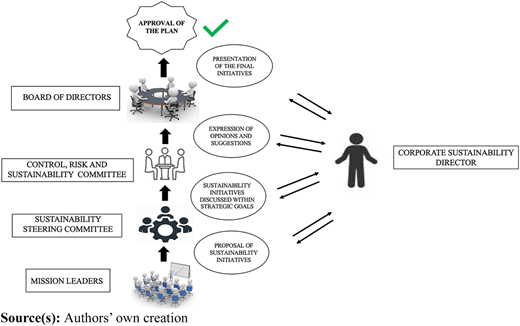
A sustainability governance structure was created to support the planning process, where several corporate figures come into play.
The Corporate Sustainability Director (CSD) is a board member and a key figure who connects leadership with management, ensuring that the mission and core values spread throughout the organisation and following up on the plan’s implementation. This figure is supported by the Sustainability Steering Committee (SSC), which comprises those business unit leaders responsible for defining the corporate plan. The committee regulates, approves, and directs the sustainability initiatives and activities proposed by the Mission Leaders' Team (MLT), which consists of operational-level managers and is led by the CSD. This team, which is multi-departmental in nature, aims to bring the values and instances related to sustainability into the firm’s strategic and operating processes. Each Mission Leader has a specific “mission” to pursue, which concerns a sustainability theme (e.g. the Head of Carbon Management with specific skills in the field of carbon footprint and task to measure and monitor GHG emissions, the Governance, Risk and Sustainability Officer with expertise on sustainability rating and report, as well as matters of ethics and business integrity with tasks on governance issues and Chief Technology Officer with skills and tasks on research, development and sustainable innovation). It fosters the dissemination of sustainability culture within the different business areas and presents new ideas on social, environmental, and economic issues.
Once the initiatives to be included have been defined by SSC in agreement with the CSD and mission leaders, the plan is submitted to the Control Risk and Sustainability Committee, an internal board committee which, being a non-deliberative body, expresses an opinion that it then reports to the Board of Directors (BoD), which is responsible for final approval.
From this moment, projects become operational. All these figures work in close connection and synergy for the drafting and execution of the plan.
Figure 1 graphically summarises the sustainability planning process.
The bottom-up process for the sustainability plan mirrors what happens for the business plan, where each business function proposes its initiatives, and the Control, Risk, and Sustainability Committee filters them, expresses opinions, and integrates them into a single document for the final BoD approval. Also, the time horizon and timetable of the sustainability plan are the same as strategic planning; this ensures consistency with the need for full synergy between business performance and ESG performance and allows for adequate and timely monitoring in the same management and governance bodies. The “Made to Matter” sustainability plan brings together around fifty initiatives and projects classified in the three ESG dimensions and related to specific SDGs.
The plan is structured into four main sections: in the first section, the firm, its values, and growth stages are presented; the second is devoted to presenting the ESG manifesto, materiality matrix, and sustainability governance mapping. The third section is devoted to detailing the four areas of the plan, namely Made by Us, Made for Future, Made with Care, and Digital Transformation, Innovation & Lean Culture; finally, the last section is devoted to presenting the practices through which the firm is committed to providing support to people affected by distress.
Concerning the SDGs, the Company contributes, through initiatives in the sustainability plan, to 11 of the 17 objectives promoted by the United Nations’ 2030 Agenda, each with different degrees of impact based on the material issues they refer to. With the materiality matrix, SIT maps out the issues of greatest importance to itself and its stakeholders. Each relevant theme is then related to the sustainability pillars of the Green Paper for consistency within the plan.
In the third section of the sustainability plan, SIT focuses on describing the mission, aims and practices/initiatives it puts in place to pursue each of the four areas into which the plan itself is divided (Link to the website):
Made By Us: to create long-term sustainable value for all stakeholders and ensure ethical and responsible business conduct,
Made For Future: to develop sustainable products and reduce the environmental impact of production processes,
Made With Care: to invest in our people and our community, creating the conditions for growth,
Digital Transformation, Innovation & Lean Culture: to enable themes for sustainability in SIT and develop our potential through digital innovation.
All contents within these four areas embrace both the business and ESG aims.
4.2 Mapping complexity in the relationship between strategic planning and sustainability plan
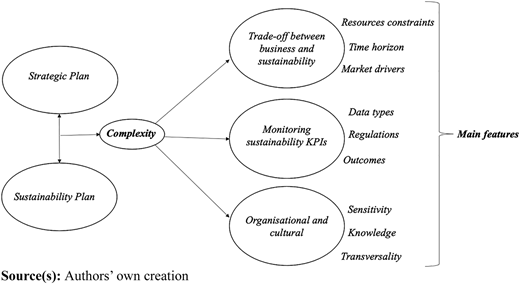
The interviews conducted to delve deeper into the case study and the triangulation with the business documents consulted provided an important key to answering the second research question concerning the complexity of integrating sustainability into strategy and strategic planning. Three main types of complexity were identified: the first resides in the trade-off between business and sustainability. The second relates to the complexity of monitoring sustainability KPIs. The third complexity is organisational and cultural.
The trade-off between business and sustainability presents different aspects and features of the complexity issue.
The first concerns the resource constraints that are imposed on choosing between many competing projects by assessing them in terms of their financial impact. When social and environmental initiatives directly lead to efficiency, the trade-off disappears. Still, in most cases, the benefits of sustainability initiatives are indirect or delayed, while costs and investments are immediate.
The element of resource constraints appears clearly from CSD, which explains how financial logic drives the choice of sustainability projects even at the managerial level and is further reiterated at the strategic level by PARSC, which explains the rationale behind the trade-off between business and sustainability. Moreover, the HCM, as mission leader, explains how the trade-off between business and sustainability requires compression in investment choices and that economic sustainability is a key pillar for the firm not to be overlooked.
Finally, the interviews revealed that in the choice of projects, those that generate eco-efficiency have priority in implementation.
The trade-off between business and sustainability is also substantiated in terms of timing.
While the economic aims typically included in the business plan have a medium to short time horizon, those of sustainability produce effects mainly in the long term, and this generates complexity in defining projects and placing them into the plans when they have no financial effects yet because the firm’s goal of development and survival over time should never be overlooked.
However, the importance of sustainability and its integration with business strategies made the firm orient its choices in the medium to long term.
Finally, the last aspect of complexity relating to business and sustainability trade-off lies in identifying market drivers that adequately integrate strategic business and sustainability aspects. Some sustainability issues are unrelated to the firm’s business and require separate planning. This complexity could make it difficult to fully integrate strategy and sustainability. For example, SIT has created a specific foundation to support some social inclusion initiatives in sports, asthis objective is not attributable to the company’s core business. The initiatives concerning the foundation are included in the sustainability plan. GRSO emphasised the concept that not all sustainability activities can be traced back to the firm’s real business while CSD also confirms the complexity of including some sustainability projects in the business plan.
Table 2 summarises the quotes from the interviews related to the main features of this first type of complexity.
The second type of complexity identified above relates to monitoring sustainability KPIs, where a critical element for the firm is finding the right indicators to measure sustainability issues adequately.
The GRSO, through an example of human rights policies, highlights the difficulty of finding a corresponding indicator that measures their goodness while the HCM also expressed the difficulty at the operational level of finding appropriate systems to monitor environmental performance that are not structured as financial or management accounting but are becoming more and more complex and relevant. For example, to manage information on emissions SIT has created a dedicated professional figure: the Head of Carbon Management.
The complexity of monitoring sustainability KPIs is also very much related to legislative and regulatory aspects. Regulations on these issues change rapidly and sometimes need to be clarified. Therefore, firms face the complexity of adapting their measurement systems in a clear and timely manner to meet new regulatory requirements.
Finally, in terms of outcomes, firms sometimes struggle to understand the actual impact generated by the individual sustainability initiatives implemented. They need to reach a target but are not fully aware if they will be able to reach it, as the effects of some sustainability levers are difficult to foresee.
Table 3 summarises the quotes from the interviews related to the main features of this second type of complexity.
The third identified category of complexity concerns the firm’s organisation and culture.
The CSD highlights the difficulty of spreading sustainability culture all over the organisation, passing its value imprinting to all business functions. At the same time, GRSO believes that the element of cultural complexity is related to some limited open-mindedness to changing situations.
Moreover, despite the spread of sustainability communication worldwide, the meaning of sustainability is not the same for all people. PARSC expresses this complexity as a need for widespread culture. In addition, sustainability is a broad and sometimes complex concept that must be understood in all facets. For example, the people in charge of managing sustainability-related data must have well-developed skills and knowledge, and sometimes, it is not easy to make them understand that sustainability should not be seen as a burden but as a lever to pursue sustainable success. For these reasons, SIT developed a sustainability training programme and information moments for data owners, employees, and administrators.
GRSO says that people often feel stuck and do not delve into new topics because these seem to be outside the usual tasks they are used to doing.
Finally, people often work in a vertical/hierarchical way, carrying out their activities within their area of reference and answering to a specific manager. Regarding sustainability, however, the logic horizontally affects all business functions: social and environmental issues are cross-cutting aims within an organisation and can simultaneously affect different functional areas. This is why it is important to have mental elasticity and deal synergistically and collaboratively with different people and aspects of sustainability.
Table 4 summarises the quotes from the interviews related to the main features of this third type of complexity.
Finally, Figure 2 summarises the three types of complexity deriving from the case analysis, with their different characterisations.
5. Discussion
Various scholars have discussed Corporate Sustainability and the difficulty of integrating sustainability issues into corporate strategy for several years (Busch et al., 2024; Engert and Baumgartner, 2016; Baumgartner, 2014). The difficulty derives from the different types of complexity that emerge when considering sustainability in practice in the social context in which the company operates (Porter and Kramer, 2006), in the business model (Busch et al., 2024), and within the organisational structure (Puglieri et al., 2022; Baumgartner, 2014).
In the definition of the strategy, choices compatible with the business case emerge when, in deciding the priority of sustainability objectives, those that create eco-efficiency are preferred, in a win-win logic according to Busch et al. (2024). Furthermore, the difficulty of including social aims that are not strictly connected with competition or value chain emerges in the sustainability plan, according to Porter and Kramer (2006). In this case, SIT created a foundation with the aim of financing activities of common interest (in this specific case, the spread of sports culture or inclusion of disadvantaged people in sports).
Furthermore, the literature has highlighted the difficulty of measuring sustainability, particularly affecting planning (Wolf and Floyd, 2017).
For this reason, SIT constantly monitors regulatory developments and builds various indicators to measure sustainability. To be effective, especially in measuring GHG emissions, the company has created the professional figure of HCM, an emerging professional figure still not widespread in organisations.
Finally, as explained by Puglieri et al. (2022), it is challenging to create an organisational culture that can support the integration of sustainability in the business. In our case, SIT created sustainability training and information moments for data owners, employees, and administrators. This attention confirms that collaboration between different levels of the organisation is valuable and necessary for defining the strategic plan, as Weigand et al. (2014) stated.
Replying to RQ1, the case study of SIT highlights how a strategic goal-setting process for sustainability is structured and, in doing so, how all the elements that the literature has dealt with so far have been considered with more specific reference to the process and tools for strategic planning of sustainability.
From the point of view of the process, the case shows how to define sustainability objectives. It was necessary to build a bottom-up decision-making process that involves all managerial levels in a transversal manner. Furthermore, for the decision-making process to be functional, the CSD figure was created, which operates in an inter-organizational manner, sitting at all decision-making points and coordinating the different steps that lead to the definition of the sustainability plan.
In the SIT case, the integration between the sustainability plan and strategic plan occurred through two main steps: first, the creation of the sustainability plan as a separate document; second, the declination of the sustainability plan projects within the strategic plan for issues related to business and value chain while leaving the sustainability issues not strictly relating to competition in the sustainability plan.
More specifically, creating the first sustainability plan occurs through the “labelling” of the strategic plan projects relating to ESG issues. Once the first sustainability plan has been created, the definition of prospective projects and their integration occurs through a well-defined decision-making process incorporated into the sustainability governance structure.
Sustainability governance guarantees the prioritisation of sustainability projects by balancing economic aspects with environmental and social ones. This result confirms the process of defining sustainability objectives in the strategic plan proposed by Puglieri et al. (2022): in their model the authors proposed both the steps of the identification of the “current state” and the prioritisation of sustainable strategies considering the outcomes generated by the proposed projects.
The presence of the CSD allows the effective integration of sustainability in all decision-making processes, from operational to strategic levels.
Mission Leaders have the important function of diffusing the company’s sustainability culture throughout the organisation. They also have a consultative role in the process of defining the sustainability plan: the sensitivity of Mission Leaders towards sustainability issues is fundamental for the process of integrating sustainability into the strategic plan, as they have the possibility of identifying the initiatives that best match the short, medium and long-term objectives of the company.
By answering the RQ2, three main types of complexity are identified:
The trade-off between business and sustainability;
The monitoring of sustainability KPIs;
Some organisational and cultural issues.
Each type of complexity then has different characteristics. The first, the trade-off between business and sustainability, presents resource constraints, time horizon and market driver complexities. The complexity linked to resource constraints has long been present in the literature, where concerns about prioritising the projects to be implemented are shown (Jayawarna and Dissanayake, 2019). This happens more evidently for sustainability objectives, which do not always produce an outcome in financial terms but in environmental and social terms (Roche and Baumgartner, 2023). For this reason, eco-efficient projects that pursue both sustainable objectives and competitive advantage are often prioritised, as Lankoski (2008) and Baumgartner (2014) explain.
Furthermore, sustainability objectives generate impacts mainly in the long term. At the same time, companies are used to planning in the short and medium term (Alarcon and Caruso, 2013): complexity in integration occurs when sustainability initiatives that should be planned don’t have clear financial effects in the time horizon of business planning (Bansal and DesJardine, 2014; Sampson and Shi, 2023). However, as Anthony (2019) explained, a medium to long-term logic is necessary to create a link with corporate sustainability issues.
Finally, as Porter and Kramer (2006) explained, some sustainability issues are not directly linked to the corporate core business (e.g. charity). While sustainable strategies driven by the market (e.g. creating more sustainable products) can be easily integrated into strategic planning, generic social issues can create trade-offs and difficulties in integration.
Although defining the sustainability plan helps SIT to integrate sustainability, not all complexities have already found an answer in management. For the first complexity (the trade-off between business and sustainability), the interviewees highlighted how economic sustainability is a fundamental pillar of the corporate strategy and that in the presence of resource constraints, all practices that have an immediate return or that create eco-efficiency have precedence in implementation, embracing an instrumental vision of sustainability. However, to manage issues outside the business and not linked to the market, the choice is guided by ethical aspects, but required the creation of a specific structure (SIT foundation)to create value in the communities. These two characteristics show how SIT embraces a broad concept of Corporate Sustainability that includes aspects of Corporate Social Responsibility. Finally, as regards the time horizon, there is not always a valid and explicit solution to manage this complexity, which must be assessed on a case-by-case basis.
The second complexity element, monitoring sustainability KPIs, appears linked to the data type (qualitative vs quantitative). As GRSO explains (interview A), monitoring some performances, such as those linked to social practices, makes it difficult to identify significant indicators, as those proposed by reporting standards do not allow the actual outcome to be grasped.
Finding sound and well-defined KPIs hinders the control over strategic planning objectives (Dibrell et al., 2014; Jayawarna and Dissanayake, 2019). This complexity is accentuated when regulation is evolving (Pizzi et al., 2021) because it forces companies to adopt flexible systems to account for continuous compliance, as stated by the CSD (interview B). Finally, as stated by the HCM (interview D), it is difficult to determine the impacts generated in the medium-long term, especially regarding reducing the carbon footprint. However, rethinking processes and products with sustainable logic requires overcoming this difficulty (Teixeira and Junior, 2019).
The last complexity that emerged is organisational and cultural. The characteristics are linked to the sensitivity, knowledge, and openness to transversality of the people involved in defining a sustainability plan. Sensitivity to sustainability is fundamental in the definition of sustainable projects, as expressed by PARSC in interview E. As explained by Nguyen and Kanbach (2023), sustainability inclinations enable the corporate strategy to react and respond effectively to environmental and social stimuli.
Knowledge represents a further element of this complexity: Beusch et al. (2022) explain how it is particularly difficult for managers to integrate sustainability into practice. This difficulty, confirmed by the CSD (interview B), may emerge from the lack of specific skills related to sustainability, which are considered fundamental by Neumüller et al. (2016).
Finally, the transversality of initiatives is the last characteristic of organisational complexity. For example, some interviewees expressed the need to create awareness of the strategic relevance of sustainability and specific skills for collecting reliable and significant data from data owners. These activities are considered fundamental by Galpin et al. (2015), who explain that transversality is necessary to define projects and that the spread of organisational culture is fundamental for achieving business success. Finally, Weigand et al. (2014) explained how collaboration between different levels is necessary to define a strategic plan oriented towards the medium-long term.
6. Conclusions
The case study analysis allowed us to shed light on the complexity of sustainability planning. The intent was to highlight how firms identify specific governance and management roles to undertake the sustainability planning process, what complexities companies encounter in integrating strategic business goals with sustainability goals, and how they can address these difficulties.
This study contributes to the literature on sustainability strategies and planning, which to date is still little discussed, by answering two research questions about structuring a process for defining strategic goals for sustainability and facing some typical challenges in integrating them within business planning.
It showed that the sustainability planning process follows the path of the business strategic planning but requires separately highlighting those sustainability initiatives that would otherwise not find adequate space in the business plan.
Furthermore, it highlights the opportunity to create a bottom-up decision-making process that encompasses all corporate decision-making levels in a transversal manner and the importance of appointing a figure, like the CSD, that could coordinate the entire process and bring the results of a bottom-up and strongly shared path into the BoD.
In general, both a top-down and a bottom-up approach are necessary to integrate corporate strategy with sustainability. The top-down approach is represented by the BoD’s commitment towards sustainability and is needed to create a general organisational commitment toward its topics. As emerged from the case of SIT, the BoD may not have the skills and the complete vision of the processes to advance specific proposals on sustainability issues. The bottom-up approach is useful for bringing out initiatives from the operational and middle management lines, from the people in the company who are most competent in each business function and can be sensitive to sustainability. In the case analysed, the figure of the CSD acts as a link between the two approaches: the initiatives that come from the bottom are endorsed by a component of the governance, that has a complete vision of the business strategy, and this can guarantee balance and integration with the strategic plan.
Given the scarcity of studies that analyse sustainability planning, this study represents a first step to fill this gap. In particular, the theoretical contribution resides in having interpreted some insights already debated by corporate sustainability literature (Baumgartner, 2014), like the trade-off between business and sustainability (Busch et al., 2024), or the relationship between the social dimension of the competitive context and generic social issues (Porter and Kramer, 2006) under the lens of the sustainability planning process.
Indeed, an exemplary case study describes the relationship between “traditional” strategic planning roles and processes and sustainability strategy implementation.
The identified complexities have never been analysed so far in the literature concerning the integration of sustainability in corporate strategy. Furthermore, the main features identified for each complexity allow for a more detailed understanding, offering suggestions on its management. More in-depth, common elements of complexity were identified by all the interviewees, starting from their different roles and points of view, while some solutions were suggested to mitigate them.
This study provides managers and policymakers with relevant suggestions to react to the elements of complexity they may encounter in integrating strategic business objectives with sustainability ones. First, adopting suitable information systems can facilitate collecting and monitoring sound sustainability indicators. At the same time, adequate training is necessary to support those monitoring the chosen indicators. Through training programs, people become responsible and understand the importance of controlling for sustainability, a necessary aim to generate widespread value for the entire firm. Encouraging an actual connection of sustainability objectives with the SDGs is also relevant. Having clear and monitorable indicators for these objectives ensures that the firm actively contributes to sustainable development achievement that does not remain just a symbolic objective declared for pure communication purposes. Another relevant managerial implication concerns organisational management. The introduction of responsible figures who link the highest decision-making body and the rest of the organisation favours the integration of sustainability into strategies and operations. Professional figures with a clear vision can guide all firm functions towards cross-cutting objectives.
The appointment of figures and committees with a transversal vision of sustainability and business planning also promotes an important point of contact with policy. Ever-changing laws, regulatory complexities, and frequently reviewed standards can create confusion within companies, which must be organised and prepared before changes occur and create adaptation challenges. Good planning practices can provide valuable help for firms to orient themselves within global scenarios that are changing more and more rapidly. This helps stay updated on sustainability issues and deal with regulatory complexity. Furthermore, especially in the European context with the advent of the CSRD, knowing how to develop decision-making processes to identify sustainability objectives will be essential as the regulation requires a forward-looking reporting approach (Fiandrino et al., 2022). Indeed, Mio et al. (2020b) have shown how companies are not used to disclosing future-oriented information, with the backwards-looking approach remaining prevalent. In these terms, this study offers practical implications to business managers who can visualise how a decision-making process for defining sustainability objectives is structured and what complexities could arise, proposing an exemplary solution.
This study has some limitations that can be read as opportunities for future research. The literature on sustainability planning is still very scarce; further analyses on this topic can allow a notable development of this line of research by generating strong theoretical contributions.
A unique business case allowed us to categorise some complexity issues in integrating strategy and sustainability: we cannot state that the practices implemented by SIT are the best or sole solutions because assessing the effectiveness of the sustainability-strategy integration process was not the aim of this work. However, the process outlined represents a starting point in understanding the planning and integration process, with practical actions and potential solutions. Future research could develop other case studies or interview analyses and compare the results. Finally, it cannot be ruled out that further elements of complexity exist within this sustainability planning process. Carrying out longitudinal studies could be a future research purpose to consolidate and enrich the picture of the identified complexities.
Open access publishing was facilitated by Universita degli Studi di Verona, as part of the Emerald - CRUI-CARE agreement.