This study aims to explore the transformative impact of emerging technologies such as Building Information Modeling (BIM), Artificial Intelligence (AI) and the Internet of Things (IoT), on construction logistics management systems.
This study employs a systematic literature review (SLR) in three phases: focused database searches to identify research on modern construction logistics technologies, qualitative content analysis to examine key emerging technologies and Scientometric analysis using VOS viewer to highlight trends and advancements in smart construction logistics systems.
The integration of BIM, AI and IoT enhances efficiency and productivity in construction logistics by facilitating real-time data utilization for supply chain optimization, reducing delays and minimizing errors. This transition towards cost-effectiveness and timely project completion signifies a move to streamlined operations and data-driven decision-making. However, challenges such as entrenched conventional practices, resistance to change and concerns regarding privacy and data security present significant challenges.
Despite its significance, key limitations include reliance on existing literature, which may introduce bias due to database access restrictions, potentially overlooking relevant or recent developments in construction logistics technologies and the evolving technological landscape.
This study provides valuable insights for decision-makers and stakeholders within the construction industry, offering guidance on navigating challenges and harnessing the full potential of BIM, AI and IoT. Recommendations include addressing privacy concerns while leveraging innovative solutions for improved construction logistics management. The research sets the groundwork for further studies aimed at understanding and optimising the dynamic influence of emerging technologies on construction practices.
1. Introduction
The construction industry, a vital contributor to the global economy, currently accounts for approximately 13% of the world’s GDP, with forecasts predicting continued expansion (Huang et al., 2022). However, the industry has long grappled with challenges that hinder its efficiency, sustainability and growth. Issues such as cost overruns, project delays, digital integration, regulatory compliance and workforce skill gaps consistently impact project outcomes. Efforts to integrate modern technologies and sustainable practices have been hampered by high upfront costs and resistance to change, further limiting modernisation (Wang et al., 2023). These unique characteristics and challenges necessitate the need for research into innovative logistics strategies that can enhance productivity, reduce waste and support the industry’s transition towards sustainable and digitalized practices. Furthermore, proposals for enhanced construction management and advanced logistics systems have surfaced, with productivity improvements of 50%–60% potentially adding $1.6 trillion annually to the industry’s value and boosting global GDP (Huang et al., 2022).
The rise of technology has driven transformative advancements across sectors, particularly in logistics management (Fadiya et al., 2015; Wang et al., 2020). Traditional logistics, reliant on manual labour, often lacked coordination and real-time data capabilities, limiting their adaptability in dynamic business environments (Fadiya et al., 2015). To address these inefficiencies, sectors have increasingly turned to smart logistics management systems (SLMS) powered by the Internet of Things (IoT), Building Information Modeling (BIM) and Artificial Intelligence (AI), to track materials accurately and leverage real-time data for decision-making (Lagorio et al., 2022; Rejeb et al., 2022; Meng et al., 2020; Patel et al., 2022). Consequently, SLMS has become indispensable in modern logistics operations across various industries (Rejeb et al., 2019; Qi et al., 2021; Said and El-Rayes, 2014).
Unlike retail and manufacturing, where such technologies are now integral (Makridakis, 2017; Sepasgozar et al., 2021), the construction industry has only recently begun incorporating these advanced logistics solutions. Historically dependent on paper-based processes, construction logistics face significant challenges due to the inherent variability and fragmented nature of activities within the sector (Pan and Zhang, 2021).
This study aims to systematically review the transformative impact of emerging technologies, specifically BIM, IoT and AI, on construction logistics management systems. The primary focus is on exploring how these technologies integrate into and enhance construction logistics operations, with the overarching goal of establishing smart construction logistics management systems. In achieving this, the specific objectives include reviewing literature to identify emerging technologies in smart construction management, analysing disruptions in construction logistics and assessing the integration and effectiveness of BIM, IoT and AI in addressing these disruptions. The research also seeks to identify trends and themes in the usage of these technologies, offering recommendations for future enhancements. This study addresses two primary research questions. First, how do emerging technologies such as BIM, IoT and AI reshape construction logistics operations into smart construction logistics management systems? Second, what are the key success factors and challenges associated with integrating these technologies into such systems?
The study revealed that the integration of BIM, AI and IoT is transforming construction logistics into smart construction logistics management systems by enabling real-time data utilization for supply chain optimization, reducing delays and minimizing errors. This shift enhances efficiency, productivity, cost-effectiveness and timely project completion, supporting streamlined operations and data-driven decision-making. However, the integration of these technologies faces significant challenges, including application challenges, adoption hurdles, implementation challenges and integration issues. Additionally, entrenched conventional practices, resistance to change and concerns about privacy and data security further complicate the transition to smart construction logistics management systems.
The rest of the paper is structured as follows: The methodology section outlines the research design and analytical techniques employed in this study. The subsequent section presents the results of the systematic literature search, providing an overview of the evolution of Smart Logistics Management Systems (SLMS) and its impact on construction. This is followed by a dedicated section on the challenges of SLMS, where the study highlights critical constraints affecting the integration of emerging technologies in construction logistics. The discussion section then provides an in-depth interpretation of the findings, drawing connections between the content analysis and scientometric analysis results. Finally, the paper concludes with the conclusion and recommendations, summarising key insights and proposing actionable strategies to enhance the implementation of SLMS in the construction sector.
2. Methodology
To achieve the outlined objectives, a systematic literature review (SLR) was conducted in three distinct phases. The first phase involved a focused literature search across reputable databases to identify research papers on modern technologies in construction logistics management. In the second phase, a qualitative content analysis was employed to explore the key technologies that emerged prominently from the literature search in the first phase. Finally, the third phase utilised Scientometric analysis with the VOS viewer to pinpoint emerging technologies in smart construction logistics systems.
This systematic literature review was appropriate for the study because it establishes a robust foundation for accumulating, analysing and synthesising research publications on the impact of modern technologies on construction logistics management systems. The methodological rigour ensured that the findings yielded valuable insights into the disruptive effects of emerging technologies on construction logistics operations, thereby advancing scientific understanding in the field. The three methodological phases are discussed below:
2.1 Literature search
Four reputable academic databases were selected for the literature search due to their comprehensive coverage of relevant peer-reviewed literature. The search covered the years 2013–2023, focusing primarily on English-language articles. This timeframe was chosen because it captured the period with the most relevant advancement in construction logistics such as the adoption of digital technologies, sustainability practices and supply chain optimization. This period also covers significant global disruptions, such as the COVID-19 pandemic, which exposed challenges in traditional logistics and accelerated digital transformation.
The keyword constraints included in the search were “Technologies” OR “Emerging Technologies” AND “Logistics” AND “Construction” AND “Management”. The findings included 465 publications distributed throughout Scopus (74), Google Scholar (175), Emerald Insights (16) and ProQuest (200). These keywords helped identify relevant construction logistics management articles with emerging technologies.
Corrêa et al. (2020) defined “emerging technology” generally as novel technologies, this guided the identification of relevant technologies throughout the search. Using the VOS viewer tool for Scientometric research, keyword frequency occurrence was utilized to identify how frequently emerging technologies were found in articles and which ones were they.
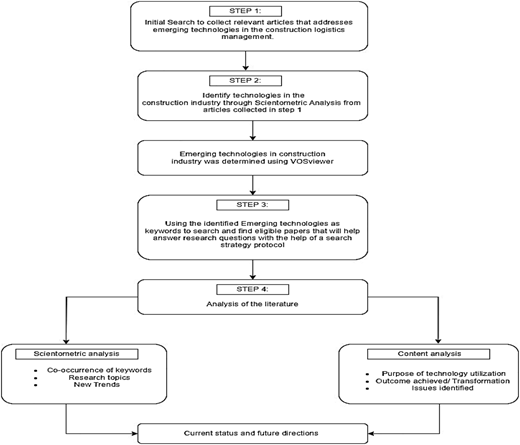
Figure 1 shows the research method process step outlining the structured sequence of actions employed to systematically collect, analyse and interpret data to address the study’s objectives.
2.1.1 Literature search strategy screening
2.1.1.1 Exclusion and inclusion criteria
The search was refined using terms such as “BIM,” “IoT,” and “AI,” with a focus on relevant studies. Rigorous inclusion and exclusion criteria guaranteed that the selected papers corresponded with the study’s objectives, boosting relevance and quality. Only peer-reviewed scientific articles were considered for the study, eliminating technical reports, news reports and opinion pieces. Articles published during the last decade were reviewed, noting the significance of current technology and construction breakthroughs. Publications in English were included, but non-English articles were excluded. Only articles and review types of studies were chosen, such as systematic reviews and literature reviews, to provide significant insights into the study’s objectives. The credibility of the articles was assessed by rating them from most popular to least popular. Only full-text or open-access articles sourced from reputable databases indexed by SCOPUS, Web of Science and DOAJ were included in the assessment.
2.1.1.2 Data screening
Using Mendeley, duplicate records were quickly deleted, kicking off a comprehensive screening process. The initial review of titles and abstracts followed predetermined criteria captured in Table 1 to retain research that directly addressed BIM, IoT and AI’s impact on construction logistics management systems. This comprehensive screening process of the entire texts resulted in 89 retained papers.
2.1.1.3 Data extraction and synthesis
A standardized data extraction form was created and facilitated the retrieval of critical information from each selected article. Synthesizing and categorizing the amassed data laid the groundwork for the subsequent literature review and result analysis. The extraction of information was collected considering the objectives of the research, which were to identify specific emerging technologies, identify challenges in construction logistics, examine integration and effectiveness of the technologies and analyse trends and themes that are positively reshaping construction logistics operations.
2.2 Qualitative content analysis
To explore the key technologies such as BIM, IoT and AI in construction logistics management that emerged prominently from the literature search in the first phase, a qualitative content analysis approach was employed. This method enabled an in-depth exploration of textual data derived from research publications selected during the focused literature search. The process began with coding the data to identify recurring themes and patterns related to technological innovations in construction logistics. A deductive approach was used, guided by pre-defined categories such as “construction technologies,” “digitalization” and “logistics management.” This ensured that the analysis remained focused on identifying technologies that are frequently highlighted in academic and industry-focused literature as transformative for construction logistics processes.
During the analysis, each selected publication was systematically reviewed to extract references to specific technologies. Textual data were coded to highlight explicit mentions of BIM, IoT and AI and their applications in construction logistics. Contextual insights were also gathered to understand how these technologies contribute to optimising logistics operations, improving supply chain efficiency and enhancing real-time decision-making. This iterative and rigorous process ensured the reliability and validity of the identified technologies as critical enablers of smart construction logistics systems.
2.3 Scientometric analysis
Scientometric analysis is a valuable exploration technique for visualising and mapping a research domain. This approach was employed in the work of Wang et al. (2020) to investigate digital technology applications in off-site construction, as well as by Patel et al. (2022), who used Scientometric analysis to map scientific fields. In this study, Scientometric analysis was utilized to examine the literature sample and identify key research topics and trends in construction logistics. The application VOS viewer was selected for this analysis due to its unique advantages in visualizing and interpreting research trends, enhancing the understanding of previous studies. The focus of the Scientometric techniques in this study included keyword co-occurrence analysis, cluster analysis and network visualization.
A thorough search was conducted across reputable academic databases, including Scopus and Web of Science, to gather relevant literature on BIM, IoT, AI and construction logistics. Keywords representing each technology, such as “BIM in construction logistics,” “IoT applications in construction” and “AI in logistics,” were identified and used. Additionally, logistics-related terms focusing on project management, resource allocation and supply chain integration were employed to refine the search and capture studies addressing these critical aspects. The analysis frequency and relationships between keywords, authors and research topics were performed. This step highlights how often BIM, IoT and AI appear together with construction logistics themes.
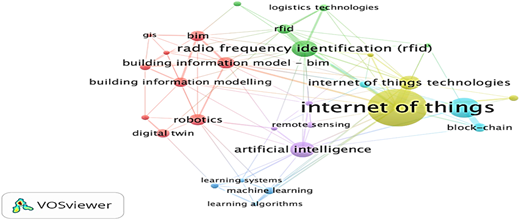
In Figure 2, the size of the circles represents the overall frequency of each technology in comparison to the others, whilst the thickness of the lines represents the strength of the relationship between two or more technologies. The VOS viewer classifies a group of things with a relationship in the same cluster colour when they are inherently linked to one another. The frequency of technologies in the same cluster was totalled up to represent the cluster total. The visualisation highlights IoT as the central and most prominent concept, indicating its pivotal role in the research IoT serves as a primary connection point, linking various other concepts and themes across the network. The map is colour-coded into distinct clusters, each representing a thematic area. The red cluster focuses on terms like “automation,” “information,” and “analysis,” which are likely related to data processing and automation. The green cluster, with terms such as “ideas” and “implementation,” emphasizes conceptual and applied aspects of IoT. The blue cluster includes terms associated with integration and connectivity, underscoring the importance of IoT’s networking and interoperability. Finally, the yellow cluster groups terms around practical applications, indicating IoT’s real-world implementations.
With the methodology established, the next section presents the results of the systematic literature search, offering insights into existing applications of SLMS in construction and their impact on project efficiency and sustainability.
3. Results of systematic literature search
3.1 Existing applications of smart logistics management systems in construction
The historical shifts of logistics management in construction reflects significant technological advancements over time. Initially, logistics relied heavily on manual labour and basic mechanization. This gradually progressed with the advent of mass production techniques and the utilization of electric energy. By the 1980s, logistics management systems began incorporating microcomputers, enabling more efficient coordination and control. Recently, advancements in information technology and communication systems have driven a shift toward automation and digitalization, leading to the development of smart logistics systems that enhance operational efficiency and decision-making processes (Wang et al., 2020, 2023; Corrêa et al., 2020).
Once operating quietly in the background, logistics has undergone a significant shift to meet the expanding demands of people (Dong et al., 2021; Fadiya et al., 2015). To meet these growing expectations, integrating emerging technologies into logistics gave rise to smart logistics (Kushal, 2020) substantially improving operational efficiency, data analytics and decision-making processes. Traditional logistics practices, including manual material tracking, paper-based inventory management and reliance on manual labour for site layout planning, became insufficient to meet market demands. Moreover, traditional communication methods and static project scheduling contributed to delays, prompting the need for digital transformation and establishing smart logistics as a modern technique for transforming industries (Sepasgozar et al., 2021). This transformation is propelled by various emerging technologies, such as Blockchain, the Internet of Things (IoT), Radio Frequency Identification (RFID), Building Information Modeling (BIM) and Artificial Intelligence (AI), extending their benefits beyond construction to encompass manufacturing, transportation, healthcare and retail (Whitlock et al., 2021).
BIM stands as a foundational technology, revolutionizing architectural and construction domains by transforming data into interactive 3D models, and elevating project visualization, collaborative design and coordination (Whitlock et al., 2021). Its influence extends to manufacturing, enhancing workflow and resource allocation. The amalgamation of IoT, AI, Cloud and BIM technologies presents exciting possibilities for advancements in construction logistics, security and worker safety (Štefanič and Stankovski, 2019). The implementation of 4D BIM models in monitoring construction progress synchronizes timelines, materials and personnel management, fostering efficiency and facilitating accurate decision-making (Magill et al., 2022; Štefanič and Stankovski, 2019).
AI emerges as a potent data analytics tool, playing a transformative role in logistics management across diverse industries. In healthcare, AI-driven predictive analytics optimize patient scheduling, treatment planning and resource allocation (Hamet and Tremblay, 2017). Transportation benefits from AI applications in predictive maintenance and fault detection, while retail leverages AI to estimate demand and optimize inventories (Chen et al., 2022).
Simultaneously, IoT, operating as an expansive network of interconnected devices, assumes a crucial role in real-time data monitoring and exchange. Its applications span healthcare for patient monitoring, transportation for fleet management and route planning and retail for customer tracking and inventory management (Dong et al., 2021). This research centres its focus on BIM, AI and IoT as pivotal technologies, recognizing their significance in the construction sector.
3.2 Impact of smart logistics management systems in construction
On the first hand, the construction sector has traditionally struggled with logistical inefficiencies that are influenced by internal factors that has resulted in resource waste, material damage and project delays. However, emerging technologies in SLMS are transforming the construction industry by introducing advanced tools such as BIM and IoT that improve coordination, minimize waste and enhance on-site safety (Huang et al., 2022). BIM enhances project planning and design accuracy by offering virtual representations of construction sites, which improves collaboration and planning (Rani et al., 2022). BIM provides a digital representation of construction projects, enabling precise planning, visualization and collaboration among all stakeholders. This digital approach allows for a shared project vision, reduces misunderstandings and ultimately streamlines the construction process.
The integration of Radio Frequency Identification (RFID) and IoT technologies allows for real-time tracking of materials and equipment, effectively preventing theft, reducing inventory losses and ensuring timely resource availability. These technologies allow construction sites to manage resources more effectively, minimize project risks and optimize the flow of materials. The growing integration of these technologies is reshaping construction logistics, aiming for greater efficiency and sustainability (Omar and Ballal, 2009). Alongside BIM, RFID and IoT, AI is emerging as a significant force in construction logistics, particularly for labour productivity and overall project efficiency (Van Gelder et al., 2021). AI-powered systems can analyse data to predict supply needs and schedule tasks efficiently, minimizing idle time and enhancing productivity (Sepasgozar et al., 2021).
Smart logistics systems are also being used to enhance site layout optimization, which has a direct impact on productivity. By using digital tools and data analytics, construction sites can be organized to minimize congestion and streamline operations. For instance, careful layout planning can reduce unnecessary movement and logistical bottlenecks, creating a smoother workflow that maximizes site space and resources. Improved logistics management also leads to safer work environments, as fewer logistical complications mean less potential for on-site accidents. The cumulative benefits of SLMS technologies extend beyond individual construction projects, offering broader impacts across the industry (Van Gelder et al., 2021; Rani et al., 2022).
On the other hand, external factors such as economic conditions, market trends and regulatory pressures have also shape logistics practices within the construction industry. The COVID-19 pandemic accelerated the adoption of digital technologies, as construction firms turned to contactless delivery systems, remote monitoring and other digital tools to maintain operations despite workforce limitations and supply chain disruptions (Huang et al., 2022; Kushal, 2020).
Similarly, competitive pressures in the construction sector have further intensified the demand for context-aware logistics technologies like BIM, which can support competitive bidding by ensuring timely material delivery and reducing project rework.
Also, governments are increasingly emphasizing sustainable and resilient construction practices, encouraging companies to adopt technologies that enhance logistics efficiency while minimizing environmental impact. Together, these pressures underscore the construction industry’s growing reliance on smart logistics solutions to remain competitive, responsive and compliant in an evolving market (Chen et al., 2022; Rani et al., 2022).
The findings from the literature search provide a foundation for understanding how SLMS are currently applied and its impact in construction industry. Building on these results, the next section examines the key challenges that hinder the widespread adoption and effectiveness of these systems in the construction industry.
4. Challenges of smart logistics management systems in construction
The construction industry is complex and dynamic, encompassing multiple stages essential to project success (Abioye et al., 2021). These stages can be categorized into three primary areas: the design-build stage, the construction stage and the supply chain management (SCM) stage. In the design-build stage, BIM technology facilitates seamless integration between design and construction, enhancing collaboration and reducing potential conflicts (Kamble et al., 2020). This digital approach improves communication among stakeholders, ensuring accuracy and efficiency in project delivery. During the construction stage, the IoT enables real-time tracking of materials, improving productivity and safety (Abioye et al., 2021). In the SCM stage, AI supports optimized procurement, demand forecasting and enhanced visibility throughout the supply chain (Abioye et al., 2021; Sepasgozar et al., 2021). Given the complexity and variability of construction projects, the integration of BIM, IoT and AI requires careful consideration. According to the recent studies of authors such as Kadaei et al. (2023), Okonkwo et al. (2023) Feng and Ye (2021), Pan and Zhang (2021), Reddy et al. (2020) and Štefanič and Stankovski (2019), the key challenges in implementing SLMS in construction are grouped into four main categories for this study: application, adoption, implementation and integration.
4.1 Application challenges
The application of modern technologies such as BIM, IoT and AI in construction systems presents a multifaceted set of challenges. The construction industry is characterised by its diverse stakeholders, including architects, contractors, suppliers and clients, each with distinct workflows and project-specific needs. As a result, effective technology application often requires significant customisation to accommodate these complexities (Kadaei et al., 2023; Sepasgozar et al., 2021). Without tailored solutions, stakeholders may encounter barriers that limit the operational efficiency and scalability of these technologies. For instance, poorly aligned digital tools can hinder collaboration, delaying project timelines and inflating costs.
More so, interoperability remains a critical issue in the adoption of BIM, IoT and AI. The construction ecosystem frequently relies on a range of technologies and software platforms that must communicate seamlessly to support information flow across different phases of the project lifecycle. However, the lack of standardised protocols often creates silos, disrupting data exchange and undermining the potential benefits of these innovations (Pan and Zhang, 2023). For instance, BIM platforms may not fully integrate with IoT devices, limiting real-time monitoring capabilities and reducing the predictive power of AI models. Another significant hurdle is the resistance to technological change, which is deeply rooted in the construction industry’s traditional conservatism (Okonkwo et al., 2023). Many stakeholders are hesitant to adopt disruptive technologies due to a perceived threat to established practices and a lack of digital literacy among key personnel (Sepasgozar et al., 2021; Pan and Zhang, 2023). Cultural adaptation, alongside technological implementation, is crucial to overcoming this resistance. Training programs, change management strategies and showcasing the tangible benefits of these technologies can foster greater acceptance.
4.2 Adoption challenges
The adoption of advanced technologies such as BIM, AI and IoT in construction is often hindered by resistance to workflow adjustments and job redefinitions. This resistance stems from the reluctance of employees and decision-makers to transition from familiar processes to new, technology-driven practices. According to Omar and Ballal (2009), a lack of awareness about the potential benefits of these technologies, such as cost savings and efficiency gains, further compounds the problem. Decision-makers, particularly in small and medium-sized enterprises (SMEs), may perceive the implementation of BIM, AI and IoT as a disruptive force rather than an opportunity for innovation (Okonkwo et al., 2023). Addressing this issue requires a robust awareness campaign that highlights the tangible advantages of these technologies in improving project delivery and reducing operational inefficiencies (Pan and Zhang, 2021).
High initial costs also represent a significant barrier to technology adoption, especially for SMEs operating within tight budget constraints. Technologies like BIM and IoT often require substantial upfront investments in hardware, software and employee training. These costs can deter organisations from adopting innovative tools, particularly when the immediate financial returns are unclear (Sepasgozar et al., 2021). Moreover, inadequate site logistics management often amplifies these financial challenges, as construction sites may lack the infrastructure necessary to support the seamless integration of digital tools. For instance, IoT-enabled sensors for real-time monitoring might require additional investments in connectivity and data storage solutions, which further increases the financial burden on smaller organisations. Empirical evidence suggests that tailoring cost-effective technological solutions to the scale and needs of various organizations can mitigate these challenges (Pan and Zhang, 2021).
Overcoming resistance and cost-related challenges demands a multifaceted approach that integrates technological, managerial and cultural interventions. Efforts to reduce resistance could include offering targeted training programs to upskill employees and demonstrate the value of new technologies in practical, relatable terms. Leadership buy-in and advocacy are also critical, as leaders can drive the adoption process by articulating a clear vision of how technologies align with organizational goals (Omar and Ballal, 2009). Additionally, developing scalable, cost-effective solutions that cater to the financial limitations of SMEs can encourage broader adoption. For instance, software-as-a-service (SaaS) models for BIM and AI tools can lower upfront costs, making these technologies more accessible. As organizations begin to experience measurable benefits, such as reduced project delays and enhanced resource management, they may become more inclined to embrace these innovations (Sepasgozar et al., 2021).
4.3 Implementation challenges
The effective implementation of BIM, AI and IoT in construction is often undermined by the absence of clear strategies and structured plans. A lack of cohesive implementation frameworks leads to fragmented and ad hoc adoption processes, which can hinder the long-term benefits of these innovations (Reddy et al., 2020). Construction projects, characterised by their dynamic and unpredictable nature, demand proactive planning and adaptable logistics systems to accommodate technological integration. Stakeholder participation at all levels is essential to align objectives, mitigate resistance and ensure a unified approach. Without structured planning and inclusive engagement, implementation efforts risk being misaligned with project needs and organizational goals (Feng and Ye, 2021).
Workforce skill deficits and inadequate training programs exacerbate implementation challenges. Employees often feel unprepared to work with new technologies due to insufficient technical knowledge and a lack of tailored training initiatives (Reddy et al., 2020). For instance, BIM requires a comprehensive understanding of digital modelling, while IoT integration demands familiarity with sensor-based systems and data analysis. Without targeted capacity-building programs, organisations face skill gaps that hinder effective utilisation. Empirical studies suggest that investment in continuous professional development and collaborative learning environments can enhance workforce readiness and foster smoother transitions to technology-driven workflows (Okonkwo et al., 2023; Pan and Zhang, 2021). Addressing these skill deficits is crucial for empowering employees to fully leverage the potential of modern construction technologies.
Data governance and security concerns present additional challenge to the implementation of technologies in construction. The integration of IoT and AI systems often involves large-scale data collection, raising ethical and regulatory questions about privacy, consent and accountability (Kadaei et al., 2023; Feng and Ye, 2021). Construction firms must navigate these concerns while ensuring robust data security measures to protect sensitive project and stakeholder information. Moreover, the lack of standardized protocols for data management across the industry complicates efforts to establish trust and interoperability. Research highlights the need for clear policies and ethical guidelines to govern data usage, as well as investments in secure digital infrastructure to address these challenges (Sepasgozar et al., 2021). By prioritising data security and ethical considerations, organisations can foster stakeholder confidence and facilitate smoother implementation processes.
4.4 Integration challenges
The seamless integration of BIM, AI and IoT into existing construction logistics systems poses significant challenges. One key obstacle is the diversity of platforms, systems and data formats, which can lead to the creation of data silos that impede efficient information exchange among stakeholders (Reddy et al., 2020). The lack of interoperability across systems complicates efforts to streamline logistics operations, particularly in large-scale construction projects involving multiple parties. Empirical research highlights the need for standardized protocols and frameworks to facilitate data sharing and ensure smooth collaboration between stakeholders (Štefanič and Stankovski, 2019). Without these, organisations may struggle to achieve the full potential of these technologies in enhancing efficiency and decision-making processes.
Effective collaboration and coordination are critical for overcoming integration challenges, particularly given the heterogeneous nature of supply networks in the construction industry. Each project often involves diverse stakeholders, including contractors, suppliers and regulatory bodies, all of whom operate within distinct systems and workflows (Silverio-Fernández et al., 2021). This diversity necessitates a strategic approach to ensure alignment across the supply chain. Studies emphasize the importance of stakeholder engagement during the planning and implementation phases, as well as the role of shared platforms that enable real-time communication and data exchange (Pan and Zhang, 2021). Such measures can mitigate disruptions and enhance the adaptability of logistics operations to accommodate technological advancements.
Moreover, successful integration requires substantial investment in both infrastructure and human resources. Organisations must allocate resources to upgrade IT systems, adopt compatible technologies and train personnel to navigate new tools effectively (Kadaei et al., 2023; Omar and Ballal, 2009). Without these investments, efforts to integrate BIM, AI and IoT risk being underutilised or abandoned due to technical or operational bottlenecks. Prior studies underscore the importance of developing long-term integration strategies that address technical, financial and organisational barriers (Okonkwo et al., 2023; Štefanič and Stankovski, 2019). By adopting a holistic approach to integration, construction firms can maximise the benefits of these technologies and achieve more sustainable and efficient logistics systems.
Identifying these challenges is crucial for contextualizing the study’s findings. The next section discusses these results in greater depth, analyzing their implications and presenting a structured interpretation through content analysis, Scientometric analysis and an analytical framework.
5. Discussion of findings
This section presents a detailed discussion of the findings derived from the qualitative content analysis and Scientometric analysis. It provides a summary of the results in relation to the research question, highlighting key findings uncovered during the study. Additionally, the analytical framework developed from these findings is introduced, offering a structured representation of the research outcomes.
5.1 Content analysis
Three technologies, AI, BIM and IoT, emerged prominently from the literature and the research method. Abioye et al. (2021) research explored AI opportunities and anticipated challenges in the construction industry for activity monitoring, risk management and resource and waste optimisation. Another insight from his research trends is that machine learning, a subfield of AI, has overtaken knowledge-based systems in the construction industry in the last decade and this was attributed to the increased need to meet up with labour and skill shortages.
Furthermore, robotics in the introduction of 3D printing and drone technologies for construction processes as applications of AI provide valuable insights for construction industry development. Pan and Zhang (2021) focused on AI-driven predictive analytics in construction logistics, in terms of automation, risk mitigation, high efficiency and digitalization showcasing AI algorithms’ role in enhancing efficiency.
Dong et al. (2021) focused on AI in autonomous construction equipment, demonstrating transformative potential in safety and efficiency. BIM, highlighted by Whitlock et al. (2021), played a crucial role in logistics, enhancing visualization capabilities due to its capabilities and resolving logistical challenges effectively on construction sites and other areas. Pan and Zhang (2023) emphasized BIM’s role in streamlining material flow, optimizing storage space and risk analysis. IoT, as argued by Laghari et al. (2021) offers real-time monitoring and safety improvements in construction logistics.
The systematic literature review findings underscored the transformative potential of AI, BIM and IoT in construction logistics, acknowledging challenges related to technology adoption, security and workforce training (Table 2).
The content analysis of the studies reveals several key insights into the role and impact of emerging technologies, such as BIM, IoT and AI, and their integration in enhancing construction logistics management. BIM emerged as a vital tool for improving logistical planning and visualizing project layouts. AI has essential applications in autonomous machinery and predictive analytics for logistics, enabling proactive decision-making and reducing the reliance on human labour. IoT facilitated real-time monitoring, transparency in tracking materials and equipment, environmental safety on construction sites and risk analysis. The content analysis was further discussed under four themes, namely, BIM technologies, IoT technologies, AI with IoT and BIM with AI integration.
BIM technology is highlighted as a transformative tool in construction logistics, particularly for visualizing processes and enhancing site safety (Whitlock et al., 2021). Also, BIM is primarily applied in collaboration, risk analysis and the optimization of storage space and material flow on construction sites. Studies by Whitlock et al. (2021), Magill et al. (2022) and Pan and Zhang (2021) indicate that BIM has been consistently used for 3D visualization of site plans and project management, including logistics coordination and time management. Research from as early as 2020 underscores the importance of these applications, showing ongoing contributions to the field. The focus on visualization and coordination suggests that BIM is essential for improving efficiency and collaboration in construction projects. However, studies by Wang et al. (2020, 2023) identify challenges, including high costs, lack of strategy and substantial training needs, which serve as barriers to its adoption. These findings underscore both the potential and limitations of 4D BIM, suggesting a need for strategic planning and resource allocation to enable wider adoption.
IoT technology is positioned as a core component in smart construction logistics, facilitating connectivity and real-time data flow across various devices and stakeholders (Laghari et al., 2021). More so, IoT technology has been applied to enhance site safety monitoring, risk management resources and device network connections. Over recent years, IoT’s role has expanded to include supply chain transparency and real-time tracking through sensors, emphasizing its importance in maintaining visibility and efficiency in material management. Research by Laghari et al. (2021), Rani et al. (2022), Chamola et al. (2020) and Wang et al. (2020) referenced from 2020 to 2022 highlights the growing interest and application of IoT in construction and logistics. The emphasis on safety, real-time data and transparency indicates that IoT is crucial for modernizing these industries, ensuring seamless operations and improved safety standards. The evolution of IoT in construction logistics management (CLM) showed advancements in material visibility, with early usage focusing on improving visibility throughout the building supply chain using RFID technologies. By 2021, industry transparency significantly improved with sensors facilitating material identification across the supply chain. This transparency resulted in precise material distribution and fewer theft incidents, enhancing on-site construction activities’ efficiency. As of 2022, the industry shifted attention to device connection, signalling efforts to include other cutting-edge technologies in the supply chain.
The integration of AI with IoT emerges as particularly relevant, enabling automation, enhanced decision-making and optimization of logistics operations (Wang et al., 2020). The work of Dong et al. (2021) reinforces this perspective by projecting trends towards disruptive technologies like drones, autonomous vehicles and big data analytics, further emphasizing IoT’s role in an evolving technological landscape. Nonetheless, a consistent gap identified across these studies is the limited digitization within the construction sector, which inhibits the full potential of these technologies in logistics (Abioye et al., 2021). This points to a broader need for digitization initiatives within the industry to maximize the benefits of IoT and AI.
In terms of BIM and AI integration, findings by Pan and Zhang (2022, 2023) indicate substantial added value, particularly in handling complex and uncertain project environments. This integration facilitates better risk management, data generation and project lifecycle insights (Whitlock et al., 2021; Magill et al., 2022). AI complemented BIM, offering automation and predictive analysis capabilities, reducing project planning time, optimizing supply chains and expediting decision-making processes. In the current environment, AI extended its support to smart energy-saving solutions for smart homes and monitored construction operations. Despite these benefits, the adoption of ICT-based logistics solutions remains constrained by cost and the complexity of construction workflows (Fadiya et al., 2015). The studies collectively highlight the need for a structured approach to integrating these technologies, factoring in both financial and training investments to address adoption and implementation challenges.
While these technologies individually benefited CLM, a Scientometric analysis was conducted for an in-depth investigation into their combined application in the field. The goal was to identify transformative advantages and outcomes derived from the seamless fusion of these technologies in the construction logistics fields.
5.2 Results of the scientometric analysis
5.2.1 Keyword of Co-occurrence network
The Scientometric analysis was compressed into two stages: keyword co-occurrence and research construction topics. In scientific studies, the extraction and analysis of author-supplied keywords play a pivotal role in unveiling the essence of an article and succinctly summarizing its content, it goes beyond the surface level of individual articles and unravels the intricate web of relationships between scientific topics. This methodology is particularly crucial in systematic investigations, as highlighted by Rejeb et al. (2022), who emphasized the significance of keywords as terminologies that signify an article’s main topic and serve as essential tools enabling the examination of research trends which ultimately allow the uncovering of the different patterns of a topic and the identification of research topics for future studies.
Author-supplied keywords, essential for systematic studies, were extracted from the 89 selected articles. The processed data were exported to VOS viewer, a widely used tool in Scientometric analyses. Employing a density-based spatial technique and a full counting method, clusters were systematically created to reveal the inherent structure of the keyword landscape. To ensure a visually informative visualization map, a keyword occurrence criterion of three was set. This criterion aimed to generate a map containing between 200 and 500 appropriate keywords.
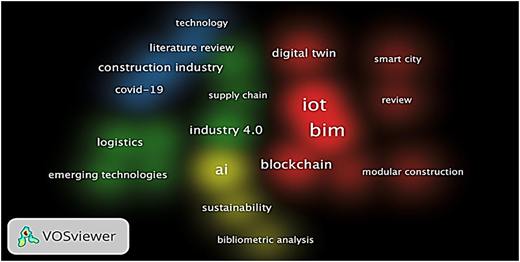
The outcome was four distinct clusters, each denoted by various colours in Figure 3. In the map, each node or circle represents a keyword, with its size indicative of how frequently the keyword co-occurs with others. This method of representation provides a visual narrative of the interconnectedness and prevalence of keywords within the dataset.
5.2.2 Research construction topics
Determining research topics was crucial for placing technology applications in specific contexts, allowing the anticipation of future research trends. Patel et al. (2022) underscored the importance of revealing the underlying structure of authors’ thinking using the Scientometric method, keyword co-occurrence analysis because it is instrumental in mapping a scientific landscape and offering a comprehensive perspective on various research focus within specific research topics.
Four coloured clusters reflect the primary research fields of the papers. Nine research topics emerged from the interrelationship of Scientometric analysis. As shown in Figure 3, smart city, modular construction and digital twin research topics from the same red cluster have a faint red colour than BIM, IoT and Blockchain which signalled the fact that they are still new research topics being explored in scientific articles and also distinction between the topics from the technology used in that research field. As for BIM and IoT, these technologies are not new to the construction industry and because of that, they have the strongest and biggest density.
Smart cities represent the convergence of digital twinning and advanced technologies like Building Information Modeling (BIM), the Internet of Things (IoT) and Artificial Intelligence (AI) (Deng et al., 2021; Goyal et al., 2020). By creating digital replicas of urban areas through BIM, cities gain insights into construction progress and infrastructure development, enabling efficient decision-making. Digital twins, virtual representations of physical assets, are integral to smart city planning and management, offering real-time data for urban maintenance and development. Digital twin technology further enhances construction processes and quality control.
The construction industry, intersecting with various technologies, has embraced AI and IoT, particularly in response to the COVID-19 pandemic (Kushal, 2020). COVID-19 has accelerated technology adoption in construction, with AI and IoT aiding in health and safety measures, workforce monitoring and operational optimization. Logistics, pivotal in construction, benefits from AI and BIM integration, optimizing supply chains and warehouse operations.
According to Dong et al. (2021), emerging technologies like AI and Industry 4.0 revolutionize logistics, enhancing automation and decision-making. Sustainability in construction relies on AI, IoT and BIM, enabling energy optimization, waste reduction and environmental monitoring (Araújo et al., 2024). Modular construction, facilitated by BIM and IoT, ensures precision and efficiency, while blockchain enhances transparency in the supply chain (Wu et al., 2022). Supply chain management integrates AI, IoT, sustainability and blockchain, ensuring material flow efficiency, cost-effectiveness and transparency. By tapping into the vast data pool generated by these integrated technologies, one can pinpoint trends and patterns that not only streamline current operations but also anticipate and leverage future technological shifts. This predictive power opens avenues to a dynamic construction industry, where logistics management becomes proactive and forward-thinking rather than reactive.
5.3 Summarised findings in relation to the research questions
The key findings were summarized through the lens of two pivotal research questions: How have emerging technologies such as BIM, IoT and AI transformed construction logistics operations? And what are the main success factors and challenges in integrating BIM, IoT and AI into smart construction logistics management systems? These findings are presented in Table 3.
The findings from Table 3 highlight the transformative impact of technologies like BIM, IoT and AI on construction logistics, emphasizing their role in boosting efficiency, productivity and project timeliness. Sepasgozar et al. (2021) note that integrating these technologies in construction logistics has yielded substantial enhancements in efficiency and productivity, a sentiment echoed by Pan and Zhang (2023), who underline their contribution to cost-effectiveness and timely project completion. This transformative potential lies in the ability of these technologies to improve tracking, optimize resource allocation and provide real-time data for informed decision-making, ultimately leading to smoother project workflows. The focus on streamlining processes through real-time tracking and updates further supports the assertion that these technologies enable a more agile and responsive logistics management approach, which is critical for complex construction environments where delays and resource mismanagement can have costly repercussions.
Despite the benefits, the integration of these technologies faces notable challenges. Key barriers include resistance to change and deeply ingrained conventional practices, which can hinder the adoption of novel technological solutions (Stefanič and Stankovski, 2019). Additionally, privacy and data security concerns pose challenges, particularly with IoT and AI, where the collection and sharing of sensitive data may expose projects to unauthorized access risks (Huang et al., 2022). These challenges highlight the need for strategies to overcome both organisational and technical barriers to ensure smooth integration. While real-time tracking and other success factors improve logistical efficiency, the industry’s adherence to traditional practices and its cautious approach to data security present ongoing hurdles. Overall, the findings suggest that while BIM, IoT and AI have the potential to revolutionize construction logistics, a proactive approach to addressing resistance and privacy concerns is essential for their successful implementation.
5.4 Analytical framework developed from research findings
Based on the findings, an analytical framework for evaluating smart logistics management systems in construction was developed with three core dimensions: technological capability, adoption challenges and integration strategies.
Technological Capability: This dimension assesses the potential of individual and integrated technologies (e.g. BIM, IoT, AI) in improving logistics management, focusing on their ability to address logistics challenges, enhance safety and streamline processes (Whitlock et al., 2021; Lagorio et al., 2022; Wang et al., 2020).
Adoption Challenges: This dimension evaluates the challenges to adopting SLMS, including high implementation costs, strategic misalignment, limited digitization and resistance to change (Wang et al., 2020, 2023; Abioye et al., 2021; Fadiya et al., 2015). This analysis considers factors specific to the construction industry’s nature and the conservative tendencies of its stakeholders.
Integration Strategies: This dimension explores effective strategies for integrating BIM, IoT and AI, considering both current practices and future research directions (Pan and Zhang, 2023; Dong et al., 2021). Focus is placed on enabling interoperability, enhancing training and fostering an adaptive organizational culture to support technology adoption and address complex construction logistics needs.
6. Conclusion and recommendations
This study explored the transformative impact of emerging technologies on construction logistics management systems, particularly focusing on the applications and benefits of BIM, AI and the IoT, while also addressing barriers hindering their adoption. Through meticulous exploration and analysis, the potential of these technologies to reshape the construction landscape was uncovered.
Current research in construction logistics emphasises the utilisation of real-time data, automation and data-driven decision-making to improve efficiency and productivity. However, the industry faces challenges related to resistance to change and deeply entrenched conventional practices, necessitating the development of strategies to ensure smoother technology integration. Moreover, there is a pressing need for robust data protection measures to address privacy and data security concerns in construction logistics systems. These efforts are crucial for safeguarding sensitive project information and maintaining the integrity of data. Additionally, the focus on labour productivity and advanced logistics management systems calls for exploring innovative approaches to enhance workforce efficiency and streamline construction processes. This may involve the development of systems facilitating real-time tracking, delivery status updates and better coordination among stakeholders. Collaboration and knowledge sharing among researchers, industry professionals and technology providers are highlighted as essential for staying at the forefront of technological advancements and overcoming challenges associated with emerging technologies.
Looking towards future technological advancements in construction logistics, this study proposes several practical and significant implications for the future of construction logistics. Firstly, advancements in real-time monitoring and data utilization are expected to enhance precision and enable proactive decision-making, leading to more efficient project management. Secondly, the integration of automation and artificial intelligence will optimize supply chain operations, minimizing errors and improving productivity. Thirdly, heightened privacy and data security measures will be crucial, driving the development of robust encryption and authentication methods to protect sensitive project information. Additionally, efficiency-enhancing systems that combine labour productivity with advanced logistics management will streamline construction processes and improve stakeholder collaboration. To facilitate technological adoption, solutions will need to effectively address resistance to change and bridge gaps between conventional practices and emerging technologies. Lastly, interdisciplinary research and collaboration will be essential for the future of construction logistics, leading to holistic solutions and a deeper understanding of challenges and opportunities in the field.
Furthermore, a roadmap for future endeavours was proposed, emphasizing the importance of prioritizing personnel training, fostering a culture of adaptation and creating regulatory frameworks that balance innovation with data security and privacy. Collaboration between industry stakeholders and academic institutions is crucial for driving innovation tailored to industry-specific challenges. Emphatically, by using the analytical framework developed by the study, future research can systematically address technological impacts, identify practical adoption pathways and propose scalable integration strategies to advance SLMS within the construction industry.
Despite the uniqueness of the study, the study is limited to the construction industry and uses existing literature as its sole methodological approach. The findings offer valuable insights and recommendations for enhancing construction logistics operations and sustainability. However, future research can use a mixed-method approach to explore logistics practices in other industries and international contexts.
In conclusion, the future of construction logistics hinges on a symbiotic relationship between technology and industry stakeholders. By embracing emerging technologies, addressing integration challenges and fostering an environment of innovation, the construction industry can pave the way for effectiveness, sustainability and unprecedented growth. Though the road ahead may be challenging, the prospect of a smarter construction industry demands ongoing perseverance and innovation.