This study aims to analyze the driving power of socially responsible procurement on supplier innovation. More specifically, the study analyzed supplier-driven innovation as a resultant of employee engagement, community benefits, health and safety and fair labor practices, in socially responsible procurement.
The study employed a survey approach using a sample of 70 respondents with the help of structured questionnaire for analysis by means of ordinal logistic regression.
The study established four social responsibility predictors with a positive and significant effect on supplier innovation. Specifically, using R2 values Nagelkerke = 0.888, fair labor practices was the strongest considered predictor (β = 1.770, p < 0.001) followed by employee engagement (β = 1.289, p = 0.004).
This research was contextually anchored within one time data collection from one organization from the Tanzania dairy sector which limits generalization. Therefore, future studies should involve more than one industry along with longitudinal approaches being incorporated. Also, expanding dimensions of social responsibility like environmental sustainability and social inclusiveness should be included.
This research highlights the necessity of socially responsible procurement in contractual obligations. Also, practical actions to embrace supplier training and awarding incentives to socially innovative suppliers are of key stake.
These research findings enlighten how Stakeholder's theory is applied in socially responsible procurement practices for supplier's innovation. Also, the study underpins the relevancy of Sustainable Development Goal 12 of United Nations in the procurement practices of Tanzania as a developing nation.
1. Introduction
1.1 Background of the study problem
The significance of supplier-led innovation is gaining attention within the context of global supply chains and their competitiveness, efficiency and sustainability (Dominidiato et al., 2024). Organizational performance and buyer–supplier relationships are strengthened when a supplier innovation brings new products, processes and methods to the organization (Meredith and Shafer, 2023). Suppliers are able to provide value co-creation by providing ideas, technical value and operational value enhancements through value-creating activities supply process (Chen et al., 2023). Buying firms encourage suppliers' innovations through purchasing decisions through evaluation of suppliers and contract implementation (Selviaridis, 2021). The United Nations (UN), through Sustainable Development Goal (SDG) Number 12, has advocated on the need of the organizations to engage on socially responsible procurement for the innovations of suppliers (Opoku et al., 2022). Supplier innovation has begun to associate with socially responsible procurement that among other things includes fair treatment of employees, safety in the workplace and development in the community (Adebayo et al., 2024). Equity extends not only to the fair treatment of an employee, the safety of the workplace and the development of the wider community but also goes further to embrace the social bottom line of equity, dignity and social development, surpassing efficiency and cost minimization (Ogunyemi et al., 2025).
A considerable amount of literature has shed light on the phenomenon of supplier innovation in the context of developed countries as well as in developing countries, and specifically to Africa. Developed countries were the first ones to embrace supplier innovations. For instance, in Belgium, procurement policies that promote innovation procurement advocated direct investment in supplier Research and Development (RandD) thus establishing direct procurement–supplier innovation linkage (Appelt et al., 2022). Specifically, socially responsible procurement is reinforced as procurement strategic tool that determines the supplier's innovative capacity in developed countries with emphasis on equality based on fair labor practices, community engagement, health and safety of workers (Miguel and Tonelli, 2023). Supplier social responsibility pertains to the social and sustainable public procurement which, in turn, relates to the goal of responsible production and consumption which is part of the 12th goal of the United Nations SDGs (Opoku et al., 2022). Likewise, Appelt et al. (2022) presented evidence from Germany and the European Union that socially responsible procurement requirements motivated suppliers to implement technologically advanced production systems in accordance to more stringent social protections.
Equally important, for Ecuador which is a country struggling to transform its economy from a developing one to middle income economic state has noted socially responsible as of paramount importance in fostering supplier innovations (Padilla-Lozano and Collazzo, 2022). Similarly, South Africa which is also exhibiting the same economic level as Ecuador has developed new methods pertaining to workplace safety, and employee welfare due to the socially responsible procurement requirements, showing procurement as a driver for innovation (Fourie and Malan, 2020). Other countries from Africa which are typically developing ones have exhibited socially responsible procurement as driving engine for innovation. In Kenya, for instance, sustainable procurement practices in the manufacturing sector prompted suppliers to adopt environmentally sustainable production processes, thus creating a competitive edge and enhancing supply chain resilience (Gichuhi and Osoro, 2025). In Uganda, sustainable procurement was embraced and reinforced through ethical behavior, which incentivized suppliers to adopt innovative ways to fulfill buyer needs (Adebayo et al., 2024). In Ghana, supplier innovation is greatly shaped due to the buyer–supplier relationships centered on social responsibility procurement as a direct driver to RandD spending (Gidigah et al., 2025).
Therefore, based on SDG 12 socially responsible procurement is ideally important for the innovation of suppliers (Maritaa et al., 2021). However, despite the importance advocated by UN on engagement of socially responsible procurement, yet the practice is not satisfactory. However, the government of Tanzania through Occupational Safety and Health Administration (OSHA) has been enforcing different organizations to ensure their conducts including those of procurement are socially responsible (Sospeter and Rwelamila, 2020). Nevertheless, the Bakhresa Group's Azam Dairy Products Limited based in Tanzania, of which is one of the largest milk processors in Tanzania and integrating many households in dairy farming (Tanzania Milk Processors Associations (TAMPA)) during the year 2025 was classified as a resource required to engage more social sustainability (Economic and Social Research Foundation (ESRF, 2025). It was noteworthy to undertake this study as it is very crucial for describing the call for more social sustainability as championed by SDG 12 which encourages practicing socially responsible innovation and better livelihood. Knowing that there is considerable variation between countries, organizations, sectors traced from income, mission, vision and goal differences then it remained very important to test those aspects (employee engagement, community benefits, health and safety and fair labor practices) researched in other context other than specifically in the milieu of Azam Bakhresa Group's Azam Dairy Products Limited based in Tanzania. Therefore, this study intends to fill this gap by analyzing the impact of socially responsible procurement on supplier innovation at Azam Dairy Products Limited which enhances both the scholarly and the practical discourse on policy pertaining to sustainable supply chain management.
2. Literature review
2.1 Theoretical literature review
2.1.1 Stakeholder theory
This study employed stakeholder's theory. In recent years, the Stakeholder Theory has managed to remain relevant with new research applying the theory to sustainable procurement and innovation. Procurement serves as the driving means of acquiring all requirements of the organization (Kimario and Panga, 2026). Harrison and Wicks (2019) claim that organizations are able to create more value for themselves when integrating the stakeholder perspective into the decision-making process, and, as a result, more trust is built and collaborative innovation is more easily achieved. Trust between buyer and supplier is a resource advantage for enhanced performance (Kimario and Mwagike, 2024). This is a fact further developed by Kannan (2018) who explain that stakeholder procurement processes tell suppliers to ‘buy in’ and align their practices to the social requirements of the buyers, thus stimulating new production and sourcing ideas. More recent contributions by Ifekanandu et al. (2025) argue that firms pursuing stakeholder strategies are in a better position to gain competitive advantage via innovation across supply chains. This competitive advantage, the authors argue, is due to the fact that the competitive supply chains are more highly integrated because of focusing on the stakeholder perspective. Socially responsible procurement practices that apply the Stakeholder Theory to procurement has shown, for instance, by Yang et al.(2023) who indicated supplier development practices responsive to stakeholder desires, such as fair treatment of labor, worker welfare and community well-being, stimulate innovation in processes and products that improve competitive social value and performance. Like in the case of other authors, Kimario and Kira (2024), also highlight failure to meet the expectations of stakeholders in regard to procurement stifles performance, whereas socially responsible initiatives enhance trust and commitment in buyer–supplier relationships. More broadly, Mchopa et al. (2023) emphasizes that socially responsible procurement aligns socially responsible business processes with organizational stakeholders, thereby promoting the innovation necessary to achieve the SDGs, particularly with regard to Goal 12 on responsible production and consumption. In comparison to this research, Stakeholder Theory helps to clarify some of the social responsibility elements of procurement concerning the impact on supplier innovation. Firms in the position of Azam Dairy Products Limited can integrate social responsibility to their procurement systems to fulfill stakeholder expectations, particularly in the employee workplace and community development support, while also stimulating supplier innovation. Thus, the theory demonstrates how socially responsible procurement is a catalyst for innovation– or the enhancement of resilience in the supply chain and sustained organization effectiveness.
2.2 Empirical literature review
Sustainability in procurement is of key stake (Changalima and Kimario, 2025). Social responsibility procurement is an emerging issue for the sake of the social well-being. In procurement, ‘social responsibility’ encompasses fair treatment of employees, as well as the safety and health of the workforce, along with community support programs within purchasing processes. These factors form the ‘social’ dimension of the supplier management paradigm, along with cost and environmental sustainability, and, even as they affect supplier behavior in socially responsible ways, they stimulate new ways of innovation. When purchasers embed social responsibility in their processes, the supplier evaluation and monitoring system, the suppliers will tend to change their processes and engage in ‘responsibility’ and ‘social’ innovations. This area, even if less investigated than environmental procurement, has been the subject of recent studies that begin to show the ways in which socially responsible practices lead to innovation has much to explore. Interestingly the following subheadings specifically empirically explained;
2.2.1 Employee engagement in socially responsible procurement
Employee engagement is generally regarded as a drive for the performance of the operations in organizations (Mohiya, 2025; Mon et al., 2025). The more employees are satisfied the more they are getting committed and loyal, and further the more likely the innovative behavior shall be developed in the working area (Ali Ababneh et al., 2025). Stakeholder's theory advocates the more interested parties are engaged in the business arrangements the more the benefits are expected out of the engaged relationship (Harrison and Wicks, 2019). Employees are valued as one of the important parties of the business relationship. Most of the supply chain networks from developed countries are encouraged to source from the innovative suppliers (Liu et al., 2025). Despite much advocacy on employee engagement yet in some developed countries, it has been noted that its role in procurement is less crucial for the satisfaction (Van Hoek, 2024). A study in small and medium enterprises argued collaborative relationships engagements in sustainable procurement encourages a culture of supplier's innovation (Israel, 2025). Collaborative linkages in buyer–supplier relationship include internal engagements with employees especially in the process of identifying user requirements during preparation of specifications (Kimario and Kira, 2024). However, given the available mixed results of Israel (2025) and Kimario and Kira (2024) from developing countries versus Van Hoek (2024) from developed countries there was a need for establishing of testing the below hypothesis for wide generalization of knowledge;
Employee engagement in socially responsible procurement is not a predecessor for supplier innovation
2.2.2 Engagement of community benefits in socially responsible procurement
The need for the suppliers to engage community needs surrounding their procuring entities has now made suppliers to become innovative for the sake of value addition to the communities (Onofrei et al., 2020). The ability of suppliers engaged by the buying organizations to give back to the community from their contracts involves budget effect (Martin, 2021). Stakeholder's theory recognizes the need to have the perceptions of the community surrounding the projects in order to yield communal benefits using neighboring principle (Musonda et al., 2025). However, in order for the suppliers to be able to maintain their business position favorably they need to be innovative by using most of the up-to-date technologies to benefit with enhanced new methods, and new processes whilst at the same time using part of their capital to benefit the community surrounding the buying firms (Zhou et al., 2020). A recent study showed that CSR research in community engagement is a today's growing area (Oduro, 2024). Community engagement in socially procurement working environment includes giving back to the community through provision of services such as educational, health, water supply facilities and environmental protection program such as afforestation (Fredson et al., 2025; Mogaka and Gathondu, 2025). The process is enhanced by setting aside budget for engaging in community charitable activities (Hosain, 2025). However, in Tanzania the practice of community engagement in CSR is unsatisfactory (Maliganya and Bulengela, 2025; Kikwiye, 2021). Studies shows SMES are more engaging in CSR practices including in community engagements with greater empathy and shared values while large enterprises are less engaging despite of being regulated (Pillai et al., 2022) implying engagement in socially responsible procurement is of paramount importance (Nicoara and Kadile, 2024). Therefore, given the low level of community engagement and the growing need for research then the hypothesis had to be postulated to test for the need of the community engagement in procurement for the innovation of suppliers.
Engagement of community benefits in socially responsible procurement is not a predecessor supplier innovation
2.2.3 Health and safety considerations in socially responsible procurement
Health and safety requirements embedded in socially responsible procurement tend to stimulate supplier innovation across processes, technologies and management systems by creating clear compliance expectations and performance incentives (Podrecca et al., 2024; Sarvari et al., 2024). Stakeholder's theory cherishes that individuals' wellbeing in terms of health and safety is very important in project undertakings (Awa et al., 2024). In heavy manufacturing, elevated injury rates have prompted firms to tighten safety practices, shifts that typically entail upstream process redesigns and equipment upgrades (Shabani et al., 2025). Similar patterns appear across diverse contexts: factory studies describe innovative approaches to occupational health and safety emerging under compliance pressure (Adebayo et al., 2024), and construction research shows that ring-fencing budgets for safety raises compliance and nudges suppliers to adopt new solutions to win and retain contracts (Wamalwa and Juster, 2022). In manufacturing more broadly, occupational health and safety practices improve performance through stronger employee commitment, an organizational innovation pathway often activated by procurement requirements (Agyapong et al., 2024). Evidence on small and medium-sized enterprises, likewise, links occupational safety and health practices to better outcomes, implying adaptive changes such as safer layouts and protective technologies when buyers insist on health and safety compliance (Adebayo et al., 2024). Construction-sector evidence further shows growing uptake of advanced digital industrial safety tools such as wearables and sensors frequently pulled by client specifications (Umeokafor et al., 2024). Globally, supply-chain safety-management pressures improve work-safety behaviors in small and medium-sized enterprises, indicating that upstream buyer demands can reconfigure supplier practices (Zhang et al., 2024). Reviews and sector studies also document how digital health and safety training and simulation reshape routines (Boadu et al., 2023). Even targeted technologies such as incident-reporting platforms show how procurement-driven compliance diffuses innovation among vendors (Lee, 2024). Taken together, contemporary evidence suggests that embedding explicit health and safety criteria in socially responsible procurement elicits technological and managerial innovation from suppliers, supporting the proposition that such considerations have a positive and significant effect on supplier innovation.
Health and safety considerations in socially responsible procurement do not significantly affect supplier innovation.
2.2.4 Adoption of fair labor practices in socially responsible procurement
Adoption of fair labor practices within socially responsible procurement can catalyze supplier innovation by forcing upgrades in people-management systems (e.g., digitized timekeeping, living-wage verification, worker-voice channels) and by rewarding process redesigns that demonstrably protect workers' rights. Stakeholder's theory acknowledges the need to have fair practices and adhere to the required standards when dealing with different stakeholders (Cragg, 2026). Cross-industry evidence shows that social sustainability practices are associated with superior supply-chain performance often via new routines and technologies implying that buyers' labor clauses create clear incentives for suppliers to innovate (Duong, 2024; Najjar et al., 2024). Beyond correlation, research on labor-standard diffusion finds that when lead firms extend working-time and related standards beyond tier-1, suppliers invest in coordination and monitoring capabilities, organizational innovations that underpin compliance (Holzberg et al., 2022). Case-based empirical work on compliance systems similarly indicates that calibrated buyer enforcement spurs supplier learning and system upgrades rather than mere box-ticking (Amengual et al., 2025). Policy pressure strengthens the same dynamic: mapping studies document the rise of human-rights due-diligence and trade-labor provisions that push firms to build auditable labor practices across tiers conditions that typically require new data systems and managerial processes (Jaax and van Lieshout, 2025). Public procurement rules now allow and increasingly expect social criteria including explicit employment requirements within tendering and contract clauses, creating direct compliance signals to vendors (PPRA, 2025). Empirical work shows procurement entities moving to strengthen ethical procurement compliance actions that buyers can leverage to request fair-labor evidence and continuous improvement from suppliers (Ligalawike et al., 2024). Qualitative evidence on employees' rights practices links observance of fair wages, reasonable hours and freedom of association with organizational performance, often through practices that also enhance problem-solving and innovation (Nyangusi et al., 2024). Additional field studies on sustainable procurement within local authorities point to rising attention to social criteria and capability building among vendors, further aligning procurement with supplier upgrading (Luoga, 2024). Collaborative social-sustainability practices are reported to improve market outcomes and require co-innovation with suppliers (Agyabeng-Mensah et al., 2025; Elias and Changalima, 2024). Also, broader analysis emphasizes training and decent-work pathways that encourage firm-level upgrading (Ariusni et al., 2024). Collectively, these studies support the alternative hypothesis that adopting fair labor practices in socially responsible procurement has a positive, significant relationship with supplier innovation, and they cast doubt on the null.
Fair labor practices in socially responsible procurement have no significant relationship with supplier innovation.
2.3 The conceptual model
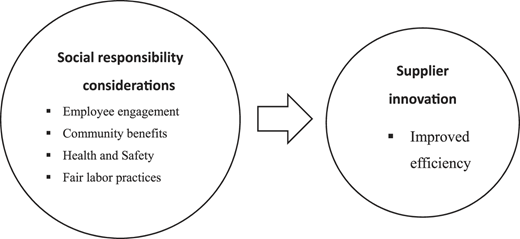
A conceptual model serves as the foundation of which the analysis is to be conducted (Lynch et al., 2025). It involves the major variables of the study focus whilst contextualizing hypotheses which calculates the expectation of the relationship and often employing illustrations for complex interconnected variables (Thomas and Tee, 2022). In this study, Figure 1 shows the relationship between socially responsible procurement (independent variable) and supplier innovation (dependent variable). Socially responsible procurement dimensions for this consists of employee engagement, community benefits, health and safety and fair labor practices. These frame how socially responsible practices are integrated in the management of supplier relationships. The dependent variable is supplier innovation indicator measured by improved efficiency, which reflects the new and robust practices that suppliers adopt to streamline and enhance their operations. The framework captures how procurement that is socially responsible impacts supplier innovation, what is termed as socially responsible procurement for innovation. This serves as both a theoretical justification and practically the basis which helps in the improvement of procurement performance.
3. Methodology
3.1 Study location
The Bakhresa Group's Azam Dairy Products Limited based in Zanzibar, and one of the largest milk processors in Tanzania, served as the location for this research. The area was selected based on the importance of the dairy industry in Tanzania which integrates many households (Tanzania Milk Processors Associations [TAMPA], 2025). Although, the dairy industry is highly valuable, it is still classified as resource intensive and dominated by small-scale, informal processing with less regard to sustainability (Economic and Social Research Foundation (ESRF, 2023). We selected Azam Dairy due to its capacity to drive supplier innovation in the dairy value chain and the company's influence on sustainable procurement processes. The company is a major processor with the ability to directly engage with smallholder suppliers and is also under pressure from the government and global policies regarding social and environmental procurement (ESRF, 2025). This is the reason why Azam Dairy has been selected for this research, to analyze procurement social responsibility such as; community investments, health and safety, employee engagement and fair work which stimulate innovation in Tanzania's economy.
3.2 Research strategy
This study focused on the effect of social responsibility considerations in the procurement process on supplier innovation at Azam Dairy Products Limited. The study utilized explanatory survey research design as social responsibility facets like employee engagement, community benefits, fair workplace practices, workplace health and safety and social engagement regarding supplier innovation focuses are concerned with explaining the outcome phenomena (Gamage et al., 2025). The primary reason the explanatory research design study addresses the context rather than the practice is to find and explain social responsibility in procurement with innovative supplier behavior (Groer et al., 2025). Along with the explanatory survey design, the study also used quantitative research methods to obtain numerical data from the respondents to enhance hypothesis testing for wider generalization.
3.3 Sampling procedure
This research used a stratified random sampling technique to evaluate the effects of social responsibility in the procurement process on supplier innovation at Azam Dairy Products Limited. Stratified sampling was warranted as the population of 85 was made up of employees at different levels as well as some external stakeholders. It was vital that every subgroup within the population was sufficiently represented in the research study (Hazari, 2024). From the overall population of 85 individuals from Azam Dairy Products Limited, a sample size of 70 respondents was derived using Yamane's formula for determining an appropriate sample size.
Using the above sample size formula at a 5% margin of error and 95% confidence level gives a sample of 70 respondents. Proportionate allocation was then used to determine the sample size of each department to be selected which included procurement, stores, production, quality control, sales and marketing, finance and human resources. This is to counter the effects of sampling bias and ensure the research is representative and the results are credible on the role of corporate social responsibility in the procurement process on supplier innovation at Azam Dairy Products Limited. The reason for this choice relates to the focused measurable response data obtained from procurement officers, stores officers and head of departments of Azam Dairy Products Limited. The chosen sampling units are the ones who are either responsible for initiating procurement process by stating their requirements, managing the procurement process technically, receiving or inspecting the delivered items and hence they are the ones who can confidently determine whether innovation has been executed by the suppliers in favor of socially responsible of the buying entity. The chosen sample size was adequate for this study given the fact that previous studies which used regression analysis used the following sample sizes; Mwakyeja and Kimario (2024) 67; Magoma et al. (2024) 91 and Kamau (2013) 55 and hence the sample size of 70 respondents for this study was in a common range. Also, the rule of thumb argues that a sample size of 30 and above is adequate for inferential statistical analysis (Saunders et al., 2011).
3.4 Operationalization of variables and data analysis techniques
The independent variable in this study is social responsibility considerations in procurement which has five key elements which are: employee engagement, community improvements, health and safety and ethical treatment of workers. Employees engagement and satisfaction have to do with how employees are motivated and committed (Kimaryo et al., 2024). Community improvements refer to the contributions of an organization to the local social and economic development through social projects, outreach programs and investment in the community (Gidigah et al., 2024). Health and safety considerations focus on the compliance to the standards of protection of workers, the minimization of risks in the work atmosphere and the implementation of a favorable culture towards protection (Bourahla et al., 2024). Fair labor practices in the workplace focuses on the equal pay for work of equal value, holiday considerations and the protection of other fundamental rights of employees (Myhill et al., 2023). The dependent variable which in this circumstance is supplier innovation, is measured through improved efficiency. This involves the extent to which suppliers are able to adopt socially responsible procurement practices by introducing new methods, new processes and new technologies to their operations in order to improve efficiency (Li et al., 2021). Social aspects are perception in nature and hence for this study they had to be captured using an expressive opinion approach with the help of the ordinal scale. Further, considering both explanatory and outcome variables of this association they were captured using the ordinal scale; hence, ordinal logistic regression was used as a data analysis technique as fostered by Starbuck (2023). In a shrewder way, the validity, reliability and diagnostic tests shall be conducted prior to inferential statistical analysis of the ordinal logistic model (Harpe, 2023). The summary for the operationalization of variables of this study is indicated in Table 1.
3.5 Methodological flow
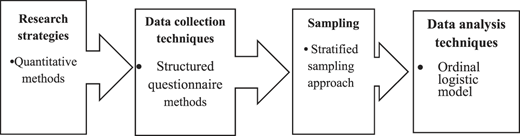
Methodologically, this study employed a quantitative approach to obtain numerical data from stratified sampling with the help of structured questionnaire gauged by Likert scale expressive opinion which were later analyzed using ordinal logistic regression as summarized in Figure 2.
4. Statistic findings and discussion
4.1 Validity and reliability test findings
The study assessed validity using discriminant and construct validity. Discriminant validity was evaluated through the Heterotrait-Monotrait ratio (HTMT), while construct validity was assessed using Average Variance Extracted (AVE).
In Table 2, the HTMT value between social responsibility consideration and supplier innovation was 0.731. This was lower than the threshold cut-off value of 0.85 recommended by Dirgiatmo (2023). The distinction between social responsibility considerations and supplier innovation confirms the absence of overlap, thereby establishing discriminant validity.
According to Table 3, the AVE value for social responsibility considerations was 0.766. Shrestha (2021)) indicated that an AVE of 0.5 or greater signifies construct validity. This value exceeds the threshold, therefore strong construct validity is established, showing that more than half of the variance of its measurement items is explained.
The reliability test was conducted using Cronbach's alpha to determine whether the questions assessing social responsibility in procurement provide stable and consistent outcomes. Cronbach's alpha is applied for this assessment. An alpha coefficient exceeding 0.70 is regarded as acceptable and indicates that the items function reliably together (Setyaedhi, 2024). Table 4 displays the reliability statistics where coefficient of reliability is 0.85.
The Cronbach's alpha coefficient is 0.923. This value is significantly higher than the recommended minimum threshold of 0.70. It indicates that the five items measuring social responsibility are highly consistent and reliable. Therefore, the variables can confidently be applied for further analysis.
4.2 Findings on data quality checks and diagnostic tests
4.2.1 Multicollinearity
Tolerance and VIF values are used to identify multicollinearity. A tolerance value greater than 0.10 and a VIF less than 10 indicate that multicollinearity is not a serious issue (Kalnins and Praitis, 2025). Table 5 provides the details of collinearity statistics.
All tolerance values are greater than 0.10, and VIF scores remain far below 10. These findings indicate the absence of significant multicollinearity. Each social responsibility element contributes unique information on supplier innovation; therefore, all are suitable for inclusion in the model.
4.2.2 Proportional odds/parallel lines assumption
The proportional odds test confirms if the ordinal model meets a very important principle. Table 6 shows how the values of the slopes for the explanatory variables are constant given the response of the relationship. The principle indicates that the values of the slopes for each predictor are constant for all levels of the response. In case the p-value is more than 0.05, the assumption is not violated and the model is valid (French and Shotwell, 2022).
The study through results of Table 7 show how the model fitted the data by comparing the loglikelihood of intercept only and its final before conducting inferential analysis for establishing the relationship between socially responsible procurement dimensions and supplier innovation.
The null hypothesis states that the location parameters (slope coefficients) are the same across response categories.
Link function: Logit.
The log-likelihood value cannot be further increased after the maximum number of step-halving.
The Chi-Square statistic is computed based on the log-likelihood value of the last iteration of the general model. Validity of the test is uncertain.
The significance value is 0.985. That is much larger than 0.05. These results show the assumption of proportional odds is being held. The effect of each social responsibility variable on supplier innovation is equal for every response category, so the model is a good model to continue to work with. The Chi-square statistic is 133.769 with a p-value of 0.000, which is well below 0.05. This finding indicates that the model including predictors explains supplier innovation significantly better than the null model.
4.2.3 Model fitting
Model fitting determines whether including social responsibility factors enhances the model's ability to explain the outcome compared with a baseline model lacking predictors. A very small p-value demonstrates that the full model performs better (Wuensch et al., 2025).
Goodness-of-fit tests were conducted to assess how well the model corresponds with the actual data. Table 8 presents two tests: Pearson and Deviance. p-values greater than 0.05 indicate that the model adequately fits the data (Dufera et al., 2023).
Both tests have p-values of 1.000. These high values show there is no lack of fit. The social responsibility predictors match the data well, enabling the model to be used for further analysis.
4.2.3.1 Pseudo R2 values
Pseudo R2 values indicate how effectively the predictors account for variations in the outcome. Although these values differ from the R2 applied in linear regression, they still assist in evaluating the model's explanatory power. Higher values imply that the predictors explain a greater proportion of the variation in supplier innovation (Ozili, 2023). Table 9 provides the detailed R-squared results.
The Nagelkerke coefficient is 0.888. This value is very high, indicating that nearly 89% of the variation in supplier innovation is explained by the social responsibility predictors. The Cox and Snell and McFadden values likewise demonstrate a strong model but their values are relatively low due to their inabilities to reach the maximum theoretical coefficient value of 1. These findings verify that the predictors play an important role in explaining the outcome.
4.3 Results and discussions of the inferential statistical findings
Parameter estimates indicate how each social responsibility factor relates to supplier innovation. Table 10 presents the estimates, their standard errors, Wald statistics, degrees of freedom and corresponding p-values. A p-value less than 0.05 signifies that the factor is significant in the model (Wuensch et al., 2025).
The study findings clearly demonstrate that social responsibility factors exert a strong and significant influence on supplier innovation at Azam Dairy Products Limited. Among the identified factors, fair labour practices emerged as the most influential, showing the highest parameter estimate and strongest statistical significance. This suggests that suppliers who ensure equitable wages, safe working conditions and fair treatment of employees are more likely to engage in innovative practices. Similarly, employee engagement and community benefits also exhibited meaningful effects on supplier innovation.
4.3.1 Employee engagement in socially responsible procurement
The results from Table 10 show the β value for employee engagement is 1.289 and the p-value is 0.004 highlighting the importance of involving employees in decision-making and maintaining their motivation and hence significant rejection of the hypothesis H01 . These findings conducted in Azam Dairy products supports those of Israel (2025) who realized collaborative relationships engagements involving employees in sustainable procurement encourages a culture of supplier's innovation in small and medium enterprises (Israel, 2025) and hence it can be generalized employee engagement is very vital in socially responsible procurement for supplier's innovation regardless of size of the buying firms. However, partly this study findings from developing nation of Tanzania contradicts with those of Van Hoek (2024) conducted from developed nations which perhaps might imply developed nations are not much relying on employee engagements for supplier innovations but rather forced by statutory requirements of their nations.
4.3.2 Engagement of community benefits in socially responsible procurement
Also, Table 10 shows that engagement of community benefits in socially responsible procurement is a driving engine for supplier innovation as the β value is 1.033 and the p value is 0.025 and hence the hypothesis H02 is significantly rejected. These findings concur with those of Onofrei et al. (2020) who conducted his study in the context of developed nations. Moreover, this situation whereby findings from developing nation concurs with those from developed nation in terms of the necessity of engaging the community implies the engagement is not more concerned with the economic prosperity of a specific nation but rather is of more social satisfaction goal oriented and hence suppliers' innovation towards community engagement remains of paramount importance as revealed by Selviaridis and Spring (2025). Suppliers are driven to deliver to the satisfaction of the engaged community through coming up with the most up to date versions of products through cost-cutting in order to save a portion for community giving back to the community that surrounds the procuring entities.
4.3.3 Health and safety considerations in socially responsible procurement
What's more health and safety considerations in socially responsible procurement is value useful for the innovation of suppliers (estimate = 0.996, p = 0.014) further showed meaningful associations, emphasizing the role of health initiatives and safe working environments in fostering innovation among suppliers and hence hypothesis H03 is significantly rejected. Principles of procurement encourage sourcing from suppliers who are producing products which are safe and of a good health status to the users (Subakti, 2024). Therefore, these findings concur with those of the previous researchers such as Onukwulu et al. (2024) and Boadu et al. (2023). The procurement process discourages buying from suppliers who are delivering in unauthorized packages which are environmentally not user friend, and generally prohibits buying from non-certified sources for the well-being of consumers. Therefore, findings reinforce that health and safety thoughts plays pivotal role to the suppliers' innovations by making them more proactive for the social satisfaction of the buying society.
4.3.4 Fair labor practices in socially responsible procurement
Among other aspects, fair labor practices recorded the strongest effect with an estimate of 1.770 and a highly significant p-value of 0.000, suggesting that organizations prioritizing fair treatment of workers experience greater supplier innovation and hence hypothesis H04 is significantly rejected. These results imply that when buyers emphasize on fair labor practices, suppliers respond proactively by introducing new ideas and practices. For example, suppliers may develop fair-trade product lines, strengthen workplace safety initiatives. Importantly, these initiatives extend beyond reputational benefits; they represent strategic mechanisms that enable suppliers to discover fresh approaches for improving competitiveness and operational efficiency. These findings align with broader empirical evidence. Sack and Sarter (2022) established that buyers integrating fair labor practice into procurement processes motivate suppliers to design socially responsible innovations. Systematic reviews of sustainable supply chains also conclude that embedding labor practices in procurement fosters continuous learning and drives innovative practices among suppliers (Gimenez and Tachizawa, 2012). Collectively, these studies reinforce the present findings by highlighting the universal link between fair labor practices and supplier innovation across diverse sectors and regions.
5. Conclusion, implications and limitations of the study findings
5.1 Conclusion
This study concludes that social responsibility factors have a determining role to play in fostering supplier innovation at Azam Dairy Products Limited. All four null hypotheses tested were significantly rejected. Specifically, among all tested factors, fair labor practices in procurement were found to have the most significant influence on suppliers' innovation. Additional positive effects were recorded for employee safety and modest community initiatives, confirming that social considerations are only effective when integrated into business practice with adequate resources. Conversely, when applied in a fragmented or symbolic manner, or when pursued with limited commitment, opportunities for innovation are reduced and suppliers may remain focused on survival rather than improvement. Generally, the extent to which social responsibility is systematically adopted is demonstrated to play a pivotal role in organizational stability, ensuring predictability in operations and minimizing disruptions that hinder creative efforts. The results, therefore, illustrate the fact that social practices are not merely reputation tools but critical enablers of innovation within supplier networks. However, caution should be made while interpreting this study findings as they can't be widely generalized because the study has studies only four dimensions from a single firm with a small sample size of only 70 respondents using cross-sectional design and hence future studies should take care of these limitations by engaging more firms with more large sample size and more dimensions with the help of longitudinal design.
5.2 Implications for practice
The findings of this study indicate that the integration of social responsibility into procurement and supplier management should be prioritized as a strategic driver of innovation. This implies that firms must move beyond symbolic adoption of social practices to embed them as core elements of procurement policy and supplier engagement. In particular, reform initiatives should focus on expanding the incorporation of socially responsible practices into supplier contracts, enhancing the monitoring and enforcement of workplace safety measures, and institutionalizing systematic reporting on community contributions and hence for self-reports and audit references. Such measures not only safeguard social welfare but also create enabling environments in which suppliers can innovate effectively. Additionally, building supplier capacity, allocating greater resources to worker welfare programs and leveraging digital monitoring systems can strengthen adherence to social standards while facilitating collaboration on innovative projects. Moreover, targeted training workshops focusing on occupational safety and ethical procurement shall help suppliers lacking resources to upgrade practices. At a broader level, government and industry associations may support these initiatives by offering public recognition, awards or tax incentives for firms that actively integrate social responsibility and innovation. Such measures resonate with Tanzania's Vision 2050, which emphasizes inclusive and sustainable growth and align with the United Nations SDGs, particularly those connecting social inclusion with economic progress.
Theoretically, the Stakeholder Theory suggests that firms must account for the needs of various groups, including employees, communities and suppliers to act socially in the procurement process for the innovations of the procurement process. Responsiveness to these groups builds trust, legitimacy and relational capital, all of which can spark creativity and innovation especially to the suppliers.
5.3 Limitations of the study findings and future research directions
This study is not without limitations, which must be considered under caution when interpreting its findings. The research was conducted at Azam Dairy Products Limited, a single firm with a small sample size of 70 respondents within Tanzanian dairy sector, using cross sectional design, which restricts generalization of results to other firms within the same industry. Therefore, future studies should include more firms and large representative sample size using longitudinal design for wide generalization of the findings. Also, the measurement framework focused on selected dimensions including employee engagement, community benefits, health and safety and fair labour practices, while excluding other relevant aspects such as environmental sustainability and gender inclusiveness which are also considered important in future studies.
Ethical approval
The ethical clearance for this study was obtained from the Tanzania Institute of Accountancy with reference number BE.30/390/01/245 approved on June 2, 2025 and the data were collected from July 2, 2025 up to October 2, 2025.