Global issues related to Inclusive Education in higher education cover various aspects, including accessibility, financial support and policy gaps. Data from UNESCO shows that about 15% of the world’s population has a disability, but in many countries, their participation rate in higher education is still very low. The urgent need to establish a genuinely accessible and inclusive higher education environment for all high education, including those with impairments. This study aims to identify building inclusive education in higher education: a systematic literature review of strategic approaches, technology, management and learning outcomes.
This study followed PRISMA guidelines for systematic literature reviews. The strings are based on the paper title’s keywords, emphasizing instructor performance and competency. Higher education requires strategic methods, technology integration, effective management and better learning results.
This study concludes that 1) ensure that every student has non-discriminatory, equal access to resources and learning opportunities. 2) implementation policies to support accessibility support for students with disabilities, 3) a framework for designing learning tasks and activities, 4) an integrated approach to interdisciplinarity in education for sustainable development, 5) emerging trends in research on inclusive virtual education, 6) provide insights and strategies to foster diversity and inclusion in higher education and 7) the role of virtual assistive technology in inclusive higher education.
This study concluded that inclusive policies, technology and management practices can improve education for all students, including impairments, assistive technology helps learning-disabled pupils compete.
Introduction
Strategic approaches, technology, management and learning outcomes are important components in a modern education system that are interrelated to improve the effectiveness and efficiency of the education process. By harnessing the power of technology, institutions can streamline their management practices, optimize resource utilization and improve overall educational outcomes (Yang, 2023). Learning outcomes in education are essential indicators of the effectiveness of the educational process, reflecting the enhanced competencies, skills and understanding that students can apply in real-world scenarios (Muthmainnah et al., 2025). By integrating these aspects, educational establishments can provide comprehensive and relevant learning opportunities that provide students with the tools they need to meet problems in the future. Inclusive education is important in higher education, especially in creating a fairer and more equal learning environment for all students (Dominikus et al., 2023; Аleksieienko-Lemovska, 2022).
One essential component of establishing a just and equal learning environment for all students, irrespective of their origin, aptitude, or condition, is the incorporation of inclusive education in higher education. Global issues related to inclusive education in higher education cover various aspects, including accessibility, financial support and policy gaps. Data from UNESCO shows that about 15% of the world’s population has a disability, but in many countries, their participation rate in higher education is still very low (Mitra et al., 2023). For example, a report from the World Bank revealed that in some developing countries, only about 1–2% of students in higher education have disabilities. In addition, a study by the European Union Agency for Fundamental Rights shows that students from ethnic minorities and low socio-economic groups often face discrimination and inequality in higher education (Óhidy et al., 2022). They are less likely to complete their studies than their more financially or socially advantaged peers. This approach ensures everyone has equal opportunities to access and participate in learning UNESCO emphasizes that inclusive education in higher education is essential for providing an outstanding education that fosters the development of all students’ potential (Llorent, et al., 2020). It is a paradigm that considers human diversity in all its complexity and views education as a central strategy for promoting social inclusion (García-Vita* and Barreto, 2019). Comprehensive and inclusive policies and programs that encourage student access and involvement are strategic approaches (Tawse and Tabesh, 2021). Adaptive learning software and accessibility aids can enable disabled students to attend lectures and access learning resources. Inclusion training for teaching and administrative staff is crucial for a campus environment that promotes different students (Moriña, et al., 2020). Strategic Approaches, Technology, Management and Learning Outputs can provide in-depth insights and empirical evidence to address inclusive education issues in higher education (Thornhill-Miller, et al., 2023). Research-based strategies and policies may make inclusion efforts real and sustainable. Research into technology in inclusive education can discover the best tools and approaches to remove learning barriers and improve disability participation (Renz and Hilbig, 2020). Inclusive management studies can highlight staff training and the development of best practices and campus environments supporting all students (Erlyani, et al., 2024). However, previous research highlights the importance of comprehensive and inclusive policies and programs to support student access and engagement, and some shortcomings need to be noted. First, the research tends to focus on theoretical approaches without providing sufficient empirical evidence on the effectiveness of the proposed policies and technologies in different contexts. In addition, previous research did not adequately address the practical challenges of implementing adaptive technologies and inclusion training on campus, especially in terms of resource limitations and resistance from management or staff. Research has also not considered in depth the different needs of students with diverse disabilities, which may require more specialized and customized solutions.
However, research by Nahorna notes that the study’s findings highlight the necessity of enhancing the state’s social policy and implementing creative infrastructure and unique tools to raise the standard of inclusive education (Nahorna et al., 2023). The findings can be applied to contemporary high schools to guarantee a successful learning environment. The study conducted by Pérez-Esteban found that inclusive education remains an unresolved issue for universities. While these institutions are progressing toward inclusion, their pace is slower than other educational levels (Pérez-Esteban et al., 2023). The method used by Nahorna is descriptive qualitative. In contrast, the research by Pérez-Esteban used a systematic review indicating the PRISMA method. The novelty of this research is that it will review previous studies systematically using the systematic literature review (SLR) method to examine buildings.
Previous research has highlighted the importance of inclusive policies, strategic approaches and technologies in supporting inclusive higher education (Nahorna et al., 2023). However, most of these studies are theoretical or descriptive without strong empirical evidence on the effectiveness of these measures in various institutional and cultural contexts. In addition, practical implementation challenges, such as limited resources, resistance from management and varying technological readiness in higher education institutions, have not been explored in depth. Research also tends to generalize the needs of students with disabilities without considering the diversity of needs that may require specific and personalized solutions. The progress of implementing inclusive education in higher education also tends to be slower compared to other levels of education (Pérez-Esteban et al., 2023) so more focused research is needed to bridge this gap. In addition, technology integration in inclusive education still faces various barriers, such as cost, lack of digital literacy among students and staff and limited infrastructure, especially in less developed regions (Renz and Hilbig, 2020). Structural and cultural barriers within universities, such as inadequate policy frameworks, lack of accountability and stakeholder awareness, are also major obstacles to realizing inclusion (O’Shea et al., 2021).
This research aims to address these gaps by conducting a systematic literature review through a Systematic Literature Review (SLR) approach. The study will provide empirical evidence by synthesizing findings from various contexts, identifying practical challenges in implementing inclusion policies and offering implementable solutions. The research will also address the diverse needs of students with disabilities, providing insights into adaptive and personalized solutions. Special focus will be given to the unique challenges of higher education and strategies that can accelerate the implementation of inclusion. In addition, this study will explore the integration of technology in inclusive education considering financial, infrastructural and cultural barriers. With a holistic approach, this research is expected to produce a framework that integrates strategic approaches, technology, management and learning outcomes to create an inclusive and equitable higher education environment for all students inclusive education in higher education.
The urgent need to establish a genuinely accessible and inclusive higher education environment for all students, including those with impairments, makes this research so urgent. With the increasing number of students with special needs in educational institutions, there is growing pressure to implement policies, programs and technologies that support their access and ensure full and equal participation. Without effective strategic measures, many students risk being marginalized, which not only harms them individually but also undermines the mission of educational institutions in providing equitable and inclusive education for all. The urgency is also driven by the need to address the structural and cultural barriers within the campus environment, which can hinder the effective implementation of adaptive technology and inclusion training. Based on this background, this study aims to identify building inclusive education in higher education: a systematic literature review of strategic approaches, technology, management and learning outcomes.
Methodology
The Preferred Reporting Items for Systematic Review and Meta-Analysis (PRISMA) served as the study’s guide for the systematic literature review research approach. This study review’s availability enables scholars to find and map related research ideas concurrently. This study aims to generate and map variables that build inclusive education in higher education. Specifically, the research will focus on identifying the key factors that impact the successful implementation of inclusive education in higher education, as well as examining how strategic approaches, technology and management practices influence learning outcomes for students with disabilities. Researchers concentrated on variables that affect the strategic approaches, technology, management and learning output.
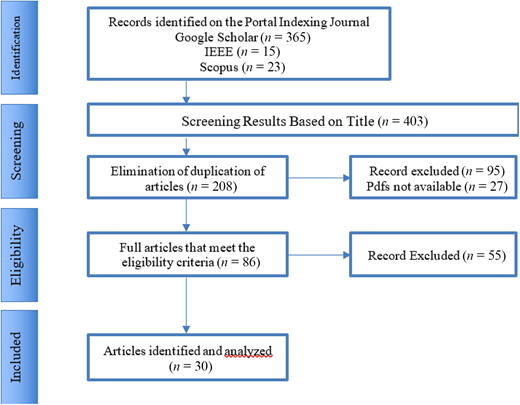
Overview of systematic literature review process
In this literature systematic review, researchers searched the indexing portals for IEEE, Google Scholar and Scopus journals. Although only three databases were used, these were deliberately selected as they cover the most relevant, high-quality and widely cited literature in the field of inclusive higher education. The search for articles was customized based on the research topic. To find similar publications, this study selects a string category or code at the beginning of its systematic literature review. This study used Indonesian and English strings “Building Inclusive Education in Higher Education” and “Strategic Approaches, Technology, Management and Learning Output.” The researcher searched search engines for articles using these search terms and collected them before data reduction and extraction. The initial Google Scholar discovery yielded 115 Indonesian and 93 English publications. IEEE discovered 15 English-stringed publications, whereas Scopus found 23. Next, data extraction involved mapping the articles for thematic relevance, categorizing key factors and summarizing findings to identify recurring patterns and significant approaches in inclusive higher education. After extracting from three journal indexing sites, researchers found 30 articles.
Regarding the sample size, while the number of articles analyzed (30) is relatively small, it was deliberately selected to provide a focused analysis of the most current literature on inclusive education in higher education. This sample size is considered sufficient for a conceptual systematic review that aims to capture recent trends rather than perform a quantitative meta-analysis. The period of 2019–2023 was chosen to reflect recent shifts in policies, technological advancements and educational strategies.
The conceptual model of assistive technology integration in inclusive higher education is illustrated in Figure 1.
Overview of systematic literature review process
The data extraction process in this study focuses on factors that affect building inclusive education in higher education. Extraction was conducted on 30 articles that were found following the criteria. After extraction, each article was analyzed to identify themes and patterns related to strategic approaches, technology integration, management practices and learning outcomes. Key factors were categorized, synthesized and summarized to generate the framework presented in the results. Data extraction allows researchers to map the most significant factors from the article search results. In this literature systematic review research, the data extraction process is divided into 2: data extraction on articles with Indonesian search strings and data extraction on articles with English search strings.
Search string
This research begins with a search of strings to find relevant journals. The strings are based on the keywords of the article title, which emphasize building inclusive education in higher education. Researchers had trouble finding English-language publications using “Building Inclusive Education in Higher Education” and “Strategic Approaches, Technology, Management, And Learning Output.” Thus, the researcher used an additional string in the form of “effect” that described the presence of other relevant variables. This search was implemented on the IEEE and Scopus journal indexing portals. As for Google Scholar indexing, researchers can search using keywords in both Indonesian and English.
Inclusion and exclusion criteria
This study established inclusion and exclusion criteria to narrow the identification of articles. By doing so, researchers could map out factors pertinent to the research topic during the results mapping process. Inclusion criteria were clarified to ensure transparency:
Articles in English or Indonesian;
Articles published in journals or proceedings;
Articles focusing on building inclusive education, strategic approaches, technology, management, or learning outcomes;
Articles published between 2019–2023; and
Articles accessible for download.
Exclusion criteria are:
Articles not in English or Indonesian;
Articles not in journals or proceedings;
Articles not relevant to the research focus;
Articles outside the 2019–2023 period; and
Articles not accessible for analysis.
Result
Target paper
Based on the type of journal, this research belongs to the type of scientific journal. Based on these two research findings, 30 studies were published with a total percentage of 100%.
Paper based on year
Table 1 shows that 30 journals were published, with a total percentage of 100%. In 2019, the journal had a percentage of 13.33%. In the following year, 2020, there were journals with a percentage of 10%. In 2021, the journal had a percentage of 16.67%. In 2022, there were journals with a percentage of 23.33%. In 2023, there were journals with a percentage of 36.67%. The conclusion is that from 2019 to 2023, there were fluctuations in publishing, peaking in 2021–2023. This trend may reflect growing attention to inclusive higher education and the integration of assistive technologies, possibly driven by recent policy initiatives and the increasing emphasis on digital learning solutions. The rising number of publications indicates an evolving research interest and underscores the need for further investigation into effective strategies for inclusive education.
Distribution paper based on developing countries
Table 2 shows that on country distribution, the research reviewed in this study was published in several countries. From these countries, it is known that 30 articles were published with a total percentage of 99.99%. This data was followed by China, Malaysia, Uruguay and Australia, with a percentage of 3.33% each. England has the highest publication of journals, with a presentation of 56.67%. Meanwhile, Spain and the UK have journal publications as much as a percentage of 6.67%. As for Canada, it is as much as 13.33%.
Regarding the geographic concentration, it is acknowledged that 56.67% of the articles were from England. This geographic concentration is a reflection of the prominence of inclusive education research in the UK, especially regarding technology integration and strategies for students with disabilities. However, it is recognized that this limits the study’s geographical diversity. In future studies, a broader representation of geographical regions will be targeted to enhance the generalizability of findings.
Distribution method of paper
Based on Table 3, the analysis shows that the research in this data set is dominated by descriptive qualitative methods (56.67%), focusing on in-depth exploration and comprehensive understanding of phenomena. Literature review methods (26.67%) were also widely used, reflecting a tendency to analyze and synthesize theories without collecting primary data. Thematic analysis was applied in only one study (3.33%), while mixed methods and survey-based quantitative approaches were each used in 6.67% of studies, indicating that quantitative approaches remain limited. This dominance of qualitative methods suggests that current research prioritizes detailed, context-specific insights over generalizable findings. As a result, the field could benefit from more studies using mixed or quantitative approaches to validate findings and provide broader evidence for inclusive higher education strategies.
Distribution building inclusive education in higher education of strategic approaches, technology, management and learning outcomes
Table 4 summarizes the findings relating to Building Inclusive Education in Higher Education Strategic Approaches, Technology, Management and Learning Outcomes. The first finding states that ensuring all students have equal access to learning opportunities and resources without discrimination and emerging trends in research on inclusive virtual education obtained research results of 10% for each of the studies in this research. The implementation of policies to support accessibility and support for students with disabilities in this research study obtained 6.67% of the study results reviewed in this study. Then, a framework for designing learning tasks and activities and providing insights and strategies to foster diversity and inclusion in higher education each obtained 26.67%. The lowest findings reviewed in this journal are an integrated approach to interdisciplinarity in education for sustainable development with a percentage of 3.33%.
The distribution of findings indicates that most research focuses on designing learning tasks, fostering diversity and providing inclusive strategies, highlighting the priority given to actionable approaches that directly impact student participation. The relatively low attention to interdisciplinary approaches suggests a gap in the integration of sustainability and broader educational objectives, while emerging trends in virtual education and equal access emphasize the growing role of technology and policy in promoting inclusivity. These patterns suggest areas for future research and practical implementation to strengthen inclusive higher education practices.
Discussion
The challenges faced by students with disabilities are limited accessible services and facilities and negative stereotypes (Rahajeng et al., 2024). In line with these challenges, it is essential to focus on ensuring equitable access to learning opportunities and resources without discrimination. This aligns with emerging research on education equity, which highlights the necessity of inclusive strategies that encompass both accessibility and support for students with special needs (Puspitasari et al., 2023). Inclusion policies should include accessibility, special needs support and elimination of discrimination. This approach also prioritizes inclusive curricula and educational techniques that foster student diversity. To achieve a truly inclusive educational environment, it is crucial that lecturers are trained to identify the diverse needs of students and develop responsive teaching practices.
Student involvement in developing an inclusive campus atmosphere, supported by counseling and physical accessibility, is also crucial to inclusive higher education (Dwicahyaningtyas and Rachmayanti, 2021). To create a genuinely inclusive campus, it is vital that every student, regardless of their background, feels appreciated and encouraged to participate fully in the educational process. This approach promotes academic access equity. Following the evaluation of existing research, this study indicates that inclusive higher education has the following strategic approaches, technology, management and learning output:
Building inclusive education in higher education of strategic approaches
According to the literature review results in this study, the strategies that can be carried out to build inclusive education in higher education refer to efforts to improve accessibility and inclusiveness in the higher education environment through strategic approaches. Overall, the findings indicate a consistent emphasis on removing barriers, fostering diversity and leveraging technology to create supportive and equitable learning environments. This process involves the implementation of policies that support equal access to education, including providing adequate support for students with special needs and removing barriers such as discrimination (Tawse and Tabesh, 2021). In addition, focus is also given to inclusive curriculum design and the development of teaching methods that support student diversity. By creating an inclusive learning environment, higher education institutions can foster a sense of belonging for every student, helping them thrive academically and socially. Training lecturers in inclusion principles and responsive teaching techniques is key to creating a supportive learning environment for all students (Kasáčová, 2019). Further, involving students in the learning process and creating an inclusion-friendly campus environment by providing comprehensive support services are essential parts of this approach.
The synthesis of findings across the reviewed studies suggests that inclusive higher education is most effective when strategic approaches, technology, management and learning outcomes are implemented in a coordinated manner. Strategic approaches to inclusive higher education require comprehensive policies to remove barriers like ethnicity, gender, disability and socioeconomic background discrimination (Cotán et al., 2021). The analysis shows that while some strategies, such as frameworks for designing learning tasks and fostering inclusion, are well-represented (26.67%), other areas like interdisciplinarity and sustainability are less emphasized (3.33%), indicating clear gaps for future research and policy development. Faculty must undergo training to address student diversity and adapt instructional methods to inclusive environments (Tejera Techera et al., 2023). Active student participation in learning and campus life, supported by counseling and mental health services, creates a supportive community and an inclusive educational environment. The goal is to assure access and establish an environment where every higher education student feels respected, supported and empowered to succeed.
In addition, structural barriers such as academic inequity, resource disadvantage and cultural discrimination must be addressed through equitable design strategies such as intentional interdependence, transformative translation and proactive engagement to ensure equitable treatment and access for all students (Estefan, et al., 2023). These strategies are crucial for the successful implementation of inclusive education and should be supported by policies that promote long-term sustainability. Discussing the successful implementation of inclusive policies in different countries can provide comparative insights and recommendations for other countries (Dignath et al., 2022). Comparative examples from different countries highlight how tailored policy and technology interventions can overcome contextual challenges, providing actionable insights for other institutions.
Accessibility has been emphasized as a key to academic performance for students with impairments. Scholars have stressed the necessity of accessibility policies and specialized support for disabled students to create an inclusive educational environment. Several studies have found that technology helps close education accessibility disparities. In fact, emerging research highlights that technology is an indispensable tool for reducing educational gaps, providing students with disabilities the resources they need to succeed. Technology helps remove barriers to education, increase learning possibilities and make education more inclusive and equitable (Ali, 2023). Technology can reduce educational gaps in inclusive education. Technology can empower students, close educational gaps, give inexpensive alternatives and increase learning opportunities for everybody (Haleem et al., 2022). Educational technologies can address teacher shortages, poor infrastructure and access to excellent education (Joshi and Koirala, 2023).
Designing effective learning tasks and activities and fostering diversity and inclusion are central to modern educational practices, supporting the idea that tailored educational strategies can significantly improve learning outcomes (Xia et al., 2022). The role of virtual assistance technology is critical, as it provides practical solutions to common accessibility challenges, thereby enhancing the learning experiences for students with disability (Yenduri et al., 2023). Synthesizing the results, designing effective learning tasks and fostering diversity are central to modern educational practices and virtual assistive technologies play a pivotal role in enhancing accessibility. However, the relatively low emphasis on interdisciplinarity in education for sustainable development suggests an area ripe for future exploration. Overall, the integrated use of strategic approaches, technology and inclusive pedagogical practices provides a coherent framework that can guide higher education institutions in systematically improving learning outcomes and fostering an inclusive academic environment for all students (Sorkos and Hajisoteriou, 2021).
Building inclusive education in higher education of technology
Technology-enabled inclusive higher education means using technology to improve academic accessibility and inclusivity. This strategy uses digital resources and platforms like accessible online content and adaptive technologies for disabled students. Technology also promotes inclusive teaching approaches by personalizing learning and adapting delivery to individual learning styles (de la Torre et al., 2023). Digital resources also encourage student-teacher cooperation, creating a more inclusive learning environment. Moreover, it is essential for educators and staff to be well-trained in using these technologies to meet the diverse needs of students effectively. To address students’ different requirements, educators and staff must be trained and supported in using new technologies (Parey and Kutscher, 2024). Intelligent technology integration in higher education can improve all students’ access, equity and academic success.
Overall, the findings from the reviewed studies reveal a coherent pattern: technology serves not only as a tool for accessibility but also as a catalyst for inclusive pedagogy, equity and academic success. Building inclusive education in higher education with technology focuses on using technological advancements to enhance accessibility and inclusivity within academic settings (Wilkens et al., 2021). This approach involves integrating digital tools and platforms that cater to diverse learning needs, such as adaptive technologies and accessible online resources, ensuring that all students, including those with disabilities, can access educational content effectively. Additionally, technology supports inclusive teaching methods by enabling flexible curriculum delivery through virtual classrooms and multimedia resources, accommodating various learning styles (Kumi-Yeboah et al., 2020). The synthesis of these studies shows that collaborative tools and virtual classrooms not only support diverse learning needs but also foster interaction, community building and engagement among students from different backgrounds.
Collaborative tools promote inclusivity by facilitating interaction among students from diverse backgrounds and fostering a supportive learning community (Khalil et al., 2024). Effective implementation requires ongoing training for educators to harness these technologies effectively, promoting educational equity and empowering all students to succeed academically in a more inclusive environment. The research underscores the transformative potential of assistive technology and inclusive curriculum design in creating accessible and supportive learning environments (Chopra et al., 2024). As reviewed in recent studies, assistive technology increases students’ capacity with learning difficulties, enabling them to compete with their peers and complete academic tasks effectively (Rizk and Hillier, 2022). Nevertheless, the challenges of resource availability and consistent support services across universities need to be addressed to ensure equitable implementation of these technologies.
The concept of Universal Design for Learning (UDL) has gained prominence in education, particularly in supporting students with disabilities. A socio-cultural approach to online teaching and learning in Business Education, emphasizing the gradual development of key business skills through a socio-cultural model (Bhandari, 2020). Media underrepresentation limits public discourse on disability issues, reinforcing stereotypes and hindering inclusive education progress (Paramita et al., 2024). Synthesizing these insights, it becomes clear that inclusive education requires coordinated strategies that integrate technology, UDL principles, supportive policies and socio-cultural considerations to address diverse student needs. This approach focuses on elements such as people, shared purpose, locating framework, method and activity, highlighting the importance of engaging students and fostering skill development. These insights are crucial for improving academic outcomes for students with disabilities, ensuring they have equal opportunities to succeed. These studies conclude that inclusive practices, support systems and technological advancements promote educational fairness and support students with disabilities. Using UDL principles, specialized training and inclusive policies, educators and policymakers may build learning environments that meet the different needs of all students, promoting academic success and inclusivity.
Building inclusive education in higher education of management
According to this study’s literature review, constructing inclusive education in higher education with management involves systematically applying policies and procedures to create an inclusive learning environment. This method strategically manages resources, policies and processes to provide equal opportunities for all students, no matter their status or ability. Developing inclusive policies that address prejudice and lack of accommodations and encouraging diversity at all institutional levels is crucial (Renz and Hilbig, 2020). Management also plays a critical role in ensuring that resources are allocated effectively to support the diverse needs of students. Promoting inclusion in management requires leadership commitment, faculty training in inclusive teaching approaches and customized support services for varied student requirements (Pérez-Esteban et al., 2023). Institutions can improve student engagement, retention and achievement by incorporating inclusive practices into organizational management, creating a more equal and supportive educational experience.
Management should deliberately use administrative methods to provide inclusive higher education environments in those areas where all students are welcome, regardless of background or aptitude, and can succeed academically and socially. This method develops and enforces inclusive policies to remove barriers to access and ensure equal learning by (Yenduri et al., 2023). Effective management includes allocating resources for varied student needs, such as accessible facilities, assistive technologies and specialized academic support (Bray et al., 2024). In addition, promoting inclusion at all levels of management is vital for long-term success and sustainability in higher education. Higher education institutions may establish an environment where all students feel valued, respected and empowered to succeed by integrating inclusion into administrative structures and promoting fairness and support.
The results of the review of findings in this study indicate the existence of research novelty findings. The novelty finding is that it is important to explore educational institutions that have successfully implemented inclusive education practices to provide practical guidance and models that other institutions can adopt. These case studies could include interviews with staff, students and administrators to understand effective strategies comprehensively. Therefore, cooperation and good management that enhance inclusive education influence success in an institution or university. The review shows that integrated interdisciplinarity in education for sustainable development research is lacking, highlighting the need for greater research. Critical thinking and problem-solving skills are developed through interdisciplinary education. Previous ideas show that such an approach can help students solve complicated real-world problems, making it important to sustainable development. Understanding the long-term effects of strategic methods and technological interventions on inclusive education is crucial to its efficacy and sustainability.
University students with disabilities’ perspectives of UDL teaching approach to determine how disabilities affect learning and quantify student perceptions of UDL (Li et al., 2024). The study examined how disabled higher education students view UDL procedures. Zhang critically examined Universal Design for Learning in U.S. federal education law (Zhang et al., 2024). The study stressed UDL’s frequent debate in education as a paradigm for developing inclusive learning environments for all students. Comparative research across countries and educational systems may reveal the efficacy of differing inclusive education policies. Such a study could identify optimal practices and illuminate how cultural and policy environments affect inclusive education initiatives. Future research can fill these gaps to create more successful and sustainable inclusive education techniques that give all kids, regardless of ability, quality education.
Building inclusive education in higher education of learning output
The review of the literature in this study found that constructing inclusive education in higher education learning output ensures that all students, regardless of background or learning style, attain relevant educational achievements. This method emphasizes inclusive learning environments and assessments. Inclusive education emphasizes personalized learning beyond typical assessment methods to show students’ knowledge and skills (Lindner and Schwab, 2020). It involves creating curriculum and instructional practices that accommodate diverse learning styles and encourage cooperation and peer learning among students with different strengths and weaknesses (Tobbell, et al., 2021). Technology and adaptive learning tools enable tailored learning pathways and fast feedback to improve student understanding and engagement (Khalil et al., 2024). By incorporating inclusive assessments, higher education institutions can ensure that all students, regardless of ability, can demonstrate their academic progress and achievement. Across the studies, a pattern emerges showing that strategies combining curriculum design, technology integration and peer collaboration are most effective in enhancing learning outputs, suggesting the importance of a holistic approach to inclusive education. Prioritizing inclusive learning outputs helps higher education institutions prepare students for success in a varied and globalized world, ensuring all students have equal opportunities to prosper and contribute to their communities and professions.
Enhancing educational achievements for all students through inclusive and diverse learning methodologies is the goal of inclusive higher education. This method involves building curriculum and examinations for various learning styles and capacities to allow students to exhibit their knowledge and skills (Khalil et al., 2024). Instead of one-size-fits-all teaching, it emphasizes tailored learning that addresses individual strengths and weaknesses. The synthesis of findings indicates that while most research focuses on personalized instruction, fewer studies integrate management and policy dimensions, highlighting a gap in addressing institutional-level factors that support inclusive learning. To help students succeed, inclusive education stresses fair access to tutoring, counselling and technology adaptations. Higher education institutions may create a diverse community of learners ready for future challenges and opportunities in their disciplines by supporting and empowering students to achieve their academic goals (Mao, 2021). This method improves educational performance and fosters a culture of inclusivity and equity, enriching the academic community’s learning experience.
Socio-emotional skills and professional abilities are also crucial to inclusive education’s sustainability, as teachers’ competence and psychological readiness to work with students with special needs are crucial (Aldabas, 2020). Thus, a holistic approach incorporating strategic technology use, effective management and inclusive curriculum design is needed to improve learning outcomes and achieve inclusive education goals in higher education (Sáez de Cámara et al., 2021). Synthesizing across the reviewed studies, it becomes evident that inclusive learning outputs are maximized when technology, management and curriculum strategies are coordinated and reinforced by institutional support and teacher preparedness. Research on e-learning in inclusive higher education reveals that institutional context and social and informational interrelationships affect program performance (Eze et al., 2020). E-learning efforts that complement traditional learning modalities and are supported by strong institutional policies for inclusive education are successful.
Academic success for challenged students requires parental involvement. Many studies have indicated that active parental participation enhances these teenagers’ educational outcomes by fostering a supportive and encouraging learning environment. Epstein’s parental participation theory states that active involvement connects home and school, promoting consistent and rewarding learning. Bronfenbrenner’s ecological systems theory highlights family relations’ impact on children’s intellectual and psychological development. Across these findings, parental engagement consistently appears as a critical factor influencing students’ academic achievement, suggesting that inclusive education strategies should integrate family and community participation alongside institutional measures. By reassuring children that their efforts will pay off, active parental participation can improve locus of control. This method allows researchers to explore parental engagement predictors such as parenting, communication, volunteering, home learning, decision-making and community participation (Moreeng et al., 2024). Therefore, educational institutions must work closely with families to support the programs to improve academic performance and the well-being of disabled students
Cultural sensitivity and inclusivity affect disabled kids’ education. Culturally sensitive inclusive education is needed for impaired pupils. These projects promote education equity by giving all students, regardless of culture or ability, a quality education that values their perspectives and experiences. This method improves academic performance and equity. Emphasize social justice in inclusive practices by teaching intersectional self-determination skills using disability, social identity and culture (Brusnahan et al., 2023). Synthesis of the literature indicates that culturally responsive approaches are still underrepresented, pointing to a need for more research and practical guidelines on integrating cultural and social identity considerations into inclusive higher education. By addressing disability, social identity and culture, teachers may create inclusive learning environments that value students’ diverse backgrounds. Culturally responsive teaching acknowledges students’ cultures and promotes curriculum inclusiveness (Bates et al., 2020). Culturally responsive music education creates diverse, inclusive classrooms that value students’ cultures.
Students with impairments need mental health help to succeed academically. A study of on-campus counseling for disabled college students underlines the need for mental health services in postsecondary institutions. Campus-based counseling centers emphasize mental health issues in college students with disabilities to improve personal, social and learning outcomes (O’Shea et al., 2021). Duffy examines first-year university students’ mental health and learning outcomes to find prevention and intervention opportunities (Duffy et al., 2020). The study emphasizes the need for a university-wide mental health plan that includes prevention and early intervention to promote students’ mental health and academic achievement. Post-secondary student stress trends and their effects on mental health and academic performance (Linden et al., 2023). The findings highlight post-secondary students’ risks of poor academic performance, mental health concerns, substance abuse and suicidality, emphasizing the necessity of addressing stressors to promote students’ well-being and academic success.
The inclusion of mental health services and support networks helps schools meet all the needs of children with disabilities. These mental health services improve academic performance and quality of life. Counseling, mental health education and peer support help students cope, build resilience and enjoy school. Therefore, mental health infrastructure is vital to building an inclusive and supportive learning environment that helps all students succeed. According to this study’s literature analysis, inclusive higher education ensures all students attain appropriate educational achievements regardless of background or learning style.
Conclusion
This study shows that inclusive higher education involves strategic methodologies, technology integration, effective management and improved learning outcomes. According to research, assistive technology helps learning-disabled pupils compete and complete academic tasks. It is imperative to guarantee that all students possess equitable access to educational opportunities and resources, devoid of any form of discrimination. Key strategies include:
implementation policies to support accessibility for students with disabilities;
a framework for designing learning tasks and activities;
an integrated approach to interdisciplinarity in education for sustainable development;
emerging trends in research on inclusive virtual education
providing insights and strategies to foster diversity and inclusion in higher education; and
the role of virtual assistive technology in inclusive higher education.
The study concluded that inclusive policies, technology and management practices can improve education for all students, including those with impairments. The implications of this research highlight that higher education institutions should implement coordinated strategies combining policy, technology, curriculum and management to ensure equal access, support student diversity and promote inclusive learning outcomes. Institutions are encouraged to incorporate interdisciplinary approaches and virtual assistive technologies to enhance learning effectiveness and foster equitable academic participation.
The study analyzed a relatively small sample of 30 articles published between 2019 and 2023, with a methodological bias toward qualitative studies and a geographic concentration of 56.67% from England. The proposed frameworks have not been empirically validated, cultural contexts were insufficiently considered and the long-term effectiveness of inclusive education strategies was not assessed. These limitations indicate that the findings should be interpreted with caution and highlight areas where additional empirical research is needed. Future research should address these gaps by incorporating larger and more geographically diverse samples, validating the proposed frameworks empirically, exploring cultural variations and assessing the long-term impact of inclusive education strategies. In-depth consultations with policymakers, lecturers, disability service providers and technology developers can provide richer perspectives on practical challenges. Expert-based approaches, such as Delphi studies, focus group discussions, or panel evaluations, may help identify context-specific solutions. By combining evidence from literature with expert insights, future research can generate more actionable frameworks and strategies to accelerate the implementation of inclusive education in higher education.
Acknowledgements
With great respect and appreciation, the author would like to thank the Institute for Innovation, Journal Development, Publishing and Intellectual Property Rights as Lembaga Inovasi, Pengembangan Jurnal, Penerbitan, dan Hak Kekayaan Intelektual (LIPJPHKI) for its support and contribution to this research. The assistance provided, both in the form of facilities, guidance and academic encouragement, has played an important role in the smooth running of the research process until its completion. The author also appreciates the institution’s efforts to encourage the development of innovation and improve the quality of scientific publications, which inspire researchers to produce work that is beneficial to society and the academic world.
References