


This article presents a brief overview of the current state of distance education in France. We commence with a brief introduction to the country itself, followed by a descriptive, albeit highly abbreviated, overview of the history of France’s educational system. We then turn our attention to specifically examine certain implementations of online education currently employed with the French higher education context. Selected for particular attention in this manuscript is France’s Conservatoire national des arts et métiers, “Cnam” (in English, the National Conservatory of Arts and Crafts, or “CNAM”) and the Centre national d’enseignement à distance , “Cned” (in English, the National Center for Distance Education, or “CNED”) as 2 salient examples of the manner in which France has chosen to integrate distance education within higher education. We conclude with key reflections arising from the content presented in this manuscript. (Note: important supplemental content is placed within endnotes marked at specific points within the body of the main text. The text for each endnote is located at the end of the article. This approach improves the article’s readability while permitting the inclusion of this important—and interesting—supporting information.)
About France
Geography and Size
France lays at the westernmost part of the sprawling European Plain, the landform now politically designated as “Europe.” Bordered in the south by the Mediterranean Ocean and the Pyrenees Mountains, and delimited on the west by the Alps Mountain range, France was originally grassland during the Pleistocene Ice Age (Anderson, 1999). Since that era, the terrain within the region of France has undergone substantial geologic changes, resulting in a unique topography that now encompasses nearly every type of physical landform found in the world, including deserts, ice-clad mountains, plains, plateaus, forests, and prairies. Today one may experience all these varied landscapes without ever leaving the continental borders of the country. When France’s overseas holdings (see Note 1 at end of article) are considered, even extreme tropical and arctic land formations can be counted as parts of the enormous variability contained within the county’s geography.
France enjoys a high percentage of highly arable land, largely attributable to the presence of an expansive river system, which includes the Loire, Seine, and Rhone rivers. These major rivers, along with a number of tributaries, make France particularly suitable for agricultural cultivation, as well as for raising livestock (see Note 2). The land in France is a fertile source of everything from exotic fruits, wheat, vegetables of all types, and even naturally effervescent water; additionally the land provides a natural home for a wide array of both domesticated and nondomesticated animals and wildlife.
By geographic measure, France consists of some 210,000 contiguous square miles within the European mainland, plus an additional 47,000 square miles in its overseas holdings, totaling nearly a quarter million square miles. The country’s summative territorial holdings make France the 42nd largest country in the world by geographic size, distributed across 12 time zones, more than any other country. With a population of 67 million people, the country is the 4th most populous country in Europe (The World Bank, 2018). The capital of France is Paris (see Note 3), which, including its suburban area, has a population of some 12 million individuals.
Ancestry
With the region’s documented history reaching as far back as prehistoric times, the area now referred to as “France” was at various historical periods home to the Celts, the Gauls, the Franks, the Romans, the Normans, the Carolingians, the Burgundians, as well as other ethnic and political groups. Archaeological digs conducted across the country, commenced during the 18th century and continuing to the present day, have continued to unearth numerous treasure troves of historical artifacts from each of these historical indigenous peoples (see Note 4). These unearthed artifacts are currently held in public trust and are available for viewing in numerous natural history museums located throughout the country, often in small towns well off the beaten tourist trail. These museums make France a place of continuous historical discovery and investigation for anyone traveling through the country.
Many French individuals popularly consider themselves descendants of the Gauls, a Celtic ethnic group. Nevertheless, the names France, French, française, and François/Françoise are all derivative of the word Frank,not “Gaul” (see Note 5). Charlemagne, called “the King of the Franks,” was a 9th century Frankish political leader who, along with his son, Charles the Bald, was arguably the start of the French nation. In spite of this historical association, many French history schoolbooks have famously begun their pages with the opening words, “Nos ancêtres les Gaulois” (in English, “Our ancestors, the Gauls ...”). Frank/Gaul, Past/Future, Religious/Secular, Left/Right, Cathedral/Court: dichotomy is perhaps the most accurate descriptive word that can be applied to numerous aspects of modern France (see Note 6).
Government
The official name of France is la République française. France is designated as a “semipresidential unitary state” as the country possesses both a president and a prime minister, and because power is devolved from the central government to each lower division of the state (see Note 7) (Nolen, 2010). This form of governmental structure contrasts to some extent with so-called “federal” systems such as that employed in the United States, where power (e.g., in the U.S. case) is shared between and among 50 states, and with each state possessing integral authority as defined by the Founding Fathers (see Note 8). France’s governmental structure also differs also from the United States in the extent of power accorded to each president: French presidents have vast authority to enact political and governmental policies exceeding that appropriated to U.S. Presidents. This may be seen in the substantial and lasting effects from the rules of past, recent French presidents such as Charles de Gaulle, François Mitterrand, and Georges Pompidou, to name but a few (see Note 9).
Both unitary and federal states are democratic in nature, and in the specific cases of France and the United States, both countries have written constitutions (see Note 10), which are based on previously written statements of individual rights (see Note 11). In France, this document is named la Déclaration des droits de l'homme et du citoyen de 1789 (The Declaration of the Rights of Man and the Citizen of 1789), and in the equivalent document in the United States, The U.S. Bill of Rights (see Note 12). Both France and the United States are designated as republics, with ultimate power residing in the citizenry, and with elections conducted to select the people’s representatives, including the president, who indirectly exercise the people’s will (see Note 13).
Economics
France has the seventh largest gross domestic product in the world, currently estimated at 2.6 trillion dollars, and is a member of the G7 Major Advanced Economies Group (The World Bank, 2018). France is the world’s leading tourist destination, with some 87 million tourist arrivals per year generating some 250 billion Euros (280 billion U.S. dollars) per year in income and supporting an estimated 3.3 million jobs (statista, 2018; World Tourism Organization, 2018). Although France’s tourism status is widely known, what is not (at least, outside of the European area) is that France is also the fifth largest agricultural exporter in the world, generating some $74 billion U.S. dollars of food exports each year (World Atlas, 2015). As described earlier, more than half of the country is arable and under permanent tillage (Economics Trading, 2019), and any eastward overflight of the country will reveal a seemingly endless vista of planted crops stretching from Brittany (on France’s westernmost coast) to Alsace (on France’s eastern border with Germany).
France additionally exports a wide variety of goods of other types to all parts of the world, with Germany, Spain, Italy, and the United States, in that order, being the country’s top four trading partners (Workman, 2018); overall, France is the second largest exporter of goods to Europe (World Trade Organization, 2008). France is home to a major pharmaceutical industry, which develops and markets a wide range of advanced medicines and continues to be home to many groundbreaking medical innovations (see Note 14) that later reach worldwide adoption. Perhaps even less well known is that France is home to some of the world’s most advanced aircraft companies, including Dassault Engineering, a designer and manufacturer of state-of-the-art military aircraft as well as sophisticated software products, and Airbus Corporation, which is either the largest or second-largest civilian aircraft company in the world (juxtaposing seemingly yearly with the U.S.-based Boeing Corporation). France is also the source of a significant cadre of advanced computer programmers, which positions the country as a leader in data analytics, predictive data analysis, aircraft stealth and wing design, and computer software (including best-selling gaming programs). Principal French exports to the United States include electrical equipment, chemicals, aircraft and engines, beverages, cosmetics, luxury products, and perfume. France is also the well-known home to many top luxury products brands, including LVMH Moёt Hennessy Louis Vuitton SE (the world’s most valuable luxury brand), Chanel, Dior, Cartier, Hermès, Lancôme, Christian Louboutin, Lafite, and Yves Saint Laurent, which cumulatively generate some $22 billion in sales per year. France’s economic prowess is not simply a recent phenomenon: as far back as the 1800s, French theoreticians were the first to attempt to apply scientific principles to what is now called the field of “economics” in an effort to model, predict, and improve economic outcomes (see Note 15).
Popular Cultural Representations
France is often colloquially called “the Hexagon” due the country’s symmetric hexagonal shape (refer again to Figure 1). The official language, French, la langue française, is a Romance Language (see Note 16) spoken at various levels of expertise by some 220 million individuals around the world. These individuals are collectively referred to as the Francophone World (French Ministry for Europe and Foreign Affairs, 2019).
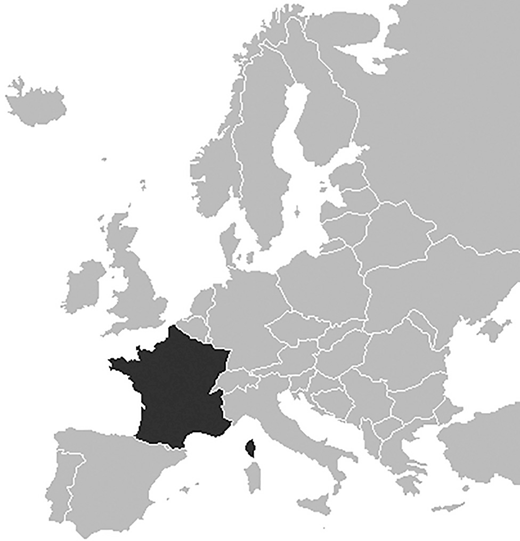
France Within Europe (Ritchie, 2005)
France Within Europe (Ritchie, 2005)
Many of the representations of France are so well known that they have achieved currency in countries around the world that do not speak French. The national anthem of France, for example, la Marseillaise, written in 1792 by Claude Joseph Rouget de Lisle (Bouzard, 2016), is arguably the world’s most instantly recognizable national anthem. The flag of France, the famous tricolor, representing the historic colors of Paris (blue and red) and the traditional color of the French monarchy (white) in a triple striped, rectangular format has been adopted, with color variations, by numerous countries throughout the world (see Note 17). The name “Joan of Arc” (Jeanne d’arc ), a secondary patron of France, is easily recognized by numerous individuals around the world. France’s iconic and eponymous steel structure built in Paris for the 1887 World Fair by Gustave Eiffel is so famous as to negate the need to even state its name, and is perhaps world’s single most immediately recognizable cultural icon. Numerous other examples of widely recognized cultural representations of France can be easily cited.
Technology
As an indicator of France’s status as a leading technology innovator, in 2017, Paris was named the “European Capital of Innovation” by winning the European Union’s iCaptial Award (Boorman, 2017). Under the Macron presidency (2017–current), France has now established Station F in Paris, the world’s largest startup campus for innovation and start-up businesses (“Station F,”2019). In 2017, French venture capitalists raised 2.8 billion Euros in capital funds, and some predict that at some point the country may surpass Britain as Europe’s leading technology innovator (Dealroom.co, 2018; Scott, Dickson, & Contigugla, 2018). This accomplishment is built upon a long history of French technological innovation, including photography, cinema, and the Minitel, a French videotex network system (Mailland & Driscoll, 2017) that was an early precursor to Internet network technology, in addition to numerous other inventions. France’s technology-leader status is also the result of an intensive effort to further increase technological innovation, including a national outreach program for technology startups (La French Tech, 2018). Taken together, France’s past and present technological achievements make the country one of the foremost leaders in the technical and technology worlds.
France’s Higher Education System
Variety in French Higher Education
France’s higher education system is an organizationally complex and highly variegated system that must respond to the needs of a large number of students within numerous fields of study. Examination of the specific details of French higher education organizational structures could never be covered in an article of this length. To summarize, there are different achievement degrees of French higher education: the Licence et Licence Professionnelle; the Masters; and the Doctorat.These three are designed for interoperability with other European institutions, and also approximately mirror the system at use in the U.S. higher education system (i.e., bachelor’s, master’s, and doctorate degrees). There are some 3,500 higher education institutions in France, more than 80 of which are universities, serving some 2 million students each year (IFP Ltd, 2018a, 2018b). French business schools regularly appear in the top places of world school rankings (Financial Times, 2018a, 2018b), and often, some may be surprised to find, implement an English-language curriculum as these schools are training the next generation of financial and business leaders not only for France, but for many countries around the world. French political and economic leaders are often the product of France’s highly competitive Grands Écoles system, which consists of some 250 premier higher educational institutions (IFP Ltd, 2017). The country is also home to numerous medical universities, including the Université Sorbonne Paris Cité-USPC, the Université de Lyon, the Université of Aix-Marseille, among many others, and leading universities, such as the Paris-based Science Po, attract students worldwide to specialize in the social sciences. Researchintensive engineering institutions, such as the CentraleSupélec in Paris, are also a part of the higher education system in France.
Over the centuries, France has been home to numerous national educational reforms and innovations in instructional methodologies, but the nation maintains an ongoing realization of the need for ongoing educational revision combined with a future-looking mindset if France is to remain a world leader in education. France’s centuries-long history makes it such that the past remains valued as an irreplaceable component of all French education (both within its curricular content and in the administrative organization of educational institutions), but the ongoing recognition of the importance of high educational standards also propels French educational reformers to continue looking ahead in meeting the demands of a 21st century workforce. In French higher education, therefore, both the past and the future simultaneously reside in a coexistent reality that informs all aspects of the overall education system.
European Union Membership Effects on French Education
Compounding the dichotomous “past/future” nature of French education is France’s membership within the European Union (EU). The EU is a supranational European political structure currently (early 2019) composed of 28 European countries who have politically joined to form the world’s single largest trading block (see Note 18). Beyond political unification, many EU nations have also monetarily joined together through the mechanism of a common currency called the Euro (see Note 19). Membership in the EU necessitates that France has two sets of educational policy bodies to which the country must attend. The first is the national (i.e., French) educational system, which according to EU policy, is “responsible for ... [its] own education and training systems” (europa.eu, 2018). The second are the supranational, EU political bodies overseeing EU educational standards designed to improve education within all European member countries (see Note 20). The political reach of the EU’s educational policies and standards are such that they could arguably play as great a role as every EU member state’s own indigenous educational policy. The EU’s influence upon member states’ educational systems, including France, is likely only to increase if further harmonization of EU member states is achieved over time (see Note 21).
Key Historical Events in Early French Education
Two major events from the history of France have significantly impacted the entire subsequent bulk of western education. It is virtually impossible to overestimate the effect each has had on higher education for the entire last millennium.
The Creation of the Charlemagne’s Palatine School (9th Century)
The establishment of the Palatine School by Charlemagne in the 9th century in Aix-la-Chapelle (now Aachen, Germany, see Note 22), established a foundational cornerstone in how education would both be envisioned and implemented across Charlemagne’s Kingdom, which eventually subsumed the bulk of what is today called “Europe.” Charlemagne had an intense interest in education (see Note 23) and believed that education was an essential component for the ongoing health of both the kingdom and the church (Amirault & Branson, 2006). After conquering much of the European continent, the Emperor then turned his attention to education, proceeding to actively attract to Aix-la-Chapelle leading scholars of the day from as far away as Britain and Ireland, as well as all parts of the Continent, for purposes of establishing his new Palatine School. Charlemagne’s goal in doing so was to improve the level of education amongst students who would then be returned to all parts of Europe to further spread his educational vision throughout the continent. His emphasis on the importance of learning how to read and write established the concept of the “textbook” as central to education, a view subsequently to be propagated into nearly all educational systems across the world (see Note 24).
This historic event has led some to name Charlemagne “the Father of French Education.” Others argue—perhaps with an equally defensible approbation—for the Marquis de Condorcet (1743–1794), due to Condorcet’s extensive work within education near the time of the French Revolution. Others posit Jules Ferry (1832–1893), who served as Minister of Public Education and Fine Arts, pioneering numerous educational reforms in France, including compulsory and free primary school education for all, and establishing the view that education is a right of all citizens that should be utilized for the betterment of country and society (see Note 25). All three of these individuals (Charlemagne, Condorcet, and Ferry) played an integral role in the field of education, each with a unique concern to be addressed. The question of who was “the Father of French Education,” therefore, perhaps has no fixed answer to which all will agree.
The Creation of “The University” (13th Century)
Arguably of even greater significance to France’s educational history than Charlemagne's emphasis on textbooks and reading/writing was another historical event that, at the time, could not have even begun to be fully appreciated in terms of its eventual impact and endurance upon the field of education: the creation of the first European university. This honorific is often accorded to the 13th century University of Paris (more specifically, The Sorbonne), when many of Europe’s most acclaimed instructors were drawn together to Paris to establish the university, and its students housed in “colleges” within the city, particularly on the Left Bank of the Seine River.
The educational paradigm of “the university” has become so universal that today it is difficult to remember that the concept of a “university” was both an innovation and an invention. More specifically, “The university” was an innovation and invention developed in reaction to other educational structures existing at the time. Prior to the 13th century, students studied in ad hoc schools led by various masters of repute (often a single master, not a faculty of masters), in individual cathedral schools or in remote, rural monasteries across Europe. The university, by contrast, involved the incorporation of an assembly (faculty) of esteemed masters, an organized body of students, a standardized course of study, and was uniquely a city-based phenomenon (Daileader, 2001a).
Although some 800 years have since passed, the University of Paris continues its educational mission, now divided across 13 campuses (“I” through “XIII). The European University’s significance to education, and its first instantiation (see Note 26) at The University of Paris, was that it was the first fully systematized European educational higher education system. The University of Paris and its Italian and British counterparts set in motion the worldwide university movement that now, 8 centuries later, is implemented in virtually every nation in the world, in both public and private variants.
The university movement was also the provenance of a new educational method today referred to as Scholasticism (Kenny & Pinborg,1982; De Wulf & Coffey, 1907). The Scholastic Method, which can be envisioned as an adversarial approach to learning in opposition to the meditative/associative approaches used in monastic education, helped propel the university in establishing itself as the world’s premier educational organization, quickly bypassing all other methods of instruction in what we now refer to as “higher education” (Daileader, 2001c).
Prior to the introduction of Scholasticism within European universities, students in cathedral schools, collegiate schools, and monasteries were taught in widely dissimilar, nonstandardized approaches. The emergence of the university as a systematized educational structure brought with it an array of features that significantly altered the nature of higher education: a fixed set of subjects to be learned in a specific order (based on the ancient form of the seven liberal arts and divided into two parts, the trivium and the quadrivium (see Note 27); a concentration of premier teachers to a school’s location to comprise a “faculty”; a formalized system of assessment, including the quodlibetal (a verbal debate held in public and assessed by a master or “magister” as he was then called); and the introduction of transferable, portable “degrees” which objectified a student’s educational accomplishments and made possible his application to other universities to teach as a recognized scholar (Amirault, 2012). This means that, today, all university students and instructors anywhere in the world are participating in a system that can be directly traced to 13th century Paris and the Île-de-France region. Even with subsequent and significant structural modifications throughout the centuries (reflecting changes in national goals and the accommodation of the greatly increasing breadth and diversity of available knowledge), the linkage to medieval France remains intact to this day (see Note 28).
The French Revolution’s Impact on Education
While it is accurate to view French education as reaching back at least a millennium of time, perhaps the best starting point to examine France’s modern educational system is the period of the French Revolution (1789–1792). The focus of the Revolution was one of liberté,égalité, fraternité (“liberty, equality, fraternity”), and this would apply to education as well as to other political and economic goals. Previously, the Kingdom of France (see Note 29), as in most western European realms, reserved advanced education for the wealthy and for those who would enter the service of the Church; in the specific case of France, education was even delivered primarily by the Church. With the French Revolution, however, education was henceforth to be looked upon as a necessary aspect of life open to all individuals regardless of background, wealth, gender, status, or religious affiliation.
The French National Assembly decreed in 1808 the structure of The French Imperial University; this decree apportioned existing universities into academies with oversight by rectors (Caporali, 2014). This change clearly marks an early demarcation point for understanding how France’s educational system would evolve over time to meet the standards espoused by the Revolution to equally serve all citizens. Although the French Imperial University, as originally conceived, would have a short lifespan (the institution was ended in 1896, but was reconstituted (see Note 30) during the Bourbon Restoration), this can be viewed as the start of the modern French university system.
It would be the State, too, not the church, which would eventually become the official educational licensing body for all levels of education, as well as the oversight body for the national educational curriculum. In 1889, René Goblet, a successor of Jules Ferry (who himself had served multiple terms as Education Minister), fully differentiated public and private educational institutions, and was able to induce the French Legislature to move all instructor positions into state civil servant positions (see Note 31). This built upon Ferry’s emphasis on educational laïcité (secularism) that originally arose as part of the French Revolution (Decherf, 2001; IFP Ltd, 2018b). The 1905 Law of Separation completely disconnected religion from government institutions with the words (see Note 32), translated into English, “the Republic does not recognize, pay, or subsidize any religion” (la République française, 2019b; Pew Research Center, 2005). The 1905 Law of Separation places the responsibility of education on the State as well as on students, stating (English translation) it is “the duty of the state to provide free, compulsory, secular education at all levels” (la République française, 2019b).
French Education From the Presidency of Charles de Gaulle to Today
Upon the end of the Fourth Republic in 1958 and the installation of Charles de Gaulle as the President of the Republic under the Fifth Republic, a number of events arising from this change impacted France’s educational system. State spending on education, for example, markedly increased, making France then one of the highest per-capita spenders on education in the world (Hoffmann & Andrews, 1981). An increase in the number and variety of topics was introduced into the educational curriculum, and the overall effect was to generally shift the French curriculum closer toward the social sciences, the natural sciences, and technology (as opposed to its previous focus on the “humanist” subjects of Greek, Latin, literature, philosophy, history, etc.).
These were positive developments, but few could predict what would lay ahead for education in the tumultuous period of the 1960s. In a series of protests that swept much of the western world, students at the University of Paris in May 1968 joined in protest, taking over the institution and subsequently spilling out into the greater Paris area. This was not a new phenomenon: since medieval times university students had protested, and even carried out multiyear strikes (!) over a variety of issues; closer in time, immediately before World War I, university students in Paris’ Left Bank also held a variety of protests (Weisz, 1983). The 1968 protests, however, continued to grow, and soon all of France was engulfed in a series of protests, strikes, and riots that brought much of the country to a standstill. Much like what was experienced in Chicago, Illinois and other major cities around the Western World that very same year, local police and State armed forces were deployed in force to contain the situation. President de Gaulle eventually was able to bring the event to a stop through a series of negotiations and by conceding on certain issues. As succinctly stated by Alissa Rubin in The New York Times on the 50th anniversary of this event:
The established hierarchy and formality that permeated relationships between teachers and students, parents and children, bosses and workers, and ultimately even politicians and citizens, had been upended.... When students returned to classes, they could now ask questions in class and dispute ideas—a revolution in the French educational system. (Rubin, 2018, para. 27)
Although the situation was eventually quelled, the nature of higher education in France, as in much of the world, was irrevocably changed. In 2003, the French Education Code (French, le Code de l'éducation) ratified all existing education legislation, orders, laws, decrees, etc. into its single codification, divided into a Legislative Section and a Regulatory Section (Population Europe Resource Finder and Archive, 2003). In 2005, a framework law was passed identifying education a national priority and stated that a common set of skills and knowledge should be provided to all learners in order to provide them equal professional opportunity. Another enactment (law no. 2013-595, see Note 33), about a decade later, in 2013, reemphasized these principles (Caporali, 2014).
But even with the revolution of 1960s, another revolution was on the horizon: the technological revolution. By the 1980s, computerized and networked technology set the stage not only for the use of computerized technology within classes but the explosion of computerized, networked online distance education. Starting at this time, education systems around the world were faced with questions as to whether and/or how such inventions would be integrated into the curricula of schools everywhere. We now turn our attention to some of the approaches by which France would address the place online learning would assume within the French educational system.
Online Distance Learning in France Today
Although France is one of the world’s technologically leading countries, the country does not possess an “open” university for online distance education as do some other technologically advanced countries. France has rather chosen to address the need for online education through approaches more familiar to the traditional French model of education, while continuing to draw upon a modern understanding of the role networked, digital technology may play in education (another example of the past/future dichotomy within French society).
This should not lead the reader, however, to think of France as lagging in technology-based communication and its attendant instructional capabilities. Quite the contrary, such thoughts can be quickly dismissed with a review, to cite but one example, of the French Minitel system, the Médium interactif par numérisation d'information téléphonique (in English, Interactive Medium through Digitizing of Telephone Information). Minitel was a videotex (see Note 34) system natively developed and deployed in France in 1978 and more fully in 1982. (Note that this date is actually earlier than the adoption of the World Wide Web and its Internet-based hardware backbone.) The French Minitel system is now widely considered to be one the earliest successful precursors to Internet technology (Mailland & Driscoll, 2017). Minitel made use of terminals that were loaned/leased by the French telecom industry to individual homes, and a variety of electronic-based services, including the sharing of text and video, electronics purchases, and so on, were available to French users before the rest of the world had even discovered a “World Wide Web.” Approaching some nine million terminals by the end of the 20th century and serving an estimated 25 million French users, about a third of the entire population of the country (Sayare, 2012), the system was finally formally shut down in 2009 after 25 years of use due to the worldwide adoption of the World Wide Web running upon the backbone of the Internet’s hardware network. Minitel, however, remains an important representative illustration of the forwardthinking nature of the telecommunications industry within France (see Note 35), and is today still widely respected by many telecommunication engineers who have a working knowledge of their domain’s history.
There are other aspects of French efforts in the area of distance learning that dispel any notion that the country has been resistant to distance learning. The Conservatoire national des arts et métiers (“Cnam;” the National Conservatory of Arts and Crafts, or CNAM, see Note 36), originally a collection of science- and technology-based inventions but now comprising a technology-based continuing education institution that grants doctoral degrees and provides lifelong courses in business, engineering, and multidisciplinary science, was founded some 230 years ago (see Note 37), CNAM now provides online courses as well as distance learning support for instruction throughout France’s higher education institutions.
Another large and significant online education organization overseen by the French government is the Centre national d'enseignement à distance (“Cned;” the National Center for Distance Education, or CNED), a public education institution started by the French government nearly 100 years ago (in 1939) whose focus is the development of materials for use in the distance learning context. As explained by Olivier Marty, a scholar at CNAM:
The government has been conscious of the importance of distance learning since 1939. Distance learning at this time was initially an issue related to World War Two since the education of French citizens had to be maintained in occupied France. Later, distance learning became a center of experimentation, testing new media, etc., and with funding, the efforts developed into a full Académie (i.e., a French State division of education, of which there are 29 within France). As time progressed, the government encouraged all universities to develop distance learning services with IT and, in more recent years, platforms such as Moodle. At present, MOOC's are another platform for delivering content and thereby boosting distance education (such moves, of course, make the Cned institution no longer the central, unique actor in distance learning). Currently, the national debate surrounds hybrid learning, blending traditional and distance education on a vast scale, as well as the integration of distance learning programs (MOOCs, etc.) within universities and adult continuing education. (Marty, 2019, Jan 24)
The existence of both CNAM and CNED are important “keys” (although not the only ones) to understanding how the French educational system has valued technology-and/or online-based education. For example, in October 2013, the French Ministry of Education extended the move toward online, digitally based education by deploying “FUN-MOOC,” France Université Numeriqué-MOOC ([see Note 3], France Digital University-MOOC). FUN-MOOC is a centralized MOOC portal that serves all categories of universities and the Grands Écoles within France (FUN-MOOC, 2019). A partial screenshot of FUN-MOOC’s “splash page” of participating French universities on their website provides evidence of the institution’s reach within French higher education (see Figure 2).
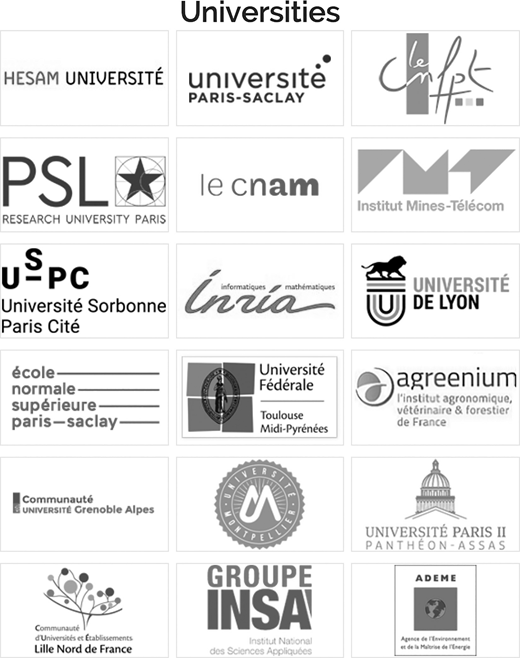
Portion of Splash Page of FUN-MOOC (FUN-MOOC, 2019)
Portion of Splash Page of FUN-MOOC (FUN-MOOC, 2019)
In spite of FUN-MOOC’s size and high growth rate, the historical background of France’s CNED and CNAM institutions are essential to understanding the current state of French distance education, and so we now briefly look in turn at both of these organizations (see Note 38).
CNED—The French National Center for Education
Earlier in this article, we stated that there exists no “open” university in France. CNED, the French National Center for Education quite nearly qualifies for this categorization, however, due to its operational mission, size, and history. CNED is an official organization of the National Education Ministry of France and is often the educational system of choice for families that have moved outside of France but still require that their children receive higher education credit recognized and aligned with traditional, face-to-face programs located within the country. Working in partnership with traditional existing French universities, successful completion of CNED online programs permits students to become admitted to any French higher-education institution, whether that institution is situated in Métropolitaine France, or in a French overseas Region, Collective, or Territory (Ministère de l'Europe et des Affaires étrangères, 2015).
CNED, however, is not limited to French citizens or residents. CNED provides online learning opportunities to nearly a quarter of a million students at all grade levels through some 250 online courses. With an 85 million Euro budget (about 97 million U.S. dollars), the organization is the largest lifelong learning school in Europe. CNED courses are provided in numerous languages to serve a diverse group of learners inside and outside of France, and courses are open to any individual, regardless of location or nationality.
CNED is physically headquartered at the ultra-modern Futuroscope center in Poitiers, France, and the organization employs 2,200 individuals at Poitiers as well as other physical locales, including Grenoble, Lille, Lyon, Poitiers, Rennes, Rouen, Toulouse, and Vanves. CNED provides courses directly to students but also supports traditional French schools in the use of digital devices in the classroom, remediation for younger students, and the teaching of foreign languages, a key skill for the 21st century workforce.
The level of sophistication accomplished at CNED is easily seen with a visit to the institution’s main online web portal at http://www.cned.fr/. The online educator specialist is encouraged to review this site to see the scope and depth of CNED’s activities (see Note 39).
The breadth of CNED programs and courses available is undeniably impressive. Self-remediation courses, programs leading to licensure, certification, and even preparation for entry to the highly competitive Grands Écoles system are available, and topical areas include education sciences, professional training education, administration and public management, marketing and sales, cinema, foreign language studies, mathematics, epistemology of science, medical and forensic secretaries, physics, chemistry, and many more. Prices for courses and programs vary depending on the type of student applying (i.e., Is the student currently studying at a school? Is the student at a school participating in a large-school initiative agreement with CNED? Is the student a postbaccalaureate life-long learner? Is a degree being sought? etc.). Regardless of specific price variations, a quick review will reveal that these courses and programs are highly cost-competitive with other online instruction programs around the world.
An examination at the student demographics reveals the reach of the CNED organization (CNED, 2017). For example, 57%of CNED students were of age 18 years or older, with 52%being classified as “adults.” Sixty-five percent of the current (2017) student body is female. In addition, 13%of the student body is from outside of France (4%in Europe, 4%in Africa, 2.7%in America, 2%in Asia, and 0.3%in Oceania). These percentages reflect the Francophone World, but also provide evidence that CNED is serving both lifelong learners, learners retraining for new careers, nontraditional learners, and that within a majority body of female learners.
CNAM—The French National Conservatory of Arts and Crafts
As previously covered, CNAM was created during the French Revolution, and is therefore approximately 230 years in age. Originally developed as a repository for technological and scientific crafts and inventions (one of the foci of the French Revolution that today continues to impact scientific methods, quantification, and analysis), the institution has since that time undergone structural divisions. One such division, le Musée des Arts et Métiers ([see Note 3] the Museum of Arts and Trades) is one of the world’s oldest and largest museums of technology and scientific crafts and holds its collection for the Conservatoire National des Arts et Métiers (the National Conservatory of Arts and Industry, see Note 40). The museum’s collection comprises items within the categories of Scientific Instruments, Materials, Energy, Mechanics, Construction, Communication and Transport (le Musée des arts et métiers, 2019a). Some 2,400 technology and craft-related objects within these sections are on permanent display; the museum’s offsite permanent reserves, which hold the totality of the museum’s holdings far too extensive to be on continuous display, is located on the north side of Paris, and contains over 80,000 historically significant technology and craft items, as well as 15,000 historical drawings of historic technology-related inventions (le Musée des arts et métiers, 2019a, 2019b).
Over time, CNAM assumed a formal educational mission under the aegis of the French government. Today, the National Conservatory of Arts and Crafts is officially denoted by France as both a Grand établissement and an engineering Grande école (la République Française, 2019a) offering doctoral degrees and a wide variety of classes within the scope of its technology and crafts domain. The main web portal for the institution may be seen at http://www.cnam.fr/portail/conservatoire-national-des-arts-et-metiers-821166.kjsp. The institution’s motto is Omnes docet ubique (“He/it teaches everyone everywhere”) and designates itself a lifelong learning provider (Cnam, 2019b). CNAM first offered limited television-based distance learning as far back as 1963.
In spite of the 2013 creation of FUN-MOOC, CNAM remains a large institution of higher education in France that delivers a significant portion of its coursework through distance and technological means. Each year, the intuition has approximately 60,000 course-takers and also issues some 10,000 degrees and certificates (Cnam, 2019d). CNAM promotes three main missions: training throughout life; research; and scientific and technical culture. The institution maintains more than 200 teaching centers throughout France, and is administratively apportioned into two schools, Industrial Sciences and Information Technology and Management and Social Sciences Applied to Firms, each containing seven departments. In conformance with the European Credit Transfer System (The European Commission, 2018b), a part of Europe’s Bologna Process for education (The European Commission, 2018a), degrees are offered at the Licence et Licence Professionnelle, Masters; and Doctorat levels referenced earlier in this article.
It is estimated that approximately two fifths of CNAM students take their courses online through CNAM’s “FOAD” online program, or Formation Ouverte et à Distance (Cnam, 2019c). In 2010, there were approximately 43,000 student registrations for at least one CNAM course unit (Cnam, 2019e). Currently, there are some 63,000 student course registrations across 36 MOOCs offered by CNAM (Cnam, 2019a). CNAM’s distance courses include both hybrid and fully online formats, and significant growth in student enrollments in these programs has been experienced in the past 5 years (Cnam, 2019a) There are currently one million“alumni” of CNAM courses, includes traditional, hybrid, and fully online learners.
Observations, Comments, and Discussion
France's extensive history of education has resulted in significant body of literature related to distance education but, unfortunately, this amassed collection of scholarship often remains “closed” to non-French speakers. This is unfortunate because much of this information would be of great interest to the world’s distance education community. Only a percentage of these works can currently be translated out of the original French due to cost and time constraints. These works are filled with theory-based content, future-casting, practical case studies, and historical documentation, and it is a scholarly collection that begs for translation so that the material could be disseminated to the greater distance education research and practitioner areas (see Note 41). In developing this manuscript, for example, the author benefited from the assistance of Olivier Marty, a scholar at France’s CNAM, and these interactions reaffirmed to this author that the “treasure trove” of scholarship and literature within the French context could substantially benefit the worldwide community of distance education scholars.
To provide but a single example of current French distance learning scholarship, Marty himself developed a manuscript (in English; Marty is bilingual and publishes in both French and English) entitled Monetizing French Education: A Field Inquiry on Higher Education (Marty, 2014). The monetizing of digital information, of course, is an important and—as of yet—unanswered question both inside and outside the French context in that the debate about the quantification and monetization of digital information involves many previously unexplored concepts brought about by digital technology (Amirault & Visser, 2016). Marty (2014) examines the changes in French education over the centuries to the modern period, and describes the current setting “situat[ing] this monetization of French distance education within two contradictory trends of, on the one hand, free open online education and, on the other hand, privatization of teaching—implying commodification by a common measure of knowledge’s value” (p. 14). Marty also is able to explicate the tension between the original French vision of Jules Ferry and others in the 18th century of education as a right for all citizens for the betterment of society, compared to today’s common view as education for improving specific skills to improve the working “value” of an individual in an employment-centric world. According to Marty, “history shows how traditional French education is a state controlled public good, [but] a new policy is [now] changing the organization’s culture toward a commercial and industrial activity” (p. 1). To any individual who works within online education, this question holds immense societal and economic importance, for it is not only a question innate to education as a whole, but it will also play a significant role in the applied direction distance education is likely to take in the coming decades (Amirault, 2012b).
Therefore, the questions raised in 18th-century France, with its emphasis on education for all and existing as an individual right, continue to hold import today. Indeed, these very questions continue to be debated, and arguably with additional vigor, in today’s context: American student school loan debt, for example, held by some 44 million individuals surpasses 1.5 trillion U.S. dollars or about $23,700 per student (Friedman, 2018) and cannot be forgiven, even through bankruptcy. The economic complexity of the situation, too, is magnified when one considered that delivering education is not a free endeavor, either: training, labor, materials, facilities and more all add to a financial cost of education. In contradiction to some early predictions, online learning does not necessarily significantly reduce the costs of either delivering or receiving education. In today’s concerns surrounding “sustainability,” surely education,too, must be included, because the loss of quality education can have incalculable economic, political, and social effects (Amirault & Visser, 2010).
In reflecting on the monetization of information, and by inference, education, the inevitable question must arise: what is the quality of the instruction that is being provided, and what impact does that quality have on that education’s monetary value? It has been repeatedly shown that distance-based education can be either equivalent, better, or worse than traditional education: modality is no longer the question nearly as much as education’s implementation (Amirault & Visser, 2016). Therefore, we must ask: How should society settle on monetizing educational content? How will society pay for that education? To what extent should individual learners themselves bear the cost of education? We must also look at these issues from the reverse perspective: How does society, government, and nation states profit from educated individuals (e.g., Better political choices? The collection of taxes? The betterment of society?), and how is the sum of that learning quantified? And should any fiduciary gains to society be apportioned to learners in order to reduce the price they pay for education? These are all questions inherently subsumed in the educational debates brought forward over 200 years ago in 18th century France.
We daresay that the vast number of educators who have engaged in distance and online education see the many benefits that are made possible to a vastly greater number of individuals through online learning, a sort of “democratization” of education, and therefore, information. This view is somewhat parallel to the goals espoused by 18th century France (cf. Amirault & Visser, 2010). But these benefits are not a “given,” and any number of unsuccessful online education endeavors can be conjured up in the imagination to ostensibly refute this view. But to this author, such arguments fall short when considering the apparent shortcomings that are also witnessed in traditional education: poor educational outcomes, recidivism, unrepayable debt, and individuals trained in areas that will be of little use to them in today’s economic setting are no strangers to traditional educational modalities, not simply the distance learning setting.
So, what is the state of distance learning in France today?
Large: Online learning in today’s France is significant in size, both as regards the number of programs, courses, and participating institutions, but also in the number of enrolled students, instructors, and technical personnel required to deliver online content.
Growing: Data collected by institutions such as CNAM provide clear evidence of the enormous growth of the number of students taking courses either in hybrid and/or fully online modalities. This trend is estimated to continue.
Government-supported: The French Government provides significant financial support to institutions, instructors, staff, and learners throughout the distance learning ecosystem.
Future looking: French online distance learning is not simply a response to students “not wanting to attend classes,” but is inimically bound to an understanding of the importance of technology as a 21st-century reality in which all learners will interact.
Vested in the outlook of education that holds not just economic, but societal value: Today’s French educational system still aspires to the 18th-century goals of education as a societal right, and one that similarly benefits society, not simply wages.
Supporting lifelong learning for all learners: Organizations such as CNAM, with its explicit emphasis on lifelong learning, have leveraged the opportunities provided by hybrid and fully online learning to allow individuals to continue to learn throughout their lives, not just during “school” years.
Emphasizing the need for continuous workforce retooling: Without contradiction to the perceived societal value of education, France understands that individuals require training for today’s jobs to allow learners to successfully enter wellpaying jobs, and subsequently successfully navigate a career that will experience multiple points of inflection as technology continues to evolve.
A lesson, then, can be learned from 21st century France’s large and growing aspect of distance education. There are reasons for this growth, and they do not lay primarily in learners who do not want to perform the work of traditional education (to the contrary, many distance education students report significantly more challenging and time-consuming work in their online courses when compared to traditional settings). As French society continues to move forward in a technology-centric world where retraining is often required, and lifelong learning looks more and more a necessity, distance and online education attempts to address this requirement in a manner that can at times be virtually impossible using traditional modalities. France undoubtedly has an enormous advantage in that the country has a rich and storied history in the arts, sciences, and technology, and, additionally, has an extremely large economy that can help absorb transitional costs.
This transition, however, is nevertheless complex both in nature and scope. As in every other country that has undertaken online and distance education, the undertaking requires the combined commitment of government, educators, families, and learners in order to make the approach successful and to achieve its stated goals. But for the distance education scholar, it is beneficial to witness how France is accomplishing this transition without casting aside traditional educational values, including an innate appreciate for the arts as educationally significant and the recognition that education holds both applied and societal worth. The Revolution of 18th century France is far from over, as far as education is concerned. That is the true state of distance learning in France today.
Notes
1. France’s geographic holdings within the European mainland is called la France métropolitaine (Metropolitan France). France’s overseas holdings, consisting of Regions, Collectives, and Territories, are collectively called la France d’outre-mer (Overseas France).
2. These same rivers, unfortunately, also served as a cross-connected “interstate” system for the historic series of Viking attacks Europe experienced during the 9th century. When used in conjunction with a key technological advance of the time, the Viking shallow-draught boat, these rivers made possible the repeated rapacious pillaging of the land for over a century. Entering into the European continent from the Atlantic Ocean and then deeply penetrating into France, the Vikings were able to pillage at will nearly any town adjacent to these rivers, including Paris itself (which resides on the banks of the Seine River), resulting in inestimable human, economic, and even artistic (in the form of loot from churches and cathedrals), loss to the region.
3. Paris takes its name from a Celtic Iron Age tribe, the “Parisii,” who lived in the area from the 3rd through 1st centuries B.C., when they joined forces with the Arverni tribe under Vercingetorix to fight Julius Caesar and his Roman armies (Caesar, 46 B.C.). At the time, the area was called Lutetia Parisiorum, where Lutecia meant “place near a swamp” (Livius, 2011). An ancient Roman arena, named the Arènes de Lutèce, was discovered only in the 19th century in downtown Paris during an unexceptional road-building project. Today, the arena can be visited in a restored state where children come to play ball and people to read books and sunbathe. The famed author Victor Hugo and his Société des Amis des Arènes (“Society of the Friends of the Arena”) fought at that time to have the newly-uncovered arena from being destroyed in the late 1800s: after winning the struggle to keep the ancient arena intact, and with subsequent restoration completed, the arena was opened to the public in 1896. The arena, now popularly referred to simply as Lutèce,is today recognized as one of the most significant Roman constructions in this area from the period.
4. To provide a sense of the archaeological history at play in France, a recent (2009) archaeological dig in southern France at Lézignan-la-Cébe revealed tools that have been argon dated to 1.57 million years (Jones, 2009).
5. The word Frank means “free.” The Franks were an ethnic and political dynasty who occupied the area during Late Antiquity and the Early Middle Ages.
6. An extended examination of these and the many additional dichotomies at play in France today are best presented and examined in the 1993 multi-volume set (in French) Lieu de Mémoire (“Site of Memory”) edited by Pierre Nora (1997) and it’s superbly translated, yet unfortunately, abridged, three-volume English version translated by Arthur Goldhammer (Nora, 1998).
7. France’s political map currently includes 18 Regions. As of 2016, Métropolitaine France was further broken into Departments (96 in total), and then, Arrondissements (i.e., districts, or neighborhoods, some 322 in all). Arrondissements are further segmented into Cantons (1,995 in total), and finally, Communes (36,529 in total) (INSEE, 2015). Because of ongoing administrative revision, these numbers will vary slightly over time.
8. Interestingly, each individual state within the United States is itself a “unitary state,” because power within each of the 50 U.S. states is devolved from their state legislatures to their respective counties, districts, and towns. At the national level, however, the United States employs a federal system of government.
9. A complete listing of the Presidents of the Fifth Republic starting in 1958 includes: Charles de Gaulle (in office 1959–1969), Georges Pompidou (1969–1974), Valéry Giscard d'Estaing (1974–1981), François Mitterrand (1981– 1995), Jacques Chirac (1995–2007), Nicolas Sarkozy (2007–2012), François Hollande (2012–2017), and Emmanuel Macron (2017–current).
10. The complete Constitution of France (in English) can be found at http://www2.assemblee-nationale.fr/langues/welcome-to-the-english-website-of-the-french-national-assembly, and in the original French at http://www.assemblee-nationale.fr/connaissance/constitution.asp. Perhaps surprising to American readers is the historical footnote that the French Constitution (l’Assemblée nationale de française, 2008) explicitly states in Article 2, “The principle of the Republic shall be: government of the people, by the people and for the people” (“Son principe est : gouvernement du peuple, par le peuple et pour le peuple.”): these are the same words spoken by Abraham Lincoln nearly 100 years later in his Gettysburg Address in 1863. Whether Lincoln drew this text directly from the French Constitution remains an open question, since the exact text of the Gettysburg Address is contested.
11. Not all democracies, however, have written constitutions. One prominent example is the United Kingdom, which has an unwritten constitution incrementally constructed over time via legislative acts since the time of Magna Carta in 1215 (Blackburn, 2015).
12. A single man, Thomas Jefferson, played a key role in writing both documents. Jefferson, a great admirer of France and who viewed the events of late 18th century France and America as immensely significant and tightly interconnected turning points in the history of individual rights, was key in codifying the democratic goals of both republics in their founding documents as each country emerged within a few years of one another. Jefferson’s coauthors for France’s Declaration of the Rights of Man and of the Citizen of 1789 were Abbé Sieyès and the Marquis de Lafayette (the same “Lafayette” who fought with George Washington in the American Revolution).
13. In 1958, The Fifth Republic was created by the French Legislature after dissatisfaction with certain elements of the earlier Fourth Republic. The first French Republic was created during the French Revolution in 1789. Perceived deficiencies in the structure of the government, which caused the French to undertake the democratic process of dissolving a current Republic with a more expansive version encompassing the rights of citizens and altering the government’s structure, have, to date, occurred four times, with France now in The Fifth Republic (constituted in 1958). The closest equivalent to this process in the United States would be the calling of a Constitutional Convention, where the U.S. Constitution’s text may be altered through the political process outlined in Article V of the U.S. Constitution.
14. Many Americans are unaware that a significant number of the medicines and medical procedures they use today were, and continue to be, developed in France.
15. Now historically referred to as “The Physiocrats,” these late-18th century thinkers, led by François Quesnay, based their economic theory on land as the basis of economic power, as opposed to production, trading, accumulated coinage of rare metals, et cetera (Gide, Rist, & Richards, 1948). Their early work would influence Adam Smith when later writing his groundbreaking book, An Inquiry into the Nature and Causes of the Wealth of Nations, in 1776 (Smith, 1991). Quesnay was principally responsible for the writing the Tableau économique (Economic Table), which was the first work to argue that economics should be best understood through the prism of scientific principles (Groenewegen, 2011). A fascinating audio interview on the Physiocrats with three European faculty members and host Melvyn Bragg is available from the BBC’s In Our Time program (BBC, 2013). The 43-minute audio interview may be listened to or downloaded from https://www.bbc.co.uk/programmes/b02x97k6.
16. Romance languages are those languages spoken today that originated as deviations from the Vulgar Latin during the Early Middle Ages, including Italian, Spanish, Portuguese, and others. One notable study by Pei (1949) estimated French’s degree of separation from Latin at 44%, although numerous other methods to quantify such have been proposed since that time (cf. Koutna, 1990).
17. Romance languages are those languages spoken today that originated as deviations from the Vulgar Latin during the Early Middle Ages, including Italian, Spanish, Portuguese, and others. One notable study by Pei (1949) estimated French’s degree of separation from Latin at 44%, although numerous other methods to quantify such have been proposed since that time (cf. Koutna, 1990).
18. The idea of some form of “EU” was initially conceived in the aftermath of World War II, though some historians point farther back to Tsar Alexander’s support in the early 19th century for such a union. Other historians, including Norman Davies of Cambridge University, point to “the idea of Europe” as an unrealized, but growing, concept reaching back at least some 2,000 years when the Roman Empire held the majority of European land (Davies, 1996). Others have pointed to the 9th century ruler Charlemagne, who conquered, ruled, and even, to some extent, standardized much of Europe. In the modern context as Europe rebuilt after WWII, the European Coal and Steel Community (ECSC), was formed in 1951, followed the creation of the European Economic Community (ECC) in 1958. By means of the Treaty of Maastricht, the EU was legally formalized, and then actualized by 1993. The subject is sufficiently complex to warrant entire volumes explaining the various stages of formation and enlargement of this grand unification project. France was a founding member of the EU in 1957, along with the Netherlands, Belgium, Luxembourg, Germany, and Italy. The EU remains one of the most politically ambitious projects of the last 1,000 years. If “Brexit” does indeed occur (this article is being written in late 2018/early 2019), the number of EU members will contract from 28 to 27 until the next European nation accedes to the Union.
19. The “Eurozone” (i.e., those EU countries which use the Euro) is therefore a subset of the EU, since not all EU countries use the Euro as their primary currency (i.e., Bulgaria, Croatia, Czech Republic, Denmark, Hungary, Poland, Romania, Sweden, and the United Kingdom). An EU member country may only join the Eurozone after a 2-year period within the European Exchange Rate Mechanism.
20. Examples include the Erasmus+ program (addressing youth unemployment), the EU Youth Strategy (promoting equal opportunities for all and civic engagement), the Europass Standard CV (standardizing skills and educational reporting across all workers), the Copenhagen Process (addressing vocational education), and the Marie Skłodowska-Curie actions (supporting the development of researchers). A detailed explanation of these and many other EU-related educational programs can be seen at https://europa.eu/european-union/topics/education-training-youth_en (The European Union, 2016).
21. The reality of addressing EU goals, policies, and procedures beyond a nation’s existing autochthonal requirements makes a country’s ultimate decision to join the EU one not to be undertaken without great care. Indeed, there is a somewhat lengthy and detailed procedural set of requirements with objective and measurable milestones that must be achieved in whole or in part before any country can officially become an EU member state. Thus, France’s decision to accede to the Union as a founding member was taken with deliberation, although the outcomes of World War II, along with the two preceding centuries of European history served as a self-referential argument speaking to the need for an “EU”of some form.
22. Though it was Charlemagne’s son, Charles the Bald, who was, by many accounts, the first King of France, his father, Charlemagne, founded the Palatine School in Aix-la-Chapelle, and therefore, one may successfully argue that Charlemagne was an integral part of French educational history.
23. It is generally believed that Charlemagne could himself not read or write and invested significant time as an adult attempting to learn to do so.
24. For an outstanding example of how Charlemagne’s emphasis on textbooks morphed into medieval libraries, see Contreni’s The Formation of Laon’s Cathedral Library in the Ninth Century in the series Carolingian Learning, Masters and Manuscripts (Contreni, 1972).
25. Official title in French, Ministre de l’Instruction publique et des Beaux-arts. The connection of “fine arts” with education should give today’s U.S. legislators pause, as fine arts are now systematically being expunged from many school curricula across the United States.
26. The question of indisputably identifying the “oldest” university will always be debated, for the University of Oxford, the University of Bologna, the University of Cambridge, and the University of Paris all emerged within a very short time of one another. It is generally agreed that the University of Paris was chartered around 1200 and received official licensing from the church, its original oversight body, about 1 or 2 decades later. The universities in Bologna, Oxford, and Cambridge had a similarly close time frame for authorization to operate (Rüegg, 1996). Although documentary manuscripts from this era relating to this question are not in abundance, some of the 13th-century documents foundational to the establishment and licensing of the University of Paris are, on rare occasions, on display at the French National Archives, or at various museums within Paris museums during special exhibitions but are not typically on public display due to their age and fragility. One such document is reproduced in color photograph print within the book Grands documents de l'histoire de France (Archives Nationales de France, 2007) and is also briefly described online by Collet (2007). The French National Archives may be reviewed online at http://www.archives-nationales.culture.gouv.fr/.
27. The Trivium, consisting of three subjects (Grammar, Rhetoric, and Logic), was the foundation for study. The Quadrivium, consisting of four subjects (Arithmetic, Geometry, Music, and Astronomy), was a more advanced, applied set of studies that was structured upon the Trivium’s content (Abelson, 1906; Leff, 1992; North, 1992).
28. The Scholastic Method dominated university curricula across Europe for over 200 years. The instructional approach, however, eventually fell to extreme criticism during the Renaissance, when the method was finally abandoned. Scholasticism’s role, however, in assisting “The University” in its ascent to the ultimate formal educational experience, however, cannot be easily overstated, either in the context of French or world educational history. For further information, see Radding and Clark (1992) where this subject is covered in detail and in relation to other innovations of the period. The professionally recorded audio lectures The High Middle Ages by Philip Daileader for The Teaching Company (2001b) are an outstanding and surprisingly detailed introduction to this subject. An elaborate and recent examination on university disputational methods may be found in Novikoff’s exceptional and recent work, The Medieval Culture of Disputation: Pedagogy, Practice, and Performance (2013), possibly to become a standard reference text on the specific subject of disputation within the Scholastic and medieval University framework.
29. It must be remembered that, prior to the French Revolution, France was a monarchy that reached back in time as far as the Carolingian and/or Merovingian dynasties (5th–8th centuries; the actual specific start remains a point of debate). The French Revolution ended the French monarchy, and the Republic of France was born.
30. The debates surrounding The Falloux Act (1850–51) concerning whether to have one university, that is, The French University, or 86 prior universities reconstituted, contains one of the great quotes in modern education: “This is not ... the Universitymultipliedby 86, it is ... the Universitydividedby 86’ [emphasis mine] (Falloux du Coudray, Alfred-Frédéric-Pierre, & Pitman, 1888, p. 405)!
31. The Jules Ferry Education Act(1882) legislated that all children aged 6–13 were compelled to attend school at no cost to their families, as the State would assume such costs. In addition, the existing curriculum would be converted to a secular viewpoint, reversing the religious orientation of French schooling that had been present for centuries. Goblet had earlier (1881) succeeded in ensconcing in written law the right of education for both boys and girls.
32. Original French: “La République ne reconnaît, ne salarie ni ne subventionne aucun culte.”
33. In French, LOI n° 2013-595 du 8 juillet 2013 d'orientation et de programmation pour la refondation de l'école de la République.
34. “Videotex” is sometimes interchangeably used with the term “teletext,” although they are not equivalent in that videotex is an interactive technology, whereas teletext is a one-directional technology. Videotex, and its most successful implementation, the French Minitel system, delivers text and/or simplified video signals to a terminal, or display, which is not necessarily a “smart” device. For example, in a Videotex system, while the terminal can be the same as those that were historically connected to mainframe computers (or even televisions that were connected to early electronic game boxes which housed all the “intelligence” within the game box itself, employing the television simply for display of the signal), the user could still then respond, sending an electronic signal back to the originating source.
35. Much like Sony’s Betamax (C-Scott, 2015) and Minidisc (Faulkner, 2012) systems, one may argue that France’s Minitel system was somewhat a victim of its own success. A breakthrough technology as were Sony’s Betamax and Minidisc, all three were based on proprietary technology and licensing, therefore making them “closed” systems. As in the two Sony cases, making Minitel proprietary and closed was a defensible—one might argue, necessary—decision at the time of development. No one, however, could have predicted that it would be open-platform systems that would ultimately assume leading status, eventually rendering most “closed” systems, regardless of their advanced design, noninteroperable with “open” systems now used by the majority of individuals. Numerous books have been written on this subject, and the reader is directed to a 2015 QRDE Special Issue on “Technology Transience” (QRDE, Vol. 16, No. 2) where the subject is examined by a number of contributors.
36. Note that, in English, acronyms are fully upper case (e.g., “CNAM”), as opposed to the French equivalent, in which only the first letter is capitalized (i.e., “Cnam”).
37. The institution was envisioned and created during the French Revolution as part of the French Revolution’s commitment to science and technology. For example, the metric system, a scientifically based measuring system, was implemented in the French Revolution to further the aim of empirically based quantification within the fields of technology, science, and geography.
38. A more detailed look at FUN-MOOC is to be developed in a separate article.
39. Note: the reader need not speak or read French to review CNED’s site: one may simply open the link with the Google Chrome browser, RIGHT-click anywhere on the page, and select “Translate to English” from the context menu that appears. The Chrome browser will then automatically translate the entire page to English, along with all subsequent pages. This allows any non-French speaker to review, not only the diverse amount of content provided by CNED, but also the underlying philosophical approach of the institution used to actively engage online learners in CNED courses.
40. The Arts et Métiers museum occupies a 13th century building in central Paris, formally the Priory of Saint-Martin-des-Champs, as well as a Gothic refectory that is considered one of Paris’ medieval architectural treasures. The museum itself may be examined online at https://www.arts-et-metiers.net/.
41. Some of this work can be found in online archives. To cite but one example, HAL-SHS (Sciences de l’Homme et de la Société) holds a large archive of online publications. HAL-SHS can be accessed at https://halshs.archives-ouvertes.fr/.

