


Closing the gap in health outcomes between Aboriginal and Torres Strait Islander and non-Indigenous infants is most significant in incidences of sudden infant death syndrome. This study reports on the implementation of the Pepi-Pod® program, which promotes safe sleeping of Aboriginal infants and provides a safe sleep surface for the baby (the Pepi-Pod®), accompanied by safe sleep health messaging.
This study adopted a decolonising, qualitative approach and used yarning to gather data on the effectiveness and acceptability of the project, and data were thematically analysed by Aboriginal researchers. The study was conducted at regional and metropolitan birthing centres in Australia, with 44 Aboriginal families participating.
Three themes emerged from the data: (1) yarning with family and community about safe sleeping; (2) reflecting Aboriginal cultural practices and (3) shame job – “are you sleeping your baby in a plastic box?” Participants recommended improvements, including cultural changes in design and colour of the Pepi-Pod® but overall viewed the program as a culturally appropriate experience.
This study employed qualitative methods grounded in Yarning and a culturally safe, decolonising approach – yielding rich, authentic data and amplifying Aboriginal voices without bias. Expert consultation was central, with Aboriginal and Torres Strait Islander researchers, consumer representatives and clinicians ensuring cultural and ethical integrity. However, the study was limited to South Australia, which may affect generalisability. COVID-19 disruptions also delayed data collection and project completion. Despite these constraints, the research offers valuable insights into culturally safe infant sleep practices and highlights the importance of inclusive, community-led approaches in maternal and family health research.
This novel study has the potential to change safe sleep policy and knowledge arising from this project may influence how health services and systems deliver culturally safe health messaging and implement new programs involving and affecting Aboriginal families in mainstream health care.
This research introduced the only alternative safe sleep education and surface specifically designed for and offered to Aboriginal and Torres Strait Islander families in Australia. By addressing both safety and cultural relevance, it highlights the importance of equitable access to infant health interventions that respect and incorporate Indigenous perspectives.
This study contributes meaningful and practical solutions to the longstanding challenge of ensuring safe sleep environments for infants, particularly within Aboriginal communities. By foregrounding cultural safety and community engagement, it offers a unique and contextually relevant approach that bridges public health priorities with Indigenous knowledge and values.
Introduction
Unsafe sleep practices, including co-sleeping (bed-sharing), contribute to incidences of infant mortality. Since the introduction of Safe Sleep guidelines in Australia, the number of infants dying from SIDS/SUDI (Sudden Infant Death Syndrome/Sudden Unexplained Death in Infancy) has decreased by up to 80% in Australia (Red Nose, 2025). However, SIDS/SUDI remains a significant issue for Aboriginal and Torres Strait Islander perinatal and maternal healthcare services in Australia and other countries with Indigenous populations (D'Souza et al., 2024; Raising Children Network, 2024a, b). Australian statistics have demonstrated only a modest decline in SIDS/SUDI, in Aboriginal infant mortality (from 2017 to 2021 in Australia 6.8 to 5.3 deaths per 1,000 live births). Infant mortality rates for Aboriginal infants remain significantly higher those of non-Indigenous infants for SIDS/SUDI (Australian Government, 2024). Hence, a gap persists between Aboriginal and non-Indigenous infant mortality rates (Australian Government AIHW, 2025a). However, while the clinical and sociological causes of this gap is poorly understood, and as the previous target was not achieved, the Australian Government set Australia a new target of strengthening perinatal and maternal healthcare system to promote Aboriginal infant safe sleep practice (Australian Government AIHW, 2025b).
Evidence exists that reports on the medical and socio-behavioural risk factors for SIDS and SUDI, focusing on genetic causes and birth difficulties. However, socio-behavioural risks also impact neonatal death, including external stressors such as unsafe sleep environment, sleep position, bed sharing, a lack of understanding and knowledge about safe sleeping and poor knowledge translation (Shipstone et al., 2017). Additionally, there is an absence of consideration of the social and cultural determinants of health in the change process and a lack of multidisciplinary contribution (Mileva-Seitz et al., 2017). These risk factors are imperative, especially in New Zealand and Australia, where evidence shows that many Māori and Aboriginal families do not have the social or economic resources to follow safe sleep recommendations. In Australia, despite attempts to reduce the gaps between Aboriginal and non-Indigenous infant mortality, limited progress has occurred over the last decade, particularly in relation to culturally safe sleep, to reduce Aboriginal infant mortality and improve outcomes as targeted (McIntosh et al., 2018). Interventions which are more culturally appropriate have the potential to engage Aboriginal families in culturally safe sleep practices, resulting in breakthroughs and closing the gap between Aboriginal and Non-Indigenous Infant Mortality (Campbell et al., 2018; McCalman et al., 2017).
Healthcare professionals are continually challenged by the need to provide health information that successfully changes health practices, including the provision of safe sleep education (Middlemiss et al., 2020). This is an important part of person and family-centred care (Thompson et al., 2021). However, how mainstream health personnel connect with Aboriginal families in their care around this important issue is unclear. Nurses often provide this support, but how nurses facilitate each patient and their family's learning seems invisible in the nursing literature (Thompson et al., 2021). Additionally, the health system currently provides no safe sleep space alternative for Aboriginal families that recognises the cultural practice of co-sleeping and closeness to the baby (Grant et al., 2021).
International consensus on goals to prevent SIDS/SUDI argues for a combination of identifying underlying mechanisms for events, sharing high-quality data to inform best practice and “effectively partnering with communities experiencing vulnerability through culturally sensitive methods” (Hauck et al., 2017). In many Aboriginal communities, keeping infants physically close during sleep is a deeply rooted cultural practice that nurtures emotional bonding, ensures safety and reinforces collective caregiving. These practices are increasingly shaped by modern housing conditions and public health messaging, leading to adaptations that blend traditional values with contemporary safe sleep guidelines (Young et al., 2017). Finland's baby box, officially known as the maternity package, has been a universal social benefit since 1949, designed to promote maternal and infant health by providing essential items for newborn care. The initiative also encourages early engagement with antenatal services and has been credited with contributing to Finland's low infant mortality rates and strong public health outcomes (Finland Promotion Board, 2025). The Finnish baby box has become a powerful symbol of the country's commitment to family welfare, valued for its universal accessibility and practical support. Finland's strong focus on maternal and child health services has played a key role in reducing infant mortality. From a rate of 153 deaths per 1,000 live births in the early 1900s, it dropped to 75 by 1930, 21 by 1960, and today stands at just 1.8 per 1,000, among the lowest globally (Nasi and Koskenvuo, 2022). By offering essentials for newborn care, it not only sets a standard for infant wellbeing but also helps families, especially newcomers, feel connected and supported in adapting to Finnish life and climate (Nasi and Koskenvuo, 2022).
The Pepi-Pod® program is an important initiative which offers Aboriginal families a potentially culturally sensitive opportunity to improve their knowledge and practice related to sleeping babies safely; a change that may not otherwise be accessible. This initiative draws from evidence provided in two Randomised Controlled Trials (RCTs) that tested the use of the Wahakura or Pēpi-Pod®Program with Māori and Pacific Island peoples in New Zealand. These studies found that 25% of participating families (n = 240) did not have a bed, and that protective knowledge about safe sleep improved with use of the program, including knowledge about smoking risks (McIntosh et al., 2018). Importantly, the education tool used in the program had previously been evaluated as successful, with 68.8% of participants indicating increased confidence (Grant et al., 2021a,b). These studies found that the Pepi-Pod® is similar to key SUDI risk behaviours to a bassinette, and, in conjunction with safe sleep messaging, can be promoted as an alternative to infant-adult bedsharing or co-sleeping (Baddock et al., 2018; Tipene-Leach et al., 2018). Both trials also identified an increase in breastfeeding rates (Baddock et al., 2018; McIntosh et al., 2018; Tipene-Leach et al., 2018).
There is a need for this intervention in Australia as the current systems and practices do not provide a culturally safe, alternative sleep option for Aboriginal families. This is despite the recommendations of the Safe Infant Sleeping Standards to consider the life circumstances of families, and the provision of culturally accessible information. The Pepi-Pod® program has been successfully translated in Australia, with 600 Pepi-Pod® distributed across 158 services in Queensland (Tipene-Leach et al., 2018; Young et al., 2022). The Pepi-Pod® program was accepted and used appropriately by participant families and resulted in a reduction of the risks of SIDS for families with known SIDS factors (Young et al., 2022). While this intervention was trialled in Northern Queensland with positive results, these results cannot be translated to the South Australian context. The cultural systems of urban and regional South Australian Aboriginal families differ from those in Queensland, and the health system is significantly different. However, intervention protocols from these studies were adapted for implementation in South Australia.
This paper draws on the Aboriginal family experiences and perspectives of participating in safe sleep educational sessions by focussing on Aboriginal health particularly in the first 1,000 days. It did this by translation of the evidence-based safe sleep alternative program for Aboriginal families across three regions in South Australia. This strategy will support achievement of the WCHN Aboriginal Health Plan 2018–2022, priority goals to closing the gap and improve Aboriginal infant health outcomes in the first 1,000 days (Women's and Children's Health Network, 2024). Additionally, it addresses the needs of Aboriginal infants and families who continue to experience health inequities. By working with both mainstream and Aboriginal-focussed teams from antenatal care through to community care, this project explicitly incorporates care transition and enhancing collaboration. Hence, the aim of this study was to explore Aboriginal families' experiences with the Pepi-Pod® program, with particular attention to the cultural safety of both the sleep education provided and the use of the Pepi-Pod® itself.
Methods
This study adopted a decolonising qualitative approach and utilised Yarning as the primary method of data collection, due to its culturally safe, relaxed and informal method of communication in Aboriginal cultural contexts (Bessarab and Ng'andu, 2010; Geia et al., 2013). Yarning has been described as an Aboriginal research methodology in itself and has been utilised in recent research studies and is the most reported Aboriginal method used in Aboriginal and Torres Strait Islander qualitative health research that privileges Aboriginal knowledge systems through connection and relationships (Geia et al., 2013; Kennedy et al., 2022; Marriott et al., 2019). In this study, Yarning was used both within the research team to support dialogue, reflection and capacity building, and as a culturally grounded method for data collection with participating families. Its strength lies in fostering trust and open communication, making it particularly suitable for engaging with Aboriginal communities in a respectful and relational way (Sivertsen et al., 2025).
The study sites were in South Australia and included one hundred Aboriginal families who were planning to give birth from May to October 2019 in the Women and Children's Hospital, Lyell McEwin Hospital, Port Augusta Hospital and Whyalla Hospital were approached to participate in phase two of this study. In this study, a family unit refers to individuals who share primary caregiving responsibilities for the infant, which may include parents, grandparents or extended kin, in line with culturally inclusive understandings of family within Aboriginal communities. Five strategies were undertaken for approaching the participants: an invitation via Facebook, participant information brochure distribution, poster displays at all birthing sites and community ante-natal clinics, presentations to Aboriginal community groups and feeder ante-natal services and distribution of an e-Newsletter. Inclusion criteria of mothers were women 16 years or over. Exclusion criteria were any woman who developed pregnancy complications or if the baby was born with any medical conditions. Seventy Aboriginal families agreed to participate in the Pepi-Pod® program and were provided with a Pepi-Pod® and the safe sleep education. Of the 70 families enrolled who were eligible to participate, 44 families completed the program; unfortunately, 26 (37%) families were unable to be contacted for follow-up and were subsequently lost to the study. All participants in the study were women, with an average age of 25. The youngest participant was 17 years old, and the oldest was 37. In this study, 45% of family units did not have a baby bed for their infant, 48% did, and for 7% this information was not available. Families were recruited during antenatal appointments, with general telephone touch points for queries around 2 weeks prior to the expected due date, and 4 weeks following birth. Babies were slept in the Pepi-Pod® for approximately 4 months, and in-depth interviews were conducted when babies were between 6 and 60 weeks of age, with an average of 33.8 weeks. Data were collected using yarning techniques by Aboriginal community researchers who worked in pairs where possible. The interviews were conducted by Aboriginal community researchers via yarning, a conversational style of interviewing and considered a culturally safe and sensitive data collection process (Kennedy et al., 2022).
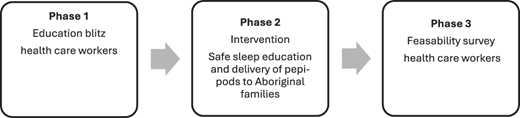
The first phase involved an online education “blitz” offered to all workers in any of the recruitment sites and CaFHS prior to the commencement of phase 2 of the study. The education blitz included pre and post-measures of health worker knowledge. The second phase was recruiting Aboriginal families who plan to give birth in the targeted South Australian Health venues. All participating families were provided with a Pepi-Pod® and a safe sleeping education session and were requested to participate in interviews. The third phase involved an online survey of staff from any participating venue to assess the acceptability and feasibility of the Pepi-Pod® program. This paper reports on the second phase (see Table 1).
The interview questions that were explored with families in yarning sessions included: “Please tell me about how you used the pod?”: “was there anything you didn't like about using the Pepi-Pod®?”: “did the Pepi-Pod® assist with breast feeding?”: “would you use Pepi-Pod® again?”; and “is there anything else you would like to share with me about the Pepi-Pod®?”. Probing questions were also used to guide and encourage the participants to elaborate on their experiences and perspectives.
This study adopted an analysis technique that supported an Aboriginal research protocol. Throughout the project, but especially during the analysis phase, researcher reflexivity and positionality were discussed within the team on an ongoing basis. Aboriginal and Torres Strait Islander ownership, stewardship and custodianship of data collected were centred in the group analysis that took place over several sessions and Aboriginal voices privileged the research process (Kennedy et al., 2022). This was achieved by the presence of three Aboriginal and Torres Strait Islander researchers and one First Nations researcher actively participating in the group analysis. The Aboriginal community researchers helped non-Aboriginal research team members to increase their cultural understanding and read the data differently, which impacted the richness of data findings. The focus throughout this project was to employ a decolonising lens and thereby avoid repeating mistakes of the past by including Aboriginal researchers' perspectives during all phases of the research (Tuhiwai Smith, 2021). Note-taking replaced audio recording of the Yarning sessions, to reduce potential harm and was deemed culturally safer in some instances. Most participants preferred note-taking, and this is recognised as respectful of Aboriginal and Torres Strait Islander research practice (Kennedy et al., 2022).
This research was underpinned by principles of health equity with a focus on decolonising the research process by the application of weaving a research interface between Aboriginal and non-Aboriginal researchers in the team, as well as Aboriginal recipients of care in a non-Aboriginal mainstream healthcare system (Ryder et al., 2020; Tuhiwai Smith, 2021). A two-way process was used for mutual learning between Aboriginal and non-Aboriginal team members and community. This was enacted through “two-eyed seeing” where Aboriginal and Western world views of health and illness come together for the benefit of all (Sivertsen et al., 2020a,b). This was particularly important as the research was conducted through mainstream health services where unequal relations of power have historically compromised Aboriginal ways of knowing and being (Geia et al., 2013).
Throughout the project, but especially during the analysis phase, researcher reflexivity and positionality were discussed within the team on an ongoing basis. Aboriginal and Torres Strait Islander ownership, stewardship and custodianship of data collected were centred in the group analysis that took place over several sessions, and Aboriginal voices privileged the research process (Kennedy et al., 2022). This was achieved by the presence of eight Indigenous team members, including seven Aboriginal and Torres Strait Islander researchers and one First Nations researcher, actively participating in the group analysis.
Data were analysed using thematic analysis (Braun and Clarke, 2022). Analysis was undertaken as a team with multiple members of the core research team and Aboriginal researchers present throughout all stages. Data were firstly inductively coded using NVivo™ software to support the process (QSR International Pty Ltd. NVivo (released in March 2020). The content was then thematically analysed by the research team guided by Braun and Clarke's thematic analysis framework (Braun and Clarke, 2022). Initial descriptive coding consisted of reading through qualitative data and coding passages that provided answers to the research questions. These were clustered according to emerging patterns. An interpretive second cycle involved filtering, highlighting and refining the meanings of codes into categories and concepts, then building analytical themes (Braun and Clarke, 2022). During this stage, particular, care was taken to view the findings through a theoretical lens of decolonisation (Tuhiwai Smith, 2021).
Findings
The findings of this study included three key themes were identified in this study, including (1) yarning with family and community about safe sleeping, (2) a program reflecting Aboriginal cultural practices and (3) shame job – “are you sleeping your baby in a plastic box?” which are highlighted below.
Theme 1: yarning with family and community about safe sleeping
The Pepi-Pod® program sparked meaningful conversations within Aboriginal families and communities, enabling the sharing of safe sleep messages in culturally safe ways. For many participants, the conversations surrounding the Pepi-Pod® were just as important as the pod itself. Families consistently described the program as a culturally safe health initiative, though they emphasised that cultural safety depends on the context in which the program is delivered. Ideally, safe sleep education should be provided by a familiar person or an Aboriginal health worker within the community.
Participation in the Pepi-Pod® program provided families with a deeper understanding of safe sleeping practices and created space for knowledge transfer. Many of the 44 families highlighted the impact of the personalised education sessions delivered by Aboriginal community researchers. These sessions were described as easy to understand and practical to implement. Visual tools, including a small plastic tube representing an infant's airway, were used to communicate the importance of a flat, safe sleep surface. This visual aid was frequently mentioned by participants as a powerful tool for understanding the risks associated with unsafe sleep environments.
The safe sleep talk was good. They gave me lots of information. I always do a safety check now that there are no pillows etc. I talk to people now about handling my baby gently (Family 11).
This safe sleep program was so great. I had no idea that we needed to sleep the baby at the bottom at the cot. The one-on-one safe sleep education was so good. And we could transfer that information to when we transitioned into the cot, to sleep baby at the bottom at the cot. Talking about safe sleep is just as important as talking about breastfeeding. We should talk about this more (Family 39).
The safe sleep education was helpful. It made me think about keeping the pod safe and make sure that there is no pillows in there with him, and I showed my kids and all how to handle him gently and safe. I think that safe sleep is important and not fall asleep with him in your arms at all and stuff (Family 21).
Families described the education session as a catalyst for sharing safe sleep knowledge with other mums, both individually and in group settings. Nearly all families (86%) reported sharing safe sleep information with others in their community. These conversations were often facilitated through storytelling, which supported reuse of the Pepi-Pod® and strengthened community ties.
I have talked to many people about the pod and heaps of people have asked about it. The Pepi-Pod® … we can use it in Aboriginal communities to promote safe sleeping (Family 2).
I have given the pod to another girl now. I also talked to her about the safe sleeping education. I still had the instructions, so it was easy for me to go through it with her. Especially how precious the breathing pipe [airway] is and how easy it can be crushed (Family 20).
I talked about it in mums' group and none of them had heard about them [Pepi-Pod®]. I told them about the pods and how good they were. All the other mums in mums' group were co-sleeping with their babies (Family 7).
… storytelling, transmitting knowledge and making community stronger (Family 40).
I think there should be some information about how to share the safe sleeping information and education – not just sharing the pod but sharing the knowledge–because that is the most important thing. Perhaps stickers to stick on the pod with instructions for how to share the safe sleep education/knowledge (Family 14).
Participants emphasised that safe sleep education extended beyond their own families and was shared widely within their communities. This act of sharing was seen as a form of reciprocity, with the education passed on like a message stick. Many families expressed a desire to pass their Pepi-Pod® on to others, while also retaining it for future use. The pod was described as convenient (89%) and as something families wanted to keep (97%).
We used the pod everywhere in the house, loungeroom, in bed, when I did laundry, outside. The pod was great, we loved it and she slept so well in it. It was so useful. I still got it, I want to keep it for the next one, and perhaps give it to a family member who has a baby, or loan it out, but definitely keep it for our next baby (Family 1).
Many families gave detailed accounts of how they passed on the Pepi-Pod® along with a yarn about the safe sleep education they received:
I gave my pod to my cousin because she is about to have a baby now. I spoke to my cousin about sleeping baby safely when I handed the pod to her (Family 8).
Almost all families (91%) felt the pod supported safe sleep practices. Importantly, participants viewed the safe sleep education as essential to share with others in culturally safe ways, reinforcing everyday sleep practices and strengthening community knowledge.
Theme 2: A program reflecting Aboriginal cultural practices
Almost all participants spoke positively about the cultural appropriateness of the Pepi-Pod® program, particularly its delivery by Aboriginal health workers and the integration of safe sleep education throughout their perinatal and postnatal experiences. The program was widely experienced as culturally safe, with participants describing the Pepi-Pod® and safe sleep education as consistent with Aboriginal ways of knowing and being, and reflective of Aboriginal cultural practices.
Participants reported that the Pepi-Pod® helped their babies feel safe and close, which in turn increased their own confidence and ability to rest.
My baby feels like he is still in my arms when he is wrapped up and in the Pepi-Pod® (Family 22).
It was safe. It was easy to use around the house. It was very handy. I felt like he was always close to me (Family 15).
I thought I had a grasp on what safe sleep was, but I think the program was great and it really made me think about how to best sleep my babies safely. … I co-slept in bed with my first baby. If I didn’t have the pod, then I probably would have co-slept with this baby too. … This pod was a godsend. I loved it. It made me feel safe and secure (Family 44).
Many mothers described how the Pepi-Pod® helped them sleep better and reduced anxiety, with some also noting its usefulness for breastfeeding.
The pod helped me get better sleep so I didn’t worry that I would roll onto him. It also helped my baby’s sleep – he slept like a dream in the pod. … The baby was safe and was really close to me the whole time (Family 5).
The pod supported us and helped us with better sleeping. … The pod helped a little with breastfeeding, my baby was close. … My baby slept really well in the pod; it was easy to settle him (Family 38).
The program also strengthened the role of fathers, with several participants noting their partners' involvement and appreciation of the Pepi-Pod®.
My partner loved to use it in our lounge. I was on the lounge in the living room, as I had a caesarean, so we loved to use the pod (Family 27).
First-time mothers especially valued the personalised, one-on-one education sessions, describing them as culturally safe and informative.
The program was really good, inclusive of culture and it covered everything. Being a first-time mum having the one-on-one visit and talk about safe sleep was really useful and I learnt a lot (Family 19).
We understood the safe sleep messages, but this talk was amazing, and everyone should have an individualised talk like that—it is a good refresher (Family 40).
I found the safe sleep education really helpful. I learnt to do safety checks to make sure that my daughter is safe and not have anything else in the pod or cot with her (Family 10).
Participants described how the program met previously unmet needs for infant safe sleep education and support within Aboriginal communities.
… offer it to every woman who is having a baby. Everyone should just get it when they had a baby in hospital (Family 44).
We used the pod a lot – the best thing we had when he was newborn. … A lot of people were curious of this pod thing we had … And so many people said, “I wish we had something like this for our baby!” (Family 4).
Given the widespread use of social media among Aboriginal mums, participants suggested it as an effective platform for sharing safe sleep messages.
Use social media. There are many young mums in the community that use social media … Perhaps videos about the safe sleep message could be circulated, like showing the tube (Family 24).
Participants also highlighted the portability of the Pepi-Pod®, which supported cultural practices of travelling and visiting family.
We really like just how convenient it was. … We took it everywhere … so convenient, it was super portable … We love love it and will hold on to it until our next baby (Family 13).
Closeness is so important … finally I didn’t have to worry. I could sleep well knowing my baby was safe (Family 3).
Overall, Aboriginal families expressed high levels of satisfaction with the Pepi-Pod® program. They valued the individualised education, the pod's portability, and its contribution to safe sleep practices. Many participants described feeling more confident and informed after engaging with the program.
Often safe sleep teaching is too long and overwhelming. But this program was perfect. I loved it (Family 17).
Another mother echoed this sentiment, noting that the program deepened her understanding of safe sleep practices (Family 44). Some participants also appreciated the opportunity to share the pod and safe sleep knowledge with others.
It was a really good program. I gave my pod to a neighbour who was expecting, and I made sure I talked to her about how to keep baby safe when sleeping … Because she slept well during the day in the pod, it helped me be more rested … and my breastfeeding went so much better because of this (Family 44).
I felt really special for being in this project … everyone was like “hey, what is she getting for her baby – I want one too”. Thank you for letting me try it (Family 7).
Aboriginal families offered specific and thoughtful suggestions for improving the Pepi-Pod® to better reflect cultural practices and meet practical needs. These included incorporating culturally relevant bedding, modifying the pod's design, and addressing usability challenges. Although most participants were satisfied with the program, a few described difficulties related to the pod's size in bed:
It’s a little bit bulky, but obviously there are some requirements to follow so that it is safe … It was too big for a double bed, but we upsized to a king bed and that was more suitable (Family 8).
The sides were a bit hard, so it was hard to fit it into some places. It was a bit big to put into bed with us (Family 14).
While some found the pod too large, others expressed a desire for a larger version to accommodate growing babies:
What about a bigger design, so can use it for longer, as baby grows. … It would be good to have a pod that we could transition into (Family 2).
A few participants shared negative experiences, particularly related to their baby's comfort or preference:
I did not use the pod much. I tried to, but my son did not like it at all. … I think he didn’t like the plastic (Family 31).
It was a bit hard to use in bed to co-sleep with, because it is big and plasticky, hard … It is perfect size, maybe if my bed was a bit bigger (Family 37).
Participants also suggested design improvements to enhance comfort and usability:
Perhaps if it was not so rigid and some padding around the outside of the edges. It hit my arm quite a bit. Maybe soft padding on top of the edges (Family 9).
Cultural appropriateness was a recurring theme. Many families expressed a desire for the pod to include Aboriginal artwork or design elements, while others were content with its current form and appreciated its long-term use. These insights offer valuable guidance for future iterations of the program to better meet the needs of Aboriginal families.
Theme 3: shame job “are you sleeping your baby in a plastic box?”
While 60% of participants reported using the Pepi-Pod® for all or most sleeps, feelings of shame associated with its use were not uncommon. These sentiments often emerged during yarning sessions, particularly in relation to interactions with healthcare professionals. Despite 91% of participants stating that the Pepi-Pod® made them feel safe, several families expressed concerns about its design, describing it as unattractive, uncomfortable and feeling uneasy about the pod resembling a storage container.
If it changed the looks, so that it doesn’t look so much like a storage container. The pod needs a different shape to it, maybe some artwork on it, but for me it just never seemed right. Maybe if it was like a weaved basket, then it would be more culturally appropriate, and it has handles on it so that it is easier to carry (Family 9).
It was a bit big and bulky. It was a little unattractive too. Maybe if it had some cushioning on the sides so that it didn’t feel so hard on the sides. Cause I slept with it in the bed, it was a bit uncomfy to sleep next to something so hard, bumping into it and all. I would prefer to feel his body next to me, instead of the hard and cold feel. I wanted my baby really close to me. It would be good with some handles so that it was easy to carry (Family 31).
I tried it for afternoon sleeps. I used it on the bed or on the couch. Didn’t really end up using it that much because it looks like a storage container. I felt uncomfortable putting baby in there. I might as well have put him in a drawer. It just didn’t look like a bed. I would rather put him in the pram, that may have been better for him (Family 17).
Some participants noted that the pod's design posed challenges for co-sleeping and suggested that cultural adaptations could improve its acceptability.
Maybe making it a little bit more culturally appropriate, some designs or Aboriginal art. The plastic is ok, but if you can actually make it look sharp in a fancy plastic, that would be better. When they handed me the tub, I was laughing … oh my god, it really is a plastic storage box (Family 9).
I didn’t like the colour of the plastic tub, the box looking of it, it looked like a storage box. It would be so good looking with some stars or a little coloured plastic. I had a lot of questions put to me “what is that???”, and that I kept the baby in it and all (Family 16).
Plastic container like thing, big and bulky. Takes up all the room in the bed. Looks like a storage box. Partner couldn’t sleep in the bed as pod took up all the room (Family 11).
Stigma surrounding the pod's appearance was a recurring theme, particularly among young or first-time parents. Several mothers described feeling judged or questioned about their parenting choices.
… there may be stereotypes about young parents … it looks a little bit like a plastic tub … but for me personally it was perfect, and I am strong in my own parenting and can explain it. But there may be some judgement about it because of its looks and may be difficult for new or young parents, there may be some stigma (Family 13).
I’ve had a couple of comments from people “why do you have your baby in a storage container?” (Family 19).
One participant, hospitalised during the study, shared her experience with healthcare staff:
Other nurses were questioning us – why are you sleeping your baby in a plastic box? I joked: because I can just shove them under the bed at night … (Family 24).
At the conclusion of interviews, some participants emphasised the need for better education and awareness among healthcare professionals regarding the Pepi-Pod® program.
More education to health care professionals. Everyone should get a pod for their babies. They are so helpful and keep babies safe. Integrating into CaFHS [child and family health services] program (Family 40).
While the Pepi-Pod® was widely used and valued for its safety, its design and the lack of understanding among some healthcare workers contributed to feelings of shame and stigma. Participants highlighted the importance of culturally appropriate modifications and improved education for health professionals to support acceptance and reduce judgement.
Discussion
Safe sleep practices and health inequities
Bedsharing is a common practice across Australia, New Zealand and other high-income countries (Baddock et al., 2018; D'Souza et al., 2024; Stapleton, 2021). While this practice supports parental bonding, it has been linked to higher risks of Sudden Infant Death Syndrome (SIDS) and Sudden Unexpected Death in Infancy (SUDI), with Aboriginal infants disproportionately affected (Bains and Mittal, 2023; Hauck et al., 2017). Although the Australian healthcare system promotes safe sleep education, such education does not always reach all parents, is sometimes delivered in culturally unsafe ways and rarely provides practical sleep solutions (Grant and Guerin, 2018; Sivertsen et al., 2022).
Translation into practice
The Pepi-Pod® program offers a relatively inexpensive, practical and culturally adaptable alternative for safe infant sleep. The program was widely accepted among Aboriginal participants, improving both knowledge and confidence around safe sleeping. Many families reported that the program helped them adopt safer sleep practices, reduced anxiety and encouraged ongoing conversations about infant safety within their communities. Importantly, the sharing of knowledge between family and community members extended the program's reach beyond the immediate participants, amplifying its impact and fostering community ownership of safe sleep messaging. Interventions that are culturally safe and attuned to Aboriginal conceptions of identity are essential. These approaches foster empowerment by enhancing self-determination in both individual and collective social and emotional well-being. When communities are supported to lead change, the outcomes can be transformative. However, sustained governmental commitment is crucial to ensure the long-term success and viability of such initiatives (Dudgeon et al., 2022).
However, some participants experienced shame when healthcare workers unfamiliar with the program questioned or criticised its use. Although this did not significantly affect participation in the study, it highlights a crucial implementation risk: without system-wide understanding and support, culturally innovative programs can inadvertently expose families to judgement or stigma (Sivertsen et al., 2022). This finding underscores the need for broader workforce education and formal endorsement through state health guidelines.
Health and social impact
The program's benefits extend beyond knowledge. Families described improved rest, enhanced confidence in caring for newborns and better breastfeeding experiences. The program also promoted positive involvement from fathers and encouraged intergenerational learning. While quantitative outcomes such as breastfeeding rates and infant mortality reduction could not be statistically verified within the 12-month evaluation period due to the small sample size and rarity of infant deaths, the program demonstrates strong potential to contribute to long-term reductions in SIDS/SUDI and improvements in infant wellbeing. With an estimated cost of $160 per pod, the program represents a highly cost-effective intervention with substantial public health benefit.
Cultural safety considerations
Two longstanding barriers to safe sleep in Aboriginal communities, material disadvantage and culturally unsafe health messaging (Sivertsen et al., 2020a,b), were directly addressed by the Pepi-Pod® initiative. By providing both a physical sleep space and education delivered by Aboriginal health workers, the program bridged gaps in access and trust. Yet, while delivery was deemed culturally safe, some families found the pod's plastic design culturally incongruent. Participants suggested that incorporating Aboriginal artwork, natural materials or woven designs could enhance both acceptance and cultural resonance. This reflects the broader principle that cultural safety must extend beyond the mode of delivery to the design of the tools themselves.
Program scalability and policy implications
Scaling the program statewide will require maintaining the integrity of its culturally safe framework. Aboriginal health workers should remain central to delivery, and community consultation should inform any design modifications. Incorporating Aboriginal visual elements and flexible materials may enhance cultural identification and program uptake across diverse regions. Formal integration into SA Health's perinatal guidelines would ensure sustainability, reduce stigma through clinician awareness and promote consistent practice across services.
Methodological strengths and collaborative approach
The use of a qualitative design grounded in Yarning and a decolonising methodology was a major strength. This approach privileged Aboriginal voices and allowed for rich, relational storytelling that captured family experiences authentically. The study's collaborative structure, with First Nations nurses, midwives and consumer advocates working alongside non-Indigenous colleagues, ensured cultural integrity, ethical rigour and community alignment. Such Indigenous-led, co-designed research models strengthen trust, advance health equity and contribute to sustainable systems change (Geia et al., 2013; Sivertsen et al., 2022).
Limitations and future directions
Limitations include the study's geographic scope, restricted to South Australia, which may limit transferability to other jurisdictions. COVID-19-related disruptions also affected recruitment and timelines. Nonetheless, the depth of qualitative insight provides a strong foundation for statewide translation. Future research could evaluate long-term outcomes such as infant mortality trends, breastfeeding continuation and the impact of design adaptations on program uptake.
The Pepi-Pod® program demonstrates how culturally grounded, community-led innovation can translate safe sleep principles into practice. By combining evidence-based health promotion with Aboriginal knowledge systems, the initiative not only supports infant safety but also strengthens family autonomy and intergenerational learning. Continued collaboration between Aboriginal researchers, communities and health services will be essential to ensure that safe sleep interventions remain both effective and culturally meaningful (Sivertsen et al., 2022).
Conclusions
Overall, the Pepi-Pod® program received positive feedback from participating families, with many choosing to share both the pod and the associated safe sleep education with relatives and friends. In communities where financial resources, access to culturally safe health messaging and capacity to purchase separate sleep spaces may be limited, this rapid translation project offers an evidence-based alternative that supports equitable infant sleep safety.
Emerging findings from this collaborative research indicate that a local cohort of Aboriginal families in South Australia experienced the Pepi-Pod® program as culturally safe. The project has contributed to increased awareness and understanding of safe sleep practices, while also highlighting the vital role Aboriginal families play in translating and disseminating health education within their communities.
The research team hopes these findings will inform the continued development of the Pepi-Pod® program and support the integration of safe sleep education as standard practice within SA Health following the translation period. Importantly, the study underscores the need for health systems to consider alternative and culturally responsive approaches to safe sleep education, ones that reflect Aboriginal values, support community-led knowledge sharing and adapt to diverse family contexts.
Author contribution
Conception and design of the study by Julian Grant, Nina Sivertsen. Acquisition of data, Yarning and interviews by Nina Sivertsen, Tahlia Johnson, Sharon Watts, Anna Dowling and Wilhelmine Lieberwirth. Analysis and interpretation of data by Nina Sivertsen, Tahlia Johnson, Sharon Watts, Anna Dowling, Mohammad Hamiduzzaman and Julian Grant. Original draft of the article by Nina Sivertsen and Mohammad Hamiduzzaman. Critical revision of the manuscript for important intellectual content was conducted by Susan Smith and Nina Sivertsen and final approval of the version to be submitted by all authors.
Ethics approval and consent to participate
This qualitative study was conducted in collaboration with a state-wide mainstream health service responsible for providing care to Aboriginal families across the first 1,000 days in Adelaide, South Australia. Ethics approval for this research was granted by the Flinders Social and Behavioural Research Ethics Committee Project Number OH-00213, the Aboriginal Health Research Ethics Committee project number 799, and the Women and Children's Health Research Ethics Committee project number WCHN/169. Informed written consent was obtained from all interviewees.
The research team
This study was a cross-cultural collaboration between Aboriginal and non-Aboriginal team members, who worked side by side and frequently met to plan research processes, discuss and debrief about ongoing data collection. The core research team comprised Aboriginal community researchers with specific knowledge about family health and the Australian mainstream healthcare system. The background and experience of the authors have been included in this paper for relevance. The team comprised (1) First Nations researcher (NS), (5) Aboriginal researchers (TJ, SW, JD, WL, AD) and (5) Non-Aboriginal authors (JG, SS, SD, AS, MH). The Aboriginal community researchers introduced the Pepi-Pod® project into the community and provided the safe sleep education.
The project
This study is part of a collaborative project between the Women and Children's Health Network WCHN), including the Woman and Children's Hospital (WCH), Child and Family Health Services (CaFHS) and Flinders University.
Terminology
In Australia, care must be taken to ensure appropriate terminology when referring to Aboriginal and Torres Strait Islander people and communities. This study has followed the Aboriginal and Torres Strait Islander guide to terminology endorsed by the Public Health Association of Australia (Public Health Association Australia, 2023). Please note that in this study, the term Aboriginal and Torres Strait Islander, Aboriginal, Indigenous or First Nations is used as indicated by authors or participants; however, we acknowledge that there is great diversity in the Aboriginal population.
Definitions
The major terms used in this article, such as Infant Mortality Rate (IMR), Sudden Infant Death Syndrome (SIDS), Sudden Unexpected Death in Infancy (SUDI), Pepi-Pod, Culturally Safe Sleep Education (CSSE), medical risk and socio-behavioural risks are defined in the context of Aboriginality in Australia. For example, we use IMR to define deaths of an Indigenous young children under the age of 12 months. Sudden infant death syndrome (SIDS) represented about 7% of all deaths of Aboriginal and Torres Strait Islander infants across New South Wales, Queensland, Western Australia, South Australia and the Northern Territory combined. SUDI, which includes SIDS and fatal sleep accidents, are deaths that are medically unexplained. The Pepi-Pod® is a plastic version of flax-woven basket that is portable and can be taken into the parental bed for co-sleeping, which is culturally acceptable and expected in some Aboriginal families. Additionally, there is a need to define the medical and socio-behavioural risk for Indigenous SIDS and SUDI. Medical risk for SIDS and SUDI includes one or more of the causes evident in the published literature, such as critical development of an infant, low birth weight, abnormalities in the arousal system, serotonin receptor abnormalities and genetic polymorphisms. Socio-behavioural risks are generally modifiable, encompasses several social and cultural determinants such as sleep environment and practices, parents' understanding of safe sleep, cultural appropriateness of care, and social stigma. For the purpose of this article, Aboriginal families refer to Aboriginal and Torres Strait Islander Peoples with a mother aged 16 years and above.
The authors are thankful to the Aboriginal and Torres Strait Islander families for sharing their time and views. A special thanks to Wilhelmine Lieberwirth, whose community work highlighted the need for an alternate, culturally appropriate safe sleep space for infants. The following health professionals were pivotal to the success of the program: Deanna Stuart–Butler, Associate Professor Nicola Spurrier.

