This study traces the origin, evolution, and conceptual development of cognitive, behavioural and other drivers of stock market participation. This systematic review analyzed contemporary developments and national and global contributions to this field. This study identifies the potential sub-topics and trend-topics in stock market participation performed on a sample of 336 journal articles retrieved from the Scopus database from 1998 to 2024.
This study uses a bibliometric and SLR approach based on a scientific search strategy using VoS viewer and Bibliometrix of R studio (Ariaa and Cuccurullo, 2017). It provides a detailed analysis of systematically selected literature for the past 26 years, from 1998 to 2024. Bibliometrix's automated workflow facilitates bibliometric analysis by listing prominent journals, sources, authors, countries, citations and co-citations, affiliations etc.
This study shows that financial literacy and investments play a critical role in driving stock market participation. It intends to elicit trends in the research field through comprehensive science mapping of these drivers of stock market participation. This study finds that Financial Literacy is still a developing concept and area, especially in the Indian context.
The current study provides valuable insights for financial institutions, governmental bodies, personal finance consultants, and individual investors; they should consider behaviour-related characteristics that may impact investment decisions and tailor their portfolios accordingly. Policymakers can establish financial literacy programs to enhance investment decisions in India.
This paper is unique in that it covers the antecedents of stock market participants among retail investors.
1. Introduction
The stock market participation puzzle has been a topic of extensive research over the last 2 decades, encompassing developing, developed, and emerging economies, as well as less developed economies. The current body of research on stock market participation falls into two main categories: household finance (Guiso et al., 2002) and behavioural finance (Calvet et al., 2007). The stock market participation puzzle is a phenomenon in which a significant number of households refrain from investing in the stock market, even though the average return on stock market instruments is higher than the average return on other investments (Vissing-Jørgensen, 2002). This phenomenon is prevalent even among financially literate investors (Calvet et al., 2009; Lusardi and Mitchell, 2007). Investors exhibit a preference for physical assets rather than financial assets (Kling et al., 2023). Stock market participation varies in different economies: 55% in the USA (Board of Governors of the Federal Reserve System, 2023), 12% in the UK (ONS, 2022), 15% in China (OECD, 2021), 10% in Germany, and 4% in India. Thus, despite the potential for higher returns than traditional savings, a significant portion of households in various economies opt not to invest in the stock market. Recent research has demonstrated that demographic variables, such as income, education level, and age, are also significant factors in determining participation rates (Ansari et al., 2023). By examining these factors, researchers aim to uncover insights to promote greater financial inclusion and encourage broader participation in stock markets, particularly in emerging economies where such participation is often lower (Otinga et al., 2024).
Previous research has identified various factors that drive or hinder participation in the stock market within different geographic settings (Fong and Liew, 2005; Choi et al., 2006). The researchers have examined stock market participation in developed countries (Bogan, 2008; Özbilgin, 2010; Kaustia et al., 2023); in developing countries (Koesrindartoto et al., 2019); in less developed countries (Adamolekun et al., 2023; Nyakurukwa and Seetharam, 2022; Tumwebaze et al., 2022) and at a global level, including more than one country (Lawal and Sakariyahu, 2024). A significant amount of research articles have been published in the domain of stock market participation in terms of stock market investment intention (Gorton and Schmid, 2004; Prat and Dasgupta, 2015; Lusardi and Mitchell, 2016; Sivaramakrishnan et al., 2017; Che Hassan et al., 2024), stock market decision-making (Statman, 2002), and investment decision-making (Sachdeva and Lehal, 2024; Virlics, 2012; Thaler, 1999).
Previous review papers in the area of stock market participation are very limited; we found only a few review papers, including Ho and Njindan Iyke (2017), Kautkar and Bhatia (2024) and Otinga et al. (2024). The lack of comprehensive review papers that synthesise the existing literature and identify the research gaps was the major motivation for this study. This study provides a comprehensive review of the drivers of stock market participation to gain a deeper understanding of the broader disciplinary domains of stock market participation research, theoretical foundations and determinants of participation. Hence, our study adds to the current body of knowledge on investor behaviour, financial decision making, market participation dynamics and setting future research directions in this domain.
The major research questions of the study are:
What are the major theoretical and empirical explanations proposed to understand the stock market participation puzzle — i.e. why do many individuals refrain from investing in equity markets despite favourable returns?
How has research in this domain progressed over time, and what network framework encompasses author collaboration, citation mapping, and keyword occurrence to delineate clusters of research domains, keywords, and scholars?
What research gaps persist in understanding stock market participation, and how can future studies be directed to address unresolved issues — particularly in terms of behavioural finance, financial literacy, risk perception, and access barriers?
Conducting a bibliometric analysis is crucial for understanding the drivers of stock market participation (Otinga et al., 2024). This review considers all possible drivers of stock market participation, including traditional, behavioural, and institutional factors, along with economic and non-economic factors. An attempt has been made to understand the puzzle from the perspective of household literature and behavioural science literature. This knowledge can be utilised to make well-informed decisions about monetary policy, financial regulation, and economic planning.
2. Drivers of stock market participation - a review
2.1 Stock market participation in household and behavioural finance research
Limited participation in the stock market has been a significant focus of research in the household finance literature across several countries. In most countries, stock market participation rates are lower than anticipated, although the stock market consistently generates higher returns than traditional investment options (Bogan, 2008). Household investment portfolios rarely include stock market instruments (Merkoulova and Veld, 2022), which contrasts with traditional finance theory, which postulates that investors will try to maximise their utility. Prior studies on stock market participation fall under the domains of household finance and behavioural finance. Stock market participation from a behavioural finance perspective is widely explored, emphasising psychological factors, cognitive biases, and decision-making processes that influence individuals' investment choices, focusing on the implications of household investment decisions and the potential costs of investment mistakes (Shleifer, 2000; Barberis and Thaler, 2003). Researchers first concentrated on socioeconomic and demographic factors (Hong et al., 2004), but over time, the study began to include behavioural and psychological theories that affect people's financial behaviour (Kahneman and Tversky, 1979; 1984; Statman, 2002).
Stock market participation research in household finance literature has examined the performance of equities that households hold (Barber and Odean, 2000); participation in IPOs (Jiang et al., 2024); participation in the stock market during uncertain or crisis situations including political uncertainty (Agarwal et al., 2022), covid19 pandemic (Zheng et al., 2022) and financial crisis (Zhou, 2020); stockholding and trading behaviours and factors influencing stock holding of households (Bogan, 2008; Gardini and Magi, 2007; Li, 2014; Linnainmaa, 2011); stock market participation constraints (Andersen and Nielsen, 2011); linkage among certain macroeconomic variables and stock market participation such as monetary policy (Melcangi and Sterk, 2024), accounting quality (Huang and Kim, 2023), corporate scandals (Giannetti and Wang, 2016); relating individual level variables like financial literacy to stock market participation (Nyakurukwa and Seetharam, 2022; Van Rooij et al., 2011; Yamori and Ueyama, 2022; Blay et al., 2024); peer effects (Lin et al., 2024); household characteristics (Lusardi and Mitchell, 2014; Baker and Ricciardi, 2014); human capital investment decisions (Athreya et al., 2022; Thomas and Spataro, 2018); social interaction and support (Brown et al., 2013; Wenyan and Gooi, 2023); demographic factors (Guragai and Peabody, 2018) and housing investment (Liu et al., 2013).
2.2 Dominant theories and models in stock market participation research
The stock market participation puzzle has been explained by a wide range of theoretical frameworks and models in the literature (see Table 1), including:
2.2.1 Traditional finance theories
Traditional finance theories are built on several assumptions such as rational investors, efficient markets and investment decisions to maximise wealth. Traditional finance theories include efficient market hypothesis (EMH) proposed by Fama (1970), modern portfolio theory (MPT) by Markowitz (1950), capital asset pricing model (CAPM) by Sharpe et al. (1960), asset pricing theory (APT) proposed by Sharpe (1964), Lintner (1965) and expected utility theory (EUT) by Daniel Bernoulli (1738). EMH proposes that asset prices fully reflect all available information and therefore investors cannot outperform the market in terms of superior returns. MPT introduced the concept of asset diversification to reduce risk and to increase the return, CAPM links the expected return and systemic risk and APT has incorporated several macroeconomic variables to predict asset returns. EUT assumes that people make investment choices to maximise their utility.
2.2.2 Bounded rationality theory
Proposed by Simon (1957), this theory posits that individuals make decisions with limited rationality as a result of constraints related to information, cognitive abilities and time. Decisions based on limited rationality will lead to satisfactory outcomes, rather than the optimal. The concept of bounded rationality is a central theme in Behavioural Economics emphasising the cognitive limitations - both in terms of knowledge and computational capabilities - of the decision-maker (Simon, 1990). Hence, this theory asserts that the process of decision-making or the how decisions are taken influences the choices and outcomes that are reached as a result.
2.2.3 Prospect theory
Prospect theory (PT), developed by Daniel Kahneman and Amos Tversky in 1979, offers a behavioural economics model of decision making under risk. While the traditional expected utility theory comes under the normative framework of decision making where individuals will be acting as rational agents to maximise their utility, PT is a descriptive model, which explains how individuals take decisions in practice (Briggs, 2014). PT describes how decisions are made under risk, often deviating from rationality, such as (1) aversion to losses - individual trends to be risk averse to potential gains and risk-seeking to potential losses (2) probability weighting - tendency to overweight or underweight small and large probabilities, respectively, and (3) reference dependence - evaluating potential gains and losses based on a reference point, rather than in absolute terms (Kahneman and Tversky, 1979).
2.3 Determinants of stock market participation
Country-specific, cultural factors and individual-related factors can influence the extent of stock market participation (Gu et al., 2024). Country-specific and cultural factors include financial literacy levels, risk tolerance, social norms regarding investment (Cooper and Rege, 2011; Zhou et al., 2024), trust in financial institutions (Kaustia et al., 2023), cultural traits (Dutta and Mukherjee, 2015), economic stability, and regulatory environments. These elements can significantly influence individuals' willingness to participate in the stock market, as they shape perceptions of investment opportunities and risks. Additionally, cultural attitudes toward wealth accumulation and financial management can further impact investment behaviours and preferences in different regions (Ghosh et al., 2018). Kaustia et al. (2023) studied stock market participation in 19 European countries and found that institutional level, demographic and behavioural factors influence stock market participation. Prior research has investigated both institutional-level as well as individual or household stock market participation (Adamolekun et al., 2023; Koesrindartoto et al., 2019). The drivers of individual stock market participation include cognitive, which explores cognitive intelligence, emotional intelligence (Alessie et al., 2011; Khan et al., 2020), behavioural factors (Kaustia et al., 2023; Roa et al., 2018; Lusardi and Mitchell, 2014; Cronqvist and Siegel, 2015); technology-related factors (Adamolekun et al., 2023; Bogan, 2008); family-related factors such as information sharing among members (Li, 2014) and political activism/preferences (Bonaparte and Kumar, 2013; Kaustia et al., 2023).
Financial literacy has been widely studied, and several review papers have reviewed its conceptual foundations, measurement approaches, and economic outcomes. Huston (2010) provided one of the earliest comprehensive reviews of financial literacy definitions and measurement, while Lusardi and Mitchell (2014) highlighted its role in household decision-making and retirement security. Fernandes et al. (2014) conducted a meta-analysis that questioned the long-term impact of financial literacy interventions, and Stolper and Walter (2017) reviewed the empirical evidence linking financial literacy with financial decision-making. While these reviews offer valuable insights, they primarily focus on household finance, savings, and retirement planning, with limited attention to stock market participation and its behavioural determinants. This study makes a novel contribution by systematically reviewing the drivers of stock market participation, integrating financial literacy with personality traits, risk and many more other factors.
2.4 Methodologies in stock market participation research
Researchers have employed diverse methodologies to study stock market participation. Experimental studies (Shin, 2021) will help isolate causal mechanisms and provide strong internal validity though they often face challenges related to external generalisability. Survey-based studies are widely used to capture demographics, attitudes, and behavioral traits, providing rich cross-sectional and longitudinal insights; however, self-reported data can be prone to bias (Menkhoff and Westermann, 2024; Meunier et al., 2024; Tumwebaze et al., 2022; Xia et al., 2014). Secondary research utilises large datasets, such as household surveys and brokerage records, offering scale and objectivity, but these datasets often lack psychological depth (Melcangi and Sterk, 2024; Thomas and Spataro, 2018). Finally, mixed methods research has emerged as a complementary approach, combining quantitative and qualitative techniques to capture both statistical trends and contextual insights (Sivaramakrishnan et al., 2017).
3. Data and method
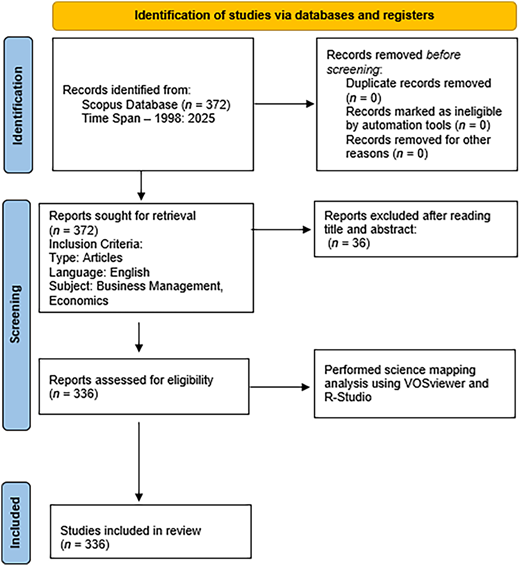
The research employed bibliographic data from the Scopus database, the most extensively utilised resource for analysing scientific publications (Van Eck and Waltman, 2014). The authors utilised the PRISMA methodology (Page et al., 2021) to formulate the study design, which includes the phases of identification, screening, eligibility, and inclusion, thereby ensuring objectivity and transparency. Business and finance research has recently adopted this framework (Shome et al., 2023; Pranajaya et al., 2024; Kwilinski, 2024). The keywords are reset using the search query “TITLE-ABS-KEY identified” Stock market participation” or “stock market decision-making” or “household stockholding” or “investment in financial markets” or “financial market participation ” or “invest in stock market” investors investing in the stock market. The PRISMA framework is a valuable tool for researchers (Booth et al., 2020). On December 18, 2024, a search for “antecedents of stock market investment decisions” covering 1998 to 2025 identified 372 documents, including reviews and research articles. After removing 36 articles and duplicates, 336 relevant articles were analysed. The study utilised VOS Viewer for creating bibliometric maps and Bibliometrix R for quantitative analysis, including visualisations of document types, authors, sources, affiliations, and citations.
The works referenced a total of 155 sources, yielding an average citation rate of 36.29 per document in the collection. This signifies a profound academic interest in this subject. The dataset comprised contributions from 689 authors, exhibiting a significant international collaboration rate of 25.15%, indicative of a global research initiative. Analysis indicated an average of 2.48 co-authors per paper, underscoring collaborative efforts in this domain. Figure 1 illustrates the bibliometric review of the research, while Table 1 presents a detailed summary of the information regarding the data set.
This figure indicates profound academic interest in this subject, especially when compared to broader Finance research fields, where average citation rates typically range between 20 and 30 per document (Van Eck and Waltman, 2014; recent bibliometric analyses in Finance journals). The dataset comprised contributions from 689 authors, exhibiting a significant international collaboration rate of 25.15%, indicative of a global research initiative. This rate is comparable to or slightly higher than the international collaboration rates observed in general Finance research, which often fall between 15% and 25% (Shome et al., 2023; Kwilinski, 2024), underscoring the interdisciplinary and cross-border interest in stock market participation. Analysis indicated an average of 2.48 co-authors per paper, underscoring collaborative efforts in this domain. Figure 1 illustrates the bibliometric review of the research, while Table 2 presents a detailed summary of the information regarding the data set.
The methods employed in the present research are appropriate and aligned with established practices in bibliometric research, as detailed below. The use of Scopus ensures comprehensive coverage and high-quality bibliographic data. The application of the PRISMA framework guarantees transparency and replicability in the article selection process, which has also been increasingly adopted in business and finance studies. The combination of VOSviewer and Bibliometrix R allows both quantitative performance analysis and advanced science mapping, covering co-authorships, keyword co-occurrence, and citation networks.
In addition to reporting the observed average citation rate of 36.29 citations per document and an international collaboration rate of 25.15%, it is noteworthy that these figures compare favourably with adjacent disciplines such as Finance and Management. Studies in these fields typically report lower citation averages and more modest levels of cross-country collaboration, reflecting comparatively slower knowledge diffusion and less global research integration. The relatively higher citation impact and international co-authorship observed in the present domain therefore suggest a more interconnected scholarly community and a stronger global recognition of research contributions.
4. Results and discussion
4.1 Publication trend over the study period
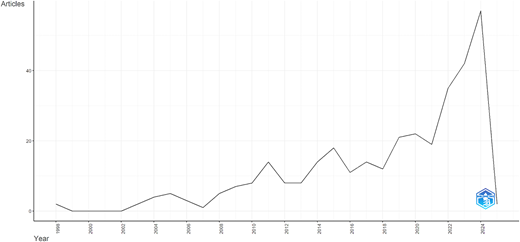
The Scopus database comprises 336 articles on “stock market participation” spanning 26 years, from 1998 to 2024 (Figure 2). From 1998 to 2007, there was a sustained period of low production, with occasional minor growth in certain years. Between 2014 and 2016, there was a significant rise, followed by a sharp decline in 2016. The period from 2018 to 2020 witnessed steady expansion, albeit with little variation. The period from 2021 to 2024 saw a substantial surge, particularly starting in 2022. The zenith observed around 2023 indicates a phase of increased scholarly endeavour, followed by a minor decline in 2024.
4.2 Principal countries
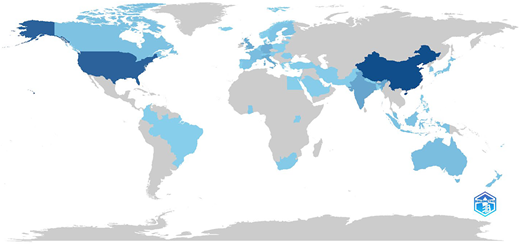
The publication of articles on a country-by-country basis is illustrated in Figure 3. Dark hues, such as the dark blue representing the USA and China, signify nations with substantial scientific output. These regions generate a significant number of publications, indicating a pronounced focus on research output. Brighter hues like India, Italy and the UK indicate nations with moderate to low levels of scientific output. These countries engage in scientific research, albeit with reduced intensity relative to the darker-coloured regions. Grey areas denote countries with either no documented scientific output in this dataset or negligible contributions, signifying minimal or absent involvement in the context of this analysis.
4.3 Main authors
This research involves a diverse array of 689 authors, reflecting extensive academic interest. Only 17.85% of the 336 documents are authored by a single individual, indicating a propensity for collaborative research. The mean number of co-authors per document is 2.48, signifying a moderate degree of collaboration. Approximately 25.15% of documents exhibit international co-authorship, indicating a notable level of international collaboration. The collaborative aspect of the discipline enriches the breadth and variety of viewpoints in the literature (Table 3). Jappelli and Padula (2003, 2015)and Kaustia et al. (2023) possess the highest h-index, whereas Bonaparte Y possesses the highest g-index and Guiso L has the highest citation total.
4.4 Significant works
The most frequently cited documents were identified as key works (Table 4). The normalised citation count measures the impact of more recent papers relative to older ones. Van Rooij et al. (2011) is the most cited paper, with its citations increasing consistently over the years, followed by Guiso et al. (2008). High normalised citation counts for recent papers like Sivaramakrishnan et al. (2017) suggest that they have had a significant influence in their respective domains.
4.5 Most relevant sources
The journal with the greatest influence on this field of study is “Journal of Financial Economics” with an h-index of 14 and 17 published articles (Table 5).
4.6 Keyword and network analysis
4.6.1 Keyword dynamics
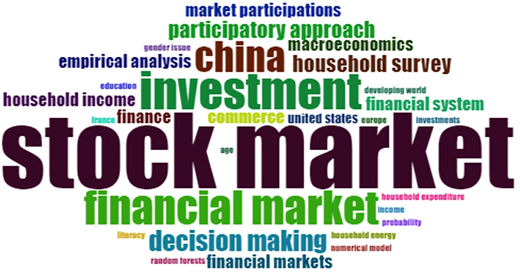
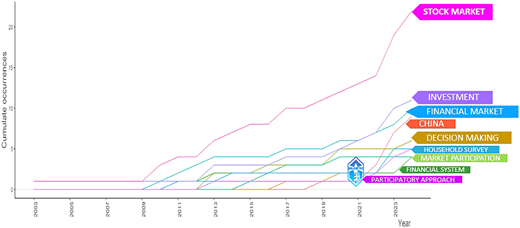
An examination of word clouds (Figure 4) depicting the most commonly used keywords in research on “stock market investment decision”, as displayed in Table 6 revealed that “Stock market” was the most frequently used term (22 occurrences), followed by “Investment” (14 occurrences). The frequency of these words exhibits an upward trend from 2014 to 2024 (Figure 5).
4.6.2 Content analysis and bibliometric coupling of documents
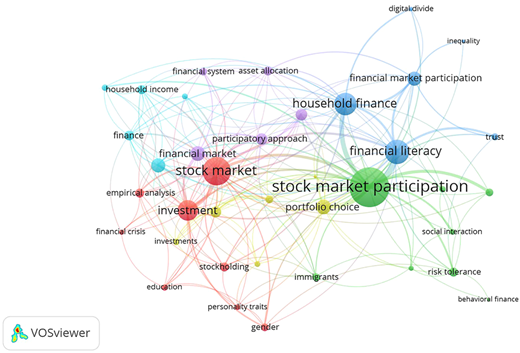
Keyword co-occurrence analysis assesses the connections between keywords in a specific domain by illustrating the structure and collective knowledge of the topic through instances where two words appear together. The hyperlinks denote the degree of correlation between each keyword, while the colour-coded clusters show nodes that share common attributes. Keyword network analysis has identified three main keyword clusters: financial market participation, financial literacy and household finance. The keyword co-occurrence is presented in Figure 6.
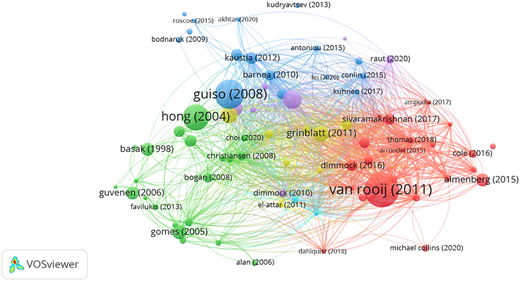
When two publications reference the same work, they are bibliographically paired, with bibliographic coupling strength indicating the number of shared references between them (Kessler, 1963; Jarneving, 2007; Fu et al., 2016; Alryalat et al., 2019). This analysis aims to create thematic clusters of authors within a specific period using the LinLog/modularity method. The study uses the “document” as the unit of analysis, identifying five distinct clusters based on bibliographic coupling graphics, which slow the most frequently referenced papers and authors. More prominent nodes such as “Van Rooij et al. (2011)” “Hong et al. (2004)” and “Guiso et al. (2008)” represent extensively referenced or influential works within this network (Table 6).
VOSviewer network visualisation focusing on the theme of “drivers of stock market participants” identified the following clusters. According to Figure 6., the largest and most central node is “stock market participation,” indicating its pivotal role in the network. The prominence of financial literacy as a connected node highlights its critical role in shaping various aspects of financial behaviour, including market participation and investment decisions. The intensity and frequency of co-occurrence links indicate that these concepts are commonly explored together and demonstrate a strong level of academic interconnection.
Bibliographic coupling clusters are presented in Figure 7. The main themes identified through the bibliographic coupling and co-word analysis are reported in the succeeding section.
4.6.2.1 Stock market and personality traits: red cluster
Key terms used in the cluster are stock market, stock holding, personality traits, investment, gender, financial crisis, empirical analysis and education. This cluster centres on the relationship between financial literacy and participation in the financial market. It explores how personality traits influence individuals' willingness to participate in stock markets, their demographics, and the investment patterns they have in financial systems. The node “Van Rooij et al. (2011)” is a key publication in the red cluster, signifying its importance in the literature on financial literacy, investment behaviour, and decision-making, and highlights the influential works of Van Rooij et al. (2011). Their research indicates a positive relationship between financial literacy and net worth, enhancing individuals' chances of investing in the stock market and benefiting from equity premiums. Furthermore, financial literacy is linked to better retirement planning and effective savings strategies, contributing to long-term wealth accumulation.
4.6.2.2 Stock market participation, risk tolerance and behavioural finance: green cluster
Key terms used in the cluster are stock market participation, behavioural finance, risk tolerance, social interaction, risk aversion, investor behaviour, information and immigrants. This cluster focuses on the broader aspects of the stock market and investment behaviours (She et al., 2023). It includes discussions on how financial literacy impacts investment choices, retirement planning, and overall engagement with financial markets and allocation of assets among individuals. The green cluster centres on Hong et al. (2004), focusing on social interaction and behavioural finance among stock market participants. The study analysed trading records from a discount brokerage to explore the disposition effect, where investors tend to sell winning stocks faster than losing ones. It found that investor knowledge and trading frequency influence this effect. Wealthier individuals, frequent traders, and professionals exhibit a smaller disposition effect, using demographic and socioeconomic factors as proxies for investor literacy.
4.6.2.3 Financial literacy and Financial market participation: blue cluster
The key terms include financial literacy, financial market participation, household finance, digital divide, inequality and trust. This cluster centres on the relationship between financial literacy and participation in the stock market. It explores how financial knowledge influences individuals' willingness to participate in financial markets, their risk tolerance, and the level of trust they have in financial systems. The blue cluster is primarily characterised by works like Guiso et al. (2008), focusing on the economic aspects of finance, family finance, and trust in the stock market. Financial literacy positively impacts stock market participation and, when developed early, correlates with later wealth and portfolio choices. The portfolio choice model illustrates how individuals allocate resources through financial literacy, savings, and asset diversification for retirement. Research on older individuals shows that financial literacy affects credit card debt repayment, market participation, and investment risk. While many older adults understand interest compounding and inflation, few are knowledgeable about risk diversification, highlighting gaps in their financial management skills.
4.6.2.4 Portfolio choices and investment behaviour: yellow cluster
In this cluster, a comprehensive review of the key terms such as portfolio choices, investments, financial markets, limited participation, market participation, and risk preference is addressed. It inquires about the investor's choice in selecting a wide range of financial market instruments like equity shares, mutual funds, and derivatives which are optimal for one's investment performance over risk preference. The yellow cluster concentrates on Grinblatt et al. (2011) on certain geographic areas or demographic segments, addressing topics such as regional finance, financial inclusion, or localised analyses of financial behaviours and IQ level of individual investors.
4.6.2.5 Financial market and financial system: purple cluster
Key terms used are financial market, financial system, household survey, asset allocation and participatory approach. This cluster centres on the household assets and well-being of individuals in transforming their current income into future consumption. The purple cluster centres on Raut (2020), focusing on emerging trends in financial behaviour, investment patterns, and technology-driven finance. While past behaviour did not directly impact investors' intentions, it had an indirect effect mediated by investors' attitudes. The study successfully applied the theory of planned behaviour (TPB) model, enhanced by external variables. It found that social pressure strongly influences investors, which could be mitigated through improved financial literacy.
4.6.2.6 Individual investors and decision-making: light blue cluster
Individual investors, decision making, finance, household income and macroeconomics are the main key terms used in this cluster. This cluster is concerned with the decision-making processes of individual investors. It examines how finance and household income affect individual investors' investment decisions, behaviours, and patterns, particularly in the context of behavioural finance theories that explore psychological influences on financial behaviour. The light blue cluster is centred on Li et al. (2020), highlighting the increase in household investments in risky assets. It examines the factors influencing individual investors' decisions on investment patterns. This cluster appears niche, representing distinct areas within the literature related to financial literacy, behavioural finance, economic influences, and emerging finance trends.
4.6.3 Co-word analysis
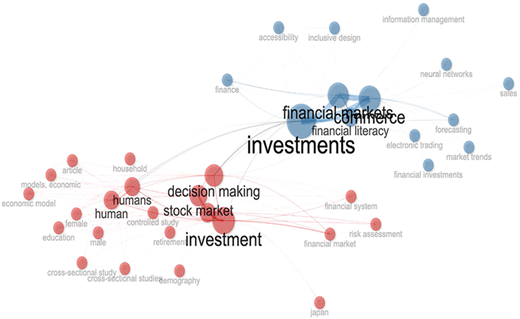
Co-word analysis identifies connections between key topics within a particular academic domain by examining terms in abstracts and study titles (Emich et al., 2020). By analysing the actual text of the publication and assuming that the words are thematically connected, the method identifies frequently occurring words (Donthu et al., 2021a, b). One potential disadvantage is that the model may depend on context-specific words and general terms that might not be appropriate for multiple clusters (Chang et al., 2015). The methodology utilises study titles and abstracts, using the thirty most frequently occurring words as a criterion for inclusion.
The red cluster focuses on human and behavioural aspects of finance, including factors like gender, education, and social settings. The blue cluster emphasises terms, such as investments, financial markets, and commerce, connecting the clusters and highlighting their overarching relevance. The diagram (Figure 8) highlights the importance of understanding the human and demographic influences on investment behaviour and the use of technology in market analysis and financial predictions.
4.7 Research trend
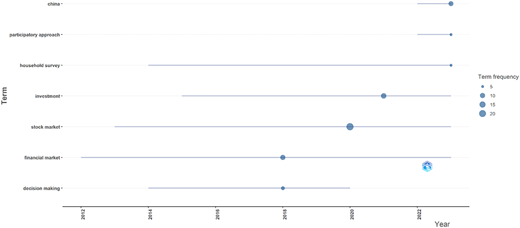
Figure 9 demonstrates the evolution of research topics through keyword analysis over time. The data exhibit a discernible trend in the themes that have gained increasing attention over time. Stock markets and investments exhibit notable frequency peaks in 2021 and 2023, with the most substantial bubbles indicating frequencies of 22 and 11, respectively. The stock market has been frequently referenced, with its highest occurrence (approximately 15) noted in 2020. Investment experienced notable prevalence in 2022, reaching a zenith with a term frequency of approximately 10 and a bubble size ranging from 12.5 to 15. Decision-making commenced its ascent post-2021, reaching its zenith in 2023, with a term frequency of approximately 10 and a bubble size between 12.5 and 15. The terms “participatory approach” and “household survey” exhibit lower term frequencies and smaller visual representations, with both displaying a singular minor data point near 2023, signifying their pertinence in contemporary discourse (Table 7).
4.8 Three field plot
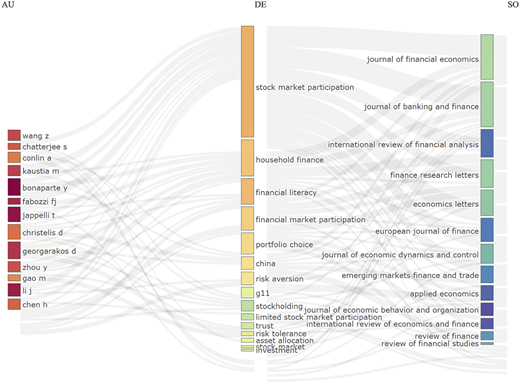
Using Biblioshiny, the graphical visualisation of the association among prominent authors, and most referred sources was done using three field plots (Figure 10). The vertical dimension of the rectangular diagrams represents the strength of connections among authors, sources, and author keywords. The colours used in the diagrams are chosen to highlight the key elements. Aria and Cuccurullo (2017) assert that the connections between the constituent parts of a rectangle grow in size. Figure 6 displays a network diagram that illustrates the connections between the authors (left), their author keywords (centre), and resources for additional information about stock market participation (right). The study examined the frequency with which specific terms related to stock market participation were used by authors and publications. The terms “Stock market participation,” Financial Literacy” and household finance are the most important.
4.9 Thematic map
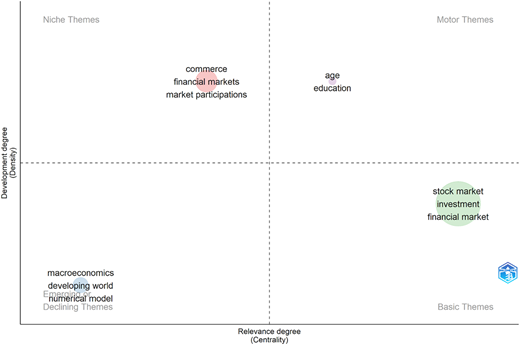
The aim of thematic mapping is to identify the relationships between different textual components. Thematic maps can aid in making information more comprehensive (Aria and Cuccurullo, 2017). Keywords, article names, and abstracts are used to construct the map. In a two-dimensional image, the ideas are grouped based on their frequency and importance. The X-axis in this analysis measures the significance of a certain study topic, illustrating the importance of the subject. The Y-axis displays the progress and evolution of a particular research topic. It shows the significance of the subject. The development and evolution of a specific study topic are shown on the Y-axis. It displays the subject's density and shows its significance (Figure 11).
Motor themes in the upper right quadrant contain the motor themes. Due to their great centrality and density, the subject topics like demographics in this quadrant are significant and have undergone extensive research. Basic themes in the lower-right quadrant show the important but not yet fully explored, primary themes are displayed, with low density but high centrality, like stock market investment and financial market. Emerging or declining themes in the lower left quadrant contain the clusters with weak and erratic ties to other topics that might appear or disappear within the study area of macroeconomics and numerical models. Niche themes, such as commerce and financial markets, are located in the upper-left quadrant. The population density in the upper-left quadrant is substantial despite its low centrality.
4.10 Co-citation analysis
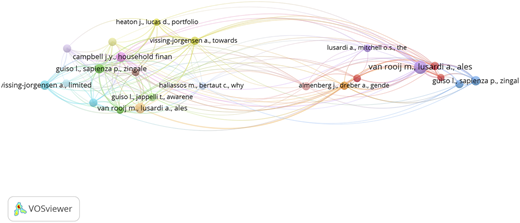
The diagram on co-citation analysis (Figure 12) visualises the connections between prominent authors and publications within a particular academic network. The principal nodes symbolise significant works, while the colours and connections signify various research topics and their interrelationships. The spatial separation among clusters indicates different levels of interconnectedness among various research domains. The visualisation facilitates the mapping of the intellectual terrain within the field, revealing both key themes and more discrete or specialised research domains.
The presence of larger nodes, such as “van rooij m.” and “lusardi a.”, suggests that these authors or their works hold significant influence or are central within this network. .Less central or influential works are represented by smaller nodes, such as “giesler m.” and “nunnally j.c.”; therefore, they nevertheless contribute to the network.
4.10.1 Clusters
The presence of green nodes, such as “van rooij m.”, “lusardi a.”, and “tversky a.”, indicates a closely connected set of papers/authors that are clearly concentrated on a particular research field, maybe associated with the evaluation and decision-making process based on the labels.The purple cluster consists of nodes such as “ales” that are linked to the green cluster, suggesting that they may serve as interfaces between various research fields or make contributions to multiple subjects.Red, Blue, and Orange Clusters: These clusters correspond to distinct thematic domains. For instance, the red cluster comprises individuals named “daniel k.” and “sherfin h.” who write on subjects such as “beyond greed and f,” indicating their research interests in the fields of behavioural finance or psychology.The blue cluster comprises “Barret b.m” and “oden t.”, reflective of studies on behavioural dimensions within the fields of finance or economics. The orange cluster consists of scholarly works by Kahneman and Tversky that are associated with prospect theory or related psychological theories in the context of decision-making.
The central nodes in this diagram, “van rooij m.” and “lusardi a.”, signify that their work operates as a prominent reference point within the network. Their connections to several clusters demonstrate their impact across diverse research domains. Isolated Nodes: Nodes such as “giesler m.” and “nunnally j.c.” exhibit a higher degree of isolation, suggesting that they may reflect specialised areas of study or have restricted connections to the broader literature in this particular field.The presence of distant clusters, such as the blue and red clusters being spatially separated from the green cluster, may suggest the existence of distinct subfields or specialised research areas that have limited overlap with the central theme represented by the green cluster.
5. Discussion and future research avenues
The model of antecedents on stock market participation is a systematic framework that delineates essential factors affecting individuals' decisions to participate in the stock market. The factors encompass socio-demographic elements such as income, education, age, and gender, as well as psychological and behavioural aspects including risk tolerance, overconfidence, cognitive biases, perceived control, financial literacy, social influence, the economic environment, institutional and regulatory frameworks, and media influence. A bibliometric analysis was conducted in this study using softwares like VoS viewer and Bibliometrix of R studio to examine the body of research. The research identifies countries, leading authors, co-occurring keywords and journals that contribute to the field of study that examines the antecedents of stock market participants in a period of 1998–2024. The analysis is based on the 336 most significant journal articles for a span of 26 years, obtained from the Scopus database. Furthermore, the study categorises and visualises the theoretical framework of empirical investigations by exploring key concepts and recurring themes that impact contemporary research and patterns. The results suggest that the majority of publications in the subject area originate from developing nations. Financial literacy acts as a fundamental precursor, significantly influencing individuals' risk tolerance, investment confidence, and decision-making processes. Economic conditions and regulatory frameworks establish practical applications of this model encompassing policy-making, enabling governments and regulatory agencies to enhance financial literacy and establish more accessible markets. Investment platforms can be improved by increasing accessibility, providing educational resources, and reducing barriers to entry for small investors.
The network visualisation generated by VOSviewer, based on co-occurrences in the dataset, highlights the importance of financial literacy in various areas of financial behaviour and decision-making. This suggests that financial literacy is a key driver of participation in the stock market and influences individuals' risk tolerance and trust in financial systems. The major antecedents of stock market participation are psychological or behavioural factors, economic environment, financial literacy, socio-demographic factors, social influence, and institutional or regulatory factors. The model of antecedents on stock market participation highlights the significance of incorporating both individual psychological factors and macroeconomic conditions in the analysis of stock market participation. By comprehending these factors, policymakers and investors can enhance their investment strategies and contribute to the overall efficacy of the stock market. This study examined the effect of individual-level factors on stock market investment decision-making. Financial literacy is useful for overcoming the inhibitions to invest in the stock market and building up confidence among investors.
Keyword co-occurrence analysis, bibliographic coupling, and co-word analysis is distinct bibliometric and scientometric techniques used to identify relationships within scientific literature. Each focuses on different aspects of scholarly communication, content and thematic structure, citation patterns, and conceptual linkages. Keyword co-occurrence analysis identifies associations between frequently appearing keywords by constructing networks based on their simultaneous appearance within documents. Bibliographic coupling, on the other hand, measures the relatedness of documents by analysing the extent to which they share common references. Co-word analysis explores the semantic structure of a research field by examining the frequency and joint appearance of terms within the text. Although methodologically different, these techniques can be used synergistically to provide a comprehensive understanding of a research domain. Together, they reveal both thematic associations and citation-based connections, offering insights into the cognitive and social structures underpinning a field of study. Bibliographic coupling analysis and co-word analysis were employed to identify the emerging themes.
To maintain clarity and ensure alignment with review study standards, this study clearly states in both the Introduction and Methodology sections that it adopts a bibliometric review approach rather than an empirical or primary data-driven design. Accordingly, the results and discussion sections are framed to emphasise that the findings emerge from the analysis of published literature, rather than direct data collection. The article further highlights its contribution by mapping existing knowledge structures, identifying prevailing intellectual foundations, and tracing evolving research trends within the field—thereby positioning itself as a knowledge synthesis and field-structuring study, consistent with the conventions of systematic and bibliometric reviews.
For RQ1, the section clearly presents the co-citation clusters and the intellectual structure of the field, along with details on leading authors, institutions, and the most-cited publications. For RQ2, the analysis incorporates citation burst detection and strengthens the interpretation of collaboration networks and keyword clusters to more effectively reflect the evolution of the research domain over time. For RQ3, the synthesis of research gaps is expanded by highlighting underexplored contexts, behavioural biases, and demographic groups, and these insights are more clearly linked to specific future research directions.
Future research studies involving bibliometric analysis can conduct comprehensive systematic literature reviews to build upon the findings of this study. Greater attention should be given to emerging research patterns related to personality traits, risk tolerance, self-efficacy and other behavioural finance factors. Comparative analyses would help to identify the relative strengths and limitations of different modelling approaches. Further refinement is required to account for antecedents of the stock market, including mutual funds and derivatives. Improving model predictability can also help uncover the underlying drivers of stock market participation. Such advancements would be valuable for financial institutions and investors seeking to integrate participation in stock for a longer period of time. Finally, interdisciplinary collaboration will be essential for developing more reliable and practical decision-support tools.While bibliometric analysis with the PRISMA framework offers a broad overview of stock market participation research, future studies should use meta-analysis to synthesise empirical findings and apply household survey data with econometric models to validate and explore causal drivers. A mixed-method approach combining bibliometric, thematic, and primary data analysis will strengthen research robustness and relevance.Future bibliometric studies can be strengthened through comprehensive systematic literature reviews that build on the conceptual themes identified in this work. While the present study focuses on mapping and explaining key research topics, a systematic review could further assess the effectiveness and efficiency of prediction models. Expanding the dataset to include sources such as the Web of Science would also broaden coverage and deepen understanding of the field.
The findings of this bibliometric review are generalizable to the academic literature on stock market participation rather than to individual investor behaviour, as they are derived from published studies indexed in Scopus. While the PRISMA-guided approach and long time span (1998–2024) ensure a comprehensive mapping of the field, reliance on a single database and citation-based techniques may exclude relevant studies and does not allow assessment of causal relationships. Future research could extend this work by incorporating additional databases, conducting systematic reviews or meta-analyses, and applying empirical or mixed-methods approaches using primary data. Greater focus on behavioural traits, demographic heterogeneity, and alternative investment instruments would further enrich our understanding of stock market participation.
CRediT authorship contribution statement
S. Anjana: Conceptualisation, methodology, software, Validation, formal analysis, data curation, writing, reviewing and editing, validation.
Data availability
Data will be made available on request.