


The Lighting-as-a-Service (LaaS) business model has emerged as a promising concept to advance circular economy (CE) in the lighting sector. However, the role of technology as an enabler remains inadequately explored within the academic literature. This study aims to investigate the technological enablers of LaaS, their capabilities and interrelationships to circularity principles.
This study employs a PRISMA-based systematic review to identify and synthesise relevant literature on the technological enablers particularly supporting LaaS. Subsequently, this study employs qualitative methods drawing on 23 semi-structured interviews with manufacturers, consultants, designers, property and facility managers. Data were transcribed, structured and analysed using a thematic coding process.
The findings identify seven interdependent technological clusters enabling the implementation of LaaS, including (1) core lighting technologies, (2) sensing technologies, (3) control technologies, (4) connecting technologies, (5) data analytics tools, (6) service-based platforms and (7) manufacturing technology. This study further demonstrates that the identified technologies primarily support narrowing and slowing resource loops, while tools that support closing and regenerating strategies remain limited.
This study supports lighting companies in their development, implementation and scaling of LaaS business model. By highlighting the interdependences between technological clusters and circularity strategies, the findings allow practitioners to adopt technologies that collectively enable energy-efficiency, durability and circularity.
Drawing on qualitative insights, this study identifies technological clusters that collectively and independently support the adoption of LaaS. Moreover, this study links these clusters to the circularity strategies, thereby advancing research on digitisation, business model innovation and CE within the built environment.
1. Introduction
Lighting systems in buildings are a significant yet overlooked source of waste within the built environment. In commercial buildings, lighting consumes roughly 17% of the total electrical energy (Wagiman et al., 2020). Driven by rapid technological obsolescence, short product lifespan and limited recyclability, lighting has become a major contributor to electronic waste (e-waste), which is expected to reach 75 million tonnes by 2030 (Forti et al., 2020; State of Victoria, Department of Environment, Land, Water and Planning, 2017). E-waste is one of the fastest-growing waste streams globally, increasing by 3–5% annually (Ilankoon et al., 2018). Despite the high material value contained within lighting components, approximately 82% are disposed of in landfills. Around 16% of lighting components undergo basic scrap metal recovery and only 2% go through high-efficiency recycling (Bontinck et al., 2021). These low levels of recycling are mainly linked to the physiochemical properties contained in the materials, including hazardous halogen compounds (Ilankoon et al., 2018; Shahabuddin et al., 2023). These challenges have made it difficult to improve the environmental performance of lighting systems across their intended lifespan.
In response to this growing problem, the concept of circular economy (CE) has been applied to the lighting sector to minimise the adverse environmental impact of lighting components (Chen et al., 2025). This concept offers a restorative approach that spans all stages of a product lifecycle, beginning with material sourcing and ending with the disposal and management of end-of-life materials (Ellen MacArthur Foundation, 2015). Within the context of lighting, applying CE principles has gained traction since 2015 due to the rise of enabling circular business models (CMBs) (Chen et al., 2025). Technological advancements have also played a role in improving the environmental performance of lighting components. Particularly, the transition from incandescent lamps to LED has achieved 70–85% reductions in the operational energy and significantly longer lifespans (Gauch et al., 2023). Across the broader building industry, fragmented supply chains and the lack of stakeholder coordination have been attributed as the main issues hindering CE adoption (Alashwal and Fong, 2015; Das et al., 2023; Riazi et al., 2020). These challenges are further compounded by the absence of a clear and compelling business case, which continues to hinder industry uptake of circular approaches (Adams et al., 2017).
In the transition to CE, the role of technology has been widely recognised as an important enabler (Cetin et al., 2021; Illankoon and Vithanage, 2023; Nascimento et al., 2019; Wuni, 2023a, b). In the built environment, technology has been defined as a tool, machine, technique or systems of organisation that solve a specific problem or achieve a goal (Skibniewski and Zavadskas, 2013). This definition of technology underpins the conceptual framing adopted in this study. In recent years, the role of technology in the construction industry has become intertwined with the rise of Industry 4.0. Industry 4.0 technologies have been identified to support circular strategies by improving efficiency, extending asset lifespans and enabling lifecycle thinking across the building lifespan (Cetin et al., 2021; Setaki and van Timmeren, 2022). Despite its recognised potential, the building industry has been slow to integrate new technologies (Cetin et al., 2021; Setaki and van Timmeren, 2022). Chen et al. (2025) assert the singular focus of the lighting research to be on operational savings achieved through LEDs, missing out on the opportunities offered by other technologies. Soori and Vishwas (2013) identify existing and emerging technologies that facilitate efficient lighting in office buildings. Technologies including dimmers, sensors, transformers and digital controllers were identified to improve office lighting while simultaneously improving the energy efficiency of the lighting system (Soori and Vishwas, 2013).
Business models that advance CE principles have also been recognised as a promising pathway towards achieving circularity at an organisational level (Das et al., 2023; Ellen MacArthur Foundation, 2015). Five circular business models (CBMs) have been identified, including circular supply, resource recovery, product life extension, sharing models and product service systems (PSS). Lighting-as-a-Service (LaaS), which falls under the PSS category, shifts the focus from selling product only to selling a system of product and services to a customer (Andersson and Lessing, 2019). In a PSS model, costs are distributed over a period, and include other services, including maintenance, upgrades and end-of-life management. Despite the significant opportunity presented by this model, current research and adoption remain limited, making it one of the least utilised CMBs (Guerra et al., 2021; Munaro et al., 2021). Current research on PSS remains fragmented, with early applications of this business model focusing on facades (Azcarate-Aguerre et al., 2021, 2022a, b, 2023), building energy retrofits (Azcarate-Aguerre et al., 2022a, b), and elevators (Tomatis et al., 2022). As highlighted, the role of technology as an enabler of PSS has received little exploration in the construction literature. This gap potentially hinders the uptake of these business models within the broader industry and the lighting sector. The aim of this study is to provide a better understanding of the technologies essential in the adoption of LaaS. The study provides valuable insights into how performance-based models, enabled through technology, can achieve energy use, material circularity and lifecycle management of lighting components. To this end, this article sets out to (1) identify technological enablers specific to LaaS business model, (2) classify these enablers into clusters based on functionality and (3) map the potential benefits of technological clusters in advancing CE strategies.
2. Literature review
2.1 The role of data and technology in the construction industry
One of the knowledge areas identified during this review was linked to the role of data and technology, comprising 23% of the relevant articles (Jemal et al., 2026). Data and technology are increasingly recognised as important enablers in the transition towards a CE (Cetin et al., 2021; Illankoon and Vithanage, 2023; Nascimento et al., 2019; Wuni, 2023a, b). Despite its significant environmental footprint and material intensity, the construction sector has been slow to integrate new technologies, compared to other sectors (Cetin et al., 2021; Setaki and van Timmeren, 2022). However, the role of data and technology in achieving CE has recently gained traction in the academic literature, with specific emphasis on Industry 4.0 tools. Industry 4.0 refers to the Fourth Industrial Revolution, enabled through the integration of computer-integrated manufacturing, cyber-physical systems and robotics (Lekan et al., 2021; Nascimento et al., 2019; Perera et al., 2025). Unlike the first three industrial revolutions, Industry 4.0 integrates several advanced technologies, including Internet of Things (IoT), Big Data Analytics (BDA), cybersecurity, cloud computing, augmented reality (AR), automation and simulation (Barreto et al., 2017; Li and Yang, 2017; Nascimento et al., 2019; Perera et al., 2025; Wagner et al., 2017).
In the context of the built environment, Wuni (2023a, b) identifies technology as one of the critical success factors for implementing CE. Integration of information systems with material stock information was identified as a key driver (Munaro and Tavares, 2023; Wuni, 2023a), confirming the need to assess technological readiness in circular construction projects (Guerra and Leite, 2021). Moreover, the development of material recovery technologies has been identified as another enabler in the CE transition (Adams et al., 2017), reinforcing Cetin et al. (2021) emphasis on the role of material passports and data banks in facilitating efficient use of resources. Hart et al. (2019) highlight the role of research and development (R&D) and innovation in advancing CE opportunities, particularly through new technologies such as 3D printing, sensors, controls and IoT. These technologies play a critical role in improving resource recovery and increasing the utility of assets (Hart et al., 2019).
Across the building lifecycle stages, Setaki and van Timmeren (2022) highlight the enabling technologies and their potential contribution in enhancing circularity goals. IoT, robotics and drones are the main technologies used during the construction, operation and demolition stages of a building. Meanwhile, building information modelling (BIM), artificial intelligence (AI), blockchain technology (BCT) and AR are utilised throughout the lifecycle stages of the building (Setaki and van Timmeren, 2022). Similarly, Cetin et al. (2021) identify ten enabling digital technologies and their roles across different stages of the building lifecycle. These technologies were further evaluated based on their effectiveness in narrowing, slowing, closing and regenerating resource loops (Cetin et al., 2021).
The construction literature highlights the critical role of technology as an enabler in the CE transition. From early stages until the end-of-life phase, research has identified several technological enablers and barriers, as well as specific tools in this transition. Table 1 provides a summary of these findings, along with a list of commonly used abbreviated terms in the academic literature.
List of technological enablers and barriers identified in the academic literature
| Author(s) | Technological enabler/barrier for circular economy | Technological tool(s) |
|---|---|---|
| Ababio and Lu (2023) | Technology and innovation | 3D printing, DT, IoT |
| Adams et al. (2017) | Material recovery technologies | |
| Antwi-Afari et al. (2021) | Improved product takeback | BIM, AI, IoT, RFID |
| Real-time information on inventory of circular materials | BIM, RFID, CT | |
| Argus et al. (2020) | Material and product data | BIM, BCT |
| Track and trace technology | ||
| Cetin et al. (2021) | Enabling technologies for “Closing” resource loops | AM, AI, BIM, BDA, MP, IoT, DT, GIS, MP, BCT |
| Technological enablers for “Slowing” the loop | ||
| Technological enablers for “Narrowing” resource loops | ||
| Technological enablers for “Regenerating” resource loops | ||
| Das et al. (2023) | Technology as an enabler of circular business models | BIM |
| Hart et al. (2019) | R&D and innovation | 3D printing, sensors and controls, IoT |
| Illankoon and Vithanage (2023) | Reducing rework and promoting end-of-life disassembly | BIM, VR, digital twin |
| Lekan et al. (2021) | Improved productivity and efficiency across construction stages | AI, BIM, AR, RFID, IoT, CT, AM sensors |
| Munaro and Tavares (2023) | Absence of technologies and infrastructure | IMS, BIM, MP |
| Development of technologies and tools enhancing circular buildings | ||
| Nascimento et al. (2019) | Use of advanced printing technologies to improve productivity and reliability | 3D printing, AM |
| Oluleye et al. (2023) | Optimised collection of waste | AI |
| Implementing reverse logistics | ||
| Estimating construction and demolition waste generation | ||
| Predicting hazardous building materials | ||
| Estimating technical and economic value of circular materials | ||
| Schut et al. (2015) | Technologies promoting “R” principles | MP |
| Setaki and van Timmeren (2022) | Optimise material use | 3D printing, IoT, BIM, drones, AR, BCT |
| Waste recovery | BIM, AI, drones | |
| Wuni (2023a) | Digital integration | BIM, BCT |
| Supportive technological infrastructure | ||
| Skills, capabilities and technical know-how | ||
| Upskilling, training and capacity building | ||
| Process integration technology | ||
| Wuni (2023b) | Supportive infrastructure and technology | |
| Material recovery technologies | ||
| Information and communication technologies | ||
| Transfer of information and availability of data | ||
| Technologies enabling process integration | ||
| aSoori and Vishwas (2013) | Energy cost savings | LED, CFL, lighting controls (sensors, actuators, dimmers, transformers, BMS, DDC) |
| Support effective thermal insulation | ||
| aHammes et al. (2024) | Zoned lighting depending on individual lighting preference | PIR sensors |
| Automated user-related decision making | ML, controls | |
| Adaptive lighting to individual occupancy patters | PIR sensors |
Note(s): Abbreviations
AI: Artificial intelligence,
AM: Additive manufacturing,
AR/VR: Augmented reality/virtual reality,
BDA: Big data analytics,
BCT: Blockchain technology,
BIM: Building information modelling,
BMS: Building management systems,
CT: Cloud technology,
DT: Digital twins,
GIS: Geographical information systems,
IMS: Information management systems,
IoT: Internet of Things,
MP: Material passports,
RFID: Radio frequency identification,
CFL: Compact fluorescent lamp,
LED: Light-emitting diode,
DDC: Direct digital controllers,
PIR: Passive infrared sensors,
aLiterature related to lighting systems in buildings
Specific to lighting, several researchers have identified a range of technologies that support smart lighting. Occupancy and lux sensors, actuators and dimmers, transformers and energy meters, BMS and digital controllers are lighting technologies that help achieve energy savings in office buildings (Soori and Vishwas, 2013; Wagiman et al., 2020). More recent studies have expanded on these findings to include smart sensors, IoT devices, LED systems and indoor positioning systems (Füchtenhans et al., 2021; Hammes et al., 2024). Despite this growing body of work on smart lighting, limited research exists on the specific technological enablers of Lighting-as-a-Service – one of the promising business models supporting the transition to CE. The following section discusses the CE concept, its strategies and enabling business models.
2.2 Circularity strategies in the built environment
CE has become a growing area of research in the built environment for over a decade, owing to increasing concerns about its negative environmental impacts (Benachio et al., 2020; Cetin et al., 2021; Hossain et al., 2020; Munaro et al., 2020). Popularised by the Ellen MacArthur Foundation, the CE concept has been widely applied across resource-intensive sectors (Ellen MacArthur Foundation, 2015). CE is defined as a system that is restorative by design, enabling the efficient flow of materials, energy, labour and information while minimising waste and value loss across product cycles (Ellen MacArthur Foundation, 2013).
Despite the growing interest in CE research, existing studies primarily focus on enhancing energy efficiency of buildings (Norouzi et al., 2021), often supported by lifecycle assessment (LCA) methods (Dervishaj and Gudmundsson, 2024; Illankoon and Vithanage, 2023; Ossio et al., 2023). In addition to this, digital tools and technologies have gained increasing attention for their potential to support CE (Dervishaj and Gudmundsson, 2024). However, several structural issues have been identified in the practical adoption of CE. Benachio et al. (2020) identify the lack of standardisation as a critical barrier hindering the reuse of building materials. Ossio et al. (2023) confirms this limitation, attributing it to the individual practices and processes adopted across different construction firms (Anastasiades et al., 2021; Benachio et al., 2020). Further gaps exist in the areas of product design, demolition and modularisation, hindering the effectiveness of CE strategies (Antwi-Afari et al., 2021). Within the built environment, CE principles have been explored across multiple domains, including industrialised housing (Kedir and Hall, 2021), building components (van Stijn and Gruis, 2020), prefabricated building (Minunno et al., 2018) and material flow (Geldermans, 2016). Existing research clusters circularity strategies based on their cascading impact on the flow of resources (Bocken and Konietzko, 2022; Bocken et al., 2016; Konietzko et al., 2020). These strategies include closing, narrowing, slowing and regenerating resource loops (Bocken et al., 2016; Cetin et al., 2021; Konietzko et al., 2020).
Closing resource loops focuses on reintroducing materials into production cycles after they reach end-of-life stage, reducing the need for virgin resources (Bocken et al., 2016). Within the built environment, this approach takes different forms, including recycling (De Wolf et al., 2020; Ghisellini et al., 2018), urban mining (Heisel and Rau-Oberhuber, 2020), industrial symbiosis (Fraccascia et al., 2016; Yu et al., 2021) and resource tracking (Cetin et al., 2021). These approaches aim to recover resources at their end of their life and put them back into the resource cycle. This reduces the need to extract raw materials and promotes the cyclical use of existing resources.
Narrowing resource flows refers to reducing the total quantity of input materials and energy required across a building's lifecycle. This is primarily achieved through better design approaches that improve the performance of buildings during the operational and end-of-life stages (Akinade and Oyedele, 2019; Kedir and Hall, 2021). Cetin et al. (2021) identify three narrowing strategies to be the reduction of primary material inputs, high-performance design and improved efficiency. By considering factors such as orientation, geometry and material selection, cost and energy savings can be achieved during a building's operational phase (Akinade and Oyedele, 2019; Kedir and Hall, 2021). Narrowing strategies also extend to manufacturing and component upgrades, where improved technologies achieve better energy and thermal performance while reducing waste (Cetin et al., 2021).
Slowing resource loops aims to slow down the rate at which materials are extracted and produced by intensifying the use of existing products and extending their useful life (Bocken et al., 2016). Design for durability, adaptability and reversibility play a key role in achieving this strategy (Bocken et al., 2016; Cetin et al., 2021). During the design phase, improved durability and upgradability/repair of products are considered as effective strategies to extend product lifespan (Eberhardt et al., 2022; Wood, 2012). Spatial, material and structural reversibility were identified as the main approaches enabling reversible design (Durmisevic, 2019). Smart space utilisation enabled by flexibility and adaptive reuse is also another slowing strategy that maximises the value of existing buildings (Cetin et al., 2021). Moreover, lifespan of existing buildings can be extended through effective maintenance and repair strategies (Bocken et al., 2016; Ingemarsdotter et al., 2019).
Regenerate is the fourth circularity strategy that aims to create self-sufficient buildings through the continuous flow and renewal of resources (Attia, 2018; Lyle, 1994). This strategy focuses on embedding nature in the design and functioning of built spaces (Attia, 2018; Kubbinga et al., 2018). Regenerative outcomes can also be achieved using bio-based materials instead of hazardous building products, promoting the use of healthy and renewable resources (Lyle, 1994; Strunge, 2020). Another approach looks at the cohabitation between humans and other life forms in buildings (Cetin et al., 2021). In addition, enhancing indoor and outdoor environments through improved lighting, air quality and spatial configuration promotes regenerative design by fostering healthier spaces for occupants (Attia, 2018; Kubbinga et al., 2018).
To advance these circularity strategies, the role of business models has been emphasised across existing research. Five business models are core to the transition to CE. These include product life extension, circular supply, sharing models, resource recovery and PSS (Lacy et al., 2014; OECD, 2019). Collectively, these are referred to as CBMs. Existing research reveals an uneven level of adoption of CBMs, with PSS being the least utilised (Guerra et al., 2021). The limited uptake of PSS has been largely attributed to their complexity relative to other CBMs. Unlike traditional purchases, PSS models retain ownership with the manufacturer/supplier while the customer/end-user leases the product and embedded services over a certain period. Within the built environment, PSS concepts have been applied primarily to façade systems (Azcarate-Aguerre et al., 2021, 2022a, b, 2023). Building energy retrofits and elevator systems also applied the concept of PSS, identifying energy saving opportunities and improved life cycle performance outcomes (Azcarate-Aguerre et al., 2022a, b; Tomatis et al., 2022). However, there is limited research into LaaS – a PSS model applied to the context of building lighting systems. Moreover, research on CE adoption within the lighting industry shows the need for a system-level approach that integrates a range of enabling technologies, protocols and regulatory frameworks (Chen et al., 2025). The findings presented in this study address this gap by identifying the lighting technologies necessary for implementing LaaS. Drawing on qualitative insights from industry experts, this study identified key technological clusters critical to LaaS adoption. In addition, this study highlights the potential benefits of integrating these technologies and identifies the circularity strategies they advance.
3. Methodology
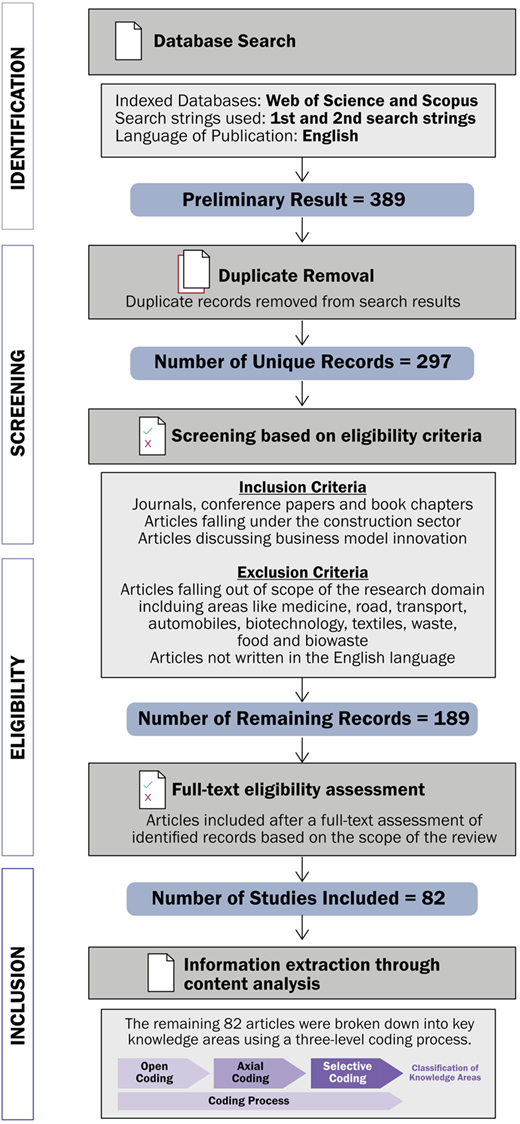
When conducting the review, the PRISMA framework was applied to identify, screen and analyse relevant literature. PRISMA, which stands for Preferred Reporting Items for Systematic Reviews and Meta-Analyses, was adopted to minimise bias and improve validity of the scientific process (Moher et al., 2009). The review protocol included an initial database search to systematically analyse existing research on PSS and CBMs. Scopus and Web of Science databases were selected due to their broad coverage. Figure 1 shows the PRISMA process followed in this study, including its four key stages (identification, screening, eligibility and inclusion) (Denyer and Tranfield, 2009).
Subsequently, 23 semi-structured interviews were conducted among a wide range of stakeholders relevant to the implementation of LaaS. Interviewees were recruited from key industry groups, including lighting designers, manufacturers, consultants, facility and property managers. Figure 2 breaks down the proportion of each of these groups.
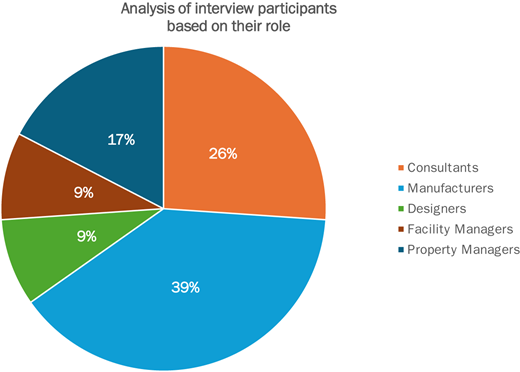
Lighting manufacturers comprised the largest proportion (39%) as they are central to LaaS delivery through their involvement in product design, service integration and long-term management of lighting assets. Consultants made up over a quarter of the interviewees, selected for their advisory role in guiding organisations towards CE business models and sustainable procurement. Property managers represented 17% of the participants and were selected due to their involvement in selecting service providers and overseeing the operational and financial performance of lighting systems. Lighting designers and facility managers each account for 9% of the participants. Lighting designers were chosen for their specialised knowledge on lighting design, specifications and performance requirements. Facility managers were included due to their direct involvement in the daily operations, maintenance and addressing performance issues of the end-user. Collectively, these stakeholders provide comprehensive insights into the enablers of LaaS, particularly relating to the role of technology. Table 2 represents the roles held by the participants and their years of experience.
Roles held by interviewees in their organisations as well as years of experience
| Roles held in organisation | No. of years in this position | Participant code | Participant group based on role |
|---|---|---|---|
| Circular economy consultant | 1.5 | P01 | Consultant (26%) |
| Senior manager of products and services | 2 | P03 | |
| Sustainability lead | 25 | P08 | |
| Senior circular economy consultant | 2 | P10 | |
| Sustainable business officer | 5 | P16 | |
| Sustainability and environment manager | 5 | P17 | |
| Managing director | 16 | P02 | Manufacturer (39%) |
| National key account manager | 20 | P06 | |
| CEO | 15 | P07 | |
| Cluster marketing leader | 30 | P09 | |
| Commercial director | 2 | P11 | |
| Founder and CEO | 4 | P12 | |
| Director | 15 | P15 | |
| Business development | 5 | P19 | |
| Global services | 13 | P23 | |
| Light design leader | 15 | P04 | Designers (9%) |
| President of Lighting Association | 20 | P05 | |
| Facility manager | 3 | P13 | Facility manager (9%) |
| Facility manager | 2 | P14 | |
| Manager | 7 | P18 | Property manager (17%) |
| Workplace coordinator | 1 | P20 | |
| Environmental operations manager | 3 | P21 | |
| Head of property management | 20 | P22 |
Semi-structured interviews served as the primary data collection instrument for this study, aiming to uncover the technological enablers behind the implementation of LaaS. This method blends features of both structured and unstructured interviews, which allow for additional probing and insights (Fellows and Liu, 2015; Gray, 2004). The interview questions focused on uncovering the resources and capabilities enabling LaaS. In terms of technology, the interviewees were prompted to expand on the technological resources and capabilities that can be leveraged to support LaaS implementation. Participants were selected using a combination of purposive and snowball sampling techniques. Purposive sampling was used to identify organisations and individuals with direct involvement in lighting systems or prior experience with service-based models. Snowball sampling allowed access to other knowledgeable professionals through the networks of interviewees. Sampling of participants was done until theoretical saturation was reached. Theoretical saturation is reached when no new data emerges in a category, and the category is adequately developed with well-defined properties and dimensions that capture its variation (Strauss and Corbin, 1998). During the analysis, this study adopted an iterative inductive approach to identify the data and technological enablers for LaaS model. An inductive approach was chosen as it allows for the identification of themes and patterns emerging from empirical data drawn from semi-structured interviews (Creswell, 2013). Due to the exploratory nature of this research topic, this approach is well-suited to capture in-depth insights from industry practitioners.
Ethics approval was obtained for this research, ensuring that the data collection and management process complied with the ethical requirements. Interview data was anonymised to protect confidentiality and securely stored in accordance with the ethical requirements. Earlier interview findings were compared with the data collected at the latter stages. This was done primarily to ensure that data saturation was achieved. During the analytical stage, NVivo 14 software was used to transcribe and code the collected data from the interviews. A thematic analysis process was used to identify and report on the patterns emerging from the interview data (Braun and Clarke, 2006). Through a thematic analysis process, codes were generated inductively. Initially, open codes were used to identify references to individual technological tools discussed among the participants. Subsequently, these codes were grouped into higher-level themes reflecting the interrelationships of these technologies and their operational capabilities. Following this iterative process of coding, the technological enablers for LaaS were identified and clustered, fulfilling the second objective. Since an iterative approach was adopted, subsequent interviews were useful to ensure data saturation. The following section presents the key findings derived from both the systematic literature review and qualitative interview data.
4. Findings
The PRISMA method initially yielded a total of 389 records. Following a screening stage based on title and abstract, 108 records were excluded from further analysis. After developing an eligibility criteria, another 107 articles were excluded, as shown in Figure 1. Finally, a total of 82 articles were included in the qualitative assessment, with 23% of those records focusing on data and technology (Jemal et al., 2026). The role of data and technology emerged as one of the five main knowledge areas, alongside stakeholder and supply chain networks (40%), organisational learning (17%), material circularity (44%) and circular business practices (39%) (Jemal et al., 2026). Specifically, this study focuses on the role of data and technology in the practical adoption of LaaS business model.
The semi-structured interviews provided further insights into the key technological enablers supporting LaaS, addressing the first objective set out in this study. Participants emphasised the critical role of technology in the delivery of LaaS, discussing a broad range of tools. After an iterative thematic analysis, seven technological clusters were derived from the interview data, fulfilling the second research objective. These include core lighting technologies, sensing technologies, control technologies, connecting technologies, service platforms, data analytics tools and manufacturing technologies. The following section delves into each of these seven technological clusters. Rather than analysing the technological enablers as standalone artifacts, the analysis focused on the capabilities enabled through technologies with similar functionalities. Moreover, the circularity strategies advanced by these technological clusters have been identified. Figure 3 visualises the LaaS technological enablers alongside the circularity strategy they promote, addressing the third objective set out in this study. It is worth noting that these technologies work collaboratively to achieve the most optimal outcome.
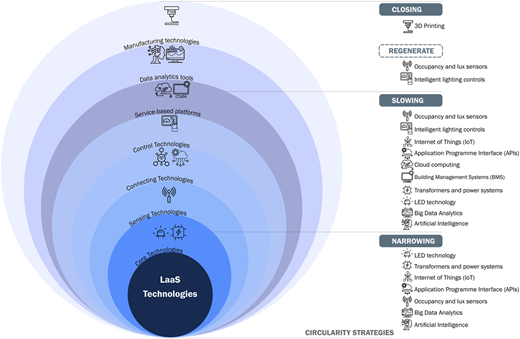
Visual representation of LaaS technologies corresponding to the circularity strategies. Source: Authors’ own work
Visual representation of LaaS technologies corresponding to the circularity strategies. Source: Authors’ own work
4.1 Core lighting technologies
LED technology emerged as the most widely recognised technological enabler of LaaS, discussed by 14 of the interviewees. LED, which stands for light-emitting diode, is a device that emits light when an electric current passes through it. Since its commercial adoption, LED technology has largely replaced conventional lighting systems within modern buildings. This has led to significant improvements in the durability and energy efficiency of lighting components. Across the interviews, participants consistently highlighted that LEDs are essential in optimising energy consumed in buildings, narrowing the use of resources. Figure 3 depicts the core technology cluster along with the enabling technologies, including LED, power and transformer systems.
In terms of durability, interviewees highlighted that the transition from conventional lighting to LED has resulted in a significant extension of component lifespans. The lifespan of light bulbs increased from approximately 2000 h to between 50,000 and 100,000 h. This extended lifespan advances the CE strategy that aims to slow resource flows. In a LaaS business model, LEDs can optimise energy performance and durability of lighting components, as P23 states:
LED brought major shifts. First, it drastically reduced failures … [Second] the transition from conventional lighting to LED brings a huge energy efficiency increase
In conjunction with LEDs, power and transformer systems that minimise energy losses were discussed across two interviews. Particularly, Power over Ethernet (PoE) systems can yield energy savings by minimising energy losses through heat. PoE is a technology that uses a single cable to carry data and electricity to LEDs or other lighting components. PoE can eliminate intermediary devices such as transformers, which were considered inefficient, losing substantial amounts of energy in the form of heat. Together with sensors and control systems, PoE can achieve improved energy performance, linked to narrowing and slowing CE strategies.
4.2 Sensing technologies
Sensing technologies, including occupancy and lux sensors, were discussed by participants as an important enabler of LaaS (see Figure 3). Eleven interviewees highlighted the role of sensing technologies in improving the operational performance of LaaS, making this technology cluster critical to the success of LaaS.
Sensing technologies were mainly linked with enhancing the energy performance of lighting systems and utilisation of spaces. Participants noted that occupancy sensors enabled through heat maps provide information on how spaces are being used throughout the day. By tracking the usage of rooms (e.g. turning off lighting, heating and cooling systems when rooms are unoccupied), sensors reduce energy waste by up to 70% and optimise the lighting performance within office buildings. As P02 summarises the role of this technology, stating:
In many offices, lighting and temperature continue running in empty rooms, which leads to wasted energy. By using this data from sensors, we can drastically reduce these inefficiencies.
These insights can also enable the so-called circadian lighting, which is a tuneable technology that adjusts colour temperature to mimic natural conditions. This significantly improves user's comfort and enhances the quality of office spaces. Sensing technologies operate together with IoT, lighting controls and data analytics tools. For instance, occupancy heat maps require sensor information to be sent to the central computing system through connectivity technologies like IoT. These insights require real-time data analytics to make decisions, adjusting the lighting levels through intelligent lighting controls.
In terms of circularity, interviewees emphasised the significant energy savings possible through sensing technologies. Approximately half of the total interviewees reported that integrating sensors with control systems can lead to significant energy savings, with P06 citing reductions of up to 70%. These reductions contribute to CE strategies by narrowing resource flows through reduced energy consumption and slowing raw material use by increasing the service life of lighting components. While sensing technologies significantly enhance energy efficiency and user comfort, their contribution to the regenerative strategy is limited. This technological cluster does not directly support ecological restoration, bio-based material use or integration with natural systems. However, an indirect link can be observed through improved indoor environmental quality, particularly through circadian lighting, which promotes occupant well-being. Despite this, sensing technologies primarily support narrowing and slowing strategies, with only marginal contributions to regenerative outcomes. The findings also highlight that the positive outcome of sensing technologies is enhanced when deployed as part of an integrated system, with other technologies including lighting controls, big data analytics and IoT systems discussed below.
4.3 Control technologies
Control technologies were identified as a key enabler for LaaS, with 12 interviewees explicitly stating their role in delivering circular lighting. Participants described lighting controls as the operational layer that translates sensor information to system responses, enabling automated and dynamic lighting systems within office buildings.
From an operational perspective, intelligent lighting controls enable real-time system optimisation by adjusting lighting output based on occupancy, daylight availability and external conditions. P13 describes this advantage of dynamic lighting enabled by lighting controls, stating:
For example, after 6 p.m., if someone walks into the office, the lights might stay on for an hour, whereas if they walk in at 9 a.m., they’ll stay on until 5 p.m. because it knows people are there during business hours.
This capability ensures that lighting levels remain aligned with user requirements while minimising energy usage during unoccupied hours. These features are essential in the delivery of LaaS, which aims to offer a significant reduction in operational cost for the building owner compared to conventional lighting. This is achieved using enabling technologies such as lighting controls integrated with LED technology, sensors and connecting systems. Interviewees also discussed the challenges relating to lighting controls, stating interoperability as a main issue. Control technologies require electricians to adjust the lighting systems, bringing additional cost to the tenant or building owner. In office environments where disruptions can negatively impact productivity, this also affects the reliability and attractiveness of LaaS models.
In terms of circular outcomes, participants emphasised that intelligent lighting controls contribute directly to maximising energy efficiency and service life of lighting components, directly supporting the slowing CE strategy. Moreover, control technologies enable responsiveness of the lighting system based on occupancy and daylight, indirectly advancing the regenerate strategy. Figure 3 shows the circularity strategies advanced by control technologies. When integrated with other technologies. Lighting controls ensure that the required lux levels are met, factoring in real-time conditions, reducing too much light, which can cause discomfort and lead to energy wastage. By dynamically adjusting to external conditions, lighting controls can extend the service life of lighting systems within office buildings, which are often left unsupervised. By extending the service life of products, control technologies primarily slow resource consumption over extended periods of time.
4.4 Connecting technologies
The interviews also revealed connecting technologies, including application programming interfaces (APIs) and IoT platforms, as shown in Figure 3. These technologies are important when integrating LaaS by enabling system integration. By linking different data points with decision-making tools, these two technologies enable real-time data exchange and support a connected network of devices within office buildings.
IoT refers to the network of physical devices that are connected over the Internet. Across two interviews, IoT solutions were discussed in conjunction with sensors to monitor lighting systems remotely. This technological enabler was primarily discussed in relation to improving the energy performance by enabling remote monitoring of lighting systems. This ability was identified as an opportunity to reduce operational costs, with P09 stating:
By implementing IoT solutions, organizations reduce on-site personnel while utilizing dashboards and automated reporting. This makes operations more mobile and efficient.
APIs are a set of rules and protocols that enable different software systems to communicate with one another. Integrated APIs were identified as another connectivity solution, linking the lighting infrastructure to the wider system. This has also been linked as a potential value-add for retail spaces, which can harvest the information provided and shared to vendors for improved decision-making. Information on the number of people accessing a space, as well as the behaviour of space users, can be extracted through APIs. This information can then be used to make intelligent, data-driven decisions, including better-targeted services and offerings.
In terms of circular outcomes, connecting technologies contributes to improved resource efficiency by enabling system integration and supporting decision-making. Continuous connectivity allows the lighting system to dynamically respond to usage patterns and reduce unnecessary operation and energy waste. By reducing the need for frequent physical intervention, IoT and APIs contribute to slowing resource consumption through optimising the utilisation of assets and extending their useful life. The findings highlight the role of connecting technologies in advancing LaaS towards an integrated circular lighting system, particularly in conjunction with other enabling technologies.
4.5 Service platforms
Service platforms refer to technological tools that integrate hardware (LEDs and lighting systems), connectivity technologies and other tools into a service ecosystem. In this study, two technological enablers were identified, namely mainly building management systems (BMS) and Cloud-based platforms, shown in Figure 3. These technologies offer remote maintenance and enhanced decision-making. Around six interviewees emphasised the role of BMS as an enabler of LaaS, by improving coordination and decision-making. Temperature and air quality data can also be integrated into the BMS in order to control a room's temperature. P18 emphasised the benefits of integrating BMS to different data sources, stating:
Light fittings with control features usually come pre-fitted with sensors. [They] provide building metrics to the broader building management system which could be valuable.
From a performance management perspective, BMS was perceived as a solution for the integration of a building's lighting points. BMS serves as the central platform capable of aggregating and analysing data from sensors and intelligent lighting controls. Importantly, participants noted that BMS integration extends the value of LaaS beyond lighting and positively influences other building systems. Complementing BMS, cloud-based platforms were identified as a service platform. Interviewees outlined three primary application areas of cloud technology. First, cloud platforms enable remote maintenance, significantly reducing the need for on-site personnel and reducing operational costs associated with LaaS. By leveraging real-time data from sensors and IoT, cloud-based platforms allow potential failures to be detected. Second, cloud platforms support continuous system optimisation through remote firmware updates. This ensures the lighting system is up-to-date and deviations from the normal can be quickly identified and addressed. Lastly, interviewees emphasised the role of cloud technology in enabling real-time tracking and remote monitoring. This allows LaaS providers to continuously track the performance of their assets and intervene when required.
In terms of circular outcomes, service platform technologies enable extended product use by reducing physical intervention and improving the utilisation of lighting products. Centralised decision-making through BMS and cloud allows lighting systems to remain operational over longer periods, reducing premature replacement and material waste. Hence, this technological cluster aligns with the slowing strategy. Moreover, service-based platforms were consistently identified as a bridging technology that strengthens the relationship between the manufacturer and the building owner, supporting the lifecycle management of lighting products over the long term. This technological cluster works in parallel with robust analytical tools that together make informed decisions. These analytical tools identified from this study are described in the following section.
4.6 Data analytics tools
Interviewees identified data and information management as a key enabler for LaaS, being discussed across eight interviews. These tools include BDA and AI, as shown in Figure 3. Among lighting manufacturers, participants emphasised the ability to collect and analyse large volumes of data as an important capability for achieving positive performance outcomes. Data harvested from sensors through connectivity systems can be continuously utilised to optimise energy use, occupancy patterns and ambient conditions in office buildings.
BDA supports data-driven performance optimisation, enabling LaaS providers to move beyond setting static lighting configurations. Using BDA, data collected from the immediate environment is analysed to forecast future occupancy, and make informed decisions based on usage data. This can lead to positive environmental outcomes such as reducing energy consumption and increasing the service life of lighting components. However, data analytics enabled through BDA technologies, also offer opportunities to optimise office spaces. P10 noted that analytics extend beyond energy savings by identifying underutilised areas and informing space allocation decisions.
Aside from BDA, AI was identified as an emerging data analytics technology with growing relevance for LaaS, despite its current lack of practical application. Only two interviewees discussed the role of AI, reflecting its early stage of adoption in the lighting sector. Participants highlighted AI's potential to automate manual processes, preventing data stagnation. P09 discusses the emerging potential of AI in the context of lighting, stating:
Artificial intelligence is here. We just haven’t figured out how to use it fully [in lighting], but it will change the way we design, implement, and execute.
From a circularity perspective, data analytic tools support CE by enabling improved asset utilisation and energy consumption through informed decision-making. This aligns with the narrowing and slowing CE strategies by reducing resource consumption and extending asset lifetime. In office buildings, BDA contributes to circularity by optimising energy use, while AI offers potential to enable predictive decision-making. Despite their promise, the full capabilities of AI in the context of LaaS remain largely untapped. Interviewees attributed this gap to the limited organisational and technological integration of this technology across lighting companies. However, as advancements in AI continue to evolve, they can potentially transform the delivery of LaaS, supporting a data-driven and adaptive circular lighting for building owners. These technologies provide the information requirements that can support downstream applications for improved manufacturing techniques, including redesign and refurbishment based on usage data. The manufacturing capabilities that advance LaaS models are discussed in the following section.
4.7 Manufacturing technologies
Additive manufacturing, commonly referred to as 3D printing, was also discussed as a potential enabler of LaaS in a limited manner. Although at an early stage of application within the lighting sector, participants associated this technology with opportunities to enhance the circular performance of lighting systems, particularly in terms of end-of-life management. 3D printing enables on-demand manufacturing of lighting components. Interviewee P05 argues that this technology has the potential to transform the manufacturing process of luminaires, enabling replacement lights, adapters or other components to be manufactured on-site. This can significantly reduce the dependence on global supply chains, which is a major challenge for local lighting suppliers. In addition, emissions generated from transportation and logistics will be minimised. Rather than replacing entire lighting systems, this technology can allow targeted substitutions of components that are faulty. This is advantageous, particularly in LaaS, since service providers retain responsibility for maintaining adequate lighting performance over long contract periods. At scale, this can also significantly reduce the amount of e-waste generated as much of the lighting system is retained.
In relation to the circularity strategies, 3D printing contributes to closing resource loops by supporting the repair and refurbishment of lighting products (see Figure 3). However, practical implementation remains limited, and further industry maturation is required for 3D printing to be widely adopted as a core manufacturing capability across LaaS providers. Table 3 provides a summary of the technological clusters and enabled capability within a LaaS model.
Breakdown of technological tools and enabled capability for LaaS model
| Technology cluster | Technological tools | Enabled LaaS capability | Circularity strategy |
|---|---|---|---|
| Core Lighting Technology (n = 16) | LED systems (n = 14) transformers and power systems (n = 2) | Energy efficiency and durability | Narrowing and slowing resource loops |
| Sensing technologies (n = 11) | Occupancy and lux sensors (n = 11) | Enhance lighting performance and improve space utilisation | Narrowing and slowing resource use Regenerate resource flow (ind.) |
| Control technologies (n = 12) | Intelligent lighting controls (n = 12) | Real-time performance optimisation | Slowing resource use Regenerate resource flow (ind.) |
| Connecting technologies (n = 4) |
| Enhance system integration | Slowing resource flows |
| Service platforms (n = 10) |
| Remote maintenance and lifecycle management | Slowing resource flows |
| Data analytic tools (n = 8) |
| Data-driven decision-making | Narrowing and slowing resource loops |
| Manufacturing Technologies (n = 1) | 3D printing (n = 1) | Repair and refurbishment | Closing resource loops |
5. Discussion of findings
Drawing on qualitative insights from industry professionals, the findings reveal how different technological clusters contribute to LaaS, both individually and in conjunction with other technologies. Consistent with prior studies (Cetin et al., 2021; Lekan et al., 2021; Setaki and van Timmeren, 2022), the role of technology was primarily discussed by interviewees in relation to energy performance, cost reduction and improving reliability of LaaS models. However, this study extends current knowledge by identifying additional opportunities enabled by these technologies, including better utilisation of spaces and improved workflow by enabling predictive maintenance. These findings highlight the potential of technologies in supporting the adoption of LaaS business model.
Seven technological clusters were identified in this study, consisting of core lighting technologies, sensing technologies, control technologies, connecting technologies, service platforms, data analytics tools and manufacturing technology (See Table 3). Core lighting technologies provide a baseline in terms of energy efficiency and durability of lighting systems. Sensing, control and connectivity technologies further enable responsive and dynamic lighting system. When supported by service platforms like cloud-based solutions, lighting components can be better monitored, upgraded and controlled remotely across the product lifespan. Data analytics further enhances these capabilities by enabling data-driven decision-making, while unlocking opportunities for additional value creation. This added value can provide additional revenue for the LaaS provider. Manufacturing technologies enabled through 3D printing can offer replacement of singular components on-demand. This reduces dependence on global suppliers and supports end-of-life management of lighting systems. These findings closely align with the established body of research on smart lighting system within the built environment (Füchtenhans et al., 2021; Hammes et al., 2024; Soori and Vishwas, 2013; Wagiman et al., 2020). Particularly, LED technology continues to play a transformative role by significantly improving the energy efficiency and durability of lighting components. Existing literature points to the role of technology in improving life cycle management of products, promote material recovery and recycling as well as achieving the sustainable development goals (Ciano et al., 2025; Dantas et al., 2021; Findik et al., 2023; Lei et al., 2023; Patyal et al., 2022). Consistent with these findings, 3D printing and BMS were identified as technologies that promote material recovery and lifecycle management. Sensing and control technologies supported by cloud technology further enable predictive and remote maintenance. For the LaaS provider, this minimises the risk of losses as well as the cost of maintenance personnel required. For the end-user, this translates to reduced system downtime and improved reliability of the system.
As shown in Figure 3, the findings reveal an uneven distribution of the role of technology across different CE strategies. Most technological clusters predominantly advance the slowing strategy, with six out of the seven clusters directly supporting the slowing of resource cycles. The narrowing strategy is mainly supported by core lighting technologies, sensing and data analytic tools. 3D printing emerged as the only technological enabler directly advancing the closing strategy. Only two technological clusters indirectly advance the regenerate strategy through improvements in indoor environmental quality and user comfort. This imbalance reveals a significant gap in the advancement of higher-level CE outcomes, reflecting the industry's current focus on cost reduction and energy efficiency. While these are important considerations, greater emphasis should be placed on material recovery and the development of bio-based lighting designs, consistent with the findings from Bontinck et al. (2021). The findings underscore the need for closing and regenerating strategies to receive wider recognition within the lighting sector. Moreover, there needs to be a clear and direct pathway to achieving the CE strategies, prioritising holistic efficiency gains rather than solely energy and cost-driven approaches. It is also important to note that some technologies, particularly BDA and AI, are yet to realise their full potential within the lighting sector. This is mainly linked to their recent emergence within the broader construction industry (Abioye et al., 2021; Cetin et al., 2021).
6. Conclusion and limitations
This study sets out to (1) identify the technological enablers for LaaS, (2) classify these enablers into functional clusters and (3) map their relationship to the circularity strategies. Drawing on semi-structured interviews with industry professionals, the study addresses each of these objectives.
First, the study identifies a comprehensive list of technological enablers comprised of eleven individual tools essential to LaaS. These technological tools range from LED and power systems to advanced analytics and manufacturing technologies such as AI and 3D printing (See Table 3). It is important to note that these technologies do not operate independently and perform more effectively when integrated with each other.
Subsequently, the technological enablers were systematically clustered into interdependent categories based on their functionality. Following an iterative inductive approach, seven technological clusters were identified. These include core lighting technologies, sensing technologies, control technologies, connecting technologies, data analytic tools, service-based platforms and manufacturing technology. Collectively, these clusters enable the operationalisation of the LaaS business model, addressing the second objective set out in this study. Core lighting technologies, including LED and power and transformer systems offer significant energy savings, compared to traditional lighting components. Sensing and control technologies further optimise the efficiency of lighting systems through real-time monitoring of lighting usage. Usage patterns in the form of heat maps provide information on space utilisation, potentially reducing energy wastage by up to 70%. By combining these technologies, the findings show that LaaS can be delivered in an efficient and reliable manner to the end-user. Moreover, integration of technologies such as LED can significantly enhance the quality of spaces and well-being of occupants, thereby advancing the social sustainability dimension. This feature is particularly important in driving the uptake of LaaS models.
Third, the study maps the contribution of these technological clusters to CE strategies, demonstrating how they predominantly support narrowing and slowing resource loops through energy efficiency and durability. This reveals significant gaps in the technological tools required to support regenerative and closing CE strategies. Across the 23 interviews, only one technological cluster directly advances the closing strategy, and two technological clusters (sensing and control technologies) indirectly advance the regenerate strategy. In contrast to the regenerative technologies identified by Cetin et al. (2021), interviewees primarily perceived AI, BDA and IoT as having greater potential to support narrowing and slowing strategies, due to their capacity to enable energy-efficiency, extend material lifespans and facilitate predictive maintenance. Future research can employ quantitative methods to measure the relative advantage of these technologies based on environmental and cost metrics.
From a practical lens, the findings highlight that successful LaaS implementation depends not only on the availability of these technologies but also on their integration across organisational and industry boundaries. This integration extends beyond the hardware (physical) components and complex integration further requires collaboration with other stakeholders to achieve improved environmental and cost outcomes. In terms of theory, this study contributes to CE and PSS literature by providing empirical evidence on how technologies offer functional benefits and then achieve the circularity strategies. Hence, this study addresses a gap between conceptual business model research and practical adoption by mapping key technological clusters drawn from qualitative interviews with industry professionals, stated as the first two objectives in this study. In an asset-driven sector like the construction industry, this research offers insights on how technology can support the adoption and scalability of service-based models like LaaS.
In the real-world application of LaaS, evidence-based understanding of how these technological clusters link to the CE strategies is essential. Future research can quantify the benefits delivered by LaaS technologies in terms of cost, energy performance and reductions in material waste. Moreover, this exploratory study was context-specific, primarily limited to the lighting sector within Australia. While this provides practical insights, the findings reflect the perceptions and opportunities within the local industry. To make these findings universal, future research can also comparatively assess these technological enablers within other geographical contexts. Future research can also build on this work by examining the technology acceptance, adoption maturity and organisational readiness for LaaS across global lighting companies.
This paper is an extended version of our previous work, which was presented at the International Conference on Digital Frontiers in Buildings and Infrastructure (DFBI 2025), held in Delft, Netherlands. The authors acknowledge the support and feedback from the conference chairs, Prof. Farzad Rahimian and Assoc. Prof. Mohammad Fotouhi, along with their team, throughout the peer review process of DFBI 2025 and during the conference, which helped improve our submissions. Ethics approval was acquired through the Office of Research Ethics and Integrity at the University of Melbourne (Ethics ID: 28952). The authors also acknowledge the support provided by the D. E. Napier Scholarship, which contributed to the publication of this journal article.

