Focusing on the specific context of two European old industrial regions – South Yorkshire (UK) and North Region of Portugal – this paper aims to identify and conceptualise a set of relational capabilities that business leaders perceive to play a key role in industrial rejuvenation.
A qualitative research design operationalised via case studies was followed for the empirical analysis. Data collection was developed through in-depth interviews with managing directors in small and medium-sized enterprises (SMEs) belonging to the metal and engineering industry and the textile and footwear sectors in the two old industrial regions. Data analysis followed the techniques of data categorisation, within case-analysis and cross-case analysis.
The study identifies relational capabilities that firms use to identify, access and leverage new knowledge: frequent meetings with customers; frequent meetings with suppliers; dialogue with government to influence policy that encourages research and technology transfer; partnership actions for the commercialisation of products and services; active membership with sector associations; immersion in science and technological parks; intentionally establishing links with entrepreneurship-supporting entities; human resources development by technical training institutions; and systematic links with the University. The relational capabilities identified require structured communication processes and alliance management practices to enable and support absorptive capacity and learning in inter-organisational networks.
The relational capabilities identified can help position regions in specific markets and value chains, contribute to improving regions’ internal and external connections and assist in combining regions’ strengths to create industrial capability in high-growth-potential areas.
This paper highlights the role of relational capabilities as a way to secure access to knowledge and competencies needed for firms’ innovation and avoidance of competency traps. This is particularly relevant in the context of European smart specialisation policy, where key regional stakeholders collectively engage in the identification of areas of competitive strength, enhanced coordination and strategic alignment of resources. The study is not without limitations, as findings are based on case studies of SMEs operating in the manufacturing industry and the analysis of relational capabilities is focused on knowledge novelty.
1. Introduction
The adequate mapping of variations in regions’ industrial rejuvenation trajectories is an essential component of understanding the regional outcomes of innovation. This is all the more relevant in the case of European old industrial regions (OIR), which are frequently plagued by poor innovation capabilities and the frequent overspecialisation of the knowledge infrastructure (Trippl and Otto, 2009).
This paper aims at identifying and examining which relational capabilities are perceived by firms’ managing directors to promote the rejuvenation of firms embedded in selected UK and Portugal OIR – South Yorkshire (Region UKE3) and the North Region of Portugal (Region PT11).
Rejuvenation may assume different configurations and trajectories, i.e. the revitalisation of existent businesses; the development of new business activities in areas related to the existing industries; or new industries based in new technologies (Todtling and Trippl, 2011). The study of these possible trajectories requires the intersection of four related theoretical perspectives:
studies of the rise, fall and revitalisation of old industrial regions (Sadler, 2004; Hudson, 2005);
studies that map regions’ attempts to rejuvenate their industrial bases, whether this occurs through incremental change, diversification or radical change (Trippl and Todtling, 2008; Trippl and Otto, 2009; Todtling and Trippl, 2011);
the literature on regional innovation systems arguing that firms’ innovation activity and growth is the product of embeddedness in a network of external actors and institutions (Asheim and Gertler, 2005; Todtling et al., 2009); and
studies relating absorptive capacity and regional systems of innovation (Graf, 2011; Spithoven et al., 2011).
Focusing on the specific contexts of Region UKE3 and Region PT11, the research reported in this paper aligns more specifically with (3) and (4) and proposes to look at local knowledge and to the ways in which non-local knowledge is transferred to the local systems. Implicit to this notion of local system is the understanding that the development of innovation is contingent on the range of activities engendered by actors who produce and transfer knowledge, as well as on the development of networks that operate as territorially based collective learning systems (Asheim et al., 2011).
Similarly, the conception of innovation presented in this paper draws from Van de Vrande et al. (2009) and refers to the ways in which knowledge is dynamically transferred to local systems – a process that is not linear and depends on actors’ combination of the knowledge they have at their disposal or on knowledge that they obtain from other resources. Being inherently a social process implies that the innovation process is also highly dependent on a variety of regional actors that have multiple formal and informal relationships (Camagni, 1991). It is also deeply related to regional actors’ ability to generate, access and transform knowledge (Camagni and Capello, 2002; Esparcia, 2014) and to the existence of structures that govern the processes of knowledge generation and dissemination (Guillaume and Doloreux, 2011).
From this follows that particular attention should be devoted to investigating the role played by relational capabilities, as regions’ permeability to innovation (Cappellin, 2000, 2007) depends on networking and on social interaction that enables “the formal and tacit knowledge needed for the good performance of local systems” (Esparcia, 2014).
Accordingly, the main aim of this paper is to present an empirical case study to examine the relational capabilities that small and medium-sized enterprises (SMEs) embedded in Region UKE3 and Region PT11 develop for acquiring new knowledge. The key elements for the theoretical framework are presented in Section 2, with special emphasis given to absorptive capacity, network relations strength and relational capabilities.
Section 3 briefly presents the research setting and design. Subsequently, Section 4 identifies the relational capabilities used by the SMEs to leverage new knowledge. Finally, Section 5 provides a discussion of implications for theory and practice and a summary of the main conclusions.
2. Theoretical framework
Absorptive capacity refers to firms’ ability to recognise the value of external knowledge, assimilate it, transform it and produce an organisational capability (Cohen and Levinthal, 1990; Zahra and George, 2002). Unsurprisingly, absorptive capacity ranks highly amongst the factors that the innovation and strategic management literature identify as impacting firm performance (Lane et al., 2006; Volderba et al., 2010), as it enables the extraction of external knowledge as input for the development and commercialisation of new products and services. Absorptive capacity is particularly important for SMEs, as they operate with limited resources (Ortega-Argiles et al., 2009), reduced R&D capacity (Spithoven et al., 2011), low levels of managerial attention (Jones et al., 2010) and a small number of staff (Raymond et al., 2001). To overcome these liabilities, SMEs rely on the establishment and cultivation of networks (Groen et al., 2008; Street and Cameron, 2007). However, to capture value from networks, a combination of both strong ties and weak ties network relationships is required (Capaldo, 2007; Hansen, 1999; Reagans and McEvily, 2003; Obstfeld, 2005; Tiwana, 2008). Weak ties are commonly characterised by sparse interactions, devoid of reciprocity and low on trust and emotional commitment between the parties. These are threats to capturing value (Granovetter, 1973), notwithstanding that weak ties contribute to accessing knowledge that is not part of the firm’s knowledge base.
Strong ties, on the other hand, are trust-based, emotionally invested (Gulati, 1995) consolidated collaborative routines that facilitate the exchange of more than simple and codified knowledge – they are ideally suited to exchange complex and more tacit knowledge (Hansen, 1999), which in turn is latter is required for the acquisition of competitive capabilities (McEvily and Marcus, 2005) and for the development of innovations (Zollo et al., 2002).
Given that firms’ absorptive capacity entails on a first instance the ability to acquire and recognise knowledge (Zahra and George, 2002; Todorova and Durisin, 2007), i.e. a sense-making ability that allows them to analyse, process, interpret and understand context-specific knowledge from external sources, it becomes critically important to understand firms’ specific relational capabilities to “collaborate with other, diverse organisations” within an innovation system, which in turn enables them to derive value from inter-organisational learning practices (Ghosh, 2004; van Winkelen, 2010).
Ngugi et al. (2010) put forward a useful contribution to synthesising the different dimensions that are confluent in relational capabilities: the technological relational ability that materialises in the joint identification of technology requirements and in cross-functional product development teams; the human relational capability that reinforces equality in the design and management of cooperative relationships, and that is a precursor of interactive learning; the managerial systems-based relational capability that comes into play with the establishment of structures and strategies that foster the creation and absorption of knowledge; and the cultural relational capability that relies on the ability to build a shared culture as an enabler of co-creation opportunities.
In the innovation literature, the biotechnology sector traditionally stands as a good example of how firms successfully collaborate to acquire knowledge resources through maximising the opportunities for knowledge spill overs (Swan et al., 2007; Owen-Smith and Powell, 2004). This requires continuous open channels and fluent relationships (Salman and Saives, 2005) that are generally more trust-based and consequently more amenable to providing access to expertise without the costs and strains of managing formal alliance partnerships (Liebeskind et al., 1996). In the context of SMEs, Lorenzoni and Lipparini (1999) demonstrated how relational capabilities entail the establishment of interactive networks with a view to establish and enhance a firm’s resource base. Their study of the establishment of long-lasting relationships between leading firms in the Italian packaging machinery industry and the key suppliers is illuminating concerning the positive impact of relational capabilities on new knowledge acquisition, and further studies that followed reaffirmed the positive effect of relational capabilities on innovation performance (Zollo et al., 2002; Weissenberger-Eibl and Schwenk, 2009; Fitjar et al., 2013).
Similar conceptualisations are advanced in a variety of studies that attribute industrial districts’ competitiveness to an enhanced “capacity to express a greater level of cognitive openness” (Grandinetti, 2011), articulated through formal organisational relationships and indirect inter-firm relationships that rely on knowledge socialisation and localised learning practices (Coro and Grandinetti, 2001; Maskell, 2001; Malmberg and Maskell, 2006), and on external knowledge inflows from external actors into local science and technology parks (Awang et al., 2013).
3. Research setting and design
The research reported in this paper takes a context-centric perspective (Freeman, 1987; Saxenian, 1996). In accordance with this perspective, firms in Region UKE3 and Region PT11 were chosen as the empirical setting for the study, as the two areas are archetypical old industrial regions (Birch et al., 2010), with a historical focus, respectively, on the steel industry (Sadler, 2004) and on the textile and footwear industry (Puig et al., 2012). The two regions may initially come across as contrasting examples. However, they are both former industrial centres that now face the challenges of adaptation and restructuring of their economy.
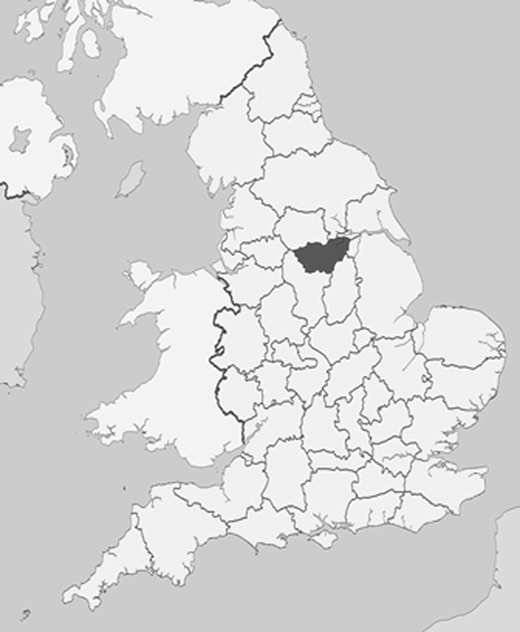
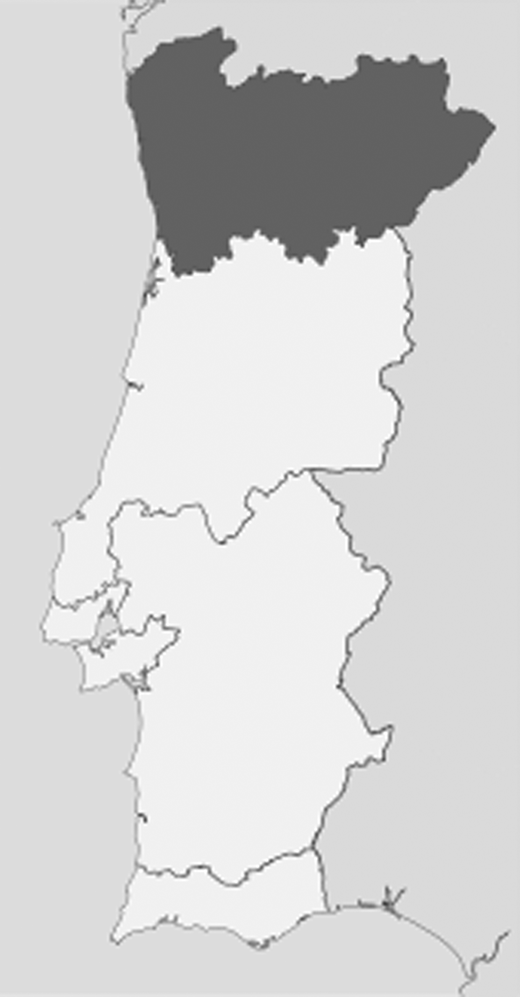
Region UKE3’s traditional economic base in coal, steel and engineering declined significantly since the 1970s, with a great loss of industrial jobs. However, the region (see Figure 1 for geographical location) retained a strong engineering industry presence and manufacturing remains a major source of employment. The regional economy of Region PT11 (see Figure 2 for geographical location) concentrates traditional sector industries such as textile, clothing and footwear, as well as high-tech sectors such as automotive components, pharmaceuticals, machinery, precision and ICT equipment. Both regions concentrate a variety of firms that have been successful in their adaptation by the innovative restructuring of their traditional branches (i.e. Region PT11 textile and footwear industries transitioned from mass production to high-end manufacturing) or by diversification into new industries (i.e. in Region UKE3, a cluster of steel cutlery industries gave way to a cluster of advanced manufacturing and precision engineering). Furthermore, both regions are acknowledged as examples of economic resilience (Camagni, 1995; Williams and Vorley, 2014).
The focus on old industrial regions’ rejuvenation and development paths requires an “unpacking” of the contingencies and specificities of the various contexts and environments where knowledge renewal, creation and innovation take place. Because of the exploratory nature of the topic, a qualitative research design operationalised via case studies was followed for the empirical analysis. Therefore, the empirical findings presented in the subsequent sections are based on in-depth interviews with the managing directors in SMEs belonging to the metal and engineering industry and the textile and footwear sectors: eight interviews in Region UKE3 and seven interviews in Region PT11. The definition of SME adopted in this study is the one proposed by the European Commission (2003), whereby SMEs are firms employing between 50 and 250 employees and an annual turnover not exceeding €50m (European Commission, 2003). The in-depth interviews with managing directors were carried out from March to December 2015 and lasted 90 min on average.
The interview guides were semi-structured and were developed around the topics of external sources for innovation and new product development (Cohen and Levinthal, 1990; Yli-Renko et al., 2001; Sammarra and Biggiero, 2008) and dynamic capabilities, i.e. the ensemble of processes and routines intended to change firms’ knowledge base (Eisenhardt and Martin, 2000; Zahra et al., 2006). The selection of informants followed a combination of purposive sampling (sampling of senior managerial and technical staff) and theoretical sampling (Bernard and Ryan, 2010), following the recommendations provided by firm representatives. Appendix 1 provides a summary and description of participants in the study. Following the statistical classification of economic activities in the European Community – commonly referred to as NACE codes – participants were managing directors of manufacturing firms in the two OIRs: fabricated metal products, machinery and equipment and other manufacturing firms in Region UKE3 and textiles, wearing apparel, and footwear manufacturing firms in Region PT11. All firms are well established, with the youngest being in operation for 10 years and the oldest having been established more than 50 years ago.
Data analysis followed the techniques of data categorisation (iterations of coding to identify patterns and themes), within case-analysis and cross-case analysis (Miles and Huberman, 1994). More specifically, drawing on Eisenhardt and Martin’s (2000) view of dynamic capabilities as being idiosyncratic yet amenable to the identification of commonalities across firms’ routines, the study operated by initially performing within-case analysis to identify firm-specific routines that are related to the processes of identifying and leveraging new knowledge. Subsequently, cross-case analysis was used to identify commonality patterns in the routines previously identified, with a view to inductively extract a set of relational capabilities.
4. Relational capabilities used to leverage new knowledge
This section presents and explains the relational capabilities applied by firms to access their partners’ renewed knowledge bases. This is the result of a cross-case analysis that contributed to the identification of a framework composed of nine relational capabilities. Table I provides a synthesis of the relational capabilities identified, accompanied by illustrative examples.
Frequent meetings with customers were identified as a precursor of customer-driven innovation. Firms in the two regions pride themselves on the ability to capture experience and insight of their surrounding marketplace and, in turn, transform them into more sophisticated products. This process requires networking to identify the places where innovation is developing and the communities of users who are potentially developing commercially promising innovations. The benefits accrued from engaging with such type of customer – one who is ahead of the majority of users because they have developed and use-tested a potentially good solution – include enhanced productivity and efficiency across product life cycle, as many stages of the innovation process will have been covered, making use of customers’ flexible and low-capital production technologies often applied to the development of prototypes.
Frequent meetings with suppliers were recurrently mentioned by firms in the two regions as productive pathways to supplier-driven innovation, which develops mainly through collaborative support and ongoing trusted relationships. The main focus remains the reduction of costs, but there were instances where the aim was the establishment of a value chain through collaborative partnering. More than relying simply on the delivery of predefined components, firms in the two regions expect suppliers to share risk and play an active part in the attempt to cope with the technological and competitive challenges of the market. Challenges emerge at different levels, which range from the creation of new products’ technical concepts, where the degree of complexity is controlled, to the manufacturability of new products, thanks to faster development times and increased reliability.
Participants valued both informal initiatives and formal, structured agencies that foster dialogue between government, civil society and industry, specifically on topics related to manufacturing and innovation. The aim is to bring together a mix of different stakeholders (business associations, prominent business people and local administration), encouraging exchange of ideas, collaboration and partnerships. The common denominator of these competitiveness partnerships is their focus on enhancing the quality of public-private sector dialogue to improve the investment climate. Firms in the two regions perceive globally that communication with the government is vital for private sector development, and indeed that willingness to engage in dialogue favours the design of workable reform, greater awareness of the micro-economic foundations for growth and an enhanced sense of local and regional ownership of policy. Dialogue as part of a wider engagement strategy aimed at encouraging ongoing discussion with firms and regional economic development experts was also considered essential to strengthen the science-policy-governance interface. In particular, dialogue with the government was perceived to be pivotal in supporting the maintenance and growth of firms in the two regions, mainly through promoting innovation and technology transfer, productivity and expansion, commercialisation and exports and the creation of startups.
Local accountability concerning local economic development and the synergy with which stakeholders interact were perceived to be critical factors in successfully rolling out growth-generating projects that are tied in with the identity of the two regions. This is typified by partnership actions for the commercialisation of products and services. Examples include initiatives that promote brand awareness and highlight the quality of each regions’ specialities: fashion industry gains momentum in Region PT11 with the organisation of international missions and trade and investment shows; and Region UKE3 firms have the opportunity to apply for mark recognition as a symbol of the region’s commitment to quality and excellence in engineering and manufacturing.
Active membership with associations such as associations of firms, chambers of commerce and industry, networking organisations, promotion agencies and business clubs was common and globally acknowledged by participants as important contributors to the regional innovation system in the sense that they provide, amongst others, advice and consultancy for firms, access to policy information on the key issues affecting business, lobbying and representation, opportunities for internationalisation, knowledge and technology transfer and networking and matching opportunities.
Participants’ generalised recognition that science and technology parks facilitate access to an innovation ecosystem for the development of pilot innovation initiatives appears to be grounded in a shared commitment to collaborative entrepreneurial discovery processes. Participants highlighted, in particular, the business support role and technology transfer initiatives that encourage the development and growth of knowledge-based businesses. The value of interactive models of innovation was recurrently valued, specifically when integrated in the urban environment, establishing a network of trust between public, private and scientific partners. Successful examples frequently referred to include the Portuguese Technological Centre for the Textile & Clothing (CITEVE) in Region PT11 (with a focus on technology transfer, laboratorial analysis, IPR information, R&D and vocational training) and the Advanced Manufacturing Research Centre in Region UKE3, which focuses on advanced machining and materials research for high-value manufacturing sectors.
In addition to technical talent, participants also acknowledged the importance of their regions’ access also to experienced executive talent with relevant industry backgrounds and extended personal networks that could help businesses – particularly startups – scale up and navigate the complexity of growing their business. To this end, establishing links with entrepreneurship-supporting entities was highlighted as a developmental priority, as it was perceived to help removing barriers to growth, expand collaboration between large and smaller companies, provide mentorship from more seasoned entrepreneurs to promising firms and generally promote symbiotic relationships that stimulate the growth of local businesses.
Technical colleges and the availability of engineering-oriented higher education institutions emerged in participants’ accounts as critical factors in technology-based development to fulfil local industries’ requirements for highly skilled and technically proficient staff. Frequently mentioned strengths of technical education include openness to customisation of programmes to local technical skill needs, teaching staff’s industry experience and contacts in industry, general awareness of the need to closely monitor workplace developments and the involvement of industrial technical committees in curriculum planning and development. These strengths were perceived to be a direct consequence of technical education providers’ greater flexibility, quick response to market and workplace demands caused by sector growth, technological innovation and economic readjustment.
Finally, across interviews, there was a consensual view that regional efforts to develop industry clusters must include universities as central assets, provided that there is a close alignment between the skills and expertise of universities with the industries in the region. In particular, in emphasising on the importance of intense links with universities and immersion in knowledge transfer and co-production practices, firms reveal a complex understanding of the civic role of universities in the sense that they expect active engagement with the community and a strong sense of place. They particularly expect universities to be sources of research and technology whilst complementarily addressing other needs of industrial clusters such as marketing, legal issues, and human resources management.
5. Discussion and conclusion
The knowledge base of traditional industries is typically highly dependent upon local and tacit forms of knowledge (Gertler, 2003). However, it is essential to ensure that SMEs embedded in OIR do not rely exclusively on local sources of knowledge to innovate, and that, instead, they take the effort to establish more distant networks with a view to access new knowledge that may be creatively combined with local assets. That seems to be the key message purported in Bathelt et al.’s (2004) call for firms to “build and maintain a variety of channels for low-cost exchange of knowledge with relevant hot-spots around the globe”.
The results of the exploration of the relational capabilities used by SMEs embedded in Region UKE3 and Region PT11 for acquiring new knowledge resulted in the identification of long-lasting relationships that these firms have established to acquire new knowledge: frequent meetings with customers; frequent meetings with suppliers; dialogue with government to influence policy that encourages research and technology transfer; partnership actions for the commercialisation of products and services; active membership with sector associations; immersion in science and technological parks; intentionally establishing links with entrepreneurship-supporting entities; human resources development by technical training institutions; and systematic links with the University. Despite resonating with previous research into SMEs’ relational capabilities where technological, cultural and human resources interaction between customers and suppliers is identified as critical for the co-creation of value (Ngugi et al., 2010), the findings presented here are not without limitations. This study is based on case studies of SMEs operating in the manufacturing industry, and the analysis of relational capabilities is focused on knowledge novelty. Future avenues of research might consider the dimension of knowledge complexity and its impact on innovation outcomes.
The activation of the relational capabilities identified is particularly relevant in the context of European smart specialisation policy (Foray, 2009; Foray and Goenaga, 2013), where key regional stakeholders are invited to collectively engage in the identification of areas of competitive strength, enhanced coordination and strategic alignment of resources (Foray, 2014). More specifically, from the perspective of SMEs, the relational capabilities identified can help position regions in specific markets and value chains, contribute to improving regions’ internal and external connections (through potentialising the cross-clustering of activities and the inflow of knowledge that is relevant to regions’ very own knowledge base) and assist in combining regions’ strengths to create industrial capability in high-growth-potential areas (McCann and Ortega-Argilés, 2016).
Despite differences in the sectors of activity, both regions host traditional industry clusters that experience a phase of revitalisation, which enabled the identification of cross-case commonalities. The results of the empirical analysis suggest that firms in both Regions UKE3 and PT11 are committed to the innovation-oriented adjustment of their respective mature clusters through the interplay of knowledge infrastructure (e.g. “immersion in science and technological parks”), innovation in inter-organisational cooperation (e.g. “partnership actions for the commercialisation of products and services”) and processes of policy learning (e.g. “dialogue with government to influence policy that encourages research and technology transfer”).
The relational capabilities identified in this study suggest that firms embedded in these two OIRs are committed to the proactive expansion of the scope of knowledge acquisition through an increasing level of multiplexity (Bojica and Estrada, 2014) that mitigates the potentially negative effects of overembeddedness (Masciarelli et al., 2010). However, the multiplexity of relational networks poses problems to the operational context of SMEs, where, typically, only the managing directors address the search-transfer problem and are in the position to control the alliance portfolio. It is, therefore, suggested that firms embedded in OIR and facing a similar multiplexity of networks embrace the concept and practice alliance portfolio management (Wassmer, 2010), which at the OIR level will require identifying structures or mechanisms that allow, amongst other activities, learning from previous alliance experiences, the institutionalisation of particular experiences and the provision of alliance training.
To this end, support structures – in particular, communication channels and systems – that enable the flow of communication and inter-organisational learning efforts are necessary. This requires careful design of the interaction mode to simultaneously promote the flow of knowledge assets, facilitate the depth and breadth of interaction and protect against undesired knowledge spills. A useful discussion of aspects pertaining to the operational design and governance of this interaction mode is offered by Hamel (1991), who describes it as a “process of collaborative exchange”, where issues of structure, governance and tasks matter as much as collaborators’ permeability to multidirectional transactions of “people, facilities, documents and other forms of knowledge”. However, to avoid ad hoc and unfocused exchanges, formal support structures are required to help collaborators focus their attention, make sense of the collaboration and make meaningful contributions (Vlaar et al., 2006).