This study aims to examine the global research landscape regarding sustainability in housing policies through a scientometric review. It situates the identified research themes and trends within the Urban Sustainability Transitions (UST) frameworks, connecting them to wider urban sustainability transition processes.
The study uses a qualitative, scientometric analysis with quantitative insights of 203 peer-reviewed articles from the Scopus database published between 2000 and February 2025, focusing on top-cited journals, country-specific outputs and author keyword co-occurrence. The preferred reporting items for systematic reviews and meta-analyses (PRISMA) screening workflow was used to perform VOSviewer-based author keyword co-occurrence, co-citation and temporal overlay analyses. These were then discussed through the UST frameworks for policy recommendations.
Eight thematic clusters emerged covering affordability, urbanization, climate risk and self-help housing, affordability within sustainable transitions, social sustainability, informal settlements, home ownership and social housing. The temporal overlay reveals that since 2015, the focus has shifted from technology/efficiency to equity and displacement risks, regime lock-ins in finance and planning and capability/implementation concerns. Global North knowledge remains heavily concentrated alongside sparse Global South-anchored practice debates.
This study provides a clear, cluster-linked policy portfolio with measurable policy metrics to connect housing, environmental and economic goals in housing policy development and monitoring.
1. Introduction
The term “housing policy” originates from the transition between the pre-industrial and industrialised periods and the subsequent vast urbanisation process (Czischke and Ayala, 2021). It enacted a trend of governmental regulations through formal and informal legal instruments to manage housing within the domains of legal jurisdiction. These governmental strategies and legal frameworks manage and influence the housing market, ensuring the provision of sufficient, affordable and accessible housing for the citizenry (Konyev and Dolgalova, 2024; Clapham, 2018). Rapid urbanisation, which has been a trend with industrialisation in the Global North, especially from the 19th century and extending to the Global South in the 20th century, has reinforced an emerging characteristic of intended housing policies (Caldeira, 2017; Robinson et al., 2016; Schindler et al., 2020). Sanitary laws were introduced to enhance environmental sustainability and mitigate and curb the spread of epidemics brought about by overcrowding and poor and inadequate sanitary facilities in urban areas.
This necessity was borne from the geometric trend of rural–urban migration. The resulting inadequacy of housing and associated social amenities to cater for the population-pressed urban centres laid the framework for the sustainability intent of ensuing housing policies of modern times. The sustainability concept has been further globally spotlighted in supranational agendas that became a trend after Second World War. Under the auspices of the United Nations, a global environmental call to action was championed in the framing of “sustainable development”. This is advocated as necessary to bridge the balance between environmental protection and economic growth to implement and attain developmental initiatives (Tikly, 2019). The establishment of the United Nations Environment Programme in 1972 was followed by the Brundtland Report of 1987. In that report published by the World Commission on Environment and Development, sustainable development was defined as “development that meets the needs of the present without compromising the ability of future generations to meet their own needs” (United Nations, 1987).
Following the announcement of the Sustainable Development Goals (SDGs) in 2015, specialist global urban policy agendas became a hot topic of discussion. Debates on urban policy throughout Habitat III, conducted in Quito in 2016, resulted in the New Urban Agenda (NUA). This result, Watson (2016) asserts, sets the standard for delivering answers to urban challenges. Then, several national governments aimed to domesticate the NUA to fit their National Urban Policies (Turok, 2015). Associatedly, the 11th SDG focuses on creating inclusive, secure, resilient and sustainable cities and human settlements (United Nations, 2018). It acknowledges that although urbanisation plays a significant role in economic expansion, it also contributes significantly to social and environmental problems. SDG 11 (on Sustainable Cities and Communities), alongside SDG 6 (on Clean Water and Sanitation), SDG 7 (on Affordable and Clean Energy) and SDG 13 (on Climate Action), are related sustainability concepts featured in urban and housing development policy documents.
These international agendas have given impetus to an increased awareness of sustainability and the environmental impacts of infrastructural development globally in the 21st century. Housing policies are features of national development strategies, often set to attain short and long-term developmental goals (Zhou et al., 2022; Cai and Wu, 2019). Therefore, this article examines the sustainability theme features in global housing policies. This is essential to measuring the level of inculcation of sustainability initiatives as deriving from global agendas, such as the SDGs and other international and localised agendas pertaining to sustainability. Aiming at an exploratory review of literature with a scientometric approach to carrying out the study, Section 2 of this article examines literature insights into sustainability in housing policy development and the Urban Sustainability Transitions (UST) Framework. In Section 3, the methodology adopted for the study is described. This study’s Scientometric findings are presented in Section 4. This is followed by Section 5, presenting the results of the study and a discussion of the findings. Section 6 details potential directions for future research and policy of sustainability features in housing policies, and this study’s conclusion is presented in Section 7.
2. Literature review
2.1 Featuring sustainability in housing policy
One of the key issues identified in the literature about the nuance of housing policy is the intent for social equity for vulnerable and low-income groups to ensure access to housing. There is, however, an apparent trade-off between affordability and environmental sustainability in the design and construction of low-cost housing (Gür and Yüksel, 2011; Moghayedi et al., 2024). While efforts have been made to incorporate sustainable practices, such as using energy-efficient building materials and renewable energy sources, these measures can often increase the overall construction cost, thereby reducing housing units’ affordability (Khan and Fang, 2020). In another vein, the focus on rapid, large-scale housing development in many developing countries has led to prioritising speed and cost over long-term environmental considerations, resulting in housing stock that may not meet established sustainability standards (Gan et al., 2017). Therefore, Dezhi et al. (2016) assert that sustainability in housing is the development of affordable housing to meet the housing needs of present medium-low income groups without compromising the ability to meet future housing needs. The escalating global housing crisis has prompted a surge in research and policy initiatives focused on understanding and addressing housing needs, rights and potential solutions (Zhu et al., 2024). In a study by Xuan et al. (2024), sustainability requirements for affordable housing are classified into environmental, economic, social and technological categories. As such, a significant relationship exists between all elements of affordability and economic, social and environmental factors (Ismail et al., 2023).
According to Khan and Fang (2020), there are possibilities for affordable housing developments to integrate sustainable design elements without sacrificing occupancy affordability. Such possibilities include lean construction strategies that decrease material waste and construction costs and energy-efficient building elements that lower resident operating expenses. Subsidies, planning laws and public–private partnerships that encourage sustainable, affordable housing methods have also been shown to work (ibid). Similarly, spatial indicators, such as those related to energy consumption, water usage and waste management, can provide valuable insights into the environmental performance of housing developments and guide future policy and design decisions (Kjærås, 2024).
Della Spina et al. (2020) note that social housing initiatives provide an opportunity to fulfil sustainability goals. Therefore, social housing programs must be tailored to the economic conditions, construction techniques, geographical location, cultural context and material needs of a specific community (Galdini and Lucciarini, 2019; Della Spina et al., 2020). Beyond affordability and environmental factors, sustainability in housing policy must address health and demographic concerns. Recent bibliometric and scientometric analyses underscore frailty, falls and ageing as significant intersections of housing and public health (Azizan, 2024a, 2024b; Zainal and Azizan, 2024). These studies show that sustainable housing frameworks must contain gerontechnology, fall-prevention design and supportive living settings to address older individuals’ vulnerabilities.
The challenge of balancing affordability and environmental sustainability in housing policies is a complex and multifaceted issue. While progress has been made in incorporating sustainable practices into affordable housing programs, further research and policy interventions are needed to address the systemic barriers and trade-offs that continue to hinder the widespread adoption of truly sustainable housing solutions.
2.2 Theoretical framing with Urban Sustainability Transitions frameworks
At the essence of housing policy is the quest to balance the necessities of urban governance, environmental concerns and social justice. From this analogy, the UST frameworks, inspired by studies by Geels and Schot (2007), offer a compelling perspective for reviewing and proposing possible housing policy reforms. Specifically, this framework allows integrated evaluation of environmental, social and economic sustainability factors applicable to housing policy framing. The Multilevel Perspective (MLP) conceptualises transitions as interactions among three interconnected levels: niches (spaces for innovation), regimes (prevailing practices and institutions) and landscapes (macro-level influences) (Kanger, 2021; Keller et al., 2022). This perspective is most applicable to this study. The MLP was first conceived for the energy and transport sectors but also applies to urban matters (Coenen et al., 2012; Frantzeskaki and Rok, 2018).
The dynamics at the regime level are often evident in market-driven principles, infrastructure stagnation, developer priorities and inflexible construction regulations. Bulkeley et al. (2016) assert that these aforementioned variables reinforce unsustainable urban development strategies, including sprawl, resource-intensive building and socio-spatial marginalisation. Niche innovations, such as energy-efficient housing cooperatives or communal land trusts, provide experimental solutions that challenge prevailing regime norms. Studies on sustainability transitions emphasise the need to foster such niches under favourable landscape forces, including global policy frameworks (e.g. SDG 11), climatic demands and evolving social values. In another vein, demographic changes, especially population ageing, strain housing systems. Gerontechnology and age-responsive housing design – including sensor-based fall prevention, frailty-responsive environments and dementia biomarkers – challenge conventional housing regimes (Azizan et al., 2025a; Zainal and Azizan, 2024). Innovations that integrate health-oriented technologies into built environments show how housing sustainability transitions are ecological, economic, social and health-driven.
Sustainability in housing policy development through the UST framework is further examined in three interconnected areas: environmental, social and economic.
Environmental sustainability:UST frameworks are applicable to examine cities as interdependent networks of energy and material fluxes (urban metabolism) to reduce waste and maximise resource utilisation (Li et al., 2024; Ramaswami et al., 2023). Accordingly, the World Bank’s UST framing, fiscal sustainability and low-carbon resilience were highlighted as measures to maintain circular economy practices and energy efficiency (The World Bank, 2018). The World Bank’s UST links social inclusivity with environmentally desirable outcomes, promoting accessible public services and affordable housing. UST frameworks offer practical avenues for reconciling environmental objectives with societal requirements. Cities can nurture inclusive, resilient communities and mitigate ecological degradation by promoting systemic integration, equity and adaptability.
Social sustainability: Housing problems are increasingly seen as a rationale for inequality in UST literature. According to the fair transitions theory (Agyeman et al., 2016), inclusive policy designs considering issues like tenure security, service accessibility and displacement mitigation are essential. Evident as participatory governance, diverse stakeholders, including governments, corporations, non-governmental organisations and individuals, may collaborate to develop policies and visions in informal, organised settings (transition arenas) [Dutch Research Institute for Transition (DRIFT), 2014]. Social sustainability via UST frameworks demands systemic governance changes prioritising fairness, agency and cooperation. Cities may reduce environmental deterioration and build resilient communities using participatory practices and equitable transition principles.
Economic sustainability: Studies reveal that long-term sustainability objectives clash with prevalent housing financing mechanisms, such as mortgage-driven development and speculative real estate investment (González-Ochoa, 2023; Owusu-Ansah et al., 2021; Poitras and Zanotti, 2018). Transition scholars advocate for alternative economic tools to facilitate an inclusive and sustainable housing market (such as cooperative housing financing, land value capture and public–private partnerships) (Canelas and Alves, 2024; Fell and Mattsson, 2021). Revolutionary policy designs that link housing to long-term sustainability via regulatory consistency, redistributive finance and inclusive planning are needed, not incremental innovation (Hölscher et al., 2019). Studies increasingly advocate implementing UST results into national housing policy and local development plans for sustainable, equitable, context-sensitive transitions.
Although a significant portion of the sustainable housing literature is predominantly focused on the Global North, recent research from Southeast Asia illustrates the growing incorporation of frailty, dementia and health-supportive housing into sustainability discussions (Azizan et al., 2025b; Zainal and Azizan, 2024). These contributions position health, ageing and gerontechnology as essential yet frequently neglected aspects of sustainability in Global South contexts.
3. Research methodology
The study uses the scientometric review methodology, complemented by a theoretical framework analysis based on the literature on UST frameworks. This dual methodology – quantitative and qualitative scientometric analysis paired with qualitative interpretation via the UST framework – enables a comprehensive examination of the literature on sustainable housing policies. The study, therefore, maps publication trends and thematic structures within the findings, allowing for the interpretation of these patterns in the context of broader sustainability transition processes.
Data collection: A systematic search was conducted on the Scopus database to initiate the scientometric review process. Science mapping, also called bibliometric or scientometric analysis, is a robust research tool that has garnered considerable interest in recent years (Amiruddin et al., 2025; Öztürk et al., 2024). This method examines scientific literature to identify patterns, trends and linkages within a certain discipline. The primary aim of scientific mapping is to illustrate the structure and progression of a research area. This is accomplished using information visualisation approaches that enable researchers to graphically depict the relationships among authors, publications, institutions and keywords.
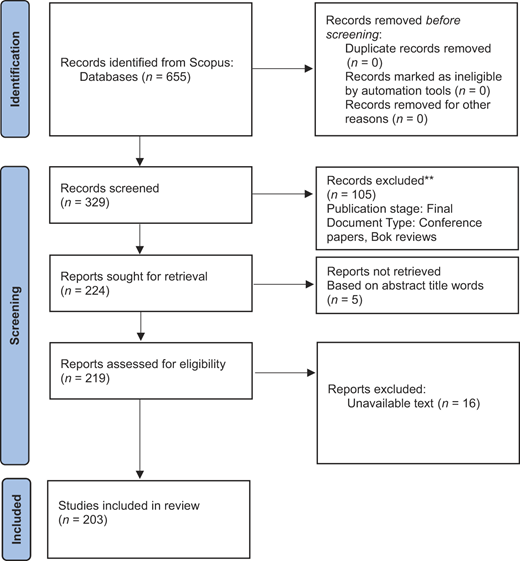
In this way, it facilitates a thorough comprehension of the present condition of the discipline, including the recognition of prominent authors, institutions and publications (James et al., 2016). The study used a PRISMA-based screening methodology as illustrated in Figure 1 to systematically identify, include and exclude publications, hence assuring transparency and replicability in the selection of literature for the scientometric analysis.
The following steps were followed through the data collection process.
3.1 Step 1: selection of data source
The journal articles were sourced from the SCOPUS database. This database preference stemmed from its comprehensive collection of publications across diverse fields and its international scope. Compared to other literature indexing repositories, Scopus provides more open-access content than Web of Science (Zhu and Liu, 2020; Pranckutė, 2021).
3.2 Step 2: conduct preliminary search
The choice of document type sought in the literature search was limited to journal publications only. The guarantee informed this preference of the academic rigour and publication regularity of the peer review process that journal articles undergo before publication, unlike those of conference proceedings, reports, letters, etc. The keywords “Sustainability” and “Housing Policy” defined the primary search criteria. The keywords were chosen to accurately reflect the convergence of environmental, social and economic aspects within housing governance, ensuring the precise retrieval of literature that explicitly associates housing policy frameworks with sustainability goals. This was input into the Scopus search engine, “title or keywords or abstract”, to access relevant articles. The literature search covered January 2000 to February 2025, with 2000 chosen as the starting point because it marked the launch of the Millennium Development Goals (MDGs), later succeeded by the Sustainable Development Goals (SDGs) in 2015.
3.3 Step 3: filter out housing policy documents
This involved a comprehensive search with set exclusionary criteria to filter out undesired documents. Under this exclusionary criteria, noting that journals tending to feature housing policy and sustainability features in the built environment were closely associated with social sciences, the following subject areas were excluded “Material Science”, “Physics and Astronomy”, “Agricultural and Biological Sciences”, “Economics”, “Econometrics and Finance”, “Computer Science”, “Business, Management and Accounting”, “Chemical Engineering”, “Nursing” and “Medicine”. The rationale for exclusion of these subject categories was as follows:
Nursing and Medicine, Agricultural and Biological Sciences: Pilot scoping demonstrated that these categories mostly produced clinical or epidemiological studies on disease outcomes or individual risk factors, not housing policy instruments or governance architecture, which is our main unit of study. They added little to the policy map but increased keyword network noise (health-outcome terms).
Materials Science, Chemical Engineering, Physics and Astronomy and Computer Science: These technical niches, though vital to sustainable building practice, would shift the co-occurrence network towards technology development rather than policy and governance, which this review focuses on.
Economics/Econometrics and Finance/Business/Management and Accounting: Pilot scoping of articles in these subject areas observed little focus on sustainability policy (standards, subsidies, regulations) or urban transformations. Keeping these categories weighted market lexicons and hid governance and transition themes, we wanted to map.
Subject areas included were “Social Science”, Environmental Science, Engineering, Energy, Arts and Humanities, Earth and Planetary Sciences and Multidisciplinary. The document search was narrowed to peer-reviewed articles, including articles from books and journals, specifically “Articles”, “Review”, “Book Chapter” and “Book”. Excluded were “Editorial”, “Conference Review” and “Conference Paper”. The language criteria of the documents were considered to include only documents published in English and exclude all non-English language documents. A total of 203 documents emerged from the documentary search and inclusionary and exclusionary criteria.
3.4 Step 4: identification of research articles
A total of 203 articles were identified as relevant to achieving the set objectives of this study. Bibliometric data obtained from the Scopus search were downloaded as a comma-separated values format file, as this was most compatible with scientific mapping analysis from the VOSviewer software. The search string deployed for the study was “Sustainability” and “housing policy”. By exploring the title, abstract and keywords search option with exclusionary and inclusionary criteria elucidated in Section 3.3, the following search code emanated:
TITLE-ABS-KEY (“Sustainability” AND “housing policy”) AND PUBYEAR > 1999 AND (EXCLUDE (SUBJAREA, “MEDI”) OR EXCLUDE (SUBJAREA, “MATH”) OR EXCLUDE (SUBJAREA, “NURS”) OR EXCLUDE (SUBJAREA, “CENG”) OR EXCLUDE (SUBJAREA, “BUSI”) OR EXCLUDE (SUBJAREA, “COMP”) OR EXCLUDE (SUBJAREA, “ECON”) OR EXCLUDE (SUBJAREA, “AGRI”) OR EXCLUDE (SUBJAREA, “PHYS”) OR EXCLUDE (SUBJAREA, “MATE”)) AND (EXCLUDE (DOCTYPE, “cp”) OR EXCLUDE (DOCTYPE, “cr”) OR EXCLUDE (DOCTYPE, “Ed.”)) AND (EXCLUDE (LANGUAGE, “Italian”) OR EXCLUDE (LANGUAGE, “Spanish”)).
3.5 Step 5: scientometric analysis
Various software programs exist to aid researchers in doing bibliometric and scientific mapping assessments. This encompasses generic bibliometric and performance analysis tools, specialised software for scientific mapping, such as HistCite and VOSviewer (Moral-Muñoz et al., 2020; Tao et al., 2021).
VOSviewer’s bibliometric maps and visualisations help researchers grasp a research field’s structure and trends (Al Husaeni and Nandiyanto, 2021). These maps illustrate the relationships among various research topics, identify key contributors within a field and highlight the emergence of new research trends. This informed the basis of the scientific mapping preference with VOSviewer to generate networks based on co-authorship,co-citation and author keyword co-occurrence data sets. The co-occurrence and author co-citation networks were analysed to identify clusters of closely connected articles and words, highlighting problem clusters within the literature on sustainable housing policy. Each cluster signifies a collection of articles with analogous research objectives, such as climate change, housing policy governance or social sustainability. The clustering outcomes were confirmed by bibliometric tools’ thresholding and normalisation techniques, and the clusters were delineated for clarity.
3.6 Step 6: analysis integration with the Urban Sustainability Transitions framework
Emanating thematic clusters were synthesised with the UST framework discussed in Section 2.2 to filter conceptual insights. This was featured, for instance, in the UST’s specialist initiatives, which included housing technology clusters, solar energy integration and smart-home technologies. Clusters of housing policy, governance and institutional change were associated with regime-level transitions, indicating modifications in housing sector legislation, regulations and stakeholder networks. Within the transitions framework, significant thematic patterns linked to external factors such as climate change, demographic shifts and economic challenges impacting housing were correlated with landscape-level consequences. The method linked each bibliometrically derived topic to UST categories (niches, regimes, landscapes) to comprehend the scientometric findings in relation to dynamic transition processes. The UST framework enhanced the comprehension of the scientometric outcomes by correlating empirical publication trends with theoretical frameworks on UST frameworks.
4. Scientometric findings
4.1 Most cited journals
A direct citation analysis of journals is crucial for assessing their significance within a particular research domain. It is vital for evaluating journal significance in specific research domains, as it offers quantifiable citation performance metrics (Zeng et al., 2024). Through citation analysis, researchers may monitor the progression of research subjects and pinpoint seminal publications that influence the discipline.
This helps identify which subjects are gaining importance and which journals are at the forefront of the conversation. Table 1 presents the list of the top 10 most cited journals and Books [chapters] featuring studies on sustainability and housing policy spanning the years 2000 to February 2025. As depicted in Table 1, the Journal Housing Studies featured the most articles (16) and citations (506). Other journals of note were Habitat International, with 7 articles and 375 citations; Journal of Housing and the Built Environment, with 11 articles and 369 citations; and Sustainability (Switzerland), with 15 articles and 268 citations.
4.2 Top ten cited articles
Table 2 provides an overview of the ten most referenced publications about the features of Sustainability and Housing Policy from the examined curated literature from 2000 to February 2025. A critical examination of the listed articles and keywords gives insights into emergent research themes over the timeline under consideration.
Tukker et al. (2010), the most cited article with 199 citations, examine housing through the lens of consumption. Relatively, this is tied to energy-consuming items and family income, which are deemed the most significant consumption sectors for environmental sustainability. Similarly, Meijer et al. (2009) and Holden (2004) examine the effects of current energy-saving measures and incentives on the stock of existing buildings. A significant portion of this consumption seems to be affected by physical living conditions, specifically the design and location of homes. This principle extends to energy consumption for heating, technical appliances, transportation and the significant quantity of equipment required for household operations, redecoration and maintenance. Hence, sustainability is portrayed by the impact of energy consumption and management in domestic and day-to-day living usage within the built environment. Meanwhile, Styers et al. (2010) draw relevance of decisions on land use management in defining sustainability, especially in urban settings. Land use is attributed to causing alterations in the ecosystem in cities. These impacts include air quality, water, soil and waste generation. This requires a balance between housing requirements adjudged as short-term against the long-term impact of ecological reactions to urbanisation.
Choguill (2007) and Goebel (2007) highlighted sustainability as the management of socioeconomic aspects of housing provision. Poverty as a socioeconomic problem impacts access to housing finance and affordability. This results in the growth of slums and squatter settlements with broader impacts on environmental well-being and quality. Without enhancements in employment opportunities and income levels, initiatives within the housing policy sector are likely to yield unsatisfactory outcomes. Low-cost housing, alongside the establishment of channels for accessible financing, becomes a tool for enhancing sustainability as it ensures housing poverty reduction, slum eradication and environmental preservation. At the same time, Hulse and Milligan (2014) derive sustainability in housing from a property rights perspective. This is asserted from the property rights perspective through the concept of “secure occupancy” to enable a more nuanced understanding of security for tenants. Similarly, Blanco-Romero et al. (2018) found that property rights affecting rental prices are caused by household debt, urban entrepreneurialism, city marketing, evictions, speculative capital investment, changes in tenancy and increased rental housing for tourists. As such, it is argued that there must be dynamic interactions between legislation/regulation, housing market conditions, public policies and cultural norms around renting, which shape tenants’ occupancy security. Huang and Tao (2015) and Teck-Hong (2012) analysed the existing migrant housing provision system and the housing conditions of migrants while offering policy recommendations for a theoretically informed and empirically based system. Socioeconomic considerations of human impact on the environment underpin overall sustainability in housing policy development.
4.3 Country origin of research articles
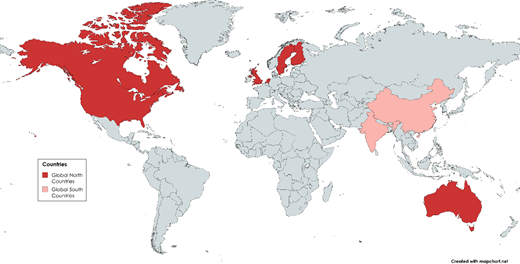
Table 2 and Figure 2 illustrate the distribution of papers or documents by their country of origin. The table lists the top 10 countries with the most publications from the keyword search of “Sustainability and Housing policy” between 2000 and February 2025. As evident from the analysis of the top ten publications discussed in Section 4.2, the characteristics of sustainability and the nuances of themes addressed in housing policy differ depending on the country of examination. There is an observed trend of similarities among countries with similar developmental indices. Within broader categorisations, the terms “developed” and “developing” countries have faced scrutiny for their lack of precision and relevance in contemporary discourse (Barros Leal Farias, 2024). The gap between “developed” and “developing” countries, sometimes referred to as the “Global North” and “Global South”, is complicated and has major ramifications for international development (Kowalski, 2021). The Global North, with its higher economic prosperity, technological prowess and strong social welfare systems, contrasts sharply with the Global South, which struggles with lower per capita incomes, less access to cutting-edge information and communication technologies and developmental obstacles.
Certain organisations, such as the United Nations and the World Bank, opt for classifications such as low-income, lower-middle-income, upper-middle-income and high-income instead (United Nations, 2025). This classification presents differing patterns in housing challenges and solutions. As illustrated in Table 3 and Figure 2, eight of the top 10 publication studies in sustainable housing development come from the global North, all of which are high-income countries, with the UK topping the list with 41 publications. These documents have, however, received a cumulative of 4 citations. However, countries with fewer publications, such as The Netherlands (9), Australia (17) and Hong Kong (7), have the most citations, with 331, 259 and 153 citations, respectively. We see fewer publications and citation impacts from sustainable housing development in the Global South countries.
4.4 Co-occurring keywords networks
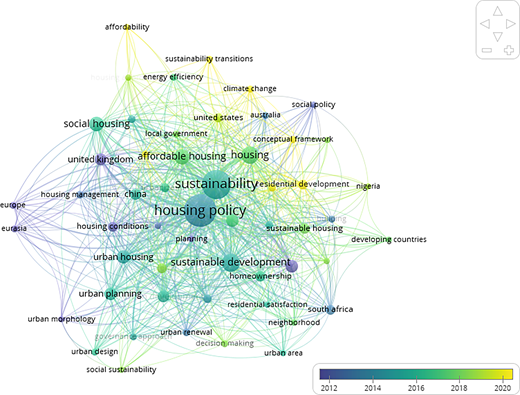
Co-occurrence networks of keywords are essential instruments in scientometric reviews, offering a systematic approach to analysing the intellectual landscape of a study domain (Al-Hamadani et al., 2024). Keyword network analysis, also known as co-word analysis or semantic network analysis, is predicated on the notion that keywords represent the essential content of a text (Kim and Seomun, 2023). Therefore, the analysis of the co-occurrence of keywords can reveal essential links among ideas, research subjects and topical trends within a field of knowledge. In Table 4, the co-occurrence of all keywords is presented. Of 1,181 keywords identified by the Vosviewer software, 54 keywords meet the set minimum threshold of at least five occurrences. “Housing policy” had the highest co-occurrence, appearing 127 times and the highest link strength of 240. It is closely followed by “Sustainability” with an occurrence of 99 times and a link strength of 204. In terms of contemporality of keywords since 2020, as Figure 3 illustrates, keywords with the colour yellow, “affordable housing”, with an occurrence of 29 times and a link strength of 60 is prominent among other prominent contemporary keywords, as illustrated in Figure 3, are residential development, climate change and sustainability transitions among others.
5. Analysis and discussion
5.1 Discussion on thematic clusters
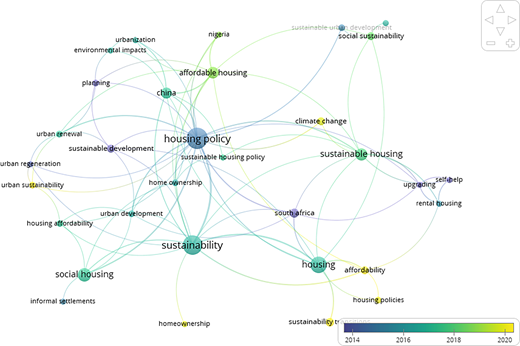
Using the VOSviewer co-occurrence map (minimum occurrence ≥3; 32 keywords), eight cohesive clusters arise that organise the literature’s problem area with sustainability in housing policy. These clusters form the basis for the discussion themes as illustrated in Figure 4.
Cluster 1: This cluster is represented in purple in Figure 4, and it contains 7 keywords, which include housing affordability, sustainable development, urban development, urban regeneration, urban renewal, urban sustainability and housing policy. The interconnectedness of these keywords bears alignment with the transformative governance of urban areas. Housing affordability and housing policy serve as central levers, while urban regeneration and renewal are strategies to attain urban sustainability (Edmondson et al., 2020). Housing policy as an urban transformative tool could often be at odds with attaining social and environmental objectives (Bohnenberger, 2021). This is particularly prominent in the intrigues for the provision of sustainable housing, manifesting in the quest to balance luxury, affordability and the mitigation of health and economic inequalities through the inculcation of energy-efficient technologies, structural resilience and interior environmental quality (Randolph et al., 2016; Deslatte et al., 2024). In another vein, transformative urban governance as capturing sustainability concerns, as underpinned by Su et al. (2024), can be manifested through the inculcation of inclusive growth models that incorporate Transit-Oriented Development planning with affordable housing for the floating population to provide housing affordability and spatial accessibility; thereby encouraging polycentric urban development.
Urban renewal or urban regeneration is identified as a common urban development strategy in Global North and South countries and serves as a tool to manage gentrification and salvage neighbourhood decline (Natividade-Jesus et al., 2013; Collishaw et al., 2024) Urban regeneration requires difficult judgments due to particular technological needs, safety considerations and socio-economic, environmental, aesthetic and political implications (Levine and Yavo Ayalon, 2024). Trop (2017) advocates for Social Impact Assessment to enhance public and municipal engagement to determine relocation necessities for low-income residents during urban regeneration exercises. The literature emphasises that these levers may conflict with social and environmental objectives unless governance frameworks explicitly reconcile equity with energy efficiency, resilience and indoor environmental quality. Policy designs that incorporate inclusive growth, transit-oriented development and polycentric accessibility mitigate the trade-offs.
Cluster 2: This cluster with six items, is represented in green in Figure 4, featuring “China”, “environmental impacts”, “home ownership”, “planning”, “sustainable housing policy” and “urbanisation”. China’s rapid urbanisation is being enhanced by the influence of planning and housing policy, which influences home ownership patterns and poses challenges emanating from the environmental consequences of urban expansion (Su et al., 2024). China’s energy framework makes energy efficiency a priority, encouraging the construction of “green buildings” (Cai et al., 2013). Similarly, in other parts of the world, legislations in Japan and South Korea, for instance, aim to reduce carbon emissions by encouraging the increase of timber for building construction (Paraman et al., 2024). This initiative is asserted (ibid) as significant in attaining climate goals while asserting historic construction practices.
Homeownership and housing are discussed in terms of sustainability, with spectacular similarities and dissimilarities in comparative instances between the Global North and South. In the Global North, sustainable access to housing is determined by access to a mortgage as the determinant for sustainable home ownership. Findings by Van Zandt and Rohe (2022) and Aarland and Santiago (2023) highlight the financial vulnerability of immigrant groups (especially non-West immigrants) and lack of “actual wealth” among sections of ethnic Western groups as reasons for mortgage defaults. As these categories form the bulk of low-income cadres, implementing effective pre-purchase services and ongoing post-purchase counselling is necessary.
Cluster 3: This cluster is depicted in blue in Figure 4, containing 11 items. It identifies the nexus of affordable and social housing in urban housing policy within the keyword clusters of “climate change”, “rental housing”, “self-help”, “South Africa”, “sustainable housing” and “upgrading”. South Africa’s housing debate is influenced by the legacies of apartheid, persistent inequality and rapid urbanisation, which collectively generate unique housing challenges. Qumbisa et al. (2024) point out that self-help housing, as characterised by incremental and community-driven construction, has historically served as a primary response to state housing backlogs in South Africa. This housing delivery model is adjudged for attaining housing satisfaction, as homeowners have the freedom to design spatial units to their satisfaction, unlike government-delivered units. Sekoboto and Landman’s (2019) findings identify similar satisfactory perspectives that self-help housing initiatives provided people with enhanced chances for engagement, skill development, increased self-confidence and control over the end product (home).
Across the Global South, informal settlement development is a standout challenge. Rather than outright demolition, upgrading an informal settlement is an alternate approach aimed at enhancing living conditions while ensuring the retention of residents at the informal settlement site.
This approach integrates infrastructure, tenure security and, at times, rental or self-help dynamics, thereby connecting social justice with sustainability. Collishaw et al. (2024) present this initiative, which combines climate adaptation, rental provision and self-help to achieve sustainable housing by assuring affordability, inclusivity, resilience and environmental performance. Climate change exacerbates housing vulnerability via flooding, heat stress and energy insecurity (Korkmaz and Alkan Meşhur, 2021). However, in the Global North, climate change is being addressed by various legislation and policies promoting energy-efficient retrofitting throughout the housing inventory (Czischke and Ayala, 2021).
Rental Housing is identified as a means to increase access to housing; however, these dwellings’ quality, comfort and environmental credentials are generally inferior to those of owner-occupied homes (Collishaw et al., 2024). This is often designated for medium-low income households, newly employed individuals lacking housing and migrant workers with permanent jobs (Dezhi et al., 2016). Across the Global North, there are initiatives to ensure the affordability of such units for low-income earners. For instance, since the late 1980s, tax credits have financed most US subsidised low-income rental housing; in the UK, non-profit housing associations rely more on the market to supplement government funds for low-income rental housing (Schwartz, 2011). Blanco-Romero et al. (2018) highlight tourism posing a challenge to rental housing in multifunctional cities. Urban entrepreneurialism, city marketing, evictions, speculative capital investment, tenancy changes and tourist rental housing exacerbate this challenge.
Cluster 4: It features four keywords – “affordability”, “housing”, housing policy and “sustainability transitions”. Collectively, these keywords draw concern towards the governance of future housing in socially equitable and environmentally sustainable manners. In previously colonised countries of Asia and Africa, housing policies were mainly targeted to specific groups such as public sector employees, war veterans and the military (Czischke and Ayala, 2021). Whereas affordable housing, as presented by Ozge Subası and Turk (2024), is essential for the survival and social sustainability of diverse social groups in urban environments. It is also essential as an equitable strategy for urban renewal, emphasising community resilience and social equality in conjunction with economic development (Levine and Yavo Ayalon, 2024).
Sustainability transition theories focus on transforming technological regimes and highlight the significance of innovative technological niches as essential mechanisms for facilitating transitions (O’Neill and Gibbs, 2020). This significant new resource pushes policymakers, planners, housing construction industry stakeholders and academics to rethink housing design and construction and their incorporation into better policy creation effects (Moore and Doyon, 2023).
Sustainability transition research is increasingly focused on equality and justice (Lukkarinen et al., 2024). Owing to policy lock-ins and infrastructural inequities, people face unpredictable energy markets, energy poverty and climate change in housing (Peltomaa et al., 2020). Incorporating affordability and sustainability into housing policies allows governments and stakeholders to advance the creation of environmentally friendly and cost-effective housing options, encourage the construction of energy-efficient structures and guarantee enduring resilience against economic and environmental challenges. This approach facilitates inclusive urban development by harmonising social equity, economic feasibility and ecological accountability.
Cluster 5: It features three keywords – “built environment”, “social sustainability” and “sustainable urban development”. Cumulatively, these keywords combine to investigate how urban areas could be designed to harmonise human well-being with enduring sustainability objectives. Attaining a balance between social and environmental objectives of the built environment through housing policy is often in perennial conflict (Bohnenberger, 2021). Ebbini and Bleibleh (2024) asserted that social integration and community interactions are tools to ensure social sustainability, which manifests in improved housing satisfaction, cultural continuity, location attachment, social belonging and dignity. Housing is a significant indicator of social stratification, with home ownership being a crucial element of social sustainability and mapping sustainable urban development. Social outcomes (belonging, continuity, dignity) are regarded as equally important as economic and environmental objectives; housing is a crucial stratification mechanism, indicating that design and location decisions are fundamental to sustainability.
Cluster 6: It has two keyword features – Nigeria and affordable housing. Nigeria – Africa’s most populous nation has a gross housing shortfall of over 17 million units (Muhammad et al., 2015). This is despite housing policy iterations with strategic themes not availing the development of affordable housing or improved housing affordability for low-income earners, as hampered by inadequate financial frameworks, urban land scarcity, elevated property development prices, currency devaluation, high-interest rates, inflation, bribery and corruption (Odoyi and Riekkinen, 2022; Ebekozien et al., 2023). Targeted government funding for sustainable housing, access to low-interest housing loans, community participation in housing delivery, utilisation of sustainable materials, adaptable housing designs and adaptable land use are identified as critical success factors necessary for improving sustainable housing delivery (Oluleye et al., 2021).
Beyond Nigeria, affordable housing is a recurring question across the Global North and South, while housing subsidies have substantially increased housing affordability in the Global North. While rental costs are critical affordability metrics, Olanrewaju et al. (2018) recommend additional metrics such as homeowner comfort, natural ventilation, affordable utility expenses and increased housing value.
Cluster 7: This identifies two keyword clusters – informal settlement and social housing. Informal settlements are sporadic, unplanned settlements often existing as self-help temporary shelters, camps and land occupations due to a lack of affordable housing (Alvarado Peterson and Rojo-Mendoza, 2023). This is a prevalent challenge in many Global South cities and may occur sporadically in some parts of the global North experiencing a high rate of vulnerable migrant influx, with a lack of housing subsidies and insufficient social housing.
Social housing offers low-income families access to government-subsidised or affordable rental homes below market rates as a policy response to promote social sustainability (Napoli et al., 2022; Myeni and Mtapuri, 2020). Social housing policies and actions remain vital for urban development, as subsidised housing is becoming more popular for poor people to live in and move into big cities and a measure to eliminate the proliferation of informal settlements.
Cluster 8: This examines the intrigues of home ownership and sustainability, which is affected by affordability, a considerable factor for low-income and socioeconomically vulnerable groups. Olanrewaju et al. (2018) identified five top considerations for sustainable, affordable housing: homeowner comfort, natural ventilation, lower water and power expenditures and higher house values. Homeownership in terms of sustainability portrays spectacular similarities and dissimilarities in comparative instances between the Global North and South. In the Global North, sustainable access to housing is determined by access to a mortgage as the determinant for sustainable home ownership. Findings by Van Zandt and Rohe (2022) and Aarland and Santiago (2023) highlight the financial vulnerability of immigrant groups (especially non-West immigrants) and lack of “actual wealth” among sections of ethnic Western groups as reasons for mortgage defaults. As these categories form the bulk of low-income cadres, implementing effective prepurchase services, mortgage structuring and pre/postpurchase assistance might mitigate risks amongst vulnerable populations.
5.2 Aligning the thematic clusters with the Urban Sustainability Transitions framework
The thematic clusters emanating from the scientometric analysis correspond with the multi-level perspective of the UST paradigm, which differentiates between niches, regimes and landscapes (Geels and Schot, 2007). This paradigm demonstrates the interaction of housing-related innovations, institutional frameworks and broader pressures in facilitating or obstructing sustainability transitions.
5.2.1 Niche-level innovations.
These technological and social niches span Clusters 3–4 and 8, illustrating reducing resource intensity and showcasing scalable participatory approaches with appropriate safeguards. Climate change (from Cluster 3) mitigation innovations through energy-efficient designs, renewables integrations and retrofits as recommended by Czischke and Ayala (2021), can aid energy-efficient housing and sustainable resource consumption. In another sense, informal settlement (Cluster 3) upgrading exemplifies grassroots experimentation, when community-driven efforts contest dominant patterns by promoting modest, participatory enhancements in housing and services Collishaw et al. (2024). These specialised activities illustrate alternatives that could transform housing provision if sufficiently backed by larger forces (Geels and Schot, 2007).
5.2.2 Regime-level structures.
These include the prevailing institutions, regulations and practices that govern housing provision.
Clusters 1–2, 4–5 and 7 demonstrate that inclusionary zoning, tenure reform and supporting planning/finance can realign incentives, allowing affordability and performance to co-evolve instead of being mutually exclusive. However, regimes frequently perpetuate unsustainable results through lock-in effects, including developer-centric priorities and inflexible laws (Bulkeley et al., 2016). Housing affordability from Cluster 1 further illustrates regime tensions, as market-driven finance and speculative investment generally compromise sustainability. Evidence indicates that tailored interventions – subsidies, cooperative financing or supportive planning regulations – can harmonise affordability with environmental objectives (Khan and Fang, 2020). Consequently, regime transformation is essential for integrating equity and environmental performance into conventional housing systems (Agyeman et al., 2016; Frantzeskaki and Rok, 2018).
5.2.3 Landscape-level pressures.
Landscape drivers include external pressures, including climate change, growing urbanisation and evolving societal ideals, shown in Clusters 2–3 and 5–7. These external forces necessitate policy alignment among housing, environment and economy trends to diminish carbon emissions and improve urban resilience (Ramaswami et al., 2023). Concurrent urbanisation and increasing inequality underscore the importance of clusters focused on social sustainability and the enhancement of informal settlements. These macro-trends compel regimes to reform, simultaneously generating opportunities for niche ideas to expand. Landscape dynamics serve as the context for the evolution of sustainable housing transitions.
5.2.4 Dynamic interactions.
Housing transitions occur when environmental factors disrupt existing systems, allowing specialised ideas to flourish. Clusters identified at all three levels indicate that advancement necessitates convergence: global climate and equity initiatives (landscape), reformed governance and financial frameworks (regime) and innovative practices (niches) collectively offer pathways to sustainable housing futures.
6. Policy proposals for sustainability in housing policy development
6.1 Policy proposals
The following, as listed in Table 5, are policy proposal recommendations emanating from this study, linked to the thematic clusters from the study, with recommended metrics.
7. Conclusion
This article explored global housing policy development through the lens of sustainability, reviewing articles from the Scopus database published between 2000 and February 2025. Sustainability was identified as occurring in four categories: environmental, social, economic and technological. The Scientometric analysis reveals an uneven distribution of knowledge production, with 8 of the 10 leading publishing nations situated in the Global North. The existing asymmetry may constrain the global relevance of housing transition insights and perpetuate a uniform policy bias. The thematic convergence regarding affordability, equity and energy efficiency across various contexts indicates a developing global normative alignment with SDG 11. The UST framework emphasises the significance of context sensitivity, highlighting that transitions should be adapted to local socio-political conditions. In the Global South, hybrid governance models and incremental informal settlement upgrading may represent more pragmatic approaches to sustainability than the formal, market-driven green housing developments in the Global North.