This study aims to address the growing concerns surrounding the use of artificial intelligence (AI) in property valuation, particularly issues of transparency, trust and accuracy. This study focuses on aligning AI models with expectations to foster responsible adoption in real estate decision-making.
A systematic literature review (SLR) of 44 peer-reviewed studies published between 2018 and 2025 was conducted. NVivo software was used for qualitative coding, and the political, economic, social, technological, legal and environmental framework guided the analysis of external factors influencing AI adoption. The study examined both technical model performance and stakeholder concerns.
Random forest and support vector machines were most frequently applied in structured valuation tasks, while artificial neural networks were reported in contexts involving non-linear modelling and complex data patterns. Despite demonstrated predictive capabilities, policymakers and professional stakeholders placed greater emphasis on transparency, explainability and legal accountability. Identified trust-related challenges included algorithmic bias, limited model interpretability, regulatory ambiguity and insufficient integration of contextual factors. These findings informed the development of a hybrid AI valuation framework that integrates technological performance with governance mechanisms, contextual calibration and professional judgement to strengthen property valuation quality.
This study is limited by the absence of primary data from stakeholder interviews. The findings are based solely on published literature, which may not fully capture real-time industry perspectives or emerging on-the-ground challenges.
The proposed framework offers a transparent, data-driven solution for valuers, investors and regulators, supporting better-informed decisions and encouraging ethical AI adoption in real estate.
This study synthesises technical and stakeholder dimensions of AI in property valuation using a structured qualitative approach via SLR. It proposes a novel hybrid framework that integrates stakeholder trust factors with model precision to enhance both reliability and acceptance of AI tools.
List of Abbreviations
- AI
= Artificial intelligence;
- AVM
= Automated valuation model;
- ML
= Machine learning;
- DL
= Deep learning;
- SLR
= Systematic literature review;
- SPAR-4-SLR
= Structured, prudent, adaptable and rigorous;
- PESTLE
= Political, economic, social, technological, legal and environmental;
- RF
= Random forest;
- SVM
= Support vector machine;
- DT
= Decision tree;
- GBM
= Gradient boosting machine;
- RM
= Regression model;
- ANN
= Artificial neural network;
- CNN
= Convolutional neural network;
- XGBoost
= Extreme gradient boosting;
- GIS
= Geographic information system;
- mRMR
= Minimum redundancy maximum relevance;
- ROI
= Return on investment; and
- GDP
= Gross domestic product.
1. Introduction
Property valuation is key in real estate, affecting investments, mortgage approvals, taxes and urban planning (Abdul-Rahman et al., 2021). Traditionally, valuation methods such as the sales comparison approach, cost approach and income capitalisation approach have been widely used (Gude, 2024). However, these methods depend on historical data and expert judgement, which can cause inconsistencies, especially in changing markets (Ali et al., 2025). As real estate markets grow more complex and technology advances, there is a rising demand for valuation techniques that are accurate, efficient and meet the needs of various stakeholders, including buyers, investors, professionals, policymakers, developers and valuers (Deppner and Cajias, 2024).
Automated valuation models (AVMs), driven by artificial intelligence (AI) and machine learning (ML), have become increasingly prevalent across the real estate sector (Hoxha, 2024). They are widely used by mortgage banks, integrated into property listings platforms such as Zillow and Zoopla and used by government agencies for taxation and regulatory purposes (Gnat, 2024). These data-driven models use property attributes, market trends and economic indicators to generate timely and objective valuations, often outperforming traditional methods in predictive accuracy (Hoxha, 2024). Existing AI-based valuation research can broadly be grouped into three streams. The first stream focuses on predictive performance, comparing algorithms such as regression models (RM), random forest (RF), gradient boosting and neural networks to enhance valuation accuracy (Chiasson et al., 2023; Sun and Peng, 2022). The second stream integrates economic, spatial and socio-demographic variables to improve risk modelling and market responsiveness. The third, more recent stream addresses the issue of transparency, explainability and stakeholder trust in AI-driven systems (Chandu and Bharatha Devi, 2023). While these streams advance technical and methodological development, they are often examined independently rather than through structured synthesis that connects model capabilities with stakeholder-oriented valuation needs. Conceptually, this study is grounded in socio-technical systems theory, which views technological innovation as embedded within institutional, regulatory and stakeholder contexts. It also draws on stakeholder theory and trust-based adoption perspectives to explain how valuation technologies are interpreted, legitimised and accepted across different actor groups.
However, despite their technical potential, many stakeholders remain cautious and concerns have been raised over the transparency, explainability and fairness of AI-generated valuation, which undermines trust, particularly when black-box models make it difficult to interpret how values are derived (Deppner and Cajias, 2024; Schnitzer and Tiruwuha, 2024). Real estate professionals, investors and policymakers seek not only accurate outputs but also clarity and accountability in the valuation process (Gnat, 2024). While existing literature often emphasises improving model performance, there is limited focus on aligning these tools with stakeholder expectations and trust in AI adoption (Forys, 2022). This highlights a critical gap in the absence of a structured framework that accounts for both the technical strengths of AI and the contextual needs of users. Addressing this gap, this study explores how AI-enhanced valuation systems can be better designed to foster stakeholder trust, ensure interpretability and support more inclusive adoption within the property valuation ecosystem.
This study contributes to the growing body of research on AI in property valuation by moving beyond a purely technical focus on model accuracy to incorporate stakeholder trust, regulatory alignment and multidimensional adoption considerations. By integrating model performance insights with stakeholder needs and political, economic, social, technological, legal and environmental (PESTLE) based trust dimensions, the research conceptualises AI-driven valuation as a socio-technical system rather than merely a predictive mechanism. The proposed hybrid framework therefore advances both theoretical understanding and practical implementation by aligning technical robustness with transparency, explainability and governance requirements. The remainder of this paper is structured as follows. Section 2 outlines the research methodology, including (structured, prudent, adaptable and rigorous for systematic literature review [SLR]) protocol and analytical approach. Section 3 presents the results, examining stakeholder needs and trust dimensions in AI-driven valuation. Section 4 discusses the findings and introduces the proposed conceptual framework. Finally, Section 5 concludes the study by summarising key contributions and highlighting implications for practice and future research.
2. Research methodology
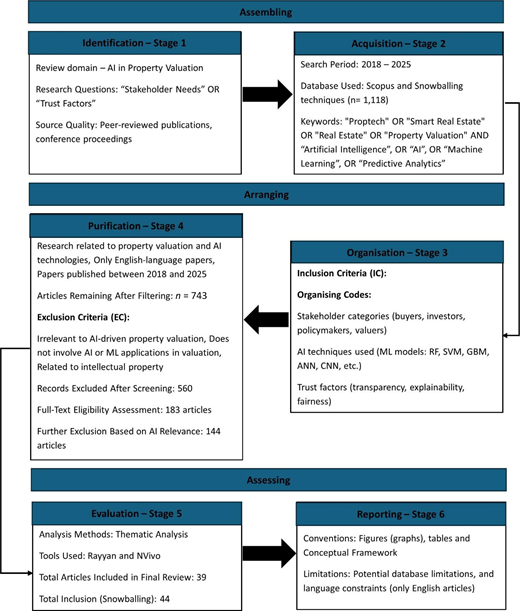
This study used an SLR following the Structured, Prudent, Adaptable and Rigorous for SLR (SPAR-4-SLR) protocol to select relevant academic publications mentioned in Figure 1. The framework was then applied to analyse the stakeholders in terms of each direction within the PESTLE framework (Reiff and Schlegel, 2022). The research methodology begins with the SLR process, which includes formulating research questions, locating studies through keywords and selecting relevant articles (Carrera-Rivera et al., 2022). This is the assembling stage (Identification and Acquisition), which identifies articles through acquisition (Paul et al., 2024). The next step is organising and refining papers to identify stakeholder themes using NVivo (Reiff and Schlegel, 2022). PESTLE analysis is conducted to assess the trust of stakeholders in AI-property valuation models.
2.1 Literature retrieval and selection
2.1.1 Formulation of questions.
This study integrates “stakeholders’ need” and “stakeholders’ trust” with AI-driven property valuation, posing two research questions to explore the impact of AI applications in valuation:
What are the diverse needs of stakeholders in AI-driven property valuation models in the real estate industry?
What factors influence stakeholders’ trust in AI-driven property valuation models?
2.1.2 Search strategy and selection of studies.
Figure 1 outlines the SLR process for AI in property valuation, starting with Stage 1: Identification, where research questions and sources were recently defined by Wang et al. (2025). Acquisition (Stage 2) acquires relevant studies using AI keywords. Stage 3 categorises stakeholder needs, AI techniques and trust. Stage 4 filters out irrelevant papers. Evaluation (Stage 5) applies thematic analysis using Rayyan and NVivo, leading to a final selection of 44 studies. Finally, Reporting (Stage 6) provides findings with graphs, tables and a framework, noting limitations such as language and database coverage (Sharma et al., 2023).
2.1.2.1 Assembling phase.
Following the SPAR-4-SLR protocol by Wang et al. (2025), the research methodology begins with the Assembling phase, initiating at Stage 1: Identification, where the review domain is precisely defined as AI in property valuation. The scope of review was guided by two primary research questions: stakeholders’ needs from AI-based valuation models and what factors influence their trust in these systems (Lee, 2022).
A systematic strategy was developed using carefully selected keywords (see Figure 1). In Stage 2: Acquisition, relevant literature was retrieved primarily from the Scopus database, which provides extensive coverage of peer-reviewed journals and conference proceedings. To enhance coverage, a snowballing technique was also applied by reviewing references and citations of selected studies (Lee, 2022). The research process initially identified 1,118 articles. After applying preliminary filters, 743 articles were retained for the subsequent screening and refinement stages.
2.1.2.2 Inclusion and exclusion criteria.
The inclusion criteria required that studies focus specifically on AI or ML applications in property valuation and be published as peer-reviewed journal articles or conference papers to ensure academic credibility and methodological rigour (Baig, 2018; Loo, 2020). A systematic keyword-based search strategy was implemented, and relevant studies were retrieved primarily from the Scopus database, selected because of its extensive coverage of high-quality peer-reviewed literature across multidisciplinary domains (Bramer et al., 2018). Scopus is widely recognised for its comprehensive collection of peer-reviewed literature (Lee, 2022), including journals, conference proceedings and books from over 4,000 publishers, making it a reliable source for academic research (Bramer et al., 2018). To enhance comprehensiveness, a snowballing technique was also applied by examining references and citations of initially identified articles (Lee, 2022). Studies were limited to those published in English between 2018 and 2025 to capture recent developments in AI-driven property valuation while ensuring consistency and accessibility in analysis (Bramer et al., 2018). Studies were excluded if they did not directly address AI applications in property valuation, were not peer-reviewed, were published outside the specified timeframe or were written in languages other than English. While the selection of a single primary database and English-language restriction enhanced methodological consistency and feasibility, these criteria may introduce potential database and language bias, which were considered when interpreting the findings.
2.1.2.3 Arranging phase.
The review progresses to Stage 3: Organisation, where the 743 articles are coded and aligned with research focus (Fedorowicz et al., 2014). Each article is categorised into three codes: stakeholder categories, AI techniques and trust factors (mentioned in Figure 1). This organisation stage allows efficient relevance filtering and thematic alignment for the analysis stages.
In Stage 4: Purification, the 743 articles undergo rigorous screening to retain only the most relevant and highest quality studies for detailed analysis (Fedorowicz et al., 2014). Articles are first screened by title and abstract to remove those that are unrelated to specific AI applications in property valuation or that focus on irrelevant areas such as intellectual property and are not linked with AI in property valuation (Lee, 2022). Through this two-step screening, the initial relevance check was followed by a full-text review, and a significant number of articles were excluded. Specifically, 560 articles were removed after initial screening based on title and abstract, and another 144 articles were excluded after careful full-text review because of lack of direct relevance (Haefner et al., 2021). This process results in 39 articles, with five additional studies found through snowballing, bringing the total to 44 for in-depth evaluation (Lee, 2022). The purification stage ensures studies are focused and aligned for in-depth analysis.
2.1.2.4 Assessing phase.
The review enters the Evaluation phase (Stage 5), with Rayyan software supporting the review process. Rayyan enables efficient screening and selection of relevant studies using inclusion and exclusion criteria (Fedorowicz et al., 2014). A thematic analysis was used to code and categorise the 44 articles based on emerging themes aligned with research questions. NVivo software was used to organise themes related to stakeholder needs and trust, aiding deeper qualitative analysis. In Stage 6: Reporting, findings were synthesised into graphs, tables and a conceptual framework to present thematic relationships.
2.2 Data analysis
The data analysis in this study focused on two key aspects: the diverse needs of stakeholders in AI-driven property valuation (RQ1) and the factors influencing their trust in these models (RQ2). To address RQ1, the study analyses factors shaping stakeholder expectations, such as accuracy, affordability, efficiency, market analysis and customisation of AI-based valuation tools (Buye, 2021; Fedorowicz et al., 2014). Using NVivo, the study systematically coded relevant literature to identify recurring themes that highlight how different users, including buyers, investors, policymakers and property valuers, engage with AI valuation systems and what they require from these technologies.
For RQ2, the study explored the factors affecting stakeholder trust in AI-driven property valuation using the PESTLE framework. Key themes were analysed in terms of real estate professionals to understand concerns regarding AI’s decision-making processes (Cajias, 2024). The PESTLE framework was followed to understand these categories and to identify how trust can be strengthened among different stakeholder groups. Following thematic coding in NVivo, the identified codes were reviewed and systematically mapped to the six PESTLE dimensions based on their conceptual relevance. This mapping process enabled the categorisation of stakeholder concerns, challenges and opportunities within a structured analytical framework.
3. Results
3.1 Diverse stakeholder needs in artificial intelligence-driven property valuation
The SLR identifies AI techniques applied in property valuation and reports their predictive accuracy in relation to reliability and trust-related dimensions discussed in the reviewed studies. As reported by Lee et al. (2024), diverse use of AI models are applied in property valuation, including ensemble methods such as (RF) and gradient boosting machine (GBM). The reviewed studies frequently evaluate these models based on predictive accuracy and interpretability (Numan and Yusoff, 2024; Phan, 2019). Artificial neural networks (ANNs) are reported to be applied to unstructured data and non-linear modelling tasks (Tran et al., 2025; Vargas-Calderón and Camargo, 2022). The reviewed studies evaluate ANN based on predictive accuracy and their application in complex valuation contexts.
To answer RQ1, Table 1 summarises the distribution of AI techniques across six real estate domains: property development, investment strategies, property management, pricing strategies, property transactions and real estate business.
RF is reported in property development for site selection and risk assessment (Forys, 2022), in investment strategies for portfolio optimisation and investment risk analysis (Gnat, 2024). Furthermore, in property management for automated land valuation (Habbab et al., 2025), in pricing strategies for rental price prediction (Ho et al., 2021), in property transactions for transaction price prediction and in real estate business for market trend forecasting (Hoxha, 2024). Support vector machines (SVM) are used for profitability modelling and undervalued asset detection; such performance is often attributed to their suitability for structured and tabular data sets (Chandu and Bharatha Devi, 2023). They also appear in land-use classification (Hong et al., 2020), rental trend prediction, transaction price estimation and demand forecasting (Borodulin et al., 2024; Tran et al., 2025). Furthermore, Table 1 shows that GBM is reported for project valuation (Singh et al., 2025), risk-adjusted investment strategies and land parcel classification (Alshammari, 2023). They are also applied for dynamic rental pricing, real-time price prediction and business valuation (Abdul-Rahman et al., 2021).
Furthermore, within the reviewed studies, decision tree (DT) is applied across several valuation activities. DT is used in feasibility analysis and investment decision support (Abidoye et al., 2019; Danona et al., 2023). Their application also extends to land registration assessment (Jáuregui-Velarde et al., 2023), rental property classification, transaction modelling for quick assessments and business valuation models (Kmen et al., 2024; Lahmiri et al., 2023). Extreme gradient boosting (XGBoost) appears frequently in risk-related and forecasting tasks (Hanuma Reddy and Sriramya, 2022). It is reported in risk modelling and portfolio risk management (Hjort et al., 2022). The model is also applied in large-scale automated valuation systems, rental yield prediction, rapid price estimation in transactions and broader real estate business analytics (Abut et al., 2023; Borodulin et al., 2024; Genc et al., 2025). RM analysis is used across valuation functions; it appears in cost estimation and return-on-investment analysis (Przekop, 2022). Additional applications include land valuation for taxation purposes (Li et al., 2021), rental price forecasting, transaction price estimation based on historical sales and financial forecasting in real estate business contexts (Singh et al., 2022).
ANNs are reported in development-related pattern identification and investment prediction models (Chandu and Bharatha Devi, 2023). Their use also extends to smart urban planning systems, non-linear rental price forecasting, high-precision transaction prediction and demand segmentation analysis (Borodulin et al., 2024). Convolutional Neural Networks (CNNs) are primarily associated with image-based applications (Yakub et al., 2021). Studies report their use in image feasibility analysis and visual property valuation (Zulkifley et al., 2020). They are also applied to land boundary detection, property condition assessment, image-based transaction risk assessment and market intelligence identification (Przekop, 2022).
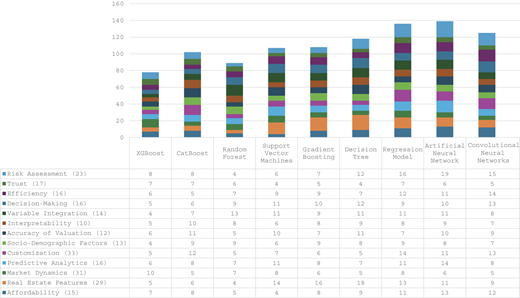
Each model is evaluated against critical factors (mentioned in Figure 2). The numbers inside each cell represent the article numbers with which a given AI model was associated with a specific factor across the reviewed studies. As shown in Figure 2, ANNs were linked 19 times to risk assessment (Przekop, 2022). The numbers in parentheses next to each factor label [e.g. Risk Assessment (23)] indicate the total number of studies mentioning that factor across all models. Overall, RMs and ANN were the most frequently cited across multiple factors, reflecting their strong reliability and widespread adoption in property valuation tasks. In contrast, although CNNs are increasingly being explored for real estate applications, their frequency of mention across factors is relatively low compared to traditional models (Chandu and Bharatha Devi, 2023). It is also important to note that while the factor “Affordability” has a total of 15 mentions or other factors (as shown in parentheses), which is lower compared to other factors such as “Market Dynamics” (31) and “Real Estate Features” (29), its inclusion remains significant (Gude, 2024). This is because affordability is a critical emerging concern in property valuation (Borodulin et al., 2024), especially in the context of changing housing markets (Chandu and Bharatha Devi, 2023). The lower number does not diminish its importance; rather, it indicates that affordability is a relatively new area of integration into AI models for valuation purposes.
Beyond affordability, key factors in terms of real estate features include ownership types (Lee et al., 2024), surveillance, elevator availability, number of rooms and construction year, as variables included in valuation models as explored by Yang et al. (2023). Furthermore, the reviewed studies include historical price trends (Hoxha, 2024), demand–supply dynamics (Rodriguez-Serrano, 2025) and inflation as variables incorporated into valuation models. Several studies also report the use of predictive analytics and time-series forecasting approaches in this context (Hoxha, 2024). AVMs using techniques such as RF, SVM, DT and GBM are reported to achieve accuracy by analysing large data sets; the strong performance of RF and SVM is largely attributed to their ability to effectively handle structured property variables, such as location, size, age and transaction history (Sun and Peng, 2022), while capturing complex relationships within the data. These models incorporate variables such as property size or number of rooms (Hong et al., 2020), location (proximity to amenities, schools and transport links) (Almaslukh, 2020), property age (Chiasson et al., 2023), condition (roof and interior state) (Gampala et al., 2022) and economic factors (Abidoye et al., 2019). AI models such as ANN and CNN further enhance precision by processing unstructured data, including images, to assess structural integrity and renovations (Abidoye et al., 2019). Advanced algorithms such as XGBoost and GBM enhance predictive accuracy, adjusting for geographical boundary issues and market anomalies (Abdul-Rahman et al., 2021).
Economic indicators, such as interest rates, GDP and demographic shifts, are reported as variables included in valuation models (Chiasson et al., 2023). AI techniques, including RF, SVM and ANN, help stakeholders by forecasting price movements, identifying emerging submarkets and analysing local demand–supply dynamics (Cekic et al., 2022; Gnat, 2024; Ho et al., 2021). The reviewed studies document the application of AI models in real-time market analysis, including the use of time-series forecasting methods such as XGBoost for price trend modelling based on historical data (Hoxha, 2024; Lahmiri et al., 2023). Social and environmental factors (Chou et al., 2022), such as population shifts and local market trends, are reported as variables incorporated into valuation models (Chiasson et al., 2023; Lee et al., 2024). The reviewed studies also discuss model customisation in relation to different stakeholder groups, including buyers, investors, lenders and agents (Borodulin et al., 2024; Gnat, 2024). Customisation features reported in the literature include user preference, investment goals, risk tolerance and property attributes (Lahmiri et al., 2023; Phan, 2019). The reviewed studies report the use of AI algorithms, including recommendation systems, that incorporate local market dynamics and criteria such as location and affordability (Lee et al., 2024; Numan and Yusoff, 2024). These applications are described in relation to property suggestion and risk assessment functions (Verma et al., 2023). Social trends and consumer behaviour are also reported in relation to property demand modelling (Tran et al., 2025). Technological developments in AI are described in the literature in connection with regional data adaptation approaches (Zulkifley et al., 2020). AI systems, including SVM, RF and ANN, are additionally reported in applications involving interactive interfaces and chatbot-based systems (Przekop, 2022).
The reviewed studies report the inclusion of socio-demographic variables in AI-driven property valuation models (Borodulin et al., 2024). These variables include income levels, education (Borodulin et al., 2024); (Almaslukh, 2020) and proximity to local amenities such as schools, parks and public transport (Abdul-Rahman et al., 2021). Valuation accuracy is discussed in relation to data set quality (Cekic et al., 2022), number of variables, model selection and feature importance (Hjort et al., 2022), as identified in 12 studies. The application of RF and ANN is reported in relation to predictive modelling tasks (Zulkifley et al., 2020). Interpretability of diverse data sets, including images and geospatial data, is also documented (Sun and Peng, 2022). CNN applications are reported in relation to unstructured data, processing (Phan, 2019). AI techniques are further documented in contexts involving risks modelling, return on investment and portfolio optimisation (Abut et al., 2023).
The reviewed studies further report that AI applications in relation to efficiency, transparency and risk assessment dimensions (Borodulin et al., 2024; Chandu and Bharatha Devi, 2023; Chou et al., 2022). Techniques such as XGBoost and GIS-integrated models are documented in contexts involving location-specific price estimation (Danona et al., 2023). Several studies discuss trust in AI valuations in relation to the transparency of data inputs, valuation methods and model performance metrics (Almaslukh, 2020). Risk assessment applications are reported in 23 studies, including the use of RF and DT for modelling crime rates, environmental hazards and market volatility (Abut et al., 2023). GIS-integrated models are also documented for assessing location-specific risks such as flood zones and earthquake exposures (Singh et al., 2022; Tanamal et al., 2023). Predictive analytics approaches are described in relation to economic fluctuations modelling (Verma et al., 2023). Overall, the findings indicate that AI techniques in property valuation are applied across multiple real estate domains and are associated with diverse stakeholder-related dimensions. Different models are documented in relation to specific valuation tasks, data types and contextual variables, including economic, social, environmental, technological and regulatory factors. The distribution of techniques across domains and factors demonstrates that stakeholder needs in AI-driven property valuation are multidimensional and vary according to functional application and contextual emphasis within the reviewed literature.
3.2 Multidimensional trust factors in artificial intelligence property valuation
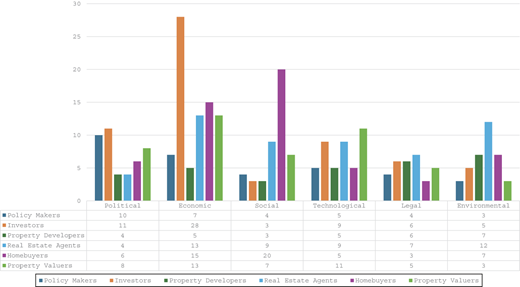
To answer RQ2, Figure 3 presents the frequency with which different PESTLE dimensions were discussed across stakeholder groups in the reviewed studies. Economic factors were most frequently associated with investors (28 studies), followed by homebuyers (15 studies). Social factors were most frequently associated with homebuyers (20 studies) and real estate agents (13 studies) (Hjort et al., 2022; Jáuregui-Velarde et al., 2023). Real estate features were also frequently linked to environmental factors (12 studies) (Abut et al., 2023; Phan, 2019). Political factors were discussed in relation to investors (11 studies) and policymakers (10 studies) (Zulkifley et al., 2020). In comparison, property developers were associated with political factors in four studies (Chiasson et al., 2023). The numbers shown in Figure 3 represent the frequency of discussion within the reviewed literature rather than direct measures of stakeholder concern.
Economic factors, including cost efficiency, market stability and valuation accuracy, were most frequently associated with investors (28 studies) and homebuyers (15 studies) (Abut et al., 2023; Phan, 2019). In comparison, economic factors were less frequently associated with policymakers (7 studies) and property developers (5 studies) (Abdul-Rahman et al., 2021). Social factors, including fairness, transparency and public acceptance (Chiasson et al., 2023), were most frequently associated with homebuyers (20 studies) and real estate agents (13 studies) (Vestly et al., 2024). Policymakers (4 studies) and property developers (3 studies) were less frequently associated with social factors (Chiasson et al., 2023). Technological factors, including model accuracy, reliability and interpretability, were frequently discussed in relation to homebuyers (11 studies), investors (9 studies) and real estate agents (9 studies) (Vargas-Calderón and Camargo, 2022). Policymakers (5 studies) and property developers (5 studies) were less frequently associated with technological dimensions (Hoxha, 2024; Przekop, 2022). Furthermore, advanced AI models improve valuation accuracy; several studies highlighted a tension between predictive performance and interpretability (Abut et al., 2023; Phan, 2019). Models such as ANN and CNN often provide strong predictive capabilities but may reduce transparency, making it difficult for stakeholders to understand how valuation decisions are generated (Chiasson et al., 2023). This trade-off was identified as a key barrier to trust and adoption.
Legal factors, such as liability, data protection and compliance, were discussed across stakeholder groups in the reviewed studies (Abut et al., 2023; Numan and Yusoff, 2024). Real estate agents (7) were most frequently associated with legal factors (Abidoye et al., 2019). Several studies discuss legal compliance and accountability frameworks in relation to AI-driven valuation models (Singh et al., 2022). Homebuyers (3) and policymakers (4) were less frequently associated with legal factors (Singh et al., 2025; Sun and Peng, 2022). Vargas-Calderón and Camargo (2022) report issues related to legal accountability in cases of valuation discrepancies (Chandu and Bharatha Devi, 2023). Legal challenges extended beyond compliance requirements. Several studies identified a conflict between the increasing use of large-scale property data sets for AI model development and the need to comply with privacy, data ownership and intellectual property regulations (Tran et al., 2025). Furthermore, uncertainty regarding liability for inaccurate AI-generated valuations remains a significant challenge for industry adoption (Tran et al., 2025). Few studies in the selected data set explored environmental factors such as sustainability and climate-related risks, which are particularly important to real estate agents (12) (Gampala et al., 2022; Genc et al., 2025). Homebuyers (7) and investors (5) were also linked to environmental dimensions. Environmental data integration into AI-driven valuation is documented in the reviewed literature (Tran et al., 2025). However, policymakers (3) and property valuers (3) assign lower importance to environmental factors, which may reflect a gap in recognising how climate risks impact property values (Habbab et al., 2025). Neglecting environmental variables in AI models can undermine trust, particularly as environmental factors gain increasing attention (Borodulin et al., 2024). Abidoye et al. (2019) found that failing to incorporate flood risks or climate change projections in property valuation models may lead to inaccurate assessments (Matey et al., 2022), reducing investor confidence (Danona et al., 2023). As environmental sustainability becomes a critical concern, the absence of such variables raises doubts about a model’s reliability (Habbab et al., 2025).
As mentioned by many studies, investors and homebuyers are more frequently associated with economic and technological accuracy, while real estate agents are reported across social, legal and environmental dimensions (Chou et al., 2022; Hoxha, 2024). Similarly, policymakers and property developers show lower engagement with social and technological concerns (Genc et al., 2025; Habbab et al., 2025), which indicates a need for more comprehensive policy frameworks to address emerging AI property valuation challenges (Ho et al., 2021). According to Tran et al. (2025), enhancing trust in AI requires transparency (Hong and Kim, 2022), legal frameworks and applied accuracy, aligning AI with stakeholder expectations to boost confidence and adoption in real estate (Phan, 2019).
Table 2 highlights various challenges such as inconsistent regulations data privacy issues (Singh et al., 2022), high implementation costs (Jáuregui-Velarde et al., 2023) and AI’s limited ability to fully capture market dynamics (Lee et al., 2024). These create opportunities for stakeholders to standardise regulations, advocate for clear legal guidelines and pilot AI models to report valuation accuracy (Gampala et al., 2022). Table 2 also addresses the social and technological challenges of AI adoption, such as public distrust in AI techniques and perceived bias in algorithms (Cekic et al., 2022; Gnat, 2024). It emphasises how stakeholders can promote transparency through explainable AI models such as DT and RM (Singh et al., 2022), which can foster trust (Danona et al., 2023). Valuers are encouraged to use AI for routine tasks, allowing them to focus on more complex appraisals (Gampala et al., 2022). Educational bodies can help by providing training on AI models, while developers and policymakers can ensure that emerging technologies are continuously aligned with the real estate industry’s needs (Gampala et al., 2022). Furthermore, the environmental challenges are addressed by pushing for AI models that account for climate risks and support sustainability initiatives (Matey et al., 2022), with stakeholders such as environmental agencies and sustainability advocates driving the integration of these factors into AI-driven property valuations (Lee et al., 2024).
Overall, the findings indicate that stakeholders’ trust in AI-driven property valuation models is associated with multiple PESTLE dimensions, with varying levels of emphasis across stakeholder groups. Economic and technological factors were most frequently linked to investors and homebuyers, while social and environmental dimensions were more commonly associated with real estate agents. Political and legal dimensions were documented across investors and policymakers, whereas property developers were less frequently linked to these trust-related factors. The distribution presented in Figure 3 demonstrates that stakeholder trust in valuation models is multidimensional and varies according to stakeholder role and contextual emphasis within the reviewed literature. In Table 2, the reviewed studies revealed a recurring tension between technological advancement and regulatory requirements. While advanced AI models improved predictive performance, concerns regarding transparency, accountability and legal liability remained significant barriers to adoption.
4. Discussion
The findings demonstrate that stakeholder trust in AI-driven property valuation is shaped not only by predictive accuracy but also by transparency, regulatory clarity and contextual adaptability (Cekic et al., 2022; Vestly et al., 2024). While ML and deep learning (DL) models, such as RF, XGBoost, ANN and CNN, show strong technical performance across valuation tasks, their acceptance varies depending on stakeholder priorities (Hanuma Reddy and Sriramya, 2022). Investors and homebuyers prioritise economic accuracy and affordability outcomes, whereas policymakers emphasise regulatory compliance and explainability (Przekop, 2022; Tran et al., 2025). These differences indicate that AI valuation systems cannot rely solely on model performance; instead, they must integrate governance mechanisms, bias mitigation strategies and explainable AI techniques to ensure broader adoption (Jáuregui-Velarde et al., 2023; Sun and Peng, 2022). The results therefore suggest that AI-driven valuation operates as a socio-technical system, where technical robustness and institutional trust factors must be aligned (Sun and Peng, 2022).
AI has significantly transformed property valuation by enhancing accuracy, efficiency and data-driven decision-making (Lee et al., 2024). However, its adoption raises important considerations regarding stakeholder needs, trust in AI models and regulatory requirements, as argued by Phan (2019). This study examines these aspects systematically to provide a clear understanding of AI’s role in property valuation (Hoxha, 2024). AI techniques have demonstrated strong predictive capabilities, as further demonstrated by Phan (2019). These models analyse historical price trends, market conditions and socio-economic factors to assist stakeholders in making informed decisions (Phan, 2019). Despite these advancements, certain challenges persist, as cross-countered by Phanhan et al. (2023), including AI models struggling to fully adapt to local market variations (Habbab et al., 2025), which can result in inconsistencies in property valuation (Hoxha, 2024). Additionally, biases in training data sets can affect fairness, leading to concerns about trust and credibility (Iwai and Hamagami, 2022). Addressing these issues is critical to ensuring AI models deliver reliable and equitable valuations (Phan, 2019).
The findings indicate that key stakeholders have unique priorities (Singh et al., 2022). While buyers and investors seek affordability and accuracy, policymakers emphasise regulatory compliance and transparency (Habbab et al., 2025). However, conflicting priorities already exist among these stakeholders: investors and buyers advocate for AI models that emphasise affordability, investment analysis and precision, ensuring accurate price estimates and fair property valuations (Singh et al., 2022). ML models such as XGBoost and CatBoost help refine property pricing predictions with greater accuracy (Habbab et al., 2025). In contrast, policymakers focus on transparency and regulatory compliance, often requiring AI systems to justify their predictions (Abidoye et al., 2021). Techniques such as explainable AI and Shapley Additive Explanations (SHAP) are critical for increasing trust in AI-driven models by revealing the decision-making process (Brimos et al., 2023). One of the main concerns identified is stakeholder trust in these models, including algorithmic biases, lack of explainability and data privacy concerns (Singh et al., 2022). Plakandaras et al. (2024) argue that AI can eliminate human biases in traditional valuation methods, improving fairness and objectivity (Ali et al., 2025). However, critics counter that AI-driven models can inherit biases from historical data sets, reinforcing existing inequalities in property valuation (Brimos et al., 2023). To mitigate these issues, there is a strong need for standardised frameworks, with model interpretability and enhanced regulatory oversight to ensure transparency and accountability (Saeed et al., 2023). Advocates of AI-driven valuation emphasise the need for open-source valuation models and explainable AI techniques, allowing stakeholders to understand and challenge valuation decisions (Singh et al., 2022). On the other hand, Brimos et al. (2023) argue that complete transparency may not always be feasible (Saeed et al., 2023), as some AI models rely on proprietary algorithms and complex ML techniques that can be difficult for experts to interpret (Lee et al., 2024).
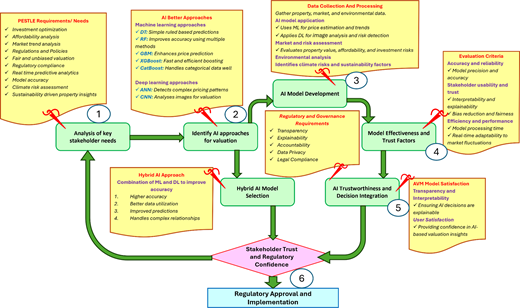
Balancing views is key, as fair AI guidelines should build trust without limiting innovation (Saeed et al., 2023). Furthermore, AI-driven valuation models enhance efficiency by automating property assessments and reducing human bias, making valuations more objective and accessible, e.g. by using DT, GBM and SVM to analyse structured real estate data and predict pricing trends with high accuracy (Abidoye et al., 2024). These models perform well because they can efficiently capture relationships within structured property variables. Meanwhile, models such as CNN contribute to valuation accuracy by assessing visual data, such as property images and neighbourhood infrastructure (Abidoye et al., 2024). Similarly, financial institutions and investors benefit from AI applications in risk assessment, market predictions and portfolio management (Lee et al., 2024). Long short-term memory networks, a subset of DL models, excel in analysing time series data, enabling real-time price forecasting and trend analysis (Gude, 2024). Investors can use these insights to make informed decisions about property acquisition and investment strategies, mitigating financial risks (Habbab et al., 2025). For policymakers, these insights offer valuable tools for urban planning, housing regulations and affordable housing policies (Yang et al., 2023). AI models can predict future housing demand, assess the impact of economic fluctuations and help formulate evidence-based housing policies (Danona et al., 2023). Without well-defined governance, inconsistencies in AI-generated predictions may undermine stakeholder trust and hinder adoption. Additionally, transparency and accountability must be integrated into AI-driven property valuation (Verma et al., 2023). Explainable AI techniques, such as SHAP and Local Interpretable Model Agnostic Explanations, can enhance trust by providing insights into how valuation decisions are made (Danona et al., 2023). Ensuring that AI models comply with ethical standards and regulatory guidelines will be key to their successful implementation in real estate (Danona et al., 2023). However, its adoption requires a structured approach that integrates stakeholder needs, model development and trust factors (Verma et al., 2023). In Figure 4, a framework is proposed that ensures AI-driven valuation models align with market demands while maintaining transparency and regulatory compliance. The process begins with identifying key stakeholders’ needs in the proposed framework, which encompasses investment optimisations, affordability analysis, market trend assessment and regulatory adherence. As Habbab et al. (2025) state, stakeholders, including buyers, investors, policymakers and real estate professionals, have distinct priorities. Addressing these diverse needs ensures AI valuation models align with both economic and ethical expectations. To meet these requirements, AI approaches for valuation utilise advanced ML and DL techniques (Hong et al., 2020). DT, RF, GBM, XGBoost and CatBoost improve structured data analysis, refining price predictions based on historical sales trends and economic conditions (Lee et al., 2024). DL models, such as ANN and CNN, enhance valuation accuracy by analysing unstructured data such as property images and neighbourhood characteristics (Jafary et al., 2024). The selection of an appropriate AI approach is crucial, as it influences the precision and reliability of property valuations (Hoxha, 2024). AI model development involves gathering property, market and environmental data to create robust predictive models (Danona et al., 2023). Additionally, environmental analysis identifies climate risks and sustainability factors, providing a holistic perspective on property valuation.
Model effectiveness and trust factors are essential for ensuring AI adoption in property valuation (Abidoye et al., 2021), as shown in Figure 4. Accuracy and reliability are fundamental, requiring models to deliver precise and unbiased results (Abidoye et al., 2024). Trust and usability depend on interpretability, explainability and bias reduction (Borodulin et al., 2024). Efficiency and performance factors, such as model processing time and real-time adaptability (Abidoye and Chan, 2017), further enhance the applicability of AI-driven valuation. Evaluating these factors helps ensure AI valuations are accurate and trusted. Therefore, combining ML and DL in a hybrid approach is often the most effective. This approach identifies accuracy, data utilisation and predictive capabilities by utilising the strengths of both methodologies (Gude, 2024). The implementation of AI-driven valuation models follows a validation cycle, where models are assessed for their trustworthiness and effectiveness before full-scale deployment. If models meet the required standard, including the needs of stakeholders and enhancement of trust, they proceed to the implementation stage; otherwise, they undergo refinement and reassessment in a continuous improvement loop (Abidoye et al., 2021). Trust and decision integration are critical aspects of AI model acceptance, as AVMs’ satisfaction relies on transparency and interpretability, ensuring that AI-generated valuations are explainable (Abidoye et al., 2024). User satisfaction is equally important, as confidence in AI-based valuation insights determines adoption rates (Lee et al., 2024). Regulatory bodies and real estate professionals play a vital role in refining AI valuation models to balance accuracy, transparency and compliance (Lee et al., 2024). This framework contributes to AI-driven valuation research with a focus on technical performance, along with stakeholder-centric concerns. Previous studies primarily emphasised model accuracy, whereas this approach integrates transparency, explainability and regulatory alignment (Lee et al., 2024). Ali et al. (2025) proposed solutions such as AI-powered property recommendations, automated valuations and predictive analytics. Figure 4 illustrates the proposed Hybrid AI Valuation Framework, with the numbered stages representing the sequential integration of AI techniques within the PESTLE framework, from stakeholder needs assessment to regulatory approval and implementation.
4.1 Theoretical contributions
This study advances AI-driven property valuation research by moving beyond a purely performance-based evaluation of models towards a socio-technical perspective that integrates predictive techniques with stakeholder trust and governance dimensions. By systematically mapping AI models across real estate domains and aligning them with PESTLE-based trust factors, the study bridges fragmented streams of literature on technical modelling, stakeholder adoption and regulatory considerations. The proposed hybrid framework positions trust, transparency and interpretability as central mechanisms in AI adoption, thereby extending stakeholder theory and trust-based perspectives into the automated valuation context.
4.2 Practical implications
For practitioners, the findings suggest that AI model selection should be aligned with task-specific valuation objectives rather than on a single universal approach. Ensemble models are widely applied in structured valuation tasks, while DL models are documented in complex and unstructured data contexts, indicating the value of hybrid modelling strategies. The study also highlights the importance of embedding explainability tools, ensuring transparency of inputs and outputs and strengthening professional training to support responsible and informed use of AI-driven valuation systems.
4.3 Policy and governance implications
The study also highlights the need for clearer regulatory frameworks governing AI-based property valuation. Policymakers should:
establish accountability standards for automated valuations;
clarify liability in cases of valuation discrepancies;
encourage data governance protocols to protect privacy; and
integrate environmental risk variables into valuation guidelines.
Given the increasing role of AI in mortgage approvals, taxation and urban planning, regulatory alignment is essential to ensure fairness, transparency and systemic stability. Furthermore, public–private collaboration is recommended to develop standardised benchmarks for AI valuation performance and explainability. This can promote responsible innovation while safeguarding stakeholder trust.
5. Conclusion
In conclusion, this SLR examined the relationship between AI-driven property valuation models and stakeholder needs and trust considerations. The findings show that ML techniques such as RF and SVM, along with DL models such as ANN and CNN, are widely applied across valuation contexts. RF and SVM demonstrated particularly strong performance in many studies because of their ability to effectively process structured property variables, such as location, size, age and transaction history. Different stakeholders prioritise distinct dimensions, including affordability, predictive accuracy, transparency and regulatory compliance. The review also indicates growing attention to hybrid approaches that integrate ML and DL techniques to address both structured and unstructured data requirements in property valuation.
However, several methodological limitations should be acknowledged. The review is limited to English language publications indexed primarily in Scopus, which may introduce database and language bias. In addition, as an SLR, the study does not include primary stakeholder data, and AI adoption patterns may differ across regional and regulatory contexts, potentially affecting generalisability. Future research should empirically validate the proposed framework through stakeholder surveys and semi-structured interviews involving key stakeholder groups such as property valuers, real estate agents, homebuyers, investors and policymakers. Such studies could provide deeper insights into stakeholder perceptions, trust dynamics, adoption barriers and practical expectations regarding AI-assisted property valuation systems. Further research may also include pilot implementations of AI valuation systems and cross-regional comparative studies to better understand trust dynamics and adoption patterns in practice. Future research should also investigate how regulatory frameworks can balance innovation, transparency, privacy and accountability in AI-driven property valuation systems. By systematically linking AI techniques with stakeholder-oriented valuation factors, this study provides a structured foundation for advancing transparent and context-sensitive AI applications in real estate.