


Fashion brands are increasingly showcasing curvy models, characterized by large breasts, wide hips, big buttocks and small waists, yet the psychological and behavioral impact of these representations on adolescent girls remains under-studied. This exploratory study aims to investigate how exposure to thin vs curvy models in fashion advertising relates to adolescent girls’ body image attitudes and purchase intentions.
Thirty-four adolescent girls participated in six focus groups using photo-elicitation. Participants viewed Instagram fashion advertisements with thin or curvy models. Thematic analysis identified patterns in cognition, affect and behavior related to body image and purchasing.
Reports of body image attitudes and clothing purchase intentions varied little between groups exposed to thin vs curvy models. In each case, two contrasting clusters of attitudes and intentions were evident. Negative body image attitudes were indicated by upward appearance comparisons, feelings of inadequacy and limited purchase intentions, with the latter attributed to perceived discrepancies between the advertised clothing and participants’ body shapes. Conversely, positive attitudes were indicated by body acceptance and appreciation, assessment of the clothing independently of model size or shape and stronger purchase intentions.
Fashion marketers should take account of how adolescents’ responses to fashion model diversity vary with their body image orientations and social media literacy.
This study contributes new insights into how adolescent consumers interpret and respond to model body types in fashion marketing. It reveals that their body image plays a more salient role than model size in shaping consumer behavior.
Introduction
Fashion advertising has long relied on thin models, driven by the belief that “'thinness’ sells” (Halliwell and Dittmar, 2004, p. 105), with thinness often equated with attractiveness across many cultures (Andersen and Paas, 2014). This emphasis on thin models has shaped consumer attitudes toward brands, with marketers assuming that it will boost brand appeal (Yu and Damhorst, 2015). However, the pervasive use of thin models in fashion advertising has been linked to negative body image outcomes including body dissatisfaction and unhealthy body-related behaviors (Clayton et al., 2017), particularly among women, as the idealized thin body type is unattainable for many (Hernández et al., 2021; Kim and Damhorst, 2010).
In response to these concerns, the body positive movement has gained momentum, advocating for the acceptance of diverse body types and challenging conventional beauty standards (Cwynar-Horta, 2016). Notwithstanding some backlash against this movement (Cohen et al., 2019), some fashion brands, such as Old Navy and Calvin Klein, now feature models of varying body sizes, including plus-sized and average-sized models, in their advertising campaigns (Yu, 2022). At the same time, there has been increased use of curvy models – characterized by large breasts, wide hips and a small waist (Ferdousi et al., 2023). However, scholars caution that commercial adoption may reproduce narrow appearance ideals under the guise of inclusivity. Media literacy research further suggests that individuals differ in their ability to critically interpret digitally curated body content, shaping how body-positive messages are received and internalized (Tylka et al., 2023).
While the shift toward curvier body types in advertising promotes greater inclusivity, concerns persist about the reinforcement of unrealistic body ideals, because, just like very thin bodies, curvy proportions may be unachievable for many women without surgical or cosmetic intervention (Hernández et al., 2021). Compared to research investigating the impact of exposure to thin, average-size and plus-size models, limited attention has been given to curvy models. The aim of this study is to investigate late-adolescent girls’ body image, body-related behaviors and clothing purchase intentions after viewing Instagram fashion advertisements featuring either curvy or thin models. More specifically, our main research question is: does exposure to different idealized body types trigger different cognitive, affective and behavioral responses?
Research indicates that “curvy” body representations are heterogeneous, including lean-curvy, thick-curvy and muscular-curvy types, with culturally variable implications for body image (Betz and Ramsey, 2017; Hunter et al., 2021; Vranken et al., 2025). Lean-curvy and muscular-curvy bodies remain closely aligned with dominant Western or fitness-oriented ideals and continue to elicit appearance-based comparisons (Bazzini et al., 2015; Webb et al., 2013). In contrast, thicker curvy bodies may more directly challenge thinness norms, particularly in non-objectifying portrayals (Vendemia et al., 2021). This study therefore focuses on lean-curvy representations to assess whether they diverge from, or subtly extend, the thin ideal.
Instagram was selected due to its central role in fashion advertising and in shaping body ideals through visual, interactive content (Cohen et al., 2019; Ferdousi et al., 2023; Hsiao and Lin, 2025). As a key platform for both brands and body-positive discourse, it increasingly features diverse body types, including curvy models. Given its high use among late-adolescent girls (17–19 years; WHO, 2016) and their frequent engagement with fashion advertising and online shopping (Pew Research Center, 2023), it provides an appropriate context to examine how model body size influences responses. Overall, the study investigates relationships between social media fashion advertising, adolescent body image and consumer decision-making within shifting body ideals.
Literature review
Theoretical perspectives on idealized advertising
Three theoretical perspectives help explain why individuals develop body concerns in response to idealized advertising. First, cultivation theory (Gerbner and Gross, 1976) suggests that repeated exposure to concentrated media content shapes individuals’ beliefs and perceptions, making certain ideals appear normative, desirable and central to attractiveness. Thus, extended exposure to idealized body types can lead to internalization of unrealistic standards, fostering body dissatisfaction and a willingness to engage in appearance-altering practices to conform to these ideals (Grabe et al., 2008). Within the social media context, cumulative exposure to appearance-focused content (e.g. filtered/idealized images on platforms like Instagram) cultivates perceptions of body ideals as normative and attainable, thereby amplifying dissatisfaction. These cultivation effects are strengthened as duration of exposure and extent of emotional investment increase. Conversely, social media literacy (that is, critical awareness of different social media platforms, their unrealistic content and their marketing intent), may weaken these effects (Tylka et al., 2023).
Second, social comparison theory (Festinger, 1954) posits that individuals evaluate themselves by comparing their appearance to others’. While comparisons with similar others (lateral comparisons) and worse-off others (downward comparisons) are common, of particular interest in the current research are upward comparisons, where people compare themselves with those they perceive as better-off. Such upward comparisons contribute to body image concerns, particularly when individuals compare themselves to models whose appearances are largely unattainable through healthy dietary and exercise practices (Diedrichs and Lee, 2011). Given the increasing prevalence of curvy bodies as an aspirational standard, curvy models in fashion advertising may also become targets for upward comparisons, potentially leading to negative body image outcomes. Social media can intensify comparison tendencies through easy access to edited/filtered peer, celebrity and influencer content (often more extreme than traditional ads). Upward appearance comparison often mediates the relationship between social media exposure and body dissatisfaction, with stronger effects in women (Tylka et al., 2023).
Third, objectification theory (Fredrickson and Roberts, 1997) proposes that trait body image reflects the internalization of an observer’s perspective, called self-objectification. In fashion sales contexts, negative body image and high self-objectification lead to appearance-focused buying that tries to fix or improve looks. Positive body image resists objectification and leads to purchase choices that focus less on appearance correction. Social media can increase self-objectification through, for example, appearance consciousness (constant worry about how attractive posted photos look), photo manipulation (editing images to fit ideals) and appearance pressure specific to platforms (Tylka et al., 2023).
Models and clothing purchase intentions
Researchers have begun exploring how advertisements increasingly featuring diverse model body types influence clothing purchase intentions. Findings thus far have been inconclusive. For example, while several studies (Andersen and Paas, 2014; Lou and Tse, 2021) find that women exposed to thin models show lower purchase intentions than those exposed to different (e.g. plus-sized or average-sized) models, other studies (e.g. Diedrichs and Lee, 2011; Yu, 2014) find no differences following exposure to average-sized and thin models. These mixed findings can be variously attributed to differences in the studies’ designs, samples, stimuli and dependent variables. For example, Andersen and Paas’s study used fewer ads than did the Yu study and its thin model was extremely thin (BMI < 16), which possibly accounts for the stronger observed effect of model type on purchase intentions.
Several theories provide insight into how exposure to fashion models may influence clothing purchases. According to classic marketing and consumer behavior theories (e.g. Ajzen, 1991; Homer and Kahle, 1988; Mehrabian and Russell, 1974), purchase intentions vary with a range consumer factors (values, attitudes, needs), product factors (price, attractiveness, perceived risks and benefits) and contextual factors (social norms, in-person vs online environments). Thus, purchases of clothing may be influenced by the style, color, quality, size and price of the apparel (Rieke et al., 2016), as well as by various sales and marketing ploys and contextual considerations (e.g. use of models, social influencers, special offers, refund/return guarantees).
Dual process theories (e.g. Kahneman and Tversky, 1979; Petty and Cacioppo, 1986) can shed light on the purchase decision-making process. Common to these theories is the proposition that humans process information through two fundamentally different systems, one of which is slow, analytic and diligent, while the other is fast, impressionistic and heuristic-driven. Exposed to fashion models, purchase decision-making via the slow system would involve careful examination of the properties of the clothes (e.g. cut, fabric, stitching), whereas purchase decisions via the fast system would be more holistic and instant, possibly relying on peripheral cues and mental short-cuts such as the attractiveness of the model. Purchase intentions may or may not differ between these two routes, but the important point is that very different information is used to form these intentions.
Self-concept/identity theories (e.g. Sirgy, 1985) provide further understanding of the complex role that body image and model representation play in shaping online clothing purchases. These theories highlight how intentions are influenced by consumers’ concepts of their actual and ideal selves, their image of the clothing brand or product and the extent of match between their images of their self and the product. In the current context, we might expect, compared to consumers who hold negative attitudes to their own bodies, those who have a positive body image would likely see their bodies as more similar to those of attractive models and would thus be more likely to believe that clothes that fit well and look good on the models will do the same on them. This congruity might strengthen purchase intentions compared to that of their negative body images. This assertion is supported by recent evidence demonstrating the importance of representation in shaping consumer responses. For example, women who self-identified as plus-size reported lower purchase intentions when they were not represented in in-store merchandising compared to women who self-identified as straight-size (Seekis et al., 2025a). Together, these findings suggest that perceived similarity and representation play a key role in shaping purchasing behavior.
Purchase decisions may be particularly complex when purchasing online, as consumers cannot try on clothes before buying and must often rely on imagining the fit of the clothes by scrutinizing them on the model (Kim and Damhorst, 2010). Any discrepancies noticed between the models’ bodies and their own may raise doubts about clothing fit and consequently dampen purchase intentions (Yu and Damhorst, 2015). Consistent with this, prior studies have demonstrated a negative association between women’s concerns with fit/size in online shopping and their purchase intentions (Kim and Damhorst, 2010). Research (e.g. Hollett et al., 2023), also shows that body-focused apparel imagery can exacerbate these concerns.
Importantly, most past research has investigated purchase intentions using quantitative methods that do not provide in-depth or first-hand accounts of the processes underlying clothing purchase decision-making. Moreover, to our knowledge, no prior study has directly compared the impact of exposure to thin vs curvy models on clothing purchase intentions. We simply do not know if, or how, consumers’ cognitive, affective and behavioral responses to lean-curvy models differ from their responses to thin models. The current study aims to fill these gaps.
Method
Table 1 presents a stepwise overview of the study design, from methodological rationale through stimuli development, participant recruitment, procedure and data analysis.
Stepwise overview of the study design (adapted from Carlini and Robertson, 2022)
| Step | Stage | Description | Key details/purpose |
|---|---|---|---|
| 1 | Rationale | Focus groups with photo-elicitation | Use of images prompt deeper, richer responses than only verbal questions |
| 2 | Stimuli Development – Stage 1 | 80 Instagram ads (40 thin, 40 curvy) from 16 brands | Selected for alignment; varied styles, settings, brands and racially diverse models; matched visuals; realistic comments added |
| 3 | Stage 2 (Pilot 1) | Pilot (n = 103; females 17–19; regular Instagram users; no eating disorder/body dysmorphic disorder) | Rated attractiveness and body type; reduced to 60 ads; matched attractiveness; >85% correct categorization; 7-s display |
| 4 | Stage 3 (Pilot 2) | Second pilot (n = 103) | Confirmed body-type perceptions; similar attractiveness; stimuli finalized |
| 5 | Main study – recruitment and setting | Six focus groups with female undergraduates (17–19) | Ethical approval; Australian university; private classrooms; first author moderated |
| 6 | Focus group procedure | Demographics → slideshow (30 ads) → ratings → disclosure → discussion | Stimuli used; 90–140 min sessions; covered thoughts, feelings, behaviors, comments and purchase intentions |
| 7 | Data analysis | Inductive thematic analysis | Independent coding; NVivo; iterative consensus; audit trail; co-author validation |
Design
We conducted qualitative focus groups using a photo-elicitation technique showing Instagram fashion advertisements featuring thin or lean-curvy models. In line with prior studies (e.g. Ahern et al., 2011), photo-elicitation was chosen given that images can connect with a deeper sense of human consciousness than words, thus the presentation of photos in interview settings can activate memories and elicit rich accounts of the study topic in ways that standardized verbal questions may not (Bates et al., 2017). Group discussions began after the photos were shown.
Stimuli
The stimuli consisted of still advertisement images developed in three stages. First, three authors selected 80 Instagram advertisements (40 featuring thin models and 40 featuring lean-curvy models) from 16 fashion brands based on their alignment with thin or curvy body ideals. For illustrative purposes only, Figure 1 shows an AI-generated image of a thin and a lean-curvy body type (These images were not used in the actual study). To enhance ecological validity, advertisements were chosen to ensure a diverse range of styles with clearly visible brand names. Including multiple brands helped reduce brand-specific associations that could confound participants’ responses (Geuens and De Pelsmacker, 2017). Comments were added to each condition to reflect Instagram’s interactive nature, as comments are a core element of Instagram imagery and engagement (Tiggemann and Barbato, 2018). The stimulus sets featured similar form-fitting clothing (e.g. dresses, trousers, tops, skirts and bikinis) and racially diverse models, and were matched on key visual characteristics, including indoor vs outdoor settings, shot type and model positioning.
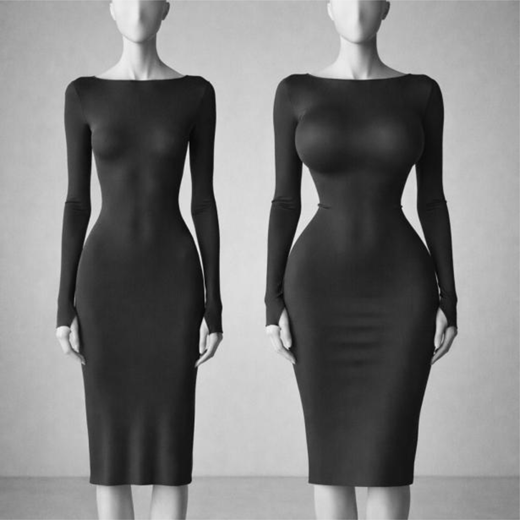
Non-human mannequins used as visual proxies of the thin and lean-curvy fashion model body shape profiles referenced in this study, replacing copyrighted Instagram images
Non-human mannequins used as visual proxies of the thin and lean-curvy fashion model body shape profiles referenced in this study, replacing copyrighted Instagram images
Next, two pilot studies were conducted. In both, participants met selection criteria of being female, aged 17–19 years, regular users of Instagram (≥2 h weekly) and without a history of eating disorders or body dysmorphic disorder. The first pilot study (n = 103) helped refine the selection to 60 ads (30 per condition) based on attractiveness ratings (1 = Very unattractive, 5 = Very attractive) and body type categorization (Thin, Curvy, Athletic, Plus-size, Other). The final sets of ads, adjusted for clothing consistency, had similar attractiveness ratings – thin: M = 3.81, SD = 0.24; curvy: M = 3.82, SD = 0.24; t(29) = -0.17, p = 0.869, d = -0.03. Over 85% of participants categorized body types as intended. Ads were modified into Instagram format, retaining brand names and adding one of 30 unique comments, with these comments identical across conditions. Two automated slideshows (30 ads each) were created, with three ads from the opposite condition inserted to maintain diversity. Matched ads (e.g. model featuring a dress photographed outdoors) appeared in identical order, with each ad displayed for 7 s.
Finally, a second pilot study (n = 103 new participants) confirmed that attractiveness ratings were similar (thin: M = 4.19, SD = 0.83; curvy: M = 3.98, SD = 0.94; t(101) = 1.20, p = 0.234, d = 0.24) and model categorization aligned with expectations (thin: 94.2%; curvy: 87.8%), further supporting the validity of the final stimuli set.
Main study – focus groups
After receiving ethical clearance, participants were recruited from an Australian university. Eligible participants were volunteer female undergraduates aged 17–19 years, enrolled in a psychology course, who used Instagram regularly (≥2 h per week) and did not have a history of eating disorders or body dysmorphic disorder. Participants attended one of six focus groups which took place in empty, pre-booked meeting rooms on the participants’ campus, providing a familiar, quiet and private environment for discussion. The first two authors monitored groups for signs of participant distress or desire to withdraw. Initially, the body image focus was not disclosed. After recording demographic information and Instagram use, participants viewed the stimuli advertisements on a large screen for 3.85 min (33 ads × 7 s each), rated the models’ attractiveness and categorized the models’ body types. The two model types were rated equally attractive, t(26.96) = 1.97, p = 0.06, d = 0.52, and all participants correctly identified the models as thin or curvy. Following the ethics committee’s request, the study’s focus was disclosed before the audio-recorded discussions began. A collage of eight advertisements was displayed via projector during the discussions to keep participants focused. Sessions lasted 90–140 min.
A semi-structured interview schedule ( Appendix 1) with pre-defined core questions was used to ensure consistency across groups. The main topics included participants’ past exposure to thin or curvy body types in Instagram ads, thoughts on the models, feelings about their own appearance, body-related behaviors, the impact of comments on perceptions and clothing purchase intentions.
Participants
As far as practical, the 34 participants were randomly assigned to groups. Three groups (n = 17) viewed ads featuring thin models and three (n = 17) viewed ads with curvy models. Each group included three to eight participants (see Appendix 2 for sample characteristics). Participants averaged 18.09 years old (SD = 0.67), with most identifying as White (82.4%) and Australian-born (76.5%). The majority (n = 26, 76.5%) had a ‘normal’ BMI (18.5–24.9 kg/m2) per WHO guidelines (Ottesen et al., 2021). Instagram use ranged from 20 min to 3.3 h daily.
Data analysis
Our research team comprised an early career researcher (Author 1), a PhD candidate. Author 2 is trained in marketing and is a health services researcher with substantial experience in qualitative research. Authors 3 and 4 are experienced academics with backgrounds in social and developmental psychology and multiple completed research projects and publications relating to body image and related issues. We brought to the project a diverse range of gendered, age-related, ethnic, religious, occupational and disciplinary experiences and backgrounds and were able to discuss and reflect upon the data from this rich array of perspectives. Throughout the coding and analysis processes, we sought to use our prior knowledge and experience sensitively so as to enhance, rather than constrain, our insights.
The team adopted an interpretivist epistemology, acknowledging their prior knowledge and engagement with the topic (Reiners, 2012). This approach involves iterative movement between the whole data set and its parts, blending existing understanding with emerging insights. It facilitates holistic exploration of social issues, deep participant engagement and nuanced interpretation of perceptions (Leitch et al., 2010). Inductive thematic analysis followed Braun and Clarke’s (2006) framework. This method suited the exploratory design by allowing patterns and themes to emerge directly from participant discussions rather than imposing predetermined categories. The first author immersed herself in the audio recordings and transcripts, generating initial coding ideas. The first three authors then independently coded two transcripts, compared results and refined the coding scheme collaboratively. The first author coded the remaining transcripts in NVivo and organized the data into themes and sub-themes. The team iteratively reviewed and refined these through discussions until consensus was reached.
Strategies used to ensure trustworthiness followed established guidelines (Nowell et al., 2017), including prolonged data engagement, detailed audit trails, regular debriefing sessions, diagramming of emerging themes and co-author validation of final themes. Although six focus groups were planned a priori, thematic saturation appeared after the fourth session. No new themes emerged in the final two groups, confirming that the data set captured a comprehensive range of perspectives on model body size, body-related feelings and clothing purchase intentions within this demographic. Figure 2 presents the data structure, illustrating first-order codes, sub-themes and overarching themes. Thematic analysis of the group discussions identified five main themes and 11 subthemes.
 The table contains three columns with headers First-order Codes, Sub-themes and Themes. The first theme is Attitudes Indicating Negative Body Image. Its sub-themes cover negative thoughts and beliefs, negative emotional response, and Instagram-related behaviour reinforcing negative body image perception. First-order codes include believing models have ideal bodies, comparing own bodies with model bodies, body dissatisfaction, envy, insecurity, focusing on models, and reading Instagram advertisement comments. The second theme is Attitudes Indicating Positive Body Image. Its sub-themes cover positive thoughts and beliefs, positive emotional response, and Instagram-related behaviour reinforcing positive body image perception. First-order codes include believing beauty comes in different forms, not comparing themselves to models, feeling happy with and accepting their bodies, not focusing on models, and not reading Instagram advertisement comments. The remaining themes are Social Media Literacy, Body-related Intentions, Willingness, and Behavior, and Factors Influencing Clothing Purchase Intentions. Their sub-themes cover social media literacy indicators, appearance-based and non-appearance-based body-related intentions and behaviours, focus on models, and focus on clothes.
Data Structure
The table contains three columns with headers First-order Codes, Sub-themes and Themes. The first theme is Attitudes Indicating Negative Body Image. Its sub-themes cover negative thoughts and beliefs, negative emotional response, and Instagram-related behaviour reinforcing negative body image perception. First-order codes include believing models have ideal bodies, comparing own bodies with model bodies, body dissatisfaction, envy, insecurity, focusing on models, and reading Instagram advertisement comments. The second theme is Attitudes Indicating Positive Body Image. Its sub-themes cover positive thoughts and beliefs, positive emotional response, and Instagram-related behaviour reinforcing positive body image perception. First-order codes include believing beauty comes in different forms, not comparing themselves to models, feeling happy with and accepting their bodies, not focusing on models, and not reading Instagram advertisement comments. The remaining themes are Social Media Literacy, Body-related Intentions, Willingness, and Behavior, and Factors Influencing Clothing Purchase Intentions. Their sub-themes cover social media literacy indicators, appearance-based and non-appearance-based body-related intentions and behaviours, focus on models, and focus on clothes.Data Structure
Results
In presenting the results, the three focus groups that viewed advertisements featuring thin models are labeled as Thin-1 (n = 3), Thin-2 (n = 7) and Thin-3 (n = 7), and the three groups that viewed curvy models are labeled as Curvy-1 (n = 3), Curvy-2 (n = 6) and Curvy-3 (n = 8). Due to participant anonymity and the nature of focus groups, specific comments cannot be attributed to individual participants. To guide readers, Figure 3 presents a schematic model of the possible relationships between each of the 11 themes and five sub-themes and sub-themes. An important, yet unexpected finding was that the same themes, subthemes and associated codes were evident in the discussions of both the thin and curvy exposure groups. For this reason, Figure 3 does not distinguish between the two conditions.
 The framework starts with viewing thin and curvy models in Instagram fashion advertising. This links to attitudes indicating negative body image and attitudes indicating positive body image. Social media literacy sits between these pathways. It includes indicators of social media literacy. The upper pathway is labelled unwilling or unable to reframe and leads to negative body image attitudes. These include negative thoughts and beliefs, negative emotional response, and Instagram-related behaviour reinforcing negative body image perception. The lower pathway is labelled willing or able to reframe and leads to positive body image attitudes. These include positive thoughts and beliefs, positive emotional response, and Instagram-related behaviour reinforcing positive body image perception. Both attitude pathways connect to body-related intentions, willingness and behaviour, which includes appearance-based body-related intentions and willingness, and non-appearance-based body-related behaviours. They also connect to factors influencing clothing purchase intentions, which include focus on models and focus on clothes.
How Girls Feel About Their Body Image, Body-Related Behavior and Purchase Intentions After Viewing Thin and Lean-Curvy Models in Instagram Fashion Advertising
The framework starts with viewing thin and curvy models in Instagram fashion advertising. This links to attitudes indicating negative body image and attitudes indicating positive body image. Social media literacy sits between these pathways. It includes indicators of social media literacy. The upper pathway is labelled unwilling or unable to reframe and leads to negative body image attitudes. These include negative thoughts and beliefs, negative emotional response, and Instagram-related behaviour reinforcing negative body image perception. The lower pathway is labelled willing or able to reframe and leads to positive body image attitudes. These include positive thoughts and beliefs, positive emotional response, and Instagram-related behaviour reinforcing positive body image perception. Both attitude pathways connect to body-related intentions, willingness and behaviour, which includes appearance-based body-related intentions and willingness, and non-appearance-based body-related behaviours. They also connect to factors influencing clothing purchase intentions, which include focus on models and focus on clothes.How Girls Feel About Their Body Image, Body-Related Behavior and Purchase Intentions After Viewing Thin and Lean-Curvy Models in Instagram Fashion Advertising
Attitudes indicating negative body image
The first theme captured a coherent cluster of attitudes reflecting a negative body image. Negative body image refers to a subjective and often distorted perception of one’s own body, accompanied by feelings of dissatisfaction, shame or discomfort with one’s appearance. It can lead to disordered eating and excessive exercise (Cash and Pruzinsky, 2002).
Several participants expressed thoughts and beliefs (cognitions) indicative of negative body image attitudes. Regardless of the model type to which they were exposed, these participants stated that they thought the models had ideal bodies, using terms like “ideal body type” and “perfect body type” to describe them. These expressions were spontaneous and immediate, suggesting the internalization of both the thin and curvy body ideals. In addition, participants described engaging in body comparisons that highlighted discrepancies between themselves and the thin or curvy models. These comparisons were particularly evident when envisioning themselves wearing the advertised clothes. For example, a participant said, “The first thing I do is […] start comparing myself [to the models], especially if I’m trying to picture myself in the clothes. I’m like, my waist wouldn’t look like that […] They look good, and I wouldn’t” (Curvy-2). Similar sentiments were expressed across all six groups, thereby demonstrating upward social comparisons regardless of model type.
Some participants conveyed negative emotional responses (affect) as a reaction to the model images, expressing dissatisfaction, insecurity, envy and/or discomfort when describing how they felt about their bodies. Emotional reactions included “not good” feelings when recognizing the mismatch, “Maybe a little bit jealous because obviously, the normal person wouldn’t look like that” and frustration at constant exposure, “I feel like constantly like that’s shoved in your face […] It’s constantly thrown at you” (Curvy-3). One participant stated: “Two, three years back if I would have seen this, I would have probably had a breakdown” (Thin-3). Participants also expressed concern about how inaccurate or tokenistic portrayals of body diversity in advertising exacerbate negative self-perceptions, particularly for those with larger bodies. One girl highlighted the emotional toll of such mislabeling: “For the people who are plus-sized, and they see someone saying that a mid-sized person is plus-sized, then they’ll think, ‘Oh, I must be like a cow or something if they think that’s what plus-sized is!’ It also makes them think terribly about themselves” (Thin-3).
Such feelings appeared deep-rooted and became evident through the passionate discussions, which can be seen in the following exchange between participants in Group Curvy-2. Note the discussion here also refers to previously discussed topics such as the idealness of the models, comparisons with the models and perceived discrepancies between themselves and the models:
Every time I see [the models], I’m like, okay, that’s the standard.
Yeah, exactly. Then you go to get ready in the morning, and you’re like, why do I not look like that?
Because the standard is what people think is attractive.
Yeah, exactly!
It’s like, okay, if that’s what is attractive, that [referring to her own body] is not the same thing.
A few participants reported engaging in behaviors on Instagram that reflect negative body image attitudes. First, they reported focusing attention on the models’ appearance, as evidenced by discussions about ideal bodies and how they compared to the models. Second, they read comments on the advertisements, often reinforcing pre-existing perceptions of the models’ idealized appearance. For example, a participant explained that reading comments about the models let her know, “I’m not the only one who thinks that, and it […] pushes it a little bit more in my brain” (Curvy-2). Another participant explained, “if I see comments on a girl’s post like that, [I think] wow, that is really nice for her, [but] like my one doesn’t look like hers” (Curvy-3), indicating that reading comments may reinforce ideals and negative self-views.
Attitudes indicating positive body image
The second theme captured participants’ attitudes reflective of positive body image. Positive body image is not the opposite of negative body image, but rather a holistic, multidimensional construct that encompasses the ability to accept, appreciate and respect one’s body regardless of societal standards or ideals (Tylka and Wood-Barcalow, 2015). Thus, as with negative body attitudes, positive body image comprises cognitive, affective and behavioral elements.
Some participants expressed positive body image thoughts and beliefs. In contrast to the cognitions associated with negative body attitudes, these more positive attitudes did not entail upward appearance comparisons, and, interestingly, they also revealed no evidence of downward (“I am better than you”) comparisons. Rather, these participants reported that they considered different bodies to be beautiful. One stated, “Yeah, well, I think people are lovely […] just for being them. If they’re tall, that’s fantastic. If they’re short, again, that’s good” (Thin-1). A more inclusive representation of beauty in contemporary social media appeared to explain these thoughts. For example, a participant in Group Thin-3 said, “Now that we have exposure on social media to normal photos and people, you can look at [the advertisement] and go, yeah, she’s pretty, but so are other women.” To which another person added, “[previously] we all felt like we had to be like those women [referring to the thin models]. Whereas now, it’s more inclusive […] . It’s okay to have cellulite [and] a tummy.”
Several participants had positive emotional responses to the advertisements and expressed feeling happy about their bodies. For instance, a participant articulated, “So, looking at these girls, it – doesn’t make me feel like I want to look like them. I’m happy just looking like me” (Thin-1). Similarly, another participant shared, “I’m just happy with how I currently look” (Curvy-1). Some participants conveyed a strong sense of self-acceptance, expressing these sentiments with conviction, passion and confidence in the value and purpose of their bodies. For instance, one participant firmly stated, “I wouldn’t change my body just because I saw any of those [models] because I think I’m secure with myself. Okay, this is the body God put me in, and I’m in it for a reason” (Thin-3). Others reflected on their self-acceptance journey, acknowledging limitations and consciously embracing themselves. For example, one participant shared, “I began to accept that maybe I can’t change certain things about myself, and that’s all right. I don’t have to fit into a certain standard […] . I think a majority of that was just learning to love myself” (Thin-3). And, in the Curvy (3) group: “Now it doesn’t bother me that much” (Curvy-Group 3).
A few participants engaged in Instagram-related behaviors that were consistent with positive body image attitudes. For example, they described “scrolling” through the advertisements, with one participant sharing that when she sees advertisements on Instagram, she “just scrolls through” and “won’t really think about it [the models]” (Thin-2). Although these participants notice the models, they avoid fixating on them, suggesting an active attempt to protect themselves from comparisons that could threaten their body satisfaction and acceptance. Another participant actively follows positive and inclusive content: “I follow a lot of body-positive influencers. Not necessarily bigger women or anything but just people who actually show photos with cellulite and with stretch marks” (Thin-Group 3). Finally, some participants mentioned avoiding reading the comments made by other users on Instagram advertisements. For instance, when one participant in Group Thin-1 shared, “I don’t like looking at the comments. It’s […] just idolizing someone you don’t even know” (Thin-1), another responded, “Yeah, same. I’m like that as well.” Such comments indicate positive self-perceptions may be maintained by deliberately avoiding potentially harmful idolizing comments.
Social media literacy
This theme captures indicators of social media literacy, a process that includes recognizing why both individuals and advertisers post content and awareness of the tendency for content to lean toward positivity (Schreurs and Vandenbosch, 2021).
Several participants indicated that they recognized the models were “photo-shopped,” “airbrushed” and “face-tune[d].” However, despite this awareness, they varied in their willingness or ability to reframe incoming information. For example, some participants expressed that despite knowing the models were photoshopped, they continued to idealize the models, consequently engaging in comparisons and feeling dissatisfied, envious and insecure due to the perceived discrepancies. For example, one participant said, “Yeah, you [the model] look fake. You don’t look real, but actually, I feel like I want to look like that. I want to look fake” (Curvy-3). Such potentially self-objectifying thoughts align with negative body image attitudes. Conversely, other participants appeared more willing or able to use their media literacy to reframe information. For instance, one participant shared, “I start to compare myself to them, and I go, it’s fine, it’s edited, and I keep scrolling, and I go, I have a rib cage, they don’t, whatever” (Curvy-2). Such reframing aligns with more positive body image attitudes.
Participants also recognized that many of the comments on the advertisements were generated by bots: “Half the time, […] they’re literally robots” (Thin-1). However, despite such acknowledgment, some participants admitted reading the potentially triggering comments and being influenced in how they viewed the models and themselves. These thoughts and evaluations are similar to other comments that reflect negative body image. Thus, it seems that media literacy may offer less protection for those with negative body image than for those with more positive body attitudes.
Body-related intentions, willingness and behaviors
Several participants reported body-related behaviors that were appearance-driven. For example, some participants expressed intentions to diet and exercise to achieve a thin or lean-curvy body. Such intentions are aligned with negative body image. One participant stated, “I would go [to the gym] to look a specific way,” while another expressed her hope that “If I go, I’m going to look like this [referring to the curvy models]” (Curvy-3). Remarkably, all three groups exposed to curvy models discussed their openness to surgical modifications. However, these discussions lacked the same conviction as those around dieting and exercise, thus indicating an interest in, rather than a firm intention or commitment to, pursuing surgical alterations. This can be seen in the following exchange in Group Curvy-2:
BBL [Brazilian Butt Lift], maybe.
I mean, taking fat out of your stomach and putting it in your ass.
That’s even better. It’s like two for the price of one.
It can fix two in one, not fix, but better.
Better!
But then again, I don’t know if I would actually go through with it.
Other participants discussed actively engaging in behaviors such as eating and exercising for health, rather than for enhancing their appearance. For instance, a girl shared her commitment to choosing healthy foods for her well-being, saying, “It’s good for my body” (Thin-2). Regarding exercising, a girl explained, “I go [to the gym] just to have my mind focussed. More like a mind thing than a looks thing” (Curvy-3). These ‘healthy-body and healthy-mind’ intentions suggest more positive body attitudes. Consistent with the research on positive body image (Tylka and Wood-Barcalow, 2015), these participants engaged in healthy self-care practices without feeling pressured to conform to specific beauty standards. Thus, although positive and negative body image attitudes were associated with similar behaviors like exercising, the motivation underlying these behaviors differed.
Factors influencing clothing purchase intentions
The final theme captured indicators of purchase intentions. When asked whether they would be open to purchasing the advertised clothes, several participants said they would not. Such statements were often followed by discussions involving perceived discrepancies between their own bodies and those of the models, with such discrepancies cited as a reason for not purchasing the clothes. One participant shared that “if [the model] is wearing a tight dress [which] made her body look amazing, that’s the first thing [I see]. Like, how it looks on her body and then comparing it to how it would look on my body.” When contemplating how the dress would appear on her, she expressed, “Not like that. […] I just know that’s not how my body looks. [So,] I’ll find something else [to buy]” (Curvy-3). Similar sentiments were shared by participants exposed to thin models, for instance: “These are nice clothes, but I would never buy them because I know that I wouldn’t look like that” (Thin-2). This focus on perceived appearance discrepancies is suggestive of negative body image.
Other participants based their purchase intentions on the clothes rather than the models’ appearance. For instance, a Thin-1 participant said:
When I’m looking at these [advertisements] and thinking about buying, I look at the cuts. […] I think, how would that look on me? I don’t [think] that looks so much better on her, that wouldn’t look like that on me. I just go; how would that look on me? What would it go with?
This concentration on the clothes and ability to resist focusing on the (thin or curvy) models’ bodies when intending to purchase is suggestive of more positive body image attitudes.
Discussion
This qualitative study examined late adolescent girls’ perceptions of their bodies, body-related behaviors and clothing purchase intentions after exposure to thin or lean-curvy models in Instagram fashion advertisements. As elaborated below, it contributes to the literature in three main ways. First, it challenges the assumptions that lean-curvy models necessarily encourage positive body image and promote sales. Second, it introduces new applications of several theories pertaining to self-identity, social relations and consumer behavior. Third, it has practical implications for the ethical advertising of clothing, as well as for the ongoing support of vulnerable young consumers.
A key finding was that exposure to either predominantly thin vs predominantly lean-curvy models yielded few discernible differences in the manifest content of the group discussions or in the underlying themes and sub-themes that emerged. Quite possibly, the model exposure duration used in this study was insufficient to elicit different responses. However, this unexpected pattern may also demonstrate that both thin and lean-curvy models function as idealized body types, as suggested by Brown and Tiggemann (2020). From this perspective, idealization, rather than specific body shape or size, is the salient factor shaping late adolescent consumers’ responses, resulting in broadly similar reactions across conditions (Tylka et al., 2023).
While the internalization of idealized body types remains a theoretically compelling explanation for the similar responses to thin and lean-curvy models, methodological factors may have also contributed to this finding. As described above, we sought to ensure that the two sets of images differed on only one dimension - body shape – by making them as similar as possible in all other respects through extensive pilot testing. This high degree of visual similarity may have reduced participants’ sensitivity to body shape differences or amplified similarity in their responses. In addition, it is possible that both body types activated similar comparison or evaluative processes, particularly if participants perceived both as aspirational or socially desirable. Li and Xie (2020), for example, demonstrated that use of high quality and professionally shot pictures (similar to the images in the current study) may elicit high levels of engagement, regardless of the advertised product or social media platform. Furthermore, participants’ attention may not have been exclusively focused on body shape. Other elements of the advertisements (e.g. styling, branding or overall aesthetic) may have influenced responses, potentially diluting the impact of the manipulated variable.
Other peripheral aspects of our method – the facilitators, interview schedule, small group setting, venue and so on – were identical across conditions, and these may have also contributed to the similarity of the discussion across conditions. Together, these considerations suggest that the observed similarity in responses may reflect both theoretical processes related to body image and characteristics of the stimuli and experimental context. Future research could explore these possibilities by varying additional elements of the visual stimuli or by incorporating measures of visual attention to better isolate the effects of body shape.
Theoretical insights
The novelty of our study lies in its drawing on a set of contemporary theories to provide a reasonably comprehensive account of the topic/s under investigation. That is, rather than introducing new theory, we apply a novel combination of existing theories to a specific and relatively unchartered (young consumer) context. Some of the theories (e.g. objectification and self-concept theories) shed light on relationships between aspects of the self and society, some (e.g. cultivation theory) relate more to types and frequency of media exposure and some (e.g. social comparison, dual process) focus on how users cognitively process (media) information received. All contribute to a deeper understanding of our topic, but none is exhaustive. They complement each other, with “gaps” in one theory filled by others.
In accord with social comparison theory, negative body image attitudes were associated with upward appearance comparisons. These attitudes were also associated with idealization of thin and curvy models and with body dissatisfaction and negative emotions (insecurity, envy). This suggests that despite efforts to diversify body representation, lean-curvy models can still be seen as “impossibly ideal” and contribute to harmful body image outcomes. These findings support prior research showing that the promulgation of the curvy ideal does not necessarily promote positive body image (Ferdousi et al., 2023). Indeed, exclusive emphasis on any single body type, whether thin, curvy or not, can prejudice other diverse body shapes and sizes, reinforcing harmful comparisons and perpetuating negative body image.
Positive body image attitudes were evident in all focus groups, with several participants expressing acceptance of their bodies even when different from the models and avoiding fixation on the body ideals presented in the ads. Consistent with positive body image literature (e.g. Tylka and Wood-Barcalow, 2015), such resistance can be viewed as a form of resilience, suggesting that a positive body image can provide protection against harmful comparisons. Quite possibly, the closer association of upward comparison processes with negative, than with positive, body image attitudes reflects the activation of different motives for social comparison (self-evaluation and self-enhancement, respectively) in these two groups of media consumers. Taken together, the findings demonstrate that the presentation of idealized body types in Instagram advertising negatively impact only some girls. Pre-existing (trait-level) body image attitudes act as a critical moderator, with those girls who already struggle with body image concerns particularly vulnerable.
The potential negative impact of lean-curvy models in Instagram fashion ads can be understood using the frameworks of cultivation (Gerbner and Gross, 1976) and objectification (Fredrickson and Roberts, 1997) theories. Cultivation theory suggests that repeated exposure to body ideals in fashion ads (“it’s constantly thrown at you”) makes these images appear normative and desirable (Grabe et al., 2008). Consistent with objectification theory, participants reported this frequent exposure to idealized body types led them to see these body types as “the standard,” as benchmarks to aspire to. These participants tended to engage in harmful appearance comparisons and express intentions to alter their appearance through dieting, excessive exercise or even cosmetic procedures (e.g. BBLs, liposuction).
Although some participants demonstrated social media literacy and recognized photo editing in ads, only a few effectively reframed potentially harmful content and engaged in protective behaviors such as scrolling past altered images or disregarding negative comments (Tylka and Wood-Barcalow, 2015). Others struggled to engage with advertising content in critical ways, reinforcing the likely ineffectiveness of Photoshop disclaimers in reducing appearance-related harm (Tiggemann, 2022). Thus, consistent with Tylka et al. (2023), it seems that social media literacy, like body image attitudes, moderates the impact of Instagram fashion model exposure on late adolescent girls’ responses.
Regarding clothing purchase intentions, some girls were more focused on models’ bodies than the clothes, with this focus associated with harmful upward comparisons and deterred purchases. Contrary to the long-standing assumption that “thinness sells” (Halliwell and Dittmar, 2004), our findings suggest that neither thin nor curvy models effectively sell clothes to those with negative body image. In these individuals at least, it seems that self-comparisons with unattainable body ideals do not enhance sales.
The observed divergence in participants’ purchase decision-making aligns with dual process accounts of cognition (e.g. Kahneman and Tversky, 1979; Petty and Cacioppo, 1986), in that both “slow” and “fast” modes of information processing modes were evident in how participants engaged with fashion stimuli: some described systematic evaluations of garment features, whereas others reported more immediate, impression-based judgments. Crucially, these different approaches mapped onto body image attitudes. More analytic decision-making was associated with positive body image attitudes, while more heuristic, model-focused judgments were linked to negative body image experiences.
Implications
The findings indicate that idealized models (thin or lean-curvy) can deter clothing purchases among girls who indicate aspects of negative body image, primarily due to perceived lack of fit and upward comparisons that shift focus from the clothes to the models’ bodies (Kim and Damhorst, 2010; Hollett et al., 2023). This suggests idealized advertising may have ambivalent or counterproductive effects on sales for vulnerable consumers. To mitigate these harms while maintaining consumer engagement, fashion brands should prioritize more relatable representations, such as average-sized or diverse models, or display clothing without models, to reduce internalization of unattainable ideals.
Importantly, the findings also suggest that simply substituting thin models may be insufficient as an inclusivity strategy. Lean-curvy models are often positioned as more inclusive but may still reflect idealized and narrowly defined body standards, which could limit their effectiveness in creating more relatable brand communications. This highlights the need for brands to adopt broader and more authentic forms of representation, alongside variation in styling, context and overall visual presentation, to create content that resonates more meaningfully with diverse audiences.
The results also highlight broader social and public policy implications. Early media literacy programs in schools are needed to help adolescent girls critically evaluate social media advertising and recognize unrealistic body portrayals (Tiggemann, 2022; Tylka et al., 2023). Prevention efforts, traditionally focused on the thin ideal, should now address the lean-curvy ideal as well. Specific protective strategies could include teaching girls to focus on product features rather than models’ appearances, disregard or question idealizing comments (often bot-generated) and limit exposure to appearance-focused content through digital pruning (Seekis et al., 2025b).
While Instagram fashion advertising aims to drive sales, it may inadvertently normalize unattainable ideals (Ferdousi et al., 2023), and thereby stimulate demand for harmful procedures and behaviors. Educational initiatives should inform young girls about these dangers. Regulators and industry bodies could consider guidelines for responsible advertising, such as mandatory disclosure of digital alterations/filters, restrictions on extreme idealization or requirements for more authentic body diversity in campaigns. By adopting these measures, brands and policymakers can contribute to healthier body image environments while supporting sustainable consumer engagement.
Limitations and future research
This study had several limitations. First, the study had a small, homogeneous sample of predominantly white, Australian-born university students aged 17–19. Future studies should recruit larger samples that have greater ethnic, gender and sexual identity diversity to test the robustness and generalizability of the current findings. Second, our application of photo-elicitation may have misrepresented participants’ usual lived experiences of social media, possibly leading to biased responses. Future research could seek to more accurately simulate real-life Instagram use by, for example, extending the exposure time, providing greater variability of stimuli and permitting more active engagement with the platform. Other research could use experimental methods or ecological momentary assessment (EMA) to assess the effects of exposure to Instagram fashion advertisements over time.
Third, focus groups carry well-documented limitations when exploring sensitive topics like body image. While they effectively elicit collective norms and enable shy participants to contribute indirectly through extroverts’ prompts (Kitzinger, 1995), group dynamics can produce social desirability bias, conformity pressures or inhibited disclosure among those fearing judgment. Additionally, the omission of participant identifiers prevented individual quote attribution. Future studies should combine focus groups with follow-up individual interviews and use pseudonyms/codes to enable both collective and personal insights with clear attribution.
Conclusions
In conclusion, findings from this exploratory study suggest that (positive vs negative) body image is a more powerful influence on female late adolescents’ responses to idealized fashion models than is the body type of the models. Compared to girls who display cognitive, affective and behavioral signs of positive body image attitudes, their peers with negative body image attitudes are more likely to make upward comparisons with idealized models, regardless of whether the models are thin or lean-curvy. These girls are also more likely to perceive discrepancies between their own bodies and those of the models, less likely to apply critical social media literacy skills when appraising the models, and more likely to cite a “lack of fit” as a reason for not intending to purchase the advertised clothes. Each of these processes may inadvertently perpetuate unattainable beauty standards and exacerbate feelings of body dissatisfaction. While these conclusions warrant further investigation in experimental studies, the current findings strongly suggest that, as has previously been found in respect of idealized thin models. The use of lean-curvy models in fashion advertising can have adverse effects on vulnerable young consumers while having effects that are ambivalent, at best, on clothing sales.
Ethics statement
This study received ethical approval from the Griffith University Human Research Ethics Committee (GU Ref No: 2022/669). All participants provided informed consent prior to participation. The research was conducted in accordance with the National Statement on Ethical Conduct in Human Research.
References
Further reading
Appendix 1. Core focus group questions
Opening
What social media do you use, and why? (Probe: Why Instagram specifically?)
How often do you see fashion ads on Instagram?
Do you follow fashion brands? (If yes: How do you choose? If no: Why not?)
On the Advertisements and Body Image
What first comes to mind about the ads you just saw?
What aspects did you focus on most?
What stands out about the models? How would you describe them? How attractive did you find them?
How did seeing these models make you feel?
How often do you see similar thin/curvy models in your Instagram ads?
How do you feel about your own appearance after seeing them today?
In what ways would you want to look similar or different?
How achievable is their body type? What would it take to get it?
Have you (or people you know) ever tried to achieve a similar body? (Probe: What did you do? How did it feel?)
Do you feel pressure to look like these models?
Interactive/Social Aspects
How often do you read comments on fashion ads?
What topics usually appear in comments?
Are there comments about the models’ appearances? What kinds?
Do those comments affect how you view the models or yourself?
Do you ever comment on these ads? Why/why not?
Purchase Intentions
Do you see comments about the clothes? What kinds?
How do you feel about the clothes shown today?
Would you buy them if priced like your usual clothes? Why/why not?
Would the same clothes on a different body type (curvy/thin) change your willingness to buy? Why/why not?
Closing
When negative feelings arise from these ads, what do you do to feel better?
What could brands or others do to reduce any negative impacts?
Appendix 2
Sample characteristics
| Variable | Total sample | Curvy groups | Thin groups | |||||||||
|---|---|---|---|---|---|---|---|---|---|---|---|---|
| Frequency | % | Range | Mean (SD) | Frequency | % | Range | Mean (SD) | Frequency | % | Range | Mean (SD) | |
| Total n | 34 | 100 | – | – | 17 | 50 | – | – | 17 | 50 | – | – |
| Age (years) | – | 18.09 (0.67) | – | 18.18 (0.53) | – | 18.00 (0.79) | ||||||
| 17 | 6 | 17.6 | 1 | 5.9 | 5 | 29.4 | ||||||
| 18 | 19 | 55.9 | 12 | 70.6 | 7 | 41.2 | ||||||
| 19 | 9 | 26.5 | 4 | 23.5 | 5 | 29.4 | ||||||
| Ethnicity | – | – | – | – | – | – | ||||||
| Aboriginal/TSI | 0 | 0 | 0 | 0 | 0 | 0 | ||||||
| White | 28 | 82.4 | 17 | 100 | 11 | 64.7 | ||||||
| Black/African | 0 | 0 | 0 | 0 | 0 | 0 | ||||||
| Asian | 2 | 5.9 | 0 | 0 | 2 | 11.8 | ||||||
| Indian subcontinent | 2 | 5.9 | 0 | 0 | 2 | 11.8 | ||||||
| Middle Eastern | 1 | 2.9 | 0 | 0 | 1 | 5.9 | ||||||
| Pacific | 0 | 0 | 0 | 0 | 0 | 0 | ||||||
| Mixed | 1 | 2.9 | 0 | 0 | 1 | 5.9 | ||||||
| Other | 0 | 0 | 0 | 0 | 0 | 0 | ||||||
| Country of birth | – | – | – | – | – | – | ||||||
| Australia | 26 | 76.5 | 15 | 88.2 | 11 | 64.7 | ||||||
| Other | 8 | 23.5 | 2 | 11.8 | 6 | 35.3 | ||||||
| Weight (kgs) | – | – | 45–77 | 61.33 (8.36) | – | – | 55–77 | 64.37 (7.58) | – | – | 45–75 | 58.47 (8.24) |
| Height (cms) | – | – | 155–187 | 169.85 (7.10) | – | – | 160–180 | 169.06 (6.50) | – | – | 155–187 | 170.65 (7.77) |
| BMI | 15.94–28.98 | 21.26 (2.98) | 17.67–28.98 | 22.53 (3.03) | 15.94–25.95 | 20.07 (2.46) | ||||||
| Underweight | 3 | 8.8 | 1 | 5.9 | 2 | 11.8 | ||||||
| ‘normal’ weight | 26 | 76.5 | 13 | 76.5 | 13 | 76.5 | ||||||
| Overweight | 4 | 11.8 | 2 | 11.8 | 2 | 11.8 | ||||||
| Obese | 0 | 0 | 0 | 0 | 0 | 0 | ||||||
| Morbidly obese | 0 | 0 | 0 | 0 | 0 | 0 | ||||||
| Missing | 1 | 2.9 | 1 | 5.9 | 0 | 0 | ||||||

