This paper describes the effectiveness of the sustainability-based action teacher model in distance learning, focusing on health and teacher performance.
In this quasi-experimental research, 34 primary school teachers (B accredited) from three areas participated in a one-group pretest–posttest design. Health parameters (blood pressure, blood sugar and uric acid) and performance indicators (knowledge, performance observation, satisfaction and self-expectation) were compared before and after the intervention using a T-test. Consistency across regions was analyzed using one-way ANOVA. Ethical approval was obtained from the Committee of the Faculty of Medicine, Udayana University, in line with the Helsinki Declaration.
Health checks (blood pressure) and clinical laboratory results (blood sugar and uric acid) showed a decrease, with varying supportive factors. Cognitive function results remained in the normal category. Furthermore, nutritional status, seen from the body mass index, waist-to-hip ratio and waist-to-height ratio, showed that the proportion of decrease was greater than the increase. Teacher performance, assessed through knowledge tests, performance observations and self-satisfaction and expectations, showed significant improvement.
The program was conducted through group remote learning. The maintenance phase in the transtheoretical model was only partially achieved, and the termination phase was not yet reached.
The model fosters teachers’ awareness and motivation, facilitating behavioral changes in health and performance, thus addressing the challenges of achieving sustainable development in education.
Health promotion intervention model that integrates health literacy with teacher competencies. This research contributes to improving physical health, cognitive function, nutritional status and teacher performance.
1. Introduction
Health conditions affect education quality as they are essential for performing daily activities. Productivity, including teacher performance, is directly influenced by health levels (MacLeod et al., 2022; Sultana and Hossain, 2023). Optimal health enhances employee productivity, while noncommunicable diseases (NCDs) negatively impact individual performance and, consequently, organizational productivity (Lawana et al., 2023). According to earlier research, regulating body weight, eating a balanced diet and getting regular exercise all greatly lower the risk factors for NCDs (Awuchi et al., 2020; On et al., 2021). However, preliminary observations show that only 4 out of 38 respondents have utilized the NCD POSBINDU health service, with just one attending regularly, while more than 80% of respondents are unaware of the service.
In this research, a companion program was developed to support the government’s community-based NCD control efforts through the suboptimal Integrated Development Post (Posbindu) program. Furthermore, teachers’ knowledge of health and NCD risk factors remains low (Erlina et al., 2023), emphasizing the need for targeted intervention programs (Kumar et al., 2022). Interventions can impact participants’ interactions with content (Peramunugamage et al., 2024).
Preventing NCD risk factors takes multi-sector collaboration (Amerzadeh et al., 2020) and broader societal understanding of health (Buja et al., 2020). Health awareness is the foundation for promoting healthy lifestyles and preventing NCDs (Liu et al., 2020). Schools and teachers, as key educational facilitators, help prevent NCD through the modeling of healthy behaviors and education (Dadaczynski and Hering, 2021; Kumar et al., 2022). Continuous teacher competency development should also be enhanced (Amhag et al., 2019) by integrating professional, pedagogical and technological skills to meet the demands of the Industrial 5.0 era (Caena and Redecker, 2019).
The integration of technology and digital learning is essential in modern education to facilitate distance learning (Haleem et al., 2022). Distance learning offers several advantages, including accessibility, affordability, flexibility, improved pedagogy and supportive policies (Rosak-Szyrocka et al., 2022). Distance learning allows learners to access materials regardless of time and place at an affordable cost (Coman et al., 2020). However, distance learning makes teacher–student interaction reduced (Rakhmatullaev, 2023). Despite this limitation, distance learning remains a widely adopted alternative in today’s learning landscape (Ferri et al., 2020).
Indonesia faces various challenges in improving education quality (Sukmayadi and Yahya, 2020). Despite the pivotal role of teachers in shaping education quality, key indicators have yet to show significant progress (Strøm and Falch, 2020). Teacher competence is essential for student learning outcomes (Blömeke et al., 2022), requiring proficiency in pedagogy, personality, social skills and professionalism to meet the growing demands of the profession. Professionalism is further enhanced through technological skills, contextual approaches and the effective application of knowledge. Teachers must integrate educational values into learning outcomes using an Education for Sustainable Development (ESD) approach (Gericke and Torbjörnsson, 2022). Implementing ESD supports the development of educational competencies that enhance teacher performance and value-based instruction. Moreover, innovative educational strategies should be developed to promote preventive, curative and health-promotion initiatives.
Health literacy is the challenge in education and healthcare (Paakkari and Okan, 2020). Public health literacy remains generally low, even among teachers (Walker, 2023). Many teachers over the age of 40 often experience headaches, fatigue and joint pain, often linked to unhealthy daily habits such as minimal physical activity, poor dietary choices and inadequate fruit and vegetable intake (Erlina, 2023; Opara and Maduka, 2020). Health literacy interventions are more commonly implemented in clinical populations than in non-clinical communities like teachers (Nutbeam and Lloyd, 2021). However, innovations in health education, such as social media and digital learning resources, are helping to bridge this gap (Stellefson et al., 2020).
The sustainability-based action teacher (SuBAT) model is an intervention designed to enhance teachers’ health, nutritional status, and performance. SuBAT integrates health literacy with teacher competencies, aligning with sustainable development principles. It was developed through an analysis of healthcare simulation (Sollid et al., 2019), guidance for healthcare leaders (Geerts et al., 2021) and video-based interaction (Budiastra et al., 2019). The model consists of seven phases: (1) pre-upgrading orientation, (2) preliminary body and mental scan, (3) learning with experts, (4) preparation in action, (5) action, (6) body and mental scan for evaluation and (7) sustaining action and communication. Cognitive function improvements are expected in phases 1 and 2, performance enhancements in phases 3 and 4 and overall physical and cognitive benefits in the final three phases.
SuBAT is grounded in theories of self-confidence, metacognition, social learning, self-management, behavioral change, self-efficacy and motivation. Various health intervention studies highlight the effectiveness of such programs (Countdown, 2022; McGill et al., 2021).
2. Statement of problem and question research
This research presents the academic community’s role in advancing the UN’s Sustainable Development Goals (SDGs) related to health and education. WHO Global Health Estimates state that since 2000, NCDs have been the world’s leading cause of mortality, impacting not just the general public but also educators, who play a crucial role in raising the standard of education (Szymkowiak et al., 2021). Enhancing teacher performance is, therefore, essential for strengthening education systems (Madani, 2019). Empirical evidence underscores the need to improve teachers’ knowledge and awareness of health and nutrition (Erlina et al., 2023).
With increasing societal mobility and technological advancements, distance learning has emerged as a viable solution for addressing health and education challenges. Online health interventions have demonstrated effectiveness in promoting well-being (Linardon et al., 2020; White et al., 2022). However, challenges remain in the widespread implementation of health promotion programs and electronic-based physical health interventions through distance learning (Cheng et al., 2020; Meherali et al., 2020).
SuBAT is an innovative intervention model that integrates the economic, environmental and social pillars of sustainability while addressing the intersection of health and education. By evaluating its effectiveness in enhancing physical health, cognitive function and nutritional well-being as well as improving teacher performance through distance learning, this research aims to contribute to the achievement of the 2030 Agenda for Sustainable Development.
3. Method
This quantitative experimental design was performed using a pretest-posttest structure, a single group and a replication class without a control group (Fraenkel and Wallen, 2009). The SuBAT trial was conducted to assess its suitability based on the conditions and characteristics of teachers within a limited sample. The research design consisted of a single group observed at the pretest stage (O1), followed by the implementation of the hypothetical model as the treatment (X) and then a posttest (O2) to measure outcomes.
This research implemented SuBAT using blended learning as a model for health and education promotion with the phases outlined in Table 1.
3.1 Participants
A total of 34 teachers from three elementary schools participated in this research, with a four-month intervention covering the provinces of North (7), South (11) and West (16) Bali. Participants were selected using a purposive sampling technique. The chosen schools were primary schools that received a B rating in the 2021 National School Accreditation Assessment.
3.2 Data collection and analysis
This research adheres to the principles of scientific excellence and has obtained ethical permit No. 2574/UN14.2.2VII.14/LT/2022 from the Ethics Commission of the Faculty of Medicine, Udayana University, in accordance with the Helsinki Declaration. The ethical review assessed key aspects, including scientific validity and research methodology.
Quantitative analysis was employed to evaluate improvements in teacher health and performance. Health assessments included physical and cognitive function evaluations as well as nutritional status measurements. Physical health tests focused on key NCD risk factors, such as blood pressure, blood sugar and uric acid levels. The Mini Mental State Examination (MMSE), which measures direction, attention and recollection, was used to evaluate cognitive function. Nutritional status was measured using anthropometric indicators, including body mass index (BMI), waist-to-hip ratio (WHR) and waist-to-height ratio (WHtR). Teacher performance was assessed through knowledge tests, observations and response questionnaires. See Table 2.
The hypothesis in this research is as follows:
3.2.1 Treatment impact test
The treatment impact test was performed using the Wilcoxon test and T-test to determine any significant difference between health outcomes and nutritional status between pretest and posttest.
There is no difference in health test results, nutritional status and performance between pretest and posttest. The null hypothesis is rejected (Sig < 0.05).
There is a difference in health test results, nutritional status and performance between pretest and posttest. The alternative hypothesis is accepted (Sig .
3.2.2 Intervention consistency test
ANOVA and Kruskal–Wallis tests were used to determine the consistency of intervention results across three schools – northern, southern and western schools under the following hypotheses.
H0: The null hypothesis is rejected (Sig < 0.05). There are differences in the consistency of intervention results between northern, southern and western schools.
Ha: The alternative hypothesis is accepted (Sig . There is consistency in the intervention results across northern, southern and western schools.
4 . Findings and discussions
4.1 Health
The health tests in the SuBAT program examine various physical health indicators (blood pressure, blood sugar levels and uric acid levels) and the MMSE. Table 3 presents the health conditions of participants, emphasizing disturbances in blood pressure, blood sugar and uric acid levels. The data indicate a reduction in the proportion of participants diagnosed with Stage 1 hypertension (18%), diabetes (9%) and hyperuricemia (21%). The literature currently under publication emphasizes the importance of dietary and lifestyle changes in reducing modifiable risk factors for NCDs, such as hypertension, hyperglycemia, hypercholesterolemia and hyperuricemia (Nomura et al., 2022). Moreover, research has established a correlation between elevated uric acid levels and hypertension (Borghi et al., 2022), both of which contribute to the onset of cardiovascular diseases and strokes (Mansyur et al., 2021; Mills et al., 2020).
Table 3 illustrates a positive shift in participants' physical health, as evidenced by a decrease in the proportion of individuals with hypertension, diabetes and elevated uric acid levels. Concurrently, a greater number of participants achieved normal levels of uric acid, blood sugar and blood pressure. These health improvements can be attributed to the lifestyle and dietary modifications adopted by participants during the SuBAT program. The program’s structured phases align with the transtheoretical model of behavior change (Hashemzadeh et al., 2019), guiding individuals through the stages of awareness (precontemplation, contemplation and preparation), followed by action (implementation of changes) and culminating in maintenance and termination, where sustained health improvements are achieved.
The SuBAT model reinforces prior research advocating for the integration of health education within school curricula to enhance public awareness of NCDs (Kumar et al., 2022). Specifically, phases five and six of the program focus on the implementation of behavioral changes, while the final phase corresponds with the maintenance and termination stages, wherein participants endeavor to sustain these behavioral modifications as permanent aspects of their lifestyle. The SuBAT program aligns with existing research on the management and prevention of NCDs, supporting evidence that behavioral interventions are among the most effective strategies for long-term lifestyle modifications (Budreviciute et al., 2020).
Every subject showed no symptoms of cognitive dysfunction, as shown in Table 3, with scores on the MMSE falling within the normal range. Anthropometric measurements revealed a 6% reduction in the prevalence of Obesity 1 (BMI), a 6% decrease in the waist-to-hip ratio (WHR) and a 9% reduction in the waist-to-height ratio (WHtR). However, changes among participants classified as overweight or obese were limited, with only six individuals achieving a BMI within the normal range by the conclusion of the SuBAT program. Some participants with an “overweight” WHtR transitioned to the “normal” category, while six participants moved from the “overweight” to the “normal” WHR classification. Achieving a normal BMI, WHR or WHtR status typically requires substantial weight loss, which is often facilitated by rigorous dietary restrictions and intensive exercise regimens (Zafar et al., 2019). While diet and physical activity programs have been widely recognized as effective components of disease prevention strategies (Salas-Salvadó et al., 2019), the SuBAT program did not impose stringent dietary restrictions but instead promoted a balanced diet and simple physical activities. Given the relatively short duration of the research, the results did not indicate significant changes in overall weight status among participants.
4.2 Teacher performance
Teacher performance was assessed through health and nutrition knowledge tests, performance observations and self-satisfaction responses. The health and nutrition knowledge test serves as an indicator of teachers’ health literacy, which is essential for fostering a healthy lifestyle in alignment with ESD. As presented in Table 4, the results indicate an improvement in teachers’ knowledge test scores, suggesting an enhancement in their understanding of health and nutrition concepts.
The overall performance of teachers significantly improved following their participation in the SuBAT program. The knowledge component demonstrated a 97% increase in the “Very Good” category, while performance observations recorded a 100% improvement in the same category. Self-satisfaction and expectation responses improved by 56% in the “Very Good” category, as highlighted in Table 4. The SuBAT program emphasized education on NCDs, their management, balanced meal planning and the importance of physical activity, all of which were reinforced through a digital pocketbook. Despite being delivered remotely, participants engaged in interactive discussions with experts and peers via online group chats, facilitating knowledge exchange on health, nutrition and performance. The preliminary body and mental scan phase applied metacognitive theory for monitoring and evaluation, enabling the identification of health, nutrition and performance-related issues, which were subsequently addressed through targeted interventions. In the learning with experts phase, supported by social learning theory, knowledge acquisition was further reinforced through expert-led and peer interactions. Research confirms that such educational and interactive approaches effectively enhance public health literacy (Li et al., 2022; Jung et al., 2022). The effectiveness of the SuBAT model is further substantiated by studies demonstrating that health literacy interventions contribute to improved knowledge, attitudes and behaviors related to health (Heine et al., 2021).
The observed improvement in teacher performance is closely linked to the assessment of teacher quality, particularly in areas such as technology integration and sustainability in accreditation points. Beyond health education, the SuBAT program incorporates training on technology use in teaching and the implementation of ESD approaches, which are integrated into the school curriculum through remote learning strategies. A key component of the program involved teachers participating in aquaponics activities – an integrated system for cultivating fish and vegetables – which not only promoted physical activity and provided a sustainable source of healthy food but also served as an educational tool for instilling sustainability values. The integration of ESD is further reinforced through the use of aquaponics as a learning medium, aligning with broader sustainability goals. The research demonstrates a significant enhancement in teacher performance, with the average score increasing from 55.35 (low) to 94.52 (very high), a change largely attributed to the comprehensive training provided by the SuBAT program. The accumulated experience gained through these activities played a crucial role in improving teacher performance (Podolsky et al., 2019).
The SuBAT model aligns with school-based intervention programs, albeit with variations in school activities and a distinct focus on teaching and learning (Yüksel et al., 2020). An increase in teachers’ self-satisfaction with their performance was observed, with scores rising from 74.80 at the beginning of the program to 96.60 upon completion. This suggests that teachers felt significantly more satisfied with their professional performance after participating in the program. Teacher satisfaction is strongly linked to increased motivation, enthusiasm, and commitment to the school’s vision, which in turn positively influences student learning outcomes (Lopes and Oliveira, 2020; Ortan et al., 2021). The SuBAT program, supported by theories such as motivation theory, self-efficacy and behavioral change theory, fosters a positive educational culture by enhancing health, lifestyle and teacher performance. In the “sustain of action and communication” phase, teachers focus on maintaining the program’s success and disseminating its positive impacts to colleagues and the wider community. This phase aligns with motivation theory, which posits that positive lifestyle changes can sustain long-term motivation for healthy living. Increased motivation and situational support contribute to greater energy in achieving life goals, while fostering a positive school culture is essential for enhancing teachers’ professionalism (Muhsin et al., 2020).
3.5 Percentage change in health test results and teacher performance
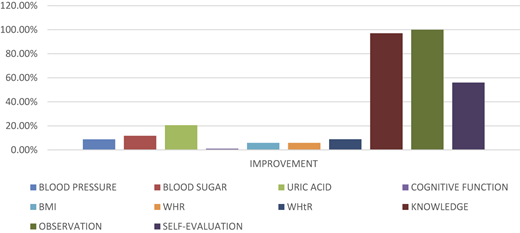
Figure 1 shows the percentage change in health, nutritional status, and performance of SuBAT participants.
Figure 1 illustrates improvements in physical health, with most participants experiencing better blood pressure, blood sugar and uric acid levels. Cognitive function remained stable for the majority, with some participants showing improvements, though initial assessments indicated no cognitive impairment. The absence of cognitive impairment is a key indicator of good mental health. Nutritional status also improved, as reflected in positive changes in BMI, waist-to-hip ratio (WHR) and waist-to-height ratio (WHtR). Teacher performance in knowledge, observational assessments and self-satisfaction also showed marked improvement, with uric acid levels demonstrating a 20% enhancement. The SuBAT program required teachers’ commitment to lifestyle and dietary changes, supported by high-quality instructional videos on health, nutrition and teaching performance. Behavior change was primarily driven by individuals’ willingness to adopt healthier habits. While cognitive function remained largely stable, a positive correlation was observed between teacher self-efficacy, job satisfaction and cognitive function (Capone and Petrillo, 2020), ultimately contributing to a 100% improvement in teacher performance. As teacher performance continues to improve, it is expected to positively impact school accreditation as well.
3.6 Statistical test
Table A1 ( Appendix) presents the results of blood pressure, blood sugar and uric acid tests across the three schools. While no significant differences were observed in most cases, certain variations were noted, particularly at the Western school. Although reductions in these health indicators were recorded, they did not reach statistical significance. At the Northern school, where the majority of teachers initially exhibited normal health conditions, no significant changes were detected. Similarly, while the southern school demonstrated some improvements, these changes were not statistically significant.
The SuBAT program aligns with eHealth-based multiple health behavior change interventions, which have been shown to be more effective when grounded in theoretical frameworks than non-theoretical approaches in promoting physical activity. Interventions utilizing traditional communication methods, such as SMS and phone calls, have been found to be more effective in fostering healthy eating patterns than modern internet-based approaches (Duan et al., 2021). A similar trend was observed in the nutritional status measurements, with minimal significant changes, except for the WHtR results at the Western school. Notably, excessive workload may contribute to reduced motivation for prioritizing health.
The SuBAT program, which emphasizes health promotion through empowerment and training, is consistent with findings from other intervention programs that advocate for multi-component approaches, including at least 60 min of physical activity, healthy eating habits and lifestyle modifications. Moreover, transitioning from sedentary behavior to light or moderate physical activity has been associated with improved health outcomes, including enhancements in both physical and cognitive functions (DiPietro et al., 2020). The effectiveness of the SuBAT model is further supported by previous research demonstrating the role of behavioral interventions in hypertension control among teachers (Mini et al., 2019).
Regarding teacher performance, the results of the performance tests indicate significant improvements across all subtests, except for the knowledge test at the northern school. Performance indicators among teachers improved across all participants, reinforcing the well-documented effectiveness of teacher training programs in addressing challenges within educational institutions. The “Preparation in Action” phase of the SuBAT program involved participants designing and implementing professional teaching plans in schools. By incorporating behavioral change theory, participants made lifestyle adjustments based on personal experiences and peer interactions. In the subsequent “Action” phase, teachers further reinforced these behavior changes by integrating educational tools such as mini green gardens utilizing aquaponics. These findings suggest that lifestyle and dietary improvements indirectly contributed to enhanced teacher performance. Prior research has established that teacher training programs improve educators’ competencies in developing innovative teaching methodologies and instructional strategies (Pozo-Rico et al., 2020). Studies highlight a significant correlation between physical activity, healthy lifestyle behaviors and improved staff performance (Mohamed and Ghalab, 2022).
Table A2 ( Appendix) presents the consistency of test outcomes across the participating schools, demonstrating overall stability, except for blood glucose measurements and waist-to-hip ratio (WHR). Variations in blood glucose results were influenced by several factors, including the proportion of participants with pre-existing health conditions, individual motivation to adopt healthier behaviors and differing workload demands across schools. Research on community-based cardiovascular disease prevention programs highlights that individual motivation and student engagement play crucial roles in the successful adoption of healthy lifestyles. Such interventions provide guidance and involve public health officials in referring at-risk individuals to appropriate healthcare services (Ndejjo et al., 2022).
Despite these variations, regional differences in geography, religion or ethnicity did not significantly affect the outcomes. The performance subtests also exhibited consistency across schools, suggesting that the effectiveness of the SuBAT program is not dependent on regional factors and is thus applicable in diverse community settings. This conclusion is further supported by the program’s implementation in schools on the island of Bali, where institutions with both Hindu and Islamic backgrounds demonstrated similar results. These findings align with previous research, which suggests that health intervention programs, particularly those integrating technology, effectively promote health and prevent related issues (Gong et al., 2021). Additionally, the SuBAT intervention supports the mounting data that e-mental health interventions are effective in treating and preventing eating disorders. To guarantee the long-term efficacy of such interventions and to raise their quality, more study is necessary (Linardon et al., 2020).
The implementation of SuBAT is particularly relevant in the context of remote learning systems. The integration of appropriate instructional materials in distance learning environments enhances self-directed learning skills, especially among pre-service teachers (Erlına et al., 2022). Online health interventions offer several advantages, including flexibility in time, location and cost as well as broader accessibility for participants in remote areas. However, these interventions also face challenges, such as limited Internet access and device availability, varying levels of digital literacy among teachers, reduced motivation due to minimal social interaction and instructional difficulties for facilitators (Fidalgo et al., 2020; Sadeghi, 2019). The use of social media as a lifestyle monitor may be ineffective due to the risk of digital disruption (Kumar et al., 2024). The adoption of remote monitoring systems continues to encounter obstacles, particularly in the use of digital health tools and the need for direct interpersonal interactions in healthcare services (Monaco et al., 2021).
SuBAT’s implementation was supported through a variety of communication tools, including videos, Zoom meetings and social media platforms such as WhatsApp, which facilitated participant engagement during the “Learning with Experts” phase. Printed materials, such as model books, pocketbooks and instructional guides, played a key role in supporting independent learning for both participants and healthcare professionals. However, a notable challenge during the monitoring phase was the suboptimal use of WhatsApp for self-management. Participants required repeated reminders to consistently report their health conditions, which affected their overall motivation. This challenge is consistent with prior research indicating that while technology enhances health literacy, additional solutions – such as improved health system navigation and more effective communication with service providers – are necessary for sustained engagement (Dunn and Hazzard, 2019).
4. Conclusion and recommendations
SuBAT model is a health promotion framework specifically designed for teachers. It is structured across seven phases and grounded in various psychological and behavioral theories, including self-confidence, metacognition, social learning, self-management, behavioral change, self-efficacy and motivation. The model’s main goals are to improve teacher performance, encourage healthier lifestyles, lower risk factors for NCDs, improve nutritional status and encourage positive behavioral changes.
Research findings indicate significant improvements in participants’ health, nutritional status and professional performance. While some quantitative health indicators did not demonstrate statistically significant changes, qualitative assessments revealed noticeable enhancements in participants’ lifestyle habits. These improvements contributed to better management of NCD risk factors, healthier nutritional status and increased teacher effectiveness. Notable progress was observed in teacher performance across various dimensions, including knowledge acquisition, observational assessments and self-reported satisfaction. Moreover, existing literature supports the positive relationship between health improvements and increased teacher performance.
Despite these promising outcomes, several challenges remain in the implementation of the SuBAT program. Economic constraints, logistical difficulties and internal barriers continue to pose obstacles, necessitating further investigation and refinement. Future research should focus on expanding the program’s scale and incorporating more comprehensive mental health assessments, particularly those that examine emotional well-being. Additionally, financial challenges associated with sustaining healthy dietary practices remain a concern. One potential solution is the integration of personal food cultivation, wherein teachers acquire fundamental skills in farming and animal husbandry. This approach could enable them to access affordable organic food sources. Furthermore, the SuBAT intervention program holds potential for integration into existing government initiatives, such as POSBINDU.
Deepest gratitude is dedicated to the Southeast Asian Ministers of Education Organization for providing valuable supervisor and financial assistance in completing this research under contract number: 064c/RECFON-SK/II/2022.