


Artificial intelligence (AI) is an emerging research variable. It aims to enhance students' cognitive and creative abilities through the use of AI applications to better think and perform in their various academic fields. Nowadays, AI tools and applications are rapidly growing in the education sector and have not yet been fully studied in online and distance learning (ODL) settings with respect to students’ creativity (SC). Based on the theory of planned behavior, the objective of this study is to highlight the role of AI in SC in ODL education. This research also investigates the mediating role of happiness between the use of AI and SC.
The study used a mixed-method approach to measure the students’ perceptions, integrating both quantitative and qualitative tools and techniques. Data were collected through a questionnaire and structured interviews of ODL students through convenience sampling. The quantitative data were analyzed through the PROCESS macro in SPSS, whereas the qualitative data were analyzed through content analysis.
Findings reveal that AI is positively associated with SC. Additionally, the results show that AI is positively related to SC indirectly through its impact on happiness, highlighting the mediating role of psychological well-being in the relationship between AI and creativity.
In today’s diverse and highly competitive educational environment, the psychological and emotional well-being of the students has a strong impact on their perceived behavioral control and attitudes. This study provides novel implications for policymakers, educationists and teachers to enhance SC by understanding the underlying mechanism through happiness.
Introduction
Artificial intelligence (AI) is a significant phenomenon that has been incorporated in every field of life nowadays (Fidan, 2024). Numerous examples exist showing the impact of AI on human life, such as access to web information, investigation processes, navigation of drivers and pedestrians, etc. (Williamson and Eynon, 2020). AI is a set of techniques that enables computers and machines to perform tasks normally requiring human intelligence (Fidan, 2024). It enables machines to think, learn and solve problems like humans. It includes gaming, robotics, language translation, etc. AI is a technology that has the full potential to enhance innovation and creativity in the education sector (Robert et al., 2024), but it also has been recognized as a disruptive technology (Akpan et al., 2025). However, time has shown that it can be advantageous for any field, depending on how it is used. The rise of AI in the education field is overwhelming, particularly in the context of open and distance learning (ODL) (Dogan et al., 2023). As technology improves, we will witness more advanced AI-powered tools and applications. These tools will become crucial to improve students’ creativity (SC) and learning (Marrone et al., 2022). As AI tools advance into the education sector (Tan, 2024), it has become vital to understand their impact on SC, especially involving psychological factors like happiness (Fidan, 2024). This study seeks to explore AI’s impact on students’ creative abilities through the lens of the theory of planned behavior (TPB) with a focus on the mediating role of happiness in the ODL settings.
Creativity has been the subject of extensive research and is considered a crucial component of academic success and personal development. Creative thinking is a necessary skill needed to tackle the challenges of the 21st century (Yulianti et al., 2025). With the incorporation of AI in the ODL education system, creativity is supported by offering tailored educational experiences that are aligned with individual learning needs and styles (Long et al., 2022). However, the impact of AI on SC is more nuanced. On the one hand, AI may grant novel and innovative opportunities for creativity, problem-solving and decision-making, while, on the other, it may hinder SC if they excessively rely on technology (Pham and Le, 2024).
Happiness is a psychological construct that influences creativity (Laosum, 2023). Literature is evident that positive emotional states are crucial to enhancing cognitive and problem-solving skills, which are essential to creativity (Lyubomirsky et al., 2005). Managing happiness is a significant pillar that supports students' academic curricula (Torres-Reynoso et al., 2025). Consequently, understanding the impact of AI on happiness in ODL settings can provide insight into its indirect impact on SC. Happiness may be mediating the relationship between AI and SC in ODL students determining how students take benefits from AI-generated learning systems.
TPB postulates that behavioral intentions, attitudes, subjective norms and perceived behavioral control are the significant determinants of the behavior (Azjen, 1991). This theory basically originated from the theory of multi-attribute attitude, introduced by Fishbein (1963) (Zhao et al., 2025). In the field of ODL education, where AI tools are becoming more established, TPB is a valuable framework to understand how AI influences the students’ creative abilities. AI, in the education sector, provides personalized and adaptive learning experiences and feedback that hinders or enhances creativity depending on how these tools stimulate the students’ attitudes, control and overall happiness (Azjen, 1991; Venkatesh et al., 2003).
This paper investigates the impact of AI on SC with the mediating role of happiness in the ODL settings. The study aims to apply TPB to investigate the underlying mechanism through which AI enables creativity and the extent to which happiness mediates its effect. The study contributes extensively to supporting SC in a distance learning environment, which ensures students’ well-being.
Research gap
Though numerous studies are presented on AI, there exists a significant gap in studying its impact on SC in ODL settings. Moreover, literature present on AI is devoid of any psychological and emotional factors like happiness (Kormos and Csizér, 2014). Furthermore, limited research ponders light on the direct and indirect relationship between AI and SC by applying TPB in detail. The current study seeks to fill this gap by incorporating TPB to study the underlying mechanism of AI–creativity nexus with the integration of the mediating effect of happiness.
Significance of study
The research has great potential to help educationists to design educational policies in ODL settings. Educators can better incorporate AI applications and tools by understanding the influence of AI on creativity and students’ support. Teachers and educationists can better understand the indirect effect of happiness on students’ lives and can help them to enhance their emotional well-being. The significance of research is evident as it has the potential to contribute to an emerging role of AI technologies in ODL settings. It gives an insight into the enriched capacity of AI to improve students’ happiness, creativity and engagement in a distance learning environment. It sheds light on the design and implementation of AI tools in a better way by strengthening the application of TPB in ODL settings.
Theoretical framework and hypotheses development
The integration of AI into education, particularly in ODL environments, has transformed pedagogical practices and student experiences (Mohammad and Kamran, 2023). The literature review examines the impact of AI on SC within ODL frameworks, with a specific focus on the mediating role of happiness. The review draws upon TPB to explore how AI influences students' creative outcomes and the indirect role of happiness in this process. TPB posits that individual behavior is determined by attitude, subjective norms and perceived behavioral control (Azjen, 1991). Within this framework, TPB provides valuable insight into students’ attitudes towards AI, social influences and perceived control behavior affecting their creativity in learning environments.
Relationship between artificial intelligence (AI) and students’ creativity
The emergence of AI into the education sector, especially in ODL, has created many pedagogical transformations and changed the students’ behaviors and learning experiences. AI refers to the tasks performed by machines through technology that does not require human intelligence. AI practices are integrated into educational settings and have engaged students and personalized their learning experiences. Creativity refers to using innovative ways to perform certain tasks. Literature is evident that AI has influenced the SC (Hasibuan and Azizah, 2023). Recent studies suggest that AI-driven tools simulate the SC and provide them personalized feedback through constructive ideas such as intelligent tutoring systems (Marrone et al., 2022). These AI tools enabled the students to think out of the box and come up with more refined ideas, which are crucial for critical thinking and problem-solving skills. Within the framework of (Azjen, 1991), students’ behavior is influenced by attitudes, subjective norms and perceived behavioral control. In this context, AI-driven tools shaped the students' creative behaviors by shaping their attitudes, controlling the tools and influencing the subjective norms within their learning environment. Within the context of ODL students, TPB posits that AI shaped the creativity of the students. Literature is evident that when students perceive positive attitudes towards AI and consider it as supportive and helpful, their creativity gets activated (Hasibuan and Azizah, 2023). As AI provides tailored feedback and refines their ideas, they explore creative ways to learn (Matraeva et al., 2020). Among ODL students, TPB emphasizes that students have perceived control over the AI tools that affect their creativity. Students feel themselves more competent using AI technologies and bring forth creative ideas (Azjen, 1991). Students perceive that AI tools are user-friendly and hence subsidize a higher sense of control to foster their creativity (Matraeva et al., 2020). TPB postulates that social norms of ODL containing positive feedback from instructors play a crucial role among ODL students. Their creativity and motivation are enhanced once they get positive reinforcement and review from the teachers. This is consistent with TPB’s notion that subjective norms impact behavior by shaping students' perceptions of what is expected and valued in their learning community. This study purposefully chose to approach AI as a single unit since its goal was to investigate the broad effects of AI tools on SC and emotional well-being in ODL settings rather than going into detail about the various kinds of AI tools. Given the study’s scope and word limit restrictions, a thorough literature analysis was carried out using the main research objectives as a guide. This review highlighted the wide range of ways AI can improve student outcomes. Although it was acknowledged that different types of AI tools might have varied impacts, this degree of differentiation was outside the purview of the current study.
Therefore, we hypothesize:
AI is positively associated with SC.
Relationship between artificial intelligence (AI) and happiness
Happiness refers to the emotional state characterized by feelings of joy, satisfaction and fulfillment. The relationship between AI and happiness is an unexplored and debatable topic in the ODL settings. AI can enhance the individual learning of ODL students and improve their academic performance (Fidan, 2024). This improvement fosters their satisfaction level and happiness (Fidan, 2024). AI tools provide 24/7 support to the students and improve their emotional state. The ODL students feel less frustration and less sense of isolation due to this support (Chiu et al., 2024). Such support continuously improves the student’s well-being and state of happiness (Kamthan et al., 2019). AI tools help students to manage their time and activities which lessen academic stress and improve their learning satisfaction (Sivaperumal et al., 2024), since reduced stress level is associated with increased happiness (Gökler et al., 2015). AI tools play the role in reducing students’ isolation, contributing to their emotional well-being (Kamthan et al., 2019). AI further supports students’ interaction, which maintains their happiness (Fidan, 2024). Within the framework of TPB and in the context of ODL studies, students develop a positive attitude towards AI tools due to their effective study engagement, which in turn increases their happiness (Azjen, 1991). AI-driven tools make study more enjoyable and less stressful (Johnson et al., 2016). As AI tools provide timely assistance to ODL students, it increases their perceived behavioral control over learning. When ODL students have more control over the learning process, they experience more happiness (Azjen, 1991). Based on this, we hypothesize:
AI is positively associated with happiness.
Relationship between happiness and students’ creativity
Literature is evident that happiness fosters creativity by incorporating positive attitudes among individuals (Isen, 2015). Happy individuals are more engaged in creative thinking due to their increased cognitive abilities (Fredrickson, 2001). Happy students are more creative, as they are more open to experiencing new settings. As per Lyubomirsky et al. (2005), happiness contributes to creativity as it enhances their cognitive thinking and problem-solving skills. ODL students face many challenges including self-motivation (Bernard et al., 2009). Happiness positively influences the students’ motivation and academic performance in the distance learning context (Bernard et al., 2009), which is necessary for creativity. Literature is evident that happiness fosters creativity by incorporating the positive attitudes among individuals (Isen, 2015). Within the framework of TPB by Azjen (1991), the behavior of an individual is determined by the attitudes, perceived behavioral control and subjective norms. Within the context of ODL settings, students’ attitude towards creativity can be determined by happiness. If ODL students have a positive emotional state, they will be more involved in creative ideas (Azjen, 1991). Hence, happier students develop a more favorable attitude towards tasks, which improves their creativity (Lyubomirsky et al., 2005). Pressure from peers and teachers is crucial for ODL students. Happiness can affect their perception of social pressure. Happier students are more confident and less affected by negative feedback, which develops greater creativity (Deci and Ryan, 2000) among ODL students. Perceived behavioral control refers to one’s perception of performing a certain behavior (Azjen, 1991). Through the mechanisms described by TPB, happiness enhances students' perceived behavioral control by increasing their self-efficacy and self-resilience as they believe more in their creativity. Therefore, we postulate:
Happiness is positively associated with SC.
Happiness as a mediator
Happiness is a crucial determinant influencing educational outcomes. Happiness can play a mediating role between AI and creativity, as it fosters cognitive thinking and problem-solving skills, which are essential for increased creativity (Mayer et al., 2024). When students have positive emotions and well-being, they are more engaged in creative thinking (Diener and Seligman, 2004). AI tools enhance the positive emotional attitude of students (Fidan, 2024), which in turn creates happiness, resulting in creativity (Diržytė et al., 2021).
Within the foundation of TPB, individual behavior is shaped by attitudes, subjective norms and perceived behavioral control (Azjen, 1991). In the context of ODL settings, AI influences creativity through happiness as a mediating variable. ODL students have a sense of control over educational responsibilities through AI tools, which in turn enhances their positive emotional state in the form of happiness, which is linked with greater creativity (Fredrickson, 2001). Therefore, we hypothesize:
Happiness mediates the relationship between AI and SC such that AI positively influences students' happiness, which in turn enhances their creativity.
Figure 1 available at the end of this document represents the theoretical framework of the study pictorially.
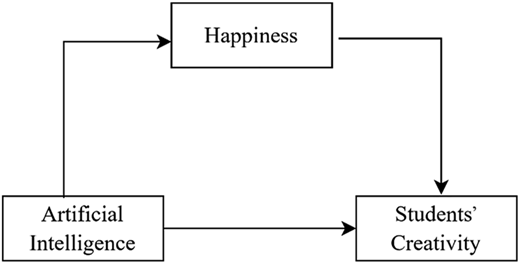
Theoretical framework: effect of AI on students’ creativity with the mediating role of happiness. Source(s): Literature review
Theoretical framework: effect of AI on students’ creativity with the mediating role of happiness. Source(s): Literature review
Methodology
The study has taken a mixed-methods approach, measuring the impact of AI on SC using both quantitative and qualitative tools and techniques. To uncover the direct and indirect effects of AI on SC and to investigate the intricate mechanisms underlying these interactions among ODL students, the study has used both quantitative and qualitative methods for data collection as well as for data analysis.
Sampling and sample size
The target population was online students studying in information and communication technology-based distance learning settings. The study employed the convenience sampling technique to select the research participants for both qualitative and quantitative data collection. The convenience sampling technique (Uçar et al., 2024) has allowed the researcher to get the data from readily available online students within a reasonable budget and low time frame (Etikan et al., 2016). As concerned with the sample size, 224 students enrolled in ODL programs were approached through convenience sampling, and the data were collected through questionnaires, whereas 10 structured interviews of the students studying in ODL programs were conducted to further explore the constructs under investigation. These interviews investigated the constructs thoroughly and offered a comprehensive analysis of how AI affects SC and generates happiness among them. Creswell (2007) argues that in qualitative research, data collection should continue until and unless saturation occurs rather than worrying about sample size. As a result, the research has reached saturation with 10 interviews. This research is cross-sectional because a cross-sectional study can give an overview of students' experiences, attitudes, and results at a specific point in time. It is appropriate in ODL environments, where learning methodologies and strategies are constantly evolving and changing. It makes it possible to quickly gather data from a wide range of students, providing insights into factors like academic achievement, engagement and contentment without necessitating long-term follow-up as used by Uçar et al. (2024). Moreover, the cross-sectional design is both cost-effective and efficient, making it an ideal choice for evaluating the current state of ODL programs and identifying areas for improvement.
Instrumentation
Quantitative data collection tool
The study used a structured online survey to collect quantitative data while using a questionnaire. The already developed tools tested in different countries, cultures and settings have been used for measuring AI, creativity and happiness. A five-point scale was used from 1 to 5 in the questionnaire, where 1 was considered strongly disagree, 5 was considered strongly agree and 3 was coded as neutral. The details of each measure are as follows.
AI scale: The already developed questionnaire designed by Pacheco-Mendoza et al. (2023) was used to measure AI. The questionnaire consisted of 18 items. Some of the items were “The outcomes and decisions generated by AI systems are easily understandable and explainable” and “Artificial intelligence systems respect my autonomy and allow me to have control over decisions that directly affect me.”
SC scale: The already developed questionnaire consisting of 11 items was used to measure the SC developed by Joo (2007). Some of the items were “I frequently come up with inventive ideas,” “I can introduce and propose ideas to others” and “I’m not afraid to take risks.”
Happiness scale: Happiness was measured by an already developed questionnaire consisting of 14 items. The used Oxford Happiness Questionnaire was developed by psychologists Hills and Argyle (2002). The scale had the following items such as “I have very warm feelings towards almost everyone,” “I am intensely interested in other people” and “I find most things amusing.”
Qualitative data collection tool
The qualitative data have been collected through structured interviews. The interview guide was prepared, consisting of questions related to the students’ experiences regarding AI, its impact on creativity and the role of happiness in their ODL learning settings. These open-ended questions helped them to delve into their experiences with AI use and how it has affected their creativity. Additionally, these interviews helped to discover the state of happiness of the students while using AI.
Data collection procedure
The data were collected through online Google Forms within the last week of July and the first 2 weeks of August to get the maximum response. Regarding the interviews that were a component of the qualitative approach, they were carried out virtually via Google Meet. Each research participant was interviewed for approximately 20–25 min after the meeting link was shared with them at the mutually agreed upon time and date. Later, the interviews were transcribed for analysis.
Ethical considerations
Students were informed prior to that survey that their names would be kept confidential, and the data were collected purely for academic purposes.
Data analysis
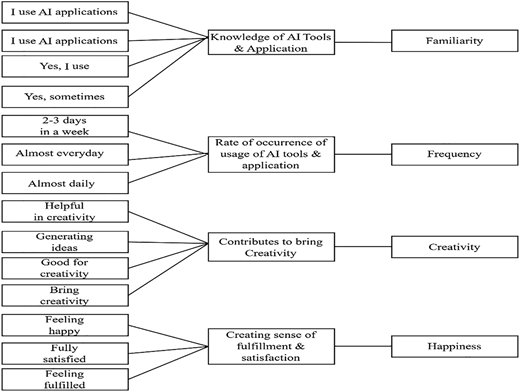
Data were analyzed through the PROCESS macro in SPSS by using Preacher and Hayes. We have employed Model 4 to get the mediation effect. Descriptive statistics, Pearson correlation and regression analysis were run in SPSS. Preacher and Hayes are appropriate to measure the mediation effect and direct and indirect relationships. On the other hand, qualitative data were analyzed through content analysis by identifying patterns and developing themes (Braun and Clarke, 2006). The first step of the qualitative data analysis was to transcribe the interviews. Then, recurrent statements were selected from the transcription, which is the first order in the analysis. Later, keywords were identified from the selected statements, which was the second order in the coding process. In the third order, the aggregate themes were conceptualized.
Figure 3, which is available at the end of this document, explains it pictorially.
Findings
Quantitative sample description
The descriptive analysis in Table 1, available at the end of this document, shows that most of the respondents were females (130; 58%). Data reveal that most of the respondents were single (198; 88.4%) and fell into the 20–25 age bracket (150; 67%). It further shows that most of the respondents (58%) were bachelor’s degree holders.
Demographics
| Category | Frequency | Percentage | |
|---|---|---|---|
| Gender | Male | 94 | 42 |
| Female | 130 | 58 | |
| Age | 20–25 Year | 150 | 67 |
| 26–30 Year | 24 | 10.7 | |
| 31–35 Years | 50 | 23 | |
| Marital status | Single | 198 | 88.4 |
| Married | 26 | 21.6 | |
| Education | M.Phil/Masters | 22 | 9.9 |
| Intermediate | 72 | 3.1 | |
| Bachelors | 130 | 58 |
Source(s): Table by authors
Table 2, available at the end of this document, shows the descriptive statistics like mean and standard deviation of AI (3.92 and 0.55), happiness (3.76 and 0.54) and SC (3.90 and 0.49), respectively. Analysis shows that all the variables have a moderate and positive relationship between them (Cohen et al., 2013).
Correlation analysis
| Mean | SD | AI | HA | SC | ||
|---|---|---|---|---|---|---|
| Artificial intelligence (AI) | 3.9263 | 0.55082 | 1 | |||
| Happiness (HA) | 3.7602 | 0.54300 | 0.506** | 1 | ||
| Student’s creativity (SC) | 3.9010 | 0.49014 | 0.642** | 0.589** | 1 | |
Note(s): **significant at 0.01; *significant at 0.05; n = 224 and SD: standard deviation
Source(s): Table by authors
The study has employed some preliminary tests in SPSS 23, like descriptive statistics and correlation analysis, to check the validity of the data. Cronbach’s alpha was calculated to check the internal reliability of the items. It shows 0.927, which represents an acceptable range. Hierarchical regression analysis with the help of Hayes’ PROCESS macro was applied to test the main hypotheses.
Direct relations and mediation effect test
The study has applied model 4 from the PROCESS macro (Hayes, 2013) in SPSS to test the proposed relationship in Hypotheses 1, 2, 3 and 4. Bootstrapping with a sample size of 5,000 and a confidence interval (CI) of 95% was carried out to measure the indirect effects (Hayes, 2009). The Preacher and Hayes (2004) method was used to examine the significance of indirect effect by considering the upper and lower limits of intervals having non-zero intervals. Table 3 shows the positive relationship between AI and SC and supports Hypothesis 1. Model 1 from Table 3 represents the (β = 0.421 and t = 8.44), describing that if students are motivated to use AI tools in their study, their creativity will be improved.
Regression and mediation analysis
| Model 1 (path c) SC | Model 2 (path a) HA | Model 3 (path b and c′) SC | |||||||
|---|---|---|---|---|---|---|---|---|---|
| Predictor | β | t | CI | β | t | CI | β | t | CI |
| AI | 0.41* | 8.4 | 0.32; 0.50 | 0.49* | 8.73 | 0.38; 0.61 | 0.15* | 4.03 | 0.89; 0.24 |
| HA | 0.32* | 6.40 | 0.22; 0.42 | ||||||
| R2 | 0.50* | 0.25* | 0.41* |
| F | 113.27 | 76.23 | 155.79 |
Note(s): Each column is a regression model that predicts the criterion at the top of the column. *p < 0.001 and CI: confidence interval
Source(s): Table by authors
Model 2 from Table 3 analyzed Hypothesis 2, proposing that students experience happiness when they encounter AI tools. It shows a significant relationship (β = 0.49 and t = 8.473) at p < 0.001 between AI and happiness. Since the students feel a sense of accomplishment and relaxation in their study with AI tools, their emotional state of mind improves and they feel happy. Hypothesis 3 describes that if students feel happy, they will be more creative. Model 3 from Table 3 shows a significant relationship (β = 0.159 and t = 4.03) between happiness and SC and supports this hypothesis.
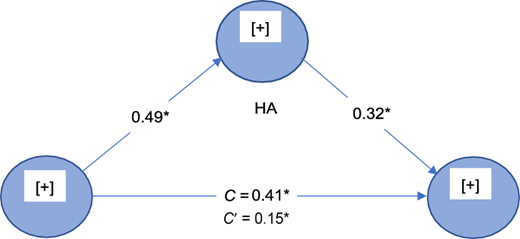
Hypothesis 4 of the research posits that happiness mediates the relationship between AI and SC. To test this hypothesis, mediation was run into process macro with a 95% CI and 5,000 bootstrapping as suggested by Preacher and Hayes (2004). Process macro initiates the CIs for indirect effects (Hayes, 2013). The statistical values for the indirect effect of AI on SC through happiness are (0.89; 0.24) with no zero between them, which supports our proposed mediating relationship in Hypothesis 4.
Table 3 represents the statistical results of regression obtained from mediation analysis in the form of three models. Model 1 shows that AI can enhance the SC. A 50.6% variation shows that the change in SC was due to AI (R2 = 0.506, F = 113.27 and p < 0.001). Model 2 describes the positive relationship between AI and happiness with R2 value of 0.25. Model 3 shows that happiness is positively associated with SC while controlling AI with R2 value of 0.412.
Finally, the study employed model 4 from the PROCESS macro via bootstrapping method (Hayes, 2017). Statistical results proved the indirect mediation path from AI to SC through happiness was justified. Moreover, Table 3 represents the partial mediation existing through indirect effects. Both direct and indirect effects are significant, thus showing partial mediation. As the direct effect and indirect effect (0.31; 0.50) (0.159; 0.32) are both significant, hence, partial mediation is proved. Figure 2 demonstrates the details of the mediation effect. Eventually, statistical support affirms that the partial mediation of happiness existed between AI and SC.
Qualitative findings
The findings of qualitative data reveal the emergence of different themes for detailed analysis and exploration of phenomena under study. Figure 3 demonstrates the main themes that emerged through the complete process of thematic analysis. The first conceptualized theme was familiarity. This theme explains that all students are familiar with different AI tools. Most of them use ChatGPT as the most used AI tool for academic or research purposes. The participants state that they use different AI tools frequently for academic purposes, but few of them state that they usually do not use these AI tools and applications in their academic as well as non-academic lives. The majority of the participants in this research use these AI tools and applications recurrently, like twice a week or 2–3 times a week, and few state that they use these tools, especially ChatGPT, daily for academic as well as non-academic purposes. This explains the frequency of the usage of AI tools, which is another theme of this study.
The findings of this research further reveal that most of the research participants are of the view that different AI tools improve an individual’s efficiency and help them both academically and outside of it. These participants believe that AI tools help to make the use of time effectively and efficiently for academic purposes. As per one of the participants, “it’s just helpful in making my time precious.” Furthermore, most participants think that, when applied wisely, AI tools can improve academic performance. In addition, according to most of the participants in this research, these different AI tools and applications foster creativity, which is another main theme of this study. According to one of the participants, “AI tools boost creativity by offering new ideas, automating tasks, and personalizing recommendations.” It has been further endorsed by another participant of the study in these words, “AI can assist creative writers by generating ideas and prompts to overcome writer’s block.” On the other hand, few participants are of the view that it varies from subject to subject as these AI tools enhance creativity in a few subjects, whereas in other types of subjects, these tools are not that effective in terms of creativity. Few participants are of the view that these various AI tools do not enhance creativity; rather, these tools make “people dependent” on them and kill their creativity, but the majority of the participants believe that different AI tools and applications promote creativity and ultimately make students feel fulfilled and satisfied.
Together, these feelings of fulfillment and satisfaction give rise to students' happiness, which is another main theme under study. With the use of various AI tools and applications, SC is enhanced, which has a positive impact on their academic performance and makes them happier because they feel like they have accomplished something, and it leads to their improved academic performance. According to one of the participants of this research, “Yes, creativity in academic activities makes me happy and fulfilled.” By feeling accomplished and fulfilled through their creative endeavors, students are more likely to perform better academically and maintain a positive outlook in their educational journey.
In summary, the qualitative results support and reinforce the conclusions derived from the study of the quantitative data. These findings also draw attention to the diverse effects of AI tools on students' academic performance, creativity and mental well-being (Gamage and Herath, 2021) in the form of happiness, while recognizing the nuanced perspectives and sporadic concerns about their use. Collectively, these insights offer a thorough understanding of how AI tools and technologies are shaping students' educational experiences.
Discussion
The combined analysis of qualitative and quantitative data provides a nuanced understanding of how different AI tools impact SC and their direct and indirect relationship with happiness and academic performance. The summary of the findings shows that the majority of respondents were young women, predominantly single and aged between 20 and 25. This demographic profile indicates a youthful, potentially tech-savvy group, likely to engage with modern technologies such as AI. A significant number of respondents held bachelor’s degrees, suggesting a relatively educated cohort, which could influence their perceptions and the use of AI tools. This demographic analysis is significant as it reveals that AI tools are relevant to a generation that is both acquainted with and willing to use technology for both academic and personal development.
The results of this study suggest that the use of AI in education or academic programs can raise student engagement and satisfaction levels. For instance, it has been demonstrated that AI-powered personalized learning systems improve students' learning outcomes and general well-being (Johnson et al., 2016). Higher levels of satisfaction among students can result from reduced fear and increased academic confidence brought on by greater perceived behavioral control when using AI tools (Diržytė et al., 2021). It boosts academic confidence, leading towards enhanced academic performance of the students, as proved by the research conducted by Robert et al. (2024). The findings of both qualitative and quantitative research of this study give weight to the idea that students can benefit significantly from the wise use of the AI tools.
The descriptive as well as inferential results of this study show that all three variables of the study including AI, happiness and SC show positive correlations. Happiness, in turn, has a significant positive relationship with creativity, as proved by the results of this study. Moreover, if we talk about regression and mediation analysis, AI significantly enhances SC and happiness, whereas happiness mediates the relationship between AI and creativity. The indirect effect of AI on creativity through happiness was significant, supporting partial mediation with CIs not including zero. These findings are also endorsed by the investigation of Pearce (2024). According to Pearce (2024), happiness can promote broader thinking and increased cognitive flexibility that is necessary for creativity. The findings of this study also prove that emotional states like happiness are linked to higher levels of creativity. Students' thoughts and creativity will flow more freely when they are emotionally content, fulfilled and happy. For ODL students, who may face unique challenges compared to traditional learners, AI’s ability to create a more engaging and supportive learning environment can be especially beneficial in promoting both happiness and creativity (Chiu et al., 2024). Research indicates that AI can improve learning experiences by tailoring content to individual needs and offering instant feedback, thereby boosting student satisfaction and engagement (Bernard et al., 2009). Moreover, AI tools are effective in this digitized world and cannot be ignored because of their excessive use. The qualitative insights of this research also enrich these quantitative findings and illustrate that different AI tools are widely used by students for academic purposes because they believe these tools increase productivity and creativity. Although there are some concerns that exist about relying too much on AI, the general consensus is that AI improves academic performance and creativity, which increases happiness and satisfaction.
Impact of AI on creativity and happiness
The results of this study provide compelling evidence that AI tools can foster SC and happiness. The quantitative findings are consistent with the qualitative feedback, suggesting that AI tools are generally perceived as advantageous for academic tasks involving creativity. The positive effects of these tools are highlighted by the significant correlations found between AI and creativity as well as between AI and happiness. These findings verify the already conducted research studies on the same phenomenon discussed above.
Happiness as a mediator
Happiness plays a mediating role in the relationship between AI and creativity, emphasizing the psychological processes that underpin the benefits of AI tools. When students utilize AI tools, they experience heightened happiness, which subsequently boosts their creativity. This indicates that the emotional and motivational aspects of using AI tools are essential for unlocking their full potential in enhancing creativity.
Qualitative substantiation
The qualitative data complement the quantitative findings by offering a narrative that illustrates how AI tools contribute to and enhance creativity and happiness. Students’ perspectives on AI enhancing academic performance and fostering creativity align with the quantitative results. However, the concerns about dependency on AI present a valid issue that future research should address.
Theoretical implications
We have proposed a mediated model that was tested under TPB theory in the ODL settings. The research sheds light on the emerging concept of creativity influenced by AI in the context of distance learning. The findings revealed that AI can boost or harm creativity depending on how it is used in the distance learning environment. It adds value to theoretical literature as it examines creativity shifting from purely human intelligence to technological advancements (Hasibuan and Azizah, 2023). The study has added a contribution to the theory of emotional well-being by incorporating happiness in a learning environment. The proposed theoretical model identified that happiness fosters the creativity of the students while integrating AI tools in the educational settings. It is in contradiction with the existing literature, which considers emotional state as a secondary dimension in the cognitive process (Pearce, 2024). The paper advances literature by measuring the indirect effects of happiness and identifying it as a mediating variable. Our research has contributed to the growing literature on AI in the educational environment, particularly in ODL settings. The study demonstrates that AI not only directly contributes to the creativity of the students but also affects the emotional state of the students, such as happiness, which indirectly improves creativity. It encourages the new researchers to incorporate AI into psychological frameworks and examine its broader role in ODL settings (Fredrickson, 2001). Theoretically, our research has contributed to the TPB as implemented into ODL settings with new arenas of attitude, subjective norms and perceived behavioral control. Hence, it strengthens TPB in the educational setting and learning environment.
Practical implications
As AI tools are used in almost every sector, our research proposes important implications for the education sector. The research has practical implications for practitioners, helping them to understand the importance of AI tools not only in the learning environment but also in positively contributing to students’ emotional well-being. Educationists and policymakers should consider the development of AI tools that boost creativity (Johnson et al., 2016). The study has practical implications for institutions to prioritize the integration of AI tools in the learning environment, thereby promoting students’ emotional well-being, such as happiness. It can also provide personalized feedback and supportive features that foster SC (Wang et al., 2024).
The study has provided new avenues for the training of educators and teaching faculty to alter their teaching practices in ways that enhance students’ emotional well-being and happiness. It can be ensured by considering AI tools as an opportunity rather than a hindrance to creativity (Wang et al., 2023a, b). The study is beneficial for the ODL students, as they can learn the effective use of AI tools in their educational settings and improve their creativity. By integrating and incorporating the use of AI effectively, they can be stress-free, which simultaneously will enhance their state of happiness and ultimately result in creativity.
Conclusion
The study has extended the body of knowledge by exploring the positive impact of AI on SC with the mediating effect of happiness in the open and distance learning settings. Findings (both qualitative and quantitative) revealed that AI significantly fosters SC by supporting the students with personalized feedback and efficient problem-solving skills. A vital explanation as to why AI has a positive influence on the SC is that it provides them with tailored educational content, which reduces their cognitive overload and raises the creative level of learning (Wang et al., 2023a, b). However, the relationship between AI and SC through happiness depends upon their emotional and psychological well-being. Our study finds that when students integrate AI tools into their educational settings, they experience a sense of happiness, which enhances their creative potential. This is aligned with the previous notion of including the emotional well-being of individuals in cognitive developments (Fredrickson, 2001). Eventually, the use of AI tools, which lessens the students’ stress and enhances their learning satisfaction, flourishes their creativity in a favorable way (Johnson et al., 2016). It is anticipated that the current study will serve as a foothold for future research on how the emotional well-being of the students can have an impact on SC in the ODL settings. Future researchers should further explore this phenomenon between AI, happiness and creativity through longitudinal research in various educational settings.
Though this study has several important contributions, it has some limitations. First, it employed a cross-sectional design and was conducted over a short span of time; hence, it may not capture the longitudinal effects of AI on SC. In the future, longitudinal studies could provide more understanding of AI applications in ODL settings (Khoo et al., 2006). It would be helpful in determining the directionality and long-term impacts of AI on creativity because it would strengthen the evidence of causation and validate temporal precedence.
The study has not controlled the demographic variables that may influence the effect of AI on creativity and happiness such as age, gender and marital status. It could affect the validity of the findings (Rafiq et al., 2023; Carlson and Wu, 2012). In the future, control variables can be included in the study.
The study has used a single mediating variable such as happiness as a psychological factor. Other factors may be included in the model like locus of control, self-efficacy, etc. while studying AI in the future in ODL settings.
The study included no moderating variable in the theoretical model. In the future, researchers can use any boundary condition in the study model such as trust, teacher’s support, etc.
The current study was conducted in Pakistani cultural perspective only in the online and distance education sector, which may not provide generalized results. For better understanding, future research can be conducted in diverse cultural settings.

