This study explores perspectives of mental health and addiction healthcare workers, clinical leaders, and lived experience advocates on training requirements for integrated care delivery in Victoria, Australia. We identify key knowledge domains that support workforce development to enhance integrated service delivery for people with co-occurring mental health and alcohol and other drug (AOD) disorders.
In 2022, online co-design workshops were conducted using the Tactile Tools digital workshop method with 50 participants in Victoria, Australia. Data based on four case study “personas” were analysed using qualitative thematic analysis with multiple participant groups, enabling validation through triangulation.
Analysis generated five workforce development themes: (1) foundational knowledge relating to role clarity, system navigation, stigma reduction; (2) workforce-specific training needs; (3) preference for face-to-face, collaborative learning; (4) necessity of organisational support alongside individual training and (5) emphasis on practical skill development balancing specialist and generalist knowledge.
Training activities should incorporate cross-disciplinary experiences, address organisational barriers, engage leadership and prioritise relationship-building. Workforce development should focus on practical skill-building through targeted workshops and cross-sector placements.
This study offers a unique examination of integrated care workforce development from healthcare workers’ perspectives. It highlights the interplay between individual training and organisational context, revealing that role clarification and addressing stigma must precede the development of technical skills. The findings emphasise relationship-based learning over content acquisition.
Introduction
The delivery of integrated care for people with co-occurring mental health (MH) and alcohol and other drug (AOD) disorders is associated with improved health and social outcomes (State of Victoria, 2022; Cheetham et al., 2023; Glover-Wright et al., 2023; Sterling et al., 2011; Chetty et al., 2023), yet remains a major implementation challenge for healthcare systems worldwide (Barraclough et al., 2021; WHO, 2016). Despite policy commitments (State of Victoria, 2022; Commonwealth of Australia, 2013; Public Health England, 2017; Standards Council of Canada, 2024), service delivery remains fragmented, with persistent structural separation between MH and AOD sectors continuing to impact access, continuity and quality of care (Savic et al., 2017; Barraclough et al., 2021; State of Victoria, 2021; Edmonds et al., 2024; Minkoff and Cline, 2005; Minkoff and Covell, 2022). Effective implementation of integrated care across sectors requires understanding broader workforce development needs, including addressing organisational alignment and readiness for change (Damschroder et al., 2009).
The implementation of integrated care is complicated by the absence of universally agreed-upon definitions of what integration means in practice. Existing literature has predominantly focused on organisational models and service delivery approaches, emphasising cross-sector understanding, interprofessional teamwork, patient-centredness and the ability of healthcare workers to navigate complex health and social care systems (Barraclough et al., 2021; National Centre for Health Workforce Analysis, 2024). For people experiencing alcohol or other drug problems, integration requires coordination within the AOD system (e.g. between detoxification and residential rehabilitation) to maintain continuity of care, as well as coordination between AOD and non-AOD services (e.g. housing, mental health and community health) to ensure broader needs are addressed (Savic et al., 2017). However, healthcare workers from the MH and AOD sectors hold different understandings of integration, ranging from collaborative referral practices to genuine sharing of clinical expertise and decision-making (Barraclough et al., 2021; Barraclough et al., 2024; State of Victoria, 2021; Kodner and Spreeuwenberg, 2002). This variation in definition presents unique challenges for workforce development, as training initiatives must address both conceptual alignment and technical skill development.
Achieving meaningful integration requires more than policy directives; it requires a fundamental shift in how services are organised, staffed and funded (Barraclough et al., 2021; WHO, 2016). Building an integrated care workforce requires attention to both the nature of integration and how integrated care can be effectively implemented within existing service systems.
Building the workforce for integrated care
While theoretical models of integrated care are well-established (Savic et al., 2017; Minkoff and Cline, 2005; Barraclough et al., 2021; WHO, 2016), the practical requirements for developing a workforce capable of delivering such care remain poorly understood (Petrakis et al., 2018), with limited attention paid to workforce development from the perspectives of frontline healthcare workers and lived experience advocates (Barraclough et al., 2021, 2024; Reif et al., 2014). This gap is significant, as those directly involved in service delivery possess unique insights into the practical challenges and training needs that shape day-to-day implementation of integrated care.
Adult learning theory offers crucial insights into designing and delivering workforce training for integrated care. The principles of adult learning theory emphasise the importance of self-directed, experiential and collaborative learning for adult professionals (Knowles, 1980; Loeng, 2020). Interprofessional education (IPE) is recognised as a critical enabler of collaborative practice and improved patient outcomes (WHO, 2010; Reeves et al., 2013; Brashers et al., 2015; Stein, 2016; Bookey-Bassett et al., 2023). This study draws upon elements of adult learning theory and IPE as sensitising concepts to interpret workforce training needs in integrated mental health and AOD care.
Stigma plays an important role in workforce development. Research demonstrates that stigma, at both individual and systemic levels, acts as a significant barrier to integrated care, particularly concerning MH and addiction (Sukhera et al., 2022; Corrigan and Watson, 2002; Link and Phelan, 2001; van Boekel et al., 2013; Livingston, 2020). Healthcare workers may hold biases not only towards service users but also between professional groups (Searby et al., 2024; FitzGerald and Hurst, 2017). Addressing individual stigma through targeted education and training is, therefore, a prerequisite for building workforce confidence and competence in working with complex co-occurring conditions.
Comparisons between different national approaches highlight the importance of policy alignment, cross-sector collaboration and ongoing professional development (OECD, 2016, 2023; WHO, 2016). Along with Damschroder et al. (2009), they underscore the need for a holistic approach to workforce development that addresses individual competencies, organisational structures and systemic enablers. In light of these gaps, there is a need to understand how workforce development for integrated care can be effectively implemented from the perspectives of those delivering services.
Study aim
To address these gaps, this study aims to explore the perspectives of MH and AOD healthcare workers, clinical leaders and lived experience advocates on the education and training required to deliver effective integrated care. Using qualitative analysis of co-design workshop data collected through the Tactile Tools digital methodology (Heiss and Kokshagina, 2021; Heiss et al., 2022; McGee et al., 2023), this study examines how healthcare workers conceptualise integration, identify key knowledge domains and learning preferences and explore organisational enablers and barriers to workforce development.
Methods
Context and design
This exploratory qualitative study, conducted in 2022 in Victoria, Australia, engaged cross-disciplinary stakeholders and people with lived experience of MH and addiction. Using the digital Tactile Tools co-design method (Heiss and Kokshagina, 2021), we explored and mapped complex healthcare journeys for people experiencing co-occurring conditions (McGee et al., 2022).
Authors positionality
Akama, Hagen and Whaanga-Schollum (2019) reminded us that co-design must begin with “accounting for ourselves”, and in modelling reflexive positionality in this paper, we aim to highlight why de-contextualised, “replicable” methods can risk reproducing colonial harms. Our commitments are to participatory, care-oriented service design and accordingly, we prioritised lived experience, cultural safety and equity in framing our workshops. We write as both clinicians (working across mental health and AOD) and designers (working across healthcare services, systems and models of care). The authors hold dual roles as both facilitators and analysts of this work, and have been part of ongoing collaborations on understanding the perspectives of mental health and addiction healthcare workers, clinical leaders and lived experience advocates on integrated care delivery in Victoria. One author is a clinical director of such an integrated care service. Given the professional backgrounds and roles of the authors, we acknowledge potential limitations, including selection bias (skewed towards our professional networks) and the temporal constraints of the workshop itself. Our positionality shapes and enables the design and dissemination of this research, including the design of worker archetypes, which were developed, iterated and validated through the integration of multiple professional and lived experience perspectives. To mitigate the influence of our preferences and biases, we employed team reflexivity (facilitator debriefs, meetings and discussion), triangulated data sources (artefacts, workshop notes, participant annotations) and invited review of synthesised workshop materials. We remain accountable for the translations made across workshop groups and acknowledge that our situated positions both enable and limit what this study can claim.
Participants and recruitment
Participants (Table 1) were recruited through professional networks, peak bodies (i.e. representative non-government organisations that advocate for the interests of a specific industry, profession or group) and direct invitation to organisations across Victoria’s MH and AOD sectors. Our aim was to include diverse perspectives across service settings, disciplines and organisational levels to explore system-level, service-level and practice-level factors influencing integrated care. Eligible participants included MH and addiction healthcare workers, clinical leaders and managers, peer support workers, lived experience advocates and policy advisors. In this context, peer support refers to non-clinical assistance, information and advocacy provided by people who draw on their own lived experience of MH or AOD challenges and recovery, alongside formal training, to support others. Ten people held senior leadership roles across a range of expertise areas. We did not recruit people with lived experience who were not employed in the sector, as mixing service users with sector professionals may create power imbalances and workshops focused specifically on workforce and system-level implementation requirements that lived-experience employees are uniquely positioned to address. Recruitment primarily used purposive sampling (Patton, 2014) from established professional networks, with some convenience sampling (Creswell and Plano Clark, 2011) to support feasibility.
Workshop participants and their expertise backgrounds
| Expertise area | No. of participants (%) | Organisations, roles and professions represented(many individual participants brought multiple perspectivesthrough their current and past positions and experiences.) |
|---|---|---|
| Lived experience and peer workers | 7 (14) | Peer workers |
| Consumer representatives employed in MH/AOD sectors | ||
| Carer representatives employed in MH/AOD sectors | ||
| Aboriginal and community health | 3 (6) | Aboriginal health workers |
| Regional health service | ||
| Senior leader | ||
| Alcohol and other drug (AOD) practitioners | 11 (22) | AOD clinicians |
| Harm reduction practitioners | ||
| Addiction medicine specialists | ||
| AOD psychologists | ||
| Senior leader | ||
| Mental health practitioners | 15 (30) | Psychiatrists |
| Psychologists | ||
| Mental health nurses | ||
| Service coordinators | ||
| Senior leader | ||
| Integrated care specialists | 3 (6) | Dual diagnosis clinicians |
| Clinical nurse consultant | ||
| Addiction psychiatrist | ||
| Senior leader | ||
| Primary care and medical colleges | 4 (8) | General practitioners |
| Psychiatrists in advocacy roles | ||
| Advocacy and peak body representatives | 6 (12) | Lived experience advocate |
| Peak body representatives | ||
| Union delegates | ||
| Senior leader | ||
| Government and other | 1 (2) | Government policy officer |
| Total | 50 (100) |
Data collection
Data were collected across two sets of 1.5–2 h sequenced co-design workshops held in August and October 2022. Workshops 1A and 1B (42 participants) explored integrated care through the lens of a persona representing lived experience. Workshops 2A and 2B (27 participants) identified training requirements and the interrelated barriers and opportunities involved in delivering integrated care. Many participants attended both workshop sets, resulting in 50 unique individuals participating across all four workshops. Workshop discussions were guided by a structured set of prompts, embedded within each workshop activity, to focus dialogue and support consistent engagement across participant groups.
Workshop 1 comprised three interconnected activities conducted over approximately 90 min, designed to generate insights into inclusive, culturally safe and person-centred models of integrated care. Firstly, Understanding the Persona invited participants to critically review the fictional personas, assessing their realism and documenting reflections on a shared Miro board to identify authentic elements as well as areas requiring refinement. Secondly, Understanding Inclusion in Integrated Care used small-group discussions to explore what inclusive care looks like from the persona’s perspective, including how individuals are welcomed, how families or supporters are involved and what defines high-quality service delivery, with insights captured under structured prompts. Finally, Accessing Integrated Care focused on mapping equitable and culturally safe pathways into care, where participants collaboratively identified barriers, enablers and strategies for improving access within an ideal future-state integrated care system, with particular attention to health inequities and structural constraints.
Workshop 2 comprised five structured activities delivered over approximately two hours, focused on workforce capability, systemic barriers and the organisational and cultural conditions required to embed integrated care across mental health and AOD sectors. Participants explored shared understandings of integrated care and how it can be operationalised in practice, mapped key barriers and enablers across systems and services and identified the knowledge and skills practitioners require to deliver integrated care effectively. The workshop also examined future training, supervision and mentoring needs to build sustained workforce capability, alongside discussions on the organisational and cultural changes necessary to embed integrated care into routine practice, including leadership, change management and cross-sector collaboration.
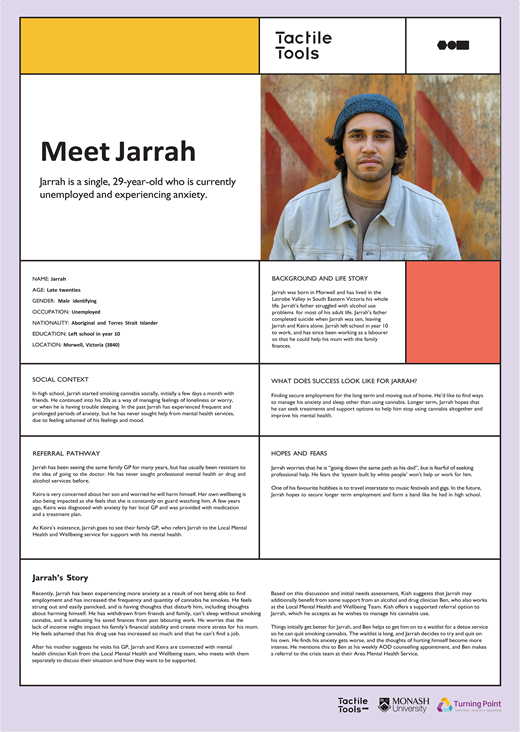
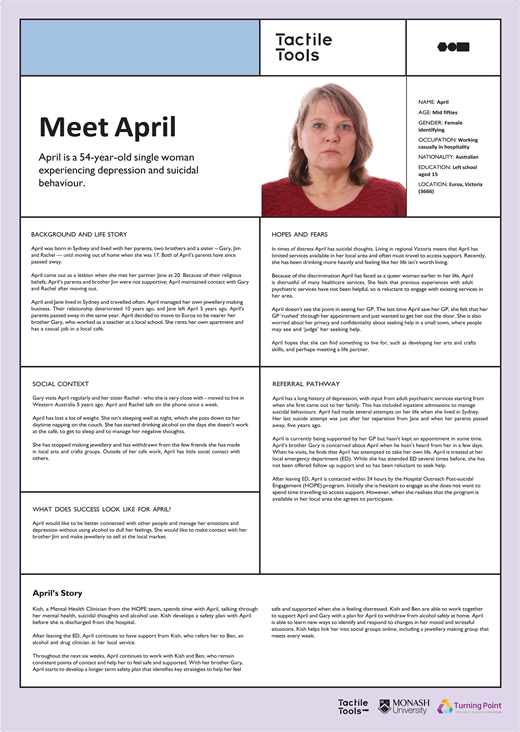
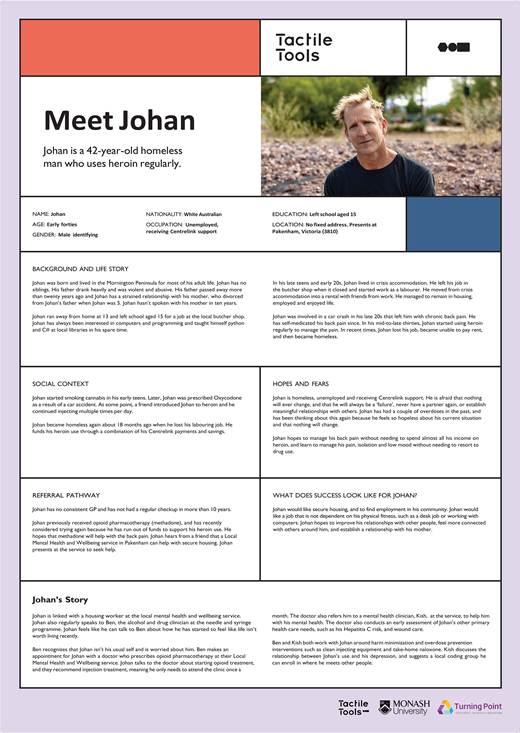
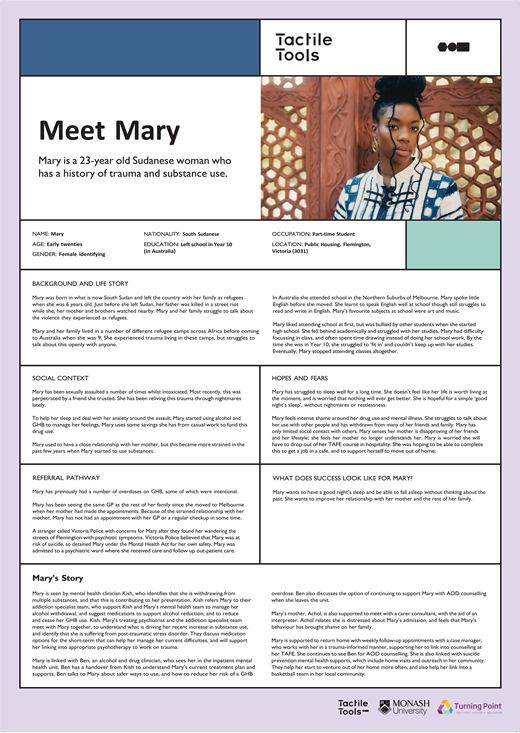
Four fictional case study personas were developed to guide the workshops. Designed to represent people seeking support for co-occurring MH and substance use (SU) disorders, the personas also served as a framework for mapping the service systems and stakeholders. In addition, two healthcare worker archetypes were developed to explore interprofessional dynamics and training needs specific to integrated care. Details about the personas and how they were developed are included in Appendix 1 and 2.
Workshops were conducted online and recorded via the videoconferencing application Zoom and Miro, a digital whiteboard tool. Participants were divided into small, diverse groups, each comprising stakeholders with a mix of lived experiences and professional backgrounds. Guided by structured activities on Miro boards, groups engaged in focused discussions centred on the four personas. Researchers at Monash Art, Design and Architecture (MADA) and Turning Point co-developed the Miro boards and activities.
Data analysis
Researchers TM, LH and AK analysed the qualitative data – in the form of workshop transcript recordings and participant contributions via digital sticky note – using a hybrid approach that utilised inductive and deductive coding methods. Qualitative thematic analysis was conducted using Braun and Clarke (2021) framework to examine training and education needs in Victoria’s MH and AOD sectors. NVivo software supported systematic coding of workshop transcripts and Miro board content, with themes generated inductively from participant responses in line with consultation objectives. Multiple researchers coded data independently, meeting two to three times a week for a month to triangulate, validate and refine themes through iterative discussion and consensus. This approach aimed to validate findings via triangulation across diverse workshop groups.
This paper reports on one of six overarching themes from the broader consultation: workforce training and education to strengthen integrated MH–AOD care. While the larger study addressed a range of systemic and practice issues, this analysis offers a practitioner-informed account of workforce development needs, recognising their interdependence with broader systemic challenges.
Ethical considerations
This research was approved by Monash University Human Research Ethics Committee (Project ID 35157) on 8 August 2022. All workshop participants provided written informed consent.
Results
Five themes related to training and education in integrated care were identified (Table 2). These themes were interconnected, illustrating that effective training for integrated care cannot rely on individual-level skill development alone: rather, it requires coordinated organisational and system-level support, alongside relational and experiential learning approaches.
Training and education sub-themes
| Theme | Sub-themes | Codes |
|---|---|---|
| Training and education requirements | Foundational knowledge requirements | Role clarification, cross-sector understanding; stigma; system navigation |
| Workforce-specific training needs | AOD; MH; peer support | |
| Training delivery approaches | Preference for face-to-face learning; collaborative learning models; resource, feasibility | |
| Organisational and systemic factors | Organisational culture, resources; leadership engagement; system-level mechanisms, incentives | |
| Key principles for effective training | Balanced specialist and generalist knowledge; practical over formal education |
Foundational knowledge requirements
The first theme encompasses the fundamental knowledge requirements identified as prerequisites for effective integrated care training.
Role clarification and cross-sector understanding
Participants emphasised that role clarification is a prerequisite for effective integrated care training. Training in technical skills alone was seen as insufficient without clarification of how roles across MH, AOD and peer workforces intersect and complement one another. A dual diagnosis clinician (P7) explained: […] “everybody [needs to] understand what everyone else does”.
Participants highlighted that while deep expertise in a discipline remains important, a shared, foundational understanding across sectors is essential for effective collaboration. Without this, training risks reinforcing silos by equipping workers with skills they are unable to apply within fragmented systems. A psychiatrist explained:
We have specialised training, which is really super important, but also [need] some generalist training and communication across the specialities. – Psychiatrist (P25)
Addressing stigma
Stigma at an individual level – particularly negative attitudes towards people with SU disorders – was identified as a significant barrier to integrated care. Participants noted that stigma often arises from a lack of confidence in working with unfamiliar presentations:
One of the major reasons why stigma and discrimination exist is that people don’t feel confident about interventions. Psychiatrist (P25)
Participants advocated for anti-stigma training that combines knowledge, skills development and confidence building, enabling providers to address their biases and challenge stigma encountered from clients, families and colleagues. This connection between confidence and stigma reduction was seen as particularly critical in integrated care contexts.
System navigation knowledge
Participants highlighted the need for training that develops workers’ ability to navigate complex, fragmented systems, including housing, legal supports and healthcare pathways. A psychiatrist described:
The navigational support for the systems is one of the hardest things to teach […] the system [is] so convoluted and destructured that you actually have to have that skill in the first place. Psychiatrist (P25)
Rather than simply cataloguing available resources, participants advocated for training that develops critical thinking, advocacy and system navigation competencies, enabling workers to assist clients in connecting with helpful supports.
Workforce-specific training needs
The second theme generated distinct training needs across workforce groups (Table 3), reflecting the historical separation of MH and AOD services and different knowledge gaps.
Comparative training gaps across workforces
| Workforce | Primary knowledge gaps | Training priorities | Unique challenges |
|---|---|---|---|
| AOD workers | MH literacy, psychiatric diagnosis, MH involuntary treatment frameworks, suicide risk assessment | MH system navigation, crisis intervention skills | Strong harm reduction philosophy, less MH training |
| MH workers | Addiction terminology, withdrawal management, harm reduction principles | Physiological aspects of addiction, AOD treatment modalities | Strong clinical training, limited understanding of addiction as a chronic condition |
| Peer support workers | Professional boundaries, clinical terminology, system navigation | Role clarity within clinical teams, supervision and ethical practice | Balancing peer identity with the clinical system demands |
This analysis suggests that integrated care training cannot be delivered uniformly across groups. Different starting points require what participants termed “dual diagnosis capability” – a foundational level of cross-sector knowledge enabling collaboration without expecting universal expertise.
Training for the alcohol and other drug workforce
AOD workers expressed a need for foundational mental health training, including crisis response skills, suicide risk assessment and understanding mental health involuntary treatment frameworks. Their firm grounding in harm reduction and client-centred practice was viewed as a critical asset that training should build upon rather than adopting a deficit-based approach:
[…] knowing the basic, you know, parameters for mental health conditions, the system and probably suicide risk comes up all the time […] also things like the Mental Health Act and understanding the mental health system […] and the limitations or opportunities that that provides. – Harm Reduction Practitioner/Senior Leader (P13)
The challenge lies in expanding MH literacy while preserving the valuable perspectives and philosophical orientation AOD workers bring to integrated care.
Mental health workforce addiction knowledge
Mental health workers reported gaps in addiction treatment knowledge, including familiarity with withdrawal management, harm reduction principles and the psychosocial aspects of addiction. Participants noted that without these competencies, opportunities for integrated care could be missed:
So that’s one thing which is missing, formulation of alcohol and drug(s) […] along with mental health […] there is an opportunity where we can look at it as a detox, link it up with some sort of daily rehab or residential rehab. – Psychiatrist (P25)
Training for MH workers was seen as requiring not only knowledge acquisition but also a shift in practice patterns and values, particularly in adopting harm reduction principles and addressing addiction as a chronic condition.
Training related to lived experience and peer support work
Peer support workers were recognised as uniquely positioned to provide relational, non-clinical support that complements clinical care, particularly by helping people navigate complex systems, engage in treatment and maintain continuity through service transitions. Training priorities include clarifying their roles within clinical teams, supporting safe and ethical practice in complex environments and maintaining peer identity within system structures:
[…] we need the organisational training to support work with peer support workers […] so that they can really understand the values of peer work […] could be designed and delivered by peer workers as well. – Lived Experience Advocate (P18)
Sharing this learning across teams is critical to avoid marginalising peer workers or reinforcing hierarchies. Unlike clinical roles with clear scopes, peer work sits between professional service delivery and sharing lived experience, requiring tailored training to support authenticity within clinical frameworks.
Training delivery approaches
The third theme focuses on how training should be delivered to maximise effectiveness and engagement among healthcare workers.
Preference for face-to-face learning
While participants acknowledged the convenience of online learning, they strongly favoured in-person training for fostering the relationships and dialogue essential to integrated care. As one mental health team leader emphasised:
I can’t say strongly enough how much more preferable face-to-face is […] if that had been in person […] we would’ve stood around talking to each other […] continuing the work […] it’s about developing relationships. – MH Practitioner/Senior Leader (P4)
Participants valued how in-person formats enabled informal knowledge sharing through “[…] sit[ting] around a table […] talks from each person about their experience” (MH Practitioner/Senior Leader, P4). However, they recognised practical constraints, particularly inadequate funding and staff backfill issues that prevented participation. This tension suggests the need for pragmatic hybrid approaches that preserve relational learning opportunities while addressing resource limitations, particularly in regional and rural settings.
Collaborative learning models
Participants advocated for dialogic, peer-to-peer learning approaches that facilitate cross-disciplinary knowledge exchange. A peer worker suggested:
I think it would be good if AOD workers […] gave talks to the other disciplines […] open up a space for discussion after these talks. – Peer worker (P42)
Authenticity was seen as a key strength of this model:
[…] when people are doing it from their own experience and they’ve put all the work into their talks, I think that has a really big impact on people who are listening. […] – Peer worker (P42)
Collaborative models were seen as valuable in enhancing understanding of roles across sectors, building shared language and fostering integrated practice without relying solely on didactic, expert-led sessions. Such approaches also support the practical development of role clarity as workers learn about each other’s expertise through direct interactions rather than abstract presentations.
Organisational and systemic support for training
The fourth theme emphasises that individual training efforts must be supported by organisational and systemic changes to be effective.
Organisational skills, culture and resources.
Participants emphasised that training alone is insufficient to change practice without supportive organisational environments. Structural barriers, such as siloed documentation systems, a lack of collaborative protocols and limited time for interdisciplinary planning, were described as key challenges to integrated care. A dual diagnosis clinician highlighted the limitations of training without organisational alignment:
What knowledge and skills do the workers need? A much bigger question […] is what skills, knowledge, and attitudes does their service need? […] We’ve done decades of training workers about integrated treatment. They go back to their host service and they find that the host services […] do not support integrated treatment. – Dual Diagnosis Clinician (P7)
This underscores the need for training to be embedded within environments that actively support integrated care; without this alignment, healthcare workers pursuing integrated approaches on their own can feel “punished” by systems unwilling to adapt:
Why professionals end up giving up is because the system doesn’t change and they get punished for doing [more]. The more competent you are, the more you get overloaded with things […] there’s no return coming for that. – Consultant Psychiatrist (P22)
To address this, participants identified practical tools to assess and improve organisational readiness, such as a dual diagnosis “COMPASS tool” (ZiaPartners, 2024). Such tools (e.g. see Minkoff and Cline, 2005) enable services to identify and address gaps in structure, systems and workflows, reinforcing that organisational change must precede or accompany individual training to ensure healthcare workers can apply integrated care skills effectively.
Leadership engagement and reflective practice.
Participants described leadership engagement as essential for embedding integrated care within organisational culture, noting that senior leaders are positioned to set priorities and drive change. However, influencing entrenched practices among experienced staff was seen as more challenging than influencing early-career healthcare workers:
Try to get your system leaders […] on board with it and develop their unified vision around integrated care […] it’s relatively easy to influence a new worker’s practice. It’s almost impossible to influence the practice of somebody who’s got a lot of advanced qualifications. – Dual Diagnosis Clinician (P7)
Rather than advocating for traditional leadership training, participants recommended dialogic and reflective approaches, such as reflective practice workshops, where leaders engage with the realities of frontline service delivery, co-develop solutions with staff and align operational practices with integrated care principles.
System-level mechanisms and incentives.
Participants proposed practical mechanisms to foster cross-sector learning and capacity building, and consistency across services. Ideas included:
scholarships for cross-training in MH or AOD;
cross-sector rotations during early career placements;
integrated care champions within teams to foster peer mentoring and drive local integration efforts;
shared intake templates and care plans; and
service-wide assessment frameworks.
Beyond organisational change, participants emphasised the need for policy-level support to make integrated care “core business”. This includes developing performance indicators that reward collaboration rather than siloed practice, and funding models that allocate protected time for multidisciplinary planning and joint consultations:
Management will need directives from a policy level because short of that, management is too busy to really give a damn about any new idea unless it’s put on the head that this is government policy, this has to be core business. – Dual Diagnosis Clinician (P7)
Without such mandates and structural supports, participants noted that the success of integrated care training initiatives remains dependent on the goodwill of individual workers and services, which limits the sustainability and scale of integrated care implementation.
Key principles for effective training
The final theme outlines overarching principles to guide the development and implementation of integrated care training programs.
Balancing specialist and generalist knowledge.
Integrated care does not require all healthcare workers to be experts in both MH and addiction. Instead, participants advocated for what Gardner and Perry (2023) refer to as a “T-shaped professional” (p. 492). The following diagram (Figure 1), drawn from the broader consultation study by McGee et al. (2022), illustrates how healthcare workers can maintain in-depth expertise in their primary discipline while developing broad, foundational knowledge across related areas, thereby enabling effective collaboration.
 The diagram presents an Integrated Care Capability framework. A horizontal arrow at the top indicates breadth of knowledge about co-occurring A O D addiction and mental health. On the left, awareness of the broader healthcare system includes G P, allied health, and hospitals. On the right, awareness of relevant adjacent services includes legal, housing, and domestic violence services. A central horizontal section lists Basic assessment, which includes identifying co-occurring conditions, making referrals, and assessing suicide risk, and Cross boundary collaboration, which includes using shared terms, effective hand over, and joint care planning. Another section lists Cultural competency, which includes understanding and addressing stigma, practising cultural safety, and working effectively with peer support workers, and System navigation, which includes knowing M H and A O D entry points, local services, and key legislation. In the centre, Transferable Competencies describe an adaptable and flexible workforce that shares a common conceptual language, has clearly defined roles, and demonstrates strong collaborative skills. A vertical section below shows Depth of discipline specific expertise in either A O D addiction or mental health. The diagram concludes with the concept of a T Shaped Workforce, indicating the need for both breadth and depth rather than expertise in everything.
(T)-shaped workforce model
Source: Adapted from McGee et al. (2022)
The diagram presents an Integrated Care Capability framework. A horizontal arrow at the top indicates breadth of knowledge about co-occurring A O D addiction and mental health. On the left, awareness of the broader healthcare system includes G P, allied health, and hospitals. On the right, awareness of relevant adjacent services includes legal, housing, and domestic violence services. A central horizontal section lists Basic assessment, which includes identifying co-occurring conditions, making referrals, and assessing suicide risk, and Cross boundary collaboration, which includes using shared terms, effective hand over, and joint care planning. Another section lists Cultural competency, which includes understanding and addressing stigma, practising cultural safety, and working effectively with peer support workers, and System navigation, which includes knowing M H and A O D entry points, local services, and key legislation. In the centre, Transferable Competencies describe an adaptable and flexible workforce that shares a common conceptual language, has clearly defined roles, and demonstrates strong collaborative skills. A vertical section below shows Depth of discipline specific expertise in either A O D addiction or mental health. The diagram concludes with the concept of a T Shaped Workforce, indicating the need for both breadth and depth rather than expertise in everything.(T)-shaped workforce model
Source: Adapted from McGee et al. (2022)
This approach was seen as key to preventing fragmentation in care and fostering shared understanding across disciplines:
We’re not gonna teach everybody about how to do acute alcohol withdrawal […] even though understanding the principles, risks and benefits of that would be useful across [workforces]. – Addiction Psychiatrist (P30)
Participants emphasised that training should prioritise dual diagnosis capability over full cross-disciplinary expertise, focusing on shared conceptual language, role clarification and essential competencies (Table 4) rather than uniform skill level across all areas.
Essential competencies
| Essential competencies | Elements |
|---|---|
| Basic assessment and screening | Recognising co-occurring conditions, appropriate referral, basic suicide risk assessment |
| System navigation | Understanding MH and AOD entry points, local service capabilities and relevant legislation |
| Boundary-level crossing through communicationand collaboration | Shared terminology, effective handover practices and joint care planning |
| Cultural competency | Understanding stigma, practising cultural safety and working effectively with peer support workers |
Communities of Practice (CoP) were identified as vital for sustaining this workforce model by bridging formal training and daily practice:
They’re really good for the moral support of the workforce. That can also be a really effective way of supervising under these quite challenging circumstances for the workforce where there are so many vacancies. – General Practitioner (P10)
CoPs provide spaces for professionals to discuss complex cases, share cross-disciplinary knowledge and strengthen the collaborative relationships essential for integrated care.
Practical over formal education.
Participants strongly favoured practice-based learning over postgraduate tertiary-level qualifications, advocating for brief, targeted and context-specific learning opportunities such as:
workshops and site-based placements;
joint case reviews and reflective practice sessions; and
cross-sector mentoring.
Mentorship emerged as critical yet underutilised, with participants advocating for structured programs, including “flipped mentoring” where senior leaders are mentored by frontline or peer workers.
[…] we want to flip that and actually have the openness to have the CEO being mentored by a harm reduction worker on the ground about what it is that they do day to day. – Harm Reduction Practitioner/Senior Leader, (P13)
Participants emphasised that practice-based learning is essential in the context of integrated care, where practical wisdom about managing complex presentations, competing priorities and resource constraints is critical. Skills such as clinical judgement, collaborative problem-solving and adaptive communication were seen as best developed through practice and relational learning rather than passive, didactic education.
Discussion
Drawn from a broader study on the implementation of integrated care (McGee, et al., 2022), this paper presents findings on training and education requirements. The analysis identified five interconnected workforce development themes that contribute to the limited literature on integrated care workforce development, highlighting the critical interplay between individual competencies, adult learning processes and system-level transformation.
Definitional clarity, shared understanding and role clarification
Participants reported no universally shared definition of integrated care, underscoring that integration requires deliberate workforce development to establish common meaning (Kodner and Spreeuwenberg, 2002; Valentijn et al., 2013). They distinguished collaborative care from genuine integration – “shared expertise, resources, information, clinical notes and approaches across providers” (McGee et al., 2022, p. 12) – and viewed definitional clarity as a prerequisite to skill development. This reframes definitional variation not as confusion but as a challenge to be addressed through training (Barraclough et al., 2024; Reif et al., 2014). Consistent with adult learning theory, participants’ emphasis on clear, shared definitions reflects the importance of relevance and problem-centred learning for adult professionals, who are more likely to engage with training when goals and practice implications are explicit (Knowles, 1980; Loeng, 2020).
Role clarification emerged as essential for effective integrated care. Without ensuring that healthcare workers understand both their responsibilities and those of others, training can reinforce silos and limit collaboration. Effective integration requires both role clarity and cross-sector understanding (Petrakis et al., 2018). While the former prevents duplication, the latter enables collaboration across systems. Participants endorsed “dual diagnosis capability” rather than universal expertise, aligning with the T-shaped workforce model (Gardner and Perry, 2023; McGee et al., 2023) and interprofessional education principles that promote mutual understanding of roles, scopes and contributions in team-based practice (WHO, 2010; CAIPE, 2021).
Addressing individual stigma as a cross-cutting training priority
Addiction stigma, operating within and between professional groups, was identified as a pervasive barrier (Sukhera et al., 2022; Livingston, 2020; Corrigan and Watson, 2002; Link and Phelan, 2001; van Boekel et al., 2013; FitzGerald and Hurst, 2017; Searby et al., 2024). Reducing stigma among practitioners requires embedding anti-stigma principles across all training, with confidence-building and skill development as mutually reinforcing strategies (van Boekel et al., 2013). Adult learning theory suggests that such attitudinal and behavioural change is most likely when training is experiential, reflective and directly connected to real-world practice challenges, highlighting the value of structured opportunities for critical reflection on assumptions about addiction and mental health (Knowles, 1980; Loeng, 2020).
Enablers of effective workforce learning
Training effectiveness depends on organisational “scaffolding” (Minkoff and Covell, 2022; Louie et al., 2021; WHO, 2015; OECD, 2023; State of Victoria, 2022). Misalignment between training and structural priorities – particularly lack of leadership engagement – undermines practice change (Damschroder et al., 2009). Participants advocated reflective leadership training consistent with adult learning principles that emphasise self-directed learning, respect for learners’ experience and collaborative problem solving (Knowles, 1980; Loeng, 2020).
Historical MH–AOD separation necessitates targeted training: AOD workers need MH literacy, MH workers require addiction concepts and peer workers need role-specific support. This aligns with interprofessional education emphasising mutual understanding of professional cultures and scopes (WHO, 2010; Reeves et al., 2013).
Participants preferred short, targeted relationship-based learning over formal qualifications, with in-person formats valued for fostering collaboration (Barraclough et al., 2021; Stein, 2016; Bookey-Bassett et al., 2023). Informal interactions were seen as integral, not peripheral, to training, echoing adult learning theory’s focus on social, practice-based and experiential learning in real work contexts (Knowles, 1980; Loeng, 2020).
Implications
Findings echo international evidence of persistent structural and cultural barriers to integration (OECD, 2016; WHO, 2016; Cheetham et al., 2023). Workforce development should prioritise shared understanding, role clarity and stigma reduction before technical skills, recognising that adult learners engage more deeply when training addresses clearly defined, practice-relevant problems (Damschroder et al., 2009; Knowles, 1980; Loeng, 2020). Furthermore, training approaches should mirror collaborative care through face-to-face, cross-disciplinary experiential learning that leverages adult learners’ prior expertise and fosters interprofessional relationships (Glover-Wright et al., 2023; Sterling et al., 2011).
Individual training must be supported by organisational change – tools, pathways, policies – and system-level initiatives that enable the T-shaped workforce model, as evidence links well-supported integration to improved outcomes (Sterling et al., 2011). Embedding adult learning principles within these initiatives, including co-design with practitioners and lived experience workers, may enhance the relevance, uptake and sustainability of integrated workforce development efforts. See key practice recommendations for a summary of key practice recommendations:
Actions for integrated care services:
Clarify healthcare worker roles before implementing integrated care training.
Establish CoP for ongoing cross-sector learning about integrated care.
Develop mentorship programs, including flipped mentoring.
Utilise organisational assessment tools to evaluate integrated care readiness.
Prioritise in-person training with structured relationship building.
System-level initiatives:
Scholarships for cross-sector knowledge building.
Cross-sector rotations for early career professionals.
Embed integrated care champions in teams to drive integration efforts.
Embed integrated care in policy.
Provide funding models supporting integrated practice.
Strengths and limitations
Strengths of this study include its practitioner-centred approach, capturing insights directly from frontline healthcare workers across diverse roles and highlighting actionable training approaches. It offers valuable insights into developing education and training approaches that support integrated care for people with co-occurring disorders, providing a practitioner-co-designed roadmap for creating systems that support integrated care. However, several limitations warrant consideration. The consultation workshop format may have privileged more vocal participants or those who are comfortable with digital co-design approaches. Convenience sampling has a risk of bias, and the perspectives captured represent only participating healthcare workers and may not reflect the full range of views across the MH and AOD workforces. While the research included opinions of people with lived experience, it did not directly include the views of people receiving integrated care services. The Victorian focus may limit generalisability to other jurisdictions with different service considerations and policy environments, although themes elicited in this work are broadly consistent with international literature.
Conclusion
Our findings highlight that successful workforce development extends beyond individual skill acquisition to encompass organisational transformation and systemic change. The five key themes provide a comprehensive framework for developing effective integrated care training programs that address the complex interplay between individual competency, organisational context and system-level enablers.
Most significantly, our findings underscore that even well-trained healthcare workers struggle to implement integrated approaches when organisational structures, assessment tools and workplace cultures fail to support such practice. Effective workforce development must simultaneously address individual competencies, organisational processes and leadership engagement to create environments where integrated care can flourish. The interplay between leadership, practical tools and policy alignment underscores the multi-layered context in which training must be embedded to foster meaningful and lasting change in integrated care practices.
Future research should evaluate the outcomes of multidimensional training initiatives incorporating these findings, particularly service user experiences and impacts on care quality and accessibility. By addressing both individual and systemic factors, training programs can better prepare healthcare workers to navigate the complexities of integrated care delivery and ultimately improve outcomes for people with co-occurring mental health and AOD conditions.
References
Further reading
Appendix 1. Persona development
Persona development occurred over approximately six months through an iterative six-stage process involving design researchers, clinical experts and lived-experience advocates. The six stages were: Stage 1: Persona Framing, Stage 2: Persona Drafting, Stage 3: Validation through Co-Design, Stage 4: Persona Refinement and Iteration, Stage 5: Iterative development through co-design and Stage 6: Dissemination of Personas. Initial persona framing drew on vignettes from prior submissions to the Royal Commission into Victoria’s Mental Health System, followed by collaborative drafting of first-person narrative arcs that extended beyond clinical encounters to encompass broader life experiences. These drafts were tested and validated through two co-design workshops, engaging more than 50 participants from across metropolitan, regional and rural Victoria. Structured small-group discussions enabled participants to challenge assumptions, identify omissions and surface shared themes, with qualitative triangulation strengthening validity. Insights were thematically analysed and used to refine the personas between workshops, before final validation and dissemination. The resulting personas now function as enduring design and educational resources, supporting ongoing service design, workforce training and reform initiatives at the Hamilton Centre.
Appendix 2. Persona posters that were provided to study participants