


Affordable housing and climate mitigation are often addressed separately rather than together in the Global South. Limited research exists integrating affordability with net-zero carbon objectives in housing under resource-constrained conditions. This paper investigates how affordable housing in South Africa can transition towards net-zero carbon, and what trade-offs and pathways are credible under local market, regulatory and energy system constraints.
An exploratory mixed-methods design combined semi-structured interviews with whole life cycle carbon emission (WLCCE) modelling of a typical three-bedroom house. Four experts in the affordable and sustainable housing space were interviewed and analysed thematically to identify perceptions, challenges, and opportunities. The WLCCE integrated One Click life cycle assessment (embodied carbon) and Excellence in Design for Greater Efficiencies (EDGE) (operational carbon) to test three affordable net-zero carbon housing (ANZCH) scenarios.
The findings show operational emissions dominate the WLCCE in the base case. Prioritising envelope efficiency plus on-site photovoltaic (PV) can reduce WLCCE by 12–94% relative to a conventional baseline. The innovative ANZCH pathway achieved near elimination of operational emissions but raised embodied impacts through PV installation.
This study offers developers a roadmap for ANZCH in coal-reliant economies, prioritising operational carbon reduction, passive design and scalable technologies within cost-effective strategies.
Achieving ANZCH in the Global South requires passive design, efficient building systems and scalable PV installations, supported by low-carbon materials. The research informs sustainable housing strategies, balancing affordability and carbon mitigation in coal-reliant economies.
1. Introduction
The Global South faces an intertwined housing and energy challenge driven by rapid urbanisation, entrenched inequality, electricity instability and rising tariffs, placing increased pressure on low- and middle-income households. Simultaneously, the built environment is a major contributor to greenhouse gas emissions across construction to operation, accounting for a significant share of global energy-related carbon dioxide equivalent (CO2e) (UN-EP, 2025). Approaches that minimise whole life cycle carbon emission (WLCCE) while maintaining affordability are therefore critical for resilient and inclusive housing in resource-constrained contexts (Wang et al., 2024).
Within the global net-zero transition, affordable net-zero carbon housing (ANZCH) is positioned as a dual-purpose solution, delivering financially accessible homes while achieving net-zero life cycle carbon emissions. These dwellings integrate passive design, high-performance envelopes and renewable energy systems to balance annual energy demand with on-site or certified off-site renewable generation (Moghayedi and Awuzie, 2025). Moreover, ANZCHs aim to curb embodied emissions through low-carbon concrete, engineered timber and recycled or locally sourced materials.
Despite growing interest in sustainable housing, limited research examines how affordability and net-zero carbon objectives can be reconciled in resource-constrained contexts. Existing studies generally focus on operational carbon, overlooking embodied carbon and affordability trade-offs (Meth et al., 2021).
This paper addressed this gap by integrating WLCCE into affordable housing under three ANZCH scenarios linking design strategies to operational and embodied carbon outcomes. The novelty of this research lies in its integration of qualitative insights and quantitative modelling to develop actionable pathways for staged adoption. These findings advance the discourse on sustainable affordable housing and provide practical guidance for developers and policymakers seeking to balance affordability and CO2e reductions in the Global South.
2. Literature review
Housing is fundamental to individual well-being, yet rapid urbanisation and persistent housing shortages continue to challenge low-income populations. Ensuring access to affordable housing has become a critical policy objective in many developing countries. However, escalating land and construction costs, coupled with population growth and stagnant income levels, have intensified affordability constraints (McGaffin, 2018). The widening gap between housing supply and affordability often results in the proliferation of informal settlements, which pose significant health and safety risks (McGaffin, 2018).
2.1 Contextualising affordable housing in the Global South
Affordability lacks a universally accepted definition and is interpreted through various lenses, e.g. income-ratios, transport access, utility costs and location efficiency (UN-Habitat, 2011; WEF, 2019). Across the Global South, housing deficits remain severe, with an estimated 1 billion people living in inadequate housing and informal settlements. Many households are pushed to peri-urban areas with limited access to jobs and services, increasing transport and utility costs and undermining affordability (CAHF, 2025). For this study, the UN-Habitat (2011) benchmark is adopted, defining unaffordability as a condition where net monthly housing expenditure exceeds 30% of household income.
Delivering affordable housing faces systemic challenges that extend beyond construction costs. Rising land prices in well-located urban areas and volatile material costs significantly constrain supply (Moghayedi and Awuzie, 2023). Developers often respond by shifting projects to peripheral locations where land is cheaper, introducing hidden household costs, e.g., increased transport expenses, reduced access to employment opportunities, schools and healthcare facilities (McGaffin, 2018). In addition, low-income households frequently lack access to mortgage finance due to stringent credit requirements, while developers struggle to secure affordable capital for large-scale projects. Although government subsidies exist, they are insufficient to meet demand and often fail to cover the additional costs associated with sustainable building practices (Moghayedi and Awuzie, 2023).
Operational affordability is another critical concern as poorly designed homes with inadequate insulation and inefficient systems lead to high energy consumption and expose households to rising electricity and municipal charges (SAPOA, 2024). Frequent power outages exacerbate these vulnerabilities, forcing households to rely on costly, carbon-intensive backup solutions. This underscores the dual challenge of delivering housing that is affordable and cost-efficient throughout its life cycle.
2.2 Sustainability and net-zero in the residential sector
Sustainability in the built environment is widely conceptualised through three interdependent pillars (environmental, social and economic), which collectively aim for resource efficiency, occupant well-being and affordability across a building's life cycle. Within this framework, the construction and operation of buildings is central to climate action, accounting for approximately 34% of energy-related CO2e emissions, with residential buildings contributing a substantial share (UN-EP, 2025).
Net-zero carbon buildings have emerged as a key decarbonisation strategy. These homes are designed to achieve a balance between energy consumed and renewable energy generated (Moghayedi and Awuzie, 2023). However, this approach historically focused on reducing operational energy (energy for heating, cooling, lighting, appliances) and overlooked embodied carbon (emissions from material extraction, manufacturing, transport, construction). As operational energy demand decreases through efficiency measures, embodied carbon becomes a proportionally larger component of a building's WLCCE (Chastas et al., 2018).
In cost-constrained housing, high-performance envelopes, renewable energy systems and advanced technologies significantly increase upfront costs, creating tension between sustainability objectives and affordability. Developers must therefore prioritise interventions that deliver the greatest carbon and cost savings per Rand, while considering supply-chain limitations, skills availability and long-term maintenance requirements (Belussi et al., 2019).
While explicit net-zero requirements remain rare in affordable housing across Africa, recent developments illustrate how green and near-zero pathways can reinforce affordability by reducing operational costs and carbon. In Kenya, the HIS Affordable Green Housing Funds blends concessional equity with commercial capital to finance EDGE-certified affordable homes, signalling investor confidence in green affordable housing models and how operational savings can be embedded as financial conditions (CAHF, 2025). Although South Africa does not yet have fully fledged net-zero affordable housing projects, several initiatives indicate an emerging foundation for integrating energy efficiency and carbon reduction measures. For example, Communicare's Bothasig Gardens Phase 3 (Cape Town) incorporates heat pumps, light-emitting diode (LED) lighting and water-efficient fixtures within a 314-unit social housing development. Likewise, within Johannesburg's Fleurhof precinct, Madulammoho Housing Association's (2026) development utilises centralised heat pumps that achieve approximately 1.36 GWh/year in energy savings and an estimated 1,000 tCO2 reduction. This reduces tenant utility costs whilst reducing their carbon footprint, demonstrating the operational benefits achieved relative to low-cost technologies adopted in social and affordable rental housing. In the affordable ownership market, large-scale developers, e.g. Balwin Properties (2025) have mainstreamed EDGE across more than 16,000 homes, supported by green mortgage products, providing savings for lower-income homeowners and creating a direct affordability and sustainability link. These examples indicate that although South Africa has yet to produce dedicated net-zero affordable housing legislation and supplier enablers, the underlying financial, technological, design and green-linked financing are emerging across the property landscape.
In South Africa, these challenges are amplified by systemic and infrastructural constraints. The national building energy standard (SANS 10400-XA) prescribes minimum energy-efficiency requirements for building envelopes, lighting and hot-water systems, but does not mandate net-zero outcomes (SABS, 2021). Compliance often results in marginal improvements rather than transformative reductions in energy demand. Voluntary rating systems, e.g. Green Building Council of South Africa (GBCSA) Green Star and EDGE, have been introduced to promote higher performance. Moreover, EDGE has gained traction in the affordable housing sector due to its simplified scope, focussing on energy, water and materials. Nevertheless, certification remains a barrier for small developers and single-unit projects, where transaction costs and technical requirements outweigh perceived benefits.
The urgency of decarbonisation in South Africa is heightened by its coal-dominated electricity grid, which carries an emission factor of approximately 1.013kgCO2e/kWh (DFFE, 2024), making operational energy the dominant contributor to life cycle emissions for most residential buildings. Simultaneously, the country faces an ongoing energy crisis, characterised by load-shedding and escalating electricity tariffs, which erode household affordability. These conditions create both a challenge and an opportunity, while energy insecurity complicates housing delivery, it also strengthens the case for on-site renewable generation as a means to enhance resilience and reduce carbon intensity.
However, the adoption of PV and other advanced technologies in affordable housing is constrained by high upfront costs, limited access to green finance and a lack of technical capacity for design, installation and maintenance (Karlsson et al., 2021). Furthermore, the absence of robust local data on embodied carbon and the limited availability of low-carbon materials pose additional barriers to achieving comprehensive net-zero performance. Overcoming these challenges requires a multi-pronged approach that combines regulatory reform, financial innovation, supply-chain development and capacity building, ensuring that sustainability objectives do not compromise affordability or social equity (Karlsson et al., 2021).
Within this context, ANZCH is conceptualised as a holistic framework that integrates four critical dimensions of sustainability into affordable housing delivery. The technical dimension focuses on passive design strategies, efficient building envelopes and renewable energy integration to reduce operational energy demand (Chen et al., 2017). The environmental dimension addresses embodied carbon through the use of low-carbon materials, recycled materials and design for disassembly, enabling reuse and recycling (Wu and Skye, 2021). The economic dimension emphasises life cycle cost optimisation and access to green finance mechanisms, ensuring that net-zero performance does not undermine affordability (Moghayedi and Awuzie, 2025). Finally, the social dimension recognises the role of occupant behaviour, skills development and governance structures in sustaining performance over time (Never et al., 2022).
2.3 Whole life cycle assessment in affordable housing
Understanding the full environmental impact of buildings requires a life cycle perspective, which accounts for emissions from material extraction through to end-of-life. The European norm (EN)15978 standard and the Royal Insitution of Chartered Surveyors (RICS) whole life carbon assessment (WLCA) framework provide a structured methodology for this analysis, dividing impacts into four main modules (RICS, 2023):
Upfront: emissions from raw material extraction, manufacturing, transport to site, construction activities (A1-A5).
In-use: emissions during the operational phase - maintenance, repair, replacement, operational energy and water (B1-B7), with B6 (operational energy) the dominant contributor.
End-of-life: emissions from deconstruction, transport, waste processing, disposal (C1-C4).
Beyond system boundary: benefits from reuse, recycling and energy recovery that offset future impacts (D).
This approach enables developers to identify high-carbon elements and prioritise interventions across the building life cycle. In the affordable housing context, where cost constraints limit advanced technologies, WLCA provides a transparent basis for comparing low-cost strategies, e.g.passive design vs high-impact measures like PV integration. Furthermore, integrating WLCA into early design stages supports informed decision-making, ensuring that carbon reductions do not inadvertently shift impacts between embodied and operational phases. By promoting life cycle thinking, WLCA aligns with circular economy principles by encouraging resource efficiency, material reuse and minimising waste throughout the building's lifespan (RICS, 2023). As global decarbonisation targets tighten, these frameworks are critical for aligning housing delivery with climate resilience and circularity.
Measuring a development's CO2e emissions is an important step, but conventional construction and operational techniques fall short in significantly reducing these emissions. This limitation has driven the adoption of innovative approaches, namely: modular construction, building information modelling (BIM) and renewable energy integration. Modular construction accelerates project timelines and reduces waste and embodied carbon through off-site fabrication and controlled environments (Parracho et al., 2025). BIM enhances sustainability via precise material estimation, energy modelling and lifecycle analysis, which collectively minimise resource consumption and operational emissions (Parracho et al., 2025). Renewable energy systems like PV and passive design strategies substantially lower operational carbon footprints, supporting the transition to net-zero. These innovations represent a paradigm shift in construction practices, aligning the built environment with global climate goals and improving long-term resilience.
For conventional housing connected to a coal-intensive grid, operational carbon overwhelmingly dominates the WLCCE (Chastas et al., 2018). This is evident in South Africa, where the grid emission factor is approximately 1.013kgCO2e/kWh (DFFE, 2024). Consequently, reducing operational energy demand offers the greatest immediate leverage for decarbonisation. However, as buildings become more energy-efficient and incorporate renewable energy systems, the relative share of embodied carbon rises significantly (Moghayedi and Awuzie, 2025). This trend underscores the importance of fabric-first strategies that optimise thermal performance while minimising material intensity (RICS, 2023).
Another critical consideration is replacement cycles for components (roofing, windows, PV systems), which can substantially influence life cycle impacts. PV modules typically require replacement every 20–25 years, adding embodied emissions with no operational carbon emissions (Belussi et al., 2019). Similarly, end-of-life scenarios, whether materials are sent to landfill, recycled, or reused, will affect the overall carbon balance, with Module D credits offering potential benefits if circular economy principles are applied.
Evidence from design and performance studies show that net-zero carbon housing hinges on three levers: (1) passive design, e.g. insulation, orientation and air tightness will reduce heating and cooling loads by stabilising indoor temperatures and limiting heat gain and loss, (2) energy efficient systems, e.g. the adoption of LED lighting or heat pumps will lower operational energy demand and reduce the associated carbon emissions and (3) occupant behaviour plays a distinct role in determining whether designed performance is realised in practice (Teja, 2018). Cui et al. (2017) found that high upfront appliance costs and scepticism about savings limit the uptake of efficient technologies, while variations in behaviours lead to inconsistent results. Consequently, the same dwelling may achieve net-zero with a low-use household but miss the target with a high-use household.
Despite the availability of international frameworks, data limitations remain a barrier in South Africa. The lack of local environmental product declarations forces reliance on European or global datasets, which may not reflect regional manufacturing processes, transport distances, or energy mixes (Moghayedi and Awuzie, 2025). This uncertainty highlights the need for context-specific life cycle assessment (LCA) databases and policy interventions to standardise embodied carbon reporting.
Circular and net-zero housing designs enhance resilience by reducing dependency on finite resources and mitigating climate risks through energy self-sufficiency and material reuse. Circular principles minimise waste and enable adaptive retrofits, ensuring buildings remain functional under changing conditions (RICS, 2023). Net-zero strategies, including on-site renewable energy and passive cooling, strengthen resilience against grid disruptions and environmental impacts (OECD, 2025). Resilience is multi-dimensional, encompassing: (1) physical dimension (durable and modular structures), (2) environmental dimension (reducing embodied carbon and conserving resources) and (3) social dimension (affordability and energy security for vulnerable communities) (Kapucu et al., 2024).
Achieving ANZCH requires an integrated approach that surpasses isolated interventions. Life cycle frameworks (e.g. EN15978, RICS WLCA) provide the foundation for understanding carbon impacts across all stages, enabling informed decisions that balance operational and embodied emissions (RICS, 2023). Technological innovations, e.g. BIM-driven design optimisation, Digital Twin and modular construction, play a critical role in reducing carbon emissions and improving performance, whilst enhancing adaptability to climate risks (Shehadeh et al., 2025; OECD, 2025). Simultaneously, embedding circular economy principles ensures these advances are not at the cost of resource depletion. Strategies like design for disassembly, material reuse and modularity extend building lifespans, minimise waste and unlock end-of-life benefits through recycling and recovery. Together, these approaches strengthen multi-dimensional resilience, physically, by creating durable and repairable structures, environmentally, by lowering carbon intensity and conserving resources and socially, by improving affordability and energy security for vulnerable communities. In resource-constrained contexts, low-cost adaptive solutions demonstrate that innovation, circularity and resilience are not competing priorities but complementary pathways toward ANZCH.
3. Research methodology
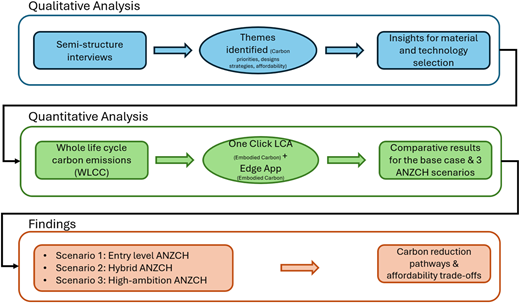
To investigate the impact of ANZCH on WLCCE and affordability in South Africa, this study adopted an exploratory sequential mixed-methods design grounded in realism. This approach combined qualitative interviews to explore expert perspectives with quantitative modelling to validate and extend these insights. Figure 1 illustrates the methodological framework, which began with a qualitative phase using semi-structured interviews to capture expert perspectives on affordability, carbon priorities and design strategies. The findings informed the selection of materials and technologies for the quantitative analysis, which applied WLCCE modelling using One Click LCA for embodied carbon and the EDGE App for operational carbon assessment. Comparative modelling was conducted for a base case and three ANZCH scenarios to evaluate carbon reduction potential and affordability implications.
3.1 Qualitative phase
The first phase involved semi-structured interviews with four purposively selected stakeholders with expertise in sustainable building design and affordable housing delivery in South Africa. All participants had experience in the local construction environment and the contextual realities of South African affordable housing. Participants included two sustainability consultants: Participant 1 (B.Sc. Electrical Mechanical Engineering, 15+ years' experience in sustainability); Participant 2 (B.Tech. Mechanical Engineering, 17 years of experience in green buildings and energy efficiency). The third participant was an affordable housing developer (B.Sc. Quantity Surveying, M.Sc. Construction Economics and Management, 30 years of experience in affordable and social housing development). The fourth participant was a green-rating practitioner (Honours Electrical Engineering, 26 years of experience, including development of GBCSA green rating tools). These participants were selected for their expertise in sustainable building design and affordable housing delivery. Given the niche nature of the research topic, a purposive sampling strategy ensured that participants were highly knowledgeable, enabling an exploration of relevant factors, namely: design strategies, material choices and challenges related to sustainability measures and development costs. Recurrent and consistent themes emerged across interviews, indicating that additional participants would likely yield diminishing returns.
The interviews explored critical issues, including definitions of affordability, design practices, embodied versus operational carbon priorities and the influence of finance and policy on feasibility. Interview questions were structured into four areas: (1) general perspectives on ANZCH, (2) economic sustainability, (3) environmental sustainabilityand (4) social sustainability. The interview questions are presented in Appendix 1. This structure ensured comprehensive coverage of ANZCH's multi-dimensional impacts. Interviews were transcribed and analysed using thematic analysis in NVivo to identify actionable insights. These findings informed the selection of materials, technologies and design strategies for the subsequent quantitative modelling phase.
3.2 Quantitative phase
The second phase comprised a WLCCE of a representative affordable housing typology, a free-standing three-bedroom house, located in Cape Town (SABS, 2021). The analysis followed the RICS (2023) framework (A1-A5:upfront; B1-B6:use phase; C1-C4:end-of-life; D1:beyond system boundary) over a 60-year reference period.
One Click LCA was used for embodied emissions, and the EDGE App for operational emissions. A Revit model was developed to quantify material quantities and imported into One Click LCA. South African material datasets were used where available, otherwise proxy datasets were applied. This reflects local data limitations identified during the interviews. Scenario variations were restricted to material substitution and technology choices to reflect the practical interventions most feasible and easily implemented within South Africa's affordable housing sector. No modifications were made to the core building physicals between the scenarios, except where these changes were inherently impacted because of the different materials. This ensured that the difference in scenarios represented the carbon and operational implications of alternative materials and technologies rather than broader design and performance assumptions. Consequently, while the modelling aimed to replicate real-world conditions, the accuracy and variability of results remain influenced by these data gaps.
In line with RICS (2023) conventions, system boundaries were defined as cradle-to-grave (A1-A5, B1-B6 and C1-C4) with Module D included in the WLCCE to reflect the potential gains and burdens from material selection. Biogenic carbon associated with timber and bio-based products is accounted for within the EPC used by the One Click LCA tool and corresponding releases modelled at the end of life. RICS advocates for maintenance carbon to be guided by maintenance manuals or quantified using a total figure of 10 kg/CO2e/m2 gross internal area. However, the 10 kg/CO2e/m2 factor is based on the UK, a first world country, therefore the global average of 40 kg/CO2e/m2 as reported by the United Nations Environment Programme (UN-EP, 2025) was used. The emissions for Repair (Module B3) were computed following the methodology outlined in the Chartered Institution of Building Services Engineers TM65 manual. This choice was made as the researcher lacked access to repair schedules and the RICS guide deemed it a suitable alternative. Consequently, Module B3 (mechanical, plumbing and electrical components) was calculated as the equivalent to 25% of Module B2 and 10% of Modules A1-A3. Material replacement and refurbishment (Module B4-B5) emissions were calculated using the expected service life of materials specified in the RICS guide.
The One Click LCA tool simulated embodied emissions for Modules A1-A5, C1-C4 and D1, while operational carbon (B6) was modelled using the EDGE App, applying an electricity emission factor of 1.013kgCO2e/kWh to reflect South Africa's coal-intensive grid (DFFE, 2024). The framework excluded Modules A0, B7, B8 and D2.
3.2.1 Case structure for affordable net-zero carbon house modelling
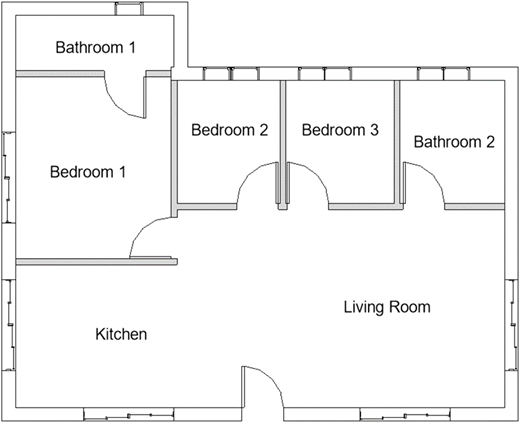
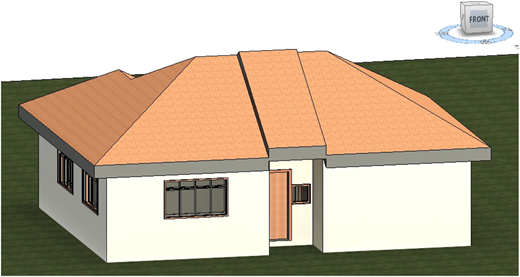
Affordable housing in South Africa is characterised by strict cost constraints and simplified construction methods aimed at reducing capital expenditure. Efficiency in spatial planning is essential to accommodate family needs within limited budgets. Standard design principles include north-facing orientation for passive solar gains, compliance with South African national standards (SANS) 10400-XA for minimum energy efficiency and robust finishes to minimise long-term maintenance costs. The base case selected for modelling is a typical free-standing three-bedroom house (90 m2), comprising a living room, kitchen, bathroom and water closet (Figures 2 and 3). The structure uses strip footings, clay–brick walls, plastered and painted finishes, a concrete floor with linoleum covering, single-glazed timber windows and a pitched roof with timber trusses and clay tiles.
To illustrate the progression from incremental improvements to full net-zero adoption, Table 1 compares three ANZCH scenarios across construction approach, embodied carbon reduction measures and operational carbon strategies. Scenario 1 focuses on low-cost, incremental measures that reduce embodied carbon and improve operational efficiency without major design changes, i.e. suitable for entry-level adoption in resource or skilled-constrained environments. Scenario 2 introduces hybrid strategies, combining conventional methods with innovative materials and moderate renewable integration, i.e. a balance between affordability and performance. Scenario 3 demonstrates the highest ambition, fully embracing advanced materials, circular principles, i.e. reuse and recycled content, and comprehensive renewable energy systems to achieve net-zero operational emissions. This staged approach highlights how technological innovation and circularity can be scaled progressively, enabling developers to align housing delivery with climate goals while addressing affordability and resource efficiency.
Comparative overview of ANZCH scenarios
| Scenario | Construction approach | Embodied carbon measures | Operational carbon measures |
|---|---|---|---|
| 1: Entry level ANZCH | Conventional methods |
|
|
| 2: Hybrid ANZCH | Mix of conventional and innovative techniques |
|
|
| 3: High-ambition ANZCH | Full adoption of innovative techniques |
|
|
All materials referenced in Table 1 are available within the South African market. However, materials such as hempcrete blocks, cross-laminated timber and other low-carbon alternatives are not always standard within mainstream affordable housing delivery and are typically procured from specialised suppliers rather than conventional supply chains. This nuance highlights an important supply chain consideration. While alternative materials are accessible, their broader industry uptake depends on contractor familiarity and local distribution pathways.
The scenarios were informed by the interviews and guided the selection of materials and technologies. Interviewees emphasised the importance of prioritising operational carbon reductions under South Africa's carbon-intensive grid, informing the incremental PV adoption measures in Scenarios 2 and 3. Cross-laminated timber emerged as an alternative to conventional masonry, offering lower embodied carbon and faster construction times. Though cross-laminated timber reduces upfront carbon, interviewees highlighted its recyclability as a practical limitation. Unlike homogeneous timber, cross-laminated timber can contain adhesives and layered compositions that complicate recycling and reduce their contribution to Module D relative to single material timber. Interviewees also identified autoclaved aerated concrete blocks as a lightweight alternative to conventional masonry, as they are commonly used and readily available within the South African market. Furthermore, autoclaved concrete blocks offer lower embodied carbon and their lightweight improves construction efficiency, informing their inclusion in Scenario 3.
4. Findings and discussion
4.1 Expert insights: enablers, barriers and design priorities of ANZCH
The interviewees emphasised that affordability extends beyond initial construction costs to include ongoing expenses like electricity, water and municipal rates. None of the interviewees provided a concrete definition of affordable housing; consensus revolved around households that do not meet the criteria for Reconstruction and Development Programme (RDP) or social housing yet remain financially constrained. Some participants stated that affordability within the South African context evolves around income brackets, but none of the participants could name the specific thresholds. The affordability discussions encompassed considerations such as whether a household should acquire or rent, based on their level of disposable income. Interviewees highlighted concerns regarding the overall cost of ownership, acknowledging that affordability encompasses not only the initial investment but also ongoing utility expenses and maintenance costs:
… you should provide the best quality you can. You know, for these sorts of markets and you also have to try and make the design as robust as possible so that there's not a high maintenance cost or it won’t remain affordable.
Beyond design, the occupant behaviour and the transfer of design intent are critical to achieving net-zero performance. Interviewees emphasised that well-designed homes can underperform if occupants are unaware of how to operate sustainable systems efficiently. Homeowners should be provided with handover packs and where applicable, green lease provisions should be integrated into tenant homes to align expectations and educate occupants. Equally important is ensuring that contractors understand and execute the design intent during construction, as gaps at this stage will compromise long-term performance.
The interviewees stressed that operational carbon efficiency should be prioritised because South Africa has a carbon-intensive grid, and legislation lacks robust embodied carbon policies and frameworks:
I think definitely operational carbon is seeing a much stronger focus and from a legislation perspective and policy perspective, most of what's been spoken about is just operational carbon and there's no kind of direction in terms of embodied carbon really.
Efforts aimed at reducing operational carbon should focus on high consumption appliances before other energy elements are optimised to limit financial spending while maximising energy savings. The most common approaches are: LED lighting, flow rate fittings to minimise hot water consumption and heat pumps or thermal solar geysers. Where the budget allows, these measures should be layered with on-site PV generation to offset the carbon-intensive energy grid.
Operational efficiency remains the primary focus and embodied carbon reduction strategies should be pursued where feasible, e.g. conventional clay bricks vs hempcrete blocks, incorporating recycled building materials into the building design where structural integrity permits. When financially viable, adopting engineered timber solutions, e.g. laminated beams/cross-laminated timber panels. These material choices reduce embodied emissions and promote improved thermal performance and circularity in construction.
South Africa's SANS 10400-XA sets minimum energy-efficiency requirements for building envelopes, lighting and hot water systems, but these provisions are largely compliance-oriented and insufficient to achieve net-zero outcomes. To bridge this gap, voluntary certification tools such as EDGE and the GBCSA offer pathways for higher performance. EDGE is particularly popular in the affordable housing segment because of its simplified scope, focussing on energy, water and materials and lower transaction costs relative to the GBCSA certification requirements. However, these tools present challenges (e.g. certification fees, administrative complexity and technical requirements) which often deter small developers and single-unit projects, limiting their transformative potential in the sector.
Access to green finance instruments, e.g. preferential mortgages, concessional loans, can significantly accelerate the adoption of sustainable measures. Yet, most financial products are structured for large-scale developments, leaving small builders and individual homeowners unable to benefit. The linkage between finance and certification further compounds this barrier, as due diligence and compliance costs do not scale down effectively for smaller projects. Consequently, alternative financing enablers to assist with the upfront costs is not available to small developers.
4.1.1 Attributes and characteristics of ANZCH
Table 2 summarises the attributes and characteristics of ANZCH identified through the qualitative analysis. This table outlines the various building elements and their associated technical specification that contribute to ANZCH. Each entry details the impact of the technical specification, including whether it involves conventional construction techniques, its affordability for implementation and its effect on embodied carbon, operational carbon, or both types of carbon emissions.
ANZCH attributes and characteristics summarised
| Category | Attribute | Specification | Method (Conventional/Innovation) | Financial impact (affordable/Expensive) | Carbon (Embodied/Operational) |
|---|---|---|---|---|---|
| Design & Planning Strategies | Building modelling | Virtual modelling to estimate carbon emission | I | A | Emb + Ops |
| Building orientation | Optimise indoor thermal environment | C | A | Emb + Ops | |
| Efficient housing design | Maximise useable area cost-effectively | C | A | Emb + Ops | |
| Shading techniques | Overhangs to reduce direct solar gain | C/I | – | Ops | |
| Glazing | Reduce heat gain/loss | C | – | Ops | |
| Insulation | Improve thermal comfort | C/I | – | Ops | |
| Roof reflectivity | White/reflective roofs to reduce heat absorption | C/I | – | Ops | |
| Property location | Proximity to services and transport | C | A | Emb + Ops | |
| Policies, Governance & Professional Capacity | Sustainability policies | Mandatory regulations drive green initiatives | C | A | Emb + Ops |
| Strong professional team | Increases efficiency | C | A | Emb + Ops | |
| Cost-effective finishes | Limits upfront capital cost | C | A | Emb + Ops | |
| Design for longevity | Reduce lifecycle maintenance cost | C | A | Emb + Ops | |
| Materials & Building Fabric | Composite materials | Lower embodied carbon, uncertain recyclability | I | E | Emb |
| Face brick finish | Eliminates plaster and paint, reducing maintenance | C | A | Emb | |
| Hollow bricks | Lightweight, reduces foundation cost and time | C | A | Emb | |
| Laminated timber | Low carbon emission, higher thermal performance | I | A | Emb | |
| Recycled demolition materials | Reuse materials for non-structural work | C | A | Emb | |
| Construction Methods | Precast elements | Faster assembly, less waste, less material | C/I | A | Emb |
| Energy, Water & Resource Management | Energy offset (renewable) | Offsetting non-renewable consumption | I | E | Ops |
| Energy wheeling | Purchase renewable energy instead of grid | I | E | Ops | |
| Energy storage | Store renewable energy for use off-peak | I | A | Ops | |
| Heat pump | Reduces energy for hot water | C | A | Ops | |
| Thermal geysers | Reduce electricity for hot water | C | A | Ops | |
| LED fixtures | Reduce energy demand | C | A | Ops | |
| Low-flow water fittings | Reduce hot water use → lower energy demand | C | A | Ops | |
| Market & Behavioural Strategies | Green bonds | Lower interest rates for sustainable projects | I | A | Emb + Ops |
| Household education | Behavioural change to reduce energy usage | C | A | Ops |
Technical specifications marked with asterisks were not evaluated in the reviewed literature but emerged during the interviews, highlighting additional strategies for achieving ANZCH.
The information presented guided the subsequent quantitative modelling process, which aimed to estimate the embodied and operational carbon impacts of incorporating these techniques and building elements.
4.2 Affordable net-zero carbon house carbon emission modelling
This section evaluates how different design strategies and material choices influence WLCCE in affordable housing. The modelling approach integrates insights from the qualitative analysis to ensure that proposed interventions are both technically feasible and contextually relevant.
4.2.1 Comparative life cycle carbon assessment: base case vs ANZCH pathways
The results reveal a strong progressive correlation between ANZCH scenarios and WLCCE reduction. The base case recorded the highest emissions (560,091kgCO2e), with operational carbon (Module B6) accounting for approximately 98%. Scenario 1 delivered a 12% reduction (491,920kgCO2e) through low-cost efficiency measures. Scenario 2 achieved a 52% reduction (270,719kgCO2e) driven by fabric improvements with the adoption of cross-laminated timber for walling, a monolithic roof system and 30%-fly ash blended concrete combined with partial PV integration. Scenario 3 achieved a 94% (35,915kgCO2e) reduction by eliminating operational carbon emissions through full PV coverage. This scenario incorporated autoclaved aerated concrete blocks, reused expanded polystyrene (EPS) insulation and hemp cladding tiles, alongside the full PV integration. Collectively, these results highlight the compounding effect of material innovation and renewable energy integration in achieving ANZCH.
This downward trend underscores two critical insights: (1) operational carbon dominates life cycle emissions under South Africa's coal-intensive grid, making energy reduction and renewable integration the most effective levers for decarbonisation and (2) as operational emissions decline, embodied carbon becomes increasingly influential. Although Scenario 3's upfront emissions (13,072kgCO2e) exceeded those of the base case (12,257kgCO2e) due to the embodied impacts of the PV system, these were offset by near-total elimination of B6 emissions and end-of-life benefits, including an 83% reduction in demolition-related emissions and 343% improvement in Module D credits from recycling and material recovery. In these results, Module D's impact is included in the WLCCE to show potential benefits and burdens resulting from the different materials used within each scenario. The adoption of laminated timber with support for biogenic carbon sequestration, which is accounted for through One-Click.
Collectively, the findings highlight the importance of a balanced strategy that combines energy efficiency, renewable generation and low-carbon material choices to achieve decarbonisation without shifting impacts between life cycle stages. Table 3 provides a summary of the WLCCE of the Base Case and Scenarios.
Whole life cycle carbon emissions for 3 varying levels of ANZCH
| Module | Category | Base case (kg CO2e) | Scenario 1 (kg CO2e) | Scenario 2 (kg CO2e) | Scenario 3 (kg CO2e) |
|---|---|---|---|---|---|
| A1-A3 | Construction material | 10,629 | 9,521 | 4,748 | 12,155 |
| A4 | Transport to site | 653 | 634 | 503 | 398 |
| A5 | Construction and installation process | 976 | 895 | 754 | 519 |
| A1-A5 | Upfront Carbon | 12,257 | 11,051 | 6,005 | 13,072 |
| B1 | Use | ||||
| B2 | Maintenance | 2,400 | 2,400 | 2,400 | 2,400 |
| B3 | Repair | 1,663 | 1,552 | 1,075 | 1,815 |
| B4-B5 | Material replacement and refurbishment | 7,554 | 6,294 | 23,426 | 20,142 |
| B6 | Energy consumption | 532,800 | 468,000 | 230,400 | 0 |
| B1-B6 | In-use | 544,417 | 478,246 | 257,301 | 24,357 |
| C1-C4 | End of life | 3,906 | 3,096 | 9,592 | 652 |
| C1-C4 | End of Life | 3,906 | 3,096 | 9,592 | 652 |
| D1 | External impacts | −489 | −473 | −2,179 | −2,167 |
| D2 | Utility Exports | – | – | – | – |
| D1-D2 | Information beyond construction works life cycle | −489 | −473 | −2,179 | −2,167 |
| Total | 560,091 | 491,920 | 270,719 | 35,915 | |
| Percentage Savings | - | 12% | 52% | 94% | |
The module-level analysis reveals distinct trends across life cycle stages. Upfront emissions (A1-A5) decreased modestly in Scenario 1 through basic material substitutions, while Scenario 2 achieved a more substantial reduction by incorporating cross-laminated timber and lightweight systems, despite the additional embodied carbon from PV installation. In Scenario 3, advanced materials like autoclaved aerated concrete blocks and hemp cladding further reduced transport and site impacts; however, overall A-stage emissions exceeded the base case due to the embodied carbon associated with the on-site PV installation.
For the in-use phase (B1-B6), operational carbon (B6) dominated the base case, accounting for approximately 97% of total emissions. Scenario 1 delivered marginal improvements through solar-thermal systems, whereas Scenario 2 reduced B6 emissions by about 57% with partial PV integration. Scenario 3 virtually eliminated operational emissions by achieving full on-site renewable energy generation. However, the additional carbon gained due to material replacements prevented true net-zero emissions.
Finally, end-of-life and beyond (Modules C and D) showed incremental benefits from lightweight and recyclable materials, which improved this stage's outcomes. D-stage credits achieved from recycling and material recovery became more significant in Scenarios 2 and 3, although these gains remained relatively minor compared to the operational savings achieved through PV deployment.
4.2.2 Managing the embodied and operational carbon trade-off
The modelled results show that embodied carbon never reaches zero in any scenario, even as operational emissions decline sharply. Figure 4 illustrates this trend with the Base Case and Scenario 1, embodied carbon accounts for only about 5% of total emissions, with operational carbon remaining the overwhelming contributor. In Scenario 2, significant operational reductions increase the embodied share to 16%, while Scenario 3, which fully integrates PV, virtually eliminates operational emissions, making embodied carbon the dominant component of the remaining footprint.
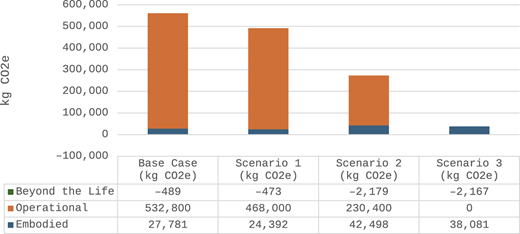
This pattern highlights a critical trade-off, as operational intensity drops, embodied emissions become proportionally more significant. To address this, future ANZCH strategies should prioritise low-carbon material choices while avoiding non-recyclable composites. Second, design for durability and disassembly, enabling component reuse and maximising Module D credits at end-of-life. Third, right-size PV systems to match realistic household energy profiles, avoiding oversizing that adds embodied burden without delivering proportional operational benefits. Together, these measures will help balance the embodied operational trade-off and ensure that net-zero ambitions do not inadvertently shift emissions from one life cycle stage to another.
4.2.3 Discussion of findings
The integration of qualitative insights and quantitative modelling reveals a narrative on the feasibility and trade-offs of ANZCH in South Africa. Expert interviews underscored affordability as a multidimensional concept, extending beyond initial construction costs to encompass operational expenses. This aligns with literature emphasising life cycle affordability as critical for housing sustainability (WEF, 2019). Stakeholders consistently prioritised operational carbon reduction due to South Africa's coal-intensive grid, echoing findings that operational carbon dominates life cycle emissions in conventional housing (Chastas et al., 2018; DFFE, 2024).
Quantitative results confirmed that operational carbon accounts for up to 95% of WLCCE in the base case. Incremental measures (passive design and solar-thermal systems) cut emissions by 12%, while hybrid strategies (fabric upgrades and partial PV integration) achieved 52%. Full PV deployment nearly eliminated operational emissions, reducing WLCCE by 94%. These gains, however, introduced embodied carbon trade-offs, consistent with global evidence that embodied impacts rise as operational carbon declines (Wu and Skye, 2021).
The findings highlight the need for balanced strategies that integrate energy efficiency, renewable generation and low-carbon materials, supported by circular design principles to mitigate end-of-life impacts (RICS, 2023). Policy and financial enablers, e.g. tightening of SANS 10400-XA standards, green finance instruments and streamlined certification, are essential to scale ANZCH without compromising affordability (Moghayedi and Awuzie, 2025; Karlsson et al., 2021). Furthermore, capacity building for contractors and occupant education emerged as critical to translating design intent into real-world performance, reinforcing the social dimension of sustainability (Never et al., 2022).
The convergence of qualitative and quantitative evidence affirms that ANZCH is achievable through staged adoption, beginning with low-cost efficiency measures and progressing toward integrated renewable and material innovations. These pathways resonate with literature advocating holistic frameworks that combine technological innovation, circularity and resilience to advance sustainable housing in resource-constrained contexts (Belussi et al., 2019; Chen et al., 2017).
This research carries implications for policy, practice and future scholarship in the Global South. For policymakers, the findings underscore the urgency of integrating life cycle carbon considerations into building regulations and incentivising low-carbon materials and renewable energy systems through subsidies and green finance instruments for smaller developers. For developers and practitioners, the study provides a practical roadmap for prioritising operational carbon reductions in coal-intensive economies while progressively addressing embodied carbon through circular design principles. The emphasis on affordability and resilience highlights the need for multi-dimensional interventions that combine technological innovation, financial mechanisms and capacity building to ensure equitable access to sustainable housing. Finally, the study contributes to the global discourse on climate-responsive housing by offering a framework for balancing carbon mitigation and affordability in resource-constrained settings.
5. Conclusion and further research
This study demonstrates that affordable housing and net-zero carbon objectives can be advanced in tandem through sequenced interventions. For a representative South African affordable home, as operational emissions approach zero, embodied carbon becomes proportionally more significant, underscoring the need for balanced strategies that combine energy efficiency with low-carbon material choices, design for durability and disassembly and PV systems sized to actual household demand.
Scaling ANZCH affordably requires policy and financial innovation. Gradually tightening SANS 10400-XA, combined with targeted subsidies and rebates, can drive adoption while avoiding regressive impacts. Expanding green finance to include small developers and single-unit projects, alongside streamlined certification, will expand market participation. Capacity building through contractor training and occupant education is essential to ensure that design intent translates into real-world performance.
While this research provides a robust framework for ANZCH delivery, several limitations should be acknowledged: (1) the embodied carbon proxy data relied partly on UK emission factor datasets due to the limited availability of South African product data thereby introducing variances in absolute embodied carbon values due to regional manufacturing and transport emissions and (2) the analysis focussed on a single housing typology and one climate zone. Future studies should expand to multi-unit typologies, diverse climatic contexts and measured post-occupancy performance to validate modelled outcomes.
In conclusion, ANZCH offers a credible pathway to align housing equity with South Africa's decarbonisation goals. By integrating passive design, efficient systems, renewable energy and low-carbon materials within a supportive policy and finance ecosystem, ANZCH can become a cornerstone of sustainable urban development and a key instrument in the transition to a net-zero built environment.
The supplementary material for this article can be found online.

