This study aims to enhance the understanding of adaptive capability (ADC) as a moderating and mediating factor in the relationship between a distinctive capabilities system (DCS) and the nonfinancial and financial performance of Portuguese micro-, small- and medium-sized enterprises (MSMEs) within the context of business model adaptation in response to exogenous shocks.
In this study, I utilized an exploratory and quantitative methodology. Moreover, I administered a structured questionnaire to collect data from 223 Portuguese MSME respondents. To ensure the variables’ validity and reliability, I conducted a confirmatory factor analysis and employed structural equation modeling to test the proposed hypotheses.
The results demonstrate a significant direct impact of DCS on both nonfinancial and financial performance, with the former mediated by ADC. These findings suggest that MSME management practices during an exogenous shock have the potential to generate superior performance by reconfiguring DCS with ADC support. This enables MSMEs to leverage existing resources and capabilities to continuously improve and adapt their business models, defend their market share and adjust their exploitation and exploration strategies in response to exogenous shocks. Moreover, the development of proactive managerial capabilities can contribute to this combination of factors and potentially lead to superior MSME performance.
Literature lacks studies on strategy and management regarding the role of DCS as a predictor of MSME’s business model adaptation and the mediating effect of ADC in this relationship. The current study sought to address this deficiency by investigating the crucial role of ADC in facilitating the reconfiguration, renewal or creation of resources, capabilities, processes and routines that foster adaptation while confirming DCS’s role as a critical component of the business model. My research extends and builds on earlier findings by demonstrating how these capabilities enable MSMEs to respond effectively to exogenous shocks while maintaining their superior performance.
Introduction
The current global pandemics and wars have created a significant turning point in various aspects of civic, political, economic, and organizational life. Governments have taken measures to address these events and mitigate the resulting economic crises. However, micro-, small-, and medium-sized enterprises (MSMEs) face challenges in adapting to the exogenous shocks.
Above all, MSMEs must adjust their business models (BMs) to market trends caused by unforeseen circumstances and ensure that all their capabilities focus on maintaining and expanding customer relationships (McGrath, 2019; Arraya, 2022). Thus, in terms of strategic management, MSMEs’ search for new advantages and following the lens of the capability-driven firm comes from the MSMEs’ ability to adapt by achieving a fit or equilibrium between its internal capabilities, systems, processes, and external environment (Chakrabarti, 2015; Arraya, 2024).
Business models reflect firms’ ability to create, deliver, and capture value, which scholars increasingly recognize as a key to competitiveness and financial performance (Saebi, Lasse, & Foss, 2017; Sohl, Vroom, & McCann, 2020). When a firm experiences organizational decline resulting from environmental shocks or faces significant crises, BM adjustments can be crucial for securing its economic sustainability (Saebi et al., 2017). Capabilities support BM processes and routines, such as sensing the market, seizing opportunities, leveraging, and transforming or reconfiguring the business model (Teece, 2018).
There have been differing viewpoints regarding the relationship between a single capability and superior firm performance; some studies suggest that a single capability is insufficient (Wilden, Gudergan, Nielsen, & Lings, 2013; Baía & Ferreira, 2019), while others argue that a system of interlocking and best-in-class capabilities is necessary (Leinwand & Mainardi, 2011; Teece, 2018; Castellano, Khelladi, Sorio, Orhan, & Kalisz, 2020; Arraya, 2022, 2024). However, scholars widely accept that a strategy which is an intrinsic ensemble of decisions that positions a firm within its industry and forges sustainable advantages and superior value relative to its competitors must receive support from an appropriate capabilities system (Lafley & Martin, 2013).
It is challenging to presume that all capability systems operate uniformly, regardless of the size of the MSME, and that they all play a uniform role in strategy and their relationship to superior performance. Nonetheless, they are vital for sensing, seizing, adapting to changes, and aligning with both the immediate and long-term objectives of MSMEs (Kozioł-Nadolna & Beyer, 2021).
Distinctive capabilities system (DCS) and adaptive capability (ADC) are two predictor systems of MSME performance (Monferrer, Blesa, & Ripollés, 2015; Williams, Whiteman, & Kennedy, 2019; Teece, 2018; Bapuji et al., 2020; Arraya, 2022) that fall under the category of “black box” organizational phenomena (Conger, 2004). These advanced and adaptive systems process information and modify behavior by transforming inputs into outputs, which effectively resolves defined challenges while keeping their internal operations concealed (Conger, 2004).
A distinctive capabilities system, or a firm’s ability to combine distinctive capabilities that mutually reinforce itself, differentiate the firm strategically, and cannot be replicated by other firms, is crucial to a firm’s success. This system enables a firm to build competitive advantage and thrive, ultimately contributing to value creation for stakeholders (Arraya, 2022). Previous research indicates that ADC, which aims to reduce the distance between a firm and its economic and institutional environments, refers to an MSME’s ability to sense and seize market opportunities by matching exploitation and exploration strategies via resource and capability adaptability fit that impacts MSME performance (Sarta, Durand, & Vergne, 2021; Basu, Munjal, Budhwar, & Misra, 2022; Srikanth & Ungureanu, 2024).
To the best of my knowledge, no previous study has examined DCS’ and ADC’s impact on the non-financial and financial performance of MSMEs in response to exogenous shocks. To demonstrate the paucity of studies on the relationship between these constructs, I conducted a bibliographic search in the Scopus and Web of Science (WoS) databases. In the search, I applied the search string terms “distinctive capabilities system” and “adaptive capability.” I restricted the search to peer-reviewed articles published in English-language journals without imposing time constraints. The search process encompassed “all fields” to identify relevant articles. Based on the research findings, it is evident that scholars have not exhibited an increasing interest in this subject matter over time.
My study provides valuable insights and provides three contributions to the literature. First, I enhanced the DCS concept and its significance in MSME, and empirically evaluated its role and relationship with performance. Second, I explained and empirically evaluated the importance and role of ADC and its relationship with performance. Third, I elucidate the causal mechanism whereby ADC affects the association between DCS and performance by comparing two distinct explanations: mediation and moderation.
Therefore, the research question was: How does ADC alter the relationship between MSME distinctive capabilities system and financial and non-financial performance in terms of (a) strength (i.e. when considering the relationship of DCS with non-financial and financial performance?) and (b) nature (i.e. when considering DCS, what is the causal pathway through which ADC exerts its influence?)
Contextually, I embedded my study in Portugal, a market in which MSMEs represent 79.81% of the Portuguese economy, thus constituting the backbone and playing a significant role in the domestic economy. In this context, I used hypothesis testing with structural equation modeling (SEM) in the context of a sample of 223 Portuguese owners/founders/executives/managers in MSMEs across sectors.
In the next section, I will present a review of the literature supporting the DCS concept, followed by a discussion of research methods. Next, I discuss the findings and present conclusions.
Literature review and hypothesis development
Business model adaptation
Business model adaptation refers to the process of modifying the existing BM to respond effectively to changes in the external environment to ensure an organization’s survival and long-term economic sustainability in an increasingly digital landscape (Saebi et al., 2017; Oleksiuk & Rull Quesada, 2023).
Adaptations may include modifications in various aspects of the business model (BM), including the value proposition, target market, value delivery mechanisms, value capture strategies, alterations in customer preferences, supplier bargaining power, technological advancements, how organizations integrate resources and capabilities, and, most significantly, the organizational leadership’s comprehension of digital technologies’ impact (Saebi et al., 2017; McDonald & Eisenhardt, 2020; Sabatini, Cucculelli, & Gregori, 2022).
The adaptation of business model elements, such as the adoption of digital technologies, can be complex and resource-intensive. However, failure to implement such adaptations may increase the probability of suboptimal strategy performance in the medium-to long-term and potentially lead to business failure, particularly in the aftermath of exogenous shocks (Doz & Kosonen, 2010; Sabatini et al., 2022).
In my study, business model adaptation refers to the deliberate modification of any component of a firm’s business model, which may involve adjustments to resources, capabilities, processes, and routines. Such modifications aim to align the firm’s activities with its strategic objectives and require the active involvement of management.
Distinctive capabilities system
In light of the uncertainty in the economic climate and the challenges that MSMEs face, it is crucial for them to adapt their BM to maintain stability and navigate undefined times. The distinctive capabilities system is the key concept for achieving this stability (Bapuji et al., 2020; Arraya, 2022).
A capability is a set of learned processes, routines, and activities that enables an MSME to produce a product or service (Teece, 2018). An operational capability is the best practice that allows an MSME to survive; a dynamic capability ensures the way things are done and includes modifying existing competencies or developing new ones to serve SME customers (Teece, Pisano, & Shuen, 1997; Eisenhardt & Martin, 2000). As the MSME business model adapts, its capabilities change as well. Each MSME’s business model is distinctive and challenging for competitors. It is deeply rooted in the company’s history and manifests itself through its unique models, procedures, and operational routines (Fainshmidt, Wenger, Pezeshkan, & Mallon, 2018; Teece, 2018). This individualized approach makes the business model specific to each MSME and difficult to imitate. There are three types of managerial activities that can create a dynamic capability (Teece, 2018), i.e. sensing – identifying and assessing opportunities outside the MSME; seizing – mobilizing capabilities and resources to capture value from those opportunities; and transforming – continuous renewal. The configuration of the dynamic capabilities that come from these dimensions in one adaptive system changes how an MSME achieves competitiveness and maintains returns (Arraya, 2024).
A distinctive capability is an MSME’s unique valuable operational or dynamic capability, which arises from attributes that other MSMEs do not share. This capability creates recognizable value for customers and confers at least a transient competitive advantage (Leinwand & Mainardi, 2011; McGrath, 2019). It is generally implicit and uncommon, challenging to replicate, and grounded in exclusive sets of relationships that are inherently organizational and difficult to transfer across different MSMEs.
Nonetheless, a single operational or dynamic capability is insufficient for an MSME to implement an effective change initiative (Baía & Ferreira, 2019). Hence, an adaptive system incorporating several distinctive capabilities can potentially transform MSMEs (Leinwand & Mainardi, 2011; Teece, 2018; Castellano et al., 2020; Arraya, 2022, 2024).
As described by Arraya (2024) and Leinwand and Mainardi (2011), DCS refers to the intricate interconnection between operational and dynamic capabilities, resources, processes, routines, and products or services offered, with the ultimate aim of creating and capturing value for both external and internal stakeholders. Two key conditions characterize this concept (Ackoff, 1981; Arraya, 2024): (1) the behavior of each capability has a significant impact on the overall performance of the system and (2) MSME managers possess the ability to perceive, think, make decisions, interpret frames used to make decisions, and learn from experience.
My proposed approach involves the deliberate configuration and implementation of DCS, with a focus on supporting a strategic purpose aligned with MSME value creation. Specifically, DCS is intended to facilitate the exploration of the customer context in the development of new products or services that are likely to be accepted and purchased. This alignment is consistent with the findings of previous studies that have demonstrated the positive impact of DCS on performance (Leinwand, Mainardi, & Kleiner, 2016). Given this evidence, I hypothesized:
The distinctive capabilities system (DCS) positively impacts non-financial performance (NFP).
The distinctive capabilities system (DCS) positively impacts financial performance (FP).
The role of adaptive capability in moderation or mediation between DCS and performance outcomes
One of the managerial challenges that MSMEs face during uncertain times is their ability to respond to external changes efficiently and effectively as proof of life, making necessary adjustments to the system to survive new conditions (Ivanov, 2024). An MSME must be able to adjust and adapt to a new reality imposed by the market, enabling the MSME to counteract and recover from disruptions, leading to resilience and ensuring positive performance persistence (Sarta et al., 2021; Ivanov, 2024).
Adaptation, which encompasses the ability to transform and integrate other resources and capabilities, is a dynamic capability, as defined in the literature (Teece et al., 1997; Braganza, Brooks, Nepelski, Ali, & Moro, 2017; Winter, 2003). Consequently, ADC is a vital element for an MSME to sense and seize market prospects by adjusting exploitation and exploration strategies through the adaptability of its resources, capabilities, processes, and routines to cope with changes in its portfolio and enhance its input-output transformation process and superior performance (Sarta et al., 2021; Basu et al., 2022).
Previous studies have identified that ADC can impact strategic plans as emerging opportunities, threats, and technologies (Phattarawan, Kiran, Anil, & Anusorn, 2010; Szu-Yu, 2023). Scholars also note it for its ability to seek and exploit innovative knowledge, which is critical for MSME performance (Szu-Yu, 2023). Furthermore, ADC swiftly modifies and reconfigures the MSME structure and management (Szu-Yu, 2023). It allows an MSME to improve its work processes and routines over time (Rudawska, 2024) and thus enables it to respond quickly to environmental changes. Furthermore, ADC is significant for business success and organizational improvement because it allows an MSME to accumulate change experiences (Torres, Sidorova, & Jones, 2018; Basu et al., 2022).
The ADC in MSME is a crucial dynamic capability that facilitates superior performance although it does not directly reflect performance (Chryssochoidis, Dousios, & Tzokas, 2016). However, by balancing exploitation and exploration, MSME’s adaptive capability can positively impact its performance, extend DCS’ life cycle, and enable it to keep pace with evolving market requirements (Chryssochoidis et al., 2016; Basu et al., 2022).
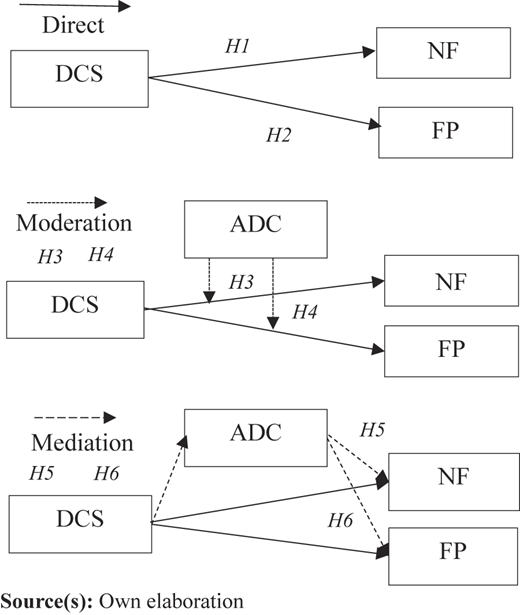
In this study, I aimed to determine whether the ADC of an MSME enhances DCS during exogenous shock. I tested the hypotheses using mediation and moderation models.
I employed moderation analysis to evaluate the conditions under which we associate adaptive capability with a distinctive capabilities system. Subsequently, the moderation model facilitated the assessment of ADC’s influence on the relationship between DCS and both performance measures (NFP and FP). Specifically, ADC as a moderator is conceptualized as a variable that influences the direction and/or strength of the relationship between DCS and performance (Baron & Kenny, 1986). Noteworthy, ADC does not function as an intermediate variable in the causal sequence from DCS to performance. However, the examination of its influence would yield significant theoretical and practical insights. Aiken and West (1991) provide further elaboration on moderation.
The analysis of ADC mediation lets us go beyond the question “Does adaptive capability lead to performance improvement?” and investigate the mechanisms by which adaptive capability influences performance. Consequently, ADC as a mediator, both conceptually and statistically, accounts for the relationship between DCS and both performance measures (NFP and FP). The establishment of mediation can only occur if we meet specific conditions (MacKinnon, 2008). First, a substantial relationship must exist between DCS and ADC, and a relationship must exist between ADC and performance when accounting for DCS. Second, mediation inherently requires causal precedence wherein DCS precedes and serves as a cause of ADC, and ADC must precede and function as a cause of performance. For further elaboration on mediation see MacKinnon (2008).
Hypotheses H1 and H2 propose that DCS positively impacts MSME performance. However, the role of ADC is less clear as it may enhance and amplify the effects of DCS. However, it is also possible that ADC may not have any significant influence. Adaptive capability acts as a moderator by exerting its own direct effect on performance and potentially modifying the DCS’ impact. Therefore, it is important to consider potential interactions between DCS and ADC when examining their effects on performance. Therefore, I hypothesized:
Adaptive capability (ADC) is a positive moderator of the relationship between the distinctive capabilities system (DCS) and non-financial performance (NFP).
Adaptive capability (ADC) is a positive moderator of the relationship between distinctive capabilities system (DCS) and financial performance (FP).
Mediation posits that ADC application ameliorates the impact of DCS on performance and enhances performance independently. Consequently, the direct effect of DCS on performance diminishes or dissipates. In the realm of an MSME, the acquisition of new knowledge to manage exogenous shocks and enhance distinctive capabilities is crucial in promoting DCS’ adaptive behavior, which, in turn, positively impacts performance (Arraya, 2022). The direct effect of the ADC on performance is noteworthy. However, we must recognize that managers can exercise control over DCS through competent management of the system via the ADC, potentially mitigating the influence of DCS on performance. Thus, I hypothesized:
Adaptive capability (ADC) is a positive mediator of the relationship between the distinctive capabilities system (DCS) and non-financial performance (NFP).
Adaptive capability (ADC) is a positive mediator of the relationship between the distinctive capabilities system (DCS) and financial performance (FP).
Figure 1 illustrates that the relationship between the distinctive capabilities system and performance is moderated or mediated by MSME’s adaptive capability.
Methodology
Research design
My exploratory research utilized a cross-sectional survey to gather respondents’ perspectives on the significance of DCS in MSME performance. To ensure the scale validity, I based the items on a solid theoretical foundation and incorporated previously used items (McDonald, 1996). The manifest variables should encompass the construct’s breadth and the items should represent specific DCS aspects (Price, 1997).
I crafted the survey items in such a manner that they applied to a diverse array of industries and, thus, excluded industry-specific elements. Nonetheless, the survey considered firm size. The response format for all the items was a 5-point Likert scale, encompassing “strongly disagree” and “strongly agree” for the independent construct and “much worse” to “much improved” for the organizational performance construct.
Measures
I conducted an electronic survey in three sections. The first focused on personal and firm characteristics, including respondents’ size, turnover, and position.
In the second section, I measured DCS using a three-item construct. These indicators assess the MSME’s proficiency in defining distinctive capabilities that generate value in the market and, reciprocally, reinforce each other to form an interconnected system. I measured ADC using a three-item construct. These items assessed the ability to adapt to changing market conditions, allowing them to monitor the demand for and responsiveness to customers, which can lead to increased performance through customer satisfaction. Both constructs had a strong inclination to enhance capabilities that prevent obsolescence and enable MSMEs to revamp their management systems, thereby eliminating outdated routines and practices. This assessment also encompassed the ability to overcome core rigidity and inertia, thus facilitating a swift response to evolving business priorities.
The third section employed a scale of six items to appraise the performance of MSMEs over the past two to three years. The non-financial performance dimension comprised three items centered on customer satisfaction, employee satisfaction, and overall performance. Finally, the financial performance dimension encompassed three items concerning profitability, sales increase, and cost decrease.
Sample and data collection
I selected Portuguese MSMEs for the sample because they play a crucial role in the Portuguese economy and comprise the majority of businesses in the country. Following a survey test, I gathered data from 98 regional Portuguese Economic Chambers in March 2023. To ensure that the survey was comprehensive, I requested that participating firms share the questionnaire with employees holding the minimum position of managers, as they are well-versed in the MSME’s overall strategy, operations, organizational decisions, and performance (Laaksonen & Peltoniemi, 2018).
I received 223 valid responses from diverse industry cross-sections. Of the completed questionnaires, owners/funders completed 32.10% of responses, executives −18.11%, and managers – 49.79% by managers. The majority (60.91%) of the participants worked in micro- and medium-sized firms. Regarding sex, 76.13% of the participants were men and 23.87% – women. The average age of the participants was 47.68 years old, and 84.36% of them held a university degree, with 44.44% holding a bachelor’s degree, 29.22% holding a master’s degree, and 10.70% holding a PhD. Furthermore, 97 (43.5%) participants worked in organizations with 1–9 employees, 50 (22.4%) in organizations with 10–49 employees, and 76 (34.1%) in organizations with 50–249 employees.
I observed no significant variations were observed across firm sizes (Kruskal–Wallis test, Kruskal (1952)). To further evaluate representativeness, I conducted the same test for differences between owner/founder/executives/managers. The results did not demonstrate statistically significant differences, thus supporting the conclusion that the sample adequately represented Portuguese MSMEs.
Common method variance
During the study’s design stage, I implemented several procedures to minimize potential bias in the findings. In line with Podsakoff, MacKenzie, and Podsakoff (2012), the first step involved ensuring the respondents’ anonymity. Moreover, I separated the items and constructed measures within the research instrument (Krishnan, Martin, & Noorderhaven, 2006). Previously, I validated the items used and sourced them from different platforms (Podsakoff et al. (2012). Moreover, the respondents were unaware of the conceptual framework underlying the survey (Podsakoff et al., 2012). Finally, I conducted Harman’s one-factor test and found that 38% of the total variance explained the highest amount of variance, which was below the 40% threshold indicated by Podsakoff et al. (2012). Consequently, common method variance was not a significant issue in this study.
Statistical analysis
I performed statistical analyses using the JASP software. I determined the relationship between latent factors and their corresponding observed using confirmatory factor analysis (CFA). Table 1 presents the results. I established the data sampling adequacy through the Kaiser-Meyer-Olkin (KMO) measure. Meanwhile, I tested sample appropriateness using Bartlett’s sphericity test (x2 = 1755.868; df = 66; p = 0.001). Table 2 shows the constructs’ reliability and validity. I measured the reliability and internal consistency of the data using Cronbach’s alpha coefficients with scores ranging from 0.733 to 0.833. I found the data to be reliable, based on the established Cronbach’s alpha coefficients. The composite reliability (CR) (Nunnally, 1978) and average variance extracted (AVE) (Fornell & Larcker, 1981) values were satisfactory for all constructs, with CR values between 0.802 and 0.912 and AVE values between 0.508 and 0.677, respectively. These values indicated the internal consistency between the multiple indicators of each variable and provided support for the validity of the respective latent variables.
I also assessed the reliability and validity of the measures used in the model. The overall model displayed good fit statistics, including a significant chi-squared value (CMIN/DF) (χ2/df = 2.18, p = 0.001) which indicates that the model adequately fit the data. The measures of model fit, including RMSEA = 0.070, GFI = 0.988, NFI = 0.942, and CFI = 0.967, suggest that the model fit the data reasonably well.
The relationships between the variables were robust, leading to coordinated movement in the same direction. However, this correlation does not necessarily imply causation. To investigate the moderating and mediating effects of ADC on the relationship between DCS and nonfinancial and financial performance, we employed structural equation modeling.
Results
The study used SEM, an analytical technique, to evaluate the conceptual model. I deemed this method appropriate because of its research objectives, which aimed to directly assess the relationship between latent and observed variables (Hair, Black, Babin, & Anderson, 2009).
Initially, we examined the direct impact of DCS on both nonfinancial and financial performance. The CMIN/DF value was 2.79 (p = 0.001), GFI – 0.991, CFI – 0.968, TLI – 0.952, RMSEA – 0.086, and SRMR – 0.035. These results indicated a good fit between the data and the model. Subsequently, I tested the hypotheses. The findings revealed a significant association between DCS and both non-financial performance (H1: β = 0.911, p < 0.001) and financial performance (H2: β = 0.356, p < 0.001), as presented in Table 3. Hence, I accepted H1 and H2.
Table 3 presents the results of the moderator model, including hypotheses H3 and H4. The CMIN/DF value was 2.25 (p = 0.001), GFI – 0.987, CFI – 0.964, TLI – 0.952, RMSEA – 0.072, and SRMR – 0.045. These results indicate a good fit between the data and the model. Subsequently, I subjected the hypotheses to rigorous testing. The results revealed that the association between DCS and NFP was moderated by ADC (H3: β = −0.038, p < 0.550), while the association between DCS and FP moderated by ADC (H4: β = −0.038, p < 0.550) failed to attain statistical significance (see Table 3). Therefore, the data did not support hypotheses H3 and H4.
Table 3 displays the results of the mediator model, including hypotheses H5 and H6. The CMIN/DF value was 2.18 (p = 0.001), GFI – 0.988, CFI – 0.967, TLI – 0.955, RMSEA – 0.070, and SRMR – 0.040. These findings indicate a good fit between the data and the model. However, I adhered to Baron and Kenny’s (1986) procedure to evaluate ADC’s mediating effects on the relationship between DCS and performance dimensions. This method comprises four stages. First, the researcher must confirm that DCS is significantly associated with performance dimensions. Second, DCS is significantly associated with ADC. Third, it must be demonstrated that ADC influences performance dimensions while controlling DCS effects. Finally, when these conditions are met, it should be demonstrated that the effect of DCS on performance dimensions diminishes or becomes insignificant when controlling for ADC, indicating mediation.
As Table 3 shows, I tested the hypotheses. The results of the mediation research model revealed an indirect effect of DCS on NFP through ADC (β = 0.194, p < 0.001), as well as an indirect effect of DCS on NFP through ADC (β = 0.134, p < 0.001). The analysis indicated that the mediation was significant at Stage 4 for both hypotheses, justifying their acceptance.
Discussion
Business model adaptation has proven to be a highly effective strategic response to changes in the external environment (Saebi et al., 2017). I empirically examined the role and relationship of DCS with performance dimensions in MSMEs, assessed the significance and role of ADC, and clarified the moderation and mediation mechanisms through which ADC influences the connection between DCS and performance dimensions.
I employed a capability-driven perspective to provide a more comprehensive analysis of my findings (Lafley & Martin, 2013). This view maintains that MSMEs must develop and leverage their internal capabilities to effectively respond to disruptive business environments and adapt to their BM. To sustain long-term profitability, firms need a DCS that is adaptable, agile, and capable of evolving to fulfill varying demands (Arraya, 2024; Lafley & Martin, 2013; Teece et al., 1997).
I confirmed two initial hypotheses, demonstrating the positive influence of DCS on performance dimensions in Portuguese MSMEs. These outcomes are consistent with previous research indicating that DCS positively impacts performance (Ghosh, Liang, Meng, & Chan, 2001; Leinwand & Mainardi, 2011; Teece, 2018; Arraya, 2022), and they are in accordance with the purpose of DCS in making MSMEs a distinguishing player.
The distinctive capabilities system displays coordinated and interdependent capabilities, offering a value proposition that customers acknowledge. Its attributes are deeply embedded in MSME’s processes and routines and are not replicable by other firms. Moreover, DCS features include interconnectedness, nonlinear relationships, customer-centric capabilities, and managers who utilize managerial capabilities to balance and reinforce feedback loops, resulting in mutual reinforcement and synergy within MSMEs (Lee & Day, 2019; Arraya, 2024). As agents, managers are crucial to responding to exogenous shocks by utilizing their managerial capabilities to balance and reinforce feedback loops. This allows for the implementation of interventions, changes, or decisions that modify the configuration of the system and business model. The outcome of MSMEs is highly dependent on these actions (Colclough, Moen, Hovd, & Chan, 2019; Heubeck, 2023).
An exogenous shock involves both unforeseeable and foreseeable elements that require comprehensive exploitation and exploration to generate revenue. Distinctive capabilities system seamlessly integrates exploration with research, discovery, innovation, risk-taking, and experimentation, while exploitation encompasses the selection, continuous improvement, efficiency, implementation, execution, and nurturing of strong customer relationships through innovation to maintain a competitive position (Colclough et al., 2019). Consequently, the adaptability, competitive advantage, and BM’s sustainability are contingent upon the implementation of the DCS approach, which proactively redesigns, guides, and executes the BM to develop, adapt, or cultivate internal capabilities. This approach creates novel development pathways and substantive customer value propositions that are challenging for competitors to replicate, thereby revitalizing MSMEs’ life cycle and ultimately leading to growth and profitability.
I utilized H3–H4 to examine the moderating effect of ADC on the association between DCS and performance characteristics in Portuguese MSMEs. These findings indicated that the moderating influence of ADC was not statistically significant. Given the statistical limitations outlined, the authors suggest conducting further testing in other regions or samples to investigate the potential moderating role of ADC in the relationship between ADC and MSME performance, and how it affects DCS.
I verified the last hypotheses, as they showed the positive mediating influence of ADC between DCS and non-financial and financial performance in Portuguese MSMEs. These findings indicate a strategic inclination towards leveraging DCS through ADC, which facilitates the adjustment of systems, processes, and routines in response to the external environment. Adaptive capability (ADC) plays a crucial role in market sensing, exploitation and exploration, adjustment of value propositions, and the management of customer relationships to preserve market share and ensure growth (Lafley & Martin, 2013). Furthermore, it leverages the restructuring, rationalization, and reconfiguration of internal capabilities, irrespective of whether they are configured in DCS, with a focus on enhancing effectiveness and efficiency to achieve superior performance (Basu et al., 2022). This study posits that the redeployment of ADC allows MSMEs to exploit and explore emerging opportunities. Hence, I suggest that the ADC’s role in mediating the relationship between DCS and MSME performance dimensions is to promote business model adaptation and fit.
Theoretical contribution
This research contributes to the ongoing debate on capability-driven firms and BM adaptation (Lafley & Martin, 2013; Saebi et al., 2017), including its relationship with DCS’ direct influence (Leinwand & Mainardi, 2011; Teece, 2018; Castellano et al., 2020; Arraya, 2022, 2024), ability to adapt (Sarta et al., 2021; Basu et al., 2022), and links between capabilities and performance in an MSME (Eriksson, 2014). The results support the configuration of DCS and ADC as two core constructs of a theoretical and practical axis: DCS is the brain, whereas ADC represents the brawn of the MSME business model adaptation process. This confirms the propensity of DCS and ADC to achieve superior performance.
Second, findings revealed a moderating effect without statistical significance but a mediation with significance. These results provide a clearer understanding of mediation, with its wide-ranging effect on DCS and performance, empirically clarifying the theory. Therefore, this study suggests that the mediation of ADC between DCS and performance explains the contribution of specific capabilities in creating differences in the business model’s competitive impact. As an agent, a manager´s proficiency is decisive in the development of an ADC that can create transient advantages and superior performance. The managerial capabilities allow the ADC to execute and change processes, routines, and practices depending on the task and available resources and capabilities, regardless of MSME’s broader environment. This is an internal autonomous mechanism of the MSME that provides an organizing prism in relation to the market, and a mindset of survival and future growth through adaptations and transformations. This links the manager capabilities and ADC to the regeneration and reconfiguration of the business model and determines how the MSME adjusts to the changing business environment.
Third, my research builds upon the insights posited by Arraya (2022, 2024), who suggests that DCS has a significant impact on performance. The DCS is characterized by an MSME’s ability to excel in customer recognition and the configuration of the system to be interconnected, malleable, and strategic, which enables quick and decisive responses to market changes. The system’s malleability allows it to adapt to new configurations of capabilities with a clear focus on market trends, as managers exercise their experience, judgment, and discernment in utilizing ADC. A combination of managerial expertise and effective use of ADC allows for achieving this coherence.
Fourth, an MSME that utilizes a driven-capability approach through DCS and ADC to achieve superior performance effectively capitalizes on learning and knowledge (Arraya, 2022). Although this study did not directly address these dimensions, it remains important to note that learning and knowledge are masked dimensions of my research constructs. By continuously developing and improving MSME’s learning and knowledge, it is possible to identify and modify processes, routines, and practices, ultimately leading to changes in the business model.
Fifth, MSME management practices during an external shock can generate superior performance by reconfiguring DCS with the support of adaptive capabilities. This enables the MSME to leverage its existing resources and capabilities to continuously improve and adapt its business models, defend its market share, and adjust its exploitation and exploration strategies in response to exogenous shocks. The development of proactive managerial capabilities can also contribute to this combination of factors, potentially leading to superior performance in the MSME.
Finally, the process of adapting the BM is iterative and necessitates the MSME to orchestrate multiple mechanisms to achieve successful implementation and value creation. One such mechanism is the interaction of the ADC in the DCS to reorient the execution of the BM toward value capture. Consequently, this study significantly expands the understanding of the key role these two factors play in BM reorientation during external and disruptive shocks.
Practical contribution
My findings enhance the empirical understanding of ADC’s influence of ADCs on MSME performance during periods of exogenous shocks. First, the outcomes suggest that the malleability of an MSME is a critical determinant of its performance and that the unique capabilities of MSME, including its DCS and ADC, are crucial in creating recognizable value for customers and conferring at least a transient competitive advantage. Furthermore, the MSME must build internal competencies to adapt its BM to new trends.
Second, my insights emphasize the significance of adjusting BM as an integrated system of interdependent components to achieve superior performance. This requires a strategic approach to exploit established options while exploring innovative strategies. To achieve better outcomes, it is crucial to strike a balance between these two.
Third, it is imperative to understand that as a capability, ADC is an intricate interplay between market, management, and capabilities systems, technology, managerial capabilities, human capital, and adaptability-related constructs. Therefore, MSME managers must be vigilant in identifying the key drivers of change and comprehend their impact on the business model. This process involves four stages. First, the MSME manager must identify the drivers of change that require a response from the business model. Subsequently, they must determine the essential capabilities necessary to adapt to drivers. Next, they have to analyze the disparities between current capabilities and those needed to transform the business model. In the final stage, they must transform the MSME capabilities to close the identified gaps, while maintaining the stability of the MSME with its current resources and capabilities. They must monitor the outcomes of their efforts and adjust the MSME according to the new BM. By doing so, they can act strategically to seize emerging opportunities and achieve economic return. This creates a virtuous circle for navigating a disruptive market: identifying new trends, developing a new capability configuration, executing it, and improving performance.
Fourth, as the manager of the MSME, it is the individual’s responsibility to establish the necessary systems and infrastructure to support the adaptation of the business model. This requires them to be attentive to the capability of their MSME to evolve and adapt to environmental changes, take calculated risks, and seek new opportunities.
Finally, in conjunction with a distinctive capabilities system, ADC is conducive to the development of skills, processes, and routines necessary to exploit existing knowledge within and outside MSMEs to create and disseminate new knowledge. In turn, this enhances effectiveness and performance, and may potentially confer a transient competitive advantage that surpasses competitors in the short term in disruptive environments. Consequently, the challenge for managers is to establish a distinctive capabilities system and foster ADC within MSMEs.
Conclusions
This study enriches knowledge in the field of business models and offers empirical insights into the concepts, processes, and mechanisms of the distinctive capabilities system and ADC through the lens of capability-driven firms and business model adaptation paradigms. The research indicates that DCS and ADC significantly influence the performance of Portuguese MSMEs, serving as a means of adapting business models. Both play a crucial role in the reconfiguration, renewal, or creation of capabilities, processes, routines, and adaptation of MSMEs to changes in the business environment on the path to competitiveness. However, these factors are closely linked to managerial capabilities, specifically competence, resilience, decision-making, and efficiency. Therefore, the manager drives strategic and tactical changes in the MSME, altering processes, practices, and routines to create value for the customers. Finally, I suggest that DCS has the potential to enhance the performance of Portuguese MSMEs through the mediation of ADC. By employing DCS and ADC to operate and oversee MSME operations, these strategies bolster fundamental competencies and establish a novel competitive stance, ultimately resulting in improved performance outcomes.
Limitations and future research
This study has several limitations. First, it is based on cross-sectional data, and as is common in many capability-related studies, we measured capabilities and performance at a single point in time. However, building capabilities is a long-term process, and it is logical to assume that the implications of these capabilities differ over time. Therefore, we recommend future longitudinal research to uncover timeline-relevant influences, confirm causality, and empirically assess results over time. Second, this study obtained data from a single country, Portugal. Therefore, the results cannot be generalized to other countries. Indeed, this is exploratory research, we could conduct a similar line of research in another country to assess the benefits and generalization of the verified research framework. Third, a larger sample size could provide further insight into the moderating and mediating influences of ADC between DCS and performance.
With regard to future research, I propose the following: (1) The response of DCSs to external disruptive events is an area that is yet to be extensively explored. Therefore, further investigations could provide valuable insights into how MSMEs from specific industries manage uncertainty through the use of ADC. Moreover, (2) it is important to examine other factors that may moderate or mediate the impact of DCS on performance. Future studies could draw upon insights from both DCS and micro-foundations to understand the reconfiguration, renewal, or creation processes of different types of MSMEs. Finally, longitudinal studies of the reconfiguration, renewal, and creation processes of MSMEs, as well as the resulting customer value creation, are likely to provide valuable insights into this important topic.
Finally, as managerial capabilities and DCS configurations are specific, unique, and distinct in each MSME, I suggest further research in different contexts and environments to clarify these findings.
I am grateful to the reviewers for their commitment, time, and input. I would also like to thank Anna Gorynska for her support.