


The article aims to discuss relationships between human resource management (HRM) and organizational commitment (OC). Using the conservation of resources (COR) theory, this study investigates the mediating role of job crafting in the relationship between HRM and organizational commitment.
This study is based on data from 450 knowledge workers representing companies of various sizes from the knowledge-intensive business services (KIBS) sector in Poland. Respondents completed the questionnaires using the computer-assisted telephone interview. I conducted the statistical verification of the mediation analyses using SEM with Amos ver. 28.
The findings show that HRM practices are positively related to organizational commitment. Statistical analysis confirmed that job crafting mediates relationships between HRM practices and organizational commitment.
This study has two limitations, i.e. its cross-sectional design and the use of self-reported questionnaire data.
The study is the first to explore the mediating mechanism (through job crafting) between HRM and organizational commitment in the context of KIBS companies in Poland. According to the results, HRM is an important antecedent of job crafting and organizational commitment.
Introduction
Workplace commitment issues form one of the key research areas related to HRM. Among others, this results from a mechanism linking HRM practices with organizational outcomes (Valeau, Paille, Dubrulle, & Guenin, 2021; Van Rossenberg, Cross, & Swart, 2022) and the fact that scholars indicate organizational commitment as a significant employee outcome (Jaramillo, Mulki, & Marshall, 2005; Jiang, 2016; Stanley & Meyer, 2016; Wang, Weng, & Jiang, 2018; Sungu, Weng, Hu, Kitule, & Fang, 2019; Turek, Klein, & Wojtczuk-Turek, 2023). Exploration of the relationships between human resource management (HRM) and commitment is especially important in professional service firms (PSFs) and knowledge-intensive firms (KIFs), characterized by knowledge intensity, where critical inputs and outputs are the expert knowledge of the higher-educated and skilled employees (Alvesson, 2000; Jørgensen & Becker, 2015; Mutlu, 2020) who create and deliver intangible services (Skjølsvik, Pemer, & Løwendahl, 2017). Their main focus is innovation (Mutlu, 2020). As Razzaq et al. (2019) points out, knowledge workers are characterized by work that requires the generation and application of knowledge that is more diverse and complex than routine operational tasks (Benson & Brown, 2007). The nature of knowledge work includes complexity, creativity, and analytical thinking (Mutlu, 2020). Knowledge workers use analytical, theoretical, or otherwise high-level knowledge to develop or offer services and products. In particular, due to their unique competencies and expertise, KIBS rely heavily on worker thinking (Benson & Brown, 2007), creativity (Bäcklander, Rosengren, & Kaulio, 2018), and problem-solving abilities (Van den Berga, Appel-Meulenbroeka, Kempermana, & Sotthewes, 2020) remain crucial to building competitive advantage. Such workers are the most important resource of KIFs, as they own the means of production (Mutlu, 2020).
Noteworthy, unique competencies make them attractive employees and they also demonstrate high mobility. Thus, keeping them within an organization constitutes a big challenge (Jayasingam & Yong, 2013). This stems from the fact that knowledge workers possess strong professional orientation and they show a tendency towards a lower level of identification with the organization and higher levels of intention to quit (Giauque, Resenterra, & Siggen, 2010). They can pursue their profession through different organizations (Valeau et al., 2021) and their careers are external to an organization because of years of education rather than internal training and career schemes. Therefore, they remain loyal to professions, networks, and peers rather than the organization and its career systems (Kinnear & Sutherland, 2000).
Considering that commitment is one of the strongest predictors of employee turnover (Joo, 2010; Lakshman, Rai, & Lakshman, 2022), to retain knowledge workers, organizations must foster knowledge worker’s organizational commitment (Lee, Chiang, van Esch, & Cai, 2018). Particularly because their leaving entails a loss of valuable knowledge for the organization (Bogdanowicz & Bailey, 2002), which is the main instrument for creating competitive advantage for knowledge-intensive firms (Mutlu, 2020).
Research confirms the important role of HRM in triggering organizational commitment of knowledge workers (Giauque et al., 2010; Ashan, Fie, Foong, & Alam, 2013; Jayasingam & Yong, 2013; Coetzee, Mitonga-Monga, & Swart, 2014; Jayasingam, Govindasamy, & Garib Singh, 2016), similar to other organizational factors, such as organizational culture (Joo, 2010; Lee et al., 2018), job autonomy (Chang, Rui, & Wu, 2021), or knowledge management (Razzaq et al., 2019). However, findings indicate that HRM practices such as pay satisfaction and organization career management significantly influence the level of affective commitment only among knowledge workers engaged in the low knowledge work category (Jayasingam & Yong, 2013).
An ambiguous picture of the relationships between HRM and commitment may result from the specificity of knowledge-intensive firms and the HRM system that functions within them. Indeed, studies demonstrate the difference between HRM practices applied in PSFs (Jørgensen & Becker, 2015) and their different role in the firms from the KIBS sector (Wojtczuk-Turek, 2017) and knowledge-oriented organizations (Mutlu, 2020). Therefore, the scholars verify the effectiveness of various HR systems according to the groups of knowledge workers (Krausert, 2014).
Therefore, there is a need to understand how HRM reinforces commitment among the key employees of those firms. The field lacks research that would identify the mechanisms shaping the organizational commitment of professionals from KIBS companies, whose work is of a specific nature, e.g. (non-routine, unique, with a high level of complexity and knowledge intensity) (Wojtczuk-Turek, 2017). As Jayasingam et al. (2016) emphasize, the behavior and attitudes of a knowledge worker differ greatly from those of an average white-collar worker, and past studies of the factors that influence affective commitment need a revisit due to the nature of the changing workforce.
With this in mind, I aimed to identify the mechanisms of HRM practices’ influence on the organizational commitment of knowledge workers. I based the commitment analysis on the approach of Klein, Molloy, and Brinsfield (2012), who distinguished multiple types of workplace bonds. From the unidimensional perspective of Klein et al. (2012), organizational commitment constitutes a specific type of psychological bond between a worker and the employing organization. This perceived bond is a socially constructed psychological state that is volitional and reflects dedication to and responsibility for the organization. The unidimensional approach presents a narrower, more precise, and unambiguous view of commitment. Klein et al. (2012) argue that commitment should only refer to a singular, very specific type of bond. Noteworthy, HRM practices can create bonds, which people may experience as commitment (Klein et al., 2012). When knowledge workers perceive that their organizations offer HRM practices that support their efforts and provide resources to accomplish complex and challenging tasks, they feel more obliged to reciprocate and commit their efforts to their organizations, which they express as organizational commitment.
I based my analysis of the relationship between HRM practices and the organizational commitment of KIBS employees on the conservation of resources theory (COR) (Hobfoll, 1989; Hobfoll, Halbesleben, Neveu, & Westman, 2018). Scholars used it in previous analyses concerning knowledge workers (e.g. Kmieciak, 2021; Irfan, Qadeer, Abdullah, & Sarfraz, 2023; Mansour & Mohanna, 2024). The COR theory is a motivational theory that explains much of human behavior based on the need to acquire and conserve resources (Hobfoll et al., 2018). According to COR, individuals engage in investment, development, and protection of resources, as well as maintain and obtain new resources (Hobfoll, 1989). Hobfoll defines resources as “objects, personal characteristics, conditions, or energies that are valued by the individual” (p. 516). For knowledge workers, these resources are crucial to their effectiveness in the context of high complexity and work intensity. The more resources an individual possesses, the more engaged they become in proactive activities to avoid losing them and to increase resource gain. The COR theory predicts that those who possess more resources are also more capable of resource gain.
One of the proactive behaviors aimed at acquiring resources is job crafting. In accordance with Tims, Bakker and Derks (2012) and Tims, Twemlow, and Fong (2022) conceptualization, crafting assumes seeking and increasing job resources. Research shows that together with the increase in available resources, employees engage more frequently in job crafting to protect their existing resources and gain new ones (Hu, Schaufeli, Taris, Shimazu, & Dollard, 2019). Adopting a theoretical perspective, Meijerink, Bos-Nehles, and de Leede (2018) concluded that employees later reinvest job resources offered by HR through job crafting. I assumed that job crafting can, in turn, translate into organizational and work commitment, which some research has shown (McNaughtan, Thacker, Eicke, & Freeman, 2021; Noesgaard & Jørgensen, 2024). The findings suggest that job crafting encourages affective, normative, and continuous commitment among knowledge workers (Noesgaard & Jørgensen, 2024). Moreover, it positively influences the intention of employees from various professions to stay committed to their jobs (Berber et al., 2023). Therefore, when explaining the mechanisms of the discussed relationship, I indicated job crafting, which in my research model functions as a mediator.
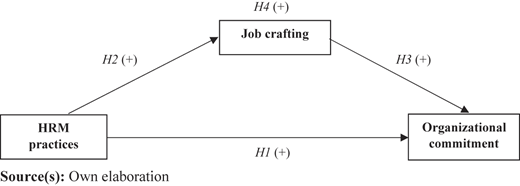
Figure 1 presents the relationships conceptualized in this study.
This research makes three important theoretical contributions. First, I develop studies on organizational antecedents of commitment in KIBS companies, including HRM practices in the analysis, which by providing job resources for knowledge workers contribute to the effect of the accumulation of resources (Hobfoll et al., 2018). Focus on knowledge workers is important for their key role in the knowledge economy and in creating knowledge (Moghavvemi, Teng, & Mahmoud, 2023), and the findings of researchers indicate that the antecedents of commitment for knowledge workers and routine-task workers differ in many important respects, which creates challenges for organizational decision maker (Benson & Brown, 2007).
Second, I explain how HRM practices influence the commitment of knowledge workers through job crafting. Thus far, when exploring this relationship, researchers have focused on work engagement (Boon & Kalshoven, 2014; Aboramadan, Albashiti, Alharazin, & Dahleez, 2020) and job satisfaction (Jawaad, Amir, Bashir, & Hasan, 2019). This study is the first to examine the mediating effect of job crafting on the relationship between HRM practices and organizational commitment. Thus, the essential contribution of the research is to further unpack job crafting as a new mechanism in the “black box” of HRM impact.
Third, I identify those HRM practices that influence the organizational commitment of highly valuable employees from the KIBS sector. In this way, I fill the research gap connected with determining the key HRM practices which support organizational commitment of a particular group of employees from KIBS companies.
Below, I will describe the theoretical basis of the relationship between HRM and organizational commitment. Next, I will indicate the arguments that justify the mediating role of job crafting in this relationship. For each hypothesis, I will summarize the arguments presented in the literature and demonstrate their validity. The next step will present results of the hypotheses analysis. The article will conclude with a discussion including theoretical and practical implications, as well as limitations and future research suggestions.
Theoretical framework and hypothesis development
Human resource management and organizational commitment
Employers use of practices aimed at encouraging organizational commitment based on the assumption that highly committed employees will provide high-quality services, which can thus positively impact organizational performance (Jørgensen & Becker, 2015). This is particularly important in knowledge-intensive companies, where employees possess knowledge that constitutes a powerful resource owned by them rather than the organization (Kinnear & Sutherland, 2000). Therefore, organizations should consider the implementation of specific organizational practices as a key objective, which will allow attracting, retaining, and motivating knowledge workers in KIBS organizations. Indeed, analyses show that not all HRM systems are equally effective across all groups of knowledge workers, e.g. high-involvement HR (Krausert, 2014). However, research has positively verified some of them in the context of impact on productive behaviors initiated and performed by knowledge workers in KIBS companies, e.g. high-performance work systems (HPWSs) (Wojtczuk-Turek, 2017; Wojtczuk-Turek & Turek, 2021). Therefore, the postulate indicating the need for additional research on highly skilled knowledge workers (Song & Jo, 2023) is still relevant.
Research confirms the direct relationship between HRM practices and organizational commitment (Paul & Anantharaman, 2004; Giauque et al., 2010; Boon, Den Hartog, Boselie, & Paauwe, 2011; Koster, 2011; Boon & Kalshoven, 2014; Aladwan, Bhanugopan, & D'Netto, 2015; Jørgensen & Becker, 2015; Aboramadan et al., 2020; Valeau et al., 2021). Noteworthy, HRM practices promote, reinforce, and influence commitment through selection, development, rewards, or compensation (Aladwan et al., 2015; Aboramadan et al., 2020). Research among professional service firms suggests that HRM practices often play a key role in fostering high levels of organizational commitment by positively influencing professional commitment. Moreover, HRM practices used in designing flexible work play a crucial role in striking a balance between employees’ commitment to the organization and their commitment to their profession (Jørgensen & Becker, 2015). Therefore, scholars suggest that apart from directly enhancing the level of employees’ perceived commitment, HRM practices also influence employees’ perception of the extent to which their values match the organization’s values, thus further enhancing their commitment (Boon et al., 2011).
High-commitment HR practices play a particular role in reinforcing commitment (Arthur, 1994; Kim & Wright, 2011) and forming organizational resources (Boon & Kalshoven, 2014). They mainly aim to generate a psychological bond between employees and the organization (Boselie, Dietz, & Boon, 2005) and create conditions in which employees will become highly involved in the organization, identifying with its overall goals (Kooij, Jansen, Dikkers, & De Lange, 2010). Researchers indicate that “high commitment” HR systems develop psychological links between the organization’s and employees’ goals as a result shaping employee behaviors and attitudes (Arthur, 1994; Kim & Wright, 2011; Rubel, Rubel, Rimi, Yusliza, & Kee, 2018). The presence of high-commitment HRM in the company constitutes an important signal to the employees that the employer is willing to meet their needs and form long-term relationships with them. Researchers indicate that there is no need for high-commitment HRM to include high-involvement practices, because one can enhance commitment through other means than high involvement. For instance, organizations can achieve it when internal development and rewards (Coetzee et al., 2014) become a point of focus or when organizations; enhance their justice perceptions (Thompson & Heron, 2005; Boon & Kalshoven, 2014; Chih, Kiazad, Cheng, Capezio, & Restubog, 2017). Indeed, these aspects appear to be important for knowledge workers. Analyses demonstrate that organizational support, procedural justice, and the organization’s reputation can influence knowledge workers’ commitment (Giauque et al., 2010), whereas involvement in decision-making, skills management, or the degree of satisfaction with pay are devoid of significance (Giauque et al., 2010; Jayasingam & Yong, 2013), especially among knowledge workers engaged in high knowledge work (Jayasingam & Yong, 2013). On the other hand, Kinnie and Swart (2012) emphasize the dependence of professionals on the continuous development of their knowledge and skills, which may also form a stimulus for long-term organizational commitment. Research confirms that autonomy encourages affective commitment (Berber et al., 2023) and positively impacts personal knowledge management among knowledge workers. Thus, it improves their productivity and safeguards the organization against knowledge loss arising from knowledge workers’ interfirm mobility (Shujahat et al., 2021).
Other analyses indicate the significance of further practices for triggering commitment, namely, career opportunity, training, and development (Ashan et al., 2013), performance management, and work design (Jørgensen & Becker, 2015), promotion practices (Jayasingam et al., 2016), recruitment and selection, reward and recognition, work environment (Jawaad et al., 2019). Based on the above arguments, I hypothesized:
HRM practices are directly and positively related to organizational commitment.
The mediating role of job crafting in the relationship between HRM practices and organizational commitment
Because KIBS services rely on high-quality knowledge outputs and those require high-quality inputs of information and knowledge (Chung & Tseng, 2019), employees’ proactivity constitutes one of the significant factors for achieving high performance in those firms. As stressed by Koch and Strotmann (2008), we may perceive generating new services as a result of acquisition, assimilation, and the use of the new knowledge, which translates into the innovativeness of knowledge workers. Therefore, the resources that they use for the implementation of complex tasks play the key role in their task effectiveness. Job crafting facilitates gaining such resources. Scholars define job crafting as self-initiated job design behavior that enables one to balance job demands and resources with personal abilities and needs (Tims & Bakker, 2010) and achieve a better person-job fit (Tims, Bakker & Derks, 2016). In the context of job resources, the description of job crafting refers to the JD-R model (Bakker & Demerouti, 2007), within which job crafting is often framed. On this basis, scholars distinguished four different dimensions of job crafting: (1) increasing social job resources, (2) increasing structural job resources, (3) increasing challenging job demands, and (4) decreasing hindering job demands (Tims et al., 2012). From the point of view of knowledge workers’ task activity, it is crucial to seek and increase resources and also to receive them in the organization. Research confirms that providing for knowledge workers different types of resources in the organization leads to job crafting, which translates into positive outcomes, such as job satisfaction (Zhao, Li, & Shields, 2022), sustainable employability (Irfan et al., 2023), knowledge sharing (Mansour & Mohanna, 2024), innovative behavior (Song & Jo, 2023), intention to stay with the organization (Malik & Malik, 2024).
Therefore, in the analysis of job crafting, I focused on approach-oriented crafting and aggregated the three dimensions of crafting, namely increasing social job resources, increasing structural job resources, and increasing challenging job demands (Tims et al., 2022).
The current research on job crafting indicates that such activities may bring positive results for employees’ attitudes, well-being, behaviors, and performance (Rudolph, Katz, Lavigne, & Zacher, 2017; Zhang & Parker, 2019). The high significance of this form of proactivity in KIBS companies’ results from the fact that job crafting relies on seeking resources and undertaking challenges in response to clients’ personalized expectations (Wojtczuk-Turek, 2022). Researchers’ analyses confirm the relationship between HRM and job crafting (Hu, Stein, Mao, & Yan, 2022; Guan & Frenkel, 2018; Meijerink, Bos-Nehles, & de Leede, 2020; Meijerink et al., 2018).
Postulating a mechanism that assumes that the existing HRM practices influence resources, leading toward job crafting, is consistent with the meta-analysis by Meijerink, Beijer, and Bos-Nehles (2020). They demonstrated that HRM practices mainly influence resources available to employees, which then explains their attitudes and behaviors. This also applies to job crafting which, in the light of research, conditions organizational commitment (Wang, Weng et al., 2018; Wang, Demerouti, Le Blanc, & Lu, 2018 Zhang & Parker, 2019). The mediating role of job crafting in the relationship between HRM practices and organizational commitment finds its expression in the fact that with such practices as training, participatory management, and information-sharing, an HRM system allows employees to notice that the organization provides them with a large amount of HRM resources (Hu et al., 2022). Following the COR theory, when employees can make use of resources, they are more likely to engage and acquire more of them, which means job crafting. Job crafting allows knowledge workers to reinvest the resources they receive as a result of HRM practices. Thanks to job crafting, they increase their pool of resources, which allows them to operate effectively and achieve their goals. In turn, this reinforces their identification with the organization and facilitates forming a psychological bond with it. Referring to work design theories and empirical evidence, Wang, Weng et al. (2018), Wang, Demerouti et al. (2018) indicate that work attachment results from job characteristics such as job control and challenging work tasks. Therefore, one of the possible ways to develop attachment is through job (re)design. Research confirms that job crafting encourages commitment (Noesgaard & Jørgensen, 2024) and work attachment (Wang, Weng et al,. 2018; Wang, Demerouti et al,. 2018).
Thus, the active role of employees in the process of work design, expressed through job crafting, complements the traditional top-down approach, in which managers and HRM specialists also engage in the work design process. Research by Wang, Weng et al. (2018), Wang, Demerouti et al. (2018) on the relationship between job crafting and work attachment proves that the attachment is stronger when employees experience tough/rough times at wor. This is confirmed by research that showed that during the COVID-19 pandemic, hindering demands related to general overload increased job crafting only when managers possessed high levels of organizational identification (Wojtczuk-Turek, Turek, & Mitręga, 2022). This is confirmed by research showing that during the COVID-19 pandemic, hindering demands related to general overload increased job crafting only when managers possessed high levels of organizational identification (Wojtczuk-Turek et al., 2022).
The above review of previous research shows that activities in the area of both HRM and job crafting may directly or indirectly lead to organizational commitment, as demonstrated by previous studies (Takeuchi & Takeuchi, 2013). A study testing the relationship between job autonomy and career commitment of employees from the high-tech industry confirmed the mediating role of job crafting (Chang et al., 2021). Therefore, I hypothesized:
HRM practices are directly and positively related to job crafting.
Job crafting is directly and positively related to organizational commitment.
Job crafting mediates the relationship between HR practices and organizational commitment.
Method
Sample and research procedure
The research sample comprised employees of companies operating in the KIBS sector (N = 450) in Poland, whose work consisted of performing tasks requiring expert knowledge and creating services for clients. The employees worked in corporations (2%), large (4%), medium (13%), and small-sized companies (81%) in various knowledge-intensive service branches: architecture, engineering activity, research, and technical (15%); software, IT consulting, and related activities (13%); legal and accounting services (12%); advertising, market research, and opinion polls (9%); activities of head offices, management consultancy activities (8%); scientific research and development (2%); and other professional, scientific, and technical activities (12%). I selected a group of KIBS companies from the available sampling frame of companies in the sector and proportionally divided (in terms of size, industry, and location). Next, I sent a request for consent to participate in the survey. I conducted the study using computer-assisted telephone interviews (CATI), which ensured anonymity. Before I selected the participants for the study, I contacted the HR department of the given firms to determine the respondents’ eligibility. Subsequently, I selected people fulfilling the recruitment criteria. The respondents’ selection included the choice of employees in specialized positions, performing professional tasks requiring specialized knowledge and related to the creation of services for clients, as well as managers who supervise their work. The selection of knowledge workers for the study dictated the need to meet these recruitment criteria. The respondents’ personal data was subject to anonymization and the metrics described the remaining characteristics. The majority of respondents represented employees within the age range of 26–35 (23%), 36–45 (38%), and 46–55 (21%), who had a university education (99%), and mostly with over five years of work experience (88%); 62% of the respondents were female, and 38% were male. For detailed data on sociodemographic characteristics, see Appendix 1. I conducted the research between November 2019 and January 2020.
Measures
I presented the questions to participants in Polish with measures translated from English, which followed the recommendations of the International Test Commission Guidelines for Translating and Adapting Tests (International Test Commission, 2017). All measures used five-point response scales, in which 1 = strongly disagree/never/not at all and 5 = strongly agree/always/extremely.
I measured HRM practices with the 16-item tool diagnosing various HRM practices. I developed items’ content based on the adaptations of statements from the other tools to measure HR practices (Huselid, 1995; Guthrie, 2001; Tsai, 2006; Wang, Chiang, & Tung, 2012). Based on an exploratory factor analysis (KMO = 0.852; χ2 = 1,419,076; df = 136; p < 0.001), I conducted a reduction of statements, which I aggregated to five main factors based on factor loadings: “motivation, training and professional development, appraisal and performance management, promotion, and empowerment, participation and autonomy.” The contents of the sample statements were: “I regularly participate in specialized training; I am encouraged to be involved in decision-making on important company matters.” In the process of checking the properties of the measuring tool, I conducted a confirmatory factor analysis (CFA), which confirmed a good fit to the data in the five-factor model (χ2 = 122.306, df = 87; p = 0.008; RMSEA = 0.030; CFI = 0.978; TLI = 0.969; SRMR = 0.056).
I measured organizational commitment (COM) using the four-item unidimensional target neutral (K.U.T.) commitment measure, empirically validated by Klein, Cooper, Molloy, and Swanson (2014) and adapted by Turek, Wojtczuk-Turek, and Klein (2023). Model fit coefficients showed adequate representation of data structure (χ2 = 6.216, df = 2; p = 0.045; RMSEA = 0.069; CFI = 0.996; TLI = 0.988; SRMR = 0.006). Sample items included: “How committed are you to your organization? To what extent do you care about your organization?”
I measured job crafting (JC) with the tool developed by Tims et al. (2012). For the purpose of the analyses, I used this tool for one factor, i.e. approach-oriented crafting (Tims et al., 2022). Approach-oriented crafting aggregated the three dimensions of crafting: “increasing social job resources, increasing structural job resources, and increasing challenging job demands.” Accordingly, the final number of items used was 15. The conducted CFA confirmed the tool’s three-factor structure (χ2 = 112.992, df = 67; p < 0.001; RMSEA = 0.039; CFI = 0.964; TLI = 0.951; SRMR = 0.047). Sample items included: “I try to develop my capabilities; I decide on my own how I do things.”
Appendix 2 presents factor loadings of the items used in the study.
Results
Descriptive statistics
Table 1 presents the results of the intercorrelations and the descriptive statistics. I performed statistical analyses using SPSS software (version 28).
Construct reliability and discriminant validity
To test the research hypotheses, I studied a series of nested models. I used AMOS software (ver. 28) to verify the research models. Table 2 shows the results. This study used a baseline (three-factor) model and estimated all of the theorized relationships between the stated constructs. I assessed the measurement model through confirmatory factor analysis, which comprised three latent variables. The values of these fit indices (χ2 = 762.275, df = 476; p < 0.001; RMSEA = 0.037; CFI = 0.945; TLI = 0.934; SRMR = 0.037) indicated that the measurement model provided the best fit to the data.
Hypotheses testing
In the first step of the hypotheses testing, I used SEM with the maximum likelihood to test the direct and indirect relationships between HRM practices and organizational commitment. Based on the analysis of χ2 test and fit criteria, the tested model obtained perfect data fit (saturated model). Examination of the level of coefficient paths showed that all of the existing paths in the model were significant. The alternative model tested that included only indirect relationships between variables showed a worse fit (χ2 = 57.767, df = 1; p < 0.001; RMSEA = 0.356; CFI = 0.752; TLI = 0.256; SRMR = 0.175).
As per hypotheses, HRM practices should be significantly and positively related to organizational commitment. The results obtained confirmed predictions as Table 3 shows. Moreover, HRM practices increase commitment (β = 0.379, p < 0.001). Therefore, I accepted Hypothesis 1.
Unstandardized direct and indirect effects of tested variables
| Relations | Independent variable | Dependent variable | Estimate | S.E. | C.R. | |
|---|---|---|---|---|---|---|
| H1 (supported) | HRM practices | → | Organizational commitment | 0.379 | 0.048 | 7.852*** |
| H2 (supported) | HRM practices | → | Job crafting | 0.414 | 0.035 | 11.661*** |
| H3 (supported) | Job crafting | → | Organizational commitment | 0.191 | 0.056 | 3.393*** |
| Mediating effect of job crafting | ||||||
| H4 (supported) | Indirect effect of HRM practices to organizational commitment via job crafting | 0.079 | ||||
Note(s): ***p < 0.001
Source(s): Own elaboration
Hypothesis 2 assumed that HRM practices explain employees’ job crafting. The obtained results confirmed this assumption (β = 0.414, p < 0.001). Thus, I accepted the hypothesis. Hypothesis 3 postulated a positive effect between employees’ job crafting and organizational commitment. These predictions have also been confirmed (β = 0.191, p < 0.001). Thus, the hypothesis received empirical support. Finally, the last hypothesis predicted the mediating effect of job crafting between HRM practices and organizational commitment. As Table 3 indicates, the standardized indirect effect of job crafting was 0.078. Thus, I verified positively Hypothesis 4. Figure 2 presents standardized structural equation modeling results for the conceptual model.
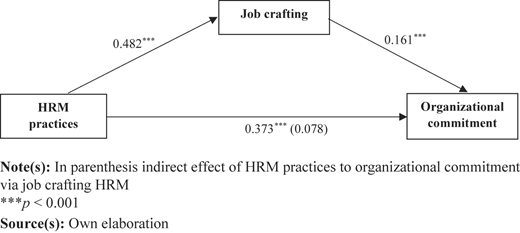
Standardized structural equation modeling results for conceptual model
Standardized structural equation modeling results for conceptual model
An important element of the analysis was the identification of practices that most strongly explain the organizational commitment of knowledge workers. To determine the type of correlation between commitment and HRM practices and indicate which of them accounts for employee commitment to the largest extent, I conducted SEM analyses on a sample of employees under analysis, N = 450. Table 4 presents a juxtaposition of the analysis results.
Summary of SEM analysis results for HRM practices predictors of organizational commitment and job crafting
| HRM practices | Job crafting | Organizational commitment | ||||
|---|---|---|---|---|---|---|
| Estimate | S.E. | C.R. | Estimate | S.E. | C.R. | |
| Motivation | 0.012 | 0.026 | 0.460 | 0.071 | 0.031 | 2.279* |
| Training and professional development | 0.071 | 0.027 | 2.655** | 0.064 | 0.032 | 2.032* |
| Appraisal and performance management | 0.211 | 0.033 | 6.404*** | 0.109 | 0.039 | 2.72** |
| Empowerment, participation and autonomy | 0.074 | 0.032 | 2.308* | 0.250 | 0.038 | 6.554*** |
| Promotion | 0.045 | 0.023 | 1.941 | −0.039 | 0.028 | −1.404 |
Note(s): *p < 0.05; **p < 0.01; ***p < 0.001
Source(s): Own elaboration
Based on the conducted analysis, we may state that the practices that account for the organizational commitment of knowledge workers to the largest extent are empowerment, participation, and autonomy. Thus, participation in decision-making with regard to performing one’s job, as well as influence over the situation in the organization significantly relates to the commitment of knowledge workers and their bond with the organization.
Moreover, I also analyzed job crafting and found that its organizational predictors are appraisal and performance management, training and professional development, as well as, although to a lesser extent, empowerment, participation, and autonomy.
Discussion
Theoretical implications
Building organizational commitment of knowledge workers seems extremely important in the context of their high employment attractiveness and due to flexible employment forms applied in their case. As indicated by Fu, Flood, Bosak, Morris, and O'Regan (2015), we still lack a complete understanding of how to manage human resources effectively to achieve high performance in professional service firms characterized by the strategic importance of knowledge management and where success relies on people and their knowledge resources. Meanwhile, in knowledge-intensive firms, there are challenges for HRM connected with changing resources and skill- or knowledge flows, which makes it difficult to apply a standard, universal HRM approach (Grimshaw & Miozzo, 2009). Scholars indicate that HRM practices differ in knowledge-oriented organizations (Mutlu, 2020) and verify the effectiveness of various HR systems according to the different groups of knowledge workers (Krausert, 2014). The study indicates that HRM practices can effectively stimulate the organizational commitment of knowledge workers from the KIBS sector companies.
This research significantly contributes to the existing knowledge in the area under discussion. First, I analyzed the mechanisms of the relationship between HRM practices and organizational commitment. In particular, I elaborated on the mediating role of employees’ job crafting. Therefore, the study contributes to the understanding of what factors can reinforce the influence of HRM practices on triggering the commitment of employees from the KIBS sector companies. Previously, the analysis of this relationship has focused on the mediating role of job satisfaction (Jawaad et al., 2019) and work engagement (Boon & Kalshoven, 2014; Aboramadan et al., 2020). The proposed approach went beyond the attitudinal perspective (work engagement), considering the behavioral concept (job crafting). Meanwhile, it also refers to an important unexplored KIBS context with regard to HRM process-oriented research. Thus, the research further unpacked job crafting as a new mechanism in the “black box” of HRM impact.
Thanks to the COR theory perspective that emphasizes the importance of resources, we can understand how the search for structural and social resources leads to employees’ further outcomes. Going one step further and introducing job crafting into HRM research, I confirmed that the proactivity of knowledge workers translates HRM practices into employee attitudes. This validates the COR theory assumption that HRM support as a job resource initiates a motivational process through job crafting thus leading to organizational commitment of knowledge workers. By the same token, I supported the findings of Meijerink, Beijer, and Bos-Nehles (2020), who showed that descriptive reports of HRM practices mainly influence the resources available to employees, which then explain their attitudes and behaviors. Job crafting helps build resources at the individual level. This translates into creating a bond with the organization, which constitutes one of the key factors for knowledge workers’ identification (Giauque et al., 2010). Therefore, the study fills a gap by providing empirical data on how the organizational factor – HRM – triggers job crafting, leading to commitment. The proactive role of job crafting in response to HRM practices supports a shift from a perspective focused on management per se towards an HRM perspective oriented toward employees. As Luu (2020) notes, job crafting aims mainly at creating meaningful work rather than generating pro-organizational benefits. Hence, the mediating role of job modeling does not reflect reciprocity in the sense of social exchange theory, commonly used in HRM research (Luu, 2020).
Moreover, the study allowed for determining which HRM practices are most strongly connected with both organizational commitment and job crafting. The practices that account for the organizational commitment of knowledge workers to the largest extent are empowerment, participation, and autonomy. Particularly job autonomy provides employees with freedom, discretion, and independence to proactively craft their jobs based on their personal preferences, needs, and abilities (Chang et al., 2021). Other studies also confirm its importance for knowledge workers (e.g. Zhao et al., 2022). This is in line with Kinnear and Sutherland (2000), who indicate that traditional retention practices such as pension schemes and health care benefits will not significantly influence knowledge workers’ decision to remain with an organization.
This group of employee-centered practices is particularly important for knowledge workers, who perform highly complex tasks with significant responsibility and require specific working conditions. Providing them with opportunities for independent decision-making and freedom of action signals great trust on the part of the organization. This establishes a fertile ground for the development of a psychological bond with the organization. On the other hand, for knowledge workers to undertake job crafting, the important factors are appraisal and performance management, training and professional development, and – although to a lesser extent – empowerment, participation, and autonomy. Providing knowledge workers with opportunities to increase their competencies, coupled with appraisal and results monitoring, translates into further proactivity in the workplace. This conclusion supports the assumption, emphasized in the COR theory, with regard to reinvestment and augmentation of resources (Hobfoll et al., 2018). Thus, HRM practices play an important role in resource accumulation that knowledge workers use in their work. As their work is complex, ambiguous, intensive, and non-routine (Bäcklander et al., 2018), thus possibly leading to a rapid loss of resources, HRM practices trigger the transfer of replacing these resources. This kind of transfer of resource caravans triggers the accumulation of resources that COR theory describes as a gain spiral (Hobfoll et al., 2018). The COR theory predicts that those who possess more resources are also more capable of resource gain. Thus, the study significantly contributes to COR theory and reinforces Hobfoll et al.’s thesis (2018): “people’s resources exist in ecological conditions that either foster and nurture or limit and block resource creation and sustenance. Organizations and the broader culture play a major role in this process” (p. 107). This research showed that the main challenge of HRM is to create an environment in which knowledge workers can acquire more resources and maintain existing ones. Hence, the key practices turned out to be not those oriented toward appraisal and performance management or training and professional development but toward a bundle of three practices: empowerment, participation, and autonomy. They create a context in which knowledge workers can autonomously increase different types of resources, which in turn translates into strengthening bonds with the organization – organizational commitment. Interestingly, the same practices proved to be important for the productivity of knowledge workers from KIBS companies (Wojtczuk-Turek, 2017).
Moreover, research enriches the area of HRM by indicating that different practices and sets of practices that can affect the same outcomes in heterogeneous ways (Jiang et al., 2012) have diversified relevance in a specific organizational context.
Practical implications
The analysis indicated the relationship between HRM and organizational commitment mediated by job crafting. It also implies several measures in the area of management practice with respect to knowledge workers in the KIBS sector companies. Such measures concern the creation of working conditions for knowledge workers that contribute to their proactivity. Managers play a key role in this process. Knowing the current task requirements and being aware of the high dynamics of work variability, they should take care of providing resources and matching the work to the needs of knowledge workers. In this regard, it is important to delegate authority and empower the knowledge workers, and create conditions for their unhindered activity. This is because the nature of their work requires a high degree of autonomy and changes in the way they generate personalized and unique services for customers. By their actions, leaders can provide employees with job autonomy. This will signal to them that the organization cares about their needs. However, autonomy may also lead to negative consequences (“the autonomy paradox”), when it results in work overload due to work intensification (Bäcklander et al., 2018). Scholars also observed this effect also for job crafting. The findings showed that the approach type of job crafting related to increases in work engagement via increased job complexity. However, scholars also associated it with increases in burnout via increased workload (Harju, Kaltiainen, & Hakanen, 2021). Therefore, leaders should not only provide resources to employees but also balance the demands and resources of knowledge workers from KIBS companies, which requires personalized interactions with the leader. Despite the indicated risks, job crafting is useful itself in cases of high work intensity, which is closer to addressing the root causes of problems rather than working on the assumption that there is adaptation at a purely individual level that is sustainable (Bäcklander et al., 2018). Moreover, knowledge-based work with high complexity and intensity can lead to a rapid loss of resources. In this context, managers can not only support the obtaining and transfer of resources, and building a social environment in which knowledge sharing is an important norm and supports contextual knowledge in the organization. This knowledge is important in the relationship between the corporation and knowledge workers (May, Korczynski, & Frenkel, 2002). Moreover, knowledge-sharing systems influence employees’ intention to stay with the organization (Malik & Malik, 2024). Their use in KIBS companies can prevent the loss of key knowledge workers. Knowledge-sharing behaviors are both intrinsically and extrinsically motivating for knowledge workers, which results in their emotional attachments and higher levels of identification and commitment (Lakshman et al., 2022). Knowledge sharing can also help organizations accumulate resources while counteracting their loss, and allow for the codification of knowledge in KIBS companies, where knowledge is a key resource. Teamwork and encouraging collaborative job crafting among employees can foster this goal (Mousa & Chaouali, 2023). Moreover, when an employee receives a lot of support from co-workers, they might not feel the need to take action to preserve other resources and the less willing employees are to withhold knowledge from co-workers (Kmieciak, 2021).
Studies show that activities in the HRM area contribute to organizational commitment, both directly and indirectly. The mediating factor is job crafting. This indicates that both the system of HRM practices and the managers should focus on enhancing personalization at work and supporting autonomous employee activities (top-up approach). The key in this area is to provide resources that employees can use to increase their task performance. This reveals that the approach to knowledge workers’ work requires a new perspective, because it involves a dynamic system of changing events, processes, and activities, placed in a context transformed by changes in the environment. Personalizing interactions with knowledge workers and encouraging job crafting can allow them to satisfy their need for development, especially by increasing both structural job resources and challenging job demands. Organizations can fulfill knowledge workers’ needs through strategies that focus on freedom to act independently, developmental opportunities, and access to leading-edge technology. Meanwhile, increasing social job resources can help create knowledge embedded in relationships, which will strengthen the organization’s social capital and facilitate the codification of the unique knowledge created in KIBS companies.
Notably, the conclusions of this research have broader applicability, as employees are increasingly aware of the importance of the quality of the employment relationship, which is central to knowledge workers’ organizational commitment (Thompson & Heron, 2005). The quality of the relationship – evaluated through the prism of fulfillment of employees’ needs – is important especially for young talented employees (Generations Y and Z). They prefer challenging work tasks that will enhance their skills and capabilities in the workplace and favor altering their work roles according to their preferences and needs (Malik & Malik, 2024). Job crafting may be the way to achieve these goals. Moreover, job crafting as a new model of individual job redesign can help managers and HR professionals better adapt employees to new work models (remote, hybrid work) that have emerged as a result of post-pandemic transformations.
Let us also note key HRM practices for supporting organizational commitment. In addition to the aforementioned autonomy, these are empowerment and participation. Cultivating decision-making independence allows knowledge workers to focus on their work and supports their productivity. This creates an excellent condition for strengthening bonds with the organization and creating a trust-based relationship. As Krausert (2014, p. 68) rightly emphasizes:
Understanding differences in the effectiveness of HRM systems across employee groups has been argued to be important for the strategic planning processes of HRM departments, enabling a more targeted allocation of effort and resources across HRM systems for different employee groups.
Limitations and future research
Although the study contributes new knowledge, it has its limitations. First, causal conclusions were not possible due to the cross-sectional designs implemented. I measured all substantial variables via employee ratings with a cross-sectional design. Therefore, the results require careful interpretation, bearing these limitations in mind. For future research in this area, I suggest the use of a longitudinal design for reducing possible contaminating effects of common method variance (e.g. the separation of data collection across multiple periods), as recommended by Podsakoff, Mackenzie, and Podsakoff (2012).
Second, the employed tools used a self-report, which might result in doubts about the control of the “social desirability” variable. In this context, future studies should use numerous sources of knowledge on the examined variables (e.g. supervisors’ opinions – multi-source) and not restrict themselves to the opinions of the employees included in the study.
In the context of analyzing the mediating role of job crafting in the relationship between HRM and organizational commitment, future studies should consider focusing on two different perspectives of describing HRM, namely implemented HRM and perceived HRM, as did Hu et al. (2022). Moreover, it would also be cognitively interesting to determine the influence of other personal resources as moderators in the relationship between HRM and organizational commitment.
Conclusions
Human resource management and its implications for the organizational commitment of knowledge workers constitute an important area of interest in today’s HRM discourse due to their key role in the knowledge economy. Therefore, I provided an important voice in the discussion on the mechanism of HRM practices’ impact on employees’ organizational commitment. Drawing from the COR theory, I examined the effects and mediating mechanisms of HRM practices on the organizational commitment of knowledge workers from KIBS companies. The proposed approach went beyond the attitudinal perspective (work engagement), considering the behavioral concept (job crafting), while also referring to an important unexplored KIBS context with regard to HRM process-oriented research. Thus, the research further unpacked job crafting as a new mechanism in the “black box” of HRM impact.
Funding: This work was supported by the National Centre for Science [Decision No. 2017/25/B/HS4/01395].
References
Appendix 1
Descriptive statistics and inter-correlations
| M | SD | 1 | 2 | 3 | 4 | 5 | 6 | 7 | |
|---|---|---|---|---|---|---|---|---|---|
| 1. Organizational commitment | 4.39 | 0.63 | (0.90) | ||||||
| 2. HRM practices | 3.35 | 0.63 | 0.451** | (0.84) | |||||
| 3. Job crafting | 3.66 | 0.54 | 0.341** | 0.482** | (0.79) | ||||
| 4. Sex | 1.38 | 0.49 | 0.164** | 0.227** | 0.052 | 1 | |||
| 5. Age | 3.21 | 1.07 | 0.223** | 0.188** | 0.017 | 0.253** | 1 | ||
| 6. Education | 1.90 | 0.32 | 0.037 | −0.031 | −0.042 | 0.013 | −0.049 | 1 | |
| 7. Tenure | 2.87 | 0.36 | 0.253** | 0.090 | −0.008 | 0.094* | 0.002 | 0.422** | 1 |
Note(s): In parentheses, reliability Cronbach’s alpha; Age categories: 1 – less than 25 years, 2–26–35 years, 3–36–45 years, 4–46–55 years, 5 – above 55 years; Education: 1 – secondary, 2 – higher, 3 – other
*p < 0.05; **p < 0.01
Source(s): Own elaboration
Sampling characteristics
| N | % | ||
|---|---|---|---|
| Gender | Female | 279 | 62.0 |
| Male | 171 | 38.0 | |
| Age | Less than 25 years | 16 | 3.6 |
| 26–35 years | 102 | 22.7 | |
| 36–45 years | 171 | 38.0 | |
| 46–55 years | 93 | 20.7 | |
| Above 55 years | 68 | 15.1 | |
| Education | Secondary | 48 | 10.7 |
| Higher | 399 | 88.7 | |
| Other | 3 | 0.7 | |
| Tenure | Less than 1 year | 4 | 0.9 |
| 1–5 years | 51 | 11.3 | |
| Above 5 years | 395 | 87.8 | |
| Job position | Managerial | 254 | 56.4 |
| Non-managerial | 196 | 43.6 |
Source(s): Own elaboration
Appendix 2
Comparison of measurement model
| Model | Structure | χ2 | df | CFI | TLI | SRMR | RMSEA |
|---|---|---|---|---|---|---|---|
| Baseline model | Three-factor | 762.275 | 476 | 0.945 | 0.934 | 0.067 | 0.037 |
| Model 1 | Two-factor | 1488.216 | 511 | 0.780 | 0.758 | 0.100 | 0.065 |
| COM, HRM + JC | |||||||
| Model 2 | One-factor | 2117.674 | 512 | 0.638 | 0.603 | 0.109 | 0.084 |
Note(s): COM – Organizational Commitment; HRM – HRM practices; JC – Job Crafting; + variables combined
Source(s): Own elaboration
Factor loadings
| α | Standardized factor loadings | |
|---|---|---|
| HRM Practices (Author’s adaptation) | 0.84 | |
| Motivation | 0.70 | |
| HRM 1 | 0.553 | |
| HRM 2 | 0.676 | |
| HRM 3 | 0.624 | |
| HRM 4 | 0.614 | |
| HRM 5 | 0.710 | |
| Training and professional development | 0.69 | |
| HRM 6 | 0.710 | |
| HRM 7 | 0.643 | |
| HRM 8 | 0.516 | |
| Appraisal and performance management | 0.61 | |
| HRM 9 | 0.588 | |
| HRM 10 | 0.563 | |
| HRM 11 | 0.567 | |
| Promotion | 0.59 | |
| HRM 12 | 0.544 | |
| HRM 13 | 0.551 | |
| Empowerment, participation and autonomy | 0.68 | |
| HRM 14 | 0.558 | |
| HRM 15 | 0.709 | |
| HRM 16 | 0.545 | |
| Organizational commitment (Klein et al., 2014) | 0.90 | |
| OC 1 | 0.846 | |
| OC 2 | 0.788 | |
| OC 3 | 0.810 | |
| OC 4 | 0.863 | |
| Job crafting (Tims et al., 2012) | 0.79 | |
| Increasing social job resources | 0.73 | |
| JC 1 | 0.616 | |
| JC 2 | 0.689 | |
| JC 3 | 0.591 | |
| JC 4 | 0.562 | |
| JC 5 | 0.573 | |
| Increasing structural job resources | 0.71 | |
| JC 6 | 0.684 | |
| JC 7 | 0.534 | |
| JC 8 | 0.581 | |
| JC 9 | 0.806 | |
| JC 10 | 0.611 | |
| Increasing challenging job demands | 0.69 | |
| JC 11 | 0.626 | |
| JC 12 | 0.559 | |
| JC 13 | 0.537 | |
| JC 14 | 0.586 | |
| JC 15 | 0.653 |
Note(s): α = Cronbach’s alpha
Source(s): Own elaboration

