


The primary purpose of this study is to uncover the motives and barriers that influence young consumers' acceptance of augmented reality (AR) in online shopping and to determine whether cultural context modifies these acceptance patterns.
The research methods employed in this paper are twofold. First, a literature review was conducted using the Search, Appraisal, Synthesis and Analysis (SALSA) method to identify factors related to AR acceptance in e-commerce. Online focus group interviews (FGIs) were subsequently carried out, followed by an experiment. The qualitative analysis was then performed using MAXQDA software. The study was conducted in Poland, South Korea and the United States of America.
The literature analysis reveals the primary factors influencing consumers' acceptance of AR technology, including hedonic motivation, effort expectancy and performance expectancy. Moreover, the study identifies the risks associated with adopting AR, including perceived risks related to AR-driven purchases and privacy concerns. Both similarities and differences were observed among the studied groups. In general, the FGIs demonstrated that young consumers are receptive to technological innovations in e-commerce, such as AR. The main drivers of acceptance included performance expectancy and ease of use, with the study also confirming that enjoyment contributes to the acceptance of AR. Furthermore, participants expressed concerns about their privacy. We have identified new motivators and risks that have not been extensively discussed in the literature. For instance, information performance significantly influences the utilisation of AR in e-commerce. Regarding risks, health concerns, such as the potential impact of prolonged AR use for online shopping on mental health, are a significant consideration.
Understanding the factors that influence and enhance the use of AR in e-commerce by young shoppers is crucial for online retailers to adapt their offerings and services to meet the needs of potential customers.
The combination of the three aspects – i.e. the acceptance of AR technology in online shopping, the young consumer segment and the diversity of countries – represents a unique contribution to the literature. This originality enhances the existing models concerning consumers' acceptance of new technologies (e.g. technology acceptance model, Unified Theory of Acceptance and Use of Technology (UTAUT) and UTAUT2).
Introduction
The advent of cutting-edge technologies, including artificial intelligence, Internet of Things, and augmented reality (AR), has revolutionised various sectors of the global economy (Kang, Kim, Lee, & Lin, 2023; Aydin, 2023; Dogra, Kaushik, Kalia, & Kaushal, 2023; Rauschnabel, Felix, Heller, & Hinsch, 2024; Kovbasiuk et al., 2025). These innovations have not only transformed fields like medicine, entertainment, education, marketing, tourism, and culture but also e-commerce (e.g. Wu & Lai, 2021; Faqih, 2022; Jayaswal & Parida, 2023; tom Dieck, Cranmer, Prim, & Bamford, 2024). Interactive technologies are reshaping the landscape, thus enhancing the competitiveness of both local and international retailers in the realm of e-commerce (Caboni & Hagberg, 2019; Ho, Ju, Hong, An, & Lee, 2023; Dogra et al., 2023). Market forces do not solely determine the extent to which companies adopt them. The consumers' behaviour of these products and services plays a pivotal role (Ho et al., 2023; Pathak & Prakash, 2023). The theoretical models and findings of the empirical research consider diverse motives that have mainly a positive impact on the consumer's acceptance of new technologies (e.g. Davis, 1989; Venkatesh, Thong, & Xu, 2012; Riar, Xi, Korbel, Zarnekow, & Hamari, 2023; Wu & Liu, 2023; Çalışkan, Yayla, & Pamukçu, 2023; Srivastava, Mohta, & Shunmugasundaram, 2024). Nevertheless, there are not only motives but also some risks associated with new technology use that impact the consumers' acceptance (e.g. Azhar, Akhtar, Rahman, & Khan, 2023; Zheng & Li, 2023).
The literature highlights diverse factors, including age and cultural background, that play a significant role among e-commerce customers that shape the acceptance of new technologies (except motives and risks) (e.g. Abed, 2021; Çalışkan et al., 2023; Aydin, 2023). Age is a crucial determinant of consumers' behaviour towards new technology use (e.g. Arachchi & Samarasinghe, 2024; Srivastava et al., 2024). An analysis of the young customers segment reveals they are more open to new technologies than older generations (Bartosik-Purgat, Jankowska, & Mińska-Struzik, 2022; Taha, Kaba, & Al-Qeed, 2024; Park, Yoo, Cho, & Park, 2024). When it comes to shopping, they are much more willing to use modern devices that save time, which they can allocate to other activities such as education, entertainment or sports (Aydin, 2023; Arachchi & Samarasinghe, 2024). The characteristics of young people regarding online shopping are indeed due to their upbringing in the era of rapid Internet development and the various tools that enable them to use it, such as smartphones, tablets, or smartwatches. Another distinguishing feature of Generation Z is its ability to seamlessly transition between two worlds simultaneously, both online and offline (Jung, Claire, & Kim, 2024). Their preferences and behaviours shape the future of e-commerce, making it crucial for marketers to understand and adapt to their needs (Park et al., 2024).
Research also indicates dependencies between consumer acceptance of developing technologies and cultural factors (e.g. Srite & Karahanna, 2006; Bartosik-Purgat & Grzegorczyk, 2024). For example, scholars have identified correlations between cultural influences and activities such as mobile banking (Kumar, Chauhan, Gupta, & Jaiswal, 2023; Wu & Liu, 2023), utilisation of robotics (Castelo & Sarvary, 2022), engagement in m- and s-commerce (Hung & Chou, 2014; Jadil, Jeyaraj, Dwivedi, Rana, & Sarker, 2023), as well as general attitudes and acceptance of new technology (Jung, Lee, Chung, & tom Dieck, 2018; Wu & Liu, 2023). Many studies use Hofstede's model (Hofstede, Hofstede, & Minkov, 2010) as a base for measuring cultural factors in their studies (e.g. Yeniyurt & Townsend, 2003; Vörös & Choudrie, 2011; Jung et al., 2018; Jadil et al., 2023; Kumar et al., 2023). To the best of our knowledge, this area remains underexplored. It requires further exploration, especially in the context of e-commerce, which offers the possibility to reach culturally diverse consumers worldwide.
Concerning new technologies, Pine and Gilmore (2014) identify the fusion of digital technology with reality as a critical driver of progress in the experience economy. This fusion is a revolutionary introduction in the context of e-commerce. AR seamlessly blends real-world images with computer graphics and 3D animations (Azuma, 1997; Correia et al., 2020; Kumar, 2022), creating a unique connection between the physical and digital realms. Unlike virtual reality, which isolates users in a simulated environment, AR enhances the real world, making products and services more appealing and user-friendly (Dogra et al., 2023). Interaction with an AR system offers a more immersive experience (e.g. Javornik, 2016; Correia et al., 2020; Riar et al., 2023; Kshetri, 2023) than traditional reality, deepening the consumer's engagement and potentially influencing their purchasing decisions.
AR is one of the digital technologies that could be considered impactful in redefining the concept of retail stores, shaping a new space where physical and augmented/virtual objects are integrated (Flavián, Ibáñez-Sánchez, & Orús, 2019; Kumar, 2022; Riar et al., 2023). Increasingly, retailers rely on interactive technologies to improve consumers' shopping experiences (Jayaswal & Parida, 2023; Recalde, Jai, & Jones, 2024).
Despite the vast possibilities of AR applications and their advantages (e.g. improved product selection, reduced online shopping returns), AR remains relatively underutilised in e-commerce (Recalde et al., 2024). This stems from the high costs of AR implementation and the uncertainty linked to consumers' acceptance of new technologies, particularly concerning privacy aspects, device limitations, and a lack of education about the benefits of AR (Ryan, 2021). There is a need to investigate what motivates or discourages consumers from using AR in online shopping.
After the COVID-19 pandemic and its immediate aftermath, the e-commerce sector is rapidly developing (Billewar et al., 2022; Romano, Sands, & Pallant, 2022; Jayaswal & Parida, 2023; Recalde et al., 2024). Consumers may prefer buying products online rather than shopping in crowded shopping malls. In Kissler et al.’s (2020) prediction of different scenarios for post-pandemic behaviour, one of the main conclusions is that people should maintain social distancing for an extended period. AR allows consumers to mitigate the drawbacks of online shopping by allowing them to try on the product by showing a pair of glasses on a consumer's face or displaying how a new wardrobe fits in the bedroom (Jayaswal & Parida, 2023). Recent studies also draw attention to issues of digital well-being and technology-related psychological outcomes, suggesting that immersive technologies may have broader implications for users beyond utilitarian and hedonic value (e.g. digital well-being as a subjective balance between benefits and drawbacks of technology use; frameworks outlining psychological consequences of excessive engagement; health-related aspects of digital engagement) (Büchi, 2021; Uslu, 2025).The paper's primary objective is to address research questions (RQs) regarding the significance of factors, both drivers and risks, that influence the acceptance of AR technologies (interpreted as an intention to use) among young e-commerce consumers in various countries. We have chosen three countries that are culturally, economically, and technologically diverse: South Korea, Poland, and the United States. The combination of the three aspects —i.e. the acceptance of AR technology in online shopping (motives and risks), the young consumer segment, and the diversity of countries— fills a gap in the literature. This represents our main contribution and introduces a novel perspective to the existing models on consumers' acceptance of new technologies (e.g. TAM, UTAUT, and UTAUT2). Our study focuses on the young consumer segment - Generation Z - born between 1995 and 2012.
The primary research methods used in the paper are twofold. First, a literature review was conducted, following the SALSA method, to identify the primary motives and risks associated with AR acceptance in online shopping. These findings allowed us to formulate RQs. Second, online focus group interviews (OFGIs), with an experiment involved, were conducted in three countries to compare the results with the existing literature and models. Then, the qualitative analysis was applied using MAXQDA software.
The primary motivation for the study presented in this paper is its exploratory role in a project aimed at identifying the influence of cultural factors on young consumers' decisions about using AR in online shopping. The results presented in this paper will form the basis for preparing a quantitative study (a research instrument, sample structure, etc.) to achieve this purpose.
Theoretical background and RQs development
The theoretical background of the research refers to the Technology Acceptance Model (TAM) (Davis, 1989) and its subsequent developments, such as the Unified Theory of Acceptance and Use of Technology (and UTAUT2), and the theory of perceived value. According to UTAUT2, technology acceptance is determined by performance expectancy, effort expectancy, social influence, facilitating conditions, hedonic motivation, price value, and habit while being moderated by gender and experience (Venkatesh et al., 2012; Riar et al., 2023). Many recent studies have not directly used TAM and its successors to study the acceptance of a particular technology, but rather combined them with other theories and variables (e.g. Romano et al., 2022). We decided to follow this approach as it allows us to consider the characteristics of a specific innovation. The perceived value concept suggests that consumers evaluate products or services based on their perception of the value they will derive from them. It emphasises that the value of a product or service is not solely determined by its intrinsic characteristics, such as price or quality, but also by the consumer's subjective perception (Zeithaml, 1988; Boksberger & Melsen, 2011). One of the main ideas behind the latter is that perceived value consists of both benefits and costs (Zeithaml, 1988; Trivedi, Kasilingam, Arora, & Soni, 2022).
Consequently, we decided to incorporate factors from the UTAUT2 model, such as hedonic motivation, effort expectancy, performance expectancy, and elements that negatively influence user acceptance, into our study. To that aim, we used the concept of perceived risk, which is “the expectation of losses associated with the purchase and acts as an inhibitor to purchase behaviour” (Peter & Ryan, 1976, p. 185). Incorporating the theories of perceived value and perceived risk into the theoretical base of our research questions (RQs) has a tangible benefit. Based on this analysis, we formulated the first RQ1: What factors, motives and risks, are significant for young consumers' acceptance of AR in e-commerce?
Next, we employed an exploratory approach informed by existing literature to develop a framework for subsequent empirical research. We applied the literature studies using the SALSA (Search, Appraisal, Synthesis, and Analysis) method (Grant & Booth, 2009). Emerald and Science Direct were the primary databases used. Then, using the above theoretical background, we pre-defined the literature inclusion and exclusion criteria, as well as the quality assessment criteria, which addressed the motives and risks, as well as the cultural diversity of consumer acceptance of AR in e-commerce. This allowed us to formulate the following RQs.
Hedonic motivation stems from UTAUT2 and measures the degree to which users perceive using AR in e-commerce as enjoyable. Previous research showed that it plays a significant role in accepting various technologies (e.g. Yang, Yu, Zo, & Choi, 2016; Liu, Lim, Li, Tan, & Cyr, 2020; Aydin, 2023). In the area of AR research, hedonic motivation and similar factors (e.g. enjoyment) have been confirmed to influence AR's acceptance in e-commerce (e.g. Venkatesh et al., 2012; Hilken, De Ruyter, Chylinski, Mahr, & Keeling, 2017; Yim, Chu, & Sauer, 2017; Saprikis, Avlogiaris, & Katarachia, 2021; Trivedi et al., 2022; Chin, Cham, Ling, Jasmine Bao-Tze, & Chan, 2025). On this basis, we formulated RQ1a: Is hedonic motivation significant for young consumers' acceptance of AR in e-commerce?
The next element in the theories referred to earlier is effort expectancy, which measures how easily AR is used in e-commerce (Venkatesh et al., 2012). Consumers often resist new, undiffuse technologies due to their fear of lack of technological proficiency. The role of ease of use in accepting various technologies has been confirmed multiple times (e.g. Srivastava et al., 2024; Taha et al., 2024). Research on AR acceptance in this context is still a topical field of study. The significance of ease of AR use was confirmed by Huang and Liao (2017), Spreer and Kallweit (2014), and Recalde et al. (2024). On the other hand, some studies show low validity of effort performance for acceptance of AR in e-commerce (e.g. Saprikis et al., 2021; Mahajan & Taggar, 2024). Based on this knowledge, we formulated RQ1b: Is effort expectancy significant for young consumers' acceptance of AR in e-commerce?
Performance expectancy stems from UTAUT2 as a counterpart of perceived usefulness from TAM. The performance expectancy factor addresses the question of whether consumers deem AR as applicable, worthy of their attention, and likely to improve their productivity (Recalde et al., 2024). While many of the research (e.g. Hilken et al., 2017; Yim et al., 2017; Saprikis et al., 2021; Kumar, 2022; Srivastava et al., 2024) found that the utilitarian aspect of AR was one of the most critical predictors of AR acceptance in e-commerce, Bonnin's study (2020) presented surprisingly mixed findings. This underlines the need for further studies, and that is why we have formulated the next RQ1c: Is performance expectancy significant for young consumers' acceptance of AR in e-commerce?
Literature analysis presents many research findings of acceptance models of various technological innovations that showed that perceived risk (understood as the subjectively perceived risk associated with a purchase decision regarding a product or service, e.g. not being satisfied) has an adverse effect on acceptance (e.g. Martins, Oliveira, & Popovič, 2014; Yang et al., 2016; Azhar et al., 2023). Moreover, Bonnin (2020) found that perceived product risk negatively influences the attractiveness of AR stores and their patronage intention. These findings are interesting because AR is a tool that decreases the risk of unwanted online purchases by providing a better sense of product features and their fit (Beck & Crié, 2018; Barta, Gurrea, & Flavian, 2023). That is why we aim to investigate (RQ1d) whether perceived AR-driven purchase risk significantly influences consumers' acceptance of AR in e-commerce.
Another dimension of perceived risk is vulnerability regarding the possible loss of consumers' personal information (data privacy risk). Research on various technological innovations (e.g. Gao, Li, & Luo, 2015) has shown that this factor may negatively influence technology acceptance. AR's required use of a device camera (e.g. laptop, smartphone) for facial recognition and spatial tracking makes it a target for data security attacks, given the amount of data being transmitted and stored. Consumers are often concerned about marketers collecting and using personal data, which appears relevant (Martin, Borah, & Palmatier, 2017; Ryan, 2021), particularly in the context of AR technologies (Dacko, 2017). Scientific evidence indicates that AR reduces the perceived risks associated with online shopping decisions (e.g. Barta et al., 2023; Said, Ang, & Iskandar, 2023). However, some studies also indicate a negative impact (e.g. Piarna, Fathurohman, & Purnawan, 2020). Nevertheless, a scientific debate exists regarding the privacy paradox: while online consumers are concerned about their privacy, they often fail to take adequate precautions or refrain from disclosing information (Bandara, Fernando, & Akter, 2020). In terms of AR, it remains questionable whether consumers are generally aware of privacy risks and, if so, whether they care to such an extent that it would influence AR's acceptance. That is why we have formulated the RQ1e if perceived privacy risk is significant for young consumers' acceptance of AR in e-commerce.
Regarding the correlations between cultural factors and AR consumers' acceptance, the literature review highlights the studies conducted by Jung et al. (2018). The authors conducted one of the broadest studies on AR adoption influenced by cultural factors (using Hofstede's dimensions) at cultural heritage tourism sites. Research on the influence of cultural characteristics on the acceptance of AR technology is still only infrequently conducted, and as a result, the literature on the topic is limited (Bartosik-Purgat & Grzegorczyk, 2024). That is why we have formulated RQ2: Are there any differences in the significance of motives and risks associated with AR acceptance in e-commerce among young consumers from diverse cultural backgrounds?
Research method
Considering the empirical method of the exploratory study, we have decided to use the qualitative approach to describe and understand the factors impacting the consumers' acceptance of AR technology in e-commerce among young participants from different countries (Craig & Douglas, 2009; Braun & Clarke, 2006). Online focus group interviews (OFGIs) with the element of the experiment were conducted in Poland, South Korea and the United States to answer the RQs. The authors obtained permission from the Ethical Commission at the University where the research was conducted. One of the main reasons for selecting these cultures was their significant differences in Hofstede's cultural dimensions (Hofstede et al., 2010).
The OFGIs focused on a reasonably neutral product that can be purchased online by both women and men, thanks to AR, namely glasses. Research shows that consumer acceptance of AR technology varies for different products (Recalde et al., 2024). The researched consumer segment belongs to Generation Z (born between 1996 and 2012).
The study focused on WebAR technology, which uses web browsers and the capabilities of mobile and stationary devices to display virtual creations on real-world objects (Jayaswal & Parida, 2023). Users do not need special devices or software to use AR applications because they only require a device with Internet access, a significant advantage for WebAR technologies. WebAR utilises the device camera to track the environment and display virtual objects over the images represented in the camera application.
The OFGIs were conducted using the Zoom platform in three cultural groups (Polish, American, and Korean), separated by gender, in February and March 2024. Two OFGIs were conducted in each country (Polish women/men group – 5/5 participants; Korean women/men group – 4/participants; American women/men group – 4/4 participants). They were purposively selected and met the age and origin criteria (participants from each country belonged to the 21–27 age group). Researchers from universities in each country assisted the study's authors in inviting their students to the OFGI and selectively choosing them. A research team member moderated each OFGI. The interviews were conducted based on a pre-designed focus scenario, which included open-ended questions on factors influencing the acceptance of AR technology (concerning RQs) when purchasing eyeglasses from online shops. The primary basis for preparing the scenario was the theories described above, the models, and the research results of other authors, which were also used to formulate the RQs. Interviews typically lasted 1 hour (in Korean groups) and 1.5 hours (in Polish and American groups). Polish (Poland) and English (South Korea and the US) were used during OFGIs. English was used in the Korean focus groups as all participants were fluent in English and accustomed to academic discussions in this language.
As part of the focus group procedure, participants completed a short trial in which they visited an eyewear retailer's website using AR technology, selected several pairs of glasses, and virtually tried them on. The trial lasted approximately 10 minutes and was followed by a moderated discussion of participants' experiences, motivations, and concerns. Descriptions of abbreviations used in the analysis are as follows: PW1/KW1/AW1 – participant no. one in the Polish/Korean/American focus group of women; PM1/KM1/AM1/– participant no. one in the Polish/Korean/American focus group of men.
The moderator prefaced the rules of the participant's involvement in the study, its purpose, and the ethics committee's approval. Then, the moderator invited attendees to a short trial to familiarise them with AR technology and how to purchase glasses. Participants went to the website of one of the stores indicated by the moderator and tried on the glasses for AR use. They continued to participate in a discussion about AR use, its motives, and risks. Transcriptions were prepared after the OFGIs, and MAXQDA software was applied for further qualitative analysis.
Following Braun and Clarke's (2006) approach, an analysis was conducted to identify, analyse, and interpret themes within the qualitative data. The first step involved transcribing the recordings and thoroughly reading and rereading the material to identify initial ideas. In the Polish group, the transcripts were first translated into English to ensure consistency of analysis across countries and then coded. Next, the authors systematically analysed the entire data set, coding particular features to generate an initial coding framework. In the third step, authors searched for themes by grouping all generated codes into potential thematic clusters. Subsequently, two authors reviewed the themes to ensure they were coherent with the coded extracts and the entire data set. Authors subsequently defined and named the themes through ongoing analysis, refining the specifics of each theme and the overall narrative and generating clear definitions and names for each theme. In the final step, the authors conducted a comprehensive analysis, relating their findings to the research question and providing a detailed account. The data were analysed concerning the cultural background of the interviewees. The codes were categorised into four main thematic clusters that identified the motivations and risks associated with using AR in e-commerce, the benefits of such a solution, and the impact of AR on the decision-making process when purchasing products online (Figure 1).
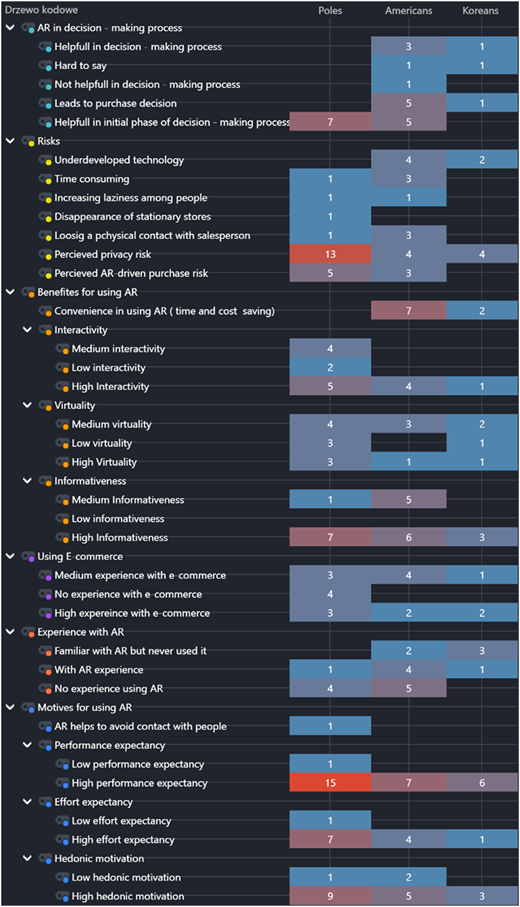
Code tree with the frequency of codes' occurrence. Source: Own elaboration in MAXQDA
Code tree with the frequency of codes' occurrence. Source: Own elaboration in MAXQDA
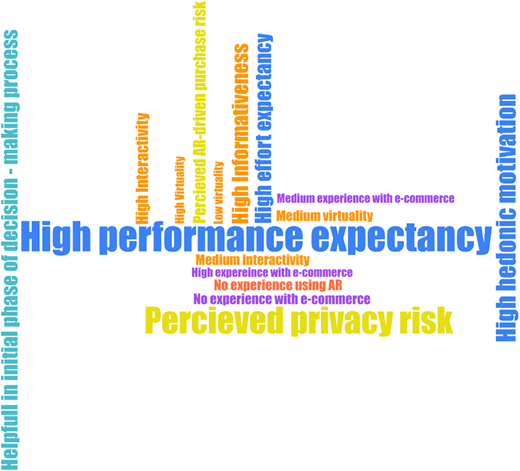
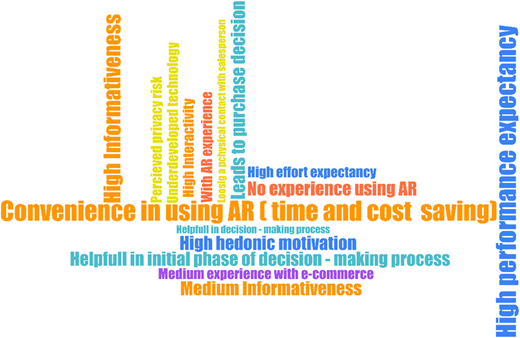
Thematic analysis of the obtained data indicated differences between the studied groups. Differences in the frequency of occurrence of each code are presented graphically in Figures 2–4.

Results
Following the trial, participants reflected on their immediate experiences with AR technology, which formed the basis for the thematic analysis presented below.
Hedonic experience
Among Polish participants, hedonic motivation was present but characterised by low novelty value and moderate emotional intensity. AR was frequently compared to familiar social media filters, which reduced the “wow-effect” and positioned the experience as functional entertainment rather than a source of excitement.
I am satisfied with this experience - the experiment. I really enjoyed the opportunity to try on different glasses. (PM2)
(…) a pleasure for the users (…) it's new, it's not that common yet, and it attracts the user. (PW4)
It resembles a Snapchat filter. But overall, the impression is very good. (PM4)
I think it's also cool for older people, maybe around our parents' age. I think such an opportunity will be fun and entertaining for them. It's less fun for us because we use filters a lot, so we're used to it. (PW2)
If you can call it filters, of those we know from the Snapchat app. And I think it can be fun to try these things on, especially for a younger user, which can later influence the purchase decision. (PM2)
Koreans pointed out that trying on glasses in this way can be good fun, but in a group of a few friends.
I think it's fun. It's not very much fun (…), but when I try it with my friends or someone more likely to enjoy it, I can enjoy more things from the AR program. (KW1).
It was also emphasised that the fun is at the beginning when you are unfamiliar with the technology, the fun tends to pass.
(…) like maybe the first pair was fun because it was like “ohhhhh” something new I can do, but then it was just like normal that I can try it. (KW2)
Some American participants (especially women) emphasised spontaneously that the experience of using AR was fun.
I find it fun. (AW1)
It was fascinating because I've never used this approach before. (AW3)
I thought it was pretty cool. (AW2)
Effort expectancy
Effort expectancy was described as minimal and taken-for-granted, which aligns with prior findings suggesting that ease of use loses explanatory power among digitally experienced young consumers (e.g. Saprikis et al., 2021; Mahajan & Taggar, 2024). Participants did not frame ease of use as a benefit, but rather as a basic requirement. “I think there is nothing complicated here; it is easy to use.”(PM3)
Everything was intuitive, easy to find, and no major problems existed. (PM1)
In terms of effort, well, practically none, because all you had to do was click. In fact, I didn't have to put any effort into it. (PM5)
It's a big convenience that you don't go to the shop, you just sit at home trying it on. Also, it's very easy to use. (PW1)
It's extremely easy to use. (AM1)
(…) similar to me having to try it in person, looking in the mirror. (AW3)
Performance expectancy
Across all groups, convenience emerged as a key motive for AR use, primarily through time savings, autonomy from sales staff, and the ability to try multiple products at home. Convenience was often understood as not having to leave the house, having many glasses in one shop, and being able to try on a pair of glasses without a salesperson present.
First and foremost, comfort because I don't have to go to a salon; I can do it at home. The comfort that no one is standing over me. It's not just advising me; it's like I can try these glasses on myself. It's a bit different to having live contact with a salesperson, but from a customer perspective, I think it's definitely convenient. There's definitely not that pressure of, first of all, time and that the salesperson will push a particular pair of glasses. (PM5)
There are a lot of glasses in such a shop, and you can try them on in your own time. (PW4)
I find it convenient because instead of going to the shopping mall to try on sunglasses, I can use AR technology at home. This saves time and effort. It motivates me to use products from companies that offer this technology. (KM1)
Advantages being staying in the comfort of home. (AW1)
In each country group, the convenience of using AR when shopping online was often linked to the responses to time savings.
It was definitely a time-saver. (PW5)
For me, convenience means not having to go out of my way and being able to save time since I don't have to go out. (KW3)
It would be saving time, not having to run to the store to sit there [and] wait. (AW3)
I could see it speeding up the timeline a little bit for me. (AM1)
Some Polish participants highlighted that AR provides information about the product, such as how it fits or doesn't fit the customer, its attributes, and other relevant details, regarding the motivations for incorporating AR in online shopping.
AR gives information about the product because the key thing in choosing glasses is to see how you look in them. (PM2)
AR provides information about the product because I also have all the specifications right away, such as the dimensions, weight (…). When buying in a shop, I would probably have to ask the salesperson because not all the information would be given… (PM5)
Polish participants also noted that AR can aid purchasing decisions by providing detailed information. They emphasised that this is primarily at the initial stage, such as when browsing online products, and that the final decision is often made in a physical store.
AR can help with the initial product selection, whereas for me, it's more for patterning. Later, I would try the same on stationary to ensure I liked it. On the other hand, I think I would then spend less time in the stationary showroom. (PM1) I also think it's as a pre-selection. It is a very good solution, but I would also prefer to make sure and try on the actual pair. (PM4)
I think AR is very helpful in making decisions. Nevertheless, if someone then wants to go to a stationary shop, he/she will know what to look for. (PW5)
Similar opinions were obtained among Koreans.
It's not perfect, but it definitely helps me when deciding. You can see if the frame is the type you want. You can see if it's better for your face to wear something more square or a cut eye. (KW2)
It was helpful for me (...) I agree, and I also think that detailed aspects of the product's design, including upgrades and specific features, are important, particularly when they are showcased effectively through AR. (KM1)
The Americans indicated that AR can aid in making purchasing decisions. It would be even more helpful if there were more information about a product's materials, quality, weight, etc.
AR can definitely influence the decision-making process. (AM1)
I wouldn't feel the need to go in-store if there was more information about the texture and the quality and material. (AW1)
Among other motives for using AR when shopping, one participant in the American group indicated that the technology prevents the transmission of viruses, which can happen in offline shops.
Nobody is actually touching the glasses, so there's no virus and disease transmission. (AW1)
Perceived AR-driven purchase risk
Participants in the Polish and Korean groups described AR-driven purchase risk mainly as the potential discrepancy between virtual representation and the physical product, particularly regarding fit, colour accuracy, and material perception. “The sizes of the glasses are given (…) through the camera, it's very difficult to adjust the size of my head and my face (…). In the same way, I would be afraid of the colour reproduction.” (PM1)
We might like something on the internet, and then in reality it might look different. And then I would be disappointed. (PW5)
I think that it is one of the disadvantages because if I get the real one, it might fit differently on my face. That difference from reality? (…) And I would also say that security things like sharing my data are not necessarily well protected. (KW1)
The female US group emphasised that AR does not allow users to touch (sense) and feel the product.
There's no that sensory input (…) (AW3)
(…) feeling it or actually feeling the material it's made out (…) that's the part that's missing. (AW2)
Perceived privacy risk
The primary concern about perceived privacy risks across almost all cultural groups was the storage of customers' data, such as photos and facial images from their homes, due to the widespread use of cameras.
The risk of sharing images from the flat might be important for someone who has some more valuable things (…) (PW2)
One would identify the issue of data protection more as a challenge of this technology. (PM1)
There is about the storage of these recordings, but I hope that this is not recorded. (PM4)
(…) risk of somebody hacking your camera, and that's kind of what I was thinking, being safe online. (AW2)
How can we ensure that our data, what we have in our home, our face shapes and all that isn't being used. (AW1)
You're at allowing websites to have access to cameras you don't know if they're videotape and you don't know what is going on. If they're saving the data saved, caching. (AM1)
For me, I think it's like with data storage, you know, because we use it now, and we agree for it to read our face and give it, give us the glasses on our face. But then, how long does it stay in the database? Who has access to that? But is the database actually protected by the government, so it's not possible for anyone to get into it? (KW2)
I think there could be issues with digital crime. (KM2)
Other risks and concerns in using AR
The Polish and American groups emphasised a concern that people would become sedentary at home, reluctant to go out, hesitant to interact with other people, and unable to establish relationships, which could deteriorate consumers' mental health. The potential need to close offline shops in the event of AR development in e-commerce was also noted.
People won`t leave the house when using AR. They will sit at home in front of the computer, checking everything and looking for product information. Staying at home and not having to leave the house is, to me, a bit of a threat to all of us. (PW1)
The first thing that comes to my mind is that stationary shops in general will become extinct. (PM5)
The biggest disadvantage is that we can lose that physical contact with the salesperson, which can be important in the sales process. (PM2)
It eliminates the need for human interaction and making the purchase. (AW3)
The above problem is also presented in terms of AR's advantages. Young people often struggle with communication, networking, and building relationships, making this solution a viable option for them.
Young people are a bit reluctant to go to a shop and sort of talk to the person selling the glasses there. With AR, many glasses can be tried on without contact with another person. That's maybe the fears that come from COVID-19, and this is just a cool option for people like that (…), and there's no problem that someone's watching, waiting, wants to take care of me, you can do it yourself without any fear of being watched (…). Well, I know just from the pandemic that there are also these problems, such as people being a bit embarrassed to go to the shop, to talk to someone, etc. Maybe not just at our age, but a little bit younger people, this kind of social problem comes up a little bit, so it's a nice option for that kind of people as well. (PW4)
Discussion and conclusion
The OFGIs reveal both similarities and diversity among participants, with notable differences in hedonic motivation (RQ1a) impacting AR acceptance (RQ1a). American participants (especially women) almost all emphasised that AR in e-commerce was fun for them, “pretty cool”, etc. Americans are inherently more positive, with the United States having the highest indulgence rate of those surveyed (Hofstede et al., 2010). The findings highlight the significance of hedonic motivation in this group's use of AR. Similar results were indicated earlier in studies (e.g. Hilken et al., 2017; Yim et al., 2017; Saprikis et al., 2021; Trivedi et al., 2022; Chin et al., 2025). Nevertheless, the Korean group indicated that AR in e-commerce could be enjoyable, especially when used with friends and at the beginning of use. Korea is among the most collectivist participants, so AR can bring fun to a group of friends. In contrast, the Polish group showed less enthusiasm than the others. Poles indicated that it could be more fun for younger and older people than for those of the participants' age.
The results regarding the difficulty of using AR (RQ1b) can be found in Huang and Liao (2017), Spreer and Kallweit (2014), Saprikis et al. (2021), Ho et al. (2023), and Recalde et al. (2024). In all groups, it was noted that AR technology is easy to use and intuitive, and that it does not require much effort to adapt to it. Mahajan and Taggar (2024) reported similar findings, indicating that expected effort is not a significant factor in young consumers' acceptance of AR in e-commerce. To sum up, the effort expectancy in using AR may contribute to its growing popularity in e-commerce. Otherwise, customers may not be able to use this technology when shopping online.
Many participants across all groups emphasised the convenience and comfort (RQc) of being able to try on as many items as they want at home and at the chosen time, and no one (i.e. the salesperson) was standing behind them asking questions. The effect of time convenience in AR mobile retailing was also noted by Chekembayeva, Garaus, and Schmidt (2023), who demonstrated the impact of time convenience in AR mobile retailing. Similarly, Saprikis et al. (2021) argue that expected performance and convenience influence young consumers' acceptance of AR in e-commerce.
Regarding the usefulness of AR in e-commerce, the Poles and Koreans emphasised the importance of providing product information through AR technology and the information available on online shop websites alongside products. Young Poles indicated that AR is useful mainly at the initial purchase decision stage. Information performance, understood as the provision of additional product information, can be an extension of the theoretical model (within the scope of motives influencing AR use in e-commerce), which served as the theoretical basis for this study.
Despite previous findings indicating that AR may reduce the perceived risk of online shopping (Barta et al., 2023), all groups highlighted the risks as significant. Risks included the fear of disappointment with the purchased product, i.e. that it will be different in reality than it looked online (AR risk, RQ1d), as well as the risk of sharing and storing personal data (RQ1e). Such results were found, for example, by Bonnin (2020), Ho et al. (2023). Also, participants in all groups highlighted concerns about whether their data was protected by law and could be used in cybercrimes (Dacko, 2017; Martin et al., 2017; Piarna et al., 2020; Ryan, 2021; Zheng & Li, 2023). However, Said et al. (2023) indicated that privacy concerns did not significantly impact AR usage intentions. Nevertheless, the authors explain that it may be due to confidence in Singapore's data protection policies.
Referring to RQ2, there were generally no (except for a few) significant differences among young participants from different countries regarding attitudes towards AR. This may be due to the homogenisation of young consumers' needs and behaviour regardless of cultural affiliation. Such findings stem from widespread access to the Internet and media, especially the ability to use global entertainment. These tools (e.g. global media) shape the young global consumer as they unify experiences and needs (Bartosik-Purgat et al., 2022). This result may also be attributed to the study's limitations, as presented below.
Theoretical implications
This study identifies additional motivators and risks that have been underexplored in existing literature and models. These factors emerge from shifts in consumer behaviour due to the COVID-19 pandemic and the evolving engagement of young people with new media. In the group of motivators, information performance can be added as a factor influencing AR use in e-commerce. Among the identified risks, there are concerns about the potential negative impact on mental health due to isolation and online shopping with AR. Additionally, there are concerns about young people's decreased willingness to socialise, struggles with communication, and diminished ability to form relationships. Identifying new factors (especially those related to risks) that are rarely found in previous literature has significant implications for academia regarding the use of AR in online shopping. Underlined by OFGIs' participants, “new” factors will expand the list concerning the qualitative study conducted in Poland, South Korea and the United States. Beyond theoretical contributions, the study also offers methodological insights relevant for future empirical research.
Methodological implications
This exploratory study provides a basis for the development of quantitative research tools examining AR acceptance in e-commerce. The qualitative findings allow for a more precise specification of key constructs by clarifying their dominant characteristics and contextual relevance in the consumer decision-making process. Moreover, the results indicate the need to extend existing measurement approaches to include additional aspects, such as information-related benefits and socially perceived risks.
Practical implications
Understanding the factors that drive and enhance the use of AR in e-commerce among young shoppers is of great practical importance. The research indicates that shops offering products aimed at young shoppers should focus on promoting information about using various measures to protect customer data, a point that respondents particularly highlighted. Additionally, it is helpful to provide detailed information about the product's visual and technical data, ensuring that the product's appearance in reality matches its online representation. Concerning motives, it is also worth emphasising aspects related to convenience, comfort and a large selection of products. Regarding companies operating internationally, it is essential to research local consumers' preferences and needs early, as these may vary significantly between markets (although our study found no significant differences among groups of young consumers).
The limitations and further research
The primary limitations of this study include the number of focus groups, the number of participants, and the number of cultures. The difficulties in gathering participants led to variations in the number of participants from specific countries. Additionally, cultural differences affected communication and data collection, as some cultures were more reserved (resulting in shorter interviews), while others were more open. Next, the language used in the Korean group was English (the recommendation is to use Korean in future quantitative research). Due to the limitations of the study and the nature of the method, its results cannot be generalised to the entire population.
The presented study was exploratory and brought new aspects for preparing the research instrument for the quantitative survey regarding the impact of cultural factors on AR acceptance in online shopping. The authors will attempt to expand the model with the identified new factors, especially in the area of risk, as these may be the primary reason for the low use of AR among e-commerce companies. In addition, future studies should also be conducted among age-diverse consumer groups. On the other hand, well-designed experiments can be conducted to verify whether consumers are familiar with AR technology, as our study revealed that most consumers are aware of AR, not through e-commerce practices.

