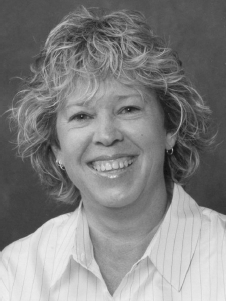
This month I want to talk about USDLA. As the current president, and someone who has been aware of the organization for about 15 years, I’ll start by being honest with you. At the time I was elected to be a member of the USDLA Board of Directors, I was a former state chapter president who had wanted to defect from USDLA during my presidency. Not just me, but my whole state chapter. Let me tell you why I felt that way, why I changed my mind, and why I’m now glad I did.
For many years (from my perspective as someone involved in higher education), the USDLA represented corporate partners, particularly videoteleconferencing partners. It wasn’t that this was a bad thing, but it didn’t seem to fit my reasons for joining the organization. And, at the time (as it does now), the Texas Distance Learning Association (TxDLA) had a large number of members from higher education and we were working to build a strong K-12 membership as well. I felt that USDLA represented the “training” side of distance learning, but not the “education” side as much as I would have liked. One could argue that training and educating are the same thing, but most people know there is a difference.
When I was elected to the Board, I was hesitant to serve based on my past perspective and experiences. But I accepted the position and have been amazed at how much the organization has to offer—and how much it has changed. There has been new leadership at the national level since 1999. Members of the Board who have been part of the organization for many years have led a revitalization effort, and new members have provided fresh and innovative ideas. I have seen a true transformation. We now have a much more equal distribution of corporate, higher education, K-12, and military/government members, both on the Board and within our general membership. And what a wonderful set of new ideas and processes have come about as a result of that membership.
I truly believe that USDLA is the premier organization for distance learning professionals—regardless of your job or career choice. Voices are heard from across our membership, members are invited to be part of committees usually reserved for Board members only, and we are seeing continued growth in state-affiliated chapters as well as special interest groups, such as the American Council for Virtual Education, spearheaded by Mary Beth Susman. The change is phenomenal. Our colleagues in higher education and particularly K-12 now look to USDLA more than they have in the past. Corporate sponsorships continue to grow. Our military and government representation is also on the rise. People are noticing a difference. USDLA is the one organization that embraces the various “silos” we find in the field and brings them all to the same table.
I know that there are many national organizations that address distance learning in some way (and we all seem to belong to several). I have my own personal favorite organizations and conferences that deal with distance learning. I’m sure each of you has yours as well. But, I would venture that whatever the organization or conference, it is focused on your type of organization (corporate or public), your mission (training or education), or your technology (online, broadcast, vid-eoconferenceing, print-based, etc.).
Okay, so what has USDLA done lately? Well, for starters, we’ve launched this great new practitioners’ magazine, and you’re reading it now. Spread the word. This is one of the first magazines/journals about distance learning that I can and will actually read cover to cover. Let’s face it folks, while many of us tend to think of ourselves as researchers or “academics,” how many of us really have time to read heavy research-based articles? Don’t get me wrong, I believe that solid research is what leads us to re-design, re-create, and evolve our field. But realistically, I also want and need to know what’s going on in the real world today—while it’s happening. I want to hear about new models that are being created and, probably more importantly, what models my colleagues are copying. Who are the people taking risks and trying new things? What are we learning from practical applications in distance learning? I believe that USDLA, through this new publication, hits that niche.
There are other things happening within USDLA that show forward thinking, such as the International Forum for Women in E-Learning (IFWE) that will be held September 13-15, 2004. The forum targets women who are leaders in distance learning as well as those women who are up-and-coming leaders in the field. But IFWE is not going to be exclusively for women only. I encourage men who are interested in women’s issues in distance learning and their leadership roles to attend. There have been many articles about the “glass ceiling” over the years— this conference will address how women have risen above that glass ceiling in our field and why. It will also involve a great deal of mentoring and networking, and an opportunity to share experiences. The speakers are outstanding! Space is limited to 200 participants, so register early. This event will be unlike anything you’ve experienced. See www.usdla.org for details, and register NOW!
So, as president of USDLA, this is my pitch for you to become a full professional member if you aren’t already. I’m a practitioner and I can tell you this is a “new” organization, and it’s based on effecting change in the field, helping and mentoring each other across the various areas we represent, and then bringing together under one roof all the silos that exist in distance learning. If you aren’t a member of USDLA now, think about joining. If you are, tell your friends. We are a forward-thinking organization. Together, we can be the future of this ever-changing field.
About the author