Beginning in March 2020, many higher education institutions made the difficult and necessary decision to move all of their courses to emergency online delivery (Hodges et al., 2020; Milman, 2020) to meet the needs of students as the pandemic spread across the world. The American Association of Colleges for Teacher Education found that with “the onset of the coronavirus (COVID-19), school districts, institutions of higher education, and educators are finding themselves in unchartered territory” (AACTE, 2020, para.1). As institutions began transitioning their courses to emergency remote teaching and learning (Hodges et al., 2020; Milman, 2020), many instructors, including those teaching culturally responsive courses, were unprepared to teach courses online. Many instructors lacked sufficient experience with classroom technology and had limited expertise in incorporating online learning (Cutri et al., 2022).
Before and during the pandemic, much of the professional development support for instructors focused on learning technology rather than on ways instructors could humanize the experience for students in the online environment. Since the pandemic, there has been a concerted effort by many online instructors to institute practices that more readily humanize the online experience for students. “‘Humanizing’ is a pedagogical strategy that seeks to improve equity gaps by acknowledging the fact that learning environments are not neutral; rather, they often operate to reinforce a worldview that disadvantages some students” (Pacansky-Brock et al., 2020, p.2). By acknowledging and identifying the pedagogical gaps in humanizing the online environment, instructors can better meet the needs of online students in general and diverse student populations in particular.
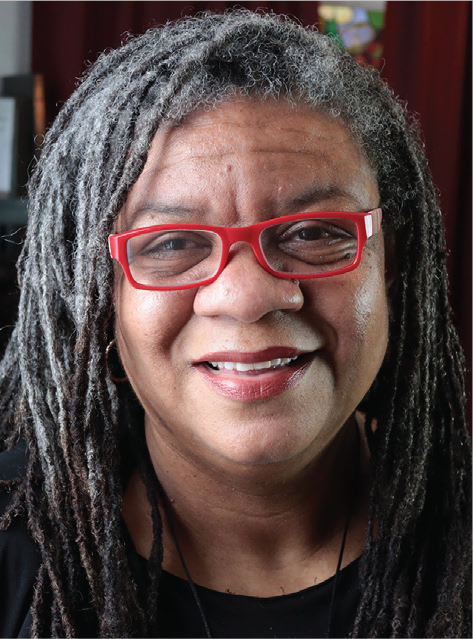
In this article, two African American scholars, one student and one professor, reflect on their experiences with online learning during and after the COVID-19 pandemic. Using autoethnographic reflections (Roy & Uekusa, 2020; Trahar, 2013), the authors discuss ways instructors designed online environments and used instructional practices that contributed to a more humanized experience for students and instructors during and after the COVID-19 pandemic. The first set of reflections is from an African American male undergraduate who shares his experience entering college during the pandemic and the course activities he identified that humanized the online course for him as a diverse learner. The second set of reflections focuses on the experiences of an African American woman professor and the instructional practices she used to humanize her online course for her predominantly Latinx and Indigenous students during the pandemic. The reflections provided here may assist faculty in finding practical ways to humanize the online learning experience for diverse learners.
Humanizing Online Learning: A Student’s Reflections
During the spring of 2020, I (Kwonzi) was one of the students across the country who experienced the transition from traditional classes to emergency remote online teaching and learning (Hodges et al., 2020; Milman, 2020) as I prepared to graduate from high school. In May of that year I graduated with an online ceremony, the first ever in the high school’s history, and I entered college where classes were offered in a hybrid format. I found it challenging to stay motivated and interested in the online courses. My online courses severely lacked that interactive aspect of my learning and feeling of being in a classroom. When my professors used discussion boards with prompts about culture and individual experiences that could be discussed with peers, contributed to my motivation and learning about the course content online. The discussion boards worked as a question that the instructor put up, and then students were required to answer the question while responding to other students’ answers. This was important for my online learning experience because it allowed me to converse with other students and hear their thoughts on my answers. It also allowed me to see different points of view from students and helped me view each topic differently.
Some courses, in particular, gave freedom to respond from a personal perspective. Taking this approach allowed me to express a well-thought-out answer based on my experience while also allowing me to hear the perspectives of my peers, which helped me learn more about various cultures apart from my own. Kumi-Yeboah et al. (2020) showed that internationalizing online content can enhance individual-level participation and promote participation within small groups, mainly when the content is culturally relevant to students’ backgrounds. Conversely, the study also showed how a lack of social-cultural content caused frustration for students of different cultures, who could not portray their perspectives. Regarding my experience, assignments relating to social-cultural content enhanced my participation in the assigned online course by allowing me to add my own experience in the course subject and discuss it with peers with their own perspectives. Overall, this highlights the importance of online discussion boards and some ways they can facilitate student engagement and improve students’ critical thinking. Instructors should aim to facilitate discussions so students can effectively portray their answers, especially from a personal and cultural perspective.
With online learning, there was a different form of communication with my instructors that I was not accustomed to. Each instructor had different ways of running the online classes, and at times, I felt that I didn’t even know who I was learning from. It seemed as if I was marking off a checklist of assignments and not really learning. This was typically from instructors who had limited-to-no options for meeting times and rarely interacted with students outside of assignment feedback. I value that connectedness with instructors so I can better learn the course material and get feedback to improve my academic performance for each of my courses. Studies show how student-faculty engagement is directly linked with higher performance on exams and homework, with targeted instructor feedback leading to meaningful student achievement (Carrell & Kurlaender, 2023).
One way that helped me connect and get instructor feedback was through individual meeting options. This option was offered by some of my online instructors. Having that option allowed me to set up meeting times with them that worked for our schedules to get feedback and talk about course assignments. I found it especially helpful when instructors started off the course with individual meetings. Typically, it was a way to get to know the professor and get questions answered that I, as a student may have at the start of the course. This helped in terms of getting comfortable with the course at the beginning and answering any questions to get familiar with the course. During the semester, the individual meeting options allowed for personalized improvement based on the areas I struggled with in the course. These personalized meetings made me feel valued and improved my learning.
Beasley (2021) found that instructors maintaining frequent contact with Black students at a predominantly white institution and cultural congruity were related to higher student satisfaction, which helped improve the students’ learning experience. This highlights the importance of establishing a sense of connectedness and providing personalized support. Instructors can enhance student engagement, satisfaction, and academic performance in online courses. It can be done through individual online meetings and personalizing feedback on assignments.
Humanizing Online Learning: A Professor’s Reflections
Since the beginning of the pandemic, I (Xeturah) have chosen to teach all of my classes online. Before the pandemic, I offered traditional face-to-face, hybrid, and online courses. However, I have always believed that online courses allowed me to have increased engagement with each student in my classes in ways I could not in traditional campus-based courses. In particular, online courses allow for increased critical engagement with diverse student populations in ways that time restrictions in face-to-face courses cannot (Woodley et al., 2017).
I taught in the American Southwest at a university and a community college at the pandemic’s start. Both institutions were classified as Hispanic-serving and Minority-serving institutions. Most of my graduate students at the university were Latinx and international students. While the community college students were majority Latinx with a large population of Indigenous/Native American students. Each institution’s mandate to move courses to online delivery during the COVID-19 pandemic allowed me to provide culturally responsive courses that included humanizing elements that better meet the needs of diverse learners. As I reflect on my teaching practices, I can point to three culturally responsive instructional practices that I have used to humanize the online learning environment, thus better meeting the needs of diverse students in my online courses.
Culturally Responsive Instructional Practice 1: Create Culturally Caring Environments
Students bring cultural capital into the online environment. Pacansky-Brock and colleagues (2020) argued that “humanizing recognizes that engagement and achievement are social constructs developed through the background and experiences students bring to college and the educational environment provided for them” (p.2). Thus, online courses that provide students with opportunities to share that capital are better for diverse learners. By normalizing sharing from cultural contexts and demonstrating to students how to respect one another’s differences, instructors encourage students to create culturally caring environments in online courses.
One of the most straightforward course adjustments that encourages sharing is creating discussion board assignments that allow students to share what they like about themselves without fear of attack (Woodley, 2018). Instructors can do this by using writing prompts for discussion board postings that ask students to share their specific and unique cultural experiences. By creating these safe, culturally caring spaces, students can engage with one another in responsive and respectful ways.
Culturally Responsive Instructional Practice 2: Increase instructor presence in online courses
It is crucial that students feel that they are not alone in the online environment (Parker et al., 2021). One of the easiest ways to humanize an online course is by increasing instructor presence in the online environment (McCarty, 2020). In my online classes, I have increased my instructor presence by using the announcement tool to share a weekly video announcement every Monday that explains the upcoming weekly assignments and reflects on lessons learned from the previous week’s assignments. During the week, I will also send out written announcements whenever I have posted grades or changed the course assignments or syllabus. This practice keeps the students informed and lets them know that their instructor is also engaged in the course activity.
Another way of increasing presence has been by providing audio feedback to all graded assignments by using the audio notes options within the Brightspace and Canvas grade books. I use their names and give each student personalized feedback on their assignments. This has helped humanize the course for the students and allows me to address student successes or even areas of personal concern with students. While it has increased the time needed for grading, it is one of the things that students respond positively to on my course evaluations.
Culturally Responsive Instructional Practice 3: Adaptive teaching using a high touch learning experience
Culturally responsive online course design and teaching can increase student engagement and overall course satisfaction. Practicing adaptive teaching and using high touch, student-centered, and multimodal learning opportunities (Pacansky-Brock et al., 2020) can assist students in meeting their course goals. Here is how I have increased the number of high touch opportunities in my online courses.
First, I provide students options for meeting course requirements, including submitting video or audio files instead of written responses on the discussion boards. For years, I required written responses only on the discussion boards. I had to convince myself that it was the only way to ensure they could write. However, as the purpose of the discussion boards shifted from evaluating the ability to write in English and instead became a place for student-student interaction, it became less important that their responses were in writing.
Secondly, I created storytelling assignments, allowing students to share their experiences. Storytelling allowed students to share personal experiences while creating more personalized experiences during the courses. Interactive storytelling opportunities in the online classroom encourage students to “construct knowledge in an immersive fashion” (Baldwin & Ching, 2017, p. 185). Diverse student populations can use these storytelling opportunities to share cultural norms and mores that center them as subject matter experts.
Conclusion
As evidenced by the student experience in this article, online learning environments can allow diverse students to express themselves and their culture through interactive assignments, like those on discussion boards. Providing opportunities for individualized meetings may also aid in creating more humanizing experiences for online students. Humanizing practices can become the basis for culturally responsive engagement in online courses. Humanizing practices can become the basis for culturally responsive engagement in online courses. To better meet the needs of diverse students, online instructional design and teaching must be about more than just transferring readings and handouts to learning management systems. It requires instructors to design curricula and course activities that respect and value diverse student populations’ experiences and perspectives in the online environment (Gilpin & Rollag Yoon, 2022; Woodley & Rice, 2022).
About the author's