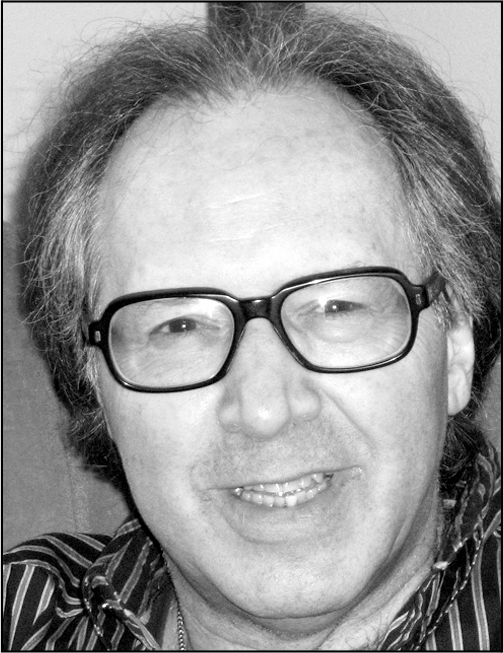
A new year is here: happy 2023 to you! With another year comes, of course, new challenges, obstacles, strategies, and experiments in the world of distance learning. I will continue to offer my thoughts on these as you send your questions to me. Send your queries to me at erroldistancelearning@gmail.com
Here is my kick-off …
Best Way to Use One’s Professional Experience in Teaching
Well, a most happy new year to you, Errol! I’ve been reading your columns for quite some time, and have been able to incorporate bits and pieces into my teaching, which I believe has made me more effective. I need go outside my teaching now with a question that might seem like it has a straightforward answer, but if there’s one thing I’ve learned from your columns there are many add-ons to what seems like it’s a cut-and- dry answer. Specifically, how can I best use my professional experience as director of a science museum in my city to help teach my students? Any suggestions you can give me would be most appreciated!
Thank you for the New Year greeting, and, as always, it’s gratifying to know what I write has been helpful. As you might know from reading my columns I’m a big proponent of connecting the classroom to what I deem “the real world”—the professions in where students will be spending so much time. Having a professional background in what you teach—I presume it is science related—can give students an immediate look of the reality the subject being taught has outside the classroom. Here’s what I offer: (1) Don’t overload your students with stories from your professional life, however do pick out those snippets that are most salient to highlight or focus on an area of the subject being taught; (2) Always make it a point to pick a few items that simply did not go right because some part of the subject was not learned or learned incorrectly; (3) Use your management position to teach how one can climb “the corporate ladder,” the responsibilities involved, and mistakes that can be made. There is a fun assignment: take one or two situations from your professional life, and present these as a puzzle of sorts, asking your students what from they have learned in class how they can solve the problem—and why.
How to Maximize Calls With Students
For several years I have made it a point to hold regular chat calls with my students. These have been invaluable in having students better understand a theorem (I teach math courses), mistakes that were made in an assignment, why points were lost for not following directions, and how they can improve for the remainder of the course. I have no doubt student engagement, attention to the course subject, and motivation to succeed have benefited from these calls. But is there is there anything else I can do with these calls? So far, I’ve limited my call involvement to the overall student progress in the course.
In the online teaching environment the phone call is the closest an instructor can get to the face-to-face interaction found in a brick-and-mortar classroom, thus it offers enormous opportunities for the online instructor. Certainly, from what you describe, your use of these calls has been most positive for student growth in the classroom. While a stronger studentinstructor bond immediately results from these calls, they can also be used to ask students about life in general (a good way to learn if any external problems may be playing a part in a student’s performance), a sharing opportunity (i.e.. part of the instructor’s life that relates to the student and/or the course), ways in which a students would like the instructor to be more helpful, and a deeper dive into learning about a student’s long-term goals and how the course might be helpful (many students do not think of a course beyond a grade). Of course, always begin such calls with an upbeat, motivational message—it puts the student at ease. Lastly, always ask the student what questions the student might have: this translates the call into a wonderful sharing opportunity.
What Impact Attending a Conference Can Have on One’s Teaching
Over the years, Errol, I have attended many conferences relating to my field of chemical engineering. Sometimes I have been a seminar presenter, once a keynote speaker, but more often simply an enthusiastic online instructor attending a conference to learn. These experiences have resulted in much information, insights, and colleagues’ suggestions that have no doubt made me better in the classroom. Beyond this direct tie to my students, however, are there other ways a conference can be used in my teaching career? Thanks!
Like you, I have attending several conferences, either relating to my field (English) or just teaching in general. And like you I have experienced the three roles you mention: seminar presenter, keynoter, and conference participant. Beyond what you indicate—strengthening one’s ability in the online classroom—there are wonderful connections to be made (regionally or nationally or internationally), and many educators have used these to find new teaching opportunities. Additionally, grants, scholarships, and other such teaching benefits are often announced or casually mentioned in discussions (I have been the recipient of some, but would not have known about them if it were not for being at the conference). Too, don’t forget to list each attending conference—and any role you had—on your C.V., as these can be helpful in your career. Be sure to visit the vendors’ booths: the amount of “stuff” I have come away with that has proven useful in my career is really astounding, and, again, most I would not have been exposed to if it were not for the conference.
Lastly, I have made many friends at these conferences, and we stay in touch, sharing ideas, problems, solutions, etcetera, that has made all of us the better for it!
Remember! The vocabulary, character development, tone, and setting of a novel are important aids for a complete understanding of an author’s intent—and we are the complete reader for these.
About the author