The purpose of this study is to gain a deeper understanding of organizational perceptions of digital transformation (DT) within large manufacturing firms and the factors that influence its implementation.
This study employs an inductive approach within a case study to investigate DT via unified commerce or omni-channel implementation. Authors conducted 20 in-depth interviews with managers at a Swedish global manufacturing company. The collected data were analyzed using inductive content analysis.
Findings indicate five important managerial perceptions of omni channel implementation, including organizational structure, change management toward omni channel and capabilities and competencies. These illustrate critical areas for practitioner consideration via the omni DT deficiency matrix.
This qualitative study employs a single-case approach, utilizing a small sample size. Consequently, caution should be exercised when generalizing the findings. Future research exploring the validation deficiency matrix framework across a broader disciplinary area and population is recommended.
The paper contributes to the DT literature with insights from a representative case into the complex processes that underlie the realization of omni channel strategies.
1. Introduction
As the business environment becomes increasingly dynamic with significant customer changes and advancements in digitalization, noticeable shifts are emerging in the retail sector (Radomska, Hajdas, Wołczek, & Kawa, 2023) and more competitive (Khan & Turowski, 2016; Zangiacomi, Pessot, Fornasiero, Bertetti, & Sacco, 2020). The nature of the supply chain and business processes they support is changing from a focus on cost to a more strategic emphasis on customers, from which new ways of working are emerging (Christopher, 2016). New challenges and opportunities are being developed as firms are forced to reorganize their business models by coming up with new ways to satisfy the constantly changing market and customer needs (Kaidalova, Sandkuhl, & Seigerroth, 2018; Kembro, Norrman, & Eriksson, 2018). These changes impact the firm by presenting challenges of internal integration for large, traditional firms.
Extant literature highlights the importance of integrated supply channels (Cai & Lo, 2020), with academia and industry looking to the unified commerce approach as a way of enhancing integration between all the channels (Hosseini, Merz, Röglinger, & Wenninger, 2018; Shen, Li, Sun, & Wang, 2018; Cai & Lo, 2020). As part of the digital transformation (DT) within the supply chain, the state of seamless commerce approach enables firms to develop and use integrated channels with customers and is currently being incorporated into firms’ integration strategies (Seyedghorban, Tahernejad, Meriton, & Graham, 2020). With unified commerce, customers can be seamlessly integrated across touchpoints, providing better experiences as they can switch between channels (Verhoef, Kannan, & Inman, 2015). Defined as “the union of the different channels of communication or contact a company has with its customers” (Lorenzo-Romero, Andrés-Martínez, & Mondéjar-Jiménez, 2020), it seeks to create a homogeneous experience for customers by utilizing touchpoints in such a way that the experience of the customers as well as performance of the channels are optimized (Verhoef et al., 2015).
However, unified commerce implementation is a challenging task for firms (Cai & Lo, 2020), as interaction should be adapted to consumer preferences (Hosseini et al., 2018). Because the factors and features of unified commerce are highly complex, implementation remains complicated (Mirzabeiki & Saghiri, 2020; Hajdas, Radomska, & Silva, 2020), as unified commerce requires a high digitalization level (Cai & Lo, 2020). The pressures of digitalization, DT, digital technologies and a higher level of supply chain integration remain the main reasons for uncertainty within manufacturing firms on how to best adjust (Hajdas et al., 2020; Sharifi & Zhang, 1999).
While traditional firms have legacy challenges within technology, process, company culture and organizational structures (e.g. Verhoef et al., 2021), legacy can make changes more complex, for example, how firms and their employees see their roles and responsibilities regarding their offerings and bringing this to the market (Babar & Yu, 2015; Kaidalova et al., 2018). Moving from their traditional best practices toward digitalized operations for such manufacturing firms puts pressure on the management of such transformation (Babar & Yu, 2015), in terms of the time, speed and scope of transformations. Thus, a prominent challenge to such integration is the low level of expertise within organizations and management’s tendency for a short-term strategic mindset over long-term vision (Moeuf et al., 2020).
Although there is a lack of understanding among the manufacturing firms on how they could better benefit from digitalization and supply chain integration (Machado et al., 2019), DT seeks to enable seamless supply chain collaboration to reduce cost and improve performance (e.g. Stank, Esper, Goldsby, Zinn, & Autry, 2019). But DT is not equally perceived by firms across industries’ supply chains. For example, while some perceive DT as endogenous, i.e. where DT is undertaken to benefit from opportunities arising from digital technologies (Tan, Pan, Lu, & Huang, 2015), others view it as an exogenous threat to the firm (e.g. Vial, 2019). Regardless of its perception, DT is principally employed to assist in the development of solutions for real-time supply chain management as well as for use within customized data-based solutions (Handfield, Jeong, & Choi, 2019). As such, literature abounds with research into unified commerce, its implementation as well as the management of unified commerce (e.g. Shu & Srimuang, 2025; Hajdas et al., 2020). However, most of this focuses on channel integration from the perspective of retailers and retailing (Saghiri, Wilding, Mena, & Bourlakis, 2017).
To implement omnichannel as part of DT, manufacturing firms must identify and evaluate their current state in terms of resources and capabilities, as well as their firm-specific drivers and barriers (Cai & Lo, 2020; Kembro et al., 2018; Hajdas et al., 2020). Failure or inability to do this could be risky for firms embarking on implementation, leaving them at a disadvantage compared to competitors, which could negatively affect their profitability and supply chain performance (Shimizu & Hitt, 2004; Chan, Ngai, & Moon, 2017). Based on Groover (2020)’s definition of manufacturing, manufacturing firms are organizations that undertake activities to convert raw materials and components into usable finished products employing several manufacturing processes. This can include material extraction, design, sourcing, storage and sales; as such, it is different from production, which is the physical act of making the product.
Given the sparse literature addressing DT drivers and firm dynamic capabilities, issues relating to products, markets, competencies and legality of unified commerce and how they are related, are crucial to understanding the intricacies of digitalization and its requirements for unified commerce (e.g. Cai & Lo, 2020; Hajdas et al., 2020). This study responds to recent calls questioning the viability of firms to reach the level of integration that truly is unified commerce (Hajdas et al., 2020) as well as the lack of managers’ competence regarding digital technologies as a leading cause of failure of the transformation projects.
This study aims to examine the relationship between dynamic and digital capabilities in driving DT through omnichannel strategies, as well as the factors influencing its implementation. Thus, this paper seeks to answer the following questions:
How do large global manufacturing companies perceive the DT and transition toward omni channel implementation?
What DT drivers affect managers’ ability to implement omni channel transition?
Case studies allow for in-depth investigations regarding DT and its implementation across stakeholder milieus and services (Hajdas et al., 2020; Mirzabeiki & Saghiri, 2020; Cai & Lo, 2020). This research focuses on the supply chain operations and the perception of managers at a Swedish global manufacturing firm that is currently at the beginning of the journey of DT toward unified commerce. Drivers of dynamic capabilities and DT are investigated and the ensuing interactions are used to develop areas of importance for DT implementation. This research represents a single case study, thus, its settings and approaches are reflective of and specific to the case company.
In the following, Section 2 presents a brief literature review of DT capabilities. Section 3 subsequently presents the method section describing the data collection process, presenting the case and describing the content analysis procedure. Section 4 presents the findings of the study, which are then applied to the development of an emergent unified commerce framework considering drivers and capabilities based on the results presented. Further, a discussion of the implications of results for global manufacturing firms is undertaken and finally, Section 5 presents a conclusion.
2. Literature review
2.1 Digital transformation
Firms pursue DT initiatives for a variety of reasons (Saarikko, Westergren, & Blomquist, 2020; Cao & Li, 2015; Shahi & Sinha, 2020). For example, these motivations can range from improving or replacing existing products and processes to introducing entirely new products and processes to support them (Furjan, Tomičić-Pupek, & Pihir, 2020; Westerman, 2014), such as refrigerators that are capable of automation and integration with other appliances. Firms are moving from a mindset where DT was perceived as a threat to a conviction where it is seen as a customizable phenomenon with regard to implementation (Schneider & Kokshagina, 2021). Given the various discussions of DT definitions, Vial’s (2019) analysis of DT definitions discovered that circularity, unclear terminology and conflation distort the conceptual clarity of DT.
The common concept among these definitions is the idea of change that has to occur as a result of the DT’s impact on all aspects of a business. This implies that firms change their ways of working and rethink how they handle DT and thereafter (Teubner & Stockhinger, 2020). Thus, DT does not only consist of implementing digital technologies but also focuses on a more comprehensive approach and change for the business (Brkić, Tomičić Pupek, & Bosilj Vukšić, 2020). To this end, this paper investigates unified commerce implementation as a means to understanding DT within manufacturing supply chains as well as drivers of unified commerce implementation.
Within the manufacturing sector, DT refers to the enhancement of traditional processes of manufacturing, its products and staff using digital technologies such as automation, sensors, artificial intelligence (AI), Internet of Things (IoT) and e-commerce to improve efficiency and value creation (Duraivelu, 2022). Closely connected to DT in manufacturing are the concepts of the digital platform and the digital ecosystem (Okano, Antunes, & Fernandes, 2021). A digital platform can be viewed as a socio-technological codebase that integrates technological components with associated organizational processes and standards, enabling interaction, coordination, innovation and scalable value creation across stakeholders (Antai, Lenka, & Achtenhagen, 2025). The concept of ecosystem allows the diverse group of interconnected technologies to function together as a holistic unit to enable enhanced value generation. Duraivelu (2022) identifies two main types of DT in manufacturing: process transformation involves the digitization of existing operations to enhance efficiency and product and service transformation focuses on creating new digital experiences and services to boost customer satisfaction. Thus, while process transformation primarily targets internal operations and employees, product and service transformation centers on enhancing the customer experience interface with the organization. This study focuses on the latter type of DT.
2.2 The state of unified commerce
Unified commerce provides customers with better experience, enabling them to switch between available channels without disruption (Verhoef et al., 2015). As such, it represents the amalgamation of different channels of mutual communication used by firms and their customers (Lorenzo-Romero et al., 2020). Increased interest in unified commerce is a result of the maturity of multichannel retailing (Cai & Lo, 2020). This has led to an increasing number of firms seeking seamless integration across their channels (Shen et al., 2018). However, the implementation of unified commerce is not simple. Factors and features affecting unified commerce are obscure for many and differing firms, presenting significant challenges to firms that wish to utilize unified commerce in their business (Mirzabeiki & Saghiri, 2020; Hajdas et al., 2020; Hosseini et al., 2018). Given the inclusion of customers, manufacturers and logistics operations and decision-making in firms’ data management practices, data integration for unified commerce goes beyond traditional retail activities, such as sales, marketing and logistics (Risberg, 2023). It spans the entire supply chain, e.g. information sharing, warehouses, prices and transportation information from third party-logistic companies and channel transparency (Li et al., 2018; Park & Kim, 2019; Shen et al., 2018; Song, Song, & Sun, 2019). But current unified commerce theory is made up of Western unified commerce retailing literature cases, which are mostly beneficial for that sector (Galipoğlu, Kotzab, Teller, Yumurtaci, & Pöppelbuß, 2018; Mishra, Singh, & Koles, 2021). Thus, there is a need for a more holistic way of understanding the concept (Hovelaque, Soler, & Hafsa, 2007; Hübner, Kuhn, & Wollenburg, 2016). Because the way firms make unified commerce-related decisions is not yet well understood, there are clear benefits to conducting more in-depth and comprehensive case studies and quantitative research on unified commerce management (Cai & Lo, 2020).
2.3 Digital capabilities drivers
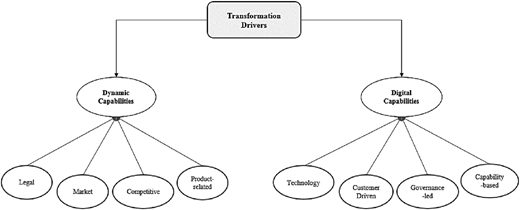
Brkić et al. (2020) identified four main drivers based on literature for DT, followed by digital maturity that enables these drivers and the DT for a firm.
Digital technologies are the most cited key area within DT (Schneider & Kokshagina, 2021; Carrilho, Felicio, Jardim, Porfírio, & Felício, 2021) and are used by firms when making important decisions and easing information and communication sharing (Shahi & Sinha, 2020). They allow automation and customization of products and services to a higher degree, as information sharing with resource productivity, decision-making and flexibility are improved (Zangiacomi et al., 2020; Moeuf et al., 2020; Fatorachian & Kazemi, 2018).
Customer-driven DT focuses on the needs of the customer, for example, within social media, platforms, unified commerce (Janhofer, Barann, Cordes, & Becker, 2020) and customer profiling (Brkić et al., 2020). Digitally mature companies adapt faster to customer needs given the ease of access to customer data, which allows customer experiences to be impacted (Brkić et al., 2020; Schneider & Kokshagina, 2021; Li, 2021). Adaption through customer mapping, profiling and creating new value are a few examples of this DT driver (Brkić et al., 2020; Li, 2021). As a third driver, Governance-led DT looks at the firm’s holistic business directions shown through its strategy, scope and linkages to competitors and the supply chain (Brkić et al., 2020), which is a result of the firm’s culture and managers’ leadership within DT (Carrilho et al., 2021). The entire scope, culture, people, leadership, strategy and vision are some examples that are being utilized in the context of the third driver (Brkić et al., 2020). Capability-based DT is another driver whose emphasis is on a firm’s internal capabilities, maturity and sustainability, via tangible processes, intangible tools and knowledge through innovation and change (Brkić et al., 2020). In this regard, firms that digitally adapt faster will gain a competitive advantage in productivity, collaboration and innovation (Li, 2021). The sustainability aspect can help optimize firm processes (Kayikci, 2018; Brkić et al., 2020), allowing firms to recognize new waste and pollution reduction techniques.
2.4 Dynamic capabilities
Dynamic capabilities are those capabilities that allow organizations to continuously adapt their resource base to manage disruptive changes in the environment (Saeedikiya et al., 2024). To assess a firm’s capacity for successful unified commerce implementation, Hajdas et al. (2020) present drivers affecting its implementation. The nature of the product can greatly affect firms’ capability to shift to unified commerce in e-commerce (Hajdas et al., 2020). As such, products belonging to a strong brand are more suitable for online selling (Manzoor, 2010), even though products purchased via unified commerce do not increase customer satisfaction significantly (Hajdas et al., 2020). For example, exclusive products lower the need for unified commerce since easy access to product information via all platforms is not valued by customers. Product durability, shipping profile and packaging, including weight and size, are some of the attributes that play significant roles regarding its suitability for unified commerce (e.g. Manzoor, 2010; Hajdas et al., 2020). Thus, product-related drivers can go on to affect consumers’ willingness to buy (Manzoor, 2010; Hajdas et al., 2020).
Another critical capability driver is the increasingly intense competition that organizations face. While firms might not directly offer the same solution to customers’ needs, business models and offers might overlap at some point (Beynon-Davies, 2018; Downing, Kang, & Markman, 2019). This drives firms to consider upgrading and integrating their channels and networks (Seyedghorban et al., 2020; Khan & Turowski, 2016), which means external partners must also be prepared for unified commerce and its benefits (Hajdas et al., 2020; Mirzabeiki & Saghiri, 2020). Competitive drivers therefore require adaptable networks, especially concerning an all-encompassing concept of unified commerce.
As more businesses are adopting customer-focused strategies (Christopher, 2016), customer satisfaction becomes a key concern (Kaidalova et al., 2018). The unified commerce preferences of customers include products and services (Cai & Lo, 2020). Thus, customers’ attitudes, needs and habits of products, services and various channel options are linked to the firm’s capability to implement unified commerce (Hosseini et al., 2018; Mirzabeiki & Saghiri, 2020; Li et al., 2018; Chen, Cheung, & Tan, 2018). As such, it is not out of place for firms to determine the clientele base’s maturity on digital technologies and their skills and attitudes, including privacy concerns. Demographic factors such as geography, sex, age, etc. and characteristics of the market can influence the implementation and uptake of the omni channel (Vasantha & Sarika, 2019; O’Neil, 2001; Verhoef, Neslin, & Vroomen, 2007). Infrastructure and population density factors play significant roles (Hübner et al., 2016).
Legal regulations can pose challenges for unified commerce implementation (Hübner et al., 2016). On the one hand, as firms move toward unified commerce, tariffs and taxes, which in turn affect the distribution of goods and services, might be triggered (Hajdas et al., 2020). Conversely, unified commerce and higher levels of integration have raised concerns about data handling, including data security, ethical violations and privacy infringements (Chen et al., 2018). There is a need for literature researching legal drivers of unified commerce, which seems to show elevated firm responsibility (Hajdas et al., 2020). Thus, firms must deal with challenges regarding data collection, intellectual property ownership (Piotrowicz & Cuthbertson, 2014; Hänninen, Smedlund, & Mitronen, 2017), data storage, etc. (Zhang et al., 2010). Successful data management can positively impact firm operations, allowing firms to maintain accurate information on customer behaviors and requests, for better responsiveness and faster adaptation to changes in the market (Cao & Li, 2015).
Based on the reviewed literature, Figure 1 conceptually summarizes DT drivers by arguing that transformation drivers can essentially be developed along two main categories, as deliberated in the foregoing discussion. As such, digital and dynamic capabilities are required to achieve DT. Because transformation drivers may be characterized along these complementary lines, a significant gap is observed within the literature on drivers of dynamic and digital capabilities, as limited, extensive and in-depth research into the constituents of these drivers and their relationships within a real-life case study setting has not yet been undertaken in the literature. This remains critical to understanding the ongoing challenges organizations face when going digital.
3. Methodology
Given the explorative nature of the study, a single-embedded case study design was employed. Case studies are appropriate when multiple dimensions of a subject need to be studied thoroughly by addressing concepts that are new and abstract (Siggelkow, 2007). Using this approach, the research aims to explore the phenomenon to increase understanding, rather than achieve generalizability (Yin, 2014). The study uses existing literature to highlight the key research areas within unified commerce implementation to connect the empirical findings of this research to theory to support evolving discussion (Easterby-Smith, Thorpe, Jackson, & Jaspersen, 2018). As our empirical findings stem from the interviews, inductive reasoning allows us to attempt to go beyond data from a specific context and establish generalizable trends. Thus, in-depth, semi-structured interviews were deemed the most suitable data collection method and applied to this research.
3.1 Case description and data collection
Aligned with the qualitative characteristics of this research, primary data were collected through scheduled interviews with the case firm and secondary data used included academic literature, where a substantial theoretical understanding regarding the topic was gathered as well as material and information about the case firm (Easterby-Smith et al., 2018). Our case is a world-leading producer of forest products and services. Their products and services are sold through more than 25,000 independent dealers and have been on the market for more than 330 years, making the company robust. Given its recent desire to transition to unified commerce, it presents as a representative case for the study of omni-channel transition within the manufacturing sector. The company’s divisions maintain a global presence with product sales around the world.
3.2 Case study sampling
Snowball sampling (e.g. Waters, 2015) was used in this paper to gain range as well as depth among managers and staff and to qualify the data for more transferable results. In snowball sampling, the existing study informants are used to recruit future subjects among their acquaintances.
First, supervisors at the case organization provided a list of contacts matching our interviewee criteria, including managers from various levels and functions/departments. Participants, located at company sites around the world, in turn, recommended additional respondents that could bring value to the study. Furthermore, it allows us to gain rich, in-depth insights into the case (Siggelkow, 2007), which might apply to similar firms within the same industry. Given the literature’s emphasis on the managers’ role in unified commerce implementation and in trying to narrow the scope, the managerial perspective was decided upon as the unit of analysis for the study. However, this sampling method can introduce potential bias if it is not carefully planned and executed. Atkinson and Flint (2001) discuss possible sources of potential bias, including the fact that it can limit the researcher’s control over the accumulated sample composition. Also, because successive respondents can be partially or wholly determined by recruiters, there is a potential for a self-selection bias which can skew the sample toward individuals who share similar characteristics, values or affiliations with the recruiters.
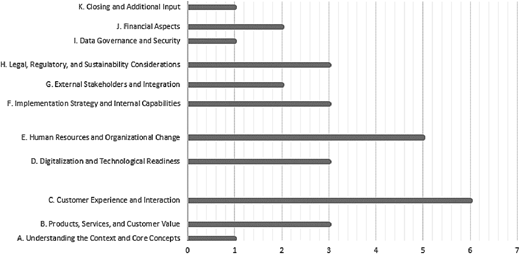
20 interviews with managers lasting between 30 and 70 minutes were conducted (Table 1) and focused on the implementation challenges of DT for the omni-channel strategy. We asked respondents questions regarding the organization’s digitalization status and challenges, with a focus on Omni-channel implementation.
As shown in Figure 2, the interview design is systematically organized around distinct content categories, each encompassing targeted questions relevant to the research focus.
Potential bias from the snowball method was mitigated by setting managers as the criteria for recruitment across the organization. As such, the use of the snowball here was mainly to facilitate access to other managers in other regions and divisions of the organization.
3.3 Analysis
The data analysis followed an inductive approach, drawing on existing literature and a structured content analysis process. The first step in our conventional content analysis involved establishing appropriate criteria for the material selection (Easterby-Smith et al., 2018). This was done in collaboration with the case firm to identify respondents with valuable and relevant insights. In the second step, the interview data were transcribed and the draft documents were compared to the original recordings to ensure quality assurance and to enhance familiarity with the material (Hsieh & Shannon, 2005).
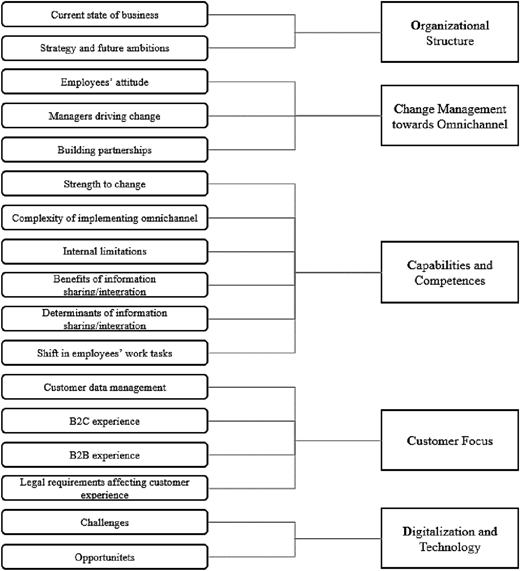
The coding process was then conducted in three main stages. Initially, the transcribed interviews were coded based on a set of apriori codes and organized into sub-categories (Hsieh & Shannon, 2005). When certain codes did not fit within the existing sub-categories, new codes were created. These new codes were then cross-checked against the existing categories to determine their best fit or to confirm the need for a new category. Subsequently, the final main categories were determined through an individual review process, ensuring that each category represented a distinct concept without overlap and contained accurately classified, relevant data (Julien, 2008; Mayring, 2000). Finally, the emerging results, presented in Figure 3, reveal patterns and insights that enhance our understanding of how managers navigate. Subsequently, the final main categories were determined after they were individually reviewed to ensure that each of the categories was its own entity and the definitions did not overlap, making them accurate and containing relevant data (Julien, 2008; Mayring, 2000).
The emerging findings (Figure 3) reveal key patterns in how managers navigate DT, highlighting the interplay between managerial capabilities, organizational structures and technological drivers. They offer insights into both the pursued opportunities and the barriers faced, shedding light on how transformation is conceptualized, implemented and sustained in manufacturing.
4. Findings and discussion
To explain managers’ perceptions of the challenges of undertaking DT within unified commerce manufacturing supply chains and the dynamics of its implementation, in this section, we present the resulting constructs – organizational structure, change management toward omni channel, capabilities and competencies, customer focus and digitalization and technology.
4.1 Organizational structure
The first main category identified from the analyses is organizational structure. This depicts the current state of the business, its strategy and future ambitions. These subcategories were relevant to understanding how the company defines its current state and where the organization is headed in light of the literature, e.g. “… we have a long journey ahead to take and it comes down to, I mean, we are an old, traditional company” (Respondent 4); “… this proverbial journey into digitalization and e-commerce was repeatedly proclaimed by respondents across interviews in references to multiple channel offerings, digitalization or unified commerce;”… “if digitalization means that we’re selling more and more online, I think that’s very small and slow start in my view” (Respondent 10); “… establish contact with the end-customer at the beginning of their journey [to implement unified commerce] (Respondent 13).” The organization realizes that the need for change should be supported by clear and achievable goals. A contact or team, in charge of driving change, setting up the strategy and communicating goals across the whole organization would be required. Several respondents reflected on the firm’s structure as less flexible toward change in terms of their current offers, processes and systems. However, the company’s perception of itself as a traditional company with a long historical legacy of developing quality and innovative products helps in pushing the boundaries of traditional offerings within the digital space.
4.2 Change management toward omni-channel
The second category captures stakeholders’ views on their role in digital change management. Given the organization’s change journey toward unified commerce, investigating the phenomenon from a variety of perspectives is important for understanding managers’ perspectives. Having employees who are eager, willing and interested in the change process stems from clearly communicated opportunities via top-down implementation, where managers act as drivers and motivators and lead by example.
Responses viewed employees with a higher propensity to learn positively with regards to change, as such, the organization actively creates opportunities for employees to learn further and develop their skills, e.g. “I think it starts with being open minded with a bit of eagerness, willingness, and interest to learn what opportunities the unified commerce can bring to the company, with a bit of test, learn and modify mindset” (Respondent 9). Establishing a balance between new and traditional methods of working was considered crucial, especially in light of the outcomes of organizational structure and conducting change with a purpose. This is because stakeholders, including partners, perceive change to be hard. Respondents also pointed to challenges with product attributes, such as current packaging and capability of product home assembly without external and technical support. Results also indicate that selecting suitable partners and building strong partnerships create win-win situations between the case company and its partners because it is believed to favorably promote change management.
4.3 Capabilities and competences
Capabilities and competencies refer to the company’s view of its potential to implement DT via unified commerce and are identified across six subcategories describing opportunities as well as obstacles for the organization. According to responses, the organization’s capacity to change is significantly impacted by the strength of the brand, its financial position as well as a workplace culture that is adaptable to change, which is in line with the positive view of employees’ willingness to learn, e.g. “. I think we are used to that because there’s always new projects, new things popping up and I think in general we are quite good and people like also that something is happening and there are always new things to do” (Respondent 16). Responses acknowledged that change requires coherent IT capabilities and skills across the organization that are constantly reviewed, especially as firm capabilities and competencies are typically dependent on the strategy and the organization’s ambition level of implementing unified commerce with internal resources. There was no clear consensus on factors affecting unified commerce, suggesting the complex nature of such change. In any case, there was a shared view among respondents that better data sharing and integration would positively influence unified commerce implementation within the firm.
4.4 Customer focus
Customer focus derives from the fact that omni channels are highly connected and dependent on customers; as such, different customers can request consideration of different aspects regarding their planning and decision-making. A customer focus is akin to how organizations manage customer data in order to achieve and even exceed customer requirements. Results indicate that location and differences in markets increase the complexity of understanding customer requirements. Nevertheless, a well-executed customer focus, which seeks to provide service through various touchpoints, generates higher customer satisfaction, making pricing more transparent to all parties. However, companies previously selling exclusively through vendors assume dual roles as partner and customer. For example, “…How we should price the products compared to what it is when we sell through the dealer. And how we should compensate the dealer for our direct sales to keep them and have them there closer to the customers so they can still do maintenance and service on the products” (Respondent 17). Therefore, such omni channel implementation, which sells directly to the end-consumers, can have consequences for the customer-focused strategy if such relations are not properly nurtured. While other external factors like legal and sustainable requirements can affect customer focus, results show no clear consensus on such external factors besides local conditions and or prevalent regulations. In summary, results suggest that, while a customer-focused strategy could be advantageous for the firm, it will significantly add to the complexity of managing customer experiences.
4.5 Digitalization and technology
Lastly, digitalization and technology refer to the case company’s digital environment and describe the current state of digitalization at the organization, given its relevance to our understanding of implementation at such organizations. Results here show that achieving appropriate levels of digitalization and technological tools for unified commerce implementation presents challenges as well as opportunities for the firm.
For example, challenges identified by respondents include the fragmented IT landscape across several functions as well as the complexity of establishing organization-wide IT infrastructure. “…. I think it’s a scattered landscape. Systems and things like that in the background, are really not up to speed where they should be. And different sets of data are not always connected to each other” (Respondent 20). Respondents agree on the significance of IT investment costs, which are essential to reaching higher levels of digitalization in the implementation of unified commerce. Once again, external factors and events can affect organizational attitudes and consequently, the level of digitalization deemed necessary. For example, responses show that the Covid-19 pandemic accelerated the acquisition of digitalization in some areas, such as enabling remote work, while reducing projects in other areas like retailing. While respondents see potential benefits of increased levels of digitalization, they acknowledge the challenging journey ahead.
To these findings, we integrate the results obtained from the literature review via the conceptual framework of DT drivers in Figure 1 to identify areas of synergy (theoretical and empirical) among developed and emergent drivers.
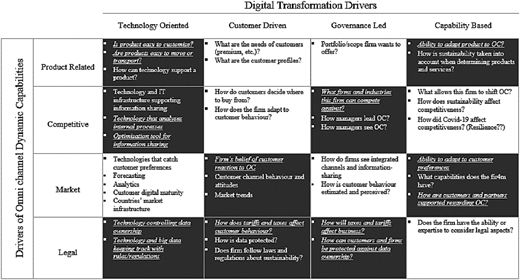
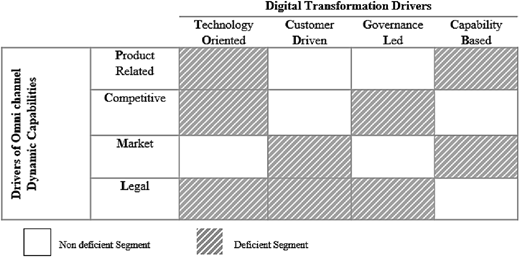
Integration is achieved by matching identified themes from the literature review to emergent themes from the interviews. Results are presented in Figure 3. While various associations were identified, there were areas present within the theoretical omni-transformation matrix that were either not mentioned or not discussed and conceptualized, at least from within the case company’s perspective, in detail during the interviews. Figure 4 presents deficient as well as identified drivers among the case study findings and the literature, which presents areas of potential DT driver blind spots for such global organizations. Deficient drivers are underlined and in cursive text. For example, legal presents the most oversights concerning the DT drivers spanning three areas of DT drivers. As such, questions concerning how tariffs and taxes affect customer behavior and how they are to be dealt with were not explicitly identified within the findings.
Conversely, from the DT perspective, customer-driven, governance-led and capability-based drivers display similar levels of acknowledgment among omni-channel dynamic capabilities, albeit in different areas. For example, while customer-driven DT was well understood and contemplated within product development and product rivalry, this was not the case when it came to the organization’s belief in the omni-channel trend. This was to be expected given the 300-year history of the company and its previous experiences with change. Technology is shown as the driver with the most unidentified areas and thus presents one of the main areas to be developed for DT success. Figure 5 builds upon Figure 4 by presenting the identified deficiencies in a matrix format, which differs visually from Figure 4 by enabling a direct cross-axis analysis to pinpoint segments lacking in DT.
Evidence from literature and empirical studies underscores the significance of developing products that align with e-commerce platforms. Manzoor (2010) emphasizes the advantages that strong and global brand recognition offers to organizations seeking to operate digitally online. Empirical results in this study indicate that the case company’s management believes in their brand as a source of competitive advantage that can facilitate the transition to unified commerce strategies. However, the literature suggests that successful unified commerce implementation demands a comprehensive consideration of factors beyond brand recognition (Hajdas et al., 2020; Manzoor, 2010). Specifically, products must be easily adaptable through processes like customization and transportation facilitated by technologies such as robotics or automation (Hajdas et al., 2020; Zaki, 2019). Hence, empirical findings here, via the emergent perceptions including organizational structure, change management, capabilities and competencies, focus on the customer and the digitalization process and technologies, provide responses to study question 1. Organizations can thus conduct thorough assessments to evaluate the compatibility of their products with technological integration, ensuring alignment with their current capabilities or future technological goals.
Findings show that, while the case company’s products exhibit high levels of innovation and technological advancement, their current configuration might pose complexity challenges for end-users in terms of assembly and maintenance. Additionally, the logistics involved in transporting products were found to be unsuitable for e-commerce or direct sales, highlighting the importance for traditional firms to assess their product packaging and the impact of that on individual shipments and storage (Manzoor, 2010).
Concerning DT drivers that can affect managers’ ability to undertake omni-channel implementation posed within study question 2, Figures 3 and 4 outline such drivers, ranging from technology orientation, customer centeredness and governance to capabilities-based drivers, which could be challenging for organizations to deal with and as such would require more attention.
4.6 Implications, limitations and future research
Utilizing the omni DT driver deficiency matrix helps identify blind spots and assess the feasibility of unified commerce adoption based on current capabilities. Effective unified commerce transformation implementation operations thus require enhanced data management, transparency and responsiveness across the organization’s supply chains, necessitating investment in systems, tools and internal competencies. Collaboration and goal alignment with external partners are crucial for seamless unified commerce integration. Given the variability in commerce strategies among firms, decision-makers must tailor approaches to their specific contexts and preferences, selecting appropriate solutions and customer touchpoints to optimize outcomes. Theoretically, exploring deficiency drivers such as taxes, tariffs, considerations and reverse logistics could lead to the development of valuable theoretical frameworks and practical strategies for future implementations. Practically, such deficiency blind spots can be quite expensive. For example, the legal-customer-driven segment of the matrix implies that tax and customs costs can be significant for global firms when customers demand free/easy freight and return within the omni-channel model. This is due to the complexity and variability of tax regulations and customs documentation requirements across different countries. These different tax and legal regulations could impact unified commerce systems by presenting different types and levels of channel integration hurdles when moving across and over legislative regimes.
Although this study focuses on the Swedish manufacturing sector, the results and frameworks developed – particularly the omni DT deficiency matrix – can also be applied to other sectors such as healthcare and construction. In industries where regulatory and technological environments are rapidly and continuously evolving, the matrix offers a valuable tool for leveraging nuanced aspects of the relationship between drivers of dynamic capabilities and drivers of DT, providing actionable insights for organizations beyond manufacturing. This study, however, acknowledges limitations primarily in its reliance on a single case study, which can restrict the generalizability of results beyond this specific context, thus prioritizing subject-specific contribution over broad generalizations. Additionally, the exclusive focus on managers could limit the comprehensiveness of the findings, as input from other organizational levels could provide valuable insights. Despite these limitations, the research extends existing knowledge of DT within unified commerce implementation.
While the findings have been generated based on a broad understanding of the manufacturing sector, the results developed via the omni DT deficiency matrix may be applied to other industries that exhibit similar supplier and customer base characteristics. Given these characteristics, there is a universal need to deal with the issues addressed within the omni DT deficiency matrix, i.e. the DT drivers and the dynamic capabilities drivers. For example, identified governance-led transformation driver issues with regards to competition in the manufacturing industry could very well benefit industries within the service industry, where customer contact and experience, while different in form and structure in the manufacturing industry, are of greater importance in the service industry. Future studies could broaden the research by incorporating multiple case studies and quantitative methods to validate the deficiency framework across various transformation areas and capabilities, offering a more practical understanding of transformation dynamics and testing the applicability of the study findings in different organizational contexts.
5. Conclusion
This study fills a gap in unified commerce transformation literature by focusing on manufacturing firms, expanding understanding beyond retailing contexts. By integrating DT drivers with unified commerce dynamic capabilities, the research offers new insights into DT via unified commerce implementation from a managerial perspective. The paper develops a framework for assessing firm readiness for unified commerce adoption, contributing to the literature on drivers, dynamic capabilities and DT. Results indicate five important managerial perceptions of unified commerce implementation, including organizational structure, change management, capabilities and competencies, focus on the customer and the digitalization process and technologies, emphasizing the significant impact of digital maturity on organizational structure and channel integration capabilities. However, firms’ digital maturity can be hindered by disparities in digital structures and employee expertise across functions, highlighting the importance of fostering internal capabilities. The omni-DT deficiency matrix summarizes embryonic aspects influencing unified commerce implementation and thus the need for firms to address both internal and external barriers. However, the study’s limitations include its reliance on a single case study, limiting generalizability and a focus on the case company’s global operations rather than location-specific contexts.