This study aims to investigate the impact of digital technologies on enhancing visitor engagement and behavioral intentions in cultural heritage settings within the metaverse.
The work proposes an extended version of the theory of planned behavior (TPB) to investigate the factors influencing individuals’ intention to engage in metaverse experiences in cultural heritage sites. To this aim, the research employs a quantitative approach, utilizing a questionnaire to collect data from participants. We selected 280 valid responses from cultural tourists. Then, the structural equation model (SEM) was developed to analyze the relationships between TPB and novel constructs, namely utilitarian value, hedonic value and social value and the endogenous latent variable of intention.
The results emphasize that individuals’ intention to participate in metaverse experiences within cultural heritage sites relies on a multifaceted process. All the relationships are supported, except the influence of perceived behavioral control on intention to engage in metaverse cultural experiences.
The originality of the research lies in its exploration of the influence of perceived hedonic, social and utilitarian values on visitors’ behavioral intentions within the context of metaverse museums.
1. Introduction
In recent decades, there has been a gradual integration of innovation and technology into the realm of tourism, particularly within the domain of cultural heritage. This evolution has given rise to the field of cultural technology, which leverages digital technology and various research disciplines in cultural heritage to enhance, expand, and transform artistic systems and services within cultural heritage domains (Buhalis et al., 2023). With the widespread adoption of digital technologies, people now expect cultural organizations to incorporate digital tools into their exhibitions to enhance engagement and enable the sharing of ideas and experiences (Munday et al., 2024). In such a context, metaverse, in particular, is stimulating interest in a host of areas (Nam et al., 2024). As described by Mark Zuckerberg, the metaverse concept indicates a “unified and immersive environment where the distinctions between the virtual and physical realms blur seamlessly for users. In this environment, individuals can utilize avatars and holograms to collaborate, engage, and socialize through simulated shared experiences” (The Guardian, 2024). The term metaverse is used to reflect the practice of designing positive virtual experiences that might influence user behavior and cognitive processes (Shin, 2022). Specifically, beyond Augmented Reality (AR) and Virtual Reality (VR), the metaverse offers a transformative virtual world of large-scale interactions that can impact tourism, including cultural heritage (Choi and Kim, 2017). In cultural heritage, metaverse is particularly interesting because of its potential to create greater interactions with the site, promote learning, and enhance visitors’ experiences (Lee et al., 2020). This study considers metaverse cultural heritage as an immersive 3D world where visitors can socially interact with historical spaces and artifacts.
By exploring the integration of the metaverse into cultural heritage, this research contributes to innovation management literature by highlighting how digital transformation can reshape visitor engagement strategies (Khalil et al., 2024; Ricciardelli et al., 2023) and enhance organizational capabilities in the cultural sector.
Accordingly, the metaverse holds the potential to revolutionize the cultural heritage sector through the reconstruction of historical experiences (Longo and Faraci, 2023). As depicted by the recent literature (Dwivedi et al., 2022), organizations are beginning to evaluate the possibilities offered by the metaverse and explore ways to incorporate it into their current business models (Behl et al., 2022; Corvello et al., 2022). This study also addresses the implications of these innovations for managing cultural heritage organizations, emphasizing the need for adaptive strategies that leverage emerging technologies to meet evolving visitor expectations (Botti and Baldi, 2024). To achieve this objective, it is necessary to focus on the visitor’s intentions according to the perceived value of the relative experience. Even if the metaverse concept is becoming popular, research on understanding the determinants affecting its usage intentions are rather scarce (Arpaci et al., 2022). Different factors, such as economic, social, psychological ones, may notably affect human-computer interactions (Caputo et al., 2023). Amongst, consumer-value based factors significantly affect human behavior in the digital landscape (Vieira et al., 2022). Up to now, there is a paucity of studies focused on the role of perceived values in affecting the intentions towards the use of metaverse and, in addition, the complexities in predicting and understanding human behavior pose the necessity to develop integrated models able to explain human-machine interaction (Madzik et al., 2024; Troisi et al., 2023). Hence, this research aims to fill this gap by providing insights into how perceived values influence engagement in metaverse experiences, thereby contributing to the broader discourse on innovation management in cultural contexts. Consistent with this, as metaverse research begins to take shape (Massari et al., 2022), it is not sufficient to merely explain the behavior of metaverse users, since there are additional aspects to identify and new factors that need to be investigated. The integration of metaverse in this context not only exemplifies technological innovation but also presents a novel application of innovation management principles within the cultural sector. Accordingly, the current study focuses on the psychological aspects of metaverse users and applies the Theory of Planned Behavior (TPB) (Ajzen, 1991). This model can be extended by adding other structures to improve its prediction and explanation of individual behavioral intentions in some specific contexts. In that of the metaverse and cultural heritage, TPB is particularly relevant as it allows for the exploration of how various perceived values—utilitarian, hedonic, and social—impact visitors’ intentions to engage with virtual experiences. Thus, the study adopts TPB as a foundation model and incorporates additional constructs to enhance its applicability (Zheng et al., 2022). This theoretical lens enables a comprehensive understanding of the psychological factors influencing engagement in immersive cultural heritage settings. Based on this background, research focusing on the relationship between the perceived values of the metaverse and the intention to visit a cultural site in the metaverse is a promising area of research because it might elucidate the value that should be enhanced to obtain desirable outcomes, such as visitor engagement. By doing so, this research not only advances our understanding of visitor behavior in digital environments, but also provides valuable insights into how organizations can effectively manage and harness innovation in the rapidly evolving landscape of cultural heritage.
Therefore, the study aims to address the following research question.
What are the factors influencing visitors’ intention to engage in metaverse experiences in cultural heritage sites?
Accordingly, this paper tries to put together visitors’ perceived values and TPB to investigate the impact of utilitarian, hedonic, and social values on visitors’ behavioral intentions to engage with metaverse cultural heritage experiences, while also providing insights for enhancing visitor engagement in cultural heritage settings.
By examining how individuals’ characteristics, in terms of perceived values, influence their behavioral intentions to experience the metaverse in the cultural heritage, the study tries to theoretically contribute to the academic literature shedding light on how organizations may leverage both humans and technological aspects to enhance visitor experience. This also offers insights into how organizations can foster the development of relevant skills and competencies to facilitate innovation and visitor engagement in virtual cultural heritage settings.
The originality of the research lies in its exploration of the influence of perceived hedonic, social and utilitarian values on visitors’ behavioral intentions within the context of metaverse museums.
The paper is structured as follows: section two includes the literature review and hypothesis development. The research methodology is depicted in section three, whilst section four shows the research findings. The discussion of the results is presented in section five. Lastly, section six sums up the conclusion remarks drawing upon both theoretical and empirical implications, beyond limitations and future research directions, as well.
2. Literature review and hypothesis development
2.1 Metaverse for cultural heritage
The concept of the metaverse was first introduced by Neal Stephenson in his 1992 novel, Snow Crash. The term combines the Greek word “meta,” meaning “beyond,” with “universe,” thus representing a “universe beyond” the physical one we live in. In Stephenson’s depiction, the metaverse is an immersive virtual environment that exists alongside the real world, essentially acting as its digital twin (Baker et al., 2023). Buhalis et al. (2023) define the metaverse as a comprehensive virtual world that operates parallel to the real one. It represents a seamless merging of digital and physical worlds, utilizing ambient intelligence to enhance physical spaces, products, and services. One sector where the metaverse and its associated technologies have the potential to make a significant impact is tourism, and particularly cultural heritage domain (Sánchez-Amboage et al., 2023; Baker et al., 2023). The metaverse could serve as an alternative to traditional travel, i.e. in situations where tourist attractions are closed for renovations, like the Grand Egyptian Museum, inaccessible due to political unrest, or environmentally sensitive locations like Antarctica, metaverse technologies can provide an effective substitute.
While the metaverse is often portrayed as a novel technological innovation, it fundamentally represents a transformative process, illustrating how digital transformation can intertwine with human existence (Perri et al., 2020; Volpentesta et al., 2023).
In this regard, digitalization plays a significant role in cultural heritage by not only safeguarding cultural authenticity but also promoting historical identity through innovative solutions. The adoption of digital tools for service delivery and the presence of cultural institutions in the digital environment have become crucial in enhancing visitor experience and engagement (Palumbo et al., 2022).
Recent research also indicates that digital transformation, through tools like AR, significantly influences visitor engagement and decision-making processes in cultural heritage (Marto et al., 2023). An additional consideration regarding the metaverse is its potential alteration of time perception, as users may become less cognizant of their physical presence while immersed in virtual environments (Zhang et al., 2024).
Despite social and psychological apprehensions surrounding the concept of an alternate digital existence (Dwivedi et al., 2022), it is increasingly recognized as a burgeoning reality shaping the contemporary world and its digital landscape. In general, the development process of metaverse cultural heritage can be categorized into three stages: virtual-to-real exchange, interaction, and integration (Gursoy et al., 2022).
Virtual-to-real exchange refers to the transition between the virtual world and the physical world. In cultural heritage, virtual-to-real exchange involves the process of translating digital representations of artifacts, sites, or experiences into real-world encounters; interaction within the metaverse in cultural heritage pertains to the ways users engage with digital representations of cultural artifacts or environments. This can include activities such as navigating virtual spaces, manipulating virtual objects, or participating in interactive storytelling experiences, and, at least, integration involves incorporating real-world data, such as archaeological findings or historical records, into virtual environments to create more authentic and informative experiences. The use of AR in these stages is crucial as it bridges the gap between physical and digital experiences, thereby enhancing user engagement and interaction (Ahmad et al., 2023). Furthermore, cultural heritage institutions must navigate the challenges and opportunities presented by digital transformation. Museums, for example, must integrate digital technologies into their strategic management to enhance visitor experiences and stimulate engagement (De Bernardi et al., 2019). However, this transformation is often hindered by institutional pressures and a lack of organizational coordination, which limits the full potential of digitalization in cultural heritage management. Meanwhile, there are three types of metaverse cultural heritage experiences: digital twin, AR and digital native types. The digital twin type offers a realistic sense of presence and facilitates informed visit decisions (Zhang et al., 2022). The AR type enhances experiences through virtual-to-physical interaction (Buhalis et al., 2023). The AR type further enhances these experiences through interactive virtual-to-physical engagements, making cultural heritage sites more accessible and engaging for diverse audiences (Marto et al., 2023; Ahmad et al., 2023). The digital native type utilizes blockchain and NFT technologies to create unique digital assets for cultural heritage marketing (Ioannidis and Kontis, 2023). According to Lu et al. (2023), the metaverse will revolutionize cultural heritage, enrich virtual social interactions, and foster creative productivity. Incorporating emerging technologies like those described in Industry 5.0 paradigms further underscores the shift towards a socially oriented and sustainable digital transformation in cultural heritage (Piccarozzi et al., 2024). In this optic, the adoption of digital business models in cultural tourism, such as mobile app-based services, is crucial for creating value for cultural tourists. These models can offer valuable services, enhance user experience, and promote cultural heritage sites through innovative digital solutions (Ammirato et al., 2022). Metaverse cultural heritage offers opportunities for the virtual exploration of historical sites, enhancing accessibility and inclusivity in cultural tourism (Go and Kang, 2023). It also provides unique and imaginative experiences that cannot be replicated in the physical world, allowing individuals with disabilities to access historical events or locations they may not be able to visit physically (Zallio and Clarkson, 2022). Additionally, user-generated visual content on social media platforms serves as a valuable source of inspiration for potential visitors (Kim and Johnson, 2016). This trend has been particularly evident in the context of metaverse technologies post-COVID-19, where museums have leveraged digital and social media strategies to connect with audiences and foster engagement in the absence of physical presence (Sánchez-Amboage et al., 2023). Following visits, the metaverse can be utilized to review experiences, engage with others, and receive recommendations to promote cultural heritage sites and enhance visitor experiences (Miao et al., 2024), which can also contribute to the development of visitor-centric designs and value co-creation (Buhalis et al., 2023; Grimaldi et al., 2020). Providing users with access to virtual resources and digital environments before, during and after physical visits, metaverse cultural heritage has the potential to enhance visitor experiences, facilitate decision-making, and increase the likelihood of future visits.
2.2 Consumer value-based factors
As described above, designing metaverse experiences within cultural heritage settings is becoming increasingly important because the metaverse can differentiate a cultural heritage’s offerings and can alter visitor behavior (Sánchez-Amboage et al., 2023). According to Zeithaml (1988, p. 14), the conceptualization of perceived value corresponds to “a consumer’s overall assessment of the utility of an experience based on perceptions of what is received and what is given”. Hence, perceived values are seen in terms of visitor motivation or goal orientation. Sweeney and Soutar (2001) suggest that the value frameworks are defined by three dimensions, namely, utilitarian, hedonic and social ones. Utilitarian value is related to an overall assessment of functional benefits and sacrifices (i.e. utilitarian value reflects a functional evaluation); hedonic value refers to an overall assessment of experiential benefits and sacrifices, such as entertainment and escapism (Overby and Lee, 2006, p. 1161), and, lastly, social value concerns the value provided in the social context (i.e. the value linked to identification with groups) (Torres et al., 2022). Hence, social value can be linked to self-expression and social approval, reflecting the importance that visitors might attribute to building relationships with others. In this study, utilitarian value relates to usefulness and ease of use, hedonic value involves enjoyment and playfulness, and social value is linked to recognition and social influence (Torres et al., 2022). Hedonic and utilitarian values are frequently considered in the museum literature (Nam et al., 2024); however, social value is used less.
2.2.1 Utilitarian value
In the marketing literature, utilitarian value refers to the perceived usefulness of a product or service based on its ability to fulfill functional or practical needs (Chiu et al., 2014). Based on Stigler’s economic utility theory (1981), this value is typically derived from the service’s characteristics such as reliability, durability, and price, and is associated with a rational decision-making process where consumers seek to maximize their utility (Khan et al., 2005). Traditionally, utilitarian value has been regarded as the primary driver of consumer choice, particularly when a product or service serves instrumental purposes in fulfilling functional goals. The perceived utilitarian value of utilizing metaverse in the cultural heritage may hinge on whether it effectively meets the users’ needs, measured through considerations of functional utility (Torres et al., 2022). If the metaverse experience is perceived as easy to use, it will foster a sense of efficiency (Jafar et al., 2023), in terms of delivering relevant information and facilitating learning or exploration experiences within cultural heritage contexts, and effectiveness (Pyae et al., 2023), in terms of fulfilling their specific needs and preferences related to cultural heritage engagement, such as providing accurate historical information, offering immersive storytelling experiences, or enabling virtual tours of heritage sites. In consideration of utilitarian value, this study posits the following assumption.
Utilitarian value is positively associated with consumers’ intention to use metaverse in cultural heritage.
2.2.2 Hedonic value
Hedonic value pertains to the emotional stimulation derived from a product or service, based on its ability to evoke specific feelings or emotional states (Fiore et al., 2005). This value is linked to the pleasure and enjoyment experienced by customers during engagement with a product or service. According to research by Botti and McGill (2011), consumers typically make decisions for hedonic enjoyment, such as sensory pleasure, as well as for utilitarian reasons. It is inherently more subjective and personalized compared to utilitarian values. Past research provides evidence that consumers look for entertainment experiences (Thomas et al., 2023); in fact, literature noted that consumer choices are driven by experience rather than the completion of a task (Schwarz, 2004). In the cultural heritage, services often possess both hedonic and utilitarian attributes, meaning they provide both emotional values and functional benefits (Nam et al., 2024). Consequently, understanding consumers’ intentions in using metaverse can be significantly influenced by both hedonic and utilitarian values. According to Kim et al. (2023), consumers assess the metaverse experience based on the emotional connections they derive from exploring virtual heritage sites, interacting with immersive exhibits, and participating in engaging activities, such as virtual reenactments or storytelling experiences. Additionally, consumers also evaluate the metaverse platform based on its ability to provide sensory-rich experiences (high-quality graphics, realistic sound effects) that evoke positive emotions. Thus, they seek novel and unique experiences allowing them to escape from their everyday routines and to immerse themselves in virtual worlds filled with historical masterpieces, fantasy elements or artistic creativity. Consistent with this, since positive emotions can lead to intention through metaverse use, the following hypothesis regarding the relationships between hedonic value, and intention is proposed.
Hedonic value is positively associated with consumers’ intention to use metaverse in cultural heritage.
2.2.3 Social value
In addition to hedonic and utilitarian values, social value represents another crucial aspect in consumers’ decision-making process. Specifically, social value refers to the perceived benefit of a product or service in enhancing one’s social well-being. This dimension plays a significant role in understanding consumer behavior, as individuals often evaluate products and/or services based on their ability to reflect their social image (Kim et al., 2013). Social value is closely intertwined with the concept of self-expression and self-concept. Rosenberg (2017) proposed that individuals develop their self-concepts by expressing themselves to others. In the context of emerging marketing trends (Pascucci et al., 2023), consumers have the opportunity to express themselves to others, perceiving themselves as early adopters of new applications and savvy consumers. For instance, engaging in the metaverse can be viewed as a social act through which symbolic meanings, social norms, relationships, consumer identities, and self-esteem are shaped and reinforced. For instance, they may showcase their knowledge of historical facts or artistic appreciation in virtual discussions or by collecting rare virtual artifacts, which can elevate their perceived social standing among peers (Torres et al., 2022). Moreover, consumers may use metaverse as a platform for expressing their identity and values through interactions with cultural heritage content. They may customize their virtual avatar, curate virtual exhibitions, or participate in virtual rituals or ceremonies that reflect their cultural background, or social affiliations, thereby enhancing their sense of self-expression and social identity in the virtual space. Hence, consumers derive social value from their ability to influence and inspire others within the metaverse community through their contributions, opinions, and recommendations related to cultural heritage experiences.
Social value is positively associated with consumers’ intention to use metaverse in cultural heritage.
The marketing literature suggests that perceived values are employed as influential antecedents to behavioral intention (Kim et al., 2013; Molinillo et al., 2021).
2.3 Theory of planned behavior
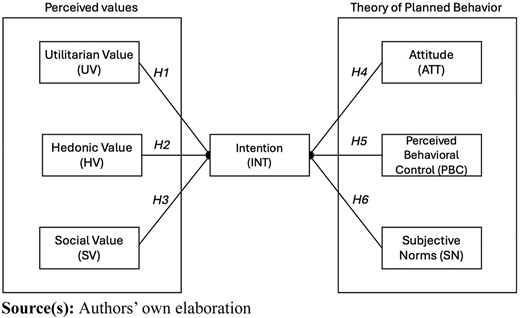
The Theory of Planned Behavior (TPB), an extension of the Theory of Reasoned Action (TRA), posits that behavioral intention, a critical determinant of behavior, is influenced by three main factors: attitude (ATT), perceived behavioral control (PBC), and subjective norm (SN) (Ajzen, 1991). This framework has been extensively applied in research on tourism visitor behavior (Liu and Park, 2024), including intentions related to engaging with VR experiences (Khalil et al., 2024). In the realm of metaverse cultural heritage, SN refers to the perceived social pressure to partake in this emerging form of engagement with cultural heritage. Individuals may feel compelled to participate in metaverse cultural heritage activities if their social network actively engages in them, thus influencing their own intention to participate. Moreover, ATT toward metaverse cultural heritage reflects individuals’ evaluations of this new medium, which can either positively or negatively influence their intention to engage with it. For instance, if individuals perceive metaverse cultural heritage as innovative and exciting, they may hold a positive attitude toward it, increasing their likelihood of intending to participate. Lastly, PBC pertains to individuals’ perceptions of their capability to engage in metaverse cultural heritage activities, which can also impact their intention to participate. If individuals believe they possess the necessary skills, resources and opportunities to engage, they are more likely to intend to participate. Collectively, these factors constitute an individual’s intention to engage with metaverse cultural heritage. Based on the above considerations, the following model and research hypotheses have been developed.
Subjective norms will positively impact visit intentions toward the metaverse experience in cultural heritage.
Attitude towards engaging in metaverse cultural heritage will positively influence visiting intention to engage in metaverse cultural heritage.
Perceived behavioral control in metaverse cultural heritage will positively influence intention to engage in metaverse cultural heritage.
Finally, the proposed model is reported in Figure 1.
3. Methodology
3.1 Sample and research instrument
The aim of the study is to investigate individuals’ intention to engage in metaverse experiences in cultural sites. Data concerning target participants were collected through an online survey using Google Forms service and examined adopting Partial Least Square Structural Equation Modeling (PLS-SEM) method. The survey method is a widely used quantitative research in management that facilitates data collection from a defined group of respondents to make informed decisions based on empirical evidence (Taherdoost, 2021). This research instrument allows to gather quantitative data from a large sample of participants, which is essential for enhancing the statistical power of the analysis and the generalizability of the findings, allowing for more robust conclusions (Nardi, 2018). In addition, this method allows for the timely collection of data, which is crucial in a rapidly evolving field (Taherdoost, 2021), such as the metaverse, where visitor preferences and technological advancements are continuously changing. This quantitative approach facilitates the identification of patterns and relationships among variables, contributing to a deeper understanding of the dynamics at play in the specific context of the study (Hair et al., 2019). Smart PLS software (ver. 4) has been used to carry out the study (Ringle et al., 2023).
3.2 Measures
Multi-item measures were used for all the constructs outlined in the proposed model, and pre-existing scales were applied whenever possible (Table 1). Due to the lack of well-established scales to measure the perceived values (UV, HV and SV) of metaverse, this study adapted the scale designed by Torres et al. (2022).
3.3 Data collection
For the purpose of the study, a questionnaire was developed and administered during the period spanning from February to April 2024, strategically positioned outside several prominent cultural heritage sites. Despite the absence in those sites of cultural entertainment forms based on metaverse applications, the decision to engage respondents in close proximity to their precincts allowed us to intercept a target audience of cultural tourists.
Prior to the main data collection process, we conducted a pilot test involving 50 respondents to ensure the validity of the questionnaire. It refers to the apparent relevance and transparency of a measurement tool as perceived by test respondents (Haladyna, 2004). In essence, a measurement item possesses validity when it appears capable of assessing the intended construct (Hardesty and Bearden, 2004). As suggested by several scholars (Haladyna, 2004; DeVellis, 2016), the item pool was evaluated by academicians and experts involved in tourism and technology research domains. In accordance with their feedback, the authors made some minor revisions before completing the final version. Additionally, to immerse respondents in the realm of virtual cultural experiences, a scenario-based approach was adopted (Weber, 1992). The latter aims to stimulate potential interaction and engagement within virtual cultural heritage environments, thus enhancing respondents’ understanding and perspective on the topic under investigation. This research approach offers researchers a unique vantage for fostering and exploring potential user interactions and experiences within virtual environments. Drawing upon the foundational principles of TPB (Ajzen, 1991), the scenario serves as a conduit to elicit respondents’ attitude towards metaverse cultural experiences. By measuring participants’ emotional responses and evaluative judgments toward the scenario presented to them, we gain valuable insights into the affective and cognitive components that drive their behavioral intentions. Furthermore, the inclusion of social cues and situational factors within scenario narrative, allow us to assess the extent to which subjective norms shape respondents’ intention in enjoying metaverse cultural experiences.
Before proceeding with the administration of the questionnaire, the authors provided a brief introduction to the research and the phenomenon under investigation. The questionnaire consisted of two sections. The first one concerned 22 seven-point Likert scale items (Likert, 1932). Respondents were asked to express their level of agreement with the statements presented from 1 “Strongly Disagree” to 7 “Strongly Agree” (Taherdoost, 2019). Furthermore, in line with previous studies, the items of different variables were intermixed to reduce retrieval bias (Podsakoff et al., 2012). The second section concerned demographic information of participants, such as gender, age and frequency of visit to cultural heritage sites. In total, 379 questionnaires were distributed, 314 were filled out and 280 were found useable to perform the analysis. Sample descriptive statistics are discussed in next section.
4. Results
4.1 Sample description
The sample consists of 280 participants, with a majority identifying as female (55%). The gender distribution is relatively balanced, with males representing 40.4% of the sample. A small percentage (4.6%) did not declare their gender, which reflects a trend in contemporary surveys where some individuals prefer not to specify.
In addition, the age demographics reveal a significant representation of younger participants, particularly those aged 18–25 years (32.9%). This suggests that the study capture the perspectives of a digitally savvy generation that is likely to engage with the metaverse.
Additionally, participants aged 26–34 (12.1%), 35–44 (14.6%) and 45–54 (16.8%) also contribute to the sample, suggesting that these age groups are actively involved in cultural heritage experiences. Furthermore, the presence of older age groups (55 years and older at 23.6%) indicates a diverse range of experiences and attitudes towards cultural heritage in the metaverse.
Regarding the frequency of cultural visits, a substantial majority of participants (85.4%) reported having visited cultural heritage sites in the past 12 months, indicating a strong interest in cultural experiences.
On a positive note, 36.1% of participants had at least one VR experience. Furthermore, the 18.9% of respondents have engaged in VR experiences 2–3 times, while 8.6% and 6.4% have participated 3–5 times and more than five times respectively. These figures suggest that when individuals experience VR, they may be inclined to return for more, which is a positive sign for the future of this technology.
Sample characteristics are outlined in Table 2.
4.2 PLS-SEM procedure
A SEM has been elaborated to outline a framework for understanding behavioral intention and identifying its influencing factors. Building on the considerations in earlier sections, we propose that ATT, PBC, SN, UV, HV, and SV serve as exogenous latent variables (LVs), whereas INT is an endogenous LV. Once the model has been identified and the parameter estimates have been obtained, the model has to be evaluated. The process of analyzing and interpreting PLS-SEM involves two stages: assessing the measurement model and evaluating the structural model (Hair et al., 2022). In detail, the structural model delineates the relationships among LVs, whereas the measurement model elucidates the connections between a LV and its manifest variables (MVs) (Nunkoo and Ramkissoon, 2012). Accordingly, the results of the analysis are presented in the following sections.
4.3 Assessment of measurement model
Following the guidelines proposed by Hair et al. (2019), the overall suitability of the model was assessed using a combination of indices, which address reliability, convergent validity, and discriminant validity of the measurement model.
4.3.1 Reliability and convergent validity
Reliability was evaluated using factor loadings, Cronbach’s Alpha and Composite Reliability (CR) index (Dillon-Goldstein’s rho), adhering to the recommendations outlined by Hair et al. (2019). In this work, the scores for all the latent constructs exceeded the predefined thresholds of 0.70, indicating adequate reliability at both item and construct levels. In addition to reliability, the evaluation of the measurement model also includes convergent validity (Usakli and Kucukergin, 2018). It refers to the degree to which the effect indicators associated with a single construct actually measure the same construct (Müller et al., 2018). To assess the convergent validity, we considered the normalized weighting and Average Variance Extracted (AVE). Generally, a normalized weighting above 0.6 and AVE, which expresses how much of the variance in a construct is explained relative to the variance attributed to measurement error, exceeding 0.50 are recommended (Henseler et al., 2015). Therefore, as reported in Table 3, the results confirm that the scale items possess adequate reliability and convergent validity.
4.3.2 Discriminant validity
After the establishment of reliability and convergent validity, we assessed the discriminant validity. The latter concerns the extent to which a certain LV differs from other LVs in the model (Müller et al., 2018). To this purpose, we followed Usakli and Kucukergin’s (2018) recommendation regarding three main approaches to be used: report and analyze cross-loadings, satisfy the Fornell-Larcker criterion and verify the heterotrait-monotrait (HTMT) ratio of correlations. As regard to cross-loading (Table 4), the condition according to which the outer loading of an indicator on its corresponding construct should exceed any loadings it has on other constructs (Chin, 1998), is satisfied. With reference to the application of the Fornell-Larcker criterion, as depicted in Table 5, for each construct the square root of AVE estimates is larger than its correlations with other constructs (Fornell and Larcker, 1981). Recently, Henseler et al. (2015) introduced the HTMT ratio of common factor correlations to provide further validation of discriminant validity. In this study, as reported in Table 6, HTMT values are lower than 0.90 (Teo et al., 2008). Considering the results discussed, the discriminant validity of all constructs is supported.
4.4 Structural model assessment
After confirming the measurement model’s satisfactory convergent and discriminant validity, the structural model underwent evaluation. The objective was to assess the model’s ability to explain and predict the influence of exogenous LVs on the endogenous dependent LV (Vinzi et al., 2010). In this study the assessment of the structural model was based on multicollinearity and coefficient of determination (R2).
4.4.1 Multicollinearity and coefficient of determination (R2)
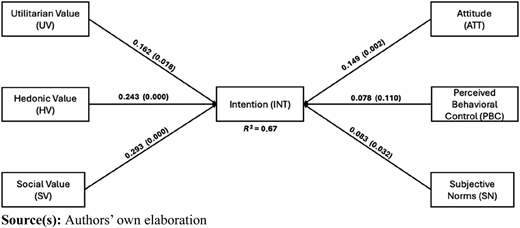
Multicollinearity, which assesses potential correlations among factors in the model, is evaluated using the inner variance inflation factor (VIF) coefficient. According to Kock and Lynn (2012) and Hair et al. (2019), an inner VIF coefficient below 3.3 is deemed acceptable to mitigate multicollinearity. As reported in Table 7, no evidence of multicollinearity emerges, thus affirming the validity of the research model and strengthening the reliability of its estimates. The R2 coefficient was also considered. It indicates how much of the variance in an endogenous variable is explained by its antecedent constructs (Müller et al., 2018). In this study the R2 adjusted value is 0.67, supporting that the model has strong predictive power (Zikmund, 2000).
4.5 Testing the research hypotheses
Bootstrapping procedure with 5.000 resamples was applied to examine the significance level of the path coefficients and values for all the relationships hypothesized (Henseler et al., 2015) (see Figure 2). The results highlight that UV (β = 0.162, t = 2.096, p < 0.05), HV (β = 0.243, t = 3.959, p < 0.001), SV (β = 0.293, t = 4.117, p < 0.001), SN (β = 0.083, t = 1.858, p < 0.05) and ATT (β = 0.149, t = 2.940, p < 0.05) positively and significantly affects individuals’ intention to engage in metaverse experiences in cultural heritage sites, thus supporting H1, H2, H3, H4 and H5. However, PBC (β = 0.078, t = 1.224, p > 0.10) has no effect on intention to engage in metaverse experiences in cultural heritage sites. Therefore, H6 is not supported. The results are outlined in Table 8.
The PLS-SEM analysis is complemented with Necessary Condition Analysis (NCA) to gain an in-depth understanding of the phenomena under investigation (Richter et al., 2023). NCA is a quite recent method that is rapidly spreading in various areas of research in the social sciences and beyond (Dul, 2022). The latter aims to identify necessary conditions that must be present for a certain outcome to occur (Dul, 2022). When combined with PLS-SEM, NCA offers a comprehensive approach to understand causal relationships and dependencies within complex systems.
PLS-SEM provides a flexible framework for analyzing structural relationships between latent variables, while NCA enhances this analysis by identifying critical factors that are indispensable for achieving specific outcomes (Richter et al., 2023). Together, they enable researchers not only to explore the relationships between variables, but also to identify the essential conditions that must be met to achieve the desired results (Dul, 2022).
The results of the analysis reported in Table 9, pointed out that UV, HV, SV, SN, and ATT are both significant determinants (PLS-SEM results) and necessary conditions (NCA results). Accordingly, a certain level of these constructs is necessary for the outcome to manifest and an increase in these constructs will increase the outcome (Richter et al., 2023). Differently, in the case of PBC the PLS-SEM result was not significant, but the NCA result was significant. This means that a certain level of the construct is necessary for the outcome to manifest, but a further increase will not increase the outcome. Therefore, PBC is a necessary condition to achieve behavioral intention, but it is not sufficient.
5. Discussion
This study investigates the factors influencing individuals’ intention to engage in metaverse experiences in cultural heritage. Consistent with the research objective and in accordance with RQ, the study extends the TPB model to include relevant antecedents, namely utilitarian value, hedonic value and social value. The results emphasize that individuals’ intention to participate in metaverse experiences within cultural heritage sites rely on a multifaceted process. In general, all the relationships are supported, except for H6 related to the influence of PBC on INT. Several studies have examined the factors influencing user intention and engagement in metaverse and virtual environments, with conflicting findings regarding the role of PBC. Some scholars highlighted that PBC is a relevant predictor of metaverse acceptance and usage intentions (e.g. Liu and Park, 2024; Zhang et al., 2024). However, the findings of the present study are in line with those of Ajzen (2002) and Lihua (2022), who argue that PBC can be influenced by external factors that may affect its significance in predicting intention. For instance, the design and presentation of metaverse experiences within cultural heritage sites mitigate the importance of perceived control. If these experiences are carefully crafted to be intuitive, immersive, and user-friendly, individuals can feel safe navigating them (Buhalis et al., 2023), regardless of perceived behavioral control over the underlying technology. In line with this, research by Xu et al. (2024) emphasizes the importance of system quality, perceived ease of use, and immersive experiences in influencing user engagement in metaverse art exhibition platforms. The study suggests that user-friendly designs can enhance perceived control and overall user experience, even in the absence of strong behavioral control.
As for H1, H2 and H3, these collectively underscore the multifaceted nature of perceived values in driving engagement in virtual cultural heritage experiences. Specifically, UV covers a wide range of factors, including knowledge acquisition about historical events, artistic movements, or cultural traditions. For example, individuals may seek virtual tours of iconic monuments or archaeological sites to deepen their understanding of their cultural significance. In addition, virtual workshops or interactive exhibits can provide opportunities for skill development or problem solving, further increasing the utilitarian appeal of these experiences (Pyae et al., 2023). Research by Marto et al. (2023) supports this by highlighting the role of performance expectancy and technological innovation in influencing the intention to use AR in heritage sites, which aligns with the utilitarian value derived from enhanced learning and interactive opportunities. On the other hand, HV rotates around the emotional satisfaction and pleasure that individuals derive from participating in metaverse experiences within cultural heritage sites (Kim et al., 2023). This includes a range of subjective experiences, such as the sense of awe and wonder evoked by immersive virtual environments, the thrill of discovery when uncovering hidden narratives or artifacts, and the general sense of escapism and engagement facilitated by virtual interactions (Buhalis et al., 2023). For many individuals, the appeal of virtual cultural experiences lies not only in their educational value, but also in their ability to evoke deep emotional resonance and personal fulfillment (Nam et al., 2024). This aligns with findings by Ahmad et al. (2023), who demonstrated that augmented reality’s psychological engagement and enjoyment significantly impact users’ intentions to engage with future destinations, indicating that hedonic motivations play a crucial role in virtual experiences. Furthermore, SV emphasizes the influence of social factors, peer dynamics and community expectations on individuals’ decision-making processes (Kim et al., 2013). Individuals may be motivated to participate in virtual cultural experiences out of a sense of social obligation, a desire to conform to peer behavior, or a need for social validation and approval (Torres et al., 2022). The convergence of these findings with previous research (Choi et al., 2023) underscores the complex interaction of perceived values in shaping behavioral intentions. Additionally, Sánchez-Amboage et al. (2023) illustrate how social media and digital communication strategies have become vital in engaging audiences and driving participation in virtual museum experiences, particularly post-COVID-19, highlighting the social value in digital and virtual contexts. With reference to H4, the positive effect of SN on intentions highlights the influential role of social pressures and interpersonal influences in shaping behavior within virtual museum environments. When individuals perceive that their friends, family, or other close people value and support engagement in metaverse experiences, they are more inclined to participate themselves. This finding reiterates the critical importance of SN in driving behavioral intentions (Uslu and Tosun, 2023; Zhang et al., 2024), highlighting the need for cultural heritage organizations to consider social factors when designing and promoting metaverse experiences. Finally, as regards H5, the significant effect of ATT on intentions highlights the central role of personal attitudes and perceptions towards metaverse experiences in cultural heritage. This result confirms that individuals who hold positive attitudes towards the metaverse, influenced by factors such as perceived value, enjoyment, and convenience, are more likely to intend to engage in such experiences (Liu and Park, 2024). Piccarozzi et al. (2024) provide further insights into how the adoption of Industry 5.0 paradigms can enhance personal attitudes towards digital technologies, emphasizing the importance of sustainability and social objectives in shaping positive user perceptions and engagement.
In light of these findings, cultural organizations can leverage both human and technological aspects to enhance visitor experiences in the metaverse. By understanding the perceived values that drive engagement, organizations can tailor their virtual offerings to meet the diverse visitors’ needs and preferences. For instance, integrating social features that facilitate interaction among users can enhance the hedonic value of the experience, making it more enjoyable and engaging. Additionally, organizations can utilize technology to create immersive environments that not only showcase cultural artifacts, but also encourage collaborative learning and exploration among visitors.
Moreover, as highlighted by Xu et al. (2024), ensuring high-quality information and system functionalities in virtual platforms can significantly enhance user satisfaction and engagement, emphasizing the importance of technical robustness in digital offerings.
The findings also suggest that since the significance of PBC may be mitigated by factors such as the design and presentation of the virtual environments, organizations should focus on optimizing the user interface and experience design to ensure that visitors feel empowered and capable of navigating the metaverse effectively. Ahmad et al. (2023) further underscore the role of user-friendly AR interfaces in boosting consumer confidence and intention, suggesting that ease of use is critical for user empowerment in digital environments.
6. Theoretical and practical implications
Our study on immersive cultural heritage experiences offers significant implications in line with contemporary trends in digital transformation and innovation. These implications can be divided into theoretical contributions to the literature and practical insights for cultural heritage managers.
From a theoretical perspective, this study contributes to the literature by extending the TPB model. By integrating different dimensions of perceived values specific to the metaverse, this research provides a nuanced understanding of how these values influence behavioral intentions.
The findings reveal that SV has the most substantial impact on BI, followed by HV and UV. This differentiation highlights the varying effects of perceived values on user behavior in digital environments, offering new insights into the psychological and social dynamics at play within immersive cultural heritage contexts. These insights align with recent literature on digital and virtual experiences in cultural heritage, where social and hedonic values have been shown to significantly influence visitor engagement and decision-making processes.
In particular, the metaverse offers distinct insights compared to previous technologies, such as virtual tours, AR and 2D digital reconstructions. While these earlier technologies provided enhanced access to cultural heritage, they often lacked the deep, immersive engagement that the metaverse can provide. Indeed, virtual tours and AR overlays typically offer passive experiences, where users are viewers rather than participants. In contrast, the metaverse allows users to engage in a fully interactive, multi-sensory experience, where they can explore and interact with cultural heritage in a manner that feels more authentic and engaging.
This observation is consistent with extant literature that describe the metaverse’s capacity to facilitate an enhanced virtual-to-real exchange and interaction, offering new avenues for cultural heritage institutions to engage with their audiences.
Furthermore, this study underscores the importance of SN and their significant influence on intentions to engage with metaverse experiences, expanding current theoretical frameworks to incorporate social influence more comprehensively.
This finding builds on previous research by emphasizing the role of social dynamics in fostering user engagement, particularly in cultural heritage contexts where community and peer interaction are essential components of the experience.
Unlike traditional digital technologies, where social interactions are often secondary or external, the metaverse embeds social interactions directly within the experience. Users can engage with others in real-time within the virtual environment, making the influence of social norms and peer interactions more immediate and powerful.
From a practical standpoint, this study offers valuable guidance for cultural heritage organizations and practitioners aiming to design and promote immersive digital experiences. As these organizations increasingly leverage digital technologies to innovate their engagement strategies, immersive platforms provide a unique opportunity to enhance visitor experiences by combining technology with human interaction. Indeed, the metaverse allows for a deeper, more interactive connection with history and culture, setting it apart from other digital tools like AR or digital archives. These technologies often focus on augmenting or preserving cultural heritage, while the metaverse allows for an active reimagining and recreation of these experiences, making it particularly effective for educational and experiential purposes.
The literature further supports this by highlighting the role of AR and digital twins in facilitating virtual access to otherwise inaccessible or sensitive cultural heritage sites, enhancing inclusivity and engagement.
To capitalize on this, organizations should consider incorporating educational content, emotional storytelling, and features that promote social interaction within their virtual offerings. These elements can make digital experiences more engaging and meaningful for visitors.
Consistent with previous studies, digital environments are essential for enhancing visitor engagement in cultural institutions.
Additionally, recognizing the influential role of SN, cultural heritage organizations can implement strategies that harness social influence to drive participation. This could include leveraging social networks, influencers, and peer endorsements to build a sense of community and encourage engagement with virtual cultural heritage experiences.
Moreover, this study emphasizes the importance of user experience design in enhancing visitor interaction in virtual environments. Prioritizing intuitive, immersive and user-friendly design elements can significantly improve visitor navigation and overall satisfaction, thereby increasing participation rates.
This resonates with prior studies, which highlight the need for visitor-centric designs to ensure user engagement and value co-creation in digital environments.
Organizations should also address security risks and privacy concerns associated with digital transformation. Hence, by adopting robust knowledge management practices and promoting knowledge sharing, they can mitigate these risks and position themselves as forward-thinking entities capable of navigating the complexities of the digital era.
Lastly, to ensure these immersive experiences remain relevant and engaging over time, continuous monitoring and evaluation are essential. This iterative approach allows organizations to identify areas for improvement, refine their virtual offerings, and maintain high levels of visitor engagement.
In this direction, the ongoing development of metaverse technologies is crucial for the sustainable growth of cultural heritage experiences and their ability to adapt to emerging user expectations.
By embracing immersive technologies, cultural heritage organizations can enhance visitor experiences, contribute to sustainable production cycles, foster societal development, and stimulate the creative economy by reconnecting real-world historical spaces with imaginative digital concepts.
7. Conclusion, limitations and future directions
Drawing on the perceived values and TPB, and using the SEM as method approach, this study examines the influence of different value dimensions on visitors’ behavioral intentions to experience metaverse in cultural heritage. The findings underscore the multifaceted nature of visitors’ intention to engage in such experiences, revealing a complex interplay of perceived values. Specifically, the results predominantly support the hypothesized relationships, highlighting the significance of utilitarian, hedonic, and social values in driving engagement in virtual cultural heritage experiences. Notably, the positive influence of subjective norms on intentions emphasized the pivotal role of social pressures and interpersonal influences in shaping behavior within virtual heritage environments. Despite the broad support for the hypothesized relationships, one exception emerged concerning the influence of PBC on INT. This finding suggests that within the context of metaverse experiences in cultural heritage, the significance of PBC may be mitigated by factors, such as the design and presentation of the virtual environments. Moreover, the study aligns with the broader literature that underscores the potential of metaverse technology to transform cultural heritage experiences by enhancing accessibility and engagement. The observed influence of hedonic and utilitarian values mirrors previous findings on the role of digital environments in enriching user experiences, while the role of social value supports the growing emphasis on virtual interactions and social approval in digital tourism contexts. This relationship between visitor value dimensions and engagement within metaverse environments further highlights the evolving role of digitalization in cultural heritage, contributing to a more immersive and inclusive experience for diverse audiences.
While this study contributes valuable insights into the factors influencing individuals’ intention to engage in metaverse experiences within cultural heritage, several limitations should be acknowledged. Firstly, this study relies on self-reported data, which may be subject to response bias and social desirability effects. Future research could employ observational techniques to mitigate these biases. Secondly, the research focuses solely on individual-level factors and does not explore contextual or environmental influences that may affect engagement in virtual cultural heritage experiences. Considering the metaverse’s potential for reshaping both time perception and user interaction in cultural settings, future studies could investigate these contextual variables, such as the integration of real-world data and archaeological findings into virtual environments.
Additionally, this study adopts a cross-sectional design, precluding causal inferences about the relationships between variables. Longitudinal or experimental designs could offer deeper insights into the causal mechanisms underlying individuals’ intentions. In particular, future research could examine how sustained interaction with metaverse environments influences long-term engagement and repeat visitation behaviors.
The study was limited to a specific cultural context or geographical region, which may limit the generalizability of the findings. Future research could adopt a comparative or cross-cultural approach to explore variations in engagement behavior across different cultural contexts. A promising direction for future research involves exploring collaborations with metaverse platforms to obtain and analyze behavioral data directly from user interactions. Access to such data would allow for a more nuanced analysis of actual user behavior within virtual cultural heritage settings, complementing the current study, which focuses primarily on anticipated behaviors and intentions. While this approach presents operational and ethical challenges, such as securing platform permissions and ensuring privacy standards, it holds great potential for advancing the field. Another future line could regard the exploration of the cognitive processes (by applying cognitive evaluation theories, e.g. Social Exchange Theory, the Cognitive Appraisal Theory, or the Cognitive-Affective-Conative Model) and decision-making dynamics involved in individuals’ intentions. Furthermore, longitudinal studies are needed to assess the long-term effects of immersive experiences on visitor engagement and behavior. Tracking individuals’ attitudes, perceptions, and intentions over time could provide a more nuanced understanding of the factors driving sustained engagement in metaverse experiences within cultural heritage. Additionally, the role of technologies such as AR and blockchain in enhancing user interaction could be further explored to assess their influence on perceived value dimensions in cultural heritage.
Lastly, comparative research across different cultural contexts could shed light on the cultural variations in engagement behavior and the effectiveness of immersive experiences in diverse settings. Understanding how cultural norms, values, and preferences influence individuals’ engagement with virtual cultural heritage experiences could inform more culturally sensitive design and promotion strategies.