The digitalisation of education, accelerated by the COVID-19 pandemic and further reshaped by the rapid adoption of artificial intelligence, has intensified both opportunities and structural challenges within educational systems. These transformations have widened gaps between educational technology (EdTech) companies and educational researchers, as well as between advanced and widening research systems. The study examines how cross-border and cross-sector researcher mobility, implemented through the Horizon Europe EdTech Talents project, contributes to the professional development of educational researchers beyond traditional academic performance indicators.
Adopting an exploratory collaborative qualitative research design, the study draws on empirical data collected within a multi-country European mobility program. Empirical data include reflections from project meetings, document analysis, and semi-structured focus group interviews involving academic researchers, university administrative staff, and EdTech company employees. Reflexive thematic analysis and collaborative data analysis were used to analyse empirical data.
The findings indicate that cross-sector and cross-border mobility supports professional development through experiential learning, the development of industry-relevant knowledge services, and the expansion of professional networks. The findings highlight that understanding of EdTech innovation processes and shifts in professional identity toward more applied and collaborative roles was increased Key challenges included translating academic expertise into industry-ready solutions, limited institutional recognition of secondment experiences, and the absence of structured tools for assessing professional development outcomes. Overall, the potential of structured mobility programs to foster brain circulation rather than brain drain, particularly in widening research systems.
The study offers actionable insights for policymakers and research organizations designing mobility schemes aimed at strengthening innovation ecosystems and promoting sustainable knowledge circulation. The findings underscore the need for structured assessment frameworks and institutional recognition mechanisms to support long-term career development and maximize the impact of cross-sector researcher mobility.
By focusing explicitly on professional development processes within a structured researcher mobility program, this study provides novel, collaborative and reflexive process-oriented insights into mobility-driven knowledge services that strengthen academia–industry collaboration and address disparities between advanced and widening countries.
1. Introduction
Persistent disparities between advanced and widening European research systems continue to shape researchers' opportunities, particularly regarding access to resources, infrastructure, and innovation ecosystems. These inequalities are reflected in global performance indicators—for example, while five advanced EU countries rank among the top 10 in the Global Innovation Index 2023, most widening countries fall within the top 40 (Lilla et al., 2023). Such structural imbalances contribute to challenges including academic brain drain, driven by salary gaps, job insecurity, and more attractive career prospects abroad (Khan, 2021), with significant national impacts, as illustrated by the emigration of 27% of Romania's highly qualified workforce (World Bank, 2019). At the same time, rapid digitalisation in education and the expansion of the EdTech sector have increased the importance of stronger linkages between research, education, and industry (European Commission, 2024).
Addressing these interconnected challenges requires strengthening national research conditions and fostering more effective knowledge transfer between academia and industry to support innovation and economic development (de Wit-de Vries et al., 2019). In widening countries, this includes enhancing local collaboration, building stronger connections with advanced research systems to leverage their expertise and best practices. A key dimension of this effort is preparing students for emerging technologies through closer cooperation between educational researchers and EdTech companies (OECD, 2021). Such collaboration ensures that technological solutions are grounded in pedagogical evidence while remaining scalable and market-relevant (Freires et al., 2025; Redecker and Punie, 2017; Weller, 2020). It also has the potential to address systemic issues such as outdated curricula, limited digital infrastructure, and unequal access to quality educational resources (Voogt et al., 2011). Despite these developments, limited research has examined how academic mobility, experiential learning, and knowledge transfer intersect within structured EdTech mobility programs, particularly in widening contexts.
This study addresses this gap by examining how cross-border and cross-sector mobility contributes to the professional development of educational researchers within the EdTech Talents project, a Horizon Europe initiative launched in 2023. The project aims to strengthen talent in widening countries by enabling researchers to engage in knowledge transfer between academia and the EdTech sector. Using a cooperative and reflexive methodological approach, the study draws on document analysis, participant CVs, interviews, and focus group data to explore how mobility experiences shape professional identity, skills development, and knowledge service creation. Specifically, it investigates: (RQ1) how mobility influences researchers' professional development, and (RQ2) what processes and dimensions emerge through their participation in structured knowledge service activities. By offering a process-oriented and empirically grounded perspective, the study contributes to a deeper understanding of how academic expertise is translated into applied value within technology-driven, cross-sector innovation ecosystems.
2. Theoretical background
2.1 Knowledge transfer and university–industry collaboration
Knowledge transfer in education is increasingly conceptualized as a reciprocal exchange of expertise, practices, and innovation between academic researchers and industry actors, particularly within the EdTech sector (Bilderback and Thompson, 2025; Laitinen-Väänänen et al., 2024). Effective transfer involves mutual shaping: pedagogical research informs technological design, while industry needs influence research agendas, resulting in solutions that are both evidence-based and scalable (Redecker and Punie, 2017; Weller, 2020). Such collaboration depends on ecosystems that support sustained dialogue, trust, and reflective engagement (Aarnio et al., 2014). However, these conditions are unevenly distributed across Europe. Advanced countries typically benefit from stronger infrastructures and innovation systems, whereas widening countries face resource constraints, weaker industry linkages, and limited institutional support (Bengoa and Kaufmann, 2014; Lilla et al., 2023). Cross-border collaboration and mobility programs are therefore positioned as mechanisms for addressing these imbalances. Their effectiveness depends on whether knowledge exchange is reciprocal rather than unidirectional (van der Heide et al., 2010; Varghese, 2015). This study adopts this perspective by viewing mobility as a process of capacity building and mutual learning rather than simple relocation of expertise.
2.2 Knowledge services as a mechanism for applied impact
Knowledge services provide a practical framework for operationalizing knowledge transfer. In educational research, these services include dissemination, methodological consulting, professional training, data analysis, and co-development of tools or frameworks (Corrall et al., 2013; Vega, 2024). They enable researchers to translate academic knowledge into applied solutions while engaging directly with industry needs. Participation in knowledge services is closely linked to professional development, requiring competencies such as communication, collaboration, project management, and innovation-oriented thinking (Arioli et al., 2025; Weaver and Richardson, 2020). In fast-evolving fields like EdTech, these competencies help align research outputs with practice and enhance societal impact (Cukurova et al., 2019). This study conceptualizes knowledge services not only as outputs but as developmental processes. Through service-oriented activities, researchers generate applied value while expanding their professional capabilities. In this sense, knowledge services represent a key intersection of knowledge transfer and work-based learning, embedding learning within real-world problem-solving contexts.
2.3 Professional development of educational researchers
Traditional academic professional development focuses on outputs such as publications, teaching, and funding acquisition. However, cross-sectoral collaboration introduces additional dimensions, including applied research skills, entrepreneurial orientation, and engagement with non-academic stakeholders (Smith, 2008; Cullen et al., 2020). Professional development is increasingly understood as a continuous, adaptive process shaped by evolving research and labour-market demands (Lebzar and Dean, 2024). In mobility contexts, development is driven by experiential learning, mentorship, and reflective practice (Ackers, 2005; Clarke and Hollingsworth, 2002). Exposure to industry environments introduces different organizational cultures and expectations, often leading to shifts in professional identity and career orientation (Olin et al., 2016; Teichler, 2015). These changes are frequently intangible and not fully captured by conventional evaluation frameworks (Weaver and Richardson, 2020). From a work-based learning perspective, professional development emerges through participation in authentic tasks, social interaction, and reflection (Billett, 2001; Raelin, 2008). This perspective is particularly relevant in cross-sector mobility, where learning occurs at the intersection of academic and industry settings. While identity development is widely acknowledged, less attention has been given to how hybrid identities evolve in contexts combining academic, industry, and technology-mediated environments. The study addresses this gap by examining how such contexts foster integrated professional identities.
2.4 Academic mobility, brain circulation, and structural contexts
Academic mobility is widely recognized as a driver of professional development, enabling access to new networks, resources, and expertise (Ackers, 2005; Teichler, 2015). However, mobility opportunities are unevenly distributed and may reinforce inequalities if not supported by reintegration mechanisms, particularly in widening countries (Cañibano and Woolley, 2015). The concept of brain circulation reframes mobility as ongoing knowledge exchange rather than permanent migration (Baláž et al., 2004; Le, 2008). Mobile researchers can contribute to their home institutions through transnational collaboration, joint projects, and mentoring (Meyer, 2001). EU mobility initiatives increasingly reflect this approach by combining international secondments with expectations of reintegration and institutional strengthening (European Commission, 2024). These perspectives inform this study's understanding of mobility as a relational and developmental process.
2.5 Conceptual focus of the study
Building on these perspectives, this study conceptualizes cross-border and cross-sector mobility as a catalyst for professional development through three interrelated mechanisms: experiential learning in industry contexts, engagement in knowledge services, and participation in collaborative and reflexive processes (Heron and Reason, 1997; May and Berry, 2013). These mechanisms guide the methodological design and analysis of how mobility shapes professional growth. The study integrates existing frameworks into a unified analytical perspective which enables a more nuanced understanding of professional development in hybrid, technology-mediated environments, particularly within the EdTech sector, where such intersections remain underexplored.
3. Methods and materials
3.1 Methodological framework
The study adopts a qualitative, exploratory, and collaborative research design aimed at developing an in-depth understanding of researchers' professional development in cross-sectoral and cross-border mobility contexts. The design emphasizes reflexive sense-making, experiential learning, and collaborative interpretation, making it particularly suitable for examining evolving professional identities and knowledge practices (Patton et al., 2021). An exploratory orientation is appropriate in a field where empirical research remains limited and key constructs are not yet fully stabilized, while a reflexive stance acknowledges the active role of researchers in the co-construction and interpretation of data (Patton, 2015).
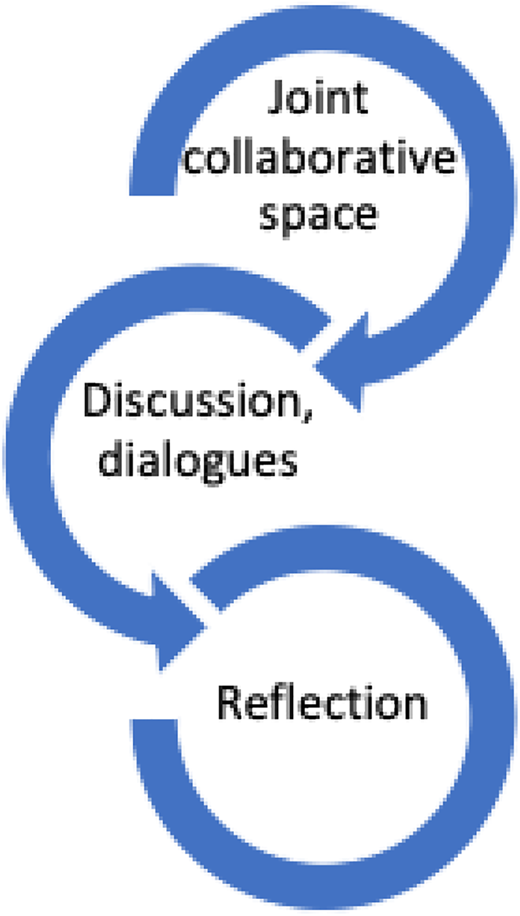
The study is guided by collaborative and reflexive inquiry approaches (Heron and Reason, 1997; May and Berry, 2013). Collaborative inquiry involves iterative cycles of action and reflection, allowing participants and researchers to move repeatedly between experience, interpretation, and meaning-making. Reflexive collaborative inquiry extends this by emphasizing shared dialogue, collective reflection, and attention to participants' lived experiences, learning processes, and knowledge production (Figure 1).
The epistemological stance of perspectivism underpins the study, enabling multiple interpretations of qualitative data through shared reflection among researchers. Reflexivity is treated both as an ethical commitment and a methodological resource. Researchers' positionalities and assumptions were made explicit through memo-writing, iterative engagement with the data, and ongoing dialogue with theory. This approach aligns with the study's theoretical framing by conceptualizing professional development as a situated, relational, and practice-based process consistent with work-based learning and identity development perspectives.
3.2 Sample, data collection, and analysis
The empirical context is the EdTech Talents project, a Horizon Europe–funded mobility initiative supporting collaboration between academia and the EdTech industry. Data were collected from participants engaged in cross-border secondments between universities and EdTech companies. The purposive sample included 19 participants: academic researchers, university administrative staff, and EdTech company employees. Participants were selected based on their active involvement in mobility activities and reflective learning processes, as well as their voluntary agreement to participate. Ethical principles—including informed consent, confidentiality, transparency, and reflexivity—were emphasized throughout, alongside attention to role separation (Lapadat, 2017).
Data collection combined multiple qualitative methods:
Weekly “Coffee Corner” meetings. Eighteen virtual sessions (via Zoom) provided structured opportunities for participants to share experiences, discuss challenges, and engage in peer reflection. All sessions were recorded, transcribed verbatim, and included participants from both incoming and outgoing secondments.
Document analysis. Materials included reflective memos, interview notes, transcripts, and documentation from reflection sessions, capturing nuanced aspects of professional development.
Focus groups. Three focus groups (four participants in total) explored participants' lived experiences and perceptions of professional growth during the mobility program.
Data were analyzed using a two-stage qualitative analysis process combining reflexive thematic analysis and collaborative data analysis. First, reflexive thematic analysis (Braun and Clarke, 2022) was conducted following six phases: familiarization, coding, theme generation, theme review, refinement, and narrative development. Coding was iterative and recursive, beginning with open coding (Strauss and Corbin, 1998) conducted independently by two researchers. Codes were then compared and refined through collaborative discussion, resulting in a shared coding framework. Themes were generated inductively and continuously reviewed to ensure coherence and consistency. Discrepancies were resolved through consensus-based dialogue, enhancing analytical rigor. Second, collaborative data analysis (Cornish et al., 2013) was used to deepen interpretation through collective reflection. This included workshops, meetings, and virtual discussions, enabling the integration of diverse perspectives. While the study relies primarily on self-reported and reflective data, this analytical process is consistent with reflexive and collaborative methodologies, which treat participants' sense-making as a central source of insight. Interpretations were developed through iterative engagement with the data, moving between individual coding, collaborative analysis, and theoretical framing. Analytical decisions were documented through reflective memos, ensuring transparency in how interpretations evolved.
3.3 Context of the EdTech Talents project
EdTech Talents (https://edtechtalents.eu/) is a Horizon Europe initiative under the Widening Participation program, aimed at strengthening collaboration between academia and the EdTech sector. The project addresses disparities between advanced and widening research systems by promoting brain circulation rather than one-directional talent migration. The program facilitates cross-border and cross-sector mobility through structured secondments. Researchers from widening countries undertake placements in EdTech companies in advanced countries, while companies in widening countries receive mentoring from researchers in advanced systems. This reciprocal model supports skill development, knowledge exchange, and innovation capacity building.
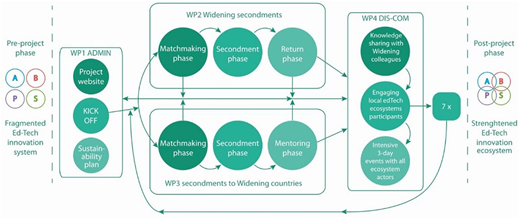
The project is implemented by a consortium of 12 partners across six countries, each including an academic institution and an EdTech company. Central to the program is the Knowledge Service Cycle, in which researchers complete three one-month secondments within a six-month cycle (see also Figure 2).
The cycle includes:
Preparation phase – defining objectives and performance indicators;
Secondment phase – active participation in EdTech innovation, supported by daily journals and weekly peer discussions;
Reflection and dissemination phase – sharing outcomes through publications, reports, and stakeholder engagement.
Each cycle aims to produce outputs reaching Technology Readiness Level (TRL) 6, indicating validation in relevant environments. Over four years, seven cycles will be implemented, supporting sustained collaboration and iterative development.
Mentoring and quality monitoring are integral to the program. Researchers engage in structured planning with mentors and industry hosts, receive ongoing support during secondments, and participate in weekly peer meetings. Upon return, they conduct impact assessments and produce open-access publications documenting their work. Beyond individual development, the project contributes to strengthening innovation ecosystems, enhancing academia–industry collaboration, and reducing structural disparities in European research systems.
3.4 Methodological rigor and ethical considerations
Methodological rigor was enhanced through the use of established qualitative quality strategies (Patton, 2015), including systematic coding procedures, reflexive engagement, and collaborative interpretation. In addition, the study was guided by principles of relational and care ethics, emphasizing trust, respect, and responsibility in researcher–participant relationships (Ellis, 2007; van Dijke et al., 2018).
Unlike conventional anonymized research, participants and researchers agreed to use their real names, prioritizing transparency and shared ownership of the research process. To address ethical challenges, participation was fully voluntary, research goals were mutually defined, and interactions were conducted in a non-hierarchical and supportive environment (Lapadat, 2017). Principles of openness, trust, and respect guided all stages of data collection and reflection. The study complied with Horizon Europe ethical standards and institutional guidelines. Formal ethical approval was not required under Tallinn University regulations. All participants provided informed consent. Trustworthiness was enhanced through multiple strategies. Data triangulation combined meetings, documents, and focus groups. Investigator triangulation involved multiple researchers in coding and interpretation. Peer debriefing, iterative validation of themes, and consensus-based discussions further strengthened credibility and consistency.
4. Results
The findings address the identified research gap by demonstrating that professional development in mobility contexts extends beyond traditional academic outputs and is shaped by experiential, relational, and practice-based processes. The results are structured around the research questions. Findings related to RQ1 examine how cross-sectoral and cross-border mobility influences professional development through experiential learning, identity shifts, and engagement with industry. Findings related to RQ2 identify key processes and dimensions of development emerging through knowledge service activities, collaborative learning, and reflexive practices.
4.1 Key themes related to collaborative social learning
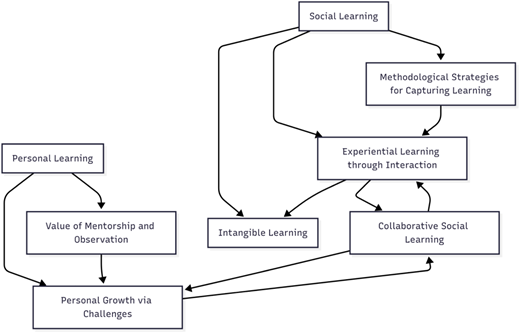
The empirical analysis uncovered several key themes that highlight the core dimensions of collaborative social learning (Chuang, 2019), as illustrated in Figure 3.
Across focus groups and reflective sessions, eight recurring themes were identified, highlighting professional development which unfolded through interaction, challenge, and reflection. Experiential learning through interaction emerged as a central theme. Learning frequently occurred beyond formal tasks, arising through everyday collaboration, informal exchanges, and problem-solving with peers and industry partners. Such interactions accelerated skill acquisition and enabled practical understanding that could not be achieved through theoretical work alone. Closely related to this was the role of mentorship and observation. Learning through observing from experienced colleagues and engaging in guided interactions, particularly in areas such as project management, communication, and navigating intercultural environments was also common theme.
Personal growth through challenge was another theme. Unfamiliar and demanding tasks required to step outside the comfort zones, fostering adaptability, resilience, and open-mindedness. These experiences emerged as the dynamic and cyclical nature of collaborative learning and as transformative learning, reshaping both skills and attitudes toward professional work.
Individual insights gained through experience were regularly shared in reflective sessions, particularly during weekly “Coffee Corner” meetings. These exchanges created feedback loops in which personal learning contributed to collective understanding, which in turn informed further individual development. This process gradually transformed the group into a cohesive learning community, moving from fragmented individual experiences toward shared knowledge construction. Another important theme was the presence of intangible learning outcomes such as expanded professional networks, increased proactivity, enhanced openness, and shifts in mindset. Although difficult to quantify, these outcomes were perceived as equally important as formal achievements. Their significance was reinforced through systematic reflection and discussion, which helped make these otherwise implicit forms of learning visible. Finally, the findings underscore the importance of methodological strategies in capturing learning processes. Structured reflection through focus groups, meetings, and documentation enabled participants to articulate and analyse their experiences, highlighting the role of reflexive practices in making sense of professional development.
These themes indicate that professional development is shaped by participation in activities, by how individuals interpret and integrate their experiences into evolving professional practices. This supports a dynamic and reflexive understanding of learning that extends beyond outcome-oriented models. These findings directly address RQ1 by demonstrating how mobility fosters multi-dimensional professional growth through interaction, reflection, and collaboration.
4.2 Activities and tangible outcomes of researchers in the EdTech Talents project
4.2.1 Development of knowledge services
A central objective of the EdTech Talents project was the development of Knowledge Services, applied outputs such as tools, frameworks, or methodologies. Participants reported creating diverse services aligned with both academic expertise and industry needs. For example, one researcher developed a “Researcher Profiles” initiative to support academics in improving their professional visibility through platforms such as LinkedIn and institutional websites. The initiative was adopted by a university marketing department, demonstrating institutional uptake: “I developed my knowledge service on researcher profiles … The concept was accepted by the university's marketing department.” (Participant G)
Another participant designed a “Research Talents Farm” framework aimed at supporting early-stage researchers in developing entrepreneurial competencies and securing funding. The model proposed integrating professional career development plans into institutional structures: “I designed a model to help early-stage researchers transition into more entrepreneurial roles.” (Participant B)
4.2.2 Collaboration with EdTech companies
A major part of the program involved collaborating with EdTech startups in advanced research economies. Participants reported engaging in joint projects with industry partners, where they contributed pedagogical expertise to improve EdTech solutions.
A researcher that worked with an EdTech company to develop a personalized learning analytics dashboard for teachers, helping them track student engagement and performance in digital learning environments, said: “During my secondment, I worked with [company name] to co-design a dashboard that helps teachers track student learning patterns. The goal was to provide actionable insights based on real-time data.” (Participant J)
Another participant contributed to a gamified digital assessment tool, ensuring that educational theory was integrated into the platform's development: “My role was to align the game mechanics with learning objectives, making sure the assessment tool wasn't just engaging but also pedagogically sound.” (Participant E)
4.2.3 Academic publications and dissemination
Researchers used their secondments to produce academic publications and conference presentations. Several participants reported co-authoring papers on university-industry collaboration, innovation in educational technology, and researcher mobility. These papers were either submitted to peer-reviewed journals or conferences such as EDEN and ICALT: “The paper I co-authored on university-industry collaboration was initially rejected, but we've now resubmitted it to an upcoming conference.” (Participant A)
In addition, some researchers participated in public outreach and stakeholder engagement, presenting their findings in university workshops and EdTech networking events: “Besides academic papers, I was able to present my findings to a wider audience at a policy roundtable on digital education strategies.” (Participant F)
4.2.4 Networking and professional growth
The secondments also provided researchers with networking opportunities, both within academia and the EdTech industry. Participants emphasized that informal meetings, mentoring sessions, and peer exchanges helped them expand their professional networks: “One of the most valuable outcomes was the network I built. I've connected with industry experts, and I now have potential collaborators for future projects.” (Participant H)
The experiences helped shape their career trajectories, with some securing new research positions or funding opportunities because of their secondments: “After my secondment, I was invited to join a European research consortium focusing on AI in education, which is directly linked to what I worked on during the program.” (Participant F)
4.2.5 Challenges and adaptations
Although the program was largely successful, participants faced some challenges, including cultural differences between academia and industry, time constraints, and balancing secondment responsibilities with existing research commitments: “At first, it was difficult to adjust to the fast-paced industry mindset, where timelines are much shorter than in academia.” (Participant C)
Some researchers found it challenging to translate theoretical knowledge into industry-ready applications, requiring multiple iterations and feedback rounds: “My first prototype was too theoretical, so I had to go back and refine it based on the company's needs. This iterative process was a great learning experience.” (Participant J)
Despite these challenges, participants viewed them as valuable learning experiences that contributed to professional growth. Overall, the findings show that mobility enabled a combination of tangible outputs and knowledge services, collaborations, and publications and broader developmental outcomes such as networking and career advancement. These results address RQ2 by identifying key processes through which professional growth is enacted.
4.3 Researchers' evaluation of the project's impact on their professional development
4.3.1 The Spider diagram as a structured reflective tool
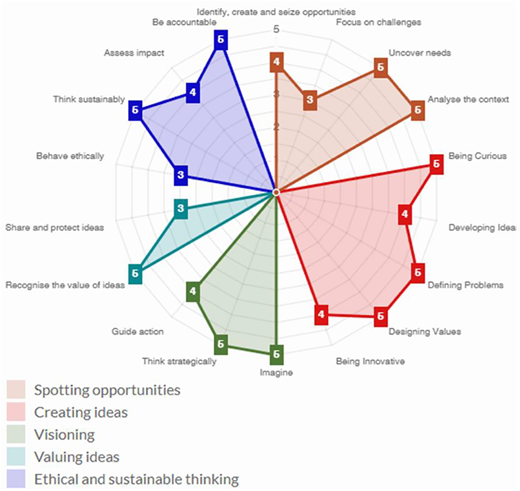
Professional development was supported by structured and informal evaluation methods. The primary structured tool was the Spider diagram (see Figure 4), a visual self-assessment instrument enabling reflection across multiple competence areas.
The dimensions assessed aligned with key aspects of professional development:
Skills diversification (e.g. applied research and innovation capacity),
Industry engagement (e.g. collaboration and knowledge services),
Professional identity and career orientation (e.g. entrepreneurial mindset).
Participants emphasized that the value of the tool lay in facilitating reflection rather than providing quantitative evaluation. It helped identify strengths and areas for growth, although some participants noted its subjective nature.
4.3.2 Informal reflection, peer feedback, and complementary learning processes
Beyond structured self-assessment, professional development was extensively supported through informal reflection and peer feedback, particularly during the weekly “Coffee Corner” meetings. These sessions functioned as collective reflective spaces in which researchers articulated challenges, shared insights, and negotiated meanings related to their mobility experiences.
Such reflective practices align with reflexive and collaborative inquiry approaches, where professional growth emerges through dialogue, shared sense-making, and iterative reflection rather than through predefined indicators (Heron and Reason, 1997; May and Berry, 2013). Peer discussions enabled to contextualize individual experiences, compare development trajectories, and gain clarity on emerging career orientations, especially at the intersection of academia and industry.
4.3.3 Methodological reflection: limitations and potential of professional growth measurement tools
From a methodological perspective, the study intentionally limited the use of formalized measurement instruments. Given the exploratory and reflexive nature of the research design, the primary aim was to capture lived experiences, meaning-making processes, and evolving professional identities rather than to quantify outcomes. In this context, the Spider diagram was positioned as a formative and reflective tool, not as a summative evaluation instrument.
While this approach enabled rich qualitative insights, it also introduced limitations. Participants expressed uncertainty regarding how to systematically document progress over time or demonstrate professional growth in ways that align with institutional evaluation frameworks. This tension reflects broader challenges identified in the literature, where traditional academic assessment systems often fail to capture cross-sectoral, experiential, and identity-related dimensions of professional development (Weaver and Richardson, 2020).
4.3.4 Toward an enhanced framework for measuring professional development in mobility programs
Building on these findings, future research and mobility programs could benefit from a more integrated and multi-layered measurement framework that complements reflexive qualitative approaches with structured longitudinal elements. Such a framework could include:
Repeated Spider diagram assessments conducted at multiple stages of the mobility cycle to support longitudinal self-reflection and comparative analysis;
Narrative self-assessments or reflective journals to capture changes in professional identity, confidence, and career orientation over time;
Mentor and host-organization feedback, providing external perspectives on researchers' development in applied and collaborative contexts;
Evidence-based indicators, such as publications, developed knowledge services, initiated collaborations, or follow-up projects, to document tangible outcomes of professional growth.
Importantly, these elements should be used in a complementary manner, preserving the formative and developmental purpose of assessment while enhancing transparency and recognition of professional development outcomes. By integrating reflective tools with longitudinal and evidence-based indicators, future studies can better capture the complexity of professional growth in cross-sectoral and cross-border mobility contexts.
The findings suggest that professional development in mobility contexts is not easily captured through standardized measurement tools alone, but instead emerges through reflective, relational, and practice-based processes. This highlights a tension between formal evaluation frameworks and the complex nature of experiential learning.
5. Discussion and conclusions
The aim of this study was to examine how cross-border and cross-sector mobility within the EdTech Talents project influenced the professional development of educational researchers. The findings demonstrate that professional development in mobility contexts is the result of knowledge acquisition and a dynamic process shaped by experiential learning, engagement in knowledge services, collaboration, and evolving professional identities. Participants reported growth through applied work with industry partners, reflective practices, and expanded professional networks, while also identifying challenges related to impact measurement and institutional recognition. By integrating perspectives from work-based learning, knowledge transfer, and professional identity literature, the study provides a more coherent understanding of how professional development unfolds in cross-sector mobility settings.
A key finding is the central role of experiential learning and mentorship in shaping professional growth. In line with) Interconnected Model of Professional Growth Clarke and Hollingsworth (2002) participants' development was driven by continuous interaction, reflection, and guided engagement. Researchers described how unfamiliar industry tasks required them to move beyond established academic routines, fostering adaptability, confidence, and open-mindedness. These findings are consistent with prior research highlighting the importance of mentorship and intercultural experience in professional identity formation (Aarnio et al., 2014; Ackers, 2005). Importantly, intangible outcomes such as increased proactivity, confidence, and networking capacity were emphasized, suggesting that mobility contributes to deeper identity transformation rather than merely skill acquisition (Teichler, 2015).
Collaboration with EdTech companies was a key driver of knowledge transfer and applied learning. Participants developed a range of Knowledge Services, including researcher profile initiatives, learning analytics tools, and gamified assessment solutions. These outcomes illustrate the value of embedding academic expertise within industry contexts, supporting the argument that effective EdTech innovation requires integration of pedagogical and technological perspectives (Redecker and Punie, 2017). At the same time, participants faced challenges in translating theoretical knowledge into practical applications. Differences in organizational culture, pace, and expectations between academia and industry required iterative adaptation and negotiation. These challenges reflect broader structural barriers in university–industry collaboration (Bengoa and Kaufmann, 2014; Muscio, 2010) and suggest the need for stronger preparatory support, clearer communication, and iterative development processes in mobility programs.
Networking emerged as another significant outcome of mobility. Participants reported substantial expansion of their international and cross-sector connections, which facilitated collaboration, increased visibility, and supported career advancement. This finding aligns with existing literature that identifies academic mobility as a mechanism for professional development through network building (Ackers, 2005; Baláž et al., 2004). However, the institutional recognition of such outcomes remains uneven. In many cases, expanded networks, applied collaboration, and knowledge service development are not fully reflected in promotion criteria or evaluation systems, particularly in widening research contexts. This disconnect highlights the need for universities to better integrate mobility into career development frameworks by formally recognizing secondment outcomes, valuing applied contributions, and providing mentoring structures that support transitions between academic and industry roles.
The study contributes to understanding professional identity development. The findings indicate that participation in knowledge services and industry collaboration fosters hybrid professional identities that integrate academic, applied, and collaborative roles. This dimension remains underexplored in much of the mobility literature, which tended to focus on outputs rather than identity transformation. Participants' experiences suggest that mobility reshapes how researchers perceive their roles, positioning them as knowledge brokers and collaborators across sectors. This insights have important implications for how professional development is conceptualized in contemporary research environments characterized by increasing interdisciplinarity and rapid technological change.
A further issue concerns the assessment of professional development. While participants valued informal reflection and peer feedback, they also identified limitations in existing tools for capturing nuanced growth. The Spider diagram functioned as a useful reflective instrument, but its ability to represent complex development trajectories was questioned. This finding aligns with critiques in the literature calling for more comprehensive and context-sensitive evaluation frameworks (Weaver and Richardson, 2020). Future approaches should combine structured self-assessment with narrative reflection, mentor feedback, and evidence-based indicators such as knowledge services, collaborations, and career progression. Such integrated approaches would better capture both tangible and intangible aspects of professional development.
Although the study is situated within the European Research Area, its findings resonate with broader international research on academic mobility. Similar challenges—such as brain drain, weak reintegration mechanisms, and limited recognition of applied work—have been identified in Africa, Asia, and other regions (Baláž et al., 2004; Docquier and Rapoport, 2012; Menon et al., 2013). In many contexts, mobility benefits individual researchers more than institutions, particularly where governance structures and industry ecosystems are underdeveloped (Bolay and Tejada, 2016; Varghese, 2015). At the same time, EU programs benefit from relatively stable funding and coordinated policy frameworks, which support structured mobility and reintegration. Despite these differences, several elements of the EdTech Talents model appear transferable, including reciprocal mobility, structured secondments, knowledge service development, and reflexive collaborative approaches (Marjanovic et al., 2026). These features align with calls for mobility models that promote brain circulation and sustained institutional linkages rather than one-directional talent flows (Ackers, 2005; Cañibano and Woolley, 2015).
Overall, the study advances current knowledge by offering a process-oriented perspective on researcher mobility. It highlights how engagement in knowledge services within the EdTech ecosystem supports professional development, applied knowledge creation, and identity transformation. For policymakers and institutions, the findings suggest that mobility programs should extend beyond short-term exchanges by incorporating reintegration mechanisms, long-term collaboration incentives, and evaluation frameworks that recognize diverse outcomes. Such approaches would enhance both individual career development and institutional capacity.
The study has several limitations. The study has several limitations. The relatively small sample (n = 19), while consistent with the exploratory design and the timing of data collection within ongoing mobility cycles, limits the transferability of the findings to other contexts. In addition, the reliance on self-reported and reflective data may constrain comparability across settings, as participants' accounts are shaped by individual interpretations and institutional conditions.
Future research would benefit from larger and longitudinal samples, as well as comparative analyses between widening and advanced research systems. Further methodological development is also needed, particularly in designing structured yet flexible tools for assessing professional development. Integrating longitudinal self-assessments, mentor evaluations, and evidence-based indicators would complement qualitative insights and provide a more comprehensive understanding of mobility outcomes.
Ethical consideration
All participants took part in the study voluntarily and provided informed consent prior to data collection.
In accordance with the regulations of Tallinn University, the coordinating institution of the EdTech Talents Horizon Europe project, formal ethical approval was not required for this study.
The research was conducted in accordance with the ethical requirements and procedures of the Horizon Europe programme, as well as institutional policies and internationally recognized standards for research involving human participants. Ethical considerations were further guided by principles of relational and reflexive ethics, emphasizing respect, confidentiality, and care throughout the research process (Guillemin and Gillam, 2004). Participants were informed of their right to withdraw at any stage without consequences. Data were anonymized during transcription and analysis, and all procedures adhered to established standards of rigor and ethical practice in qualitative research.