The purpose of this study is to investigate the roles of financial well-being and relative deprivation in the relationship between consumer spending self-control (CSSC) and life satisfaction.
A cross-sectional study was conducted amongst employed South African credit-active respondents. An online self-administered questionnaire via an online paid-for consumer panel resulted in 608 respondents. Covariance-based structural equation modelling was used for the mediation and moderation models.
The findings of this study revealed that financial well-being mediated the relationship between CSSC and life satisfaction, and relative deprivation moderated the relationship between financial well-being and life satisfaction.
This study helps financial institutions and academic researchers obtain a better understanding of financial well-being, and emphasises the need for financial organisations to educate and communicate how financial well-being influences life satisfaction. Institutions can provide access to educational platforms that offer courses and tools on financial literacy topics to ensure healthy consumer spending.
This study mainly contributes to CSSC and financial well-being literature. The interrelationships in this article were informed by the causality orientations in self-determination theory that consider human motivation. The role of financial well-being as an intervening factor and the interaction effect between financial well-being and relative deprivation on life satisfaction were uncovered. This article will help financial organisations to consider initiatives that will assist consumers in controlling their spending behaviour to improve financial well-being and life satisfaction. The ability of individuals to meet financial obligations reduces financial organisations’ exposure to credit risk, ensuring that consumers manage their finances responsibly to achieve financial independence.
1. Introduction
Financial well-being results from the management of an individual’s finances but also from the management of short- and long-term monetary obligations and goals, which affects every aspect of life. As such, Forbes magazine recognises that financial well-being is about more than money, as it also contributes to a person’s overall well-being (Frazier, 2022). For those in the field of financial management and well-being, this poses the question: “What can banks do to improve individuals’ and societies’ well-being?” (Losado-Otalaro and Alkire, 2019). Financial management remains relevant as financial well-being can have a multifaceted influence on individuals, society and organisations (Brüggen et al., 2017; Losado-Otalaro and Alkire, 2019; Singh and Malik, 2022).
There has been a surge towards understanding the role of self-control in financial well-being (Biljanovska and Palligkinis, 2018; Miotto and Parente, 2015; Singh and Malik, 2022, p. 1597; Strömbäck et al., 2017). Previous studies found positive associations between different types of control (i.e. behavioural control, locus of control and self-control) and financial well-being (She et al., 2023). However, none of the 48 studies analysed by She et al. (2023) mentions the impact of consumer spending self-control (CSSC) on financial well-being – a contribution of this study. CSSC is a form of self-control within the financial domain that aims to provide greater insight into consumers’ spending and consumption behaviour (Haws et al., 2012). Through CSSC, people can observe and monitor their spending behaviour to stay within set standards or goals, thereby contributing to improved consumption and financial behaviour (Barbić et al., 2019; Haws et al., 2012; Ponchio et al., 2019).
Self-control is considered a stable inherent personality trait (Baumeister, 2002). Moreover, this study contributes to frontier conversations around personality traits as intrapersonal dimensions (She et al., 2023, p. 356) that impact financial well-being by considering CSSC as an antecedent. The first gap this article addresses is to deepen conversations around the association between control (specifically CSSC) and financial well-being (She et al., 2023). Moreover, the contribution moves beyond the established relationship between personality traits and financial well-being (She et al., 2023) to consider the ultimate effect on life satisfaction as the cognitive component of subjective well-being (Diaz et al., 2015).
The interrelationships in this article were informed by the causality orientations in self-determination theory that consider human motivation (Deci and Ryan, 1985; Ryan and Deci, 2017). Central to causality orientations in self-determination theory are the assumption that individuals attribute different causes for their behaviour. Such causes for individual behaviour may be viewed as either emanating from the internal self and thus being autonomous, or from the external environment and being controlled (Hagger and Hamilton, 2020). Autonomously motivated individuals reach adaptive outcomes such as well-being (Hagger and Hamilton, 2020). We propose that CSSC, a salient intrapersonal trait, is a proxy for an autonomy orientation. Accordingly, CSSC will motivate adaptive behaviours and outcomes, such as financial well-being and life satisfaction. However, even if individuals are autonomously motivated, causality orientations’ effect on behaviour may be mitigated by contextual factors.
Socio-structural factors are important contextual factors that may be highly salient motivational influences in specific contexts impacting specific behaviours (Hagger and Hamilton, 2020). Social comparison in the form of perceived relative deprivation may thus affect the strength and direction of the relationship between individuals’ financial well-being and life satisfaction. As recommended by Xiao et al. (2022), this study explores one intervention to consumer well-being, namely relative deprivation, emphasising the role of social comparison in consumer well-being irrespective of autonomous drivers such as CSSC. This study addresses the call for research surrounding financial social comparison (She et al., 2023, p. 359) and its impact on financial well-being by considering perceived relative deprivation as a mechanism affecting the well-being of individuals.
The second gap this study addresses is the use of a novel theoretical lens, namely causality orientations in self-determination theory. Hereby, we specifically address the call for research by She et al. (2023) around the role of autonomy in financial well-being. Using this novel theoretical lens, we also address a third gap based on the causality orientations in self-determination theory, where we combine an intrapersonal factor in the form of CSSC with a social (or socio-structural) factor in the form of relative deprivation, to explore interactions when considering financial well-being. Most previous research focuses on either personal or social factors (She et al., 2023; Singh and Malik, 2022), while this study explores interactions from these literature streams in combination. We argue that inequalities such as relative deprivation should not be considered in isolation, but rather with consumer autonomy. We contribute to show that despite the established adaptive relationships between autonomous orientations (i.e. CSSC) and adaptive behaviour (financial well-being and life satisfaction), the interaction between financial well-being and social comparison in the form of relative deprivation becomes a factor worthy of consideration. This study thus combines the intrapersonal work established in financial literature, with the social comparison work emerging in the field of financial well-being. Social factors and social inequalities will always be prominent in society and impact financial well-being (Singh and Malik, 2022). Therefore, a better understanding of how such inequalities, such as relative deprivation, impact consumer well-being, provides much-needed information to managers and policymakers to address the possible negative consequences effectively. Through social comparison, people might become aware that they are falling short relative to their reference group, thus feeling relatively deprived (Brown and Gray, 2016; Chatterjee et al., 2019). This feeling of deprivation can cause discontentment and dissatisfaction (Callan et al., 2008), and, ultimately, lead to reduced levels of subjective well-being (Callan et al., 2011).
The causality orientations in self-determination theory allow us to address why (mediation) CSSC relates to financial well-being and life satisfaction and how (moderation) relative deprivation relates to financial well-being and life satisfaction. We thus offer a novel financial-psychological view on CSSC and well-being. Specifically, we first uncover the mediation effect of consumer financial well-being on the relationship between CSSC and life satisfaction. Second, the moderation effect of relative deprivation on the relationship between consumer financial well-being and life satisfaction is explored. Hereby, we consider social comparison as one mechanism affecting the anticipated adaptive behaviour motivated by CSSC. Specifically, this study emphasises the importance of financial well-being in mitigating social comparison to achieve life satisfaction.
Policymakers will do well in addressing the “keeping up with the Joneses” mindset evident in the sample of this study by launching campaigns to establish a sense of accomplishment in financial well-being not to be undermined by social comparison. Managing individual financial behaviour is universal, yet, there is a dearth of research from developing countries such as African countries, where systemic factors may interact to cause differences in financial management behaviour (Goyal et al., 2021). Finally, we offer insight into systemic factors from one developing country, thereby broadening the knowledge base of financial management behaviour to include South Africa, and in so doing, we answer the call for research from developing countries (She et al., 2023; Singh and Malik, 2022).
2. Literature overview
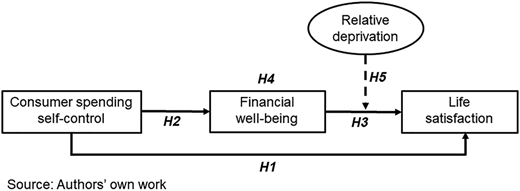
This study investigates the roles of financial well-being and relative deprivation in the relationship between CSSC and life satisfaction. These relationships are presented in Figure 1.
2.1 Causality orientation in self-determination theory
The self-determination theory was developed from motivation and personality theories to explain the psychological processes in human motivation for optimal functioning (Deci and Ryan, 2000). While the self-determination theory, from a meta-theory view, recognises that three innate psychological needs (autonomy, competence and relatedness) form the foundation for individual motivation and personality development, six mini-theories have been developed to address certain motivational phenomena (Centre for Self-Determination Theory, 2022). Relevant to this study, one of the mini-theories, the causality orientations theory, considers how people regulate their behaviour by attributing internal (i.e. autonomy orientation) or external (i.e. controlled orientation) causes for their behaviour (Deci and Ryan, 1985; Hagger and Hamilton, 2020; Ryan and Deci, 2017). Established research proves that an autonomous orientation results in internal motivation, associated with meaningful choices and persistence, which contributes to achieving well-being (Hagger and Hamilton, 2020). Moreover, an autonomy orientation associated with internal motivation may offset external socio-structural factors resulting in adaptive behaviour to support volition and autonomy (Hagger and Hamilton, 2020).
The aforementioned assumptions of the causality theory in self-determination theory offer a unique lens to explore interactions between an autonomously motivated regulatory state (i.e. CSSC) based on choice and volition (Deci and Ryan, 1985) that should result in adaptive behaviour such as well-being (Deci and Ryan, 1985; Hagger and Hamilton, 2020), while offsetting possible negative effects from the socio-structural environment (Hagger and Hamilton, 2020). The remainder of the literature review will operationalise our constructs accordingly.
2.2 Self-control and consumer spending self-control (CSSC)
Self-control represents one’s ability to avoid temptation, maintain self-discipline and control behaviour (Ponchio et al., 2019; Tangney et al., 2004). By definition, self-control relates to an autonomy orientation whereby an individual’s behaviour emanates from the internal self (Deci and Ryan, 1985). Self-control includes one’s efforts to overrule or change internal responses to break undesired habits and behaviours (Achtziger et al., 2015; Miotto and Parente, 2015). Research has shown that people with higher levels of self-control have greater financial security since they tend to spend less money, spend less impulsively and save more (Anatasya et al., 2024; Ponchio et al., 2019; Strömbäck et al., 2017). People who lack self-control tend to have higher levels of debt and struggle with delaying gratification (Norvilitis et al., 2006). This situation can lead to an increased possibility of financial distress (Biljanovska and Palligkinis, 2018), unmanageable debt (Xiao and Yao, 2025), over-indebtedness (Ponchio et al., 2019), gambling, eating disorders, substance abuse, sexual immorality, criminal behaviour and overspending (Pirog and Roberts, 2007). On the contrary, greater control over personal finance decreases the likelihood of engaging in impulsive and risky financial behaviours (She et al., 2023; Sirsch et al., 2019).
As is evident from above, general self-control can provide some explanation for spending and consumption behaviour. However, CSSC may provide more focused insight since CSSC is the ability to observe and monitor spending-related behaviour following set standards or goals (Haws et al., 2012; Ponchio et al., 2019). CSSC thus relates to the internal motivation associated with spending-related standards and goals. Accordingly, CSSC is viewed in this study as one form of an autonomy orientation, defined by Deci and Ryan (1985) as attributing behaviour to an internal motivation due to a sense of choice and volition. Being able to control one’s spending contributes to steady consumption, which enables people to improve the management of their finances (Barbić et al., 2019; Haws et al., 2012; Miotto and Parente, 2015; Riitsalu and Murakas, 2019). Moreover, having greater CSSC is also associated with lower levels of debt (Achtziger et al., 2015; Webley and Nyhus, 2001). Therefore, having a better understanding of CSSC assists in putting methods in place to help people control their spending and, in this way, limit detrimental financial (e.g. poor credit records or bankruptcy), psychological (e.g. anxiety, stress or guilt) and social (e.g. tense relationships or divorce) outcomes related to uncontrollable spending (Haws et al., 2012).
Based on the causality orientations in self-determination theory, an autonomy orientation, such as CSSC in this study, would result in adaptive behaviour associated with increased well-being (Deci and Ryan, 1985; Hagger and Hamilton, 2020). Although a person’s ability to exert general self-control influences their level of subjective well-being (Lun and Bond, 2016; Ryan and Deci, 2006), the extent to which CSSC influences subjective well-being (i.e. life satisfaction) remains unanswered. Moreover, recognising that uncontrollable spending behaviour leads to lowered financial well-being (Haws et al., 2012), it would be expected that controlling one’s spending might result in greater financial well-being. It is, therefore, necessary to examine subjective well-being (in the form of life satisfaction) and financial well-being in more detail to better understand how these two constructs relate to CSSC.
2.3 Life satisfaction (cognitive subjective well-being)
Subjective well-being considers how people assess their lives based on their feelings and experiences with certain life domains, and has an affective and cognitive component (Diener, 1984; Joo, 2008; Kuykendall et al., 2015). Whereas positive and negative affect refers to the affective component of subjective well-being, life satisfaction is regarded as the cognitive component of subjective well-being (Diaz et al., 2015; Diener and Chan, 2011). Many studies have focused on the affective component, with some studies focusing on the life satisfaction component due to its stronger relationships to economically related concepts, such as income and expenditure (Diaz et al., 2015; Kuykendall et al., 2015). Therefore, this study includes life satisfaction as the cognitive component of subjective well-being.
Life satisfaction is regarded as a global assessment of a person’s life and considers people’s attitudes to satisfaction with their overall lives (Diaz et al., 2015; Xiao et al., 2009). Previous studies discovered that net wealth and assets are positively associated with life satisfaction, while debt and unsecured debt are negatively associated with life satisfaction (Brown and Gray, 2016; Tay et al., 2017). Interestingly, previous research reported that expenditure may be a more accurate predictor of life satisfaction than income, and showed that larger expenditures (e.g. expenditure on clothing and leisure) are positively related to life satisfaction (Lewis, 2014; Noll and Weick, 2014). However, when individuals chose to consume less, their life satisfaction saw only a marginal reduction, if any (Noll and Weick, 2014). We argue that one possible reason for the relationship between spending and life satisfaction may be related to an autonomy orientation in accordance with the causality orientations of self-determination theory. This autonomy orientation would result in intrinsic motivation emanating from the self to provide meaningful choices and persistence (Hagger and Hamilton, 2020), thus increasing life satisfaction. With regard to other financial behaviours, previous research indicates that good financial habits and practices in terms of savings, cash and credit management are positively related to life satisfaction, while engaging in risky credit behaviour lowers life satisfaction (Bhatia and Singh, 2024; Xiao et al., 2007).
2.4 Financial well-being
Financial well-being is a state of feeling content and worry-free about one’s financial situation (Chatterjee et al., 2019). The Consumer Financial Protection Bureau (2015) recognises financial well-being as encompassing several dimensions: the smooth and effective control over day-to-day and month-to-month finances; the ability to absorb financial shocks; staying the course to meet financial goals; and having the financial freedom to allow one to enjoy life. Financial well-being is based on an individual’s assessment of their financial situation, and is thus a person’s subjective perception of their financial situation (O’Connor et al., 2019).
Various financially related factors influence financial well-being. As such, higher income, growing assets, reducing liabilities, accumulating wealth and planning for retirement lead to greater financial well-being (Chatterjee et al., 2019; Collins and Urban, 2019; Riitsalu and Murakas, 2019), which is associated with greater life satisfaction (Arber et al., 2014; Riitsalu and Murakas, 2019). Furthermore, by nurturing healthy saving and spending habits, people can sustain long-lasting financial behaviour and, consequently, financial well-being (Brüggen et al., 2017). On the other side, higher levels of debt are associated with lower levels of financial well-being (Brown and Gray, 2016; Norvilitis and Mao, 2013). Some studies have reported the association between late debt payments and financial stress (Aladangady et al., 2023; Xiao and Kim, 2022), which results in greater financial difficulties, reduced mental and physical health and lower levels of life satisfaction (Xiao et al., 2007). Access to debt provides financial flexibility, but excessive debt brings about several risks of which bankruptcy can arise when individuals are unable to repay (Xiao and Yao, 2022, 2025). Findings from a few studies indicated that debt holding serves as an “indicator of resource insufficiency” and individuals burdened by debt experience feelings of unhappiness (Tay et al., 2017; Xiao et al., 2021).
Generally, people with a high degree of self-control tend to have a long-term focus, are better able to control their shopping urges, can manage their finances better and are able to save more and spend less (Miotto and Parente, 2015; Tangney et al., 2004). More specifically, people with high levels of CSSC can plan and manage their finances better (Miotto and Parente, 2015; Riitsalu and Murakas, 2019), are more likely to engage in steady financial and consumption behaviours (Barbić et al., 2019; Haws et al., 2012) and are less likely to fall into debt (Achtziger et al., 2015; Webley and Nyhus, 2001). Previous studies discovered that greater control over personal finance decreases the likelihood of engaging in impulsive and risky financial behaviours (Anatasya et al., 2024; She et al., 2023; Sirsch et al., 2019) and can reduce bankruptcy risks (Xiao and Yao, 2025).
From a theoretical point of view, the autonomous orientation of causality orientations theory assumes that internal motivation, such as CSSC, resonates with an individual’s values and interests, creating satisfying financial behaviour and well-being. Based on the tenets of the causality orientations theory and specifically an autonomous orientation (Deci and Ryan, 1985; Hagger and Hamilton, 2020), we argue that CSSC, as internal motivation and autonomy orientation, positively impacts financial well-being since contentment and fulfilment are experienced owing to the personal control over financial behaviour. Accordingly, autonomously-oriented financial well-being should increase overall well-being such as life satisfaction. Hereby, financial well-being becomes a mechanism through which CSSC is associated with life satisfaction. Although several previous studies found positive associations between different types of control (i.e. behavioural control, locus of control and self-control) and financial well-being (She et al., 2023), none of the 48 studies analysed by She et al. (2023), considered the impact of CSSC on financial well-being specifically. Furthermore, given that CSSC is related to more beneficial consumption and financial behaviours (Barbić et al., 2019; Haws et al., 2012; Schomburgk and Hoffmann, 2023; Sinha et al., 2021), it is expected that CSSC is positively related to financial well-being. Similarly to the research done by Schomburgk and Hoffmann (2023), it is expected that a domain-specific outcome (i.e. financial well-being) can mediate the relationship between a domain-specific construct (i.e. CSSC) and broader constructs (i.e. life satisfaction) (Silber et al., 2024). Hence, given that there is already a relation between financial well-being and subjective well-being (Bhatia and Singh, 2024; Chatterjee et al., 2019; Collins and Urban, 2019), it is expected that financial well-being may act as a mechanism through which CSSC is associated with life satisfaction. It is, thus, hypothesised that:
Financial well-being mediates the relationship between CSSC and life satisfaction.
2.5 Relative deprivation
People’s peers or reference groups play a crucial role in influencing financial decisions and personal savings behaviour (Alshebami and Aldhyani, 2022). In essence, relative deprivation is powered by social comparison whereby people compare themselves to a particular reference group (Brown and Gray, 2016; Chatterjee et al., 2019). The concept of relative deprivation refers to feelings of discontentment, dissatisfaction and/or resentment emanating from the belief that one is deprived of an outcome they desire and deserve compared to some referent (Callan et al., 2011; Walker and Smith, 2002). The idea of relative deprivation is subjective since it depends on a person’s assessment and comparison to others (Lόpez Turley, 2002; Shifa and Leibbrandt, 2018). People feel relatively deprived when they do not have an object, want and desire the object, see another person(s) with the object, and think it is feasible for them to obtain that object (Chipp et al., 2011; Lόpez Turley, 2002).
Relative deprivation involves two elements: the cognitive element, whereby social comparisons are made (i.e. the perceived injustice), and an affective element, resulting in feelings of resentment and discontent when experiencing deprivation (Chipp et al., 2011; Tougas et al., 2004). For example, when looking at one’s level of income in isolation, a feeling of contentment follows, but when comparing one’s level of income to those of relevant others, a feeling of relative deprivation may emerge (Hsee et al., 2009; Pak, 2023; Tougas et al., 2004). Feeling relatively deprived is an aversive state and often motivates people to find ways to reduce it (Tougas et al., 2004). We thus introduce relative deprivation as a socio-structural factor that affects individuals’ financial well-being and life satisfaction based on the assumptions of causality orientations in self-determination theory. These orientations guide individuals towards incorporating specific contingencies from the environment when exploring specific behaviour (Hagger and Hamilton, 2020).
Although contextual factors, such as financial social comparisons, market factors, technological advancements and macro-economic factors, have an impact on individuals’ financial well-being, the effect thereof is not as significant as for personal factors (She et al., 2023). Feeling deprived can lead to excessive or conspicuous consumption, especially in emerging markets, resulting in high levels of indebtedness (Chipp et al., 2011). When faced with a feeling of deprivation, people often feel compelled to acquire material possessions to improve their standing relative to peers and often without considering the long-term financial implications associated with the purchase (Callan et al., 2011; Chipp et al., 2011; Lόpez Turley, 2002). Even though previous studies have investigated relationships between relative deprivation and financial behaviour, and relative deprivation and subjective well-being, the extent to which relative deprivation influences the relationship between financial well-being and life satisfaction still needs to be assessed.
Norvilitis and Mao (2013) reported that people with greater financial well-being are less likely to engage in social comparison behaviour. Since social comparison behaviour is the driving force behind relative deprivation, the assumption is made that people with greater financial well-being experience less relative deprivation (Brown and Gray, 2016; Chatterjee et al., 2019; Hagerty, 2000). However, a recent study in Japan, a developed country, discovered that there is a significant negative correlation between relative deprivation and various forms of subjective well-being, including life satisfaction and happiness (Ohno et al., 2023). The same authors also established that an individual’s tendency to compare themselves to others, negatively impacts subjective well-being, particularly in situations of high relative deprivation in such a developed country (Ohno et al., 2023). In South Africa, a country with the highest Gini index in the world (World Bank, 2024), relative deprivation could easily be experienced, and thus, South Africa provides a rich context to explore such social comparison dynamics further.
Theoretically, the causality orientations in self-determination theory hold that internal motivation related to an autonomous orientation would provide persistence in adaptive behaviour such as well-being (Deci and Ryan, 1985). Yet, such behaviour should be viewed alongside and in conjunction with contextual socio-structural factors such as relative deprivation. With higher internal motivation (i.e. higher financial well-being), the effects of external socio-structural factors may be weaker as an autonomy orientation results in adaptive behaviour where external factors support volition and autonomy (Hagger and Hamilton, 2020), and vice versa. However, when a person feels deprived compared to a reference group, they may experience negative feelings, such as resentment and dissatisfaction, which may result in reduced levels of subjective well-being such as life satisfaction (Callan et al., 2011; Chatterjee et al., 2019; Frazier, 2022; Ohno et al., 2023). Similarly, a more recent study found that income comparisons are more apparent for people with negative relative income levels compared to individuals who have higher relative income levels (Leites and Ramos, 2022). When faced with feelings of major relative deprivation, people can either feel discouraged and consequently reduce their effort to do anything about it or alternatively, people can be encouraged by the feeling of deprivation and be motivated to increase their effort to deal with the feeling of deprivation (Leites and Ramos, 2022).
Based on the autonomous orientation in the causality orientations in self-determination theory stating that an autonomous orientation provides persistence in adaptive behaviour such as well-being, combined with the results of the role of relative deprivation from previous studies, it is expected that the relationship between financial well-being and life satisfaction would be moderated by relative deprivation. Specifically, the relationship between financial well-being and life satisfaction is expected to be positive (Arber et al., 2014; Riitsalu and Murakas, 2019), while the relationship between relative deprivation and life satisfaction is expected to be negative (Ohno et al., 2023). However, in contrast to the aforementioned studies where relative deprivation negatively impacts life satisfaction, we argue that the causality orientations in self-determination theory (Hagger and Hamilton, 2020) suggest that the interaction effect between financial well-being and relative deprivation may result in a positive effect on the relationship between financial well-being and life satisfaction. This argument is supported by findings showing that those with better financial well-being exhibit less social comparison behaviour (Norvilitis and Mao, 2013), i.e. relative deprivation in this study. The following hypothesis was proposed:
Relative deprivation moderates the relationship between financial well-being and life satisfaction.
3. Methodology
3.1 Sampling, measurement and data collection
Convenience sampling was employed to collect data for this cross-sectional study using an online paid-for consumer panel through Qualtrics. The 20-min survey was conducted in English, and the questionnaire was programmed, pretested, and administered using the Qualtrics XM platform. The panel was recruited nationally according to the target population specifications, which consisted of adult, credit-active South Africans who were permanently or self-employed at the time of data collection. Credit active consumers are those who have a credit history of using credit products and whose credit information is visible to credit bureaus (National Credit Regulator, 2019). Qualtrics conducted data scrubs to flag participants who sped or straight-lined through the survey or who responded ineffectively, in which case unusable data was replaced. Participants were not compensated by the researchers but were rewarded by Qualtrics by means of point-based rewards, allowing panel members to earn points for completing surveys, which can then be redeemed for prizes or rewards. The ethics committee of the academic institution granted ethical clearance for the study (protocol no EMS102/20).
South Africa offers a rich context to investigate financial behaviour as more than a third of South Africans live beyond what they can afford (Pijoos, 2021); and approximately 50% of South African credit-active consumers are over-indebted, according to The Financial Sector Conduct Authority (Ngidi, 2022). The Momentum Unisa Household Financial Wellness Index attributes the determination of South Africans to keep up with the Joneses as a key reason for South Africans spending beyond their means (BusinessTech, 2023). An online pre-test was conducted amongst 100 respondents who were representative of the sample. The purpose of the pre-test was to identify possible measurement errors by ensuring respondents understood the questions and the wording used in the survey (Geisen and Murphy, 2020). The results indicated that respondents understood the questions and wording accurately. As a result, the final questionnaire was distributed through Qualtrics to 628 respondents.
The final questionnaire included the 10-item CSSC scale to assess the degree of control on spending behaviour as developed by Haws et al. (2012). Respondents’ level of financial well-being was measured with the 10-item Financial Well-Being Scale (Consumer Financial Protection Bureau, 2019). Relative deprivation was measured using five items (Callan et al., 2011). Finally, the five-item Satisfaction with Life Scale (SWLS), recognised as the most widely used and reliable measuring instrument in subjective well-being research, was used to measure respondents’ level of satisfaction with their lives (Diener et al., 1985; Larsen and Eid, 2008; Pavot and Diener, 2008). All the aforementioned constructs were measured on a 7-point Likert-type scale. The questionnaire also included socio-demographic questions and questions relating to respondents’ credit behaviour such as the type of credit products used and their diligence in terms of payment.
3.2 Data analysis
The goal of this study, namely to investigate the roles of financial well-being and relative deprivation in the relationship between CSSC and life satisfaction, directed the data analyses as recommended by Sarstedt et al. (2024). From the multiple structural equation modelling (SEM) methods available, grouped as factor-based and component-based SEM options (Sarstedt et al., 2024), co-variance-based SEM (CB-SEM) as a factor-based SEM method was applied in this study. CB-SEM was selected due to its ability to test a theory, such as the assumption of the causality orientations in self-determination theory, and analyse the multiple latent variables and relationships presented in our conceptual framework, including mediation and moderation. In addition, CB-SEM has the ability to account for various situations, such as the common factor through common variance and unique error variance of all variables, possible measurement error in the observed variables due to its robust estimation of constructs (Muthén and Muthén, 1998–2017), and the interrelationships between constructs simultaneously (Gefen et al., 2000; Sarstedt et al., 2024). Finally, CB-SEM provides global goodness-of-fit measures, which allow for easier comparison of results across studies (Hooper et al., 2008).
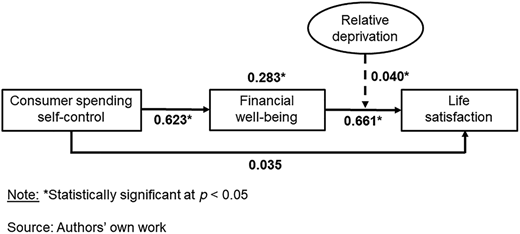
Using Mplus Version 8.3, CB-SEM was performed to assess the conceptual model outlined in Figure 1. The Maximum Likelihood Method estimator was used to estimate the model parameters due to the non-normality of the data (Muthén and Muthén, 1998–2017). First, confirmatory factor analysis was used to assess the measurement model in terms of model fit, construct validity and reliability (Hair et al., 2010). Next, the structural model was assessed to determine the main effects and model fit. Finally, Hayes’ Process Macro Version 3.5 was used to assess the mediation effect (Model 4) and moderation effect (Model 1) (Hayes, 2018).
4. Results
4.1 Sample profile and descriptive statistics
The final realised sample consisted of 608 qualified respondents. Slightly more male respondents (52.6%) than female respondents (47.4%) completed the questionnaire. The age range was between 18 and 85 with 36 years as the average age. Of the respondents, 37.3% took home a monthly income expressed in South African Rand (and the equivalent US Dollar) of between R10 0001 (561 USD) and R20 000 (1120 USD), followed by 25.7%, who took home a monthly income of R0 (0 USD) to R10 000 (560 USD). Only 3% of respondents earned a monthly income of more than R50 000 (2801 USD) per month. This study did not intend to mirror the South African population, because it included only credit-active South Africans who were permanently or self-employed at the time of data collection. Unfortunately, consolidated data on credit-active employed South Africans are not available, except that an estimated 38% of the population (23 million people) is considered to be credit-active (Parliamentary Monitoring Group, 2023). Nevertheless, the sample characteristics compare relatively well with the general South African gender distribution, but are slightly skewed in terms of age, with a larger percentage of younger consumers in the sample. The most popular credit products used were credit cards (64.6%), personal loans (50.5%) and retail accounts (49.5%). These credit products were also the most likely to be in arrears with personal loans (19.6%) the most likely of the three. A summary of the credit products and resulting credit behaviour is outlined in Table 1.
Respondents felt they could control their spending (mean = 5.14; std = 1.32), and perceived their financial well-being as above average (mean = 4.10; std = 1.25). Respondents reported higher levels of life satisfaction (mean = 4.28; std = 1.48) above the centre of the scale. With a mean score of 3.33 (std = 1.26), respondents perceived below-average deprivation compared to their peers.
4.2 Assessment of the measurement model
The measurement model was first assessed using confirmatory factor analysis, incorporating all items related to the study’s constructs: CSSC (10 items), life satisfaction (five items), financial well-being (10 items) and relative deprivation (five items). Any factor loadings below 0.6 were removed, and as a result, six financial well-being items and two relative deprivation items were removed. Next, the measurement model was assessed for model fit, convergent validity and reliability. The results of the fit indices for the measurement model show adequate fit, and the results are indicated in Table 2.
Table 3 shows the estimates, convergent validity and reliability for the measurement model, confirming that the constructs are valid and reliable. All four constructs’ AVE scores were greater than 0.5, confirming convergent validity. The results in Table 3 indicate good reliability, with all Cronbach’s alpha (α) and composite reliability scores greater than 0.7 (Hair et al., 2010). Furthermore, the square root of the AVE for each construct exceeded the correlations between each pair of constructs (Fornell and Larcker, 1981), confirming discriminant validity since each construct was different from the others (Hair et al., 2010).
4.3 Mediation hypothesised relationship (H1)
The structural model was first assessed for model fit purposes, the results of which are summarised in Table 4.
With only the main effects (i.e. CSSC, financial well-being and life satisfaction) considered for model estimation purposes, Table 4 shows that the structural model fits the data reasonably well. The next step was to assess Hypothesis 1, where CSSC was the independent variable, financial well-being acted as the mediator and life satisfaction was the dependent variable. The mediation analysis used the bootstrap test of the indirect effect suggested by various authors (Preacher and Hayes, 2004; Zhao et al., 2010). First, the direct effects were assessed, followed by the indirect effects, and are reported in Table 5.
Table 5 shows that financial well-being mediated the relationship between CSSC and life satisfaction since the confidence intervals of the indirect effect did not contain the value zero (LLCI = 0.226; ULCI = 0.341). Furthermore, the direct effect was also regarded as significant as the confidence intervals also did not contain the value zero (LLCI = 0.093; ULCI = 0.268). With both the direct and indirect effects being significant and positive, complementary mediation exists (Zhao et al., 2010). Hypothesis 1 was, therefore, supported. Financial well-being is thus one mechanism through which an autonomous motivation such as CSSC is associated with life satisfaction likely because the internal values and fulfilment created by financial well-being increase perceived control, planning and goal attainment, all of which contribute to more autonomous motivation and thus to greater life satisfaction (Hagger and Hamilton, 2020). It is thus important to consider both CSSC and financial well-being’s effects on life satisfaction to obtain the full picture of an autonomy orientation when considering financial behaviour.
4.4 Moderation hypothesised relationship (H2)
The overall moderated model was significant (F = 111.919, p < 0.001) and the results for all the relationships are outlined in Table 6.
First, the positive financial well-being coefficient (ß = 0.339, p < 0.001) suggested that greater financial well-being is associated with higher life satisfaction. Next, the negative relative deprivation coefficient (ß = −0.368, p < 0.001) indicated that higher relative deprivation levels lead to lower life satisfaction. Finally, the results of relative deprivation’s moderating effect on the relationship between financial well-being and life satisfaction indicate that the interaction between financial well-being and relative deprivation was positive and significant (ß = 0.040; p = 0.018). The interaction term’s positive coefficient means that as relative deprivation increases, the positive effect of financial well-being on life satisfaction becomes stronger. The main findings of the relationships (H1 and H2) from the structural models are presented in Figure 2.
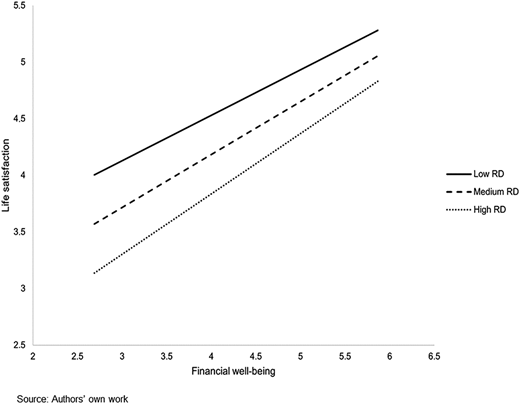
In addition, a simple slope analysis was conducted to establish how relative deprivation influences the relationship between financial well-being and life satisfaction at low, medium and high levels of relative deprivation as illustrated in Figure 3.
Figure 3 shows that, at low relative deprivation (1.598), the effect of financial well-being was 0.402 (p < 0.001), indicating a strong positive relationship. At moderate relative deprivation (3.253), the effect increased to 0.467 (p < 0.001) and at high relative deprivation (4.907), the effect was even stronger (0.533, p < 0.001). In addition to the simple slope analysis, the Johnson-Neyman technique (also known as a floodlight analysis) (Chaouali et al., 2019, pp. 1536–1537; Cui, 2022, p. 1146; Spiller et al., 2013, p. 282) was conducted. The results revealed that the Johnson–Neyman technique did not find any statistically significant transition point for relative deprivation’s moderating effect on the relationship between financial well-being and life satisfaction. Since the simple slope analysis indicated that the conditional effects of financial well-being on life satisfaction are significant at low, medium and high levels of relative deprivation, it can be assumed that the entire range is statistically significant, and therefore, the entire range represents the region of significance (Hayes, 2018). Consequently, H2 was supported, as relative deprivation had a moderating effect on the relationship between financial well-being and life satisfaction.
The results for H2 indicate that financial well-being consistently enhances life satisfaction regardless of the relative deprivation level, but the impact is amplified as relative deprivation increases. This could be, for example, due to financial stability providing additional psychological relief in the context of higher relative deprivation. Supported by the tenets of the causality orientations in self-determination theory (Deci and Ryan, 1985; Hagger and Hamilton, 2020), it seems to be important to consider socio-structural factors such as relative deprivation in conjunction with causality orientations such as financial well-being. Thus, the internal values and fulfilment associated with financial well-being play a strong role in how relative deprivation as an external socio-structural factor impacts life satisfaction.
5. Discussion and implications
The overall purpose of this study was to investigate the roles of financial well-being and relative deprivation in the relationship between CSSC and life satisfaction, contributing to conversations centred on financial well-being (Singh and Malik, 2022). More specifically, the mediating effect of financial well-being in the relationship between CSSC and life satisfaction, and the moderating effect of relative deprivation on the relationship between financial well-being and life satisfaction were explored. The implications of the findings are discussed keeping in mind that the results cannot be generalized to the credit-active South African population due to the unavailability of data on the credit-active employed population and due to the convenience sample drawn. However, the large number of younger consumers (66% between 20 and 39 years of age) in the sample is supported by recent statistics showing that Millennials and Generation Z, aged between 18 and 43 years, accounted for nearly two-thirds (62%) of all new credit originations in South Africa (TransUnion, 2020).
The results showed that financial well-being had a complementary mediating effect on the relationship between CSSC and life satisfaction. Controlling and managing spending-related behaviour according to internal standards and goals, an intrapersonal trait in the form of CSSC is associated with financial well-being and life satisfaction as anticipated by previous findings (Chatterjee et al., 2019; Collins and Urban, 2019; Hagger and Hamilton, 2020). Yet, our findings show that these interrelationships are more intricate. Consequently, it is important to consider the indirect relationship between CSSC and life satisfaction because financial well-being contributes to this positive association. In other words, even if one perceives volition and control over their spending, the association with life satisfaction is more fully explained by considering financial well-being as an intervening variable. This association is expected due to the autonomy orientation that is evident in CSSC, which increases financial satisfaction. Without considering financial satisfaction in terms of financial well-being, the association between CSSC and life satisfaction may seem trivial, which it is not. Financial institutions and marketers, therefore, have the opportunity to educate and assist their clients in controlling their spending behaviour to improve their financial well-being and, ultimately, life satisfaction. Marketers can create marketing messages showing what good financial well-being looks like and reward such behaviour. Rewards for reducing debt or increasing savings could be in the form of higher interest rates on savings or cash-back rewards. However, to obtain financial well-being and life satisfaction, one must control current spending, and here institutions can perhaps provide access to educational platforms that offer courses and tools on financial literacy topics (Fernández-López et al., 2024; Kumar et al., 2023), including spending control and its benefits for financial well-being and life satisfaction. This notion of improved literacy is supported by Das and Mahapatra (2023), whose study found that increased financial literacy results in increased financial well-being.
Another layer of complexity in the interrelationships between financial well-being and life satisfaction is explained when taking an external socio-structural factor, namely relative deprivation, into consideration. This novel view is offered by exploring social comparison in financial consumption behaviour (Xiao et al., 2022) using the unique theoretical lens of causality orientations in self-determination theory (Hagger and Hamilton, 2020). The negative relationship between relative deprivation and subjective well-being (or life satisfaction) found in this study is supported by findings from other studies (Jin, 2016; Özdemir, 2019). Interestingly, the moderating role of relative deprivation became positive when interacting with financial well-being, with the effect of financial well-being being the strongest at high levels of relative deprivation. This suggests that financial well-being could offset the mitigating effect of social comparison in the form of relative deprivation, if life satisfaction is the end goal. With only 38% of the South African population being credit-active (Parliamentary Monitoring Group, 2023), the respondents in this study may have a strong sense of gratitude or resilience for their access to credit, which allows them to focus on what they do have rather than what they lack, thereby contributing to their life satisfaction, even in the face of perceived deprivation. The study by Özdemir (2019) suggested that the reduced impact of relative deprivation could also be due to coping strategies where individuals with better-coping strategies reported higher life satisfaction. This view is aligned with another study by Keshavarz et al. (2021) stating that when individuals have hope (a form of positivity despite negative circumstances), it will protect them against feelings of relative deprivation. Also, a study by Zhao and Peng (2021) suggested that perceived social support can buffer the impact of relative deprivation. Considering the autonomy orientation of the theory at hand, when internal values and fulfilment of financial goals are very strong, an individual may not fall prey to subjectively viewing their life with lower satisfaction. Thus, when such internal values and fulfilment of financial goals are very strong, they offset external socio-structural factors such as relative deprivation by viewing such factors as supportive of volition and autonomy (Hagger and Hamilton, 2020). The cognitive aspect embedded in subjective life satisfaction means that the way consumers think about their lives is important, and mitigating relative deprivation through stronger financial well-being perceptions evoked through control and volition, may be beneficial. Mitigating one’s relative deprivation can perhaps be supported when financial institutions introduce tiered savings and investment plans that cater to different income levels to ensure that customers feel they have access to appropriate financial products regardless of their comparative financial status. For example, access to affordable luxury services (such as premium credit cards with exclusive benefits) to customers across different financial tiers may help to strengthen financial well-being perceptions, mitigating relative deprivation.
6. Theoretical and practical contributions
This study makes several theoretical contributions. First, by focusing on CSSC as an intrapersonal personality trait and an autonomous orientation owing to the definition relating to control and volition in spending behaviour, we address the call for research to gain a deeper understanding of such effects on financial well-being (She et al., 2023). Second, despite extensive research pertaining to self-control and well-being/life satisfaction (Lun and Bond, 2016; Ryan and Deci, 2006), as well as self-control in financial well-being (Biljanovska and Palligkinis, 2018; Miotto and Parente, 2015; Singh and Malik, 2022; Strömbäck et al., 2017), this is the first study to investigate financial well-being as a mediator between CSSC and life satisfaction. Specifically, we show that when considering the effect of an intrapersonal personality trait on financial well-being alone, a larger part of spending behaviour (as it relates to consumer well-being more broadly) remains uncertain. Thus, by incorporating life satisfaction into the study of financial behaviour using the novel causality orientations of self-determination theory, we provide insight into financial well-being as a mechanism, and why it contributes to consumer well-being, specifically life satisfaction. This is important because we now know that well-being is multifaceted, and as such, a ripple effect of one domain, such as financial well-being, may greatly impact life satisfaction. Indeed, it is through financial well-being that CSSC would also affect life satisfaction. In turn, this theoretical contribution opens multiple avenues for financial organisations to assist consumers in better financial decision-making.
In terms of practical contributions, the findings of this study suggest that certain actions are needed by financial organisations to assist consumers in controlling their spending behaviour with the intent to improve not only their financial well-being, but their overall life satisfaction as well. Some initiatives could include financial management tools for consumers such as real-time expense tracking apps or spending alerts to empower customers to better control their spending. Other initiatives can include periodic prompts to encourage consumers to save or incentives that reward self-controlled behaviour such as reaching budget targets. Coupled with these actions, this study suggests the need for financial organisations to educate and communicate with consumers on the bigger picture of how financial well-being influences life satisfaction (Kaur and Singh, 2024; Xiao and Yao, 2025). Here, financial institutions can offer targeted educational workshops and resources on topics such as debt management and financial goal setting to help consumers understand how improved self-control over spending can enhance life satisfaction (Sabri et al., 2024). Data analytics can perhaps be a valuable tool if it can analyse spending patterns and suggest areas for improvement, helping customers make informed decisions that enhance their financial well-being and, ultimately, their life satisfaction.
A final contribution entails the incorporation of a social factor (as called for by Singh and Malik, 2022), specifically social comparison (as called for by Xiao et al., 2022), into the investigation of financial well-being. We hereby uncover the moderating effect of relative deprivation on the relationship between financial well-being and life satisfaction. This study established that relative deprivation was less of a concern when high levels of financial well-being were evident. The autonomous orientation of self-determination theory (Deci and Ryan, 1985; Hagger and Hamilton, 2020) used in our article provides an innovative explanation for such interaction effects. Accordingly, we contribute by explaining how the detrimental effects of relative deprivation on life satisfaction may be mitigated by higher volition and control (autonomous behaviour) related to internal values that provide persistence in behaviour reflected in higher financial well-being and life satisfaction. This contribution to better understand social inequalities and their effect on consumer well-being is important to proactively address the possible negative consequences of such social inequalities that will always trouble society. Discovering that greater levels of financial well-being mitigate the feeling of relative deprivation, financial organisations are challenged to find ways of engaging with customers on different levels to inform and educate them on their financial well-being, irrespective of their comparative financial status. One way to do this may be to create personal financial dashboards that highlight individual financial health and progress, thereby focusing on personal financial metrics rather than social comparison with peers (Riitsalu et al., 2024). Another way may be to introduce peer comparison, where positive financial habits are identified across customer groups, showing that even small improvements can lead to better financial well-being (Kuang et al., 2019).
7. Limitations and future research opportunities
One of the biggest challenges when dealing with self-reported data is the issue of social desirability bias (Strömbäck et al., 2017) and subjective feedback. Given the sensitive and personal nature of CSSC, life satisfaction, financial well-being and relative deprivation, respondents may have felt the urge to respond in a manner portraying them in a good light, thereby providing specific responses to uphold appearances (Tangney et al., 2004; Xiao et al., 2009). Future studies could investigate using alternative measures and data collection methods. In this regard, more objective financial measures can be considered, such as debt-to-income ratio or credit limits and repayments (Abrantes-Braga and Veludo-de-Oliveira, 2019). Psychological measures can also be considered such as the ability of individuals to identify and complete their financial goals (Lacombe and Khatun, 2023). Methods such as experimentation and observation can be considered where participants are placed in a natural or controlled environment, and researchers can observe and record the resulting behaviour.
Another limitation is the online paid-for consumer panel sample, which limits the generalizability of findings. Future researchers should aim to include a more diverse range of participants in future studies, ensuring representation across various age groups. Also, the study design is cross-sectional and does not allow one to draw conclusions about directional effects, as it considers only the situation at hand (Campbell et al., 2015). The long-term effect of CSSC on financial well-being and life satisfaction and the influence of relative deprivation on the relationship between financial well-being and life satisfaction will only truly become evident when longitudinal research is conducted.
Given the positive relationship when relative deprivation interacts with financial well-being, more studies are needed between the tested variables in this study. In this regard, the impact of different coping strategies, such as task-, emotional-, and avoidance-orientation clarify the relationships coping strategies could be considered (Özdemir, 2019). Future research may consider including constructs such as gratitude and resilience, especially in highly differentiated developing countries. Future studies could also consider evaluating relative deprivation and life satisfaction in a specific context rather than in general. Also, we assumed that respondents engaged in upward social comparison with regard to relative deprivation, but when asked about life satisfaction, they might have a downward comparison mindset (Kim et al., 2018) or regard life satisfaction in isolation as opposed to in relation to peers. Future research could also explore how targeted financial education or personalised financial tools could possibly support financial well-being, which will alleviate feelings of deprivation. Finally, future studies could also examine whether spending alerts, prompts to save or rewards for self-controlled behaviour could contribute towards improved CSSC.
Finally, future studies could perhaps consider different theoretical lenses to explore the findings further. For example, recent literature introduced the concept of “mindful finance”, whereby individuals are encouraged to be more mindful about controlling their financial behaviours and decision-making (Sinha et al., 2021). Encouraging mindfulness has the potential to break financially destructive behaviour (such as engaging in excessive spending), hence improving financial well-being and consequently, overall well-being (Ryan et al., 2021; Schomburgk and Hoffmann, 2023; Singh and Malik, 2022). Another possible theoretical lens is the “hedonic treadmill”, which states that individuals tend to return to a relatively stable level of happiness (i.e. life satisfaction) despite significant positive or negative changes in their lives (Mathias et al., 2024). This theory is in contrast to the autonomy orientation in that it focuses on the human race’s drive to survive and not the attributing internal causes for behaviour used in the current study.
8. Conclusion
Less control over one’s spending contributes to lower levels of financial well-being and can have detrimental effects on an individual’s well-being and, consequently, the country’s economy. Therefore, it is crucial to better understand how CSSC influences people’s behaviour. This study measured the relationships between CSSC, life satisfaction, financial well-being and relative deprivation. The results showed financial well-being as an intervening variable between the relationship of CSSC and life satisfaction. Furthermore, relative deprivation showed a moderating effect on the relationship between financial well-being and life satisfaction, with financial well-being enhancing life satisfaction regardless of the relative deprivation level.
This article is partly based in part on the work from a PhD thesis (unpublished PhD thesis available from the University of Pretoria repository).
Funding: Open access funding was provided by the University of Pretoria. The study was funded by the Banking Sector Education and Training Authority, 475.4710.675000, Laureane du Plessis.