This study aims to conduct a bibliometric and content analysis of customer-to-customer (C2C) helping behaviour, with a specific focus on financial services and social media-mediated service interactions. C2C helping behaviour refers to voluntary actions by customers aimed at assisting other customers within or outside firm-mediated service environments. The study seeks to map the intellectual structure of the field, identify dominant themes and propose a research agenda to guide future inquiry in social media-mediated C2C helping behaviour in the context of financial services.
The study used the Bibliometrix R package and its web interface, Biblioshiny, for analysis. A total of 178 peer-reviewed articles were retrieved from Scopus and Web of Science using targeted keyword queries on C2C helping behaviour, financial services and social media. In addition, a qualitative content analysis was conducted on 11 articles that specifically focused on financial services.
The analysis reveals that C2C helping behaviour remains an underdeveloped and fragmented area of research within financial services as well as in the context of social media service interactions. One dominant theme of satisfaction shapes current discourse in the financial service domain, while six dominant themes of individuals, consumption behaviour, peer support, sales, human and citizenship shape discourse on social media focused on helping behaviour.
This is the first known bibliometric and content analysis focusing specifically on C2C helping behaviour in financial services and on social media-mediated interactions. By integrating quantitative and qualitative approaches, the study offers a more comprehensive understanding of the field, revealing theoretical gaps and providing specific direction for future research.
Introduction
The contemporary customer-to-customer (C2C) support service environment has evolved significantly, transforming customer interactions (Furrer et al., 2024). Traditionally limited to informal exchanges at physical branch locations and personal recommendations within social networks, the rise of social media platforms has fundamentally reconfigured C2C interactions across industries from traditional dyadic service provider-customer exchanges to complex, multidirectional networks featuring extensive C2C communications (Onofrei et al., 2022). According to a report by Kemp (2025), as of January 2025, there were 5.24 billion social media users around the world, equating to 63.9% of the total global population and about 86% of all adults aged 18 and older. In the financial services industry, the proliferation of social networking platforms has brought about novel spaces where customers are able to interact and assist one another in ways that shape service experience beyond institutional control. In these digital spaces, customers share a wide range of content, including financial advice, investment insights and product reviews (Hafez, 2021; Tatpornpan et al., 2023). These spaces serve as dynamic knowledge hubs that complement and challenge communications provided by financial institutions. Financial service institutions themselves, especially banks, are increasingly prominent in providing digital spaces that support C2C interaction in addition to customer-to-brand interaction (Ballouk et al., 2024; Hafez, 2021). Alongside firm-provided platforms, independent virtual spaces abound, enabling users to share insights and assist each other freely. Furthermore, financial influencers are gaining prominence across social media platforms, including YouTube, TikTok, Instagram and specialised forums (Keasey et al., 2025). Successful influencers cultivate active communities where followers engage in secondary C2C helping behaviours, answering each other’s questions, sharing experiences and providing emotional support regarding financial decisions. Undoubtedly, social media spaces have made C2C helping behaviour an integral part of modern financial services.
As also noted by van Tonder and Saunders (2025), C2C helping behaviour refers to voluntary prosocial actions that customers engage in to assist other customers. Research shows that peer support exerts positive influence on customer satisfaction and retention (Jiang et al., 2020). When customers help each other, e.g. answering questions or offering product tips, it creates a more supportive and interactive environment. This can make customers more satisfied with the brand or service experience. C2C helping can also foster a sense of belonging and connection among customers. In digital environments, particularly social media, C2C helping behaviour comes with additional benefits associated with accessibility and scalability. This is because social media enables customers to access support 24/7 from communities that transcend geographical and temporal limitations of traditional service channels. The significance of C2C helping behaviour is particularly pronounced in financial services, where customers face complex decisions involving significant risks and long-term consequences. Financial products often involve high cognitive processing demands, making peer advice and support an invaluable resource for decision-making (Hemrajani et al., 2023). Moreover, C2C helping behaviour can ease the burden of customer service representatives by allowing customers to address common issues on their own. As firms and independent interest groups in financial services increasingly leverage C2C support systems, understanding customer-helping behaviour has become a strategic imperative.
Despite the increasing prevalence of C2C helping behaviour in financial service environments, not much is known about the knowledge structure of the field. It is currently unclear what core theories and constructs underpin research in this area, especially in relation to financial services and social media service environments. This makes it difficult to establish cumulative knowledge or identify dominant perspectives explaining C2C helping behaviour in these contexts. This study aims to address this gap in knowledge by conducting a bibliometric and content analysis of C2C helping behaviour literature, with particular emphasis on financial services and social media platforms. Although C2C helping behaviour has been explored across various service contexts, research specific to financial services remains limited. A more established stream of literature, however, exists on C2C helping behaviour in social media-mediated environments across various industries. Given that financial service interactions are increasingly taking place on social media platforms, there is a strong rationale for integrating insights from this wider domain. By drawing connections between general social media-mediated C2C helping behaviour and the nascent research on financial services, this study helps surface conceptual overlaps, methodological trends and critical gaps. This dual focus is essential not only for understanding the state of knowledge but also for informing future inquiry into how financial services can better leverage C2C interactions in digital environments.
It is also important to note that while previous literature analyses have examined C2C helping communities in other high-involvement service sectors, particularly in healthcare (e.g. Ahuja and Shree, 2025) and in education (e.g. Rahim, 2021), none have taken a dual-domain approach as done in this study. Focusing on helping behaviour in the dual contexts of financial services and social media enables identification of research gaps and opportunities for theoretical cross-fertilisation between established and emerging research streams. Moreover, while important, helping behaviours in different high-involvement contexts are likely to vary in terms of motivation and/or consequences. In healthcare, reviews focus on patient support communities, where helping behaviour centres on therapeutic exchanges, sharing illness experiences and providing emotional support. In education, reviews concentrate on peer learning networks, emphasising cognitive outcomes and knowledge acquisition. In contrast, helping behaviour in financial services is often driven by information-seeking and decision-support needs (van Tonder et al., 2022; Yadollahi et al., 2024). Here, consumers assist each other by sharing financial knowledge, offering experiential advice, interpreting risk and building collective financial literacy. Mindful of the knowledge gaps and focusing on studies published up to March 2025, this review seeks to address the following research questions:
What is the current state of research production on C2C helping behaviours in financial services and in social media-mediated interactions?
What are the dominant knowledge themes shaping discourse on C2C helping behaviour in financial services and in social media-mediated interactions?
What are the key future research focus areas on C2C helping behaviour in financial services?
In addressing these objectives, the study contributes to a nuanced understanding of the C2C helping behaviour literature landscape, thereby facilitating knowledge on future research needs. The multidisciplinary nature of C2C helping behaviour research requires a study approach that can systematically map knowledge across disciplinary boundaries. C2C helping behaviour research in financial services and in social media-mediated contexts spans multiple disciplines, including marketing, consumer behaviour, economics and psychology as well as information and computer systems. Unlike narrative reviews that may inadvertently reflect author biases in source selection, bibliometric analysis employs quantitative techniques to objectively map knowledge areas (Linnenluecke et al., 2019). This provides a comprehensive overview of how knowledge has developed in this growing field of practice.
While previous bibliometric analyses have examined C2C helping communities in high-involvement service sectors such as healthcare, e.g. Ahuja and Shree (2025), and in education, e.g. Rahim (2021), none have taken a dual-domain approach as done in this study. Focusing on helping behaviour in the dual contexts of financial services and social media enables identification of research gaps and opportunities for theoretical cross-fertilisation between established and emerging research streams. Furthermore, while important, helping behaviours in different high-involvement contexts are likely to vary in terms of motivation and/or consequences. In healthcare, reviews focus on patient support communities, where helping behaviour centres on therapeutic exchanges, sharing illness experiences and providing emotional support. In education, reviews concentrate on peer learning networks, emphasising cognitive outcomes and knowledge acquisition. In contrast, helping behaviour in financial services is often driven by information-seeking and decision-support needs (van Tonder et al., 2022; Yadollahi et al., 2024). Here, consumers assist each other by sharing financial knowledge, offering experiential advice, interpreting risk, and building collective financial literacy.
Beyond mapping the current state of knowledge, the study provides an empirically grounded foundation for developing future research agendas. Moreover, by identifying gaps in the literature network and revealing under-represented theoretical perspectives, the study enables researchers to focus on knowledge production in areas that genuinely advance scholarly understanding rather than duplicating existing efforts. Moreover, this study also provides professionals in the financial service industry with insights that can contribute to a better understanding of C2C helping behaviour manifestations in their relevant contexts.
The article is structured such that the next section provides a comprehensive delineation of the methodological approach used, and this is followed by the presentation of findings. Thereafter, the findings are discussed and their implications outlined. The paper concludes by providing a summary of key insights relating to each of the focal research questions. The limitations of the current study are also outlined, and future research directions to mitigate the same are provided.
Methodology
An overview
In conducting a bibliometric review of literature on C2C helping behaviour, this study takes an integrative approach by including studies using the different methodologies. To maintain methodological integrity, enhance transparency and facilitate replicability, bibliometric literature reviews follow established protocols that guide the planning, execution and reporting process (Williams et al., 2021). This study followed a protocol previously used in past research, including in studies by Madanaguli et al. (2023) and Talwar et al. (2021). The process began with Step 1, planning the review, which involved identifying relevant keywords and selecting appropriate databases. Step 2 entailed designing selection criteria by defining the inclusion parameters, while Step 3 focused on data extraction, detailing the steps taken to identify the most relevant studies. The final step, data execution, entailed critically analysing the literature. Structured protocols, as used in this study, demand detailed reporting of methods, including search strategies, study selection and data synthesis (Casolaro et al., 2024; Williams et al., 2021). This enables other researchers to evaluate or replicate reviews easily and strengthens the quality and credibility of evidence, thereby contributing to evidence-based decision-making in business (Clark et al., 2020; Tranfield et al., 2003).
Database selection
A comprehensive search for literature was conducted using two major academic databases, Scopus and Web of Science. The key criteria in choosing these databases included disciplinary coverage and comprehensiveness, search functionality and accessibility and time span including currency. Regarding disciplinary coverage and comprehensiveness, the selected databases have strong coverage in marketing, consumer behaviour, psychology, information and computer systems and service research disciplines, ensuring access to the necessary peer-reviewed content that captures the wide breadth of C2C helping behaviour in financial service and social media service contexts. In terms of search functionality and accessibility, the selected databases offer advanced search capabilities, including keyword combinations and filtering options that facilitate efficient identification of relevant studies. Regarding the time span and currency, the chosen databases provide sufficient historical depth, as they extend back far in time period to capture how the concept of helping behaviour has been examined over the period. Moreover, these databases are regularly updated to include the latest findings on C2C helping behaviour. Furthermore, the two databases bring unique strengths to overcome possible individual limitations. Scopus, with its multidisciplinary scope, adds breadth to this review, which helps identify cross-disciplinary approaches to C2C helping behaviour. Web of Science, with its comprehensive collection of high-impact journals and its ability to track citation networks, was useful in revealing influential works and research networks in the field.
Search strategy and eligibility
The search strategy was developed through an iterative process that began with identifying key concepts from the research questions, which were later expanded into search terms following a preliminary literature review. Two key concepts were identified to capture the actors (customer to customer) and the behaviour (helping behaviour). For each concept area, keywords were developed by identifying a set of related terms and synonyms. The keywords were thereafter combined using Boolean operators to create the search string. To capture the two different contexts, two search strings were developed, each containing the keywords associated with the key concepts and differing in context, with one focusing on financial services and the other focusing on social media contexts. The use of two search strings allowed for mapping of unique knowledge structures, identifying dominant themes and relevant research gaps pertinent to the distinct yet connected contexts, in line with the core purpose of the study. The approach facilitated the examination of the relative development of research in each domain and the identification of opportunities for cross-domain learning and integration. The final search strings after a series of iterative stages were:
Search string 1: C2C helping behaviour in Financial Services
ALL (“customer-to-customer” OR “peer-to-peer” OR “C2C” OR “customer interaction”)
AND
TITLE-ABS-KEY (“helping behavior” OR “helping behaviour” OR “consumer help*” OR “customer support” OR “peer support” OR “customer help*” OR “customer citizenship behaviour” OR “customer citizenship behavior”)
AND
TITLE-ABS-KEY (“bank” OR “financial service” OR “financial sector” OR “financial industry”)
Search string 2: C2C helping behaviour on social media
ALL (“customer-to-customer” OR “peer-to-peer” OR “C2C” OR “customer interaction”)
AND
TITLE-ABS-KEY (“helping behavior” OR “helping behaviour” OR “consumer help*” OR “customer support” OR “peer support” OR “customer help*” OR “customer citizenship behaviour” OR “customer citizenship behavior”)
AND
TITLE-ABS-KEY (“social media” OR “social networking” OR “online” OR “virtual” OR “digital platform”)
The search string was implemented in each of the databases while accommodating database-specific syntax requirements. All searches were conducted in March 2025. To ensure the inclusion of only relevant studies, a set of eligibility criteria was established. Studies were required to meet all of the following criteria:
Publication period: Studies published up to March 2025, including early cites, were included.
Study focus: Only studies that focused on the C2C helping were considered. Articles that only considered customer help toward service providers were not included.
Study type: Only journal articles and conference papers were eligible.
Language: The study only included publications in the English language.
Subject areas: The search was limited to publications in the areas of business, management, economics, information and computer science and psychology.
The initial total number of articles retrieved for the social media string was 203 from Scopus and 6 from Web of Science, while the financial services string resulted in 16 from Scopus and 10 from Web of Science. Abstract reviews were then done to purify the search results so that only articles that covered helping behaviour targeted at fellow customers and not service providers were retained for analysis. A reference back check was done, and five more articles were added to the list in the initial financial services stream.
Data extraction
The data were exported in BibTeX format, including bibliographic information. Data combining and cleaning were then performed to merge Web of Science and Scopus datasets as well as to remove duplicates. The final dataset comprised 11 articles focused on financial services and 167 focused on online social media-mediated helping behaviour. Of the 11 publications identified as directly addressing C2C helping behaviour in the financial services domain, none were found to be directly focusing on customer-helping behaviour on social media platforms. This finding further underlines the underexplored nature of C2C helping behaviour in social media-mediated financial services contexts.
Data analysis
The extracted data were imported into the Bibliometrix package in R, as it supports bibliometric analysis through command-line functions. The analysis process used the Biblioshiny web interface for interactive exploration and visualisation.
The bibliometric analysis proceeded in three stages. The first stage involved performance analysis, which evaluated research output and key research constituents such as countries and publication sources. This was followed by frequent word analysis and conceptual structure analysis, with a focus on thematic patterns. This helped uncover topical areas within the knowledge field.
To complement the bibliometric approaches, an in-depth content analysis was conducted to better understand the core themes and significant findings within the C2C financial service helping behaviour literature. Although the bibliometric techniques provided a structural mapping of the research field, this qualitative content examination offered valuable insights by thoroughly investigating in detail the full articles in the financial services stream. Each of the 11 articles was downloaded and carefully read. The analysis followed the theory, context, characteristics and methods (TCCM) framework to enable a detailed understanding of how C2C helping behaviour is framed and where current research remains limited or inconsistent. The decision to conduct in-depth content analysis only on the financial services articles (n = 11) rather than the social media articles (n = 167) was based primarily on the fact that financial services C2C helping behaviour represents the primary focus and most underdeveloped domain in the study. Intensive analysis of this corpus provides more actionable insights for advancing knowledge in this specific area. Furthermore, the manageable size of the financial services corpus allowed for a comprehensive and detailed analysis of each article using the TCCM framework.
To ensure the credibility and reliability of the analysis, a quality assessment of the articles using established criteria adapted from systematic review guidelines was conducted. The assessment considered four dimensions, namely theoretical grounding, methodological rigour, empirical credibility and contribution clarity. The quality assessment revealed considerable variation across the articles, with higher-quality articles demonstrating strong theoretical foundations, employing appropriate methodological approaches such as structural equation modelling (SEM) with adequate sample sizes and providing clear contributions to understanding C2C helping behaviour. This quality assessment was applicable to articles assessed empirically rather than conceptually. The quality variations were considered in the synthesis of findings, with greater weight given to insights from higher-quality studies.
Results
Bibliometric analysis findings
Temporal evolution of research
The bibliometric analysis reveals a notably limited corpus of literature directly addressing customer-helping behaviour in financial services. Of the 11 publications identified as specifically addressing the domain of customer-helping behaviour in financial services, none were directly focusing on customer-helping behaviour on social media platforms. This is despite growing use of social media platforms, including online brand communities, by firms in the financial services industry.
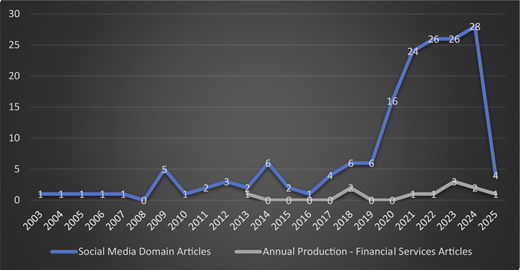
A longitudinal analysis, as shown in Table 1 and Figure 1, indicates that the earliest identified studies were published just over a decade ago, in 2013 for the C2C helping behaviour in the financial services domain and 2003 for the social media-mediated helping behaviour domain. There has, however, been slow expansion in knowledge production focused on financial services, with the overall average age of the articles being 3.73 and an annual percentage growth rate of 0%. In contrast, the social media domain is associated with significant levels of knowledge production, comprising 167 published articles, an average article age of 4.94 and an average annual growth rate of 6.5%. This suggests greater scholarly interest and a broader thematic scope in the social media-mediated context in comparison to the financial services sector.
Publication source
Findings on publication sources, refer to Table 2, show that there is no dominant journal associated with C2C helping behaviour in the two knowledge domains. Research on C2C helping behaviour in the financial services domain is dispersed across a range of journals, with no single publication outlet emerging as a central hub. The journals that have featured research in the sub-domain of financial services C2C helping behaviour include Abac Journal, European Business Review, International Journal of Bank Marketing, Journal of Psychology in Africa, Market-Trziste, Research Journal of Applied Sciences, Engineering and Technology, Social Responsibility Journal, South African Journal of Economic and Management Sciences, Sustainability (Switzerland) and WSEAS Transactions on Business and Economics.
Unlike the financial services domain, several key publication sources have emerged as relatively prominent contributors in the social media domain. The most significant publication outlets include conference proceedings and specialised journals. The Conference on Human Factors in Computing Systems – Proceedings and Proceedings of the ACM on Human-Computer Interaction lead with 12 publications each, followed by Computers in Human Behavior with five publications. The Journal of Services Marketing contributes four publications, while Psycho-Oncology has published three articles in this area. This concentration around human-computer interaction venues and psychology-focused outlets highlights the interdisciplinary nature of C2C, helping behaviour research in social media contexts, with a particular emphasis on understanding the technological and psychological dimensions of these interactions. Several health-related journals also feature prominently, depicting a customer-centric approach in the healthcare industry through social media platforms. These include Digital Health, Frontiers in Digital Health, Journal of Psychosocial Oncology and Journal of Affective Disorders, each with multiple publications.
The retail sector is represented through outlets such as the International Journal of Retail and Distribution Management and the Journal of Retailing and Consumer Services, highlighting the cross-disciplinary nature of C2C helping behaviour research.
A comparison between publication patterns in the two domains reveals important insights about the current state of C2C helping behaviour research. While the financial services domain shows limited but diverse publication outlets (10 journals for 11 articles), the social media domain demonstrates some concentration around human-computer interaction and psychology-focused outlets.
This publication pattern analysis highlights opportunities for greater interdisciplinary integration between domains, particularly in bringing the methodological rigour and theoretical frameworks from the more established social media research into the emerging financial services context of C2C helping behaviour.
Prominent countries' knowledge of production
Table 3 presents the distribution of scientific output by country. Analysis reveals some distinctive patterns across the financial services and social media domains, highlighting regional differences in research focus and intensity. In the financial services domain, research on C2C helping behaviour demonstrates a notable concentration in developing economies. Indonesia, Iran and South Africa emerge as the leading contributors, each accounting for five research articles. Saudi Arabia follows with three publications, while India has contributed two articles. Australia and Thailand complete the list with one publication each.
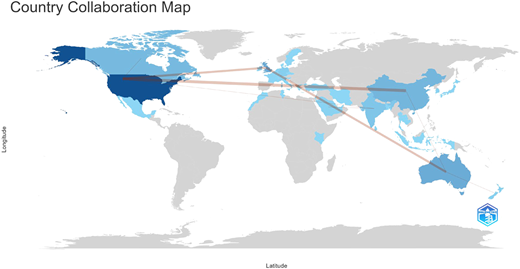
The research landscape for C2C helping behaviour in social media presents a markedly different geographic pattern. The United States dominates this research area with 158 articles, followed by Australia (52), Canada (42) and the United Kingdom (41). These four countries collectively account for a substantial majority of the research output in this domain. China emerges as the leading non-Western contributor with 26 articles, followed by India with 15 publications. International collaboration networks support the dominance of these countries, refer to Figure 2. Turkey (10), Germany (7) and New Zealand (6) form the next tier of contributors. Italy, Kenya and the Netherlands each have 4 publications in this domain.
Intellectual structure
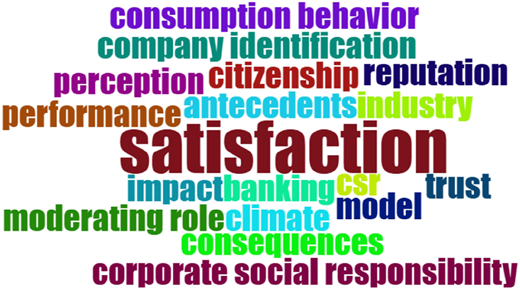
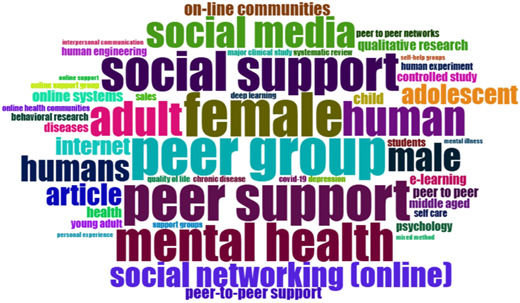
The frequent word analysis, refer to Figure 3, showed limited recurring terms in the financial service domain, with satisfaction appearing as frequent term, suggesting its centrality as an outcome metric for C2C helping behaviour research. Moreover, the thematic map in this domain had satisfaction as its sole research cluster. In contrast, frequent word analysis in the social media domain, refer to Figure 4, revealed a more developed and cohesive conceptual vocabulary. The most frequent terms centred on peer dynamics, with peer group, peer support and social support emerging as dominant concepts. This indicates a strong orientation toward examining C2C helping behaviour through support and group-based theoretical frameworks. Health-related terminology also featured prominently in the social media domain, with frequent mentions of mental health, health and specific conditions like depression and COVID-19, suggesting a strong focus on health-related online communities. Demographic terms such as female, adults and male, highlight attention to age and gender differences. Technology-specific terminology, including social networking, Internet and online communities, firmly establishes the digital context of this research stream, emphasising its technological foundation.
Unlike the financial domain, where research consolidates into a single cluster, the social media domain revealed six distinct clusters including. The “individuals” cluster connects with demographic descriptors like female, adult and male, reflecting attention to personal characteristics. The “consumption behaviour” cluster likely ties to online activities and digital engagement patterns. “Peer support” emerges as a central cluster, aligning with the most frequent terms “peer group” and “peer support” and highlighting the supportive function of C2C interactions. The “sales” cluster suggests commercial applications of C2C helping behaviour, while the “human” cluster indicates a focus on fundamental human experiences and needs within digital contexts. Finally, the “citizenship” cluster echoes civic engagement dimensions of online helping behaviours. This multi-cluster structure reveals the complex, interdisciplinary nature of C2C helping behaviour research in social media contexts compared to the more nascent financial services domain.
In-depth content analysis of financial domain literature
This section presents findings from a content analysis of eleven articles on C2C helping behaviour in the financial services domain. The TCCM framework was employed to systematically analyse the content of the publications in terms of theoretical foundations, research settings, key constructs and methodological approaches used in this emerging research stream.
Theoretical foundations
The analysis reveals that research on C2C helping behaviour in financial services draws on several established theoretical frameworks, including the social exchange theory, the social identity theory and the relationship marketing theory, with no single theory dominating the field. The application and integration of the theories reveal both opportunities and limitations in current scholarship.
Social exchange theory emerges as particularly influential, though its application in financial services contexts requires careful consideration of the unique characteristics of financial advice-giving. Traditional social exchange theory suggests that individuals engage in helping behaviours based on anticipated reciprocity and perceived benefits. However, in financial contexts, the application of this theory becomes more complex due to the inherent risks associated with financial decision-making and the potential for advice to have long-term consequences. While some studies (e.g. van Tonder and De Beer, 2018) successfully apply social exchange theory to explain how positive service experiences motivate customer citizenship behaviours (CCBs), the theory may be insufficient to account for situations where customers provide financial advice without expecting direct reciprocity, potentially motivated by altruistic concerns or community building. This limitation suggests the need for extending social exchange theory to incorporate prosocial motivations and community-oriented outcomes beyond individual reciprocity.
The social identity theory provides another important theoretical lens, particularly relevant in explaining how corporate social responsibility (CSR) initiatives influence customer-helping behaviours through consumer-company identification, refer to Fatma et al. (2022). However, the application of social identity theory in financial services contexts comes with interesting tensions. While the theory effectively explains how customers develop emotional connections with financial institutions that motivate citizenship behaviours, it may underestimate the role of financial self-efficacy and expertise in shaping helping behaviours. Customers with higher financial literacy may engage in helping behaviours not primarily due to organisational identification but due to intrinsic motivations to share knowledge and improve financial inclusion. This suggests that social identity theory, while useful, requires integration with competency-based theoretical frameworks to fully explain C2C helping behaviour in financial contexts.
Relationship marketing theory serves as a broader theoretical foundation in studies emphasising the importance of building and maintaining customer relationships. Relationship quality indicators such as customer satisfaction and commitment have been linked with the promotion of citizenship behaviours within this framework; refer to, for example, van Tonder and De Beer (2018) as well as Wiwoho et al. (2023).
The innovative application of gift-giving literature by van Tonder and Saunders (2025) represents a promising theoretical development that challenges conventional service-centric perspectives. Gift-giving theory reframes customer-helping behaviour as a form of social exchange that transcends economic calculation, emphasising the symbolic and relational aspects of peer support. This theoretical lens is particularly valuable in financial contexts where advice-giving may be motivated by desires to demonstrate expertise, build social capital or contribute to community welfare rather than expect direct reciprocity. However, gift-giving theory also raises important questions about power dynamics and potential negative consequences when financial “gifts” prove harmful to recipients. This theoretical framework requires further development to address the ethical dimensions and potential risks associated with peer financial advice.
Research contexts
As indicated, research on C2C helping behaviour in financial services has been conducted primarily in emerging economies. While the review focused on financial services in general including banks, it is banks that serve as the primary organisational context of the studies so far, with studies examining various banking settings including regional development banks and rural banks (refer to Harsono et al., 2021), Internet banking and electronic banking services refer van Tonder and De Beer (2018).
Characteristics and constructs
The content analysis identified several key characteristics and constructs examined in relation to C2C helping behaviour including:
CCB, which serves as a central construct across most studies with helping behaviour, is typically examined as one of its dimensions alongside advocacy, feedback, tolerance and positive word-of-mouth. Studies operationalise helping behaviour as voluntary actions aimed at supporting other customers, such as assisting them in using banking services safely and correctly. The literature positions helping as beneficial both to customers receiving assistance and to financial institutions that gain from enhanced service experiences without additional costs.
CSR appears as a significant antecedent of helping behaviour in studies such as Fatima and Khan (2023) as well as Norouzi and Asl (2023). Research examines how customers' perception of a bank’s CSR initiatives influences their engagement in citizenship behaviours, either directly or through mediating variables such as customer engagement, consumer-company identification, trust and satisfaction.
Service quality is another important construct in this field of studies. Norouzi and Asl (2023) investigated the mediating effect of perceived service quality on the relationship between CSR and helping behaviour.
Relationship quality factors including customer satisfaction, commitment and trust have been identified as significant drivers of helping intentions in studies such as van Tonder and De Beer (2018) and Zidehsaraei et al. (2024).
Cultural factors including similarity of values, religious values and collectivist orientation are also considered important in understanding helping behaviour (Zidehsaraei et al., 2024).
Methodological approaches
The analysis reveals a strong preference for quantitative research designs across the literature, with cross-sectional surveys being the dominant approach. These surveys typically employ structured questionnaires with Likert scales to measure respondents' perceptions and intentions related to helping behaviour and its antecedents.
Sampling techniques include convenience sampling, purposive sampling and quota sampling. Several studies acknowledge limitations related to non-probability sampling methods, often necessitated by lack of access to comprehensive population lists. Sample sizes varied considerably across studies, ranging generally from approximately 200 to 450 respondents.
SEM emerges as the primary analytical technique used to test hypothesised relationships. This typically involves a two-step approach with confirmatory factor analysis first conducted to assess measurement properties, followed by path analysis to examine direct and indirect effects between constructs. Many studies employ bootstrapping techniques to verify the significance of mediation effects.
Other analytical approaches include regression analysis, exploratory factor analysis, multinomial logistic regression and comparative tests such as the Mann–Whitney test. One study by van Tonder and Saunders (2025) adopts a conceptual approach, drawing on existing literature to propose a research agenda for understanding customer-helping behaviour from a gift-giving perspective.
Common methodological limitations acknowledged across studies include cross-sectional designs that limit causal inferences, potential common method bias from self-reported data collected at a single point in time and limited generalisability due to sampling approaches and specific research contexts.
Discussion and future research propositions
The bibliometric content analysis of C2C helping behaviour literature reveals several significant patterns across the financial services and social media domains. These findings contribute to a deeper understanding of this emerging research area and highlight important research gaps.
The big disparity in publication volume between the domains indicates that C2C helping behaviour remains significantly underexplored in financial contexts despite its potential importance. This disparity likely reflects the traditionally provider-centric view of financial services, where customer interactions are mediated through the institution rather than occurring directly between customers.
The geographic concentration of financial services research in developing economies contrasts sharply with social media research predominantly conducted in Western countries. This pattern suggests that C2C helping behaviour may be particularly salient in contexts where financial service markets are developing. This pattern also indicates a significant opportunity for research expansion into developed financial markets, where digital transformation is rapidly changing customer interaction patterns.
Keyword analysis reveals fundamentally different research orientations across domains. Financial services research emphasises satisfaction, reflecting a marketing and service management perspective. In contrast, C2C helping in social media research prioritises peer support, health contexts and online communities, drawing from psychology and information systems approaches. This terminological divergence demonstrates the disciplinary siloing that characterises current research and highlights opportunities for theoretical integration. The identification of six distinct research clusters in social media compared to just one in financial services further emphasises the nascent state of financial services research. While social media research has developed specialised sub-streams examining individuals, consumption behaviour, peer support, sales, human factors and citizenship, financial services research has not yet achieved similar differentiation. This suggests that financial services research has significant room for growth in developing specialised research streams addressing different aspects of C2C helping behaviour.
While the analysis highlights C2C helping behaviour in financial services predominantly focuses on satisfaction, reflecting a service management perspective centred on firm outcomes, the more developed social media domain offers immediate, actionable insights for theoretical cross-fertilisation. Financial service institutions can significantly enrich their understanding and leverage of existing C2C interactions by adopting frameworks prevalent in social media contexts, particularly those related to peer support and social support.
Content analysis of financial services articles reveals a predominant focus on traditional marketing theories such as social exchange theory and relationship marketing theory, with limited application of theories addressing digital transformation or peer support dynamics. The innovative application of gift-giving literature in the study by van Tonder and Saunders (2025) represents a promising direction for theoretical development that could bridge these domains by reconceptualising helping behaviour as a gift exchange occurring within complex social networks rather than simply as CCB.
Methodologically, financial services research relies heavily on cross-sectional surveys and structural equation modelling, with limited methodological diversity. This suggests opportunities for methodological innovation, particularly through longitudinal designs that capture the dynamic nature of helping relationships or qualitative approaches that provide deeper insights into helping processes and motivations.
The analysis reveals generally positive orientations toward C2C helping behaviour in financial services. While so, it is important to acknowledge contradictory findings and alternative perspectives that add nuance to knowledge in this important area. Research by Kim and Yi (2017) highlights the potential negative consequences of receiving help from other customers, including feelings of embarrassment and loss of face. In financial contexts, these negative effects may be particularly pronounced due to the personal and sensitive nature of financial situations. Customers receiving peer financial advice may experience shame about their financial literacy levels or embarrassment about their financial circumstances, potentially undermining the intended benefits of C2C helping behaviour.
These findings collectively point to the need for more integrated, contextually sensitive research that examines how technological, cultural and institutional factors shape C2C helping behaviour across different financial services contexts.
Future research agenda
Based on the bibliometric and content analysis of the literature, this study identifies seven promising themes for future research, refer to Table 4. The eight themes represent promising directions for advancing understanding of C2C helping behaviour in financial services. By addressing these research gaps, scholars can develop more comprehensive theoretical frameworks that account for the unique characteristics of financial services while drawing insights from the more established social media literature. Such research would not only contribute to academic knowledge but also provide practical guidance for financial institutions seeking to harness the potential of C2C helping behaviour to enhance service experiences and build stronger customer communities.
Theoretical contributions
This study makes several important theoretical contributions to understanding C2C helping behaviour across financial services and social media domains.
First, our bibliometric analysis reveals distinct scholarly landscapes between the domains. While C2C helping behaviour in social media has developed into a substantial research stream with multiple identifiable clusters of peer support, consumption behaviour, individuals, sales, human and citizenship and financial services research remains nascent and unified in a single conceptual cluster. This divergence indicates different maturity levels in theoretical development, with social media research demonstrating greater theoretical pluralism and specialisation compared to the relatively embryonic theoretical foundation in financial services. This finding establishes a baseline for theoretical cross-fertilisation between domains.
Second, our content analysis of C2C helping behaviour in financial services literature identifies unique theoretical positioning around satisfaction as a central outcome variable, whereas overall C2C helping in social media research prioritises peer dynamics and support mechanisms. This contrast suggests that financial services research conceptualises helping behaviour primarily through a service management lens focusing on firm outcomes, while social media research adopts psychological and social support frameworks centred on peer relationships. This insight challenges the theoretical assumption that helping behaviour operates through identical mechanisms across service contexts and highlights the need for domain-sensitive theoretical models.
Finally, our geographic analysis reveals theoretical contributions predominantly emerging from developing economies for financial services versus developed Western nations for social media. This pattern suggests that theoretical development may be influenced by contextual factors such as institutional maturity and cultural dimensions. Theoretical frameworks developed in emerging financial markets, where informal helping networks might be particularly salient, may offer novel insights applicable to social media contexts where similar peer support dynamics operate despite technological differences.
In summary, this study advances theoretical understanding by mapping the conceptual territories of C2C helping behaviour research, identifying distinctive theoretical orientations between domains and recognising the geographic distribution of theoretical contributions. These insights lay the groundwork for more integrated theoretical development that acknowledges both the unique characteristics of different service domains and the universal aspects of customer-helping behaviour.
Practical implications
The findings on C2C helping behaviour across financial services and social media domains offer several valuable practical implications for managers, policymakers and practitioners in the financial sector.
First, based on empirical evidence showing positive relationships between helping behaviour and customer response, e.g. Wiwoho et al. (2023), financial service providers should strategically design service environments, both physical and digital, that enable and encourage customer interactions and mutual assistance. This might include creating dedicated community spaces within digital banking platforms where customers can share experiences, answer questions and provide guidance to peers navigating complex financial products or services.
Second, the content analysis reveals empirical evidence linking CSR initiatives to increased C2C helping behaviour through enhanced customer-company identification (Fatma et al., 2022; Norouzi and Asl, 2023). The link between CSR and C2C helping behaviour suggests that banks should strategically communicate their CSR initiatives to customers. CSR activities can foster customer-company identification, enhance trust and ultimately promote citizenship behaviours, including customer helping. Financial institutions should prioritise CSR initiatives that align with customer values and communicate these efforts transparently to build the psychological connections that motivate helping behaviour.
Third, the technological transformation of financial services creates both challenges and opportunities for C2C helping behaviour. As organisations increasingly digitise services, they should ensure that digital platforms incorporate features that support rather than inhibit C2C interactions. This might include integrated chat functions, community forums, ratings systems for advice quality or peer-to-peer knowledge bases. The disparity in research focus between domains suggests financial institutions could learn from social media platforms' success in fostering supportive communities.
Finally, regulatory bodies and financial literacy advocates should recognise the potential of C2C helping networks as complementary mechanisms to formal financial education initiatives. Peer-to-peer assistance may play a particularly important role in contexts where formal financial infrastructure is developing. Policymakers could support these informal learning systems by providing frameworks, guidelines, or resources that ensure the accuracy of shared information while preserving the authenticity and accessibility that make peer advice valuable.
By implementing these recommendations, financial service providers can harness the power of C2C helping behaviour to enhance service experiences, build stronger customer relationships and potentially reduce service costs while simultaneously creating more inclusive and supportive financial communities.
Conclusion and limitations
This study set out to conduct a bibliometric assessment of C2C helping behaviours literature, focusing specifically on financial services and social media service interactions. This analysis is particularly relevant given the growing important role of digital platforms in facilitating consumer engagement and the potential that such platforms hold in influencing customer perceptions of service value in the financial sector. Conclusions drawn in relation to each of the research questions are that:
RQ1 Current levels of research on C2C helping behaviour
The findings indicate that academic research on C2C helping behaviours within financial services and social media service interactions remains significantly underdeveloped. Publications directly addressing C2C helping behaviour in financial contexts are scarce, with none found examining such interactions in social media-based settings. Despite increased digitalisation and the growing role of social media in commerce, the financial sector trails other service industries in research attention on social media service interactions. This represents a substantial research opportunity, as current literature fails to adequately capture the unique complexities, risks and dynamics involved in peer financial guidance.
RQ 2 Key knowledge themes
The analysis revealed one primary knowledge theme of satisfaction in the financial service domain, with satisfaction reflecting an emphasis on positive organisational and customer outcomes from helping behaviours. However, this theme is narrow, neglecting more nuanced aspects of peer interactions that may be unique to financial markets. Moreover, current research typically positions helping behaviour as a component within the broader construct of customer citizenship rather than as a central research focus, indicating a need to elevate C2C helping behaviour as a primary analytical perspective.
RQ 3 Future research directions
Several promising research directions are recommended, including studies aimed at investigating how financial product characteristics influence C2C helping patterns, exploring how individual risk tolerance affects giving and receiving peer financial advice and examining institutional and platform design influences on C2C support. Other proposed research areas include cross-cultural analyses of helping and advice-seeking norms as well as studies on potential negative outcomes of peer support, including decision paralysis and misinformation spread.
The bibliometric methodology, while valuable, has inherent limitations, which need to be borne in mind including the fact that it may not capture theoretical depth or qualitative richness of individual studies. To minimise this limitation, the articles on financial services in the analysis were downloaded and individually examined to analyse content in the full paper. Another limitation of this study relates to the limited publications in specific indexed databases used. Complementary systematic reviews and in-depth qualitative content analyses, particularly those focused on social media helping behaviour, are recommended, as they may provide a more comprehensive perspective in future research.