


The purpose of this paper is to analyze how farmers are reducing vulnerability of rain‐fed agriculture to drought through indigenous knowledge systems (IKS) in the Atankwidi basin, north‐eastern Ghana.
This paper draws on combined qualitative and quantitative research methods and data. First, the paper draws on qualitative data generated from in‐depth interviews and focus group discussions from purposively sampled farmers in the Atankwidi basin. It also draws on a survey conducted on 131 systematically and randomly sampled households in three communities of the basin, namely Yua, Pungu and Mirigu.
The results show that farmers are planting multiple indigenous drought resilient crop varieties and employing different rounds of seeding and or staggering planting between multiple farms. They are also applying indigenous forms of organic manure, checking soil erosion through grass strips and stone terracing and adopting paddy farming for improving soil and water conservation towards enhancing plant adaptation to drought. The paper therefore, asserts that through conscientious effort, farmers are reducing vulnerability of rain‐fed agriculture to drought through indigenous knowledge systems of drought risk management.
The paper recommends that capacity for managing vulnerability to drought at the local level, including the Atankwidi basin, can be enhanced by incorporating IKS into District Development Planning (DDP) and giving priority to the strategic role of IKS in climate change adaptation planning.
This paper fulfills a need for researching the relevance of IKS for reducing vulnerability of rain‐fed agriculture to drought in particular, and enhancing adaptation to climate change in general in the quest for promoting Endogenous Development (ED) in Africa.
1 Introduction
This paper analyzes how farmers are reducing their vulnerability to drought in rain fed agriculture through indigenous knowledge systems (IKS) in the Atankwidi basin, northeastern Ghana. In Yua, a rural community in the Atankwidi basin, farmers expressed their perception of drought risk in the local parlance as war ka saãgeni tiηa. Although this literally means “drought does not destroy the land”, it is interpreted to mean that “drought does not necessarily lead to hunger”. This expression reflects local farmers understanding of drought risk in rain fed agriculture but also their ability to minimize drought risks in the Atankwidi basin. Thus, farmers are aware of their vulnerability to drought in rain fed agriculture. They express concern about its adverse impact on yields. Nonetheless, they are responding with their own IKS to sustain rain fed agriculture, particularly food crop farming as a primary livelihood under such climatic variability.
Studies show that Africa remains one of the most vulnerable continents to climate variability and change because of its exposure to multiple stressors and low adaptive capacity (IPCC, 2007). Currently, low yields from rain fed agricultural systems are partly caused by recurrent droughts and this has contributed in part to high incidence of poverty in the Atankwidi basin and northeastern Ghana at large. In the entire Upper East Region (UER), including the Atankwidi basin, consumption poverty is widespread and manifest in hunger and malnutrition. Hunger is caused by food shortages in the “lean season” (June‐July) known in the local seasonal calendar as kom taam. For instance, hunger and famine in the UER intermittently give rise to food relief programmes supported by the Government of Ghana (GOG), international relief agencies and non‐governmental organizations (NGOs). For drought prone areas such as the Atankwidi basin, the IPCC (2007) projects that there will be increased risks of food and malnutrition. Thus, far, it is clear that extreme climatic events such as drought impact on rain fed agriculture negatively (Houghton et al., 2001). Hence, every region will need to plan adaptation to climate change by considering the nature of regional impact (Smith and Mendelsohn, 2006) and the innovative ways by which local farmers are dealing with their vulnerability to drought.
This paper attempts to elucidate the role of IKS for dealing with farmers' vulnerability to drought in rain fed agriculture in the Atankwidi basin. This focus of the paper serves a double purpose. First, this paper attempts to document IKS for addressing drought related vulnerability in rain fed agriculture. Although indigenous knowledge (IK) is increasingly recognized as a science, it lacks behind mainstream and or Western sciences in documentation and this has affected the balance in the co‐evolution of the two sciences. Second, it is relevant for supporting evidenced based policy making for addressing drought related vulnerability in northeastern Ghana. Strategic planning for addressing vulnerability to drought will require an understanding of the innovative ways farmers themselves are adapting rain fed agriculture to drought and the answer lies mainly in their IKS. Thus, the presence of adaptive capacity is a necessary condition for the design and implementation of effective adaptation strategies for minimizing the harmful outcomes from climate change (Brooks and Adger, 2005).
This paper is structured in eight parts, this introductory section being the first part. The second part entails a brief description of the study area and methodology for the study. In the third part, I present a theoretical framework on the double structure of vulnerability and role of IK for managing vulnerability. In part four, I examine the broader subject of climatic variability with a focus on drought in the Volta Basin. The vulnerability of rain fed agriculture to drought in the Volta Basin and the Atankwidi basin in particular is also discussed here. Part five entails an analysis and discussion of empirical data on the role of IKS for reducing vulnerability to drought in rain fed agriculture. In part six, the findings are further discussed within the framework of endogenous development (ED) in Africa. Thereafter, the implications of the findings for policy planning and development are examined in part seven. Finally, the paper is concluded in part eight.
2 The study area and methodology
The study was conducted in the Atankwidi basin of UER, northeastern Ghana (Figure 1). The Atankwidi basin is part of the White Volta Basin which is a sub‐basin of the larger Volta Basin of Ghana and West Africa. The Atankwidi is largely located in the Kassena‐Nankana East and Kassena‐Nankana West Districts. These two districts are part of the eight districts which make up the UER of Ghana. In the northern most part, the Atankwidi basin shares boundary with southern Burkina Faso so that some of its catchment extends into that country too. The Atankwidi basin is largely populated by two ethnic groups. These include the Kassem and Nankane speaking people linguistically, classified as Grusi and Nankansi, respectively.
In the Atankwidi basin and the UER at large, farmers mainly practice rain fed agriculture on a subsistence scale in a single rainy season from May to September. Hence, their major preoccupation during the rainy season is crop production but in the off season, they concentrate on rearing poultry and livestock. Most households maintain multiple farms but the compound farm, often situated in the immediate surroundings of compounds, is the main farm. These compound farms (Sammani) are sited on family lands and handed down from generation to generation within the purview of traditional systems of land tenure. In addition, many farmers also keep valley bottom, river bank or distant bush farms to complement compound farms (Derbile, 2010).
This paper draws on some of the data from a larger study on livelihoods and environmental change in three study communities in the Atankwidi basin, northeastern Ghana. The study design combined qualitative and quantitative approaches to data collection and analysis. The study communities including Yua, Mirigu and Pungu were purposively sampled from the basin because they are some of the most affected by environmental change, especially desertification. The choice of these communities was also informed by my past research experiences and knowledge of the basin and the need to spread the distribution of the communities across the basin and the two main ethnic groups in the district. Thus, Yua and Mirigu were selected as Nankane speaking communities while Pungu, was selected as a Kassem speaking community.
This paper draws on the larger study in two ways. First, it draws on qualitative data generated from Yua, a community that was sampled on purpose for in‐depth qualitative studies. Data collected from five in‐depth interviews and four focus group sessions were drawn on for qualitative analysis. The in‐depth interviews were conducted among three male and two female farmers, all of whom were heads of households. The sampling was purposive and informed by their experience and knowledge in farming. Similarly, focus group discussions, comprising an average of seven discussants were conducted among farmers at the community level. Two focus group discussions were conducted among male farmers and two among female farmers. All discussants were carefully selected through purposive sampling with the help of a community facilitator to ensure that the discussants were knowledgeable farmers. Second, this paper also draws on quantitative data from a complementary survey that was conducted among 131 randomly sampled households across all three study communities in the basin. The survey allowed for testing the statistical incidence of some emerging issues on IKS arising from the application of qualitative methods in the study.
3 Theoretical and conceptual framework: vulnerability and role of IK
The concept “vulnerability” has given rise to a more comprehensive understanding of the causes of “natural disasters”. As a departure from past understanding that natural disasters were purely caused by natural hazards, contemporary perspective arising from vulnerability science, consider the human factor as playing a role in whether “natural hazards” lead to “disasters” or not. Although definitions of vulnerability vary, the thrust focuses on the integrated nature of vulnerability with the human factor as a focal point. For instance, the United Nations International Strategy for Disaster Reduction (UNISDR) views vulnerability as the characteristics of a community, including the physical, social, economic and environmental factors that make it susceptible to the damaging effects of a hazard. Vulnerability, it maintains varies significantly within a community and over time as a result of the varied characteristics of individuals and households (UNISDR, 2009, pp. 12‐13). Thus, human centeredness remains paramount in the theory on vulnerability as recognized by the United Nations Development Programme (UNDP) in its concept of human vulnerability. According to the UNDP, human vulnerability is holistic and includes the vulnerability of social and economic systems, health status, physical infrastructure and environmental assets that collectively define the broad picture of vulnerability (UNDP, 2004, p. 11). Applied to the more specific issue of climate change, the IPCC defines vulnerability as the degree to which a system is susceptible to, or unable to cope with, the adverse effects of climate change, including climate variability as a result of its adaptive capacity (Parry et al., 2007, p. 783). In this respect, the IPCC relates vulnerability to both the exposure and the adaptive capacity of communities to environmental hazards. By implication, not only are individuals, households and communities vulnerable to the extent to which hazards occur but their vulnerabilities are also defined by their varied abilities to cope, adapt or recover from the impact of the hazard as influenced by their varied characteristics. Thus, vulnerability and its opposite, security are determined by the degree of risk exposure, coping capacity and recovery potential (Blaikie et al., 1997, p. 59).
This review brings to the fore the dual nature of vulnerability, an analytical framework that informs this paper. According to Chambers (2006, p. 33), vulnerability has two sides. It comprises an external side which refers to the risks, shocks and stress to which an individual or household is subject arising from exposure to a hazard, in this case drought. The second side is the internal side, dependent on adaptive capacity and comprising a state of defencelessness, meaning the lack of means to cope without damaging loss, which could lead to economic impoverishment, social dependence, humiliation or psychological harm (Chambers, 2006, p. 33). Similarly, Bohle (2001) describes the external side of vulnerability as comprising the exposure to risks and shocks in contrast to the internal side which refers to the capacity to anticipate, cope with, resist and recover from the impact of a hazard. It is this distinction between the exposure to external threats and the ability to cope that is described as the “double structure” of vulnerability in the social sciences (Van Dillen, 2004). The framework that this paper draws on for analysis is the double structure of vulnerability conceptualized around drought, the hazard in this context (Figure 2).
The framework posits that on one hand, farmers in the Atankwidi basin are exposed to drought risk arising from climate variability in the practice of rain fed agriculture. This physical exposure to drought and its varied manifestations in rain fed agriculture constitutes the internal side of vulnerability to drought. On the other hand, farmers are employing IKS of drought risk management for reducing their vulnerability and or adapting[1] rain fed agriculture to drought. Thus, the application of such IK enhances adaptation to drought and the experiences in outcomes including successes and challenges are accumulated over time as strengths and limits of IKS for managing vulnerability to drought.
IK as applied in this framework may also be referred to as IKS, local knowledge, traditional knowledge or local people's knowledge (Arce and Fisher, 2003). IK refers to the unique, traditional, local knowledge existing within and developed around the specific conditions of people indigenous to a particular geographic area (Nuffic and UNESCO, 1999, p. 10). They stress that IK is embedded in the community and is unique to a given culture, location or society. Some authors also describe IK as accumulated knowledge, skill and technology of the local people derived from systems of production and consumption. It is said to be dynamic and respond to challenges through local adaptations, experimentation, and innovation under diverse and heterogeneous conditions. These successful adaptations are preserved and passed on from one generation to another through oral and/or experimental means (Adger et al., 2007; Warren, 1996). Thus, in the opinion of Niarmir, IK is ever changing and very often borrows selectively from outsiders (Niarmir, 1995; Warren, 1996). Since IK is closely, related to survival and subsistence, it is said to provide a suitable basis for local‐level decision‐making on issues relating to food security and natural resource management (Nuffic and UNESCO, 1999, pp. 10‐11).
4 Vulnerability: drought and rain fed agriculture in the Volta Basin
The Atankwidi basin falls within the tropical continental climatic zone (Dickson and Benneh, 1988). It is part of the larger climatic conditions of the Volta Basin and West Africa. The climate is semi‐arid and characterized by pronounced wet and dry seasons, influenced by two oscillating air masses, the north‐east trades and the south‐west monsoon winds. Thus, the influence of these air masses has resulted in a single rainy season with monthly totals increasing gradually from March and peaking in August before declining (DGRD, 1992). Annual rainfall for the Guinea Savannah of the Volta Basin is estimated at around 1,200 mm/year (Kunstmann and Jung, 2005).
The incidence of drought in the Volta Basin is part of global climate change, especially global warming attributable to the greenhouse effect. Since the historic droughts of the 1970s, West Africa has been described as drought prone (Jung and Kunstmann, 2007), although mixed climatic conditions persist. The 1930s and 1950s were wet decades, while the 1970s and 1980s were very dry decades. In particular, 1983‐1984 were drought disaster years during which wildfires burnt large parts of the rainforest including farmlands in Ghana. This dry period lead to widespread hunger in the country. Since 1990, mixed scenarios (above and below average) annual rainfall years comparable to that in the 1940s and before 1930 have been recorded (Oguntunde et al., 2006). However, the twentieth‐century has shown a large variability in rainfall patterns in West Africa (Neumann et al., 2007). The post 1970 witnessed a significant decline in average annual rainfall. From a mean of 1,100 mm/year over the period (1901‐1969), it declined to 987 mm/year over the period (1970‐2002). Once this single “outlier” is accounted for, no clear trend remains of rainfall pattern in the Volta Basin (Oguntunde et al., 2006). While some researchers suggest a recovery of rainfall in the sub‐region (Nicholson, 2005), a decline in rainfall amount and duration is observed by others for the Volta Basin. Thus, rainfall deficiency increased since the early 1970s, and moderate to severe drought has occurred with a return period of approximately nine years. High impacting droughts with areal extents of 50 percent or more in the basin occurred in 1961, 1970, 1983, 1992 and 2001 (Kasei et al., 2010). Although rainfall has been variable over the past few decades, a decreasing trend has been observed since the discontinuities of the 1960s and 1970s (Oguntunde et al., 2006). This decrease in rainfall ranged from 15 to 30 percent in West Africa (Kasei et al., 2010). According to Kunstmann and Jung (2005), most significant trends in precipitation are negative for the Volta Basin. Thus, droughts are common in northern Ghana (Laux et al., 2007; Kasei et al., 2010). Around Tamale, in northern Ghana, a dry spell of seven days can be expected once a year in June and once in every four years in September during the rainy season (Kasei and Sallah, 1993). Moving forward, climate specialists predict a mix of droughts and floods of unusual magnitudes for West Africa that will threaten human security (IUCN, 2004; IPCC, 2007).
For West Africa, drought is already a major concern because of its effect on rain fed agriculture and the implications for livelihood and food security. Farmers in West Africa, especially in Burkina Faso are knowledgeable about climate change related drought risks and agree that livelihood from the natural environment by farming has become increasingly arduous and risky over the past two‐three decades (Ingram et al., 2002). The IPCC underscore that Africa is one of the most vulnerable continents to climate variability because it is confronted with multiple stresses and low adaptive capacity. It projects that between 75 and 250 million people in Africa will be exposed to increased water stress arising from climate variability by 2020. As a result, agricultural production, including access to food, in many African countries would be severely compromised. Yields from agriculture could decline by 50 percent by 2020 in some countries and undermine food security in the continent (IPCC, 2007). Similar assessments predict climate change related gross domestic losses of between 2 and 7 percent for most West African countries by 2100 (IUCN, 2004). These predictions are worrying because nearly 90 percent of the Volta Basin is under rain fed agriculture (Kasei et al., 2010) and is by far the most important economic activity within the basin (van de Giesen et al., 2008). It is a major source of livelihoods for the highest population concentrations of the Savannah zone in West Africa. These include northern Ghana, northern Côte d'Ivoire, southern Mali, the Mossi plateau in Burkina Faso, and the Jos Plateau in Nigeria. As a result, droughts have always affected crop yields and livelihoods of many people in the basin. For instance, the major droughts of 1968‐1973, 1982‐1985 and 1990‐1992, particularly that of 1983 caused serious hydrological imbalances that adversely affected crop production and the natural vegetation in the Volta Basin. The results were shortages in food production, famine and a general decline in human livelihood (EPA, 2002).
As discussed, more of such climatic stressors, especially droughts can be expected in the future as part of the effects of global climatic changes in Africa. These trends will likely impact harshly on agricultural production and undermine food security for majority of subsistence households if adaptive capacity is inadequate. For instance, increases in droughts and floods are projected to adversely affect local crop production, especially in subsistence sectors at low latitudes (IPCC, 2007). The IPCC further estimates that by 2020, between 75 million and 250 million people will be exposed to increased water stress due to climate change. Thus, agricultural production, including access to food, will be severely compromised by climate change and variability in many African countries. The area suitable for agriculture, the length of growing seasons and yield potential, particularly along the margins of semi‐arid and arid areas, are expected to decrease. This would adversely affect food security and exacerbate malnutrition in the continent. In some countries, yields from rain fed agriculture could reduce by up to 50 percent by 2020 (IPCC, 2007).
The vulnerability of sub‐Saharan Africa (SSA) to climate variability lies in its heavy dependence on rain fed agricultural systems. Technology for adaptation such as irrigation, capital and high‐yield varieties have moved slowly (Dinar et al., 2008). Thus, agricultural productivity in SSA is highly dependent on available soil moisture which is often lacking during droughts. An overwhelming majority of “subsistence farmers” in the Volta Basin cultivate under either a “unimodal” or bimodal rain fall regime. For the Guinea Savannah area of Ghana and the Volta Basin (West Africa), farmers largely depend on “unimodal” rain fed agriculture. As a result of the early 1980s droughts, 14 out of 18 households in the village of Oualaga in the Sanmatenga Province of Burkina Faso experienced food deficit exceeding 50 percent (Broekhuyse, 1983). In Senegal, rice yields reportedly decreased rapidly in response to rainfall falling below average over a ten‐year period (Elston, 1983). In the drought of 1983, Ghana's food production was considerably below normal (PPMED, 1987) and lead to hunger in several parts of the country. In general, farmer perceptions in Ghana reveal hotter climate, decline in rainfall and a reduction in the duration of the rainy season (Dinar et al., 2008).
Specific to the Atankwidi basin, 52 percent of farmers from the survey assert that rainfall variability, including drought is a major constraining factor in food crop production. Drawing on meteorological data, Yaro (2004, pp. 178‐80) observed several drought related vulnerabilities around Navrongo, capital of the Kassena‐Nankana District (KND)[2] between 1961 and 1997:
Drought is a major environmental constraint to livelihoods in Navrongo and KND as a whole. Between 1961 and 1997, 18 out of 36 years were dry years with lower than expected rainy days. The worst drought occurred in 1983, with a high deficit of 16 rainy days inducing significant water shortage that adversely affected plant growth. Droughts continued to occur after 1985, adversely leading to poor crop yields and in extreme situations leading to food deficits and hunger. Droughts have a potential of usually crippling the economy and leading to falls in general economic well‐being.
Given that majority of the populace depend on rain fed agriculture as their primary livelihood, drought adversely impacts on food crop yields. The survey reveals that 76 percent of farmers experienced “decreasing” trend in household food crop output. Another 24 percent experienced “mixed” trends, that is, both increases and decreases over the past decade. Farmers attribute these trends in yields to rainfall variability, including drought. For instance, the long drought from 1981 to 1984 led to stunting, drying up and destruction of the vegetation and crops in the KND. This spelt out hardships of enormous proportions for the human population leading to starvation and emigration of people induced by the need to survive. Official response in the provision of food aid was simply inadequate to deal with the crisis because of its magnitude and the number of people involved (Yaro, 2004, p. 178). In 2007, a dry spell occurred in May badly affecting yields of early millet in the UER. A comparative analysis of drought and food crop productivity for the UER between 1987 and 2008 show that drought lead to low cereal crop productivity (Derbile and Kasei, 2012). This clearly suggest that rain fed agriculture is vulnerable to drought in the Atankwidi basin.
5 Reducing vulnerability: IKS of drought risk management
The results show that farmers in the Atankwidi basin are employing IKS of drought risk management for reducing vulnerability to drought in rain fed agriculture. In the ensuing section, these IKS are analyzed under three themes:
- 1.
the cultivation of drought resilient indigenous crops;
- 2.
multiple farms combined with different rounds of seeding; and
- 3.
indigenous soil and water conservation measures.
5.1 Cultivation of multiple drought resilient indigenous crop varieties
The results show that through conscientious efforts, farmers are selectively cultivating multiple drought resilient indigenous crop varieties for reducing vulnerability to drought or adapting rain fed agriculture to drought. These crops include Naara[3], Zea[4] and Mûû kiliga[5]. As a common practice, Naara (Plate 1) and Zea, are commonly intercropped by farmers or households on the Sammani[6]. Plate 1 shows how Naara seed is prepared and stored for planting in the next farming season using IK. The bunch is often hanged in a dry place, especially, the kitchen where smoke from burnt fuel wood during cooking helps to protect the seed from insect infestation.
These crops have been traditionally the staple crops cultivated and handed down from generation to generation. Blench (2006) describes these millet varieties as pearl millet and the basis of the cropping system in the UER. He asserts that the early millet (Naara – Plate 1) is commonly interplanted with late millet or sorghum on compound farms. Although these crops are typically planted on the Sammani, they may also be planted on other farms including Boo[7] and Moom[8]. Thus, although these crops are the traditional staple crops, they have become very useful in helping farmers adapt rainfall agriculture to drought, a motivation for sustaining their cultivation under climatic variability and change. From the survey, about 90 percent of households cultivate Naara and Zea while about 75 percent cultivate Mûû kiliga in household crop production (Figure 3).
As stated, the motivation for the sustained cultivation of these crops is their resilience to drought which occurs within the context of rainfall variability. Results from in‐depth interviews reveal that farmers, indeed every household, have maintained the cultivation of these crops mainly because of their resilience to drought. Similarly, focus group discussants stress the resilience of these indigenous crops as the reason for which households have maintained their production. For the lack of this quality, the cultivation of Kemolga[9], was ditched by farmers for Talenga[10], a drought resilient new sorghum variety. The importance of Naara and Zea for reducing vulnerability of rain fed agriculture to drought is illustrated by seven male farmers from Yua in a focus group discussion:
We inherited the cultivation of Naara and Zea from our parents just as they inherited the seed from our grandparents. Traditionally, this is what we mill into flour for preparing meals and for making offerings to our gods. We continue to cultivate Naara and Zea because they are drought resilient with capability of surviving droughts that last a few weeks or even a month. Although drought can still affect yields, they are resilient enough to prevent total crop failure and this is important for sustaining our lives when droughts occur. New crop varieties may be high yielding but they also easily fail when prolonged droughts occur. This will spell doom for us. Due to the drought resilience of Naara and Zea, the occurrence of drought does not necessarily lead to hunger among households in our community.
This assertion is corroborated by a female rice farmer from Yua during an in‐depth interview. She expressed her preference for cultivating Mûû kiliga over new rice varieties, although she is aware the latter provide higher yields when rainfall conditions are favorable:
I have cultivated Mûû Kiliga for over ten years along a river bank. Some of my friends cultivate new rice varieties which yield higher than Mûû Kiliga. However, I prefer Mûû Kiliga because it is more adaptable to droughts. When I plant Mûû Kiliga, I am assured of some little harvest for household consumption even when droughts occur. The yield may be poor but at least, I harvest a few grains for consumption. New rice varieties, such as Sane Kaya and Mûû Bonga may be high yielding, but droughts easily cause total crop failure too.
Thus, for this female rice farmer from Yua, the resilience of Mûû Kiliga to drought is the overriding reason for its cultivation by farmers. The cultivation of Mûû Kiliga is associated with a higher probability of harvesting some grains than with newer varieties although the latter may be high yielding varieties. This suggests that some farmers are willing to trade‐off higher yielding varieties for lower yielding varieties in so far as the latter reduces vulnerability to drought.
Furthermore, farmers' own assessment of the performance of drought resilient indigenous crop varieties under the current rainfall regime further supports the assertion that they are planting the crop varieties for adapting rain fed agriculture to drought. On a four points scale (very good, good, poor and very poor), about 60 percent of farmers evaluated the performance of indigenous crops under the existing rainfall regime as at least “good”. However, the outcome of this evaluation should not be construed to mean that farmers do not face challenges cultivating drought resilient indigenous crops under the current rainfall regime. Rather, it can better be understood in a relative context. First, about 40 percent of farmers think otherwise and this should bring to the fore the problems associated with planting even drought resilient indigenous crop varieties for reducing vulnerability to drought. Millar (2005) makes this point in his assertion that although IK[11] is important for ED, it also has its limits in adapting to present day needs. Second, the evaluation of farmers can better be understood in a comparative context – thus, that when drought occurs, drought resilient indigenous crop varieties yield better than new crop varieties.
5.2 Multiple farms combined with different rounds of seeding
The results also show that farmers and their households cultivate multiple farms and employ different rounds of seeding for reducing vulnerability to drought. This practice particularly includes combining Sammani and Moom or Sammani and Boo farms in household crop production. This then allows for staggering planting of the same crops between the different farms to spread risk and reduce vulnerability to rainfall anomalies, including drought. The rationale is that resilience of plants to drought varies with the stage of growth of the plants – so that by staggering planting, farmers increase the probability of planting at least a cohort of crops which may be more resilient to drought – because of their stage of growth at the time of the drought. These stages based on farmer classification include:
planting stage associated with sowing and first weeding;
growth stage associated with second weeding and early harvesting; and
maturity stage associated with final weeding, tussling of crops, maturity and harvest.
In‐depth interviews reveal several of such IK and practices for adapting rain fed agriculture to drought. For the purpose of illustration, three cases involving two female farmers, Apatite and Amiga, and one male farmer, Akolbire, are briefly examined.
The first case shows how Aputire, a female head of household combines Sammani and Boo for her household crop production to rainfall anomalies, particularly drought:
Aputire, a 30 year's old female head of household in Yua lives with her two children (8 years old and 11 years old) and a 70 years old aunt. She cultivates two farms, Sammani and Boo between which she staggers planting mainly for the purpose of adapting to rainfall anomalies. As a custom, Aputire plants on her Boo first and second, on her Sammani, a practise she inherited from her parents. When the early rains start, she intercrops Naara and two new varieties of sorghum (Kadaa and Talenga) on her Boo. Approximately two weeks after that, Aputire starts planting her Sammani. Even her Sammani is also divided into five smaller plots/farms. She then equally staggers planting of same crop varieties between these plots too, usually intercropping Naara and Zea with new crop varieties. Although the time interval for planting between plots is shorter and could range from just a few days to a week, it makes a difference in adaptation to drought. The experiences of Aputire show that staggering planting between multiple farms enhances adaptation to rainfall variability, especially drought. In 2008, Aputire reports that she had a good yield of Naara from her Boo but yield from her Sammani was poor because a dry spell adversely affected tussling and seed development of Naara she had planted on her Sammani. Accordingly, planting of Naara on her Boo was timely fitted well with the rainfall distribution. Aside, it is appropriate to plant early on the Boo because soils are more fertile and provide higher moisture retention capacity for adapting to dry spells commonly associated with early rains. According to Aputire, all that she is doing is keeping to a family tradition (cultivating the Boo first) and this has proven to be useful in adapting to rainfall variability and also providing food for the family during the lean season (In‐depth Interviews, 2008/2009).
The experience of Aputire shows that by staggering planting between her Sammani and Boo, she adapted household agricultural production to rainfall anomalies, especially drought. First, planting on the Boo first is a family tradition but also informed by the suitability of the soils to adapt to intermittent dry spells associated with early rains. She makes the point that soils on her Boo are loamy soils and relatively more fertile than soils on her Sammani and this makes soils of the former better at moisture retention for supporting plant growth during dry spells. The case clearly shows that drought affected Naara yield from her Sammani in 2008 but good yields from her Boo compensated for this lost.
In the second case, Aminga staggers planting between her Sammani and Moom for adapting crop farming to rainfall anomalies, especially drought:
Aminga is a 50 years old female head of household who lives with her daughter, a grandson and an aged mother‐in‐law. Aminga and her household own a Sammani and Moom which they cultivate during the farming season. Their Moom is located in Yorogo, a neighbouring community in Burkina Faso 2 kms away from their home in Yua. Aminga staggers planting between these farms through a carefully thought through planting regime (order) that helps with adaptation to rainfall anomalies including drought. She divided both her Sammani and Moom into four smaller plots to enable different rounds of seeding at the farm level. Aminga staggers planting in three phases, a tradition she has tested over the years. At the beginning of the raining season, Aminga plants Naara and Zea first on her Sammani. Then, she plants Naara and Talenga on her Moom in the second phase. In the third phase, she plants Zea and Talenga on her Sammani. In this same phase, Aminga returns to her Moom to plant Naara and Talenga again on a different plot including Mûû kiliga, a drought resilient indigenous rice variety. In many instances, these indigenous crops are intercropped with new crop varieties. Aminga staggers planting the way she does mainly for adapting farming to rainfall variability. First, by staggering planting of same crops between different farms, she avoids high risk associated with one time planting and thus also enables avoidance of total crop failure due to drought. Secondly, even when drought occurs, at least one or two cohorts of plants would have grown to a stage that enables better adaptation to the drought (In‐depth Interviews, 2008/2009).
The case of Akolbire, a 60 years old male farmer, is similar to the first two cases in many respects. In terms of similarity, the case of Akolbire also reveals the cultivation of multiple farms or fragmentation of the Sammani into smaller farm plots, cultivation of drought resilient indigenous crop varieties and staggering planting between these multiple farms. However, the case involving Akolbire is unique in bringing to the fore the importance and complementary role of indigenous seed management practices for adapting to drought:
Akolbire recalls his encounter with droughts during the early part of the raining season in 2008 and how he managed the situation. On one of his Sammani plots, he initially planted Naara very early in the rainy season but the newly germinated plants wilted due to a dry spell. As a result, he replanted Naara on the same plot drawing on surplus seed from his seed bank. This time the germination was good. On yet another plot, he replanted Talenga, a new sorghum variety because the newly germinated plants equally wilted due to the effect of a dry spell. Thus, good traditional seed management practices are also central to Akolbire's adaptation to rainfall anomalies. He expresses the traditional world view on seed management as follows: as a traditional practice, every good farmer selects good cereals as seed at harvest. In doing this, a reasonable quantity of seed that can suffice several rounds of seeding is preserved. In this way, surplus seed is ensured for dealing with eventualities such as droughts that may require filling in or replanting farms. Even when you buy seed from the market, it has to be treated as seed customarily. There is always a traditional ritual such as pouring libation associated with whatever you designate as seed. You keep the surplus even after sowing. Customarily, surplus seed is only consumed only after germination is good and the crops are doing well on the farm. Sometimes, it's kept till the next harvest. Seeds are seeds and should be managed as such. This is how my father and our forefathers went about seed management. So it is an inherited tradition which I am passing on to my children. Surely, tradition is helpful to us even today although some young people do not appreciate this enough.
From the results, three forms of farms feature in the local knowledge systems of households for adapting food crop production to rainfall anomalies. The Sammani is an important household asset and every household has its Sammani that it puts to the cultivation of crops. For instance, the survey shows that 34 percent of households depend on the Sammani only for farming. However, as a norm or rule, all such households fragment the Sammani into smaller farms and stagger planting between them as a mechanism for adapting to drought. However, majority of households combine their Sammani with a Boo or a Moom. For instance, 37 percent of households cultivated a Boo in addition to a Sammani while 31 percent cultivated a Moom in addition to a Sammani. Implicitly, 2 percent combined the cultivation of three types of farms. In general most crops that are cultivated in the Sammani, including Naara (Plate 1) and Zea are also cultivated in Boo or Moom. Most rice is cultivated in Boo because these are located in water logged areas along river banks or in valleys with suitable conditions for cultivation. However, there is an increasing pattern in which rice, especially Mûû Kiliga is planted on Sammani using paddy fields and terracing.
5.3 Indigenous soil and water conservation measures
The findings also show that farmers have intensified their efforts at soil conservation because they realize that improved soil fertility, with high organic content helps crops to adapt to drought. Farmers know that high organic matter content, and for that matter high soil fertility increases the water retention capacity of the soils and this is important for sustaining moisture necessary for plant growth during drought. Thus, virtually every farmer in the Atankwidi basin has stepped up efforts at application of organic manure for improving organic matter content of their soils, especially in the phase of soil and environmental degradation. Three forms of indigenous organic manure that are applied by most farmers for improving soil fertility, especially in the Sammani include Nandene Fixed graphic 1[12], Tampugerϵ Fixed graphic 1 [13] and Na'ambϵa [14] although new forms of manure, including compost is gradually becoming popular among farmers in the area (Derbile, 2010). Results from the survey show that 70 percent of farmers combine the application of Nandene Fixed graphic 1 and Tampugerϵ Fixed graphic 1 for soil fertility improvements. As stated, the reasons for intensifying manure application are not far‐fetched. They include among others – increasing organic matter content of soils, increasing soil fertility and improvement in the moisture retention capabilities of the soils. A male farmer from Yua expresses this knowledge when he clearly states that:
“Fixed graphic 1 Zea”[15] is generally the best soils for food crop cultivation. The crops grow faster on these soils. In recent times, these soils also help with adaptation to drought. When droughts occur, most farmers whose plants adapt well tend to have much more fertile and loamy soils on their farms than those whose crops fair badly. Loamy soils are better at moisture retention and that's why the plants survive on such soils during drought. Currently, virtually every farmer in the community is making the effort to turn his or her Sammani into a “Fixed graphic 1 Zea” because of the benefits associated with such quality of soils.
This knowledge and efforts at soil fertility improvements for enhancing adaptation was corroborated by female focus group discussants. These female farmers identified their roles in the process of fertility improvements to include – carrying organic materials, watering organic materials for decomposition, scooping manure and carrying the manure to farm sites for application. In the wake of environmental change, organic materials have become scarce and the role of women in the management of this scarce material has become crucial.
To protect their investments and further enhance capacity for adaptation, farmers are combining efforts at increasing soil fertility with local soil and water conservation measures that check soil erosion. These measures include planting grass strips (Plate 2) and stone terracing (Plate 3) for the cultivation of Naara and Zea and other grain crops. It also includes the adoption of paddy field and terracing for the cultivation of rice, a relatively new practice in rain fed agriculture (Plate 4). Terracing in general is meant to check soil erosion and thereby, retain organic matter and prevent surface run‐off. Certainly, a combination of fertility improvement measures together with the planting of grass strips and use of terracing in fields is part of the local knowledge for maximizing soil and water conservation for adapting rain fed agriculture to drought.
From the results and analysis so far, farmers are applying IKS of risk management for reducing vulnerability of rain fed agriculture to drought in the Atankwidi basin in three ways. First, they are cultivating drought resilient indigenous crop varieties for adapting rain fed agriculture to drought. These crops as discussed include two indigenous millet varieties, Naara and Zea. It also includes an indigenous drought resilient rice variety, Mûû Kiliga. Thus, their choice of planting these crops is informed by their resilience to drought and utility for adapting to drought. Second, the farmers are also cultivating multiple farms and or engaged in fragmentation of the Sammani into smaller farms. This combined with the indigenous practice of different rounds of seeding and or staggering planting between the multiple farms helps with spreading risk and or minimizing risk of drought causing total crop failure in food crop farming. Finally, farmers are also applying IKS of soil and water conservation. These measures specifically include soil fertility improvements through the application of indigenous forms of organic manure and the checking of soil erosion through planting grass strips, stone terracing and adoption of paddy fields (with mud terracing) for the cultivation of rice. Farmers' employ these measures in rain fed farming practices because increasing the organic content of the soils through soil fertility improvements increase the water holding capacities of the soils and this provides the requisite moisture for plant growth during drought. Similarly, measures for checking soil erosion are meant to conserve soils, protect investments in soil fertility improvements and conserve sufficient moisture for plant growth during drought.
Overall, the analysis shows that such IKS have had dual moderating effects on vulnerability to drought in the basin. First, they minimize exposure to drought risk. Second, they help with enhancing adaptive capacity to drought. Thus, the two interrelated moderating effects of IKS of drought risk management combine to reduce total vulnerability to drought. For instance, indigenous risk management strategies that reduce exposure to drought risk also enhance capacity for adaptation to drought at the same time.
6 Agriculture, IKS and ED in Africa
The role of IKS for sustaining agriculture under environmental change is not unique to the Atankwidi basin; there is evidence of its application at wider spatial levels, regional and global levels. In Mexico and Argentina, farmers have resorted to adjustments of planting dates and crop varieties. In doing this, they have included the cultivation of drought resilient plants such as agave and aloe (Wehbe et al., 2006). Similarly, farmers in the Philippines have shifted to drought‐resistant crops and adoption of soil and water conservation measures for upland farming (Lasco et al., 2006). In Africa, the role of IKS in agriculture abounds in communities across the length and breadth of the continent. However, a greater proportion of such IKS have largely not been documented because of the dominance of conventional sciences and or lack of appreciation of IKS as a science in the past. Today, there is much greater appreciation of the scientific attributes of IKS much the same way as conventional sciences. The role of IKS in development is not in doubt. In Burkina Faso, if farmers anticipate below normal rainfall, they plant long – duration (120‐150 days) local drought resilient millet and sorghum varieties on their regular fields because they are more resilient to droughts than newly imported shorter – duration (70‐90 days) varieties (Ingram et al., 2002). In East Africa, farmers are knowledgeable about how different varieties of maize and potatoes respond to water stress and that such IK requires both greater scientific respect and recognition for enhancing sustainable agriculture in Africa (Warren, 1996). In response to drought, cash crops have been replaced by food crops, and more resilient crops have been introduced in the Sahel and many other locations in Africa (Mortimore and Tiffen, 2001). In Sudan, farmers have resorted to expanded use of traditional rainwater harvesting and water conserving techniques. They also build shelter‐belts and windbreaks to improve resilience of rangelands to drought (Osman‐Elasha et al., 2006). As the evidence reveal, in the Atankwidi basin, local farmers have been instrumental in the introduction and or sustenance of drought resilient indigenous crop varieties in rainfall agricultural practices.
IK or what others also call local knowledge is now recognized as a strategic resource and driver of innovations in the quest for sustainable development (Antweiler, 1998; Ramphele, 2004; Sillitoe, 2004). For instance, Chambers (1999) stress the successes of farmers and local people's knowledge as the sources of local solutions in the search for sustainable livelihoods. For that matter, IK is closely related to survival and subsistence and thus, provides a suitable basis for local‐level decision‐making on issues relating to food security and natural resource management (Nuffic and UNESCO, 1999, pp. 10‐11). The relevance of IK for sustaining the livelihoods of many people has spurred an increasing interest in its role for adapting to climate change. According to Reid et al. (2006), some recent studies have explored how IK can become part of a shared learning effort to address climate‐change impacts and adaptation, and its links with sustainability. For example, they cite Sutherland et al. (2005) for describing a community‐based vulnerability assessment in Samoa, addressing both future changes in climate‐related exposure and future challenges for improving adaptive capacity. They also cite Twinomugisha (2005) as describing the dangers of not including IK in the search for food security in Uganda. Pottier (2003, pp. 3‐4) gives a vivid description of the role of IK in development in contemporary times:
The problems of rural development no longer reside in “traditional cultures” of under‐developed people, but rather in the partial and biased understandings that have emanated from the unreflexive application of a western scientific rationality. Traditional cultures are now seen as containing the bases for any effective development given heightened awareness of the importance of IKS in developing sustainable strategies for rural development. The “blue‐print” approach is giving way to a negotiated, situation‐specific approach which recognises the important, often crucial knowledge that indigenous communities hold.
From all indications, the dependence on IKS for solving problems or sustaining livelihoods in communities across Africa is akin to an ED approach. IKS and its role in sustaining community life is as old as human kind and probably dates beyond the hunting and gathering stage in the evolution of human settlements. It is the position of this paper that farmers have long since charted an ED approach to adapting rain fed agriculture to drought given that they largely draw on their IK and local resources for the purposes of adaptation. Within the framework of ED, that is, “development from within” (Haverkort, 2004, p. 8), IK is central to the process of sustainable community development in Africa particularly under global environmental change. Such IK is described as holistic and can facilitate interdisciplinary research towards accelerating development and reducing poverty in the developing world (Sillitoe, 2004). For instance, the empirical discussions show that farmers plant drought resilient indigenous crop varieties for adapting rain fed agriculture to drought in northeastern Ghana. Such self‐initiatives of farmers embody the basic tenets of ED which include genuine community participation, ownership and utilization of local resources, local knowledge, culture and leadership for addressing local development problems. Although “development from within” is emphasized, ED also draws on limited outside knowledge's and practices when necessary (Haverkort et al., 2003). For instance, although Mûû Kiliga is planted as an indigenous rice variety, farmers have also adopted “paddy fields”, a new method for the cultivation of rice in the Atankwidi basin. Thus, this form of development is more akin to African systems of agricultural productivity and depends, but not exclusively, on locally available resources including land, water, vegetation, local knowledge, culture, leadership and local mechanisms of learning and experimenting (Millar, 2005).
7 Managing vulnerability to drought through DDP in Ghana
In lieu of the findings, a systematic approach to policy planning is most appropriate for enhancing the capacities of farming communities to manage vulnerability to drought at the local level, including the Atankwidi basin in Ghana. Given the need for more extensive adaptation to future climate change (IPCC, 2007), this paper advocates for incorporating and maximizing the role of IKS in district development planning (DDP), giving true meaning to ED in Africa. It presents three specific policy recommendations for enhancing capacity for managing vulnerability to drought through DDP within the framework of decentralization in Ghana.
First, district assemblies (DAs) should recognize and include IKS in policy planning for addressing vulnerability to climate change through DDP in Ghana. The main instrument used for DDP in Ghana is the medium term district development plan (MTDDP), a mandatory five‐year development plan that all DAs prepare periodically. Currently, most development plans do not adequately address climate change response at local and national level (Beg et al., 2002; Platt, 2007). This is the case with MTDDPs in Ghana, including those of the KNDs (West and East), where the Atankwidi basin is located. That apart, the role of IK is often ignored although this is the knowledge system that is sustaining the livelihoods of many people under environmental change. For that matter, DDP presents a clear opportunity for institutionalizing policy planning that recognizes and includes IKS at the local level for enhancing capacities to manage vulnerability to drought; including adaptive capacities to climate change risks in general. In this respect, the IPCC calls for adaptation measures to be integrated into national poverty reduction programmes. In the case of Ghana, this can better be done through DDP and policy support from the National Development Planning Commission (NDPC) (Derbile and Kasei, 2012). This will spur local level commitment, action and the requisite resource allocation for supporting adaptation to climate variability, including drought at local levels in Ghana.
Second, policy research on IK responses to climatic variability, including drought should be funded and promoted through DDP. The objective of such research should be to foster comprehensive understanding of the strengths and limits of IKS for dealing with climate change. Although this paper highlights some of these strengths and limitations, comprehensive studies covering crops, cropping practices, soil and water conservation, and pest and disease management within the context of environmental change is important for policy planning and district development. This kind of knowledge is crucial and important for vulnerability assessments, an important step for policy planning towards addressing vulnerability to climate change in totality. For instance, significant knowledge gaps for adaptation and impediments to flows of knowledge for relevant adaptation decisions exists (Adger et al., 2007, p. 719). Thus, such policy research can help fill this knowledge gap for supporting evidenced based policy‐making for reducing vulnerability to drought.
Finally, development interventions should aim at consolidation and conservation of IKS for addressing vulnerability to drought. First, the Department of Agriculture should support the conservation of drought resilient indigenous crops, through a comprehensive system of documentation and support the establishment of communal and or district backup systems in seed management. This is important because of the limits of these knowledge systems. The idea of community seed banks (Derbile and Kasei, 2012) is relevant here for ensuring that should a severe drought occur, farmers can fall back on “back‐up seed management systems” for supporting recovery of rain fed agriculture. Second, environmental conservation and vegetative regeneration programmes are important for protecting the diversity of farms and farm lands that farmers cultivate in the Atankwidi basin. Although individually, farmers and households are making effort at soil fertility improvements, soil and water conservation, these are inadequate given the magnitude of the environmental problem. Public policy support for ago‐forestry will support these individual efforts of farmers. As a departure from community level interventions which have not yielded the desired levels of outcomes, targeting household at the farm levels could produce the desired motivation for private investments in vegetative regeneration programmers. Third, agriculture extension systems in the district should include best practices in IKS in their services and build on these knowledge systems in cropping practices and soil and water conservation in moving the frontiers of IKS forward. This will require a participatory and community‐based approach to extension in which Agriculture Extension Agents (AEAs) and communities engage in a constant dialogue, learning and exchanging on best practices in agriculture.
8 Conclusion
Drawing on the “double structure of vulnerability”, this paper makes two interrelated conclusions. First, the paper concludes that farmers are vulnerable to drought because of their exposure to drought risk in rain fed agriculture in the Atankwidi basin, northeastern Ghana. The discussion show that farmers are exposed to drought risk, with sometimes negative consequences on yields from rain fed agriculture. Second, in response, farmers are employing IKS of drought risk management to reduce or minimize the vulnerability of rain fed agriculture to drought. These include the cultivation of multiple indigenous drought resilient crop varieties, different rounds of seeding and or staggering planting between multiple farms. It also includes complementary indigenous soil and water conservation measures that improve moisture retention capabilities of soils for enhancing plant adaptation to drought. These measures minimize risk of total crop failure and guarantee some harvest for household consumption when drought occurs. Thus, the paper concludes that through conscientious effort, farmers are reducing the vulnerability of rain fed agriculture to drought through IKS of drought risk management in the Atankwidi basin.
To enhance local capacity for managing vulnerability to drought in Ghana and the Atankwidi basin in particular, the paper recommends that DAs should incorporate climate change adaptation planning, including IKS in DDP. The paper also recommends policy research targeted at comprehensive analysis of the strengths and weaknesses of IKS for informing vulnerability assessments and evidence based policy planning for managing vulnerability in DDP. In recognition of the importance of IKS for reducing vulnerability, the paper recommends that development interventions should aim at consolidation and conservation of IKS, resources and build on these for addressing vulnerability to drought in the basin. Such heavy dependence on IKS and local resources for drought risk management, the paper argues, will give true meaning to ED as a sustainable approach to development in Africa.

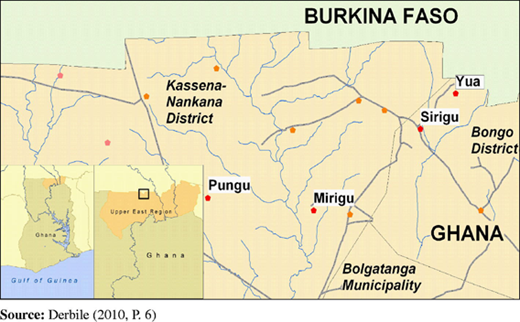
Location of Atankwidi basin in regional and national context
Location of Atankwidi basin in regional and national context
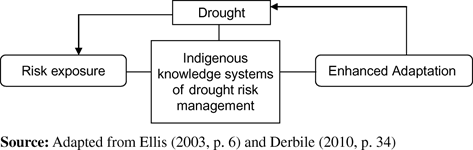
Reducing vulnerability to drought through IKS
Reducing vulnerability to drought through IKS
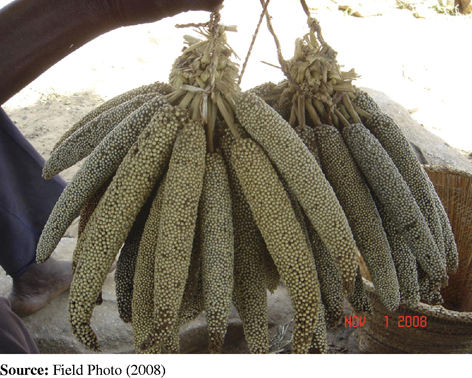
A bunch of Naara seed prepared for storage and planting in the next farming season
A bunch of Naara seed prepared for storage and planting in the next farming season
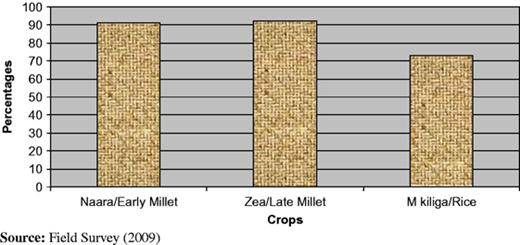
Households cultivating drought resilient indigenous crops in the Atankwidi basin
Households cultivating drought resilient indigenous crops in the Atankwidi basin
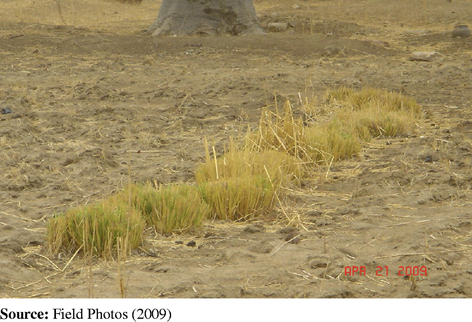
Planted grass strips for checking soil erosion on a Sammani
Planted grass strips for checking soil erosion on a Sammani
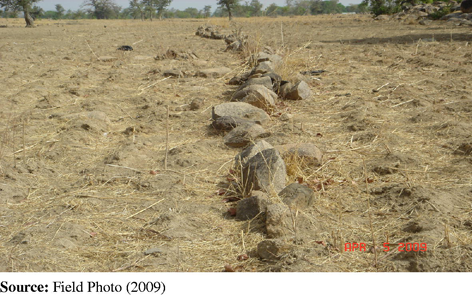
Stone terracing for checking soil erosion on a Sammani
Stone terracing for checking soil erosion on a Sammani
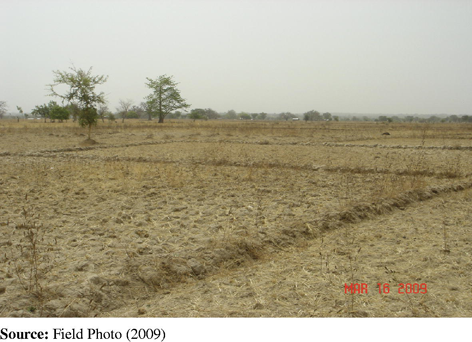
Paddy rice field in the dry season – after harvesting
Paddy rice field in the dry season – after harvesting
This work draws on the author's PhD research and was supported financially by the German Ministry for Education and Research (BMBF) and the German Academic Exchange Service (DAAD) via the Centre for Development Research (ZEF), Bonn, Germany.
Notes
Conceptually, adaptation is the ability or potential of a system to respond successfully to climate variability such as drought through adjustments in behavior, resources and or technologies (Adger et al., 2007, p. 727). Implicitly successful adaptation of rain fed agriculture reduces vulnerability of rain fed agriculture to drought.
The Atabkwidi basin is largely located within the KND.
Naara is an early maturing millet variety, locally referred to as “early millet”. It takes three months to mature after planting.
Zea is a late maturing millet variety locally or commonly referred to as “late millet”. It takes five months to mature after planting.
An indigenous rice variety, named after the rounded nature of the grain.
Compound farm usually located within the immediate surroundings of compound houses.
Farm located along a river bank or within a valley bottom usually within the outskirts of communities.
Farms located far from homes and commonly referred to as bush farms for their distant location.
Kemolga is a traditional non‐drought resilient indigenous sorghum variety. Other non‐drought resilient indigenous crops include Sumkam‐menka (groundnuts), Nanugle‐menka (Potatoes), Kaman‐menka (maize) and Bonga (sorghum).
Talenga is a drought resilient new sorghum variety.
IK is “[…] the unique, traditional, local knowledge existing within and developed around the specific conditions of women and men indigenous to a particular geographic area” (Nuffic and UNESCO, 1999, p. 10). Thus, IK is accumulated knowledge, skill and technology of local people derived from systems of production and consumption. It is dynamic and responds to challenges through local adaptations, experimentation, and innovation under diverse and heterogeneous conditions. These successful adaptations are preserved and passed on from one generation to another through oral and/or experimental means (Aluma, 2004).
Organic manure usually prepared from the kraal (Nandeene) within compounds. The manure is usually a mixture of cow‐dung and urine, crop residue and waste water from domestic chores.
Organic manure prepared from a refuse dump (Tampugerε). The manure is made from general organic refuse, cow‐dung and animal droppings and waste water from domestic chores.
Na'ambεa usally involve a direct application of raw cow‐dung to farm sites.
A fertile land commonly described as having black soils, meaning loamy soils in the local parlance.
References
Further Reading
About the author
Emmanuel Kanchebe Derbile is a Lecturer in the Department of Planning and Management, Faculty of Planning and Land Management, University for Development Studies, Ghana. He is also the coordinator of postgraduate programmes in the Faculty of Planning and Land Management. He holds a PhD in Development Studies from the University of Bonn, Germany. His current research interest is on exploring the nexus between environmental change, local knowledge systems and sustainability of livelihoods. Emmanuel Kanchebe Derbile can be contacted at: derbile_uds@hotmail.com

