


This community based initiative seeks to increase communities’ adaptive capacity through the development of resilient farming practices and improved natural resource management in the face of climate change. Integrating the basic aspects on climate information, the project toolkit had two main objectives; firstly it increases community awareness about climate change risks to farmers and natural resource users, and secondly it aims to build momentum at community levels for innovative adaptation tools as applicable to their environments. These toolkits are applicable to the rural communities, peri‐urban and communities across Namibia.
Participatory rural appraisal methods were used to solicit inputs from the local people during the toolkits development process. Resource mapping, root analysis of climate impacts, and gender mainstreaming were key to this project. A total of 30 community consultations were held in 12 constituencies in all the regions. About 200 people per region were consulted. Their selection was based on their day‐to‐day engagement with community members – these included community activists, farmers, local NGOs as well as governmental civil servants and resource users.
The main outcomes of the project were the compilation of the climate change toolkits, as well as outreach materials such as a video for training of trainers events on climate change adaptation, posters, and radio talks in the different regions. The toolkits are in the process of being implemented, and there are positive reports from the regions where they have been distributed.
This paper is a synopsis of the experiences from Namibia's climate change adaptation toolkits and offers insights relevant to many other African countries, and how these can be improved to make climate change adaptation work especially in the rural areas.
1 Introduction
Namibia is the most arid country in sub‐Saharan Africa, rainfall ranges from about 600 mm in the sub‐humid north‐east to less than 50 mm in the south‐west of the country. About 22 percent of Namibia's land is classified as desert, 70 percent is arid to semi‐arid and 8 percent of the country considered being dry sub‐humid (Turpie et al., 2010). In the northern part of the country, the climate is dominated by the inter‐tropical convergence zone and the subtropical high pressure zone, resulting in higher rainfall. While the southern part of the country lies at the interface between the subtropical high pressure zone and the temperate zone, resulting in drier conditions, especially during winter (Mendelsohn et al., 2002). The climate along the coast is very different from that in the interior of the country, temperatures and rainfall is much lower which is largely influenced by the Benguela Current which brings cold water to the west coast.
Climatic variability is already a common phenomenon in Namibia with persistent droughts and floods, and unpredictable and erratic rainfall and temperatures (Mfune and Ndombo, 2005; UNDP, 2008; Dirkx et al., 2008). Climate change presents a challenge unprecedented in human history. Projections for Namibia and the southern African region suggest significant vulnerability to the impacts of climate change (IPCC, 2001, 2007). It threatens food security, economies and lives of people worldwide. Namibia is highly vulnerable to the impacts of climate change due to the country's high dependency on the climate sensitive sectors such as agriculture, fisheries and eco‐tourism (GRN, 2002). Climate change will exacerbate existing challenges relating to water resources resulting from population growth and economic and land‐use change, including urbanization. Adapting to climate change is a necessity for developing countries and those that are vulnerable to climate change such as Namibia. Therefore, in order to safe guard the livelihoods of the local communities the Government of Namibia together with implementing agencies has developed and implemented some adaptation interventions as well as policy frameworks to deal with the impacts of climate change.
In 1995 Namibia ratified to the UNFCCC and acceded to Kyoto protocol in 2003, therefore the country is obligated to adopt and implement policies and interventions in order to mitigate and adapt to climate change. More so for adaptation as Namibia is a carbon sink country. Since the ratification Namibia has submitted the initial national communication (INC) and second national communication (SNS) to the UNFCCC, which categorised Namibia as a highly vulnerable country to climate change in 2002 and 2011, respectively. The Third National Communication (TNC) is expected to be available in 2013/2014. At the policy level, Namibia recently developed a National Policy on Climate Change (NPCC). The policy provides a legal basis for resource mobilisation to address climate change adaptation and mitigation, and strives to manage climate change response in a way that recognises the national developmental goals, among other others. This framework is also aimed at promoting integration and coordination of programmes of various sectors organisation so that benefits to the country as a whole are maximized, and negative impacts minimized (Ministry of Environment and Tourism, 2011a, b).
At a local level, Namibia developed and implemented several pilot projects and community based adaptation initiatives to help communities plan their local adaptation projects. Some excellent projects have been implemented in north central Namibia so far. One such is the GEF funded climate change adaptation project in the Omusati region, a pilot project aimed at testing climate change adaptation measures mainly for the agricultural sector. This project was under the Country Pilot Partnership Programme for Integrated Sustainable Land Management (CPP ISLM) through the Ministry of Agriculture, Water and Forestry (MAWF). The project was designed based on a review of communication best practice relating to climate change and other development work with communities, and a strategic review of the existing literature on international experiences. IECN undertook a climate change awareness baseline assessment in parallel to generating local input for the Omusati pilot toolkit, and solicited specific information on communication needs in terms of content, used media and follow‐up during the implementation of the pilot project. This toolkit was applied and testing in the northern Namibia regions and led to its replication to all other regions in 2011. Lessons learnt from this initiative were also taken into consideration in order to improve the new toolkit series.
1.1 Overall context of climate change projections and impacts for Namibia
Namibia's climate is expected to become more pronounced and difficult to manage considering the climate change risk. For the future, it is predicted with high degree of certainty that Namibia will become hotter, with a predicted increase in temperature of between 1°C and 3.5°C in summer and 1°C‐4°C in winter in the period 2046‐2065 (Dirkx et al., 2008). Results from climate modelling projections for southern Africa (Scholes and Biggs, 2004) do indicate that for the Cuvelai Etosha basin area, including in the upper catchment areas in Angola a significant warming as well as drier climatic conditions can be expected. Records and projections from regional models applied to Namibia confirm such trends, observing a west to east gradient in increased temperature and a reverse gradient of relative increased aridity from east to west (Biggs et al., 2004; Midgley et al., 2005; GRN, 2002). No information on projected frequencies and magnitudes of extreme events such as floods and/or droughts are available at this time. As aforementioned, changes in rainfall have proven more difficult to model compared to those of temperature given the highly variability nature of Namibia's rainfall. However, the global circulation models (GCMs) indicate that Namibia will have increase in rainfall intensity (Reid et al., 2007) although regional variations are expected, and certain areas in Namibia could potentially benefit from very humid conditions (Dirkx et al., 2008; Ministry of Environment and Tourism, 2011a, b). For instance, the historical trends in temperature between 1901 and 2000 shows that maximum temperature has been getting hotter, while the rainfall has been highly erratic (Figures 1 and 2), this long term climatic data (temperature and precipitation) clearly depict the highly variable nature of Namibia's natural climatic conditions. In the recent years flood cases were reported in various areas of the northern regions, and climate modeling findings as indicated in the SNS of 2011 reveals that it appears as if the northern and central regions of Namibia will be experiencing a later onset and earlier end to the rain season, thereby resulting in shorter seasons (Ministry of Environment and Tourism, 2011a, b).
Considering the above outlined climate change projections, the direct impacts of climate change will be felt especially in natural resource related development and economic sectors such as water resources, health, agriculture, fisheries, biodiversity, ecosystems and tourism, coastal zone management and energy (GRN, 2002). Major changes in vegetation structure and biodiversity are foreseen (Midgley et al., 2005); with endemic species changing their distribution and by 2050 up to 47 percent could be vulnerable (Turpie et al., 2010). This loss of biodiversity may have potential negative effects on ecosystem performance and tourism revenues for the country (Ministry of Environment and Tourism, 2011a, b). It has to be stressed that the country is already heading towards a situation of absolute water scarcity by 2020, even assuming no climate change (GRN, 2002). The projected increase in temperature would result in higher evaporation and evapo‐transpiration rates between 5 and 15 percent while groundwater recharge may suffer a reduction of 30‐70 percent across Namibia (Dirkx et al., 2008). Reductions in river flow may also lead to a decrease in the floodplain areas inundated each year. These floodplains support agricultural and fishery activities integral to peoples’ livelihoods in northern Namibia, as well as providing important ecosystem services such as water retention, water purification and flood protection negatively affecting rural livelihood and tourism. Therefore, the poor rural pastoralist and populations are likely to be most vulnerable (Reid et al., 2007). Additionally, an economic study conducted by Reid et al. (2007) suggests that over 20 years, annual losses to the Namibia economy could be 1‐6 percent of GDP due to the impacts that climate change will have on its natural resources alone. This means annual losses to the Namibian economy could be between US$70 and US$200 million if no adaptation to climate change is taken.
2 Toolkits for community adaptation! How Namibia did it?
In the anticipated climate change reality, improvement of the farmers and rural communities understanding with regard to the importance and associated benefits of adaptation to climate change should be explored. As mentioned above, it is clear that rural communities are the immediate to be affected by the projected impacts due to their reliance on the rain‐fed resources, resources that are sensitive to climate change, low adaptive capacity and resources as well as the lack of awareness and understanding of climate change and adaptation.
The community planning tools contained within the toolkits should be used in a systematic working session to discuss and explore the issues of climate change and to guide resource users in taking the first steps to collaboratively deal with region specific climate change related issues. Although the prototype had a focus on agricultural farming, these new toolkit series covers rural livelihood diversifications and off‐farming activities more comprehensively. The identified issues pertaining to urban and peri‐urban communities are also covered in these toolkits.
2.1 Toolkits development approach
The process of developing the regional CCA information toolkits started in January 2011, and consisted of a set of steps. These steps involved setting up a “Tender Team Visioning workshop”, with the consulting team to identify the key stakeholders and partners and their roles and responsibilities as well as conceptualise on the toolkit approach. This was followed by an “inception meeting” with the project coordinators and donors to share the concept and gain further guidance on the project, thereafter “consultations” were conducted thought out Namibia, the information collected was used to compile the climate change adaptation toolkits for local people in the various regions. The consultations were also aimed at raising awareness on climate change in the regions and to solicit inputs from the local communities/farmers so as to adapt it to the needs in the different regions, a total number of about 200 farmers/locals were consulted per region. After several reviews by the project team and other experts, this lead to the “compilation” of the toolkits (including local context artwork) and the toolkits were disseminated through the “Training of Trainers” workshops with the local agricultural extension technicians and other civil servants in the regions (Figure 3). The toolkits were written in a very simplified language and were translated into indigenous languages commonly spoken in the respective regions.
2.2 Community outreach approach: community planning tools
Participatory rural appraisal (PRAs) with local communities formed the basis of this community planning tools, the new versions were updated with two more community planning tools, a gender sensitivity screening (tool 5) as well as a participatory monitoring and evaluation tool (tool 8) (Figure 4). The community planning tools consist of basic steps in formulating adaptation plans to deal with climate change, thus, the tools can be adapted to the needs and circumstances of a specific community. These planning tools are important as they are the cornerstone of the toolkits to facilitate systematic planning for shorter and long‐term community adaptation measures or for community adaptation planning. Therefore, community members are encouraged to make use of the eight community planning tools in a systematic manner (Figure 4).
The community planning tools should be explained to the participants in details, and trainers should provide the necessary materials and give sufficient time to brainstorm for each tool, methods should be spelt out correctly and their purpose should be understood. The climate change adaptation plans generated requires a monitoring and evaluation component to track on the progress made as well as to observe whether all the tools were implemented as planned, a checklist is provided in the toolkit to guide this plan.
2.3 Applying the community planning tools – a practical example
Training of Trainers events were conducted in all Namibian regions – a practical exercise is provided using the Omuthiya constituency in Oshikoto region in the north central Namibia. Participants were grouped into less than 12 participants and were chosen per village to ensure that people come up with similar issues that pertained to their areas.
In tool 1, the participants decided to consult with the headman first to invite the community members to the CCA (creating awareness, and adaptation strategy for their village) meeting (Plate 1).
In tool 2, the group mapped out their village, and made a resources inventory – grazing land, water point, medicinal plants, trees of high value were some of the resources mentioned (Figure 5) in order to understand the environmental parameter that could be linked to climate change (tool 2).
In a nutshell, under seasonal calendar in the step “linking the results to climate change”, the participants found out that: changing in rainfall patterns, intensity, changing in agricultural practices, increases in pest and livestock and crop diseases and also they have noticed that the decline of natural resources.
The root cause analysis of this group (tool 3) found out that low yield in both crops and livestock as the major problem facing their village (Figure 6).
The main problem is caused by floods (field inundations) in most parts of the village, mono cropping, low rainfall and sometime abnormal rainfall and drought.
The effects of the main problem are; hunger and poverty resulting in malnutrition, diseases resulting in poor health, peace instability, illiteracy and lack of incomes.
In tool 4, the possible solutions to one of the causes (drought) of the main problem were suggested (Figure 7), and include among others destocking, crop diversification, and use of improved seed cultivars/breeds, conservation farming and proper planning.
For the gender analysis tool (Figure 8), participants stated that women have been and continue to the most vulnerable group to climate change; an example was given whereby a woman carrying two kids and a bucket of water on her head while the man is sitting contentedly reading a newspaper.
The group then looked at their proposed adaptation measures in tool 4 to see if the solutions are compatible with gender mainstreaming, or they are further disadvantaging one group or marginalized group. Some of the proposed adaptation solutions includes: proper planning, rainwater harvesting and crop diversification. In this, tool 6, the participants prioritize; crop rotation was opted, and but implementation has to be done at individual level (Table I).
The adaptation solution is shown here in Figure 7. The group stated that in year 1, they will plant cereal crops in one area while other parts of the field, they will plant leguminous crops. In year 2, they will plant leguminous plants in the area they planted cereal crops (Figure 9).
No actual monitoring and evaluation was done by the groups, as there was no physical plan to monitor, however, participants were aware that in actual sense they have to do the monitoring and evaluation.
3 Namibian specific adaptation options as proposed in the toolkits
Land‐use planning and promotion of climate‐compatible land uses and associated production systems
Land‐use options that are better adapted to the prevailing variable and naturally extreme arid climates of north‐Western Namibia should be promoted. A strong shift from livestock to wildlife‐based production systems is an example that might be useful in the regions with tourism and conservancy potential. Formal and collective land‐use planning can help farmers manage resources better and reduce their vulnerability to climate change.
Adaptive livestock management
It is important to improve livestock management practices and ensure that they are adapted to the locally prevailing climate. Learning from the nomadic Ovahimba people living in Kunene Region, traditional livestock herding can be applied, even in more sedentary communities through guided herding practices. Such practices should be up‐scaled to imitate the traditional system and destocking and restocking should be encouraged to farmers in arid regions. Appropriate indigenous breeds should be tested and where rangelands become very marginally productive a shift to other, more appropriate land sues should be pursued. There is also a need to improve access to veterinary support can help improve building adaptive capacities.
Wildlife management, tourism and conservation
Wildlife populations are highly migratory in arid environments, and take advantage of good rainfall and associated grazing by moving enormous distances. Conservation contributes greatly to Namibia's flourishing tourism industry, which markets the country as one of the world's leading nature and landscape destinations. Even though Namibia's arid environments seem vast and expansive, it is important to keep them healthy and resilient to be able to buffer the expected impacts of climate change. It will be expensive to forego long‐term conservation goals for short‐term economic benefits.
Wildlife species that usually occur in drier and hotter climates may change their usual distribution ranges naturally and are generally better adapted to local conditions than livestock. The formation of conservancies for management and utilisation of wildlife is an option that could be considered.
Promotion of biodiversity products
Income from biodiversity products, such as the raisins of the Commiphora tree, is an example of how local incomes can be diversified using natural products. Investments into developing markets and helping local people to tap into these opportunities can help build adaptive capacities.
Water conservation
Water is the single most limiting factor to development, and this is particularly true for Namibia's hyper‐arid coastal environment. Water conservation practices must be applied as a matter of urgency by municipalities, any public institution, private industries and every household. Water consuming industries such as the uranium mines stretching across the desert need to adhere to strict water laws, and alternative sources, i.e. from desalination, must be sought. Desalination infrastructure should follow strict safety regulations and factor in future climate risks, such as those posed by increased storm surges, to prevent potential pollution and damage to the coastal environment.
Prevention of land degradation and rehabilitation
Land degradation is a major problem in most of Namibia's regions and undermines efficient adaptive capacities. Proactive investment in SLM will have major climate change adaptation benefits in the long term. Rehabilitating degraded land can also make significant contributions to capturing carbon – thus contributing to direly needed mitigation. In the Omaheke and Otjozondjupa regions where bush encroachment is a huge problem, debushing programs are essential to restoring the environment, improving the condition of the grazing land, and increasing the productivity of the land for both crops and livestock.
Improved food security and nutrition
Promoting small vegetable gardens for improved household nutrition can be a powerful strategy. Green leafy vegetables and fruit are important for healthy diets and contribute essential minerals and vitamins to a largely meat‐based diet. As highlighted in the Fourth National Development Plan, local food production is critical for Namibia to become self‐sufficient, ensuring food security for the nation. Local water recycling or rainwater harvesting techniques may render such small‐scale gardens suitable even in north‐Western Namibia, where lack of water is a limiting factor.
Fire management
Fire is a key environmental issue mainly in northern and eastern Namibia. Fires can be important for landscape management, but methods to prevent fires and improve management of wildfires when they do occur, need to be investigated. The setting and maintenance of cut‐lines is one intervention that can be effective.
Alternative energy and water sources
Developing alternatives for using wood as an energy source can help curb the high deforestation rates as well as promoting overall development and building resilience among local communities. Capturing water from local rainfall events through rainwater harvesting, building of earth dams, as well as improved local‐level management of scarce water resources could help to do more with less. In terms of water consumption, planned mining activities would be large‐scale water uses that would compete with needs of local livestock herders – and adequate solutions are needed to ensure that future climatic changes are considered in policy directives.
Improved early warning systems (EWS) and information on CC and CCA
In all Namibian regions, as with most rural communities, clearly the need for climate change adaptation is a priority to climate proofs our sectors. This would provide farmers with knowledge on when the start of the rainfall season could be expected or whether rainfall is expected be higher or lower than average, allowing them to decide what crops to plant. It would also allow resource users to better prepare for expected challenges such as floods or droughts. Implementing guidelines for sensible building and settlement plans can be part of adaptation action.
4 Conclusions, main lessons and way forward
One of the challenges of working at the local level on climate change adaptation is the lack of scaled down information on impacts. This is coupled with inadequate data and information on weather and climate predictions especially in our remote areas. These people are reliant on indigenous knowledge which is not taking into consideration when planning for climate change action. The process of consulting with communities serves to build local knowledge on climate issues and appropriate strategies to adapt to these changes. The community planning tools are also a way to link indigenous knowledge to available scientific information on climate change. This will assist local stakeholders to understand the implication of climate change, so that they are better able to analyse risks and plan for adaptation. Another important lesson throughout this project was the type of media used for disseminating climate information – people need information that they are able to relate to and understand (i.e. vernacular languages). In most cases, information from the national meteorological services in Namibia and regional weather information is largely disseminated through channels which some rural communities do not have ready access to, such as the internet, television and newspapers. Addressing these concerns and promoting adaptation at the grassroots level requires capacity building of local communities through involvement in climate information needs and planning. The toolkits, if used and applied correctly can contribute to more alternatives of adapting to climate change. Moreover, effective communication and outreach on climate change could be the starting point for further adaptation planning by communities themselves.
At least four main lessons learnt from the toolkits development and implementation phase could be identified as follows
Awareness raising of climate change at grassroots level
Part of what is significant during the consultations was how important it is to consult local communities and sensitize them on the issues of climate change in their vernaculars. Working together with the end‐users in jointly developing the contents was deemed as a better approach to create that general awareness at grassroots level. Therefore, in order to reach out to many people, there should be an effective communication strategy that suites the specific target group. However, this requires major resource allocations in terms of time and finances. It was found that for instance, that in order to reach out to communities in the remote areas, the agricultural extension technicians need resources such as transportation and necessary materials, which often is lacking due to a lack of means to provide such on a voluntary basis. Therefore, once the projects come to an end, the lack of financial support hinders the continuity of the activities which has been implemented as pilots in many of the regions.
Building local capacity through community outreach program on climate change adaptation actions
As stated above, effective community outreach on climate change is necessary in order to sensitise, educate, and help communities to understand and deal the impacts of climate change in their communities. Local outreach programs might be one of the strategies to increase local resilience. Local capacity is another valuable lesson for climate change adaptation; this includes the ability to participate in decision‐making about climate change based on the communities priorities and needs. It is also important to keep updating the toolkits content as time goes, and these toolkits should be applied throughout the communities.
Strengthening of extension services in the regions through training of trainers events
Strengthening extension services as well as CBAs in the regions is very important for them to be able to provide the right information and training to their local people for example there is a need to identify the active NGOs and activists who deal with community members on a daily basis and equip them with the necessary resources to do the outreach of the toolkits. To promote the use and application of the toolkits a broader “marketing campaign” could be launched. For example, participatory videoing could become part of developing a learning video that could be used for training‐of‐trainers sessions. Practical summary handouts that contain content of the toolkits could be produced to communicate key messages from the toolkit more broadly through road shows for instance. Whilst the approach has been very successful, the outreach requires very intense inputs.
Implementation of sustainable climate change adaptation projects and CBA funding mechanisms
Many projects are driven by donor funding, as with the AAP Project, which are results oriented and time limited in most cases. Often the local NGOs and CBOs are challenged to continue with the implemented activities when the donors pull out. Thus, the sustainability of donor funded projects is questionable. For this project, specific follow‐up on toolkits application needs to be made, i.e. though CBA initiatives and it should require locally raised funding or perhaps a budget from the local government to implement many of these initiatives sustainability.
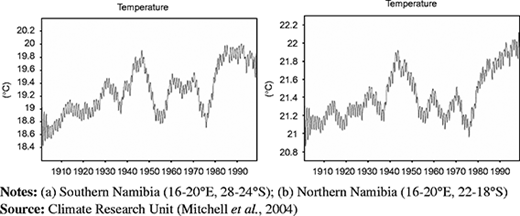
Surface monthly air temperature (°C) measurements 1901‐2000
Surface monthly air temperature (°C) measurements 1901‐2000
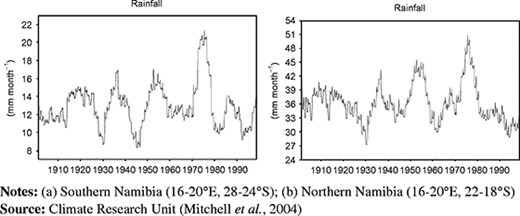
Monthly mean rainfall (mm month‐1) measurements 1901‐2000
Monthly mean rainfall (mm month‐1) measurements 1901‐2000
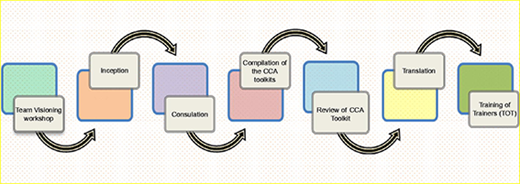
CCA information toolkit development process
CCA information toolkit development process
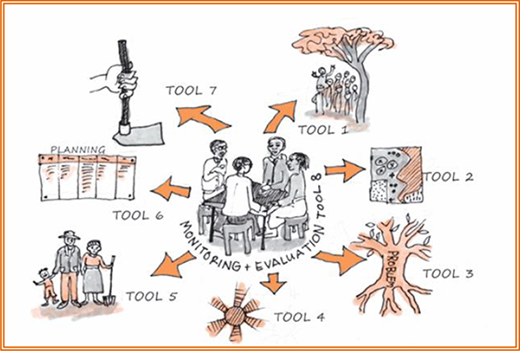
CCA step‐by‐step community planning tools
CCA step‐by‐step community planning tools
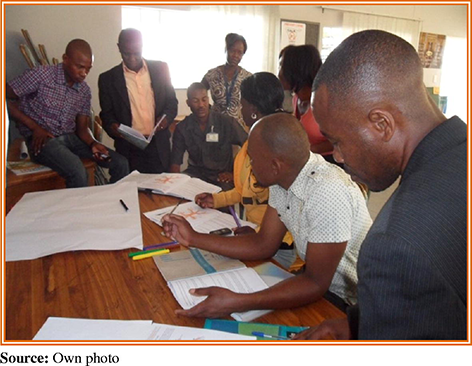
Participants brainstorming on their climate change adaptation plan
Participants brainstorming on their climate change adaptation plan
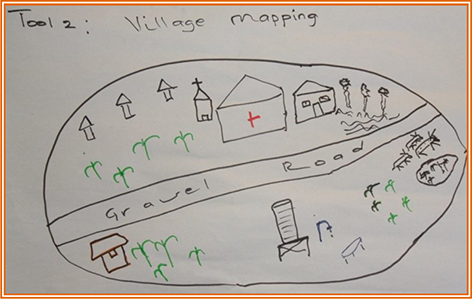
Mapping of village and resource inventory
Mapping of village and resource inventory
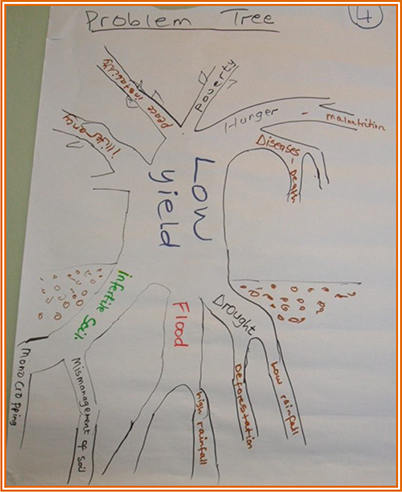
Root cause analysis using a “problem tree”
Root cause analysis using a “problem tree”
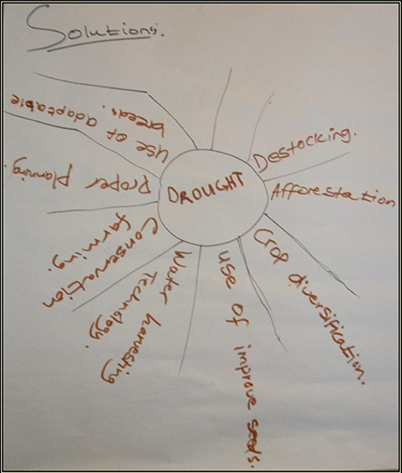
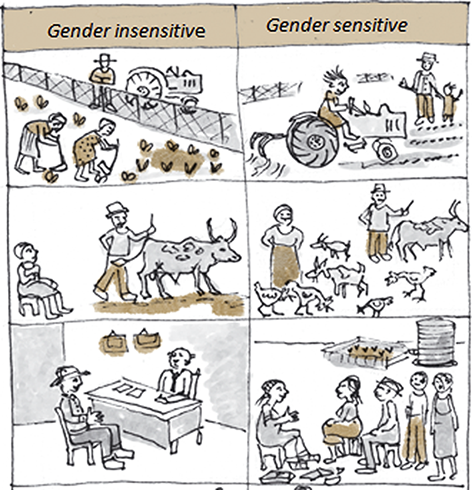
Illustration of gender insensitive (a) and sensitive (b) in the toolkits
Illustration of gender insensitive (a) and sensitive (b) in the toolkits
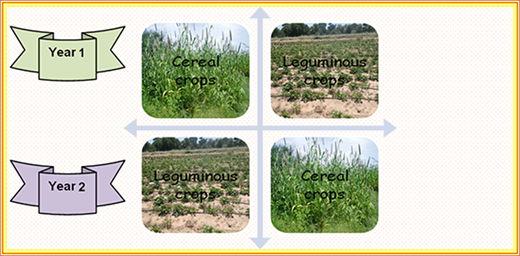
Example of an adaptation measure – crop rotation
Example of an adaptation measure – crop rotation
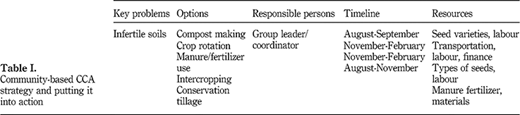
Community‐based CCA strategy and putting it into action
Community‐based CCA strategy and putting it into action
The development of the toolkits formed part of the work of the Africa Adaptation Project Namibia, a project implemented by the Ministry of Environment and Tourism of Namibia with technical support from the UNDP Namibia and funding provided by the Government of Japan. The farmers, natural resource users and local communities consulted throughout the Namibian regions gave outstanding contributions and insights during the development process of these toolkits. The Regional Councillors from all constituencies within the regions facilitated smooth and productive community consultations and gave their support throughout the consultations, development and dissemination of the toolkits.
References
Further Reading
About the authors
Asella David holds a Post‐Graduate Diploma in Land and Agrarian Studies from the University of the Western Cape and a National Diploma in Land Use Planning from the Polytechnic of Namibia. She holds the Junior Consultant position at IECN and is currently studying towards her MPhil in Land and Agrarian Studies from the University of the Western Cape. At IECN, she has been responsible for coordinating a wide range of projects and has gained practical experience in the climate change, environmental management, and consulting fields.
Dr Justine Braby holds a PhD in Zoology, a Post‐graduate Diploma in Environmental Law, a Post‐graduate Certificate in Education, and a BSc in Zoology from the University of Cape Town. She is currently working as a Consultant at Integrated Environmental Consultants Namibia. She has had experience in GEF project developments in Cape Verde, Sierra Leone, and other African countries, and has led various projects on climate change, SLM and biodiversity in Namibia.
Dr Juliane Zeidler is a well‐known ecologist and environmental professional in Namibia. Dr Zeidler is the Director and Senior Consultant at Integrated Environmental Consultants Namibia, Namibia. She is also the Global Chair of the IUCN Commission on Education and Communication (CEC), and an appointed member of the Scientific Advisory Council of the African Centre of Meteorological Applications for Development (ACMAD), Niamey, Niger. Dr Zeidler holds a PhD in Ecology and Natural Resource Management from the University of Witwatersrand, Johannesburg, South Africa, and two related MSc degrees.
Laudika Kandjinga holds a Bachelor of Technology in Land Management and a National Diploma in Land Use Planning from the Polytechnic of Namibia. He is currently working at Integrated Environmental Consultants Namibia (IECN) as a Consultant. He has experience in local level community engagement on climate change adaptation, mainly working with IECN in a GEF/UNDP SPA pilot project implemented by the Ministry of Agriculture, Water, and Forestry in Namibia's Omusati region on the development of the CCA toolkit and on other climate change projects in the country.
Johnson Ndokosho is a Technical Advisor for the Africa Adaptation Project Namibia (AAP‐NAM) in the Ministry of Environment and Tourism, Namibia. He is a seasoned environmentalist having served in various capacities for the Ministry of Environment and Tourism for nearly ten years. Johnson holds several academic qualifications including a Master's Degree in Integrated Water Resources Management (IWRM) from the University of Zimbabwe, a B‐Tech degree in Nature Conservation from the Nelson Mandela Metropolitan University and a diploma in Natural Resources Management from the Polytechnic of Namibia.

