


– The article surveys dairy farmers' lay knowledge of climate change and the adaptation strategies they have implemented to respond to climatic and economic drivers. Dairy farming is highly dependent on local weather and climate. The case study is in Western Victoria, Australia, part of a major dairy farming region that contributes 26 per cent of national milk production and 86 per cent of the country's dairy exports. The paper aims to discuss these issues.
– This study utilised a survey and semi-structured interviews in Corangamite Shire, to document dairy farmers' perceptions of climate variability and the adaptation strategies they have implemented, compared to meteorological data collected on climate variability in the recent past.
– Farmers in this region perceive a change in rainfall and temperature broadly in line with meteorological records. Those that have experienced a greater degree of climate variability in drier regions were found to perceive it more accurately. Almost all respondents had already made changes to their dairy businesses, but in doing so only a small percentage were responding directly to seasonal variability or to longer term changes (9 and 15 per cent, respectively); the majority said they were responding to changing economic conditions in the industry.
– A primary survey of dairy farming adds to knowledge of how climate variability is perceived, and how it is adapted to in a region heavily reliant on rainfall for its prime economic activity.
1 Introduction
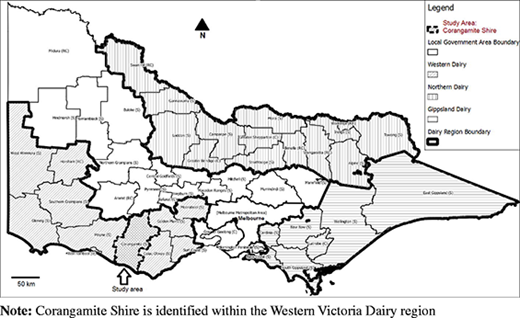
In the local authority district known as Corangamite Shire, Victoria, south-east Australia (Figure 1), the success of dairy farming is intrinsically linked to the economic and social well-being of the region (WestVic Dairy, 2010). Some 22 per cent of the Shire's population work in dairying, and it contributes to Victoria's dairy exports that were valued at AU $1.96 billion in 2010-2011 (Fravel and Ridley, 2012). Corangamite is a region of 4,404 km2 with a population of approximately 16,000 (ABS, 2011).
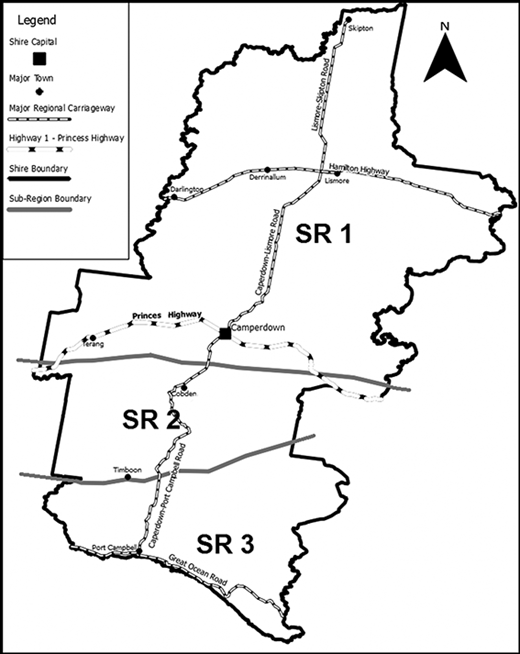
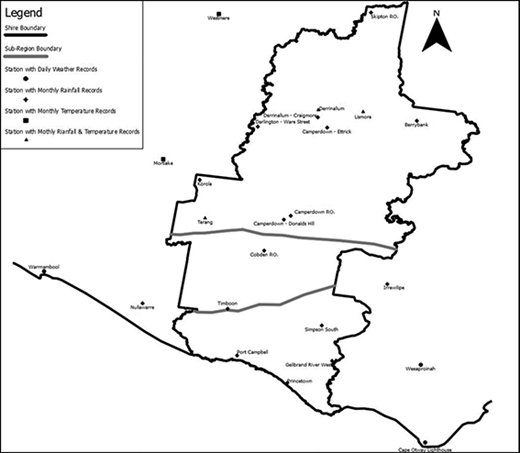
Most dairy farms in Corangamite Shire are not irrigated, and pasture quality relies on adequate precipitation, which increases from north to south (Figure 2) (DSE, 2008; Phelps et al., 2012). Projections from the Australian Commonwealth Scientific and Industrial Research Organisation (CSIRO) and the Bureau of Meteorology (BoM) suggest that temperatures are expected to rise by approximately 1°C by 2030 across this region, whilst precipitation is expected to decline by 5 per cent (Watterson et al., 2007). Such expected changes in the climate could have significant negative impacts upon all agricultural enterprises, in terms of production and profitability (deVoil et al., 2006; Hayman et al., 2008; Howden and Jones, 2001; Jones and Hennessy, 2000; Luo et al., 2007; White et al., 2003)[1]. Future adaptations to climate risk must involve managing fluctuations in rainfall and temperature, and climatic uncertainty that may exceed historical patterns (Bryant et al., 2000; Bradshaw et al., 2004; Buys et al., 2012; Müller et al., 2011).
This article explores the current relationship between dairying and climate in the region. We explain how dairy farmers perceive recent (post-2001) variations in the climate within which they operate. Meteorological observations are compared with participants' responses on how they perceive climate is changing. A second aim is to ask how farmers have adapted their material practices deriving from these perceptions, where information came from to make these decisions, and their perceived degree of success.
We conclude with a simplified framework for understanding agricultural adaptation to climate change in this industry.
2 Climate change and variability in the region
The Australian agricultural sector has always had to adapt and adjust its practices to a harsh, highly variable and unforgiving climate (Stokes and Howden, 2011). There is current evidence that anthropogenic climate change is already impacting negatively on the agricultural sector, and a robust debate about future trends (Hughes, 2003; IPCC, 2007).
In south-west Victoria, Watterson et al. (2007) expect a 1-1.5°C temperature increase by 2070 and a 5-10 per cent decline in annual precipitation. The Forest Fire Danger Index (FFDI), a function of weather patterns and vegetation condition, increased from 1973 to 2007 at both stations in closest proximity to the Corangamite Shire: Melbourne (VIC) and Mount Gambier (SA). The expected number of FFDI days of very high and extreme danger is projected to increase under all emission scenarios produced for the years 2020 and 2050 at the Melbourne site (Hennessy et al., 2005).
The region suffers periodic “agricultural drought”, most recently in the mid-2000s (BoM, 1967; CSIRO, 2007; Mpelasoka et al., 2008). Burke et al. (2006), using the Palmer Drought Severity Index, suggests that whilst the incidence of drought did not increase in relative terms over the 1952-1998 period in south-west Victoria, there is a greater likelihood of drought incidence over the period 2000-2046, with a sharper increase thereafter. Projections by Mpelasoka et al. (2008) suggest that under various climate models and under low emission scenarios the incidence of drought in south-west Victoria would remain steady or decrease to 2030, whilst under high emission scenarios it would increase by 0-20 per cent.
It is also expected that climate variability will increase in future (Hennessy et al., 2008). The Rural Industries Research and Development Corporation (RIRDC) expects that Victoria will face some of the highest increases in seasonal variability in Australia, expected to present as increased incidence of drought and flood events (Barber, 2009).
Dairy Australia (2007), the national representative body for the dairy industry, list seven expected impacts that future expected climate change could have in the region. These are:
higher pasture growth in winter due to warmer temperatures and fewer frosts, but;
reduced pasture growth overall due to lower annual water availability[2];
earlier harvest and sowing times for summer crops due to earlier warmer temperatures;
longer growing seasons that will favour perennial and/or drought tolerant pasture species;
increased water stress due to declining precipitation which may in turn reduce water for dairy wash-down[3];
increased heat-stress for livestock due to warmer temperatures; and
higher temperature and lower rainfall to increase the competitiveness of C4 pasture species at the expense of C3 species[4].
Combined, these impacts are expected to have a significant impact. Across Victoria; a 5 per cent contraction in dairy production by 2030 is estimated in the event of no major adaptation actions being taken (and 10 per cent by 2050) (Gunasekera et al., 2007; based on models by Cline (2007)).
3 How farmers adapt to climate change and variability
Climate stimuli vary significantly on a regional scale, but, also on a local scale across individual farms and landscapes (Bryant et al., 1997). Adaptation to local conditions, therefore, are individually tailored, although our surveys demonstrate some commonalities. Variation can be explained by the intrinsic heterogeneity in managerial acumen, entrepreneurial capabilities, family circumstances, decision-making styles, personal and community values and the strength of professional networks (Bryant et al., 2000; Risbey et al., 1999). Some farmers and their workforce are more aware than others of change, and thus more willing to progress alterations to dairying practices.
Risbey et al. (1999) propose a “bottom-up” method of investigating agricultural adaptation to climate variability and change, with a strong focus on farmer perception of climate variability and individual adaptation and decision-making. Their study is appealing, and has been taken up by other authors (Smit and Skinner, 2002, Smit and Wandel, 2006). They interrogate what adaptation decisions farmers have actually made in response to a changing climate. This is part of a long tradition of research in geography, anthropology and other disciplines based on fieldwork in farming systems, and monitoring of farmer behaviour in response to climatic and economic stimuli (Batterbury and Mortimore, 2013; Mertz et al., 2009; Mortimore, 1989, pp. 4-6; Richards, 2010; Smit et al., 2000).
Risbey et al. (1999) suggest that whilst farmers are aware of macro-scale change, most on-farm decisions are made in response to micro-level changes like a decline in on-farm rainfall[5]. Short-term responses, like buying in extra water for livestock, are termed tactical responses. Longer term changes are strategic; resulting in an observable change in farm operation beyond a single season (Smit et al., 1996).
WIDCORP (2009), Schwartz et al. (2011) and Kiem et al. (2010) investigated whether Victorian farmers perceive changes in the climate, and how they have implemented changes in their businesses. The latter study found farmers possess a great adaptive ability due to their innate inclination for experimentation, although the farmers deemed most financially and socially vulnerable were also the least likely to alter their production systems. Farmers were primarily focussed on economic adaptations to enable them to “hold on”, and the majority were not adapting their business to a future shaped by a changing climate, prioritising the short-term (Hogan et al., 2011b). Victoria has recently experienced drought-to-flood conditions which have compounded difficulties for the sector (Rickards, 2012) resulting in some strategic adaptations – altering crop varieties, or looking for more off-farm income sources. Ironically, effective adaptation to drought, which has included buying farmland in wetter regions as a form of security, was found to have reduced adaptive capacity to extreme wet periods that have occurred over the last five years.
A focus on individual adaptation strategies, the focus of our surveys, does not suggest that collective or co-operative adaptive actions should be overlooked. In Corangamite, farmers do or course cooperate, for example on stream fencing, even if most dairy concerns are owner-occupier concerns. Bryant et al. (2000) suggest that farmers with weak social networks struggle to implement adaptations that require group co-operation.
4 Research methods and locations
Against this complex range of climatic factors affecting the dairying sector, we conducted a mixed-methods study in 2012, utilising a mail-out and online survey to 80 farmers in Corangamite Shire, supplemented with ten semi structured interviews. Participants were selected based upon the criteria of location, age, and herd size. All were reliant on dairying for more than 90 per cent of their income. The survey questions, first piloted and refined, were divided into five themes: demographics, perceptions, management practices, climate change and the role of government, adapted from Risbey et al. (1999). Interviews followed the same five themes. The majority of interviews (80 per cent) were conducted with both heads of households.
We compared the sample with Australian Bureau of Statistics (ABS) data on dairy farming in Corangamite Shire (ABS, 2008) and a recent Dairying for Tomorrow survey of current dairy farming practices[6]. Three sub-regions of the Shire were defined (SR1, SR2, SR3), based upon average annual rainfall isohyets (Figure 2). Results were tabulated using descriptive statistics and adaptation strategies were classified and compared to the literature.
Northern reaches of the Shire (SR1) are drier than those in the far south-east (SR3), whilst average temperature is fairly similar across the region. Almost all dairying is concentrated in the wetter regions to the south of the main transport artery the Princes Highway, which dissects SR1. Pasture yields vary from approximately 15 t DM/ha/y in the Otway (SR3), to about 6 t DM/ha/y in the north of SR1. Modelling by research teams suggests the prevalent ryegrass pasture can sustain temperature increases of up to 2°C warming with adequate productivity (Cullen et al., 2012).
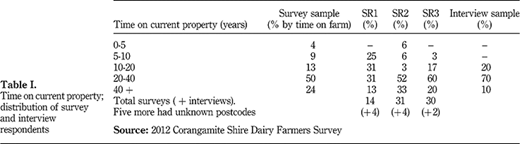
In line with an aging population of dairy farm owners in rural Victoria, over a third of the survey and interview participants have spent more than 25 years on their current farm, with over 60 per cent having resided at least a decade (Table I). Almost 75 per cent of survey respondents have been dairy farmers for over 25 years. Despite the presence of multi-generational dairy households there is significant purchase and sale of agricultural land in the Shire, reflecting the changing fortunes of the sector and the intentions of its participants. A farm herd size of between 200 and 499 cows was the most common (slightly above the national average; Nettle and Lamb, 2010). Very few participants ran herds larger or smaller than this. Milk is sold to several major dairy companies, and then packaged and distributed by the dairy.
Climatic data, reported here in summary form, included monthly temperature and rainfall data, aggregated into annual and seasonal datasets and then graphed as ten and 30 year moving averages[7].
5 Results and discussion
We first explore the links between farmer perceptions of changing seasonal conditions, compared to the meteorological record. The second sub-section will establish how farmers are actually adjusting their businesses to their perceptions of climate variability and change.
Assessing farmer's perceptions of climate variability and change
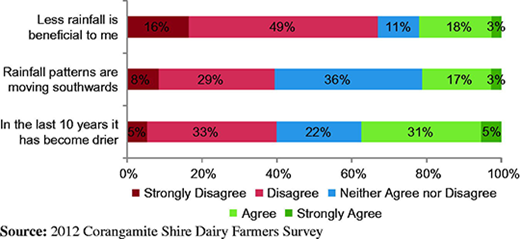
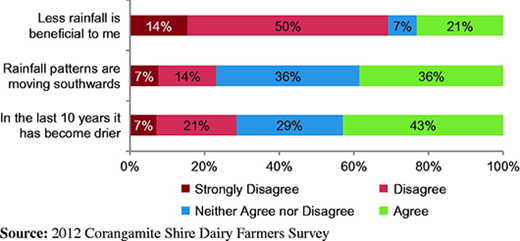
How farmers perceive a change in signal, in this case climate stimuli, plays a significant role in how they may then adjust their farming to adapt to this change (Risbey et al., 1999). Some 36 per cent of farmers surveyed perceived a change in rainfall over the past decade. Conversely 38 per cent stated that they had not noticed a change, with the remainder undecided on the issue (Figure 3). Across the three sub-regions, SR2 respondents showed the best detection of changing rainfall patterns (52 per cent of those surveyed), followed closely by SR1 (43 per cent). Only 30 per cent of SR3 respondents, living in the wettest region, thought that it had become drier over the last ten years. According to two SR3 farmers:
Interviewer: In your time on this property, 10 years, have you noticed changes in rainfall?
Respondent IC6: I think we've seen a cycle, a series of wet years, a series of dry years and now a series of wet years again. We haven't seen too many extremes, nothing outside of normal.
Interviewer: Have you noticed any change in rainfall pattern […] as opposed to natural variation?
IC4: I don't consider anything to be out of the ordinary […] we're just in a good rainfall area.
This can be compared against those in the drier northern regions who were more inclined to notice a change:
Interviewer: Have you noticed much change in the rainfall patterns?
IC5: Yes. In the last 10 years we've had a heap of failed autumns. Autumn has become a disaster, it never used to be, you could bank on autumn. Now it is just hot and dry. My first 10 years it was never like that […]. It just stays dry, Autumn is a nice time of the year, but you can't farm off no moisture. We've had two good ones in 12 years.
The meteorological record indicates decreasing rainfall, with ten of the 14 rain stations showing a fall in the 30-year average annual rainfall since 2001 (Figures 4 and 5, which distinguish between northern drier and southern wetter locations). Of these ten stations (Figure 6), eight also displayed a rainfall total wholly below the long-term average over the past decade, with six of these by greater than one standard deviation below the mean. The stations that fall in the northern half of the Shire and in SR1 have displayed a lower degree of variation from the mean over the past decade (Figure 5). All bar one station show a negative rainfall trend over the past decade, linked particularly to declining autumn rainfall (the data shows a significant drop in autumn rainfall totals since 1991). Among the SR2 and SR3 stations a decline in spring and winter rainfall has occurred.
Coupled with the fact that the northern regions have lower net rainfall than the south, it comes as no surprise that SR1 respondents perceived a drop in rainfall over time (Figure 7). In SR2, where rainfall declined by less than in SR1, fewer respondents thought that rainfall patterns were moving southwards and thus becoming drier. Farmers' perceptions in SR1 (and SR2) appear to be in accordance with the meteorological data. But in SR3, where rainfall is much higher, the majority of farmers were unable to detect the fall in average rainfall in recent years. Mortimore (1989, p. 50) suggests that under similar drought conditions in Africa, farmers in relatively more marginal regions have a greater need to react to changes compared to those in less variable ones, even if the losses incurred across both regions are proportionally similar.
Turning to temperature, mean annual maximum and minimum temperature in Corangamite Shire increased between 1891 and 2011, with the difference between maximum and minimum growing over time (Figures 8 and 9, showing combined datasets). Over this period maximum temperature has risen by a little over one degree.
Farmer perceptions of these temperature changes were not always accurate (Figure 10). Approximately 40 per cent of all respondents across the Shire stated that temperature patterns have not changed in the past decade, whilst 29 per cent correctly stated that they have increased (Figure 10). Those in the north were more inclined to state the change than their southern counterparts. Of interest are the 89 per cent of respondents who believed that were temperatures to increase, this would be negative for their operations. In fact farmers struggled to perceive if temperature has increased in all regions:
Interviewer: Have you noticed any change in temperature patterns?
IC5: Hard to say if it is getting hotter, I don't know about that.
Interviewer: As far as temperatures go, have you seen at all any changes?
IC1: No, no, it has been cold in July for the last 35 years.
Interviewer: Have you noticed any change in [temperature] patterns?
IC2: I think climate change is taking place basically over 100 years or more, so it is very hard for me to pick it up from just normal variation in the seasons.
Farmers are finding it difficult to differentiate between change in the signal (increasing temperature) and noise (temperature variation). This is expected, as temperatures have risen by only a small amount over the past 25 years.
Some 20 per cent of individuals agreed that fire risk and the incidence of drought had increased over the past ten years, whilst 31 per cent said that extreme weather events have become more frequent since 2001 (Figure 11). The most northern region (SR1) had the greatest proportion of respondents who detected an increase in the incidence of extreme weather events, followed by the central SR2 and the southerly SR3.
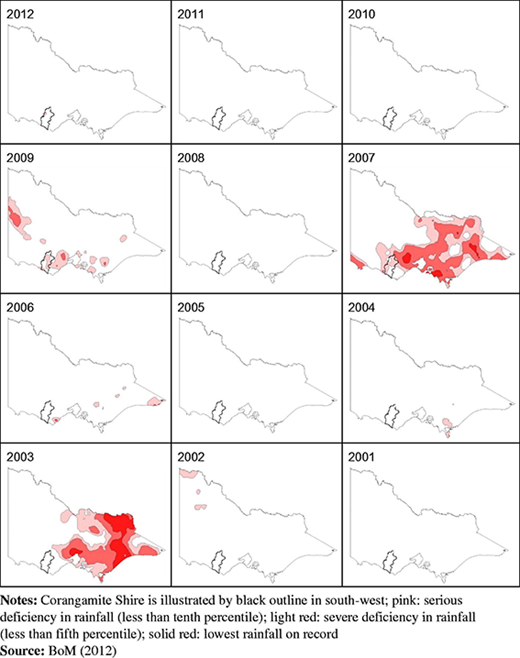
The drought that affected much of eastern Australia through the early to late 2000s was particularly hard for farming families. Corangamite Shire was not as badly affected as some northern regions of Victoria (Figure 12). Eastern Victoria escaped the worst of the effects of a crippling 2003 drought (ABC, 2002) but in 2007 and 2009 the dairy farming region recorded a serious deficiency in rainfall affecting livestock and pasture. The dates of serious droughts in Victoria since 1900 are shown in Table II. The perception is that drought management strategies have improved significantly over the past 50 years, reducing farmers' vulnerability. This was supported by farmer IC7 in SR1, who had farmed through the droughts of the 1960s until the present:
IC7: I saw the 1970's [as being] very wet, I haven't seen anything as wet as that since […] I don't think that there is anything new in droughts, there are fences through all the dried up lakes. I remember the drought of '68, I haven't seen anything as dry as that since. But we can shift fodder now to here for a cost […] you couldn't do that in '68 […] we're better at drought management now.
Younger farmers were more inclined to perceive a change in temperature and rainfall patterns in accord with rainfall data, and similar findings have been noticed in other locations (Diggs, 1991; Leviston et al., 2011; Nyanga et al., 2011). Those with smaller holdings had more accurate perception of a change in temperature: perhaps because they need to be more “in-tune” with seasonal shifts to ensure optimal pasture production at minimal cost (Nyanga et al., 2011). For them, buying in fodder in the event of failed pastures could negate any profit.
Assessing farmers' adaptations to climate variability
A major challenge for all research on climate adaptation is differentiating between adjustments implemented by farmers in response to changing seasonal variability or climate variability, and adjustments implemented to adapt to other drivers of change. Of course the latter adjustments may, as a by-product, increase (or possibly reduce) the resilience of the farm to seasonal variability (Belliveau et al., 2006). This difference is illustrated by two farmers, IC5 and IC6 – both changed their pasture mix from annual to perennial species over the past decade. In IC5's case this was to increase the farm's resilience to seasonal rainfall variability, whilst for IC6 it was due to the increasing cost of buying grain and feed supplements[8]:
Researcher: Do you see your new pasture regime as being more resilient to weather variability?
IC5: Yes, definitely, and we are counting that into [why we changed], we haven't got everything right […] but we have learnt a lot on what pastures do best here […] and the last 8 months have been the driest on record here […]
Researcher: With regards to pasture growth and pasture management, have you had to change what pasture you grow or the type of pastures you grow?
IC6: We try and stay up to date with the pastures […] they bring out new species all the time. We try and use them […] we can grow more grass, and cut back on the grain bill, because the price has gone up.
Farmers were questioned about which adjustments they have made to their dairy business over the past decade. In total, 23 options were documented over three categories. To overcome the difficulty in distinguishing the reasons behind these, all adjustment scenarios presented in a survey checklist were those that had been previously suggested by industry peak bodies, the Victorian DPI, other Australian state bodies, and in the literature[9].
Almost all (94 per cent) of farmers surveyed stated that they had made a physical adjustment to their business in the past decade. Some 79 per cent implemented new practices (Figure 13 and Table III), 86 per cent altered an existing practice. The most common new action taken was the use of seasonal forecasting technology as an aid for what pastures to sow, and when to sow them (Figure 13). This was particularly visible among SR2 farmers (Table III). These findings are in line with other surveys conducted in Victoria by WIDCORP (2008) and Schwartz et al. (2011). There were also notable changes in the pasture species grown on-farm, and in the adoption of more sustainable water use practices.
Changing pasture mix (in terms of species and varieties) was the second most common adjustment, and was often aided by agricultural extension advice. The decision by farmers to alter their pasture species mix is an adaptive adjustment to reduced rainfall and increased temperatures and the northern farmers led this change (Table III).
Figure 14 and Table IV show more detail on the adjustments made by a subset of the sample who self-identified as altering their existing practices. Improving the efficiency of water used in the twice-daily “wash-down” of the dairy is important since between 5,000 and 25,000 litres is used per wash, taking one to two hours per day (Dairy Research and Development Corporation, 2003). Some respondents, not really distinguished by zone, have installed new reticulating effluent ponds, using the sediment as nutrient rich irrigation water for pasture. Such a strategy was implemented by farmer IC2 to increase the fertiliser load on nutrient poor sandy fields and resulted in an increase in pasture growth:
Interviewer: Would you reticulate [the effluent run-off] through an irrigation system?
IC2: Yeah, we actually have, because we are fairly high on the farm, we have a manure pond at the highest point of the farm. The back of the farm is more sandy, and needs extra fertiliser, and we use those areas for irrigation for effluent.
IC2 constructed an effluent water recycling system on economic grounds:
Interviewer: And has this [effluent water recycling system] been a beneficial change for your property?
IC2: Definitely. We have a reduce reliance on fertiliser, and buying fertiliser, the growth in those paddocks has improved substantially, so we don't have to buy in as much fertiliser and we do find that some of those paddocks they take off earlier in the autumn, so in a way we don't start that far behind.
Interviewer: So this is more of an economic decision?
IC2: Yes.
The northern and drier sub-region was the most likely to expand water storages, in line with their increased perception of a decline in rainfall over the past decade (Table IV). The majority (80 per cent) of farmers who did this were aged between 35 and 54. Such an outcome is expected due to the very high capital outlay required[10]:
Interviewer: Have you had to bolster your water storages?
IC7: We put in a couple of good sized dams for water storage, and we have probably utilised the ones we had more than previous managers. We have a bigger supply of water now than we previously had.
The adjustments nominated by participants have adapted farms to expected future climate scenarios, but it is clear that these decisions are being made as a reactionary response primarily to fluctuation in economic, not climatic stimuli (Smit et al., 2000) (Figure 15). For example: reduced profit occurs if milk production declines. Milk production has itself declined due to poor pasture production. Pasture production is poor due to seasonal conditions outside the current pastures' optimal growing conditions. To increase milk production the farmer alters the pasture species, the altered pasture species produced more nutritional value under current seasonal conditions, higher quality pasture raises milk production, and higher milk production increases profit. The farmer is most likely to state that a change in pasture mix was implemented, with the reason behind this being because it made good financial sense, however the underlying reason for this change was in part a variation in climate. Inherent farmer scepticism in the region towards environmentalist claims about global warming and its political ramifications could account for this; however in the drier SR1 there was more recognition of climate variability (Figure 15).
Respondents IC5 in SR1 shifted their pasture management from a monoculture to a mix of pasture varieties across their farm. This adjustment reduced costs and improved herd health. However, IC5 also noticed a change in the seasonal variability:
Interviewer: Have you noticed any change in the weather patterns?
IC5: Less reliable, more fluctuation. Hard to say if it is getting hotter, I don't know about that. But we've had really dry, really hot, really wet, really cold, really windy. It is more all over the place.
Interviewer: Is that something which has become worse in your experience?
IC5: In the last 10 years we have had a lot of failed autumns, autumn is a disaster […] in my first 10 to 15 years it wasn't like that.
The adjustment was implemented as a response to the economic stimuli of the increasing cost of fertiliser. But utility per unit of water has increased, thereby adapting to the expected future climate scenario. Again, a business decision can have adaptive benefits. The rainfall data for the region certainly confirms a decline in autumn rainfall in SR1.
Smit and Skinner (2002) posit that adaptation is seldom made in response to single factors, and that the decision to adjust a business is usually iterative and dynamic. This is supported by this study. The nature of experimentation and iterative response to climate variability nees to figure more in studies that link perceptions of climate to climate adaptation (Batterbury and Mortimore, 2013; WIDCORP, 2009). In response to a survey question on “how was [adjustment X] informed?”, there is evidence of shared discussion and efforts:
IC1: Just word of mouth and observing the demo dairy and reading magazines that comes out from [my milk collection co-operative].
IC2: We're in a discussion group, so we actually are in a group with a whole lot of other famers and we rotate visiting farms and quite often we have new things that they have tried out, or recommendations.
IC3: I am in a local discussion group, and that information [was] readily available.
The two predominant reasons for why a change was not implemented were; financial limitations, and a perception that the farm was already in good working order. Financial restrictions and access to capital have played a major part in curtailing farm adjustments across Australia (WIDCORP, 2009) and internationally (Iglesias et al., 2007; Dyszynski, 2010; Maddison, 2006; Nyanga et al., 2011; The World Bank, 2007, p. 200). The majority of the farmers who did not change their farming approach were in the 35-44 age bracket, were farm owners, and less likely than the average to perceive climate change as a threat. Hogan et al. (2011a) categorise similar farmers in Australia as “comfortable non-adaptors”, farmers who did not see climate change as a threat, could continue to cope with changes, and were unlikely to seek information about adjustment options. Farmers who stated that their farm worked fine and that there was no need to adapt, may be categorised in this way. Nettle and Lamb (2010) reinforce the fact that Victorian dairy farmers hold varying worldviews in relation to environmental threats and their stewardship obligations.
The final step in our study was the gathering of retrospective feedback from farmers who have made an adjustment to their business, to see if the adaptations implemented have been effective (Risbey et al., 1999). There was a general consensus that change has increased profits, increased efficiency and was of benefit to their businesses. And yet, a low proportion of the sample population deemed changing seasonal variability to be major factor in their decisions. Fortunately following Risbey et al. (1999) it would be expected that the majority of farmers who adjusted their business over the past decade will have added the adaptation strategy that they implemented into their future repertoire. It is to be expected that these strategies will play a part in future (Figure 16).
We are in agreement with anthropologist Richards (2010) who says, following Durkheim, that:
[…] much of what farmers and farm labourers do (as opposed to what science or regulatory authority tells them to do) is based on practical contingencies […] or it relates to unavoidable social responsibilities to dependants or a wider community group (Richards, 2010, p. 10).
The practical contingencies for dairying households include making a living, and so this structures perception of, and responses to, climate variability (Figure 16). In drier regions, the struggle is more acute, and awareness of climate variability is greater.
6 Conclusions
Corangamite Shire dairy farmers' perceptions of seasonal variability were found to be broadly in line within the meteorological record. Northern (dry) region farmers were more able to correctly perceive a change in rainfall signal, and were more inclined to state that temperatures have changed, in comparison to their southern region (wetter) counterparts. Farmers struggled to perceive a change in the incidence of extreme weather events. Younger farmers were more likely to perceive a change in temperature and rainfall over the last decade. Those with smaller holdings were more inclined to notice a change in temperature than major landholders. Hypothetically, these farmers must maximise pasture growth at minimal cost, and should pastures fail their smaller profit margins and inability to mitigate climate risk can result in a more immediate and unsustainable loss of income.
The majority of farmers in the survey stated that they have made an adjustment to their business over the past decade; a lesser percentage had initiated entirely new practices like purchasing weather forecasts. Although farmers were aware of changes in climate variability, the majority stated that economic stimuli were the underlying reason for the changes that they implemented on-farm. The majority did not make a strategic decision to adjust to changing climate variability, however the tactical actions they carried out could be effective against it. Consequently, many of those surveyed have adapted their businesses to climate variability as a result of their adaptation to economic stimuli.
In accordance with their perceptions of climate variability and change, economic stimuli played the dominant role in influencing farmer adaptive behaviour. The major, conservative adjustment identified was water recycling and re-use in the dairy. A greater connection still needs to be made between climate variability, climate change, and the real long-term economics of dairying.
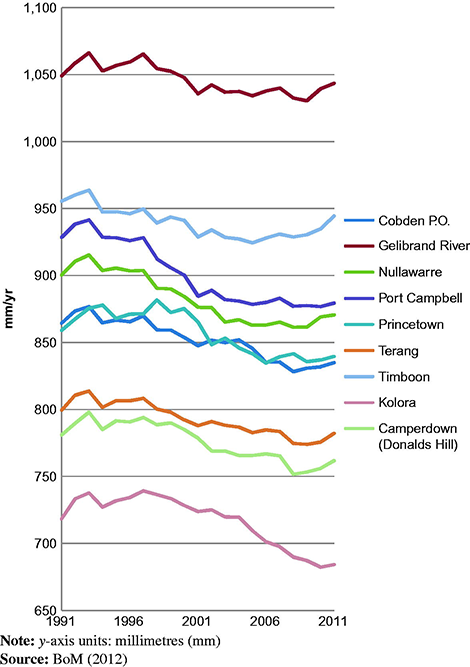
Thirty-year averaged annual rainfall from southern Corangamite Shire (SR3) recording stations from period 1991 to 2011
Thirty-year averaged annual rainfall from southern Corangamite Shire (SR3) recording stations from period 1991 to 2011
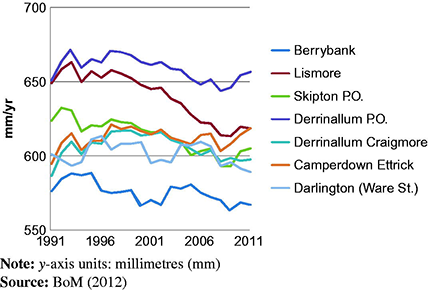
Thirty-year averaged annual rainfall from northern Corangamite Shire (SR1) recording stations from period 1991 to 2011
Thirty-year averaged annual rainfall from northern Corangamite Shire (SR1) recording stations from period 1991 to 2011
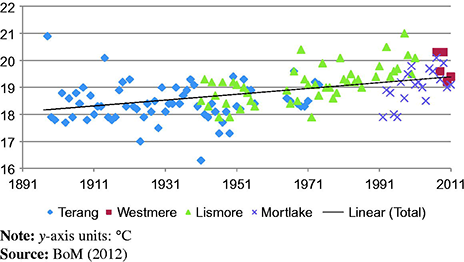
Mean annual maximum temperature 1891-2011 from four different points in Corangamite Shire
Mean annual maximum temperature 1891-2011 from four different points in Corangamite Shire
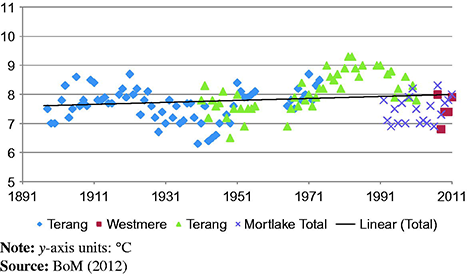
Mean annual minimum temperature 1891-2011 from four different points in Corangamite Shire
Mean annual minimum temperature 1891-2011 from four different points in Corangamite Shire
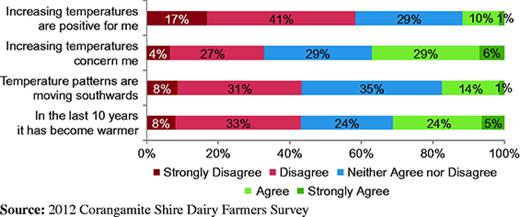
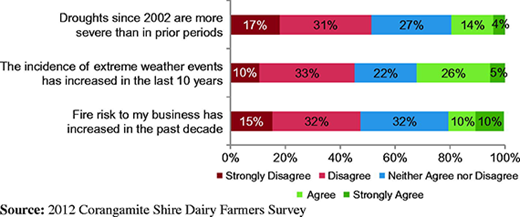
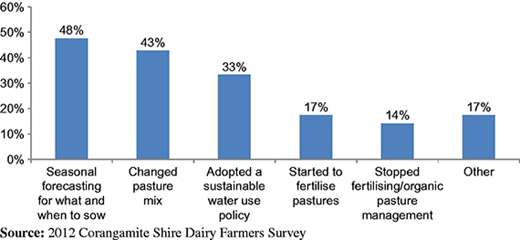
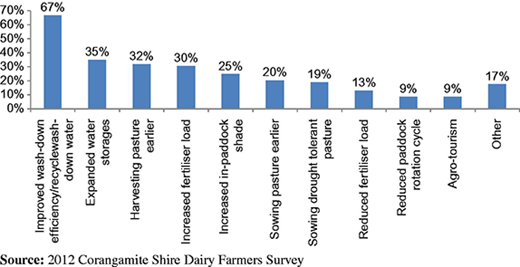
Changes implemented in existing management practices by subset of survey sample who changed their management practices (percentage of sub-sample)
Changes implemented in existing management practices by subset of survey sample who changed their management practices (percentage of sub-sample)
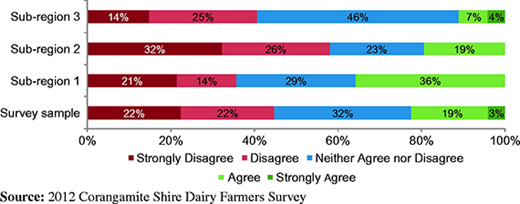
The degree to which changing seasonal variability is noted as a factor in changing farming practices, by those who made a change to their practices
The degree to which changing seasonal variability is noted as a factor in changing farming practices, by those who made a change to their practices
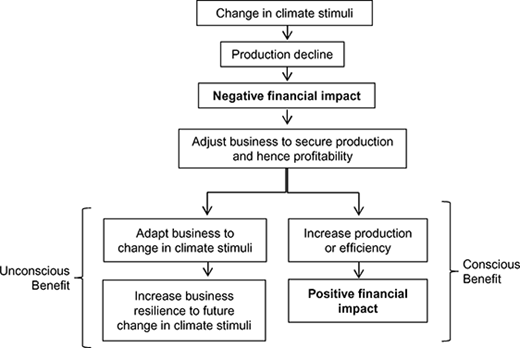
Agricultural adaptation to climate change occurring as a result of adaptation to economic stimuli
Agricultural adaptation to climate change occurring as a result of adaptation to economic stimuli
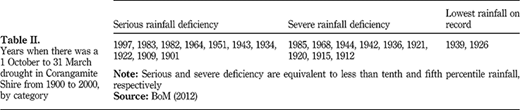
Years when there was a 1 October to 31 March drought in Corangamite Shire from 1900 to 2000, by category
Years when there was a 1 October to 31 March drought in Corangamite Shire from 1900 to 2000, by category
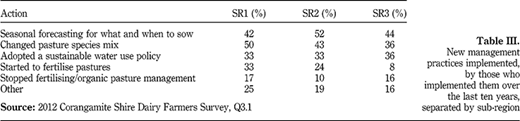
New management practices implemented, by those who implemented them over the last ten years, separated by sub-region
New management practices implemented, by those who implemented them over the last ten years, separated by sub-region
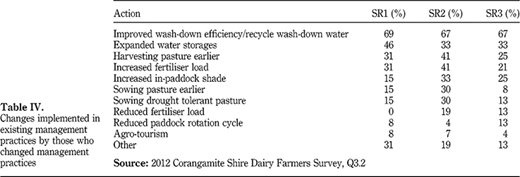
Changes implemented in existing management practices by those who changed management practices
Changes implemented in existing management practices by those who changed management practices
References
About the authors
Iain R. Elgin-Stuczynski (BSc Honours, Geography, University of Melbourne) is an Analyst at CBRE Agribusiness, Melbourne, VIC, Australia.
Simon Batterbury (PhD, Geography, Clark University, USA) is an Associate Professor of environmental studies at the University of Melbourne and has worked on agrarian change and rural development in six countries since 1992. Simon Batterbury is the corresponding author and can be contacted at: simonpjb@unimelb.edu.au
The authors would like to thank all the survey respondents for their kind participation and three reviewers. For assistance with survey distribution; Murray Goulburn Cooperative Co. Ltd, Warrnambool Cheese and Butter, and West Vic Dairy. For data and advice; Stephen Commadeur at Australian Agribusiness Group, and Helen Chenoweth and Graeme Anderson at the Victorian Department of Primary Industries.
Notes
There have also been significant calls for dairying to reduce its carbon emissions and the issue is significant, but our focus here is on how the dairying community has already adapted to an uncertain climate.
The contradictory nature of these expected impacts reflects their uncertainty in climate predictions. CSIRO (2007) state that there is a −43 to +20 per cent uncertainty range in run-off projection and a±8 per cent uncertainty range in expected precipitation changes.
Not all farmers only use surface run-off. Some have bores or town water to supplement it.
C4 grasses have better water use efficiency, especially under warmer conditions, than C3 counterparts. C4 grasses are better adapted to drier conditions, however are not as nutritious as C3 species, nor can they support similar density of cows/hectare as C3 grasses.
Macro-scale changes in this context include change to El Nino or La Nina conditions (as a result of change in the Southern Oscillation Index) or a drop in milk price (due to strengthening of the Australian Dollar).
The Dairying for Tomorrow survey was conducted on behalf of Dairy Australia in all major Australian dairy regions, one of which is West Vic Dairy (Phelps et al., 2012).
As used by the BoM, see: www.bom.gov.au/climate/cdo/about/about-stats.shtml. Other environmental data, including a heat stress index, was collected but is not reported in this article.
As all feed for cattle may not be sourced all year-round from on-farm pastures, farmers often used feed supplements, such as grain, to make up a shortfall in feed and to provide cows with an incentive to come to the milking shed.
Increasing temperature, reduced rainfall (primarily autumn), increasing incidence of days of high potential heat stress.
High capital cost means that farmers want to see a long term return on investment. At 35, farmers can have 30 years to get the return on investment, but at 65 this is unlikely.

