


– The purpose of this study is to put forward a methodological framework to provide a comparative assessment of available mitigation and adaptation strategies against climate change. Mitigation options aim at minimizing CO2 and other greenhouse gas emissions, in an effort to reduce the rate of increase in global temperature. On the other hand, adaptation options relate to the ability of the natural or human systems to handle the impact of the climate change and to adjust to its effects, seeking to eliminate the adverse consequences and take advantage of any beneficial outcomes.
– The methodology focuses on specific parameters, leading to the most efficient package of alternatives for the area of Greece. The selection of the “optimal” ranking of alternatives in a defined strategy is a sophisticated procedure, and a multi-criteria decision-making process was established. A questionnaire was designed and used as input to the overall framework, based on specific decision criteria. Climate change experts gave their feedback via a face-to-face interview. ELECTRE III multi-criteria decision analysis was adopted for the comparative evaluation, as it fits best to complex environmental problems. An “optimal” sequence of mitigation and adaptation strategies was provided for Greece.
– The use of renewable energy sources, increase of energy efficiency and improved forest management – tree planting and rational water management – are among the most promising options to strategically plan climate change mitigation and adaptation for Greece.
– The presented study provides an insight into alternative mitigation and adaptation strategies against climate change. The use of the multi-criteria analysis is an innovative approach to outline the optimal bundle of strategies. The methodology focuses on specific parameters, leading to the most efficient package of measures for the area of Greece. Such an approach is implemented for the first time in Greece, at least up to the authors’ knowledge, and provides a basis for strategic governance and policy modeling for the area under consideration.
1. Introduction
Due to its complex nature and long-term impacts, climate change (CC) currently constitutes the greatest environmental challenge for the scientific community. Many businesses in most sectors accept the urgent need to address CC to survive and grow in ever-changing entangled business economies (Renukappa et al., 2013). Despite the significant uncertainties involved, the scientific community has raised serious concerns about the increased risk of important and irreversible consequences of CC, given the present and future evolution of greenhouse gases (GHGs) emissions. CC affects various critical areas, such as biodiversity and ecosystems, human health, coastal areas, infrastructure and the availability of water and food. The average increase of temperature is the most typical indicator of CC, which, according to the Intergovernmental Panel on Climate Change (IPCC) report (2007), is expected to reach 2°C by 2100. Furthermore, most climate models suggest that a doubling of pre-industrial levels of GHGs is very likely to cause an increase in the overall global average temperature between 2 and 5°C (Stern, 2007). With the growing recognition of CC as a major global problem, mitigation and adaptation became important topics in the CC research community. The emergence of international institutions seeking to manage CC – the United Nations Framework Convention on Climate Change (UNFCCC) and the IPCC – has enhanced the efforts to develop a coherent and rigorous understanding of mitigation and adaptation to CC, which could inform impact assessment and policy development (Brugger and Crimmins, 2013). Mitigation and adaptation are complementary tools for climate vulnerability management. Mitigation reduces future risk, while adaptation reduces the negative consequences of the resulting future damages (Felgenhauer and Webster, 2013).
More specifically, the IPCC defines mitigation as an anthropogenic intervention to reduce the sources or enhance the sinks of GHGs. In parallel, adaptation refers to the ability to adjust to CC, to moderate potential damage, to take advantages of emerging opportunities and/or to face the consequences. There are various practices to achieve an efficient adaptation, mainly involving technological solutions and management policies. The cost depends on the choices of individual adjustment policies and may be affordable, whereas the cost of innovative technologies can be too high. Concurrently with these efforts, the specific characteristics of a defined area under consideration clearly need to be taken into consideration for the implementation of the strategies, especially in terms of economic, environmental and societal dimensions. An area’s characteristics constitute a key element in the implementation (or not) of potential strategies.
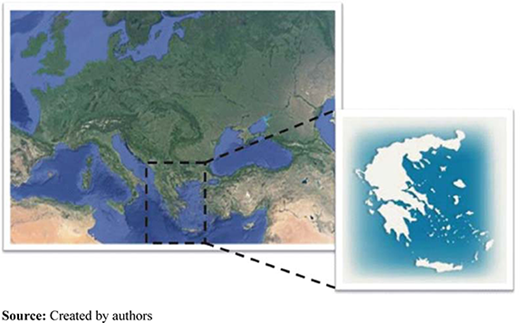
This paper presents a multi-criteria analysis framework designed to support decision-making related to the strategic planning for CC mitigation and adaptation for the country of Greece, European Union (EU). Having agreed upon binding emissions reduction path by 2020, the EU plays a leading role in international climate policy (Wolkinger et al., 2012). Apart from being an EU country, Greece is also a Mediterranean country. The Mediterranean region is of particular interest, as it is considered one of the “hot spots” of expected CC (Giorgi, 2006; Maheras et al., 2004), combining significant changes in precipitation (Xoplaki et al., 2003; Giorgi, 2002), temperature, air humidity (Feidas et al., 2004) and cloud cover (IPCC, 2007). These changes pose a serious threat for Greece (Figure 1), directly threatening its productive sectors in the future. Greece is, moreover, characterized by a particularly complex topography, which, in combination with the weather systems and long coastline (13,600 km), displays strong climatic contrasts, a variety of climatic characteristics and variations of meteorological parameters, causing occurrences of different climates, even within a few kilometers’ distance.
The approach adopted in the material to follow presents added value, as the results presented provide national decision-makers with a list of prioritized strategies to mitigate and adapt to CC. On this basis, the work presented herein aspires to have an impact on the Greek society in terms of influencing public attitudes and affecting quality of life. The case study presents significant information to encounter CC in that country, considering that factors such as the temperature increase, drought, extreme weather phenomena and rising sea levels will all have an impact on not only Greek agriculture, forestry, fisheries, tourism, transport and activities in coastal areas but also in urban climate in Greek megacities (Bank of Greece, 2011). Thus, due to the specific characteristics of the area and the predicted CC impacts for Greece, the case study presents interesting insights not only for the Greek but also for the global CC scientific community. A multi-criteria analysis framework designed to support a national governance and policy modeling related to the strategic planning for CC mitigation and adaptation is implemented for the first time for Greece (and possibly in national level in EU), at least up to the best of the authors’ knowledge. A rigorous investigation of the parameters that define adaptation and mitigation strategies is carried out, recognizing that selecting the most appropriate strategy is a complex process, because of the need to take into account social, economical, environmental and geomorphologic aspects and a number of potentially equivalent alternatives.
To search for the “optimal” bundle of alternatives, a questionnaire with the main mitigation and adaptation options was developed. The experts’ feedback was followed by data post-processing, based on a qualitative and a comparative evaluation. This intended to highlight the range of application in Greece by emphasizing on the special characteristics of the area under study. The work presented herein is divided into five sections. Section 2 analyzes the basic structure and components of the methodological approach. Section 3 presents a test case for Greece to demonstrate the applicability of the approach and summarize some main results and discussion for that area. Section 4 includes sensitivity analysis and insights following the test case and relevant scenarios in an attempt to identify points of significance related to mitigation and adaptation strategies and the robustness of the results. The last section contains the main conclusions of the work.
2. Methodological approach: basic structure and components
The adopted methodology is illustrated in Figure 2. A thorough research of available strategies – through a systematic literature review – is of critical importance to obtain a complete insight of adaptation and mitigation alternatives worldwide. This leads to the comparison of different available approaches by highlighting their differences, thus forming the grounds to discuss advantages and disadvantages of implementation in the defined area under study. Setting a limit regarding the number of adaptation and mitigation alternatives/measures is necessary for tractable strategic planning to have a manageable inventory of alternatives for governance and policy management. This constraint can be achieved as feedback during the interaction with the experts group (Bellamy et al., 2013). For the case under study, an effort was made to cover a wide range of scientific fields by the scientists involved in the experts’ group to add significant value to the qualitative and comparative assessment of mitigation and adaptation options.
There are numerous multi-criteria analysis techniques, which differ with respect to the adequacy of implementation, ease of use, reliability and results. A reliable multi-criteria approach is one that produces scientifically rigorous results which can be used as guiding criteria for the decision-makers. The ease and applicability of each technique depends on the effort and the time required for its application, while the suitability is determined by its adaptability to the data of the specific problem (Achillas et al., 2011).
In the methodological approach presented in Figure 2, ELECTRE III (Roy, 1978) was adopted. ELECTRE III is particularly suited to complex engineering projects, having been widely used for environmental decision-making studies in the past, specializing in examining environmental issues (Rogers and Bruen, 1998). It can incorporate a wide variety of evaluation criteria by involving a large number of different decision-makers (Xiaoting and Triantaphyllou, 2008). Moreover, ELECTRE III is capable of handling imprecision and uncertainties in the input data. The uncertainty of available data in many cases is likely to drive decision-makers to misleading conclusions. Policymakers should therefore take into account the probability that such uncertainties do exist in the available data, and, in that regard, the ELECTRE III technique is more adaptable in outputting effectively information that will be used to develop legislation and promulgate new control strategies (Roy and Bouyssou, 1993).
As it is explained in the material to follow, ELECTRE III requires the determination of three thresholds: preference threshold-p, indifference threshold-q and veto threshold-v, all of which affect the determination of the criteria weighting factors and thus reduce the subjectivity of the method. The technique uses three pseudo-criteria to represent all different aspects of the problem under study and starts by comparing alternative measures with respect to each criterion. It aggregates the results of all comparisons and builds a model for the fuzzy outranking relation, according to the notion of concordance and discordance. The method constructs two classifications through a descending and an ascending distillation procedure. A final classification of the actions is elaborated as the intersection of the two complete pre-orders. The comparative analysis of the classifications leads to a final robust-result analysis (Roy and Bouyssou, 1993).
The aforementioned thresholds aim at modeling the decision-maker’s preference in real-life situations, which can gradually increase from indifference to strict preference. Rogers and Bruen (1998) proposed a comprehensive approach for specifying realistic limits for pk and qk within the context of an environmental appraisal, where uncertainty and human sensitivity to different levels of the criterion are taken into account. According to their study, it is imperative that pk and qk are chosen in a rational and defendable manner, and be explicitly estimated, rather than pick some arbitrary values (Roy and Hugonnard, 1982). With these thresholds, the method addresses not only the two ends of the problem but also the intermediate levels. Finally, according to ELECTRE III approach, a decision-maker can account for both qualitative and quantitative criteria, while the method that has shown good data fits in such applications.
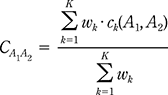
According to Vlachokostas et al. (2011), multi-criteria evaluation of available alternatives and strategies comprises a problem that is formulated from a set of alternatives (A1, A2, A3 […]) and a set of criteria (C1, C2, C3 […]). The evaluation of criterion k for alternative A is described as Vk(A). The approach adopted in the framework of this analysis uses a ranking scheme, following ELECTRE III principles, based on binary outranking relations in two major concepts: “Concordance” (ck), describing the situation in which alternative A1 outranks alternative A2 if a sufficient majority of criteria favor alternative A1, and “Non-discordance” (dk), describing the situation in which the concordance condition holds and no criteria in the minority should oppose too strongly the outranking of A2 by A1. The assertion that A1 outranks A2 is characterized by a credibility index that permits knowledge of the true degree of this assertion (Roussat et al., 2009). To compare a pair of alternatives (A1, A2) for each criterion, the assertion “A1 outranks A2” is evaluated with the help of pseudo-criteria. The pseudo-criteria are built with two thresholds: preference (pk) and indifference (qk). When Vk(A1) − Vk(A2) ≤ qk, no difference between alternatives A1 and A2 for criterion k is identified. In this case, ck(A1, A2) = 0. On the other hand, when Vk(A1) − Vk(A2) > pk, A1 is strictly preferred to A2 for criterion k. Thus, ck(A1, A2) = 1. A global concordance index CA 1 A 2 for each pair of alternatives (A1, A2) is computed with the concordance index ck(A1, A2) of each criterion k: Equation 1
where wk is the weight of criterion k and K is the total number of selected criteria.
As already mentioned, a discordance index, dk(A1, A2), is also considered for all pairs of alternatives and each criterion k. The discordance index dk is evaluated with the help of pseudo-criteria that have a veto threshold vk, which represents the maximum difference between Vk(A1) and Vk(A2) that can be accepted without rejecting the assertion “A1 outranks A2”. When Vk(A1) − Vk(A2) ≤ pk, no discordance exists, and dk(A1, A2) = 0; however, when Vk(A1) − Vk(A2) > vk, dk(A1, A2) = 1. The index of credibility δA 1 A 2 of the assertion “A1 outranks A2” is defined as follows: Equation 2
While a veto threshold is exceeded for at least one of the selected criteria, the index of credibility is null, that is, the assertion “A1 outranks A2” is rejected. In relation to the ranking procedure of all available alternatives Ak, two complete pre-orders are constructed through descending and ascending distillation procedures. Descending distillation ranks alternatives from the best available to the worst, while ascending distillation ranks alternatives from the worst available to the best (Maystre et al., 1994; Roy and Bouyssou, 1993). Taking into account both distillations, the ELECTRE III method concludes with the optimal alternative. The methodological approach concludes with the determination of an optimal bundle of improvement measures and a sensitivity analysis to highlight the robustness of the results. Considering expert views on available alternatives, the approach prioritizes strategies for adaptation and mitigation. As already mentioned, the methodology provides an easy-to-use tool for decision-makers, developing integrated plans to tackle environmental problems, such as CC.
3. Case study
3.1 CC considerations for Greece
The report of the Bank of Greece (2011) is a starting point for conducting a comprehensive and detailed research to support the national strategy for tackling CC. It is essential for Greece to draft a national policy for adaptation, geographically belonging to one of the most vulnerable areas of the Mediterranean basin. Adaptation strategies against the effects of CC is furthermore necessitated by the strong dependence of the country’s economy on its natural environment, for example tourism and agriculture are entirely dependent on weather and access to natural resources. Additionally, the aforementioned report on the environmental, economic and social impacts of CC in Greece confirm the high cost of inaction and the benefits to be derived from early action. On December 2011, “Roadmap for adapting to climate change in Greece” came to confirm the Greek inertia while guidelines for an adaptation strategy were formulated. The current adverse economic conjuncture in Greece seems to constrain the financing of mitigation and adaptation strategies. However, to the extent that these strategies can be exploited as an opportunity for new lines of economic activity and for growth, they can be part of the policy for the Greek economy’s exit from the crisis, setting up a new growth model. The adoption of mitigation and adaptation strategies, rather than being hampered by the grave economic problem faced by Greece today, may actually contribute to its solution.
A significant study was recently conducted by the Official National Observatory of Athens (2015) regarding the impacts of CC in Greece. The findings of this research led to important conclusions for Greece, forecasting Greek cities becoming intolerable, repeated heat waves in tourism destinations and difficult times for agriculture and national parks at risk (Giannakopoulos et al., 2011). According to the survey’s results, the duration of heat waves occurring per year will increase, while the total precipitation will be decreased, with extreme rainfall events growing by 10-20 per cent. Based on these scenarios, it seems that both the risk of flood and suburban forest fires may be significantly increased. Impacts are also predicted for biodiversity of Greek ecosystems.
The ominous predictions for Greece make even more urgent the need to implement a holistic mitigation/adaptation strategic planning against the predicted impacts of CC. As a result, this will lead to reduced productivity, capital loss and additional costs to repair the damage, especially if adverse health effects caused by CC are also considered. The cost of CC for the Greek economy has been estimated to be very high, should no action be taken, whether in Greece or globally. In the event that CC evolves in accordance to the intensity expected by 2050 and 2100, lacking a global effort to reduce GHGs, the encumbrance cost for the Greek economy is estimated to reach 701 billion by 2100, which is equivalent to three times the annual gross domestic product of the country. CC mitigation requires continuous effort to drastically reduce emissions, both in Greece and globally, starting today till 2050 and then 2100.
3.2 Results and discussion
Based on the methodological scheme presented in Section 2, a thorough review of the potential alternative mitigation and adaptation strategies against CC has been conducted (Ministry of Environment, Energy and Climate Change, 2014; EEA, 2012; IPCC, 2012). Regarding the selected measures and criteria, a questionnaire was formed. As a first step for the preparation of this questionnaire, a pre-test procedure was conducted to assess the comprehensibility of the composed “draft” questionnaire and the probable effectiveness of the survey. Essential introductory information was provided to the experts succinctly and possible misunderstandings regarding the questionnaire at hand were discussed. The experts then gave their input, including alternatives based on their expertise. They participated in the process of establishing a consensus on the criteria and alternatives to be used in the decision-making process. These criteria are essential components in the implementation of multi-criteria analysis, as they form the basis for the assessment of alternative scenarios based on their assigned weighting factors. Furthermore, the experts gave emphasis to simplicity and comprehensibility of the questionnaire. These were considered top priorities of the adopted approach, as not only an easy-to-comprehend but also adequate questionnaire would significantly increase the possibility of reliable responses and thus results. For this reason, feedback was received by the experts that were to be included in the experts group, and it should be emphasized that most of the experts who participated in the pre-test procedure considered the open-ended format as more appropriate than a discrete choice scheme in the comparative analysis of mitigation and adaptation alternatives to confront/adapt to CC. The open-ended approach created a spontaneous and less “guided” process for the quantification of the performances of every included alternative for each criterion. The pilot-study procedure ascertained that all experts understood the input required. After making the appropriate modifications and improvements, the final questionnaire consisted of three discrete, but interrelated, parts. The first section contained the full name and affiliation of the expert who participated in the experts group. The second part consisted of the required input of the performances for the mitigation alternatives and the third one for the adaptation ones. Interviews were conducted on a face-to-face basis and the participating experts gave their personal feedback. Quantitative information on the performances (on a scale of 1-10) and weighting factors (in the range of 0-100 per cent) was provided to compare and evaluate the alternatives under consideration. The involved experts in our study cover a wide range of scientific fields and disciplines that interrelate with CC, such as physics, meteorology and climatology, civil engineering, agronomy, biology, geology, planning and development, economics and environmental engineering, all of which provide added value to the evaluation of alternatives.
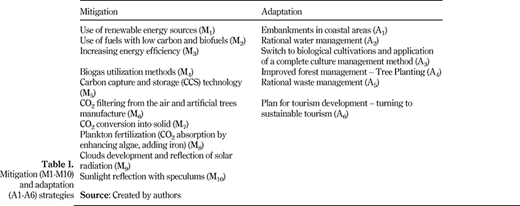
To mitigate and adapt the effects of CC, ten mitigation and six adaptation strategies were finally selected, taking into consideration the characteristics of the area under study. The mitigation and adaptation alternatives are illustrated in Table I with the codes M1-M10 for mitigation and A1-A6 for adaptation.
As stated above, the questionnaire also required quantitative open-ended estimation of the weighting factor of each of the six adopted criteria. The selected criteria for this evaluation were:
(C1) reduction of negative impacts and environmental benefits;
(C2) short-term effects;
(C3) long-terms effects;
(C4) economic impacts;
(C5) negative environmental impacts application (collateral damage); and
(C6) social acceptance.
For the selected scale (from 1: the worst evaluation to 10: the best evaluation), the indication “Increasing” was selected for criteria C1, C2, C3 and C6. In contrast, for the criteria C4 and C5, the indicator “Decreasing” was selected in the corresponding arithmetic scale. Table II illustrates the average experts’ view on the available alternatives for each criterion and the corresponding averages for the weighting factors.
To efficiently discriminate among alternatives, it is essential that a link is developed between preference thresholds with the total number of alternatives. For that reason, preference and indifference thresholds for each criterion were calculated (Table III) with the use of the well-established equations (1), (2) (Haralambopoulos and Polatidis, 2003) and (3) (Kourmpanis et al., 2008): Equation 3 Equation 4 Equation 5
R akMAX is the maximum average performance of alternative a for criterion k, R akMIN the minimum average performance of alternative a for criterion k and n is the number of available alternatives.
Figure 3 presents the ascending and descending distillation procedures for the “optimal” sequence of mitigation and adaptation strategies separately.
Regarding mitigation options, the “Use of Renewable Energy Sources – RES” (M1) is one of the first priorities for the Greek strategic plan, especially in this period of economy recession. This choice is justified by its great potential to reduce GHG emissions and minimize environmental impacts by green growth. The “Improvement of energy efficiency” (M3) option should also be promoted to many different fields, from automotive and transportation to buildings and industry, by providing economic instruments for the maximization of their applicability. For both ascending and descending distillations, the optimal alternatives for mitigation are the improvement of energy efficiency and the use of RES for all application scenarios. This was also reflected in the final distribution of the alternative strategies. This solution arises as a result of the high levels of performances to all criteria in comparison to the other strategies. It is thus imperative that these strategies should be urgently put forward in Greece to participate in the global effort for mitigating CC. These solutions can be characterized simultaneously as being economically, socially and environmentally “optimal”. On the other hand, geoengineering strategies (M5-M10) are lower in the “optimal” sequence and this may be due to:
the fact that geoengineering strategies are characterized as not applicable in Greece, especially due to economical reasons; and
there is a relative immaturity/skepticism in Greek society to adopt such options against CC impacts.
It should be mentioned that geoengineering has been suggested as a new potential tool for addressing CC and, moreover, to counteract anthropogenic CC (Bellamy et al., 2012; The Royal Society, 2009).
Regarding adaptation measures, “Improved forest management –tree planting” (A4) is considered as a quite effective measure with short-term results in a more regional to local scale, while it can also lead to improvements in urban-to-regional air quality. However, in the long run, the trees’ end of life may have negative consequences due to the release of carbon amassed during their lifetime. Because this phenomenon has not been rigorously investigated, the grade of this measure might appear overrated. On the other hand, the “Rational water management” (A2) is an important alternative due to the fact that, over the past decade, severe water scarcity problems have begun to emerge in various parts of the globe. These problems most likely will become even more serious with the rapid population growth in the affected areas and will undoubtedly lead to not only serious urban sustainability issues but also a scientific challenge in the years to come.
4. Sensitivity analysis and robustness of the results
Sensitivity analysis was included in the methodological framework of Figure 1. This process is of critical importance in the presented methodological approach, as parameter values (criteria, mitigation alternatives’ performances, adaptation alternatives’ performances, weighting factors, preference and indifference thresholds) in real-life situations come from more or less reliable estimations/views. Apart from being crucial, sensitivity analysis is also advantageous in the presented approach, as the variations of the corresponding values, decision variables and constraints could be easily studied by new runs of the model, in considerably lower computational time with ELECTRE III software. This gives the opportunity for fast reformed optimal solutions and thus the opportunity to highlight the robustness of the results and efficiently manage the promoted CC mitigation and adaptation alternatives.
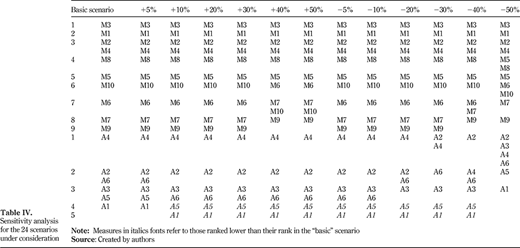
Twenty-four (12 for mitigation and 12 for adaptation alternatives, respectively) scenarios were studied in the framework of this approach in an effort to provide a high level of robustness to the presented decision support system for governance and policy modeling. More specifically, the mathematical problem is resettled with differentiating preference and indifference thresholds by 50 per cent (increasing and decreasing) and examined in parallel to the “basic” scenario. The percentage increase/decrease amount was applied equally all across the control options. Ranking of alternative measures for all scenarios are summarized in Table IV.
The ranking of mitigation and adaptation alternatives for all the adopted scenarios led to similar sequences of mitigation and adaptation, which indicates the robustness of the optimal solution. For each one of the 12 sensitivity analysis scenarios, the optimal solution for mitigation includes “Increasing energy efficiency” (Μ3), “Use of renewable energy sources” (Μ1), “Use of fuels with low carbon and biofuels” (Μ2) and “Biogas utilization methods” (Μ4), while the ranking is unaltered for all the scenarios studied. In the case of adaptation, for 11 sensitivity analysis scenarios, the optimal solution includes “Improved forest management –Tree Planting” (A4) and “Rational water management” (A2), (although the first position goes to A2 for scenarios −30, −40, −50 per cent). The −50 per cent scenario promotes “Rational water management” (A2) and “Switch to biological cultivations and application of a complete culture management method” (A3). In any case, multi-dimensional problems and global phenomena such as CC cannot be addressed by the implementation of a single alternative or even a specific measure, but through a set of coherent alternatives in a harmonized strategy. It is imperative to impose mitigation options, such as increasing of energy efficiency and the use of RES, in combination with adaptation measures, such as improved forest management, to address the current situation. Especially for RES, their maximization of their penetration will eventually allow the Greek economy to be independent of fossil fuel (and its prices). In addition, the economic benefits through CO2 emissions reduction will be reflected through the CO2 emissions stock. A recent research analysis regarding the air quality improvement by the implementation of mitigation strategies illustrates that the potential benefit is between $2 and 196 per ton of CO2, with an average of $49 per ton of CO2 and the highest benefits occurring in low-income countries (IAMP statement, 2010; Nemet et al., 2010).
The discussion within the framework of multi-criteria sensitivity analysis provides valuable insights, as it is a standardized mathematical attempt to solve problems deriving from conflicting financial, environmental, social and/or technological objectives and criteria, which must be eventually taken into account by responsible Greek public authorities.
5. Conclusions
Multi-criteria decision analysis is becoming increasingly important as a means of constructing consensus to communicate and realistically implement CC control planning to scientists and stakeholders globally (Vlachokostas et al., 2011), thus crucial to be considered in the thematic area of CC strategies and management. Undoubtedly, CC is an issue of critical importance for global sustainability and a major challenge for environmental managers all over the world. Multi-criteria decision analysis can play an important role in decreasing the complexity in the strategic planning to encounter this global challenge on a national scale. However, this becomes particularly difficult, as local-level decision-makers may not possess the necessary awareness or expertise to evaluate the alternative options, measures or strategies. Furthermore, there are key differences in drivers of mitigation and adaptation potential and decisions at different scales, which means that different factors, different timescales and different spatial scales of decision-making must be specifically considered (Nguyen and Tenhunen, 2013).
In the case under study, Greece should definitely start by reducing the emissions from fossil fuel combustion, industrial and agricultural processes through the development of RES and the introduction of new innovative eco-friendly technologies. The strategic aim is to efficiently plan and successfully implement these strategies against CC while assuring wide acceptance by society. Increasing energy efficiency, the use of RES, the use of fuels with low carbon and biofuels, improved forest management and rational water management should be put forward in the Greek policy agenda. The sensitivity analysis process highlights the robustness of these results. Their realistic implementation may be interrelated with policies designed to promote those strategies by highlighting their positive aspects, such as the development of local entrepreneurship and the creation of new jobs, the improvement of the environment and the quality of life, ensuring energy independence and immediate economic benefits. These require a concerted plan of action of local authorities. Education, development of ecological consciousness and behavior, inducement of motivation, introduction of economic measures, development of new technologies, research and monitoring programs and, last but not least, the enforcement of tax of CO2 (emissions stock) are few of the noteworthy alternative measures in the promoted strategies.
The approach presented herein is a dynamic and useful tool leading to a qualitative and comparative evaluation of CC mitigation and adaptation strategies. It is a straightforward and easy-to-follow process. Ultimately, the effectiveness of the application of a strategy depends on many parameters prior to deciding on its adequacy to be applied in a country or a specific area. The needs of each area may vary, and for the methodology to be applied generically, the special characteristics of the area will need to be taken into consideration and define the adaptation and mitigation strategies that will be included in the multi-criteria analysis. In conclusion, while CC presents a highly complex and dynamic problem, requiring coordination among experts, decision-makers and stakeholders globally, its impacts on the national scale should not be neglected. The results presented here support decision-makers with the provision of a list of prioritized strategies to mitigate and adapt to CC. The work presented herein, therefore, aspires to have an impact upon the Greek society in terms of influencing public attitudes and affecting quality of life.




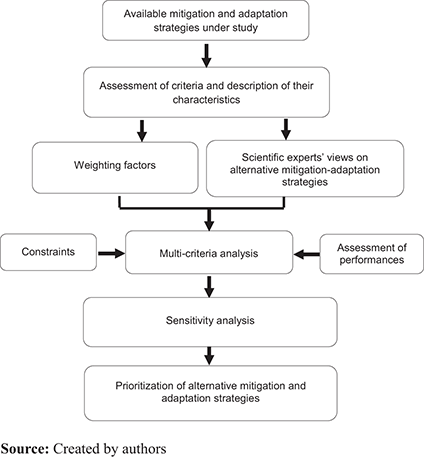
Methodological approach for the comparative evaluation of mitigation and adaptation strategies
Methodological approach for the comparative evaluation of mitigation and adaptation strategies
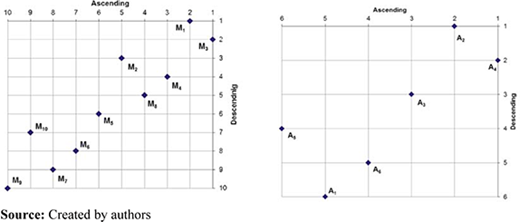
Ascending and descending distillation for the “optimal” sequence of mitigation (M1-M10) and adaptation (A1-A6) strategies
Ascending and descending distillation for the “optimal” sequence of mitigation (M1-M10) and adaptation (A1-A6) strategies
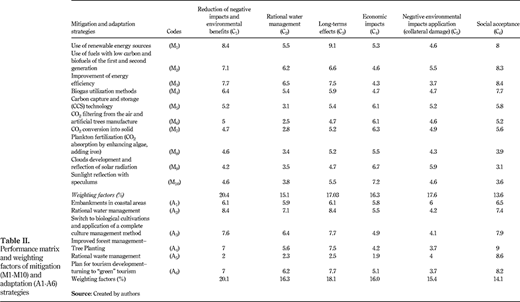
Performance matrix and weighting factors of mitigation (M1-M10) and adaptation (A1-A6) strategies
Performance matrix and weighting factors of mitigation (M1-M10) and adaptation (A1-A6) strategies

Preference and indifference thresholds of (a) mitigation and (b) adaptation strategies
Preference and indifference thresholds of (a) mitigation and (b) adaptation strategies
References
About the authors
Dimitra Spyridi graduated from Aristotle University’s Mechanical Engineering Department. She then continued with an MSc in Statistical and Operational Research from AUTH, Thessaloniki, Greece. Since 2006, she is a researcher in the Laboratory of Heat Transfer and Environmental Engineering and has been involved in projects related to climate change, environmental indicators and sustainable development. Her research interests are in the areas of climate change, air pollution and environmental protection. Dimitra Spyridi is the corresponding author and can be contacted at: spiridi@aix.meng.auth.gr
Christos Vlachokostas is an Adjunct Professor of Environmental Management in the Department of Mechanical Engineering, Aristotle University of Thessaloniki (AUTh), Greece. His main research interests include environmental assessment and management systems, decision support systems for optimal policy modeling, multi-criteria decision-making, sustainability indicators and green growth.
Alexandra V. Michailidou is a PhD candidate in the Department of Mechanical Engineering at the Aristotle University of Thessaloniki (AUTh), Greece. Since 2010, she is a researcher in the Laboratory of Heat Transfer and Environmental Engineering. Her research interests are primarily focused on environmental assessment and sustainability, and especially sustainable tourism, multi-criteria decision-making and uncertainty analysis.
Constantinos Sioutas, ScD, is currently the first holder of the Fred Champion Professorship in Civil and Environmental Engineering at the University of Southern California (USC) and the Co-Director and Co-Principal Investigator of the Southern California Particle Center and Supersite (SCPCS). His research has followed an integrated approach to the problem of the well-publicized and significant effects of particulate air pollution on health and the environment. In addition, he has focused on investigations of the underlying mechanisms that produce the health effects associated with exposure to air pollutants generated by a variety of combustion sources, such as traffic (including light and heavy-duty vehicles, natural gas buses and biodiesel vehicles), harbor and airport operations, power plants and photochemically induced atmospheric reactions.
Nicolas Moussiopoulos is a Professor at the Aristotle University Thessaloniki (AUTh) and the Director of the Laboratory of Heat Transfer and Environmental Engineering. Since 1996, he is an Honorary Professor at the School of Mechanical Engineering of the Universitaet Karlsruhe. His research work deals primarily with air pollution abatement and waste management. He is the author of more than 500 scientific publications. Professor Moussiopoulos is a member of the German Academy of Natural Scientists Leopoldina, and, in 2002, he was awarded the Order of Merit of the Federal Republic of Germany.
This research has been co-financed by the European Union (European Social Fund – ESF) and Greek national funds through the Operational Program “Education and Lifelong Learning” of the National Strategic Reference Framework (NSRF) – Research Funding Program: Heracleitus II. “Investing in knowledge society through the European Social Fund”. The authors would like to specially thank the experts from the Aristotle University of Thessaloniki, the University of Macedonia and the University of Southern California who kindly participated in this study by providing their evaluation of the climate change mitigation and adaptation measures.

