This study provides a systematic literature review and categorization of the costs reported in the literature for the introduction of new vaccines, focusing on sub-Saharan Africa within LMICs, where vaccines are highly needed, financial resources are scarce and data are lacking and scattered.
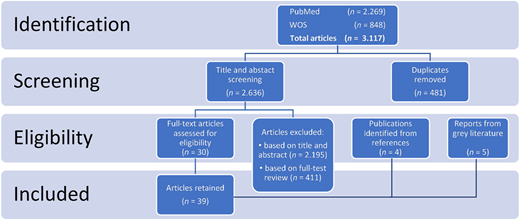
A systematic literature search of PubMed and Web of Science databases was conducted according to the PRISMA requirements. Searches also included the relevant grey literature. In total, 39 studies were selected and nine cost categories were investigated to build a comprehensive framework.
The paper considers nine cost categories that cover the whole life of the vaccine, from its initial study to its full implementation, including for each of them the relevant subcategories. The systematic review, besides providing specific quantitative data and allowing to assess their variability within each category, points out that delivery, program preparation, administration and procurement costs are the most frequently estimated categories, while the cost of the good sold, costs borne by households and costs associated to AEFI are usually overlooked. Data reported on R&D costs and investment in the production plant differ significantly among the selected contributions.
The literature contributions on cost estimation tend to focus on a precise vaccine, a specific geographic area, or to adopt a narrow approach that captures only a subset of the costs. This article presents a rich and inclusive set of the economic quantitative data on immunization costs in limited-resource countries.
Introduction
Even before COVID-19, immunization has proven to be one of the most cost-effective medical interventions to defeat diseases worldwide (Berkley, 2014), having a great impact on human health and contributing to increase life expectancy and quality (WHO, 2013; Black, 2013). Indeed, vaccines are one of the most successful public health initiatives in eliminating or reducing the impact of infectious diseases (Timmis et al., 2017).
The recent pandemic has made the value of vaccines even clearer due to the substantial impact they had on mitigating COVID-19 outbreaks (Polack et al., 2020; Moghadas et al., 2021). Nowadays, the fast-track development and large-scale production of safe and effective COVID-19 vaccines (i.e. Pfizer BioNTech, Moderna, Janssen) would not have been possible without a renewed business vision and model characterized by both accelerated innovation and strong partnerships. The COVID pandemic has demonstrated that it is possible to develop, test and review multiple safe and effective vaccines against a new disease in less than a year. This should also be a paradigm to enhance access and rollout to vaccines, in particular in low-income and middle-income countries, since the COVID-19 pandemic may have worsened the already existing and wide gaps in healthcare services. The Ebola vaccine is another example of how solidarity, science and cooperation between international organizations and the private sector to save lives can help scaled rollout throughout sub-Saharan Africa.
Furthermore, as highlighted by Tatar and Wilson (2021), the COVID-19 campaign is a unique and valuable opportunity to advance public health and improve public trust in the healthcare system and decreasing global disparities in health outcomes.
However, despite this clear evidence, the goal of providing the needed vaccination programs, in line with the Sustainable Development Goal 3 (Good Health and Well-Being) of the UN-2030 Agenda, has not been achieved yet (UN, 2021), especially in lower-middle-income countries (LMICs), where vaccine-preventable diseases are still a relevant cause of morbidity and mortality. Furthermore, some infectious diseases are still lacking a vaccine: approximately 60% of the current all age burden of infectious diseases, there is no registered vaccine, especially in developing countries (Saul and O'Brien, 2017). Moreover, prevalence rates or the size of affected populations may be impeding the investment of discovery and industry development for many of the diseases that are currently missing a vaccine.
Therefore, the need of new vaccines and greater diffusion of those already existing is evident, especially in LMICs, where greater difficulties arise in facing the relative costs and there are more fragile health conditions. Hence, a reliable and well-founded forecast of costs is of fundamental importance and an essential prerequisite for further sustainability analysis, in order to decide among different competing health needs, prioritize the allocation of resources and attract the necessary funding. As highlighted by Bloom (2015): “looking at vaccination with an economic lens is meaningful because it communicates in the language of decision makers who have the power of the purse”.
In line with this, a greater attention has been progressively paid both in estimating the immunization costs and in valuing vaccination's benefits. In 2008, WHO developed a special “Guide for Standardization of Economic Evaluations of Immunization Programmes” to provide guidance to those who conduct or critically appraise economic evaluations of immunization programmes at local, national and global levels (the document was updated in 2019). However, as underlined in the same preface of the WHO guide: “the emphasis is on what to do, rather than how to do it”.
To support this last step, the literature is providing a growing number of examples. Often, however, they focus strictly on a precise vaccine (Nichol, 2003; Termrungruanglert et al., 2012) and a specific geographic area (Rose et al., 2017; Haidari et al., 2016) and they mainly adopt a narrow approach that captures only a subset of the costs (Gouglas et al., 2018) and benefits (Bärnighausen et al., 2014) of vaccination campaigns.
The purpose of this research is to collect and cluster the main different quantitative information obtainable from the published literature to support economic evaluations of immunization programs. In particular, the present study focuses on the costs of vaccine introduction and aims at providing a systematic review of the costs reported in the literature for the introduction of new vaccines, focusing on sub-Saharan Africa within LMICs. The reason for the choice of such a focus is because, in these countries, vaccines are highly needed; financial resources are scarce, and data are lacing and scattered. This makes it very difficult to elaborate complete cost estimations to support reliable sustainability analysis and, consequently, investments both in the development and in the delivery of vaccines.
Despite the information variety of the contributions analyzed, all the relevant cost categories with a significant impact on vaccine introduction were included. Hence, this article aims at providing an inclusive and quantitative review of the costs of vaccine introduction in limited-resource countries. The final aim is to make cost estimations more trustworthy and, thus, to provide valuable information to stakeholders involved in the introduction of a novel vaccine in sub-Saharan Africa.
Methods
Authors have been involved in studying the existing literature regarding economic evaluations of introducing a vaccine in LMICs – especially in sub-Saharan Africa – since 2017, when they have been engaged in the S-AFRIVAC project (under the coordination of Achille Sclavo Foundation and the scientific direction of Rino Rappuoli), whose focus was the introduction of a vaccine against invasive non-typhoidal salmonella (iNTS) disease in sub-Saharan Africa. In particular, the authors were involved in drawing up the sustainability plan of the project.
For this reason, a remarkable amount of materials have been analyzed throughout the almost four years of study, following a well-defined process (Muka et al., 2020; Tawfik et al., 2019) summarized in Table 1.
Data collected from these contributions concern several diseases, among which meningitis, rotavirus, cholera, malaria and typhoid. Despite the variety of the contributions analyzed, an effort to embrace all the relevant cost categories that have a significant impact on the introduction of a new vaccine in sub-Saharan countries was made.
Results
Economic quantitative data on immunization costs were extracted from the selected contributions. Data were divided into cost categories that cover the whole life of the vaccine, from its initial study to its full implementation, including procurement costs. For each category, subcategories were identified in order to rationalize the different cost estimations that can be found in the literature, understand their peculiarities and seize their comparability. The division in subcategories has been carried out in such a way as to provide detailed quantitative economic data on the most relevant components.
The main cost categories included in this review were identified distinguishing them according to the particular phase of the introduction process to which they refer. Table 2 describes the nine cost categories included. Within the 39 selected contribution, the most analyzed and discussed cost categories are delivery, administration and procurement costs (they are present in 14, 19 and 15 contributions, respectively), while little quantitative information can be retrieved on the cost of the good sold, costs borne by households and on costs associated to adverse events following immunization (they are present in 1, 2 and 1 contribution, respectively). Costs related to R&D, program preparation and investment in the production plant can be found in 8, 7, 3 contributions respectively.
Table 3 briefly describes the main findings for each cost category, while Table 4 summarizes the quantitative data collected (reported as in the reviewed articles, without converting them back to the same year, in order to leave freedom of elaboration and computation to stakeholders who will benefit from the cost classification and data collected of this systematic review). Supplementary files from 2 to 9 collect the information for each cost category from the selected papers. These results are separately discussed in the following sections.
Discussion
This cost review takes a broad perspective, considering also those costs that accompany and follow the actual administration of the vaccine, such as the costs borne by household. The results found point out that quantitative data are lacking and more research and quantitative studies are highly needed in order to account for the costs that have to be faced to introduce a vaccine in LMICs.
Some cost categories are particularly characterized by an indefinite estimation. For instance, for the R&D category, this review clearly identifies a relevant gap in the literature: few studies contain quantitative data and most of them just provide total costs without distinguishing among the different phases (Serdobova and Kieny, 2006; Phelps et al., 2017; Pronker et al., 2013). Since each phase has its own peculiarity (for instance, failure risk lies mostly in early stages, while most costs are incurred during Phase III), it would be important to have more precise costs, achieving more transparency and disclosure. Moreover, it is not always clear whether the costs provided incorporate failed attempts or not. Actually, detailed R&D costs are not easily disclosed by pharmaceutical companies for obvious reasons of protection of competition. There is a clear trade-off between informative needs of researchers and decision makers on the one hand and pharmaceutical companies on the other. Sometimes this is covered by referring to drug development, but there is no clear-cut agreement on the relationship between vaccine and drug R&D costs (Light et al., 2009; Oyston and Robinson, 2012). Moreover, clinical phases appear to be different in required resources, while remaining phases seem more similar in process but not in resource intensity (Waye et al., 2013). Furthermore, technological and scientific progress poses a challenge on the generalizability of vaccine R&D cost estimation, making the understanding of the peculiarities of each vaccine even more relevant. As a result, R&D costs should be reported more frequently and openly, possibly using a common methodology (Light et al., 2009).
As for production plant costs, more research is needed, especially for incremental costs, as the setting up of a completely new plant to produce a new vaccine is infrequent. Furthermore, the reviewed literature appears to be lacking also in information on the cost of goods sold.
Moving to delivery costs, the review points out that they should be distinguished between service and vaccine delivery costs and the latter from distribution costs that can be defined as the cost to transport the vaccine from the site of production to the country of vaccination, when the two are different. In the case of limited-resource countries, these are often covered, totally or partially, by GAVI (Portnoy et al., 2015): hence, in their computation the amount paid by GAVI and the eventual co-payment requested to the country is critical. In some studies, delivery costs are not distinguished and are included in routine immunization costs as operational costs (Antillón et al., 2017) or simply shown as percentages of total immunization costs. Moreover, delivery cost data are often fragmented, and, consequently of variable quality (Vaughan et al., 2019).
The evaluation of program preparation costs would definitely benefit from clearer estimations of incremental costs. This would contribute to the implementation of appropriate donor policies and to domestic and external resource mobilization for vaccination programs (Brenzel et al., 2015). The objectives of immunization programs definitely require a careful planning of activities, in order to guarantee successful implementation, especially for new vaccines. Many studies confirm the growing importance of non-vaccine delivery costs, among which program preparation costs (Gandhi et al., 2013; Lydon et al., 2014). This category includes different subcategories: it is important to evaluate costs separately, in order to estimate their different weights and requirements in economic and financial terms. Moreover, the challenge is that they tend to be country specific and differ according to the vaccination campaign (routine vs. catch up).
Estimation of administration costs is complex because their different subcategories present specific characteristics to be taken into account. For example, many cost items are likely to represent incremental rather than full costs (Le Gargasson et al., 2015; Brenzel et al., 2015). No personnel unit will exclusively work on a new vaccine, and hence, percentage time’s allocation should be provided. Similarly, surveillance and monitoring activities require incremental costs in terms of additional staff costs, training, data management, communications and transport (WHO, 2019; Brenzel et al., 2015). Moreover, several data sources are needed for this cost estimations. Information on salary levels can be obtained from health ministry payrolls, while other data through surveys only – i.e. the percentage of time allocated to the new vaccine administration (WHO, 2019). Volunteer labor should also be included and computed in terms of opportunity costs (Le Gargasson et al., 2015). Furthermore, vaccine administration costs closely depend on the adopted vaccination strategy but not much on the vaccine type. Other key cost considerations include wastage rates and the need to be able to minimize the number of doses remaining in vials. Unfortunately, specific cost estimations on waste management are lacking, as they are often included in overall vaccine administration costs. Moreover, the fact that the vaccination is integrated with existing Expanded Program on Vaccination (EPI) schedules affects this cost category significantly, since the vaccine could be co-administered, leading to a cost reduction. Being part of the EPI schedules improves vaccination coverage by enhancing and facilitating its distribution, reduces inequalities in accessing immunization and leads to a decrease in child mortality. This is particularly relevant in the sub-Saharan Africa region where under-five mortality rate is the highest globally. Vaccines that are not part of the EPI system require different approaches to distribution (e.g. school-based clinics instead of health facility-based vaccine days, as in the case of the HPV).
The present review points out that a remarkable amount of work has been done on estimation of vaccine prices and also taking a long-run perspective, while more data need to be collected on the computation of additional costs that affect the overall vaccine price. Actually, while Freight on Board (FOB) estimations are available for different vaccines and countries, data on the Cost, Insurance and Freight (CIF) vaccine process are lacking. Moreover, vaccine development can/could be quite understandably affected by price considerations: the foreseen profitability of the immunization can be crucial in determining which vaccines are actually developed. However, for diseases that are unique to poor countries, this business model might not be applicable. In this regard, MenAfrivac was a successful example of how a group of African countries can come together and stipulate what price point (US$0.50/dose) they are willing to pay for a given vaccine. This greatly affected the development phase and ultimately the composition of who was involved in the effort, establishing a public-private partnership that led to relevant public health achievements in fighting MenA. It could be an inspiring model of action for future developments in global public health (Kulkarni et al., 2015). The vaccine price is a relevant component of the overall cost computation and it is also an important parameter for potential sensitivity studies.
The estimation of the costs borne by households appears to be very challenging. The component concerning transport costs is quite country specific and differs in rural villages with respect to urban settings. Moreover, it is extremely difficult to reasonably estimate the distance households have to face, on average, to reach the vaccination point. Surveys should be administered to gain more insights and information on the costs endured by households. The same applies to the evaluation of the costs associated with AEFI management that suffer from the lack of data and the objective difficulty of distinguishing adverse events from coincidental health events that can randomly follow immunization but are unrelated to it (WHO, 2013). Actually, they are generally overlooked and we found no quantitative estimation for this category referred to sub-Saharan countries.
Summing up, among the various cost categories mapped in these contributions, most studies deal with delivery, administration and procurement costs, while only a lower number of publications were found on investments in production plant, costs borne by households to get the vaccination and costs due to AEFI, although they should be taken into account in order to provide a complete cost accountability for new vaccines in developing countries. Moreover, a clear definition of the components of cost categories is highly needed, in order to enhance comparability among different settings.
Conclusions
Economic valuations of immunization programmes are one of the key issues to be considered before deciding to introduce a vaccine (WHO, 2014). This calls for further studies to offer a useful support to decision makers in evaluating the major economic challenges linked to new vaccines introduction in LMICs.
In line with this, our paper aims at providing a systematic literature review of the costs that have to be faced when a vaccine is introduced in sub-Saharan Africa. In these countries, due in particular to the strong necessity of new vaccines to defeat diseases and to the competing health needs (Madhi and Rees, 2018) and the fairly widespread need to identify different financing strategies for their introduction, it is highly relevant for all stakeholders involved to know the costs of this essential medical intervention to support economic valuations of each immunization programme.
Thirty-nine contributions containing quantitative economic data have been selected. In order to elaborate a complete cost accountability, nine cost categories were identified. Our analysis takes into account also those costs that accompany and follow the actual administration of the vaccine, such as the costs borne by household to get the vaccination. To the best of our knowledge, this is the first review on this topic to take such a broad perspective and include all these categories.
Our contribution points out that quantitative data are lacking and more research on quantitative studies is highly needed. Some cost categories are characterized by an unclear cost estimation: for instance, for the category of research and development most studies report the total figure without distinguishing among the different phases and components (Serdobova and Kieny, 2006; Phelps et al., 2017; Pronker et al., 2013). Moreover, most studies deal with delivery, administration and procurement costs, while a lower number of publications were found on the cost of the good sold and the costs borne by households to get and benefit from the vaccination, although they should be included in order to provide a complete cost accountability for new vaccines in developing countries. Precisely, these costs are less vaccine-specific and, thus, they could be even more helpful in supporting cost evaluations of immunization programmes. Similarly, the costs referred to AEFI are generally overlooked and not included in cost computations: actually, we found no quantitative estimation for this category referred to sub-Saharan countries.
Moreover, broadly speaking, a clearer definition of the costs estimated should be provided, in order to enhance the comparability among different settings. Finally, policy makers and international agencies could definitely benefit from more data on cost subcategories.
Although the number of relevant contributions of this review could have been larger, our study provides relevant points of reference for scholars and decision makers when assessing costs associated to the introduction of a new vaccine in poor countries. It aims at rationalizing the different cost estimation found in the literature, by providing quantitative cost identification, including categories that are usually overlooked. Thus, it paves the way for extensive future research and the elaboration of sustainability plans that are highly needed when evaluating the opportunity of introducing vaccines in developing countries, providing sound and reliable estimations for cost-effectiveness analysis.
The authors are grateful to the steering committee of the S-AFRIVAC project for their precious support to the research and for their helpful comments and suggestions.
Research funding: This work is a first outcome of the research supported by Tuscany Region under the call FAS-Salute 2014, PAR FAS 2007–2013 Program (Project n° 4042.16092014.066000010). The sponsor had no role in the manuscript submission.
Conflict of interest: The authors declare that they have no conflict of interest.
References
Supplementary File
Supplementary data related to this article can be found online.