This study examines the interdependencies among challenges associated with various knowledge management (KM) processes that influence coordination among Industry 4.0 (I4.0) components in future factories.
This study adopts a mixed method approach, developing a multi-phase methodology that employs a systematic literature review and grounded theory to analyze KM challenges in the I4.0 environment.
Knowledge management challenges are not isolated but are deeply interdependent and systematically interconnected across the KM life cycle (knowledge generation, → knowledge codification, → knowledge sharing, → knowledge utilization). The findings further reveal that strategic, people, process and technology barriers interact in a dynamic manner, and their effective alignment is essential for achieving robust KM in the I4.0 environment.
This study makes a significant theoretical contribution by conceptualizing KM in I4.0 as a systemic, lifecycle-driven construct. It proposes an integrative conceptual framework that links KM processes with core I4.0 components through underlying socio-technical dimensions. Furthermore, this study provides a foundation for future empirical research on KM-enabled digital transformation.
1. Introduction
In the context of Industry 4.0 (I4.0), knowledge management (KM) has evolved significantly; however, this evolution has been accompanied by new and complex challenges. In recent years, numerous researchers have contributed to the fruitful integration of KM and I4.0 during the era of digital transformation (Alnajrani, 2024; Alonso et al., 2024; Entezarian and Mehraeen, 2024). The literature has proactively emphasized the transformative potential of I4.0 technologies such as the Internet of Things (IoT), smart sensors, big data analytics (BDA), artificial intelligence (AI), Cyber-Physical Systems (CPS), cloud computing and blockchain to enhance knowledge creation, integration, and application (Entezarian and Mehraeen, 2024; Oks et al., 2024; Alazab and Alhyari, 2024). Regarding knowledge creation, for instance, the IoT and smart sensors enhance the collection and exchange of internal and external operational data; however, integrating the massive streams of data into existing KM systems remains challenging (Alnajrani, 2024). Knowledge generation (KG) is hindered by fragmented and heterogeneous data sources produced by CPS, industrial IoT devices, enterprise platforms, and human actors. Poor data quality, limited contextualization, and insufficient integration of tacit human expertise reduce the reliability of generated knowledge, leading to inconsistent situational awareness across interconnected systems (Lepore et al., 2022; Ribeiro et al., 2022). BDA and AI play a crucial role in knowledge creation and application within organizations, ultimately enhancing efficiency and organizational performance. They help generate meaningful and actionable insights from voluminous datasets and thus support evidence-based decision-making (Alnajrani, 2024). Though knowledge sharing (KS) has been enhanced through digitally smart platform systems that facilitate rapid and seamless information exchange within and across departments, employees lack the necessary digital and analytical skills required to fully understand and interpret machine-generated knowledge (Frank et al., 2024). In addition, KS is hindered by technological interoperability issues, proprietary constraints, organizational silos, and cultural resistance, impeding the timely flow of knowledge across business functions. In manufacturing firms, knowledge codification remains a challenge owing to the absence of standardized semantic models, which restrict meaningful information exchange, and heterogeneous data formats that hinder the formalization of tacit process knowledge (Rejeb et al., 2025; Lepore et al., 2022). CPS and cloud-based infrastructures offer scalable and decentralized storage solutions for knowledge storage, but organizations struggle with information overload and retrieving relevant knowledge from unstructured data (Bresciani et al., 2021). When it comes to knowledge utilization in an I4.0 environment, humans and machines gradually use real-time insights to make decisions that improve business operations. However, trust deficits, weak feedback and learning mechanisms, and unclear decision authority can hamper the adoption of I4.0 technologies (Frank et al., 2024). In a nutshell, while I4.0 technologies offer significant opportunities to enhance KM processes, organizations must address technical, human, and cultural barriers to ensure smooth coordination among I4.0 components in future factories.
Recently, companies have been experimenting with how KM, along with new data and process management tools, can improve coordination among I4.0 components (Alvarenga et al., 2020). Despite this progress, the existing literature still lacks a clear and distinct understanding that bridges these two streams of research (Tortorella et al., 2024). Although some studies have explored related aspects from varying perspectives, Alvarenga et al. (2020) systematically examined the relationship between digital transformation and KM in the public sector, highlighting persistent coordination challenges. These challenges are further amplified in the context of I4.0, where technological complexity and rapid change demand continuous cross-functional coordination, and inadequate KM may hinder rather than support strategic outcomes (Capestro and Kinkel, 2020). Collectively, these KM challenges undermine coordinated decision-making, adaptability, and resilience in I4.0 future factories, necessitating an in-depth examination of these challenges and potential strategies for overcoming them. Overall, while I4.0 offers significant opportunities to enhance KM, organizations must address technical, human, and cultural challenges to fully leverage its benefits (Ghobakhloo, 2018; Islam et al., 2025). Further, existing studies tend to examine individual KM processes, such as data analytics for KG or digital platforms for KS, in isolation. There is limited integrative analysis of how various KM processes interact as a systemic lifecycle to influence I4.0 coordination outcomes, along with insufficient focus on the interdependencies among I4.0 components and KM processes. Building upon the above research gaps, this study addresses the following research questions.
What are the various challenges related to KM that affect the systematic coordination of I4.0 components in future factories?
How do challenges across the KM lifecycle (KG, codification, sharing, and utilization) affect coordination among I4.0 components in future factories?
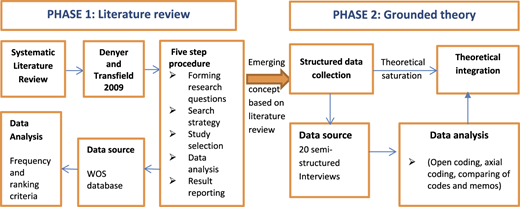
The study makes use of a systematic literature review (SLR) and grounded theory to analyze KM challenges that affect coordination among I4.0 components in future factories. Figure 1 shows the various phases of the multi-phase research methodology used in this study. Our study has interesting implications. This study presents an integrative analysis of how various KM processes interact as a systemic lifecycle to influence coordination among I4.0 components. Thus, this study contributes to the development of a novel conceptual framework based on existing literature and grounded theory. Moreover, our analysis identifies relevant managerial implications that link KM and digital transformation in the context of companies working in diverse sectors of the economy, such as electronics, textiles, construction materials, machinery and equipment, automobiles, and so on.
The remainder of the manuscript is structured as follows: Section 2 discusses the literature review based on SLR, along with research gaps. Section 3 provides the details of the research methodology. Results and discussion, as well as the theoretical and practical implications of this study, are presented in Section 4. Section 5 includes the conclusion, limitations, and future scope of this study.
2. Literature review
An SLR was conducted to explore various KM challenges associated with KM processes and I4.0 implementation, which affect coordination among I4.0 components in future factories. The accepted five-step procedure for conducting an SLR, as outlined by Denyer and Tranfield (2009), was adopted. The Web of Science (WoS) Core Collection, a database from Clarivate Analytics, was used to conduct the article search because it is an interdisciplinary research platform that records over 160,000 conferences—including international conferences worldwide—and over 12,000 journals with an international readership. In addition, it is the most extensively utilized storehouse of information and references for scholarly research, as advocated by Grzybowska et al. (2020).
The initial stage included identifying categories of keywords for conducting the search, i.e. those related to I4.0 and KM in factories of the future. The Boolean logic operators “OR” and “AND” were used to define search strings and identify relevant research articles in the WoS database.
Search strings
(“Industry 4.0” OR “fourth industrial revolution” OR “factory of future” OR “smart manufacturing 4.0” OR “digital transformation”) AND (“KM” OR “knowledge sharing” OR (“knowledge codification” OR “knowledge utilization” OR “knowledge generation”)
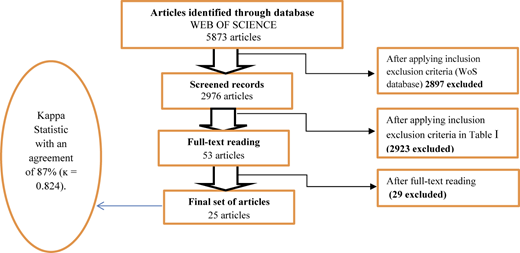
Second, after implementing the search strings in the WoS databases, 5,873 articles were found during the initial search (Figure 2). Research published between 2020 and 2025 has been taken into account. In the WoS database, after restricting our search to the following domains: Management, Engineering, Transportation, Business, Economics, Computer Science, Operations Research, Management Science, Telecommunications, Remote Sensing, Automation Control Systems, Robotics, and Social Issues, we are left with 2,976 articles. The inclusion and exclusion criteria, based on Denyer and Tranfield's (2009) approach as shown in Table 1, are used to identify studies that are directly aligned with the research questions. After applying the inclusion and exclusion criteria, 53 studies were relevant.
After completing the full text reading, about 55% of the studies were eliminated; that is, 29 documents were excluded, leaving 25 articles that actually addressed I4.0 and KM in factories of the future. In the final validation phase, a co-researcher independently reviewed the consolidated set of research articles. Inter-rater agreement was assessed using Cohen's kappa statistic (Hallgren, 2012), yielding an agreement level of 87% and a kappa value of 0.824, reflecting an almost perfect level of agreement. The 25 publications represent the final batch of articles synthesized in our SLR. Table 2 presents the details of these publications along with the identified research gaps.
2.1 Identified challenges
The study employed a structured SLR protocol to identify KM challenges across various KM processes which affect coordination among I4.0 components. Table 3 shows the various dimensions associated with KM processes from 25 literature studies. The challenges were consolidated by grouping conceptually similar items based on their meaning and contextual relevance, referencing 25 prior studies to ensure theoretical alignment. Each challenge is counted only once per study, even if discussed multiple times. Finally, 40 KM challenges, i.e. KG (10), KC (10), KS (12), and KU (8), were identified (Table 3). To reduce the number of challenges, a structured questionnaire was developed. Before sending the questionnaire, it was pilot tested with a group of five domain experts to gather their comments and suggestions. Then, it was sent to 143 respondents (based on convenience sampling; Lunneborg, 2007) through Google Forms, which yielded 73 responses. The responses were obtained on a five-point scale (5 = strongly agree, 4 = agree, 3 = neither agree nor disagree, 2 = disagree, 1 = strongly disagree). From 73 responses, 6 were removed owing to missing data, resulting in a final sample of 67 participants, which provided a satisfactory response rate of 46.9%. The responses were collected from a diverse range of organizations working in various SME sectors, with the highest representation from the automotive sector (20.89%) and the renewable energy sector (16.42%), followed by electronics (14.92%), construction materials (13.43%), pharmaceuticals (8.95%), metal mechanics (7.46%), and textiles (5.97%). The remaining 11.94% of respondents belonged to other industries, ensuring broader coverage of companies undergoing digitization. As far as roles are concerned, 56.72% were senior level managers, and 43.28% of respondents were middle level managers, representing both operational and strategic levels of management. Overall, the distribution indicates that the sample covers diverse SME sectors and is balanced in terms of managerial perspectives, thereby strengthening the reliability and representativeness of the data. In this study, the internal consistency of questionnaire items was evaluated using Cronbach's alpha, with values ranging from approximately 0.84 to 0.94 across different KM dimension constructs. The overall scale reliability, after removing weak items (with factor loadings below 0.60), was above 0.92 for all 4 KM process dimensions, indicating strong internal consistency and the suitability of the instrument for further analysis (Hair et al., 2010; Tabachnick and Fidell, 2013). Table 3 presents the details of factor loadings along with Cronbach's alpha values. The final questionnaire comprised 19 items: KG (5), KC (5), KS (5), and KU (4), respectively. This forms the basis for carrying qualitative analysis using grounded theory.
3. Research methodology
In this study, the authors used the SLR protocol along with grounded theory as research methodologies to identify key challenges associated with KM processes that affect coordination among various components of I4.0 in future factories. The well accepted five-step procedure for conducting SLRs, as outlined by Denyer and Tranfield (2009): (1) Framing the questions; (2) Identifying relevant publications; (3) Assessing study quality; (4) Summarizing the evidence; and (5) Interpreting the findings. This has been adopted to conduct SLR as outlined in section 2. In the second phase, a grounded theory approach is applied to analyze KM challenges by covering all qualitative data (interviews with respondents, observations and documents) and then engage in an iterative coding and analysis cycle to identify emergent themes and concepts. Qualitative research methods such as interviews and focus groups have gained popularity because of the “rich diverse data,” “triangulation,” and “greater interpretive results” and are very useful for studies (Creswell and Inoue, 2025). Specifically, this study applies a case study approach in which views of stakeholders working in diverse sectors of economy (electronic, textiles, construction materials, machinery and equipment, automobile, etc.) are considered. Grounded theory was selected as the qualitative methodology because the aim of this study is to examine the association between KM challenges and I4.0 components. It is based on following underlying principles and methodological characteristics: (1) Data-driven theory generation; (2) constant comparison; and (3) cyclical process with constant revision and refinement (Glaser and Strauss, 1967; Glaser, 2005). Grounded theory's systematic procedures—iterative data collection, constant comparative analysis, theoretical sampling, and progressive abstraction—support rigorous, transparent data analysis and the development of a coherent theoretical framework. Figure 1 presents the multi-phase research methodology adopted in this study.
3.1 Data collection and analysis
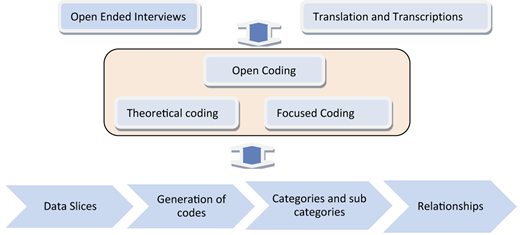
The section presents the major steps of data collection and analysis using grounded theory procedures. The various steps in grounded theory are shown in Figure 3. Surveys, semi-structured interviews, and document analysis were used to gather data from organizations implementing I4.0 in their business operations. Participants to be interviewed are selected based on purposive sampling (Lunneborg, 2007). The respondents (Appendix A, Table A1) for the study were selected from different backgrounds, including quality managers, operations managers, industry associates, and engineers. A semi-structured approach for the interviews, using a pre-defined interview guide (Weiss, 1995) as presented in Appendix A, Table A2, is adopted. It was divided into two sections: (1) Personal and company details, and (2) Role/responsibility and feedback. In the first section, questions related to the professional background of the interviewee—i.e. formal degree and work experience—along with company details such as its inception, size, stage of development, and likely products/services were asked. In the second section, questions related to the interviewee's role and responsibilities were asked. A spreadsheet was created to track details related to each interview, including the date, time, and location of the interview; the names of the interviewer and interviewee; and the topic of the interview. The semi-structured interviews were conducted online via video calls. Initially, interviews were conducted on a pilot basis with a small group of KM experts in the Industry 4.0 environment. The pilot study was used to assess whether the interview questions were clearly understood and easy to answer. It helped us explore the gaps in the questions and identify areas for improvement. Finally, 20 interviews were conducted. The interviews lasted half an hour and focused on the participants' experiences of KM process challenges associated with I4.0 digitization. Each KM category was documented, with individual questions potentially encompassing multiple categories, and each category associated with specific properties and dimensions. Categories were generated iteratively until theoretical saturation was reached, which is defined as the point at which “further collection does not generate new or significantly add to existing concepts, categories, or insights.” The data analysis process followed the grounded theory approach, incorporating open, focused, and theoretical coding phases, as outlined by Glaser and Strauss (1967). Sections 3.1.1 to 3.1.4 present the details of open, axial, and theoretical coding, as well as the testing of dimensions.
3.1.1 Open coding
During the open coding phase, codes were assigned to words or related groups of words relevant to the topic of our research. Open coding involves going line by line through the data, identifying and labeling concepts, and assigning initial codes to the data. For ease of identification, assigned open codes and related words or word groups were underlined.
The open coding information is provided for all KM processes affecting coordination among I4.0 components. The authors split the material into smaller bits and give them tags to help users remember the most important ideas, events, or experiences. Furthermore, to preserve consistency in the application of the method, all the data were personally collected and analyzed by the author himself. To enhance reliability, inter-rater agreement procedures were incorporated at this stage. A second trained coder independently reviewed a subset of transcripts and literature sources, and the resulting codes were compared with those of the primary researcher. Discrepancies were discussed and resolved through iterative comparisons and refinements of code definitions until consensus was achieved. Inter-rater agreement was assessed using Cohen's kappa statistic, yielding a kappa value of 0.864, which reflects an almost perfect level of agreement (Hallgren, 2012). Table 4 provides details of open coding examples with expert IDs, where a selected word or combination of words is highlighted from five different interview excerpts.
3.1.2 Focused coding
In this stage, a search is made for connections, causes, and interactions among open codes. Higher-level themes or groups begin to emerge through axial coding, providing a better understanding of the open codes obtained from the transcribed data. Thus, relevant open codes were systematically organized into higher-level concepts in the form of categories. Some of the open codes logically became categories or sub-categories, while others were linked as properties within these categories. Through this process, the authors identified five main categories related to I4.0 components, encompassing numerous sub-categories and properties. This organization of categories was achieved using the constant comparison method (Glaser, 2005), in which each case was compared with others within the same category to ensure an accurate representation of the conceptual structure. Reliability at this stage was strengthened through collaborative verification. The second coder reviewed the categorization structure and independently assessed whether the assignment of codes to categories reflected the empirical evidence. Inter-rater consistency for category assignments was assessed using Cohen's kappa (κ = 0.882), supporting the stability of the emerging conceptual structure. Table 5 shows the axial codes for all I4.0 components: strategy, people, process, technology, and digital integration.
3.1.3 Theoretical coding
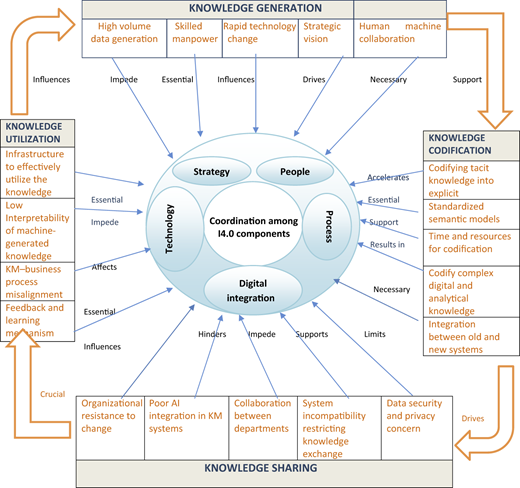
The process was conducted after focused coding, which enabled the identification of relevant categories across interviews and the literature. Authors examined how these categories interact with each other—whether one category limits, drives, accelerates, or influences another—ultimately ensuring that the emerging framework is not only methodologically systematic but also dynamic. A crucial feature of theoretical coding is the identification of the main category and the corresponding core categories that anchor the conceptual framework. To enhance theoretical robustness, the proposed linkages were iteratively reviewed against both empirical data and prior literature, enabling methodological triangulation between interview insights and published research. The second coder independently reviewed the proposed relationships among categories and the identification of core constructs, after which differences in interpretation were discussed and resolved. Inter-rater agreement for the mapping of theoretical relationships was assessed using Cohen's kappa (κ = 0.90), providing additional confidence in the coherence of the final framework. After identifying the core categories, an iterative method was used to sort the knowledge category results into meaningful themes, which were then applied to the format of the findings. An example of the identified relationship is presented in Table 6. For example, the relationship “drives” was derived between the core category “strategic vision” and the main category “I4.0 components,” indicating that strategic foresight is a key driver of KM practices in digital transformation. Nineteen core categories under KM were mapped (Figure 4).
Table A3 in Appendix A provides details of the relationships among all KM categories. The relationships identified during theoretical coding provided the basis for hypothesis formulation. Each identified relationship (e.g. “drives,” “essential,” “accelerates”) is translated into a testable proposition supported by literature studies that reflects the potential influence of one category on I4.0 components. Following this logic, 19 hypotheses were developed, covering all 4 KM processes (Table A3, Appendix A). For instance.
Skilled manpower is essential for knowledge generation which coordinates I4.0 components.
Strategic vision drives knowledge generation for systematic coordination of I4.0 components.
3.1.4 Testing of KM dimensions
Based on the relationships identified during theoretical coding, 19 hypotheses were formulated linking KM process dimensions with I4.0 components. The dimensions confirm that several frequently cited challenges in the literature—particularly those related to strategic vision, skilled workforce, interoperability, tacit knowledge, trust, and infrastructure support—significantly influence coordination among I4.0 components (Ribeiro et al., 2022; Lepore et al., 2022; Karimi et al., 2025; Lista Rossetti et al., 2024; Zhang et al., 2025; Kuyken and Schropp, 2023). This validation strengthens the theoretical integration of grounded theory insights with SLR findings and demonstrates that the identified KM challenges are not only conceptually prominent but also theoretically significant in practice (Bresciani et al., 2021; Entezarian and Mehraeen, 2024).
4. Results and discussion
The main aim of this study was to identify the challenges related to KM that affect the systematic coordination of I4.0 components in future factories (RQ1) and, subsequently, how this affects coordination among I4.0 components in future factories (RQ2). To answer RQ1, the authors conducted an SLR and identified 40 challenges from 25 literature studies across various KM categories. To ensure theoretical alignment and remove redundancy, these challenges were addressed by developing and testing questionnaire responses from domain experts representing a diverse range of organizations. To answer RQ2, the grounded theory approach is applied to analyze KM challenges by covering all qualitative data and then engaging in an iterative coding and analysis cycle to identify emergent themes and concepts. A conceptual framework model has been developed (Figure 4) that showcases the relationship between KM processes and I4.0 components. Additionally, the results derived from the grounded theory analysis (Table A3), are interpreted in the following paragraphs by examining the relationship patterns between core categories and the main category, as well as the resulting hypothesis, through the lens of existing theoretical frameworks. This approach enables a deeper understanding of the observed patterns for all 4 KM processes.
Knowledge generation: The key pattern, i.e. data abundance versus cognitive capacity, observed from findings stated by H1, H2, H4, and H5 is consistent with prior studies (Manesh et al., 2021; Gupta et al., 2022; Kaasinen et al., 2020; Frank et al., 2024). It reveals that high-volume data generation (H1) impedes KG, while skilled workforce (H2), strategic vision (H4), and human–machine collaboration (H5) enable coordination among I4.0 components. This aligns with the knowledge-based view (KBV) (Grant, 1996) and absorptive capacity theory (Zahra and George, 2002), which state that value depends not merely on access to information but on an organization's ability to recognize, assimilate, and apply knowledge effectively. Similarly, rapid technological change (H3) introduces temporal instability in knowledge cycles, aligning with dynamic capabilities theory (Teece, 2007), which emphasizes firms continuously reconfiguring knowledge to remain competitive. The findings are consistent with Karimi et al. (2025) and Bettiol and Micelli (2020), who argue that technological turbulence disrupts knowledge cycles, making it difficult to maintain stable coordination mechanisms. In contrast, strategic vision (H4) functions as a coordinating mechanism by providing directional coherence and aligning KG efforts with long-term organizational goals, thereby reducing uncertainty. Finally, the human–machine collaboration (H5) reflects socio-technical systems theory (Pasmore et al., 1982), which highlights that effective outcomes emerge from the joint optimization of social and technical subsystems. The observed difficulty in interpreting machine-generated knowledge explains the persistence of coordination gaps despite the use of advanced I4.0 technologies (Ribeiro et al., 2022). Moreover, operator experience and process know-how are rarely integrated with data-driven models, leading to a disconnect between analytical insights and shop-floor realities (Oks et al., 2024). Thus, it is equally important to systematically incorporate operator experience and process know-how into data-driven models for better coordination.
Knowledge codification: The dominant pattern observed here is that codification enhances coordination among I4.0 components, but only when supported by standardized semantic models (H7), time and resources (H8), and integration between old and new systems (H10). The transformation of tacit knowledge into explicit formats (H6) accelerates coordination by enabling the scalability, transferability, and reproducibility of knowledge (Zhang et al., 2025; Kuyken and Schropp, 2023). This finding is supported by Nonaka's SECI model (Nonaka, 1994), where the externalization process plays a critical role in organizational learning as it enables individuals to convert tacit knowledge into explicit knowledge that can be shared. However, the need for standardized semantic models (H7) reflects information processing theory (Tushman and Nadler, 1978), which highlights that organizations must reduce uncertainty for effective decision-making. In the absence of standardization, codified knowledge becomes fragmented, thus limiting cross-functional integration. The requirement for time and resources (H8) highlights that codification is not merely a technical activity but a socio-organizational process that requires organizational time and incentives. Thus, this supports organizational learning theory (Fiol and Lyles, 1985). Bem Machado et al. (2022) and Karimi et al. (2025) argued that organizational support and incentives are essential for effective KM practices. Finally, integration between legacy and modern systems (H10) explains the persistence of knowledge silos, which inhibit the flow of information. This pattern aligns with systems integration theory (Barki and Pinsonneault, 2005), which emphasizes that interoperability is essential for building effective knowledge ecosystems. Manesh et al. (2021), Gupta et al. (2022), and Tabim et al. (2024) also stated that system integration is critical for avoiding data silos and enabling continuous knowledge flow.
Knowledge sharing: From Figure 4, it is observed that KS is constrained by organizational resistance (H11), system incompatibility (H14), and poor AI integration (H12), a finding that is consistent with prior studies in the literature by Lepore et al., 2022; Hafeez et al., 2025; Frank et al., 2024; Tabim et al., 2024; Kuyken and Schropp, 2023. Organizational resistance to change (H11) reflects change management theory (Kotter, 1996), where employee attitudes, fear, and inertia impede the adoption of new knowledge practices and technologies. Poor AI integration and system incompatibility (H12, H14) highlight technological fragmentation, aligning with socio-technical systems theory (Pasmore et al., 1982)—a condition where technical systems evolve faster than organizational processes. From a KBV (Grant, 1996), such fragmentation restricts the firm's ability to convert data into valuable knowledge assets. The importance of collaboration among departments (H13) can be explained through social capital theory (Nahapiet and Ghoshal, 1998) and organizational learning theory (Fiol and Lyles, 1985), which posit that effective knowledge exchange is facilitated through shared networks and trust-based interactions. The proposition H15, related to data security and privacy, introduces a trust dimension that aligns with institutional theory (Scott, 2001), where regulatory pressures, governance structures, and compliance requirements influence KS behaviors. Empirical evidence by Rejeb et al. (2025) and Entezarian and Mehraeen (2024) supports this view, indicating that privacy assurance enhances trust and promotes KS in digital manufacturing environments.
Knowledge utilization: The pattern observed in propositions H16–H19 shows that the availability of knowledge does not guarantee its utilization, owing to issues of low interpretability (H17), misalignment (H18), and infrastructure (H16). Infrastructure (H16) is identified as a foundational enabler, consistent with the resource-based view (Barney, 1991), where technological assets are critical for capability deployment. The importance of infrastructure (H16) is supported by Ferreira et al. (2024), who emphasized that robust technological systems enable the effective application of knowledge in I4.0 environments. However, the low interpretability of machine-generated knowledge (H17) emerges as a key bottleneck, reinforcing the need for explainable AI to bridge the gap between analytics and action. The findings align with decision-making theory (Simon, 1977), which underscores that effective decisions depend on the availability of reliable and contextually meaningful information. Prior studies (Lepore et al., 2022; Frank et al., 2024) emphasize improving interpretability to maximize knowledge utilization in digital organizations. H18—KM–business process misalignment—is consistent with process integration theory (Hammer and Champy, 1993), which posits that misalignment between KM practices and business processes inhibits the embedding of knowledge into routine operational activities and workflows, leading to underutilization. The finding is further supported by Oks et al., 2024), who demonstrated that misalignment creates inefficiencies and weak integration between strategic goals and digital initiatives, thereby undermining the overall effectiveness of KM initiatives. Finally, the feedback and learning mechanism (H19) explains how organizations adapt over time, aligns with dynamic capabilities (Teece, 2007) and organizational learning theory (Fiol and Lyles, 1985), where continuous feedback refines knowledge practices and improves coordination effects. Continuous learning enables organizations to refine knowledge practices and adapt to evolving conditions. As shown in Figure 4, feedback loops transform KM from a static repository into an adaptive system, enhancing long-term coordination. Additionally, the role of feedback and learning mechanisms (H19) is supported by Mohanty et al. (2024) and Sherif et al. (2024), who emphasize that continuous learning enhances adaptability and improves coordination outcomes.
4.1 Theoretical implications
In this study, the authors extended research on KM in the I4.0 environment by proposing a novel conceptual and methodological framework (Figure 4). Addressing the research gap related to the lack of theoretical models connecting KM with I4.0, this study contributes to theory building by combining an SLR with grounded theory. First, it used SLR to identify challenges associated with KM processes and then organized them into four interrelated process dimensions—knowledge creation, capture, sharing, and utilization—thereby reframing KM challenges as elements of a systemic lifecycle rather than isolated organizational issues. Second, the analysis based on grounded theory develops a conceptual framework that demonstrates that KM processes are essential for successful coordination among I4.0 components. Supporting this perspective, prior studies in the literature (Ribeiro et al., 2022; Gupta et al., 2022; Entezarian and Mehraeen, 2024) also highlight the influence of KM challenges on I4.0 components. By integrating KM and I4.0 research streams, this study collectively supports a socio-technical and knowledge-based perspective, where effective coordination in I4.0 depends not only on technology adoption but also on aligning human capabilities, organizational structures, and strategic intent.
4.2 Practical implications
For managers of future factories, the findings indicate that the success of I4.0 initiatives relies not only on acquiring I4.0 technologies but also on how effectively knowledge is coordinated across systems, employees, and operational processes. Based on the propositions derived from grounded theory, this study suggests that managers in future factories can strengthen KM-enabled business process alignment through the following measures.
Formulate a factory-wide KM strategy aligned with digital transformation goals to ensure that knowledge flows support automation, data integration, and real-time decision-making.
Establish digital knowledge platforms (e.g. shared dashboards, data repositories, and collaboration systems) to enable continuous information exchange among production units, supply networks, and support functions.
Invest in workforce training for upskilling and reskilling so employees can interpret data outputs, interact with smart machines, and participate in knowledge-driven problem solving.
Map and monitor critical knowledge flows across the factory to identify coordination bottlenecks among technologies, departments, and stakeholders.
Demonstrate visible leadership commitment by setting clear digital goals, allocating KM resources, and incentivizing KS across both production and support functions.
5. Conclusion, limitations and future scope
In response to the research questions RQ1 and RQ2, this study integrates insights from an SLR and grounded theory and successfully contributes to the emerging intersection of KM and I4.0. Forty KM challenges across core KM processes were identified, which were later grouped based on similarity and the results of a questionnaire-based instrument. Finally, 19 challenges across various KM processes were considered and used to conduct semi-structured interviews following the grounded theory procedure, as discussed in Section 3. The step-by-step procedure embedded in grounded theory was used to develop a novel theoretical framework. The resulting conceptual framework clarifies how various categories under KM processes related to KG, sharing, codification, and utilization jointly shape the coordination of I4.0 components in future factories, thereby unifying both socio-technical and knowledge-based perspectives on digital transformation in the I4.0 environment.
Despite these contributions, this study has some limitations. First, the interpretive approach of grounded theory can lead to researcher bias in developing categories and abstracting key concepts. To address this risk, this study followed a structured coding procedure, maintained transparency in developing categories, strengthened reliability by employing a second trained coder, performed inter-coder agreement analysis, and supported interpretations with existing literature. In addition, the inputs obtained from domain experts located in one region of the country and from a relatively small sample size may limit the external validity or generalizability of the findings. However, the purposive sampling ensured the representation of participants from diverse industry sectors and different managerial levels, thereby enhancing the contextual coverage and practical implications of this study. Given that this is still an emerging research domain, future researchers should extend the empirical scope by using a larger sample size, collecting multi-regional industry data, and conducting comparative sectoral analyses. Additionally, in-depth case studies would be helpful for confirming and refining the findings.
The supplementary material for this article can be found online.