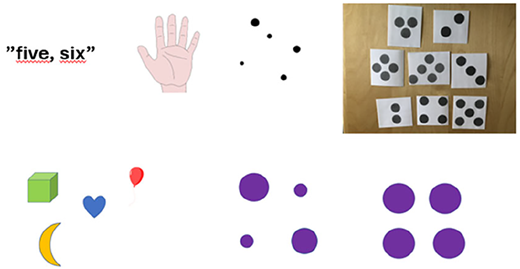
This study explores variation theory-based interventions’ contribution to enhancing preschoolers’ subitizing abilities during iterative lessons. Results are presented according to low, middle and high achievers, focused on those with prominent challenges.
In total 68 Swedish preschoolers participated. They were randomly assigned to one of the intervention/control groups: 23 mixed design, 24 variation theory design and 21 controls. Data from 59 pupils were analyzed. A learning study with three lesson designs for each intervention group was used in autumn 2022 and spring 2023, respectively. The mixed design met ordinary textbook material and variation theory (VT) group instructions designed by VT during autumn, whereas all met instructions designed by VT in spring. Each group was divided into two subgroups. The controls followed business-as-usual math teaching. Two tests assessed pupils’ results before and after the interventions.
All groups showed significant improvements between pre- and post-tests. Pupils in the mixed and VT groups developed more knowledge than the controls. The low-achieving group developed the most. The VT group exhibited a more complex pattern of variation and a greater increase than the mixed group. The intervention groups showed a greater improvement in both tests’ results than the controls.
There is agreement on the importance of subitizing abilities as a predictor of future mathematical development; however, lesson design and research on pupils’ development regarding lessons offered are limited.
Introduction
It is well documented in the literature that children with weak knowledge of mathematics in kindergarten tend to experience difficulties in their early school years (Aunola et al., 2004; Morgan et al., 2009). Researchers argue that one of the foundations of school-entry knowledge of numbers is understanding quantities and cardinality (Kilpatrick et al., 2001; Nunes and Bryant, 2007) and part–whole relationships of numbers (Clements et al., 2019; Geary et al., 2018). One ability that is emphasized in the literature as necessary for improving children’s general understanding of cardinality (Butterworth, 2005), relationships between numbers and quantities (Sayers et al., 2016) and calculation skills (Penner-Wilger et al., 2007) is subitizing.
The term subitizing was introduced by Kaufman et al. (1949) to distinguish between the ability to instantly recognize a group of objects as numbers and the slower process of counting them individually. A recently published study that aimed to map subitizing developmental trajectories in preschool-aged children (3–6-year-olds) provides significant evidence that subitizing and serial counting are distinct developmental processes. The results demonstrate a significant relationship between subitizing and visuospatial working memory (VSWM) in young children (Ashkenazi et al., 2022). VSWM is, however, different from the focus of this study.
Perceptual subitizing is defined as the innate, instant visual recognition of smaller quantities, whereas conceptual subitizing involves composing, decomposing and understanding the concepts of numbers and their part–whole relationships of numbers (Clements and Sarama, 2014; Conderman et al., 2014). However, as Clements et al. (2019) point out, “subitizing too often is a neglected quantifier in educational practices” (p. 13), and although positive benefits have been identified (MacDonald et al., 2015; MacDonald, 2015; Sayers et al., 2016; Wästerlid, 2020; Özdem and Olkun, 2019), additional research is needed to increase understanding and to clarify the scope of the utility and role of subitizing in early numeracy development. Another gap identified in previous research is that few intervention studies in mathematics have been conducted with six-year-old children in educational settings (Mononen et al., 2014; Sterner et al., 2020). Even if research points to the importance of subitizing skills for young children, few studies show how instruction contributes to the development of children’s subitizing abilities. Furthermore, studies identify how handling the content during the lessons affects what possible learning opportunities the children are offered. The proposed project addresses the abovementioned issues by exploring whether and how the modulation of certain features of educational interventions focusing on conceptual subitizing activities can facilitate six-year-old children’s part–whole knowledge of numbers. The outcomes of the children’s test scores in the two different treatment conditions were compared with each other and with the control group.
Conceptual subitizing
Clements (1999) distinguished between perceptual subitizing, the innate and direct ability to recognize small quantities and conceptual subitizing, which requires higher-level abilities. In the literature, conceptual subitizing is described as a cognitive process that involves an ability to quickly and accurately determine the quantity in larger sets by recognizing smaller subsets of quantities that make up the whole and, by that, showing an awareness of the parts and the whole (Clements et al., 2019; Conderman et al., 2014). Another term used in the literature to define this mental structuring process to facilitate enumeration processes is groupitizing (Starkey and McCandliss, 2014).
Some intervention studies have explicitly focused on the role of subitization in enhancing children’s numeracy development. For example, Van Nes and Doorman (2011) reported that structuring counting strategies were more beneficial than unitary strategies when children (aged 4–6) were engaged in determining, comparing and operating quantities. Similar results were obtained by Özdem and Olkun (2019), who conducted an intervention study with 373 pupils in Grades 2 and 3. The researchers found that the intervention groups engaged in conceptual subitizing activities significantly improved their results on a math test compared to the control group. Wästerlid (2020) reported that conceptual subitizing activities supported preschool children’s knowledge of part–whole relations of numbers. Sayers et al. (2016) stated that conceptual subitizing activities supported the development of foundational number sense in Grade 1 children. Better understanding of the cognitive processes, such as sensorimotor perspective, involved in conceptual subitization has implications for numerical cognition (Sixtus et al., 2023). The results also have potential applications in educational contexts, such as developing strategies to enhance early mathematical skills and providing interventions for individuals with numerical processing difficulties. The project presented in this article was inspired by and builds on previous research focusing on the relationship between subitizing ability and the learning opportunities offered. The aim was to explore whether and how interventions based on variation theory contribute to preschool-class pupils’ (aged 5–7) subitizing abilities during iterative lesson designs. The reason for choosing variation theory as a principle for designing the lessons is that it focuses on identifying critical aspects in the learning situation that are important to understand to enhance the pupils’ learning possibilities. Variation theory has also been chosen as it focuses on the study of the relationship between instruction and pupil learning (Holmqvist et al., 2014). To make a comparison, a condition close to business as usual, based on the expert teachers’ ordinary way of teaching at the school, was chosen. However, as different designs were used, based on textbook materials used at the school and the school teachers’ teaching approach, this condition was defined as a mixed condition.
The research questions were as follows:
What differences can be found in the pupils’ development of subitizing abilities between the pre- and post-test captured with two different tests Ability to Quickly See Quantity (AQSQ) and Number Sets Test (NST)?
Were any differences between low- and high-achieving pupils’ development found, and if so, in what way?
If there were changes in pupil development, how are these related to the structure of lessons in the interventions (mixed and variation theory) and controls?
Variation theory
Variation theory is a framework for the analysis of learning affordances and guidance for designing lessons focusing on learners’ need to discern aspects of the content not yet discerned (Holmqvist et al., 2014; Ling Lo, 2012; Marton, 2014). Each object of learning or the content targeted for the pupils to develop knowledge about, was analyzed to find the necessary aspects to understand the meaning. Variation theory assumes that the whole and parts of specific content must be discerned to make learning possible. Discernment requires some form of variation (e.g. discerning one color by contrasting it with others) that must co-occur (simultaneously). Studies have shown that variation theory is also influential in understanding children’s learning, such as toddlers learning mathematics (Björklund, 2010), conceptual learning in preschool (Björklund, 2014), numerosity development in preschool (Holmqvist et al., 2012), analyzing Montessori preschool instructions (Ahlquist and Gynther, 2020) and numerous learning with the aid of number rows (Alkhede and Holmqvist, 2021). An analysis based on the variation theory focuses on the non-dualistic relationship between learning and the object of learning, which is internationally supposed to be what a learner develops knowledge about. Thus, both the teacher and the researcher must focus on how the learner experiences the content.
Understanding a concept beyond its representation is called generalization in variation theory. No generalization was made if the child could determine the amount based only on a dice-pattern representation. The first step in introducing children to subitizing activities is to show different amounts in exact representations, such as dice patterns. They are then able to observe the variation between the patterns of one to six dots. Distinguish between four and five dots, then help the child contrast them. After observing differences in the same pattern, they must encounter different patterns of the same amount. If the amount of four is to be generalized, the child must meet several different representations of four regarding the pattern, items used, sizes of the items and their placement. Finally, when the child distinguishes between different amounts and can generalize the amount regardless of the representation, they can be distinguished using fusion. Fuse means that the child can determine the amount regardless of what other amounts or representations are used to illustrate the targeted amount. In this study, assumptions from the variation theory guided the design of lessons offered during the interventions. Variation theory was used to design the interventions based on (1) which aspects are focused on, (2) which aspects are varied, and (3) which aspects are kept constant, following the assumptions of the theoretical framework (Marton, 2014). The aspects that varied were representation (number of words, fingers and dots), pattern (canonical/not canonical), range (1–9), proximity (distance) and size.
Methodology
The intervention design included two intervention groups and one control group with pre- and post-tests (Shadish et al., 2002), following the design of the model learning study (Holmqvist, 2011).
Participants
Participants were 59 out of 100 preschool pupils aged 5–7 years, at the same school in a city with about 300,000 inhabitants, who completed all datasets. The school has about 550 pupils in grades K-9 and is placed in a socioeconomic mixed area. A total of 79% have Swedish as their first language. The pupils were randomized into three different groups: two intervention groups (mixed and variation theory instructions) and one control group, using a random generator in Excel with a nonzero probability (Shadish et al., 2002).
Random assignments were used to increase the validity of the results and ensure that other factors did not interfere with the effects of the interventions. The distribution of pupils was as follows: mixed instruction group (mixed), 23 pupils; variation theory instruction group (VT), 24 pupils and control group, 21 pupils. The randomized groups were divided into two smaller groups (A and B) for each identical lesson (Mixed 1 n = 23 12/11, VT n = 24 12/12). The lessons were implemented in spring 2023: 27/2 Lesson 1 Mixed and VT in Groups A, 28/2 Lesson 1 Mixed and VT in Groups B, 1/3 Lesson 2 Mixed and VT in Groups A in the morning and Groups B in the afternoon. Complete datasets from the pre- and post-tests of both the NST and the AQSQ were obtained from 59 participants (Table 1).
Participant details from those with complete datasets (n = 59)
| Age | |||||
|---|---|---|---|---|---|
| Total | Girls | Boys | M | SD | |
| Mixed design | 21 | 13 | 8 | 75,81 | 2,94 |
| VT design | 19 | 7 | 12 | 74,47 | 3,29 |
| Controls | 19 | 9 | 10 | 74,68 | 3,25 |
| Total | 59 | 29 | 30 | ||
Source(s): Created by authors
The four participating teachers were two of the article authors/researchers and two math expert teachers at the school. All of them are certified teachers, which means they are qualified, trained teachers in mathematics. They are female, had more than 10 years of teaching experience, and aged between 55 and 63. The school teachers were two female teachers with more than 30 years of teaching experience. They are also math experts with the overall responsibility of ensuring sound math teaching at the school. However, although they met the pupils in other school activities, they were not involved in the participating pupils' everyday math teaching. Both math expert teachers had been working with variation theory in projects at the school before the project started and were familiar with designing lessons based on variation theory. The two other teachers were one senior (Ph.D. and professor) and one junior researcher (Ph.D-student and lecturer). Both have a teacher’s degree in mathematics and more than ten years of teaching experience. They have visited the classes several times during the school year and conducted individual and group assessments with each participating pupil.
Instruments
Two instruments were used with the same aim of assessing pupils’ fluency and accuracy in identifying and processing quantities. The pupils’ ability to identify groups of four dots was assessed using the AQSQ scale. In contrast, the NST was used to assess pupils’ part–whole knowledge, that is, their ability to quickly identify subgroups that add up to five.
Number sets test (NST)
The NST is a paper-and-pen test developed to assess children’s fluency in identifying and processing quantities (Geary et al., 2009). The sensitivity measure of the test, d′ scores, showed that first-grade pupils’ d′ scores successfully identified two out of three children diagnosed with mathematical learning disability (MLD) in third grade and properly identified around nine out of ten children who were not at risk for MLD. The test consisted of four subtests, including symbolic (Arabic numerals) and non-symbolic numbers (i.e. dots, squares or stars) regarding quantities of five and nine.
The subtest used in this study was the non-symbolic test of five, in which the children were instructed to determine within one minute whether pairs or trios of the object set, in both canonical and non-canonical configurations, matched five.
Ability to Quickly see Quantity (AQSQ)
The AQSQ measures children’s ability to see smaller quantities quickly (Adler, 2010). The test was standardized for 4,861 Swedish pupils (aged 6 n = 449). The test items consisted of 210 sets of dots with varying numbers of objects (3–5), both canonically and non-canonically. Pupils were instructed to mark all four dotted groups. The time limit was two minutes, and the pupils were instructed to work as quickly and accurately as possible. To the best of our knowledge, this test has not been used in classroom studies.
Procedure
The learning study consisted of two parallel cycles with two different interventions (mixed and variation theory), each design consisting of two cycles. The first cycles in both conditions, variation theory and mixed, included one iteration each (autumn, 2022), and the second cycles of each condition (variation theory and mixed) included two iterations each (spring, 2023) (Table 2). Each iteration incorporated lesson design, a pre-test, lesson implementation and a post-test. The two parallel second cycles were analyzed between iterations one and two, and the preliminary results from the first were used as the basis for planning the next iteration.
Timeline and instructors of all lessons conducted
| Date | Cycle 1 lessons A | Cycle 2 lessons B | Cycle 2 lessons C |
|---|---|---|---|
| Autumn 2022 VT | Researchers | ||
| Autumn 2022 mixed | Researchers | ||
| Spring 2023 VT | Researchers | Researchers | |
| Spring 2023 mixed | Teachers | Teachers |
Source(s): Created by authors
The researchers taught both mixed and VT groups in the first cycles in autumn 2022. In the second cycles, (spring 2023), they taught only the VT group, whereas the teachers at the school taught the mixed group. The main difference between the conditions was the use of dimensions of how the aspects of the content were handled during the lessons. The mixed group met items focusing on part/whole relationships to develop their subitizing abilities, while the variation theory group had a stronger focus on identifying the amount represented in several different ways to enhance their subitizing abilities.
To ensure ecological validity and test the interreliability between researchers and teachers regarding the design of theoretical-based lessons, the lessons in the second iteration were built on what was taught in the first iteration. All lessons were recorded on video. Each lesson lasted about 30–40 min, and the children were assessed pre- and post-test immediately before and after each iteration, using the AQSQ (Adler, 2010). These tests were not included in the analysis but served as a baseline for the groups’ current levels of performance or competence before each iteration to inform the design of the following lesson.
The pre- (October) and post-tests (NST, March and AQSQ, April) framed the whole intervention. The pre- and post-tests were used to assess changes or improvements, as the post-test scores were compared with the pre-test scores. The post-test was conducted in April based on research on cognitive load theory, which suggests that the result of a post-test immediately after learning can be weaker than that of a delayed post-test (Leahy and Sweller, 2019). The content and materials used during the instructions are presented in the Appendix.
The control group did not participate in either treatment condition (mixed or VT intervention) but participated in the pre- and post-test before and after the intervention period (October versus March and April). The control or business-as-usual group was taught math by their ordinary preschool class teachers, who were instructed to maintain their ordinary classroom routines and curriculum choices.
Analysis
As the focus of this study was on the ability of children to naturally develop over time, the timespan became essential. A control group was included, and their developed abilities were measured and compared with the development of the children during the interventions. In other words, the analysis explored whether treatment affects conceptual subitizing abilities or whether naturally developed subitizing abilities will be at the same level, regardless of whether interventions are offered. The analysis compared the outcome of AQSQ and NST used as pre- and post-tests (dependent variables) between the two interventional groups and the control group and the effect of teachers and researchers’ theoretical-based instruction (TBI). Furthermore, an analysis based on variation theory focused on the different patterns of variation used in instruction to identify what discernment enabled pupils’ learning.
Ethical considerations
Ethical improvement has been applied as the project included eye-tracking experiments, randomized interventions with a mix of children from different classes and teaching by teachers other than their regular teachers (Dnr 2020-01175). Randomization was, however, more accessible when the pupils were mixed in their leisure-time care after school, and by that time, they were used to being placed in different groups during a school day. Shadish et al. (2002) raised some arguments against randomization, but the rationale for randomization in this study was to decrease the teacher effect of the interventions. The pupils may have experienced the test situations as stressful because time was limited in the tests. Furthermore, they may have experienced stress by being video recorded during the intervention. To prevent stressful situations, the researchers all met the children several times during the whole school year and the children met all adults involved in the project also at regular school activities. The project started the first week of the pupils’ first year at the school, so they became familiar with the researchers at the same time as their ordinary teachers. Furthermore, all activities occurred in the school building, in or close to the children’s classrooms. As a stress-relieving activity for anxious pupils, their parents could join in the individual test situations. The tests were conducted in a playful way and not presented to the children as tests. Instead, they were introduced as exercises and activities. All pupils, parents and teachers have signed a letter of consent and were invited to regular meetings to follow the project’s progress. Another ethical consideration was that some pupils were offered experiments to enhance their abilities, whereas the pupils in the control group were not. In this project, if the results showed that some activities were more robust in enhancing subitizing abilities, they would be offered as soon as the results have been obtained. The ethical codes and principles of Shadish et al. (2002) were also considered. We showed respect to people by only asking the pupils to take tests and participate at times to which they agreed. If they preferred to play football or stay in the classroom and work, we waited and took the test later. Regarding beneficence, we discussed with the teachers when and how to organize activities for the pupils, implemented all steps in the interventions at school in a familiar environment, and invited the staff to participate in the activities. Fairness was considered as we treated all pupils equally; they enjoyed the same possibilities to participate, and we ensured that the pupils who did not participate in the most beneficial condition, if any, could also participate afterward.
Results
The results for the research questions are presented in this section, framed by the pupils’ learning outcomes regarding subitizing abilities. This is measured by the two tests, NST and AQSQ. The tests cover different parts of children’s subitizing abilities and, by that, complement each other. The first research question focused on the differences between pupils’ subitizing abilities measured by pre- and post-test results; an analysis of the test scores shows that all the groups achieved improved results, but the intervention groups achieved better results than the control group (Table 3). Compared to the controls, the intervention groups showed an increase of 24–28% units on NST and an increase of 11–15% units on AQSQ. The results for the intervention groups were similar, with a small advantage for the VT group. The test scores showed a significant difference regarding outcomes for the AQSQ compared to the NST, as the total number of items was higher for the AQSQ than for the NST. Another difference was that the time limit in the AQSQ was two minutes compared to the one-minute NST test. They also assessed slightly different abilities and knowledge, as mentioned above. Repeated ANOVAs were performed using SPSS version 29 (IBM Corp, 2022). The increased outcome between the pre- and post-tests was significant in all groups (p = < 0.001). There were no significant differences between the intervention and control groups (p = 0.401).
Descriptive statistics of NST and AQSQ pre- and post-test scores and increased outcomes in percentage (n = 59)
| NST-test | AQSQ-test | |||||||||||||
|---|---|---|---|---|---|---|---|---|---|---|---|---|---|---|
| Pre | Post | Pre | Post | |||||||||||
| Treatment condition | Total | M | SD | T | M | SD | Increase (%) | Total | M | SD | Total | M | SD | Increase (%) |
| Mixed (n = 21) | 103 | 4.9 | 3.3 | 170 | 8.1 | 3.6 | 65% | 229 | 10.9 | 6.3 | 466 | 22.2 | 10.7 | 103% |
| VT (n = 19) | 97 | 5.1 | 3.3 | 164 | 7.6 | 3.6 | 69% | 172 | 9.1 | 6.7 | 374 | 19.7 | 11.3 | 117% |
| Control (n = 19) | 94 | 5.0 | 3.8 | 133 | 7.0 | 4.7 | 41% | 211 | 11.1 | 9.2 | 405 | 21.3 | 13.4 | 92% |
Source(s): Created by authors
Regarding the second research question, there were differences between low- and high-achieving pupils in favor of low-achieving pupils (Table 4). They gained more from the interventions than high-achieving pupils, and all pupils gained more from the interventions than the controls. The differences between the interventions are minor at the group level, but split into low and high achievers, considerable differences emerged. First, the results of the NST tests, in which the pupils were to determine if pairs or trios added up to five, were analyzed. In the mixed group, the increase in scores for the low-achieving pupils was +433%, and in the VT group, it was +700%. As only seven and five pupils, respectively, were in these groups, the changes could be related to the increased results of single participants. However, the increase in the high-achieving group, where the number of pupils was two and three, respectively, was +11% in both groups.
Increased scores/points in percentage between pre-and post-test
| Treatment condition | Pre- and post-test NST | |||
|---|---|---|---|---|
| Lower quartile | Middle quartiles | Upper quartile | Total | |
| Mixed (n = 21) | (n = 7) | (n = 12) | (n = 2) | (n = 21) |
| +26p (+433%) | +39p (+49.4%) | +2p (+11.1%) | +67p (+65%) | |
| Variation theory (n = 19) | (n = 5) | (n = 11) | (n = 3) | (n = 19) |
| +28p (+700%) | +36p (+52.4%) | +3p (+10.7%) | +67p (+69%) | |
| Controls (n = 19) | (n = 5) | (n = 10) | (n = 4) | (n = 19) |
| +19p (NA: 0 initial score)* | +13p (+23%) | +7p (+18.4%) | +39p (+41%) | |
| Pre- and post-test AQSQ | ||||
|---|---|---|---|---|
| Treatment condition | Lower quartile | Middle quartiles | Upper quartile | Total |
| Mixed (n = 21) | (n = 6) | (n = 10) | (n = 5) | (n = 21) |
| +92p (+353%) | +93p (+78%) | 53p (+62%) | +237p (+103%) | |
| Variation theory (n = 19) | (n = 5) | (n = 10) | (n = 4) | (n = 19) |
| +58p (+966%) | +109p (124%) | +35p (+45%) | +202p (+117%) | |
| Controls (n = 19) | (n = 5) | (n = 10) | (n = 4) | (n = 19) |
| +50p (625%) | +122p (+116%) | +22p (+22.4%) | +194p (+92%) | |
Note(s): The results in the quartiles were based on the level of achievement on the NST/ASQS pretest. *Division by 0 is undefined
Source(s): Created by authors
An analysis of the results of the AQSQ tests, which assessed the pupils’ ability to quickly identify sets of four dots, showed a substantial increase among pupils in the lowest quartile and a higher increase among pupils in the VT intervention (Table 4).
The third research question focused on interventions designed as learning studies with three iterations in two groups in parallel to further specify the development in relation to what was offered during the interventions. The layout of the lessons’ instructions, materials used and patterns of variation identified are presented in the Appendix. The analysis was based on variation theory, and the overall patterns of variation used were summarized. The results revealed several similarities between the groups’ opportunities for discerning aspects of subitizing to develop their abilities. The number of activities and times are presented in Table 5.
Activities conducted and total time
| Activities/time | Mixed | Variation theory |
|---|---|---|
| 1 | 5 29 min 25 s | 5 19 min 22 s |
| 2 | 5 33 min 59 s | 4 28 min 22 s |
| 3 | 5 32 min 50 s | 6 30 min 48 s |
| Total activities/time | 15 96 min 14 s | 15 78 min 32 s |
Source(s): Created by authors
The difference between the interventions is that the pattern of contrast was more frequently used in the mixed group, where 17 different patterns of variation were found and 12 were contrasting different amounts with each other. Generalization was mainly used to extrapolate the discernment of the amount in different patterns of dots representing the amount. Fusion was not performed in this group (Table 6).
Patterns of variation used in the mixed and VT-intervention
| Lesson | Contrast | Generalization | Fusion |
|---|---|---|---|
| Mixed 1 | 4 | 3 | – |
| Mixed 2 | 4 | – | – |
| Mixed 3 | 4 | 1 | – |
| Total (n = 17) | 12 | 5 | 0 |
| VT 1 | 2 | 3 | 1 |
| VT 2 | 3 | 1 | 1 |
| VT 3 | 4 | 5 | 1 |
| Total (n = 21) | 9 | 9 | 3 |
Source(s): Created by authors
All three patterns of variation were used in the VT group. In total, 21 different patterns of variation were found: contrast and generalization in nine activities each and fusion in one activity of each lesson (Table 6). The analysis shows that the pupils in the variation theory group encountered a more complex, varied and challenging design for the object of learning (subitizing ability).
A deeper analysis of content handling shows that the focus in the mixed group in eight of the 17 activities was on elaborating part/whole decomposition. In the VT group, nine of the 21 activities focused on part/whole decomposition (Table 7). As both interventions involved the same number of activities, the patterns changed more in the VT group.
Part/whole content offered in the lessons’ activities
| Part/whole | Mixed (n = 17) | Variation theory (n = 21) |
|---|---|---|
| 1 | 2 | 2 |
| 2 | 3 | 2 |
| 3 | 3 | 5 |
| Total | 8 (47%) | 9 (43%) |
Source(s): Created by authors
The different results of the two screening tests used to identify the children’s development, namely, the AQSQ and NST, might be explained by the design of the instruments. The AQSQ is mainly used to identify a targeted amount as quickly as possible, whereas the NST also requires the test taker to identify the parts of a whole by showing domino bricks where dots can be placed in two groups. As the mixed theory group focused mainly on this ability, keeping it in the foreground and the subitizing ability in the background, the possibility that the children would develop this ability increased compared to the VT group, where the ability to quickly see amounts was accentuated.
Discussion and conclusions
At the group level, based on the pre- and post-test results, all the pupils in all conditions developed their conceptual subitizing ability and understanding of quantity based on the differences in outcomes between the pre-tests in October and post-tests the following March (NST) and April (AQSQ). This result is promising, as pupils need to understand quantities and cardinality (Kilpatrick et al., 2001; Nunes and Bryant, 2007) as well as the part–whole relationships of numbers (Clements et al., 2019; Geary et al., 2018) to develop their mathematical knowledge. The increased AQSQ scores suggest that both the intervention and control groups developed knowledge regarding their ability to quickly identify quantities. The intervention groups increased their scores by 10–20% units more than the controls. Quantitative analysis of NST scores also shows growth over time for all groups, especially the intervention groups. The improved NST results indicate that the children increased their ability to quickly determine the quantity at once (subitizing) instead of counting one-and-one, which is a slower process than subitizing according to the literature (Kaufman et al., 1949).
The smaller increase in scores of the AQSQ (11–15% units) compared with the NST (24–28% units) may be because adding two separate subgroups is more cognitively demanding than directly recognizing quantities of four. The more equal scores on the AQSQ between the treatment groups compared with the NST scores can be interpreted as most preschoolers already being cardinal knowers of four, while they are in a developing phase of their understanding that numbers can be composed and decomposed differently. The increase in scores was greater in the lower quartile than in the upper quartile, which may indicate a ceiling effect for the upper quartile. However, this also indicates the importance of offering high-quality math teaching, especially for pupils struggling to identify critical foundational number sense aspects. High-quality math teaching is fundamental, as children with a weak knowledge of mathematics in kindergarten tend to experience difficulties in their early school years (Aunola et al., 2004; Morgan et al., 2009).
The study has some potential limitations. For example, the respondents all come from the same school context. The teachers have been working with variation theory for several years, which might weaken their roles as ordinary teachers. However, mathematical teachers in the area are expected to have experience in variation theory. The results between the groups might have been even more different if teachers with less competence were involved.
Still, this study demonstrates that learning studies can be a model for teachers, independent of each other, to systematically develop their instruction and lesson designs over time. By doing so, they can achieve high levels of pupils’ ability for development, while pupils who do not meet the same systematically designed instructions do not develop at the same level.
We would like to thank Editage (www.editage.com) for English language editing and journal submission support.
Funding: This study is part of the research project ETSA – Global processing as an indicator of children’s conceptual subitizing ability in pre-school classes, which was graciously funded by the Swedish Research Council (Grant No. 2021-04147).
References
Appendix Content and materials used during the different interventions
Mixed design
Example of material and contents based on (1) textbook material (Adler, 2010) and (2) variation theory design.
- 1)
Instructions [author translation].
Add and count the items without using numerals. Draw the same number of objects in the box to the right.
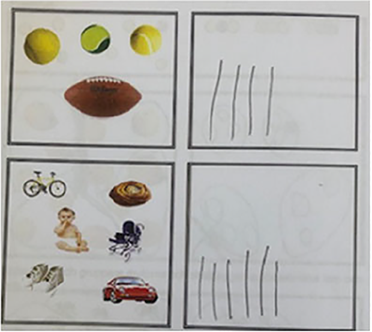
Draw as many objects in the blank box on the right, as you can see in the box to the left. Group the objects three (3) and three (3).
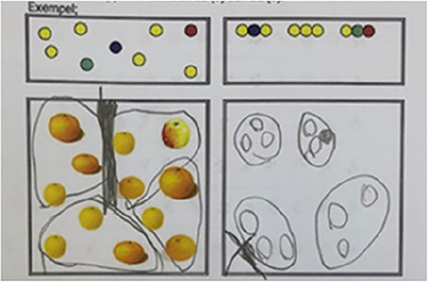
- 2)
Aspects that varied in the variation theory instructions were representations (number words, numerals and objects), quantities (5 and 7) and pattern (not canonical/canonical).
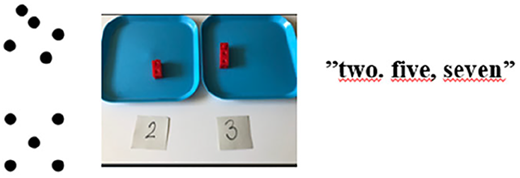
Variation theory design
Example of material and content based on variation theory design. The aspects that varied were representations (number words, fingers and objects), pattern (canonical/not canonical), range (9), proximity (distance) and size.