


This paper aims to show the relationship between the Sustainable Development Goals (SDGs) and the supply chain to identify new trend topics, shedding light on opportunities in research.
This paper uses bibliographic coupling analysis of a sample of 381 articles, conducted with VOSviewer software, to detect both research trends and gaps in this field in 2021 and 2022. Based on the results obtained, this paper provides an agenda for future research.
The results show the significance of SDGs’ application towards more sustainable practices in end-to-end supply chain management. The main research hotspots in this research stream are focused on food and agri-food supply chains, the implementation of technologies such as blockchain and big data analytics to build resilient and sustainable supply chains after the pandemic scenario, green industrialisation, the use of renewable energies and the introduction of circular practices thanks to closed-loop supply chains.
This review contributes to the current literature by providing a framework to understand the relationship between the supply chain and SDGs’ implementation and an overview of the main research topics in this field. Thus, this paper presents valuable information to guide practitioners, academics and managers towards achieving the SDGs.
1. Introduction
Growing environmental and social awareness is forcing a paradigm shift in business models towards more sustainable practices (Shekarian et al., 2022), with a key element: the transformation of supply chains. This means extending the concept of the end-to-end supply chain – a vision of total process integration (Closs et al., 2011). In this end-to-end sustainable supply chain, not only the operations or technologies to be applied are extended but also the relationships with stakeholders are broadened and become more complex (Anastasiadis et al., 2022). Achieving sustainable supply chains allows for a competitive advantage based on reduced environmental impact, higher levels of innovation and improved corporate reputation (Zimon et al., 2020). To achieve environmental protection, economic growth, employment opportunities and social needs, the 2030 Agenda was agreed upon, which contains 17 Sustainable Development Goals (SDGs) (United Nations, 2015). Due to the COVID-19 pandemic, however, these goals have suffered significant setbacks that require new measures and commitments from institutions and countries (Dujarric, 2022; Klymenko and Lillebrygfjeld Halse, 2022). Supply chain practices enhance the adoption of SDGs that benefit firms (Chauhan et al., 2022). Under the 2030 Agenda, sustainable design and management of supply chains can improve their reputation and economic growth, human rights and social health whilst minimising waste, emissions and environmental degradation.
Recent crises such as the COVID-19 pandemic (Dwivedi et al., 2023) and the war in Ukraine have led to a high level of supply chain disruption (Bouncken et al., 2022), requiring measures to improve its resilience and efficiency (Roque Júnior et al., 2023). When increased transaction costs caused by instability affect companies’ operations, reducing supply chain complexities can become relevant to supply chain management (Fan et al., 2022). Sustainable supply chains are more resilient because they are better able to manage uncertain environments and new business scenarios (Chowdhury et al., 2020). Sustainability is a commitment to greater rationality and responsibility in decision-making in aspects such as the choice of raw materials or suppliers. Therefore, orienting logistics design towards the fulfilment of the 2030 Agenda would improve the functioning of logistics in a consensual and comprehensive framework for action.
The SDGs have also influenced organisations to include environmental social governance (ESG) measures in their disclosure systems and sustainable supply chain management (SSCM) practices. ESG criteria are composed of a set of indicators divided into three categories: environmental management, social responsibility and corporate governance (Eccles and Viviers, 2011; Xiang et al., 2021; Sun et al., 2023). In 2022, the European Commission approved a new directive on corporate sustainability reporting (CSRD) that provides ESG reporting requirements. The directive pursues the objective of improving sustainability reporting to better contribute to the transition towards a fully sustainable and inclusive economic and financial system, in line with the UN Sustainable Development Goals and the European Green Deal. The CSRD includes a new set of information by disclosing any possible negative effects on the company’s supply chain and adequate mitigation actions (EU Directive, 2022/2464).
With the same aim, in 2022, the International Sustainability Standards Board published an exposure draft on general requirements for disclosure of sustainability-related financial information. Similarly to the CSRD, the standard requires companies to disclose information about all the significant sustainability risks and opportunities related to activities, interactions and relationships and the use of resources along their value chains (IFRS Foundation, 2021).
However, this orientation is not a simple process. Supply chains comprise the set of activities linked to goods’ transformation phases, from extraction to the final consumer, with flows of information and materials up- and downstream (Handfield and Nichols, 1999). Thus, a supply chain has multiple nodes and relationships (Roque Júnior et al., 2023). This complexity requires an analysis of supply chains’ economic, environmental and social dimensions. Therefore, SSCM implies the adoption of the triple bottom line (TBL) approach, which considers three dimensions (Seuring and Müller, 2008; Closs et al., 2011): economic profits due to reputation and organisation growth; social benefits thanks to human health and rights; and environmental positive effects by minimising waste, consumption and emissions (Hannan et al., 2020). Moreover, sustainable supply chain integration involves collaboration and cooperation between all the agents at all stages of the supply chain to achieve greater flows of information, products and decisions (Zailani et al., 2020; Zimon et al., 2020). In short, the end-to-end supply chain involves considering a broader sustainability perspective that encompasses both operations and a broad typology of relationships (Closs et al., 2011).
Currently, different governments and non-governmental agencies have developed actions to incorporate ESG/SDGs into the supply chain. This is underscored by the requirement to publish ESG information by the European Union (EU) Directive 2014/95 and EU Directive 2022/2464 of the European Parliament to elaborate on sustainability reporting. Beyond the publication of information, the regulation also promotes process changes such as the agreement of the European Parliament and the Council of the EU to adopt the new Ecodesign Regulation for Sustainable Products (ESPR). The new regulation also takes a more holistic view of the process. In addition, there are particular policies related to climate change (e.g. the Climate Change and Energy Transition Law, to reach climate neutrality by 2050 towards SDG 13) and circular economy (e.g. the Spanish Circular Economy Strategy, towards SDG 12). However, there is still much to be done in some sectors, such as fintech, where Sergeev et al. (2021) highlighted the dearth of clear standards for SDG/ESG governance and regulatory initiatives for financial inclusion to achieve the SDGs.
For non-governmental organisations (NGOs), there are certification programmes such as the Rainforest Alliance (Rainforest Alliance, n.d.), which certifies products manufactured using sustainable practices (in concordance with SDG 12) to combat climate change (SDG 13) and deforestation (SDG 15 life on land) by following environmental standards and ESGs in the end-to-end agricultural supply chain. The Sustainable Apparel Coalition, known as Cascale, implies an alignment between NGOs, governments and stakeholders in the textile industry (SDG 12), using a tool to measure the supply chain that is standardised for all the actors involved (Cascale, n.d.). Collaborating with organisations that meet the ESG framework and corporate social responsibility (Cascale, n.d.). To improve supply chain transparency, there are initiatives such as the Carbon Disclosure Project (CDP, n.d.) to promote and disseminate their environmental impact to develop ESG programmes and support the SDGs’ tracking (6, 7, 11, 12, 13 and 15).
The role of the public sector is fundamental to the achievement of the 2030 Agenda (Meier, 2023). However, private sector ownership is a key factor in accelerating the implementation of the SDGs in supply chains (Rashed and Shah, 2021). This includes the primary, secondary and tertiary sectors, as well as how the three interact. For instance, the importance of cooperative models in the agri-food sector (Anastasiadis et al., 2022; Lafont-Torio et al., 2023) or the construction of measurement indicators and new consumption habits to achieve the SDGs (González-Sánchez et al., 2023; Liu and Yuan, 2023). However, beyond supply chain transformation to achieve specific SDGs, some studies point to the need for linkages between sectors and the SDGs they focus on (Liu and Yuan, 2023). Referring to a concrete sector, for instance, the manufacturing industry, Iwami (2023) analysed ESG’s financial materiality in the consumer goods sector and its alignment with the SDGs. This doctoral thesis highlighted that the retailers and distributors industry – e.g. distributors and wholesalers in electronics and automotive – manages complex and challenging global supply chains, meets a higher percentage of SDGs and is robust with the ESG framework. Meanwhile, e-commerce and appliance manufacturing are the sectors least likely to follow the more social SDGs (5, 8, 10 and 16), and SDG 12 is the most common. However, organisations involved in different sectors are expected to demonstrate more effort by publishing their ESG reports (Gutiérrez-Ponce, 2023).
Although there is a growing interest in research on the supply chain’s role in meeting the SDGs (Zimon et al., 2020), there is a lack of studies that provide a comprehensive view of this phenomenon. Most publications are literature reviews, but they focus on partial aspects. A previous descriptive bibliometric analysis of business strategies in this area has been identified (Agrawal et al., 2022). This was a descriptive work that retrieved its sample from the Scopus database. Hence, our analysis aims to determine the state of the art and the intellectual structure of the literature from a holistic approach in order to identify research gaps and opportunities surrounding supply chain improvements in terms of sustainability practices and their alignment with SDGs. This understanding is key in the design of effective sustainable strategies throughout the supply chain. Moreover, this study provides a research agenda with future directions and valuable insights to different agents involved in the supply chain as well as policymakers, practitioners and local communities. Thus, this research can significantly strengthen sustainability efforts by identifying developments and changes in the field and recognising new research trends while boosting the SDGs. Hence, the following research questions are proposed:
How does supply chain management enable SDGs’ fulfilment?
What is the intellectual structure of recent scientific literature about supply chains and SDGs?
What are the main gaps and opportunities in the field?
Therefore, this bibliometric analysis provides valuable insights into the field by identifying research gaps and areas that can contribute to the intellectual structure and advancement of knowledge on the transformation of supply chain management towards the fulfilment of the SDGs.
2. Theoretical background: sustainable supply chain management (SSCM) towards achieving SDGs
2.1 SSCM definition
The term “sustainable development” was first coined in the World Charter for Nature (United Nations, 1982). The Earth Summit in 1992 developed a sustainable action plan that considered environmental and economic issues (United Nations, 1992). And it was in 1995 when the World Summit for Social Development took place, where social aspects became essential (United Nations, 1995). The Millennium Development Goals agreed in 2000 packaged social issues into eight goals with quantifiable results according to the countries’ efforts over 15 years – from 2000 to 2015 – (Sachs, 2012). Subsequently, in 2015, the United Nations, 2020 Agenda for Sustainable Development adopted the 17 SDGs with 169 targets.
SSCM has emerged as a critical aspect of supply chain transformation for achieving the SDGs (Srhir et al., 2023b). The objective is to incorporate sustainability issues, practices and goals into essential supply chain operations, including planning, sourcing, manufacturing, delivery, storage and returns (Srhir et al., 2023a, b).
Effective strategies improve the supply chain’s sustainable operational performance by contributing to capacity building and optimising resource utilisation. Although companies recognise sustainability as a driver of competitive advantage, its application is often focused on product or service development rather than planning or operations (Russell et al., 2018). In a period marked by disruptions, decision-making on production processes must consider the transaction cost approach when valuing the costs of raw materials and energy sources (de Sousa Monteiro et al., 2018; Cai and Choi, 2020). Similarly, the finiteness of natural resources is deeply connected to the SDGs and the maintenance of competitive advantages (Ilyas et al., 2020). Technical initiatives and logistics infrastructures have a significant impact on reducing costs and environmental impact (Zailani et al., 2020).
The literature discusses sustainability in relation to the SDGs, which have been addressed by various sustainability-oriented supply chain strategies and practices (Agrawal et al., 2022). According to Tsolakis et al. (2021), the UN agenda offers industries an opportunity to transform their businesses. The SDGs reinforce sustainability in supply chains (Chandan et al., 2023), necessitating changes to upstream and downstream supply chain processes.
Sustainable supply chains that integrate SDGs can improve performance across three dimensions (Agrawal et al., 2022). Economic sustainability is achieved by reducing inefficiencies, costs, waste and delays while enhancing quality compliance and process management (Sislian and Jaegler, 2022). Such a comprehensive end-to-end approach can contribute significantly to creating a clean and healthy environment which in turn, will substantially support the achievement of SDG 3, which focuses on ensuring good health and well-being for all (Fatimah et al., 2020).
The social dimension is represented in the literature by indicators such as job creation, extended producer responsibility (Moreno-Camacho et al., 2023), equality, quality of work, health, well-being and social capital (Fatimah et al., 2020). Supply chain strategies designed to extend services that address consumers’ social needs and foster job creation without gender discrimination contribute to the achievement of SDGs 1, 2 and 5 (Zimon et al., 2020). Addressing social inequalities and fostering collaboration and partnerships with governmental bodies are essential for fulfilling SDGs 10, 11 and 17 (Bonsu et al., 2020). Corruption in supply chains, as discussed by de Sousa Monteiro et al. (2018), significantly impacts SDGs 14 and 15. Furthermore, the importance of focusing on infrastructure development is emphasised to achieve SDGs 9 and 16 (Agrawal et al., 2022).
The heightened focus on environmental concerns has spurred extensive research in this area. Various initiatives aim to address these concerns. Eco-innovation concept is introduced for pursuing environmental solutions, such as reducing harmful raw materials, pollution and carbon emissions (Xu et al., 2023). This approach relies on companies’ ability to reshape product design, processes and structures for environmental sustainability. Zhou et al. (2020) identified green innovation and knowledge sharing as critical drivers for achieving SDGs 8, 9, 12 and 13 within supply chains.
Additionally, Toth-Peter et al. (2023) highlighted the importance of practices and technologies that enhance reverse logistics, which close the loop of the supply chain, reduce environmental waste and improve resource efficiency (Agrawal et al., 2022)
Beyond operations, stakeholder relationships and interests are central to the orientation of supply chains towards the 2030 Agenda. Given the importance of the social dimension in meeting the SDGs, supply networks should be developed from a more human perspective that benefits all parties (Russell et al., 2018).
Organisational theories that study the connection between the supply chain and the SDGs largely focus on stakeholder theory and network analysis and the agreement between all actors in the supply chain (Walker et al., 2021). The application of agency theory is of interest in understanding and aligning the interests of relevant actors (Cai and Choi, 2020).
The TBL is closely related to the concept of sustainable development. Moreover, its development across three dimensions – environmental, social and economic – makes it suitable for application in this study.
Considering the growing interest in the disclosure of ESG aspects of sustainability for companies and their supply chains, we include a further classification that identifies whether the SDGs’ issues are more closely related to E, S or G topics. For example, in reporting the progress on SDG 13, which focuses on taking urgent action to combat climate change and its impacts, the E-indicators refer mainly to the carbon dioxide (CO2) equivalent indirect emissions through companies’ supply chains. Other examples are SDG 3, which is verified by the S-indicator “whether the company has a policy to improve employee health and safety within the company and its supply chain”, and SDG 16, reported by the G-indicator on “human-rights policy” (Delgado-Ceballos et al., 2023).
The relationship between supply chain management and SDG compliance is bidirectional as shown in the conceptual framework for supply chain transformation and SDGs in Figure 1.
 The flow begins from a text box labeled “Supply Chain Management”. From “Supply Chain Management”, a downward arrow arises and points to a text box labeled “S D Gs”. From “S D Gs”, three downward arrows arise and point to three text boxes. The text box on the left is labeled “Policy Implementation”. The box on the right is labeled “Sustainable Practices”. The box in the centre is diamond-shaped and is labeled “Supply Chain Transformation for S D Gs”, accompanied by an icon showing a colorful wheel. From this diamond, a single arrow extends downward to a text box labeled “Supply Chain plus S D Gs Integration”. From “Supply Chain plus S D Gs Integration”, four arrows extend downward and point to four text boxes arranged horizontally and labeled from left to right as follows: “Economic Impact”, “Environmental Impact”, “Social Impact”, and “Governance Impact”. Each of these bottom boxes includes small colored icons representing various Sustainable Development Goals, such as figures of people, plants, industry, equality, energy, innovation, climate, and justice symbols.
Conceptual framework for supply chain transformation and SDGs
The flow begins from a text box labeled “Supply Chain Management”. From “Supply Chain Management”, a downward arrow arises and points to a text box labeled “S D Gs”. From “S D Gs”, three downward arrows arise and point to three text boxes. The text box on the left is labeled “Policy Implementation”. The box on the right is labeled “Sustainable Practices”. The box in the centre is diamond-shaped and is labeled “Supply Chain Transformation for S D Gs”, accompanied by an icon showing a colorful wheel. From this diamond, a single arrow extends downward to a text box labeled “Supply Chain plus S D Gs Integration”. From “Supply Chain plus S D Gs Integration”, four arrows extend downward and point to four text boxes arranged horizontally and labeled from left to right as follows: “Economic Impact”, “Environmental Impact”, “Social Impact”, and “Governance Impact”. Each of these bottom boxes includes small colored icons representing various Sustainable Development Goals, such as figures of people, plants, industry, equality, energy, innovation, climate, and justice symbols.Conceptual framework for supply chain transformation and SDGs
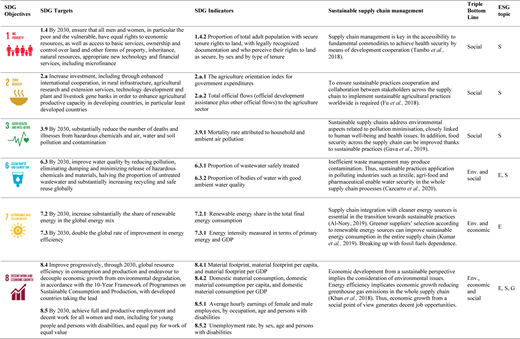
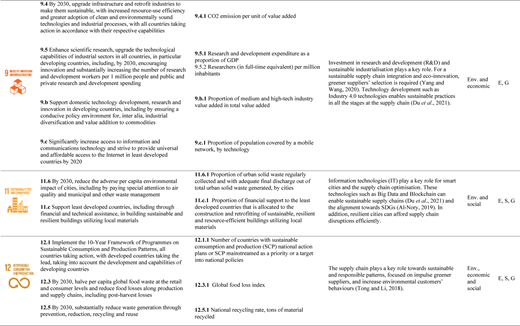
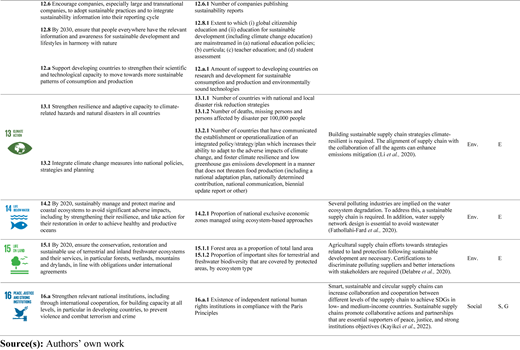
On the one hand, it makes compliance more operational. The SDGs run the risk of remaining abstract concepts that are far removed from organisations’ operations (Russell et al., 2018). On the other hand, implementing the SDGs as a framework could mean a break with incremental improvement policies, towards breakthrough measures and achieving a strategic perspective (Russell et al., 2018; Chauhan et al., 2022). Table 1 shows the relationship between SSCM and SDGs’ achievement. Furthermore, each row detects the connection between the 169 targets and indicators associated with the specific SDGs that are relevant to the end-to-end supply chain.
3. Methodology
To address the research questions, a systematic literature review and a bibliometric analysis were performed. To understand the steps undertaken in this manuscript, this section is divided to explain how the data were collected to obtain the final sample and the bibliometric technique chosen.
3.1 Data collection
Figure 2 shows the methodological process. Firstly, the data were retrieved from the Web of Science (WoS) Core Collection database. WoS is a widely used database according to publications and citations references (Singh et al., 2021), which is suitable for the present study. The search stream was: (supply chain* OR SC) AND (Sustainable Development Goal* OR SDG) by topic, which includes title, abstract and author keywords. The period considered for this first search was from 2000 (coinciding with the first published article in WoS about this field) to 2022. The results obtained included 1,174 items. These were filtered by the Science Citation Index Expanded (SCIE) and Social Science Citation Index (SSCI), and 880 papers were retrieved. Then, the sample was sorted to include only articles, excluding proceedings and books, and 725 papers were obtained. Secondly, after a double-check, 15 articles from the sample were discarded based on their content. Some of them included the keyword “SC” but not referring to the term “supply chains”, such as “smart cities”, “simply circle”, “service coverage” and “sustainable construction”. Thirdly, according to this study’s aim, it is more appropriate to consider a limited period to perform the bibliographic coupling analysis (Glänzel and Thijs, 2012; Zupic and Cater, 2015). Therefore, the sample was sorted to consider documents between 2021 and 2022, coinciding with the post-pandemic period and the supply chain disruptions that occurred because of this situation (Butt, 2021). Hence, the final sample was a total of 381 articles.
 The figure presents a vertically oriented flowchart that begins with a text box labeled “RESEARCH OBJECTIVES”. From “RESEARCH OBJECTIVES”, an arrow extends downward and points to three horizontally aligned rectangular boxes. From left to right, the first box reads “R Q 1. How supply chain management enables S D Gs fulfilment?”. The middle box reads “R Q 2. What is the intellectual structure of recent scientific literature about supply chains and S D Gs?”. The rightmost box reads “R Q 3. What are the main gaps and opportunities to address about the field?”. From these three boxes, a downward arrow arises and points to a text box labeled “Knowledge structure about S D Gs and supply chains”. From “Knowledge structure about S D Gs and supply chains”, a downward arrow arises and points to a text box labeled “DATA COLLECTION”. From “DATA COLLECTION”, an arrow extends downward and points to a larger rounded rectangle containing the text that reads: “Web of Science Core Collection, T S equals ((supply chain asterisk O R S C) A N D (Sustainable Development Goal asterisk O R S D G)), N equals 1,174, Filtered by Science and Social Sciences Citation Index N equals 880, Excluding proceedings and books, and after double check N equals 710, Sorted by publications between 2021 and 2022 N equals 381.” From this box, an arrow extends downward and points to a text box labeled “BIBLIOMETRIC ANALYSIS”. From “BIBLIOMETRIC ANALYSIS”, an arrow extends downward and points to a text box labeled “Bibliographic coupling analysis: Research trends and emerging fields identification, Intellectual structure”.
Methodological process
The figure presents a vertically oriented flowchart that begins with a text box labeled “RESEARCH OBJECTIVES”. From “RESEARCH OBJECTIVES”, an arrow extends downward and points to three horizontally aligned rectangular boxes. From left to right, the first box reads “R Q 1. How supply chain management enables S D Gs fulfilment?”. The middle box reads “R Q 2. What is the intellectual structure of recent scientific literature about supply chains and S D Gs?”. The rightmost box reads “R Q 3. What are the main gaps and opportunities to address about the field?”. From these three boxes, a downward arrow arises and points to a text box labeled “Knowledge structure about S D Gs and supply chains”. From “Knowledge structure about S D Gs and supply chains”, a downward arrow arises and points to a text box labeled “DATA COLLECTION”. From “DATA COLLECTION”, an arrow extends downward and points to a larger rounded rectangle containing the text that reads: “Web of Science Core Collection, T S equals ((supply chain asterisk O R S C) A N D (Sustainable Development Goal asterisk O R S D G)), N equals 1,174, Filtered by Science and Social Sciences Citation Index N equals 880, Excluding proceedings and books, and after double check N equals 710, Sorted by publications between 2021 and 2022 N equals 381.” From this box, an arrow extends downward and points to a text box labeled “BIBLIOMETRIC ANALYSIS”. From “BIBLIOMETRIC ANALYSIS”, an arrow extends downward and points to a text box labeled “Bibliographic coupling analysis: Research trends and emerging fields identification, Intellectual structure”.Methodological process
3.2 Bibliometric analysis
The bibliometric method allows the examination of large volumes of published literature and is widely used in business research (Donthu et al., 2021b). This methodology uses quantitative data, offers an in-depth analysis of the current developments in the scientific literature (Donthu et al., 2021a) and examines the knowledge structure of the scientific literature. The bibliometric tool ascertains the scholarly publishing growth of a particular research field. This technique is used to identify the thematic connections between documents since they share their intellectual base (Zupic and Cater, 2015). Considering this article’s aim to understand the intellectual structure of SDGs’ fulfilment across supply chains (RQ2), this study performs a bibliographic coupling analysis to detect this field’s knowledge structure by identifying gaps and to shed light for future research (Glänzel and Thijs, 2012). Bibliographic coupling analysis visualises the similarity between items – in this case, articles – by the number of shared references (Deyanova et al., 2022). This relational technique was selected to detect references cited independently of the time at which the analysis was conducted, as references in a paper are not changed after publishing (Koseoglu et al., 2022). Hence, the present paper conducts an analysis with VOSviewer software using the bibliographic coupling technique (van Eck and Waltman, 2010).
4. Results
4.1 Intellectual structure
The bibliographic coupling method allows researchers to detect research trends, and it is suitable for novel papers and emerging fields with a short period of existence (Zupic and Cater, 2015). This study considers only articles from 2021 to 2022 – with a sample of 381 publications. From this sample, only articles with a minimum of five citations are considered in order to guarantee a substantive linkage between these papers, retrieving the 111 most cited papers. Seven articles were excluded because they did not present links between clusters; thus, the final sample consists of 104 publications. Table 2 shows the top 10 highly cited publications in each cluster, including their contributions.
Top 10 highly cited publications in each cluster
| TC | Reference | Contributions |
|---|---|---|
| Cluster 1: COVID-19 impact on the agro-food supply chains (SDG 12) | ||
| 45 | Weersink et al. (2021) | To analyse agri-food systems affected by the COVID-19 towards flexibility and SDGs achievement by means of food prices in Canada and USA |
| 34 | Sharma et al. (2021) | To investigate how COVID-19 impacts on solid waste management based on circular practices as an enhanced to achieve the SDGs |
| 28 | Walker et al. (2021) | To contribute to the understanding of social sustainability within circular economy practices identifying barriers to social assessment through empirical insights to shed light about current practices of frontrunner firms |
| 28 | Potrč et al. (2022) | To provide a comprehensive analysis and roadmap for achieving carbon neutrality in the EU by 2050 through a sustainable energy transition, technological advances and resource optimisation |
| 19 | Al-Saidi and Hussein (2021) | To analyse the impacts of COVID-19 on the water-energy-food nexus, highlighting the importance of a systemic approach to address disruptions and vulnerabilities in these critical sectors |
| 17 | Marusak et al. (2021) | To understand how regionalised food supply chains can enhance resilience and sustainability by offering valuable insights for policymakers, practitioners and stakeholders involved in food distribution and logistics |
| 17 | El Wali et al. (2021) | To provide potential benefits and limitations of transitioning towards a circular phosphorus management model (food supply chain), offering valuable information for policymakers and stakeholders involved in sustainable resource management |
| 16 | Nchanji and Lutomia (2021) | To understand the socio-economic impacts of COVID-19 on agriculture and food security in Sub-Saharan Africa providing actionable recommendations to support the recovery of the agricultural sector |
| 13 | Gómez-García et al. (2021) | To examine the importance of managing and valorising food agro-industrial by-products for sustainable development, while providing insights into the methodologies and processes involved in their utilisation |
| 11 | El Wali et al. (2021) | To provide valuable insights into how firms in global food value chains can enhance resilience and competitiveness in response to global shocks such as the COVID-19 pandemic |
| Cluster 2: Food supply chain management towards sustainable production and consumption (SDG 12) | ||
| 31 | Mina et al. (2021) | To provide valuable insight into the drivers of sustainable sourcing within extended multi-tier supply chains, providing a comprehensive framework for analysis |
| 23 | Montiel et al. (2021) | To advance the comprehension of the role of multinationals’ corporation in sustainable development, providing a framework for integrating SDGs into corporate strategy |
| 23 | Lillford and Hermansson (2021) | To recognise the importance of food science and technology in advancing primary production, offering key strategies for addressing complex food-related challenges and promoting sustainability in food systems |
| 22 | Torkayesh et al. (2021) | To examine the measurement and evaluation of social sustainability performance in developed countries by introducing a comprehensive framework, innovative weighting system and comparative analysis approach |
| 19 | Chkanikova and Sroufe (2021) | To increase the understanding of retailer-led sustainability certification schemes and their role in promoting sustainable food supply chain management and certification |
| 16 | Bubicz et al. (2021) | To analyse the complexities of social sustainability management within the apparel supply chain, highlighting the importance of collaboration, strategic integration and proactive actions by companies and external stakeholders |
| 15 | Kharazishvili et al. (2021) | To examine energy security enhancement, promoting sustainable development and improving governance in the energy sector |
| 12 | Mangla et al. (2021a, b) | To promote sustainable development in the food industry by advancing knowledge and understanding of the challenges and opportunities associated with food safety initiatives in emerging economies |
| 12 | Uniyal et al. (2021) | To offer guidance on the use of ICT to achieve more efficient and environmentally responsible business practices and to promote sustainable consumption and production within value chains |
| 11 | De Oliveira Claro and Esteves (2021) | To examine the integration of the SDGs into corporate strategies in Brazilian multinationals, analysing the motivations, challenges and trends observed among companies in addressing global sustainability goals |
| Cluster 3: Blockchain and big data analytics in the transformation of supply chains (SDGs 9, 11 and 12) | ||
| 46 | Tsolakis et al. (2021) | To achieve SDGs withing the food industry context by means of integrating blockchain technology, offering insights, principles and frameworks |
| 24 | Chandra and Kumar (2021) | To examine public health by offering a comprehensive framework and empirical evidence for assessing and improving the sustainability of immunisation programs in India |
| 21 | Mangla et al. (2021b) | To analyse the societal impacts of blockchain technology in the food sector, particularly within the context of the milk supply chain |
| 18 | Vafadarnikjoo et al. (2021) | To alignment of information flow management tools with digital transformations in supply chain management, highlights the role of blockchain, identifying critical barriers and offering guidance to industrial managers and experts in emerging economies to achieve SDGs |
| 15 | El-Haddadeh et al. (2021) | To investigate the role of top management support in leveraging big data analytics (BDA) adoption to address societal challenges, particularly focusing on achieving the SDGs |
| 14 | Quayson et al. (2021) | To detect the social sustainability challenges faced by smallholder farmers in emerging economies' cocoa supply chains and how blockchain can address these issues in alignment with the SDGs in Indonesia and Nigeria |
| 11 | Kumar et al. (2021) | To explore the role of big data analytics (BDA) in facilitating sustainable manufacturing operations amidst the transition to Industry 4.0, highlighting the key role of stakeholder engagement, top management involvement, data handling capabilities and team development |
| 10 | Jayashree et al. (2021) | To analyse the Industry 4.0 implementation and its implications for sustainability, particularly emphasising the role of top management, IT infrastructure and effective implementation strategies in driving positive outcomes in SMEs |
| 9 | Bag and Rahman (2021) | To establish a positive influence of engagement capability on alliance capability, with data analytics capability drawing on dynamic capability theory, enhancing flexibility to the supply chain management by means of circularity and sustainability |
| Cluster 4: Sustainable and resilience supply chains in the post-pandemic scenario (SDGs 9, 11, 12) | ||
| 188 | Ibn-Mohammed et al. (2021) | To analyse the post-pandemic recovery strategies by advocating for sustainable and resilient economic models, particularly through the adoption of circular economy principles |
| 59 | Kumar et al. (2021) | To address the challenges faced by perishable food supply chains during the pandemic, offering practical and actionable risk mitigation strategies focusing on management collaboration and planning a proactive business continuation |
| 57 | Dube et al. (2021) | To investigate the challenges faced by the aviation industry in the wake of the COVID-19 pandemic, offering recommendations for responsible recovery strategies that prioritise safety, efficiency and sustainability |
| 20 | Wen et al. (2021) | To examine the impacts of COVID-19 on China’s electronic vehicles industry, identifying key trends and developments that are likely to shape the industry’s future trajectory towards a more advanced and reliable state |
| 16 | D'Amico et al. (2021) | To evaluate the integration of digital technologies and sustainable practices in port logistics, providing a roadmap for port cities to navigate towards smarter and more sustainable logistical development |
| 13 | Bartle et al. (2021) | To analyse the transformation of air freight transport management amidst the COVID-19 crisis, emphasising opportunities to improve long-term sustainability through collaborative efforts across public and private sectors |
| 12 | Blair et al. (2021) | To evaluate the relationship between bioenergy and biomass supply chains and the SDGs, utilizing a comprehensive scoring framework |
| 11 | Hsu et al. (2021) | To examine the fashion supply chain literature by proposing an integrated approach using quality function deployment to mitigate risks and enhance resilience in sustainable supply chains |
| 10 | Benyam et al. (2021) | To investigate the role of digital agricultural technologies in preventing or reducing food loss and waste globally, emphasising the need for rigorous examination to develop policies fostering sustainable food systems |
| 9 | Rajak et al. (2022) | To transform linear supply chains into closed-loop supply chains (CLSCs) for organisations in India, incorporating remanufacturing and reverse logistics to achieve sustainability aligned with sustainable development goals (SDGs) |
| Cluster 5: Sustainable suppliers’ selection and energy efficiency (SDGs 7, 9, 12) | ||
| 46 | Alam et al. (2021) | To identify and prioritise key challenges in the COVID-19 Vaccine Supply Chain using a combination of the DEMATEL method and intuitionistic fuzzy sets, highlighting the necessity to reinforce the SDGs in terms of health systems |
| 35 | Mina et al. (2021) | To introduce a novel approach integrating multi-criteria decision-making (MCDM) methods and fuzzy inference systems (FIS) to evaluate and rank suppliers for transitioning to a circular supply chain to contribute with SDGs |
| 19 | Ikram et al. (2021) | To integrate green technology framework to prioritise critical attributes of green technologies in Pakistan, addressing a gap in the literature for sustainable investment mechanisms, considering the significance of these technologies in the achievement of SDGs. Fuzzy |
| 17 | Omair et al. (2021) | To develop a decision support framework for supplier prioritisation based on sustainability factors, addressing the evolving landscape of supply chain objectives, incorporating experts' opinions and handling decision makers' subjectivity and uncertainties through fuzzy logic and fuzzy set theory |
| 15 | Lazar et al. (2021) | To examine the integration of SDGs and sustainable development dimensions in logistics- and supply-chain-related studies, with a strong relationship with sustainable consumption and production, industry and innovation and affordable energy |
| 12 | Wu et al. (2021) | To develop a novel “no-trade” scenario (NTS) and apply it to estimate the impact of trade on global economic development and greenhouse gas (GHG) emissions towards SDGs |
| 12 | Popkova and Sergi (2021) | To address the diverging interests of various stakeholders in advancing energy efficiency, filling gaps in existing literature by providing a comprehensive analysis of energy efficiency factors and conditions |
| 9 | Nasir et al. (2021) | To explore the impact of the COVID-19 pandemic on global supply chains (SCs) and aims to identify factors influencing supply chain viability (SCV) for achieving Sustainable Development Goals (SDGs) in the long term |
| 8 | Karuppiah et al. (2021) | To evaluate and identify the challenges faced in sustainable humanitarian supply chain management (SHSCM) during the COVID-19 pandemic, offering insights into addressing these challenges to promote SDGs |
| 6 | Dong et al. (2022) | To improve decision-making processes for wind energy investments by identifying critical factors by means of fuzzy and DEMATEL towards SDGs |
| Cluster 6: Combat climate change towards green industrialisation (SDGs 9,11 and 13) | ||
| 28 | Ikram et al. (2021) | To offer a comprehensive approach to guide stakeholders in selecting certification bodies for sustainable practices and SDG alignment, identifying significant indicators such as quality of auditors, payment method, cost and reputation |
| 28 | Fang et al. (2021) | To analyse the environmental footprints associated with the Belt and Road Initiative (BRI), underscored the importance of adopting a global perspective to address environmental challenges and achieve the SDGs |
| 25 | Lotfi et al. (2021) | To investigate the sustainable supply chain doughnut model, integrating the SDGs with the social foundations of the doughnut model to address workers' rights violations in supply chains |
| 12 | Magazzino et al. (2022) | To analyse the causal relationships among export diversification, per capita income and energy demand of 20 Asia–Pacific Economic Cooperation countries, considering industry share, foreign direct investments and human capital |
| 10 | Lenzen et al. (2022) | To introduce a collaborative research platform based on multiregional input-output analysis, enabling countries to produce, update and report detailed global material footprint accounts, essential for monitoring progress towards SDGs |
| 10 | Bhuiyan et al. (2021) | To evaluate the impact of COVID-19 restrictive measures on consumption in renewable energy markets, hypothesising future changes in human behaviour in developed and emerging economies |
| 6 | Hidalgo-Carvajal et al. (2021) | To understand the transition from a linear economy to a circular economy, focusing on the role of servitisation, identifying key challenges and drivers of servitisation adoption towards SDGs achievement |
| 6 | Lundquist (2021) | To analyse the process of decoupling economic growth from emissions, focusing on 35 OECD countries, identifying key driving factors of emissions decoupling and empirically tests their significance, highlighting the role of green technologies |
| 5 | Zou et al. (2021) | To understand the dynamics of building a green innovation ecosystem in enterprises through the lens of evolutionary game theory, exploring a three-party evolutionary game model involving core enterprises, upstream and downstream enterprises |
| Cluster 7: Water-energy nexus and renewable sources (SDGs 6,7) | ||
| 31 | Liu et al. (2021) | To analyse the water-energy nexus at the urban agglomeration scale, addressing critical challenges posed by water shortages and high energy emissions in line to SDG 6 and 7 |
| 20 | Wang et al. (2021) | To review the water-energy extended nexuses, exploring their relationship and practicability in addressing challenges related to SDGs, emphasising the need for methodologies such as life cycle assessment |
| 14 | Zhao et al. (2021) | To propose an integrated “nexus” approach to sustainable water management, particularly focusing on the Beijing-Tianjin-Hebei urban agglomeration in China, guiding future water management and industrial transition policies in achieving SDGs |
| 13 | Khan et al. (2021) | To address the need for cost-efficient and clean power energy in India, especially in the wake of challenges posed by the COVID-19 pandemic, providing an optimal cost solution that demonstrates the feasibility of shifting towards renewable sources (hydro, solar) |
| 12 | Malagó et al. (2021) | To understand the Water, Energy, Food and Ecosystems (WEFE) nexus in the context of achieving SDGs in the Mediterranean region, highlighting the importance of renewable energies for sustainability |
| 12 | Sharma et al. (2021) | To examine the impact of the COVID-19 pandemic on the progress of the SDGs, proposing a green recovery strategy based on circular economy principles in solid waste management |
| 5 | Zhang et al. (2021) | To examine forest sustainability by quantifying the forestry planetary boundary (FPB) and national forestry boundaries, offering guidance for forest harvesting activities and promoting international cooperation to mitigate global deforestation |
| Cluster 8: Sustainable and circular closed-loop supply chain | ||
| 59 | Jouzdani and Govindan (2020) | To develop a multi-objective mathematical model to optimise perishable food supply chain operations considering economic, environmental and social factors and the identification of critical factors affecting sustainability, providing insights for decision-makers |
| 42 | Mojtahedi et al. (2021) | To provide a coordinated framework for sustainable vehicle routing problems in municipal solid waste management to incorporate an Adaptive Memory Social Engineering Optimiser with potential significant cost savings through increased recycling |
| 15 | Homayouni et al. (2021) | To generate a multi-choice goal programming model and a novel robust-heuristic optimisation approach to investigate sustainability strategies for carbon regulation mechanisms in supply chains |
| 9 | Fattahi et al. (2021) | To offer a multi-stage stochastic program for sustainable planning of mining supply chain networks, integrating renewable energy resources, greenhouse gas emission mitigation and social impact considerations, demonstrated with case study in Iran |
| 8 | Soleimani et al. (2022) | To integrate a sustainable closed-loop supply chain model incorporating economic, environmental and social factors, including energy consumption, job creation and customer demand |
| 6 | Seydanlou et al. (2022) | To incorporate sustainable Closed-Loop Supply Chain Network design with the olive industry in Iran, utilising a multi-objective optimisation framework to demonstrate the potential of this supply chains to enhance sustainability and economic efficiency |
| 5 | Karimi et al. (2021) | To provide a model to integrate environmental considerations into flexible supply chains for the automotive industry in Iran and the proposal of four supply chain flexibility dimensions towards pollution and costs reductions an the SDGs achievement |
Note(s): TC = number of total citations
Source(s): Authors’ own work
The scientific map in Figure 3 shows the eight clusters provided by VOSviewer. The items are represented by bubbles that are connected to show the similarity between the references. The bigger a bubble is, the greater the number of references present (van Eck and Waltman, 2010).
COVID-19’s impact on the agri-food supply chain (SDG 12)
 The network visualization map consists of numerous interconnected nodes arranged in a complex web of lines representing co-citation relationships. Each node, shown as a colored circle, represents an author’s publication, with the author’s surname and year of publication displayed next to it. The network is divided into eight distinct color-coded clusters, each representing a thematic area derived from bibliometric analysis. At the bottom right of the network, the largest and most prominent yellow node labeled “ibn-mohammed (2021)”. Around this central node are medium-sized nodes such as “dube (2021)”, “wen (2021)”, “hsu (2021)”, “grabs (2021)”, “bastug (2021)”, “benyam (2021)”, and “blair (2021)”. These yellow nodes belong to the cluster named in a text box labeled “Cluster 4. Sustainable and resilience supply chains in the post-pandemic scenario”, and below this text box three icons are shown labeled “9 Industry, Innovation, and Infrastructure”, and accompanied by an icon of three connected hexagons, “11 Sustainable Cities and Communities”, and accompanied by an icon of a city skyline, and “12 Responsible Consumption and Production”, accompanied by an icon of an arrow in an infinite sign. At the bottom, red cluster nodes are shown labeled under the cluster named in a text box labeled “Cluster 1. COVID-19 agro-food supply chains”, and below this text box, an icon is shown labeled “12 Responsible Consumption and Production”, and accompanied by an icon of an arrow in an infinite sign. The nodes are labeled as follows: “walker (2021)”, “sharma (2021)”, “weersink (2021)”, “amicarelli (2022)”, “zanoletti (2021)”, “botelho (2021)”, “al-saidi (2021)”, “marusak (2021)”, “doliento (2021)”, “lo (2021)”, and “potrc (2021)”. At the top left, orange nodes are shown labeled under the cluster named in a text box labeled “Cluster 7. Water-energy nexus and renewable sources”, and below this text box, two icons are shown. They are labeled “6 Clean Water and Sanitation”, accompanied by an icon of a water tank with a water droplet, and “7 Affordable and Clean Energy”, accompanied by an icon of a sun with a power button. The nodes are labeled as follows: “khan (2021)”, “liu (2021)”, “zhao (2021)”, “zhang (2022)”, and “wang (2021)”. Above this orange cluster, blue clusters are shown. These blue nodes are under the cluster named in a text box labeled “Cluster 6. Combat climate change towards green industrialisation”, and above this text box three icons are shown labeled “9 Industry, Innovation, and Infrastructure”, and accompanied by an icon of three connected hexagons, “11 Sustainable Cities and Communities”, and accompanied by an icon of a city skyline, and “13 Climate Action”, accompanied by an icon of an eye with a globe in place of the eyeball. The blue nodes are labeled “grijalvo martin (2021)”, “lotfi (2021)”, “ikram (2021 a)”, “zou (2021)”, “magazzino (2022)”, “lenzen (2022)”, and “fang (2021)”. At the top center, brown clusters are shown. These brown nodes are under the cluster named in a text box labeled “Cluster 8. Sustainable and circular closed-loop supply chain”, and above this text box an icon shows “12 Responsible Consumption and Production”, accompanied by an icon of an arrow in an infinite sign. The brown nodes are labeled as follows: “fattahi (2021)”, “mojtahedi (2021)”, “soleimani (2021)”, “homayouni (2021)”, and “jouzdani (2021)”. At the top left, violet clusters are shown. These nodes are under the cluster named in a text box labeled “Cluster 5. Sustainable suppliers selection and energy efficiency”, and above this text box three icons are shown labeled “7 Affordable and Clean Energy”, accompanied by an icon of a sun with a power button, “9 Industry, Innovation, and Infrastructure”, accompanied by an icon of three connected hexagons, and “12 Responsible Consumption and Production”, accompanied by an icon of an arrow in an infinite sign. The purple nodes are labeled as follows: “dong (2022)”, “wu (2021)”, “nguyen (2021)”, “alam (2021)”, “mina (2021)”, “karuppiah (2021)”, “popkova (2021)”, and “ikram (2021 b)”. At the bottom left, green nodes are shown. These nodes are under the cluster named in a text box labeled “Cluster 2. Implementing technologies in the food supply chain”, and below this text box an icon shows “12 Responsible Consumption and Production”, accompanied by an icon of an arrow in an infinite sign. The green nodes are labeled as follows: “sindhwani (2022)”, “bubicz (2021)”, “torkayesh (2021)”, “lillford (2021)”, “kharazishvili (2021)”, “hasle (2021)”, “bhavsar (2021)”, “kannan (2021)”, “uniyal (2021)”, “montiel (2021)”, and “chkanikova (2021)”. On the far left, blue nodes are shown. These nodes are under the cluster named in a text box labeled “Cluster 3. Blockchain and big data analytics for supply chain transformation”, and below this text box three icons are shown labeled “9 Industry, Innovation, and Infrastructure”, accompanied by an icon of three connected hexagons, “11 Sustainable Cities and Communities”, accompanied by an icon of a city skyline, and “12 Responsible Consumption and Production”, accompanied by an icon of an arrow in an infinite sign. The blue nodes are labeled “szabo-szentgoti (2021)”, “deja (2021)”, “kumar (2021 a)”, “ali (2022)”, “bag (2022)”, “bai (2022)”, “caiado (2022)”, “el-haddadeh (2021)”, “tsolakis (2021)”, “nayal (2022 b)”, “chandra (2021)”, and “vafadarnikjoo (2021)”.
Bibliographic coupling analysis by VOSviewer software
The network visualization map consists of numerous interconnected nodes arranged in a complex web of lines representing co-citation relationships. Each node, shown as a colored circle, represents an author’s publication, with the author’s surname and year of publication displayed next to it. The network is divided into eight distinct color-coded clusters, each representing a thematic area derived from bibliometric analysis. At the bottom right of the network, the largest and most prominent yellow node labeled “ibn-mohammed (2021)”. Around this central node are medium-sized nodes such as “dube (2021)”, “wen (2021)”, “hsu (2021)”, “grabs (2021)”, “bastug (2021)”, “benyam (2021)”, and “blair (2021)”. These yellow nodes belong to the cluster named in a text box labeled “Cluster 4. Sustainable and resilience supply chains in the post-pandemic scenario”, and below this text box three icons are shown labeled “9 Industry, Innovation, and Infrastructure”, and accompanied by an icon of three connected hexagons, “11 Sustainable Cities and Communities”, and accompanied by an icon of a city skyline, and “12 Responsible Consumption and Production”, accompanied by an icon of an arrow in an infinite sign. At the bottom, red cluster nodes are shown labeled under the cluster named in a text box labeled “Cluster 1. COVID-19 agro-food supply chains”, and below this text box, an icon is shown labeled “12 Responsible Consumption and Production”, and accompanied by an icon of an arrow in an infinite sign. The nodes are labeled as follows: “walker (2021)”, “sharma (2021)”, “weersink (2021)”, “amicarelli (2022)”, “zanoletti (2021)”, “botelho (2021)”, “al-saidi (2021)”, “marusak (2021)”, “doliento (2021)”, “lo (2021)”, and “potrc (2021)”. At the top left, orange nodes are shown labeled under the cluster named in a text box labeled “Cluster 7. Water-energy nexus and renewable sources”, and below this text box, two icons are shown. They are labeled “6 Clean Water and Sanitation”, accompanied by an icon of a water tank with a water droplet, and “7 Affordable and Clean Energy”, accompanied by an icon of a sun with a power button. The nodes are labeled as follows: “khan (2021)”, “liu (2021)”, “zhao (2021)”, “zhang (2022)”, and “wang (2021)”. Above this orange cluster, blue clusters are shown. These blue nodes are under the cluster named in a text box labeled “Cluster 6. Combat climate change towards green industrialisation”, and above this text box three icons are shown labeled “9 Industry, Innovation, and Infrastructure”, and accompanied by an icon of three connected hexagons, “11 Sustainable Cities and Communities”, and accompanied by an icon of a city skyline, and “13 Climate Action”, accompanied by an icon of an eye with a globe in place of the eyeball. The blue nodes are labeled “grijalvo martin (2021)”, “lotfi (2021)”, “ikram (2021 a)”, “zou (2021)”, “magazzino (2022)”, “lenzen (2022)”, and “fang (2021)”. At the top center, brown clusters are shown. These brown nodes are under the cluster named in a text box labeled “Cluster 8. Sustainable and circular closed-loop supply chain”, and above this text box an icon shows “12 Responsible Consumption and Production”, accompanied by an icon of an arrow in an infinite sign. The brown nodes are labeled as follows: “fattahi (2021)”, “mojtahedi (2021)”, “soleimani (2021)”, “homayouni (2021)”, and “jouzdani (2021)”. At the top left, violet clusters are shown. These nodes are under the cluster named in a text box labeled “Cluster 5. Sustainable suppliers selection and energy efficiency”, and above this text box three icons are shown labeled “7 Affordable and Clean Energy”, accompanied by an icon of a sun with a power button, “9 Industry, Innovation, and Infrastructure”, accompanied by an icon of three connected hexagons, and “12 Responsible Consumption and Production”, accompanied by an icon of an arrow in an infinite sign. The purple nodes are labeled as follows: “dong (2022)”, “wu (2021)”, “nguyen (2021)”, “alam (2021)”, “mina (2021)”, “karuppiah (2021)”, “popkova (2021)”, and “ikram (2021 b)”. At the bottom left, green nodes are shown. These nodes are under the cluster named in a text box labeled “Cluster 2. Implementing technologies in the food supply chain”, and below this text box an icon shows “12 Responsible Consumption and Production”, accompanied by an icon of an arrow in an infinite sign. The green nodes are labeled as follows: “sindhwani (2022)”, “bubicz (2021)”, “torkayesh (2021)”, “lillford (2021)”, “kharazishvili (2021)”, “hasle (2021)”, “bhavsar (2021)”, “kannan (2021)”, “uniyal (2021)”, “montiel (2021)”, and “chkanikova (2021)”. On the far left, blue nodes are shown. These nodes are under the cluster named in a text box labeled “Cluster 3. Blockchain and big data analytics for supply chain transformation”, and below this text box three icons are shown labeled “9 Industry, Innovation, and Infrastructure”, accompanied by an icon of three connected hexagons, “11 Sustainable Cities and Communities”, accompanied by an icon of a city skyline, and “12 Responsible Consumption and Production”, accompanied by an icon of an arrow in an infinite sign. The blue nodes are labeled “szabo-szentgoti (2021)”, “deja (2021)”, “kumar (2021 a)”, “ali (2022)”, “bag (2022)”, “bai (2022)”, “caiado (2022)”, “el-haddadeh (2021)”, “tsolakis (2021)”, “nayal (2022 b)”, “chandra (2021)”, and “vafadarnikjoo (2021)”.Bibliographic coupling analysis by VOSviewer software
The linkage between the food system and the SDGs focuses on Target 12 regarding “sustainable consumption and production”. The documents in this group are mainly published in environmental sciences and agriculture journals, such as Science of the Total Environment and Agricultural Systems. The red node is mainly focused on the COVID-19 pandemic’s impact on the agri-food supply chain. Rethinking the food system is essential for a more integrated food supply chain. COVID-19 implied a large disruption of this supply chain, with a change in customers’ demand occasioned by the lockdown (Marusak et al., 2021). Amicarelli et al. (2022) studied the pandemic’s effect on Italian household food waste behaviours during the lockdown, highlighting the key role of educational campaigns to avoid it. Other regions are considered in this cluster, for instance, sub-Saharan Africa, related to farmers’ food security, shedding light on food delivery and the necessity of digitalisation (Nchanji and Lutomia, 2021). The agri-food system has been widely analysed in North America, including how it was impacted by the pandemic situation and its prompt recovery thanks to just-in-time delivery (Weersink et al., 2021). Some studies have also highlighted the importance of including circular economy practices to enhance the SDGs (e.g. Sharma et al., 2021; Walker et al., 2021; El Wali et al., 2021), connected to the brown cluster. Concerning the post-pandemic scenario, Zanoletti et al. (2021) provided possibilities for future security actions – focused on economic, technological, strategic and political operations – regarding raw materials’ availability. Meanwhile, Sharma et al. (2021) highlighted the importance of introducing circular practices to achieve the SDGs in solid waste management.
Implementing technologies in food supply chain management towards sustainable production and consumption (SDG 12)
The green cluster consists of contributions that focus on managing food supply chains towards sustainable consumption and production (in line with SDG 12), assessing social sustainability and implementing technologies in supply chains. Most of the studies in this node are published in the areas of environmental, green and sustainable science and technology research, such as in the Journal of Cleaner Production. Skaf et al. (2021) revealed the hidden environmental impacts of food waste indicators in 15 countries. This study’s results show that the US’ impact is higher compared to other countries, which is of interest to politicians and citizens to change consumption patterns. For their part, Lillford and Hermansson (2021) focused on technology and food science’s shift towards greater food system security and food waste minimisation. There is a rise in certification programmes for sustainability issues at the food retailing stage to ensure competitive development and stakeholder satisfaction can improve sustainable practices in the supply chain (Chkanikova and Sroufe, 2021). Mangla et al. (2021a) focused on food safety initiatives in emerging economies such as Brazil, India and China. De Oliveira Claro and Esteves (2021) also chose Brazil to analyse its multinationals’ corporate strategies towards the SDGs. Regarding the key role of technology, some studies from this node highlighted its importance in promoting sustainability in food systems (Lillford and Hermansson, 2021), while Uniyal et al. (2021) showed how the use of information and communication technologies enables sustainable consumption and production (SDG 12) in value chains. In addition, this cluster pays particular attention to social sustainability aspects; for instance, Torkayesh et al. (2021) assessed and measured social sustainability performance in developed countries, and Bubicz et al. (2021) examined social sustainability in the apparel supply chain.
Blockchain and big data analytics in the transformation of supply chains (SDGs 9, 11 and 12)
This cluster focuses on Industry 4.0, in particular blockchain technologies and big data analytics, in line with the transformation of supply chain management and its impact on the achievement of the SDGs. Consistently, the majority of articles presented in this node are published in operations research and management as well as engineering journals, such as Annals of Operations Research and IEEE Transactions on Engineering Management. Supply chain digitalisation implies challenges and a redesign that can be addressed by digital technologies, such as blockchain (Tsolakis et al., 2021). Deja et al. (2021) focused on smart cities and the logistics operations followed by the manufacturing sector towards sustainable business models, enhancing SDG 11’s achievement towards sustainable cities. Related papers targeted the manufacturing industry, which is widely linked to SDG 9. Likewise, Vafadarnikjoo et al. (2021) examined the main barriers to blockchain technology’s implementation in manufacturing supply chains and the digital changes required. Mangla et al. (2021b) highlighted the societal impacts of blockchain technology in the food sector (connected to the red and green clusters), and in the same line, Quayson et al. (2021) focused on the challenges addressed by smallholder farmers. Referring to social responsibility, the importance of human resource management in the development of Industry 4.0 should be highlighted from a sustainable, socially responsible perspective (Mukhuty et al., 2022) according to SDG 12. Big data also enables the transition towards digital production systems linked to sustainable decision-making about operations in manufacturing (Kumar et al., 2021), and El-Haddadeh et al. (2021) analysed management’s fundamental role in using big data analytics to address societal challenges. Ultimately, it is noteworthy that several of these papers focused on emerging economies (Vafadarnikjoo et al., 2021), for instance, India (Chandra and Kumar, 2021), Indonesia or Nigeria (Quayson et al., 2021).
Sustainable and resilience supply chains in the post-pandemic scenario (SDGs 9, 11 and 12)
The yellow cluster comprises documents related to the transition to adopting sustainable strategies in different industries towards more sustainable and circular supply chains. Some of these papers focused on the transportation (e.g. Bartle et al., 2021; Dube et al., 2021) and manufacturing industries, such as the fashion supply chain (Hsu et al., 2021) and the automotive industry (Wen et al., 2021). These papers are published in environmental studies and green-sustainable science and technology journals such as Resources, Conservation and Recycling and Sustainable Cities and Society, respectively. After the post-pandemic scenario, the aviation industry required responsible recovery strategies towards resilience and sustainability (Dube et al., 2021). Similarly, the electric vehicle industry, key in the transition towards achieving SDGs, also was affected by COVID-19, and Wen et al. (2021) analysed its impacts in China. Transportation, linked to SDG 11, is critical to creating sustainable cities and communities. In this regard, D’Amico et al. (2021) examined the sustainable logistical development in port cities and their transformation thanks to Industry 4.0 and digital technologies (connected to the blue node). Some challenges related to the high use of fuels are related to transport systems, one of the most polluting sectors worldwide (Grondys, 2019), highlighting freight transport. In this industry, a paradigm shift towards sustainable management is needed, and Bartle et al. (2021) underscored the opportunity for collaboration between the public and private sectors. Highly connected to SDG 9, supporting joint efforts towards decarbonisation in polluting industries is fundamental for more sustainable production (Ioannou et al., 2021), for instance by using biofuel or biomass as an alternative option (SDG 12) (Ben Hnich et al., 2021; Blair et al., 2021). Finally, this cluster also covers the implementation of circular economy practices (Ibn-Mohammed et al., 2021) and remanufacturing by means of reverse logistics (also connected to the brown cluster), for instance, in India (Rajak et al., 2022). These circular practices play a key role in overcoming future supply chain disruptions.
Sustainable supplier selection and energy efficiency (SDGs 7, 9and 12)
This purple cluster focuses on energy issues across the supply chain towards sustainable practices (in line with SDG 7) and the selection of more sustainable suppliers (SDG 12). These documents relate to energy, fuels and management research areas published in journals such as Renewable Energy and Journal of Enterprise Information Management. Lazar et al. (2021) applied the SDGs to the logistics in supply chain studies towards SDGs 7, 9 and 12. Wu et al. (2021) developed a “no-trade scenario” and examined its effects on social, economic and environmental aspects, considering greenhouse emissions. Popkova and Sergi (2021) gave recommendations about the best-balanced energy efficiency structure, differentiating between emerging and developed economies.
Referring to energy projects, focused on clean energy production, Dong et al. (2022) developed a hybrid decision-making tool for the strategic selection of wind energy investment that highlights the key role of technology. Currently, companies are under pressure to be more “environmentally friendly”, emphasising their efforts towards green practices. This affects the selection of suppliers, the second main topic in the purple cluster. Selecting sustainable suppliers can lead to economic and ecological advantages, which play a meaningful role in business management (Omair et al., 2021). This issue particularly affects SDGs 7, 9 and 12. Suppliers’ performance according to their alignment with SDGs is key to make better choices (Mahmoudi et al., 2022). Mina et al. (2021) provided a framework for classifying suppliers according to the SDGs in the petrochemical industry using multicriteria decision-making tools. Likewise, Mahmoudi et al. (2022) used multicriteria decision-making with a novel model using the ordinal priority approach. Omair et al. (2021) used the analytical hierarchical process to analyse greater suppliers’ selection, focusing on the manufacturing sector. Many of the papers in this cluster used the fuzzy method (Alam et al., 2021; Ikram et al., 2021; Mina et al., 2021; Omair et al., 2021; Dong et al., 2022).
Combat climate change towards green industrialisation (SDGs 9, 11 and 13)
This light blue cluster addresses documents about fighting climate change and reaching zero net greenhouse gas emissions – mostly focusing on CO2 – also connected to the purple node, fulfilment of the SDGs, specifically SDG 13. Some countries are supposed to achieve a zero-carbon goal by 2050. This can only be obtained through so-called “green industrialisation” via greener-sustainable and novel innovations (Zou et al., 2021), highly connected to SDGs 9 and 11. Fang et al. (2021) focused on the environmental footprints of the BRI countries – highly represented by China and Russia. Meanwhile, Lundquist (2021) studied nitrogen oxide (NOX) and CO2 emissions decoupling and how green technologies’ development can affect it positively. The documents listed in this node are published in journals indexed in environmental sciences and studies, such as Nature Sustainability and Sustainable Production and Consumption. Most of these studies are focused on multiregional analysis and comparisons, for instance, Fang et al. (2021) with BRI countries, Magazzino et al. (2022) about Asia–Pacific Economic Cooperation countries, Lenzen et al. (2022) with a collaborative research platform and Bhuiyan et al. (2021) measuring renewable energy market consumption between developed and emerging economies.
Water–energy nexus and renewable sources (SDGs 6 and 7)
The orange node is focused on the water-energy nexus thinking approach, which refers to creating synergies by integrating governance and management. This improves resource security through different industries and levels (Wang et al., 2021). From an environmental point of view, it is resource management that evaluates the interdisciplinary collaboration and networks between processes (Venghaus and Hake, 2018), in this case, related to water resources. This paradigm is highly linked to the sustainable management of water following the SDGs – particularly SDG 6: “clean water and sanitation” (United Nations, 2015; Zhao et al., 2021) – and it is key to avoiding water scarcity (Wang et al., 2021). Papers are mainly focused on China, such as those of Liu et al. (2021), who provided a framework for urban agglomeration to identify key regions for saving energy and water, and Zhao et al. (2021), who analysed water supply constraints’ synergies also related to urban agglomeration. Malagó et al. (2021) examined the relationships between SDGs and the water, energy, food and ecosystems nexus in Mediterranean countries, underscoring the significance of renewable energies (e.g. for wastewater). The use of renewable energies and their key role in achieving SDGs (SDG 7) is also present in this node, highlighting how renewable resources such as hydro or solar make it feasible to obtain more cost-efficient and cleaner energy, for instance, in India (Khan et al., 2021). These papers are mainly published in environmental sciences journals (e.g. Water Research and Resources, Conservation and Recycling).
Sustainable and circular closed-loop supply chain (SDG 12)
This brown cluster is linked to closed-loop supply chains with sustainable and circular practices following a TBL approach. Thus, this node is highly connected to SDG 12. These documents are mainly published in environmental sciences and operations research journals such as Environmental Science and Pollution Research and Annals of Operations Research. The closed-loop supply chain is associated with a circular economy paradigm that demands the involvement of all the agents (Ciccullo et al., 2023). It implies systems’ control, design and operation to enhance value creation throughout the product life cycle by means of return and recovery (Govindan, 2022). Soleimani et al. (2022) provided a model for making decisions in a closed supply chain about inventory and its location in response to customer demand. Meanwhile, Seydanlou et al. (2022) analysed the olive industry in Iran regarding recycling, reusing and remanufacturing waste products, focusing on the design of a closed-loop supply chain. Also in Iran, focusing on the automotive industry, Karimi et al. (2021) sought flexibility to minimise both pollution and costs. In terms of energy, Fattahi et al. (2021) developed a case study in Iran concerning sustainable planning to reduce greenhouse gas emissions and incorporate renewable energy sources. Similarly, Homayouni et al. (2021) researched carbon regulation programmes to implement sustainable strategies.
4.2 Publication distribution
Based on the previous bibliographic coupling analysis and the cited references, according to publication distribution by countries, we identify which geographical zones contribute the most to the SDGs’ supply chains. China, followed by the UK, India, the USA and Italy form the core, as can be seen in Figure 4, coinciding with those countries that belong to the United Nations.
 The world map uses three color gradients to represent publication frequency across different countries. Light orange indicates countries with more than 5 documents, dark orange denotes countries with more than 10 documents, and dark red represents countries with more than 20 documents. A legend box positioned at the bottom left of the map provides these color definitions for reference. The darkest red shade appears prominently over China, India, and the United States, signifying these as the leading contributors with more than 20 documents each in the bibliometric dataset. In the dark orange range, several countries such as Canada, the United Kingdom, Italy, Iran, and Australia each produced more than 10 documents. A smaller group of nations, including Germany and the United Arab Emirates, are shaded in light orange, indicating more than 5 documents. The rest of the countries, covering large parts of Africa, South America, Central Asia, and parts of Eastern Europe, are displayed in grey.
Bibliographic coupling of references’ distribution by country
The world map uses three color gradients to represent publication frequency across different countries. Light orange indicates countries with more than 5 documents, dark orange denotes countries with more than 10 documents, and dark red represents countries with more than 20 documents. A legend box positioned at the bottom left of the map provides these color definitions for reference. The darkest red shade appears prominently over China, India, and the United States, signifying these as the leading contributors with more than 20 documents each in the bibliometric dataset. In the dark orange range, several countries such as Canada, the United Kingdom, Italy, Iran, and Australia each produced more than 10 documents. A smaller group of nations, including Germany and the United Arab Emirates, are shaded in light orange, indicating more than 5 documents. The rest of the countries, covering large parts of Africa, South America, Central Asia, and parts of Eastern Europe, are displayed in grey.Bibliographic coupling of references’ distribution by country
5. Discussion
Compared to previous review studies in this field, there are both similarities and differences to highlight. Our analysis indicates a clear tendency to study aspects related to production and consumption. Most of the studies focused on SDG 12 due to its relationship with supply chains, as in earlier studies in this field (Silva and Figueiredo, 2020; Agrawal et al., 2022; Cammarano et al., 2022; Iwami, 2023). The clusters coloured red and green focus on fostering sustainable practices in the production and consumption stages of food supply chains to promote circular practices (El Wali et al., 2021; Sharma et al., 2021; Walker et al., 2021). The blue cluster highlights the importance of new technologies in achieving more sustainable supply chains, while the yellow cluster addresses alternative energies such as biomass (Blair et al., 2021). In the same vein, the purple cluster focuses on selecting more sustainable suppliers and achieving the SDGs through energy-related initiatives (Mahmoudi et al., 2022; Mina et al., 2021). The brown cluster, on the other hand, emphasises circular practices and closed-loop supply chains (e.g. Seydanlou et al., 2022). The studies that constitute each cluster contribute to the achievement of SDGs from different perspectives, as depicted in Table 3.

Regarding previous bibliometric research on the SDGs and supply chains, there is only one previous study conducted by Agrawal et al. (2022), but with a stronger focus on business strategies. This research also highlighted that papers focused on SDG 12 were predominant compared to other targets. There are similarities and differences between our study and the one carried out in 2021. Agrawal et al. (2022) identified eco-product design and supplier selection (in line with the purple cluster) as the main research trends. However, they placed a greater emphasis on public procurement and policies. The authors also highlighted the importance of manufacturing organisations in reducing environmental waste and implementing life cycle engineering (Laurent et al., 2019). Our analysis also includes manufacturing firms in the blue cluster, with a focus on the disruptive use of Industry 4.0 technologies (e.g. Mangla et al., 2021b). Agrawal et al. (2022) discussed sustainable transportation impacts, highlighting the use of electric vehicles and technologies in distribution network design. These topics are also emphasised in the blue and yellow clusters of this article. Ultimately, Agrawal et al. (2022) presented reverse logistics, with stress on minimising waste and improving resource efficiency. However, our review pays more attention to the importance of closed-loop supply chains in the transition towards circular practices. Although reverse logistics can be considered a practice towards circularity, Agrawal et al.’s (2022) study lacked clarity on the circular economy’s relevance to achieving the SDGs.
The analysed papers predominantly focused on the supply chain of food products, as highlighted in the red, green, blue and yellow clusters (Benyam et al., 2021; Kumar et al., 2021; Mangla et al., 2021a; Tsolakis et al., 2021). This is because of the significant relationship between this supply chain and the SDGs. There is a significant body of literature on sustainable food supply chains, including bibliometric analyses such as Agnusdei and Coluccia (2022) and studies on digitalisation (e.g. Masi et al., 2021). While some of these papers did not specifically focus on the SDGs, Agrawal et al. (2022) also pointed out the connection between the agri-food supply chain and the SDGs. Therefore, it is important to consider the significance of the food system as a research topic in the current scientific structure.
An important issue linked to this SDG is the need to transition towards circular models and closed-loop supply chains (brown cluster). In addition to SDG 12, SDGs 9 and 11 are highly relevant to this aspect. Industry 4.0 technologies, such as blockchain and big data analytics (presented in the blue cluster), can provide alternatives to linear supply chains in some industries (e.g. transportation; D’Amico et al., 2021). To achieve more sustainable cities and communities in line with SDG 11, a paradigm shift is necessary. Previous articles have used bibliometric methods to link the supply chain with the use of technologies such as big data (Zhang et al., 2021) towards sustainability. Other studies have mapped smart cities (e.g. Guo et al., 2019; Janik et al., 2020), which are highly associated with SDG 11, but do not focus on achieving SDGs.
This study addresses SDG 7, which concerns energy issues, through the analysis of logistics supply chains (Lazar et al., 2021), energy efficiency structures (Popkova and Sergi, 2021) and greenhouse gas emissions (Wu et al., 2021). To improve sustainable and green supply chains, it is necessary to focus on adopting renewable energy (as linked to the orange cluster; Dong et al., 2022), promoting supply chain transparency and traceability (which can be fostered by blockchain technology, as suggested by Mangla et al., 2022) and implementing policies within regulatory frameworks. Previous research has included bibliometric studies on energy for sustainable and green supply chains (e.g. Ahi et al., 2016; Qin et al., 2022), although they do not have direct links to the SDGs’ implementation.
Finally, to a lesser extent, SDGs 6 and 13 are also represented in the bibliometric coupling analysis (orange and light blue clusters, respectively). Although water resources and climate change are significant, these topics are only briefly mentioned in the supply chain literature. Previous bibliometric analyses have referred to these SDGs, but they were connected to other main topics such as food supply chains (Djekic et al., 2021) or the construction sector (Russell et al., 2018). The scarcity of articles focusing on SDGs 1, 2, 3, 4, 5, 10, 14 and 15 related to supply chains is noteworthy, as these more “social” goals are less directly related to supply chain management. Societal attention to these SDGs should be supported by governmental authorities. Activities related to SDGs 14 and 15 concern industries that the analysed articles covered to a greater extent. Therefore, supply chain activities are more closely aligned with SDGs 9, 11 and 12. This is also highlighted in the article by Agrawal et al. (2022).
In this analysis, the manufacturing industry is more prevalent, specifically the automotive sector in the yellow and brown clusters (Karimi et al., 2021; Wen et al., 2021) and the fashion industry (Hsu et al., 2021), which are more associated with SDG 12. However, the most significant field highlighted here is the food system and its related activities (e.g. Mangla et al., 2021a, b; Weersink et al., 2021), as indicated in the red, green and blue clusters. Additionally, transportation is relevant to this study, as highlighted in the yellow cluster (Bartle et al., 2021; Dube et al., 2021).
The articles referred to in this study are highly connected to science journals, such as those in environmental sciences, green and sustainable science and engineering, with less attention given to managerial and operational issues, similar to the results found by Agrawal et al. (2022). Further research is therefore recommended in areas such as governance, strategy, supply chain transparency and traceability. Additionally, exploring human resources and social responsibility aspects in concordance with SDGs 5 and 10 would be beneficial.
In addition, the analysed articles primarily focused on emerging economies such as India, Brazil or China, as noted by Rajak et al. (2022), Vafadarnikjoo et al. (2021) and Chandra and Kumar (2021), as well as the analysis conducted by Agrawal et al. (2022). However, there is a lack of studies that concentrate on South America and Africa, as shown in Figure 4. Therefore, future research should examine their situation and evaluate the SDGs’ integration into their supply chains, comparing them with other regions.
6. Research agenda
Based on the bibliographic analysis and discussion provided, the following research agenda is suggested, listed in eight propositions that link supply chains to SDGs’ achievement (see Table 4).
Future research directions
| SDGs | Topic | Clusters | Proposals | Sector | References |
|---|---|---|---|---|---|
| 5 and 10 | Social aspects in the supply chains | Red, green and blue | Developing integrated models for social assessment in supply chains to achieve SDGs with emphasis on fair labour practices, certification systems and transparency in emerging economies | Agri-food industry | Burmeister and Tanaka (2017) |
| 5 and 10 | Circular practices and social aspects | Red, yellow and brown | Enhancing Social Life Cycle Assessment (S-LCA) tools for comprehensive analysis of social impacts towards circular economy practices | Manufacturing | García-Muiña et al. (2021) |
| 3,9,11 and 12 | Sustainable and resilient supply chains | Yellow and blue cluster | Integrating AI and IoT technologies for smart circularity, building resilient supply chains through tracking and forecasting | E.g. automotive industry | Bajar et al. (2024), Seyedan and Mafakheri (2020), Al-Talib et al. (2020), Chen et al. (2021) |
| 3 and 12 | Sustainable and circular agricultural supply chains | Red, yellow and brown | To develop shorter food supply chains on agricultural, by means of new relationships between stakeholders towards sustainability, circularity and resilience | Agriculture | Moosavi et al. (2022), Fathollahi-Fard et al. (2021) |
| 6,7 and 13 | The use of alternative energy sources | Orange and light blue | The development of energy resource projects, with a focus on solar energy or green hydrogen, as alternatives supported by governments | Manufacturing, transport | Atilhan et al. (2021), Dehshiri et al. (2023), Mneimneh et al. (2023) |
| 7,12, 13 | Greener supplier selection | Purple, red, yellow and brown | To achieve SDG 12 in the textile industry by means of stringent regulations on fast fashion, implementation of standards and selecting eco-friendly suppliers To drive sustainable supplier selection prioritising alternative fuel-powered vehicles (such as green hydrogen) towards SDG 7, assessing energy efficiency and ensuring supply chain transparency in the transport industry Promoting local sourcing and selecting suppliers with certifications and eco-friendly packaging in the food supply chains to minimise emissions towards SDG 12 and 13 | Textile, transport, food | Mahmoudi et al. (2022), Plakantonaki et al. (2023), Liu et al. (2023), Abbate et al. (2023) |
Source(s): Authors’ own work
6.1 SDGs’ social aspects applied to supply chain management (SDGs 5 and 10)
There is a lack of literature on the social pillar vis-à-vis applying SDG commitments to supply chains, considering all aspects covered in the eight clusters. There is a need to build models for social assessment to achieve the SDGs, especially Goals 5 and 10, and to pay further research attention to regional and global actions, considering that emerging countries are receiving greater attention. These will affect several supply chain members, for instance, in the agri-food supply chain (red, green and blue clusters), by means of fair labour practices following certification systems and transparency across the supply chain (Burmeister and Tanaka, 2017). Therefore, social issues related to the supply chain involve all actors, considering that they can be legally pursued if they do not fulfil their responsibilities (Eberle et al., 2022). For example, the EU is working on a sustainable and ethical design plan to support social standards along the supply chain.
Develop integrated models for social assessment in supply chains to achieve SDGs with an emphasis on fair labour practices, certification systems and transparency in emerging economies.
Social life cycle assessment (S-LCA) tools for social impact analysis must receive more focus and their coverage must be expanded. S-LCA consists of assessing products’ whole life cycle in terms of their social issues and possible impacts, positive or negative. This is highly relevant to guiding decision-making towards circular economy practices in manufacturing (García-Muiña et al., 2021), linked to the red, yellow and brown nodes, highlighting the lack of standardised social indicators to assess these issues beyond political decisions. Studies on products’ social impact on the SDGs, and methodologies to assess them, are scarce in the literature, highlighting the need to measure social protection systems and support their security (Eberle et al., 2022).
Enhance S-LCA tools for comprehensive analysis of social impacts on circular economy practices.
6.2 Sustainability to overcome supply chain disruptions (SDGs 3, 9, 11 and 12)
Regarding supply chain disruptions, resilience enhances organisational adaptability to turbulent environments (connected to the yellow cluster). For instance, the manufacturing industry was among the most affected sectors due to the shortages of certain raw materials. The COVID-19 pandemic’s lockdowns and uncertain situations caused supply chain disruptions, highlighting the negative effect of unsustainable practices (Dwivedi et al., 2023), as well as the lack of organisational resilience (Sarkis, 2020). The circular economy and closed-loop supply chains (brown cluster) can be drivers towards resilient supply chains. Attention needs to be paid to enabling technology to accelerate these circular practices, such as blockchain and big data analytics (blue cluster) since Industry 4.0 technologies provide smartness to enhance circular supply chains. This proposal is close to SDGs 9 and 11. Based on Spieske and Birkel (2021), Industry 4.0 supports pre-disruption resilience actions, leading to more effective proactive risk management. For example, blockchain technologies can be used to offer real-time traceability of raw materials and products throughout the supply chain and to incorporate reverse logistics (e.g. in the automotive industry; Bajar et al., 2024). Big data can forecast demand by examining customers’ behaviours and trends while optimising inventory levels and managing risk (Seyedan and Mafakheri, 2020). Meanwhile, the use of other technologies such as AI and IoT, can also enhance circular supply chains’ smartness. For instance, IoT can monitor real-time location and track the status of products throughout the supply chain, identifying potential disruptions (Al-Talib et al., 2020). AI supports organisations’ decisions and makes recommendations to develop strategies in case of disruptions by means of predictive analysis using machine learning (Chen et al., 2021). These technologies can help to ensure product lifespan spread and reduce waste and losses. Smart circularity closes the loop, mitigating shortages and eliminating material loops (Kayikci et al., 2021).
Integrate AI and IoT technologies for smart circularity to build resilient supply chains through tracking and forecasting.
The market’s globalisation drives towards more cost-effective supply chains, which imply low inventories, continuous flow processing and just-in-time production. This also increases the supply chain’s vulnerability. SSCM requires the establishment of new relationships with all actors involved (Muñoz-Torres et al., 2018), which also follow circular practices (red, yellow and brown clusters). Concerning the agriculture industry (mainly addressed in the red cluster), harvest losses and distribution disruptions in food systems are caused by extreme events and environmental variability. In addition, in the near future, climate change will also impact food security (Davis et al., 2021). Shortening the food supply chain can achieve sustainable goals in agriculture, for instance, at an urban level to cope with disruptions (Moosavi et al., 2022). To counter food waste, shortages and disruptions, localising supply chains could be a solution (Fathollahi-Fard et al., 2021). Furthermore, strategic reserves, substituting foods and switching sources are key points to consider (Davis et al., 2021). Altogether, these actions can help to achieve SDGs 3 and 12.
Develop shorter food and agricultural supply chains to achieve SDGs 3 and 12 by means of new relationships between stakeholders towards sustainability, circularity and resilience.
6.3 New energy resources and framework for supplier evaluation (SDGs 6, 7, 12 and 13)
The use of alternative energy sources requires pivoting research, as shown in the orange and light blue clusters. This is strongly linked to SDG 7. These cleaner resources largely reduce greenhouse gas emissions towards a zero-carbon goal to achieve SDG 13 and minimise the impact of raw materials such as water resources (SDG 6). Therefore, the manufacturing industry and the transport sector must transition towards new engines powered by biofuels and green hydrogen instead of fossil fuels (Atilhan et al., 2021). For the manufacturing industry, specifically in the textile sector, there are alternatives such as the use of solar thermal energy, for instance in Iran (Dehshiri et al., 2023). Meanwhile, in the transport industry, the use of green hydrogen is getting attention (Mneimneh et al., 2023). However, more effort from governments and policymakers in collaboration with the private sector is required to address these energy-related challenges. For instance, the Spanish government is investing in several green hydrogen projects promoted by over 200 organisations (Invest in Spain, 2024).
Develop energy resource projects, with a focus on solar energy or green hydrogen, as alternatives supported by governments.
In terms of supplier choice, as highlighted in the purple cluster, greater selection of sustainable suppliers can enable the use of cleaner resources (Mahmoudi et al., 2022). From an economic point of view, cost, product quality and technological capabilities are considered, and from an environmental point of view, certifications, waste management and emissions are taken into account when assessing suppliers. Concerning the industries addressed in this analysis, for instance, to achieve SDG 12 in the textile industry, it is necessary to integrate stricter regulations on models such as fast fashion, establish mandatory standards and certifications (e.g. the Organic Content Standard) and select suppliers that use less harmful materials, e.g. bamboo, organic cotton or recycled materials (Plakantonaki et al., 2023). In the transport industry, suppliers could be prioritised that provide vehicles powered by alternative fuels (e.g. green hydrogen) and assessed based on their energy efficiency, along with those that meet standards and transparency across their supply chains (e.g. using LCA methods; Liu et al., 2023). Additionally, related to the food industry, it is highlighted to offer local sourcing to minimise transportation and subsequently, emissions and to choose those suppliers that meet certifications and use eco-friendly packaging (Abbate et al., 2023) in line with circular practices (red, yellow and brown clusters). Ultimately, further public support could encourage the use of these new energy resources. The approach of energy nexus thinking between governments and organisations should also be followed.
Achieve SDG 12 in the textile industry by means of stringent regulations on fast fashion, implementation of standards and selection of eco-friendly suppliers.
Drive sustainable supplier selection by prioritising alternative fuel-powered vehicles (such as green hydrogen) towards SDG 7, assessing energy efficiency and ensuring supply chain transparency in the transport industry.
Promote local sourcing and select suppliers with certifications and eco-friendly packaging in the food supply chains to minimise emissions towards SDGs 12 and 13.
7. Conclusions
Supply chain activities play a key role in the transition to sustainable models by improving economic, social and environmental contributions, following the TBL approach (Ilyas et al., 2020). Hence, the integration of sustainable practices across the supply chain is key to achieving the SDGs. Attention to this connection is growing due to the need for cooperation and collaboration among all the agents in the supply chain to achieve the SDGs. This paper provides a literature review (see Figure 5) that links sustainable practices according to the SDG involved (RQ1). The intellectual structure analysed points out that the recent supply chain management and SDG literature (RQ2) has been related to (1) COVID-19’s impact on the agri-food supply chains; (2) the use of new technologies in the food supply chain towards SDG 12; (3) Industry 4.0 technologies (blockchain and big data analytics) to convert supply chains; (4) the development of resilient and sustainable supply chains to face disruptions; (5) selecting sustainable supplier and energy efficiency; (6) green industrialisation to fight climate change; (7) the water-energy nexus and renewable sources; and (8) circular closed-loop supply chains. The closed-loop supply chain is thus reaching a new level of development to become an enabling tool for the 2030 Agenda. Thus, to achieve reverse logistics from a circular perspective, the technological component must be strengthened -focusing on environmental and economic sustainability-with the inclusion of social sustainability through, for example, new relationships, new consumption and/or waste management patterns (González-Sánchez et al., 2023). This is a link to the development of the whole supply chain concept, considering the operational, social and cultural aspects of its operation.
 The figure presents a multi-layered, funnel-shaped visual model. At the top of the funnel, a large grey circular band labeled “Theoretical Background” is shown. Below it, six circular layers are arranged vertically, gradually narrowing toward the bottom. The first circular layer is labeled “Supply Chain S D Gs.” The second layer is labeled “W o S and S S C I research,” and from this layer, a horizontal tag extends to the right labeled “Data collection,” accompanied by a document icon and the text “1.174 Documents were retrieved.” The third layer is labeled “Content Analysis,” with a tag extending to the left labeled “Bibliometric Analysis,” which includes an upward trend bar graph icon and the accompanying text “381 scientific articles were analyzed.” The fourth layer is labeled “Scientific Map,” with a tag extending to the right labeled “Knowledge structure,” which includes an interconnected-nodes icon and the text “8 Clusters individuated with V O S viewer using Bibliographic coupling.” The fifth layer is labeled “Research Agenda,” with a tag extending to the left labeled “Research Agenda,” which includes a checklist workpad icon and the text “Propositions for future research.” The final layer is labeled “Actions,” with a tag extending to the left labeled “Practical Implications,” which shows a hand holding a globe icon with the text “Practical insights and recommendations based on the research findings.”
Research outcomes
The figure presents a multi-layered, funnel-shaped visual model. At the top of the funnel, a large grey circular band labeled “Theoretical Background” is shown. Below it, six circular layers are arranged vertically, gradually narrowing toward the bottom. The first circular layer is labeled “Supply Chain S D Gs.” The second layer is labeled “W o S and S S C I research,” and from this layer, a horizontal tag extends to the right labeled “Data collection,” accompanied by a document icon and the text “1.174 Documents were retrieved.” The third layer is labeled “Content Analysis,” with a tag extending to the left labeled “Bibliometric Analysis,” which includes an upward trend bar graph icon and the accompanying text “381 scientific articles were analyzed.” The fourth layer is labeled “Scientific Map,” with a tag extending to the right labeled “Knowledge structure,” which includes an interconnected-nodes icon and the text “8 Clusters individuated with V O S viewer using Bibliographic coupling.” The fifth layer is labeled “Research Agenda,” with a tag extending to the left labeled “Research Agenda,” which includes a checklist workpad icon and the text “Propositions for future research.” The final layer is labeled “Actions,” with a tag extending to the left labeled “Practical Implications,” which shows a hand holding a globe icon with the text “Practical insights and recommendations based on the research findings.”Research outcomes
Referring to RQ3 about the opportunities in the field to apply supply chains towards the SDGs’ achievement, a research agenda is suggested according to the latest trending topics provided by the bibliographic coupling analysis. This agenda addresses the following: SDGs’ social aspects applied to supply chain management, sustainable and circular practices to face future disruptions to building more resilient supply chains and the use of alternative energy resources and proposals for supplier selection in the industries addressed in this analysis.
7.1 Theoretical implications
This review offers a framework related to supply chains and their implementation of SDGs to understand the current applications and future possibilities in the field. This paper combines (1) a literature review that provides how SSCM can enable SDGs’ fulfilment and (2) a bibliographic coupling analysis to identify the intellectual structure of the emerging literature about this field, providing the relationships between documents in the clusterisation and the SDGs involved in each node. This article aims to expand the previous analysis to present an overview of the hottest main recent research topics, enriching the scientific literature. This paper detects the areas about which the most has been published in the field, providing valuable information on where to find the most prolific authors to collaborate with. Moreover, the suggested research agenda sheds light on further research opportunities for scholars and researchers.
The study’s results extend the discourse on the SDGs’ integration within supply chains, emphasising the strategic imperative for corporations to engage comprehensively with global sustainability challenges. As global challenges intensify, corporations are increasingly expected to demonstrate their commitment to sustainability, often by aligning their operational and strategic frameworks with the SDGs.
The study leverages several theoretical frameworks that are instrumental in understanding and implementing SDG-aligned strategies within supply chains. The TBL framework emphasises balancing economic, social and environmental considerations to achieve sustainability. Stakeholder theory highlights the importance of considering the interests of and impacts on all stakeholders and advocating for inclusive decision-making processes that align with SDGs. The cross-functional collaboration that emerges by implementing these theories within the supply chain is essential for integrating SDG strategies seamlessly into business operations, ensuring that sustainability is not an isolated focus but a central component of all supply chain activities. By adopting these frameworks and strategies, organisations can not only contribute to global sustainability efforts but also enhance their market competitiveness, creating resilient and future-ready business models.
This study’s results contribute to the existing literature by depicting a holistic framework that integrates SDGs into the supply chain by providing different links between supply chain sustainability studies and SDGs’ achievement.
7.2 Practical implications
This paper presents appropriate and practical data for practitioners, scholars – academics and students – and managers. This article provides valuable information for policymakers in governments from developed and developing countries. The findings show that both managers and governments are key enablers of SDGs’ achievement in supply chains (Kayikci et al., 2021).
Our analysis supports companies and managers in understanding the emerging actions for sustainable supply chains that should be implemented to contribute to the SDGs. Identifying, analysing and grouping the sustainable supply chain issues and the related SDGs can also guide practitioners to determine the main drivers and obstacles they can face in achieving a specific SDG and implement consequent mitigation actions. Furthermore, the study provides useful insights for the implementation of policies and regulations in the field of supply chain sustainability disclosure by identifying patterns of SDGs that can be reported for different sustainability issues. Thus, the results could be a useful guideline for future research and suitable sustainable supply chain implementation.
Moreover, this study’s findings provide a blueprint for action that explicitly connects supply chain operations with the SDG agenda. These connections are delineated through several strategic nexuses:
Sustainable practices and SDG alignment: It is crucial for companies to demonstrate how their supply chain practices align with the SDGs. This alignment is often achieved through sustainability reporting and proactive engagement in sustainable practices that address specific SDGs, such as responsible consumption and production (SDG 12) and climate action (SDG 13).
Capacity building for sustainable development: Corporations must invest in building capacities that promote sustainable practices within their supply chains. This involves training and development initiatives that empower employees to implement sustainability initiatives effectively.
Stakeholder engagement and collaborative governance: By engaging a broad spectrum of stakeholders, companies can enhance transparency and accountability in their sustainability efforts. This collaborative approach is essential for addressing the complex challenges encapsulated in the SDGs and driving collective action towards sustainable development. In Table 5, we summarise specific strategies and actions that organisations can undertake to transform their supply chains in alignment with the SDGs.
Integration of SDGs into supply chains
| 1. SDG mapping and priority setting |
| Identify Relevant SDGs: Analyze the entire supply chain to identify which SDGs are most relevant to various segments of the operation. For instance, SDG 12 often impacts procurement, manufacturing and distribution Set Priorities: Determine which SDGs are critical based on the company’s supply chain core operations, geographic location and stakeholder expectations. Prioritisation helps focus efforts on SDGs with the highest impact |
| 2. Strategic Alignment and Policy Development |
| Develop SDG-focused Strategies: Create specific strategies that align supply chain objectives with chosen SDGs. For example, if targeting SDG 13, strategies might include reducing supply chain greenhouse gas emissions through improved logistics and energy-efficient practices |
| 3. Operational Implementation |
| Process Reengineering: Modify existing supply chain operations to accommodate SDG-related strategies. This might involve adopting new technologies or changing supplier selection criteria to favour sustainable practices Collaboration Across the Supply Chain: Work with suppliers, partners and customers to ensure that sustainability practices are adopted throughout the supply chain. Shared goals can lead to cooperative initiatives, such as joint investments in renewable energy projects |
| 4. Continuous Improvement and Innovation |
| Leverage Technology: Invest in new technologies that can enhance sustainability, such as blockchain for traceability or AI for optimising resource use within the supply chain Innovation: Encourage innovation across the organisation to find new ways to achieve SDGs targets, such as developing new products that reduce environmental impact or innovating packaging to minimise waste |
| 5. Stakeholder Engagement and Communication |
| Engage Stakeholders: Regularly interact with all supply chain stakeholders, including suppliers, customers, employees and local communities, to gather feedback and adjust strategies accordingly Educate and Train: Promote training for employees at all supply chain levels on the importance of SDGs and how their roles contribute to achieving these goals |
Source(s): Authors’ own work
By systematically integrating SDGs into every aspect of the supply chain, companies not only contribute to global sustainability efforts but also enhance their own operational efficiencies and stakeholder relationships, leading to sustained business success. This strategic approach ensures that the pursuit of sustainability is intertwined with business operations, driving continuous improvement and fostering resilience against global challenges.
Future research should explore the interconnections between various SDGs within the supply chain context and examine how advanced analytics can support decision-making to optimise the impact of supply chain sustainability in pursuing SDGs. Additionally, combining the theories and network analysis with empirical data can deepen the understanding of the mechanisms through which SDGs can be embedded in supply chain transformation.
7.3 Limitations and future research lines
This paper is not free from limitations, which represent new scopes for future studies. Firstly, WoS was used exclusively due to its Core Collection, excluding papers from other databases, for instance, Scopus. Also, conference proceedings papers, books and book chapters could be included in future analyses. Secondly, only articles written in English were considered, leaving out those in other languages. Thirdly, this study performed the bibliometric analysis using VOSviewer. Complementary bibliometric tools such as SciMat, BiblExcel and CiteSpace, among others, could be considered to extend the visualisation of networks. Thirdly, regarding the technique conducted in this paper, the bibliographic coupling can only be used in a limited time frame (Zupic and Cater, 2015); in this case, it was used for the period between 2021 and September 2022. Other bibliometric techniques include co-word analysis to track this field’s conceptual evolution, co-authorship to know the social structure or co-citation to identify the most relevant documents. Further analyses can use complementary methodologies, for instance, content analysis, to expand the bibliometric analysis. Furthermore, this study could be replicated to show the continuing evolution of the trending research topics to understand the literature’s development.
Funding: This article has been financed with funds from OPENINNOVA High-Performance Research Group (URJC-V1404)
Kocollari gratefully acknowledges the financial support provided by the EU grant “Ecosystem For Sustainable Transition of Emilia-Romagna” (ECOSISTER) – code: ECS00000033; CUP: E93C22001100001.
This paper has been supported by Project PID2021-124641NB-I00 of the Ministry of Science, Innovation and Universities (Spain).

