The purpose of this paper is to identify requirements and tradeoffs on logistics services for enhanced circularity of materials and resources.
Based on multiple case study design and abductive reasoning, the study investigates 13 different product categories. The data were analyzed based on theoretical, a priori codes from the literature review. Inductive, emerging codes were added to the coding scheme during the analysis.
Requirements of logistics services to support slowing of resource flows are categorized with respect to initiator, location of the service, single or multiple actors, and transportation of parts, products and people. Moreover, the study identifies new logistics tradeoffs: material and people, knowledge and people, and information and knowledge. Transportation of product, people and parts can be reduced by increasing local knowledge and improve information sharing.
This review contributes to the understanding of the relationship between logistics services and enhancement of circularity by highlighting requirements on logistics services in the aftermarket supply chain that support slowing of resource flows. To enhance circularity, logistics services must extend the traditional material information flow with the flow of people and knowledge, respectively.
The categorization provides practitioners and researchers with an overview of requirements and tradeoffs on logistics services to enhance circularity of a particular circular cycle. The implications will provide an opportunity to address environmental impact of transportation and improve the utilization of scarce materials.
Variety of tradeoffs in logistics services can enhance slowing and hence circularity of scarce materials.
First, the authors illustrate how traditional tradeoffs in logistics such as flow of materials, resources and people need to be addressed to enhance circularity through slowing. Second, the authors identify two new tradeoffs in logistics services: knowledge flow and degree of customer involvement.
1. Introduction
Higher living standards, rapid industrialization of emerging countries and increased population have led to an unprecedented use of natural resources (MacArthur, 2013). As a result, material consumption is expected to almost double during the next 30 years, placing a massive burden on the environment (OECD, 2019). Replacing the linear “take, use, waste” economy with a circular economy (CE), where waste is eliminated and materials used continuously, offers a possible solution to meet the increased scarcity of natural resources (MacArthur, 2013).
A circular economy is often described in terms of three main principles: narrowing, slowing, and closing of resource flows (Bocken et al., 2016). Of these, slowing entails the cycling of resources by extending the lifetime of products and components, hence postponing the closing, e.g. recycling stage. Narrowing implies reducing resource flows by minimizing redundant materials in the products before the point of sale (Bocken et al., 2016). Design by narrowing the resource flow is an important aspect of a circular economy, but dematerialization and energy efficiency have led to increased consumption, as in the renowned Jevons' Paradox (Alcott, 2005). Hence, narrowing alone cannot solve the increased use of natural resources and the associated environmental issues (Magee and Devezas, 2017). Moreover, the closing of resource flows through recycling is fairly well researched (Bloemhof-Ruwaard et al., 1996; Fleischmann et al., 2001, 2003). Therefore, it is imperative to also understand and investigate the potentials of slowing resource flows. However, building a circular economy by slowing resource flows through extending the lifetime of products is a complex transition (Bocken et al., 2016). The ability to slow resource flows relies, amongst other things, upon services offered in the aftermarket (van der Laan and Aurisicchio, 2020). Aftermarket services offers a relevant opportunity to advance research at the intersection between supply chain management and CE where service providers can act as important lever to enhance circularity (De Angelis et al., 2018). Logistics at the supply chain level is vital to support the aftermarket service flow (Tukker, 2015). This development embraced the accountability of reverse logistics (RL) and closed-loop-supply chain (CLSC) at the end-of-life products (Julianelli et al., 2020).
Reverse logistics (RL), the flow of goods from point of use to point of origin, could describe logistics in the aftermarket. Closed-loop supply chain (CLSC), which entails both forward and reverse logistics, is also a research area associated with circular economy and aftermarket supply chains. While there are several papers in the area of CLSC and RL, they mainly focus on the aspect of product recovery, and hence on recycling and take-back systems (e.g. Blackburn et al., 2004; De Brito and Dekker, 2004; Fleischmann et al., 2001, 2003; Govindan et al., 2015; Guide and Van Wassenhove, 2009) and research types in the field of RL and CLSC of electronic waste (e.g. Islam and Huda., 2018; Rogers and Tibben-Lembke, 2001). Moreover, the literature on RL and CLSC is mainly concentrated on three industries: auto parts suppliers, vehicle manufacturers and electronics and computers (Govindan et al., 2017). The tactical and operational aspect of CLSC and RL is also considered undeveloped (Govindan et al., 2017). Yet, within the context of RL and CLSC, the notion of slowing of resource flows in not well developed as the emphasis is mainly on take-back schemes (Blackburn et al., 2004; Julianelli et al., 2020), whereas slowing relate to keeping the product in the loop for as long as possible.
Within the supply chain perspective, there is not yet a clear agenda for the circular economy (Govindan and Hasanagic, 2018). De Angelis et al. (2018) argue that there is a lack of literature bridging supply chain management and CE, and that research shall focus on practical tools and framework that foster widespread implementation. Lüdeke‐Freund et al. (2019) state that companies need to completely rethink their supply chains to implement CE principles. Furthermore, the circular economy has a predominant focus on business models (Bocken et al., 2016; Lüdeke-Freund et al., 2019; Nußholz, 2018), barriers and enablers (Govindan and Hasanagic, 2018; Kumar et al., 2019; Werning and Spinler, 2020), and closing the loop (Nußholz, 2018). Solely focusing on implementing new circular business models, CLSC or RL would not be sufficient to achieve a circular economy (Lüdeke-Freund et al., 2019). Instead, companies also need to focus on creating value with such supply chains (Wells and Seitz, 2005). Hence, they must take on the perspective of keeping the product in the flow for a longer period to enhance circularity.
As a setting in which logistics is offered, the aftermarket differs substantially from the conventional, linear logic of the forward-facing flow in the supply chain since there are several built-in uncertainties. First, the focus shifts from the conventional point of sales to products in use, which constitute the potential input to reverse or circular flows but are uncertain due to the variation in their lifetime (Linton et al., 2007; Nußholz, 2018; Werning and Spinler, 2020). Second, compared to point of sale, products in use are geographically dispersed and decentralized, so there is uncertainty in terms of volume, quantity and even location (Biehl et al., 2007; Linton et al., 2007). Third, there is a lack of transparency and information about the use of individual items during the in-use phase, resulting in uncertainty about the quality level of the products in use (Guide et al., 2003; Linton et al., 2007). Lastly, the aftermarket supply chain comprises more than just the products; it also concerns the flow of resources (people) (Farris et al., 2005) and requires consumer involvement (Kumar et al., 2019).
Together, these uncertainties put certain requirements on logistics in the aftermarket setting. This paper takes a logistical perspective, expanding the view of the traditional supply chain as well as RL/CLSC from entailing solely material and information flows (Iyer, 2007). Hence, we expand the view on logistics that support slowing of resource flows and go beyond material and information distribution from point of use to the point of recovery or proper disposal (Blackburn et al., 2004). Therefore, this research responds to the need to understand logistical flows and tradeoffs for enhanced circularity, with a particular focus on their ability to contribute to “slowing.” To this end, the purpose of this paper is to identify logistical flows and tradeoffs to enhance the circularity of materials and resources.
2. Literature and framework
This paper draws on and contributes to the broad stream of literature in supply chain and operations management that concerns closed-loop supply chain, reverse logistics, after-sales and aftermarkets. Moreover, the literature on industrial ecology, circular economy and circular supply chains is used to review means for enhancing circularity by slowing resource flows through extending the lifetime of products with aftermarket services. To this end, logistics is regarded as a means to investigate logistical flows and tradeoffs in the aftermarket supply chain that support the enhancement of circularity.
2.1 Enhancing circularity: narrowing, slowing and closing of resources flows
Pearce and Turner (1990) were amongst the first to introduce circular thinking in 1989, building on concepts from industrial ecology, lifecycle thinking, cradle-to-cradle design and the performance economy (Andersen, 2007). In a completely circular economy (CE), materials in a product are applied in such a way that they can be recovered and reused endlessly, allowing a system to operate without adding new raw material, hence decreasing or even eliminating the consumption of virgin raw material (Preston, 2012). CE is commonly described by three main principles: Reduce, Reuse and Recycle (MacArthur, 2013). For durable products, this is achieved through four approaches: maintaining products, reusing and redistributing products, refurbishment and remanufacturing products, and recycling components and materials from the product (MacArthur, 2013). Bocken et al. (2016) further developed these approaches into a conceptual framework consisting of three principles that describe how CE can be enhanced. Two of these principles (slowing and closing) aim to cycle resources, while the third (narrowing) aims to reduce resource flows by using fewer resources for individual products (Bocken et al., 2016). Narrowing the resource flow is equally important for both linear and circular economies (MacArthur, 2013) and is primarily not dependent on the supply chain after the point of sale (Nußholz, 2018).
While CE was initially considered a closing strategy, it has lately been extended to include the narrowing and slowing of resource flow (Jørgensen et al., 2018). Our study concerns slowing resource loops. The study considers logistics as a means of supporting product-life extension during the products-in-use phase. In particular, logistics supporting aftermarket services relate to the ability to prolong and/or intensify the in-use phase of products, resulting in a slowdown of the flow of resources. The European Union's waste management directive promotes the prevention of waste and the application of a waste management hierarchy, which prepares for the slowing of resources (Pires et al., 2019). An extension of lifetime is expected to reduce environmental impacts compared to the production of new products (MacArthur, 2013). Furthermore, production and distribution can be postponed, as the need for new products will decrease, and hence waste amounts will be reduced (Jørgensen et al., 2018).
2.2 Aftermarket services and circular cycles
The aftermarket of products refers to support related to and associated with a product and/or service after the point of sale (Farris et al., 2005); that is, the in-use phase. Aftermarket services bring profitable opportunities to manufacturing firms and strengthen customer loyalty by providing value-added services throughout the product lifecycle (Cohen et al., 2006). As products are increasingly being treated as commodities and profit margins shrink, aftermarkets become essential sources of revenues, profits, differentiation and customer retention, where form-value becomes more important (Wagner et al., 2018). Aftermarkets have focused on managing inventory and spare parts for repair and maintenance services (Wagner et al., 2018), but they can conceptually relate to other circular cycles further developed in this section. By expanding the view of aftermarket service beyond solely repair and maintenance, firms can maintain their competitive advantage through improved customer satisfaction, increased market share, and hence improved financial performance (Baines et al., 2017). Only a few studies on after-sales management address and examine the aftermarket (Wagner et al., 2018). Some address business-to-business relationships (Farris et al., 2005), characteristics of aftermarkets (Ashenbaum and Maltz, 2017), benefits of aftermarkets (Cohen et al., 2006), and servitization networks (Gebauer et al., 2013).
The Ellen MacArthur Foundation presents a broadly discussed and applied CE framework that introduces aftermarket services as a means to enhance circularity (MacArthur, 2013). The framework presents reverse circular cycles that merge core principles of CE while distinguishing between technical (highly stable material and can be reused repeatedly) and biological (can be disposed of in any natural environment and decompose into the soil without affecting the natural environment) nutrients.
This research focuses on firms that produce technical nutrients. The study will relate logistical flows and tradeoffs to circular cycles represented by three aftermarket situations: repair and maintenance, reuse and redistribution, and refurbishment and remanufacturing of products – in varying conditions and at various times (Lüdeke-Freund et al., 2019). The focus on slowing resource flows lends particular attention to the first three situations, whereas the fourth situation focuses on closing resource flows (Bocken et al., 2016). These three cycles are the core services examined in this study and further developed into a conceptual framework. They can be performed either by the OEM or a third party as a service provider. They require the necessary logistics to obtain access to the physical product and its components and, more importantly, its physical state (Lüdeke-Freund et al., 2019). The three services are further explained hereunder.
Repair and Maintenance has the overall aim to extend the lifetime of a product during the in-use phase through inspection and service in order to retain or restore its original functionalities (Linton et al., 2007). Such operations can be performed by professional service providers, by the OEM or by the user either at the location of the product or in self-help workshops (supported by OEM or service provider).
Reuse and Redistribution represents the reuse of a product for its original purpose or with very small enhancements or changes (MacArthur, 2013; Lüdeke-Freund et al., 2019). The process usually involves return and redistribution operations and can lead to high profitability and eco-effectiveness, as the product needs little to no modification (Blackburn et al., 2004; Lüdeke-Freund et al., 2019). In a commercial setting, this usually means that the product will be transferred to a second-hand market and eventually change owner. Changed ownership typically decreases product visibility product from an OEM perspective (Andersen, 2007).
Refurbishment and Remanufacturing denotes a more comprehensive overhaul of products by replacing failing parts (MacArthur, 2013; Lüdeke-Freund et al., 2019). Remanufacture ensures that the product complies with its original performance specification by restoring and replacing main components (Castellani et al., 2015; MacArthur, 2013; Lüdeke-Freund et al., 2019). Nevertheless, refurbishment generally reaches a lower level of product functionality than its original purpose, giving the product a less than as-new performance (Cohen et al., 2006). The refurbished or remanufactured products then enter the market either through a service provider or OEM by marketing and sales strategies (MacArthur, 2013).
2.3 Logistics in aftermarket supply chains
Designing products that can be repaired, refurbished or remanufactured are critical parts of a circular economy and ties to closed-loop supply chain (CLSC) management. CLSC represents a holistic lifecycle view and the encircling aspect of the supply chain as a whole (Dekker et al., 2013). CLSC and circular economy have the same end goal: to take back products from customers and recover added value by reusing the entire product and/or some of its components or parts (Guide and Van Wassenhove, 2008). CLSC includes both the forward and reverse logistics (RL) flows (Govindan et al., 2015), where RL management is considered an important part of CLSC (Blackburn et al., 2004; Guide and Van Wassenhove, 2009).
A commonly used definition of reverse logistics comes from REVLOG, the European Working Group on Reverse Logistics (an EU-sponsored research consortium consisting of six universities): “the process of planning, implementing and controlling backwards flows of raw material in process inventory, packaging and finished goods, from a manufacturing, distribution or use point, to a point of recovery or point of proper disposal” (de Brito and Dekker, 2003). Reverse logistics is assumed to have four basic activities: collection, sorting/testing, recovery and redistribution (Sangwan, 2017). Reverse logistics takes a broad perspective and includes all relevant actors, activities and resources needed to control reverse logistics operations (de Brito and Dekker, 2003). Nevertheless, the traditional focus, and as seen in the definition, is on distribution to the point of recovery or proper disposal (Blackburn et al., 2004). Hence, little focus has been placed on circular activities to prolong the lifetime of a product within reverse logistics. Moreover, the definition of flows in reverse logistics is limited to materials (e.g. parts and products, and information).
Aftermarket logistics has been regarded as undeveloped in terms of cooperation between actors; they are highly fragmented, and each actor operates mainly in a silo, focusing on its own perimeter (Cohen et al., 2006; Legnani et al., 2009). Logistics has the potential to significantly advance aftermarket services and reduce the environmental burden of the product (Colicchia et al., 2013). The focus on aftermarket logistics is motivated by the recent focus in CE on the customer end of the supply chain and the attention business models have been given herein (Lüdeke-Freund et al., 2019). Moreover, in the linear economy, form-value has traditionally been separated from logistics and supply chain management after the point of sale (Wagner et al., 2018). The aftermarket logistics calls for maintaining the form-value during the in-use phase of the product.
Wagner et al. (2018) developed aftermarket archetypes, five triadic and 12 tetradic, and demonstrated the relationship between the actors. However, there is a lack of an overview of the logistical flows involved in these archetypes. Dong et al. (2021) developed three closed-loop supply chain structures with random demand: the manufacturer who coordinates with the retailer to obtain optimal channel profit, the manufacturer who collects the product directly from the customer, and the retailer who collects the product directly from the customer while the manufacturer pays a transfer price to reacquire the product. They argue that the rate of the collection cost growth and the retail price steers the choice of supply chain structure for collection.
Forward logistics involves offerings that entail moving, storing and managing the flow of goods, materials, cash and information between two or more actors in the supply chain (Lieb and Bentz, 2004; Malindretos and Binioris, 2012). According to Slack et al. (1995), minimizing the distance materials such as products and parts travel is beneficial in most operations from an environmental perspective. The importance of logistics in the aftermarket settings relates to the flow of resources necessary for the operation (Cohen et al., 2006), which complements the forward focus on the flow of goods and material to the people involved in the service, including the consumer and the service provider (Kumar et al., 2019). Furthermore, Govindan et al. (2015) argue that both forward and reverse logistics include material flows as well as immaterial flows, which they refer to as money and information.
Traditionally, supply chains act upon the tradeoff between inventory cost and service level (Bhatnagar et al., 1999; Lieb and Bentz, 2004) and between information and material flow (Closs et al., 1997; Iyer et al., 2007). Inventory and material flow can be better planned with increased information (Closs et al., 1997; Iyer et al., 2007). Logistics performance seeks to balance reduced inventory and lead times and at the same time capture economies of scale in logistics activities like warehousing and transportation. This act becomes more complicated in aftermarket supply chains that are plagued by several layers of uncertainty (Bhatnagar et al., 1999). Recent research suggests that more accurate and valuable information can be retrieved from products in use and the aftermarket supply chain (Del Giudice et al., 2020).
2.4 Theoretical framework
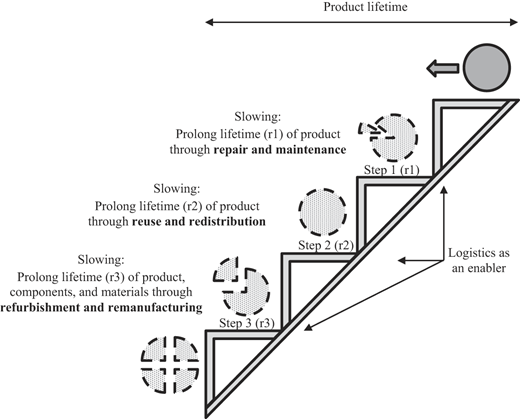
Building upon the literature presented above, the framework depicted in Figure 1 conceptualizes the purposes of this study. The framework displays three different aftermarket services that enhance circularity, as suggested by the Ellen MacArthur Foundation. Circular activities, depicted by steps in the framework, enhance circularity by prolonging lifetime at each level, which in turn slows the resource flows (Bocken et al., 2016), which will eliminate or at least decrease the input of new virgin raw materials and output in terms of waste to landfills and consequently lead to decreased material consumption (MacArthur, 2013).
The enhancement of circularity through slowing is determined in two ways. The first is the availability of the service, such as existing service offerings in terms of repair and maintenance, reuse and redistribution, and refurbishment and remanufacturing. The second is the efficiency of the service offering, such as the ability and quality of the service. The starting point is the products in use, represented in Figure 1 by the grey circle at the top. The overall aim of slowing operations is to keep the product on the staircase for as long as possible; that is, prolong the lifetime at each step. The availability of the service corresponds to the availability of the step, and the efficiency of the service corresponds to the length of the step. This framework is used as a basis in this study, and it conceptualizes slowing of resource flows where logistics operates to ensure both the availability and efficiency of the services.
3. Method
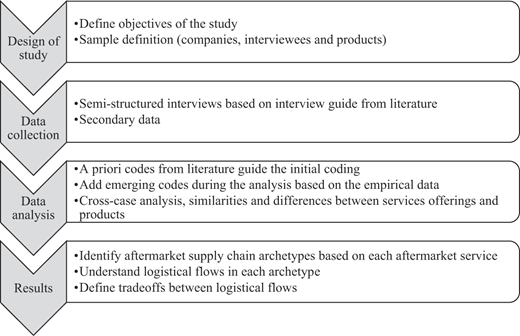
Given the explorative purpose of the study, a qualitative research approach and a multiple case study design were chosen to gather rich, in-depth data of circular activities and corresponding logistical flows and tradeoffs for enhanced circularity. A case study is appropriate in situations where numerous elements and dimensions of a subject need to be studied thoroughly (Yin, 2003), as observed in the formulation of the research purpose. The multiple case study design makes it possible to address the research purpose from different perspectives and industries and will therefore result in a broad variety of logistical flows and tradeoffs on logistics services for enhanced circularity. Moreover, a multiple case study offers an opportunity for a direct comparison of similarities and differences between the products, hence enabling a more generic conclusion to be reached (Eisenhardt and Graebner, 2007). Subsequently, this broad variety of requirements and tradeoffs can be categorized to draw more general conclusions based on more than one unit of analysis to add breadth and depth to the data collection (Yin, 2003). A well-designed research protocol is particularly important when performing a multiple case study. This study based its protocol on previous research within the same area as well as the frameworks of Eisenhardt (1989), as presented in Figure 2.
As presented in the research protocol, during the first stage, the research purpose and objectives were determined during several discussions between the authors, and the case products were selected based on purposive sampling and further discussions. In the second stage, previous literature was used to guide the interview guide, and data was collected through semi-structured interviews and secondary data. In the third stage, the data was analyzed based on a priori codes and emerging codes (Miles and Huberman, 1994), and lastly, the results were presented. The sampling, data collection, data analysis, and research quality are further developed hereunder.
3.1 Design of study and sampling
Purposive sampling was used to gain diversity among industries and products to qualify the data for a more transferable result. In purposive sampling, the researchers select each case based on characteristics that are determined as important (Patton, 1990). A sample of 13 products was chosen based on several criteria. The manufacturing company of the product shall have a stated intent about aftermarket potential and/or services, rely upon logistics in aftermarket offerings, be engaged in or aim towards a more circular economy, and have a prospect to consider an end-user perspective. The product shall have either a technical component or embedded hazardous or expensive materials; it can be sold through leasing or contracting, the buyer and the user can be two different entities, and it shall be durable. Details of the products and participants are presented in Table 1 – Case products and respondents' role.
3.2 Data collection
Semi-structured interviews were considered an appropriate method in this study to achieve the objective of exploring and understanding (Miles and Huberman, 1994; Gill et al., 2008) the requirements and tradeoffs of logistics for enhanced circularity in aftermarket supply chains. The semi-structured interview guide (Miles and Huberman, 1994) was derived from the conceptual framework from the literature review and aimed to encourage participants to elaborate freely about the aftermarket service offerings provided for each case product. The interview guide was derived from the framework in Figure 1 and included questions regarding actors, activities, location, challenges, logistics and customer per aftermarket service and product. Moreover, each product was categorized in terms of stationary or mobile, standardized or customized, lifetime, visibility during lifetime, owner of the product, type of customer, type of sales offering and the sales process. Moreover, the guide allowed the researchers and participants to discuss potential future solutions and what hampers further integration of circular activities in the aftermarket business.
The interviews took place onsite at each organization and were recorded with prior permission from the respondents. In addition to interview data, the organizations provided the researchers with additional secondary data in the form of company documents, including internal and external presentations and company announcements. This secondary data provided further insight, helped validate the information and enhanced triangulation of the findings from the case interviews (Miles and Huberman, 1994). To further strengthen the data quality, the documentation in the form of transliteration after each interview was sent to the participant for review.
3.3 Data analysis
The data analysis followed an abductive approach and was based on theoretical codes from the literature review, a priori codes, and additional inductive codes, emerging codes added during the analysis (Miles and Huberman, 1994). The a priori codes were based on the literature review and offered an initial way of exploring different aftermarket service offerings for the case products; see Table 2.
The transcripts from each interview were first coded based on the a priori codes. During the analysis, these codes were further evolved by adding emerging codes, where the aftermarket services were broken down into activities, tasks, actors and location of the service. Codes, both a priori and emerging codes, were then used to categorize supply chain archetypes based on the location of the service, logistics flows, actors and driver. These archetypes helped develop requirements and tradeoffs of logistics flows for enhanced circularity in use for the different case products. Each researcher performed separate analyses of the cases, which were summarized, matched and revisited during several iterations of the data collection process (Pratt, 2008).
3.4 Research quality
Data triangulation, such as different sources and methods used to investigate one area to enrich and confirm the information (Yin, 2003), was accomplished by combining three sources of data: semi-structured interviews, a literature review and secondary data sources. The accepted method from Riege (2003) (see Table 3) has been adopted to maintain a high level of accuracy and quality and secure the validity and reliability of findings from the case studies.
4. Findings
Analyzing the findings from aftermarket services revealed that, in order to enhance circularity in aftermarkets by slowing of resources flows, the traditional view of logistics as a process of strategically managing the sourcing, movement and storage of materials, parts and products (Lieb and Bentz, 2004) must be extended to include the resources performing the service, such as the people and their knowledge. In the present study, in accordance with Farris et al. (2005), we established three major logistics flows involved in the aftermarket supply chain – the three Ps: products, parts and people. All services are performed by service providers linked to the producer of the product, which could either be contracted or completely/partly owned service providers. For the sake of simplicity, the term service provider is used to describe all producer-driven service providers in this study. This extension can better capture the logistics requirements, as they are directly impacted by the people available to perform the service. Data from each aftermarket service is individually analyzed and further combined in the following section.
4.1 Aftermarket supply chain archetypes
The findings differentiate between ten different aftermarket service supply chain archetypes: six for repair and maintenance, four for reuse and redistribution and a combination of the first and the latter for refurbishing and remanufacturing.
4.1.1 Repair and maintenance
Repair and maintenance is considered a critical service offering to improve the utilization rate and quality of the products, prolong lifetime, and thereby improve customer satisfaction. It is offered for all case products in this study in different forms and quality, both planned and ad-hoc. The service offering usually demands substantial transportation, as it requires people, parts and/or products to be relocated each time the service is performed. Most companies offer service contracts for their products and single repair services upon request.
Service contracts are more common in business-to-business settings and for complex products; by contrast, in business-to-consumer settings and for simpler products, repair services are offered on a time-to-time basis. A service contract often denotes that the ownership of the product remains with the provider; this increase incentives for the provider to ensure the high quality of the product. Moreover, maintaining the ownership of the product usually involves a higher degree of visibility for the provider during the in-use phase. Visibility can be achieved either through connectivity or through contracts, including communication exchange during the in-use phase. All companies that uphold ownership of the product state that it is better for the client and the environment but more expensive for the company.
The compared results show that companies act on the tradeoff between the cost of logistics and the service versus the cost of the product; in this case, the cost of repair and maintenance relative to the value of the physical product itself. If the cost of the service is higher than the value of the product, the product is usually discarded directly and replaced with a new one instead of offering any repair or maintenance services. Used products are either returned by picking them up at the customer's location or returning them to the local company through a third-party logistics provider. Nonetheless, used products are usually discarded by the customer as part of their existing recycling alternatives.
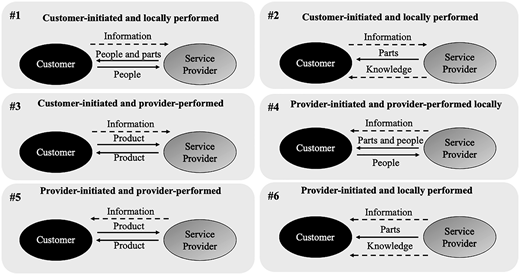
The service offering of repair and maintenance provided by the service provider and associated tasks of repair and maintenance for the case products can be differentiated between whether the service is performed at the customer's premises or the service provider's location, logistical flows and driver of the service. The case study identified six product-based supply chain archetypes. These archetypes are distinguished between the flow of product, parts, people, information and knowledge, and the initiator and location of the service; see Figure 3 and Table 4.
Repair and maintenance can be provided solely by the service provider or by co-creating the service with the customer. If the provider is solely responsible, the service offering can be either planned, such as service intervals and maintenance, or ad-hoc, based on disruptions in the normal usage and downtime of the product. Depending on the product and usage, repair and maintenance services differ in their complexity and severity. The services can be performed either at the customer's premises, transporting people and parts to the location, or at a service provider's location, where the provider or a 3PL is responsible for transportation of the product and availability of parts. For services co-created with the customer, the findings revealed two varieties: (a) teaching the customers, users or local people to perform the service or (b) letting the customer deliver and pick up the product at a service provider's location. Both the case study and secondary evidence show that the place where the repair operation is performed is linked to the product's complexity, volume and weight, and to some extent, the value of the product. A more complex service operation would entail that the service is more suited for the service provider's location, and a heavy and/or voluminous product is more suited to not be moved.
4.1.2 Reuse and redistribution
Reuse and redistribution are typically not seen as a large potential revenue stream for the investigated products. The service is offered for half of the case products in different forms; pure reusing – where the provider takes the product back and resells it – is only available for valuable products, such as trucks and forklifts, and is only present in business-to-business settings. Companies have no visibility of when products become obsolete, apart from those that are connected or have a service contract. For the investigated case products, the only time reuse and redistribution is realistic is at the end of a contract where the customer or provider collects the product and resells, leases or uses it as demo equipment.
However, there are several platforms for second-hand, peer-to-peer markets. Moreover, secondary evidence entails that many other players enter the second-hand market as middlemen, acquiring used products and reselling them. Other initiatives are sharing services, where the product can either be co-owned by several consumers or an external company. The existence and increase of peer-to-peer and middleman solutions denote an aggregated market demand and opportunities. Despite a growing second-hand market, providers have a hard time finding a business case. Nevertheless, all companies state that they would like to increase the level of reuse. As for repair and maintenance, there is a tradeoff between the cost of logistics and the service versus the cost of the product. If the cost of the service is higher than the value of the product, the product is usually discarded directly at the customer's premises.
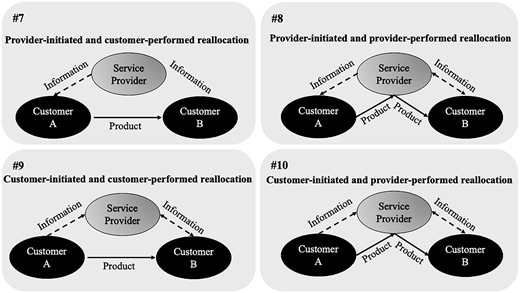
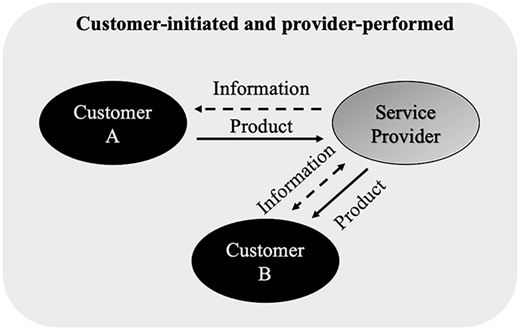
Reuse and redistribution from a provider point of view is summarized in Table 5 and in Figure 4. Given that the product location is always the user as a starting point, and the logistics flow is exclusively that of products, these two variables have been removed from the table, in contrast to the repair and maintenance table (see Table 3).
For more valuable products, the provider offers reuse and redistribution initiatives for the case products. The service provider can locate a new customer itself or through its global market function. The return can either be customer-initiated, given that there are some incentives, or provider-initiated. The transportation between each actor in the chain is usually performed by a 3PL or the customer. The biggest challenges in increasing reuse and redistribution mentioned in the case are finding a solid business case and interrupting when the product becomes obsolete.
4.1.3 Refurbishment and remanufacturing
Refurbish and remanufacturing is still rather undeveloped and considered by the investigated companies to be a complex service. It is usually not seen as a large market for the investigated products and is only available for more expensive, customized products that have a longer history of development. The service offering is only available for two of the case products: the forklift and the truck. However, secondary evidence highlights that other players have entered this market and offer take-back systems of used products and refurbishment and remanufacturing in order to resell on a second-hand market. As for repair and maintenance and reuse and redistribution, there is a tradeoff between the cost of logistics and the service versus the cost of the product. If it is more expensive to perform the service, then it is considered a better option to discard or sell the old product and purchase a new one.
Similar to repair and maintenance functions, refurbishment and remanufacturing operations provided by the service provider can be differentiated between whether the service is performed at the customer's premises or the service provider's location, logistical flows and driver of the service (see Table 6). Refurbishment and remanufacturing has many similarities with repair and maintenance, and if a product is refurbished or remanufactured for a new customer, it also has connections with reuse and redistribution as it would require a new customer to be found. However, the service is performed at the service provider's premises, which exclude archetypes 1, 2 and 6. Hence, archetypes would be a combination of 3, 4 or 5 with 7–10. For instance, archetypes 3 and 8 are depicted together as an example; see Figure 5 and Table 6.
Therefore, we conclude ten unique aftermarket supply chain archetypes for the three aftermarket services, where the former six present the perspective of repair and maintenance and the latter four represent the perspective of reuse and redistribution. For refurbishing and remanufacturing, it could either be solely archetypes 1–6 where the customer remains the same and a combination of 3, 4 or 5 with 7–10 where the customer is new.
5. Discussion
In order to address the research purpose of this study, a discussion of the findings and the literature is provided below, separated between flows and tradeoffs. Lastly, the discussion includes recommendations on logistics services to support the slowing of resource flows.
5.1 Identification of logistical flows
The three reverse cycles represented by aftermarket services can be separated between two distinguished streams. As noted in the empirical findings, the location of the service and the initiator of the service determine the logistical flows needed to perform the service. While Wagner et al. (2018) emphasize relationships between actors in the aftermarket archetypes, here, the emphasis is on logistical flows in the aftermarket supply chain. Hence, this study furthers their research by understanding logistical flows for aftermarket service based on its location and initiator. Moreover, Savaskan and Van Wassenhove (2006) highlight the important role of the collecting party in the process. We expand this view by understanding the importance of the initiator of the service and the choice of collecting party based on the location of the service. Table 7 provides an overview of the identified logistics flows for the three studied reverse cycles in the aftermarket.
The first stream – repair and maintenance with refurbishment and remanufacturing – has similar logistical flows, whereas the reuse and redistribution stream has its own. The distinction can be made as the former includes the flow of people, products, parts, information and knowledge, and the latter is solely comprised of the flow of products and information. Refurbishment and remanufacturing could potentially be a combination of the first and second flow if the product is intended for a new customer after service is completed. That would include a service operation of remanufacturing or refurbishment and then potentially finding a new customer and reallocating the product, like reuse and redistribution.
Whereas the traditional scope of logistics flow entails the physical flow of products and parts (Lieb and Bentz, 2004; Malindretos and Binioris, 2012), the focus on logistics and circularity in aftermarkets reveals two interesting findings. First, the involvement of the consumer, the people (Kumar et al., 2019) in the physical flow by either moving the item that is to be serviced or picking up spare parts used for the actual service operation. Moreover, keeping an inventory close to the customer can improve service level and decrease the environmental burden by eliminating unnecessary transportation (Gebauer et al., 2013). Second, as knowledge flows towards people who reside at the customer end, they need to be trained and provided with certain skills to execute the actual service operation, for example, the customer's self-maintenance. Involving the customer or local people in the service by creating a collaborative learning environment with the service provider can further eliminate transportation of service personnel and optimize the delivery of spare parts (Gebauer et al., 2013).
5.2 Logistical tradeoffs in aftermarket
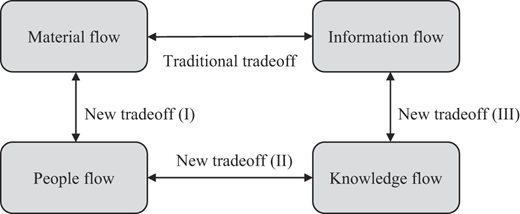
A traditional tradeoff in logistics is that of material flow (product and parts) and information flow (Closs et al., 1997; Iyer et al., 2007). For logistics in the aftermarket supply chain, derived from logistical elements in the findings, we have identified three additional tradeoffs that are important to providers and to the enhancement of circularity. The traditional and new tradeoffs are summarized in Figure 6.
The first new tradeoff is between material and people flow (I), where the material flow is contingent on the location of people performing the services. Transport of the product can be eliminated if the service can be performed where the product is located, i.e. at the customer's premises. A second tradeoff is between people and knowledge (II), where the service would require fewer centrally located people resources (service provider staff) to move to the customer's location if the knowledge of people local to the product (customers, users, local personnel such as postal carriers and janitors) on the aftermarket service task is increased. This would entail staff at the customer end being able to perform parts of or the whole service task onsite/locally, which would mean no service provider staff would be required to move between locations. Collaborative learning between the service provider and local people would increase the local knowledge dimension and decrease the necessity for people flow (Gebauer et al., 2013).
Third, there is a tradeoff between information flow and knowledge flow (III), where local people with a higher degree of knowledge or a “smarter” product would diminish the information required by the service provider. Thus, apart from handling knowledge-enhancing training and potentially helping with inventory handling, the service provider would be less involved in the service offering if local people performed the service at the product's location. Moreover, “smart” products and parts would automatically be able to share information and draw conclusions, which would reduce information necessity. As reported by Del Giudice et al. (2020), big data and digitalization as information enablers can deliver rich, accurate and valuable information and insights from the products during the in-use phase. This information can help increase customers' use of remote services in general and increase the knowledge of service needs for the local people.
These newly established tradeoffs between material/people (I), people/knowledge (II), and information/knowledge (III) are only applicable to repair and maintenance and refurbishment and remanufacturing, as reuse and redistribution is only contingent on the flow of materials and information.
5.3 Logistical flows to support slowing of resource flows
Minimizing the distance that materials (e.g. products and parts) and people travel is beneficial in most operations to improve efficiency (Slack et al., 1995), environmental performance (Pires, and Martinho, 2019) and therefore also recommended for logistics in the aftermarket supply chain. Derived from the list of logistical flows and the tradeoffs are logistics supporting the slowing of resource flows for each aftermarket service. Combining the three physical logistics flows; product, parts and people, with the tradeoffs provides a way to demonstrate how logistics can enhance circularity through two dimensions per flow: transport and data. The transportation dimension corresponds to the physical flow of people, products and parts. Data, on the other hand, capture the dimension of information and knowledge flow, where an increased level of data, either data from product and parts or data available locally, would increase knowledge and therefore decrease information necessity and transport.
5.3.1 Repair and maintenance/refurbishment and remanufacturing
Repair and maintenance are usually performed several times on a product during its lifetime, as both planned and ad-hoc services. In accordance with Farris et al. (2005), the aftermarket service supply chain entails a complex network of resources and materials that must be relocated for every service occasion. Hence, the service offering requires multiple phases of transportation, given that materials, both products and parts, need to be relocated each time the service is performed (Cohen et al., 2006; Wagner et al., 2018). This study has shown that repair and maintenance is mainly provider-driven, where the provider is responsible for arranging the service at its premises. This option requires the product to be relocated each time, which leads to redundant and substantial transports, thus being counterproductive to the environmental intention of the CE.
Although the flow of materials for refurbishment and remanufacturing is similar to repair and remanufacturing, there are two major differences between the two aftermarket services. First, refurbishment and remanufacturing is usually performed one or perhaps two times during a product's lifetime (Cohen et al., 2006; Farris et al., 2005). Second, refurbishment and remanufacturing usually entails more parts and highly knowledgeable mechanics than does the standard repair and maintenance operation. However, despite this background, logistics requirements to support the slowing of resource flows for refurbishment and remanufacturing are still the same as for repair and maintenance. A summary of these logistics requirements to support the slowing of resource flows for the two aftermarket services is provided in Table 8.
The study shows that if the service can be performed locally, it is beneficial from a logistics flow point of view, as it would decrease transportation and, hence, reduce environmental impacts (Colicchia et al., 2013; Slack et al., 1995). In this study, we endorse performing the service locally for a less-complex service operation where the provider can teach and instruct local people. For such a setup to function, co-creating the service is crucial (Gebauer et al., 2013; Vural et al., 2019). Co-creation requires training the local people, and preferably, a local inventory (Gebauer et al., 2013) or some sort of transportation of parts. Even though it requires transportation of parts, it eliminates the transportation of products and people. Increasing the level of connectivity of the product and parts enables solutions such as remote diagnostics of the product and sharing of information concerning the product health (Bocken et al., 2016; Parviainen et al., 2017). Such rich, accurate and valuable product data during the in-use phase is crucial for providing the right guidance to perform the service correctly (Del Giudice et al., 2020).
Co-creation where the service is performed locally is not always achievable for complex service operations. Teaching local people to perform complicated service operations can require substantial resources from the provider and would probably not benefit the provider or customer, especially when a complex service will only be performed once or twice. An increase in connectivity would enable better planning of the service beforehand and ensure the right knowledge and parts at the local warehouse, which could eliminate unnecessary transportation of products and parts (Martens and Mueller-Langer, 2018).
5.3.2 Reuse and redistribution
Reuse and redistribution prolongs the lifetime of a product without any modifications of the products and is therefore usually the better alternative compared to the other reverse cycles (MacArthur, 2013). However, it is complex for the provider, as information about when the product becomes obsolete is usually unavailable (Nußholz, 2018). Moreover, it is highly unlikely that a customer will return the product without any sort of incentive (Theodore et al., 2005), so the service is driven by the customer's willingness to co-create with the provider based on the value the customer places on the postulated incentive.
According to this study, there are two ways providers can obtain this information; either through connectivity (Martens and Mueller-Langer, 2018) or through contracting, in accordance with Theodore et al. (2005) and Nußholz (2018). We recommend that providers access product information throughout its lifetime through connectivity and/or contracting and intercepting when the product is obsolete. The provider shall locally initiate redistribution to new customers and/or other solutions. Ultimately, reuse and redistribution have the potential to eliminate transportation if the provider can enable direct redistribution between Customer A and Customer B.
6. Conclusions
The purpose of this paper was to identify logistical flows and tradeoffs to enhance circularity by slowing resource flows in aftermarket supply chains. The study highlights tradeoffs in the aftermarket regarding material, people, information and knowledge. These tradeoffs can be used to better understand how to enhance circularity by slowing of resource flows. The study shows that, for aftermarket services, we must extend the traditional view of logistics, the flow of material and products, to also include the flow of knowledge, information and people. The analysis suggests that repair and maintenance and refurbishment and remanufacturing have similar logistical flows and can be categorized into two scenarios, depending on where the service is performed: either locally at the customer's site or at a provider-operated facility, and who is initiating the service: the customer or the service provider. Logistical flows in the case of reuse and redistribution solely concern the flow of products and information and are therefore separated from the other two services and have a more similar flow to a traditional view of logistics.
There are especially two aspects that set the condition for offering novel insights in this study. First, whilst the logistics literature is predominated by a conception of time being positively associated with speed, e.g. responsiveness, fast deliveries and just-in-time, this study raises a question about this fundamental conception of time by regarding “slowing” as a favorable condition to improve circularity. Second, as regards the context investigated, compared to the literature on commercial returns in retailing and closed-loop supply chain concerning end-of-use or end-of-life products and materials, this study concerns a servitized, product-based context. Specifically, the focus is on the in-use phase of the products and the associated services that are an integrated part of the customer offering. In combination, this new conception of time and focus on an emerging context sets the foundations for three major contributions of the study. The extension of the traditional logistical flow of product, parts and information with complementary dimensions of “people” and “knowledge.” Derived from this new dimension, the second main contribution outlines a set of three new tradeoff situations that should be considered for logistics in general and the aftermarket service supply chain in particular. More specifically, it is suggested that the conventional material-information flow dimension in logistics should be extended by people and knowledge: first, the traditional material dimension is given more depth to include people as a major resource that needs to be transported instead of parts or products; second, information is given more depth by suggesting that knowledge (such as customer's self-repair and remote diagnosis) can reduce or even eliminate the need to move either parts, products or people, hence contributing to lower logistics costs; third, a tradeoff between people and knowledge (such as the cost of educating customers and quality requirements). The categorization of logistical flows and the established tradeoffs provide practitioners with an overview of recommended logistics setups that create favorable conditions for slowing resource flows.
For managerial implications, professionals engaged in development and offering product-based services in the aftermarket or in-use phase of products are provided with people and knowledge as distinct feature of a logistics service provision. This serves as a key enabler to offer a certain level of customer co-creation and self-service, which in turn supports the environmentally sustainable agendas of many companies, which recently have become more offensive and calling for new solutions. First, slowing can enhance circularity of products and materials by offering logistics services that complement information and materials with people and knowledge as key design parameters. Second, in particular knowledge intensity at the customer end can reduce transportation of e.g. spares and service personnel, which in turn increases the energy efficiency of the logistics content of the service offering. This is fully in line with experience from the COVID-19 pandemic which has shown that remotely managed services yield benefits that are greater and more permanent than an immediate response to a crisis situation. The findings and impactions presented here can be used to develop such offerings. For policy makers, the findings can further strengthen the shift in public procurement of aftermarket and circular services from “best economic” to more explicitly include the features and benefits of slowing in procurement criteria of governmental institutions.
Future research could elaborate on logistics gap analysis to help managers design their aftermarket to enhance circularity. Second, the study could extend the scope to the complete service offering, of which logistics is one part. Finally, future research should further analyze which actor performs the logistics services. This can partly be done by considering the provider-customer co-creative efforts but should also include the potential of peer-to-peer solutions in the aftermarket for product-based services.
The article is funded by the LTS Logistik & transportstiftelsen and Chalmers Area of Advancer Production.