


This research aims to investigate how operational performance in manufacturing and service sectors is affected by quality management (QM) strategies. Aiming to synthesize existing knowledge, identify research gaps and build a comprehensive framework for QM in today's digital environment, the study investigates the convergence of established approaches, TQM and Lean Six Sigma, with emerging digital frameworks, including Industry 4.0 (I4.0) and Quality 4.0 (Q4.0).
Fifty-seven peer-reviewed Scopus-indexed papers were examined using structured search criteria and predefined inclusion criteria employing methodologies of systematic literature review (SLR). Including modern industrial data from McKinsey and Toyota helped to deepen the theoretical study by combining scholarly theory with useful applications.
By enhancing efficiency, quality and customer satisfaction, QM techniques greatly improve operational performance. Service industries rely on customer-centered metrics; manufacturing sectors usually stress process optimization and defect reduction. While companies generally agree that digital technologies such as IoT and AI-driven analytics have transformative power, scholarly research shows inadequate practical integration with conventional QM practices, exposing significant research prospects.
The extent of the research is limited by depending just on Scopus database resources. Future studies should evaluate long-term Q4.0 integration effects, empirically validate the suggested paradigm and investigate socio-technical aspects in several industry settings.
This work distinguishes industry-specific performance measurements and links academic insights with pragmatic organizational experiences, so it uniquely aggregates scattered QM material. It offers a thorough maturity-based road map for academics and professionals aiming to efficiently integrate digital technology and QM for operational excellence.
1. Introduction
With roots in the pioneering work of Shewhart, Juran, Deming, and Taguchi, quality management (QM) has long been a central driver of organizational performance. From early statistical quality control to comprehensive systems such as Total Quality Management (TQM), Six Sigma, and Lean Six Sigma (LSS), QM approaches have evolved over decades to reduce defects, streamline processes, and enhance customer satisfaction (Antony et al., 2022; Alkhatib et al., 2025a; Haridy et al., 2025). Yet, the growing complexity of global supply chains, rising consumer expectations, and disruptive digital technologies call for renewed evaluation of conventional QM systems (Hazen et al., 2014).
Digital transformation concepts such as Industry 4.0 (I4.0) are characterized by automation, artificial intelligence (AI), real-time analytics, and cyber-physical systems have begun shaping how QM is applied (Sader et al., 2022). This shift has contributed to Quality 4.0 (Q4.0), which extends established QM frameworks by selectively integrating digital tools to strengthen data-driven decision-making, predictive analytics, and proactive quality control (Alsadi et al., 2025). In this study, I4.0 and Q4.0 are not examined as stand-alone paradigms but are discussed only where they intersect with quality management practices and operational performance, ensuring that the central focus remains on QM.
Although theoretical debates on Q4.0 are emerging, empirical research measuring its impact on operational performance is still lacking (Bazan and Estevez, 2022). Moreover, the integration of I4.0 with standard QM approaches, especially the integration of LSS with digital transformation, has not been adequately investigated.
QM's benefits for operational performance are widely acknowledged; however, the literature remains fragmented regarding which techniques drive the most significant improvements across industries. Service-oriented firms prioritize customer satisfaction, responsiveness, and accessibility, while manufacturing organizations emphasize cost efficiency, process optimization, and defect reduction (Chiarini, 2020). There is a need to consolidate evidence and identify best practices for enhancing operational outcomes through modern QM methods, including their interaction with digital technologies (Madsen, 2019). Furthermore, previous systematic reviews have examined QM and performance, but many have insufficiently addressed emerging paradigms such as Q4.0 or their interplay with established approaches like LSS (Mohsin et al., 2025). Sectoral comparisons are also scarce, with most studies failing to differentiate adequately between manufacturing and service contexts (Siefan et al., 2025).
Consequently, this study addresses these gaps through a systematic literature review (SLR). The SLR approach ensures transparency, reproducibility, and comprehensive synthesis (Rogge et al., 2024; Alsadi et al., 2025), making it well-suited for evaluating intersections between QM, digital transformation, and operational performance (Büyüközkan et al., 2024).
Given the small but growing number of studies examining Q4.0, LSS, and I4.0 together (Antony et al., 2024; Oliveira et al., 2025; El Manzani et al., 2025), this research proposes an integrated framework linking conventional and digital QM practices. Additionally, the study highlights sectoral distinctions. For instance, the manufacturing sector focuses on tangible outputs, standardized workflows, and cost–quality trade-offs. In contrast, the service sector emphasizes customer interaction, variability, and personalization. Analyzing both sectors separately provides context-specific insights and actionable guidance.
Specifically, this study addresses the following research questions:
What are the manufacturing and service industries' most used operational performance indicators?
In the existing literature, what is the documented correlation between QM and operational performance metrics across these sectors?
What is the relative prevalence of traditional QM frameworks (e.g. TQM, Lean, Six Sigma) compared to emerging digital paradigms (I4.0, Q4.0) in the literature linking QM to operational performance?
How do the findings compare with industry reports, and what are this study's theoretical and practical implications?
The article is structured as follows: Section 2 outlines the research gaps, Section 3 presents the SLR methodology, Section 4 analyzes publication trends and industry focus, Section 5 synthesizes findings, Section 6 discusses future research directions, and Section 7 concludes with key insights and limitations.
2. Research gaps and justification
Despite a growing body of literature linking QM practices to operational performance, the existing evidence base remains fragmented and uneven. Established reviews and empirical studies have provided valuable insights into sector-specific applications, such as Lean and Six Sigma in manufacturing (Antony et al., 2022) and TQM-driven customer satisfaction in services (Bouranta et al., 2017), but most adopt a single-sector focus. This limits transferability and overlooks important contextual differences between manufacturing environments, where tangible outputs and process standardization dominate, and service contexts, where customer interaction, variability, and experience quality are central (Psomas and Jaca, 2016).
Moreover, while some recent works have begun exploring the intersection of conventional QM and emerging digital paradigms (Liu et al., 2023; Carnerud et al., 2025; Alkhader et al., 2025; Skalli et al., 2025; Alkhatib et al., 2025b), these efforts are often conceptual in nature or narrowly concentrated on specific technologies, such as IoT in manufacturing, without systematically examining their joint influence with established frameworks like TQM, Lean, and Six Sigma. Empirical studies that map how digital transformation reshapes sector-specific operational performance indicators, for example, flexibility and resilience in manufacturing or accessibility and personalization in services, remain rare.
Existing systematic reviews (Sfreddo et al., 2021; Serra et al., 2024; Mohsin et al., 2025) also reveal methodological shortcomings: limited database coverage, inconsistent inclusion criteria, and insufficient comparison of industry-specific operational metrics. These gaps weaken replicability and leave critical areas, such as the socio-technical enablers of digital QM adoption (leadership commitment, cultural readiness, employee empowerment), largely unexplored, despite their acknowledged influence on operational performance outcomes (Antony et al., 2024).
This study directly addresses these gaps through a transparent, replicable, and comprehensive SLR methodology. By applying predefined criteria and structured synthesis, it critically evaluates the evidence base, identifies thematic patterns, and uncovers underexplored intersections across QM, digital transformation, and operational performance. Specifically, this study distinguishes itself from prior reviews in four ways:
Scope and Integration: Unlike previous reviews that examine QM tools in isolation (Sfreddo et al., 2021; Saihi et al., 2023; Carnerud et al., 2025; Oliveira et al., 2025), this analysis integrates traditional QM frameworks (TQM, Lean, Six Sigma) with emerging digital paradigms (I4.0, Q4.0), offering a holistic view of their combined effects on operational performance.
Sectoral Differentiation: It explicitly compares manufacturing and service sectors, offering sector-specific insights on how QM practices and performance indicators vary by context, which is an area consistently underrepresented in the literature.
Focus on Operational Metrics: It stresses operational performance measures (e.g. cost efficiency, productivity, adaptability, resilience) rather than broad organizational performance, therefore allowing more practical insights for practitioners.
Bridging Theory and Practice: The study combines and contrasts academic literature with industrial reports such as Toyota case studies and McKinsey Smart Quality, therefore integrating academic insights with practical applications and barriers.
3. Methodology
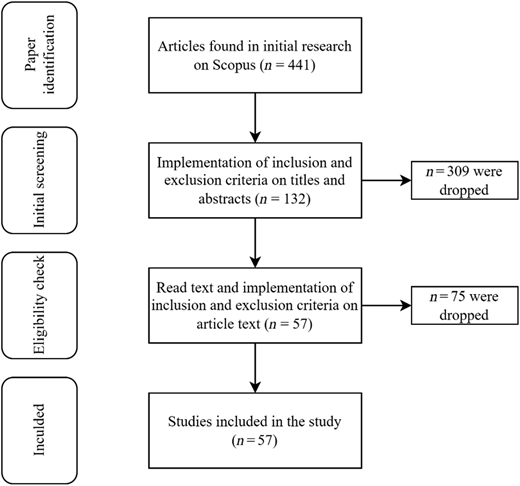
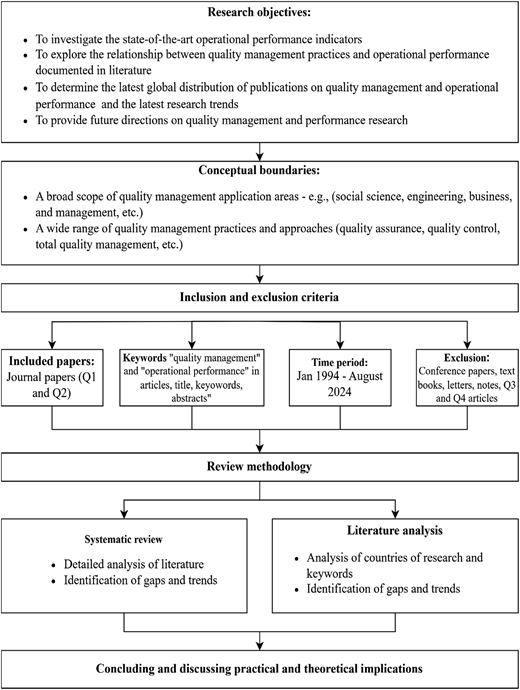
This study employs an SLR approach to identify, evaluate, and synthesize research on the relationship between QM practices and operational performance. The SLR methodology is selected for its transparency, structured approach, and ability to minimize bias, thereby enhancing the overall rigor and reproducibility of the review (Danese et al., 2018). When synthesizing findings, greater emphasis was placed on studies demonstrating methodological robustness, analytical validity, and high-quality results. The review procedure followed established SLR guidelines (Wolfswinkel et al., 2013; Lameijer et al., 2022). Microsoft Excel was used to categorize and analyze the selected literature. Figure 1 illustrates the systematic review process.
The Scopus database was chosen as the primary source for article retrieval due to its extensive coverage of high-quality journals, books, and reviews (Aghaei Chadegani et al., 2013). To ensure consistency and reliability, the review was limited to peer-reviewed journal articles published in English, which undergo rigorous peer evaluation (Garza-Reyes et al., 2016). Conference papers and books were excluded to avoid variability in peer-review rigor and accessibility (Piran and Tran, 2024). Restricting to English-language publications also minimized translation bias and interpretation errors (Almahasees and Husienat, 2024).
The search string included the terms “quality management” and “operational performance” within titles, keywords, and abstracts (Alsadi et al., 2025), ensuring focus on QM practices linked to performance. This search also captured related QM concepts such as QC, QA, TQM, LSS, and Q4.0. An initial pool of 441 articles was identified, of which 132 met the inclusion and exclusion criteria after screening. Following a detailed review, a final sample of 57 peer-reviewed articles was deemed relevant to the study's aims. Figure 2 presents the screening and selection procedure. Figure A1 in the Appendix shows a mind map that illustrates the most widely used sources and journals.
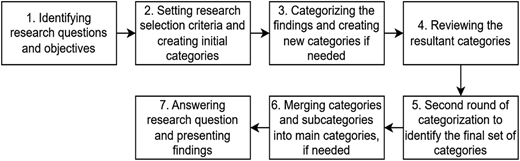
An inductive category formation process (Mayring, 2014; Lameijer et al., 2022) was applied to structure findings systematically. This allowed categories and themes to emerge organically from the data while avoiding researcher preconceptions (Arlinghaus et al., 2024). Although common in qualitative research, this approach was adapted for the SLR to ensure categories accurately reflected the literature. The process involved defining research objectives, applying inclusion criteria, and iteratively categorizing findings. Categories were refined, merged, or subcategorized where necessary to minimize bias and improve validity. Figure 3 illustrates the categorization process.
4. Descriptive analysis of literature
A descriptive analysis was conducted to map existing research on QM and operational performance, highlighting publication trends, geographical distribution, industry focus, and keyword networks. While descriptive statistics provide an overview, interpretive discussion helps reveal how external factors, such as the rise of I4.0, global sustainability imperatives, and shifts in consumer demand, have shaped the evolution of QM research (Madsen, 2019).
4.1 Distribution of research papers over time
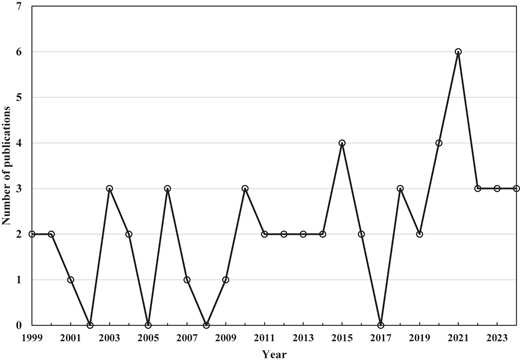
The first study linking QM and operational performance appeared in 1999 (Samson and Terziovski, 1999). Major publication peaks occurred in 2003, 2015, and 2021. The 2003 surge reflects greater organizational adoption of Lean and Six Sigma to improve efficiency during economic uncertainty (Shah and Ward, 2003; Terziovski et al., 2006). The rise in 2015 corresponds to the uptake of digital technologies and I4.0, which prompted renewed customization of QM for data-driven contexts (Madsen, 2019). By 2021, publication rates reached their highest level, reflecting intensified interest in resilience and sustainability, particularly during the COVID-19 pandemic (Bakhtiar et al., 2023). These patterns underscore QM's dynamic trajectory, shifting from a primary focus on defect reduction in the early 2000s to encompassing digital transformation and sustainability by the 2020s, thereby positioning the field for continued and increasing scholarly attention worldwide (Liu et al., 2023). Figure 4 shows annual publication trends.
4.2 Geographical distribution of research papers
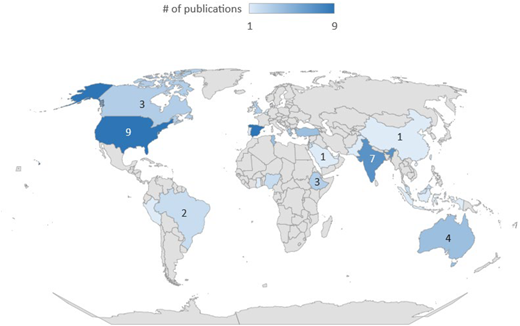
Research spans 29 countries, with Asia producing 44.8% of publications, followed by Europe (24.1%) and the US (14%). India's strong contribution reflects its manufacturing base, especially automotive, textiles, and pharmaceuticals, alongside a growing service quality focus (Gunasekaran et al., 2019). Spain has concentrated on service and hospitality, while the US emphasizes high-tech manufacturing and advanced quality tools (Clegg et al., 2013).
These patterns highlight how national industrial structures shape QM scholarship. Countries with manufacturing dominance (e.g. India, US) focus on defect reduction and efficiency, while service-driven economies (e.g. Spain) emphasize customer satisfaction and innovation (Wiengarten et al., 2013; Alsawafi et al., 2021). Such diversity suggests opportunities for cross-country collaboration that combine manufacturing expertise with service excellence. Figure 5 illustrates the geographic distribution of research on QM and operational performance.
4.3 Distribution of research per industry type
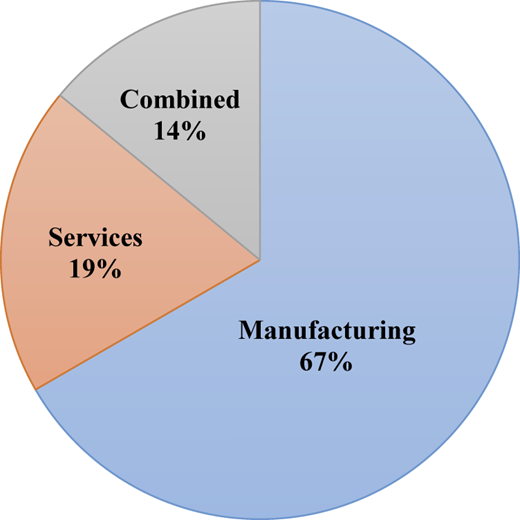
Two-thirds (67%) of reviewed studies address manufacturing, especially automotive, electronics, textiles, and machinery, consistent with QM's historical alignment with defect control and productivity (Bakhtiar et al., 2023). A smaller group addresses oil, energy, and power plants, reflecting QM's growing role in safety and reliability (Gunasekaran et al., 2019). In comparison, service industries account for 19% of studies, with healthcare, hospitality, and retail showing increasing interest in QM for customer experience and service design (Youssef and Youssef, 2018; Madsen, 2019).
Moreover, multi-sector studies (14%) demonstrate the universal relevance of QM while acknowledging sector-specific adaptations, such as customer variability in services versus process standardization in manufacturing (Saleh et al., 2018; Sciarelli et al., 2020). Figure 6 shows the sectoral distribution.
4.4 Keywords
A keyword co-occurrence analysis was performed using VOS viewer to uncover dominant themes and research trends. Out of an initial set of 68 frequently occurring keywords, seven primary clusters emerged:
Operational performance and QM (purple): This central cluster connects strongly to other clusters, indicating its foundational role. Keywords such as “operational performance,” “manufacture,” and “human resource management” are closely linked with traditional QM and modern performance metrics (Udofia et al., 2021; Ben Salem, 2023; Adem and Virdi, 2024).
Manufacturing and quality (red): This group emphasizes implementing QM practices in industrial settings. “Manufacturing companies,” “design/methodology/approach,” and “manufacturing” co-occur with terms like “process management” and “TQM,” highlighting methodological applications (Sahoo, 2021; Acquah et al., 2023).
Organizational culture and sustainable development (cyan): This peripheral yet growing cluster includes “organizational culture,” “environmental management,” and “sustainable development.” Its linkages to central terms like “performance” and “surveys” suggest a shift towards more integrative and sustainability-focused approaches to QM (Niyi Anifowose et al., 2022; Khalfallah et al., 2022; Bakhtiar et al., 2023).
Financial performance and manufacturing organizations (green): Terms such as “financial performance,” “firm performance,” and “product innovation” are concentrated in this cluster. Its connections to “business performance” and “innovative approaches” reflect the economic implications of quality initiatives (García-Fernández et al., 2022; Adem and Virdi, 2024).
TQM and company performance (orange): Anchored by “total quality management,” this cluster spans various domains. It connects intensively with “quality,” “quality control,” and “performance,” illustrating how TQM serves as a unifying concept bridging classical and contemporary quality paradigms (Ben Salem, 2023; Adem and Virdi, 2024).
Customer satisfaction and structural equation modeling (blue): “Customer satisfaction,” “innovation,” and “PLS-SEM” highlight the use of structural modeling techniques to assess quality outcomes. The links to “total productive maintenance” and “TQM” underscore an operational and measurement-driven perspective (Acquah et al., 2023; Alshahrani and Husain, 2023).
Quality control and performance (yellow): This cluster includes terms like “quality assurance,” “ISO 9001,” “cluster analysis,” and “electronics industry.” It forms key connections with central themes such as “quality control” and “performance,” reinforcing the technical side of QM implementations (Parast and Safari, 2022; Niyi Anifowose et al., 2022).
These clusters confirm QM's breadth, ranging from classical TQM to sustainability and digitalization. Emerging terms such as “sustainability”, “agility”, and “Q4.0” indicate ongoing shifts toward integrating QM with broader organizational goals (García-Fernández et al., 2022). Furthermore, country-specific nodes such as “Spain” and “Ethiopia” suggest a growing regional diversity in QM research, which may indicate localized implementations or comparative studies in national contexts. “Total quality management” and “operational performance” are the most prominent and highly interconnected nodes, serving as central hubs that link disparate research directions. For instance, “customer satisfaction” bridges methodological studies (e.g. SEM) with operational dimensions, suggesting that customer-oriented outcomes are increasingly embedded in QM frameworks in both manufacturing and services (Bouranta et al., 2017). Figure 7 illustrates the keyword co-occurrence map.
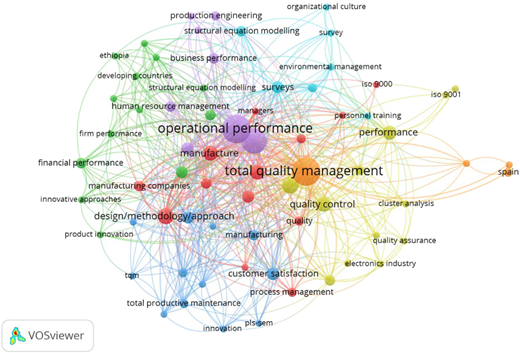
Keyword analysis on the QM and operational performance publication. Source: Authors’ own work
Keyword analysis on the QM and operational performance publication. Source: Authors’ own work
4.5 Interpretive insights and link to research questions
The descriptive analysis reveals that manufacturing remains the most studied domain, while services are attracting growing attention (Alsadi et al., 2025). The geographical dispersion of research suggests that unique regional factors, industrial focus, policy frameworks, and economic drivers can shape how QM is conceptualized and applied (Clegg et al., 2013). Moreover, the temporal distribution points to shifting interests, from early concerns with defect minimization to the recent emphasis on digital transformation, sustainability, and resilience (Bakhtiar et al., 2023).
These descriptive insights directly inform the study's research questions: identifying common performance metrics (RQ1), clarifying sector-specific correlations between QM and performance (RQ2), mapping the balance of traditional versus digital QM frameworks (RQ3), and providing context for comparison with industry reports (RQ4). Thus, the descriptive insights set the stage for a deeper exploration of how diverse QM practices specifically influence operational outcomes and guide future research toward underexamined areas such as quantitative analysis of Q4.0 and I4.0–LSS integration (Bazan and Estevez, 2022).
5. Results and discussions
This section synthesizes the key insights from the selected literature, tying them to the research questions (RQ1–RQ4) posed in the introduction. First, the study discusses how researchers conceptualize and apply operational performance indicators in the manufacturing and service sectors (Section 5.1), then examines the impact of QM practices in both contexts (Section 5.2). Section 5.3 presents a discussion on the prevalence of traditional QM frameworks compared to emerging digital paradigms in the QM and operational performance literature. Finally, Sections 5.4 and 5.5 compare the study findings with those of leading industry reports like McKinsey and Toyota and provide theoretical and practical implications. Figure 8 proposes a unifying conceptual framework linking QM practices, digital technologies, and operational performance.
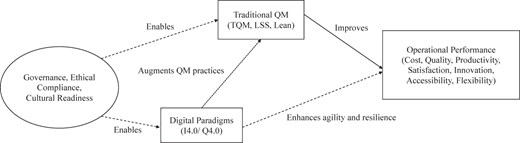
Conceptual framework linking QM practices, digital technologies, and operational performance. Source: Authors’ own work
Conceptual framework linking QM practices, digital technologies, and operational performance. Source: Authors’ own work
5.1 Operational performance indicators
The reviewed literature underlines operational performance's complex nature, which encompasses tangible metrics (cost, time, productivity) and intangible metrics (customer satisfaction, innovation). As organizations strive to gain a competitive advantage in volatile environments, measuring operational performance accurately becomes paramount (Adem and Virdi, 2024). Nonetheless, industry-specific variations persist, necessitating contextually tailored metrics (Tortorella et al., 2020). Table 1 summarizes the indicators identified in the manufacturing and service sectors.
Operational performance indicators and tools
| Manufacturing industries | ||
|---|---|---|
| Indicator | Tools for fulfilling indicators | References |
| Cost |
| Chiarini (2020), Alzoubi et al. (2022), Bakhtiar et al. (2023), Antony et al. (2023), Lina (2022), Marcos and Coelho (2022), Moktader et al. (2020), Adesina and Lyelolu (2024), Palumbo et al. (2021), Werner et al. (2021) |
| Quality |
| |
| Time |
| |
| Productivity |
| |
| Flexibility and resilience |
| |
| Innovation |
| |
| Service industries | ||
|---|---|---|
| Indicator | Tools for fulfilling indicators | References |
| Customer satisfaction and acquisition |
| Parast and Safari (2022), Fulp (2018), Ivars-Baidal et al. (2021), Buer et al. (2021), Stylos et al. (2021), Aalders (2023) |
| Accessibility |
| |
| Service quality |
| |
5.1.1 Manufacturing industry
Cost: Traditionally, cost minimization was a focal objective (Antony et al., 2022). However, contemporary approaches now emphasize cost optimization to balance resource expenditure with value creation throughout the supply chain (Bakhtiar et al., 2023). To achieve cost reductions while maintaining value, organizations deploy Lean tools (e.g. 5S and Value Stream Mapping (VSM)) to eliminate waste and streamline processes, directly cutting unnecessary costs. In parallel, Six Sigma techniques, such as statistical process control (SPC) and failure mode and effects analysis (FMEA), prevent defects and reduce the cost of poor quality by reducing rework and scrap (Alzoubi et al., 2022).
Quality: Beyond satisfying needs, quality includes building consumer value, improving brand reputation, and guaranteeing sustainability (Antony et al., 2023). Organizations that give quality top priority often have lower failure rates and improved customer loyalty (Udofia et al., 2021; Lina, 2022). In practice, firms use control charts to monitor process stability in real time and employ FMEA to identify potential failure points, thereby maintaining high conformance quality. Ensuring upstream quality through robust supplier QM (e.g. enforcing ISO 9001 standards) further prevents defects at the source, reinforcing overall quality performance. Moreover, soft QM practices such as employee training and empowerment in the TQM culture are critical to sustaining improvements, as an engaged workforce can proactively address quality problems before they escalate (Antony et al., 2023).
Time: Speed remains a vital metric, but studies now emphasize responsiveness to dynamic market demands (Moktader et al., 2020). Rapid reconfiguration of production lines or supply chains can be a competitive advantage (Adesina and Iyelolu, 2024). Lean techniques such as just-in-time (JIT) manufacturing and single-minute exchange of dies (SMED), which cut changeover times and reduce surplus delays, help manufacturers increase delivery speed and agility. By mapping processes end-to-end with VSM, firms can discover and remove bottlenecks, enabling speedy reconfiguration of operations needed to meet client requirements. Furthermore, many organizations combine real-time tracking and scheduling systems (a Q4.0 practice) to improve response times (Moktader et al., 2020).
Productivity: While optimizing production per resource is crucial, current studies show the need for balancing productivity targets with employee well-being and environmental goals (Palumbo et al., 2021). To drive productivity safely, organizations integrate QM frameworks with specific tools. One such method is 5S, which increases operational efficiency by improving workplace organization and lowering finding or handling times. Likewise, total productive maintenance (TPM) emphasizes proactive operator participation and equipment maintenance to stop breakdowns. This method reduces faults, shortens manufacturing cycles, and raises machines' uptime, improving production output. Programs for Kaizen, or constant improvement, help to sustain production increases by motivating little, daily improvements without sacrificing worker morale. These methods, taken together, guarantee significant and long-lasting increases in output over time.
Flexibility and resilience: Resilience, coupled with flexibility, has become an increasingly important performance indicator that helps companies deal with disruptions (Werner et al., 2021). High flexibility calls for changeable procedures and an adaptive organizational structure. In practice, manufacturers typically encourage flexibility by cross-training staff members and enabling them to switch positions or change processes as necessary, assuring that the workforce can rapidly realign as situations demand. Lean techniques such as cellular manufacturing and pull scheduling (Kanban) also enhance flexibility by enabling fast production volume or product mix adjustments. To build resilience, companies employ risk-management tools such as FMEA to anticipate potential failure modes and supply chain disruptions, allowing preventive measures that mitigate downtime. They also invest in supplier QM to ensure reliable input during unexpected disruptions. A people-centric quality culture is indispensable for resilience. Studies show that leadership support and employee involvement help organizations respond creatively to crises, moderating the impact of technical problems.
Innovation: Although an emerging measure, innovation is a forward-looking indicator of long-term viability (Khalfallah et al., 2022). Manufacturing firms that embed research and development or digital transformations into their operations often sustain a competitive edge (Khalfallah et al., 2022). Organizations implement continuous improvement and suggestion systems (e.g. quality circles) to foster innovation, encouraging employees at all levels to propose creative solutions and process enhancements. Leadership practices that reward experimentation and the adoption of new Q4.0 tools, such as data analytics or IoT-based process monitoring, further drive innovative operational improvements (Antony et al., 2023). In addition, methods like design for quality and reliability (including Quality Function Deployment (QFD) and Design FMEA) ensure that new product and process designs incorporate lessons from past quality initiatives, embedding innovation into the development cycle.
The various indicators above underscore the multiplicity of manufacturing objectives, where companies must harmonize efficiency, quality, and responsiveness. Each operational outcome is underpinned by targeted QM tools or practices, such as cost and time efficiency through lean techniques or resilience through risk management and innovation programs. This synthesis addresses RQ2 by demonstrating how manufacturing-focused measures, while traditionally centered on tangible, process-centric metrics, increasingly incorporate softer dimensions (e.g. innovation, resilience) supported by corresponding QM initiatives to remain competitive.
5.1.2 Service industry
The service sector's high level of customer interaction necessitates metrics that capture intangible elements, although many traditional indicators, like cost, time, and quality, still apply (Rathore et al., 2020). Three additional metrics stand out:
Customer satisfaction and acquisition: Customer satisfaction is central to service performance, customer retention, brand loyalty, and positive word-of-mouth (Parast and Safari, 2022). By focusing on customer-centric metrics, service organizations improve their market positioning (Buer et al., 2021). To monitor and improve satisfaction, service firms commonly use customer feedback tools (e.g. surveys, Net Promoter Score) and complaint management systems to gather insights into service quality shortfalls. Based on this feedback, continuous improvement practices are then applied to the service processes. For example, root cause analysis of complaints might lead to service workflow changes or employee training to address recurring issues. Frontline employees are often empowered to solve customer problems in real-time (e.g. granting service recovery gestures or customizing solutions), directly boosting responsiveness and customer happiness. This empowerment, coupled with ongoing training in customer service skills, has raised satisfaction levels and improved customer acquisition through referrals and repeat business (Parast and Safari, 2022). In essence, a service culture that prioritizes customer feedback and employee initiative is a key quality practice to achieve high satisfaction and growth.
Accessibility: Modern inclusivity demands that services be universally accessible, spanning physical spaces, digital platforms, and organizational policies (Ivars-Baidal et al., 2021). This broadens potential customer bases and aligns with the principles of social responsibility (Stylos et al., 2021). Service companies must employ practices such as inclusive service design, ensuring facilities and websites are usable by people of all abilities, and multi-channel delivery strategies to improve accessibility. For example, banks and government services have adopted in-person and online platforms, with quality controls to ensure each channel meets standards for ease of use and reliability. Regular accessibility audits and user experience testing can be viewed as QM tools in this context, identifying barriers (e.g. long wait times for disabled customers or website navigation issues) to improve processes. These efforts are often part of a continuous improvement program focused on accessibility, ensuring that policy or technological updates further reduce access barriers (Stylos et al., 2021).
Service quality: Building on classical frameworks that include responsiveness, reliability, and empathy, service quality is increasingly viewed as a holistic driver of customer experience and financial performance (Pham, 2020). An organizational culture that supports continuous quality improvements fosters a virtuous cycle of satisfied customers, profitability, and further reinvestment (Aalders, 2023). To manage service quality, firms often use service blueprinting to map the service delivery process and identify failure points or delays that affect quality. This visualization, analogous to a manufacturing process map, helps managers redesign service processes for greater reliability or speed. Statistical quality control techniques can also be applied to services. For example, monitoring average wait times or error rates in service transactions via control charts to ensure consistency. However, given the human-centric nature of services, people-centered practices are paramount. Continuous training programs improve employees' service skills, such as improving responsiveness and empathy.
Furthermore, employee empowerment allows employees to adapt to customer needs quickly, preventing minor service issues from escalating. Companies can implement internal quality circles or cross-departmental teams to brainstorm improvements in service delivery, reflecting TQM's teamwork approach. These practices and regular measurement of service quality metrics help maintain high service standards. Studies have noted that a culture of quality in services, where staff at all levels are committed to excellence, strongly correlates with superior customer experience and repeat business (Aalders, 2023). In summary, ensuring service quality requires using customized QM tools to design and control service processes and nurturing a quality-centric culture among employees.
These service-oriented metrics address RQ2 by illustrating that while foundational indicators like cost and time remain relevant (and can be managed with similar QM techniques as in manufacturing), customer-centric measures (e.g. satisfaction, accessibility, service experience) become paramount, given the intangible nature of service offerings. Consequently, QM in services emphasizes practices that accommodate the variability introduced by the customer's role as a co-producer in the service process. Table 1 summarizes the operational performance indicators and the tools needed to fulfill each indicator.
5.2 Impact of QM practices on manufacturing and service sectors
5.2.1 Manufacturing industry
‘Hard’ QM tools typically produce efficiency, quality, and performance improvements. For example, SPC and systematic root cause analysis (5 Why, fishbone diagrams) can substantially reduce variability and defect rates, thus boosting cost efficiency and productivity. Lean methodologies, such as cellular layouts, Kanban, and standardized work, further optimize operational flow and eliminate waste. Empirical research (Zhang et al., 2012) shows that the disciplined use of SPC correlates with greater production efficiency and lower defect ratios. However, these gains are often unsustainable without “soft” QM practices, namely leadership commitment, employee empowerment, and a culture of continuous learning (Terziovski, 2006). Studies observing employee participation and teamwork (Youssef and Youssef, 2018) reinforce that human-centric factors mediate the success of technical improvements. Consequently, combining tools like SPC and FMEA with workforce training and incentives helps maintain immediate efficiency gains and ongoing operational excellence.
5.2.2 Service industry
Service organizations emphasize customer-centric outcomes and adaptability. Given the high variability inherent in service delivery, “soft” QM dimensions, culture, employee participation, and service design often eclipse purely technical tools in driving performance gains. For example, empowering frontline employees to address customer issues and adapt services in real-time improves responsiveness and increases satisfaction (Jaca and Psomas, 2015). Although service blueprinting, queuing analysis, and standardized workflows enhance reliability, excessive rigidity can restrict responsiveness that underpins service excellence (Bournata et al., 2017). Consequently, leading service firms adopt Lean service principles while maintaining flexibility for employees to deviate from established protocols when necessary. A supportive culture that fosters feedback, learning, and active employee involvement strongly correlates with superior service metrics (Hill et al., 2018). Balancing targeted technical tools (e.g. process mapping, error-proofing) with people-centric practices enables services to deliver reliable and tailored experiences.
Table 2 outlines how specific QM tools and practices influence outcomes across manufacturing and services. Manufacturing typically sees more tangible gains in efficiency and productivity. At the same time, service contexts often benefit from improved customer satisfaction and responsiveness. Certain aspects, such as innovation and financial performance, remain universally relevant but manifest differently across the two sectors. These findings address RQ3 by demonstrating that aligning QM tools and practices with sector-specific conditions can yield positive, sustainable operational results.
Differences in the impact of QM practices on manufacturing and service organizations
| Comparison criteria | Impact on manufacturing industries | Impact on service industries | References |
|---|---|---|---|
| Efficiency and productivity | Significant clear improvement | Significantly less noticeable improvement | Kumar et al. (2009) |
| Customer satisfaction | Direct and impactful improvement | More direct and more impactful improvement | Kannan and Tan (2005) |
| Financial performance | Clear and consistent due to cost reductions and improved sales | Clear and less consistent due to increased customer loyalty | Pham (2020) |
| Innovation | Slower and impactful, leading to new products and improved processes | Faster and impactful, leading to better service delivery and customer experience | Sjödin et al. (2020) |
| Employee satisfaction | Improved through clear and more efficient processes | More improved through directly contributing to enhanced service delivery | Alkhatib et al. (2025c) |
| Responsiveness | Improved responsiveness to quality problems | More improved responsiveness to customer demands and needs | Mellat-Parast (2013) |
| Competitive advantage | Improved through superior product quality and operational efficiency | Improved through superior customer experiences and service reliability | Nguyen and Chau (2017) |
5.3 Prevalence of traditional QM frameworks compared to emerging digital quality paradigms in the literature linking QM to operational performance
Traditional QM frameworks remain dominant in the reviewed literature. TQM appeared in over half of the studies (56%), Lean in 49%, and Six Sigma in 42%. These approaches, supported by mature toolkits (e.g. control charts, 5S, DMAIC), have consistently demonstrated effectiveness in reducing variability, eliminating waste, and enhancing throughput. Their widespread adoption also reflects the availability of clear implementation of roadmaps and established training infrastructures, which lower barriers to organizational acceptance.
By contrast, digital paradigms are less prevalent: I4.0 featured in 14% of studies and Q4.0 in only 9%. While these approaches promise real-time analytics, predictive maintenance, and AI-driven monitoring, most organizations still lack the digital infrastructure and cultural readiness required for large-scale implementation. Moreover, empirical evidence is limited, as many studies remain conceptual or technology-specific, rather than integrating digital enablers with broader QM routines.
This imbalance highlights two future directions. First, longitudinal studies should document how firms transition from Lean or Six Sigma-oriented practices to digitally enhanced regimes, including the intermediate capabilities (e.g. data governance, cross-functional analytics) that enable Q4.0 to improve performance. Second, comparative research should identify moderating factors, such as organizational culture, industry type, and technology readiness, that shape whether digital tools supplement or replace traditional QM. Figure 9 illustrates the relative prevalence of QM frameworks.
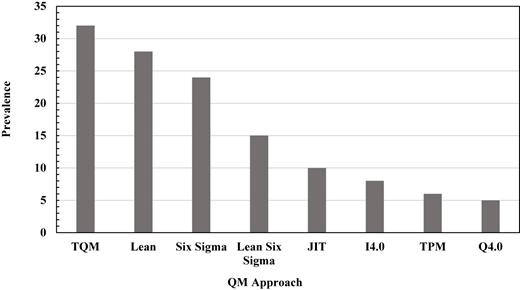
Prevalence of QM frameworks in literature linking QM to operational performance. Source: Authors’ own work
Prevalence of QM frameworks in literature linking QM to operational performance. Source: Authors’ own work
5.4 Comparison with industry reports: bridging theory with practice
This SLR critically evaluated the influence of QM practices on operational performance, providing valuable theoretical insights predominantly centered around traditional frameworks such as TQM, Lean, and Six Sigma. These frameworks have consistently demonstrated significant improvements in metrics like cost efficiency, productivity, defect reduction, and customer satisfaction, particularly in manufacturing contexts. However, this review highlighted an emergent research gap regarding integrating digital technologies within QM, specifically I4.0 and Q4.0.
Practical insights provided by two recent industry reports from McKinsey, shown in Carpintero et al. (2021) and Foster et al. (2021) on “Smart Quality” significantly complement the theoretical perspectives derived from the literature. McKinsey's reports underscore a strategic shift from traditional compliance-driven QM practices to an integrated digital approach utilizing advanced analytics, automation, AI, and real-time data processing. They provide empirical evidence through practical use cases demonstrating marked performance improvements, including drastically reduced complaint resolution times, enhanced predictive accuracy in deviation management, and proactive supplier risk management. Such case studies exemplify theoretical propositions of improved responsiveness, real-time decision-making capabilities, and substantial cost and risk reductions through digital technology integration.
On the other hand, the Toyota Industries Corporation inquiry report in Inoue et al. (2024) presents a critical practical viewpoint that highlights possible risks connected to the inadequate management of regulatory compliance and quality assurance procedures. Their report exposes notable organizational shortcomings, including data tampering during emission testing, illegal engine control unit (ECU) parameter alterations, and organizational supervision and internal QM system inadequacies. The Toyota case shows dire results when ethical compliance and basic QM standards are sacrificed due to faster product development schedules.
Integrating these practical insights from McKinsey and Toyota with the theoretical findings of this SLR creates a cohesive and enriched narrative. While McKinsey's reports validate and extend theoretical propositions, demonstrating how advanced digital technologies and analytics can effectively enhance traditional QM frameworks, Toyota's findings serve as a critical caution, emphasizing the indispensable role of ethical governance, rigorous compliance, and cultural integrity in QM practices. The contrast between Toyota's experiences and McKinsey's successful examples underlines the critical importance of aligning digital QM strategies with robust internal control mechanisms and a strong compliance culture.
Furthermore, Toyota's organizational difficulties confirm the advocacy for thorough staff training, strong internal audits, and proactive risk management, which have been underlined extensively in QM literature and McKinsey's industry reports. Combining these points of view emphasizes integrating digital technologies and QM inside a supportive organizational culture that values integrity, openness, and compliance.
These syntheses highlight that achieving impactful and sustainable operational excellence calls for technical innovation and equally strong governance systems, strict compliance policies, and ethically rooted cultural norms. Future studies should investigate the empirical validation of these integrated frameworks in other industrial sectors, thereby improving strategic approaches to operationalizing digital transformation within QM practice.
5.5 Theoretical and practical implications
Figure 10 synthesizes the core findings of this review into a five-stage maturity-based roadmap for advancing operational performance through QM. Its value lies in integrating traditional QM foundations with LSS, I4.0 enablers, and Q4.0 concepts, framed through the High Impact Technology Organization Performance (HI-TOP) lens. This approach ensures the framework is both sequential and adaptable to sectoral contexts.
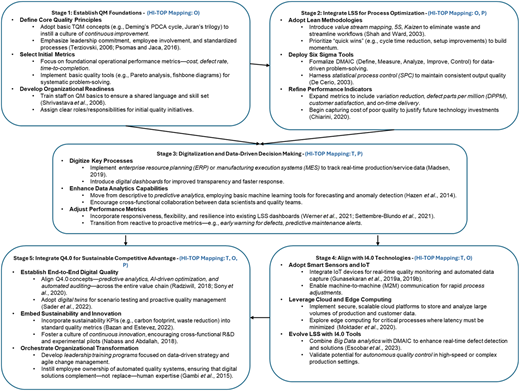
The first stage of the roadmap establishes foundational QM principles, such as leadership commitment, standardized processes, and basic metrics (cost, defect rate, time-to-completion). These consistently underpin performance improvements across manufacturing and service contexts (Bouranta et al., 2017; Chiarini, 2020). Without cultural alignment and baseline capabilities, subsequent innovations often fail to deliver benefits (Antony et al., 2023).
The subsequent incorporates LSS for process optimization, linking directly to efficiency and quality gains. By combining waste-reduction techniques with statistical control, LSS fosters continuous improvement and analytical discipline, preparing organizations for later digital integration (Psomas and Jaca, 2016).
The third stage introduces digitalization and data-driven decision-making, marking a shift from reactive to proactive performance management. Evidence shows ERP/MES systems and predictive analytics enhance responsiveness in manufacturing, while digital dashboards support customer monitoring in services (Werner et al., 2021; Jum'a, 2025). This stage provides the data infrastructure for subsequent I4.0 adoption.
The fourth stage aligns QM and LSS with I4.0 tools such as IoT sensors, cloud platforms, and real-time analytics (Alkhatib et al., 2024). These technologies reduce defects and enable rapid process adjustments, but their impact is maximized when embedded within established quality routines rather than applied in isolation (Alkhatib et al., 2025b).
The last stage extends into Q4.0, embedding predictive analytics, AI-driven optimization, and sustainability KPIs into strategic quality management. This integration enables organizations to achieve both operational gains and long-term resilience, aligning calls for frameworks that integrate economic, environmental, and social objectives (Bazan and Estevez, 2022).
Beyond its staged design, the roadmap emphasizes flexibility. Organizations can enter at the stage most relevant to their maturity: manufacturers may prioritize predictive maintenance before full I4.0 adoption, while service firms may first leverage customer analytics. This adaptability enhances the framework's relevance across industries and directly addresses a key research gap (Alkhatib et al., 2025b).
In summary, Figure 10 operationalizes the synthesis of diverse components of literature, traditional QM, LSS, and digital quality paradigms, into a coherent, actionable model. It bridges theory and practice, offering managers a structured pathway to align QM with digital transformation and sustainability, and providing scholars with a foundation for further empirical validation.
5.5.1 Theoretical implications
Integration of Soft and Hard QM Practices: Echoing the resource-based view (RBV) and socio-technical systems theories, the interplay between “soft” practices (leadership, culture, employee empowerment) and “hard” practices (technical tools, process controls) is emphasized. Integrating both dimensions is essential, as neither can sustain operational excellence in isolation (Gambi et al., 2015).
Sustainability and Innovation as Emerging Indicators: Sustainability increasingly appears as either a mediating factor or a distinct performance indicator, reflecting environmental and social responsibility in QM decisions (García-Fernández et al., 2022). Innovation is similarly highlighted as a driver of competitive advantage, raising questions on how QM systems can measure and foster it (Khalfallah et al., 2022).
Digital Transformation and Dynamic Capabilities: The roadmap aligns with dynamic capabilities theory (Katkalo et al., 2010) and organizational learning theory (Argote and Miron-Spektor, 2011). Both stress the need for continuous reconfiguration of resources and knowledge to embed digital innovations successfully.
Integrative Framework Application: Adopting the HI-TOP model (Zahra et al., 2021) clarifies the interaction of technology (e.g. IoT, AI analytics), organizational enablers (leadership, training, collaboration), and performance outcomes. This framing strengthens the link between soft practices and hard tools, showing how they coalesce to drive results.
5.5.2 Practical implications
Contextual Adaptation of QM Practices: Sector-specific differences underscore that no universal QM approach exists. Manufacturing emphasizes rigorous process controls and quantitative tools, while services benefit from flexible, customer-focused practices addressing intangibles such as empathy and personalization (Stylos et al., 2021).
Expansion of LSS in Services: Although widely applied in manufacturing, LSS remains underused in services. Adapting these methods to address service variability offers opportunities for cross-sector learning and performance improvements (Salaheldin, 2009; Alsawafi et al., 2021).
Strategic Roadmap for Digital QM Transformation: The proposed maturity roadmap (Figure 10) provides organizations with a sequential path from foundational QM (ISO 9001, SPC, 5 S) through LSS tools (VSM, DMAIC, FMEA, Kanban) toward digitally enabled and predictive Q4.0 systems. This progression reduces risks and supports sustainable integration.
Commercial and Societal Outcomes of Digital Integration: Empirical cases, such as McKinsey's Smart Quality initiatives, show that digital QM reduces costs, improves responsiveness, and strengthens supplier reliability, translating into customer loyalty, market share, and profitability. Benefits also extend to workplace safety, environmental sustainability, and employee well-being, reinforcing QM's societal value.
Role of Governance, Ethics, and Culture: Cases such as Toyota's quality failures emphasize that digital and technical solutions alone are insufficient. Robust governance, ethical standards, and cultural integrity are critical to sustaining long-term operational excellence.
6. Future research directions
Despite the depth of analysis provided in this review, several promising avenues remain for further exploration. First, the five-stage maturity roadmap, from foundational QM through LSS integration and I4.0 enablement to Q4.0 autonomy, requires rigorous empirical validation. Longitudinal field studies and benchmarking across diverse organizations can quantify the impact of each stage on cost efficiency, productivity, and customer satisfaction. Mixed-methods research would further elucidate the organizational readiness factors, training needs, and change management practices that facilitate successful transitions, particularly when adopting AI-driven predictive analytics and autonomous quality controls. Another potential avenue for future research is to foster multi-region collaborations, particularly bridging manufacturing-focused regions (e.g. the US parts of Asia) with service-focused regions (e.g. Spain), to co-develop QM frameworks capable of elevating operational performance across diverse sectors (Bubenik, 2022).
Second, comparative studies across contexts are needed to clarify boundary conditions. Systematic investigations contrasting manufacturing, service, and hybrid environments, as well as SMEs and large multinationals, can reveal which QM and digitalization practices yield the greatest gains at different organizational scales. Multi-country and cross-cultural research can further show how regulatory frameworks, industry structures, and cultural norms moderate the effectiveness of both traditional tools (e.g. SPC, FMEA) and emerging technologies (e.g. IoT platforms, prescriptive analytics).
Finally, deeper exploration of socio-technical enablers and barriers is essential. Qualitative and survey studies should examine how leadership, employee empowerment, and digital maturity mediate the integration of I4.0 with established QM methods such as LSS. Broadening the evidence base to include non-English publications, conference proceedings, and edited volumes will also reduce language and publication-type bias, capturing insights from understudied regions and sectors. Together, these research avenues will validate and refine the proposed roadmap, advancing theoretical and practical understanding of how digital and human elements coalesce to drive sustainable operational excellence. Table 3 summarizes the central findings and signals key directions for future research.
Summary of key findings
| Bibliometric analysis key findings | |
|---|---|
| Country Analysis |
|
| Keyword Analysis |
|
| Systematic review key findings | ||
|---|---|---|
| Key QM Tools Discussed | Total Quality Management (TQM), Total Productive Maintenance (TPM), Just-in-Time (JIT), Lean, Six Sigma, Lean Six Sigma (LSS), and Industry 4.0 integration | |
| Top Performance Metrics | Manufacturing Sector | Quality, time, productivity, time-to-delivery, innovation, and manufacturer responsiveness |
| Service Sector | Customer satisfaction, customer acquisition, time of service, service quality, and process effectiveness | |
| Observed Theme | QM practices generally positively impact operational performance in manufacturing and service industries, enhancing quality, customer satisfaction, inventory management, process efficiency, and innovation. Further details are provided in Table 1. However, it is still unclear to practitioners and decision-makers what QM initiative to adopt in response to a certain challenge or to achieve a certain quality goal | |
| Implications for Future Research | This study guides practitioners and decision-makers interested in employing QM techniques to enhance operational performance. It suggests exploring the impact of Q4.0 on operational performance and the need for empirical studies comparing previous tools with Q4.0 | |
7. Conclusion
This study systematically investigated the relationship between QM practices and operational performance across manufacturing and service sectors, synthesizing insights from 57 peer-reviewed articles and triangulating them with findings from recent industry reports. The objective was to explore how traditional QM frameworks and emerging digital technologies collectively shape operational outcomes and to provide a conceptual roadmap that unifies theory and practice. The review identified sector-specific differences in performance measures. While service-sector research emphasized customer satisfaction, accessibility, and service quality, manufacturing studies focused on cost efficiency, quality, productivity, and resilience. This highlights the need for context-specific operational metrics when evaluating QM's influence. Across both sectors, there is strong empirical agreement that QM techniques enhance operational performance. Traditional approaches such as TQM, Lean, and Six Sigma continue to dominate, delivering measurable improvements in defect reduction, process optimization, and customer experience. However, digital paradigms such as I4.0 and Q4.0 remain underrepresented in academic literature, despite increasing adoption in practice. Only a minority of reviewed studies explicitly integrated these paradigms, revealing an academic lag in capturing their transformative role. Additionally, the keyword analysis reinforced the thematic focus on Lean, TQM, and Six Sigma while highlighting emerging but underexplored terms such as digitalization and Q4.0. This signals an academic lag in addressing the digital transformation of quality. This gap underscores the importance of investigating how digital tools interact with established QM frameworks to generate operational gains.
The analysis also revealed contrasts between academic literature and industry practice. Insights from McKinsey's “Smart Quality” reports validated the transformative potential of integrating AI, automation, and analytics into QM systems, while Toyota's compliance failures emphasized the risks of neglecting governance and ethical oversight. Together, these cases stress the need to pair technical innovation with robust cultural and regulatory safeguards.
In sum, this study confirms that while traditional QM provides the foundation for operational excellence, its full potential is realized only when complemented by digital technologies and aligned with ethical and organizational integrity. For researchers, the findings highlight the need for empirical studies examining the joint adoption of QM, I4.0, and Q4.0 across diverse sectors and geographies. For practitioners, the roadmap offers actionable guidance to align QM initiatives with digital transformation and sustainability goals.
Appendix Mind map of the most used sources
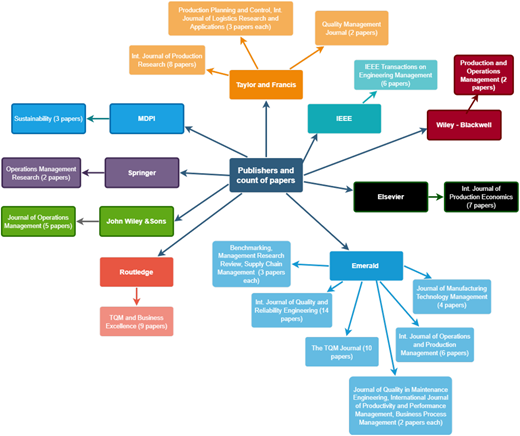
Mind map of the most used sources. Source: Authors’ own work

