This study examines how symbolic leadership and sponsorship congruence jointly influence fan behavior in a high-identity associative sport context. Specifically, it analyzes how presidential authenticity and perceived sponsor-club fit shape pride of belonging, team identification, attitudes toward the sponsor, and purchase intention in FC Barcelona.
Data were collected from 902 FC Barcelona members who voted in the 2021 presidential election. Using partial least squares structural equation modeling (PLS-SEM), the study tests a mediated symbolic model grounded in Social Identity Theory, the Meaning Transfer Model, and the Congruence Hypothesis. Multigroup analyses were conducted to explore heterogeneity by voting behavior and gender.
Presidential authenticity positively influences meaning transfer and brand pride, while sponsor-club congruence enhances both pride and attitudes toward the sponsor. Brand pride strengthens team identification and sponsor attitudes, which in turn significantly predict purchase intention toward the sponsor. Pride operates primarily as an indirect mechanism rather than a direct behavioral driver. Multigroup results indicate that some symbolic effects vary according to voting behavior.
The study contributes to social identity theory, the congruence hypothesis and symbolic transfer theory by integrating emotional and symbolic variables into a unified framework for sports sponsorship management.
Practically, the results offer actionable insights for sports clubs and sponsoring brands on managing symbolic capital, establishing legitimacy, and achieving cultural alignment in strategic decisions.
The study integrates leadership symbolism and sponsorship congruence into a unified symbolic model, demonstrating how internal and external symbolic cues jointly shape fan responses in associative sport organizations.
1. Introduction
Brand management in professional sports has undergone significant evolution in recent decades, embracing increasingly integrated approaches in which symbolic elements play a central role in shaping sustainable relationships with fans (Mahsus and Febriana, 2024). Within this framework, traditionally functional domains such as institutional leadership and corporate sponsorships are reinterpreted as strategic assets capable of shaping perceptions of authenticity, group identification, and attitudes toward the club’s brand (Mostafavipour et al., 2023). However, when sponsorship involves highly visible symbolic assets such as stadium naming rights, the alliance may become contested and trigger fan resistance and legitimacy concerns, especially when commercialization is perceived to threaten identity coherence, making symbolic alignment and its consequences particularly salient (Gillooly et al., 2020; Woisetschläger et al., 2014).
FC Barcelona presents a paradigmatic case for exploring these symbolic dynamics. Its associative ownership model, global stature, and strong identity, articulated through the slogan “Més que un club” (More than a club), make it one of the most symbolically resonant sports organizations globally (Habibilla and Imtiyaz, 2024). Joan Laporta’s re-election as president in 2021 occurred amid a profound institutional and financial crisis (Koa and Abu, 2022), catalyzing a narrative of identity restoration among members and fans. Laporta is widely perceived as a charismatic figure aligned with the club’s foundational values (Adhinata, 2018). Simultaneously, the sponsorship deal with Spotify, which included stadium naming rights and multimedia collaborations, marked a strategic pivot in the club’s commercialization policy. This partnership evoked mixed reactions from fans, particularly regarding its cultural alignment with the club’s identity and symbolic legitimacy (Ginesta et al., 2024).
While the literature has independently explored the effects of sponsorship on consumer attitudes (Santos and Balinski, 2025; Wu et al., 2025) and the role of leadership in shaping organizational identity (Butalia et al., 2025; Schei et al., 2023), few studies have investigated how these symbolic elements interact in influencing fan attitudes and behaviors. This gap is especially significant in contexts of high symbolic investment, such as clubs with associative structures, where both institutional figures and commercial alliances shape the brand (Jacobs et al., 2025). Thus, the absence of integrative approaches that concurrently consider the personal brand of the leader and corporate sponsorships constitutes a notable shortcoming in the current literature (Seyfi and Polat, 2024). Prior research typically examines leadership and sponsorship in separate streams. Building on these foundations, this study develops an integrated model linking leadership-based symbolic cues (presidential authenticity) and sponsorship-based symbolic cues (sponsor–club fit) to fan- and sponsor-related outcomes within the member-governed context of FC Barcelona.
This study addresses that gap by analyzing two key symbolic elements in FC Barcelona’s brand strategy: the personal brand authenticity of President Joan Laporta and the perceived sponsor–club fit of the corporate partnership with Spotify. By integrating Social Identity Theory (Tajfel and Turner, 1979) with the Meaning Transfer Model (McCracken, 1989), the Congruence Hypothesis (Speed and Thompson, 2000), and Symbolic Transfer Theory (Gwinner and Eaton, 1999), this model examines how perceived leadership authenticity and sponsor–club fit activate meaning transfer from the leader to the club and symbolic transfer between the partnered entities. These processes are modeled through the study’s focal constructs, namely meaning transfer from the president, pride of belonging (brand pride), team identification, attitude toward the sponsor, and purchase intention, via direct and mediated pathways. Voting behavior is treated as a boundary condition (source of heterogeneity), not as a moderation effect, and potential subgroup differences are examined through permutation-based multigroup analysis (MGA) after establishing measurement invariance. Additionally, we explore gender as a second source of heterogeneity to assess whether key structural relationships differ between male and female members. In addition, because leadership perceptions in identity-based groups may vary across subgroups and shape how symbolic cues are interpreted (Hogg, 2001), we examine whether these relationships are homogeneous across members by considering voting behavior as a source of heterogeneity in symbolic responses. Consistent with the Psychological Continuum Model, we interpret pride of belonging and team identification as later-stage bonds (attachment and allegiance), and we examine how leadership and sponsorship cues can reinforce these bonds and translate into sponsor-focused responses.
We surveyed FC Barcelona members who participated in the 2021 presidential elections, a group with high involvement and formal ties to the club’s decision-making. Using partial least squares structural equation modeling (PLS-SEM), the analysis evaluates the relationships among key symbolic brand constructs. The model captures both the direct effects and mediating pathways linking presidential leadership, corporate sponsorship, and fan behavior. Consistent with this goal, voting behavior is used to explore potential differences in model relationships between members who voted for the incumbent president and those who did not; this heterogeneity is developed in the theoretical model and discussed alongside the main effects.
Specifically, the study addresses the following research questions:
How does fans’ perception of the club president influence their emotional connection to the organization, through symbolic processes such as the transfer of values or pride of belonging?
How does the perception of consistency between the sponsor and the club influence the way fans form their opinion of the sponsoring brand and develop ties to it?
What role does pride of belonging (brand pride) play as an element that symbolically connects the president’s leadership, corporate sponsorship, and the emotional and behavioral responses of the fan?
How do the symbolic effects of presidential leadership and corporate sponsorship combine to influence fans’ intentions to purchase or use the sponsor’s products and services?
By addressing these questions, this paper offers a more nuanced understanding of how the interplay between leadership symbols, corporate sponsorship, and fan behavior unfolds. Section 2 presents the literature review and theoretical model; Section 3 details the methodology; Section 4 outlines the empirical results; and Section 5 discusses the theoretical and practical implications of the findings.
2. Theoretical framework
2.1 Conceptual foundations for an integrative symbolic model
Research on sport brand management has typically examined two symbolic dimensions separately: institutional leadership and corporate sponsorship. Regarding leadership, studies show that charismatic leaders act as cultural drivers and identity markers, creating emotional bonds that strengthen team identification and mediate links between brand perceptions and intentions (Johnson et al., 2022; Yu et al., 2022). This operates as cultural meaning transfer from leader to institutional brand (McCracken, 1989). Yet evidence remains scarce on how this symbolic role functions in participatory governance settings such as associative clubs with strong collective identities (Poruchynska et al., 2023).
Sponsorship research consistently identifies perceived sponsor-club fit as a core determinant of sponsorship evaluations, because fit increases perceived legitimacy and facilitates symbolic/image transfer between the partnered entities (Gwinner and Eaton, 1999; Speed and Thompson, 2000). When fit is high, fans are more likely to form favorable beliefs about the sponsorship relationship and evaluate the sponsor more positively; when fit is low, the alliance may be interpreted as identity-incongruent, increasing the risk of skepticism or resistance, particularly in high-identity settings (Woisetschläger et al., 2014). In our model, fit therefore serves as an external symbolic legitimacy cue that primarily supports sponsor-related outcomes (e.g. attitude toward the sponsor) and can also reinforce club-related affect (e.g. pride of belonging) through positive associative transfer.
Conceptual boundaries and the interplay between meaning transfer and symbolic transfer. To sharpen conceptual boundaries, we distinguish two related but non-identical mechanisms. The Meaning Transfer Model (McCracken, 1989) explains how culturally laden meanings associated with a person (e.g. a leader) are transferred to an organization via perceived association and interpretation by audiences. In contrast, Symbolic (Image) Transfer Theory in sponsorship (e.g. Gwinner and Eaton, 1999) focuses on how symbolic associations move between two partnered entities (club ↔ sponsor), and how that transfer depends on perceived congruence and perceived legitimacy of the commercial alliance. In our integrative account, leader authenticity initiates person-to-club meaning transfer, whereas sponsor–club fit enables partner-to-partner symbolic transfer; both pathways can converge in downstream fan responses.
While storytelling is not modeled as a latent construct, this study acknowledges its functional overlap with the proposed symbolic mechanisms. Storytelling serves as the narrative layer and communicative vehicle through which symbolic cues, such as leadership authenticity and sponsor-club legitimacy, are packaged and circulated (Laurell and Söderman, 2018). This overlap is critical because mediated narratives, such as identity restoration storylines, facilitate and reinforce both leader-to-club meaning transfer and club-sponsor symbolic transfer by making organizational values more vivid and interpretable for the fan base (Soble and Lowes, 2025).
Although some models link leadership and sponsorship (Biscaia et al., 2017), most research still examines leadership symbolism and sponsorship evaluations in separate streams (Cornwell and Kwon, 2020; Demir and Söderman, 2015). In particular, existing integrative approaches provide valuable foundations for connecting sport brand perceptions and sponsorship outcomes, but they do not explicitly model (1) the president’s personal brand authenticity as a leadership-based symbolic cue, (2) leader-to-club meaning transfer as a distinct mediating process, and (3) the role of member-governance-related heterogeneity in shaping symbolic responses. Intermediate symbolic mechanisms such as meaning transfer and pride of belonging are underexplored (Vollero et al., 2024). Linear approaches often overlook cross-mediations and institutional moderators like organizational involvement, despite their relevance for identification and loyalty (Merten et al., 2024). These gaps are pronounced in associative clubs, where membership and voting rights heighten scrutiny of identity coherence (Tsordia et al., 2024) and where research rarely isolates highly involved members (Bauers et al., 2024). In contrast to this stream, our model treats the president’s authenticity as a distinct leadership cue and explicitly operationalizes leader-to-club meaning transfer as a mediating mechanism, rather than relying on general team brand perceptions alone. We also extend prior integrative sponsorship models by examining member-governance heterogeneity through voting behavior, which is especially relevant in associative clubs where legitimacy judgments and symbolic interpretations may differ across subgroups.
This leadership perspective also resonates with earlier work in sport governance and institutional branding, which frames club leaders as custodians of collective identity and legitimacy in member-based organizations (Couvelaere and Richelieu, 2005; Hoye et al., 2015). Our symbolic interpretation of presidential authenticity builds on this tradition by specifying the psychological mechanisms through which such legitimacy cues are internalized by members.
Social Identity Theory (Tajfel and Turner, 1979) and consumer-brand identification (Bhattacharya and Sen, 2003) explain how individuals internalize social identities that shape attitudes and consumption. In European football, where clubs are socio-cultural institutions with deep symbolic meaning, these processes are especially salient. Following recommendations to maintain conceptual clarity in identification terminology (Lock and Heere, 2017), we use the term “team identification” consistently throughout the manuscript to denote identification with FC Barcelona as the focal in-group.
We also incorporate the Psychological Continuum Model (PCM) as a complementary lens. The PCM conceptualizes psychological connection to a sport object as a progression from awareness and attraction to attachment and allegiance (Funk and James, 2001). In this study, pride of belonging and team identification capture stronger, later-stage bonds (i.e. attachment and allegiance) rather than initial attraction levels. Thus, leadership authenticity and sponsor–club fit are treated as symbolic inputs that can reinforce these internalized connections, which are then linked to sponsor-focused outcomes in our model (attitude toward the sponsor and purchase intention).
Importantly, symbolic sponsorship decisions can also generate contested interpretations and negative reactions. Beyond positive pathways, prior work highlights that high-visibility sponsorship assets (e.g. naming rights) may trigger fan resistance and legitimacy concerns, especially when perceived as excessive commercialization or identity-incongruent, and that perceived fit and perceived benefits can mitigate such resistance (Woisetschläger et al., 2014). Accordingly, our model focuses on symbolic mechanisms that can support legitimacy and favorable outcomes, while acknowledging that these mechanisms may operate under boundary conditions and may not uniformly produce positive responses.
We address the lack of integrative models by examining how leadership and sponsorship interact to shape brand meanings, pride, team identification, and behavior. We propose a unified conceptual model with mediated relationships and cross-effects, applied to a high-involvement context, to assess how brand pride, sponsor attitudes, and team identification affect purchase intention toward sponsor products and services. To clarify our incremental contribution relative to prior leadership/sponsorship frameworks, we include a literature review synthesis table (Table 1) that summarizes closely related models and positions what this study adds conceptually (leadership authenticity + leader-to-club meaning transfer + pride as a central mediator + member-governance heterogeneity via voting behavior).
2.2 Symbolic branding in sporting contexts
In sport, brands are best seen as identity systems that condense social meanings, shared values, and emotional ties (Holt, 2005). Clubs act as cultural institutions rooted in collective imaginaries, building identity through rituals, narratives, and bonds with fans (Couvelaere and Richelieu, 2005). Sport’s distinctiveness as a branding context stems from strong identity resonance, the emotional fan-club relationship, and collective ownership that reinforces belonging (Park and Lee, 2025). Thus, the brand transcends transactions and works as a symbolic affiliation device through which individuals project and negotiate identities relative to club values and meanings (Vollero et al., 2024). In contemporary sport communication, these identity narratives are increasingly articulated through social media storytelling, which shapes how symbolic meanings are framed, amplified, and negotiated in fan communities (Laurell and Söderman, 2018).
Within this system, the perceived authenticity of the club president, understood as consistency among values, discourse, and actions, serves as a source of symbolic legitimacy. Authentic leadership conveys credibility and closeness, strengthening fans’ emotional bonds, and it catalyzes identity judgments, especially where the leader is seen as the collective’s legitimate representative (Morhart et al., 2015; Siegfried, 2022). Sponsorship, as an external symbolic agent, can reinforce or undermine cultural coherence (Moharana et al., 2023). Sponsors are not only financial supporters but co-constructors of the club’s identity narrative, shaping positioning through corporate values, associations, and public image. Fans therefore judge sponsorship by its cultural alignment with the club’s ethos, accepting legitimate partnerships and rejecting dissonant ones. When misalignment is salient, particularly in contested sponsorship formats such as naming rights, fans may interpret the sponsorship as an identity threat or over-commercialization, potentially generating resistance rather than acceptance (Gillooly et al., 2020; Woisetschläger et al., 2014).
This symbolic view is consistent with foundational sport branding research that conceptualizes clubs as socio-cultural institutions rather than purely commercial entities (Couvelaere and Richelieu, 2005). The present study extends this line of work by integrating leadership symbolism and sponsorship legitimacy into a unified, process-oriented model of identity construction.
2.3 Authenticity of the leader and its symbolic effects
A club president’s personal brand authenticity is central to the symbolic bond between fans and the institution. The Meaning Transfer Model explains how cultural meanings move from public figures to brands; in sport, the leader embodies values that resonate with fans (McCracken, 1989). Authenticity, defined as perceived consistency between values, actions, and track record, reinforces symbolic legitimacy (Morhart et al., 2015). In our model, presidential authenticity is treated as a leadership-based symbolic cue that operates in part through a distinct president-to-club meaning-transfer mechanism, rather than being absorbed into broader team brand constructs in integrative sponsorship models (Biscaia et al., 2017; McCracken, 1989). From a social identity perspective, credible and value-consistent leadership cues can strengthen identity coherence and support self-relevant emotions tied to group membership, which aligns with brand pride (pride of belonging) as an identity-affirming emotion (Helm et al., 2016; Tajfel and Turner, 1979). Because the behavioral outcome in this study is sponsor-focused, purchase intention is conceptualized as intention toward the sponsor’s products/services (Spears and Singh, 2004). In high-visibility sponsorship settings such as naming rights, legitimacy and identity-coherence perceptions are particularly salient for whether commercialization is accepted or contested, making leadership-based legitimacy cues potentially consequential for sponsor-related behavioral responses (Gillooly et al., 2020). When leaders are seen as authentic, team identification strengthens, transformational leadership is perceived more favorably, brand pride grows, and purchase intention improves (Do et al., 2024; Malloy et al., 2023).
In member-based organizations such as FC Barcelona, democratic scrutiny heightens the salience of authenticity. Institutional involvement shapes credibility assessments, and authentic sports leaders act as symbolic catalysts whose values are internalized by fans (Uhrich, 2021; Mudrick and Fink, 2022). Based on this framework, we propose:
The president’s personal brand authenticity positively influences the perception that his values are symbolically transferred to the club’s identity.
The president’s personal brand authenticity positively influences brand pride toward the club.
The president’s personal brand authenticity positively influences purchase intention.
2.4 Meaning transfer from the president and its affective impact
Once presidential authenticity is established, it enables perceived meaning transfer from the president to the club (McCracken, 1989). Under this framework, Laporta’s leadership at FC Barcelona symbolizes institutional charisma and identity restoration. This process strengthens team identification by allowing historical values to be internalized as organizational identity (García, 2012; McCracken, 1989; Stenling and Tafvelin, 2016). Recent work further shows that the public image of sports leaders fosters emotional attachment and shapes attitudes toward the organization (Zheng and Xu, 2024). We address a gap in prior research by operationalizing meaning transfer as a distinct president-to-club mediator. This approach avoids assuming that symbolic effects are fully captured by the broader team brand constructs common in sponsorship models (Biscaia et al., 2017). When members perceive the club as incorporating the president’s valued meanings, the institution becomes more identity-affirming. This alignment fosters pride of belonging as an affiliation-based emotion (Helm et al., 2016; Tajfel and Turner, 1979). Consequently, meaning transfer reinforces team identification by strengthening perceived self-group overlap and the internalization of group membership (Bhattacharya and Sen, 2003). Based on these insights, we propose:
Perceived meaning transfer from the president positively influences brand pride toward the club.
Perceived meaning transfer from the president positively influences team identification.
2.5 Brand pride and implications for attitudes and identification
Brand pride is a positive emotion arising from belonging to a valued, value-congruent organization (Helm et al., 2016). Grounded in Social Identity Theory, it strengthens self-definition through group affiliation and, in sport, deepens the fan-club bond (Ahearne et al., 2005; Kaur and Verma, 2024; Tajfel and Turner, 1979). As an affective mechanism, pride facilitates organizational identification, the sense of oneness with the entity (Madrigal, 2001), and promotes supportive and loyal behaviors (Chang et al., 2016; Prayag et al., 2020). However, under symbolic dissonance or weakened institutional legitimacy, this translation from pride to identification may weaken (Lebed et al., 2024; Sveinson et al., 2023). Because our outcomes are sponsor-focused, we conceptualize attitude and purchase intention with respect to the sponsor (Spears and Singh, 2004) and propose that club-related pride can generalize to evaluations of the sponsor as a salient commercial partner. Based on this reasoning, the following hypotheses are proposed:
Brand pride toward the club positively influences team identification.
Brand pride toward the club positively influences attitudes toward the sponsor.
Brand pride toward the club positively influences purchase intention.
2.6 Sponsor fit as external symbolic legitimacy
Perceived congruence between sponsor and club operates as a symbolic evaluation mechanism that legitimizes or challenges the sponsor’s role in the club’s institutional narrative (Gillooly et al., 2020). Consistent with the Match-Up Hypothesis, high symbolic fit enhances sponsor acceptance and improves perceptions of the sponsored entity, an effect amplified in strong collective-identity contexts such as FC Barcelona (Speed and Thompson, 2000).
Symbolic Transfer Theory explains how a sponsor’s cultural attributes can be integrated into fans’ mental representations of the club, contingent on assessments of cultural coherence (Gwinner and Eaton, 1999; Palau-Saumell et al., 2022). When congruence is high, positive symbolic/image transfer can reinforce favorable affect toward the club-sponsor relationship, supporting higher brand pride and more positive evaluations of the sponsor (Graeber and Close Scheinbaum, 2022; Ko et al., 2025; Wu et al., 2025). Conversely, perceived inconsistency with club identity can trigger symbolic dissonance and rejection (Aras and Özel, 2024). In high-visibility formats such as naming rights, low fit may be interpreted as identity-incongruent commercialization, increasing resistance and legitimacy concerns (Gillooly et al., 2020; Woisetschläger et al., 2014). When fit is high, the alliance is more likely to be perceived as culturally coherent and less identity-threatening, which can reinforce pride of belonging as an identity-affirming emotion (Helm et al., 2016). Thus, perceived congruence acts as a symbolic catalyst shaping fans’ emotional and attitudinal ties to both the club and its commercial partners. Based on this framework, the following hypotheses are proposed:
The perceived congruence between the sponsor and the club positively influences fans’ brand pride.
The perceived congruence between the sponsor and the club positively influences fans’ attitudes toward the sponsor.
2.7 Attitudes and identification as predictors of purchasing behavior
In this study, attitude is conceptualized as attitude toward the sponsor and purchase intention as intention toward the sponsor’s products/services (Spears and Singh, 2004). Consumer-brand identification theory posits that individuals support organizations whose values they share, shaping consumption decisions; in sport, this team identification can extend to sponsors, increasing acceptance of their offerings (Bhattacharya and Sen, 2003; Schlesinger and Güngerich, 2011; Son and Williams, 2023). Sponsor legitimacy mediated by the club’s symbolic capital fosters favorable attitudes, but perceived value dissonance can erode this legitimacy and induce skepticism (Aras and Özel, 2024; Brown-Devlin et al., 2022; Gwinner and Swanson, 2003). Attitude toward the sponsor is a strong predictor of sponsor-focused purchase intention, particularly in emotionally charged football contexts where credibility is central (Santos and Balinski, 2025; Spears and Singh, 2004). While prior sponsorship research often emphasizes the classic direction in which team identification predicts sponsor responses (Gwinner and Swanson, 2003), sponsorship is a highly visible alliance in which evaluations of the sponsor can also spill over to the property, making a reverse pathway theoretically plausible (Simonin and Ruth, 1998). In naming-rights settings, the sponsor becomes a salient element of the club’s symbolic environment, so sponsor evaluations may color perceived identity coherence and, by extension, team identification (Gillooly et al., 2020; Simonin and Ruth, 1998). Moreover, sport-sponsorship research documents reverse image transfer processes under specific conditions, showing that sponsor-related evaluations can spill over to perceptions of the sport property (Peluso et al., 2019). This evidence supports the broader plausibility that sponsor evaluations may shape club-related psychological responses in highly visible alliances, even though the direction and strength of such spillovers depend on contextual and audience factors. Based on these insights, the following hypotheses are proposed:
Team identification positively influences intention to purchase the sponsor’s products or services.
A positive attitude toward the sponsor positively influences team identification.
A positive attitude toward the sponsor positively influences purchase intention.
2.8 Proposed theoretical model
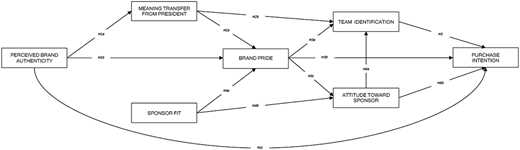
We integrate the preceding hypotheses into a model explaining how symbolic processes shape fan responses at FC Barcelona. The model links six constructs (leadership authenticity, meaning transfer from the president, brand pride, sponsor congruence, attitudes toward the sponsor, and team identification) as antecedents of purchase intention. Presidential authenticity initiates meaning transfer from the president to the club, which elevates brand pride. Pride then strengthens team identification and favorable sponsor attitudes, which act as proximal predictors of sponsor-focused purchase intention. In parallel, perceived sponsor–club congruence provides external symbolic legitimacy that reinforces pride and attitudes toward the sponsor. Consistent with the sponsor-focused definition of outcomes, attitude and purchase intention are specified with respect to the sponsor (Spears and Singh, 2004). Finally, H6a is positioned as a complement to the classic identification to sponsor-response pathway (Gwinner and Swanson, 2003), justified through alliance spillover logic (Simonin and Ruth, 1998) and sport-sponsorship reverse-effects evidence (Peluso et al., 2019).
Voting behavior is treated as a boundary condition (heterogeneity analysis) rather than a path-specific moderator, consistent with the revised positioning in the Introduction and Section 2.1. Gender is likewise examined as an exploratory heterogeneity check to assess the robustness of the proposed relationships across key subgroups.
Figure 1 depicts the model, highlighting brand pride’s mediating role and the two symbolic pathways, internal (leadership driven) and external (sponsorship driven), that converge on purchase intention. Table 2 presents the correspondence between the research questions and the hypotheses of the proposed model.
3. Methodology
3.1 Sampling procedures and sample size
The target population comprised FC Barcelona members who voted in the March 2021 presidential elections. Because access to the official membership census was legally restricted for data protection, an external recruitment firm was engaged under methodological criteria set by the research team.
Systematic random sampling was conducted at Spotify Camp Nou during league matches on May 2, 20 and 28, 2023. Inclusion criteria were age 18 or older and having voted in the 2021 election. Following a standardized protocol to minimize selection bias, every fourth attending member was invited to participate. Membership status was verified on-site by checking the official FC Barcelona membership card. Invitees received a QR code linking to an online questionnaire that outlined the academic purpose, voluntariness and confidentiality, and data processing policy. Access was granted only after explicit informed consent. Eligibility to belong to the target population was confirmed via screening questions before respondents accessed the substantive measures; this voting-related eligibility was self-reported and could not be independently verified.
A total of 1,586 individuals initiated the questionnaire via the QR code; 684 were screened out as ineligible (11 were under 18, 56 were not eligible to vote in March 2021, and 617 reported not having voted), and 902 met inclusion criteria and completed the questionnaire (completion rate among initiators: 56.9%; 902/1,586). This yields a 3.25% margin of error at the 95% confidence level, computed over the official electoral roll of 110,290 eligible voters (FC Barcelona, 2021b). An a priori power analysis using G*Power estimated a minimum required sample of 319 cases (power = 0.95; alpha = 0.01; effect size = 0.05; up to 12 predictors), which the final sample (n = 902) comfortably exceeds (Faul et al., 2009). Demographic characteristics appear in Table 3. Forty-eight percent of respondents reported voting for Joan Laporta, consistent with official results and supportive of external validity and representativeness (FC Barcelona, 2021a). Because recruitment occurred around stadium matches, the sample may over-represent higher-attendance members; no official age/sex demographic breakdown of the March 2021 electoral roll was publicly available, preventing a direct age/sex benchmark (FC Barcelona, 2021b). The fieldwork provider did not record the number of individuals who declined participation before scanning the QR code; therefore, a refusal rate could not be computed. Data collection took place in May 2023 (approximately two years after the March 2021 election), and this temporal lag is acknowledged as a limitation in the Limitations section.
3.2 Measurement of variables and instrument design
All constructs were measured with items adapted from validated scales on a seven-point Likert scale (1 = strongly disagree; 7 = strongly agree). Items and sources appear in Table 5.
Spanish versions were produced via reverse translation to ensure semantic and conceptual equivalence (Brislin, 1980). A pilot with 28 members assessed comprehension and instrument validity, following Van Teijlingen and Hundley (2001).
Filter questions confirmed eligibility for the 2021 FC Barcelona presidential election and whether respondents voted. We also collected age, gender, and whether the participant voted for Joan Laporta to explore perceptual differences between voters and non-voters.
To address common method bias, we applied design and analytical remedies. Design features included separated thematic blocks, anonymity, and heterogeneous item content. Post hoc, we estimated a common latent factor and examined variance inflation factors in an extended model; all constructs showed VIFs below 3.3, the threshold proposed by Kock (2015), indicating absence of CMB. Additionally, Harman’s single-factor test (unrotated EFA) indicated that the first factor explained 32.0% of the variance (eigenvalue = 8.323), below the 50% threshold. Full results are reported in Table 4.
3.3 Analytical procedure and justification of the approach
Given that the main objective of the study is to validate an explanatory and predictive model of complex relationships between latent variables, partial least squares structural equation modeling (PLS-SEM) was used, an approach suitable for complex models, moderate samples, and non-normal data (Hair, 2014). This choice is further supported by its suitability for predictive purposes (Shmueli et al., 2016) and its basis in critical realism in applied research (Rigdon, 2016).
The model was evaluated in two phases: first, the measurement model was analyzed, verifying the individual reliability of the items, composite reliability, convergent validity (AVE), and discriminant validity, using the Fornell-Larcker criterion and the HTMT index (Hair, 2014; Henseler et al., 2015). All constructs were specified as reflective measurement models (Mode A). Subsequently, the structural model was evaluated using the coefficients of determination (R2), predictive relevance (Q2) using the PLSpredict procedure, and the statistical significance of the path coefficients, obtained by bootstrapping with 10,000 resamples (Shmueli et al., 2016).
4. Results
4.1 Assessment of the measurement model
Prior to testing the hypotheses, the measurement model was evaluated for reliability and validity. As shown in Table 5, all items showed factor loadings above the recommended threshold of 0.7 (Roldán and Sánchez-Franco, 2012), confirming the reliability of the indicators. Additionally, Cronbach’s alpha and AVE values met the acceptable thresholds, indicating strong internal consistency and convergent validity (Hair, 2014; Hair et al., 2021)
The discriminant validity of the constructs was confirmed using both the HTMT ratio and the Fornell–Larcker criterion, reported jointly in Table 6.
4.2 Structural model assessment
After confirming the measurement model, we evaluated the structural model using bootstrapping. As shown in Table 7, eleven of the thirteen proposed relationships were statistically significant, and the structural model demonstrates adequate explanatory and predictive power.
In addition to the direct relationships tested, we evaluated mediation effects following established procedures for PLS-SEM (Hair et al., 2021). The Variance Accounted For (VAF) index was calculated to complement the assessment of indirect effects and to determine whether the theoretical relationships operate primarily through indirect symbolic pathways. VAF was computed as the ratio of the specific indirect effect to the total effect (direct + indirect) and is reported only for mediation paths where the corresponding direct path X→Y is specified in the structural model.
Notably, the indirect pathway MTP → BRP → TI shows a high VAF (75.7%), indicating that BRP is a dominant transmission mechanism linking MTP to TI. In contrast, several mediated chains from PBA to PI (e.g. PBA → MTP → BRP → PI) present very low VAF values (below 5%), suggesting that the direct effect remains the primary driver of purchase intention in these specific paths.
4.3 Multicollinearity and model fit
We assessed multicollinearity using the VIF (Variance Inflation Factor) in Table 8. All VIF values were below the threshold of 3.3, indicating no significant collinearity issues (Hair et al., 2021). Regarding model fit, the SRMR values in Table 9 were below the recommended threshold (SRMR = 0.039 for the saturated model and 0.043 for the estimated model), indicating a good fit.
4.4 Predictive power and managerial implications
In terms of the explanatory power of the model, the coefficients of determination (R2) show adequate values: TI (R2 = 0.420), MTP (0.400), PI (0.337), ATS (0.314), and BRP (0.311), all above the 10% threshold suggested by Falk and Miller (1992). In terms of predictive power, the Q2 values were positive for all variables, with MTP (Q2 = 0.399), BRP (0.249), and ATS (0.233) standing out.
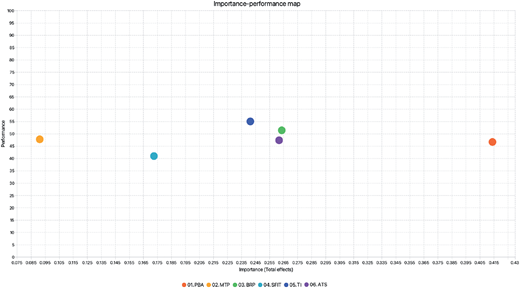
To complement the structural model and prioritize managerial actions, we conducted an Importance-Performance Map Analysis (IPMA) on the dependent variable PI (Hair et al., 2021). As shown in Figure 2, IPMA highlights constructs with high impact but suboptimal performance. “Attitude toward the Sponsor” is the strongest predictor (importance = 0.438) and, despite high performance (78.3), remains a primary management lever. “Team Identification” ranks second (importance = 0.401; performance = 74.9), underscoring the need to deepen emotional ties. “Brand Pride” (importance = 0.273) and “Sponsor-Club Fit” (importance = 0.221) show mid-level performance with room for optimization. Overall, the results prioritize managing sponsor attitudes and team identification to convert emotion into favorable behavior.
A consolidated overview of the structural results and predictive quality is presented in Table 7.
4.5 Group differences
Finally, we assessed potential group differences in the structural relationships using Multigroup Analysis (MGA). The sample was split into respondents who voted for Joan Laporta and those who did not (Table 10). Prior to MGA, we assessed measurement invariance using the MICOM procedure (Henseler et al., 2015). The results supported compositional invariance (Step 2) and indicated at least partial measurement invariance, providing a valid basis for comparing structural paths across groups. The results from MGA identified four significant differences: PBA → BRP (p = 0.024), MTP → TI (p = 0.000), BRP → TI (p = 0.008), and SFIT → BRP (p = 0.025), indicating effects that are dependent on voting behavior.
We also explored gender differences in the structural relationships using permutation-based MGA (see Table 11). The results indicate that the TI→ PI relationship was stronger for men than for women (β_men = 0.328 vs. β_women = 0.073; Δβ = 0.255; p = 0.005). Additionally, the MTP → TI path showed significant gender differences (β_men = 0.095 vs. β_women = −0.070; Δβ = 0.165; p = 0.009). No statistically significant differences were found for other paths, with ATS → PI being significant in the two-tailed test (Δβ = −0.169; p = 0.044).
5. Discussion
Taken together, these findings provide a coherent picture of how symbolic leadership and sponsorship congruence operate within an associative sport context. The following discussion interprets these results in light of identity-based theory and sponsorship research.
This study examined how symbolic links between institutional leadership, corporate sponsorship, and fan behavior operate at FC Barcelona. The structural results support the proposed framework. To address the research questions, we discuss four links: (1) institutional leadership, (2) sponsor congruence, (3) pride of belonging, and (4) fan behavior.
5.1 Institutional leadership → symbolic transfer, pride, identification
Perceived presidential authenticity functions as a symbolic catalyst, triggering meaning transfer (McCracken, 1989) from leader to organization, as anticipated by prior work (Chung et al., 2013; Ko et al., 2016) and consistent with symbolic transfer theory (Gwinner and Eaton, 1999). In FC Barcelona, an authentic leadership style associated with Joan Laporta shapes fans’ interpretations of club identity and elevates pride of belonging. The effects of authenticity on pride and identification align with research on charismatic leadership in symbolically charged contexts (Morhart et al., 2015; Schei et al., 2023) and with social identity theory, wherein leaders act as group symbols that reinforce collective belonging (Tajfel and Turner, 1979). The chain authenticity → meaning transfer → pride → identification highlights how leadership operates not as an end, but as a mechanism that strengthens the club’s emotional and symbolic fabric, integrating leadership into brand building and symbolic capital. Notably, meaning transfer does not exhibit a significant direct link to identification in the full sample, suggesting that its influence is primarily transmitted through brand pride and related affective mechanisms, and that subgroup heterogeneity (as indicated by MGA) may mask direct effects at the aggregate level.
From a theoretical standpoint, this non-significant direct effect is consistent with a layered identity process in which symbolic cues from leadership do not automatically translate into identification unless they are affectively internalized. Meaning transfer appears to operate as a cognitive-symbolic appraisal that requires an emotional bridge, in this case brand pride, to become identity-relevant. This interpretation aligns with Social Identity Theory and the Psychological Continuum Model, which both suggest that identification emerges more robustly from affectively charged states than from purely symbolic recognition. Thus, the unsupported direct path reinforces the idea that pride functions as a necessary emotional mediator between leadership symbolism and team identification, rather than weakening the theoretical model.
5.2 Sponsor congruence → attitude, pride
A second important pattern concerns the role of sponsor congruence in shaping evaluative and emotional responses. Perceived congruence between sponsor and club plays a central role in shaping members’ responses. Clear value alignment between Spotify and FC Barcelona fosters favorable sponsor attitudes, supporting the congruence hypothesis (Speed and Thompson, 2000). This echoes evidence that symbolic congruence predicts both positive attitudes and sponsorship legitimacy (Gwinner and Eaton, 1999; Santos and Balinski, 2025). Notably, congruence also enhances pride of belonging. In strongly codified identity contexts, sponsorship can either reinforce identity or create emotional dissonance (Couvelaere and Richelieu, 2005). When culturally coherent, the sponsor’s presence amplifies club identity and generates pride for alliances seen as legitimate (Speed and Thompson, 2000). Thus, symbolic congruence is a strategic resource in associative organizations where emotional ties are pivotal (Cornwell and Kwon, 2020). Our results extend classical sponsorship frameworks by moving beyond attitudes alone (Olson and Thjømøe, 2011). This highlights the strategic relevance of congruence in identity-driven sponsorship settings.
5.3 Brand pride → Team identification, attitude, purchase intention
Findings reinforce brand pride as a key mediator between organizational symbols and fan responses. Consistent with prior research, pride is both a positive emotion and a symbolic mechanism that activates deep identification (Aurier and Guintcheva, 2014; Bougie et al., 2003), significantly strengthening team identification in line with social identity dynamics (Tajfel and Turner, 1979). Pride also affects attitude toward the sponsor and purchase intention, linking emotional, cognitive, and behavioral outcomes. This aligns with affective transfer processes, where positive emotions toward a focal brand extend to associated brands (Chung et al., 2013; Ko et al., 2016). In contexts where fans interpret strategic decisions through a symbolic lens, pride activated by authentic and coherent cues helps integrate the club’s relationship with commercial partners, broadening sponsors’ symbolic legitimacy.
However, the direct effect of brand pride on purchase intention is only marginal (BRP → PI, p = 0.061), suggesting that pride functions more as a distal, identity-based emotion rather than as an immediate driver of sponsor-focused intentions. Consistent with the Psychological Continuum Model, pride and identification represent later-stage bonds (attachment/allegiance) that shape evaluative orientations, making them more likely to translate into behavioral intentions through more proximal determinants (Funk and James, 2001; Helm et al., 2016). Accordingly, purchase intention seems to be more effectively explained by more proximal predictors, namely team identification and attitude toward the sponsor. Both are well-established drivers of consumption intentions (Bhattacharya and Sen, 2003; Spears and Singh, 2004) and are also prioritized as key levers in our IPMA results (Hair et al., 2021).
The absence of a strong direct pride → purchase pathway is theoretically meaningful. Pride represents a distal, identity-anchored emotion tied to belonging, whereas purchase intention toward a sponsor is a more instrumental outcome. The weak direct effect suggests that emotional attachment alone is insufficient to trigger sponsor-focused consumption unless it is translated through more proximal attitudinal or identity mechanisms. In other words, pride energizes identification and sponsor evaluations, but behavioral intentions are shaped by constructs that sit closer to the decision interface. This pattern supports a hierarchical structure in which affective states influence behavior indirectly through identity and evaluative mediators, refining rather than contradicting existing sponsorship theory.
Together, these unsupported direct paths do not weaken the framework; instead, they clarify the hierarchical ordering of symbolic, affective, and behavioral mechanisms within identity-driven sponsorship contexts.
5.4 Team identification and sponsor attitude → purchase intention
Symbolic and attitudinal responses translate into stronger purchase intentions toward the sponsor, rather than observed purchasing behavior. Both team identification and attitude toward the sponsor exert direct, significant effects on purchase intention (Spears and Singh, 2004). Identification, as an internalized bond, supports organizational decisions including sponsorship, in line with social identity theory (Tajfel and Turner, 1979). Favorable sponsor attitudes, rooted in perceived congruence and symbolic transfer, also predict purchase intention (Speed and Thompson, 2000; Gwinner and Eaton, 1999). Consequently, sponsorship choices in high-symbolism settings should be treated as extensions of the club’s identity narrative. Purchase intention reflects not mere exposure, but a symbolic process that articulates belonging, pride, and cultural coherence.
Exploratory MGA by gender suggests that two relationships may vary across male and female members. Specifically, the TI → PI link is stronger for men than for women, and the MTP → TI path differs in sign and magnitude across groups (Table 11). These subgroup patterns should be interpreted cautiously, as gender was not modeled as a theorized moderator and unmeasured covariates (e.g. involvement or attendance) could contribute to observed heterogeneity. Nevertheless, the results indicate that the translation of identity-related bonds into sponsor-focused intentions may not be homogeneous across members.
5.5 Theoretical contributions
This study makes significant contributions to three key theoretical frameworks in the field of sports marketing and consumer behavior. First, the study refines the application of Social Identity Theory by showing that identification is reinforced through symbolic mechanisms that operate indirectly. This interpretation is consistent with the mediation analysis reported in Section 4.2. Specifically, leadership authenticity and sponsor-club fit shape identification via meaning transfer and brand pride, and via sponsor-related evaluations, rather than through direct effects specified on identification in the structural model. In doing so, the study reconnects contemporary symbolic sponsorship research with earlier institutional and governance perspectives in sport, showing that classic concerns about legitimacy and identity remain central in modern commercial alliances.
Second, we acknowledge that prior research also supports the opposite causal ordering, whereby stronger identification may color perceptions of sponsor-club fit. Given the cross-sectional design, we position this alternative direction as a relevant avenue for future longitudinal or experimental research.
Third, it refines the Theory of Symbolic Transfer (Gwinner and Eaton, 1999) by showing that when the club president is perceived as authentic, he acts as a legitimate symbolic vector, generating pride and identification. This figure thus takes on an active role in building the club’s symbolic capital, beyond his institutional function.
Fourth, it extends the Congruence Hypothesis (Speed and Thompson, 2000) by showing that perceived consistency between sponsor and club not only improves attitudes toward the sponsoring brand, but also increases pride of belonging. This dual influence reinforces the emotional legitimacy of sponsorship in contexts with high symbolic involvement.
Finally, one of the main theoretical contributions of the study lies in its joint and integrated approach to institutional leadership and sponsorship, two dimensions that have traditionally been analyzed in isolation. By examining them as interconnected symbolic factors in a context of high emotional involvement, the study proposes a more complex and realistic model of fan behavior, in which emotions, social identity, and commercial logic coexist and feed into each other. This integrated view challenges reductionist approaches to sports sponsorship and offers a new theoretical perspective for understanding how strategic decisions are constructed and legitimized in organizations with strong cultural roots.
5.6 Managerial contributions
The findings of this study offer direct strategic implications for sports clubs, sponsoring brands, and marketing managers. First, the results underscore the need to manage institutional leadership as a symbolic asset. Perceptions of presidential authenticity can strengthen the club’s legitimacy and activate key emotional bonds, primarily through meaning transfer and pride of belonging, which in turn reinforce team identification and sponsor-related outcomes. In this context, the president of FC Barcelona should not only be treated as an institutional manager but also as a ‘‘Symbolic Spokesperson’. Strategy: Design storytelling campaigns where the president is the central figure, embodying the club’s values during key moments (e.g. crisis), allowing fans to internalize those values through the pride of belonging. In this sense, sports organizations should consider the symbolic positioning of the leader as an integral part of their brand strategy.
Moreover, the study shows that cultural congruence between the sponsor and the club is crucial not only in generating positive attitudes toward the brand but also in enhancing pride in belonging to the club. Given the central role of sponsor-club fit in our model, we recommend implementing a Symbolic Fit Audit Protocol prior to high-visibility agreements. This audit can be structured around three criteria: (1) Value alignment (to what extent does the sponsor credibly reflect the club’s identity, including the “Més que un club” ethos?), (2) Historical narrative compatibility (to what extent does the sponsor’s brand meaning align with the club’s key identity milestones?), and (3) Perceived legitimacy (anticipated acceptability among members and the broader fan base). As a practical tool, clubs can complement this audit with brief member pulse surveys to gauge perceived fit and legitimacy expectations before announcing high-visibility agreements such as naming rights. Brands interested in partnering with sports entities should prioritize alliances with institutions whose values, history, and symbolic narrative align with their own, especially if the goal is to activate consumer behavior.
Furthermore, the results point to pride of belonging as a strategic lever in building fan communities. Managing this pride through the symbolic consistency of leaders and sponsors can reinforce the emotional legitimacy of strategic decisions, increase identification with the club, and translate into favorable behavior toward associated brands. From an execution standpoint, our IPMA results suggest that two levers should be prioritized to translate emotion into sponsor outcomes: (1) attitude toward the sponsor, as the strongest driver of purchase intention, and (2) team identification, the second most important predictor. Accordingly, managers should combine identity-consistent co-branded activations that make the partnership culturally meaningful with member-focused experiences that reinforce belonging and community recognition. This dual approach strengthens identification and improves sponsor attitudes in tandem. In parallel, sponsors should move beyond logo exposure and invest in culturally coherent co-created activations with the club and its community, for example through content or experiences that connect the sponsor’s offering to the club’s local culture and identity symbols; this helps strengthen attitude toward the sponsor and, through its proximal role, supports purchase intention.
In addition, our mediation results indicate that the effect of meaning transfer from the president on team identification is primarily transmitted through brand pride (MTP → BRP → TI, VAF = 75.7%). This indicates that leadership symbolism is most effective when it is deliberately converted into pride-evoking member experiences that make collective achievements and identity cues personally meaningful, such as member-only initiatives and heritage-focused content that foreground the club’s values, continuity, and shared accomplishments. By contrast, several mediated chains from presidential authenticity to purchase intention show very low VAF values (below 5%), suggesting that sponsor focused intentions are more effectively influenced through proximal levers such as attitude toward the sponsor and team identification rather than through long indirect sequences.
While the model shows adequate explanatory and predictive performance, most structural effects are small to moderate in magnitude. Accordingly, the managerial recommendations should be read as meaningful levers that can improve sponsor outcomes, but not as deterministic drivers. Purchase intention is shaped by multiple factors beyond the symbolic mechanisms captured here.
Socially, highly visible sponsorship assets such as naming rights can become contested symbols in identity-based clubs. Strategically justified alliances may still be perceived as identity threats by certain fan segments. This perception can trigger resistance, polarization, or cultural tensions within the club’s public sphere. Our voting-based MGA results reinforce that legitimacy judgments are not homogeneous across members, suggesting that clubs should anticipate divergent interpretations and proactively manage the social acceptability of commercial decisions through transparency and identity-consistent communication. In practical terms, clubs can segment communication using voting behavior as a proxy for legitimacy sensitivity: for members who did not vote for the current president, messaging should be more transparent and evidence-based, emphasizing tangible benefits and safeguards of the agreement and clarifying how the partnership protects core identity claims; for more supportive segments, communication can remain more narrative-driven while still anchored in consistent club values.
Beyond commercial outcomes, these dynamics point to a broader societal role of associative sport organizations as arenas where identity, legitimacy, and democratic participation are negotiated. In member-governed clubs, sponsorship decisions are not interpreted purely as market transactions but as collective identity statements subject to public scrutiny. This highlights that governance in associative sport organizations carries a civic dimension: leaders must maintain symbolic legitimacy not only to secure financial sustainability but also to preserve trust, participation, and social cohesion within the member community. In this sense, sponsorship strategy becomes part of a wider democratic dialog about what the organization represents and whose values it embodies.
Finally, it is important to understand sponsorship not simply as a tool for commercial visibility, but as an extension of the club’s identity narrative. This requires a more integrated approach between the communications, marketing, and presidency departments, aimed at generating alliances that are perceived as legitimate and culturally coherent by the club’s fan base.
5.7 Limitations and future lines of research
This study advances the symbolic analysis of leadership and sponsorship in sport but has limitations that suggest avenues for further work. First, the cross-sectional design precludes causal inference. Longitudinal studies are needed to track how fans’ perceptions and behaviors evolve over time, particularly around leadership or sponsorship changes.
Second, the focus on a single, strongly identified club (FC Barcelona) limits generalizability. Future research should compare symbolic models across clubs with different structures and cultures, and examine whether fan responses vary by club profile (associative vs. corporate). We did not measure match-attendance frequency, fan involvement, or socio-economic status, which prevents controlling for these covariates and motivates future research with richer profiles. Relatedly, exploratory MGA results suggested gender-based heterogeneity in some paths; however, these differences should be interpreted cautiously and warrant replication with richer involvement and attendance measures.
Third, social desirability may have affected responses, especially regarding the president. Complementary qualitative methods (interviews, focus groups, digital ethnography) could probe the symbolic mechanisms underlying legitimacy, pride, and cultural congruence. Because data were collected in May 2023, approximately two years after the March 2021 presidential election, perceptions of leadership and governance may reflect subsequent events and retrospective recall, which limits strictly time-anchored interpretations of election-period evaluations.
Finally, the model could be extended to incorporate negative emotions (e.g. frustration, detachment), social media reactions, and symbolic controversies when leaders or sponsors polarize fans. Such approaches would refine understanding of symbolic impact in high-involvement settings marked by identity tension.
Finally, the dependent outcome captures sponsor-focused behavioral intentions (purchase and recommendation intentions) rather than observed transactions. Therefore, the model should be interpreted as explaining propensity to engage with the sponsor. Future research should complement survey intentions with behavioral indicators (for example, subscription, usage, or purchase data) and, ideally, longitudinal designs to assess intention to behavior conversion.
6. Conclusions
This study shows that symbolic links among institutional leadership, corporate sponsorship, and pride of belonging shape fan behavior in a high-identity setting like FC Barcelona. Beyond confirming specific relationships, it offers an interpretive framework in which authentic, culturally congruent organizational symbols activate emotions that translate into favorable attitudes and behaviors toward associated brands.
The contribution lies in integrating variables often studied in isolation into a relational symbolic model where pride serves as the axis of fans’ affective and behavioral responses. This perspective enriches existing theory and yields direct implications for club and sponsor management in emotionally charged sports ecosystems.
Brand strategy in sport should be treated as a shared symbolic construct. Institutional and commercial decisions must be judged by their capacity to generate emotional resonance, cultural legitimacy, and belonging. Thus, sport is not only entertainment or business, but a space where deep identities and durable loyalties are built.
The IPMA clarifies managerial priorities by impact and performance. Attitude toward the sponsor and team identification are the most influential drivers of purchase intention, implying that efforts should strengthen these links through authentic leadership and symbolically consistent sponsorship. Their performance leaves room for improvement, indicating concrete opportunities to enhance fans’ symbolic experience. Overall, consumer behavior in high-involvement contexts depends less on exposure than on the ability of clubs and partners to activate meaningful cultural resonances.