Economic policy uncertainty (EPU) poses challenges for firms navigating disclosure decisions. While prior research often examines mandatory and voluntary disclosures separately, this study investigates how firms jointly adjust both under heightened EPU. We assess whether firms treat these channels as complements consistent with the confirmation hypothesis, or as substitutes reflecting a shift in disclosure priorities.
We analyse a panel of 61,356 firm-year observations for US public firms from 2001 to 2022. Mandatory disclosure quality is measured using the financial statement divergence (FSD) Score, a pattern-based measure derived from Benford's Law that detects anomalies in financial reporting. Voluntary disclosure is captured through characteristics of management earnings forecasts, including frequency and specificity. Endogeneity is addressed through firm fixed effects and instrumental variable estimation using the Political Conflict Index and Lewbel's method. Multiple robustness checks, including alternative disclosure measures and omitted variable bias tests, strengthen the credibility of the findings.
We find the robust evidence that firms respond to elevated EPU by improving the structural integrity of mandatory reports. Concurrently, we observe nuanced, descriptive patterns in voluntary channels, generally characterised by the reduced forecast frequency and specificity. This substitution effect suggests a strategic shift toward verifiable, audited information and away from forward-looking guidance. The findings challenge the Confirmation Hypothesis and indicate that firms prioritise defensibility over disclosure breadth during uncertainty.
This study introduces the FSD Score to the disclosure decision literature and offers novel evidence on disclosure substitution under policy uncertainty. By integrating mandatory and voluntary channels in a unified framework, the study offers insights into how firms recalibrate transparency strategies and informs regulators seeking to preserve disclosure quality during volatile periods.
1. Introduction
Economic policy uncertainty (EPU) is a widely recognised source of macro level uncertainty that can influence corporate disclosure behaviour, particularly during periods of heightened policy volatility. Arising from unpredictable government actions, regulatory changes, and macroeconomic volatility (Baker et al., 2016; Pástor and Veronesi, 2012), EPU has been associated with both greater transparency and opportunistic behaviour. Some firms respond to uncertainty by improving the quality of disclosure to reassure stakeholders (Bird et al., 2023; El Ghoul et al., 2021), while others appear to exploit the noisy environment through increased earnings management or obfuscation (Bermpei et al., 2022; Boone et al., 2020). This divergence is particularly puzzling given evidence that firms face stronger penalties for unethical behaviour, such as corruption or misreporting, under high policy uncertainty (Banerjee et al., 2022; Ko and Lee, 2015).
One explanation may lie in how firms manage different types of disclosure. Mandatory disclosures such as audited financial statements are essential for reducing information asymmetry and maintaining investor confidence (Francis et al., 2008; Healy and Palepu, 2001), while voluntary disclosures such as management earnings forecasts and conference calls allow firms greater discretion to frame expectations (Lang and Lundholm, 1993; Rogers et al., 2009; Tasker, 1998). Although both types are important, prior research has generally examined them in isolation, leaving open the question of whether firms coordinate these disclosure channels in response to uncertainty.
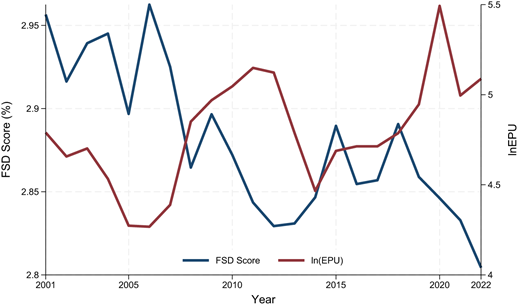
To motivate a more integrated approach, Figure 1 illustrates trends in EPU and the Financial Statement Divergence (FSD) Score [1], which serves as an inverse proxy for mandatory reporting quality, from 2001 to 2022. In the pre-GFC period around 2006, a temporary spike in the FSD Score occurred despite relatively low EPU, which may indicate a deterioration in transparency prior to the crisis. However, as the GFC unfolded, firms appeared to elevate their reporting quality in response to the pervasive crisis, as evidenced by the decline in the FSD Score. Similarly, during the COVID-19 pandemic in 2020, a sharp increase in EPU coincided with a decline in the FSD Score, suggesting that firms bolstered their mandatory disclosures to mitigate uncertainty.
Because Figure 1 shows that mandatory reporting discipline tightens (i.e. lower FSD Scores) during periods of elevated uncertainty, it naturally raises the question of how firms adjust their broader disclosure strategy. Specifically, Figure 1 motivates us to investigate whether firms achieve this improvement by reallocating resources away from voluntary disclosures or by enhancing both channels simultaneously to reassure investors.
Despite growing interest in the effects of EPU on disclosure, the literature lacks a unified perspective on how firms respond across different disclosure channels. Much of the existing work relies on accrual-based measures of Financial Reporting Quality (FRQ), which are sensitive to managerial discretion and estimation assumptions (Francis et al., 2008; Healy and Palepu, 2001). Consequently, there is limited empirical evidence on how firms adjust disclosure holistically under policy uncertainty using more objective and less manipulable indicators.
We address this gap by examining how firms simultaneously adjust both mandatory and voluntary disclosure strategies in response to heightened EPU. Our analysis contributes to the literature in several ways. First, by jointly investigating two major disclosure channels, we provide new insights into how firms balance incentives for transparency against the risks of misinterpretation or litigation during uncertain periods.
Second, we introduce the FSD Score (Amiram et al., 2015), a firm-year-based, pattern-driven measure that serves as an inverse proxy for mandatory reporting quality based on Benford's Law (Varian, 1972). We employ this measure for its distinct advantages over traditional proxies. Unlike accrual-based proxies, the FSD Score does not rely on accounting assumptions or estimation inputs, making it more robust to managerial discretion. Furthermore, while recent research focuses on textual obfuscation (e.g. Mekhaimer et al., 2024) or reporting complexity (e.g. Hoitash and Hoitash, 2018), the FSD Score captures the quantitative structural integrity of financial statements. This approach provides an objective benchmark for reporting quality that is independent of both narrative choices and accrual estimation models.
Although this approach has been widely used in auditing and forensic contexts, its application to corporate reporting under macroeconomic uncertainty remains limited, largely due to the accounting and finance literature's traditional reliance on accrual-based proxies. This study bridges this gap by extending the application of the FSD Score to the accounting and finance literature, demonstrating how it detects subtle distributional irregularities in financial statements during periods of heightened EPU.
Using a large sample of 61,356 firm-year observations from 7,300 U.S. firms spanning 2001 to 2022, we examine how EPU influences both the quality of mandatory disclosures (measured by the FSD Score) and characteristics of voluntary disclosures (e.g. forecast frequency, specificity, and horizon) (Ball et al., 2012). To evaluate the potential trade-off between the two, we include an interaction term between EPU and voluntary disclosure to test whether firms treat them as complements or substitutes under uncertainty.
Our empirical findings suggest a substitution effect: a one-standard-deviation increase in EPU is associated with a 0.54% improvement in mandatory reporting quality relative to the mean, whereas forecast specificity is observed to decline by 17.5%. Under heightened EPU, firms tend to robustly improve the quality of mandatory financial reports to maintain credibility (Bermpei et al., 2022; Dai and Ngo, 2021). In contrast, their voluntary disclosure strategies exhibit more complex and nuanced patterns. While striving to manage litigation and reputation risks, firms generally appear to reduce the frequency and specificity of voluntary disclosures (Bird et al., 2023; Mekhaimer et al., 2024). This divergent behaviour indicates a strategic shift away from forward-looking guidance toward more defensible, verifiable financial information (Kim et al., 2016a; Rogers and Van Buskirk, 2009).
To address potential endogeneity, we employ instrumental variable estimation using the Political Conflict Index (PCI) and Lewbel's heteroscedasticity-based method. While these tests confirm a strong causal relationship for mandatory reporting quality and the overarching substitution effect, diagnostic tests reveal that standalone voluntary disclosures are more susceptible to endogeneity. Therefore, we cautiously interpret the standalone voluntary disclosure findings as important descriptive patterns that contextualise our primary findings. Robustness checks, including alternative FRQ proxies and omitted variable bias tests, reinforce the reliability of our results. Together, the findings indicate that EPU influences not only short-term disclosure behaviour but also long-term transparency strategies.
These insights contribute to the broader discussions on corporate disclosure strategies and carry actionable implications for regulators. In particular, the observed substitution effect suggests that during periods of policy-driven uncertainty, firms consistently reinforce mandatory compliance, whereas their voluntary transparency exhibits more defensive and nuanced patterns. This has both regulatory and political implications. Policymakers should be aware that firm disclosure choices are shaped not only by market forces but also by expectations about regulatory interpretation, enforcement and potential litigation risks. Understanding these complex trade-offs can help regulators contextualise selective transparency and better preserve overall market integrity.
2. Literature review
Corporate disclosure consists of mandatory financial reporting and voluntary disclosures, both of which aim to reduce information asymmetry and improve market efficiency [2] (Healy and Palepu, 2001). However, research remains divided on whether these disclosures function as substitutes or complements. Some argue for a substitutive relationship, where firms with lower earnings quality rely more on voluntary disclosures to compensate for weaker financial reporting (Grossman and Hart, 1980; Milgrom, 1981). Others support a complementary relationship, where firms with high-quality mandatory disclosures issue more voluntary disclosures to enhance credibility and investor confidence (Dye, 1985; Jung and Kwon, 1988; Verrecchia, 1990). Empirical evidence remains mixed, showing that firms may employ both strategies depending on disclosure incentives and external conditions (Lang and Lundholm, 1993; Tasker, 1998).
Theoretical perspectives on the interaction between mandatory and voluntary disclosure have evolved over time. While early studies focused on information asymmetry and firm incentives, more recent research has examined how these disclosure strategies interact under different market conditions (Healy and Palepu, 2001). One significant development in this regard is the Confirmation Hypothesis, which provides a theoretical foundation for understanding the complementary nature of corporate disclosure strategies. This hypothesis suggests that audited financial statements provide an essential verification mechanism for voluntary disclosures, ensuring their credibility (Ball et al., 2012; Gigler and Hemmer, 1998). This dynamic is particularly relevant in settings where high-quality financial reporting reinforces investor confidence in voluntary disclosures, creating an environment conducive to transparent communication (Lundholm, 2016; Stocken, 2000). Empirical research supports this view, demonstrating that firms with higher reporting quality tend to issue more voluntary disclosures, which are perceived as more credible and informative by investors (Francis et al., 2008; Frankel et al., 2021).
However, this complementary relationship is not always stable. External factors, particularly EPU, including COVID-19 policy responses, the 2018 US-China trade tensions, and the 2016 Brexit referendum, can disrupt the synergy between mandatory and voluntary disclosures. Prior research suggests that firms facing heightened EPU may strategically limit voluntary disclosures, even when FRQ remains high, due to concerns over regulatory scrutiny, litigation risks, or market uncertainty (He et al., 2019) [3]. Thus, while the Confirmation Hypothesis explains why high-quality financial reporting should support voluntary disclosure, macroeconomic uncertainty may weaken or even reverse this effect. Understanding these dynamics is critical for evaluating how firms adjust disclosure strategies in response to changing economic conditions. The next two sub-sections explore the relationship between EPU and disclosure types in depth.
2.1 EPU and mandatory disclosure
EPU reflects unpredictability in government fiscal, monetary, and regulatory policies, introducing uncertainty into the business environment (Baker et al., 2016). High EPU has been shown to reduce corporate investment (Chen et al., 2019; Kang et al., 2014), stifle innovation (Xu, 2020), and increase compliance costs (Bloom, 2009). It also heightens information asymmetry, pressuring firms to provide more transparent and reliable disclosures (Nagar et al., 2019; Pástor and Veronesi, 2012). In response, some firms enhance financial transparency to reassure investors, while others engage in earnings management or selective disclosure to manage market perceptions (Brogaard and Detzel, 2015; Hirshleifer et al., 2009). The extent to which firms lean toward transparency or opportunism depends on their financial health, governance structures, and exposure to regulatory scrutiny.
Further complexity arises in how firms alter specific aspects of their reporting. For instance, Jiang et al. (2020) find that policy uncertainty increases the quantity of textual disclosure but decreases readability. Similarly, Mekhaimer et al. (2024) provide evidence that firms strategically increase the complexity of their narrative disclosures to obfuscate performance during periods of political uncertainty. While these studies highlight how EPU affects the qualitative aspects of reporting (i.e. text and tone), our study complements this line of inquiry by focussing on the quantitative structural integrity of reported financial numbers using the FSD Score.
The impact of EPU on mandatory financial reporting remains unclear. Some studies suggest that heightened uncertainty strengthens reporting quality, as firms adopt more conservative accounting practices to maintain investor confidence (Dai and Ngo, 2021; El Ghoul et al., 2021). Increased accounting conservatism in uncertain periods supports this argument, as firms aim to reduce litigation risk and signal financial stability. However, other research finds that EPU incentivises earnings management, with firms manipulating financial reports to smooth earnings or obscure risk exposure (Bermpei et al., 2022; Dhole et al., 2021). In some cases, firms may reduce disclosure frequency or engage in selective reporting to preserve operational flexibility amid uncertain regulatory conditions (Bloom, 2009). These conflicting findings highlight a critical gap in the literature, whether firms respond to EPU by enhancing financial statement quality or exploiting uncertainty to distort reporting.
This tension is particularly relevant when considering market penalties for disclosure choices under EPU. Firms engaged in unethical practices face heightened scrutiny and increased costs of equity when policy uncertainty is high (Banerjee et al., 2022). While some firms improve financial reporting quality to mitigate undervaluation concerns, others with lower-quality reporting may adopt earnings management strategies as a substitute for transparent disclosure (Brogaard and Detzel, 2015; Jin et al., 2019).
However, given the strong theoretical incentives to signal stability and reduce information asymmetry under uncertainty, we expect the demand for credible reporting to dominate. Therefore, we posit the following hypothesis.
An increase in economic policy uncertainty is associated with an improvement in mandatory financial reporting quality.
2.2 EPU and voluntary disclosure
EPU also plays a significant role in shaping managers' voluntary disclosure decisions (Nagar et al., 2019). Some studies suggest that firms increase voluntary disclosures under heightened EPU to reassure investors and mitigate information asymmetry (Bird et al., 2023; Boone et al., 2020; Nagar et al., 2019). Enhanced transparency can help rebuild market confidence and signal firms' ability to navigate uncertain conditions (Andrei et al., 2023). However, other research suggests the opposite effect, EPU can reduce voluntary disclosure by lowering the quality of private information, increasing the risk of forecast inaccuracy, reputational damage, or litigation (Kim et al., 2016a; Rogers et al., 2009). As a result, some firms choose to limit forward-looking statements to avoid scrutiny.
This strategic trade-off is particularly evident among firms engaged in high-risk or questionable activities, where increased transparency could expose them to regulatory scrutiny or legal consequences (Ko and Lee, 2015; Zeume, 2017). While some firms increase disclosures to manage uncertainty, others engage in selective reporting, altering disclosure length and tone without necessarily improving clarity (Jiang et al., 2020). The net impact of EPU on voluntary disclosure is therefore highly firm-specific, reflecting a balance between the benefits of reducing investor uncertainty and the risks of unintended exposure.
Despite the potential benefits of transparency, the cost of disclosure errors rises significantly when the macroeconomic environment is volatile. Heightened EPU degrades the quality of managers' private information, making accurate forecasting inherently more difficult. Faced with the increased probability of ex-post inaccuracy and the associated litigation or reputational penalties, managers are expected to prioritise caution over candour. Consistent with this risk-aversion perspective, we predict.
An increase in economic policy uncertainty is associated with a reduction in the extent of voluntary disclosure.
In summary, prior literature suggests that firms face conflicting incentives under uncertainty. While mandatory reporting may be strengthened to signal credibility (H1), voluntary disclosure is likely to be curtailed to manage risk (H2). The interplay between these two channels, whether they function as complements or substitutes under high EPU, remains an open empirical question, which we explore in our additional analyses.
3. Methodology
3.1 Data and sample construction
This study utilises firm-level financial and stock market data from Compustat and CRSP, management forecasts and voluntary disclosure data from LSEG I/B/E/S, and macroeconomic variables from the Federal Reserve Economic Data (FRED). EPU is measured using the publicly available index developed by Baker et al. (2016) [4].
To ensure data consistency across sources, we define the research period based on data availability. Although WRDS, FRED, and the EPU index provide extensive historical coverage, LSEG I/B/E/S data is available from the year 2000 following its integration with Thomson Reuters. To maintain a sufficient number of firm-year observations and consistency across datasets, we restrict the sample to 2001–2022.
The initial dataset comprises 163,796 firm-year observations from 17,750 US-based firms. The financial and utilities industries are excluded due to their unique regulatory environments, reducing the sample by 39,882 firm-years. Further exclusions for missing data
and selection criteria yield a final sample of 61,356 firm-years from 7,300 firms. This comprehensive dataset enables a robust examination of long-term trends and firm responses to EPU. Table 1 details the sample selection process, firm-year distribution, and industry classifications based on SIC-1 codes.
3.2 Variable description
3.2.1 Dependent variables
3.2.1.1 Financial Statement Divergence (FSD) score
We measure mandatory reporting quality using the FSD Score, as outlined by Amiram et al. (2015). The FSD Score assesses the extent to which financial statement numbers deviate from Benford's Law [5], which describes the expected distribution of leading digits in naturally occurring datasets. Genuine financial data should conform to this distribution, making the FSD Score a powerful tool for detecting distributional irregularities and potential reporting anomalies (Davis and Garcia-Cestona, 2023).
Unlike traditional accrual-based reporting quality measures (e.g. accrual quality, real earnings management, F-score, or M-score), the FSD Score evaluates the structural integrity of financial reports without relying on managerial assumptions or discretionary adjustments. This makes it less susceptible to missing financial items, enhances data coverage, and provides a more robust assessment of reporting quality. This makes it less susceptible to managerial bias, particularly during periods of heightened policy uncertainty when discretion in reporting is more likely. Additionally, the FSD Score mitigates endogeneity concerns common to accrual-based measures, offering a more stable and objective measure of reporting quality under uncertain conditions (Amiram et al., 2015).
To calculate the FSD Score, we use the Mean Absolute Deviation (MAD) statistic:
where represents the actual distribution of leading digits d in a firm i's financial statements in year t, and denotes the theoretical expected distribution of digit d according to Benford's Law. A higher FSD Score indicates greater deviation from the expected distribution, highlighting potential anomalies in reporting quality. To ensure robustness, we exclude firm-year observations with fewer than 100 financial statement line items from our sample (Amiram et al., 2015).
We acknowledge that deviations from Benford's Law can theoretically arise from unintentional estimation errors, particularly when managers adopt conservative estimates under high uncertainty (Amiram et al., 2015). If heightened EPU primarily induced such estimation noise, we would expect a positive association between EPU and the FSD Score. However, our empirical findings (discussed in Section 4) consistently show a significant negative association. This suggests that despite the potential for increased estimation difficulty, firms actively improve the structural conformity of their financial statements to reassure investors, effectively overriding the noise effect. Furthermore, our robustness tests using the M-Score and F-Score (Table 6) confirm that the FSD Score captures variations in reporting quality rather than random estimation errors.
3.2.1.2 Management earnings forecast measures
To capture voluntary disclosure quality, we adopt four management earnings forecast proxies widely used in prior literature (Ball et al., 2012; Bamber et al., 2010; Frankel et al., 2021). Forecasts that are more frequent, timely, and specific typically require greater internal information processing and resource allocation, thereby signalling higher information quality. In this study, we interpret the reduction in these measures under high EPU as a rational strategic response. By shifting towards less granular disclosure, managers seek to avoid the costs of overconfidence and litigation risk associated with precise commitments in volatile environments.
Forecast Frequency (Number of Forecasts) – The annual count of quarterly and yearly EPS forecasts, where a higher count indicates more frequent and potentially informative disclosures (Francis et al., 1994; Kasznik and Lev, 1995).
Forecast Timeliness (HORIZON) – The natural log of (1 + average forecast horizon), measured as the days between the forecast date and the fiscal period's end (Rogers and Van Buskirk, 2009). Longer horizons imply that managers are willing to reveal information earlier.
Forecast Precision (PRECISION) – A categorical measure where point estimates receive the highest precision score [6], followed by range, open-ended, and qualitative estimates (Armstrong et al., 2014).
Forecast Specificity (SPECIFICITY) – Defined as the negative of the forecast range divided by stock price, with tighter estimates indicating more specific guidance. Consistent with Baginski and Hassell (1997) and Ball et al. (2012), we consider tighter ranges to convey more precise expectations to investors, representing a higher level of disclosure quality.
Additionally, Forecaster, a binary indicator variable, is included to capture whether a firm issued at least one forecast in a given year, reflecting its engagement in voluntary disclosure (Rogers et al., 2009). Detailed definitions of all variables are provided in Appendix 1.
3.2.2 Economic policy uncertainty (EPU)
The main independent variable, economic policy uncertainty (EPU), captures macroeconomic uncertainty and its impact on corporate disclosure. We employ the widely used EPU index developed by Baker et al. (2016), which reflects uncertainty stemming from government policies and economic conditions. Following prior research (Bermpei et al., 2022; Datta et al., 2019; Xu, 2020), we employ the EPU index at an annual frequency to explore its relationship with corporate disclosure outcomes.
EPU has been shown to affect corporate decision-making, financial reporting, and voluntary disclosures, as firms adjust their reporting strategies to manage investor expectations and mitigate risk (Bermpei et al., 2022; Datta et al., 2019). Following prior research, we use the natural logarithm of the EPU index (lnEPU) to address its right-skewed distribution, reduce the impact of extreme values, and facilitate relative interpretation. Given that policy uncertainty exhibits high volatility due to occasional economic shocks, log transformation helps stabilise variance, making it a widely adopted approach in studies analysing its effect on corporate disclosure (Bermpei et al., 2022; Bird et al., 2023; Boone et al., 2020; Datta et al., 2019; Nagar et al., 2019; Xu, 2020).
3.2.3 Control variables
To ensure robust estimation of the relationship between EPU and corporate disclosure, we incorporate firm-specific and macroeconomic control variables based on prior literature. Firm size, measured as the natural logarithm of market value, accounts for the greater regulatory scrutiny and investor attention larger firms receive, as well as their capacity to invest in robust financial reporting systems (Francis et al., 2008). Leverage, defined as total liabilities divided by market value of equity, reflects financial risk, where highly leveraged firms are more likely to enhance disclosure transparency to reassure creditors (Bermpei et al., 2022; Jensen and Meckling, 1976). The market-to-book ratio (MTB) serves as a proxy for growth opportunities, as firms with higher growth potential often provide greater transparency to mitigate information asymmetry (Lang and Lundholm, 1993).
Profitability, measured by return on assets (ROA), is included since more profitable firms have stronger incentives to provide high-quality disclosures to signal financial stability and performance (Rigamonti et al., 2024). We also control for financial distress using the inverse of Altman's Z-Score, where lower values indicate a higher risk of distress, potentially influencing firms' disclosure strategies. Additionally, cash flow from operations (CFOA), calculated as operating cash flows deflated by lagged assets, captures liquidity effects on disclosure, as firms with stronger cash flows are generally more likely to invest in financial reporting (Dechow et al., 2011).
To account for financial stability, we include measures of volatility. Cash flow volatility (CASH VOL), represented by the standard deviation of cash flows over assets over the last five years, and sales volatility (SALES VOL), calculated as the standard deviation of sales over assets over the same period, help capture fluctuations in firm performance that may drive disclosure adjustments (Bermpei et al., 2022).
In addition to firm-specific controls, macroeconomic variables are included to address broader economic conditions that could confound the relationship between EPU and disclosure. GDP growth, measured at the federal level, reflects overall economic conditions, with higher growth typically associated with lower uncertainty (Baker et al., 2016; Gulen and Ion, 2016). The VIX index, which captures financial market uncertainty based on the implied volatility of S&P 500 index options, controls for fluctuations in investor sentiment and overall financial uncertainty (Baker et al., 2016; Rigamonti et al., 2024) [7].
To ensure consistency and mitigate the influence of extreme values, all continuous variables are winsorised at the 1% and 99% levels. A detailed description of variable construction is provided in Appendix 1.
3.3 Empirical models
This subsection outlines the econometric specifications employed to examine the relationship between EPU and corporate disclosure behaviours. We employ two baseline models to test the hypotheses related to mandatory and voluntary disclosure responses to EPU and the interplay between these disclosure types under uncertain periods. Ordinary least squares (OLS) regression forms the foundation of the analysis, supplemented by advanced techniques to address endogeneity concerns.
Our baseline model tests H1 and H2, which assess the relationship between US EPU (lnEPU) and corporate disclosure. Specifically, we estimate:
where represents (1) Firm-year based mandatory reporting quality, inversely proxied by FSD Score, and (2) Voluntary Disclosure measures: Number of Forecasts, Precision, Horizon, and Specificity for firm i in year t.
The primary independent variable, lnEPU, captures contemporaneous EPU, which has been shown to influence corporate disclosure decisions (Baker et al., 2016; Bermpei et al., 2022). We use the natural logarithm of EPU to address skewness and facilitate interpretation. Firm fixed effects control for unobservable, time-invariant characteristics such as industry and governance structure, reducing potential biases and ensuring that estimates reflect within-firm variations in response to EPU (Bird et al., 2023; Boone et al., 2020).
Consistent with H1, which posits that firms enhance mandatory reporting quality under heightened uncertainty to mitigate information asymmetry, we expect to be negative when the dependent variable is the FSD Score, since a lower score indicates higher quality. Similarly, consistent with H2, which posits that firms reduce voluntary disclosures to avoid the risks of issuing imprecise or speculative forecasts during uncertain periods, we expect to be negative for voluntary disclosure measures (Frequency, Precision and Specificity).
4. Results
4.1 Descriptive statistics
Table 2 presents the descriptive statistics, providing insight into the distribution and variability of mandatory reporting quality and corporate disclosure characteristics within the final sample. The average FSD Score (0.029) indicates low deviation from expected Benford distribution, which is generally interpreted as high mandatory reporting conformity. While the FSD Score does not have a fixed benchmark, this value is consistent with prior findings from Amiram et al. (2015), reinforcing the sample's robustness.
Firms issue an average of 1.488 MEFs per year with variations in disclosure frequency reflecting firm-specific strategies. The forecast Horizon (mean: 5.409) indicates a moderately extended forward-looking approach with limited variability. The mean of Specificity (−0.566) and Precision (0.719) display expected dispersion, reflecting differences in forecast detail across firms. Some firms provide highly specific disclosures, while others remain more generalised, underscoring variation in disclosure strategies. These patterns align with prior literature (Ball et al., 2012; Frankel et al., 2021).
The mean of LnEPU is 4.769 (SD: 0.294), consistent with prior literature utilising the index developed by Baker et al. (2016). As discussed in Section 3.2.2. and illustrated in Figure 1, the EPU index displays considerable time series variation, which provides sufficient fluctuation for identifying the effects of macro level uncertainty shocks on corporate disclosure.
The average firm size (logged) is 5.685. The average leverage is 0.258, indicating moderate debt levels. The market-to-book ratio averages 2.893, reflecting variation in growth opportunities and valuations. The average ROA is −11.1%, capturing differences in financial performance. Operating cash flow averages 2.5% of total assets, while cash and sales volatility average 0.303 and 0.287, respectively, illustrating variations in liquidity and revenue stability. The inverse Altman's Z-Score averages −0.119, where lower values indicate higher distress risk. Macroeconomic indicators, including GDP growth (2.071) and the VIX index (20.165), suggest a relatively stable economic environment.
The descriptive statistics largely align with existing research reinforcing the robustness of the sample design (Amiram et al., 2015; Baker et al., 2016; Bermpei et al., 2022). The results suggest that the sample provides a balanced representation of firms with varying financial characteristics, disclosure practices, and economic exposures, making it well-suited for examining the relationship between EPU and corporate disclosure.
4.2 Correlation matrix
Table 3 presents the pairwise correlation coefficients among key variables. FSD Score (Column 1) is negatively correlated with other reporting quality measures, consistent with its interpretation as an indicator of lower mandatory reporting quality. EPU exhibits a modest negative correlation with voluntary disclosure measures (e.g. number of forecasts: 0.086), suggesting that firms reduce forward-looking disclosures under heightened uncertainty. Firm size (LnSize) shows a significant positive correlation with voluntary disclosure, reinforcing the notion that larger firms tend to provide more transparent reporting. Most control variables exhibit expected relationships with dependent variables, supporting their inclusion in the analysis.
To further address concerns regarding multicollinearity, we estimated Variance Inflation Factors (VIFs) in Table 3.When considered jointly, the VIF diagnostics and the correlation matrix suggest that, although some correlations are statistically significant, all remain moderate, indicating that multicollinearity is not a concern in our analysis.
4.3 Baseline regression
Table 4 presents the relationship between EPU and both mandatory and voluntary disclosure practices. In Column (1), the primary independent variable, LnEPU, shows a statistically significant negative coefficient of −0.053 at the 1% level in relation to the FSD Score. A one-standard-deviation increase in LnEPU is associated with a 0.54% decrease in the FSD Score relative to the sample mean, reflecting a corresponding improvement in mandatory reporting quality. This finding supports H1 and is consistent with prior research suggesting that firms adopt more transparent reporting practices to reduce information asymmetry and maintain investor confidence when faced with uncertain economic conditions (Dai and Ngo, 2021; El Ghoul et al., 2021).
Columns (2) to (5) of Table 4 examine how EPU affects various aspects of voluntary disclosure, specifically MEFs. The coefficient of LnEPU on the number of forecasts (Column 2) is −0.056 and statistically significant at the 5% level, indicating that firms issue fewer earnings forecasts as uncertainty increases. This supports the notion that managers avoid forward-looking guidance in uncertain environments due to concerns over forecast accuracy and potential litigation risk (Kim et al., 2016b; Rogers and Van Buskirk, 2009).
For forecast precision (Column 3), LnEPU exhibits a significant negative coefficient (−0.304, p < 0.01), indicating that firms are more likely to issue less precise disclosures, such as broader ranges or qualitative guidance, rather than specific point estimates (Jiang et al., 2020; Mekhaimer et al., 2024). Similarly, forecast specificity (Column 4) shows a negative and significant coefficient (−0.337, p < 0.01), suggesting that firms reduce the informativeness of their disclosures to mitigate reputational and legal risks (Rogers et al., 2009).
In contrast, the coefficient of LnEPU on forecast horizon (Column 5) is positive and significant (0.125, p < 0.01), indicating that firms extend their forecast horizons under high policy uncertainty. Rather than increasing disclosure frequency or detail, firms maintain transparency by shifting the timing of guidance, allowing flexibility for future adjustments (Bonsall et al., 2020; Rogers et al., 2009).
In terms of economic significance, the impact of EPU varies considerably across different dimensions of voluntary disclosure. A one-standard-deviation increase in LnEPU (0.294) leads to a 17.5% reduction in forecast specificity relative to its mean and a 4.2% reduction in forecast precision. In contrast, the economic magnitude for number of forecasts (frequency) is relatively modest, showing a decline of approximately 1.1%, while forecast horizon shows a negligible increase of 0.7%. This disparity highlights a strategic dilution of disclosure content rather than a complete withdrawal.
These findings provide support for H2, demonstrating that firms strategically adapt their voluntary disclosure practices in response to heightened policy uncertainty. Instead of uniformly reducing or increasing disclosure, firms selectively adjust their form and timing by lowering forecast frequency, precision and specificity while extending forecast horizons. This nuanced response suggests that firms aim to balance transparency with risk management, ensuring compliance with disclosure expectations while mitigating potential liabilities.
Additional analysis using subcomponents of the EPU index further confirms the robustness of these findings. Table S1 of the Supplementary Material presents results for four policy uncertainty components, including CPI, tax policy, Federal Reserve policy, and news-based uncertainty. The results show broadly consistent patterns with the baseline analysis. In particular, tax and monetary policy uncertainty are significantly associated with improved reporting quality and reduced voluntary disclosure specificity and precision.
Collectively, the results from Table 4 provide consistent evidence in support of both Hypothesis 1 and Hypothesis 2. Firms tend to enhance the quality of mandatory reporting while simultaneously adopting more cautious voluntary disclosure strategies in response to heightened policy uncertainty. These patterns highlight a strategic substitution between disclosure types, where firms prioritise credibility through reliable financial reporting while limiting the risks associated with forward-looking guidance. In the following section, we further investigate the joint determination of these disclosure strategies and the dynamic nature of this substitution effect.
4.4 Robustness checks and additional analysis
4.4.1 Joint examination of mandatory and voluntary disclosure
Building on the baseline evidence of strategic substitution, we now examine whether the relationship between EPU and mandatory reporting quality is explicitly conditional on the firm's voluntary disclosure strategy. Theoretically, the Confirmation Hypothesis suggests that high-quality mandatory reporting enhances voluntary disclosures, as audited financial statements provide a credible foundation that validates management's private disclosures (Ball et al., 2012; Francis et al., 2008). Under this framework, firms are expected to synchronise both channels to maximise transparency.
While the baseline results in Table 4 suggest a trade-off between disclosure channels, a more direct test requires examining their joint determination. Firms facing heightened regulatory scrutiny under EPU may strategically decouple these channels, prioritising verifiable mandatory reports to maintain credibility while withdrawing voluntary guidance to avoid commitment risks (Rogers et al., 2009; Jiang et al., 2020).
To test whether the relationship between EPU and mandatory reporting is conditional on voluntary disclosure (thereby confirming the substitution effect), we estimate the following interaction model:
where Voluntary disclosurei,t−1 captures the firm's voluntary disclosure behaviour in the prior year, measured as forecaster and the number of MEFs issued. We employ a one-year lagged measure to capture the firm's ex ante disclosure policy and mitigate potential simultaneity concerns. The sign of the interaction term () allows us to empirically determine the nature of the relationship between the two disclosure channels. A negative coefficient would indicate complementarity, whereas a positive coefficient would imply a substitution effect, suggesting that firms trade off mandatory reporting discipline against voluntary guidance (i.e. higher voluntary disclosure is associated with lower mandatory reporting quality). This framework allows us to identify how firms strategically recalibrate their disclosure portfolio in response to uncertainty without imposing an ex ante directional prediction.
In Column (1) of Table 5, the interaction between lnEPU and Forecaster is positive and statistically significant at the 1% level (0.0601), indicating that the complementary relationship between voluntary and mandatory disclosures weakens under high EPU. While the main effect of Forecaster is negative (−0.348, p < 0.05), suggesting that voluntary disclosure is generally associated with better mandatory reporting quality, the interaction suggests that this benefit diminishes when policy uncertainty is high.
This finding challenges the Confirmation Hypothesis, which posits that voluntary and mandatory disclosures jointly enhance information quality, with each reinforcing the effectiveness of the other (Ball et al., 2012; Frankel et al., 2021). Instead, the results suggest that rather than using both disclosure forms in tandem, firms tend to reduce voluntary disclosures while improving the quality of mandatory financial reports under high EPU. This shift reflects a substitution strategy, whereby firms rely more heavily on verifiable information and pull back from forward-looking guidance in uncertain environments (Jiang et al., 2020; Rogers et al., 2009).
Column (2) presents a consistent pattern. The positive interaction term (0.0443, p < 0.01) suggests that under high EPU, the typical complementary relationship between forecast frequency and mandatory reporting quality becomes weaker or even reverses. In contrast, the negative main effect of forecast frequency (−0.249, p < 0.01) confirms that frequent voluntary disclosure is generally associated with higher-quality mandatory reporting. This finding aligns with Kim et al. (2012), who argue that firms adjust disclosure frequency strategically under uncertainty to balance transparency and litigation risk.
To ensure the robustness of this substitution effect against potential endogeneity and measurement concerns, we conduct rigorous additional tests. First, we address the concern that lagged voluntary disclosure might simply proxy for the persistence of past macroeconomic conditions. We re-estimate the model by explicitly controlling for the lagged EPU index (LnEPUt−1). As reported in Table 5 (Columns 3 and 4), the interaction term remains positive and statistically significant even after controlling for past uncertainty. This confirms that our results capture a strategic response to current uncertainty rather than a mechanical lag effect. Second, to address reverse causality concerns, we estimate a model where voluntary disclosure is the dependent variable (reported in Table S3 of the Supplementary Material). We find no consistent significant relationship, supporting the directionality of our baseline specification. Finally, we verify that this substitution pattern is not unique to the FSD Score. As detailed in Section 4.4.3 (Table 6), we confirm that the substitution effect remains robust when using alternative reporting quality proxies [8].
Taken together, the findings highlight a structural shift in disclosure strategy under uncertainty, weakening the interplay between disclosure types and reducing the overall effectiveness of corporate financial communication [9].
4.4.2 Alternative reporting quality measures
To validate the robustness of our findings on mandatory reporting quality, we extend the analysis by employing alternative accrual-based FRQ measures and earnings management (EM) proxies. While the FSD Score provides a mathematical perspective on reporting quality, accrual-based measures and earnings management proxies capture discretionary reporting choices, offering a complementary view of financial reporting behaviour.
Panel A of Table 6 reports the direct effect of EPU. We first examine fraud detection models, including the F-Score (Dechow et al., 2011) and M-Score (Beneish, 1999), which predict financial misstatements and earnings manipulation. The coefficient (2.552, p < 0.05) for LnEPU in the F-Score model (Column 1 of Table 6) suggests that firms under higher EPU face greater difficulty maintaining reporting consistency, while the negative and significant coefficient (−0.126, p < 0.05) in the M-Score model (Column 2 of Table 6) indicates that firms are less prone to earnings manipulation. The stronger association with M-Score suggests that firms shift from accrual-based manipulation to real earnings management techniques under high EPU (Beneish et al., 2023).
To assess accrual-based earnings management, we analyse absolute discretionary accruals (AbsAccruals) (Dechow et al., 1996) and AccrualQuality (Jones et al., 2008), which measure deviations in reported earnings due to discretionary adjustments. Results indicate that firms reduce discretionary accruals under high EPU. The negative coefficient on AbsAccruals (−3.474, p < 0.01) suggests less aggressive accrual management, while improved AccrualQuality (−0.505, p < 0.01) aligns with research indicating that EPU promotes conservative reporting by limiting manipulation (Bermpei et al., 2022; El Ghoul et al., 2021).
For real earnings management (REM), we incorporate proxies including abnormal discretionary expenses, abnormal production costs, and abnormal operating cash flows (Roychowdhury, 2006). Findings show that firms reduce discretionary spending (−0.106, p < 0.01), aligning with literature suggesting that firms cut non-essential expenses to preserve financial flexibility (Bermpei et al., 2022). Fewer cash flow anomalies (−1.153, p < 0.01) support the view that firms reduce income-smoothing activities under heightened EPU (El Ghoul et al., 2021). Additionally, reduced production cost distortions (−2.034, p < 0.01) confirm a shift away from opportunistic reporting practices (Chen et al., 2018).
These findings reinforce H1, confirming that firms consistently adopt more conservative financial reporting strategies under uncertainty, with the stronger association with REM proxies suggesting a preference for operational adjustments over accrual-based manipulation.
Furthermore, Panels B and C of Table 6 extend the interaction analysis to these alternative measures. Consistent with the substitution effect observed with the FSD Score (Section 4.4.1), we find positive and statistically significant interaction coefficients for the F-Score, M-Score and Accrual Quality. Since higher values in these metrics indicate lower reporting quality (or higher manipulation risk), these results confirm that the trade-off between disclosure channels is robust: under high EPU, increased voluntary disclosure is associated with a deterioration in mandatory reporting quality across multiple dimensions. This triangulation reinforces our conclusion that firms strategically prioritise mandatory reporting integrity over voluntary disclosure only when they limit the latter.
4.4.3 Different fixed effects on FSD score
To ensure the robustness of our findings, we apply additional fixed-effect specifications beyond those used in the baseline model. While our baseline specification (Table 4) already incorporates firm fixed effects to control for time-invariant firm characteristics, in this section, we extend the model by incorporating alternative combinations of firm, industry, and state-level fixed effects to assess whether the relationship between EPU and mandatory reporting quality is sensitive to these broader sources of unobserved heterogeneity.
Firm characteristics, industry dynamics, and state-level regulatory environments can all shape disclosure behaviour, potentially confounding the observed relationship between EPU and mandatory reporting discipline. Failing to control for these factors may lead to biased estimates, as disclosure patterns could be influenced by firm-specific tendencies, industry-wide reporting norms, or region-specific economic conditions rather than the direct effect of EPU itself. By incorporating additional fixed effects, we mitigate these concerns and ensure that our estimates capture firms' strategic responses to policy uncertainty rather than structural differences in reporting environments (Bermpei et al., 2022; El Ghoul et al., 2021).
Table 7 presents the results. Column (1), estimated without fixed effects for comparison, shows a positive relationship between EPU and FSD Score. However, the inclusion of firm-fixed effects (Columns 3, 5, and 6) results in a consistent negative and significant association, confirming that firms enhance reporting quality under heightened EPU. This shift from positive to negative coefficients emphasises the importance of controlling for firm-specific characteristics to avoid biased estimates (Dai and Ngo, 2021).
The robustness of the findings persists with the inclusion of industry and state-fixed effects. For instance, Column 3, which incorporates firm and industry fixed effects, yields a negative coefficient (−0.051, p < 0.01), confirming that industry dynamics do not diminish the relationship. Similarly, Columns 5 and 6, which add state-fixed effects, show that regional variations do not drive the observed patterns. These results reinforce that policy uncertainty directly shapes firms' reporting behaviour.
Overall, the analysis confirms that firm-fixed effects are crucial for mitigating unobserved heterogeneity, ensuring that the results reflect true firm responses to EPU rather than static traits. This aligns with prior studies emphasising the need for firm-level controls when analysing disclosure behaviour under macroeconomic uncertainty (Dai and Ngo, 2021).
The findings strongly support H1, confirming that heightened EPU incentivises firms to enhance mandatory disclosure quality irrespective of firm, industry, or state-level differences. These results align with prior literature suggesting that firms improve disclosure to mitigate investor concerns and reduce information asymmetry during periods of heightened uncertainty (Beyer et al., 2010; Hassan et al., 2019).
4.4.4 Cross-sectional analysis
While our baseline models control for firm-fixed effects, unobserved heterogeneity may still influence firms' responses to EPU. Firm-specific characteristics, such as external monitoring, information asymmetry, growth opportunities and organisational maturity, may shape firms’ incentives to adjust mandatory reporting conformity under uncertainty. To rigorously examine whether firm-level characteristics moderate the relationship between EPU and mandatory disclosure, we estimate full-sample interaction models. Specifically, we interact the EPU index with indicator variables for high institutional ownership, high analyst coverage, high market-to-book ratio and high firm age. These indicator variables equal one if the firm's respective continuous variable is above its annual sample median, and zero otherwise.
The results in Table 8 reveal significant cross-sectional variations in how firms respond to policy uncertainty. For institutional ownership (Column 1), the baseline coefficient on Ln EPU is significantly negative (−0.079, p < 0.01), while the interaction term is positive and significant (0.044, p < 0.10). This indicates that firms with weaker external monitoring (low institutional ownership) exhibit a much stronger drive to enhance mandatory disclosure quality under uncertainty, whereas high-ownership firms, already subject to strict monitoring, adjust their reporting conformity to a lesser extent.
Regarding analyst coverage (Column 2), the baseline negative relationship remains present (−0.064, p < 0.10). However, the interaction term for high analyst coverage is not statistically significant. This lack of significance in the pooled interaction model is largely attributable to a severe sample size imbalance (N = 55,827 for high coverage versus N = 5,150 for low coverage). Such an extreme skewness constrains the statistical power of the interaction estimator in a full-sample setting, making it difficult to detect differential effects despite the intuitive differences observed in basic sub-sample splits.
For market-to-book (MTB) ratio (Column 3), the interaction term is negative and statistically significant (−0.046, p < 0.10). This reveals that firms with higher MTB ratios, which are indicative of stronger growth opportunities, respond more aggressively to EPU by enhancing their mandatory disclosure quality. This pattern is consistent with empirical findings that growth-oriented firms are more likely to proactively adjust their reporting behaviour to mitigate information asymmetry and secure external capital under heightened uncertainty (Dai and Ngo, 2021; El Ghoul et al., 2021).
Finally, firm age (Column 4) also significantly moderates the EPU-disclosure relationship. The interaction term is positive and significant (0.055, p < 0.05), mitigating the strong negative baseline effect of Ln EPU (−0.081, p < 0.01). This suggests that younger firms, which generally face higher exposure to information asymmetry and market scepticism, exhibit a stronger imperative to improve mandatory reporting quality when uncertainty strikes. In contrast, older firms with established reputations rely less on adjusting their mandatory disclosures.
Collectively, the cross-sectional analysis provides robust evidence that the discipline EPU imposes on mandatory reporting is not uniform. The improvements in FSD Scores are significantly more pronounced for firms with fewer institutional monitors, stronger growth prospects, and younger organisational maturity, highlighting the strategic nature of corporate disclosure responses to macroeconomic uncertainty.
4.4.5 Endogeneity test
Our baseline models examine the impact of EPU on corporate disclosure practices, but addressing potential endogeneity concerns is crucial to ensure that the observed relationships reflect causal effects rather than spurious correlations. Endogeneity issues may arise from reverse causality, where firms' disclosure practices influence perceived EPU levels, or omitted variable bias, where unobserved firm-level characteristics (e.g. governance structures, regulatory exposure) simultaneously affect both EPU and disclosure choices (Roberts and Whited, 2013; Wooldridge, 2010).
To address these concerns, we implement Lewbel (2012)'s heteroscedasticity-based IV approach in combination with the Partisan Conflict Index (Ln PCI) developed by Azzimonti (2018). This methodology constructs instruments internally by exploiting model heteroscedasticity and augments them with a theoretically grounded external instrument (Peng et al., 2023). The PCI quantifies the frequency of political disagreement among US federal politicians and reflects the extent of political polarisation (Azzimonti, 2018; Bonaime et al., 2018). This ideological divide between parties often results in legislative gridlock and delays in policy implementation, making political polarisation a key driver of EPU (Baker et al., 2016). Accordingly, the PCI has been widely used in prior studies as a relevant instrument for policy uncertainty (Bermpei et al., 2022; Jiang et al., 2020; Peng et al., 2023). It is also unlikely that firm-level disclosure decisions are influenced by the level of political polarisation, supporting the exclusion condition required for a valid instrument. Together, these features support the PCI as a valid and exogenous instrument for identifying the causal effect of policy uncertainty on disclosure behaviour.
Table 9 presents the 2SLS regression results. The first-stage regression (column 1) confirms that the selected instrument is a strong predictor of EPU, with LnPCI (0.733, p < 0.01) exhibiting a positive and statistically significant association with EPU, supporting instrument relevance. In the second-stage regression (columns 2–7), the coefficient on instrumented EPU for our primary mandatory disclosure measure, the FSD Score (Column 2), remains negative and significant (−0.116, p < 0.01). Importantly, the Hansen J-statistic for the FSD Score model (p-value = 0.118) supports instrument validity, reinforcing the causal interpretation that firms enhance mandatory reporting quality in response to elevated policy uncertainty. The endogeneity test (p-value <0.01) further confirms that standard OLS estimates for FSD Score are biased, justifying the use of 2SLS.
Regarding the voluntary disclosure measures, however, the second stage and diagnostic results are mixed. While the coefficients on instrumented EPU remains constant with our baseline estimates for the likelihood of issuing forecasts, forecast horizon, precision and specificity of forecasts, we observe a sign reversal for the Number of Forecasts (Column 4). These findings suggest that firms adapt their voluntary disclosure strategies in highly nuanced ways under uncertainty. Specifically, under high EPU, managers face intense market pressure to supply information (Nagar et al., 2019). To satisfy this demand and signal active monitoring, they are more likely to issue forecasts and extend the forecast horizon (Bird et al., 2023). Conversely, because the macroeconomic environment is genuinely unpredictable, managers face severe ex-post litigation and reputation risks if their forecasts prove inaccurate (Kim et al., 2016a, b; Rogers et al., 2009). To hedge against these proprietary costs, managers strategically reduce their commitment to verifiable targets by updating forecasts less frequently and providing wider, less precise, and less specific guidance (Rogers and Van Buskirk, 2009; Mekhaimer et al., 2024). Thus, firms engage in a defensive strategy: maintaining the appearance of transparency while obfuscating hard informational content (Jiang et al., 2020).
Crucially, the instrument diagnostic tests reveal that endogeneity is a far more complex factor for voluntary disclosures than for mandatory reporting. While the instruments perform well and satisfy all identifying assumptions for the FSD Score, the diagnostic statistics for the standalone voluntary measures (such as the Hansen J-statistic and endogeneity test p-values) exhibit mixed results. This variation indicates that the stringent assumptions of the 2SLS framework may not be uniformly satisfied across all dimensions of voluntary disclosure. Given these mixed diagnostic results and the sign reversal, we exercise econometric caution. Rather than interpreting the standalone voluntary disclosure findings as strict causal effects, we reframe them as important descriptive patterns.
Overall, the IV regression provides strong empirical support for the argument that EPU causally affects mandatory disclosure quality. More importantly, the nuanced and somewhat endogenous nature of standalone voluntary disclosures provides a critical contextual backdrop that ultimately motivates and highlights our most robust finding: the strategic substitution effect between mandatory and voluntary disclosures under uncertainty (as established in Table 5).
To further validate this core finding, we also employ the Lewbel 2SLS framework for the interaction models, the results of which are fully tabulated in Table S4 of the Supplementary Material. Unlike the standalone voluntary measures, the diagnostic tests for these interaction models strongly confirm instrument validity and indicate that endogeneity is not a severe statistical concern for the substitution effect. This additional robustness check firmly reinforces the credibility of our main interaction findings and theoretically justifies our reliance on the baseline OLS estimates.
4.4.6 Oster test
To further assess the robustness of our findings against omitted variable bias, we employ the Oster test (Oster, 2019). Traditional approaches, such as IV regression, address endogeneity concerns but may not fully account for unobserved time-varying factors that influence both EPU and corporate disclosure. The Oster test quantifies the potential bias introduced by omitted variables, evaluating whether unobserved factors must exert a greater influence than observed controls to overturn the estimated relationship (Call et al., 2018; Diegert et al., 2022).
Table 10 presents the Oster test results. For the mandatory disclosure (FSD Score), the coefficient for EPU remains negative and significant both with and without controls, indicating that the core relationship is stable despite observable heterogeneity. For voluntary disclosure, EPU consistently reduces forecast frequency, precision, and specificity while extending forecast horizons. These relationships also remain statistically significant after adjusting for controls.
Diagnostic tests further validate robustness. The coefficient stability parameter (δ) exceeds 1 across most disclosure measures, reinforcing that unobserved factors are unlikely to overturn our main findings. Overall, the Oster test results align with our baseline models, providing additional empirical validation that omitted variable bias does not overturn our key conclusions. These findings reinforce the link between EPU and corporate disclosure, confirming that firms enhance mandatory reporting quality while strategically adjusting voluntary disclosure practices in response to policy uncertainty.
4.4.7 Dynamic analysis of disclosure substitution: panel VAR approach
To further validate the causal direction and capture the dynamic co-movement of disclosure strategies, we employ a panel Vector Autoregression (VAR) framework. This approach follows the recent methodological standards established by Baker et al. (2016, 2022), who utilise panel VAR models to characterise the dynamic responses of economic agents to policy uncertainty shocks.
Consistent with Baker et al. (2022), we treat policy uncertainty as an exogenous shock in our identification strategy. We estimate orthogonalised impulse response functions (IRF) using a Cholesky decomposition with the EPU index placed first in the causal ordering. This allows us to observe how a shock to the information environment (EPU) 'foreshadows' adjustments in firm disclosure strategies. Specifically, our panel VAR model is estimated using one lag, as is standard practice for annual corporate panel data. The system includes the FSD Score and the respective voluntary disclosure measure as endogenous variables. Furthermore, we include the EPU index and the same set of firm-level control variables used in our baseline regressions as exogenous variables, employing robust standard errors.
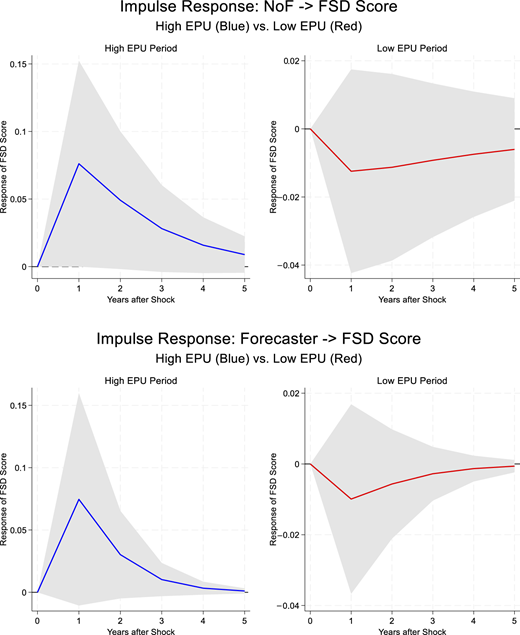
Figure 2 presents the orthogonalised IRF derived from the panel VAR model. We visualise the dynamic response of mandatory reporting quality (FSD Score) to a one-standard-deviation shock in voluntary disclosure. To ensure robustness, we present results for both Forecast Frequency (Top Panel) and the Forecaster Indicator (Bottom Panel).
The results reveal a striking contrast between uncertainty regimes. In the High EPU period (Left Column), a positive shock to voluntary disclosure leads to a statistically significant increase in the FSD Score. Since a higher FSD Score signifies lower reporting quality, this provides dynamic confirmation of the substitution effect, indicating that an increase in voluntary disclosure is immediately followed by a deterioration in mandatory reporting discipline. In contrast, during the Low EPU period (Right Column), the response is statistically insignificant across all time horizons, as the 95% confidence interval includes zero. This lack of significant response indicates that the trade-off between disclosure channels is unique to periods of heightened policy uncertainty. Collectively, this dynamic evidence reinforces our main finding that EPU acts as a trigger for strategic disclosure substitution.
This figure plots the orthogonalised impulse response functions (IRF) of the FSD Score (Mandatory Quality) to a one-standard-deviation shock in voluntary disclosure. The Top Panels use the Number of Forecasts as the impulse variable, while the Bottom Panels use the Forecaster Indicator. The sample is partitioned into High EPU (Left, Blue) and Low EPU (Right, Red) periods based on the sample median of the EPU index. The solid lines represent the estimated response coefficients, and the shaded areas indicate the 95% confidence intervals generated via 200 Monte Carlo simulations. The horizontal axis represents the timeline (years) following the shock. A positive response in the FSD Score indicates a deterioration in mandatory reporting quality.
5. Conclusion
This study investigates how firms adjust both mandatory and voluntary disclosures in response to heightened EPU. We find strong empirical evidence that firms causally enhance the quality of mandatory financial reporting. Concurrently, we observe more complex and descriptive patterns in their voluntary disclosure strategies. While navigating the trade-off between market demands and potential litigation risks, firms generally tend to reduce the frequency and specificity of their forward-looking disclosures. This nuanced pattern suggests a strategic substitution, wherein firms shift towards more verifiable, audited information and limit their commitment to forward-looking transparency under uncertainty. These findings challenge the Confirmation Hypothesis and are consistent with recent evidence on disclosure conservatism during uncertain periods (Chen et al., 2018; Mekhaimer et al., 2024).
By jointly analysing two key disclosure channels, this study contributes to the literature by addressing prior inconsistencies in how EPU affects disclosure behaviour (Bermpei et al., 2022; El Ghoul et al., 2021). Specifically, we demonstrate that these seemingly contradictory behaviours are part of a unified, strategic substitution effect. The use of the FSD Score further extends this literature by introducing a non-accrual-based measure of reporting quality that is less subject to estimation discretion. Because the FSD Score evaluates the structural integrity of financial data, it provides a highly objective benchmark that is particularly crucial when evaluating transparency during volatile macroeconomic periods.
Importantly, our core finding regarding the strategic substitution between mandatory and voluntary disclosure is highly robust to a battery of alternative specifications, including alternative reporting proxies, Oster bounds for omitted variable bias, and dynamic panel VAR frameworks. While we acknowledge the econometric complexities inherent in identifying causal effects for standalone voluntary disclosures, and consequently interpret those specific patterns more descriptively, the overarching trade-off remains consistent and econometrically sound.
These findings carry important political and regulatory implications. During periods of heightened policy uncertainty, often stemming from political gridlock, fiscal instability, or regulatory shifts, firms may strategically adopt more defensive and ambiguous voluntary disclosure practices. This underscores the need for regulatory frameworks that understand these complex trade-offs and contextualise selective transparency, rather than simply mandating broader disclosures. Moreover, policymakers should recognise that macro-level uncertainty not only affects firm behaviour but also alters the information environment faced by investors and regulators.
Overall, our results underscore the importance of adaptive regulatory oversight and investor awareness. Understanding firms' disclosure adjustments during periods of uncertainty is essential for interpreting financial signals and maintaining trust in capital markets. Building on these insights, Future research may benefit from examining other forms of institutional uncertainty, such as geopolitical or ESG-related risks, to assess whether similar substitution patterns emerge across different risk dimensions.
Appendix 1
Variable definitions
| Variable | Definition |
|---|---|
| Dependent variables | |
| FSD Score | The sum of absolute differences between the leading digit frequencies of actual annual financial statements data and the expected theoretical distribution prescribed by Benford's Law by number of leading digits (9; since leading digits are from 1 to 9) (Amiram et al., 2015) Annual Financial Statement data collected from Compustat database |
| Forecaster | An indicator variable that equals 1 if the firm issues at least one forecast in three out of four-quarters in a given fiscal year, and 0 otherwise (Rogers and Van Buskirk, 2009) Management forecast activity is obtained from Refinitiv Eikon |
| Number of Forecasts | Natural log of (1 + the number of forecasts issued in a given fiscal year) Management forecast activity is obtained from Refinitiv Eikon |
| Precision | Average precision of the forecasts issued over the fiscal year The precision of a forecast equals 4 for point estimates, 3 for range estimates, 2 for open-ended estimates, and 1 for qualitative estimates (Armstrong et al., 2014) Management forecast activity is obtained from Refinitiv Eikon |
| Specificity | Minus (average specificity of the forecasts issued in a given fiscal year) We measure specificity for all point and range forecasts issued in a given fiscal year For range forecasts, the specificity of the forecast is defined as the difference between the top and bottom of the range, divided by the stock price of the firm in the month before the forecast date. For point forecasts, Specificity equals 0. The variable Specificity equals the average specificity of the forecasts issued in a given fiscal year multiplied by −1. The variable is multiplied by −1 so that higher values represent more specific forecasts Management forecast activity is obtained from Refinitiv Eikon |
| Horizon | Natural log of (1 + average horizon of forecasts in a given fiscal year) The horizon of a forecast is calculated as the difference in days between the fiscal period-end date and the forecast date (Ball et al., 2012) Larger values of Horizon indicate timelier, and hence more informative, forecasts. Horizon is computed only for firms/years with earnings forecast and with non-missing forecast dates Management forecast activity is obtained from Refinitiv Eikon |
| Economic policy uncertainty measure | |
| LnEPU | Natural log of annualised economic policy uncertainty index (EPU) Sourced from Baker et al. (2016) |
| Control variables | |
| LnSize | Natural log of Market value of equity calculated by closing price at the end of the fiscal year (PRCC_F)*common shares outstanding (CSHO) Data collected from Compustat |
| Leverage | Long-term debt (DLTT) plus Debt in Current Liabilities (DLC) divided by Stockholders Equity (SEQ) Data collected from Compustat |
| Market-To-Book Ratio (MTB) | Closing price at the end of the fiscal year (PRCC_F)*common shares outstanding (CSHO) divided by Book value of total stockholders' equity (BKVLPS) Data collected from Compustat |
| Return on Asset (ROA) | Net income (NI) divided by Total Asset (AT) Data collected from Compustat |
| Inverse Altman's Z-Score (INVZ) | Calculated as the inverse form (−1 × Altman's Z-score) to ensure that higher values reflect greater financial distress risk Altman_Z = 3.3*(EBIT/AT)+0.99*(SALE/AT)+0.6*(MV/LT)+1.2*(ACT/AT) +1.4*(RE/AT) Data collected from Compustat |
| Cash Flow from Operations (CFOA) | Operating cash flows (OIBDP) divided by lagged Total assets (AT) Data collected from Compustat |
| Cash Flow Volatility (CASH VOL) | Standard deviation of cash flows (CF) over Total assets (AT) (5-year window) Data collected from Compustat |
| Sales Volatility (SALES VOL) | Standard deviation of sales (REVT) over Total assets (AT) (5-year window) Data collected from Compustat |
| GDP Growth | Annual percentage change in GDP. Provided by the Federal Reserve Economic Data (FRED) |
| VIX Index | Volatility Implied Index of US S&P 500 index options Provided by the Chicago Board Options Exchange (CBOE) |
Appendix 2 Benford's Law
Benford's Law is also called The First Digit Law as it is about the frequency of first digit occurrence from 1 through 9 – numbers with the first digit of 1 were observed more often than those starting with 2, 3, and so on.
The first discovery was in 1881. An astronomer Simon Newcomb noticed a mathematical property that the earlier pages in logarithms books were more worn than the latter pages. He inferred from the observation and calculated the probability that a number has a first digit d:Table A1, A2 and A3
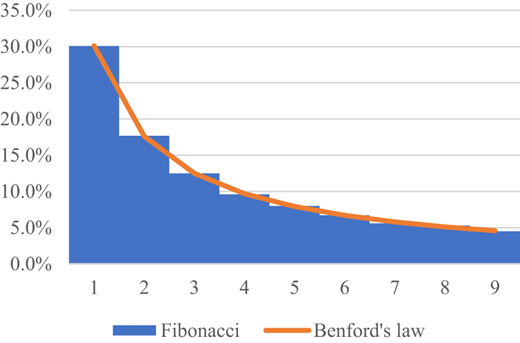
Almost 50 years later, a physicist Frank Benford focused on the digit distribution and tested the mathematical property on a variety of dataset such as areas of rivers, atomic weights of elements, and numbers appearing in Reader's Digest articles. He found that the law held in each dataset and formulated the expected frequencies for the first and the second positions in a number together with their combinations forming a geometric sequence (Benford, 1938).Figure A1
Benford's distribution is an empirically observable phenomenon. Sample calculation of Fibonacci Sequence (Fn = Fn−1 + Fn−2, where n > 1) is below and shows a good fit with the first 1,000 Fibonacci numbers to Benford's distribution.
If distributions are selected at random and random samples are taken from each of these distributions, then the significant digital frequencies of the combined samplings are expected to converge to Benford's distribution, even though the individual distributions may not closely follow the Law (Grammatikos and Papanikolaou, 2020). In the context of this thesis, this means that if the digital frequency in a firm's annual financial statement data departs from the expectations of Benford's Law, then the financial reporting quality is low, and the firm's voluntary disclosure is also less-credible consequently.
Notes
The FSD Score is a firm-level measure of financial statement irregularity derived from the distributional properties of reported financial figures. A higher FSD Score indicates greater divergence from the expected Benford's distribution. Validated against earnings manipulation proxies (Table 6), we interpret high FSD scores as a signal of lower mandatory reporting quality.
Corporate disclosure plays a pivotal role in the efficient operation of the capital market (Healy and Palepu, 2001.) Mandatory disclosure entails the corporate's obligation to provide regulated financial reports, encompassing financial statements, footnotes, management discussions and analysis, and various other regulatory filings. In contrast, voluntary disclosure refers to the company's optional communication activities such as management forecasts, press releases, conference calls, sustainability reports and other corporate reports.
He et al. (2019) found a correlation between voluntary and mandatory disclosures but noted that periodic mandatory disclosure did not significantly influence voluntary disclosure when controlling for firm characteristics.
The index is available on the website www.policyuncertainty.com.
For a more detailed explanation of Benford's Law and its theoretical foundations, see Appendix 2.
We view higher precision as an indicator of greater resource commitment and informativeness. However, we also acknowledge that in highly uncertain environments, extremely precise point estimates may reflect managerial overconfidence or carry a higher risk of ex-post inaccuracy.
Given the potential correlation between EPU and VIX, we assess multicollinearity using variance inflation factors (VIFs) and confirm that including both variables does not distort our estimates. Additionally, robustness tests are conducted using VIX as an alternative to EPU, following prior studies that consider them as substitutes for uncertainty-related analyses.
Specifically, we extend the interaction analysis to the alternative reporting quality measures (reported in Table 6, Panels B and C). Consistent with our main results, we find that higher voluntary disclosure under high EPU is associated with a deterioration in these alternative metrics.
We conduct additional analyses using EPU subcomponents and alternative voluntary disclosure variables (e.g. Number of Forecasts), which yielded results consistent with the substitution pattern observed in Table 5 (reported in Table S2 of the Supplementary Material). We also examined interaction terms involving forecast precision, specificity, and horizon; however, these were statistically insignificant and are therefore not tabulated.
The supplementary material for this article can be found online.