The purpose of this study is to analyse collaborative product development in business relationships as a means of achieving a circular economy in business networks.
The theoretical framework is based on the Industrial Marketing and Purchasing approach, which views companies as part of business networks, and identifies business relationships as the key building blocks of these networks. The methodology employed is a case study of a collaborative project within the denim industry.
The results show that the development of circular products has an impact on the broader business network of the two collaborating companies. This has implications for the wider business networks of the two collaborating companies, including supplementary process development.
The results of the study may be of use to companies that intend to develop circular business models and contribute to a more sustainable future in resource-intensive industries.
This research makes a contribution to the academic discourse on circularity by offering insights into the potential of circular business models in developing circular products through business relationships.
1. Introduction
The circular economy (CE) is proposed as a potential strategy for addressing the issue of sustainability (Homrich et al., 2018; Sehnem et al., 2019). The European Commission (2015) offers a commonly cited definition of CE as an economic system wherein:
The value of products and materials is maintained for as long as possible; waste and resource use are minimised, and resources are kept within the economy when a product has reached the end of its life, to be used again to create further value.
The need to adopt CE principles has prompted companies to reconsider their current linear business models, which primarily rely on virgin resources and which generate waste after use (Jones and Comfort, 2017). Conversely, circular business models are designed to restore and regenerate materials, extending product lifetimes and optimising utilisation (Bernon et al., 2018; Van Loon and Van Wassenhove, 2020). Such models use strategies that include reuse, remanufacturing and recycling, all of which depend on product and process designs that facilitate resource recirculation (Nyström et al., 2017; Asif et al., 2021; Albæk et al., 2020).
However, achieving circularity demands more than mere company internal product innovation (Runfola et al., 2025; Cantu and Tunisini, 2023); it also involves changes in production processes and coordination across firms. In fact, without such systemic changes, it has been demonstrated that product redesign initiatives frequently prove unsuccessful when the prevailing production systems remain characterised by resource intensity and linearity (Arsova et al., 2021; Calzolari et al., 2021; Dziubaniuk and Aarikka-Stenroos, 2025). This has resulted in a growing emphasis on process-based circularity, whereby firms modify their production systems to minimise waste streams, enhance resource efficiency and reintegrate materials (Lieder and Rashid, 2016). Indeed, circular processes often rely on wastewater recovery, chemical reuse and closed-loop production cycles to minimise the environmental impact (Ghisellini et al., 2016). Process-level circularity frequently depends on external partnerships, for example, collaborating with technology providers in waste recovery solutions or in establishing reverse logistics systems (Eisenreich et al., 2021).
While earlier studies have approached circular product and process innovation in isolation (Mishra et al., 2019; Franco, 2017; Lieder and Rashid, 2016; Govindan and Hasanagic, 2018), the interplay between these two phenomena within business relationships, and their role in driving circular business model development, remains to be clarified. This observation highlights the importance of examining circularity in inter-organisational relationships and networks (Huemer and Flygansvær, 2025; Harrison et al., 2023; Melander and Arvidsson, 2022; Cantu and Tunisini, 2023). It is evident that individual companies lack the necessary capabilities to implement a CE, and deal with complex and disruptive changes (Hetherington et al., 2024). Circular business models, therefore, need to extend beyond the boundaries of individual companies (Nußholz, 2017; Mishra et al., 2019) and promote collaboration across supply chains (Aarikka-Stenroos et al., 2022). This involves investigating boundary-spanning activities and combining and utilising resources with external partners.
Despite these insights, empirical research on how inter-organisational relationships drive a CE remains limited (Howard-Grenville et al., 2019; Tura et al., 2019). Recent research has highlighted circularity and collaborative strategies and networks (Huemer and Flygansvær, 2025; Cantu and Tunisini, 2023; Melander and Arvidsson, 2022). However, a clear understanding of how product and process circularity unfold in business relationships and networks is still lacking. According to Huemer and Flygansvær (2025, p. 126), studies of circular business models require a “holistic network approach.”
The aim of this paper is to analyse collaborative product development in business relationships as a means towards achieving a CE. An inter-organisational perspective is adopted by using the Industrial Marketing and Purchasing (IMP) approach to business markets (Håkansson and Snehota, 1989; Håkansson and Waluszewski, 2002). This approach identifies companies as part of business networks and pinpoints the business relationships representing the key building blocks of those networks. Over time, the business exchanges between a customer and supplier involve repeated transactions, interactions, problem-solving and adaptations; these, in turn, develop into a business relationship. In this context, projects connected to product development are organised (Håkansson, 1987a; Gadde et al., 2012; Laage-Hellman et al., 2014; Håkansson, 1987b). Circularity is thus understood not simply as a company-level matter, but as a business network phenomenon. To explore these dynamics, this paper addresses the following research questions:
How do circular product and process innovation interplay within business relationships?
How does the development of circular products shape business networks and influence the transition to circular models?
The research questions will be addressed using a case study methodology within the denim industry. Denim production, as with other textile and garment production, requires natural resources, including water, energy and chemicals. The United Nations Environment Program (UNEP) has identified the need for the development of more sustainable business models in this sector (UNEP, 2018). Consequently, numerous denim companies have begun to invest in the development of circular products as a strategy to reduce their environmental impact as well as increase sustainability. The case study under consideration evaluates the development of two new circular denim products that incorporate sustainable fibres. The project is a collaborative endeavour between a denim manufacturer and a key partner, which involves other actors in the business network. Through answering the research questions, the paper aims to contribute to the extant literature by furthering the understanding of the business relationship dynamics dealing with collaborative development of new circular products (Calzolari et al., 2021). In addition, it shows how this is influenced by relationships with other business partners (Gadde et al., 2012), and how the dynamics influence the transition from linear to circular business models (Van Loon and Van Wassenhove, 2020).
The paper is structured as follows. Section 2 presents the theoretical framework guiding the analysis of the business relationship dynamics dealing with the interactive development of new circular products. Section 3 presents the design of a single case study that evaluates the establishment of a business relationship within the denim industry, particularly focusing on the two parties’ joint efforts to tackle sustainability through the development of a new circular product. The results of the case study are presented in Section 4 and then discussed in Section 5. Finally, Section 6 incorporates implications and suggestions for future research.
2. Theoretical framework
The transition to a CE requires firms to rethink how they design products, organise their production processes and collaborate with external partners to close resource loops. Therefore, the framework starts with CE processes, including product development principles, the rethinking of process design and the role of external collaboration. Thereafter, it will focus on the IMP approach, providing the concepts for analysing the collaborative project.
2.1 Circular economy processes
2.1.1 The CE through product development
Product development is a critical element in the transition from linear to circular business models (Geissdoerfer et al., 2018). Several studies have explored the importance of product design in circular business models. Bocken et al. (2016) emphasise the need for businesses to adopt product design strategies that are in line with CE principles of waste reduction, increased resource efficiency and conservation of natural resources. A substantial body of CE literature has focused on internal product innovation as a primary driver of circularity. This approach is predicated on the premise that firms can transition towards circular models by reconceptualising product design to facilitate resource recovery, reduce waste and enhance product longevity (Bocken and Konietzko, 2022). Products designed with CE principles typically incorporate modularity, durability and ease of disassembly (Bocken et al., 2016), making them more adaptable to post-use recovery strategies. Prior research underscores the importance of closed-loop product strategies – including remanufacturing, refurbishment and component reuse – in curtailing material extraction and enhancing resource efficiency (Nußholz, 2017; Mishra et al., 2019).
Similarly, De Ponte et al. (2023) examined the link between sustainability and sustainable business models in the fashion industry, emphasising the importance of product design in circular business models. According to Boyer et al. (2021), product circularity involves (1) material recirculation, (2) utilisation and (3) endurance. While material recirculation involves the use of recovered material through reuse, remanufacturing or recycling instead of virgin material, utilisation concerns the high frequency use of products that are otherwise consigned to storage, and endurance involves retaining value for as long as possible (Aguiar and Jugend, 2022).
However, despite these innovations, achieving circularity at the product level presents challenges. Frequently, firms encounter cost constraints, consumer acceptance issues and technological barriers that limit the widespread adoption of sustainable product designs (Herczeg et al., 2018; De Jesus and Mendonça, 2018). Moreover, it has been demonstrated that product circularity in isolation does not guarantee system-wide sustainability if the production processes remain linear and resource-intensive (Govindan and Hasanagic, 2018). Consequently, scholars have examined process-based approaches to circularity, where firms redesign operations to minimise waste and optimise resource flows (see Govindan and Hasanagic (2018); De Jesus and Mendonça (2018)).
2.1.2 The CE through process redesign
The concept of product circularity is predicated on the design of sustainable products, while process-based circularity is focused on the optimisation of production systems to reduce the environmental impact of the manufacturing process. This involves modifying industrial operations to reuse waste streams, recover resources, and increase energy efficiency. Wastewater recovery and chemical recycling in resource-intensive industries now represent a major field of study within the broader context of process circularity (Lieder and Rashid, 2016). Numerous firms have adopted technologies that purify and reuse wastewater, thereby reducing the environmental footprint of production (Ghisellini et al., 2016). Furthermore, advancements in solvent recovery and green chemistry have enabled companies to minimise hazardous waste and reintegrate essential materials into their production lines (Eisenreich et al., 2021).
Process redesign undoubtedly has benefits, but tends to require higher levels of coordination than product innovation alone, as it involves not only internal adjustments but also the reconfiguration of supply chains and production relationships (Arsova et al., 2021). Studies show that individual firms often lack the expertise and infrastructure to implement process-based circularity effectively (De Angelis et al., 2018; Batista et al., 2018). This underscores the need for network-level approaches, where firms leverage inter-organisational relationships to create circular solutions.
2.1.3 The CE and the role of business relationships
Despite the extensive research that has been conducted on product and process circularity, there remains a notable absence of studies that explore how firms integrate these strategies through inter-organisational collaboration. This gap is especially salient given that CE transformation frequently necessitates the development of novel capabilities, coordination across supply chains and resource sharing (Melander and Arvidsson, 2022).
Other studies reflect the CE’s impact on value chain processes. Eisenreich et al. (2021), for example, analysed the impact of the CE on a company’s value chain processes, examining the role of circular business models in creating value for both companies and the environment. Foroozanfar et al. (2022), through a systematic literature review on the integration of CE strategies and business models, provide insights into the potential benefits and challenges of adopting circular business models. Along this line of thinking, Geissdoerfer et al. (2018) focused on business models and supply chains for the CE, emphasising the importance of considering the entire value chain when designing and implementing circular business models. Huemer and Flygansvær (2025), in a recent study of circularity and waste management, show how the implementation of circularity needs to move beyond supply chains to become an established practice. Still, the majority of studies of business relationships in CE have had a dyadic focus, leaving room to explore the broader networks (Howard-Grenville et al., 2019; Tura et al., 2019; Dziubaniuk and Aarikka-Stenroos, 2025).
2.2 The IMP approach to business markets
The IMP approach offers a valuable lens through which to understand these dynamics, emphasising that companies operate within networks of relationships rather than as isolated entities (Snehota and Hakansson, 1995; Gadde et al., 2012). In line with recent studies (Huemer and Flygansvær, 2025; Cantu and Tunisini, 2023), the present study employs the IMP approach to analyse how firms interact, combine and utilise resources, and coordinate activities to implement circular strategies. The IMP approach emphasises interaction and business relationships in industrial networks (Håkansson and Snehota, 2017). For instance, studies have illustrated how technological development takes place when firms collaborate (Håkansson, 1987a) and, more recently, have investigated the role of interactive resource development in different contexts (Håkansson and Waluszewski, 2002). Business networks are built through interactions between firms that, over time, concretise in business relationships (Snehota and Hakansson, 1995). What happens in one relationship influences and is influenced by others, forming the basis for understanding business markets as networks.
The network model, referred to as the ARA model (Håkansson, 1987a), provides a structured approach for analysing business networks by examining three interrelated layers: resources, activities and actors (Snehota and Hakansson, 1995). The resource layer consists of tangible and intangible assets that firms develop and combine within business relationships; resource interfaces – the points of interaction between two or more resources – play a crucial role in shaping value creation (Prenkert et al., 2022). The combination of resources frequently necessitates adaptations (Huemer and Flygansvær, 2025), which can have ramifications for the broader network, as alterations in one resource may impact its value in other interactions (Gadde et al., 2003).
The activity layer, in contrast, refers to the interdependent processes that firms undertake to create value, both internally and through relationships with other businesses (Håkansson et al., 2009). These activities, including production, procurement and logistics, are interconnected across companies, forming networks where efficiency gains emerge from synergies between complementary and closely related activities (Dubois and Waluszewski, 1998; Dubois, 2006).
Finally, the actor layer focuses on the firms and stakeholders that shape business networks through their actions and interactions (Snehota and Hakansson, 1995); these include suppliers, customers, competitors and intermediaries, all of whom contribute to resource exchange and process development (Guercini and Runfola, 2015). These relationships extend beyond simple transactions, often involving long-term commitments and collaborative innovation (Cantù et al., 2012). Cantu and Tunisini (2023) show how the dynamics of interconnected relationships are crucial in network settings with circular innovation goals. All in all, the ARA model is relevant for this study, as it enables an in-depth analysis of how firms engage in circular product development through inter-organisational interactions, resource adaptation and activity coordination within business networks.
3. Research methodology and empirical setting
The research is based on an exploratory case study methodology, which is suitable when the research problems are evolving and not yet clearly defined (Eisenhardt, 1989). Our case is to be understood as a case study of a dyadic relationship embedded in a broader network context. A case study methodology was chosen as it allows for a detailed examination of the phenomena under study (Lijphart, 1971), as well as an in-depth understanding of its context (Yin, 1994). Indeed, this methodology is particularly useful in understanding the interaction of business relationships embedded in business networks (Halinen and Törnroos, 2005; Easton, 2010) that involve multiple actors controlling different resources, each with unique goals and incentives.
The focal point of the case study is the evolving relationship between two companies: Candiani S.p.A., a denim manufacturing company based in Northern Italy, and Lenzing A.G., a supplier of sustainable fibres headquartered in Austria. The collaboration between these two firms is centred on the development of two circular products through the implementation of sustainable innovation. This initiative operates within a broader network that encompasses additional actors who are involved in complementary phases of the value chain. The selection of the case study was informed by two key criteria: its perceived novelty and the explicit sustainability goals of the participating firms. Candiani and Lenzing are both engaged in pioneering initiatives that aim to integrate circular principles into product and process development. Their collaboration, which includes both the integration of Lenzing’s TENCEL™ fibres with Candiani’s COREVA™ biodegradable elastic yarn and the combination of TENCEL™ with REFIBRA™ technology and recycled cotton in the ReGen fabric, provides the context for investigating how business relationships can support the development of circular products and contribute to the transition from linear to circular business models.
3.1 Empirical setting: the denim industry
The context for this case study is the textile and fashion industry. The environmental impact of the textile and fashion industry is a critical issue, with far-reaching consequences for both the planet and human health. According to the UNEP, the textile industry is responsible for about 20% of global water waste, resulting in water quality degradation and depletion of this vital resource. In addition, the industry is responsible for 10% of global carbon emissions, contributing to the global climate crisis. Fabric production also often involves the use of hazardous chemicals, many of which are released into the environment, leading to further contamination of soil and water sources (Sandin and Peters, 2018).
For several decades, the fashion industry has been dominated by fast fashion, characterised by frequent and inexpensive releases of clothing, further increasing the consumption of clothes and, in turn, the textile and fashion industry’s environmental impact. By the end of the last decade, approximately 92 million tons of clothing were ending up in landfills each year (Ellen MacArthur Foundation, 2017). This not only contributes to the depletion of natural resources and the creation of greenhouse gas emissions, but also results in the release of harmful chemicals into the environment when textiles decompose in landfills (Sandin and Peters, 2018).
However, in answer to the growing recognition of the textile and fashion industry’s negative environmental impact, there is now a growing demand for more sustainable business practices and products. To respond to these challenges, several actors within the fashion sector have begun to implement more sustainable practices, including the use of biodegradable and recyclable materials, cleaner production techniques and efforts to close material loops. In this context, the collaboration between Candiani and Lenzing is particularly noteworthy for its commitment to integrating sustainability, not only into the product itself but also into the processes and relationships that support its development.
This case, then, concerns a circular business relationship in the denim industry. Like other textile and garment production including cotton (Esteve-Turrillas and De La Guardia, 2017), denim production requires an excessive amount of natural resources, including water, energy and chemicals. Chemicals used in denim production, such as indigo and potassium permanganate, can be toxic and thus pose a threat to the environment and human health. In addition, denim products often end up in landfills due to lack of effective recycling and reuse practices. The decomposition of denim products in landfills can take several hundreds of years, further exacerbating the environmental impact of this industry. The denim industry’s considerable environmental footprint has driven many companies to pursue more sustainable approaches. In particular, the development of circular products has emerged as a key strategy to lower environmental impact and promote long-term sustainability. This includes developing products made from sustainable materials that can be easily recycled or reused at the end of their life cycle (Chou and Zolkiewski, 2012). By implementing circular product development practices, denim companies can reduce their environmental footprint, improve their sustainability and meet the growing demand for environmentally conscious products.
3.2 Data collection
In this study, the primary source of data was based on seven semi-structured interviews over a three-year period with representatives from Candiani and Lenzing directly involved in the collaboration. The questioning protocol focused on various aspects of the collaboration, such as the companies’ sustainability presentations and commitments, Candiani’s needs, the development of the collaboration, the activities involved and the resources used to achieve the circularity goal. Furthermore, the interviews sought to identify how roles and responsibilities evolved over time.
To understand the incentives and goals driving the collaboration, the interviews started with questions about the company’s sustainability commitments and how they influenced the decision to participate in the collaboration. The interviewees were also asked to explain Candiani’s specific requirement for Lenzing’s fibres, as well as how this requirement aligned with the companies’ sustainability goals. The interviews then moved onto the process of the collaboration’s formation. The interviewees were here asked to describe how the collaboration came about and how it evolved from its early stages. This provided insights into the factors that facilitated the collaboration, the challenges that needed to be dealt with and how the companies managed to overcome these challenges. Each interviewee was also asked to describe how their own company’s activities were changed due to the collaboration. In addition, the interviews sought to identify the resources required for performing particular activities, as well as the necessary adjustments of these resources.
Each interview lasted between 45 min to two hours, with an average duration of about 62 min. Dubois and Gadde (2002b) distinguish between “active” and “passive” data, where the former is data that the researchers set out to find from the start, while the latter is associated with additional discovered facts. By being alert to the active data in our clean copies, we were able to identify a need for supplementary data to improve our understanding of what had been uncovered. These interviews offered key insights into the project’s extended value network. The following table provides a schematic representation of the interviews conducted (see Table 1).
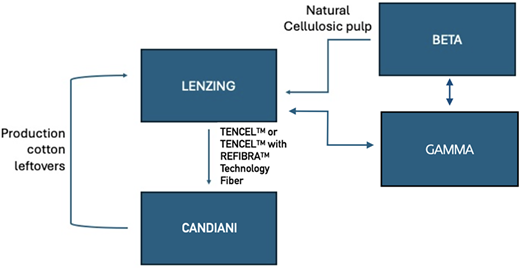
Pettigrew (1990) argues that, as a researcher, there is always the need to be aware of each actors’ limited access to information and that this limitation affects her/his perception of certain processes. Consequently, this called for follow-up contacts. The round of interviews with the two focal companies were, thus, repeated over time, so enabling us to analyse the collaboration process in more detail. Moreover, two additional companies were interviewed to provide a broader view of the network-level dynamics. Beta, based in Southern Italy, is involved with Lenzing in transforming leftover materials from orange cultivation into cellulose pulp for TENCEL™ production. Gamma, located in Northern Italy, collaborates with Lenzing to support the development of composite yarns by combining cotton and TENCEL™ fibres. Although not directly involved in Candiani’s denim manufacturing, Gamma plays – as for Lenzing and Beta – an enabling role in advancing fibre blending capabilities within the broader network.
The aforementioned interviews facilitated a more profound exploration of the dynamics prevalent at the network level, encompassing relationships that transcend the conventional paradigms of buyer–seller interactions (see Figure 1).
In parallel, a comprehensive study of seven corporate documents and reports was conducted, encompassing sustainability reports, internal documents and innovation updates. These texts, obtained either directly from the companies or from their official websites, provided additional detail on product development strategies, sustainability objectives and inter-organisational cooperation. The examination of these documents was conducted to identify the key topics of relevance to the study (see Table 2).
Resource efficiency, waste reduction and the adoption of CE principles are consistently highlighted in the studies. Lenzing’s achievements are noteworthy because they highlight the development of closed-loop production methods and the incorporation of sustainable resources. Other businesses, like Beta and Gamma, highlight the use of biodegradable and recyclable materials while demonstrating improvements in modular and effective production techniques. A wide variety of product innovation tactics are presented in these documents. Improvements in sustainable manufacturing techniques, the use of circular product design ideas and the adoption of biodegradable materials are common themes. When taken as a whole, these initiatives show the industry’s increased dedication to tackling environmental issues while preserving competitive advantage through creative solutions.
3.3 Data analysis
The data analysis was based on a manual thematic coding process, conducted following transcription of the interviews. The coding process was conducted iteratively and guided by the ARA model, which served as the analytical lens for structuring the data. Specifically, interview excerpts were coded along three core dimensions: actors, resources and activities. Statements related to roles, collaboration dynamics and coordination mechanisms were grouped under the actor dimension. Descriptions of material flows, knowledge exchange and resource modifications were captured under the resource dimension, while references to changes in production practices, operational routines and interlinked processes were coded as activities. This framework enabled the observation of the evolution of collaboration through multiple layers of interaction and adaptation. In addition, academic literature researches were conducted in key business marketing and sustainability journals, building up the understanding of this emerging area of CE. Besides enabling data triangulation, the use of multiple sources added complexity and richness to the inquiry (Lincoln and Denzin, 2003), allowing for a more comprehensive understanding of the network collaboration and actor contributions.
Ragin and Becker (1992) contest the notion of conducting research in a conceptual vacuum, asserting the need for theoretical frameworks to interpret and comprehend the empirical world. The ARA model (Håkansson, 1987b; Håkansson and Snehota, 1989) served as the primary tool for structuring and interpreting the data. The IMP literature in broad terms, together with the ARA model, functioned as the primary lenses that guided the search for empirical data, with new data subsequently directing the search for an additional and/or more detailed understanding of the existing concepts. This process enabled our theoretical lenses to capture significant aspects of the phenomena under study. Throughout the process, data collection and analysis followed the principle of systematic combining (Dubois and Gadde, 2002a), meaning that empirical observations and theoretical perspectives were continuously revised and refined in response to one another. This methodological approach facilitated an openness to unanticipated findings while ensuring the relevance and grounding of the theoretical framework in the empirical data. This interplay fostered a comprehensive understanding of how the relational dynamics of the case facilitated the integration of product and process circularity into a network-oriented business model.
4. Case findings
This section presents the results of the case study, integrating descriptive and analytical elements to demonstrate how the collaboration between Candiani and Lenzing enabled the development of circular products and the transition from a linear to a circular business model. By recalling the main aim of the paper – the evolution of circular product and process innovation within business relationships, and the consequent shaping of broader network configurations by such collaborative developments – this section moves from a description of the actors involved, through the dynamics of their collaboration, to a more detailed examination of the actor–resource–activity interplay using the ARA model.
4.1 Description of the focal companies
Lenzing AG is a global leader in the production of sustainable specialty fibres. Headquartered in Austria, the company has manufacturing facilities worldwide. The company is a leading supplier of wood-based cellulose fibres, including TENCEL™ and TENCEL™ Modal, which are used in a variety of applications, including apparel, home textiles and technical industries. In alignment with its pronounced commitment to sustainability, Lenzing developed REFIBRA™ technology, an innovative TENCEL™ fibre using recycled cotton and wood-based materials. The company has been recognised for its environmental efforts, having been included in the Global 100 Sustainable Companies list. By 2025, Lenzing aims to reduce CO2 emissions by 30%, water consumption by 20% and waste by 10%, with a target of full carbon neutrality by 2030. Lenzing’s strategic investment in research and process innovation is instrumental in driving the transformation of the fibre industry towards a circular model.
Candiani is an Italian textile company that was founded in 1938 and now has a workforce of over 500 people. The company’s specialism is the production of premium denim fabrics, which are used by major international fashion houses and luxury brands. The company’s integrated approach to production, research and development, and distribution has garnered significant recognition, particularly with regard to its commitment to sustainability and quality. It has been a trailblazer in the utilisation of organic and eco-friendly materials, the implementation of energy- and water-saving technologies and the promotion of ethical labour practices. The company’s commitment to sustainability is further validated by the application of a series of voluntary certifications in addition to all the mandatory ones. In addition to environmental leadership, Candiani maintains rigorous quality control standards and supports local communities through education and training initiatives. Candiani’s global network of suppliers and clients has enabled the company to expand through strategic partnerships and innovation, thereby reinforcing its reputation as a frontrunner in sustainable denim production.
4.2 Project collaboration for developing circular products
Lenzing and Candiani have both independently launched sustainability projects. Lenzing’s project, REFIBRA™ technology, developed a TENCEL™ fibre made up of 60% recycled cotton and 40% wood pulp, which delivers a performance comparable to its flagship fibres. This project has been recognised by the European Union as a model for CE practices, reflecting Lenzing’s broader commitment to environmental leadership. Developed to address the environmental impact of traditional viscose production, REFIBRA™ technology employs a closed-loop process that minimises water and energy usage while reducing carbon emissions. The project incorporates both mechanical and chemical methods, allowing for efficient resource use and waste reduction. Through extensive research and development, Lenzing ensures that REFIBRA™ technology maintains high standards of sustainability and quality, making it an attractive option for eco-conscious consumers.
Concurrently, Candiani has developed COREVA™, a breakthrough in biodegradable stretch denim. This technology replaces traditional synthetic elastane with a plant-derived elastic yarn, enabling the creation of fully compostable stretch fabrics. Candiani’s investment in R&D has enabled the company to position COREVA™ not only as an environmentally conscious material, but also as one that satisfies the stringent quality requirements of high-end fashion brands. The combination of biodegradable elasticity and sophisticated denim construction, positions it as a compelling solution for fashion companies seeking to reduce their environmental impact without compromising on performance or aesthetics.
Lenzing and Candiani have collaborated on two parallel innovation tracks: the first involves blending TENCEL™ fibres with COREVA™, a plant-based elastic yarn developed by Candiani, to produce a fully compostable stretch denim; the second centres on the development of ReGen denim, which combines TENCEL™ with REFIBRA™ technology fibres with post-industrial recycled cotton to create a fabric that embodies circularity through closed-loop material recovery.
The core of the first collaboration is the integration of TENCEL™ fibres with the compostable stretch yarn from COREVA™. The resultant denim fabric combines environmental innovation with advanced material performance: it is biodegradable, soft to the touch and structurally durable, capable of meeting the expectations of both eco-conscious consumers and premium fashion houses. Achieving such synergy necessitated meticulous technical alignment between the two companies. Lenzing’s contribution encompassed knowledge pertaining to fibre processing and adaptation to denim production, while Candiani offered insights into weaving techniques, product finishing and consumer-facing quality criteria.
Candiani and Lenzing also collaborated on the development of ReGen, a pioneering fabric that combines TENCEL™ fibres with REFIBRA™ technology and post-industrial recycled cotton, thereby eliminating the use of virgin cotton. The deliberate combination of two virtuous technologies – closed-loop cellulose fibre production and high-quality cotton recycling – was crucial to achieving a product that is not only low impact in its production but also aligned with CE principles. The integration of these innovations has enabled the partnership to enhance material recyclability, optimise resource efficiency and minimise waste across the entire textile production process. The fabric’s excellence in sustainable design was recognised with the ITMA Sustainable Innovation Award in 2019.
In both cases, the development process involved multiple rounds of testing and refinement, during which both companies adjusted aspects of their production processes to ensure material compatibility and product integrity. As one participant described, “getting the blend right between fibre and elastic yarn was not just a lab job – it required operational changes on both sides.” This collaborative development effort is indicative of the manner in which the integration of circular innovation is contingent upon ongoing actor coordination and activity reconfiguration.
It is also important to note that this partnership was not a solitary endeavour. Indeed, the other two companies involved in the network, Beta and Gamma, contributed to the broader resource and knowledge ecosystem in which Candiani and Lenzing operated, highlighting how circular product development depends on coordinated efforts across the supply network.
Collectively, the relationship between Lenzing and Candiani resulted in the creation of a denim fabric that not only fulfils sustainability objectives but also establishes a new standard for circular product innovation in the fashion and textile industries. The relationship between Lenzing and Beta on the one side, and Lenzing and Gamma on the other, exemplifies the pivotal role of resource complementarity, the alignment of shared sustainability objectives and the orchestrated adaptation of business models towards a circular paradigm. This transition has a direct and substantial impact on both the development of products and the configuration of networks.
4.3 Analysis of activities, resources and actors layers
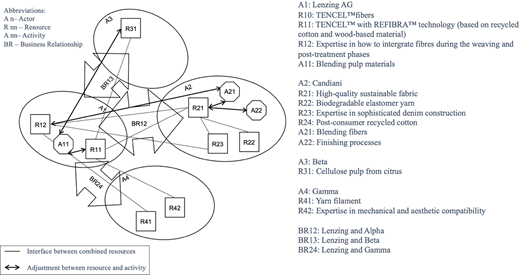
The development of the circular denim fabric was the result of an interplay of complementary resources, interwoven activities and multi-actor coordination (see Figure 2). The following analysis structures these findings through the lens of the ARA model, illustrating how actors mobilised to transform resources and coordinate interdependent activities across the network.
At the core of this process were Lenzing (A1) and Candiani (A2), whose collaborations evolved from a product-level partnership into a strategic and operational alignment. Candiani’s and Lenzing’s collaboration brought together resources and complementary activities, leading to the successful development of a circular product. Candiani’s expertise in denim production and research into natural elastomers, paired with Lenzing’s proficiency in sustainable fibres and production processes, resulted in the creation of a high-quality sustainable fabric (R21). The synergy between their respective R&D efforts drove the innovation needed to achieve this sustainable breakthrough.
In the development of the high-quality sustainable fabric (R21), Candiani primarily contributed its extensive experience in denim production and its pioneering work on biodegradable elastomer yarns (R22). In both collaborations, the primary activity undertaken by Candiani involved the modification of finishing processes to accommodate the behaviour of TENCEL™ fibres (A22), either TENCEL™ or TENCEL™ with REFIBRA™ technology, which were found to be more sensitive to the high heat and chemical treatments commonly utilised in denim finishing. In turn, Lenzing contributed its advanced knowledge in the area of recycled cellulose fibre production, particularly its REFIBRA™ technology that enables TENCEL™ fibres to be produced from recycled cotton and wood-based material (R11), and its expertise and technical guidance on how to handle and integrate the fibres during the weaving and post-treatment phases (R12) of the high-quality sustainable fabric (R21). As one Candiani technician noted:
The fibre was not simply incorporated into our existing production process; rather, it necessitated adjustments to several steps to ensure its integration without compromising the fabric’s inherent properties.
One of the most technically challenging phases in the first collaboration process was the blending process (A21), where TENCEL™ fibres from Lenzing (R10) were combined with the COREVA™ biodegradable elastomer yarn (R22) in a stable filament. The expertise developed internally by Candiani, ensured the mechanical and aesthetic compatibility of the two materials (R42), allowing for the production of a yarn filament (R41) that retained its stretch while being biodegradable. The alignment of materials at the stage of fibre blending was found to be of critical importance to the final product’s circular performance.
The second collaboration between Candiani and Lenzing focused on the development of the ReGen fabric, a denim fabric created by combining TENCEL™ fibres with REFIBRA™ technology (R11) and post-industrial recycled cotton (R24). In contrast to the first collaboration – centred on compostability – this project emphasised circularity, by eliminating the use of virgin cotton. The material combination required careful alignment between Lenzing and Candiani (A1, A2) to ensure compatibility and performance, enabling a high-quality fabric with enhanced recyclability and reduced environmental impact.
In this collaborative network, it is worth noting the efforts towards circularity made by Lenzing and Beta (A3) through their sourcing of a proportion of the cellulose pulp. Beta supplied pulp extracted from citrus by-products (R31), further enhancing the regenerative credentials of Lenzing’s TENCEL™ fibres (R11). Beta’s involvement was deliberate and consistent with Lenzing’s objective of reducing the environmental impact of fibre inputs through waste valorisation. The interaction between Lenzing and Beta underscores how upstream actors’ relationships can influence resource configurations across the network. In this sense, Lenzing is also involved with Gamma in the development of composite yarns that combine cotton and TENCEL™.
As the processes evolved, each firm had to accommodate the requirements of the others, prompting iterative adjustments in material behaviour, production parameters and testing protocols. It is noteworthy that this innovation extended beyond the dyadic relationship between Candiani and Lenzing, highlighting the interconnected nature of the circular product development process.
The involvement of Beta (A3) and Gamma (A4) in the special circular project of Lenzing, elevated the process into a networked innovation model, in which circularity was achieved not through isolated redesign but through the co-activation of interdependent innovation and production capabilities. This reflects the actor dimension of the ARA model, where firms shape and are shaped by their relationships, co-creating value through sustained engagement. Rather than following a linear supply chain model, the relationship dynamics resembled a web of collaborative experimentation, where knowledge sharing and adaptive coordination shaped the direction of development.
This case shows that circular product development is as much a relational process as a technological one. The analysis demonstrates that in the context of CE, innovation necessitates not only internal adjustments but also the orchestration of interdependencies across firms. Moreover, it shows how the actors involved, transcended the conventional limits of component delivery, contributing to the collaborative creation of a novel product configuration aligned with the principles of the CE.
5. Discussion
This study aimed to explore the interplay between circular product development and process innovation, and how it shapes business network collaboration and influences the transition to a CE. Building on the IMP literature in broad terms and the ARA model in particular, the case illustrates how resources, activities and actor configurations evolve when companies engage in joint innovation with a shared sustainability goal. Two RQs have been guiding our research and these are discussed below.
Regarding the first research question – how do circular product and process innovation interplay within business relationships – existing research has explored the CE from two perspectives: product-based circular strategies that emphasise product redesign and material efficiency (Bocken et al., 2016; Mishra et al., 2019) and process-based circular strategies that focus on optimising production systems to reduce waste and resource consumption (Franco, 2017; Lieder and Rashid, 2016; Govindan and Hasanagic, 2018). These two perspectives are often treated separately, with insufficient attention given to how firms can integrate both approaches through business relationships and network interactions. Therefore, our case study contributes to prior research by illustrating a collaborative development project where these two perspectives are highly integrated and embedded within inter-organisational networks. The core of the development was the combining of two new product designs: Lenzing’s innovative fibre, composed of both recycled cotton and wood pulp, and Candiani’s biodegradable stretch denim, which replaces traditional synthetic elastane with plant-based elastic yarn while still meeting the quality requirements of high-end fashion brands. These two new product designs were combined in two parallel projects, each creating a denim fabric that merges environmental innovation with advanced material performance. Thus, the product-based circular strategy, emphasising product redesign and material efficiency, was one important component of the project.
The product innovation – based on combining a processed natural fibre (TENCEL™) and plant-based elastic yarn (COREVA™), on the one hand, and a fibre based on recycled cotton and wood-based material and post-industrial recycled cotton, on the other – was supplemented with additional process innovations aimed at reducing waste and resource consumption.
These process innovations included, for example, Lenzing’s closed-loop system, which utilises both mechanical and chemical methods to minimise water and energy usage while also reducing carbon emissions. Additionally, Candiani’s biodegradable stretch fabric incorporated new weaving techniques and product finishing processes. The process innovations involved several different kinds of adaptation within the activity layer of the network. For example, achieving the right blend of elastic yarn with TENCEL™ yarn required operational changes on both sides. Furthermore, the other actors in Lenzing’s network – Beta, which supplies cellulose pulp from citrus waste for Lenzing’s fibre, and Gamma, which provides special weaving techniques for Lenzing – had to make adjustments to their production activities as well. These coordinated efforts reflect the interplay between the activity and resource layers of business networks, revealing how circular innovation unfolds through alignment across company boundaries.
Hence, the case of Candiani and Lenzing illustrates how the business relationship between these two companies provides an opportunity to leverage their combined resources, expertise and activities to develop new circular products and processes, further enhanced on Lenzing’s side by the involvement of network actors such as Beta and Gamma.
The circular solutions of Lenzing and Candiani were not developed in isolation, but rather co-created through a collaborative effort, highlighting the networked nature of innovation processes.
Regarding the second RQ – how does the development of circular products shape business networks and influence the transition to circular models – it is clear that, in many cases, the adoption of circular business models may face resistance from existing linear business models, which often prioritise short-term economic gains over long-term sustainability objectives (Ammirato et al., 2025; Aliu et al., 2025; Wu and Pagell, 2011). In this regard, the collaboration between Candiani and Lenzing represents a positive step toward the adoption of circular business models. The partnership facilitates the integration of various circular practices and knowledge from two different industries, helping to ease the transition to a CE through the development of a new pulp, fibre and fabric that deliver performance comparable to traditional materials. Hence, their cooperation resulted in premium denim products that meet the stringent quality requirements of international fashion houses and luxury brands.
The case analysis thereby helps in the understanding of network dynamics that facilitate the transition from linear to circular business models, as well as the feasibility of circular business models. Moreover, the case contributes to the extant literature on B2B collaboration in the context of the CE (Melander and Arvidsson, 2022; Cantu and Tunisini, 2023; Runfola et al., 2025) by offering several insights. Firstly, it emphasises the pivotal role of existing business relationships in facilitating innovation. Candiani’s and Lenzing’s approach used pre-existing relationships, characterised by trust, shared values and prior collaboration, to enhance their engagement in a more intricate and sustainability-oriented initiative. Secondly, the case provides evidence that the transition to a CE is often initiated within existing dyads but only becomes viable when network partners are aligned. Finally, it indicates that circular product and process innovation in business networks should not be treated separately. The development project provides an example of a situation where a required resource combination and activity coordination within a business relationship, incorporated both product and process innovation.
6. Conclusions, implications and limitations
Product design alone is insufficient if wider production systems remain resource-intensive and wasteful (Ghisellini et al., 2016; Calzolari et al., 2021). This has led to an increasing focus on process-based circularity, where firms modify production systems to reduce waste streams and improve efficiencies (Franco, 2017; Lieder and Rashid, 2016). Since past research has treated product and process innovation separately, it has been unclear how they interplay within business relationships and drive the development of circular business models. This study aimed to fill that gap by using a case study to explore how circular product and process innovation interplay within business relationships, shaping business networks and influencing a transition to circular models.
The IMP approach enabled us to demonstrate that circular product development is as much a relational process as a technological one, which aligns with recent research (Huemer and Flygansvær, 2025; Harrison et al., 2023). In greater detail, our paper contributes new insights into the incorporation of both product and process innovation, and how resource and activity layers need to be orchestrated within relationships and aligned with the additional process development of other actors. The collaborative development affected the business network by driving changes and actions across connected relationships. Hence, the paper contributes to the existing literature on circular business models (Nußholz, 2017; Lahane et al., 2020) by showing that these models extend way beyond the company, highlighting the importance of collaborative business relationships and the impact on the connected network. In other words, our paper suggests that adoption of circular business models requires a high level of collaboration, commitment and strategic alignment between companies.
While collaboration enabled the development of a high-quality circular product, it also introduced challenges. Inter-organisational innovation of this kind may generate tensions (see, for example, Runfola et al. [2025]) related to, amongst others, intellectual property protection, the alignment of strategic sustainability goals and the coordination of responsibilities. These tensions require deliberate negotiation and governance to avoid conflict and ensure that joint efforts remain aligned. Although such explicit risks were not prominent in the case examined here, they remain relevant managerial concerns for other firms engaging in similar networked development projects.
Other possible managerial issues involve recognising the potential of strategic business relationship collaborations in the development of circular business models, and the combination of circular product development with supplementary process development. Companies should first actively leverage long-standing, trusted relationships to reduce coordination risks and accelerate joint innovation. They should then align sustainability goals in the early stages of collaboration to avoid misalignment and ensure continuity. In short, companies should make the most out of existing business relationships in terms of the available resources (e.g., materials, components, equipment and skills) and production processes, as well as the opportunities for combining resources and coordinating processes across companies. New relationships may be necessary for certain types of development (Gadde et al., 2012) but developing new relationships usually takes time, and effort is needed to build trust in and commitment to joint projects.
The limitations of the study are primarily related to the scope of the research. The study focused on the collaborative project between Candiani and Lenzing, while future research could examine the development of circular products in other industries and supply chains. Additionally, the study did not explore the potential economic benefits of circular business models, and future research could investigate the economic impacts of circular practices on companies and the industry as a whole. Future research could also examine the role of policy and regulations in facilitating the adoption of circular business models. Government policies and regulations can incentivise or mandate the adoption of circular practices, and future research could explore the potential impacts of such policies on companies and networks. Without doubt, collaborative processes in networks will be at the heart of achieving a CE. Future studies should, thus, examine the tensions and risks that may arise in collaborative processes, including the management of trust, control mechanisms and conflict resolution between partners in CE development.