


A quasi-experimental pretest/posttest study using a control group was conducted to investigate the effects of EQUIP for Educators—implemented as a universal prevention program—on prevalence of antisocial behavior, attitude towards antisocial behavior, self-serving cognitive distortions, and moral judgment of young adolescents. Participants were 764 students (present at both waves: N experimental group = 512, N control group = 110) from nine prevocational secondary schools in the Netherlands (M age = 14.07, SD = .60). Repeated measures were used to examine intervention effects. Students in the experimental group reported a significant reduction of both attitude towards antisocial behavior and self-serving cognitive distortions compared to students within the control group. Ethnicity appeared to play a moderating role; effects on both attitude towards antisocial behavior and self-serving cognitive distortions were only significant for students with a Dutch ethnic background.
Introduction
High rates of violence and aggression among youth stresses the importance to identify effective prevention programs (Flannery et al., 2003). Although the need for early prevention is illustrated by studies showing that antisocial behavior occurs along a developmental continuum of behavioral severity (Schaeffer, Petras, Ialongo, Poduska, & Kellam, 2003; Tremblay, 2006), continuation of support across the transition from childhood to adolescence is of great importance as well. Problem behaviors such as aggression and antisocial behavior increase dramatically during adolescence (Simons-Morton, Haynie, Saylor, Davis Crump, & Chen, 2005).
Since schools play a significant role in shaping the lives of adolescents in their role as social agent (Cho, Hallfors, & Sánchez, 2005) and have access to youth at various levels of risk for extended periods of time, they provide an excellent context to implement empirically based prevention and intervention programs targeting antisocial behavior (Cunningham & Henggeler, 2001). Although many school and community based violence prevention programs have been developed and applied in recent years (Gottfredson & Gottfredson, 2002), relatively few have been rigorously evaluated. Since the need for evidence-based prevention programs is increasing (Boxer, Goldstein, Musher-Eizenman, Dubow, & Heretick, 2005), the goal of the present study is to investigate the effectiveness of a multi component intervention, EQUIP for Educators, targeting antisocial behavior. Antisocial behavior can be conceptualized as outward behavior that either directly or indirectly harms others through the violation of important moral or social norms, and includes aggressive and delinquent acts (Barriga, Morrison, Liau, & Gibbs, 2001; Liu, 2004). In the present study, effects on both prevalence of antisocial behavior and attitude towards antisocial behavior will be investigated.
EQUIP for Educators
EQUIP for Educators is an adapted version of the original treatment program EQUIP for juvenile offenders (Gibbs, Potter, & Goldstein, 1995), and is dedicated to both primary and secondary prevention in an educational context. The program is guided by a theoretical framework based on psycho education, referring to the teaching and training of skills, knowledge, and mature awareness required for competent daily living (DiBiase, Gibbs, Potter, & Spring, 2005). The program is intended to encourage and equip youth to think and act responsibly, using a peer-helping approach (Gibbs et al., 1995). Since a peer group approach is not sufficient to counter negative peer pressure, helping skill limitations of at risk youth must also be addressed (Gibbs, Potter, Barriga, & Liau, 1996). The helping skills curriculum of EQUIP for Educators is based on Aggression Replacement Training (Goldstein & Glick, 2001) and includes social skills training, anger management training, and moral education. EQUIP for Educators aims to remediate developmental delays in moral judgment, self-serving cognitive distortions and deficiencies in social skills.
Moral judgment can hereby be defined in terms of justice and the capability of using moral criteria in the evaluation of behavior (Colby & Kohlberg, 1987). Delay in moral judgment can be seen as "the persistence beyond early childhood of a pronounced degree of me-centeredness or egocentric bias" (Gibbs, 1991, p. 96) and implies immature moral judgment. Kohlberg (1984) originally proposed six invariant stages for the development of moral judgment, while Gibbs (2003) revised the stages of this theory and reduced the number of stages to four. In his revision, stage 5 and 6 are not regarded as truly developmental stages, but represent an existential phase. According to Gibbs (2003) the immature level consists of stages 1 and 2, while the mature level comprises stages 3 and 4. Relations between moral judgment and antisocial behavior are generally found to be modest (Barriga, Morrison et al., 2001); a low moral judgment stage does not necessarily lead to antisocial behavior, unless it is combined with a high degree of self-serving cognitive distortions (Gibbs, 2003).
According to social-cognitive theories, people act upon their interpretation of social events and antisocial behavior is based on deficiencies in interpreting these events, that is, cognitive distortions. Barriga, Gibbs, Potter, and Liau (2001, p. 1) define cognitive distortions as "inaccurate or biased ways of attending to or conferring meaning upon experiences." Barriga, Gibbs and colleagues (2001) focus on those cognitive distortions that, at a high level of prevalence, facilitate aggression and other types of antisocial behavior. They distinguish four types of those self-serving cognitive distortions: self-centeredness (according status to one's own views and needs to such a degree that views of others are scarcely considered), blaming others (misattributing blame to external sources), minimizing/mislabeling (depicting antisocial behavior as causing no real harm or being acceptable) and assuming the worst (gratuitously attributing hostile intentions to others). Self-centeredness is considered as a primary cognitive distortion that precedes antisocial behavior. Blaming others, minimizing/mislabeling and assuming the worst are secondary cognitive distortions that neutralize feelings of guilt and blame that accompany antisocial behavior (Gibbs, 2003).
Self-serving cognitive distortions are assumed to block moral judgment development because one does not consider oneself to be responsible for one's delinquent behavior, and fulfill a defensive or neutralizing role (Gibbs, 1991). Consistent with these findings, Barriga, Morrison and colleagues (2001) established a partially mediating effect of self-serving cognitive distortions on the relationship between moral judgment and antisocial behavior in young adults.
Effects of EQUIP
Previous studies investigating the effects of the original EQUIP program for juvenile delinquents (Gibbs et al., 1995) showed improvements in both skills and (attitude towards) behavior. An early study by Leeman and colleagues (1993), using the preliminary version of the program, reported that delinquent adolescents in the EQUIP group evidenced significant improvements in institutional conduct and recidivism rates compared to the control group. The researchers concluded that EQUIP promoted therapeutic change in juvenile delinquents. Furthermore, a recent Dutch study showed that EQUIP encourages and equips incarcerated delinquent youth to reduce self-serving cognitive distortions and to develop a less positive attitude against delinquent behavior (Nas, Brugman, & Koops, 2005). However, similar to the findings of Leeman et al. (1993), change in level of moral judgment did not differ between the groups. These positive effects of EQUIP in groups of delinquent adolescents are promising and have led to the development of a preventive version of the EQUIP curriculum (DiBiase et al., 2005). So far, there are no evaluation studies published reporting the effects of EQUIP for Educators.
Present Study
In the present study, this preventive version of the program is evaluated for the first time in a large sample of students attending prevocational secondary school in the Netherlands. The effects of EQUIP for Educators on prevalence of antisocial behavior, attitude towards antisocial behavior, self-serving cognitive distortions, and moral judgment were examined using a quasi-experimental pretest/posttest with control group design. Although the EQUIP for Educators program is in the present study implemented as a universal prevention program-targeting the majority of the school population-a substantial part of the sample can be referred to as "at risk." The Dutch educational system differs from other international educational systems by distinguishing various levels after elementary school, based on students' cognitive functioning. Prevocational secondary education represents the lowest educational level in the Netherlands, which is associated with a higher risk for antisocial behavior (Boxer et al., 2005; Farrington, 2005). While previous evaluation studies on the original program for juvenile offenders only included small groups of male delinquents in their samples, this study is conducted in a large sample of prevocational secondary education students, including both males and females. In line with the aims of EQUIP for Educators, it is hypothesized that students in the experimental group will show a larger increase in stage of moral judgment, and a larger decrease in levels of self-serving cognitive distortions, in attitude towards antisocial behavior and in prevalence of antisocial behavior in comparison with the control group.
In the analyses, sex differences are taken into account since numerous studies established higher rates of antisocial behavior (Côté, Vaillancourt, Barker, Nagin, & Tremblay, 2007; Van Lier, Vitaro, Wanner, Vuijk, & Crijnen, 2005) and self-serving cognitive distortions (Barriga, Morrison et al., 2001) for males than females. Furthermore, since the sample used in the present study consists of students from diverse ethnic backgrounds, and ethnicity has been found to be an important variable in Dutch studies of antisocial behavior (Boendermaker & Van Yperen, 2003; Van der Laan & Blom, 2006), it is also investigated whether ethnicity influences the effectiveness of the program. Ethnic status can be defined as an easily identifiable characteristic that implies a common cultural history with others possessing the same characteristic. The most common ethnic "identifiers" are race, religion, country of origin, language and/ or cultural background (Okazaki & Sue, 1998). In the present study, a student is characterized as being part of an ethnic minority group when at least one of his/ her parents is born in another country than the Netherlands (e.g., Morocco, Surinam, Turkey, Netherlands Antilles, or other).
Furthermore, the present study aims to give an overview of the prevalence of different forms of self reported antisocial behavior, and a categorization of the seriousness of self-serving cognitive distortions and teacher reported antisocial behavior, to find out whether the present sample is suitable for evaluation research. Since higher rates of problem behavior may indicate better opportunities for improvement (Flannery et al., 2003; Stoolmiller, Eddy, & Reid, 2000), it is important to map students’ initial level of antisocial behavior prior to their participation in an intervention. In the present study, it is investigated whether the seriousness of antisocial behavior at pretest influences the effectiveness of the intervention. It is hypothesized that students who can be classified as borderline/ clinical will show a larger reduction of self-serving cognitive distortions and/ or antisocial behavior compared to the students within the normal range.
Method
Participants
Based on geographic location, about 80 prevocational secondary schools in the Netherlands were approached by letter to participate in the present study. Twelve schools showed interest and were further informed about participation possibilities and preconditions. Schools were able to join the program when they were willing to participate with at least three eight grade classes and were able to provide circumstances to have the teachers well-trained (during a 18 hours course offered by the research project) and implement the program in classroom settings in a period of 16 weeks (2 school hours a week). Three schools were interested in the program, but could not take part in the intervention due to logistic problems with school schedules (lack of available hours). Two of these schools participated in the study as control group and their eight grade students filled out the questionnaires at the same data waves as the experimental schools. At first, nine schools were willing and able to implement EQUIP for Educators according to the research requirements and committed to voluntary participation. During the first year of the research, one experimental school dropped out because of a lack of motivation. Another experimental school resigned from participation in the second year, due to management problems.
Eventually a total of nine (seven experimental schools and two control schools) preparatory vocational secondary schools located in the western (mostly highly urbanized) part of the Netherlands, with a total of 764 eight grade students, participated in this study. Assignment of schools to either the experimental or control group took place based on the ability of the schools to implement the EQUIP for Educators program. Schools that met research criteria as mentioned above were assigned to the experimental group and schools that could not meet these criteria but were willing to participate in the research were assigned to the control group. Since the program was implemented in classroom settings, all students of the attending classes participated in the research. Students in the experimental group filled out self-report questionnaires just before and immediate after the intervention, and students participating in the control group were asked to fill out these questionnaires at the same data waves. A total of 622 students (n exp = 512, n cont = 110) participated in both waves of data collection (see Table 1). Furthermore, teachers filled out a questionnaire about externalizing behavior for each student at the pretest. For generalization purposes, an univariate analysis of variance was conducted to find out whether students who filled out the questionnaires at both the preand posttest differed on the teacher reports of antisocial behavior at pre assessment from students who were absent at one of the two waves. Results showed that there were no significant differences between these groups (F (1, 693) = .98, p = .32).
Characteristics of the Sample, Including Participants Present at Both Data Waves
| Age | Sex | Ethnicity | SES | |||||
|---|---|---|---|---|---|---|---|---|
| M | SD | Boys | Girls | Dutch | Minority | Low | High | |
| Total group n = 622 | 14.07 | .60 | 370 | 252 | 275 | 332 | 259 | 50 |
| 59% | 41% | 45.3% | 54.7% | 83.8% | 16.2% | |||
| Experimental group n = 512 | 14.10 | .59 | 301 | 211 | 209 | 291 | 223 | 41 |
| 58.8% | 41.2% | 41.8% | 58.2% | 84.5% | 15.5% | |||
| Control group n = 110 | 13.94 | .61 | 69 | 41 | 66 | 41 | 36 | 9 |
| 62.7% | 37.3% | 61.7% | 38.3% | 80.0% | 20.0% | |||
Nb. Reported percentages are valid percentages
Since it is possible to repeat a class in the Netherlands, or start later in a grade based on cognitive functioning and/or skills, the age range is rather large: representing students from 12.9 to 16.3 years (ages 12.9–14, n = 283; ages 14–15, n = 288; ages 15–16, n = 49; ages 16 >, n = 1; missing, n = 1). The mean age at pretest was 14.07 (SD = .60) years and only 5.3% of the students was older than 15. Class-size ranged from 9 to 28 students. A majority (54.7%) of the participants belonged to an ethnic minority group. Socioeconomic status was ascertained by asking students about their father's highest completed education and appeared to be largely low, that is, elementary school or secondary education, or moderate, that is, nonuniversity higher education (see Table 1). Note that the reported percentages are valid percentages, meaning that missing values were not taken into account. The percentage of students who did not know the educational level of their father was high (50.3%).
There were no significant differences between the experimental group and the control group concerning sex (χ2 (1) = .58, p = .45) and socioeconomic status (χ2 (1) = .57, p = .45). Further results showed a small but significant difference between the groups on age (F (1,620) = 7.11, p = .01), and a significant difference on ethnicity (χ2 (1) = 14.06, p = .00). Students in the experimental group were older (M = 14.10, SD = .59, in years) than students in the control group (M = 13.94, SD = .61, in years), and the majority of the experimental group belonged to an ethnic minority group (n = 291 versus n = 209), while a minority of the control group belonged to an ethnic minority group (n = 41 versus n = 66). Based on these findings, ethnicity will be included in the analyses as a moderator.
Furthermore, one-way ANOVA’s conducted at the pre assessment showed no significant differences between experimental and control groups on prevalence of antisocial behavior (F (1,621) = 3.45, p = .06), teacher reported antisocial behavior (F (1, 571) = 1.01, p = .32), attitude towards antisocial behavior (F (1, 612) = 2.55, p = .11), self-serving cognitive distortions (F (1,614) = 1.52, p = .22), and moral judgment (F (1,616) =2.78, p = .10).
Measures
Antisocial Behavior Questionnaire. The Antisocial Behavior Questionnaire consisted of 12 items selected from self report scales used in previous research (Høst, Brugman, Tavecchio, & Beem, 1998; Leenders & Brugman, 2005). Each item, representing a specific type of antisocial behavior, was followed by a question about the prevalence of their behavior (“did you conduct this behavior?”) and a question about their attitude towards antisocial behavior (“how wrong is it to conduct this behavior?”). After the intervention, the questions concerning the prevalence of their behavior were extended with a time period (“did you conduct this behavior in the past three months?”). The questionnaire could be scored on a 4-point scale (prevalence of behavior: 1 = never, 2 = once, 3 = sometimes, 4 = often; attitude towards behavior: 1 = very wrong, 2 = pretty wrong, 3 = not so wrong, 4 = not wrong at all). Scale mean scores for prevalence of antisocial behavior (with scores above 1 indicating that the respondent committed, at least once, one or more forms of antisocial behavior) and attitude towards antisocial behavior (with low scores indicating a more negative attitude towards antisocial behavior) were used in the analysis. For prevalence of antisocial behavior, reliability for the total group at pretest was adequate (α = .73) and stability (in the control group, r (110) = .55, p < .00) was high. For attitude towards antisocial behavior, both reliability for the total group at pretest (α = .86) and stability (in the control group, r (109) = .66, p < .00) were high. Furthermore, reliability for prevalence of antisocial behavior was stable over time, for both the experimental group ( α pre = .73, α post = .73) and the control group (α pre = .71, α post = .72). Finally, reliability for attitude towards antisocial behavior was stable over time, for both the experimental group (α pre = .86, α post = .88) and the control group (α pre = .84, α post = .88)
Teacher’s Report Form (Achenbach, 1991). The Dutch translation of the externalizing behavior scale from the Teacher’s Report Form (Verhulst, Ende, & Koot, 1997) was used to assess antisocial behavior as perceived by teachers. The questionnaire comprised 34 items on delinquency and aggression such as “Fights a lot” or “Threatens other people,” all of which are rated as 0 = not true (as far as I know); 1 = somewhat true; and 2 = very true or often true. Teachers rated problems based on students’ functioning over the preceding two months. Total scores were computed and based on national norms for peers of the same age range and sex. Based on guidelines provided in the Teacher’s Report Form Manual (Achenbach, 1991; Verhulst et al., 1997), students were assigned to normal (scores up to the 67th percentile), borderline (scores between the 67th and 70th percentile) and clinical range (scores above the 70th percentile) groups. The instrument evidenced high validity and reliability (Rescorla et al., 2007). These results were replicated in the present study, with a Cronbach’s alpha of .96.
How I Think Questionnaire. To measure self-serving cognitive distortions the How I Think Questionnaire (Barriga, Gibbs et al., 2001) was used. The HIT comprises 39 items addressing 4 types of cognitive distortions (i.e., 9 items self-centered; 10 items blaming others; 9 items minimizing; 11 items assuming the worst), 8 anomalous response items (AR) designed to screen for suspect responding (for example: “In the past, I have lied to get myself out of trouble”), and 7 positive filler items to encourage full use of the scale. We replaced the 7 positive fillers by 11 social desirability items based on the Marlowe-Crowne questionnaire (Crowne & Marlowe, 1960). While the positive fillers were not meant to result in a meaningful score, the social desirability items do. Reliability of the social desirability subscale was found to be high (Cronbach’s alpha’s ranging from .75 at pretest to .77 at posttest).
Each of the 39 cognitive distortion items refers to one or another of four categories of antisocial behavior derived from the Diagnostic and Statistical Manual of Mental Disorders, Fourth Edition (DSM IV; American Psychiatric Association, 2000): disrespect for rules, laws or authorities (opposition defiance); physical aggression; lying; stealing. For example, the item “I can’t help losing my temper a lot” represents an assuming the worst cognitive distortion item applied to an opposition defiance behavioral referent. Participants responded along a 6-point Likert scale (from “disagree strongly” to “agree strongly”), with responses to individual items of four (slightly agree) or higher indicating cognitive distortion and responses of three (slightly disagree) or lower indicating absence of distortion. Mean scale and subscale scores were used in the analyses. Based on the American normative sample (comprising referred and nonreferred youth), students were assigned to normal (scores up to the 74th percentile), borderline (scores between the 74th and 84th percentile) and clinical range (scores above the 84th percentile) groups (Barriga, Gibbs et al., 2001).
The Dutch translation of the instrument evidenced good validity and reliability (Nas, Brugman, & Koops, 2008). The reliability of the HIT in the present study was high, with Cronbach’s alpha’s of .77 at pretest and .83 at posttest for the overall scores. Stability appeared to be high as well (in the control group, r (109) = .61, p < .00). Furthermore, reliability was stable over time, with α pre = .77 and α post = .82 for the experimental group and α pre = .79 and α post = .86 the control group.
Moral Judgment Rating Task. This task assesses stage of moral judgment development as defined by Kohlberg (Colby & Kohlberg, 1987). The Moral Judgment Rating Task (MJRT) consists of two times short dilemmas containing two conflicting moral values, followed by a series of reactions favoring the first value and a series of reactions favoring the second value. The dilemmas and the quotes are derived from the Moral Judgment Interview (MJI) manual (Colby & Kohlberg, 1987) and were used earlier in the Moral Judgment Sorting Task (Boom, Brugman, & Van der Heijden, 2001). Quotes are stage typed representing stages 1 to 4 and in-between stages as defined in the MJI manual. This results in 4 sets of 7 items is 28 items. The task is comparable to (and inspired by) the SROM-sf (Basinger & Gibbs, 1987), however, the response format is different in order to allow a Rating Scale analysis (Wright & Masters, 1982). Students categorized the quotes as “for wiser people” (1), “worthy of respect” (2), or “childish” (3).
Rating scale analysis was used to assess how well the task was performed, because classical reliability (Cronbach’s alpha) seems less appropriate since it assumes all items measure the same construct whereas our items are designed to reflect different stages. Validity was supported in that, for full stages 1 to 3, the ordering in terms of difficulty estimates corresponded with the ordering proposed by Kohlberg (although separation between stages was weak). The higher the stage the quote represents, the more likely it is that it is judged to be wiser, keeping ability constant; and, the higher ability of the respondent is, the more likely an assertion is judged to be childish, keeping stage of quote constant. Since we found that stages higher than stage 3 are out of reach for most participants in our relatively young sample we decided to omit items reflecting these stages from further use in the analysis. In addition, the analysis revealed that the first set of quotes gave mixed results, not contributing positively to the expected ordering; therefore we omitted this set also from further use in the analysis. For further modeling we did not use the rather complex Rasch estimates and instead used the mean score over the items per person.
Semistructured teacher interviews To gain insight in the perspective of the teacher on the effects of EQUIP for Educators, interviews were conducted just after the intervention. The interview consisted of 17 questions concerning evaluation and effects. For example, teachers were asked whether the behavior of the students changed after the intervention, how they would criticize the different components of the program, whether the atmosphere in the class was influenced by the program, and whether they would like to continue with EQUIP for Educators next college year. Furthermore, there was time for additional remarks and questions. Participation took place on voluntary basis. Teachers from five schools participated in the interviews, which took place in groups (including all teachers from a school who worked with EQUIP). For each school, an evaluation form was filled out.
Students’ evaluation forms To gain insight in the way students experienced EQUIP for Educators and to gain insight in the effect of the program on their thinking and behavior, evaluation questionnaires were filled out. Questionnaires included two scales. One scale contained 7 items concerning the evaluation of the different components and methods (e.g., “How did you like the sessions concerning social skills?” and “How did you like to work in subgroups?”) and was rated on a three point scale (“I liked it,” “I liked it a little,” “I did not like it”). Reliability for this scale was adequate, with a Cronbach’s alpha of .64. The second scale consisted of three items concerning the effect of the program (e.g., “Did EQUIP for Educators have influence on your behavior?”), which were rated on a three point scale (“Yes,” “A little,” “No”). Reliability for this scale was adequate, with a Cronbach’s alpha of .71. Three experimental schools gave permission to let students fill out evaluation forms, which resulted in participation of 248 students in this qualitative evaluation. Anonymity was guaranteed.
Design and Procedures
Intervention The EQUIP for Educators program used in the present study consisted of 32 classroom meetings. Two introduction sessions were added to the original 30 lessons, in which the rules that apply during the EQUIP meetings were being discussed and self-serving cognitive distortions were introduced. Although these distortions appear to be common among all people, previous research shows they are particularly prevalent among antisocial adolescents (Liau, Barriga, & Gibbs, 1998). The other 30 meetings were structured around the three main components; anger management, social skills, and social decision making. Meetings from the different components were alternated to bring out the interrelationships among them and to strengthen the previously learned skills and behaviors (DiBiase et al., 2005). For example: students learn specific skills to stay calm (anger management), then they learn how to act constructively by practicing these skill(s) during role-play sessions (social skills), and finally they learn how to make mature moral decisions (social decision making).
The educational material from the EQUIP for Educators program was translated and expanded with a reader for students, containing an overview of each EQUIP session in addition to the original worksheets. Several examples in the anger management and moral dilemma sections from the original version were replaced by less severe examples, since they were found to be ill-suited for this sample and involved intensively aggressive scenarios (Seroczynski, 2006).
Students were coached by the mentor or a regular teacher who was intensively involved with the class. Teachers were extensively trained before implementation and received several hours of both individual and group wise supervision by a professional EQUIP trainer during the intervention period. All seven experimental schools used the EQUIP for Educators program for the first time and implemented the intervention in eighth grade. Due to practical circumstances and governmental guidelines, schools could only organize two EQUIP meetings per week instead of three, as advised by the authors of EQUIP for Educators (DiBiase et al., 2005). As a result of this adaptation, the time schedule changed and program duration became 16 weeks in the present study instead of 10 weeks. Meetings of one school hour (50 to 60 minutes, depending on the school rules) were held twice a week in classroom settings, so groups stayed intact during implementation.
Implementation of the program was monitored by the researcher and trainer. There was intensive and structured contact with the participating schools during the intervention. Teachers were asked to fill out evaluation forms every fourth session, random observations took place during EQUIP meetings in the class, and both oral and written evaluations after implementation were organized with teachers and students.
Procedure After a brief oral and written instruction, students completed the self report questionnaires within classroom settings during school hours. A supervisor of the research team and one of their own teachers was present during the assessments and students were encouraged to ask for help when needed. Parents of the participants received written information about the project, participation was granted by means of passive consent. Participants were assured of the confidentiality of their responses. Small rewards were provided after completion of the questionnaires.
The questionnaires were pretested in two different pilots and adapted according to feedback provided by students and teachers. The complete program was tested in a pilot intervention of six months (n = 59). Based on the results of the pilot and the feedback by the students and teachers, some small adjustments (mostly concerning language) were made.
Results
Descriptive Statistics
Prevalence of Antisocial Behavior and Self-Serving Cognitive Distortions
First, descriptive data from self reports on antisocial behavior and self-serving cognitive distortions at pretest will be presented. Almost half of the respondents reported to have—at least once—beated and/ or kicked someone (physical aggression). Vandalism also appeared to be common among the sample, with substantial percentages of the students reporting deliberate destruction and actionable fire. Furthermore, different forms of relational aggression were highly prevalent (see Table 2).
Prevalence of Antisocial Behavior and Self-Serving Cognitive Distortions
| Type of Antisocial Behavior | Percentage |
|---|---|
| Beating and/ or kicking someone | 49% |
| Deliberately destruct something | 40% |
| Actionable fire | 30% |
| Gossiping | 83% |
| Exclude someone from the group | 55% |
| Minor stealing | 28% |
| Robbery | 1% |
| Categorization | Normal | Borderline | Clinical |
|---|---|---|---|
| TRF | 75% | 8% | 17% |
| HIT-Q | 67% | 13% | 20% |
At pretest, most participants scored within the normal range on self-serving cognitive distortions according to the U.S. norms as described in the Instruments section (see Table 2). Although only a small group was assigned to the borderline group, a substantial percentage of the students showed a high level of self-serving cognitive distortions and was marked as “clinical” (Barriga, Gibbs et al., 2001). According to teacher reports at pretest, the majority of the students scored within the normal range, while a substantial percentage could be assigned to the clinical group (Achenbach, 1991). In sum, these figures show that the prevalence of both self-serving cognitive distortions and antisocial behavior is high, confirming that (a substantial part of) this sample is indeed at risk.
Relationships Between Moral Judgment, Cognitive Distortions and Antisocial Behavior
Zero-order correlations between the main and control variables were computed for the total group at pre assessment (see Table 3). Prevalence of antisocial behavior appeared to be positively associated with self-serving cognitive distortions and attitude towards antisocial behavior as expected, but the correlation with moral judgment was nonsignificant. The relationship between attitude towards antisocial behavior and moral judgment was nonsignificant as well. Self-serving cognitive distortions correlated negatively with moral judgment, and positively with attitude towards antisocial behavior. Further more, prevalence of antisocial behavior, attitude towards antisocial behavior, and self-serving cognitive distortions correlated negatively with social desirability, but there was no significant relationship between social desirability and moral judgment. Social desirability will be included in the analyses on self-serving cognitive distortions and antisocial behavior as a covariate. Finally, there were no significant relationships between chronological age and moral judgment, chronological age and self-serving cognitive distortions, and chronological age and prevalence of self reported antisocial behavior. The relationship between chronological age and attitude towards antisocial behavior was significant. Based on these findings, age was only included as a covariate in further analyses for attitude towards antisocial behavior.
Relationships Between Moral Judgment, Cognitive Distortions and Antisocial Behavior
| 1. | 2. | 3. | 4. | 5. | M | SD | |
|---|---|---|---|---|---|---|---|
| 1. Prevalence of antisocial behavior | − | 1.57 | .36 | ||||
| 2. Attitude towards antisocial behavior | .53** | − | 1.87 | .52 | |||
| 3. Self-serving cognitive distortions | .55** | .50** | − | 2.50 | .63 | ||
| 4. Moral judgment | −.03* | .01 | −.14** | − | 2.04 | .33 | |
| 5. Social desirability | −.51** | −.36** | −.29** | −.06 | − | 3.56 | .68 |
| 6. Chronological age | −.06** | −.10 * | ..01**. | −.03 | .16* | 14.07 | .60 |
* p < .05
** p < .00
Qualitative Results
After the intervention, six out of seven experimental schools intended on continuing with EQUIP for Educators in the next college year. Open interviews with teachers, which were held directly after the intervention, showed that most teachers (85%) evaluated the program as being successful in its attempt to positively influence thinking and acting of the students. Students from three schools (n = 248) filled out evaluation forms anonymously and gave their opinion on the program after completing the intervention. No less than 63 percent of the students stated to have learned something from their classmates, 56% of the students reported to think more prosocially after the intervention, and 38% of the students reported to behave more prosocially afterwards.
Effects of EQUIP for Educators
First of all, repeated measures show a reduction of prevalence of antisocial behavior for both the experimental group and the control group, but the difference is not significant, see Table 4. Second, the attitude towards antisocial behavior decreased (became more negative) in the experimental group and increased in the control group. Third, the level of self-serving cognitive distortions decreased significantly in the experimental group compared to the control group. Both effect sizes were small according to Cohen (1988), with partial eta squares (ηp2) of .02. Finally, the increase of moral judgment for both the experimental and control group was nonsignificant.
Effects of EQUIP for Educators on Antisocial Behavior, Cognitive Distortions and Moral Judgment
| Experimental n =512 | Control n = 110 | |||||||||
|---|---|---|---|---|---|---|---|---|---|---|
| Pretest | Posttest | Pretest | Posttest | |||||||
| M | SD | M | SD | M | SD | M | SD | F | ηp2 | |
| Total Group | ||||||||||
| Prevalence of antisocial behavior | 1.55 | .35 | 1.37 | .33 | 1.62 | .37 | 1.38 | .33 | (1,615) 1.50 | .00 |
| Attitude towards antisocial behavior | 1.89 | .53 | 1.80 | .54 | 1.80 | .49 | 1.86 | .59 | (1,607) 11.07* | .02 |
| Self-serving cognitive distortions | 2.52 | .64 | 2.44 | .66 | 2.44 | .61 | 2.53 | .67 | (1,610) 9.05* | .02 |
| Moral judgment | 2.03 | .33 | 2.05 | .32 | 2.09 | .30 | 2.13 | .32 | (1,609) .32 | .00 |
| Dutch Ethnic Group | ||||||||||
| Prevalence of antisocial behavior | 1.64 | .37 | 1.41 | .32 | 1.69 | .32 | 1.45 | .29 | (1,269) .50 | .00 |
| Attitude towards antisocial behavior | 2.04 | .52 | 1.92 | .51 | 1.83 | .49 | 1.97 | .57 | (1,268) 17.88** | .06 |
| Self-serving cognitive distortions | 2.54 | .66 | 2.36 | .68 | 2.38 | .51 | 2.54 | .66 | (1,269) 22.14** | .08 |
| Moral judgment | 2.06 | .35 | 2.09 | .29 | 2.13 | .27 | 2.20 | .30 | (1,271) .77 | .00 |
| Ethnic Minority Group | ||||||||||
| Prevalence of antisocial behavior | 1.50 | .32 | 1.34 | .32 | 1.53 | .42 | 1.30 | .37 | (1,328) 3.35 | .01 |
| Attitude towards antisocial behavior | 1.77 | .50 | 1.71 | .54 | 1.73 | .46 | 1.66 | .54 | (1,323) .03 | .00 |
| Self-serving cognitive distortions | 2.50 | .62 | 2.50 | .63 | 2.50 | .70 | 2.52 | .67 | (1,327) .01 | .00 |
| Moral judgment | 2.01 | .32 | 2.03 | .33 | 2.05 | .32 | 2.01 | .32 | (1,323) .65 | .00 |
Nb. Social desirability was included as a covariate in the analyses of prevalence of antisocial behavior and self-serving cognitive distortions
Age was included as a covariate in the analyses of attitude towards antisocial behavior
* p < .05,
** p < .00
Sex and Ethnic Differences
The influence of sex and ethnic differences on the effect of the intervention was analyzed by including these variables in the repeated measures analyses as a between-subjects factor. There were no “group X sex” interaction effects on change of prevalence of antisocial behavior (F(1, 613) = .95, p = .34), on change of attitude towards antisocial behavior (F(1, 605) = .70, p = .41), on change of self-serving cognitive distortions (F(1,608) = 2.67, p = .10), and on change of moral judgment (F(1,607) = .21, p = .65).
Although there was no significant ‘group X ethnicity’ interaction effect on change of moral judgment (F(1,594) = 1.40, p = .24) and prevalence of antisocial behavior (F(1,598) = 3.19, p = .07), significant interaction effects for both change in attitude towards antisocial behavior (F(1,591) = 6.94, p = .01, h 2 = .01) and change of self-serving cognitive distortions (F(1,593) = 8.36, p = .00, h 2 = .01) were established. Both effects were small (Cohen, 1988). When comparing the attitude towards antisocial behavior among students on ethnicity, the effect of EQUIP for Educators is stronger for students with a Dutch ethnic background. For these students, the attitude towards antisocial behavior became more negative in the experimental group and more positive in the control group (see Figure 1). In contrast, students from ethnic minority groups in both the experimental and control group showed a decrease in attitude towards antisocial behavior. Furthermore, as the interaction effect mentioned above shows, the effect of the intervention on self-serving cognitive distortions appears to apply in a higher extent to students with a Dutch ethnic background. For these students, the level of self-serving cognitive distortions decreased in the experimental group and increased in the control group, while in the ethnic minority population the level of self-serving cognitive distortions remained stable for both the experimental and control group (see Figure 2).
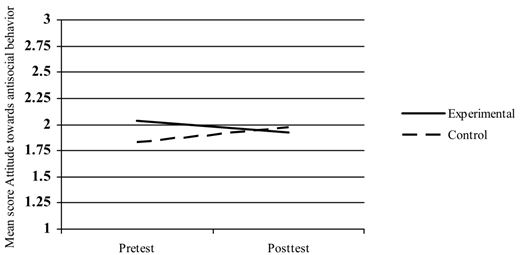
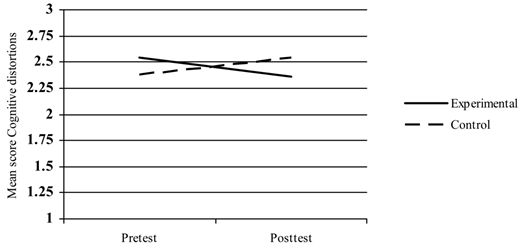
Since interaction effects on ethnicity were established, separate repeated measures for students with a Dutch ethnic background and students from ethnic minority groups were conducted. This distinction in ethnic groups shows that the effects of the intervention on attitude towards antisocial behavior and self-serving cognitive distortions only apply for students with a Dutch ethnic background. Students with a Dutch ethnic background who followed EQUIP reported a more negative attitude towards antisocial behavior and lower levels of self-serving cognitive distortions after the intervention, while students with a Dutch ethnic background in the control group showed a more positive attitude towards antisocial behavior and higher levels of self-serving cognitive distortions at the posttest. Students from ethnic minority groups in both the experimental and control group showed a more negative attitude towards antisocial behavior at the posttest and remained stable on the level of self-serving cognitive distortions (see Table 4). These are both medium effects (Cohen, 1988).
Participants’ Initial Level of Self-Serving Cognitive Distortions and Antisocial Behavior
Finally, to investigate the influence of the seriousness of antisocial behavior at pretest on the effects of EQUIP for Educators, TRF (Achenbach, 1991) profiles were added as between-subject factors to the analyses (see Instruments). The TRF provides guidelines for categorization into normal, borderline and clinical groups, but since the numbers of respondents in the control group of the present study appeared to be too small for this division into three groups, the borderline and clinical groups were taken together. In line with TRF norms, students were categorized as normal (up to the 67th percentile) or borderline/ clinical (above the 67th percentile). There were no differences between the experimental and the control group in change of both attitude towards antisocial behavior (F(1,556) = .02, p = .88) and self-serving cognitive distortions (F(1,558) = .45, p = .51) based on categorization into normal and borderline/ clinical TRF profile groups. In sum, there were no differences between effects of the program based on participants’ initial level of antisocial behavior.
In addition, a comparison of HIT profiles (Barriga, Gibbs et al., 2001) before and after intervention, using cross tabulation, showed a positive change in the experimental condition. The number of students assigned to borderline groups at pretest that could be categorized as normal after intervention, and the number of students assigned to clinical groups at pretest that could be categorized as borderline or normal after intervention was larger than reverse (n = 95 versus n = 65). Although this result indicates a positive trend, the changes were not significant according to the McNemar-Bowker test (χ2 (3) = 6.09, p = .11).
Furthermore, comparison of HIT profiles showed a negative change in the control group. The number of students assigned to borderline groups at pretest that could be categorized as normal after intervention, and the number of students assigned to clinical groups at pretest that could be categorized as borderline or normal after intervention was smaller than reverse (n = 11 versus n = 18). However, the changes were not significant according to the McNemar-Bowker test (χ2 (3) = 6.07, p = .11).
Discussion
The present study provides a first evaluation of EQUIP for Educators, implemented as an universal school based intervention program for young adolescents (DiBiase et al., 2005), by using a pretest/posttest design comparing an experimental and control group. This quasi-experimental study focused on the change in prevalence of antisocial behavior, attitude towards antisocial behavior, self-serving cognitive distortions, and moral judgment.
First of all, it was investigated whether this type of intervention was justified, for example, whether the sample could be defined as an “at-risk” group for the development of antisocial behavior. Results showed, in line with previous research in the Netherlands (Van der Laan & Blom, 2006; Vollebergh et al., 2006), high rates of various forms of antisocial behavior in the present sample. Next to relational aggression, such as excluding someone from the group and gossiping, physical aggression and vandalism were reported by substantial percentages of the students. Teacher reports on externalizing behavior confirmed this trend, showing that 17% of the students could be assigned to the clinical range (scoring above the 70th percentile) according to the norms of the Teachers’ Report Form (Achenbach, 1991). Furthermore, based on mean scores for self-serving cognitive distortions, almost a quarter of the students could be classified as “clinical” (Barriga, Gibbs et al., 2001). Based on these findings, it can be concluded that a substantial part of the present sample is indeed “at-risk” for the development of antisocial behavior and could, given the strong relationship between self-serving cognitive distortions and antisocial behavior, benefit from a preventive intervention targeting limitations in the development of moral judgment, self-serving cognitive distortions, and deficiencies in social skills.
So the question remains whether EQUIP for Educators, implemented in classroom settings, is a successful intervention for the young adolescents in this sample (with high mean scores on self-serving cognitive distortions). Firstly, results show that the experimental and control group differed significantly with regard to change in both attitude towards antisocial behavior and self-serving cognitive distortions. In line with previous research by Nas and colleagues (2005), a more negative attitude towards antisocial behavior and a lower level of self-serving cognitive distortions after intervention were found for the experimental group when compared to the control group, although effect sizes were small (Cohen, 1988). Comparison of HIT profiles before and after the intervention confirmed this latter finding. The number of EQUIP students in the normal range increased, while their presence in the borderline and clinical group decreased. For students in the control group, reverse effects were found. Although these changes are limited, they do indicate the clinical meaning of the intervention. Qualitative data also support these findings, since 85% of the teachers evaluated the program as being successful in its attempt to positively influence thinking and acting of students. Furthermore, 56% of the students reported to think more prosocially after the intervention and 38% of the students reported to act more prosocially after the intervention.
Second, prevalence of antisocial behavior decreased on posttest. However, in contrast the expectations, this effect appeared to be nonsignificant since both the experimental and control group showed this reduction. This finding can be attributed to changes in the instrument to assess prevalence of antisocial behavior: at pretest students were asked whether they ever conducted specific types of antisocial behavior, while at posttest they were asked whether they conducted these types of behavior in the last 3 months. It might still be possible that a part of the decrease in prevalence of antisocial behavior is caused by EQUIP for Educators and will become visible on follow up assessment. Longitudinal data are needed to gain insight in the impact of the intervention on the long term.
Third, similar to previous findings (Leeman et al., 1993; Nas et al., 2005), change in moral judgment of the experimental group did not differ from moral judgment in the control group. Although we could not establish an effect of EQUIP for Educators on moral judgment immediately after intervention, the impact of EQUIP on moral judgment might be a more gradual process. It is possible that a “sleeper” effect occurs, meaning that the effects on moral judgment will become visible and more powerful after a longer period of time (Leeman et al., 1993). Longitudinal data are needed to further investigate the developmental processes and impact of the intervention on the long term.
Since previous studies stress the importance of possible differences between boys and girls (Barriga, Morrison et al., 2001; Côté et al., 2007; Van Lier et al., 2005), and students from diverse ethnic groups (Boendermaker & Van Yperen, 2003; Van der Laan & Blom, 2006), moderation of both sex and ethnicity was investigated. Sex appeared to have no influence on the effects of EQUIP for Educators on prevalence of and attitude towards antisocial behavior, self-serving cognitive distortions, and moral judgment. However, ethnicity does play a moderating role in the effectiveness of the intervention. Results show that, when ethnicity of the student was included in the analyses, the effects on attitude towards antisocial behavior and self-serving cognitive distortions were only significant for students with a Dutch ethnic background. The attitude towards antisocial behavior from these students in the experimental group became more negative over time, while the attitude towards antisocial behavior became more positive in the control group. In contrast, there was no significant difference for students from ethnic minority groups.
In line with these results, the level of self-serving cognitive distortions from students with a Dutch ethnic background in the experimental group decreased after the intervention, while the level of self-serving cognitive distortions increased in the control group. There was no significant difference for students from ethnic minority groups; self-serving cognitive distortions remained stable in both the experimental group and the control group. In sum, the intervention had a greater impact on students with a Dutch ethnic background than on students from ethnic minority groups in changing the attitude towards antisocial behavior and reducing self-serving cognitive distortions. These results require further investigation on ethnic differences and seem to be of great importance for implementation of the program in multicultural groups.
In contrast to the expectations (Flannery et al., 2003; Stoolmiller et al., 2000), we could not establish larger effects of the program for students with higher initial levels of antisocial behavior. There were no differences in effect of the intervention between students who were assigned to the normal range and students assigned to the borderline/ clinical range on behavior, indicating that the program can be successful for all students in the sample.
Limitations
Some limitations with regard to the design of the study should be taken into account. First of all, the number of participants in the control group was substantially smaller than in the experimental group, which limited investigation of differences between specific (sub) groups. As a consequence of this limitation, we were not able to differentiate between different ethnic minority groups. The results might vary between diverse ethnic minority groups as well, due to specific cultural differences. In order to optimize EQUIP for Educators for all students, future research should further investigate these possible differences to explain the processes of change. Insight in cultural differences can lead to better implementation and evaluation of the program.
Second, students could not be assigned randomly to the experimental group or the control group since the intervention was implemented on class level and all students in the class participated. Furthermore, in line with ethical norms and to prevent possible bias (teachers who teach EQUIP teach other classes as well), all classes of the participating schools were included in the experimental group. Third, the results are based on self-report only, which might have led to a limited scope of problem behaviors. Omitting the observation of and interaction with students by multiple sources in different contexts might have led to a limitations in reported problem behaviors. In addition, changing the self report questionnaire on prevalence of antisocial behavior might have been of importance as well. Future research should use the same questionnaires for both preand posttest assessment.
Furthermore, some limitations of the present study might have contributed to the small effect sizes. First of all, the present study only focussed on the effects of EQUIP for Educators on moral judgment, self-serving cognitive distortions, and both attitude towards and prevalence of antisocial behavior. Future evaluation research should also include other important components of the program, such as social skills and moral atmosphere, and focus on the processes underlying the effects of EQUIP for Educators by investigating the relations between morality, cognition, and behavior. Second, the program was implemented for only 2 hours a week as opposed to the advised 3 hours (DiBiase et al., 2005), which made it impossible to follow the original curriculum in which a session of each component could be attended to weekly. Third, the present study was conducted within the first year of implementation of the program, which can on the one hand lead to strong motivation among teachers, but on the other hand to problems due to a lack of experience. In sum, to improve effectiveness, longitudinal research on quality of program implementation—including teacher characteristics—is needed (Durlak & DuPre, 2008; Gottfredson & Gottfredson, 2002).
Conclusion
In sum, it can be concluded that EQUIP for Educators is only partly successful in its aim to equip students to think and act more prosocially. Effects of the intervention on prevalence of antisocial behavior and moral judgment could not be established. However, qualitative results gathered by teacher and student evaluations are promising and the program had a significant impact on self-serving cognitive distortions and attitude towards behavior, especially for students with a Dutch ethnic background. In addition, comparison based on HIT profiles shows a reduction of EQUIP students in clinical and borderline groups and an increase of EQUIP students in the normal group, while the reverse is found for the control group. Although this latter finding was nonsignificant and the program had only impact on attitude towards behavior and cognition, investing in longitudinal research, including evaluation of program integrity, in this population seems beneficial.

