

The climate book
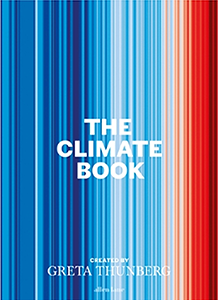
‘This is the biggest story in the world, and it must be spoken and far and wide as our voices can carry,’ says author Greta Thunberg. However, as civil engineers we can and should do much more than that. The climate book should give you more than a few reasons to realise that for yourself.
The publication takes the reader from planetary beginnings to the present day, with chapters on how the climate works and how the planet is changing. It then considers what we have done about it and looks forward to what we must do now.
The book is well laid out with easy-to-find sections and topics covering many fields. Each well-written topic from experts is like a blog as they are short and very much to the point, with suitable graphics and accessible language to make sense of the science.
But while the publication is physically easy to read, it is not an ‘easy read’: the facts, science and inevitable consequences are laid bare. I thought I knew the issues but this book opened my eyes. I urge every civil engineer to get their hands on a copy so together we can start to make the changes we all need.
The power of water: a primer for anyone entering the water industry
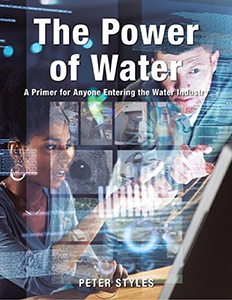
Written by retired engineer Peter Styles, The power of water is subtitled as, ‘a primer for anyone entering the water industry’. In reality it is somewhat more than this, deserving a place on the bookshelves of experienced practitioners too.
In nearly 200 illustrated pages, the author describes the technical aspects of the design, construction, operation and maintenance of water supply and sewerage systems. This is enhanced by a broad coverage of the industry’s history, regulation, support functions, land drainage and canals.
Particularly good is the section on disasters, such as the 1952 Lynmouth flood and 1984 Carsington Dam failure, from which so many lessons can be learned but are not always remembered.
The author has managed to condense a seemingly vast subject into an accessible, engaging and enjoyable read. I know of no other publication that shares so much knowledge about water – certainly I would have seized on it at the start of my own career.
Building regulations, codes and standards: a guide for safe, sustainable and healthy development
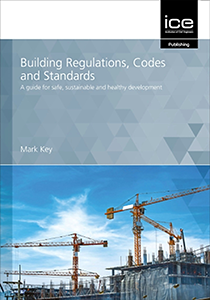
Building regulations, codes and standards is a good read for an inquisitive mind or researcher. The book is not intended as a technical guide for building regulations, codes and standards for developments, rather it revisits the roots of building regulation and control.
Author Mark Key looks at prescriptive and performative standards, complexity, innovation and capitalism, regulation makers and reactive amendments, and international standards. This approach sets the scene for the reader to consider if the systems in place are fit for the future and champions the idea of a global framework.
While the book comprehensively discusses building regulation and control from a predominantly western and developed country perspective, it excludes several continents and regions.
To explore a global framework for safe, sustainable and healthy development, it must also explore the global context for which it is required.
The ICE Library maintains one of the most comprehensive collections of civil engineering books in the world, including all titles from ICE Publishing (shown in bold below). New books acquired in the past 3 months include the following (* indicates e-book only).
All books can be borrowed through the library’s online catalogue at www.ice.org.uk/knowledge-and-resources/ice-library or from the ICE Members’ Resource Hub on the second floor of 1 Great George Street, London, SW1P 3AA from 9.15 a.m. to 5.30 p.m., Monday to Friday.
Recent ICE Publishing titles can also be purchased from the ICE Members’ Resource Hub or ordered by calling +44 1235 465 577, emailing orders@icepublishing.com or by visiting www.icevirtuallibrary.com/content/books.


