

Discussion
SPECIAL ISSUE: Heathrow Terminal 5: by Andrew Wolstenholme et al. (May 2008)
Contribution by Sam Chalmers
I was at Heathrow airport Terminal 5 (T5) on Thursday 27 March 2008 and it was not functioning, so how can BAA capital projects director Andrew Wolstenholme say in his introduction to the special issue it was ‘completed’ on 27 March? If my company commits to ‘on time and to budget,’ it means that the client has use of the product immediately completion is achieved.
He also refers to ‘this remarkably successful project'. The terminal building is unremarkable and unsuccessful—it is just a big shed with the same old-fashioned ideas about passenger convenience.
It has no proper weather protection for people being dropped off by car—just some fancy, decorative shades. It has no baggage trolleys to hand. There is a long walk to check-in. The information display screens are tiny. There are no business-class check-in desks. There are queues at the hand-baggage security screening. The signage for the lounges is poor and the lounges are too far to go with too many escalators to get to them. There are more long walks, more escalators, and a people-mover with irritating announcements and slow opening and closing doors; then further poor signage at the gates. In effect, it is just a glorified supermarket with a plane ride at the end.
If the same people running Terminals 1 to 4—no hand-baggage trolleys at the arrival gates, damaged floor-coverings, broken furniture, tacky hand-written notices, long waits to show a perfectly valid British passport and so on—are let loose on T5, it will not be long before it looks and operates the same. Assuming, that is, it ever starts operating properly after the failed attempt on 27 March.
I suggest BAA and its advisors visit Dubai International to see how a slick airport works. I guarantee when its new Terminal 3 opens in a few months’ time, it will run like clockwork—and passengers will love it too.
Authors' reply
From a passenger's perspective, T5 on day one fell well short of anything approaching acceptable. BAA tracked 12 large infrastructure projects—including several airports—and found examples that were a billion pounds over budget, a year late or failed to deliver the functionality that had been briefed.
The principal cause of distress on day one at T5 was the reported failure of the baggage system. However, it will surprise many to hear that the baggage system behaved as it was designed and performed well on day one. The end-to-end baggage process, however, failed and, as a result, check-in was closed as progressively the baggage system became saturated with bags. This was due to the logistics process delivering inadequate capacity to take bags off the lateral conveyors and to deliver them in ‘cans’ to the waiting aircraft.
With so much focus on the behavioural relationships being at the core of the successful delivery of T5, it is ironic that the failure of the opening day was not the engineering (though we would accept that the systems still needed to bed-down under full operating conditions), but the relationships between the operators and their readiness and familiarity to drive an ‘intelligent’ baggage system. For this both BA and BAA are at fault.
The relationship between the airport operator and the airlines using the facility is vital. The readiness of each stakeholder to operate on day one should not be assumed—even following the evidence at T5 of the 72 integrated trials, the 16 000 volunteers who participated and the many occasions that the baggage system was taken up to test its resilience at full capacity.
We all wish for a successful opening of the new Dubai International facilities later in 2008. In 2007, when the airport operator from Dubai visited T5 to share learning, the airport was due to open later that year.
The comments on T5's layout are best answered by the passengers themselves. Feedback from the 3 million passengers who have used T5 since the opening falls generally under two themes. First, the great passenger experience that T5 provides and, second, ‘what a great building’.
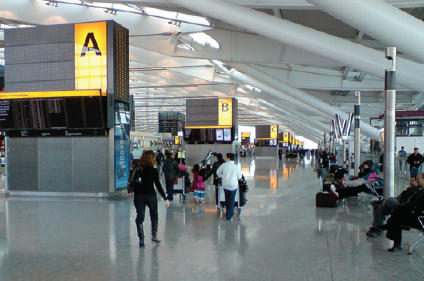
Contribution by Mike Thorn
Although a detailed account and record of the engineering of Heathrow airport's T5 is appropriate and welcome, it is a little like admiring a new kitchen while trying to ignore the fact that the rest of the house is an antiquated slum at the end of a bumpy lane.
The truth, as experienced by millions of passengers, is that Heathrow is a congested and scruffy mess with complicated inter-terminal transit arrangements and hopelessly inadequate transport access. The Heathrow Express service from London to all four terminals was one glimmer of light, which has been extinguished by the failure or inability to insert T5 onto a rail loop, thus greatly increasing the journey time and complexity for those arriving at Terminal 4.
For all its engineering achievement, T5 simply serves to prolong the life of an antiquated airport which was already unfit for purpose. Passengers experience the airport and its access routes as a whole, and one glitzy terminal does little to lift the whole experience.

Passengers arriving at Terminal 4 cannot take either the Heathrow Express or Piccadilly line directly to T5
Passengers arriving at Terminal 4 cannot take either the Heathrow Express or Piccadilly line directly to T5
Those who have experienced Singapore Changi airport or the new Beijing Capital International airport know that it does not have to be like this. The engineering profession should be promoting a more radical airport strategy: the Thames estuary airport plan of the 1970s would be a good starting point.
Authors' reply
The papers consider the architectural and engineering aspects of the £4·3 billion T5 programme, and how it was delivered using the T5 agreement. The papers do not comment specifically on the development of Heathrow. If they did they would capture the long history of government policy, made over several decades, and the response by BAA, as both a public- and private-sector company, and its stakeholders.
The commission for the third London airport concluded over 30 years ago not to develop a site at Maplin Sands in the Thames Estuary due, in the main, to concerns over the environment and the lack of fast access to London. Since then, Stansted has been developed as London's third airport.
The design competition for T5 at Heathrow was won by Richard Rogers Partnership in 1989, some 19 years before it finally opened. Many would argue that in 2008 we should not be celebrating the opening of a new terminal to support the One World Alliance (including British Airways) on the western aprons at Heathrow—instead we should be celebrating the total transformation of Heathrow, with the new eastern hub for the Star Alliance, together with the refurbished Terminals 3 and 4. Today, however, we are still five years away from this £4 billion transformation programme being completed.
The voice of the engineering profession in the UK has been quiet for many years. The current ‘inconvenience’ of Heathrow being located to the west of London, as pointed out by the contributor, should galvanise the profession into two actions. First, by supporting the Heathrow transformation programme to return this airport to the standards of other international airports we have all experienced around the world, and second, to enter into the debate, at national level, to influence more effectively the important questions that face us all over airport expansion.
Contribution by Mark Groundsell
I was interested to see that thought was given to combined heat and power (CHP) at Heathrow airport T5 but this was discarded in favour of a CHP system that would serve air cargo and perhaps later on T5. If the T5 energy centre is producing the chilled water and heating from its own gas-fed boilers, while receiving power generated elsewhere by Thames Valley Power, then I am finding reference to CHP a little misleading. I notice in Fig. 1 a plume of smoke over the gas boiler stacks and a cloud of steam over the condensers. Was there no opportunity to use a combined-cycle gas turbine for trigeneration for some local power, if you are going to burn gas anyway?
Authors' reply
Around 85% of T5's heat is supplied by a CHP plant located approximately 2 km from the site. This plant, a 15 MW gas turbine, was an existing facility located at BAA's cargo centre to the south of the airport. It supplies waste heat from the electrical generator process to both T5 and the cargo centre.
It was therefore not necessary to construct a second CHP facility within the T5 energy centre, but to build the connection to transfer the waste heat from the cargo facility. The use of this plant abates approximately 11 000 t of carbon dioxide a year.
The boiler plant in the T5 energy centre is used as a top-up to make up the peak demand and as a back-up in the event of any failure of the CHP plant, thus ensuring operational continuity of the T5 main buildings. These facilities form part of an airport-wide energy strategy, which will see them connected to renewable energy sources and the introduction of absorption chilling into the T5 energy centre to make use of the CHP heat during the summer.
Fig. 1 was taken during the commissioning period of the energy centre facilities.

Sort-of CHP—the gas-fired boilers at T5's new energy centre only top up the heat supplied by an existing CHP plant 2 km away
Sort-of CHP—the gas-fired boilers at T5's new energy centre only top up the heat supplied by an existing CHP plant 2 km away
07-00059: Creating Heathrow's new eye in the sky: by Richard Matthews (May 2008)
Contribution by David Gardner
I was impressed by this paper despite the recent comment from a past ICE president about not blowing our own trumpet. I feel our profession should do more of it, although I have some sympathy with his comment ‘not yet’ in respect of Heathrow T5.
I understand a film has been made of the whole construction progress and probably of much of the construction of T5. This would make ideal viewing for the public at large as well as be of interest to the profession as a whole, subject to an appropriate commentator to front it and introduce the key contributors.
What we lack is a David Attenborough, Kevin McCloud or Jeremy Clarkson (remember his promotion of Isambard Kingdom Brunel) for our profession. ICE could do itself and its members a service by prompting a search for one or two, not necessarily senior, members to champion our profession.
We have all seen what is happening to UK prime minister Gordon Brown, due in no small part to his perceived lack of charisma. Our profession suffers to some degree from the same problem or, if champions exist, they do not have the time to change roles.
In making these programmes, bring in all the professionals and the men and women on the ground, not just civil engineers. We keep bemoaning our lack of status—the opportunity to do something about it is now, with all the major construction projects underway or just completed.
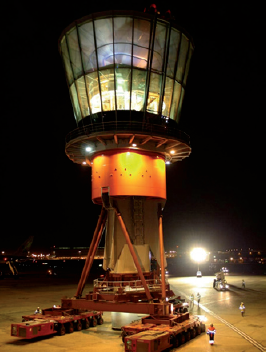
Media filming the 900 t control tower cab move seemed to be hoping something would go wrong
Media filming the 900 t control tower cab move seemed to be hoping something would go wrong
Author's reply
My immediate reaction is one of agreement with the contributor's sentiments about publicising our work. Engineers do a great job but often get little public recognition for what we contribute. However, when I start to consider our situation and our relationship with the media, I begin to wonder if we really want the type of high-profile publicity that the contributor suggests. We have to remember that the people behind the cameras have their own agendas and these probably do not match our own.
In building the control tower we had a film crew working with us during the later stages of cab construction and its transportation across the runway. It was a relatively short and visually dramatic spectacle to film but underlying the whole event was the need for the programme makers to capture drama. One had the feeling that what they really wanted was for something to go horribly wrong. Modern media thrive on reporting failure, conflict and problems. In their world, well-planned construction projects that go smoothly are not what really makes for good entertainment.
It was interesting that in the Monster Moves programme they contrasted the control tower move with the moving of a grain silo in the USA. The Heathrow move was meticulously planned and executed but, in contrast, the grain silo was little planned with plenty of things going wrong—and it made great television!
If the client pays for the film to be made then the client can retain editorial control but, if we seek free media attention, the engineers, contractors and clients will all have to accept the way in which the programme makers want to depict our projects. Programmes can be edited to make minor issues into major problems and, the more drama there is, the higher the audience ratings.
You may recall the wonderful BBC series The 7 Wonders of the Industrial World, featuring the incredible engineering feats required to build some of the world's great structures. The stories involved things going horribly wrong as the boundaries of engineering were extended. Many people lost their lives and clients lost much of their money. It was very dramatic television that had us all glued to our seats. But can you imagine being the engineer on a modern challenging project as the cameras circle and the programme director decides who to depict as being at fault every time there was a problem, and who the hero?
And finally we have Grand Designs, which is also great television. Kevin McCloud quietly talks to camera about the house owners who he sees are mis-planning their own projects. Of course most of them eventually succeed in building their dream house, but only after extending their construction programmes and paying way over their original budgets. It would be boring to watch if it all went like clockwork.
So, before we press forward with enrolling Jeremy Clarkson to review our hard work, let us think long and hard about his caustic remarks and the career-terminating comments he makes about the engineering of some of the new cars he tests. I always feel so sorry for the design engineers whose years of hard work are dismissed with one very funny but probably highly inaccurate quip. We are not the only people out there doing great professional jobs with little public recognition. Let us think very carefully before we step in front of a camera when we do not have control of the shutter.
Full versions of these discussions can be read with all other discussion in the online version of the journal at www.civilengineering-ice.com.
Proceedings
>RECENTLY PUBLISHED PAPERS
In addition to Civil Engineering, ICE Proceedings includes 15 specialist journals. Papers and articles published in some of the most recent issues are listed here. Summaries of all these and other papers and articles published in the past three years can be read free at www.ice.org.uk/journals. ICE members can download any 15 papers published in 2008 for £25 from www.iceknowledge.com
Bridge Engineering
161, No. BE2, June 2008, 55–100
Refurbishment of Stobcross on-ramp, Glasgow, Scotland
P. Brown, I. MacGregor, A. Stewart and A. Brodie
Pedestrian-induced vibrations of the Clifton Suspension Bridge, UK
J. H. G. Macdonald

Design and construction of Bukit Panjang LRT, Singapore
Y. W. Leung, J. S. Button, A. Y. Y. Yap and K. N. Ng
Bridgeworks on the East London railway line extension, UK
D. Place and R. Cox
Construction Materials
161, No. CM3, August 2008, 93–137
Sulfate-resistance of mortar containing simulated FGD waste
J. M. Khatib, P. S. Mangat and L. Wright
Recycling surfacing materials back into thin surfacing systems

J. C. Nicholls, I. Carswell, I. Widyatmoko, R. C. Elliott, J. Harris and R. Taylor
Strength of high-strength concrete heated to 250°C
K. Srinivasa Rao, M. Potha Raju and P. S. N. Raju
Physical properties of demolition waste material
I. Chidiroglou, A. K. Goodwin, E. Laycock and F. O'Flaherty
Energy
160, No. EN3, August 2007, 91–133
Defining sustainable energy
D. Acres
Innovate Green Office: a new standard for sustainable buildings
D. King

Use of thermal energy storage for sustainable buildings
I. Dincer and M. A. Rosen
Energy simulation of hybrid inter-city trains
Q. Wen, S. Kingsley and R. A. Smith
Engineering and Computational Mechanics
161, No. ENI, March 2008, 1–49
A new model for simulating cracks in cementitious composites
S. C. Hee and A. D. Jefferson
The known unknowns of hydraulic engineering
H. Chanson

Influence of anchor head on dynamic response of anchorages
A. Ivanovic and R. D. Neilson
Bend pressure drop experiments compared with Fluent
A. Kumar, D. R. Kaushal and U. Kumar
Engineering Sustainability
161, No. ES2, June 2008, 103–148
Fit for purpose: evaluating walkability
S. Reid
Water management at BedZED: some lessons
C. Shirley-Smith and D. Butler

Sustainable groundwater-source cooling systems
M. Preene
Environmental life-cycle assessment of railway track beds
M. Kiani, T. Parry and H. Ceney
Geotechnical Engineering
161, No. GE4, August 2008, 171–223
Axial resistance of CFA piles in Dublin Boulder Clay
K. Gavin, D. Cadogan and L. Twomey
Identifying low-fines soils not suited to NEF testing

A. Soroush, A.-H. Aminzadeh and P. T. Shourijeh
The ground: clients remain exposed to unnecessary risk
D. Egan
The properties of Lias Clay for landfill liners
A. Binns, P. N. J. Robinson and C. S. Eccles
Using buttress walls to reduce excavation-induced movements
C.-Y. Ou, F.-C. Teng, R. B. Seed and I.-W. Wang
Ground Improvement
161, No. GI3, August 2008, 109–172
Improving the coherent gravity method for soil wall design
R. J. Bathurst, A. Nernheim and T. M. Allen
Response of granular pile-anchors under compression
A. Srirama Rao, B. R. Phanikumar and K. Suresh

Electrochemical stabilisation for offshore model caisson
E. Mohamedelhassan, J. Q. Shang, M. A. Ismail and M. F. Randolph
Prefabricated vertical drains: a simplified design procedure
I. Bellezza and R. Fentini
Modelling and acoustic monitoring grout propagation in sands
N. Saiyouri, L. Jason, O. Chupin and P. Y. Hicher
Seismic response of deep-mixed ground. Part 1: approach
R. V. Siddharthan and A. Porbaha
Seismic response of deep-mixed ground. Part 2: verification
R. V. Siddharthan and A. Porbaha
Management, Procurement and Law
161, No. MP1, February 2008, 1–45
The impact of multiskilling on UK's construction manpower
O. A. Ejohwomu, D. G. Proverbs and P. Olomolaiye
UK civil engineering in the twenty-first century
B. Barr

Municipal Engineer
160, No. ME2, June 2008, 71–145
Constructing community health and safety
W.-M. Roth
Safety chain approach in flood risk management
W. B. M. ten Brinke, G. E. M. Saeijs, I. Helsloot and J. van Alphen

Resilient design for community safety and terror-resistant cities
J. Coaffee, C. Moore, D. Fletcher and L. Bosher
A road safety management system for mediumsized towns
C. G. Carvalheira and L. Picado-Santos
Finding safe routes to school using optimisation methods
P. Wackrill and C. Wright
The risk of tripping accidents on public footways
S. Bird
Community road safety education: an international perspective
A. Bradbury and A. Quimby
Structures and Buildings
161, No. SB3, June 2008, 115–168
Calibration of resistance of shear connectors in troughs of profiled sheeting
R. P. Johnson
The continuous strength method
L. Gardner

Passive fire protection of concrete structures
G. A. Khoury
Seismic capacity evaluation of school buildings in Turkey
M. Inel
Stiffness identification of framed models under controlled damage
F. Garcés, C. Genatios, P. García, M. Lafuente and A. Mebarki
Transport
161, No. TR3, August 2008, 99–168
A pricing and investment strategy for national roads
D. Bayliss, N. Banks and S. Glaister
Public acceptability change of urban road pricing schemes
T. Gehlert, O. A. Nielsen, J. Rich and B. Schlag

Improving and optimising road pricing proposals for Copenhagen
M. K. Larsen and O. A. Nielsen
Cambridge's experience of road user charging: lessons learned
S. Ison, G. Hughes and B. Tuckwell
Congestion charging in Dublin
M. Rogers and C. Eagney
Citizens, consumers and the acceptability of road pricing
D. Halden
How to design effective road pricing cordons
S. Shepherd, A. May and A. Koh
National road pricing: a critique and an alternative
D. Metz
Urban Design and Planning
161, No. DP1, February 2008, 1–43
Accommodating household growth in Britain
J. Cowans
Comment on historical ICE paper
P. Hall

Urban Design and Planning: challenges and opportunities
H. Barton, C. Goodier, M. Lappin, A. Madanipour, Y. Rydin
Waste and Resource Management
161, No. WR1, February 2008, 1–41
Implementing resource efficiency in Hampshire County Council
J. M. Reid, T. Lomas and A. Flavell
Using eggshell waste in red wall tiles

M. N. Freire, S. J. G. Sousa and J. N. F. Holanda
Comparison of timber and metal formwork systems
R. Yip and C. S. Poon
Water Management
161, No. WM3, June 2008, 115–183
Catchment descriptors to optimise hydrometric networks
C. L. R. Laizé, T. J. Marsh and D. G. Morris
Investigation of equal and opposing flow junctions

C. S. Frizzell, A. A. Khan and D. Werth
A flowmeter for rectangular irrigation field channels
A. Goel and N. Narayana Pillai
Assessment of existing soakaways for reuse
H.-P. Chen, M. W. Stevenson and C.-Q. Li
Cascade stilling basin design using continuous ant algorithm
M. H. Afshar and M. Daraeikhah
Hydraulic jumps in trapezoidal and circular channels
S. B. Mitchell
A methodology for regional-scale flood risk assessment
B. Gouldby, P. Sayers, J. Mulet-Marti, M. A. A. M. Hassan and D. Benwell
Request for papers
All Proceedings journals rely entirely on papers sent in by civil engineers and related professionals, researchers, academics and students. Papers should be around 2000 to 5000 words long, in good English and with adequate illustrations and references.
Project papers are particularly welcome.
All papers sent in will be assessed on merit and not on the status of the author. Simply submit your text and images using the online submission system via www.ice.org.uk/journals.
Personal on-line subscriptions to specialist Proceedings journals start from £11 a year for members.
Print subscriptions start at £21 a year and include full on-line access to the current and past three years' issues. Please call +44 20 7665 2227, email subs@ice.org.uk
> AWARD WINNING PAPERS IN 2007
On 24 October 2008, ICE President, David Orr, will present awards to the following papers published in the various ICE Proceedings journals in 2007. Journal editorial panels nominated their best papers and an awards committee, chaired by Adrian Long, allocated the awards. Members can download these award-winning papers free from their MyICE page on the ICE website at www.ice.org.uk.
| PAPER AND AUTHORS | ISSUE IN 2007 | AWARD | |
|---|---|---|---|
| Bridge Engineering | |||
| Pendel bearing replacement at A9 Kessock Bridge, Scotland, by John Redpath | December | King Medal | |
| Civil Engineering | |||
| Managing the inner world of infrastructure, by Michael Abbott | February | Telford Gold Medal | |
| Going organic: using evolution in civils design, by Pasquale Ponterosso and Dominic Fox | February | Manby Prize | |
| Lin Au culvert, Hong Kong: taming the torrent, by Bruce Corney, David Meigh and Michael Hieatt | May | Overseas Prize (2) | |
| CDM Regulations: 12 years of pain but little gain, by Alasdair N. Beal | May | safety in Construction prize | |
| St Katharine Docks, London—Telford's high-speed harbour, by Mike Chrimes | May | Telford Premium (1) | |
| Channel Tunnel Rail Link section 2: procurement and contract strategy, by Mike Attridge and Harpal Tamber | November | Coopers Hill War Memorial Prize | |
| Construction Materials | |||
| VIP and their applications in buildings: a review, by Xiaoxin Wang, Nicholas Walliman, Ray Ogden and Chris Kendrick | November | Howard Medal | |
| Energy | |||
| North Hoyle offshore wind farm: design and build, by Mike Carter | February | Hislop Prize | |
| Renewables and the grid: understanding intermittency, by Robert Gross, Philip Heptonstall, Matthew Leach, Dennis Anderson, Tim Green and Jim Skea | February | Telford Premium (2) | |
| Visakhapatnam underground LPG storage cavern, India, by Narasimhan Raghavan, Siva R. K. V. Kosuri, Kankipati V. Bhaskar, Patrick de Laguerie, Pierre Roux, Philippe Vaskou and André Saint | May | Overseas Prize (1) | |
| Innovate Green Office: the highest Breeam score yet, by Doug King | August | Watt Medal | |
| Engineering Sustainability | |||
| The load-bearing duct: biomimicry in structural design, by Stylianos Yiatros, M. Ahmer Wadee and Gary R. Hunt | December | Trevithick Fund | |
| Geotechnical Engineering | |||
| Estimating volume loss for open-face tunnels in London Clay, by Paul S. Dimmock and Robert J. Mair | January | Crampton Prize | |
| Plastic bending of sheet steel piles, by Peter J. Bourne-Webb, David M. Potts and David Rowbottom | July | Bill Curtin Medal | |
| Maritime Engineering | |||
| Cliff recession and behaviour studies, Hunstanton, UK, by Antony R. Drake and Peter J. Phipps | March | Halcrow Prize | |
| Management, Procurement and Law | |||
| The rise and rise of time-bar clauses, by Hamish Lal | February | Parkman Medal | |
| Municipal Engineer | |||
| Application of partnering principles to a framework contract, by David Gullick, Robert Cairns and Donald Pearson-Kirk | September | James Hill Prize | |
| Structures and Buildings | |||
| Predicting footfall-induced vibration: Part 1 and Part 2, by Michael Willford, Peter Young and Caroline Field | April | Palmer Prize | |
| Transport | |||
| Explaining tunnel construction by joint mapping, by Jack Knight | May | Telford Premium (3) | |
| The introduction of flexibility into a road ironwork installation, by Barry V. Brodrick, Andrew C. Collop, Stephen F. Brown and Roger Cooper | August | Reed and Malik Medal | |
| Geocomposite technology: reducing railway maintenance, by Peter K. Woodward, David Thompson and Meysam Banimahd | August | Webb Prize | |
| Comparison of noise impacts from urban transport, by Matthew Frost and Stephen Ison | November | Rees Jeffrys Award | |
| Waste and Resource Management | |||
| Anaerobic digestion of verge cuttings for transport fuel, by Andrew Salter, Michelle Delafield, Sonia Heaven and Zane Gunton | August | Telford Premium (2) | |
| Water Management | |||
| Case-based reasoning approach for managing sewerage assets, by Richard A. Fenner, Gavin McFarland and Olivia Thorne | March | Robert Alfred Carr Prize | |
| A simple method for estimating flood flow around bridges, by Galip Seckin, Tefaruk Haktanir and Donald W. Knight | December | Baker Medal | |
Books
>>> REVIEWS
200 questions and answers on practical civil engineering works by Vincent Chu, published by Institution of Civil Engineers, 2007, free online, reviewed by Zeena Farook, Arup

This electronic book is written by the author of the frequently asked civil engineering questions in the Hong Kong Engineer. It is written along similar lines, with a number of common questions in different fields of civil engineering. The book is intended to arouse the interest of graduate and assistant engineers.
In an increasingly multidisciplinary atmosphere, this book acts as a good introduction to critical aspects of different fields in civil engineering. It is very easy to read and does not go into great depth, making it ideal for the intended audience. It covers a range of questions, from the function of rebate in a construction joint to why marine piles are circular in cross-section. In so doing it improves the reader's civil engineering general knowledge. The answers are technically accurate and the author has provided appropriate references for theory. The question format also allows the reader to understand why the particular subject is relevant in practice.
The text would benefit from real-life examples as the lack of projects and anecdotal evidence makes it read more like an educational text book. The book would also benefit from more explanatory drawings as it covers a range of topics and yet aims at the graduate engineer. The few figures presented are neither referenced nor described in depth. The questions are those that a specialist in different fields may ask, so readers would benefit from having some prior practical experience. Although the questions are divided by subject, there is little flow from question to question. The disjointed nature of the questions would benefit from an introduction to each discipline or an explanation of how the questions came about. A companion text book or civil engineering dictionary would thus be useful.
As such, 200 questions and answers does not act as a reference but is more of an introduction to young engineers seeking to improve their knowledge in different fields of engineering. The book needs to be read with some prior experience and would also be useful to more experienced specialist engineers hoping to improve their knowledge in other fields. The author has encapsulated a number of subjects in a short book so there are obviously some omissions. Also, the technical as opposed to anecdotal nature of the answers make the text rather heavy but, with patience, the book does improve the reader's general knowledge in civil engineering.
Thomas Telford: an illustrated life
by Rhoda Pearce, published by Shire Publications Ltd, 2007, £5·99, reviewed by Tony Caccavone, The Nichols Group

Thomas Telford: an illustrated life by Rhoda Pearce provides an insight into the life and career of Thomas Telford, the first president of the Institution of Civil Engineers. The book provides an overview of Telford's life from his apprenticeship as a stonemason in Dumfries through to his work on St Katherine's Dock in London prior to his death in 1834.
Pearce is a local historian and the book is more of a narrative on Telford's life rather than providing a technical insight into Telford the man. The book does not describe in detail the challenges that Telford faced in overcoming the technical and financial obstacles in building his roads, railways, canals and docks through the late-eighteenth and nineteenth centuries.
The 48 pages describe each of Telford's major projects through a brief overview with black and white illustrations, drawings and photographs. There is a commentary on the benefits that each scheme brought to the local community and the resources that Telford brought to bear in helping him deliver the projects.
The book is enlightened by quotes from Telford and extracts from correspondence between Telford and his colleagues and friends. Aparticularly poignant quote from Telford describes his typical working day in winter and how his circle of friends is limited due to his dedication to work.
The book is nicely rounded off with a useful guide to seeing Telford's work together with a detailed bibliography for further reading and a timeline of Telford's life.
Learning for action: a short definitive account of soft systems methodology and its use for practitioners, teachers and students
by Peter Checkland and John Poulter, published by John Wiley & Sons Ltd, 2008, £22·99, reviewed by Joe Gunning, University of Ulster
The approach to tackling fuzzy, real-life situations known as ‘soft systems methodology’ (SSM) was developed over a 30-year programme of action learning directed by Peter Checkland. The approach is now used and taught worldwide, and has been described at length in four previous books. This volume is a concise and definitive account of SSM for all who wish to use, teach or learn about it.
The book attempts to correct some misunderstandings about SSM and to explain the techniques used within it. It crisply summarises case studies of SSM in action in both private and public sectors. The transition from ‘hard’ to ‘soft’ systems thinking is clearly demonstrated and this will find resonance with engineers who understand the limitations of trying to apply deterministic solutions to stochastic problems.
The underlying theory and the required skills are examined in a readable form, with many useful diagrams illustrating the concepts, processes and models employed in SSM. The text commences with a ‘10-minute account of SSM for very busy people’. It would be a shame if readers stopped at this, since the SSM approach deserves closer examination by engineers. The methodology lends itself well to the complex problems regularly encountered in engineering.
Even a partial understanding of the principles of SSM will improve the quality of thinking of readers. The creation of action-oriented models can only assist in focusing on the solution to reallife problems. The case studies presented demonstrate how SSM has been applied within large and small organisations in resolving problematic management situations and information systems.
While none of the case studies relate specifically to construction, most are in the fields of science and engineering, and the lessons from these are broadly applicable to a wide range of situations. Hence all engineers are strongly recommended to read this 200-page book. Even if it does not make them wiser, it will certainly leave them better informed regarding the benefits of applying soft systems thinking to their problems at work.
Reinforced concrete design to Eurocode 2 (6th edition)
by Bill Mosley, John Bungey and Ray Hulse, published by Palgrave Macmillan, 2007, £35·99, reviewed by Owen Brooker, The Concrete Centre
Reinforced concrete design has been completely rewritten to cover the design of concrete structures using Eurocode 2. This is in contrast to other texts which have only been amended where Eurocode 2 requirements vary from current standards. The distinction is important and makes this text far easier to read, understand and apply to concrete design using the Eurocode system.
Reinforced concrete design is comprehensive and starts by considering the material properties of reinforced concrete before explaining the limit-state design principles. A significant part of the book is devoted to analysis, covering both the analysis of the frame and analysis of the concrete section, backed up with worked examples. The serviceability of the structure is also covered and includes the calculation of deflection, as well us the use of span-to-depth ratios and the effects of cracking.
The majority of the text is given over to the design of specific elements including beams, slabs, columns, foundations and retaining walls. These sections are comprehensive and include numerous worked examples, which will be invaluable to the student and a useful point of reference for the practising engineer.
In addition, there are chapters covering prestressed concrete and composite construction, both of which are increasingly used in the UK. Finally, there is an appendix containing useful data and design aids. A section covering the design of the reinforcement for shear walls would be a useful addition.
Reinforced concrete design is a well-written update to a popular text book. It is comprehensive and will be a useful resource for students and practitioners alike.
The behaviour and design of steel structures to EC3 (4th edition)
by Nick Trahair, Mark Bradford, David Nethercot and Leroy Gardner, published by Taylor & Francis, 2007, £35·00, reviewed by Dennis Lam, University of Leeds
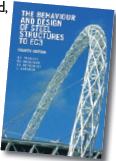
This book provides engineers with straightforward explanations and useful design examples of using Eurocode 3 to design steel structures. It concentrates on the main provisions of part 1-1 of EN 1993—general rules and rules for buildings—but also refers to some aspects of part 1-5 covering plated structural elements and part 1-8 on design of joints.
Chapter 1 presents relevant information on loading and material properties; chapters 2–7 deal with element design; frames and joints design are covered in chapters 8 and 9; and design of members in torsion is included in chapter 10.
For those involved in steel design, this is an invaluable reference book. It is ideal for students and engineers who want to familiarise themselves with Eurocode 3. I personally found it easy to read and believe it is the most comprehensive textbook on the subject currently on the market.
Full versions of these and other reviews can be read at www.civilengineering-ice.com.
>>> NEW BOOKS
The ICE's bookshop in London carries one of the most comprehensive ranges of civil engineering books in the world. New books received in the past three months are as follows.
All the questions and answers from the CITB skills health and safety test: 2007 edition issue 2
Construction Skills £8·49
Biographical dictionary of civil engineers volume 2 – 1830 to 1890
Peter Cross-Rudkin and Mike Chrimes £120·00
Construction cost management
Keith Potts £27·00
Construction UK: introduction to the industry (2nd edition)
Ralph Morton, revised by Andrew Ross £19·99
Contractors' guide to green building construction: management, project delivery, documentation and risk reduction
Thomas Glavinich £39·99
Engineering design in geotechnics
Fethi Azizi £28·50
GPS for land surveyors (3rd edition)
Jan Van Sickle £46·99
Ground anchorages and anchored structures in service
Stuart Littlejohn £135·00
Hazards and the built environment
Lee Bosher £35·00
Irrigation systems: design, planning and construction
Adrian Laycock £65·00
Manual for the design of plain masonry in building structures to Eurocode 6
Institution of Structural Engineers £70·00
Manual for the design of timber building structures to Eurocode 5
Institution of Structural Engineers £100·00
Physical behaviour in geotechnics
Fethi Azizi £28·50
Project finance for construction and infrastructure: principles and case studies
Frederik Pretorius, Paul Lejot, Arthur McInnis and Douglas Arner £65·00
Renewable energy
Bent Sorenson £39·99
Spon's Irish construction price book (3rd edition)
Franklin and Andrews £135·00
Standard letters for building contractors (4th edition)
David Chappell £57·50
Structural timber design to Eurocode 5
Jack Porteous and Abdy Kermani £69·50
Sustainable construction
Sandy Halliday £29·99
The essence of geotechnical engineering: 60 years of Géotechnique
John Atkinson £50·00
Understanding bridge collapses
Bjorn Ankesson £44·00
The bookshop is in the ICE foyer, 1 Great George Street, London SW1P 3AA and is open from 9.30am to 5.00 pm, Monday to Friday. Books can also be ordered by calling +44 20 7665 2462, emailing orders@thomastelford.com or by visiting www.thomastelford.com or the bookshop section of www.ice.org.uk
ICE review
A review or recent and forthcoming developments at the Institution of Civil Engineers by ICE director of communications and marketing Anne Moir. For further information please contact the Communications Office on +44 20 7665 2150.
Backing renewable energy
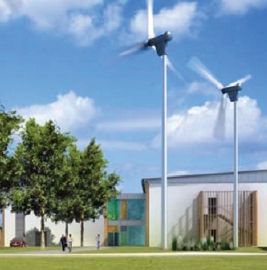
ICE joined forces with other professional, industry and environmental bodies in May 2008 to urge the UK's House of Lords to vote for a cross-party amendment to the Energy Bill, which involves inserting a new clause on a renewable energy feed-in tariff.
The proposed clause, which was rejected by the House of Commons in April, aims to encourage households and businesses to produce their own renewable energy by putting in place legislation for a set of tariffs to cover small-scale renewable initiatives.
Calling for planning reform
ICE called on UK members of parliament in May 2008 to back the new Planning Bill and not vote against the proposed independent infrastructure planning commission.
Responding to a letter from business, enterprise and regulatory reform secretary John Hutton, ICE argued that the new body is desperately needed to improve the current inadequate planning system and ensure delivery of essential infrastructure projects.
An ICE-led meeting in May attended by senior representatives from civil engineering professional bodies, procurement organisations, designers and contractors underlined industry-wide support for a new, non-political, independent body to take a strategic overview of all major projects and to assist in coordinating their delivery.
Brunel lecture 2008
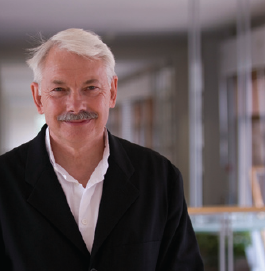
Arup director and ICE fellow Peter Head gave the inaugural lecture of the 2008 ICE International Brunel lecture programme in June 2008.
Entitled Entering the ecological age: the engineer's role, the lecture focused on the major changes required in the development of infrastructure, policy and legislation to mitigate and adapt to effects of climate change around the world.
The lecture brought together knowledge gained from a number of engineering projects around the world and built on disciplines such as sustainable systems engineering, life-cycle analysis, industrial ecology and earth systems engineering.
A copy of the lecture can be downloaded from the ICE website at www.ice.org.uk/brunel. A paper based on Paul Jowitt's 2007 Brunel lecture will be published in the next issue (November 2008) of Civil Engineering.
Member satisfaction rises
ICE released its Member Satisfaction Survey 2008 in April 2008, which shows an increase in member satisfaction to 72·9%—up from 69·8% in 2006, and an increase of nearly 7% since 2003.
A total of 1153 members took part in the survey which, for the first time, contained a section specifically designed to look at how members perceive ICE in their region.
Five new requirements were identified by member focus groups for members to rate, including ICE's website and New Civil Engineer magazine. Only one out of the 17 requirements saw a small decrease in satisfaction score.
Director general Tom Foulkes said, ‘The continuing increase in member satisfaction shows that the effort we are putting in to improve our services is being recognised by our members. We know, however, that there is still much to be done and will continue working to ensure we meet the needs of our members and the wider civil engineering profession.’
Salary survey 2007

Findings from ICE's Salary Survey 2007, an assessment of member's salaries and associated benefits, were released in April 2008.
Over 38 000 UK and, for the first time, Hong Kong-based ICE members were invited to complete the survey at the end of 2007.
Future aspirations and job satisfaction were surveyed in addition to income and, for the first time, a new graduates section was added.
ICE members can download the report from the MyICE section of ICE's website at www.ice.org.uk/myice.

