In this paper, we investigate whether news sentiment directly affects housing market liquidity using housing transactions data and newspaper articles on housing topics.
We develop a conceptual model for the relationship between news sentiment and liquidity and test it empirically. We examine both the long- and short-run relationship between news sentiment and time on market (TOM) for condominiums in the Finnish Helsinki Metropolitan Area housing market, using a combination of cross-sectional and time-series estimation techniques.
Using fully modified ordinary least squares (FMOLS) and an error correction model, we find that TOM significantly increases in the long run with positive news sentiment but decreases in the short run. The difference in effects stems from how market participant expectations and behavior interact with fundamental factors such as income and credit availability.
Our study covers a limited horizon in which news tone is mostly positive. Results should be interpreted as responses to changes around a generally positive baseline rather than as a symmetric response to strongly negative or positive news.
To the best of the authors’ knowledge, this research is the first to study the impact of news sentiment on housing market liquidity, as well as the differences between its long- and short-run effects. Our novel results add to the extant literature on housing market sentiment and aggregate housing market liquidity determinants.
1. Introduction
Liquidity in the housing market, as measured by time on market (TOM), is shown to vary significantly over time (Díaz and Jerez, 2013; Eerola and Määttänen, 2018; Ngai and Sheedy, 2020). The previous literature attributes this variation largely to cyclical changes in the macroeconomic environment, such as growth in GDP (Díaz and Jerez, 2013; Ngai and Sheedy, 2020) or the availability and cost of credit (Eerola and Määttänen, 2018).
This paper examines whether housing market liquidity responds to changes in housing news sentiment, i.e. the sentiment expressed in news outlets concerning housing markets. Asset-pricing research shows that news sentiment predicts changes in asset prices and trading volumes (e.g. Fraiberger et al., 2021; García, 2013; Tetlock, 2007). Prior work also links sentiment to housing prices and to returns in commercial and securitized real estate (see, e.g. Biktimirov et al., 2024; Hausler et al., 2018; Plößl et al., 2023; Ruscheinsky et al., 2018; Soo, 2018; Walker, 2014). Yet the relationship between news sentiment and housing liquidity remains largely unexplored. We posit a mechanism whereby news opinions affect market participants’ sentiment and behavior, thereby influencing subsequent housing market outcomes. This proposition is motivated by the well-known fact that housing markets clear on both prices and liquidity (Han and Strange, 2015); hence we argue that news sentiment likely drives changes in TOM.
Understanding the liquidity channel through which news sentiment affects markets is important because when prices and liquidity are simultaneously determined, shifting beliefs about prices and future liquidity can create feedback loops that further change liquidity and push prices away from fundamentally determined levels (Asriyan et al., 2019; Daley and Green, 2016). Thus, part of the observed effect of sentiment on prices may be attributable to liquidity. Daley and Green (2016) demonstrate how even in relatively “normal” times, the risk of future illiquidity induces asset discounts whose magnitudes are sensitive to news shocks. Additionally, if news sentiment decreases market liquidity, selling one’s housing unit becomes more costly in terms of the costs of searching and matching (effort, time, etc.) with a suitable buyer (Han and Strange, 2015). Moreover, decreased liquidity increases the risk of failure to sell, which can induce additional liquidity discounts on individual units and increase the risk of distressed sales and mortgage defaults, all of which are detrimental to individual welfare (Hedlund, 2016).
Theoretically, we combine two strands of literature. First, we draw on the search theory literature, which shows how changes in fundamental factors affect demand and supply and market liquidity through the efficiency of the housing market search and matching process (see, e.g. Díaz and Jerez, 2013; Eerola and Määttänen, 2018; Genesove and Han, 2012; Han and Strange, 2015; Ngai and Sheedy, 2020; Novy-Marx, 2009; Wheaton, 1990). This literature establishes that TOM is dependent on the efficiency of the search and matching process in the housing market. Second, we refer to the literature on sentiment and expectations — especially on news sentiment in the housing market, which shows that news sentiment affects participants’ expectations about the future, driving price developments and potentially liquidity (see, e.g. Asriyan et al., 2019; Biktimirov et al., 2024; Shiller, 2015; Soo, 2018; Walker, 2014).
To investigate the posited relationship, we construct a sentiment index, using local housing news for the Helsinki Metropolitan Area (HMA), Finland [1]. We estimate a quality-adjusted TOM index using rich data on HMA condominium transactions from 2009–2021. Combining the indices, we estimate the long-run relationship between news sentiment and TOM with fully modified ordinary least squares (FMOLS). This relationship tells us how changes in the news sentiment affect long-run TOM once other TOM determinants (e.g. prices, construction) are fully adjusted and in equilibrium. Using the FMOLS residuals, we then estimate the short-run relationship between news sentiment and TOM using a standard error correction model (ECM), which shows how changes in news sentiment influence short-run TOM dynamics.
We study whether news sentiment affects TOM and whether effects differ across horizons. Intuitively, positive news raises buyer interest and speeds up matching in the short run, while persistent positive news may increase price expectations and asking prices; when income and credit adjust slowly, matching rates can fall and TOM lengthen. We formalize these channels in Section 2.1 and test them using an FMOLS/ECM framework.
Our empirical findings indicate that news sentiment significantly impacts housing market liquidity. In the long run, a one-standard deviation increase in the news sentiment index is associated with roughly a three-point increase in the TOM index— just under one-third of the TOM index’s observed standard deviation. In the short run, by contrast, a positive increase in the news sentiment is associated with a modest reduction in TOM which persists for up to two quarters. The results suggest that buyers and sellers adjust expectations and behavior in response to the news tone, affecting the duration of the search and matching process. Additionally, the results suggest distinct long- and short-run effects, underscoring the central role of time in the adoption of sentiment in housing markets. Thus, our findings provide additional information on how news sentiment diffuses and its changes affect aggregate liquidity.
We contribute to three strands of literature. First, we contribute to the literature on housing market search and matching. The extant literature thus far focuses on the impact of fundamental factors on search and matching efficiency (see, e.g. Carrillo, 2012; Genesove and Han, 2012; Wheaton, 1990). We add to this literature by incorporating changing sentiment as a factor that affects the housing market search and matching process. Under the framework we develop, our results suggest that news sentiment affects TOM mainly through changing matching efficiency.
Second, we add to the literature on aggregate housing market liquidity and TOM (see, e.g. Díaz and Jerez, 2013; Eerola and Määttänen, 2018). As with the literature on housing market search, prior research largely emphasizes the role of changing fundamentals. We add to these by introducing news sentiment-driven expectations as a driver of market-level TOM. Our empirical findings highlight the role of expectations in housing markets and align with Asriyan et al. (2019), who show that sentiment can drive expectations and affect the asset-price-liquidity relationship.
Third, we contribute to the housing market news sentiment literature by examining news sentiment’s effect on liquidity rather than prices (see, e.g. Biktimirov et al., 2024; Soo, 2018; Walker, 2014). To our knowledge, we are the first to empirically document a relationship between news sentiment and TOM, and thus news sentiment and liquidity. Our results are unique in showing that news sentiment affects housing market liquidity, and in documenting differing long- and short-run effects. Our results showcase the need to consider sentiment’s impact on liquidity alongside its well-studied effects on prices.
In addition, our study complements recent European evidence that changes in text-based sentiment are related to price dynamics, real estate trends, and market transparency in commercial and housing markets (Ploessl and Just, 2024; Ploessl et al., 2021; Plößl et al., 2023; Vasileiou et al., 2024), while shifting the focus to housing market liquidity and comparing short- versus long-run effects.
The remainder of this article is organized as follows. In Section 2 we discuss the housing market search and matching literature and develop our hypothesis for the relationship between news sentiment and TOM. In Section 3, we describe our empirical strategy. In Section 4 we present the data we use in this article. In Section 5 we report and discuss our estimation results. Section 6 summarizes our findings and concludes the article.
2. Literature review and hypothesis development
The TOM of a housing transaction is the outcome of a search and matching process between the seller and the buyer. When a housing unit is listed, it naturally takes time until the searching parties meet and a buyer makes an offer. Once matched, sellers and buyers bargain to determine the transaction price; the seller either accepts the final offer (the unit transfers) or rejects and resumes the search. The length of the process is thus dependent on the arrival rate of suitable buyers and the duration of the bargaining period. The former is related to search and matching efficiency, and the latter to the match quality.
The efficiency of the search and matching is generally determined by the market demand and supply dynamics. Changes in housing demand due to GDP, income, or population impact the buyer-to-seller ratio, affecting buyer arrival rates and the seller’s bargaining position (Genesove and Han, 2012; Novy-Marx, 2009). Moreover, credit availability causes frictions that affect whether demand materializes (Eerola and Määttänen, 2018). On the supply side, efficiency is driven by vacancy rates and construction completions; with fixed short-run supply, vacancy rates have a particularly strong short-run impact (Wheaton, 1990). Additionally, the efficiency of the process is affected by the degree of information availability; with lots of information, buyers can more readily compare alternatives to visit during their initial search (Han and Strange, 2015).
The likelihood of a match resulting in a transaction depends on the intrinsic values sellers and buyers assign to the housing unit. For a trade to occur, it is clear that both parties must experience a common surplus at the set price, which depends on each party’s inherent valuation of the property (Díaz and Jerez, 2013). If valuations are too distant, the bargaining process fails and no trade occurs. Like Eerola and Määttänen (2018), we assume that price determination follows a process of Nash bargaining, where the transaction price depends on each party’s continuation value and respective wealth position.
Prior literature shows that shocks to housing demand and supply from changes in fundamentals influence both matching propensities and buyers’ and sellers’ relative bargaining positions. Moreover, these fundamental effects are cyclical, self-reinforcing, and able to magnify existing matching frictions (Díaz and Jerez, 2013; Eerola and Määttänen, 2018; Ngai and Sheedy, 2020; Novy-Marx, 2009). Consequently, changes in fundamentals affect housing market liquidity and help explain the observed large variation in the average market-level TOM over time (see, e.g. Díaz and Jerez, 2013; Eerola and Määttänen, 2018; Ngai and Sheedy, 2020).
2.1 Hypothesis development
In this paper, we propose that, beyond fundamentals, news-driven housing sentiment can explain variation in TOM. Our proposition is aligned with evidence from prior research of a positive relationship between housing news sentiment and prices, that is largely attributed to news-driven changes in price expectations (Soo, 2018; Walker, 2014). Changing price expectations affect parties’ current valuations and beliefs about assets’ future values (Asriyan et al., 2019). Thus, expectations-driven valuations could cause frictions in the search and matching process if expectations differ across participants, or if some buyers and sellers decide against entering the market at all. Hence, when news affects price expectations, TOM should change.
Theoretically, we build on existing literature (e.g. Díaz and Jerez, 2013; Eerola and Määttänen, 2018; Wheaton, 1990) and assume sellers face idiosyncratic shocks (e.g. a new job, an additional child) that induce them to list their housing unit. For a given household, these exogenous shocks are assumed strong enough that some list their property regardless of current market conditions — i.e. households that list are committed to selling. This assumption matches well with the empirical fact that transactions occur even in market downturns (see, e.g. Díaz and Jerez, 2013; Haurin et al., 2013).
Next, a seller who lists their property must choose a listing price. The listing price is determined by the seller’s valuation of their property and the price they expect to be able to receive in the market. Sellers therefore face the issue of assessing the value that potential buyers assign to their property. Overoptimistic sellers set a too high listing price, reducing the pool and arrival rate of willing buyers, thus lengthening TOM (Haurin et al., 2013). Pessimistic sellers, on the contrary, set prices too low and sell their properties faster.
As in classical search models, we assume buyers and sellers to be heterogeneous in their property valuations and motivation to trade (Carrillo, 2012). This allows individual buyers and sellers to act independently on their beliefs and expectations when searching and bargaining. Buyer valuations and price expectations are largely influenced by previous transaction prices and housing market sentiment, the latter itself shaped by news reporting (Case et al., 2012; Shiller, 2015; Soo, 2018; Walker, 2014). We further assume buyers are forward-looking, as in Asriyan et al. (2019), so beliefs about future prices and liquidity affect current valuations and behavior.
In addition we assume that buyers, regardless of their beliefs, are sensitive to and constrained by fundamentals, such as income and credit availability. Income changes affect the savings buyers can accumulate for the down payment and debt-to-income requirements for mortgages (Acolin et al., 2016). The degree to which the constraint is binding is affected by changes in the aforementioned fundamentals. Moreover, we assume that buyers are more constrained by credit requirements than sellers because they are, on average, younger and have lower income and wealth (Eerola and Määttänen, 2018; Ortalo-Magne and Rady, 2006).
Based on these assumptions, we consider the effect that changes in news sentiment might have on housing market liquidity in both the long run and short run. In the long run, we surmise that a sustained increase in the level of reported news sentiment would lead to more positive expectations of future housing market performance. Self-reinforcing expectations would make buyer and seller valuations increasingly exuberant and move further from fundamentals. Shiller (2015) argues that rising media sentiment partially fueled the early-2000s housing bubble, which is consistent with the above process, and prior evidence on the link between news sentiment and housing prices (Soo, 2018; Walker, 2014).
With growing price expectations, sellers likely list their housing units at higher prices as they grow optimistic about their property’s market value. Buyers, while potentially equally optimistic, are, however, constrained by their wealth and access to credit. Thus, when listing prices increase following seller exuberance, buyers might not be able to match sellers’ price expectations despite being optimistic. TOM then increases as fewer buyers are able to match with sellers, and bargaining is more likely to fail unless sellers lower prices. Given buyers’ assumed wealth and credit constraints, TOM is likely to increase in the long run, unless income growth or looser credit restrictions offset the effects of higher expectations and listing prices. This result is in line with Eerola and Määttänen (2018), who observe that prices and TOM are positively correlated, indicating that liquidity deteriorates with increasing prices [2].
Conversely, if negative news sentiment makes sellers pessimistic and they list at below fundamentally determined values, the mass of buyers that can afford a given dwelling grows. The search and matching duration then depends on buyers’ expectations about the future. Forward-looking buyers might expect the market to turn by the time they sell, and thus view lower listing prices as bargains, and transact as normal. These expectations may be speculative or reflect irrational extrapolation from past price trends rather than updating them to new information (DeFusco et al., 2022; Glaeser and Nathanson, 2017). In this case, TOM should decrease as pessimistic sellers are more likely to meet buyers with similar valuations, regardless of whether buyers are speculative or do not update expectations accordingly with new information.
In the short run, a positive news sentiment shock signals improved housing market conditions and likely favorable future prices and activity (Asriyan et al., 2019). Hence, buyers’ and sellers’ expectations and valuations increase, with buyers more likely willing to transact at higher prices. Thus, a positive sentiment shock increases demand. As Novy-Marx (2009) argues, a positive demand shock increases the buyer-seller ratio, leading to faster matching in the market, despite potentially higher listing prices. As with demand shocks from fundamentals, sellers’ position in the now “hot market” improves and they can sell their housing units faster, i.e. TOM decreases (Genesove and Han, 2012; Krainer, 2001; Novy-Marx, 2009). Conversely, a negative shock signals deteriorating conditions; demand falls and TOM increases.
A key short-run assumption is that the change in sentiment is a shock, which we define as a sudden and temporary (ex-ante) change in the level of the news sentiment. Thus, if the expectations are not realized, the mass of potential buyers decreases (increases) following the prior period’s demand increase (decrease), and buyers’ and sellers’ price expectations revert towards levels determined by fundamentals. We additionally assume that wealth and credit constraints are not relevant for short-run outcomes. Under a pure positive news sentiment shock we assume that prices cannot adjust fast enough across the distribution of listings to render buyers unable to afford participating in the market. This is consistent with our shock definition, where the next period reveals whether expectations were correct. Hence, wealth and credit constraints bind only during prolonged periods of positive news that raise price expectations and listing prices over time.
To summarize, we argue that changes in news sentiment affect market participants’ expectations, which alter behavior and the duration of the search and matching process in the housing market. The effects on TOM differ between the long and short run because search and matching efficiency also depends on fundamentals. In the long run, continued positive news sentiment is self-reinforcing; in the short run, positive news acts more like a demand shock.
Behavioral frictions can amplify liquidity effects. Seller loss aversion and optimism may produce sticky or exuberant listing prices where the listing choice affects buyer arrival rates and thus TOM (Haurin et al., 2013). News can shape expectations directly (Case et al., 2012) and interact with forward-looking beliefs about prices and liquidity (Asriyan et al., 2019), reinforcing short-run shifts in matching and bargaining. These channels complement the search-and-matching mechanisms we outline above and motivate our focus on both short- and long-run relationships.
3. Empirical strategy
To study the relationship between TOM and news sentiment in the long and short runs, we adopt a two-step approach. In the first step, we examine the long-run relationship by estimating the following equation using an FMOLS estimator:
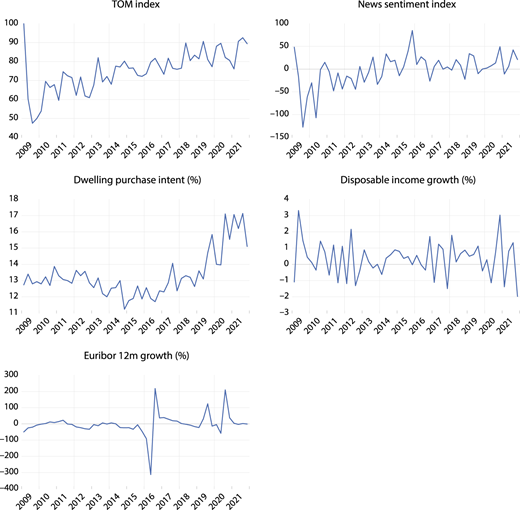
where our dependent variable TOMt is the TOM index at time t, μ is the intercept, and θ is a trend term. St is the contemporaneous news sentiment index value. Controlst denotes additional macroeconomic and sentiment variables that may be part of the cointegrating relationship according to the literature. These additional variables are included to ensure that our news sentiment index has an independent effect on TOM, and not only reflects general changes in the macroeconomic environment and sentiment. Across specifications, these are limited to growth in real household disposable income, the share of respondents in the Finnish consumer confidence survey who were intent on buying a dwelling in the upcoming twelve months, and growth in the 12-month Euribor rate [3]. ut is the innovation term.
Our conceptual model in Section 2.1 posits a persistent relationship between news sentiment and TOM over time, implying that the two series may be cointegrated. We therefore employ the FMOLS estimator because of its capabilities to handle commonly occurring issues when estimating single-equation relations of potentially cointegrated series. First, most economic time series are jointly determined, causing consistency issues with the estimates. FMOLS, unlike standard OLS, corrects for this directly, and is consistent in the presence of long-run endogeneity in the cointegrating relationship (Phillips, 1995; Phillips and Hansen, 1990). Second, normal inference using OLS estimation is impossible with serial correlation, because cointegrating relationships yield non-standard asymptotic distributions. FMOLS eliminates the serial correlation in the innovations via nonparametric kernel estimates of the long-run covariance, making the estimator asymptotically unbiased (Phillips, 1995). Third, FMOLS is applicable even when regressors are a mixture of I(0) and I(1), excluding the necessity of pretesting variables for unit roots (Chang and Phillips, 1995; Phillips, 1995) [4]. This characteristic is particularly useful, given that unit root tests have notoriously low power in finite samples.
In addition to the aforementioned beneficial properties of the FMOLS estimator, FMOLS has also proven to not suffer from bias in small samples where reliance on asymptotic properties is less justifiable (Phillips and Hansen, 1990). This property is important in our setting as our data covers a relatively short time period.
In the FMOLS estimator, the right-hand side variables are treated as exogenous. Prior work on real estate returns and housing prices shows that news sentiment leads the former (Plößl et al., 2023; Soo, 2018; Walker, 2014). Since prices and TOM are simultaneously determined, we argue a similar relationship for TOM and news sentiment. In an unreported robustness check, we estimate a standard VECM to test for endogeneity. We find no evidence that TOM would significantly affect reported news sentiment.
Following standard cointegration theory and the above-mentioned properties, FMOLS yields superconsistent estimates of the long-run parameters in cointegrating regressions with a mixture of I(0) and I(1) regressors (Chang and Phillips, 1995; Phillips, 1995; Phillips and Hansen, 1990). As a result, omitting stationary (I(0)) covariates does not compromise asymptotic consistency of the long-run slope. By contrast, omitting relevant integrated (I(1)) variables that belong in the cointegrating vector can bias the estimated long-run relation and typically breaks residual stationarity. To mitigate omitted-variable concerns, we include standard controls and deterministics (e.g. a trend) and test for cointegration using Johansen’s (1988) methodology [5]. We additionally use Hansen’s (1992) Lc Lagrange-multiplier to test for parameter stability in the cointegrating regression. We do not reject parameter stability (Lc statistics are below the 10% critical values), alleviating concerns about instability in the long-run parameters.
In the second step, we examine the short-run relationship between TOM and news sentiment by estimating an Engle and Granger (1987) Error Correction Model (ECM) as follows:
where is the residual from Equation (1), α0 is the speed-of-adjustment parameter indicating how fast TOM reacts to deviations from the long-run equilibrium; other variables are as in Equation (1). The ECM allows us to examine how lagged news sentiment and control variables affect TOM’s adjustment towards equilibrium, allowing inference on system dynamics and the speed at which market participants adapt news sentiment into their decisions.
4. Data
In this paper, we combine housing transactions and news sentiment data. Our housing data combine condominium transactions in multifamily buildings from the Finnish Federation of Real Estate Agency (KVKL) with listing price data from the MLS Oikotie [6]. Finland’s residential market is an open-market, agent-intermediated system. Nearly all Finnish mortgages are variable-rate, and typically tied to the 12-month Euribor.
We estimate a hedonic TOM index for the HMA using secondary market condominium transactions from 2009–2021. The HMA, with about 1.5 million residents in 2020, is Finland’s largest and most active housing market. To address the well-known endogeneity between TOM and prices, we use an IV approach to construct the index (Benefield et al., 2014). The index values are derived from the coefficients on the quarterly fixed effects in our estimation [7]. For a full description of our transaction and listing price data as well as a detailed description of the index construction, see Appendix 1.
News sentiment data come from the Helsingin Sanomat newspaper and were retrieved via archive searches for articles containing the words and/or phrases: “Housing” (asuminen), “Housing market” (asuntomarkkina) and “Housing prices” (asuntohinnat). Helsingin Sanomat is Finland’s largest newspaper, and effectively the local newspaper for the HMA [8]. Our 2009–2021 sample contains 1,113 distinct housing market articles.
News sentiment is measured using a lexicon-based approach. We employ a simple “bag-of-words” method to score each article, as is common within textual analysis in economics and financial economics research (see, e.g. Fraiberger, 2016; García, 2013; Soo, 2018). We use the Sentiment and Emotion Lexicon for Finnish lexicon (SELF) (Öhman, 2022a, b), as our source of word polarity [9]. We select a lexicon-based approach rather than machine learning due to the lack of relevant Finnish training data for our domain. Although machine learning-based methods are highly accurate within their training corpus domain, performance is generally poor out-of-domain (Algaba et al., 2020; Taboada, 2016).
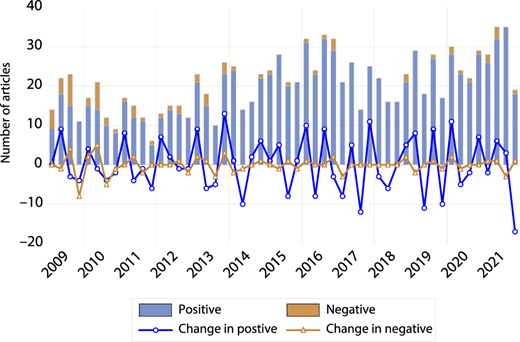
We construct our quarterly news sentiment index by estimating the quarterly fixed effects through linear regression over each article, as in Shapiro et al. (2022) [10]. We use the coefficients of the year-quarter fixed-effects to create index values. To improve interpretability we then standardize the index by demeaning it. For robustness we also construct a sentiment index following the methodology in Soo (2018), both follow each other closely, with a correlation of 0.75. We prefer the former index, as it explicitly captures time trends in the reported sentiment [11]. Appendix 2 details the article cleaning, scoring and index construction. Appendix Figure A1 plots quarterly counts of positive and negative articles and their volume changes; volume co-moves with net tone, consistent with variation in news intensity.
Our setting — an open, agent-intermediated residential market with a dominant local newspaper — facilitates identification of news-driven shifts in expectations and information updating (Plößl et al., 2023; Walker, 2014); however, to ensure our news sentiment index captures an independent effect on liquidity beyond general housing market sentiment, we include survey data from Statistics Finland’s broad consumer confidence survey (Official Statistics of Finland, 2025).
Although the consumer confidence survey captures the contemporaneous market sentiment and participants’ optimism about the future direction of the market, and thus is closely linked to our news sentiment measure, the two differ in several important respects. First, there is a significant emphasis in the consumer confidence on how households feel about their personal economy at the current point in time, whereas news reporting is more focused on the aggregates state of the market. Second, news media reporting is more likely to rely on analysis done by professionals, and on journalistic interpretation with an intent to a create a narrative and summarize expectations about the future development of the market, rather than conveying current sentiment. Third, consumer confidence is likely to change more slowly if households believe in the resilience of their own personal finances, whereas the tone in news reporting is updated frequently as the economic environment might change. Lastly, while housing market participants may follow the reports on consumer confidence, we argue that they are more likely to follow the news reporting on housing markets as it is more accessible on a regular basis and often includes additional analysis and has a narrative. As a control for general housing market sentiment, we include the share of respondents who intend to purchase a home within the next 12 months. Statistics Finland reports the data monthly, we aggregate it to quarterly by averaging the monthly percentages.
Real growth in household disposable income is calculated as quarter-over-quarter growth in the seasonally and working day adjusted household disposable income, and based on Statistics Finland’s official national quarterly sector accounts (Official Statistics of Finland, 2026). We include real household disposable income growth to control for changes in economic activity and household purchasing power affecting housing demand and supply. Changes in households’ income can significantly affect the dynamics of the housing market through prices and expected sales times (Novy-Marx, 2009). We use the national disposable income growth, due to a lack of existing local quarterly data for the HMA. However, the HMA is the most populous and largest unified economic area in Finland, and changes in local disposable incomes should follow the evolution of national level averages closely.
We include quarter-over-quarter growth in the 12-month Euribor to control for matching frictions from credit constraints [12]. As Eerola and Määttänen (2018) show, higher mortgage rates reduce liquidity by constraining household credit, thus TOM rises as rates increase. Interest rates are closely related to the business cycle and frequently reported in housing news. Data come from the Bank of Finland’s official statistics (Bank of Finland, 2025).
Table 1 reports descriptive statistics. The TOM index was on average 75.23 during the sample period and varied between 47.43 and 100. Our sample starts at the height of the global financial crisis, which explains why the maximum equals the scaling base. The news sentiment index averages −1.68 and varies between −127.70 and 84.83, with lows in 2009–2010 after the financial crisis and during the Euro crisis. Consistent with our hypothesis, TOM and news sentiment are significantly and strongly positively correlated [13]. Figure 1 below plots both indices.
5. Results
We first present results on the long-run relationship between TOM and news sentiment. Table 2 reports estimates from the most parsimonious model excluding additional controls to more complex specifications. Since TOM and news sentiment exhibit trending behavior in their relationship, we include a deterministic trend component in all our specifications.
The coefficient on news sentiment is positive and highly significant across all specifications, indicating that an increase in the level of the news sentiment is associated with a higher TOM index — i.e. a more positive housing news tone corresponds to longer selling times and lower liquidity. Point estimates range from 0.090 to 0.082, meaning a one-standard-deviation increase in the news sentiment index implies roughly a three-point increase in the TOM index, just under one-third of the TOM index’s observed standard deviation. At the mean index level (∼75), this corresponds to about a 4% change, or roughly 2–3 days around the average TOM of 56 days. These results suggest that sustained increases in the reported sentiment lengthen TOM and reduce housing market liquidity, consistent with sellers becoming more exuberant, and pricing at levels fewer buyers can afford, which lengthens the search and matching process.
Alternatively, the increase in the long run TOM could be caused by sticky listing prices (Haurin et al., 2013). Once sustained positive news sentiment has pushed listing prices higher, it might be the case that sellers are reluctant to lower them quickly, even when sentiment gradually deteriorates. This explanation would not be in conflict with our hypothesis, as fundamentals in each case would constrain buyer behavior and the efficiency of the matching in the market, which would affect liquidity.
Interestingly, all included controls are insignificant, indicating that the long-run TOM-news sentiment relationship is robust to additional sentiment and economic housing market shifters. Consequently, long-run housing market liquidity appears unaffected by consumer confidence, disposable income growth, or interest rates. Including controls, however, significantly improves model fit. More importantly, news sentiment remains statistically significant, with coefficients varying only slightly across specifications. Moreover, the results from Hansen’s Lc tests show that the residuals are stable without structural breaks, meaning that we can accept the null of cointegration (Hansen, 1992).
To study the short-run TOM-news sentiment relationship, we estimate an ECM using the FMOLS residuals in an error-correction mechanism. We base the ECM on Specification (3), rather than Specification (4) as it has a better fit in terms of adjusted R-squared, but still includes more controls than in the more parsimonious Specifications (1) and (2). Additionally, our Johansen pre-tests (see the supplementary material) suggest issues with the cointegrating rank when introducing Euribor in the equation, even if the Lc test does not indicate parameter instability. Therefore, we prefer the more parsimonious Specification (3) over Specification (4). The ECM specifications in Table 3 show how the TOM index shifts following deviation from its long-run relation with news sentiment, and the short-run dynamics of the system. The first specification includes only lagged explanatory variables as is standard; the second specification allows for simultaneous control variable effects. Variable inclusion and lag lengths are selected based on the Akaike information criterion (AIC).
In the first specification, we include all FMOLS variables except disposable income growth. Disposable income growth should theoretically be I(0) and thus not part of the levels relationship; visual inspection and unit root tests (see the supplementary material) strongly confirm it is I(0). Our model selection criteria indicate that dwelling purchase intent is not part of the dynamic system at any lagged value, so it is excluded. In the second specification, we allow simultaneous effects of variables that are not necessarily part of the cointegrated system. The AIC indicates that the specification should include contemporaneous changes in dwelling purchase intent, disposable income growth, and growth in the 12-month Euribor.
Our ECM results show that shock-induced deviations from the long-run TOM-news sentiment equilibrium are corrected within the following quarter. The estimated speed-of-adjustment coefficients, −0.963 and −1.044, are large and statistically significant, showing that TOM is highly responsive to shocks at quarterly frequencies. Unlike in the long run, a positive increase in news sentiment is associated with a decrease in the TOM index in the following period. The effects persist for up to two quarters (one quarter in the lag-only model) and have the same sign, suggesting a lasting increase in liquidity over the next quarter to half a year. The size of the effects are modest (coefficients between −0.035 and −0.061), and statistically significant at the 10% level in the lag-only specification and at the 5% level, respectively in the specification including simultaneous control variables.
We offer three explanations for the short-run persistence of news sentiment effects. First, information from housing news may follow a sticky-information process with incomplete expectations updating, as shown for inflation news (Coibion and Gorodnichenko, 2015; Larsen et al., 2021). Second, the persistence may reflect the mechanics of the housing transaction process. Lengthy transaction processes (in our sample, the mean TOM is 56 days), means that old listings are observable by new sellers for an extended period. If sellers set prices based on current and past listings, then liquidity depends on past sentiment through prior pricing. Third, sellers might be loss averse and thus discount some of the information content in more recent news if listing in prices responding to older market sentiment would minimize the risk of loss. Regardless of channel, our results on positive sentiment shocks align with the hypothesis that positive news raises short-run buyer demand and shortens TOM.
The lagged changes in the TOM index indicate more complex short-run dynamics, as reflected in the changing coefficient signs across specifications. In the first, the effect is significant and negative at three quarters lag, in the second — controlling for simultaneous effects — it is significant and positive at four quarters lag. Both are significant at the 5% level and in the simultaneous specification also at the 1% level. We attribute the differences to varying lag lengths and the inclusion of simultaneous controls. Specifically, adding disposable income growth inflates the coefficient on the four-quarter lagged TOM index.
In the second specification, both the contemporaneous change in disposable income growth and the dwelling purchase intent affect the quarterly change in TOM. The effects are significant at the 5%, and 10% level, respectively, and relatively large in size. In both cases the effects are consistent with theoretical predictions. Faster income growth in the prior period causes demand to grow within that period, and leads to a longer TOM in the subsequent period. This is because with additional demand, the number of completed transactions increases, leaving fewer dwellings on the market for the next period. If demand remains strong, but the short-run supply of in-demand dwellings is inelastic, then there are fewer suitable sellers for buyers to match with in the next period; hence TOM increases. Thus, within-quarter increases in income growth reduce liquidity if supply cannot meet demand. An increase in dwelling purchase intent, similarly to news sentiment indicates an increase in short-term buyer demand which shortens the TOM. The ECM can explain about 57–74% of the variation in quarterly TOM changes.
Our results highlight that news sentiment affects liquidity differently across time horizons. In the long run, higher news sentiment is associated with lower market liquidity, likely due to greater seller exuberance and price expectations that fundamentally constrained buyers cannot match, decreasing matching speeds and reducing bargaining success. Though moderate, the effect is nevertheless strongly statistically significant, indicating a persistent link between news tone and housing market participant behavior.
As noted above, in the short run, increases in the news sentiment translate to higher market liquidity, which we argue happens mainly through increased buyer demand. The large speed-of-adjustment coefficient indicates that if TOM grows too small relative to news sentiment, liquidity quickly decreases to restore equilibrium. We interpret this as expectations normalizing unless the news materializes or sentiment remains increasingly positive. With fixed short-run supply, news-driven shocks to expectations that alter participants’ behavior, and subsequently liquidity, are highly plausible in our view.
Our results align well with our theoretical predictions that news sentiment has different effects on liquidity depending on the time horizon. Short-run effects differ from long-run effects because buyers are not constrained by fundamentals, and are short-lived unless the sentiment is sustained or continues to increase. In the long run, increased seller exuberance and fundamentals affect the efficiency of the matching process and increase the TOM when news sentiment continues to increase.
6. Conclusion
In this paper, we study whether news sentiment affects TOM in the housing market. We argue variation in the HMA TOM over the past decade cannot be explained by changes in fundamentals alone. Instead, we posit that part of the variation reflects expectation- and behavior-driven changes due to news sentiment. We develop our hypothesis based on the existing literature on housing market search and matching, and prior work on news sentiment and housing prices.
To study the relationship between TOM and news sentiment, we create a hedonic TOM index using rich cross-sectional data from the HMA on condominium transactions as well as a news sentiment index using housing market news published in the HMA’s local newspaper. We then study the relationship between these indices by estimating an FMOLS model for the long-run relationship. We use the residuals from the FMOLS estimation to construct an ECM to study the short-run dynamics of the relationship.
Based on our findings, we conclude that news sentiment has an effect on TOM. Moreover, we find that the effect is different depending on the time horizon under consideration. In the long run we find that positive news sentiment increases the TOM, meaning that liquidity is worse following a persistent increase in the news sentiment level. On the other hand, we find that a positive shock in news sentiment shortens the TOM.
These novel results highlight the fact that sentiment not only affects housing transaction prices directly, as discussed in previous research (see, e.g. Biktimirov et al., 2024; Soo, 2018; Walker, 2014), but also affects the liquidity of the market. Since housing markets clear on both prices and liquidity, our results have importance for housing market participants, whose welfare is significantly affected by the smooth functioning of the housing market.
There are, however, some limitations to our study that need to be addressed. First, our data cover a relatively short period of time. Future research would benefit from studying longer periods of time where the housing market cycle may change more often, to establish the robustness of our results in different economic environments. Second, during our period of examination most of the reported news on the housing market was positive in tone. While our estimations do capture the effects of the variation in news sentiment across periods, it would be beneficial for future research on the topic to also consider periods where the average news tone is negative or shifting across time. As it is, our results should therefore be interpreted carefully with regard to the news environment from which we derive our sentiment measure, especially given our fairly small news article sample. Accordingly, our estimates should be understood as responses to changes in sentiment around a predominantly positive baseline, rather than as symmetric reactions to large swings between strongly negative and strongly positive coverage.
In addition to the above concerns, our results are mainly applicable to similar housing markets as those in Finland with open market transactions and lending conditions. Additional research in other housing market settings studying how news sentiment affects housing market participants’ behavior would be welcome to further establish the external validity of our results.
Lastly, our research concerns aggregate market-level responses in liquidity to changes in news sentiment. An interesting avenue for future research would be to focus on how news sentiment affects behavior at the individual dwelling-unit-level, such as, e.g. individual listing choice, the role of loss aversion vs information updating, and how changing sentiment post-listing affects the individual TOM.
Declaration on the use of generative AI and AI-assisted technologies
During the preparation of this manuscript, the authors used Aalto AI Assistant (OpenAI GPT-5) to assist with copy-editing the authors’ original text. The authors reviewed and edited all AI-assisted content and take full responsibility for the accuracy and integrity of the published work. AI tools were not used for establishing research questions and theoretical foundations, data collection, data analysis, or the interpretation of results
The authors would like to thank Elias Oikarinen for valuable comments and suggestions. The authors also wish to thank the seminar participants at the 2024 Old Dominion University Real Estate Research Symposium for their helpful comments
Appendix 1 Hedonic TOM index estimation and transaction data
A.1 Hedonic index estimation
We estimate our hedonic TOM index using unit-level condominium transactions data. Because TOM and transaction prices are simultaneously determined, we adopt an IV approach (Benefield et al., 2014; Krainer, 2001). Our selected instrument is the median quarterly listing price at the postal-code level [14]. We reason in a similar vein as in An et al. (2013), that median local list prices reflect variation in current local price trends and should correlate strongly with local sales prices, which may reasonably explain transaction outcomes even after controlling for dwelling characteristics. At the individual condominium-level, however, TOM is driven more by its own list price and that of similar units in comparable locations; thus the instrument correlation with individual condominium TOM should be weak, supporting instrument validity [15].
TOM is estimated using a standard hedonic model following common procedure in the hedonic regression literature (see, e.g. Rosen, 1974). The model is specified as follows:
where ln TOMi,l,t is the natural logarithm of TOM (days) for dwelling i in postal code l listed at time t; α is the intercept; Xi is a vector of condominium-specific characteristics. is the log transaction price, instrumented by the median quarterly postal-code listing price. Seasoni indicates the season of sale. We include controls for postal-code and year-quarter fixed effects, denoted ηi,l and qi,t, respectively. Errors are clustered at the postal code level.
We construct the hedonic constant-quality TOM index from the year-quarter fixed-effect coefficients of Equation A.1 as follows:
where is the indexed value of the estimated year-quarter fixed effects qi,t. Following this strategy, we control for fluctuations in TOM due to changes in housing market composition and neighborhood characteristics over time.
A.2 Data
The condominium transaction data comprise agent-facilitated condominium sales provided by the Finnish Federation of Real Estate Agency (KVKL) and collected by its member firms. They include detailed condominium characteristics, transaction prices, and TOM.
TOM is the number of days between start of sale and sale date for each condominium. Observations with a TOM below zero are removed as they represent faulty data or presales of new developments. We also exclude all newly built condominiums, as the new-build market may differ from the secondary market in seller and buyer composition.
We restrict the maximum TOM length in the sample to 1.5 years. This decision follows an inspection of the TOM distribution using the interquartile range method. Given that condominium sales in Finland typically take less than a year, it is reasonable to suspect that properties on the market for extended periods differ from the standard stock in key aspects like quality.
Observations where total price, price per m2, age, maintenance cost per m2, or condominium floor differ from the sample mean by more than three standard deviations are removed as outliers. Condominiums smaller than 20 m2 or larger than 130 m2 are excluded due to their irregular size relative to the general HMA condominium stock, which likely influences buyer and seller behavior. We construct a measure for the atypicality of a condominium within its postal code following Haurin et al. (2010). Atypicality is included as an additional control since dwellings that diverge from the local stock of condominiums are likely to have a different TOM than the average condominium in the area. The resulting sample includes 97,246 unique condominium transactions. Using data from the MLS Oikotie.com, we calculate median quarterly listing prices at the postal code level for these transactions. This data comprises over 400,000 unique listings during the sample period. Descriptive statistics for the KVKL data are presented in Table A1.
A.3 Listing price and TOM estimation results
Table A2 presents the first-stage outputs, TOM regression results, and scores for underidentification and weak instrument tests. The instrument is strong and passes underidentification/weak-instrument diagnostics.
Appendix 2 Measuring news sentiment
The process of cleaning the newspaper article sample and determine the sentiment of an article is conducted in the following steps:
First, after the keyword search, each article is manually inspected. Articles not directly related to the Finnish housing market are removed. Despite Fraiberger et al. (2021) finding that foreign news sentiment impacts local markets, the housing market, unlike the stock market, predominantly involves local participants. Thus, articles focusing on international housing market news are excluded, as these likely have limited or varying impacts on the sentiment of Finnish market participants. Additionally, articles irrelevant to the housing market, such as personal profiles or movie reviews, tagged under these criteria, are discarded. The final sample for 2009–2021 comprises 1,113 distinct housing market news articles.
Second, the remaining articles are pre-processed by removing special characters and numeric characters, leaving only the actual words of the article. Each article is then converted into a list of words specific to that article. As suggested by Korenius et al. (2004), words in each list are lemmatized to appear in their base form.
Last, sentiment is measured via a lexicon-based approach, using a simple “bag-of-words” method. Each word in the lists created from the lemmatized articles is matched with words in a sentiment lexicon. Matched words receive a score of either −1, 0, or 1 based on their polarity: negative, neutral, or positive, as predetermined by the lexicon constructor. Words not found in the lexicon are ignored and do not contribute to the final sentiment score.
Few pre-annotated lexical sentiment dictionaries exist in Finnish. To the authors’ knowledge, only one is freely available: the Sentiment and Emotion Lexicon for Finnish (SELF) (Öhman, 2022a, b). The SELF contains 5,836 distinct polarity-annotated words. Evidence from the sentiment analysis literature suggests larger lexicons do not always outperform smaller ones (Taboada et al., 2011); thus, the SELF is considered sufficient for this study.
It has been shown that sector-specific lexicons may perform better within their domains than general sentiment lexicons (Ruscheinsky et al., 2018). However, no such lexicons are known by the authors to exist for Finnish. Additionally, Finnish belongs to a distinctively different language family than English and interpretations of word sentiment differ with local cultural context, making a direct translation of popular dictionaries, such as Loughran and Mcdonald (2011), infeasible (Öhman, 2022a, b).
The sentiment score of each article is calculated as follows:
where Si denotes the score for article i, which is the sum of all positive words less the sum of all negative words over the total number of scored words within the article. An article is considered negative if Si < 0, positive if Si > 0, and neutral if Si = 0. This method yields a maximum score of 1 and a minimum of −1 for an article.
Although our sentiment algorithm could be enhanced by incorporating valence shifters, as done in Plößl et al. (2023), research indicates that such additions yield only marginal improvements in lexicon-based sentiment classification (Khoo and Johnkhan, 2018). This fact provides confidence that our sentiment measure is sufficient for capturing news article sentiment, particularly given the absence of valence dictionaries in Finnish.
We construct a quarterly news sentiment index using the method suggested by Shapiro et al. (2022). This involves estimating year-quarter fixed effects by regressing sentiment-scored articles against the quarter of their publication. The estimation proceeds as follows:
where Si is the score of each article, fQ(i) denotes the fixed year-quarter effect, and ɛi is an error term assumed to be normally distributed. The index is derived from the coefficients of the year-quarter fixed effects term. We set the base year as 100 in the index, and then demean it to show the deviation in the index in each period from the average news sentiment during our study period.
Most articles in the sample have positive sentiment (about 90%), which might suggest a potential bias in the results. However, this is not problematic because our focus is on the change in absolute sentiment between consecutive quarters. Equation B.2 estimates the coefficients of year-quarter fixed effects irrespective of the proportion of articles with a specific polarity. Therefore, it is not the direction of an article’s polarity that is important, but its score relative to other articles in the sample.
Figure A1 shows the total number of articles published in each quarter and the distribution between positive and negative articles, as well as their volume change between quarters. As can be seen from the figure, there are several periods in the data where there are no negative articles published, which emphasizes the need to interpret our results against a positive news sentiment baseline. This also motivates our choice to focus on the change in the absolute news sentiment.
Supplementary material
1 Unit root tests
Table A3 reports Augmented Dickey-Fuller (ADF) and Kwiatkowski-Phillips-Schmidt-Shin (KPSS) unit root tests, indicating a mix of stationary and non-stationary variables.
2 Johansen cointegration tests
Table A4 reports Johansen cointegration tests. We test with all variables, including those unit root tests suggest are I(0), given their low power in small samples. In all tests except the last (including the Euribor 12m growth), both the trace and maximum eigenvalue tests indicate at most one cointegrating relationship.
Notes
The HMA comprises the cities: Helsinki, Espoo, Vantaa, and Kauniainen.
In the absence of wealth and credit restrictions, more positive news sentiment may decrease TOM if buyers’ price expectations match sellers’ and buyers can afford the higher listing prices.
We restrict the number of included variables, because the FMOLS estimator requires that there exists at most one cointegrating vector r (Phillips and Hansen, 1990).
The FMOLS estimator requires that variables have at most one unit root. We report the results of our unit root tests in the supplementary material. (Phillips, 1995).
The test results are reported in the supplementary material.
The Federation of Real Estate Agency is a consortium of Finnish real estate agencies. Their data cover all transactions conducted via real estate agents.
Quarterly aggregation is also aligned with typical listing durations in our data (mean 56 days; median 41 days), so most listings span well over a month, whereas monthly housing-news coverage is often sparse.
Helsingin Sanomat is the most widely read news paper in Finland, with close to three times the readership of the second most popular newspaper (Media Metrics Finland, 2025).
The SELF lexicon was created based on the original NRC Emotion Lexicon by Mohammad and Turney (2013). The original NRC Emotion lexicon, which was created by manually annotating dictionary words utilizing crowdsourcing contains over 14,000 annotated English sentiment words (Mohammad and Turney, 2013; Öhman, 2021).
Our method differs slightly by including a constant in the estimation. This inclusion is technical to allow the construction of an index with a base of 100 for later estimations.
Our estimation results do not differ qualitatively if we use the Soo index; these are available upon request.
Nearly all Finnish mortgages are variable-rate, with the 12-month Euribor the most common reference rate.
The correlation coefficient is 58% and significant at the 1% level.
In an alternative specification we use the degree of overpricing for each condominium, estimated from a hedonic listing price regression as in Rutherford et al. (2005), as the instrument. Long- and short-run results are quantitatively similar to the main results and available upon request.
The instrument’s correlation with condominium sales price and TOM is 66% and −2%, respectively. For additional instrument validity checks, see Section A.3.