Providing humanitarian services to people affected by disasters poses many challenges for relief organizations. This study aims to present a model of humanitarian supply chain (HSC) challenges using the interpretive structural modeling (ISM) and MICMAC approach in dealing with disasters.
This study uses a hybrid ISM-MICMAC methodology. Key challenges and sub-challenges were identified through a systematic literature review conducted from 2006 to 2024, using databases such as Scopus and Web of Science. A panel of 24 experts from the Iranian Red Crescent Society (IRCS) validated and assessed interrelationships among 16 sub-challenges via a structured questionnaire and consensus discussions. The ISM approach was used to develop a hierarchical model, while MICMAC analysis classified challenges based on driving and dependence powers.
The ISM analysis revealed a nine-level hierarchical model of HSC challenges, with root sub-challenges such as lack of asset visibility (C11) influencing higher-level dependent challenges. MICMAC classified sub-challenges primarily into linkage and independent variables, with no autonomous or purely dependent ones, highlighting the interconnected nature of HSC issues.
This study extends existing structural analyses of HSC challenges by introducing an integrated ISM-MICMAC framework tailored to post-disaster contexts. Using 16 expert-validated sub-challenges from the IRCS, the study uncovers distinctive MICMAC patterns, including the absence of purely autonomous or dependent variables, and proposes a novel nine-level hierarchical structure not identified in prior research. By combining hierarchical modeling with dependency classification, this research delivers actionable insights for humanitarian managers to enhance SC efficiency, resilience and disaster response across diverse operational settings.
1. Introduction
Disasters are increasingly large-scale and complex, resulting in more human casualties in underdeveloped areas, especially rural regions (Lee et al., 2025). Natural disasters have always been a part of human life, and despite significant advancements in various scientific fields, societies are still unable to prevent these events (Tavana et al., 2018). From a theoretical perspective, disasters can be viewed through the lens of complexity theory, which posits that such events create chaotic, nonlinear systems where small disruptions lead to cascading failures in interconnected networks (Aldrighetti et al., 2021). This complexity is particularly evident in the humanitarian supply chain (HSC), where traditional supply chain management (SCM) theories rooted in efficiency and predictability from commercial contexts often fall short. For instance, while commercial SCM emphasizes lean principles and just-in-time delivery, HSC operates under resilience theory, prioritizing adaptability and robustness in volatile environments (Pimenta et al., 2022). However, a theoretical debate persists: resilience theory emphasizes the need for flexible resource allocation, yet in practice, the HSC frequently encounters rigidity due to institutional and environmental constraints, resulting in inefficiencies (Scholten et al., 2019). This tension underscores the gap between theoretical ideals and operational realities in humanitarian logistics.
Effective disaster response is a complex challenge that requires SC to deliver goods and services aimed at minimizing the devastating effects of disasters. After such an event, numerous governmental and nongovernmental organizations (NGOs) provide assistance and supplies to survivors, which complicates the SC environment (Giedelmann-L et al., 2022). Disruptions in the SC can stem from natural disasters, including floods, earthquakes and tsunamis, as well as global health disasters such as the COVID-19 pandemic. These events not only endanger human lives but also profoundly affect production processes and the integrity of SC operations (Singh et al., 2020). The HSC practitioners worldwide face significant challenges in developing effective SC that generate value, support vulnerable populations and align with the needs of funding entities and sponsors. The HSC is defined as the structured orchestration of movement, inventory management and flow of commodities, resources and associated data from initial sources to end-users, aimed at alleviating distress among affected individuals. This specialized SC encompasses a range of critical processes that require meticulous oversight, including strategic planning, acquisition, logistics, storage, data analysis, regulatory compliance and border formalities (Nyile et al., 2022). Encompassing stages such as demand evaluation, sourcing, asset gathering, conveyance, inventory handling and final delivery, HSC operations unfold amid dynamic and unpredictable environments. Consequently, participants face heightened vulnerabilities, including erratic demand patterns, unreliable provisioning, compromised facilities, logistical deficiencies, geopolitical turbulence, safety hazards and data gaps. Such uncertainties can impair the seamless operation of the HSC, potentially resulting in fatalities and material damages (Chukwuka et al., 2023). Theoretical frameworks such as dynamic capabilities theory suggest that HSC must develop capabilities for sensing, seizing and reconfiguring to respond effectively to challenges (Polater, 2021). However, discussions in the literature point out certain limitations: while dynamic capabilities enable proactive adaptation, they are often hindered by resource dependencies and coordination failures in multi-stakeholder humanitarian environments. This gap in theory highlights the need for integrated modeling approaches to connect theory with practical application.
Interpretive structural modeling (ISM) is a widely used methodology designed to address complex challenges. It is a well-established technique that visualizes intricate structures through a carefully designed framework, using both graphics and descriptive language. This approach relies on a comprehensive and systematic model to enhance understanding (Wankhade and Kundu, 2020). In collaboration with ISM, MICMAC analysis is used to classify variables based on their levels of driving and dependence. MICMAC categorizes factors into four groups: autonomous, dependent, linkage and independent variables. The integration of ISM and MICMAC offers a comprehensive framework for understanding hierarchical relationships and the relative importance of these variables. This combination enables decision-makers to identify key drivers and prioritize interventions effectively (Minz et al., 2025). The ISM-MICMAC has been used in many fields, such as logistics industry (Hasan et al., 2024), public infrastructure projects (Nega et al., 2024), food SC (Handayani et al., 2023), waste management (Minz et al., 2025) and intelligent construction (Guo et al., 2025). Theoretically, this hybrid method aligns with systems theory, which views HSC as interconnected systems where elements interact dynamically (Izadi et al., 2023), allowing for a debated shift from reductionist analyses to holistic modeling in humanitarian contexts (Anjomshoae et al., 2025). The questions of the present research are:
What are the direct and indirect structural relationships and hierarchy among the challenges of HSC in disasters?
How can the challenges of HSC be classified and prioritized based on their driving power and dependence in crisis management?
What ISM-MICMAC-based structural framework can be developed to enhance the efficiency and effectiveness of HSC in disasters?
The present study aims to structurally model the challenges of HSC in disasters using the ISM approach, complemented by MICMAC analysis, to identify their interrelationships, hierarchy and prioritization, thereby providing a practical framework for improving HSC during disasters. To clarify, challenges refer to the five broad categories (such as government, financial, technological/information, management and social) identified in Table 1, while sub-challenges are the 16 specific, actionable issues nested within these categories, for example, lack of asset visibility under technological challenges. This differentiation enhances conceptual clarity by distinguishing high-level themes from operational details, addressing potential ambiguities in prior studies. The HSC plays a pivotal role in delivering timely and effective aid to those affected by various disasters, including natural disasters, humanitarian conflicts and pandemics. However, the growing complexity and severity of these disasters have introduced numerous challenges, such as a lack of coordination among organizations, resource shortages, infrastructural limitations and technological constraints. These issues often result in delays in aid delivery, resource wastage and increased suffering in affected communities. The absence of a structured framework to understand and prioritize these challenges limits managers’ ability to design effective crisis responses. Refining the problem statement, this study tackles a key conceptual gap: while prior ISM-MICMAC applications in related fields (such as logistics by Hasan et al., 2024, and waste management by Minz et al., 2025) have modeled interrelationships, they have underexplored context-specific adaptations in HSC during disasters, particularly in resource-constrained environments like Iran, where geopolitical and infrastructural factors amplify vulnerabilities. Despite widespread attention to the HSC, most studies have been limited to identifying and describing challenges, with little focus on the structured analysis of their interrelationships. In particular, the use of analytical methods such as ISM and MICMAC analysis to examine the priorities and interactions among HSC challenges in crisis contexts has rarely been explored. Furthermore, the lack of practical frameworks to assist managers in prioritizing challenges and designing effective solutions represents a significant gap. This gap is exacerbated by the theoretical disconnect between commercial SCM theories and humanitarian applications, where the latter demands greater emphasis on ethical and equity considerations. This study addresses this gap by providing a structural model for analyzing HSC challenges, paving the way for more efficient crisis management. The framework enhances existing models by incorporating expert-validated sub-challenges from the Iranian Red Crescent Society (IRCS). This results in a nine-level hierarchy and unique MICMAC classifications, such as borderline linkage variables that are neither autonomous nor purely dependent. This approach highlights cascading dependencies that previous research’s descriptive methods did not fully capture. This research offers an innovative approach by using the ISM-MICMAC methodology to analyze HSC challenges. Unlike conventional approaches that typically examine challenges in isolation, this study models the interrelationships among various challenges, including infrastructural, financial, technological and managerial issues, to establish their hierarchy and prioritization. The MICMAC analysis further classifies challenges based on their driving and dependence power, enabling the identification of key drivers for strategic interventions. This framework not only provides a deeper understanding of the interactions among challenges but also offers practical guidance for managers and decision-makers to design more effective strategies for managing SC during disasters. Moreover, by addressing a wide range of disasters, this study broadens its applicability.
The remainder of this paper is structured as follows: Section 2 reviews the relevant literature, outlines the research background and identifies key challenges and sub-challenges. Section 3 describes the research methodology. Section 4 presents the findings of the study. Section 5 discusses the results and their implications. Finally, Section 6 provides the conclusions.
2. Literature
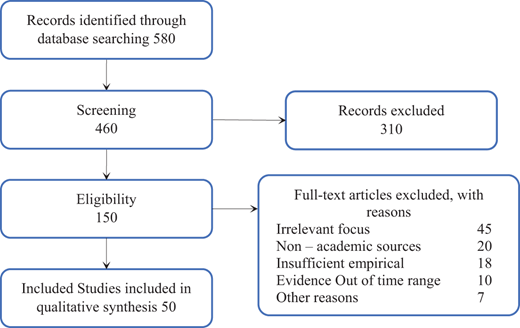
The literature review is structured across four thematic domains: disasters, humanitarian, SC and HSC to provide a comprehensive foundation for understanding the multidimensional nature of challenges affecting HSC performance during crises. Existing studies examine these domains largely in isolation, offering fragmented descriptions of challenges without exploring how these factors interact and reinforce each other across different stages of humanitarian operations. This gap is particularly evident in prior research, where conceptual and empirical works rarely analyze interdependencies among challenges or their hierarchical influence within the HSC system (Sentia et al., 2025). To address this gap, the present review synthesizes the literature to identify major challenges and sub-challenges in Table 1. Figure 1 illustrates the PRISMA-based literature selection process underpinning this synthesis, while the ISM-MICMAC approach subsequently enables the structured modeling of relationships and the analysis of driving and dependence powers.
2.1 Disasters
A disaster is a catastrophic occurrence that profoundly disrupts societal operations and results in substantial losses of human lives, materials and equipment. Disasters are classified into two categories: natural disasters and man-made disasters. Man-made disasters arise from human actions or decisions, often due to negligence, errors or system malfunctions, leading to immediate or prolonged catastrophic consequences (Sentia et al., 2025). Natural disasters occur as a result of the release of accumulated unstable energy. Due to the current limitations in science and technology, humans do not yet have the means to prevent the onset of primary natural disasters or to make precise predictions about them. Therefore, it is essential to accurately assess disaster risks by integrating historical data with the relevant characteristics of disaster events. This assessment will provide a solid foundation for decision-making during the pre-disaster protection and preparation phases (Lu et al., 2025).
Disasters are high-magnitude events that severely disrupt societal structures, leading to widespread and multifaceted impacts on human well-being, environmental stability and economic systems (Iqbal et al., 2021). Many nations struggle to fulfill essential urban and rural service demands under ordinary circumstances, with these challenges intensifying significantly during times of crisis. Current statistics indicate that approximately 80% of global disasters are caused by natural events, presenting substantial challenges (Chari and Novukela, 2023). According to Blaustein et al. (2023), the Australian Black Summer fire crisis highlighted the potential of a resilience model grounded in social participation and collaborative approaches. Their findings suggest that this model could enhance adaptive capacity and foster better coordination between police and emergency management networks. Matam and M (2025) developed a relief distribution model for humanitarian logistics. The results provided a model for crisis management organizations that helps managers in decision-making processes in crises. The literature on disasters demonstrates that these events not only endanger human lives but also disrupt SC, emphasizing the need for resilient and responsive HSC to mitigate their impacts (Drozdibob et al., 2023). Despite extensive research on disaster impacts, few studies have examined the structural relationships between disasters and the challenges they create within HSC. Existing studies typically address these challenges in a fragmented manner, without analyzing how they interact or reinforce one another. This gap highlights the need for a more systematic examination of interdependencies, which the present study addresses by applying the ISM-MICMAC approach to model the hierarchical structure and relational dynamics among HSC challenges.
2.2 Humanitarian
Climate change is increasingly worsening the occurrence of natural disasters. Humanitarian aid should take environmental factors into account to the fullest extent and help preserve natural resources. Regarding social sustainability, disasters often create or exacerbate economic inequalities and lead to human rights violations in affected communities (Larson, 2021). The convergence of intensifying global challenges has greatly amplified the complexity and occurrence of humanitarian disasters (Tay et al., 2025). Humanitarian disasters, characterized by the loss of life, shortages of food and water, infrastructural damage and displacement of populations, appear to be escalating at an alarming pace. In addressing these emergencies, NGOs frequently collaborate with various stakeholders, including government entities, private organizations and multinational enterprises (Akhtar et al., 2025).
Humanitarian logistics encompasses the frameworks and operations designed to mobilize personnel, expertise, resources and technological capabilities to assist communities impacted by disasters. The primary objective of humanitarian aid is to deliver timely and effective support by deploying available resources at the optimal time and location (Guzmán-Cortés et al., 2022). Humanitarian organizations play a pivotal role in crisis response, providing critical resources to affected areas. Swift and well-coordinated interventions are essential for saving lives and alleviating suffering in disaster-affected regions (Mangla and Luthra, 2022). The humanitarian ecosystem functions through collaborative efforts involving the International Committee of the Red Cross, national and local governments, regional bodies and both international and local NGOs (Viga and Refstie, 2024). The humanitarian literature consistently emphasizes the importance of collaboration and multi-stakeholder engagement; however, coordination failures among humanitarian agencies, governments, donors and local actors frequently lead to significant inefficiencies in HSC operations (John et al., 2019). While prior studies have identified these coordination issues, they rarely examine how such challenges are structurally interconnected or how they collectively influence HSC performance during crises. This gap underscores the need for systematic modeling of interrelationships among actors, processes and operational barriers. The present study addresses this gap by using the ISM-MICMAC approach to prioritize these challenges and reveal their hierarchical dependencies within the humanitarian context.
2.3 Supply chain
Customer needs are changing due to the intense competition in the business world, resulting in increased disruption of SC across various companies. As SC become essential to maintaining a competitive edge, they must operate efficiently and effectively in managing diverse logistics tasks. This efficiency is vital for promoting a company’s growth and development (Moh’d Anwer, 2025).
The SC operates as a dynamic and interconnected system comprising distributors, retailers, producers and consumers who collectively contribute to the production and dissemination of products. This complex network frequently encounters critical challenges, such as inadequate information sharing, limited traceability and diminished trust among stakeholders. To mitigate these issues, effective data management strategies are essential to ensure the generation, storage and utilization of high-quality, accurate and reliable data, thereby enhancing operational efficiency and fostering stakeholder confidence (Gheibdoust and Jabbari Zideh, 2024). The SCM has undergone significant changes recently. The increasingly competitive business environment has prompted organizations to enhance the management of their SC. By improving their SCM, organizations can enhance their products and achieve greater customer satisfaction (Rejeb et al., 2020). SCM aims to deliver the right materials in the right quantities at the right time (Dallasega and Sarkis, 2018). The emphasis on SC across all industries highlights that effective SCM is essential for organizational success (Wei et al., 2021). Quayle (2002) examined supplier development and SCM in small and medium-sized enterprises. The findings highlighted issues that businesses need to address to enhance their SC performance. Wang and Shang (2023) studied the quality of SCM in Industry 4.0. The results showed that by strengthening suppliers’ quality control in key sectors and exploring the improvement of SC quality, the customer satisfaction market will increase. While the commercial SC literature primarily emphasizes efficiency, cost optimization and predictability within stable operating environments, HSC operate under highly volatile and resource-constrained conditions that require a stronger focus on resilience, flexibility and rapid adaptability (Pimenta et al., 2022). This fundamental theoretical divergence limits the direct transferability of SC principles to humanitarian contexts, resulting in fragmented insights into how commercial and HSC challenges intersect. Consequently, a gap persists in understanding how these challenges structurally interact within crisis-affected settings. The present study addresses this gap by using the ISM-MICMAC approach to model, prioritize and reveal the hierarchical interdependencies of HSC challenges.
2.4 Humanitarian supply chain
The HSC is a temporary network that encompasses activities comparable to those in a commercial SC, tailored to deliver aid and resources during disasters (Jayadi, 2025). The HSC plays a critical role in disaster response by planning, implementing and managing the flow and storage of relief materials to mitigate the impacts of natural disasters and enhance the efficiency of aid delivery. Leveraging humanitarian logistics facilities improves the HSC’s agility, flexibility and ability to meet the needs of affected populations (Aghsami et al., 2024). The HSC operates as a linear network connecting donors, humanitarian organizations, suppliers and logistics partners through upstream and downstream linkages to deliver essential products and services (Baharmand, 2025). The HSC encounters substantial obstacles, especially during natural disasters and social unrest, where the effective delivery of relief materials is vital. Researchers highlight that these SC are inherently fragile, necessitating exceptional flexibility and sustainability (Zhang, 2025).
The complexity of the HSC arises from its diverse stakeholders and operational challenges. Short-term HSC operations address immediate disasters like earthquakes, while long-term efforts support communities facing ongoing disasters such as famine or drought (Biswal et al., 2018). Challenges like insufficient information sharing and poor stakeholder coordination can lead to inefficiencies and resource waste (Patil et al., 2021). Effective HSC management requires standardized procedures for planning, procurement, transportation, warehousing and distribution to ensure systematic and sustainable operations (Nyile et al., 2022). The humanitarian supply chain (HSCM) oversees the movement of goods and services from origin to destination to aid those affected by disasters or disasters (Shrivastav and Bag, 2024). HSCM is vital for addressing climate-related disasters, facilitating the flow of aid and information to reduce human suffering and loss of life through key activities like purchasing, inventory management and distribution (Minguito and Banluta, 2023). Guzmán-Cortés et al. (2022) assessed a simulation method for joint humanitarian aid distribution. The findings indicated that a strategy involving resource sharing, infrastructure use, information exchange and collaborative planning significantly enhance disaster response. Altay et al. (2024) conducted a review highlighting that innovation in the HSC is still an emerging field that requires more detailed conceptual frameworks. Their findings indicate a shortage of field studies and emphasize the importance of individual knowledge in fostering innovation. Table 1 shows the challenges and sub-challenges in HSC.
Although the HSC literature identifies a wide range of challenges including those summarized in Table 1, most studies remain largely descriptive and do not examine how these challenges interact or influence one another within crisis settings (Anjomshoae et al., 2023). Recent systematic reviews further highlight the lack of integrated frameworks that incorporate digital technologies, sustainability considerations and multi-hazard environments such as pandemics and climate-driven disasters (Shrivastav and Bag, 2024). These limitations indicate a persistent gap in structurally modeling the interdependencies and hierarchical influence of HSC challenges. The present study addresses these shortcomings by applying the ISM-MICMAC method to model, classify and prioritize the challenges in a hierarchical structure, offering a practical and systematic framework to support more effective crisis management. In summary, the literature across disasters, humanitarian aid, SCM and HSC demonstrates a wide range of interconnected challenges that hinder effective crisis response. Although previous studies have identified critical issues such as coordination failures, technological barriers and resource vulnerabilities, most have treated these challenges independently rather than examining how they interact, reinforce one another or evolve hierarchically across crisis settings (Yadav and Barve, 2016; Anjomshoae et al., 2023). This review highlights a major gap in understanding both the structural relationships among challenges (QR1) and how these challenges can be classified and prioritized based on their driving and dependence powers (QR2). Addressing this gap requires a holistic modeling approach that includes direct and indirect linkages, identifies variable influence patterns and captures systemic dependencies. The ISM-MICMAC approach adopted in this study provides such a foundation by offering a structured framework that supports hierarchical modeling, classification of challenges and strategic prioritization, thereby enabling a comprehensive response to QR1–QR3 and enhancing HSC performance across diverse disaster contexts.
2.5 Thematic synthesis of humanitarian supply chain challenges
A review of the literature across disaster management, humanitarian studies, SC and HSC research reveals that challenges in humanitarian operations are multidimensional, evolving across technological, managerial, financial, infrastructural and socio-political domains. However, prior studies have typically examined these domains independently, resulting in fragmented conceptualizations that fail to capture their systemic interdependencies. To provide a robust analytical foundation for the ISM-MICMAC modeling in this study, the identified challenges from the literature are synthesized into five thematic categories. This synthesis goes beyond descriptive reporting by integrating empirical evidence, theoretical perspectives and structural patterns identified in prior research.
2.5.1 Technological and information-related challenges
Technological and information-related challenges remain among the most fundamental barriers to effective HSC performance. Limitations such as weak digital infrastructure, lack of interoperable data systems, restricted electronic communication and the overwhelming volume of emergency data create major constraints during disaster response (Pimenta et al., 2022; Sentia et al., 2025). These technological gaps reduce situational awareness and hinder timely decision-making, often forcing organizations to rely on manual procedures or incomplete information. Studies have highlighted the importance of digital transformation in HSC; however, many proposed frameworks remain conceptual, and few demonstrate how technological constraints interact with managerial, financial or political challenges in real-world operations (Anjomshoae et al., 2023; Giedelmann-L et al., 2022).
Despite extensive discussions on innovation, such as GIS tools, IoT devices, blockchain applications and integrated communication platforms, empirical evidence on their operational integration is limited. Prior ISM/TISM studies frequently treat technology-related issues as secondary factors, focusing instead on coordination or disaster-specific challenges (Yadav and Barve, 2016; John et al., 2019). This underestimates the enabling role of technology in information visibility, interagency coordination and resource allocation. To address this gap, the present study incorporates technological and information-related challenges as core components within an ISM-MICMAC framework, capturing their structural influence and interdependencies across HSC operations.
2.5.2 Managerial and coordination challenges
Managerial and coordination-related challenges represent some of the most persistent barriers in HSC operations. Issues such as the absence of unified command structures, fragmented planning processes, duplication of efforts and inconsistent communication between agencies contribute to chronic inefficiencies (Yadav and Barve, 2016; John et al., 2019). These shortcomings limit the ability of organizations to synchronize activities, prioritize needs and ensure that resources reach affected populations on time. Empirical studies further show that coordination failures often intensify during large-scale or complex disasters, particularly when multiple governmental and nongovernmental actors operate simultaneously without clear rules of engagement (Viga and Refstie, 2024). Such fragmented interactions reveal structural weaknesses in governance and decision-making mechanisms that undermine supply chain responsiveness. Although theoretical frameworks such as dynamic capabilities theory highlight the need for humanitarian organizations to sense changes, seize opportunities and reconfigure capabilities during crises (Polater, 2021), a persistent gap remains between theoretical prescriptions and operational realities. Previous ISM/TISM studies have modeled individual managerial or coordination barriers, for example, focusing only on communication or planning aspects, but they have rarely integrated these into multi-domain frameworks that include technological, political, financial and infrastructural dimensions (Yadav and Barve, 2016). As a result, existing models fail to capture the systemic and cross-cutting nature of coordination challenges. The present study addresses this gap by situating managerial and coordination-related challenges within a broader structural hierarchy that reflects their interactions with other critical domains of the HSC.
2.5.3 Financial and resource-driven challenges
Financial and resource-driven challenges constitute one of the most significant constraints on HSC design and operation. Limited funding availability, dependence on donor contributions and unstable financial flows create structural vulnerabilities that affect procurement, logistics planning and inventory strategies (Polater, 2021; Drozdibob et al., 2023). When funding is unpredictable, humanitarian organizations struggle to maintain adequate stock levels, invest in modern technologies or develop long-term disaster preparedness programs. Moreover, shortages in essential resources, such as vehicles, medical supplies, fuel and skilled personnel directly hinder the effectiveness of relief efforts (Aghsami et al., 2024). These conditions reduce agility, delay response times and limit the ability of organizations to scale operations in large-scale crises.
Despite their central importance, financial challenges are often studied in isolation from nonfinancial factors. For example, donor dependence is frequently analyzed from a funding perspective but rarely linked to coordination breakdowns, technological deficiencies or political constraints. Additionally, few structural modeling studies have explored how financial limitations influence the hierarchical behavior of other challenges in the system. Existing ISM-MICMAC applications typically treat financial issues as contextual variables rather than core drivers within the HSC (Drozdibob et al., 2023). To address this theoretical and practical gap, the present research incorporates financial and resource-driven challenges into a comprehensive structural framework, enabling clearer identification of their driving power and their interactions with technological, managerial and infrastructural constraints.
2.5.4 Government and infrastructural challenges
Governmental and infrastructural challenges significantly influence the reliability and performance of HSC, particularly in regions with resource constraints or fragile governance structures. Weak or damaged infrastructure, including transportation networks, storage facilities, energy systems and distribution channels, creates severe operational bottlenecks during disaster response (Tavana et al., 2018; Lu et al., 2025). These physical limitations impede the movement of relief goods, restrict access to affected populations and increase the cost and complexity of logistics operations. Furthermore, inadequate assessments of damage and needs frequently lead to poor prioritization, misallocation of resources and delays in relief activities (Chukwuka et al., 2023). Limited asset visibility and incomplete reporting systems exacerbate these issues, reducing the transparency and effectiveness of humanitarian operations (Aghsami et al., 2024).
Despite the centrality of these challenges, prior structural modeling research has tended to examine them in isolation or within the context of specific disaster events, such as floods or earthquakes (Matam and M (2025)). This fragmented perspective overlooks the systemic interdependencies between infrastructural constraints and other critical dimensions, including political conditions, financial limitations, technological gaps and managerial inefficiencies. In practice, infrastructural deficiencies often stem from governmental challenges such as outdated regulations, slow decision-making processes or insufficient public investment. Yet, these linkages remain underrepresented in existing ISM or TISM models. The present study addresses this gap by placing governmental and infrastructural challenges within a multi-layer hierarchical framework that captures their broad influence across the HSC ecosystem.
2.5.5 Social and political challenges
Socio-political factors, including varying regulations and political conditions (C51), political instability, complex governance environments and health and safety concerns (C52), significantly impact the performance of HSC. These factors affect operational feasibility, cross-agency coordination and the ability of humanitarian actors to reach affected populations. Research indicates that the complexity of political and regulatory environments exacerbates the effects of disasters, influencing both decision-making processes and the availability of resources (Larson, 2021; Chari and Novukela, 2023). Furthermore, humanitarian networks depend on cooperation among multiple stakeholders, which is often obstructed by governance challenges among governments, NGOs and local authorities (Viga and Refstie, 2024). Despite the importance of these influences, most studies of humanitarian logistics treat political issues merely as contextual background instead of incorporating them into structural analytical models. Previous ISM and total interpretive structural modeling (TISM) studies (e.g. Yadav and Barve, 2016; John et al., 2019) rarely include political or regulatory variables in their frameworks, even though these factors significantly shape or constrain other challenges, such as coordination, funding, infrastructure and technology. This oversight represents a critical theoretical and practical gap. The present research aims to address this gap by explicitly integrating socio-political challenges including regulatory inconsistencies (C51), health and safety concerns (C52) and barriers to cross-agency coordination (C53) into a multi-layered ISM-MICMAC structure. This thematic synthesis demonstrates that HSC challenges are interconnected across technological, managerial, financial, infrastructural and socio-political domains. However, as highlighted in prior studies (Yadav and Barve, 2016; Sentia et al., 2025; Anjomshoae et al., 2023), no unified structural model exists that integrates these cross-domain factors. By applying the ISM-MICMAC methodology to 16 validated sub-challenges relevant to the Iranian Red Crescent context, this study addresses these gaps and provides a comprehensive framework for hierarchical and dependency-based analysis of HSC challenges.
2.6 Research gaps and novelty of ISM/TISM-based studies
Although ISM and TISM have been applied to humanitarian logistics in previous studies, their scope and methodological depth remain limited. Most applications have focused on specific disaster events, narrow post-disaster phases or isolated challenge categories, resulting in fragmented structural models that fail to capture the interconnected nature of HSC challenges (Yadav and Barve, 2016; John et al., 2019; Sreenivasan et al., 2023). Additionally, prior research seldom incorporates a thematic synthesis of multi-domain challenges, leaving the underlying structural relationships across technological, managerial, financial, infrastructural and socio-political domains insufficiently explored.
A number of important research gaps emerge from this literature. First, many ISM-based studies apply MICMAC only partially, leading to limited dependency and driving-power classification. Second, borderline variables, which can behave simultaneously as drivers and dependents, are rarely analyzed despite their importance in complex systems. Third, there is a lack of expert-validated hierarchical models tailored to resource-constrained national contexts such as Iran, where political, infrastructural and financial limitations interact uniquely and significantly shape HSC behavior. Fourth, previous ISM/TISM applications have not integrated challenges from multiple domains into a unified structure, resulting in models that cannot fully represent systemic interdependencies. Finally, no study has examined how these interrelated challenges align to create multi-level hierarchical patterns that can guide prioritization and decision-making in real disaster scenarios. This study addresses these gaps by developing the one of the first context-specific multi-domain integrations hybrid ISM-MICMAC model that synthesizes 16 interrelated sub-challenges into a unified, expert-validated hierarchical structure. Through consultation with IRCS practitioners, the model produces a nine-level hierarchy and a distinct MICMAC classification characterized by the absence of autonomous or purely dependent variables. This outcome demonstrates the systemic nature of HSC challenges, advances theoretical understanding of their interdependencies and provides a practical framework for prioritizing interventions during disaster response. The integrative and context-sensitive nature of this model represents a methodological and conceptual contribution beyond prior ISM/TISM research.
3. Methodology
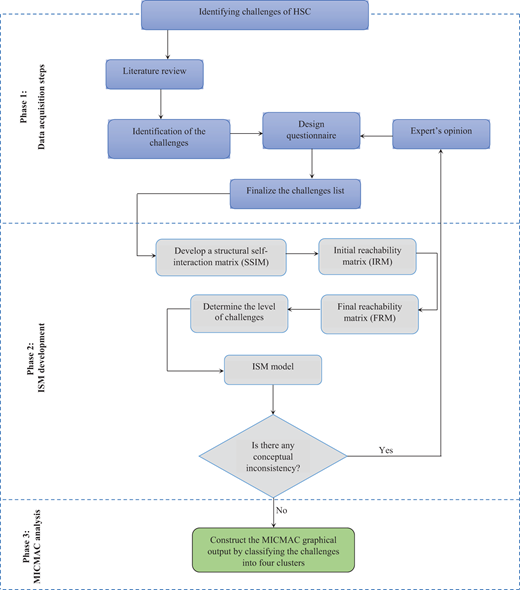
The methodological section of this study is divided into two parts: data collection and the development of ISM, along with a MICMAC analysis. First, an expert panel is formed, and procedures for data extraction are designed. Next, the responses from the experts are used to create the Structural Self-Interactive Matrix (SSIM) as part of the ISM approach. In addition to ISM, a MICMAC analysis is carried out based on the driving and dependency power of challenges in the HSC (Hasan et al., 2024). There are several alternative methods for studying the interrelationships among various attributes. Notable approaches include the Analytical Hierarchy Process (AHP), Analytical Network Process (ANP), Decision Making Trial and Evaluation Laboratory (DEMATEL), Best−Worst Method (BWM) and structural equation modeling (SEM). AHP, ANP and BWM require pairwise comparisons, whereas DEMATEL focuses on establishing cause-and-effect interactions among the factors. SEM, a multivariate technique, measures both the direct and indirect effects of assumed causal relationships. Although TISM extends ISM by incorporating elaborate interpretive logic and detailed explanations for each contextual relationship (Sushil, 2012), the primary focus of the present study is on deriving a hierarchical structure of challenges and classifying them based on driving and dependency power through MICMAC analysis. TISM is more suitable when the objective is to develop extensive qualitative interpretations for every link, which substantially increases the cognitive burden on experts and requires multiple rounds of interpretive validation (Sorooshian et al., 2023). In contrast, ISM specifically emphasizes the experience and knowledge of experts to define the contextual relationships within a complex system. The justification for using the ISM-MICMAC approach is its effectiveness in managing the complex and multiple relationships among variables present in this research (Hasan et al., 2024).
This study was conducted in collaboration with the IRCS of Rasht City. Data were collected in person, taking into account participants’ availability, from May to August 2025. In this study, a systematic literature review was conducted using Scopus and Web of Science databases from 2006 to 2024. The keywords, including “humanitarian supply chain,” “disaster logistics” and “disaster management,” were used to identify challenges and sub-challenges of the HSC. The initial search identified 580 articles in reputable scientific databases. To ensure the accuracy and focus of the systematic review, inclusion criteria included:
peer-reviewed articles or conference papers in English;
studies with a direct focus on HSC challenges in disaster-related contexts;
research that empirically or theoretically addressed the interrelationships, structure of challenges or prioritization; and
articles published between 2006 and 2024.
In contrast, exclusion criteria included:
unrelated topics such as commercial SC without humanitarian components;
duplicates;
non-academic sources such as news reports, websites or informal documents; and
articles lacking empirical data, sufficient analysis or practical insights relevant to crisis settings.
The screening process was conducted according to the PRISMA guidelines. After removing duplicates (n = 120), 460 articles entered the title and abstract screening stage. Of these, 150 articles were selected for full-text evaluation. Finally, considering their direct relevance to HSC challenges, 50 articles were included as final studies in the systematic review. The PRISMA flow chart of this process is presented in Figure 1. Based on these 50 articles, an initial list of challenges was extracted considering their frequency of occurrence, strength of empirical evidence and association with risky conditions. Then, using thematic analysis and expert validation, this list was refined and converted into 16 final sub-challenges, observing the principles of auditability and comprehensiveness in Table 1.
The questionnaire was designed as a structured SSIM format with pairwise comparisons (V, A, X, O symbols) to capture interrelationships, pre-tested for clarity with five pilot experts and administered via in-person sessions (Minz et al., 2025). In previous studies, a smaller number of experts have often been consulted, such as three experts (Alshibani et al., 2024), five experts (Handayani et al., 2023), 18 experts (Minz et al., 2025), five experts (Liu et al., 2018) and eight experts (Hasan et al., 2024). In contrast, this study included 24 experts. This larger selection was made to achieve a more comprehensive understanding and a more detailed analysis of the research topic. Given that the number of experts can significantly affect the results, including 24 experts in this study, the study aims to enhance the comprehensiveness and accuracy of the analyses conducted. Experts were selected using purposive sampling to ensure relevance and expertise in HSC operations during disasters. Criteria included: at least 10 years of experience in disaster response roles, direct involvement in past IRCS operations and familiarity with SC challenges. To enhance transparency regarding the expert panel, Table 2 provides a summary of the 24 experts from the IRCS in Rasht, detailing their roles, years of disaster experience and organizational functions. The aggregation of expert inputs followed a consensus-building approach: initial responses were collected via a structured questionnaire SSIM, followed by moderated group discussions to resolve discrepancies and achieve at least 80% agreement on interrelationships, similar to the Delphi technique (Hu et al., 2024). This ensured reliability and reduced bias in the pairwise comparisons. The research framework is shown in Figure 2.
This study adopts an interpretivist philosophy, which posits that reality is socially constructed and can be understood through the subjective interpretations of participants (Ryan, 2018). Given the complex and context-dependent nature of HSC challenges in disasters, interpretivism is appropriate as it allows for exploring interrelationships among sub-challenges via expert insights from the IRCS. This aligns with the ISM-MICMAC methodology, which relies on group judgment and transitivity to model hierarchical structures, rather than objective quantification (Sreenivasan et al., 2023). Ontologically, the research views HSC challenges as multifaceted and interdependent phenomena shaped by human experiences. Epistemologically, knowledge is generated through consensus-building discussions and structured questionnaires, ensuring contextual relevance for crisis management.
3.1 Methodological rigor, reliability and validity
To address concerns regarding the reliability and validity of the ISM-MICMAC approach, several methodological safeguards were incorporated into the research design. First, construct validity was ensured through an extensive review of the humanitarian logistics and HSC literature, which formed the basis for identifying and defining the initial set of challenges. These constructs were subsequently refined and validated through expert consultation to ensure contextual relevance and conceptual clarity. Second, content validity was reinforced by selecting a purposive panel of 24 experts from the IRCS, all of whom possessed substantial experience in disaster response, logistics coordination and humanitarian operations. The panel size is consistent with prior ISM-based studies, which emphasize depth of expertise over sample size for structural modeling.
Reliability in the interpretive process was enhanced through an iterative consensus-building procedure. Experts were engaged in multiple rounds of evaluation to confirm the presence and direction of contextual relationships among the identified challenges. Disagreements were resolved through facilitated discussion and re-evaluation, thereby reducing individual bias and strengthening inter-subjective agreement. This consensus-driven approach aligns with the foundational principles of ISM, which prioritize structural validity and collective expert judgment over statistical inference (Sushil, 2012).
3.2 Ethical considerations
This study involved human participants, experts from the IRCS and adhered to ethical guidelines for research. All participants provided informed consent before their involvement, with details explained both verbally and in writing, including the purpose of the study, the voluntary nature of participation, the confidentiality of responses and their right to withdraw at any time without repercussions. No personal identifiers were collected, and data were anonymized to protect privacy. No incentives were offered, and discussions were conducted in a professional setting to ensure a comfortable and impartial environment. Furthermore, the integration of MICMAC analysis provided an additional layer of validation by examining the driving and dependence powers of each construct. The consistency between the ISM hierarchy and MICMAC classifications strengthens internal validity by demonstrating coherence between structural positioning and influence patterns. While ISM-MICMAC is inherently exploratory and intended for theory-building rather than hypothesis testing, the combination of systematic literature grounding, expert validation and dual analytical techniques enhances the robustness and credibility of the findings.
3.3 ISM method
ISM was introduced by Warfield in 1973 to analyze complex systems. The ISM process is an interactive approach that organizes various elements, both directly related and distinct, into a comprehensive, systematic framework. With the help of a structural relationships diagram, it becomes easy to visualize the connections between different elements (Liu et al., 2018). ISM is an interactive learning process. In this technique, a variety of related elements, both direct and indirect, are organized into a comprehensive and systematic model. This model represents the structure of a complex issue or problem in a carefully designed format, incorporating both graphics and text (Attri et al., 2013). The ISM technique involves evaluating a set of variables and transforming them into a more manageable, consistent and meaningful framework. This process imposes order on the complexity of the variables, presenting them in a structured way. A unique aspect of ISM is its ability to incorporate experts’ practical knowledge and judgments to analytically examine and refine these variables. This analysis allows ISM to hierarchically structure the relationships among the variables effectively (Ibn-Mohammed et al., 2025). The steps of ISM are described below (Minz et al., 2025; Kumar et al., 2014):
Step 1: Identification of factors is carried out using a literature review, and a consensus is reached.
Step 2: Development of the Structural Self-Interaction Matrix (SSIM) to establish contextual relationships among variables. Using the SSIM, a reachability matrix is developed, and it is checked for transitivity. Four symbols are used to develop the SSIM:
V: factor Xi will influence the factor Xj.
A: factor Xj will influence the factor Xi.
X: factor Xi and factor Xj will influence each other.
O: factor Xi and factor Xj are unrelated.
Step 3: To construct the initial reachability matrix (IRM), the SSIM was converted into a binary format (0 or 1) based on ISM notation (V, A, X, O), representing the pairwise relationships among factors as validated by the expert panel.
Step 4: The final reachability matrix (FRM) is constructed from the initial reachability matrix by incorporating the transitivity rules, where transitivity is marked as 1*. Transitivity is a relationship between three elements; for example, if there is a relationship between factor A and factor B, and B and C, then there is automatically a transitive relationship between factors A and C.
Step 5: The level of factors was determined by dividing the FRM into hierarchical levels and the position of each factor was determined based on its accessibility and antecedent sets.
Step 6: To develop the ISM model, the hierarchical levels of factors were structured in a two-dimensional diagram that shows their interrelationships and dependencies based on the partitioned accessibility matrix.
3.4 MICMAC analysis
The MICMAC analysis is a method that uses the properties of matrix multiplication to assess how the impact of a particular variable affects the entire system. It categorizes and analyzes different factors based on their driving and dependence powers. The driving power of a variable indicates its ability to influence other variables in the system, while the dependence power reflects the degree to which other variables influence it. As a result, a driving-dependence power diagram is created to visualize these relationships (Ibn-Mohammed et al., 2025). MICMAC analysis categorizes variables into four groups based on their driving power (influence on other variables) and dependence power (influence from other variables) (Minz et al., 2025):
Autonomous variables: Weak drivers with low dependence. These variables are relatively disconnected from the system.
Dependent variables: Variables with high dependence but weak driving power.
Linkage variables: Variables with strong driving power and strong dependence represent critical factors within the system, as such variables exert significant influence on other factors while simultaneously being influenced by them.
Independent variables: Strong drivers with low dependence, often acting as the key enablers of the system.
The driving and dependence powers are calculated by summing up the entries in the rows (driving power) and columns (dependence power) of the reachability matrix.
4. Results and analysis
This section presents the findings derived from the application of the ISM and MICMAC analysis to identify, validate and prioritize the challenges of the HSC in crisis contexts. The analysis is structured in a stepwise manner, beginning with theidentification and validation of key variables, followed by the development of the ISM model and MICMAC classification to uncover the interrelationships and prioritization of challenges. The results provide a comprehensive framework to enhance the efficiency and effectiveness of HSC during disasters.
4.1 ISM-based hierarchical modeling
4.1.1 Identification and validation of variables
Key HSC challenges were identified through a systematic literature review (2006–2024) using Scopus and Web of Science, with keywords “humanitarian supply chain,” “disaster logistics” and “disaster management.” A preliminary list of five main challenges and their sub-challenges (Table 1) was developed based on frequency, empirical support and relevance to disaster-prone settings. A panel of 24 IRCS experts in Rasht City, with extensive disaster response experience, reached consensus through facilitated discussions before responding to a structured questionnaire, validating the challenges: government (C1), financial (C2), technological and information (C3), management (C4) and social (C5). These formed the basis for the SSIM and subsequent ISM-MICMAC analyses.
4.1.2 Structural self-interaction matrix (SSIM)
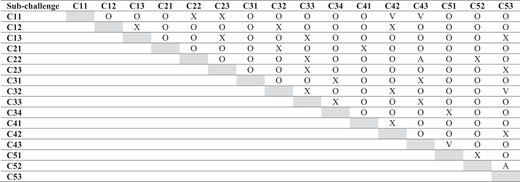
To identify the contextual relationships among the 16 validated HSC sub-challenges, a SSIM was developed based on a questionnaire completed by a panel of 24 experts from the IRCS and related fields. The experts, with extensive experience in disaster response and logistics, used the notations V (sub-challenge i influences j), A (sub-challenge j influences i), X (mutual influence) or O (no relationship) to indicate pairwise relationships above the main diagonal of the SSIM.
A total of 24 questionnaires were collected, reflecting the experts’ assessments of the interrelationships among the sub-challenges. To consolidate these responses, the majority method was used, selecting the most frequent symbol for each pairwise relationship to achieve consensus. The resulting SSIM, presented in Table 3, captures the relationships above the main diagonal.
4.1.3 Development of the initial reachability matrix
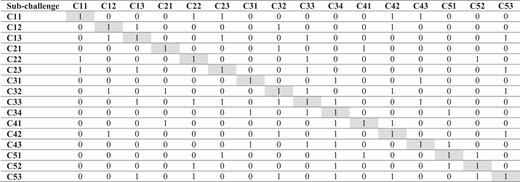
The SSIM, derived from the consensus of 24 experts from the IRCS and related fields, was converted into the IRM by transforming the notations (V, A, X, O) into binary values (0 or 1) using the following rules:
If the (i, j) entry in the SSIM is V, the (i, j) entry in the reachability matrix is set to 1 and the (j, i) entry is set to 0.
If the (i, j) entry in the SSIM is A, the (i, j) entry in the reachability matrix is set to 0 and the (j, i) entry is set to 1.
If the (i, j) entry in the SSIM is X, the (i, j) entry in the reachability matrix is set to 1 and the (j, i) entry is set to 1.
If the (i, j) entry in the SSIM is O, the (i, j) entry in the reachability matrix is set to 0 and the (j, i) entry is set to 0.
Diagonal entries are set to 1, as each sub-challenge influence itself. The resulting IRM, presented in Table 4, captures the direct relationships among the 16 HSC sub-challenges, including governmental, financial, technological, managerial and social challenges. This matrix serves as the foundation for incorporating transitivity in the next step to develop the FRM.
4.1.4 Development of the final reachability matrix
The FRM was developed by incorporating transitivity into the IRM, ensuring that all indirect relationships among the 16 HSC sub-challenges are captured. Transitivity is applied based on the ISM rule: if sub-challenge (A) influences (B) and (B) influences (C), then (A) influences (C), even if no direct relationship exists in the IRM. This iterative process resulted in the FRM shown in Table 5, where entries marked with an asterisk (*) indicate transitive (indirect) relationships added to the IRM.
The diagonal entries in the FRM are set to 1, as each sub-challenge is assumed to influence itself (reflexive relationship), in line with standard ISM methodology. This assumption reflects that every sub-challenge is inherently self-dependent in the structural model. The driving power for each sub-challenge is the sum of 1 s (including transitive ones) in its row, representing the extent to which it influences other sub-challenges (including itself). Conversely, the dependence power is the sum of 1 s in each column, indicating how much it is influenced by others. For instance, sub-challenges C33 (the inability to communicate electronically) and C51 (variety of regulations and political conditions) exhibit the highest driving power (11), as reported in the last two columns of the FRM in Table 5, suggesting they are key drivers affecting multiple other challenges, while C33 (the inability to communicate electronically) and C34 (large volumes of data in emergency situations) shows the highest dependence power (14), also derived from Table 5, indicating it is highly influenced by others.
4.1.5 Level partition of reachability matrix
The hierarchical levels of the HSC challenges were determined by partitioning the FRM into distinct levels based on the reachability and antecedent sets for each sub-challenge, as outlined in the ISM methodology. This process involved iterative partitioning to identify the position of each sub-challenge within the hierarchy, reflecting their relative influence and dependence within the HSC system. The results, derived from nine iterations as shown in the provided tables, reveal a structured hierarchy of the 16 sub-challenges, which is critical for understanding their interrelationships and prioritizing interventions to enhance HSC efficiency during disasters.
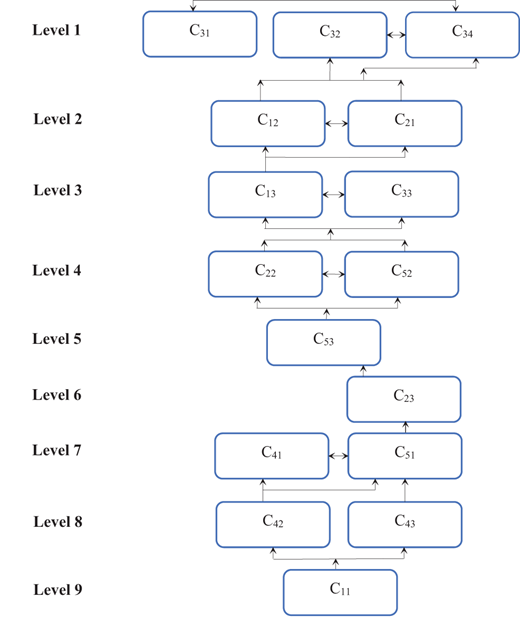
In the first iteration, sub-challenges C31 (less technology is used), C32 (data network is non-existent) and C34 (large volumes of data in emergency situations) were identified at the top level (Level 1), indicating that these technological and information-related challenges are highly dependent and influenced by other sub-challenges. These factors are critical outcomes of the system but have limited driving power, suggesting they are affected by underlying issues rather than being primary drivers. In the subsequent iterations, the hierarchical structure continued to unfold, with sub-challenges C12 (challenges related to infrastructure) and C21 (high dependency on donor funding) positioned at Level 2, reflecting their moderate influence and dependence within the system. As the iterations progressed, sub-challenges such as C13 (inadequate assessment of damage and needs) and C33 (the inability to communicate electronically) were placed at Level 3, indicating their role as linkage variables with significant dependence but also some driving influence. Sub-challenges C22 (restricted flow and storage of resources) and C52 (health and safety issues) were identified at Level 4, followed by C53 (lack of coordination among humanitarian agencies) at Level 5, reflecting their increasing driving power but still notable dependence on other factors. Sub-challenge C23 (lack of resources) was positioned at Level 6, indicating a stronger influence on other challenges. In the final iterations, sub-challenges C41 (lack of unified command) and C51 (variety of regulations and political conditions) emerged at Level 7, followed by C42 (poor management of in-kind donations) and C43 (poor planning for coordination) at Level 8 and C11 (lack of asset visibility) at Level 9. These lower-level sub-challenges exhibit the highest driving power, acting as key enablers of the HSC system. Their influence cascades through the hierarchy, significantly impacting other challenges and shaping the overall performance of the HSC.
By focusing on these high-demand, high-power sub-challenges, humanitarian organizations can strategically enhance the efficiency and effectiveness of their SC operations, ensuring timely and impactful aid delivery during disasters. The level partition of the reachability matrix is shown in Table 6.
4.1.6 ISM-based hierarchical model
The ISM-based hierarchical model, illustrated in Figure 3, provides a visual representation of the interrelationships and dependencies among the 16 validated sub-challenges in the HSC during disasters. This digraph organizes the sub-challenges into a nine-level hierarchy, derived from the level partitioning of the final reachability matrix (FRM). In this hierarchy, lower-numbered levels (e.g. Level 1) represent highly dependent sub-challenges with low driving power, positioned at the top of the model, while higher-numbered levels (e.g. Level 9) represent foundational drivers with high driving power, located at the base of the model. Arrows in the digraph indicate directional influences, including both direct and transitive relationships, illustrating how root causes propagate through the system to affect operational efficiency.
At the top of the hierarchy (Level 1), sub-challenges C31 (less technology is used), C32 (data network is non-existent) and C34 (large volumes of data in emergency situations) are identified as highly dependent outcomes, significantly influenced by underlying factors. These technological challenges reflect the culmination of systemic inefficiencies. Conversely, at the base (Level 9), sub-challenge C11 (lack of asset visibility) serves as a primary driver, exerting substantial influence on higher-level challenges by hindering traceability and resource allocation. This influence cascades through intermediate levels, such as Level 8 (C42: poor management of in-kind donations; C43: poor planning for coordination) and Level 7 (C41: lack of unified command; C51: variety of regulations and political conditions), which act as key enablers of systemic barriers. The hierarchical structure continues through Levels 6 to 2, with sub-challenges like C23 (lack of resources), C53 (lack of coordination among humanitarian agencies) and C12 (challenges related to infrastructure), reflecting varying degrees of driving power and dependence. This hierarchical model emphasizes the importance of targeting interventions at higher-numbered levels (e.g. improving asset visibility, unified command and coordination planning) to address root causes and mitigate cascading effects. By prioritizing these key drivers, humanitarian organizations can enhance the resilience and efficiency of HSC operations, ensuring timely and effective aid delivery in crisis environments.
4.2 MICMAC analysis
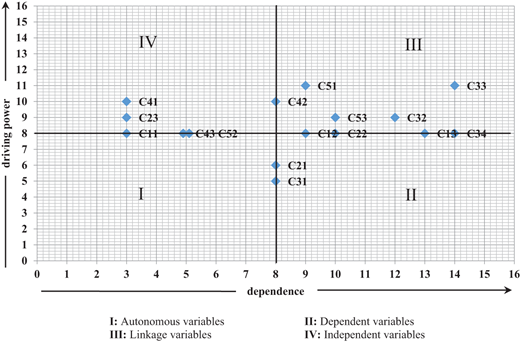
The MICMAC analysis was conducted to classify the 16 validated sub-challenges of the HSC based on their driving power and dependence, as derived from the FRM. This analysis provides a comprehensive understanding of the influence and interdependence of each sub-challenge, enabling the prioritization of strategic interventions to enhance HSC efficiency during disasters. The driving power of a sub-challenge is calculated by summing the entries 1 in its respective row in the FRM, indicating its influence on other sub-challenges. The results are visualized in a driving-dependence power diagram (Figure 4), which categorizes the sub-challenges into four clusters: autonomous (I), dependent (II), linkage (III) and independent (IV) variables. Figure 4 illustrates the positioning of the sub-challenges across these quadrants, with the horizontal axis representing dependence power and the vertical axis representing driving power. The diagram highlights the interconnected nature of the challenges, with no sub-challenges in the autonomous quadrant, emphasizing the systemic dependencies within HSC operations.
To ensure clarity in the classification of variables within the MICMAC framework, the quadrant boundaries were defined using the mean values of driving power and dependence power as threshold reference lines. Accordingly, each sub-challenge was positioned relative to these average values to determine its classification as autonomous, dependent, linkage or independent. It is important to note that several sub-challenges are located near these threshold boundaries and are therefore considered borderline variables. While the visual representation in Figure 4 illustrates their approximate positioning, their classification was not solely based on visual interpretation but also supported by their relative distance from the mean values. To address potential sensitivity in classification, a conceptual sensitivity assessment was conducted by examining how small variations in driving and dependence values could affect the quadrant positioning of these variables. The results indicate that although a limited number of variables lie close to the boundaries, their overall role and interpretation within the system structure remain stable and the key insights derived from the MICMAC analysis are robust to minor classification shifts.
Autonomous variables: These sub-challenges exhibit weak driving and dependence powers, indicating minimal influence on or from other sub-challenges. In this study, no sub-challenges were identified in this cluster, suggesting that all HSC challenges are significantly interconnected within the system, with none being relatively isolated. Dependent variables: These sub-challenges typically have high dependence power but low driving power, meaning they are heavily influenced by other factors but have limited influence on others. In this study, no sub-challenges were identified in this cluster, indicating that all HSC challenges possess significant driving power, influencing other factors within the system. This finding, derived from the FRM, suggests that even sub-challenges at higher levels of the ISM hierarchy (e.g. Level 1: C31, C32, C34) have sufficient driving power to be classified outside the dependent quadrant, likely due to their moderate influence on operational outcomes. Linking variables: Sub-challenges C32 (data network is non-existent), C33 (The inability to communicate electronically), C51 (variety of regulations and political conditions) and C53 (lack of coordination among humanitarian agencies) are identified, which show both high driving power and high dependency power. Independent variables: These sub-challenges have high driving power but low dependence power, positioning them as key enablers of the HSC system. Sub-challenges C23 (lack of resources), and C41 (lack of unified command), fall into this cluster. These sub-challenges play the most leadership role in the system and, as root causes, affect other variables. Therefore, paying attention and focusing on managing and reducing them can significantly improve the efficiency of the HSC.
Also, some sub-challenges were placed in borderline positions. Specifically, sub-challenges C21 (high dependency on donor funding), and C31 (less technology is used) were placed in a borderline position between autonomous variables and dependent variables, which can have characteristics related to both quadrants. Sub-challenges C12 (challenges related to infrastructure), C22 (restricted flow and storage of resources), C13 (inadequate assessment of damage and needs) and C34 (large volumes of data in emergency situations) were placed in borderline positions between dependent variables and linkage variables. Although they have high dependence, they also have some guiding power, and the remaining values that are in borderline positions are well identified in Figure 4. Overall, the results in Figure 4 show that the majority of challenges are concentrated in the two quadrants of linkage and independence. This concentration indicates that to improve the efficiency and resilience of the HSC, it is necessary to focus on both the independent variables as the main drivers of the system and the linkage variables as the sensitive and destabilizing points that can affect the entire structure.
To clarify the alignment between the ISM hierarchy and MICMAC classifications, particularly regarding the lack of sub-challenges in the purely dependent quadrant, it is important to note that the variables at ISM Level 1 (e.g. C31, C32, C34) have limited driving power but high dependence. These variables occupy borderline positions in the MICMAC diagram. This positioning arises from the transitive relationships in the FRM in Table 5, indicating that even dependent challenges can hold some indirect driving influence due to the interconnected nature of HSC issues during disasters. This observation does not contradict MICMAC definitions; rather, it illustrates the flexible and context-dependent boundaries of the quadrants, allowing for a nuanced interpretation in complex systems like HSC (Hasan et al., 2024; Minz et al., 2025). The model emphasizes that, in humanitarian contexts, dependencies are rarely absolute. This highlights the necessity for interventions that focus on independent drivers to reduce cascading effects across various levels.
5. Discussion
The ISM-MICMAC results reveal that key drivers emerge not only due to their position within the structural matrix but also because they create the fundamental operational conditions under which all other challenges function. Drivers such as infrastructure, visibility and regulatory consistency shape the system’s capacity to absorb shocks, coordinate actors and allocate resources. Linkage variables, on the other hand, occupy unstable positions because they both influence and are influenced by multiple other challenges, making them highly sensitive to systemic disruptions. Understanding these interactions is essential for prioritizing interventions and designing multi-layered response strategies that strengthen systemic resilience. The nine-level hierarchical structure illustrates that HSC challenges operate in a cascading architecture, where foundational constraints at lower levels determine the behavior of mid- and upper-level variables. This structure provides decision-makers with a roadmap for intervention sequencing: addressing lower-level drivers produces system-wide improvements, while focusing only on upper layers yields limited benefits. Therefore, the hierarchy should inform strategic planning, resource allocation and capability development within humanitarian organizations. Borderline variables identified in the MICMAC analysis represent dynamic elements whose influence fluctuates depending on contextual or environmental conditions. Their intermediate driving and dependency powers indicate that they can amplify system stability or instability depending on policy interventions. In humanitarian settings, these borderline elements serve as leverage points: targeted improvements in these areas can significantly enhance coordination, reduce delays and stabilize operational performance during uncertain or rapidly evolving crises.
This study used a hybrid ISM-MICMAC approach to structurally model the challenges of the HSC in disasters, addressing the research questions by identifying interrelationships, hierarchy and prioritization among 16 sub-challenges. The findings reveal a nine-level hierarchical model from the ISM analysis, where foundational drivers such as C11 (lack of asset visibility) at Level 9 propagate through intermediate levels to affect highly dependent sub-challenges like C31 (less technology is used), C32 (data network is non-existent) and C34 (large volumes of data in emergency situations) at Level 1. The MICMAC analysis complements this by classifying sub-challenges into linkage and independent variables, with no autonomous or dependent variables identified, underscoring the highly interconnected and influential nature of all challenges within the HSC system. The predominance of linkage variables (as illustrated in Figure 4) implies that HSC challenges are not isolated but form a volatile network, where interventions must account for bidirectional influences to avoid unintended consequences.
The hierarchical structure highlights that root causes, including lack of asset visibility (C11), poor planning for coordination (C43) and variety of regulations and political conditions (C51), exert substantial driving power, influencing operational inefficiencies and technological bottlenecks. This aligns with prior research, such as Yadav and Barve (2016), who used TISM to model post-disaster HSC challenges and identified similar root drivers like coordination deficiencies. The absence of dependent variables in the MICMAC classification, despite high dependence in sub-challenges like C34 (dependence power of 14), suggests that even outcome-oriented challenges in this study possess moderate driving power, potentially due to the crisis context where all factors actively influence response outcomes. This contrasts with more traditional SC studies, such as Handayani et al. (2023) in food SC, where dependent variables were more prevalent, indicating the unique dynamism of HSC in disasters.
A key aspect of this study is the identification of boundary variables within the linkage cluster, such as C21 (high dependence on donor funding), C13 (inadequate assessment of losses and needs), C12 (challenges related to infrastructure) and C42 (poor management of in-kind donations). These variables, positioned on or near quadrant boundaries in Figure 4, exhibit high sensitivity and instability, as small systemic changes could shift them toward dependent or independent classifications. For instance, C42 boundary position between linkage and independent quadrants reflects its dual role: it drives resource inefficiencies but is vulnerable to regulatory (C51) and command (C41) constraints. In the study by Hasan et al. (2024), who studied industrial logistics using the ISM-MICMAC method, five boundary variables were placed between the quadrants of linkage variables and independent variables, which indicates the presence of boundary variables in this study. Theoretically, this ISM-MICMAC framework advances HSC research by providing a structured model that integrates hierarchical and dependency analyses, addressing gaps noted in Altay et al. (2024) regarding the need for conceptual frameworks in HSC innovation. Unlike descriptive studies (e.g. Chukwuka et al., 2023), our approach models direct and indirect relationships, offering a practical tool for decision-makers to prioritize interventions, such as enhancing asset visibility through digital tracking systems or unifying command structures via standardized protocols.
The hierarchical ISM model reveals that technological, governmental and financial challenges form the deepest layers of the structure, indicating their strong driving power within the HSC system. These challenges emerged as key drivers not only because they underpin operational feasibility, but also because they shape the conditions within which all other challenges operate. For example, weak digital infrastructure, limited data interoperability and restricted electronic communication constrain the ability of organizations to coordinate, assess needs and allocate resources effectively. Similarly, governmental and infrastructural challenges such as regulatory barriers, damage to transportation networks and inadequate needs assessments serve as structural bottlenecks that influence the flow of information, resource mobilization and cross-agency coordination. Financial constraints also appear as foundational drivers because donor dependency and unstable funding cycles limit the ability of organizations to invest in preparedness, build technological capacity and strengthen operational capabilities. The model further positions managerial and coordination problems, including lack of unified command, weak planning mechanisms and duplication of efforts as linkage variables, reflecting their dual role as both influencers and consequences of systemic limitations. These challenges interact dynamically with driver variables: for instance, poor data systems weaken coordination, and poor coordination reinforces inefficiencies in resource use. Their placement in the middle tiers of the hierarchy suggests that managerial reforms alone are insufficient unless foundational technological, governmental and financial conditions are simultaneously addressed. This highlights the importance of integrated decision-making rather than isolated managerial interventions. In the MICMAC analysis, several challenges appear as borderline variables, indicating both high driving and high dependency power. These variables, such as inadequate needs assessment, low asset visibility and weak communication, have the potential to destabilize the system if not managed properly. Their borderline nature suggests that small improvements in these areas can create significant positive ripple effects across the system, but neglecting them can also amplify existing vulnerabilities. From a policy perspective, borderline variables should be prioritized for targeted interventions, as they offer high leverage and rapid performance gains once addressed. Taken together, the ISM-MICMAC results emphasize that effective humanitarian decision-making requires a multi-layered intervention strategy. Top-level managers must prioritize long-term investments in digital infrastructure, regulatory reform and resource stabilization, as these represent foundational drivers. Mid-level managers should focus on strengthening coordination mechanisms, developing unified command structures and improving information-sharing protocols. At the operational level, addressing borderline variables such as the quality of needs assessments and visibility of assets can significantly enhance system responsiveness. By translating the hierarchical structure into managerial action pathways, the model provides a practical roadmap for improving preparedness, coordination and decision-making in HSC.
Beyond its methodological contribution, this study provides a context-sensitive theoretical insight by demonstrating how the structure of HSC challenges is shaped by the operational environment of a resource-constrained humanitarian system. The Iranian Red Crescent context is characterized by infrastructural limitations, regulatory complexity and restricted access to advanced communication technologies. These conditions significantly influence the structural configuration of challenges identified through the ISM-MICMAC analysis. In contrast to studies conducted in more resource-abundant or institutionally stable environments, the findings reveal a stronger dominance of linkage variables and the absence of autonomous factors, indicating a more tightly constrained and interdependent system. For example, variety of regulations (C51) and inability to communicate (C33) emerge as critical drivers, reflecting context-specific constraints that may be less pronounced in developed humanitarian settings. Similarly, foundational challenges such as lack of asset visibility (C11) exert a deeper hierarchical influence, suggesting that basic operational transparency remains a critical bottleneck in this context. These findings suggest that theoretical assumptions regarding adaptability, coordination and technological integration in HSC cannot be universally generalized without considering contextual constraints. Therefore, this study contributes to theory by demonstrating that the structure, hierarchy and interaction of HSC challenges are context-dependent, and that models derived from resource-constrained environments may reveal different structural dynamics compared to those developed in more stable or technologically advanced settings.
5.1 Critical interpretation
While the ISM results provide a hierarchical representation of HSC challenges, a deeper examination reveals important structural insights that go beyond descriptive interpretation. The absence of autonomous variables suggests that no challenge operates in isolation, indicating a highly constrained and tightly coupled system. This contrasts with several prior ISM-based studies, where at least a few variables were classified as autonomous, reflecting partial independence within the system. In the present context, however, the complete interdependence among variables implies that localized interventions may have limited effectiveness unless upstream drivers are simultaneously addressed. Furthermore, the prominence of linkage variables highlights the dynamic and unstable nature of the system, where changes in one factor can rapidly propagate across multiple levels. This reinforces the idea that HSC in disaster contexts are not only complex but also highly sensitive to disruptions. Importantly, the positioning of foundational challenges such as asset visibility (C11) at the deepest level of the hierarchy suggests that operational transparency is not merely a technical issue, but a systemic prerequisite for effective coordination and decision-making. These findings indicate that improving surface-level operational practices without addressing deep structural constraints is unlikely to produce sustainable improvements.
5.2 Theoretical implications
The findings of this study move beyond a descriptive confirmation of existing theoretical perspectives by explicitly linking the ISM-MICMAC results to key theoretical lenses, including resilience theory (Pimenta et al., 2022), complexity theory (Thien and Hallinger, 2026), systems theory (Izadi et al., 2023) and dynamic capabilities (Polater, 2021).
First, the identification of high-driving sub-challenges provides a refinement of dynamic capabilities theory. While this theory emphasizes sensing, seizing and reconfiguring capabilities, the results suggest that these capabilities are structurally constrained by foundational visibility and regulatory conditions. This extends prior assumptions by demonstrating that dynamic capabilities in HSC are not only capability-driven but also hierarchy-dependent. Second, the dominance of linkage variables with both high driving and dependence power offers empirical support for complexity theory. However, unlike prior studies that treat complexity as a general characteristic, this study reveals how complexity is structurally distributed across hierarchical levels. This finding refines complexity theory by demonstrating that not all elements contribute equally to system complexity; rather, specific variables act as critical amplifiers of systemic instability. Third, from a systems theory perspective, the absence of purely autonomous variables confirms the tightly coupled nature of HSC. More importantly, the nine-level hierarchical structure provides a novel contribution by illustrating how systemic interactions propagate from foundational drivers to operational outcomes, offering a more granular understanding of interdependencies than previously reported in the literature.
Finally, the results challenge a common assumption in resilience theory that flexibility and adaptability can be readily developed. The hierarchical model indicates that resilience is path-dependent and constrained by upstream structural challenges, such as coordination failures and infrastructural limitations. This suggests that resilience should be viewed not only as an outcome capability but also as a function of resolving deep structural bottlenecks. Overall, this study contributes to theory by moving from abstract conceptualization to structurally grounded insights, demonstrating how theoretical constructs manifest within a real-world HSC context.
5.3 Managerial implications
The findings of this study provide several important managerial implications for decision-makers involved in HSC planning and disaster response. The hierarchical ISM-MICMAC structure demonstrates that humanitarian challenges do not operate independently; rather, they form a cascading system in which foundational drivers shape downstream operational outcomes. Consequently, managers should move away from reactive, symptom-oriented interventions and instead adopt systemic and prioritized strategies that address root causes before focusing on surface-level inefficiencies.
First, the identification of a lack of asset visibility (C11) as a dominant driver highlights the strategic importance of investing in real-time tracking and information transparency. Humanitarian managers should prioritize digital tracking technologies, integrated information platforms and standardized reporting systems to improve visibility across the SC. Enhancing asset visibility not only improves inventory control and distribution accuracy but also strengthens coordination, reduces duplication of efforts and supports faster, evidence-based decision-making during crises. Second, the prominence of managerial and coordination challenges as linkage variables suggests that coordination failures are both causes and consequences of broader systemic weaknesses. This finding implies that managerial reforms such as establishing unified command structures, clarifying roles and responsibilities and formalizing coordination protocols must be implemented in parallel with investments in technology, infrastructure and regulatory alignment. Isolated managerial interventions are unlikely to succeed unless foundational constraints are simultaneously addressed. Therefore, humanitarian leaders should adopt integrated governance mechanisms that align operational coordination with strategic system-level drivers.
Third, the MICMAC analysis reveals the presence of borderline variables with high sensitivity to contextual changes, including donor dependency, quality of needs assessment, infrastructure constraints and in-kind donation management. From a managerial perspective, these variables represent high-leverage intervention points. Targeted improvements in these areas, such as standardizing needs assessment methodologies, improving donor coordination frameworks or strengthening guidelines for in-kind donations, can generate rapid and disproportionate enhancements in overall system performance. Managers should continuously monitor these borderline variables; as small policy or operational shifts can significantly alter their influence within the system. Finally, the nine-level hierarchical model provides a practical roadmap for sequencing interventions across different managerial levels. Senior decision-makers should focus on long-term capacity building by strengthening foundational drivers related to technology, governance and financial stability. Mid-level managers should concentrate on improving coordination, planning and inter-organizational communication, while operational managers should address immediate performance bottlenecks such as data quality, asset tracking and field-level information flows. By aligning managerial actions with the hierarchical structure revealed by the ISM-MICMAC model, humanitarian organizations can enhance preparedness, improve response agility and build more resilient SC capable of operating effectively under disaster conditions.
6. Conclusion
One of the primary challenges confronting relief centers during disasters pertains to the effective delivery of services to affected populations, a predicament that permeates the entire HSC. To address this complexity, the present study used the ISM-MICMAC methodology as a robust analytical framework. This approach yielded a hierarchical ISM model that elucidated the interrelationships among various challenges, complemented by a MICMAC analysis that categorized these challenges based on their driving power and dependence. The findings reveal that HSC challenges in crisis contexts are inherently multi-layered and interdependent, with certain factors serving as foundational drivers that propel systemic inefficiencies, while others function as critical leverage points susceptible to instability and disruption. This intricate structure underscores the necessity for a holistic strategy to enhance HSC efficiency and resilience, rather than isolated interventions; such an approach must concurrently target root causes at the structural level and mitigate vulnerabilities in interdependent linkages. By delineating these dynamics, this research not only augments the extant literature on humanitarian logistics but also offers substantial practical implications for SC managers, policymakers and disaster response practitioners. Specifically, the derived model serves as a strategic blueprint for disaster managers, enabling them to anticipate and navigate challenges during acute events, thereby fostering greater familiarity with systemic weaknesses and facilitating targeted improvements.
6.1 Limitations and future research
Despite its contributions, this study is subject to several important limitations that should be carefully considered when interpreting the findings. First, the study relies on expert judgments to construct the ISM-MICMAC model, which inherently reflects a consensus-based perspective. While this approach enables the identification of shared understandings among practitioners, it may also suppress dissenting or minority viewpoints. As a result, certain alternative interpretations of relationships among challenges may not be fully captured in the final model. Second, the potential influence of organizational power dynamics cannot be overlooked. Experts participating in the study may be embedded within hierarchical structures where seniority, authority or institutional norms shape individual responses. This raises the possibility that some judgments reflect dominant organizational narratives rather than purely independent assessments, which may introduce bias into the structural relationships identified. Third, the findings represent a specific stakeholder perspective, primarily reflecting the views of experts within the IRCS. Different stakeholder groups such as field operators, external partners or beneficiaries may perceive the hierarchy and interdependencies of challenges differently. Therefore, the resulting model should be interpreted as one structured representation rather than a universally agreed framework. Fourth, the context-specific nature of the study limits the generalizability of the findings. The structural configuration of challenges identified in this research is shaped by the institutional, regulatory and resource conditions of the studied context. While this provides valuable context-sensitive insights, the relationships among challenges may differ in other humanitarian settings with varying levels of technological development, governance structures or resource availability. Finally, the ISM-MICMAC approach, while powerful in revealing hierarchical relationships, remains an exploratory and interpretive method. It does not quantify the strength of relationships nor capture dynamic changes over time. Future research could address these limitations by integrating quantitative methods, incorporating multiple stakeholder perspectives or applying longitudinal designs to better capture the evolving nature of HSC challenges.
6.2 Policy implications
From a policy standpoint, the ISM-MICMAC model provides actionable insights for humanitarian organizations and governments. Policymakers should prioritize interventions on independent drivers, such as enhancing asset visibility (C11) through digital infrastructure investments and regulatory harmonization (C51) to reduce geopolitical barriers. This framework supports the development of resilient HSC policies, including funding allocations for technology adoption and training programs, ultimately improving crisis response efficiency and equity for affected populations. Furthermore, policymakers can leverage these insights to formulate evidence-based policies that bolster overall HSC performance, such as through enhanced resource allocation, inter-agency coordination and capacity-building initiatives. Ultimately, this study equips stakeholders with a nuanced comprehension of the HSC’s inherent complexities, empowering them to optimize service delivery and mitigate human suffering in disaster-stricken environments.