This study aims to examine the key determinants of humanitarian logistics effectiveness in Malaysia’s flood disaster management and develop the good humanitarian logistics practices model (GHLPM) as an integrated framework to enhance coordination, quality assurance and operational readiness.
The study adopts a qualitative approach using five focus group discussions (FGDs) involving government agencies, non-governmental organisations and community representatives directly engaged in flood response operations. Thematic analysis was used to identify recurring patterns and generate key dimensions influencing logistics performance.
The findings identify four interrelated dimensions: Community preparedness literacy, multi-agency coordination capacity, GDP-based quality-assured logistics controls and cross-organisational training integration, which collectively shape relief logistics performance outcomes. The results indicate that effective logistics extends beyond infrastructure and speed, requiring alignment between governance mechanisms, coordination structures and organisational capabilities. GDP-based controls enhance transparency and traceability, while cross-organisational training functions as a strategic capability that strengthens the effectiveness of coordination and quality implementation.
The GHLPM provides actionable guidance for policymakers and practitioners. Key recommendations include institutionalising adapted GDP standards, developing integrated logistics information platforms and strengthening cross-agency training programmes that incorporate GDP-based logistics training modules. Collectively, these measures improve system transparency, reduce duplication of efforts and support more equitable and responsive relief operations.
This study contributes to humanitarian logistics literature by integrating quality governance mechanisms, coordination structures and organisational capabilities within a unified framework. It extends the application of supply chain management principles within humanitarian logistics by incorporating governance, accountability and ethical dimensions into logistics performance evaluation and advances the resource-based view by positioning cross-organisational training as a strategic capability that strengthens coordination effectiveness and quality implementation. The GHLPM offers a context-sensitive and empirically grounded model applicable to multi-agency disaster response systems in Malaysia and comparable humanitarian settings.
Abbreviations
- GDP
= Good distribution practices;
- SCM
= Supply chain management;
- RBV
= Resource-based view;
- GHLPM
= Good humanitarian logistics practices model;
- FGD
= Focus group discussion;
- NGO
= Non-governmental organisation;
- NADMA
= National Disaster Management Agency;
- SEM
= Structural equation modelling; and
- PLS-SEM
= Partial least squares structural equation modelling.
1. Introduction
Flood disasters in Malaysia have become increasingly severe and frequent over recent decades, driven by rapid urbanisation, climate variability and increasingly unpredictable rainfall patterns (Mayo and Lin, 2022). These events continue to disrupt communities, damage critical infrastructure and place sustained pressure on humanitarian response systems. Despite expanded operational capacity among agencies such as the National Disaster Management Agency (NADMA), non-governmental organisations (NGOs) and community actors, persistent challenges remain in ensuring that relief assistance is delivered in a timely, equitable and accountable manner. Fragmented coordination, inconsistent preparedness and operational bottlenecks continue to undermine the effectiveness of national flood response systems (NADMA, 2021).
Humanitarian logistics plays a central role in disaster response by enabling the planning, procurement, storage, transportation and distribution of relief supplies to affected populations. Unlike commercial supply chains that prioritise efficiency and profit maximisation, humanitarian logistics is driven by social value, ethical accountability and equitable resource allocation (Kovács and Spens, 2007). From a supply chain management (SCM) perspective, effective humanitarian logistics depends on system integration, coordinated information flow and end-to-end visibility. However, in Malaysia, issues such as fragmented coordination, inconsistent training standards, limited interoperability and the absence of structured quality assurance mechanisms continue to impede operational effectiveness (Zain et al., 2021; Malik et al., 2022).
These challenges highlight a critical gap in existing humanitarian logistics research. While prior studies emphasise coordination, information sharing and capability development (Balcik et al., 2010; Van Wassenhove, 2006), limited attention has been given to how formal quality assurance frameworks can be systematically integrated into humanitarian operations. In particular, the application of good distribution practices (GDP), originally developed for pharmaceutical supply chains (World Health Organization, 2019), remains underexplored in disaster response contexts. Although GDP offers structured procedures to ensure traceability, accountability and product integrity, its application in humanitarian logistics requires careful adaptation to balance procedural rigour with operational flexibility.
In parallel, cross-organisational training represents a critical yet underused mechanism for strengthening multi-agency preparedness. Existing training initiatives are often conducted in silos, limiting knowledge transfer and reducing interoperability across agencies (APEC, 2018). From a resource-based view (RBV) perspective, training can be conceptualised as a strategic capability that enhances coordination, knowledge integration and operational responsiveness. However, limited research has examined how training can be systematically aligned with quality assurance frameworks such as good distribution practices (GDP) to improve humanitarian logistics performance.
Against this backdrop, this study seeks to address the following research question:
How can the integration of good distribution practices (GDP), multi-agency coordination and cross-organisational training improve the effectiveness of humanitarian logistics in flood disaster management?
To answer this question, the study pursues three objectives:
to identify the key determinants influencing humanitarian logistics effectiveness in Malaysia’s flood disaster management;
to examine how good distribution practices (GDP) principles can be adapted and operationalised within a humanitarian logistics context; and
to develop the good humanitarian logistics practices model (GHLPM) by integrating GDP, coordination and training mechanisms to enhance humanitarian logistics performance.
This study adopts a qualitative research design, drawing on five focus group discussions (FGDs) involving government agencies, NGOs and community representatives across flood-prone regions in Malaysia. The findings identify four interrelated dimensions community preparedness literacy, multi-agency coordination capacity, GDP-based quality-assured logistics controls and cross-organisational training integration which collectively shape one overarching outcome construct: relief logistics performance outcomes. These findings collectively inform the development of the GHLPM.
The originality of this study lies in three key contributions. Firstly, it adapts good distribution practices (GDP), traditionally applied in pharmaceutical supply chains, to a humanitarian logistics context. Secondly, it integrates quality assurance (GDP), coordination capacity and cross-organisational training into a unified and empirically grounded framework. Thirdly, it provides context-specific evidence from Malaysia’s flood disaster environment, offering insights into multi-agency coordination within a developing country context.
Rather than extending SCM theory, this study extends its application by demonstrating how coordination, quality assurance and training operate collectively within complex humanitarian supply chain systems. It also incorporates RBV perspectives to explain how training and coordination function as strategic capabilities influencing logistics performance. The remainder of this paper is structured as follows. Section 2 reviews the relevant literature, Section 3 outlines the research methodology, Section 4 presents the findings and discussion and Sections 5 and 6 present the conclusion, implications, limitations and directions for future research.
2. Literature review
2.1 Humanitarian logistics
Humanitarian logistics has emerged as a core pillar of contemporary disaster management, encompassing the systematic planning, coordination and delivery of relief supplies and services to affected populations. Beyond the physical movement and storage of goods, humanitarian logistics embeds ethical responsibility, transparency and equitable resource allocation, distinguishing it from commercial logistics systems that emphasise cost efficiency and profit generation (Chakravarty, 2018).
As highlighted by Hung et al. (2021), Rahman et al. (2022) and Klumpp et al. (2015), humanitarian logistics operates within highly volatile environments characterised by uncertain demand, rapidly evolving conditions and the moral imperative to prioritise human well-being and lifesaving outcomes.
Effective humanitarian logistics requires the integration of both tangible components, such as infrastructure, transportation assets, warehouse capacity and digital technologies and intangible components, including coordination mechanisms, strategic leadership, communication and trained human resources. However, in many developing and disaster-prone regions, these systems continue to face persistent operational inefficiencies, fragmented coordination structures and limited standardisation of procedures (Oloruntoba et al., 2019).
Such limitations often result in delays, duplication of efforts and inequitable distribution of aid. While existing literature has extensively examined coordination and operational efficiency in humanitarian logistics, many approaches remain fragmented and overly reactive, particularly in developing country contexts. Current practices tend to prioritise rapid response but lack structured governance mechanisms to ensure consistency, accountability and equitable allocation. As a result, humanitarian logistics systems frequently operate without unified standards, shared information systems or coordinated decision-making processes.
From a SCM perspective, this reflects a breakdown in system integration, where the absence of end-to-end visibility and coordinated information flow undermines overall system performance. Consequently, humanitarian supply chains experience inefficiencies in resource allocation, duplication of distribution efforts and challenges in last-mile delivery.
These systemic challenges are particularly evident in Malaysia, where recurrent flood events have exposed structural weaknesses in humanitarian logistics operations. Empirical studies highlight persistent coordination gaps across federal, state and local agencies, inconsistent application of quality control procedures and recurring distribution bottlenecks (Malik et al., 2022; Ruzaidin Mohammed Zain et al., 2023; Zain et al., 2021). Despite improvements in disaster governance frameworks, logistics operations remain largely reactive, with limited emphasis on preventive readiness, inter-agency standardisation and sustained capacity development.
Collectively, these shortcomings indicate that existing humanitarian logistics frameworks are insufficient to address the complexity of multi-agency disaster response. This underscores the need for more structured, governance-oriented approaches that integrate quality assurance mechanisms and multi-agency capability development. Accordingly, this study examines how the incorporation of good distribution practices (GDP) and cross-organisational training can enhance transparency, coordination and overall performance within humanitarian logistics for flood disaster management in Malaysia.
Humanitarian logistics is inherently multi-stakeholder because relief operations require the coordinated interaction of government agencies, NGOs, local authorities, communities and other response actors (Schwarz et al., 2023). Government agencies typically provide formal mandates, coordination structures, resource mobilisation and accountability mechanisms, whereas NGOs may contribute operational flexibility, specialised relief capacity, local networks and complementary resources. Affected communities also occupy an active position within the humanitarian supply chain because they provide local knowledge, needs information, feedback, and, in some contexts, volunteer support for last-mile response activities (Atienza and Quilala, 2021).
Humanitarian logistics performance therefore depends on the quality of interaction among these actors rather than on the capability of any single organisation. Coordination research emphasises the importance of integrating multiple actors and information flows across relief chains (Balcik et al., 2010), while studies of humanitarian operations highlight the practical challenges of procurement, coordination and inter-organisational collaboration (Sopha, 2023).
In the Malaysian context, collaboration among humanitarian organisations has also been identified as an important feature of relief operations (Malik et al., 2022). However, multi-stakeholder participation can also create coordination difficulties when organisational procedures, reporting systems, information channels and accountability expectations are not aligned. Consequently, the interaction among government, NGOs and communities should be understood as both a source of response capacity and a potential source of fragmentation.
Importantly, these stakeholder groups contribute different forms of authority, capability and knowledge rather than interchangeable resources. Government agencies provide formal mandates, coordination structures, resource mobilisation and public accountability; NGOs contribute operational flexibility, specialised relief capacity, local networks and complementary resources; while communities contribute local knowledge, needs information, feedback and, in some settings, volunteer support for last-mile response activities (Atienza and Quilala, 2021; Schwarz et al., 2023).
These differences create potential complementarities when information, procedures and decision-making are aligned, but can also generate information asymmetry, duplication and conflicting expectations when coordination is weak (Lambin et al., 2024). From an SCM perspective, stakeholder interaction therefore represents a mechanism for integrating information and processes across organisational boundaries, while from an RBV perspective, the resulting relational and collective capabilities provide an important basis for coordinated action under uncertainty. This critical perspective supports the GHLPM’s treatment of stakeholder integration as a system-level capability rather than simply as participation.
2.2 Good distribution practices as a framework for quality assurance
Good distribution practices (GDP) represent a globally recognised set of standards designed to safeguard the quality, integrity and traceability of products throughout storage and distribution processes. Originally established within pharmaceutical and medical supply chains, GDP requires that products be stored, transported and handled under controlled and verifiable conditions to prevent degradation, contamination or diversion (European Medicines Agency, 2013; World Health Organization, 2019).
As such, GDP functions as a comprehensive quality assurance system that emphasises documentation, risk management, environmental monitoring, auditing mechanisms and responsible handling practices. Although historically applied in highly regulated commercial and health-care settings, the principles of GDP offer significant potential for strengthening governance and accountability in humanitarian logistics. Gurzhii (2022) argues that GDP’s structured emphasis on procedural integrity reinforces transparency, ethical handling and traceability qualities that are equally critical when managing humanitarian supplies such as food, pharmaceuticals, hygiene kits and other life-sustaining goods. Similarly, Gazi (2020) highlights that integrating GDP practices into humanitarian logistics can reduce fraud, minimise duplication of aid and enhance both donor and beneficiary confidence.
From a SCM perspective, GDP can be understood as a mechanism that enhances process standardisation, visibility and end to end traceability within the supply chain. These elements are essential for achieving system integration in complex, multi-actor humanitarian environments (Kaushal and Devi, 2023). However, despite its potential, scholarly engagement with GDP in humanitarian logistics remains limited, as existing research tends to frame humanitarian logistics primarily as a coordination or capacity challenge, with comparatively less attention paid to quality assurance and distribution governance.
There is a scarcity of empirical research that integrates GDP with humanitarian SCM, indicating a significant area for future exploration (Chopra and Singla, 2025). Despite its advantages, the application of GDP in humanitarian logistics remains both limited and contested. A key concern is that GDP was originally designed for highly regulated and stable environments, whereas humanitarian logistics operates under conditions of uncertainty, urgency and resource constraints.
Applying GDP in its original form may introduce excessive rigidity, potentially hindering rapid response and operational flexibility during disaster situations. This tension highlights the need for contextual adaptation. Rather than adopting GDP as a rigid compliance framework, recent discussions suggest that it should be reinterpreted as a “minimum safeguards framework” that prioritises essential elements such as traceability, documentation and safe handling, while allowing operational flexibility (Field, 2022).
This approach enables humanitarian actors to maintain quality assurance without compromising responsiveness. From a RBV, the effective implementation of GDP also depends on organisational capabilities, including trained personnel, standardised procedures and inter-agency coordination competencies (Munoz-Cisternas et al., 2024). Without these capabilities, GDP principles may remain symbolic rather than operational.
Building on these insights, this study conceptualises GDP as an adaptable governance mechanism rather than a rigid compliance system. By integrating GDP with coordination capacity and cross-organisational training, the study advances a more holistic approach to humanitarian logistics, addressing a critical gap in the literature and providing a foundation for the development of the GHLPM.
2.3 Inter-agency coordination in disaster response
Inter-agency coordination is widely recognised as an important component of effective humanitarian operations, particularly where multiple actors must align procurement, resource mobilisation and operational activities under conditions of uncertainty (Mohammad et al., 2021). In disaster contexts, where multiple actors operate simultaneously under time pressure and uncertainty, effective coordination is essential for ensuring that resources are allocated efficiently and that relief efforts are delivered equitably.
In Malaysia, the NADMA is mandated to lead disaster coordination. However, challenges such as overlapping institutional roles, fragmented command structures and unclear jurisdictional boundaries continue to impede operational consistency (Idris and Ishak, 2020). As a result, government agencies, NGOs and local authorities often operate in parallel rather than synergistically, contributing to duplication of efforts, uneven distribution of aid and resource inefficiencies (Malik et al., 2022).
From a SCM perspective, these coordination challenges reflect a lack of system integration and inadequate information flow across the humanitarian supply chain. Effective coordination requires not only communication but also shared standards, aligned processes and real-time visibility across multiple actors (Wankmuller and Reiner, 2021). Without these elements, coordination remains reactive and fragmented, limiting the overall performance of the logistics system.
The interaction among humanitarian stakeholders is particularly important because the interests, capabilities and operating procedures of different actors are not identical. Government agencies may prioritise statutory mandates, command structures, public accountability and resource allocation, while NGOs may emphasise operational flexibility, rapid mobilisation and community reach. Communities, meanwhile, provide demand-side information and local knowledge but may experience the response system primarily through the availability, fairness and timeliness of assistance (Gibbons et al., 2020; Saeedi, 2025). These differences can complement one another when supported by shared information, common procedures and collaborative decision-making; however, they can also generate information asymmetry, duplication, conflicting expectations and uneven resource allocation when coordination is weak.
Thus, the challenge is not simply to increase stakeholder participation, but to establish mechanisms through which different forms of knowledge, authority and operational capability can be integrated. This distinction is important for the present study because the GHLPM treats coordination as a system-integration capability rather than merely as communication among agencies. Effective coordination therefore extends beyond communication alone and requires shared standards, aligned processes, common information channels and collaborative decision-making across organisational boundaries. Such arrangements can strengthen inter-organisational trust, improve adaptability and support more responsive decision-making in dynamic disaster environments (Wankmuller and Reiner, 2021).
The Malaysian experience reflects these structural limitations. Kumari (2023) notes that inadequate coordination during flood disasters is often associated with ambiguous operational roles, siloed data management systems and limited information sharing. These constraints frequently force responders to improvise coordination mechanisms during emergencies, reducing predictability and coherence in relief operations.
These observations suggest that coordination challenges are not merely operational inefficiencies but structural limitations within the humanitarian logistics system. Addressing these issues requires institutionalised coordination mechanisms that integrate processes, standardise procedures and enable consistent communication across agencies. Within this context, the integration of good distribution practices (GDP) offers a structured approach for strengthening multi-agency coordination capacity.
Rather than functioning solely as a documentation standard, GDP provides shared operational guidelines, traceability requirements and accountability mechanisms that can harmonise procedures across organisations. When combined with cross-organisational training and unified governance structures, GDP-aligned processes enhance standardisation, reduce ambiguity and improve decision-making transparency. Consequently, coordination can be reconceptualised not only as a communication function but as a system-level capability embedded within governance structures, quality assurance mechanisms and organisational competencies. This perspective provides a critical foundation for integrating coordination, GDP and training within a unified humanitarian logistics framework.
2.4 Integrated training
Training and capacity building have long been recognised as fundamental components of effective humanitarian logistics, as they shape the preparedness, adaptability and operational competence of responding agencies (Wagner, 2020). Integrated training extends beyond technical skill acquisition to incorporate collaborative learning, communication alignment and simulation-based exercises that prepare organisations to function cohesively within a shared operational environment (Johnson et al., 2013; Kivlehan et al., 2021). These forms of training foster interoperability by enabling responders from diverse agencies to develop common situational awareness, compatible procedures and a unified understanding of operational priorities.
From a RBV, training can be conceptualised as a strategic organisational capability that enhances knowledge integration, coordination efficiency and adaptive response capacity (Serafini, 2022; Sindhu and Chitradevi, 2024). In complex, multi-agency disaster environments, such capabilities are critical for ensuring that organisations can effectively use available resources under conditions of uncertainty. Without these capabilities, coordination structures and quality assurance mechanisms may remain ineffective in practice. This perspective extends conventional views of training as an individual or organisational learning activity by positioning cross-organisational training integration as an inter-organisational capability that supports coordination and the implementation of quality assurance practices across organisational boundaries.
Despite these benefits, training arrangements across disaster-response agencies in Malaysia may remain fragmented, with many agencies conducting internal or department-specific training without structured engagement with external partners (National Disaster Management Agency, 2021). Such fragmented approaches may limit opportunities for cross-agency learning, constrain the development of mutual trust and reduce the effectiveness of coordination during complex flood response operations.
Such fragmented approaches may limit opportunities for cross-agency learning, constrain the development of mutual trust and reduce the effectiveness of coordination during complex flood response operations (Ahmad et al., 2021). Simulation-based exercises similarly support interoperability by allowing participants from different organisations to practise coordinated responses within a common operational environment (Johnson et al., 2013; Kivlehan et al., 2021). These findings suggest that integrated training can contribute to interoperability and coordination readiness by strengthening shared knowledge and procedural alignment across participating agencies.
From a SCM perspective, integrated training contributes to improved system integration by aligning processes, standardising procedures and facilitating information flow across organisational boundaries. This highlights that training is not merely a support function but a critical enabler of system-wide coordination and performance. In this study, cross-organisational training integration is conceptualised as a key capability-development mechanism for strengthening relief logistics performance outcomes.
By promoting shared technical competence, common procedural understanding and collective problem-solving capacity, integrated training bridges knowledge gaps and harmonises behavioural expectations across participating agencies. When aligned with GDP-based quality control procedures, integrated training facilitates the operationalisation of quality standards by ensuring that personnel understand, adopt and consistently implement standardised practices. In this sense, training acts as a linking mechanism between governance structures (GDP) and operational performance. Consequently, integrated training can be understood not only as a capacity-building activity but as a system-level capability that reinforces coordination, enhances transparency and strengthens the overall reliability of humanitarian logistics systems during flood response operations.
2.5 Linking good distribution practices, coordination and training
While existing humanitarian logistics literature has extensively examined coordination and operational efficiency, there remains limited understanding of how quality assurance mechanisms and human capability development can be systematically integrated within a unified humanitarian logistics framework. Most studies treat coordination, training and quality control as separate dimensions, resulting in fragmented approaches that may limit overall system effectiveness. This study addresses this gap by integrating good distribution practices (GDP), multi-agency coordination capacity and cross-organisational training integration into an integrated governance-oriented framework, namely, the GHLPM.
Drawing on SCM principles, particularly system integration and inter-organisational coordination (Mentzer et al., 2000), the GHLPM conceptualises humanitarian logistics as an interconnected socio-technical system structured around inputs (infrastructure, resources and capabilities), processes (coordination, training and quality control) and outcomes (timeliness, equity, transparency and responsiveness). SCM emphasises system-wide integration, information flow and end-to-end visibility, which are particularly important in humanitarian contexts where multiple actors must operate collaboratively under conditions of uncertainty (Abidi et al., 2014).
Within this framework, GDP functions as a governance mechanism that enhances process standardisation, traceability and accountability. By introducing structured procedures such as documentation, handling controls, traceability and quality monitoring, GDP strengthens transparency and reduces ambiguity across organisational interfaces. These mechanisms support SCM principles by improving process visibility and reinforcing the integrity of humanitarian supply chain operations.
The framework also draws on the RBV (Barney, 1991), which conceptualises coordination and training as strategic organisational capabilities that contribute to effective performance under conditions of uncertainty. In this context, cross-organisational training integration enhances both relational and cognitive capabilities, enabling organisations to align processes, share knowledge and coordinate more effectively. Without such capabilities, governance mechanisms such as GDP may be inconsistently implemented across agencies and operational settings.
The integration of GDP, coordination and training therefore represents a complementary system of governance, structure and capability. GDP strengthens accountability and process reliability, coordination facilitates system integration and training develops the knowledge and competencies required to operationalise these mechanisms (Mailani and Kesuma, 2024). Together, these elements provide a basis for a more coherent, standardised and accountable humanitarian logistics system.
Through this conceptual synthesis, the GHLPM positions humanitarian logistics performance as an emergent outcome of the interaction between governance mechanisms, coordination structures and organisational capabilities rather than as a function of infrastructure availability or operational speed alone. The integration of these dimensions provides a systemic basis for strengthening operational effectiveness, accountability, transparency and equitable and responsive flood disaster response.
2.6 Research gap and contribution
Although humanitarian logistics research has expanded significantly in recent years, several important gaps remain in the literature. Firstly, much of the existing literature prioritises operational efficiency and responsiveness, with comparatively limited attention given to quality governance mechanisms within humanitarian supply chains. This leaves important quality-related risks, including spoilage, misallocation and inconsistent handling of relief items, insufficiently addressed within humanitarian logistics research. Despite its relevance, limited research has examined how structured quality assurance systems, such as good distribution practices (GDP), can be adapted and operationalised within humanitarian logistics while maintaining the flexibility required during emergency response operations.
Secondly, while cross-agency training and capacity building are widely recognised as essential for disaster preparedness, many training initiatives remain insufficiently connected to formal operational and quality standards. This disconnect limits the practical effectiveness of training, resulting in inconsistent procedures, fragmented communication and uneven competency levels across responding agencies.
Thirdly, and most critically, existing studies tend to examine coordination, training and quality assurance as separate constructs. There is a lack of integrated, empirically grounded frameworks that systematically combine these dimensions within a unified model, particularly in Malaysian flood response settings, where multi-agency disaster governance is complex and continuously evolving.
Addressing these gaps, this study makes three key contributions. Firstly, it positions good distribution practices (GDP) as a structured governance mechanism for quality management in humanitarian logistics, thereby extending its application beyond traditional pharmaceutical and commercial domains. Secondly, it conceptualises cross-organisational training integration as a strategic capability, consistent with the RBV, linking human capability development with coordination effectiveness and the implementation of quality assurance practices. Thirdly, it develops the GHLPM as an empirically grounded framework that integrates GDP (governance), coordination (structure) and training (capability) to enhance logistics performance, transparency, accountability and responsiveness.
From a theoretical perspective, this study extends the application of SCM principles within humanitarian logistics by demonstrating how system integration, visibility and coordination can be strengthened through the incorporation of quality assurance mechanisms and organisational capabilities. The GHLPM therefore extends the SCM perspective from a primarily flow- and coordination-oriented view toward a more governance- and capability-oriented understanding of humanitarian logistics system integration. At the same time, it contributes to the RBV by highlighting training and coordination as strategic organisational capabilities that enable the effective implementation of governance structures and quality assurance practices in complex humanitarian environments.
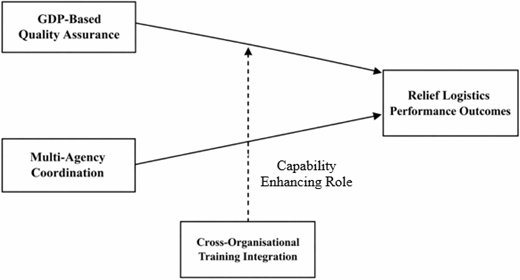
Collectively, these contributions advance a more holistic understanding of humanitarian logistics, emphasising that effective disaster response depends not only on operational efficiency but also on the integration of governance mechanisms, coordination structures and human capabilities. The study also provides context-specific insights for Malaysia by offering a structured basis for institutionalising quality and governance practices within national disaster management systems. The preliminary conceptual framework is presented in Figure 1.
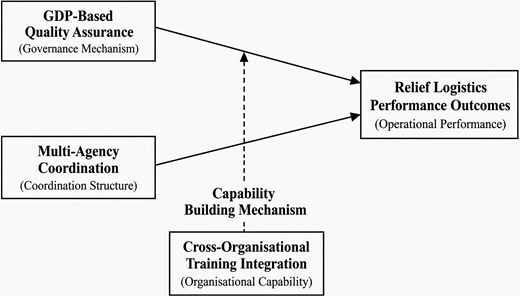
Figure 1 presents the preliminary conceptual framework underpinning this study. The framework proposes that GDP-based quality assurance and multi-agency Coordination contribute to relief logistics performance outcomes through their influence on transparency, accountability, operational integration and service effectiveness. Cross-organisational training integration is conceptualised as a capability-enhancing mechanism that strengthens the implementation and effectiveness of both quality assurance and coordination practices across humanitarian organisations. Drawing on SCM principles and the RBV, the framework highlights the complementary roles of governance mechanisms, coordination structures and organisational capabilities in supporting humanitarian logistics performance. The framework served as the initial conceptual foundation for the subsequent empirical refinement of the GHLPM.
3. Methodology
3.1 Research approach
This study adopts a qualitative research approach to explore how community preparedness literacy, multi-agency coordination capacity, GDP-based quality-assured logistics controls and cross-organisational training integration relate to and collectively contribute to relief logistics performance outcomes in flood disaster management. A qualitative approach is appropriate because the study seeks to explore lived experiences, interpretive perspectives and complex organisational dynamics rather than quantify variables or test predetermined hypotheses (Wan, 2019).
Humanitarian logistics involves socially embedded processes, coordination mechanisms, governance practices and inter-organisational relationships that are often difficult to capture through quantitative measures alone. Qualitative inquiry therefore provides the depth necessary to understand how stakeholders experience, interpret and respond to logistical challenges during disaster operations. This approach is particularly relevant to the study’s theoretical foundations in SCM and the RBV, which emphasise system integration, organisational capabilities and governance mechanisms as important determinants of performance.
3.2 Research design
A multiple-case qualitative design was used to facilitate cross-case comparisons across flood-affected states in Malaysia. This design enabled the study to capture variation in organisational structures, preparedness strategies, coordination practices and logistical processes, thereby providing a broader basis for assessing the transferability of the findings.
Data were collected through five FGDs, each comprising approximately five to seven participants. FGDs were selected in preference to individual interviews because humanitarian logistics is inherently collaborative and involves interactions among multiple actors operating within shared response environments. Group discussions therefore provide richer insights into inter-organisational dynamics, shared challenges, coordination mechanisms and collective experiences that emerge during flood response operations (Dhobi, 2023). The use of multiple FGDs across different states also enabled the comparison of experiences across diverse organisational and operational contexts, strengthening the robustness of the findings and supporting the development of broader thematic interpretations.
3.3 Study locations and context
The study was conducted across five flood-prone states in Malaysia: Kedah, Perak, Selangor, Johor and Melaka. These states experienced recurrent flood events during the 2021–2023 period and provide variation in geographical, demographic and institutional contexts relevant to flood disaster management. The selected locations differ in terms of disaster exposure, population density, infrastructure capacity and organisational preparedness. Such variation provided an opportunity to examine humanitarian logistics practices across multiple operational environments and to identify patterns that transcend state-specific conditions. Investigating multiple sites also reduced reliance on a single local context and provided a broader basis for assessing the transferability of the findings.
Furthermore, differences in response mechanisms, institutional arrangements and community involvement across the selected states provided a robust basis for examining the systemic factors that influence humanitarian logistics effectiveness within Malaysia’s flood disaster management system.
3.4 Sampling strategy and participants
Purposive sampling was used to identify participants with direct operational experience in flood response and humanitarian logistics. This sampling approach is widely recognised in qualitative research for selecting information-rich participants capable of providing detailed insights into complex organisational and operational phenomena (Creswell, 2014).
Participant selection focused on individuals actively involved in disaster response activities and possessing practical experience in logistics coordination, relief distribution, emergency management, volunteer mobilisation or community-based flood response initiatives.
This approach ensured the inclusion of diverse perspectives across operational, organisational and community levels. A total of 30 participants were involved across five FGDs, comprising representatives from three stakeholder groups:
Government agencies, including the NADMA, the Social Welfare Department, the Royal Malaysia Police and the Civil Defence Force;
NGOs, including humanitarian relief organisations and structured volunteer groups; and
Community stakeholders, including local leaders and volunteer representatives.
The distribution of participants across FGDs and stakeholder categories is presented in Table 1.
The selected case locations were chosen because they experience recurring flood events and involve active collaboration among government agencies, NGOs and local communities during disaster response operations. The diversity of these settings provided a broader basis for comparing humanitarian logistics practices across different operational contexts in Malaysia.
Participants represented a range of functional responsibilities within the humanitarian logistics system, including disaster coordination, logistics management, relief distribution, emergency response, volunteer mobilisation and community leadership. This diversity ensured that the study captured perspectives from strategic, operational and community levels.
Participants were recruited based on three inclusion criteria:
direct involvement in logistics management, relief operations or disaster coordination activities;
operational familiarity with flood response procedures and humanitarian logistics practices; and
willingness to share reflective insights regarding challenges, best practices and inter-agency coordination mechanisms.
Overall, the sampling strategy ensured that the data set reflected informed and experience-based perspectives from individuals directly engaged in humanitarian logistics operations. The diversity of participants provided a basis for enhancing the credibility, transferability, dependability and analytical richness of the findings while supporting the objectives of the multiple-case qualitative design. Data collection continued until sufficient information power and thematic depth were achieved, with recurring patterns consistently emerging across stakeholder groups and case locations.
3.5 Data collection procedures
Data were collected through five FGDs conducted via the Webex platform to accommodate participants located across multiple states in Malaysia. The use of FGDs was considered appropriate because the study sought to explore collective experiences, perceptions and interactions among key stakeholders involved in humanitarian logistics and flood response operations (Basnet, 2018). This method enabled participants to discuss operational challenges, coordination mechanisms and best practices while generating rich insights through group interaction and shared reflection.
Each FGD involved six participants and lasted between 60 and 90 min. The discussions were facilitated by the principal researcher, who served as the moderator and was supported by a research assistant responsible for note-taking and session management. Prior to each session, participants were briefed on the study objectives, ethical considerations, confidentiality procedures and their right to withdraw from the study at any stage without consequence.
A semi-structured discussion protocol was used to guide the FGDs. The protocol explored participants’ experiences in planning and implementing relief logistics, perceptions of inter-agency coordination effectiveness, awareness and adaptation of quality assurance principles such as good distribution practices (GDP) and reflections on disaster response training practices (Muijeen et al., 2020). These discussion areas were aligned with the study’s key constructs, namely, community preparedness literacy, multi-agency coordination capacity, GDP-based quality-assured logistics controls and cross-organisational training integration. Examples of guiding questions included:
How are relief logistics planned and implemented during flood response operations?
What challenges are encountered in coordinating activities among multiple agencies and stakeholders?
How are quality assurance and accountability practices applied during the storage, handling and distribution of relief items?
How are quality assurance and good distribution practices (GDP) principles understood, adapted or applied within humanitarian logistics operations?
What role does training and capacity-building play in improving disaster response effectiveness?
What improvements are required to strengthen coordination, logistics performance and community preparedness during future flood events?
All FGDs were audio-recorded with participants’ informed consent and supplemented with detailed field notes to capture contextual information, interaction dynamics and non-verbal observations where relevant. Following each session, recordings were transcribed verbatim to ensure accuracy and completeness of the data set.
The discussions were conducted primarily in Malay and subsequently translated into English for analysis. To ensure linguistic accuracy and conceptual equivalence, a back-translation procedure was used whereby translated transcripts were independently reviewed against the original Malay transcripts. Any discrepancies were reviewed and resolved through discussion to preserve semantic accuracy and conceptual equivalence.
Data collection was conducted iteratively, allowing emerging insights from earlier FGDs to inform subsequent discussions. This process facilitated deeper exploration of recurring issues and contributed to thematic refinement. Data collection concluded after the fifth FGD when thematic saturation was achieved, indicated by the absence of substantially new themes, concepts or perspectives emerging from the discussions. Saturation was determined when subsequent discussions largely reinforced existing themes without generating substantively new insights. The key procedures used during the FGDs are summarised in Table 2.
The combination of structured moderation, systematic documentation, iterative data collection and cross-case comparison supported the credibility and analytical richness of the qualitative data set. Furthermore, the inclusion of multiple stakeholder groups and geographically diverse case locations enabled a comprehensive exploration of humanitarian logistics practices across different operational contexts, providing a broader basis for assessing the transferability of the study findings.
3.6 Data analysis
The data were analysed using Braun and Clarke (2006) six-phase thematic analysis approach, which comprises (i) familiarisation with the data, (ii) generation of initial codes, (iii) searching for themes, (iv) reviewing themes, (v) defining and naming themes and (vi) producing the final report.
Coding was conducted manually by the principal researcher to ensure interpretive depth, contextual sensitivity and close engagement with the data. The researcher has prior experience in humanitarian logistics and disaster management research, which facilitated domain-informed interpretation while maintaining reflexivity throughout the analytical process. To minimise researcher bias, an audit trail was maintained documenting coding decisions, theme development, analytical reflections and revisions undertaken during the analysis (Bingham, 2023). The coding process was conducted over an eight-week period and involved iterative cycles of reading, coding, comparison and refinement. All transcripts were reviewed multiple times to achieve data familiarisation. Initial codes were generated inductively from participants’ narratives and subsequently grouped into related categories through constant comparison techniques. Similar categories were then consolidated into sub-themes and overarching themes that reflected recurring patterns across the data set.
To enhance analytical rigour and methodological transparency, artificial intelligence (AI)-assisted coding validation was used as a secondary verification mechanism rather than as a primary analytical tool. All transcripts were subjected to semantic clustering, thematic comparison and code-consistency checks. The AI-assisted outputs were compared with manually generated codes to assess alignment in thematic categorisation and interpretation. A high degree of consistency was observed between manually generated codes and AI-assisted outputs, particularly in the identification of recurring concepts and thematic groupings.
For example, the manually generated code “distribution duplication” was clustered by the AI-assisted analysis under the broader category of “coordination inefficiencies”, while “uneven aid allocation” was grouped under “resource allocation challenges”. Both interpretations were subsequently consolidated into the sub-theme “coordination effectiveness” under the overarching theme of multi-agency coordination capacity. Similarly, manually coded concepts such as “missing distribution records” and “lack of item tracking” were grouped by the AI-assisted analysis under the category “traceability deficiencies”, which contributed to the development of the theme GDP-based quality-assured logistics controls.
Any discrepancies between manual coding and AI-assisted outputs were reviewed, discussed and resolved through researcher interpretation to ensure conceptual coherence and contextual relevance. Data saturation was considered achieved after the fifth FGD session, as subsequent analysis reinforced existing themes without generating substantively new concepts or categories.
This indicated that the data set was sufficiently rich to capture the core dimensions of humanitarian logistics practices and stakeholder experiences within the selected flood-response contexts. Both within-case and cross-case analytical strategies were used. Within-case analysis enabled detailed examination of each state-specific context to preserve local operational characteristics and contextual nuances. Cross-case analysis facilitated comparison across states and stakeholder groups to identify recurring patterns, similarities and differences in humanitarian logistics practices. This dual analytical approach strengthened the explanatory power of the findings while ensuring that context-specific insights were not overlooked.
To further enhance trustworthiness, stakeholder triangulation was undertaken by comparing perspectives across government agencies, NGOs and community representatives. The convergence of perspectives across multiple stakeholder groups strengthened the credibility and dependability of the findings. In addition, analytical decisions were documented through an audit trail, while thematic interpretations were continuously reviewed against the original transcripts to maintain confirmability and consistency.
The systematic progression from raw data to codes, sub-themes, themes and theoretical interpretation informed the development of the GHLPM. Consequently, the model emerged inductively from stakeholder experiences while being interpreted through the complementary lenses of SCM principles and the RBV. This process ensured that the proposed framework remained both empirically grounded and theoretically informed.
3.7 Ensuring trustworthiness and rigor
Several strategies were used to enhance the trustworthiness and methodological rigour of this qualitative study, guided by the criteria of credibility, transferability, dependability and confirmability (Creswell and Plano Clark, 2018; Lincoln and Guba, 1985).
Credibility was enhanced through member checking (participant validation), whereby preliminary thematic interpretations and summarised findings were returned to selected participants from each FGD. Participants were invited to review the accuracy, relevance and resonance of the interpretations in relation to their lived experiences in flood response and humanitarian logistics operations. Feedback received was incorporated into the refinement of themes to ensure alignment with participant perspectives.
Transferability was strengthened through the provision of thick descriptions of the research context, participant characteristics, operational settings and disaster response environments. Detailed contextualisation of inter-agency coordination practices and humanitarian logistics operations in multiple flood-prone states in Malaysia enables readers to assess the applicability of findings to similar disaster management contexts.
Dependability was ensured through the maintenance of a structured audit trail throughout the research process. This included documentation of methodological decisions, iterative coding developments, theme refinement processes, AI-assisted validation outcomes and analytical reflections recorded over the eight-week data analysis period. The audit trail provides transparency of the analytical process and allows external evaluation of the consistency of the research procedures.
Confirmability was supported through reflexive journaling conducted throughout data collection and analysis. The researcher continuously reflected on personal assumptions, research experience in humanitarian logistics and potential interpretive biases.
These reflections were systematically documented and used to ensure that findings were grounded in participants’ narratives rather than researcher predispositions. In addition, triangulation across stakeholder groups (government agencies, NGOs and community representatives) further strengthened confirmability by reducing reliance on a single perspective. Collectively, these strategies enhanced the transparency, rigour and methodological integrity of the study. The integration of member checking, audit trail documentation, reflexivity practices and triangulation ensured that the findings are credible, dependable, confirmable and transferable to comparable humanitarian logistics and disaster management contexts.
3.8 Ethical considerations
Ethical approval for this study was obtained from the relevant institutional research ethics committee prior to the commencement of data collection. The study was conducted in accordance with established ethical principles governing research involving human participants, including respect for autonomy, voluntary participation, confidentiality and the protection of participant welfare.
Before participating in the FGDs, all participants were provided with an information sheet outlining the purpose of the study, research procedures, anticipated benefits and risks, confidentiality measures and their rights as research participants. Participants were informed that their involvement was entirely voluntary and that they could withdraw from the study at any stage without penalty or consequence. Written informed consent was obtained from all participants prior to the commencement of each FGD session.
To safeguard participant confidentiality and privacy, all personal identifiers were removed during transcription and analysis. Participants were assigned pseudonyms or identification codes, and no identifying information was included in the reporting of findings. Given that the FGDs were conducted online via the Webex platform, participants were also reminded not to disclose sensitive personal information during discussions and were encouraged to participate from a private location where possible.
All audio recordings, transcripts, field notes and related research materials were stored in encrypted and password-protected digital files accessible only to members of the research team. Data management procedures followed applicable institutional requirements for data security and confidentiality to ensure the protection of participant information throughout the research process. The ethical safeguards implemented in this study were designed to protect participants’ rights, privacy and wellbeing while supporting the integrity, credibility and responsible conduct of the research.
4. Findings and discussion
This section presents the findings derived from five FGDs involving government agencies, NGOs and community stakeholders engaged in flood response operations across Malaysia. The analysis generated four primary dimensions, community preparedness literacy, multi-agency coordination capacity, GDP-based quality-assured logistics controls and cross-organisational training integration which collectively contribute to one overarching outcome: relief logistics performance outcomes.
The findings demonstrate that humanitarian logistics performance is shaped by the dynamic interaction of governance mechanisms, coordination structures and organisational capabilities. Rather than functioning independently, these dimensions operate as an integrated system influencing operational effectiveness, accountability, transparency and responsiveness in disaster response.
Participants consistently emphasised that successful humanitarian logistics depends not only on resource availability but also on effective coordination, accountability, quality assurance and continuous capability development across participating organisations.
The analysis further reveals that community preparedness literacy serves as a foundational enabler of effective disaster response, while multi-agency coordination capacity facilitates information sharing, resource mobilisation and operational alignment among stakeholders. GDP-based quality-assured logistics controls strengthen transparency, traceability and accountability in relief distribution processes, whereas cross-organisational training integration enhances knowledge sharing, inter-agency collaboration and operational readiness.
From a theoretical perspective, the findings extend the application of SCM principles within humanitarian logistics by demonstrating how coordination, visibility, traceability and quality governance mechanisms can be adapted to complex disaster-response environments. Beyond conventional efficiency-oriented interpretations of supply chain performance, the findings highlight the importance of integrating ethical accountability, transparency and stakeholder collaboration into humanitarian logistics systems.
Taken together, these findings provide an empirical foundation for the development of the GHLPM. The model therefore offers a contextually grounded and empirically informed framework for strengthening humanitarian logistics practices in flood-prone environments.
4.1 Community preparedness literacy
The findings reveal that community members often conceptualise humanitarian logistics primarily as the physical delivery of aid, with limited awareness of the broader processes involved in planning, coordination, inventory management, prioritisation and resource allocation. This narrow understanding contributes to unrealistic expectations regarding delivery speed, aid availability and distribution coverage, while operational constraints are often perceived as inefficiencies rather than the result of logistical complexity.
As one government participant remarked:
Most community members see the food parcels, not the process behind getting them there. (Government Participant, FGD 2)
Similarly, an NGO participant observed:
We often receive duplicate requests from the same area because information is not clearly communicated. (NGO Participant, FGD 3)
A community representative further explained:
Many residents expect assistance immediately after flooding occurs, but they do not always understand that agencies need time to assess needs, coordinate resources and organise distribution. (Community Participant, FGD 4)
These findings suggest that limited community preparedness literacy can disrupt demand information flows, which are fundamental to effective humanitarian logistics management. Inaccurate reporting, duplicated requests and misunderstandings regarding distribution procedures frequently create inefficiencies during relief operations. Such challenges increase the administrative burden on responding agencies and complicate efforts to prioritise assistance according to actual needs. From a SCM perspective, communities function as critical sources of demand information within the humanitarian supply chain.
The quality and accuracy of information generated at this level directly influence planning decisions, inventory allocation, transportation scheduling and distribution effectiveness. Inaccurate, duplicated or incomplete information can weaken demand visibility, resulting in resource misallocation, uneven aid distribution and avoidable operational delays. These findings demonstrate that information quality at the community level is a critical prerequisite for effective humanitarian logistics performance.
These findings build upon previous research (Alhaffar et al., 2023) by demonstrating that community awareness is not merely a social or educational concern, but also a system-level factor influencing humanitarian logistics performance. Improving community preparedness literacy can stabilise information flows, strengthen needs assessment accuracy, reduce duplication of requests and enhance collaboration between communities and responding organisations.
Overall, community preparedness literacy emerges as a foundational capability within the GHLPM, strengthening information quality, improving coordination efficiency and supporting more equitable resource allocation within humanitarian logistics systems. These findings suggest that community preparedness could be institutionalised as a core component of disaster logistics planning rather than treated as a peripheral support function.
4.2 Multi-agency coordination capacity
The findings highlight that, despite the existence of formal disaster governance structures in Malaysia, coordination at the operational level remains fragmented and inconsistent. Participants reported variations in organisational procedures, communication protocols, reporting mechanisms and decision-making practices, frequently resulting in duplication of efforts, delays in information sharing and uneven distribution of relief assistance.
As one participant noted:
On paper we are coordinated. In the field, every organisation works differently. (Local Authority Representative, FGD 4)
This divergence between formal governance structures and operational practice was further reflected in field-level outcomes. An NGO participant explained:
Sometimes two agencies deliver to the same location while another area receives nothing. (NGO Participant, FGD 2)
Similarly, a government agency representative observed:
Different organisations maintain different reporting systems, making it difficult to obtain a complete picture of ongoing relief activities. (Government Participant, FGD 1)
A community representative also highlighted the consequences of fragmented coordination:
Residents often receive conflicting information from different agencies regarding aid eligibility and distribution schedules. (Community Participant, FGD 5)
Taken together, these accounts illustrate that coordination challenges are experienced not only by responding agencies but also by affected communities. The findings suggest that coordination deficiencies extend beyond operational inefficiencies and reflect deeper structural limitations within the humanitarian logistics system.
Participants described situations where information was dispersed across multiple organisations, resulting in limited visibility of resource availability, distribution status and beneficiary needs. Such fragmentation reduced stakeholders’ ability to make timely decisions and respond effectively to rapidly changing disaster conditions. In several cases, participants indicated that resources were available within some agencies, but inadequate coordination mechanisms limited the ability to ensure that assistance reached the right locations at the right time.
From a SCM perspective, effective coordination depends on end-to-end visibility, information sharing and process integration across supply chain actors. The absence of integrated information systems and standardised operating procedures weakens these capabilities and undermines logistics performance. When organisations operate independently using different communication channels and reporting mechanisms, information asymmetry emerges, reducing responsiveness and increasing the likelihood of resource duplication, service gaps and inefficient allocation of relief supplies. These findings highlight coordination capacity as a critical capability for effective humanitarian supply chain integration.
The findings support previous studies suggesting that effective humanitarian logistics coordination requires institutionalised mechanisms that facilitate real-time communication, shared situational awareness and standardised operational practices (Lugova et al., 2020). However, the present study extends existing knowledge by demonstrating that formal governance arrangements alone are insufficient to ensure effective coordination. Coordination effectiveness depends equally on the practical integration of organisational processes, information systems and collaborative decision-making mechanisms across responding agencies. The findings also support the RBV, which posits that organisational capabilities function as strategic resources contributing to superior performance.
In humanitarian logistics, coordination capacity emerges as a valuable organisational and inter-organisational capability that enables organisations to mobilise resources, share information and align operational activities during disaster response. Such capabilities develop over time through repeated inter-agency interaction, shared experience and institutional learning.
The findings further indicate that coordination capacity extends beyond formal institutional arrangements and includes relational dimensions such as trust, mutual understanding and established communication channels among stakeholders. Agencies that had previously participated in joint exercises, training programmes or collaborative disaster response activities reported greater readiness to coordinate effectively during actual flood events. This suggests that coordination capacity is not merely a structural characteristic of the disaster management system but also a capability developed through sustained inter-organisational engagement.
Within the proposed GHLPM, multi-agency coordination capacity functions as a central integrative mechanism linking community preparedness, quality assurance practices and training initiatives to overall logistics performance outcomes. Effective coordination serves as an operational bridge through which resources, information, organisational capabilities and stakeholder actions can be aligned to achieve equitable, efficient, transparent and accountable disaster response.
Overall, multi-agency coordination capacity emerges as a critical system-integration capability that strengthens information visibility, resource alignment and operational responsiveness within humanitarian logistics systems. These findings suggest that strengthening coordination capacity is essential not only for improving operational performance but also for enhancing stakeholder trust, accountability and confidence in humanitarian logistics systems.
4.3 Good distribution practices (GDP) – quality-assured logistics controls
The findings underscore the importance of GDP-aligned quality assurance practices in strengthening traceability, accountability, transparency and procedural standardisation within humanitarian logistics operations. Participants highlighted documentation integrity, inventory monitoring, secure storage, distribution recording and chain-of-custody controls as essential mechanisms for ensuring that relief items are distributed safely, accurately and equitably to intended beneficiaries.
As one logistics officer explained:
We need GDP, but we also need flexibility. The key is traceability and safe handling, not rigid compliance. (Government Participant, FGD 5)
A similar concern was raised by another participant:
If we follow strict procedures, response will slow down. But without it, mistakes happen. (Government Participant, FGD 3)
An NGO participant further highlighted the accountability dimension of GDP:
When distribution records are incomplete, it becomes difficult to verify whether aid actually reaches the intended recipients. (NGO Participant, FGD 2)
Likewise, a community representative emphasised the importance of transparency:
People want to know what assistance was sent, where it went and who received it. Clear records help build trust. (Community Participant, FGD 4)
Taken together, these accounts reveal a fundamental tension between procedural compliance and operational flexibility within disaster response environments. Participants acknowledged that while GDP introduces necessary governance controls and quality assurance mechanisms, overly rigid implementation may constrain responsiveness during time-critical situations. At the same time, the absence of basic quality safeguards increases the likelihood of distribution errors, inventory discrepancies, resource losses and accountability concerns. In the context of this study, transparency refers to the existence of documented and auditable logistics processes that enable relief items to be tracked from receipt to final distribution.
This includes inventory records, beneficiary verification procedures, distribution logs, stock monitoring systems and chain-of-custody documentation that allow participating agencies to verify how, where and to whom relief assistance is delivered. Transparency therefore extends beyond administrative record-keeping and can support accountability, equitable allocation and public trust.
The findings support the argument of Gurzhii (2022), who advocates a “minimum safeguards” approach whereby essential quality assurance elements are maintained while allowing operational adaptability. Participants consistently emphasised that humanitarian logistics requires a balance between accountability and responsiveness. Rather than applying GDP as a rigid regulatory framework, participants favoured adapting core principles such as traceability, documentation integrity, safe handling, inventory visibility and accountability to suit the realities of emergency response operations.
Based on participants’ reflections, GDP-based quality controls in humanitarian logistics can be conceptualised as a minimum safeguards’ framework. Under this approach, essential quality controls are retained while allowing flexibility in implementation according to operational urgency and the nature of relief items being distributed.
Within the GHLPM, GDP-based quality-assured logistics controls therefore function as a governance and quality-assurance mechanism that establishes minimum process safeguards while preserving the flexibility required for emergency response. When supported by coordination and cross-organisational training, these safeguards can be more consistently understood and implemented across participating agencies. The proposed adaptation of GDP-based safeguards across relief item categories is presented in Table 3.
The proposed adaptation framework is informed by participants’ repeated emphasis that quality safeguards should be maintained without imposing unnecessary procedural rigidity during disaster response operations. The level of control varies according to the characteristics, handling requirements and risk profile of different relief items while preserving the core objectives of traceability, accountability, transparency and safe handling.
From a SCM perspective, the findings demonstrate that humanitarian logistics performance extends beyond traditional measures of speed, efficiency and cost. Visibility, traceability, accountability and governance emerged as equally important dimensions of performance. These findings illustrate how SCM principles can be applied within humanitarian settings through mechanisms that improve process visibility, reduce uncertainty, strengthen resource monitoring and support equitable distribution outcomes.
Participants also associated distribution challenges with weak documentation practices and limited visibility of inventory movements. Such issues reduced stakeholders’ ability to monitor resource flows, verify distribution outcomes and make informed operational decisions. These observations reinforce the importance of traceability and information visibility as foundational elements of effective humanitarian SCM.
The findings further support the RBV, which emphasises the role of organisational capabilities in supporting effective performance. The ability to implement and adapt GDP-based controls represents a valuable organisational capability that enhances accountability, strengthens stakeholder confidence and improves operational reliability during disaster response. Organisations with stronger quality assurance capabilities are better positioned to manage complex logistics operations while maintaining transparency, reducing operational risks and supporting public trust.
Importantly, participants did not perceive GDP merely as a compliance requirement. Instead, GDP-based controls were viewed as practical governance mechanisms that help organisations maintain consistency, accountability and quality under conditions of uncertainty. This suggests that quality assurance capabilities constitute an important organisational capability within humanitarian logistics systems.
Within the proposed GHLPM, GDP-based quality-assured logistics controls function as a critical governance and quality-assurance pillar linking coordination activities, training initiatives and logistics performance outcomes. Effective humanitarian logistics therefore requires a balanced approach in which responsiveness and operational flexibility are supported by minimum quality safeguards that ensure accountability, transparency, traceability and beneficiary protection.
Overall, GDP-based quality-assured logistics controls emerge as a critical governance capability that strengthens system integrity, reduces operational risk and enhances trust in humanitarian logistics operations. Practically, disaster management agencies could develop risk-based operational guidelines and training modules informed by GDP principles, retaining essential safeguards while allowing flexibility across different relief item categories and emergency contexts.
4.4 Cross-organisational training integration
The findings highlight that fragmented training practices across government agencies, NGOs and community groups constrain coordination effectiveness and operational performance in humanitarian logistics. Participants reported that training activities are often conducted independently by individual organisations, resulting in differing operational procedures, inconsistent expectations and limited interoperability during disaster response operations.
As one NGO participant observed:
We understand each other’s constraints only when we train together. (NGO Participant, FGD 1)
A government participant similarly noted:
Different agencies follow different SOPs, so when we meet in the field, confusion happens. (Government Participant, FGD 2)
Another participant highlighted the consequences of fragmented preparedness efforts:
Each organisation may be well prepared on its own, but joint operations become difficult when procedures are not aligned. (Government Participant, FGD 4)
A community representative further emphasised the value of inclusive training:
When local volunteers are included in exercises, communication becomes much smoother during actual flood events. (Community Participant, FGD 3)
Taken together, these accounts indicate that training deficiencies extend beyond technical skill gaps and reflect broader challenges related to knowledge integration, communication alignment and inter-organisational collaboration. Participants described situations in which agencies had relevant resources and expertise but nevertheless struggled to coordinate effectively because operational assumptions, terminology and response procedures differed across organisations.
The recurring emphasis on joint learning, procedural alignment and shared operational understanding informed the researcher-developed framework for cross-organisational training integration in humanitarian logistics, as presented in Table 4.
The proposed framework reflects participants’ repeated emphasis that effective disaster response depends not only on individual organisational preparedness but also on the ability of stakeholders to learn, communicate and operate collectively through structured training activities. Beyond technical competency development, participants consistently described training as a mechanism for building trust, strengthening professional networks and developing a common operational language across agencies.
These relational outcomes were viewed as equally important as technical competencies because they facilitate faster communication, collaborative problem-solving and more effective decision-making during emergency operations. The findings suggest that integrated training contributes not only to operational readiness but also to the development of social and organisational capital that enhances collective disaster response capacity.
From a RBV perspective, training can be understood as a valuable organisational capability that strengthens coordination efficiency, collective learning and operational consistency. Unlike physical resources, training generates intangible assets in the form of knowledge, shared understanding, collaborative relationships and institutional memory. These capabilities are difficult to replicate and contribute to improved disaster response performance by enhancing organisational readiness, adaptability and collaborative capacity.
Particularly noteworthy was the recurring emphasis on GDP-related competencies. Participants highlighted the need for joint training programmes that incorporate quality assurance principles such as documentation integrity, traceability systems, inventory management, beneficiary verification, accountability procedures and safe handling practices. These competencies were considered essential for ensuring that relief operations remain both responsive and accountable during emergency situations. Previous studies have shown that integrated training enhances shared situational awareness, inter-organisational trust and the consistent application of standardised procedures (Kivlehan et al., 2021).
The present study extends this body of knowledge by demonstrating that training not only improves individual competencies but also strengthens the interaction between coordination structures and quality assurance mechanisms. Participants repeatedly described training as the process through which collaborative relationships are developed, procedural expectations are aligned and operational readiness is strengthened before disasters occur.
From a SCM perspective, integrated training improves information sharing, process standardisation and coordination effectiveness across humanitarian supply chain actors. By aligning operational practices and decision-making processes, training reduces uncertainty and facilitates more efficient resource mobilisation and distribution during disaster response operations. Training therefore strengthens system integration and supports the visibility, interoperability and responsiveness central to effective humanitarian supply chain performance.
Within the proposed GHLPM, cross-organisational training integration functions as the primary capability-building mechanism through which multi-agency coordination capacity and GDP-based quality-assured logistics controls are translated into operational practice. By aligning competencies, fostering inter-organisational trust, harmonising procedures and strengthening quality assurance awareness, integrated training reinforces the interconnected relationships that ultimately contribute to improved relief logistics performance outcomes, accountability and disaster response resilience. Overall, cross-organisational training integration emerges as a strategic system-level capability that strengthens governance implementation, coordination effectiveness and organisational adaptability within humanitarian logistics systems.
4.5 Relief logistics performance outcomes
The findings indicate that humanitarian logistics performance should be conceptualised as a multidimensional, system-level outcome that extends beyond conventional efficiency metrics such as speed of delivery or cost minimisation. Across stakeholder groups, participants consistently associated effective humanitarian logistics with timeliness, equity, transparency, accountability, responsiveness and the ability to address the actual needs of affected communities.
Rather than functioning as independent indicators, these dimensions were perceived as interdependent and collectively constitutive of performance in disaster response contexts. This reflects the complex operational and ethical environment in which humanitarian logistics operates, where both technical efficiency and accountable governance are necessary for effective disaster response.
As expressed by a community participant:
Fast aid means little if it is uneven or inappropriate. (Community Participant, FGD 4)
This perspective was reinforced by another respondent:
People do not just want fast delivery; they want to know it is fair and properly managed. (Community Participant, FGD 2)
An NGO participant further highlighted the importance of accountability in shaping perceived performance:
Communities judge our performance not only by how quickly aid arrives, but by whether the assistance reaches the right people. (NGO Participant, FGD 5)
From a governance perspective, one government participant emphasised the critical role of coordination and information sharing:
When agencies coordinate well and information is shared effectively, the overall response becomes faster, more organised and more trusted by the public. (Government Participant, FGD 1)
Taken together, these accounts indicate that humanitarian logistics performance cannot be adequately assessed using traditional supply chain metrics alone. Participants consistently described successful disaster response not simply in terms of rapid delivery, but in terms of whether assistance was delivered fairly, transparently, accountably and in accordance with actual community needs. Performance therefore emerged as both an operational and governance-related outcome.
An important observation emerging from the data is that trust was repeatedly associated with successful logistics operations. Participants indicated that communities evaluate relief efforts not only based on what is delivered, but also on how decisions are made, how resources are allocated and whether distribution processes are perceived as fair and transparent. This highlights the stakeholder-dependent nature of humanitarian logistics performance and reinforces the importance of accountability and ethical governance within disaster response systems.
The findings align with humanitarian logistics literature (Patel et al., 2016; UNOCHA, 2020), which emphasises beneficiary-centred and accountability-driven approaches. However, the present study extends existing knowledge by demonstrating that equity, transparency, accountability and trust are not merely desirable outcomes but core dimensions of performance embedded within humanitarian logistics systems. Participants consistently regarded these dimensions as inseparable from assessments of operational effectiveness.
These findings suggest that performance measurement systems should move beyond conventional indicators such as speed and resource utilisation to incorporate broader measures reflecting service quality, fairness, beneficiary satisfaction and stakeholder trust alongside operational effectiveness. Such an approach would provide a more comprehensive assessment of disaster response effectiveness while supporting continuous organisational learning, governance improvement and stakeholder confidence.
The findings also support the RBV, which emphasises how valuable organisational capabilities and resources support effective performance. The four interconnected dimensions identified throughout this study, community preparedness literacy, multi-agency coordination capacity, GDP-based quality-assured logistics controls and cross-organisational training integration, collectively contribute to performance outcomes. From an RBV perspective, these dimensions represent complementary organisational, inter-organisational and system-level capabilities that support effective resource mobilisation, coordination, monitoring and deployment under conditions of uncertainty.
The findings therefore suggest that humanitarian logistics performance depends not only on resource availability but also on the capabilities that govern how resources are coordinated, monitored and deployed. From a practical perspective, humanitarian organisations could adopt broader performance evaluation frameworks that incorporate accountability, transparency, equity, beneficiary satisfaction and stakeholder trust alongside traditional efficiency measures. Such an approach would provide a more comprehensive assessment of disaster response effectiveness while supporting continuous organisational learning, governance improvement and stakeholder confidence.
Importantly, relief logistics performance outcomes emerged from the interaction of the four interconnected dimensions identified in this study: Community preparedness literacy, multi-agency coordination capacity, GDP-based quality-assured logistics controls and cross-organisational training integration. Participants consistently described how weaknesses in individual dimensions could undermine overall response effectiveness, while improvements across multiple dimensions reinforced one another and strengthened system performance.
Consequently, relief logistics performance outcomes should be understood as an emergent system-level outcome rather than the product of any single organisational activity or intervention. Within the proposed GHLPM, performance emerges from the dynamic interaction of preparedness, coordination, governance and capability-development mechanisms. Overall, the findings demonstrate that effective humanitarian logistics requires the simultaneous development of informational, structural, governance and capability-based dimensions to achieve equitable, accountable, responsive and effective disaster response outcomes.
4.6 Development of the good humanitarian logistics practices model
To consolidate the empirical findings and demonstrate the interrelationships among the identified themes, this study developed the GHLPM. The model was derived through iterative thematic analysis, cross-case comparison and theoretical integration using SCM and RBV perspectives. The GHLPM provides a system-level explanation of how humanitarian logistics performance is shaped through the interaction of preparedness, coordination, governance and capability-development mechanisms.
The condensed thematic structure and coding evidence underpinning the GHLPM are summarised in Table 5.
Table 5 summarises the thematic structure generated from the analysis and demonstrates how stakeholder perspectives converged around five major themes. The coding evidence indicates strong consistency across government agencies, NGOs and community representatives, suggesting that the identified constructs represent shared operational challenges and priorities within humanitarian logistics systems.
Interpretation of coding strength: Because the study adopts a qualitative thematic analysis design, individual code frequencies are not presented as statistical counts. Instead, the coding-strength indicators provide a transparent qualitative indicator of relative prominence across the five FGDs. The indicators are based on the recurrence and consistency of particular issues across the data set and stakeholder groups and should therefore not be interpreted as numerical frequency measures. This approach preserves the interpretive focus of thematic analysis while providing greater transparency regarding which codes and sub-themes were more consistently represented.
Contrasting interpretations: Although several themes demonstrated strong convergence across stakeholder groups, the findings also revealed important areas of tension. For example, participants generally supported stronger GDP-based controls, but some cautioned that excessive procedural rigidity could delay time-critical relief operations. Similarly, formal coordination mechanisms were recognised as necessary, yet participants reported that coordination remained fragmented in field conditions. Integrated training was also viewed positively, although differences in organisational procedures and levels of participation indicated that training integration remained uneven.
The findings therefore suggest that humanitarian logistics effectiveness is not achieved through standardisation alone, but through the ability to balance governance, accountability, operational flexibility and context-specific responsiveness. To further clarify how the empirical findings contribute to the development of the GHLPM, Table 6 aligns each thematic construct with its functional role, operational mechanism and contribution to humanitarian logistics performance.
The alignment presented in Table 6 illustrates a coherent progression from individual thematic dimensions to system-level performance outcomes. The findings demonstrate that each construct performs a distinct yet interdependent function within humanitarian logistics operations. Together, these constructs provide empirical support for the proposition that humanitarian logistics performance is shaped by the interaction of informational, structural, governance and capability-based dimensions rather than isolated operational factors.
Community preparedness literacy serves as the informational foundation of the system by improving disaster awareness, enhancing communication quality and reducing information asymmetry between affected communities and responding organisations. Improved preparedness literacy contributes to more accurate needs identification and more effective response planning.
Multi-agency coordination capacity functions as the system integration mechanism that aligns organisational activities, harmonises operational procedures and strengthens information sharing across stakeholders. Enhanced coordination improves resource allocation, reduces duplication of effort and facilitates more efficient disaster response operations.
GDP-based quality-assured logistics controls provide the governance and accountability layer of the system. Through mechanisms such as traceability, documentation integrity, inventory monitoring and beneficiary verification, GDP-based controls strengthen transparency, accountability and stakeholder confidence while reducing operational risks.
Cross-organisational training integration acts as the capability-development mechanism that strengthens coordination effectiveness and supports the practical implementation of governance controls. Joint training enhances shared understanding, improves interoperability, strengthens professional networks and facilitates the consistent application of standardised procedures across organisations. Collectively, these four dimensions interact dynamically to produce relief logistics performance Outcomes as an emergent system-level construct. Performance is not attributable to any single factor, but emerges through the combined influence of preparedness, coordination, governance and capability-development mechanisms. The empirically refined GHLPM is presented in Figure 2.
Figure 2 presents the empirically refined GHLPM, developed from the integration of thematic findings across the five focus group discussions. The model illustrates how humanitarian logistics performance emerges through the interaction of preparedness, coordination, governance and capability-development mechanisms. The model extends the application of SCM principles within humanitarian logistics by moving beyond operational efficiency considerations to incorporate governance, accountability, transparency and capability-development dimensions.
It highlights the importance of information quality, inter-agency coordination, traceability and organisational learning as interconnected determinants of effective humanitarian logistics systems. The model also supports the RBV by demonstrating how community preparedness literacy, multi-agency coordination capacity, GDP-based quality-assured logistics controls and cross-organisational training integration function as complementary capabilities that collectively influence relief logistics performance outcomes.
Overall, the GHLPM provides an empirically grounded and contextually relevant framework for understanding humanitarian logistics performance within multi-agency disaster management systems. The model offers a strong foundation for future empirical testing and practical guidance for policymakers and humanitarian organisations seeking to strengthen disaster preparedness, coordination effectiveness and relief distribution outcomes.
4.7 Integrated discussion
The findings collectively demonstrate that humanitarian logistics performance is not determined by any single operational factor, but emerges from the dynamic interaction of preparedness, coordination, governance and capability-development mechanisms. The proposed GHLPM therefore conceptualises humanitarian logistics as an integrated socio-technical system in which information quality, organisational collaboration, accountability mechanisms and human capabilities jointly influence disaster response effectiveness.
From a SCM perspective, the findings reaffirm the importance of coordination, information sharing, visibility and process integration in improving logistics performance. However, this study extends the application of SCM principles within humanitarian logistics by demonstrating that performance is also shaped by governance-oriented dimensions such as transparency, accountability, equity and stakeholder trust. These dimensions are particularly critical in disaster contexts, where humanitarian objectives extend beyond operational efficiency to include fairness, legitimacy and public confidence.
From a RBV perspective, the findings indicate that coordination capacity, quality assurance capability and cross-organisational training function as strategic capabilities that enhance adaptability and operational effectiveness under conditions of uncertainty. Importantly, these capabilities are distributed across inter-organisational networks rather than confined to individual organisations, highlighting the importance of collaborative capability development within humanitarian systems.
Taken together, the findings suggest that effective humanitarian logistics requires a balanced integration of operational efficiency and governance legitimacy. Relief logistics performance depends not only on the availability of resources, but also on the ability of organisations and communities to coordinate actions, maintain accountability, share information and continuously strengthen operational capabilities.
Overall, the GHLPM provides an empirically grounded framework that explains how preparedness, coordination, governance and capability development interact to influence humanitarian logistics performance outcomes. This integrated perspective strengthens both theoretical understanding and practical guidance for improving humanitarian logistics systems in disaster-prone environments.
5. Conclusion and implications
5.1 Conclusion
This study investigates the key factors influencing the effectiveness of humanitarian logistics in Malaysia’s flood disaster management and develops the GHLPM as an integrated framework for enhancing coordination, governance and operational readiness in disaster response systems. The findings identify four interrelated dimensions community preparedness literacy, multi-agency coordination capacity, GDP-based quality-assured logistics controls and cross-organisational training integration which collectively shape Relief logistics performance outcomes. The results demonstrate that humanitarian logistics effectiveness extends beyond infrastructure availability and resource adequacy.
Instead, it is shaped by the interaction between governance mechanisms, such as GDP-based protocols, documentation integrity and standard operating procedures and organisational and relational capabilities, including coordination, communication and shared situational awareness among multi-agency actors. The GHLPM captures this systemic interaction by positioning preparedness, coordination structures, quality assurance mechanisms and training integration as mutually reinforcing components that collectively enhance responsiveness, transparency, equity and accountability in humanitarian logistics operations. The model highlights that performance outcomes emerge from system interactions rather than isolated organisational actions.
From a theoretical perspective, this study extends the application of SCM principles within humanitarian logistics by incorporating governance and ethical dimensions into performance evaluation. In addition, it contributes to the RBV by demonstrating that organisational and inter-organisational capabilities particularly coordination capacity, quality assurance capability and training integration are critical enablers of effective disaster response under conditions of uncertainty. More importantly, the study integrates SCM and RBV perspectives within a single humanitarian logistics framework, demonstrating how structural coordination mechanisms and organisational capabilities interact to influence logistics performance outcomes.
Overall, the findings underscore that humanitarian logistics performance should be understood as an emergent system-level outcome rather than solely a function of speed or efficiency. By integrating preparedness, coordination, governance and capability-development dimensions within a single framework, the GHLPM provides a more holistic and context-sensitive understanding of disaster response effectiveness. The model offers both theoretical and practical guidance for strengthening humanitarian logistics systems in increasingly complex and uncertain disaster environments.
5.2 Implications
5.2.1 Practical implications
The GHLPM offers several actionable implications for strengthening humanitarian logistics systems, particularly within Malaysia’s flood disaster management context. Firstly, institutionalising GDP-based quality-assured logistics controls can significantly enhance transparency, traceability and accountability in relief distribution.
The adoption of adapted GDP principles in humanitarian contexts ensures minimum quality standards, reduces inconsistencies in aid delivery and strengthens beneficiary protection. Disaster management agencies should therefore develop practical GDP-based operational guidelines that retain essential safeguards while allowing flexibility during emergency response situations.
Secondly, developing a centralised humanitarian logistics information platform under the coordination of NADMA and relevant state disaster management agencies would improve inter-agency visibility, reduce duplication of efforts and enhance the accuracy of needs assessment and resource allocation. Real-time information sharing would strengthen coordination efficiency, improve resource visibility and enhance operational responsiveness during disasters.
Thirdly, establishing a national cross-organisational training integration programme is essential for improving interoperability among government agencies, NGOs and community stakeholders. Joint training initiatives should incorporate GDP-based logistics training modules covering documentation integrity, traceability systems, inventory management, beneficiary verification, accountability procedure and safe handling practices. Such initiatives would foster a shared operational culture, enhance preparedness and strengthen trust and coordination during large-scale disaster response operations.
Fourthly, expanding community engagement mechanisms beyond awareness campaigns to include participatory planning, monitoring and evaluation can improve the relevance and inclusiveness of humanitarian assistance. Such engagement enhances legitimacy, improves targeting accuracy, strengthens community trust and contributes to more effective needs assessment and response planning. Collectively, these measures contribute to a more resilient and coordinated disaster governance ecosystem by integrating standardisation, collaboration, accountability and community-centred decision-making.
5.2.2 Theoretical contributions
The findings extend the application of SCM principles, good distribution practices (GDP) and RBV logic within humanitarian logistics by demonstrating how these perspectives can be operationalised in a multi-agency disaster-response setting. Rather than treating these perspectives as separate explanatory lenses, the study demonstrates how their respective mechanisms interact to shape humanitarian logistics performance outcomes.
Firstly, the findings extend the application of SCM principles by demonstrating that humanitarian logistics performance depends on more than the conventional efficiency dimensions of speed, cost and resource utilisation. The empirical evidence shows that information quality at the community level affects demand visibility, multi-agency coordination affects information and process integration and GDP-based controls strengthen traceability and accountability. These findings demonstrate how SCM mechanisms such as visibility, information sharing, standardisation and process integration can be operationalised in humanitarian settings while being combined with governance dimensions including transparency, equity, accountability and stakeholder trust. The contribution therefore lies in extending the application of SCM principles to a context in which logistics performance must simultaneously satisfy operational and humanitarian governance objectives.
Secondly, the findings advance the application of GDP principles by conceptualising GDP-based controls as an adaptable governance and quality-assurance mechanism rather than as a rigid compliance framework. The empirical evidence demonstrates that documentation integrity, traceability, transparency and accountability are important safeguards in humanitarian relief distribution, while contextual adaptation is necessary to preserve operational flexibility during time-critical disaster response. This finding extends the practical and conceptual relevance of GDP principles from regulated distribution environments to humanitarian logistics settings in which quality assurance must coexist with uncertainty, urgency and resource constraints.
Thirdly, the findings extend the application of RBV logic by demonstrating that coordination capacity, quality-assurance capability and cross-organisational training function as valuable organisational and inter-organisational capabilities under conditions of uncertainty. The evidence shows that training generates shared knowledge, procedural alignment, interoperability and relational trust, while coordination capacity enables organisations to mobilise resources and align activities. Similarly, the capability to adapt GDP-based controls allows organisations to maintain traceability and accountability without unnecessarily constraining emergency responsiveness. These capabilities are difficult to substitute during complex disaster operations because they depend on accumulated experience, shared learning, established relationships and organisational routines.
Fourthly, the findings extend RBV beyond an organisation-centred interpretation by demonstrating that important humanitarian logistics capabilities are distributed across inter-organisational networks rather than being confined to individual organisations. Effective disaster response depends on the collective ability of government agencies, NGOs and communities to share information, align procedures and coordinate resources. The GHLPM therefore highlights the strategic value of relational and collective capabilities in humanitarian logistics, suggesting that capability development in disaster response is not solely an organisational concern but also an inter-organisational process.
Finally, the GHLPM integrates these theoretical perspectives into a system-level explanation of humanitarian logistics performance. SCM explains how information, processes, coordination and governance mechanisms support integration across the humanitarian supply chain; GDP provides a quality-assurance and accountability mechanism that strengthens traceability and transparency; while RBV explains how the organisational and inter-organisational capabilities required to implement and sustain these mechanisms are developed, maintained and mobilised. The GHLPM brings these perspectives together by demonstrating that relief logistics performance outcomes emerge from the interaction of preparedness, coordination, governance and capability-development mechanisms.
This integrated interpretation provides a clearer bridge between the empirical findings and the theoretical foundations of the study. Overall, this study contributes to humanitarian logistics and supply chain literature by demonstrating how SCM principles, GDP and RBV can be jointly applied to explain humanitarian logistics performance in a multi-agency disaster-response context. The theoretical contribution lies not in proposing a new SCM or RBV theory, but in demonstrating how their complementary mechanisms can be integrated to explain the interaction between information visibility, coordination, quality assurance, organisational capability and governance in humanitarian logistics. The GHLPM consequently provides a context-sensitive theoretical framework for understanding humanitarian logistics performance as an emergent system-level outcome rather than solely as a function of operational efficiency.
6. Limitations and directions for future research
This study provides valuable insights into the factors influencing humanitarian logistics performance within Malaysia’s flood disaster management context. Nevertheless, several limitations should be considered when interpreting the findings.
Firstly, this study used a qualitative approach based on five FGDs involving representatives from government agencies, NGOs and local communities. While this approach generated rich and contextually grounded insights, the findings reflect the experiences and perspectives of a relatively small group of participants and may not fully represent the diversity of practices across all flood-prone regions in Malaysia. Furthermore, as with most focus group studies, group interactions may have influenced the expression of individual views, particularly where participants sought consensus or were reluctant to challenge dominant perspectives.
Secondly, this study relied primarily on participants’ perceptions and experiences. Although these accounts provide important insights into operational realities, they remain subjective and may be influenced by recall bias, organisational interests or social desirability considerations. Observational studies conducted during actual disaster response operations could complement perception-based data and provide a more direct understanding of coordination and logistics practices in real-world settings.
Thirdly, the GHLPM proposed in this study remains conceptually derived from qualitative findings and has not yet been empirically tested. Future research should examine the proposed relationships among community preparedness literacy, multi-agency coordination capacity, GDP-based quality-assured logistics controls, cross-organisational training integration and relief logistics performance outcomes using quantitative or mixed-method approaches.
Techniques such as structural equation modelling or partial least squares structural equation modelling may be particularly useful for assessing the strength and direction of these relationships. Further investigation of potential mediating and moderating effects could also contribute to a more refined understanding of the model. Longitudinal studies may additionally provide valuable insights into how these relationships evolve over time across different disaster phases.
Finally, this study is situated within Malaysia’s flood disaster management environment. Humanitarian logistics systems operating in different institutional, cultural and disaster contexts may face distinct challenges and priorities. Comparative studies involving other countries, disaster types or humanitarian settings would therefore be valuable for assessing the broader applicability of the GHLPM and identifying context-specific adaptations.
Despite these limitations, this study provides an empirically grounded framework that contributes to ongoing discussions on humanitarian logistics performance, governance and capability development. The GHLPM establishes a strong foundation for future research aimed at refining, validating and extending humanitarian logistics theory across a wider range of disaster management environments.