


Recent advances in aviation technology have seen the development of helium-filled “hybrid cargo airships” (HCAs) which have the potential to convey large payloads over significant distances at relatively low cost and with a small carbon footprint. The purpose of this paper is to demonstrate how such HCAs could be used to improve the logistic response to a rapid onset disaster.
Through consideration of three recent natural disasters (Typhoon Haiyan – The Philippines – 2013; The Nepal Earthquake – 2015; Cyclone Winston – Fiji – 2016), and drawing on both academic and practitioner literature, this paper provides an overview of how HCAs could potentially provide logistic support to those affected by similar disasters. The paper considers two scenarios: one in which the HCA replaces local truck or sea-based transport from an international airport to the disaster area, and the other in which it operates directly from a United Nations Humanitarian Response Depot to the disaster area.
The paper demonstrates that, when compared with the actual response to these three exemplar disasters, in the first scenario the use of HCAs provides a significantly faster but more expensive response; whereas in the second scenario, the timeline to supply is longer, but the costs are considerably less.
This paper is conceptual in nature, but has been developed through an analysis of the literature related to both HCAs and humanitarian logistics. Given that the emerging generation of HCAs has yet to become fully operational, it will be important to continue to monitor their development and analyse the emerging speed/time/cost parameters in order to ascertain how HCAs might be optimally integrated into the logistic response to a disaster.
The significant cargo carrying capacity of an HCA together with its ability to operate from and into ad hoc locations (including those on water) would enable direct delivery from an international airhead or humanitarian response depot to an affected area. This has clear potential to enhance the efficiency, effectiveness and flexibility of post-disaster logistic operations.
Whilst there is some emerging discussion of the humanitarian-related use of HCAs in the literature, this generally reflects the technical aspects such as flight control systems and the actual operation of the airships. This paper is the first to offer a practical analysis of how HCAs might be used to support the work of the humanitarian logistician.
1. Introduction
The early-stage response to a natural disaster of any significance normally requires the movement of supplies from outside the impacted region to meet the needs of those affected. This typically involves the transport of relief goods by freighter aircraft to a major airport near the disaster epicentre, transitional warehousing that supports the creation of truck-size loads, and distribution via a road network that is frequently severely disrupted both by the impact of disaster itself as well as the consequential increase in traffic, before the “last-mile” distribution to the beneficiaries takes place.
The resultant sequence of movements and associated loading/unloading requirements is not only time-consuming and costly, but is also predicated on the availability of the necessary surge capacity at the various nodes – something that can prove extremely challenging, as was demonstrated in the 2015 Nepalese earthquake (Logcluster (United Nations Logistics Cluster), 2015a). This disaster saw particular difficulties due to the limited number of aircraft unloading slots at the relatively small Kathmandu International Airport (Logcluster (United Nations Logistics Cluster), 2015a). Road access to the area affected by the earthquake was also extremely poor as evidenced by one of the early operational updates from the United Nations Logistics Cluster which stated: “Due to the mountainous geography, infrastructure damage, collapsed bridges and damaged roads, access is reported to be extremely limited and the status of the roads in many of the regions affected is unclear” (Logcluster (United Nations Logistics Cluster), 2015b, p. 1).
Recent developments in the technology of “hybrid cargo airships” (HCAs) may, however, offer a potential solution to these logistic challenges. In general terms, HCAs are filled with inert helium (as distinct from highly flammable hydrogen) and this provides much of the required lift, with the remainder coming from their aerodynamic shape as they fly through the air. The airships’ engines are able to direct the airflow to enable vertical take-off and landing (VTOL), as well as providing normal thrust to support the actual flight mode. However, being heavier than air when on the ground, they do not require extensive ground handling equipment. This, combined with the VTOL capability, offers significantly greater flexibility in their operations when compared with fixed wing aircraft. With the advent of HCAs that have a reported range of over 9,000 km and a payload in excess of 225 MT (Aeroscraft, 2016b), such airships clearly have significant potential to improve the efficiency, effectiveness and flexibility of post-disaster humanitarian logistic (HL) operations.
2. Aim
With this introduction in mind, the aim of this conceptual paper is to examine the benefits of, and challenges to, the operation of the emerging generation of HCAs as part of the logistic response to natural disasters, and to illustrate these by considering their potential use in the aftermath of a number of recent events.
The next section of the paper will summarise the practice of HL. This will be followed by a review of the literature relating to HCAs in an HL context (Section 4), after which an overview of the emerging generation of HCAs will be provided (Section 5). Section 6 discusses the potential use of HCAs in a number of recent disasters, and is followed by an overview of the cost implications (Section 7). Section 8 provides a summary of both the potential benefits and challenges of the operation of HCAs in the exemplar disasters, together with an overview of future developments that are reported to be under consideration by manufacturers/operators. The final section offers a concluding discussion.
3. The practice of HL
HL has been defined by Thomas and Mizushima (2005, p. 60) as “The process of planning, implementing and controlling the efficient, cost-effective flow and storage of goods and materials as well as related information, from the point of origin to the point of consumption for the purpose of meeting the end beneficiary’s requirements”. In doing so, the authors developed the then extant definition of logistics offered by the Council of Supply Chain Management Professionals by amending the final clause from “[…] to meet the customer’s requirements” to that of “meeting the end beneficiary’s requirements”. This seemingly minor adjustment actually focusses on a core distinction between commercial and HL.
In the former, an individual or organisation creates a demand that the supply chain (and its logistic components) satisfies in an appropriate manner. In the case of the humanitarian context, however, it is often the case that those affected by the disaster are not in a position to place a “demand” on the system as they are simply engaged in the process of staying alive and recovering from the disaster’s impact. Thus it falls to the responding organisations to decide on behalf of the beneficiaries the answer to the “who wants what, where and when” (5 W) questions. In doing so, it will be recognised that these are inevitably challenging issues given the disruption to the physical and communications infrastructure, uncertainty in the locations of individuals, and in their requirements which differ according to, for example, age, sex and religion (Kovács and Tatham, 2009). It should also be noted that, ultimately, the price of failure of the supply chain is not counted in reduced profits, rather in lives unnecessarily lost and/or prolonged hardship for those who have survived (Tatham, 2012).
Furthermore, the logistic response is key – not least because of the need to provide the appropriate supplies to those affected, but also because best estimates would indicate that the end to end process (procurement to last-mile distribution) costs some 60-80 per cent of the budget of humanitarian organisations (Tatham and Pettit, 2010). Thus, achieving an efficient and effective response to an uncertain future event in the face of ever-tightening budgets, remains a core challenge. That said, the nature of this challenge is increasingly understood as a result of both practitioner and academic research that has, in particular, emerged since the 2004 South East Asia tsunami. A number of recent reviews such as those of Kunz and Reiner (2012) and Leiras et al. (2014) provide an overview of the issues facing those working in this field but, ultimately, and in the same way as for the management of commercial supply chains, the core requirement is to match supply with demand. However, a number of aspects make the efficient and effective achievement of this balance more difficult in the humanitarian context where the need for flexibility is likely to be paramount.
Indeed the importance of flexibility is underpinned by the work of Gattorna (2015) who argues that there are a number of generic supply chain models (collaborative; lean; agile; campaign; and fully flexible), with the latter being core to overcoming unexpected challenges such as those found in the aftermath of a disaster. Similarly, both Beamon and Balcik (2008) and Tatham and Hughes (2011) argue that humanitarian relief supply chains should be managed by means of output performance metrics that reflect not just their effectiveness and efficiency, but also their flexibility.
On the demand side, the unpredictable nature of the events, which the logistician faces make planning for a response extremely complex. Thus, given the uncertainty around the timing, location and impact of future events – particularly those in the “rapid onset” category such as cyclones, earthquakes, flash floods and tsunamis – the generic approach employed by the United Nations, the Red Cross movement and non-government organisations (NGOs) has been to develop a series of regional warehouses (e.g. the United Nations Humanitarian Response Depots (UNHRDs) located in Panama, Spain, Italy, Ghana, UAE and Malaysia).
In general terms, therefore, much of the support for recent disasters such as Typhoon Haiyan (The Philippines, 2013), the Nepal earthquake (2015), or Cyclone Winston (Fiji, 2016) utilised stocks from these warehouses, together with additional resources from governments in the region that were unaffected by the disaster. However, the swift movement of relief stocks is predicated not just on the availability of freighter aircraft, but also access to an airport that can accept such large planes, together with the associated additional warehousing needed to support the subsequent “break-bulk” operations, and sufficient trucking capacity for the onward transport to the impacted region.
Furthermore in the case of both Haiyan and Winston, not only was the international airport a significant distance from the disaster’s main impact area, it was actually on a different island leading to the requirement for the on-move of the cargo by sea, helicopter or small aircraft. Similarly, in the case of Nepal, the poor state of the road network also resulted in considerable use of helicopters to enable the more remote locations to be reached.
Thus, the use of HCAs that can deliver directly from a regional warehouse to the location of the affected population has clear potential to speed up the logistic response with consequential benefit to those affected. In addition, however, and as will be discussed in greater detail in Section 5, one of the key features of the emerging generation of HCAs is that they can operate without the need for formal airport infrastructure. For example, they can land on/launch from unprepared locations including fields, swamps or even from coastal waters adjacent to a beach. Thus, they have enormous flexibility, which allows their cargo discharge point to be adjusted as necessary – even to the extent of making in-flight destination changes as the disaster response unfolds.
Furthermore, whilst much of this paper will discuss the capability of HCAs as cargo-carriers for relief supplies, initial consideration of a broader range of roles including, for example, the transport of a mobile field hospital together with appropriate medical personnel or water treatment plants and their engineers is being undertaken. These emerging ideas emphasise the potential flexibility of the HCA, and will be discussed in greater detail in Section 8.
A further aspect that supports the use of HCAs is the extent to which they reflect an emerging capability that can potentially be leveraged by the humanitarian logistician. In this respect, it has been argued either explicitly or implicitly by a number of authors (e.g. Tomasini and van Wassenhove, 2009; Christopher and Tatham, 2011; Betts and Bloom, 2014; Guy, 2014; Haavisto et al., 2016) that the humanitarian sector has been reluctant to embrace the use of new technology and ways of working, preferring “traditional” approaches which tend to be relatively inflexible. However, the reality is different as has been elegantly observed by Suarez (2009, p. 3): “the remarkable developments in science and technology over recent decades have enabled a new relationship between the decisions we make now and what we think is likely to happen in one hour, one day, one month or even one century. The future looks different”. Thus, the use of HCAs would potentially deliver the level of flexibility that is required in such a fast moving and demanding environment.
4. Review of the literature
Given that there are potential benefits in using HCAs to mitigate the HL challenge as outlined above, an analysis of the relevant literature was undertaken. The first stage was to consider the most recent reviews of the HL literature which are to be found in Altay and Green (2006), Kovács and Spens (2007), Natarajarathinam et al. (2009), Pettit and Beresford (2009), Overstreet et al. (2011), Kunz and Reiner (2012) and Leiras et al. (2014). In this regard, it will be noted that the latter is the most comprehensive, and yet it uncovered just 228 papers that had been published in the last 20 years. A further source, the informal bibliography posted on the HUMLOG Institute website[1], was also analysed using the titles of the works contained therein as the key to further consideration.
Unsurprisingly, this initial investigation offered no examples where the use of HCAs was being considered, and so a second review was undertaken based on Kunz and Reiner’s (2012) methodology in which the following databases were searched: Science Direct (Sci Dir), ABI/INFORM Complete (ABI), Business Source Complete (BSC) and Web of Science using the keyword and Boolean operator string:
(“Air Ship” OR “Airship” OR “Hybrid Air Ship” OR “Hybrid Airship” OR “Blimp” OR “Hybrid Air Vehicle”) AND (“Cargo”) in the time frame 2010-2016.
The timeframe of 2010-2016 was selected as this was perceived to be highly likely to capture recent HCA developments.
The resulting “hits” are shown in Table I, but of these, only five articles were found to be of direct relevance with the remainder either being “false hits” or detailed discussions of specific technical aspects such as HCA engine or materials design.
Within Sci Dir, the article by Norris (2016) discusses one of the emerging generation of HCAs – the Lockheed Martin LMH-1 (see Table II). It provides a summary of the HCA’s development and predicts that it will enter operational service in 2018. The article also explains that “[…] unlike a conventional airship that relies on lighter-than-air gas for 100 per cent hydrostatic lift, the LMH-1 derives 80% of its lift from the buoyancy of the helium gas and 20% from the aerodynamic lift generated by the shape of the tri-lobed vehicle and the thrust of it four propeller engines” (p. 2). Norris also suggests that the LMH-1 will be priced at US$40 M/unit, and that Lockheed plan an assembly rate of one per month.
Comparative Hybrid Cargo Airship (HCA) capabilities
| Company | Lockheed Martin | Hybrid Air Vehicles | Aeroscraft | ||
|---|---|---|---|---|---|
| Model | LMH-1 | AL10 | AL50 | ML866 | ML868 |
| Key dates | To be certified in 2017; delivery of 12 units 2018-2021 | Flight tests in 2016 | Certified in 2016; delivery of 4 units 2018-2021 | Delivery of 18 units 2019-2021 | |
| Cruising speed (kph) | 111 | 150 | 195 | 185 | 185 |
| Cruising speed range (km) | 2,500 | 5,735 | 9,435 | ||
| Length (m) | 88 | 92 | 120 | 170 | 235 |
| Breadth (m) | 43 | 43.5 | 60 | 55 | 90 |
| Height (m) | 22 | 26 | 35 | 36 | 55 |
| Payload (MT) | 21 | 10 | 60 | 60 | 226 |
| Payload vol (m3) | 18×3×3=162 | 30×5.6×4=672 | 67×12×9=7,236 | 115×19×14=30,590 | |
| Passengers | 19 | 60 | |||
Notes: Data Sources: LMH-1: Lockheed Martin (2016), Skyshades (2016), Wells (2016); AL10/AL50: Hybrid Air Vehicles (2016a, b); ML866/ML868: Aeroscraft (2016b). In addition to the LMH-1, Lockheed Martin plan to develop a 90 MT and a 500 MT model (Skyshades, 2016), whilst Aeroscraft also plan a 500 MT HCA designated ML86X (Laskas, 2016). However as these aircraft are still at the design stage, they have not been included in the discussion that follows. The original “Dragon Dream” prototype HCA was actually destroyed when the roof of the hangar in which it was located collapsed in October 2013, however, development of the full size ML866/868 HCAs is continuing (Laskas, 2016)
The contribution by Ilieva et al. (2014) is generally focussed on airship design considerations, but specifically draws attention to the European Union-financed Project Multibody Advanced Airship for Transportation. This took place in 2011-2015, and was aimed at defining a future-facing solar powered transport system, together with feeder aircraft (Multibody Advanced Airship for Transportation, 2011).
Although written some seven years ago, the article by Hochstetler (2010) that was extracted from the BSC database provides a comparative summary of traditional “lighter than air” airships and the more recent hybrid developments that are the subject of this research. In particular, it stresses some of the challenges inherent in the design and operation of large payload HCAs including the size of the hangar needed to carry out the physical construction/assembly task, as well as the need to maintain stability as the cargo is unloaded.
Within the WoS, the article by Mahzan and Muhamad (2014) compares the cost/lb-mile of transport using fixed wing aircraft and HCAs. These authors suggest that the figure for HCAs is some 50 per cent less than that of fixed wing planes.
Separately, a series of highly informative papers authored by Professor Barry Prentice: Prentice et al. (2004a, b, 2005, 2009, 2013), Prentice and Knotts (2014, 2016a, b) and Prentice (2015), and a book chapter by Knotts (2012) provide a broad ranging discussion of the potential for airships to support remote communities (such as those in Northern Canada), and to contribute to mitigating the challenges of global warming by transporting cargo with a smaller carbon footprint. Importantly, they also provide a range of cost data which has been used as part of the discussion of HCA operations contained in Section 7.
A further important contribution is that of Laskas (2016), who reviews the status of the major HCA platforms that are under development, and this has informed the analysis of their capabilities in Section 5.
Within the literature summarised above, Prentice et al. (2009) and Knotts (2012) noted the potential for HCAs to contribute to humanitarian operations. This observation has been supported by a more recent article from the Humanitarian Practice Network in which it is suggested that the use of HCAs would dramatically ease the post-disaster transport infrastructure challenges. The paper’s author argues that: “[…] an aerial infrastructure corridor could be created which avoided the bottlenecks posed by the existing road network, delivered goods directly from international ports or airports to communities in need, could be based and maintained in neighbouring countries if necessary and would be under one central administrative control” (Guy, 2014, p. 2).
In a similar way, Ramlingam et al. (2016), from the Institute of Development Studies, also envisage the use of HCAs as a means of overcoming the logistic challenges in the aftermath of a natural disaster and their paper offers a broadly similar model to that of Guy (2014) summarised above. Importantly, however, Ramlingam and his colleagues cover the potentially contentious issue of the competing global demands for helium, noting that in 2014 the US government estimated that existing reserves were sufficient for predicted requirements for 177 years, and that a major new source of the element was discovered in Tanzania in 2016.
In summary, whilst the literature does include some discussion of the potential use of HCAs in support of the logistic response to a natural disaster, this remains at a relatively high level. This paper is, therefore, designed to consider the use of HCAs in the context of three recent natural disasters in greater detail. To achieve this, the next section provides an overview of the emerging generation of HCAs, their capabilities and modus operandi.
5. Latest generation HCAs
As indicated in the introduction to this paper, a new generation of HCA is actively being developed. These typically consist of a multi-compartment envelope containing helium that is constructed of a mixture of light-weight polymers which, in one example, are reported to be ten times stronger than aluminium (Norris, 2015). The actual lifting capability is attained through a combination of helium for buoyant (static) lift, aerodynamic lift that reflects the HCA’s shape, and thrust vectoring which is primarily utilised during the take-off and landing stages (Khoury, 2012). This combination leads to them being referred to as “hybrid” airships and they are, typically, powered by four engines (one at each corner) which can be tilted to provide directional stability as well as VTOL capability. Two examples of such HCAs are at Plates 1 and 2.
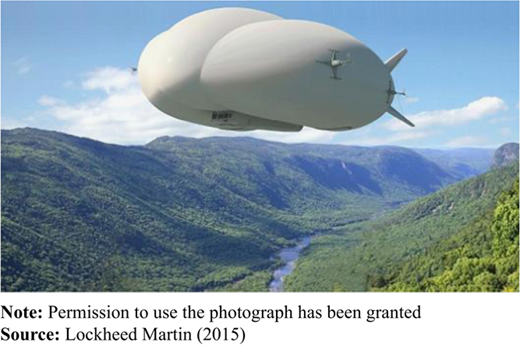
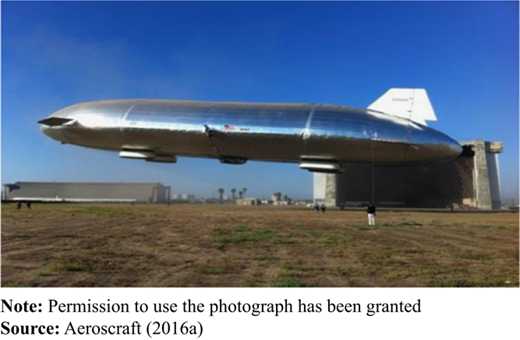
A number of prototypes of such hybrid airships (e.g. Lockheed Martin’s P-791) have already flown, but improved models are now under development with “in service” dates over the next five years being reported. For example, the LMH-1 aims to become certified by the US Federal Aviation Administration (FAA) by the end of 2017, with delivery of the first airships in 2018 (Laskas, 2016). Table II, which mainly reflects the data provided on the websites of the relevant companies, offers a summary of the emerging capabilities, but it will be noted that the full range of data are not available in respect of every HCA.
A more detailed summary of the status of the various HCAs that are under development can be found in the work of Laskas (2016) but, as Table II clearly demonstrates, the payload and cargo volume of the largest planned HCA (ML868) is significantly greater than those of current heavy lift cargo aircraft such as the Boeing 747F series which can carry 140 MT in a hold of 736 m3 (Boeing, 2016). On the other hand, the HCA transit speed is much slower (185 kph vs 920 kph). The resultant speed/time/distance implications will be discussed in Section 6, and the cost implications in Section 7.
In addition to their significant capacity, it should also be noted that it is entirely feasible for an HCA to land on an appropriately sized flat (or near flat) area – including on water, gravel, sand or swamp (Gray, 2016) – and then taxi to a loading/unloading area which has a smaller footprint than the required landing zone. Thus, for example, it is potentially possible for the HCA to land at sea and then taxi to the shore line where the cargo can be unloaded directly onto a beach or dockside. By the same token, the take-off zone does not need to be an airfield or equivalent prepared space.
Furthermore, not only do HCAs have the potential to launch from a location close to the regional warehouse and deliver in the vicinity of the final destination, but they would also achieve this in a very environmentally friendly way. For example, the International Air Transport Association (IATA) (which is the trade association for airlines) suggests that “airships produce 80-90 per cent fewer emissions than conventional aircraft” (Air Cargo News, 2010, p. 1).
On the other hand, the use of HCAs would also involve overcoming a number of negative aspects. First, a major limiting factor of HCA operations is that of altitude. As they utilise buoyancy (static lift) to obtain the majority of their lift, their load capacity will decrease as altitude increases (Knotts, 2012) and, as a result, their optimum operating altitude is quite low at around 1,000 m (3,000 ft). In effect, therefore, the payload weights indicated in Table II relate to the optimum altitude. That said, the
LMH-1 can operate up to 3,000 m (10,000 ft) and the ML866/8 up to 4,000 m (12,000 ft), although the ability of an HCA to support a logistic response in a high altitude location may be constrained.
Second, as indicated above, the physical size of the HCAs and, hence, their take-off and landing areas, is significant. In the case of the LMH-1, it can operate in full VTOL mode with a land/launch circle of 150 m (500 ft) in diameter, in other words approximately double its overall length. However, this mode of operation will reduce its payload by an estimated 25-33 per cent. Alternatively, it can use a mixed mode of forward plus vertical movement (i.e. similar to a fixed wing aircraft) in which case a take-off/landing area 762 m (2,500 ft)×243 m (800 ft) is required to meet FAA requirements (Lockheed Martin, 2016). However, in a disaster situation, it is likely that a much smaller area (approximately half this size) could be used. In the case of the ML868 which only operates in VTOL mode, a circular area with a diameter of some 360 m (1,200 ft) is required for both take-off and landing.
As an alternative, the use of underslung loads is under consideration by the manufacturers of the LMH-1, however, this would reduce the payload to some 6 MT and operations would need to avoid strong wind conditions. However, such an approach has the clear benefit of obviating the need for a landing area.
Finally, and self-evidently, the wind strength and direction will affect the operation of an HCA, with the cruising speed indicated in Table II being positively or negatively impacted by the prevailing wind. However, as noted by Prentice et al. (2004a, p. 4), “with good information and experienced pilots, the wind could be managed to advantage”.
This observation reflects the fact that HCAs will operate with a suite of electronics to ensure the most efficient flight plan and this will almost certainly include a weather radar. This, together with weather prediction advice that can be transmitted in real time from the HCA’s base, should help ensure an optimal course. By virtue of their slow speed and advanced electronic suite, they can also safely operate in low visibility conditions.
Having provided a summary of the capabilities of the emerging generation of HCAs, the next section of the paper will provide an overview of three recent disasters where it is perceived that the use of HCAs would have offered considerable benefits to the humanitarian logistician.
6. Exemplar disasters
In the following sections, each of the three disasters (Typhoon Haiyan; Nepal earthquake and Cyclone Winston) will be described, and then the potential use of an HCA will be evaluated against the reported mass/volume movements of relief goods. Two scenarios are offered. In the first, the HCA will replace the transport of cargo from the international point of arrival to the disaster location. In the second, it is assumed that all the international relief cargo emanated from the UNHRD in Kuala Lumpur, and that the HCA would replace the resultant fixed wing transport flights but, again, deliver directly to the disaster location.
The use of a single ML868 HCA is modelled in each case as this airship is perceived to be the most capable and relevant to the emerging generation of HL tasks. Self-evidently, were more HCAs to be available, the response timelines would be reduced, but the cost would increase and, as a first approximation, this would reflect a simple linear relationship. However, it is believed to be premature to attempt a multi-platform analysis given the relative immaturity of the core data.
In addition, it will be appreciated that unlike the ready availability of cargo aircraft, the small world fleet size of HCAs is likely to result in a delay before one can be made available. Thus a 48 hours period has been included in the analysis of the use of HCAs in order to reflect the need to re-position an airship to the disaster location. This assumption is discussed in greater detail in Section 6.6.
6.1 Typhoon Haiyan (Yolanda) – The Philippines: November 2013
Typhoon Haiyan (known locally as Yolanda) was one of the strongest typhoons ever to be recorded and the deadliest to strike the Philippines in modern history, with winds gusting close to 315 kph (200 mph). It resulted in the death of over 6,300 people with a further 11 million affected, many of whom were made homeless. The main area of the country impacted by the typhoon was the Eastern Visayas, and in particular the island of Leyte and the regional capital of Tacloban.
The first warnings of an impending major wind event were broadcast on 2nd November by the Joint Typhoon Warning Center, and over the following days these were upgraded until it was formally given Typhoon status on 4th November. It reached Category 5 on the Saffir-Simpson scale (the highest level) on 6th November before making landfall on the evening of 7th November at about the same time that the typhoon reached its peak intensity. In addition to the extremely heavy rainfall, the high winds resulted in a 4 m (13 ft) storm surge that impacted both the coastal regions as well as the city of Tacloban itself (Harris, 2013).
Although Typhoons are a relatively common occurrence in this region of the world, Haiyan was particularly devastating as it not only impacted a heavily populated area, but the combination of the wind and the storm surge resulted in enormous destruction. Following an overflight of the area four days after the typhoon struck, US Marine Brigadier General Paul Kennedy stated that “I don’t believe there is a single structure that is not destroyed or severely damaged in some way. Every single building, every single house” (Kuhn and Cornish, 2013, p. 1). Almost inevitably, the aftermath of the disaster also saw an outbreak of looting as those who survived attempted to obtain food, etc. from shops and stores.
Although Tacloban has an airfield, after the typhoon struck this was only available for use by light aircraft and military aircraft. Thus inbound supplies had to be transported by one of two main routes. The first was via the national capital (Manila) with a 1.5-2.5 day transit by truck and ferry to the northern end of the island of Leyte, and then overland to Tacloban. The alternative was via the neighbouring provincial capital of Cebu where the international airport remained operational. This route required the use of a truck to Cebu port, then a five hour ferry journey to Ormoc, and a further 100 km journey to Tacloban that was only accessible to light vehicles (Logcluster (United Nations Logistics Cluster), 2013a, b).
Through an analysis of the reports from the United Nations Logistics Cluster which recorded movements across multiple responding agencies (Logcluster (United Nations Logistics Cluster), 2013c), by Day 29 the following mass/volumes of material had been transported:
4,400 MT/9,350 m3 of relief cargo to Tacloban by sea/air transport from Cebu.
A further 2,140 m3 of inter-agency cargo was transported on military assets. The mass of this cargo was not reported, but has been assumed to be some 1,000 MT (based on the above mass:volume ratio).
6.1.1 Options for use of an HCA
The ML868 has the potential to operate in two separate modes:
Option A: from the international airport at Cebu to Tacloban, thereby supplementing or replacing the truck/ferry/truck route.
Option B: from a HL hub (such as the UNHRD in Kuala Lumpur) directly to Tacloban.
In each case, the following assumptions are made:
The distance from Cebu to Tacloban=175 km, and from Kuala Lumpur to Tacloban=2,500 km.
Payload: ML868=225 MT (Table II).
Speed: ML868=185 kph (Table II).
Movement requirement: 4,400 MT+1,000 MT=5,400 MT. In the case of Option A, it is assumed that all cargo was routed via Cebu and, in the case of Option B, that all of the cargo emanated from the UNHRD in Kuala Lumpur. These assumptions are discussed further in Section 8.
Turnaround (load/unload) times: for the purposes of this analysis, an estimate of three hours to either load or unload the HCA is used. This estimate reflects the published turnaround time for a 140 MT Boeing 747-800 series aeroplane which takes around 90 minutes (Boeing, 2012). Thus, pro-rata, the load or unload time for the 225 MT ML868 would be some two hours. However, this time has been increased by a further one hour to reflect the reality that the equipment, etc. at the unload area will not be as sophisticated as that found at a regular cargo terminal, and also to allow for contingencies such as adverse weather conditions. On the other hand, loading/unloading the Boeing 747 requires the pallets to be raised/lowered 15 ft (5 m) between the cargo deck and the ground by special handling equipment. By comparison, in the case of the ML868 which sits on the ground, the cargo deck should be readily accessible by means of a ramp and fork lift truck.
Maintenance Times: it is assumed that any necessary unscheduled maintenance on the HCAs could be completed during the combined six hour load/unload windows, and that any scheduled maintenance could be delayed until the initial disaster response phase of some 4 weeks has been completed. The use of such a flexible time window for scheduled maintenance reflects normal practice for fixed wing aircraft and, from an analysis of the manufacturers’ websites, would appear to be the approach that is planned for HCAs.
6.1.2 Option A: Cebu to Tacloban
In the case of Option A, the trip from Cebu to Tacloban could be flown by an ML868 in one hour each way (two hours return). Thus, using conservative estimates that include three hours loading and three hours unloading, it is reasonable to assume that three round trips/24 hours could be undertaken, each carrying 225 MT, i.e. a total daily lift of 675 MT. Thus, taking into account the estimated 48 hour delay to relocate an HCA to the region (see the general assumptions above) the total lift would have been achieved by Day 10, rather than Day 29 as was the reality.
6.1.3 Option B: Kuala Lumpur to Tacloban
In the case of Option B, the flight time from Kuala Lumpur to Tacloban is some 13.5 hours, therefore, in theory, and including three hours loading and three hours unloading, the round trip would take 33 hours. Thus, movement of the total lift of 5,400 MT carried in 24 round trips would (including the two days HCA relocation window) be achieved on Day 35, rather than Day 29 as was the reality.
6.2 Nepal Earthquake – 25 April 2015
A series of extremely powerful earthquakes (and resultant landslides) struck central Nepal on 25 April 2015 and in the days thereafter. These resulted in significant devastation to both urban and rural communities, together with the deaths of over 9,000 people and injuries to a further 22,000. Whilst the impact of the disaster was widespread, this analysis will focus on the worst affected areas of Pokhara, Gorkha and the Lamjung District (Logcluster (United Nations Logistics Cluster), 2015a).
As is the case for almost all earthquakes there was, in effect, no warning prior to the disaster. As a result, the initial event (magnitude 7.8 on the Richter scale, and at a relatively shallow level of 11 km (6.8 mi)), together with two major aftershocks (magnitude 6.6 and 6.7) and a second major (magnitude 7.3) earthquake on 12th May, led not only to considerable physical devastation, but also resulted in some 2.8 million people (10 per cent of the population) requiring humanitarian assistance (Montgomery, 2016). Overall, it was estimated that in excess of 500,000 homes were destroyed, and a further 280,000 damaged. In addition, water systems in hillside villages were severely impacted, whilst terraced farms (and the associated livestock) were, in many cases, wiped out (Montgomery, 2016).
As a result of the disaster, the facilities at Kathmandu airport were placed under severe pressure, not least because it normally handles a relatively light traffic load – for example, there are only nine aircraft parking slots. In addition, Kathmandu is the country’s only international airport and, hence, the only airport location where customs clearance facilities were in place. As a result, a significant amount of relief aid was routed via Kolkata and trucked overland from there – albeit this route also encountered significant challenges including those of obtaining cross-border customs clearance (Logcluster (United Nations Logistics Cluster), 2015b).
As in the previous cases, the cargo weight/volume data have been extracted from the Logistics Cluster Database and this shows that by 31st May (Day 36) 4,623 MT (16,200 m3) had been transferred via Kathmandu since the start of the response operation (Logcluster (United Nations Logistics Cluster), 2015c).
6.2.1 Options for use of an HCA
Whilst Table II provides an overview of the capabilities of the emerging generation of HCAs, and the exemplar ML868 in particular, the impact of the operating altitude needs to be taken into consideration in the case of the response to the Nepal earthquake. Whilst the need to operate at up to 1,750 m (5,750 ft) would have resulted in reduced performance, it is highly likely that the full capacity of 225 MT could continue to be transported by means of an increased engine output to compensate for the reduction in lift from the helium gas. Nevertheless, in line with the conservative assumptions used in this paper an 11 per cent reduction in cargo capacity of 25 MT will be used in this exemplar.
A further key assumption in this particular disaster is the availability of sufficient landing space at each destination location. This may not have been the case, although from the personal experience of one of the authors who visited the affected region prior to the earthquake, a number of potential sites such as sports pitches and roadways could have been made available.
As before, two options are considered:
Option A: from Kathmandu to Gorkha, thereby supplementing or replacing the truck route.
Option B: from a HL hub (such as the UNHRD in Kuala Lumpur) directly to Gorkha.
In each case, the following assumptions are made:
The distance from Kathmandu to Gorkha=100 km; Kuala Lumpur to Gorkha=3,500 km.
Payload: ML868=200 MT (see above).
Speed: ML868=185 kph (Table II).
Movement requirement: 4,623 MT. In the case of Option A, it is assumed that all cargo was routed via Kathmandu and, in the case of Option B, that all of the cargo emanated from the UNHRD in Kuala Lumpur. These assumptions are discussed further in Section 8.
6.2.2 Option A: Kathmandu to Gorkha
In the case of Option A, the trip from Kathmandu to Gorkha could be flown by an ML868 in around 0.5 hours each way (1.0 hours return). Thus, using conservative estimates to take into account three hours loading and three hours unloading times, it is reasonable to assume that three round trips/24 hours could be undertaken, each carrying 200 MT, i.e. a total daily lift of 600 MT. Therefore, taking into account the two day HCA relocation assumption, the total lift would have been achieved by Day 10, rather than Day 36 as was the reality.
6.2.3 Option B: Kuala Lumpur to Gorkha
In the case of Option B, the flight time from Kuala Lumpur to Gorkha is some 19.5 hours, therefore, in theory, and including three hours loading and three hours unloading, the round trip would take 45 hours. Thus, movement of the total lift of 4,623 carried in 24 round trips would (including HCA relocation time) be achieved on Day 47, rather than Day 36 as was the reality.
6.3 Cyclone Winston – Fiji: 20 February 2016
Fiji is a nation of two major and over 110 smaller inhabited islands covering a total land area of 18,300 sq km (7,100 sq mi). Cyclone Winston first began to develop on 11 February 2016 between Vanuatu and Fiji and started to travel in a South Easterly direction before turning North East and passing between the Fiji’s Western islands (the Lau Group) and Tonga on 16th February. It then turned back westwards towards Fiji and grew in strength before crossing the northern islands in the Lau Group on 19th February and then travelling between the two main (and most populated) islands of Vanua Levu and Viti Levu over the next 24 hours. The wind strengths as Winston crossed the nation were recorded at 260-270 kph (160-165 mph) making this the most powerful recorded cyclone to strike the country.
Unsurprisingly the resulting devastation was enormous, especially in the Lau Group of islands that received a “direct hit”. The impact of the cyclone resulted in a death toll of 42, and over 55,000 people (15 per cent of the population) had to take shelter in 800 evacuation centres and schools, with the damage to properties and infrastructure estimated to cost in excess of US$1Bn. A further complicating factor was that the cyclone damaged or destroyed much of the communications systems including the aerial on the island of Mago that serves the Lau Group of islands (Radio New Zealand, 2016).
Given the uncertainty in direction of the cyclone’s travel – would it turn to the North and West and strike Fiji, or to the South and East and hit Tonga? – there is no indication of any major attempt to evacuate the islands that were in danger. This is unsurprising as only a few have light air strips, and thus sea transport would have been the only possible transport medium. However, this would have been extremely vulnerable to the impact of the extremely rough seas that are an inevitable feature of such high strength wind events. Thus, the advice from the Fijian National Disaster Management Organisation was that individuals and communities should make every effort to secure their houses and to try to avoid the worst of the typhoon’s impact (United Nations Office for the Coordination of Humanitarian Affairs, 2016a). As a result, five days after the disaster, the Government of Fiji estimated that some 350,000 people (or some 40 per cent of the population) could have been affected, with the damage to crops (including total destruction in the worst affected areas) being estimated at US$61 M (United Nations Office for the Coordination of Humanitarian Affairs, 2016b).
In the aftermath of the cyclone, some initial analysis of its impact was obtained by means of a Royal New Zealand Air Force Orion reconnaissance aircraft, although this was limited by the considerable cloud cover. As a result, the majority of the relief response was undertaken by means of coastal shipping that was despatched initially on a “push” basis in which the cargo manifests represented a best estimate of the likely requirements (such as tarpaulins, water purification equipment, bedding and washing facilities). Thereafter, once the impact had clarified, further loads were despatched – again almost all by ship – but on a more targeted “pull” basis. Unfortunately, however, it has not been possible to ascertain the cost of the shipping that was used.
As in the previous cases, the data have been extracted from the Logistics Cluster Database and this shows that by 22nd March (Day 49) 1,068 MT had been transferred via Suva to the affected areas since the start of the response operation (Logcluster (United Nations Logistics Cluster), 2016).
6.3.1 Options for use of an HCA
Using, as before, the ML868 as an exemplar, two options are considered:
Option A: from Suva the Lau Group, thereby supplementing or replacing the truck/ferry/truck route.
Option B: from a HL hub (such as the UNHRD in Kuala Lumpur) to the Lau Group.
In each case, the following assumptions are made:
The average distance from Suva to the Lau Group of islands=300 km; the distance from Kuala Lumpur to Lau Group=9,000 km.
Payload: ML868=225 MT (Table II).
Speed: ML868=185 kph (Table II).
Movement requirement: 1,070 MT. In the case of Option A, it is assumed that all cargo was routed via Suva and, in the case of Option B, that all of the cargo emanated from the UNHRD in Kuala Lumpur. These assumptions are discussed further in Section 8.
6.3.2 Option A: Suva to Lau Group
In the case of Option A, the trip from Suva to the Lau Group could be flown by an ML868 in two hours each way (four hours return). Thus, using conservative estimates to take into account three hours loading and three hours unloading times, it is reasonable to assume that two round trips/24 hours could be undertaken, each carrying 225 MT, i.e. a total daily lift of 450 MT. Therefore, including a two day HCA relocation time, the total lift would have been achieved by Day 5, rather than Day 49 as was the reality.
6.3.3 Option B: Kuala Lumpur to Lau Group
In the case of Option B, the flight time from Kuala Lumpur to the Lau Group is some 49 hours, therefore, in theory, and including three hours loading and three hours unloading, the round trip would take 104 hours. Thus, including the two day HCA relocation time, the movement of the total lift of 1,070 MT carried in five round trips would be achieved on Day 24 rather than Day 49 as was the reality.
6.4 Summary of the responses
Table III provides a summary of the above data, where Option A reflects the use of HCAs to transport from a local international airport to the affected area, and Option B from the UNHRD in Kuala Lumpur to the affected area.
6.5 Potential operating limitations
In developing the above analysis, a number of assumptions related to the capability of an HCA have been made, and these have been developed from the relatively limited publicly available information in respect of the operation of these airships. These will be summarised in this section.
First, it has been assumed that the ML868 HCA will not be constrained by the high wind speeds that were present in the case of Typhoon Haiyan and Cyclone Winston. The rationale is two-fold:
The ability of the HCA to increase its speed from cruise (185 kph) to maximum (222 kph) would overcome most head wind conditions, albeit at the cost of greater fuel consumption which would, in turn, impact the HCA’s range. However, given the comparatively low HCA operating altitudes, it is likely to experience only near ground head wind speeds, which are significantly less than those at higher altitudes.
As will be discussed in greater detail in Section 8, it is not anticipated that the HCA would operate in the immediate aftermath of the disaster. Rather that it would – in the same way as the arrival of the majority of the fixed wing aircraft re-supply flights – operate in the period D+5→D+30. Thus the wind speeds would, by then, have reduced to near normal levels.
More broadly, the most likely first market for HCAs is operating in remote hostile environments such as the Canadian arctic (Prentice, 2015), and the emerging generation of HCAs has been designed with this in mind. It can, therefore, be assumed that icing conditions and low visibility will either not impact operations, or will do so to a significantly lesser extent than cargo aircraft or even helicopters. Thus, in general terms and as stated by one manufacturer, HCAs will, at a minimum, be able to operate in similar weather conditions to cargo aircraft. In reality, therefore, the most likely limiting factor will be the requirements placed on them by safety regulators. As an example, and as indicated in Section 5, the LMH-1 can actually land in half the distance that is prescribed by the FAA.
Second, it will be recognised that when responding to a disaster, HCAs may be subject to attack by armed groups or even mindless vandalism. However, given the nature of HCAs which use high strength materials and inert helium gas for lift, and which fly at low altitude and, therefore, generally do not need pressurised compartments, they are actually safer to operate than modern fixed wing aircraft in both normal conditions and conflict situations.
For example, unlike a pressurised aircraft, holes/tears in the skin of an HCA do not cause a catastrophic failure, and should a small rip take place it is likely the HCA could continue operations for several days in most circumstances. In addition, HCAs have the potential to deploy self-sealing methods. In the case of Aeroscraft HCAs, it is reported that a system of “sticky balls” has been developed. In the event of a puncture, these are released from inside the helium envelope and are then transported to the damaged area by the force of the escaping gas, thereby plugging the hole (Evans, 2008). For the LMH-1, Lockheed Martin has developed an autonomous robot designated the “Self-Propelled Instruments for Damage Evaluation and Repair” which moves around the skin of the airship and detects and repairs any holes (Ackerman, 2016).
Furthermore, as HCAs derive the majority of their lift from the helium gas, the loss of an engine presents less of a challenge than for aircraft – especially in the case of helicopters where a sudden engine failure has a high chance of resulting in a catastrophic crash. Under such circumstances, an HCA would obviously lose manoeuvrability, but given the number of control surfaces that it utilises and, in the case of the LMH-1, the presence a fly-by-wire technology developed for the Joint Strike Fighter programme, it would be able to quickly adapt to major changes such as the loss of an engine or a controlling flap (Els, 2016).
More broadly the three HCAs summarised in Table II (the Lockheed Martin LMH-1, HAV and Aeroscraft) have all been designed with military requirements and specifications in mind, and considerable thought has thus gone into their ability to survive in hostile environments (Evans, 2008; Els, 2016). For example, the strength of the materials used in the construction of their skins, and the lack of a significant pressure difference between the internal helium and the external air, reduces the potential for light weapons to achieve penetration. On the other hand, it is fully accepted that an HCA is vulnerable to heavy weapons’ fire and to surface to air missiles, but these would be just as effective against normal freighter aircraft.
6.6 Availability of HCAs
The potential use of an HCA to support the logistic response to a disaster is, of course predicated on their availability. Given that no HCAs are currently operational it is only possible to speculate on the size of the world fleet, its location and what activities they will be conducting over, say, the next five to ten years. However, based on the limited information available on the size of the various markets, which markets are to be targeted, and the timing and scale of production, a number of observations can be made.
First, it would be reasonable to expect hubs to be formed in areas near remote mining operations as these are already perceived to be key users of HCAs (Els, 2016). Therefore one could anticipate HCA hubs being located in Africa, Australia, North America, and Eastern Europe/Asia (e.g. Russia and Mongolia). From these hubs an HCA could relocate within one to two days to provide the movement requirements for Options A and B discussed above.
Second, the global fleet size is likely to be very small initially, perhaps of the order of 20-30 airships, until the capability of HCA has been demonstrated in a range of situations. Thereafter, it is entirely possible that it could grow swiftly. For example in the case of the LMH-1, Lockheed Martin are proposing an initial production of one HCA per month (Laskas, 2016). However, given its comparatively simple non-rigid construction, this could be quickly ramped up. Thus, it is not unreasonable to suggest that by the mid to late-2020s the global fleet size could reach into the hundreds (Aviation Week, 2016).
Third, at least in the early stages, the ability of governments/aid organisations to utilise an HCA is more likely to depend on whether or not they have had the foresight to negotiate and sign a suitable contract with HCA users that will provide them with priority access in the event of a disaster. A further consideration is that, given the multi-role capability of HCAs, national governments may well utilise them for activities such as search and rescue, border patrol/maritime surveillance and supply to remote locations. Assuming that this is, indeed, the case it would seem likely that such HCAs could be made swiftly available as part of a regional response to a disaster event.
In summary whilst this paper makes an unproven assumption that an HCA could be made available to provide post-disaster logistics in a timely fashion, the clear trajectory of this industry would indicate that this is likely to be valid within the next decade – and potentially significantly earlier.
7. Costs
7.1 Operational costs
Putting the potential benefits of HCAs as outlined above to one side, clearly their cost to operate must also be taken into account. Unfortunately, as noted by Mailey (2013), comparable costs between various aircraft (to say nothing of comparisons between modes) are not easy to evaluate given that there are numerous ways in which the costs/flight hour can be calculated and that there is no standardised or accepted protocol. For example, a recent Australian parliamentary investigation (APH, 2015) clearly indicated that the cost/flight hour metric was potentially over-simplistic and misleading.
Nevertheless, the data in Table IV provides some high-level estimates of the cost/metric ton-kilometre for various transport modes.
Within Table IV, the Road and Air figures are based on Australian Government data (BITRE, 2008) indexed for inflation to 2016, and converted to US$ with 1AU$=0.70US$. The HCA figures are taken from Prentice et al. (2004a) where the authors estimated that the freight rate for a 200 MT capacity HCA is US$ 0.20/MT-KM, but this has been increased to US$ 0.30/MT-KM to present a conservative comparator.
This latter figure is also aligned with a more recent observation by Prentice and Knotts (2016a, p. 3) who suggest that: “No reliable cost data exists but fuel costs are estimated at 35% to 50% of current cargo aircraft costs. Capital costs per ton of lift expectations are lower; airships do not require jet engines or pressurised structures. Moreover, airships, like ocean vessels, enjoy significant economies of size. Doubling cargo capacity less than doubles cost”. A similar estimate of a 50 per cent cost saving between HCAs and cargo aircraft was offered by Mahzan and Muhamad (2014).
The above figures reflect the fuel costs and take no account of those related to personnel and to infrastructure such as handling equipment. However, at this stage in the development of the HCAs, these latter costs cannot be realistically estimated and should, therefore, be noted as requiring more detailed consideration at a later stage.
7.1.1 Costs of Option A
Unfortunately, it has not been possible to obtain data related to the actual cost of Option A (local airport to affected area) in any of the three exemplar disasters. Nevertheless, assuming a best case analysis of US 0.06/MT-KM (i.e. the road cost), then Table V provides a high-level comparison of the cost of the alternatives. For convenience, the timelines from Table III have also been included.
Option A: cost comparison
| Event | Mass moved (MT) | Distance moved (km) | Cost by road (US$) | Cost via HCA (US$) | Moved by (day) reported | Moved by (day) HCA |
|---|---|---|---|---|---|---|
| Haiyan | 5,400 | 200 | 64,800 | 324,000 | 29 | 10 |
| Nepal | 4,623 | 100 | 28,000 | 138,690 | 36 | 10 |
| Winston | 1,070 | 300 | 19,260 | 96,300 | 49 | 5 |
In summary, therefore, the cost of the use of an HCA is approximately five times that of the conventional modes, but the time to complete the moves is between 2.9 and 9.8 times faster.
7.1.2 Costs of Option B
For simplicity, the costs of transhipment from the UNHRD to the airport will be ignored, and so the basic inter-modal comparison will be between the ML868 and a Boeing 747 F on a one-way basis (Table VI).
Option B: cost comparison
| Event | Mass moved (MT) | Distance moved (km) | Cost via cargo plane (US$) | Cost via HCA (US$) | Days taken in relief operations | Moved by (day) cargo plane | Moved by (day) HCA |
|---|---|---|---|---|---|---|---|
| Haiyan | 5,400 | 2,500 | 15,120,000 | 4,050,000 | 29 | 20 | 35 |
| Nepal | 4,623 | 3,500 | 18,122,160 | 4,854,000 | 36 | 20 | 47 |
| Winston | 1,070 | 9,000 | 10,785,600 | 2,889,000 | 49 | 9 | 24 |
In summary, therefore, the use of an HCA under Option B is some 3.75 times cheaper than cargo aircraft. In terms of the time taken to deliver the relevant tonnage, the use of an HCA was broadly similar to the reported timeline for Haiyan, rather longer for Nepal as a result of the higher operating altitude, but considerably faster than the Winston case.
7.1.3 Summary of operating costs
Overall, it is clear from the above comparisons that reliance on a single mode of transport is unlikely to produce the most efficient, effective and flexible response. In the case of Option A, the HCA produces a swifter response, but is also significantly more expensive – albeit this reflects the relative cheapness of road transport and is this at a much smaller scale. In the case of Option B, the use of cargo planes leads to a speedy response, but the cost is extremely high at some US$400,000 per flight and there is no guarantee that a suitable airport will be accessible in the vicinity of the disaster’s epicentre. On the other hand, the use of HCAs, although cheaper at some US$175,000 per flight and with greater inherent flexibility, would result in most cases, in a longer timeframe to move the relief goods than that of the cargo aircraft option.
These results unsurprisingly exemplify the classic supply chain efficiency vs effectiveness vs flexibility conundrum which has challenged multiple organisations over the years. However, arguably, the benefits of the delivery modes can be leveraged appropriately through a mixed-mode response approach. For example, in the case of Option B, cargo aircraft could be used for the initial response, with HCAs providing the longer term heavy lift. Given the relatively small number of HCAs that will be available at least in the short term, such an approach would also assist in the process of re-locating one to the disaster area.
7.2 Capital costs
As in the case of the operational costs summarised above, a degree of caution must be exercised when considering the capital costs of both HCAs and freighter aircraft. Unfortunately, the capital cost of the ML series of HCAs has not been ascertained, therefore a simplistic multiplication of the cost for a given payload of the LMH-1 has been adopted. In doing so, it is fully accepted that the resultant calculation represents a general “order of magnitude” estimate for a number of reasons. First, the capital cost of the non-rigid LMH-1 is likely to be, pro-rata, cheaper than the Aeroscraft which utilises a more complex and expensive rigid design. On the other hand, economies of scale are likely to occur with the capital cost/MT of cargo capacity being less for the larger aircraft (Table VII).
Capital cost comparison
| Aircraft | Payload (MT) | Cost (US$M) | Source |
|---|---|---|---|
| LMH-1 | 21 | 40 | Wells (2016) |
| Boeing 747 F | 140 | 358 | Ausick (2014) |
| ML866 | 60 | 120 | See above |
| ML868 | 225 | 430 | See above |
Overall, therefore, the broad order capital cost figure for the HCAs (based on the LMH-1 data) is some US$2M/MT of lift, and this can be compared with the equivalent for a fixed wing freighter of around US$2.5M/MT.
8. Operationalising the potential use of HCAs
Clearly the two scenarios that have been discussed (Option A – a short distance that replaces ship/truck transport; Option B – a long distance replacing cargo aircraft) represent two extremes in which the operational benefits differ. Under Option A, there is a clear speed advantage which, in the aftermath of a disaster, is frequently the driver. For example, Gattorna (2015, p. 339) observes that “Speed, speed, and more speed is the name of the game”, and that, by implication, cost is a secondary consideration. That said, the cost advantages of Option B (with a saving of some 75 per cent) would clearly place the use of HCAs as a viable option, especially if this is combined with a speed advantage (as in the Cyclone Winston example).
However, it will also be recognised that the above analysis assumes that all of the inbound material is transferred via one airport (Option A), and from the UNHRD (Option B). Clearly in practice this may not be the case. For example, in the case of Option B, individual organisations may use their own regional warehouses and/or supplies may be sourced from nationally operated warehouses such as those of the Australian Department of Foreign Affairs and Trade (DFAT). These are located in Brisbane, Jakarta (Indonesia), and Lae and Port Moresby (Papua New Guinea), and their use instead of the UNHRD would clearly alter the cost vs time calculation.
Clearly multiple other combinations of departure/arrival location could be contemplated, and it may well be that if the use of HCAs becomes a reality in the next decade or so, the UNHRD (and other organisations such as DFAT) may need to reconsider the locations of their warehouses so that the benefits of an HCA are leveraged.
A further point is that the analysis assumes the presence of an HCA (or HCAs) in the affected region that can be made available at short notice via, for example, a pre-negotiated contract. However, even if such an arrangement is in place, there is likely to be a time lag before an HCA can be physically moved to the desired location. Assuming this to be true then, as discussed in Section 7.1, the use of HCAs in the second wave of the response would allow them to be re-located ready for operations in slightly slower time.
In addition, especially in the case of Option A, the capabilities of an HCA – for example, their ability to land on a variety of terrains including on water (rather than being constrained by the existence of an airfield) – clearly has significant benefit in a context where flexibility is key (Gattorna, 2015).
It is also recognised that much of the data used to support the analysis is based on figures provided by the manufacturers and, as such, may prove to be inaccurate given that the HCAs themselves have yet to be constructed. On the other hand, the emerging generation of HCAs may prove to be the pathfinders of a new mode of transport and one could envision a number of ways in which the basic model outlined above might be improved.
For example, Prentice et al. (2005) suggest that, at least in part, the power needed by the HCA could be supplied by photo-voltaic cells placed on the upper surfaces in a similar way to that used to power the “Solar Impulse” aeroplane in its recent circumnavigation of the globe (Solar Impulse, 2016). Other improvements could also include remote piloting as has already been implemented and demonstrated in the Airlander 10 under its previous incarnation as part of the US Army Long Endurance Multi-Intelligence Vehicle programme (Judson, 2016), with fully autonomous operations being, perhaps, an eventual goal.
Given their ability to land on less than ideal terrain or on water, HCAs such as the LMH-1 which is designed to carry 21 MT and 19 passengers could also be optimised to act as an air ambulance as suggested by Prentice et al. (2009). Indeed such concept a appears to be already under consideration with a memorandum of understanding having recently been signed between Straightline Aviation (the first customer for the Lockheed Martin LMH-1) and “RAD-AID”. This latter organisation aims to deliver “radiology health services, diagnostic medical imaging equipment, and medical assistance to populations that are medically underserved, remote, or limited by poor access to conventional transportation infrastructure” (PRNewsWire, 2016, p. 1). In effect, such an approach would utilise the combined cargo and personnel carrying capacity of the LMH-1 HCA to provide a “fly in/fly out” field hospital. It is also possible that HCAs could be further developed to provide a “flying hospital” complete with an operating theatre as envisaged by Ramlingam et al. (2016), although this is clearly very much a conceptual suggestion at this stage.
Yet another long-term potential use might be for the HCA to act as a launch and recovery station for Remotely Piloted Aircraft Systems (RPAS) (otherwise known as Drones or Unmanned Aerial Vehicles). The benefits of the use of RPAS in a humanitarian context have been summarised by Tatham et al. (2016a), particularly in respect of their ability to improve the “Needs Assessment” and route reconnaissance processes. Whilst this suggestion might appear somewhat fanciful, it is relevant to note that in 2014 Amazon filed patent papers for “airship fulfilment centres” that are described as “giant airships […] that could be stationed above metropolitan areas and used to store and quickly deliver items at times of high demand, using drones dispatched directly from the airship” (Press Association, 2016, p. 1). Clearly such a development is unlikely to crystallise in the near term, but it reflects the potentially game-changing nature of HCAs – especially if/when integrated with other emerging technologies.
A further, and more realistic, short-term opportunity for the use of HCAs reflects their potential ability to carry internal or external over-size/over-mass loads (Neal, 2016). For example, in the case of Cyclone Winston, the local cell phone tower was completely destroyed and, thus, using an HCA to fly in a replacement has huge potential to achieve a swifter restoration of these vital services. More broadly, the carrying capacity of an HCA at some 135 m3/MT vastly exceeds that of a Boeing freighter at 5 m3/MT, thus the HCA has the potential to transport large volumes of lighter weight supplies.
9. Conclusions
The aim of this conceptual paper was to examine the benefits and challenges of the operation of the emerging generation of HCAs in support of the humanitarian logistician. This has been achieved by offering a broad order cost/time comparison between the use of an HCA and the recorded response that took place in the aftermath of a number of recent natural disasters.
Clearly, the use of such HCAs is predicated on their successful migration from the drawing board to an operational reality, as well as the development of suitable processes (such as pre-arranged contractual arrangements) that would enable their inclusion as part of an integrated range of responses available to the humanitarian logistician. In this regard, the potential use of an HCA will need to reflect the optimal speed/time/distance/cost balance that is appropriate in the circumstances of a particular disaster event.
However, it is also clear that there is no unique solution to the problem of moving large quantities of relief goods at short notice and as cheaply as possible. For example, a judicious mix of fixed wing aircraft together with HCAs may prove optimum. Indeed, such a mixed-mode response could also potentially be integrated with other novel approaches such as the use of sea-basing (i.e. floating warehouses) as was explored by Tatham et al. (2016b).
Nor, indeed, should the choice of routes be limited to the relatively straight-forward examples discussed in Section 6. For example, rather than flying the HCA under Option B (directly from an UNHRD to the disaster location), it could be routed via an unaffected nation in order to pick up some of the relief goods. Thus, in the case of Cyclone Winston (and, indeed other disasters in the South Pacific such as Cyclone Pam that severely impacted the islands of the Tafea Province of Vanuatu in March 2015), an HCA could fly via Brisbane and upload stock from the Australian government’s warehouse located there.
Similarly, as indicated earlier, in the case of the response to the Nepal earthquake significant use was made of the overland route from Kolkata (in addition to direct flights of relief supplies into Kathmandu). However, the Logistic Cluster reports indicate that this 1,000 km (620 mi) route was actually taking seven to ten days (Logcluster (United Nations Logistics Cluster), 2015c). Thus, an alternative approach might be to employ an HCA to support the transport of relief supplies from Kolkata either to Kathmandu or directly to the affected region.
In summary, it is argued that HCAs present the humanitarian logistician with a mode of transportation that has the potential to provide a significant enhancement to the existing means of responding to a disaster by, in particular, overcoming the traditional challenges posed by supply chain choke points and disruptions to infrastructure. However, as indicated, this assertion reflects the current stage of HCA development, and the authors’ assessment of the broad range of assumptions that have been highlighted in this paper.
Nevertheless, particularly if the use of an HCA can be fully integrated with appropriate fixed wing, helicopter, truck and sea-based responses, its inherent flexibility in terms of both payloads and take-off/landing locations, clearly underlines its potential as a HL game changer.

