Following a large-scale disaster, medical assistance is a critical component of the emergency response. The paper aims to discuss this issue.
Academic and practitioner literature is used to develop a framework studying the effectiveness of the humanitarian medical supply chain (HMSC). The framework is validated by using the findings of interviews conducted with experts and the case study of a serious humanitarian medical crisis (Ebola outbreak in 2014).
The factors affecting the effectiveness of the HMSC are identified.
To get an expert opinion on the major logistical challenges of the medical assistance in emergencies only 11 interviews with practitioners were conducted.
While the existing academic literature discusses the distribution of various supplies needed by the affected population, limited research focuses specifically on studying the HMSC aspect of the response. This paper closes this gap by describing the HMSC in the case of disaster response, and identifying the factors affecting its effectiveness, especially focusing on the factors that are unique to the medical aspect of the humanitarian supply chain.
1. Introduction
In a large humanitarian disaster such as earthquake, hurricane, flood and others, the humanitarian response consists of multiple stages and facets of operation (e.g. initial assessment, search and rescue, food and water distribution). The existing academic literature primarily focuses on the distribution of various supplies needed by the affected population. However, little work is done specifically studying the humanitarian medical supply chain (HMSC) aspect of the response. In this paper we close this gap by describing the HMSC in the case of disaster response, and identifying the factors affecting its effectiveness, especially focusing on the factors that are unique to the medical aspect of the humanitarian supply chain.
We focus our study on the medical response to a large disaster (initiated by a non-medical event) where the medical aspect of the response is secondary or as a result of the larger humanitarian disaster, such as earthquake, flood, etc. In such cases, medical response is only part of the relief operation. We intentionally distinguish disaster from a large-scale medical emergency or medical crisis (e.g. wide spread of an infectious disease, such as Ebola outbreak in 2014), where the medical aspect of the response is the primary operation. We observe that the existing literature studying supply chain in a post-disaster setting primarily focuses on generic aspects of the response, overlooking the unique characteristics of a medical supply chain (MSC). On the other hand, the academic literature that studies medical crises concentrates on the MSC that is developed and operated mainly by the public sector (for example government) associated with setting up and supporting healthcare infrastructure, such as temporary hospitals. In this paper, we contribute to the former bodies of literature by studying the HMSC and the corresponding factors that affect its effectiveness in a disaster response setting where the government’s role is not so strong and humanitarian organizations are obliged to take the lead.
1.1 Related work
A significant amount of research exists in humanitarian logistics field; the reader is referred to the recent reviews on humanitarian logistics of Overstreet et al. (2011), Kunz and Reiner (2012), Caunhye et al. (2012), Ortuno et al. (2013), Galindo and Batta (2013), Leiras et al. (2014), Hoyos et al. (2015) and Suriani et al. (2016). While the existing work captures various components of the post-disaster relief process, the humanitarian literature studying supply chain in a post-disaster setting primarily focuses on non-medical aspects of the response. The few exceptions that look on the HMSC highlight the importance of medical assistance for the survival of the victims and look at it more from the public sector (e.g. government) perspective as the main stakeholder developing and operating the HMSC.
Celik et al. (2012) discuss hospital assignments, vehicle routes and capacity utilization as healthcare disaster response topics. The authors present a health service model developed for the sudden-onset disasters to analyze the effectiveness of medical response. Liu et al. (2011) addressed vehicle routing and assignment of victims to hospitals in case of terrorist attacks. Their objective is to maximize the effectiveness of medical response taking into consideration individual hospital capacity. Yi and Özdamar (2007) developed a location–distribution model to study medical logistics in case of disaster response focusing on minimizing transportation delay of the wounded people. Ruan et al. (2014) also developed a location–distribution model by focusing on disaster response situations where helicopters transport medical commodities to temporary distribution centers and then vehicles deliver these commodities to medical aid distribution points.
Jia et al. (2007) developed a facility location model of national medical services for large-scale emergencies characterized by sudden and tremendous demand for the services. Mete and Zabinsky (2010) focused on the warehouses by planning the storage and distribution of medical commodities in case of emergency, while looking at areas vulnerable to earthquakes. The authors also discussed the importance of vulnerability of the existing transportation system. Their model can be used during the preparedness and the response phases of the medical supplies distribution.
1.2 Contributions
The contributions of this paper are as follows. In Section 2, we describe the HMSC, including different stages of the supply chain and the stakeholders that play role in the HMSC. Based on the academic and practitioner literature, we identify the factors affecting HMSC in the case of a disaster response (Section 3). We then validate the identified factors by conducting interviews with field experts and expand the list (Section 4). In Section 5, we further validate factors affecting the HMSC by relating our findings to a serious humanitarian medical crisis – Ebola outbreak in 2014, which was discussed in details by our interview participants as a contemporary example of the HMSC challenges. Finally, in Section 6 we discuss how research community can improve operational systems by tackling these factors and conclude the paper with Section 7.
2. HMSC in disaster response
Humanitarian logistics is an integral component of disaster response and is used to deliver goods and services to the beneficiaries in cases of long-term development programs, as well as during humanitarian response (Besiou et al., 2011). Immediately following a disaster, medical assistance is critical for the survival of the victims (Kovacs and Spens, 2007; Fritz Institute, 2011; The Sphere Project, 2011), and the injuries and illnesses resulting from the disaster need to be resolved quickly (Morris, 2010). During the later stages of disaster response infectious diseases may also arise, such as diarrhea or respiratory problems, due to the bad living conditions. In this section, we present an overview of the HMSC and highlight its major stakeholders that have to work together to achieve effective operations. It is worth noting that for simplicity the existing literature typically assumes that supply chain operations benefit from the presence of a central authority overseeing the entire process and employ centralized supply chain approach (Campbell et al., 2008; Regnier, 2008; Tamura et al., 2000; Taskin and Lodree 2010). In most of the disaster response settings, however, the government or local authorities of the affected region are overwhelmed and are not fully capable to play the role of a relief supply chain coordinator, resulting in a decentralized supply chain (Van Wassenhove, 2006; Dolinskaya et al., 2011; Besiou et al., 2014; Bhattacharya et al., 2014). Decentralized supply chains are not limited to the humanitarian context and also occur in commercial operations (Zanjirani Farahani et al., 2014). The reader is referred to a review of designing robust supply chain networks by Klibi et al. (2010) for more information.
Figure 1 illustrates a stylized form of a typically decentralized HMSC and its important stakeholders. Manufacturers, such as GSK, Pfizer, Aventis and Hartmann, play a key role in HMSC as producers and suppliers of healthcare goods. For example, pharmaceutical companies must have the certificate of Good Manufacturing Practice and meet the World Health Organization (WHO) international standards of quality in order to avoid substandard products and counterfeit (Yadav et al., 2013; Sukkar, 2015). The international humanitarian organizations (IHOs) procure the medical goods either directly from the manufacturers or from wholesalers; such goods can be surgical instruments and dressing kits, or specialized kits to treat cholera. Important wholesalers in the field are Imres, IDA Foundation and Medical Export Group. Some goods can also be procured locally depending on the capacity of the local market and the importation regulations, as well as on the quality and price requirements.
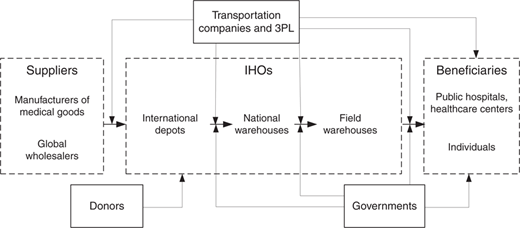
IHOs that implement medical programs, such as Doctors without Borders (Médecins Sans Frontières (MSF)), WHO and International Committee of Red Cross (ICRC), may operate multiple levels of distribution system throughout the region: international depots, national/regional warehouses and field storehouses (McGuire, 2006). Transportation companies and third-party logistics companies, such as Kuehne & Nagel, Deutsche Post Dalsey, Hillblom & Lynn and United Parcel Service, are usually in charge of moving goods through various levels of the supply chain.
Once the freights with medical supplies reach the affected country, its government agencies, such as national Ministry of Health or national drug administration departments, have to approve the shipments arriving to the country and authorize IHOs’ entrance into their territory. The government is also traditionally responsible for operating public hospitals and some healthcare centers and is the one to grant access for IHOs to reach the beneficiaries (Tomasini and Van Wassenhove, 2009).
All levels of HMSC operation are supported and affected by the donors, as they are the most significant source of monetary funding and in-kind aid for the involved parties (Bogdanova, 2008; Koch et al., 2009; Oloruntoba and Gray, 2009; McGuire, 2011). Depending on the IHO and the implemented program, donors can be governments (e.g. the Norwegian or the Japanese governments), large foundations (e.g. Bill & Melinda Gates Foundation), international agencies (e.g. United States Agency for International Development (USAID), European Commission’s Humanitarian Aid and Civil Protection Department (ECHO) and Department for International Development) or individuals and private companies.
Information flow throughout the supply chain is critical to its operation, as it affects every stage and entity involved. Situational awareness reports and needs assessments are used by IHOs, government and donors to make decisions about the required response. Suppliers use information updates to anticipate the demand. Media highlights the humanitarian assistance throughout its process and is often a key player in information flow regarding the disaster and the response activities (Van Wassenhove, 2006). Media supply information and directions to victims, identify areas where governmental assistance is needed, which in turn, stimulates response from the general public in terms of donations and volunteerism, and may even assess flaws in the ongoing response (FEMA, 1999). The specifics of media communications can influence public opinion and resulting actions of donors, governmental agencies and IHOs. In the more recent disasters, activities of the conventional media outlets, such as newspaper and broadcasting agencies, have been complemented with social media (e.g. Facebook, Tweeter, Wechat and Weibo).
3. Factors affecting the HMSC
Factors affecting various stages of the MSC related to disaster response have been previously studied in literature. For example, Privett and Gonsalvez (2014) presented the findings from interviews and surveys that they conducted with global health supply chain professionals to identify pharmaceutical supply chain challenges. Hoyos et al. (2015) conducted a literature search on operations research (OR) models that have been developed to capture uncertainty in cases of disasters. Salmeron and Apte (2010) presented an optimization model to guide prepositioning and distribution of the relief assets. Tomasini and Van Wassenhove (2004) described SUMA, the humanitarian supply management system developed by the Pan American Health Organization, to help control the entire MSC.
The above are just some examples of the existing related work. Based on our extensive study of the humanitarian literature on MCSs in case of disaster response, we identify a number of factors affecting the supply chain operations and effectiveness of HMSC. Hence, Figure 2 does not arise from a single literature source but rather combines factors and interactions merged from multiple sources. Here, we do not discriminate in the inclusion of the factors found in literature, but rather synthesize all our findings into a single comprehensive framework. In the following Sections 4 and 5, this set of factors is validated and extended. We use the definition of “effectiveness” from Kunz and Reiner (2012) as the “timely delivery of the right relief items.” We classify the factors affecting the effectiveness of HMSC into external and internal to the management of the organization, using the classification presented by Pedraza Martinez et al. (2011) of the potential factors affecting field vehicle fleet management of IHO.
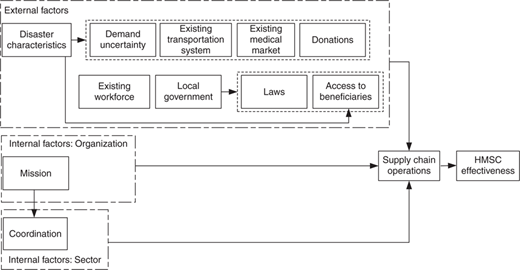
Factors affecting HMSC in disaster response as identified from the review of existing literature
Factors affecting HMSC in disaster response as identified from the review of existing literature
3.1 External factors
External factors are outside the direct control of the IHOs involved in the disaster response:
Disaster characteristics: the characteristics of a disaster impact nearly every aspect of the relief efforts. The very nature of a disaster directly affects demand, that is, what medical assistance is the most critical (Jia et al., 2007; Celik et al., 2012). For example, an earthquake often results in many wounded people, while infectious diseases are more likely to follow floods. During complex political emergencies it is often difficult to forecast demand, which depends on the war type, weapons used, intensity of the conflict and health status of the population (McGuire, 2011). The type of a disaster (e.g. flood, earthquake and hurricane) also affects the status of existing transportation systems. Moreover, in the case of sudden-onset disasters that are hard to forecast, preparedness activities are limited, so the existing medical market’s capabilities need to be quickly assessed and lacking medical supplies need to be externally procured as quickly as possible (Jia et al., 2007; Liu et al., 2011; Celik et al., 2012). Such disasters also typically receive more media attention, which drives donations up (Celik et al., 2012).
Demand uncertainty: demand uncertainty is a major issue impacting the effectiveness of the MSC (Whybark, 2007; Yadav et al., 2010; Privett and Gonsalvez, 2014; Ruan et al., 2014; Hoyos et al., 2015). Unreliable assessment of the population needs can create shortage of critical medical supplies, while clogging already fragile transportation system with non-essentials.
Existing transportation system: the existing transportation system determines the inventory management (Privett and Gonsalvez, 2014), the shipment visibility (Privett and Gonsalvez, 2014), the storage location, capacity and costs (Mete and Zabinsky, 2010), and the speed of the response (Ruan et al., 2014). Moreover, access to the transportation network significantly affects the effectiveness of the response (Jia et al., 2007). Often, “domestic transportation and storage capacities may be of limited quality, may have insufficient capacities, may not be (immediately) available at all and may lack the necessary expertise for handling healthcare goods” (McGuire, 2011).
Existing medical market: the nature of medical goods (i.e. their physical and chemical characteristics) commonly determines their supply requirements (McGuire, 2011). The existing medical market determines the medical supply (Salmeron and Apte, 2010; Hoyos et al., 2015), costs and shortage avoidance (Mete and Zabinsky, 2010; Privett and Gonsalvez, 2014; Boulet-Desbareau, 2016), capacity (Jia et al., 2007; Mete and Zabinsky, 2010; Liu et al. 2011; Ruan et al., 2014; Hoyos et al., 2015), location (Yi and Özdamar, 2007; Jia et al., 2007; Celik et al., 2012; Ruan et al., 2014; Hoyos et al., 2015) and congestion of the medical centers (Celik et al., 2012). The state of the medical market present within the affected region directly impacts the effectiveness of HMSCs, since IHOs have to operate within the current system, while focusing on closing the existing gaps.
Donations: Jahre and Heigh (2008) and Tomasini and Van Wassenhove (2004) established that in-kind donations hinder the response, since these goods may not match the beneficiaries’ needs or meet quality requirements. This is especially the case for medical supplies, which are subjected to higher levels of standards and regulations than other relief goods. The in-kind donations of drugs must follow the Guidelines for Medicine Donations established by the WHO. That is, all donated medicines should have a remaining shelf-life of at least one year, and the international non-proprietary name has to be included on the label. In addition, the declared value of the donations is required to be included on the documentation accompanying the shipment, and the guidelines for packaging and labeling, as well as the appropriate disposal of expired drugs, need to comply with the national regulations (WHO, 2011).
Existing workforce: the skills and availability of local medical and logistics workforce significantly impact the effectiveness of HMSC, especially since they are often a part of the local first responders (Yi and Özdamar, 2007; Salmeron and Apte, 2010; Privett and Gonsalvez, 2014). In developing countries characterized by less local expertise and opportunity for training the skills of local medical and logistics workforce can be even worse (Privett and Gonsalvez, 2014).
Local government: the preparedness of the local government and their willingness to accept external support significantly affect the effectiveness of HMSC (Tomasini and Van Wassenhove, 2009). A better prepared government usually requires less support from IHOs.
Laws: Yadav et al. (2010, 2013) identified that the production of drugs and health commodities must follow strict regulations, laws and world-wide quality standards. In this respect, specific laws apply during their importation to the country affected by a disaster (McGuire, 2011), and this process requires a great deal of collaboration with the national and local governments. For example, the importation of drugs in the Middle East, specifically in Jordan, is impossible due to regulatory constraints (Sukkar 2015).
Access to beneficiaries: in many settings, access to the affected population is controlled by the local and/or national governments (Tomasini and Van Wassenhove, 2009) especially in case of man-made disasters, such as Syrian crisis (Boulet-Desbareau, 2016). Access to beneficiaries can also be impacted by infrastructure damages caused by the disaster (e.g. flooded roads, collapsed buildings).
3.2 Internal factors
Internal factors are directly managed by the IHOs or the humanitarian aid sector:
IHO mission: IHOs have different missions and objectives from one another. For example, ICRC’s mandate is to take action in response especially to man-made emergencies and at the same time promote respect for international humanitarian law and its implementation in national law, while the United Nations Children’s Fund focuses more on the well-being of children. This plethora of missions and incentives often hinders coordination between them in case of disaster and hence the effectiveness of their response (Tomasini and Van Wassenhove, 2004).
Coordination: the HMSC is decentralized and there are multiple stakeholders with different roles and incentives. Coordination among the different stakeholders takes place at the sector level and is necessary for effective response (Tomasini and Van Wassenhove, 2004; Privett and Gonsalvez, 2014; Dolinskaya et al., 2011), for example to avoid duplication of resources and efforts.
4. Validating the factors: interviews with experts
Aiming to better understand the factors impacting the effectiveness of decentralized HMSCs in post-disaster situations, we conduct a set of interviews with field experts and representatives from IHOs, as well as with humanitarian aid responders from governmental agencies that are involved in such operations. Through these interviews we validate the factors identified from the existing literature and, by contrasting them with the reality that these practitioners face, get more in-depth perspective. Subsequently, we expand the list of factors affecting HMSC to include our new findings.
4.1 Methodology
This section describes the methodology followed in conducting the interviews.
4.1.1 Interviewees’ selection process
The target participants in our study are humanitarian logistics practitioners working for or with IHOs operating disaster response programs. The selection of the interviewees has been done according to the following criteria in an effort to get a holistic view of the HMSC:
International emergency deployment: while the national response capacity (both public and private) is essential to post-disaster operations, the survey is focused on improving the effectiveness of the response of IHOs when national stakeholders are not able to meet the needs of the affected population.
Existing establishment in humanitarian response: interviews are aimed at the work of organizations that provide humanitarian assistance over the course of disasters.
Primary assistance: the survey targets IHOs that provide assistance either directly or through implementing partners (organizations that supplement the work of a larger IHO typically by receiving funding from it), as oppose to other stakeholders that support their operations but are rarely on the first line response (e.g. donors). However, to holistically understand the role and factors that affect the effectiveness of the decentralized HMSC, we also conduct interviews with stakeholders that IHOs’ operations depend on, such as representatives of a commercial company and national governmental organizations who are donors and have extensive experience of working with IHOs.
An introduction letter was sent by e-mail to 30 candidates identified by the research team who represent the biggest IHOs operating disaster response programs. The letter contained the description of the project objective, scope of the research, research questions, anonymity of the interviewee statement and structure of the questionnaire. The questionnaire itself was not included in the original correspondence with interviewees. We received response from 11 practitioners who participated in the study. Due to anonymity requirements, the names of the organizations and the participants are not disclosed. From here on, they are referred to as IHO1 through IHO11. A brief description of each respondent is provided in Table I.
List of interview participants
| IHO1 | Head of logistics and supply in an international humanitarian organization that responds to emergency situations with clean water, food, sanitation and protection |
| IHO2 | Healthcare logistician with 20 years of experience in field projects and with wide experience in the provision of healthcare goods in complex political emergencies |
| IHO3 | Procurement and logistics specialist in an IHO that focuses on children’s development by promoting child rights and education |
| IHO4 | Coordinator of an IHO in the area of international logistics. Permanently based in the operational center in charge of procurement, warehousing and deployment of medical items |
| IHO5 | Logistics officer representing an IHO in charge of providing lifesaving medical and healthcare related emergency services |
| IHO6 | Practitioner with 20 years of experience in a medical IHO. Part of the operational center in charge of procurement, warehousing and deployment of medical items |
| IHO7 | Practitioner in the area of logistics with more than 10 years of experience. Part of the operational center of an IHO in charge of providing medical and healthcare related emergency services |
| IHO8 | Director of operations in a private company that offers procurement, logistics and consultancy services to social institutions |
| IHO9 | Head of logistics in a national-level governmental health department/ministry in a European country |
| IHO10 | Senior practitioner in charge of public health efforts of a large IHO focusing on refugee needs and services |
| IHO11 | Head of a national-level governmental emergency department/ministry in a European country |
It is worth noting that IHO9 and IHO11 were not truly representatives from IHOs, but rather representatives of national-level governmental agencies. The corresponding nations are large European countries that serve as home to numerous IHOs headquarters and as donors to many international humanitarian operations. As a result, representatives IHO9 and IHO11 have extensive experience in interacting with large IHOs and have a holistic view of HMSC and the corresponding challenges. (For consistency purposes, we refer to all interviewees as IHO, regardless of the affiliated organization or agency.) Most of the responding IHOs do not have implementing partners and are directly involved in humanitarian operations. Furthermore, all of the interview participants have considerable first-hand field experience and provide a perspective of boots-on-the-ground, as well as at the high level of integrated international humanitarian operations.
4.1.2 Interview process and procedures
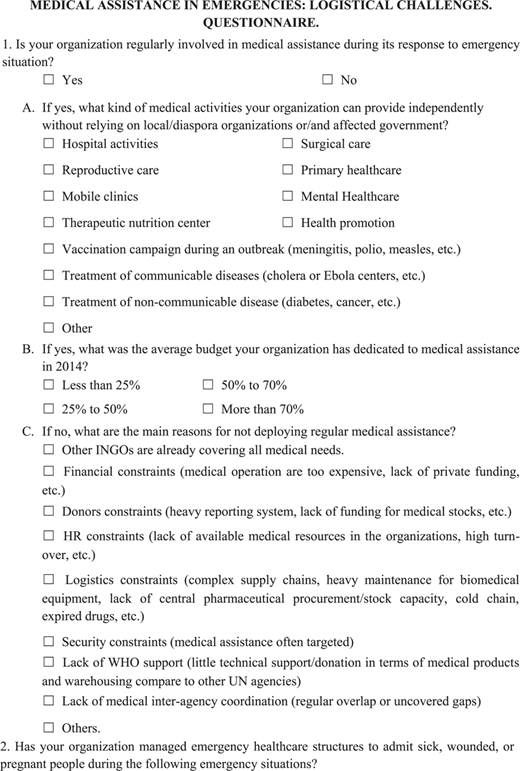
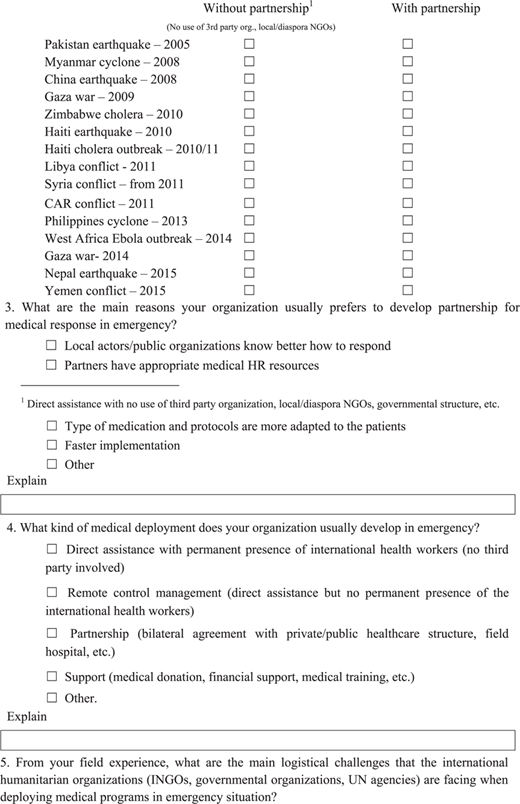
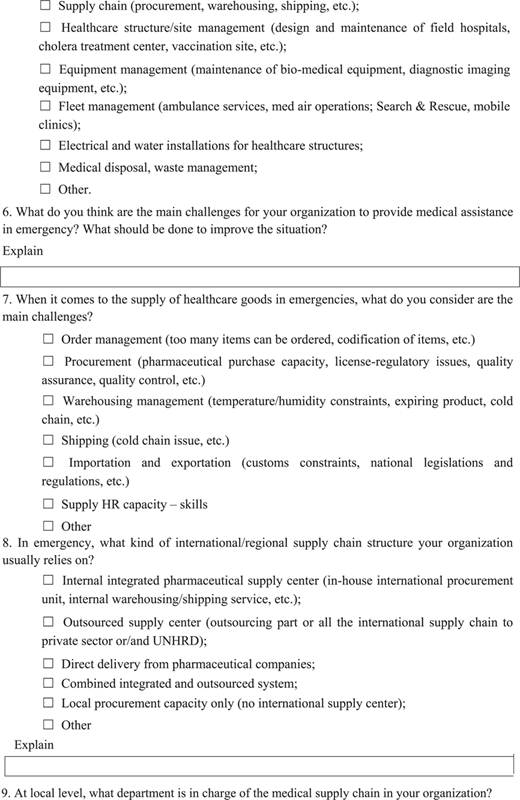
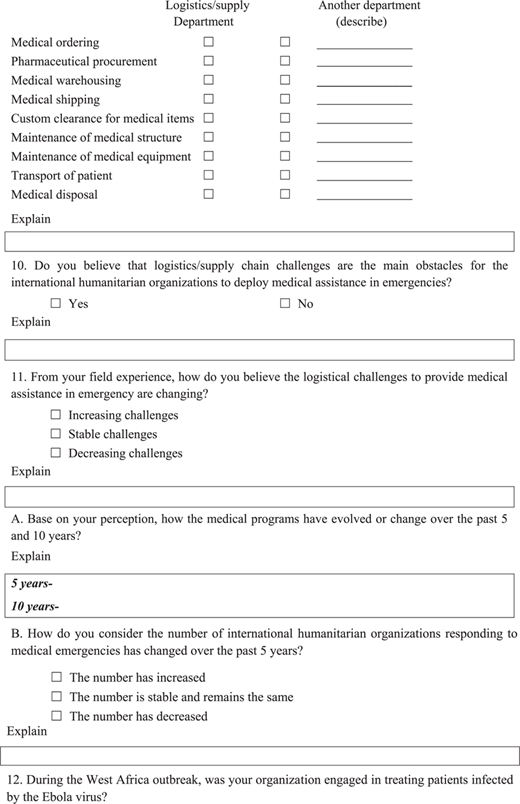
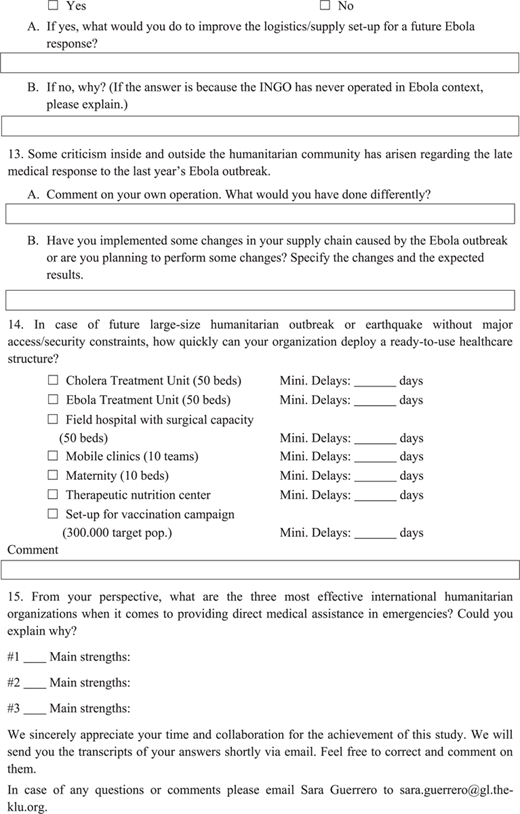
Data were collected through structured interviews conducted between April, 2015 and September, 2015. The Appendix presents the interviewer-administered questionnaire used during the interviews. The questions focus on the type and speed of the medical deployment in emergencies, their challenges and the position of the IHOs during the Ebola outbreak in 2014 as assessed by the interviewees. (The last set of questions related to Ebola was designed for the purpose of a medical crisis analysis discussed later in the paper and were added after realizing even from the first interview that due to the timing the interviewees were bringing up this specific case. Indeed, during the interviews before reaching the last set of questions related to Ebola all interviewees had raised this topic on their own). Prior to conducting the interviews, the questions were reviewed and edited by a humanitarian practitioner with many years of experience working in HMSCs in case of emergencies to ensure that the content was clear and understandable to the intended audience. Following interviewees’ feedback, the initial questionnaire was slightly modified, which included addition of two more questions (11.A and 11.B) regarding the experience of IHOs responding to medical emergencies. The average duration of an interview was 60 min.
4.2 Findings from the interviews
To get a general overview of the factors impacting the effectiveness of HMSC, we first present the results of the IHOs’ responses to: “From your field experience, what are the main logistical challenges that the IHOs (INGOs, governmental organizations, UN agencies) are facing when deploying medical programs in emergency situation?” What we observe from the interviewees’ responses is the complex interdependence among various factors affecting HMSC, and more specifically, how one factor might influence other factors. For example, one interviewed IHO describes the main HMSC challenge to be “stock management and maintenance is costly [donations], particularly medicines (expiring dates) need specific legal authorization from the MoH (Ministry of Health) [laws]. Custom clearance is another issue [laws], particularly for drugs and medicines which require cold chain” (IHO11). To capture this complex interdependence among the factors, in the following Sections 4.2.1–4.2.5, we present our findings organized by a set of common topics with related factors using bold font inside square brackets (as can be seen in the sentences above). Table II summarizes the list of factors corresponding to each common topic.
Summary of common topics and corresponding factors identified through the interviews
| Common topics | Factors |
|---|---|
| Assessment and Forecast of uncertain needs (Subsection 4.2.1) | Demand uncertainty |
| High-quality standards for medical programs and supplies (Subsection 4.2.2) | Laws Sector regulations Coordination Operating conditions Existing medical market Existing transportation systems |
| Qualified and experienced personnel (Subsection 4.2.3) | Existing workforce |
| Accessibility and security of the affected region (Subsection 4.2.4) | Access to beneficiaries laws Disaster characteristics Operating conditions Existing transportation system Coordination Mission donations |
| Governments’ policies, customs and regulations (Subsection 4.2.5) | Laws Sector regulations Existing transportation system Existing medical market Existing workforce Government Coordination (with government) Access to beneficiaries |
4.2.1 Assessment and forecast of uncertain needs
Little information is known immediately following a disaster. Thus, IHOs often have to make MSC decisions based on highly “erratic demand” (IHO2), and “the quantity of items to be ordered are impacted by the highly variable demand” (IHO8) [demand uncertainty]. Or, as IHO3 describes “demand [is] highly variable, [making it] impossible to be accurate in orders.” This demand uncertainty challenges procurement and prepositioning. IHOs employ various techniques to better estimate demand at different post-disaster stages. “The demand is analyzed based on past experience. For example, if a catastrophe in Nepal happened 2 years ago and another one 5 years, we analyze the number of injured people and calculate how many might need assistance in the current emergency. Furthermore, our Emergency Team is deployed to the affected country to calculate the number of injured people based on the current impact. Once the demand is calculated, we send kits with the needed requirements according to the report given by the emergency team” (IHO7).
4.2.2 High-quality standards for medical programs and supplies
Medical supplies are subject to extensive regulations, standards and guidelines, often exceeding those for other disaster response items (e.g. temporary shelter and food). As a result, a lot of IHOs cite challenges associated with meeting the imposed regulations and standards that hinder medical assistance. Referring to the list of external and internal factors that impact HMSC, the discussed challenges can be classified as one of the following factors: sector regulations, existing medical market, existing transportation systems, laws, operating conditions or coordination.
We observe a recent increase in standards imposed on medical operations. “WHO support countries to set up, monitor and control mechanisms as the number of teams deployed is increasing. If we compare to developed countries, to operate as a doctor requires official authorization from MoH (Ministry of Health) [laws]” (IHO11). The effect of these regulations is further amplified when various organizations (with different guidelines) within a sector coordinate their efforts. “Pharmacy management and quality of clinical practice and drug dispensing [are the main obstacles for the IHOs to deploy medical assistance in emergencies]: as we are working as partners of other NGOs, the capacity and quality of drugs prescription are different between organizations. For example, one organization can prescribe one specific drug and another one will prescribe other type of drug(s) [coordination]. This could lead to a higher number of stock and a waste of some medicines if they are not used before expiration.” (IHO10).
One frequent regulation imposed on IHOs’ operations in a foreign country is restriction on allowed import of medical supplies, which forces organizations to procure local supplies while insuring they meet a variety of standards. “In case we are not allowed to import [laws], we have to look for local suppliers that meet the specifications of quality [existing medical market]. My organization follows the quality standards of the WHO and the Food and Drug Administration (there should not be discrimination so, what is not good enough for the west is also not good enough for the rest) [sector regulations, laws]” (IHO4). “Sometimes we have pharmacists for stable in-country projects. They validate the medical suppliers [existing medical market]. For example in India you cannot import medical goods, you have to purchase locally, but you cannot purchase locally without meeting the standards [sector regulations, laws]. Thus, we have to rely on the local standards and negotiate with pharmaceuticals at local level to produce products with the standards we need [existing medical market]” (IHO6).
In addition to external regulations, some restrictions on transportation and storage conditions come from the very nature of the pharmaceuticals and their perishability. Thus, employment of temperature and humidity controlled vehicles and warehouses is critical to HMSC operations, which is often lacking in the field. “There are no proper warehouses in some of the countries we are present so we have difficulties controlling the temperature and the humidity [existing transportation systems]. In some places we even have issues with domestic electricity and we run the warehouse using generators [operating conditions]” (IHO5). “Private partner authorized by MoH (Ministry of Health) to operate a medicine warehouse (humidity, temperature, etc.) and distribute medicines. In charge providing medicines and ensure that expiring date is beyond six months [existing transportation systems, laws]” (IHO11).
4.2.3 Qualified and experienced personnel
Medical assistance operations rely on highly trained personnel with specific qualifications. “Finding sufficient numbers of experienced (yet creative) staff is also a challenge [existing workforce]” (IHO4). “I would include also human resources with appropriate skills [as the main obstacles for the IHOs to deploy medical assistance in emergencies] [existing workforce]” (IHO7). “[For example,] five years ago we started with complex surgery, as orthopedic activities that need the availability of experts [existing workforce]” (IHO6).
Unfulfilled need for qualified personnel who is able to provide technical support for medical equipment used in the field is another challenge. “For example, the current generators are double the size that the ones used ten years ago and we need expertise to run this type of liabilities [existing workforce] […] Also, 5 years ago we did not have X-rays in any project. Currently we need to have an expert in X-ray equipment moving around the world doing maintenance [existing workforce] (IHO6). Another interviewee also points out the challenges associated with X-ray machine maintenance. “The maintenance of medical equipment [is a challenge], since it requires skilled people to do it. For example, I had the situation in Congo when there were no technicians in the whole country that knew how to repair an X-ray equipment, so we had to bring someone from outside to repair it [existing workforce]” (IHO7).
4.2.4 Accessibility and security of the affected region
Access to beneficiaries is discussed by multiple interviewed practitioners. This challenge can be further instigated by the specific characteristics of a disaster and existing transportation system. “Logistical/supply chain processes can be challenging, however access is the main obstacle [access to beneficiaries]. When nothing works [it] is mainly because of access, when there is access, the rest is a challenge. However access depends on the context since you cannot compare Haiti with Yemen – natural disaster with armed conflict [disaster characteristics, existing transportation system]” (IHO4). Or “[the main challenge to providing medical assistance is] arriving at the right place where the medical assistance is needed [existing transport system]” (IHO9). Or “The real challenge in emergencies is to be ready as soon as possible, in other words, capacity of fast deployment [existing transportation system] […] and makes the difference between the capacity of an organization to intervene or not in a disaster. For example, if you are not in the site during the first 48 hours after an earthquake, then you completely missed the emergency. After a week it is not called anymore emergency but post-emergency and the nature of the support in post-emergencies is completely different. In this respect, you are not doing anymore surgery, you are doing vaccination” (IHO6).
Security issues [operating conditions] and restrictions imposed by government are additional causes cited by IHOs for limited access. “They [logistical challenges] are increasing because [of] security issues and access to the country, indeed, stakeholders as some governments are barriers stopping the help willing to be deployed [laws]” (IHO7). “[…] the government of the affected country can stop the assistance by not letting the items and the people to get into its territory [access to beneficiaries]” (IHO7). “Access is becoming more complex and we have to take more risks. This is the main factor stopping us. In some African countries, the security to access the population is a risk for us [operating conditions]. Furthermore, in some cases the governments do not allow the organizations to enter their countries. We also have issues getting visas and permits for expatriates [laws]” (IHO6).
A number of interviewed organizations explicitly discussed the challenges of operations in a territory with armed conflicts. The security of organization’s personnel and image of impartiality between the fighting groups often prevent them from carrying out any medical assistance. “We normally do not intervene when there is an armed conflict [disaster characteristics]” (IHO9). “As state actor, we prefer not to intervene directly in conflict settings as we are not a neutral, independent and impartial agency [mission, disaster characteristics].” (IHO11). “[Main medical supply chain challenge is] negotiation of access with parties involved in the conflict due to security issues [access to beneficiaries, operating conditions]” (IHO4). “If injured people are treated they can become a threat to the ones in powerful positions [disaster characteristics]” (IHO3).
As a result of armed conflicts and restricted access to the beneficiaries, IHOs sometimes decide to assist remotely by collaborating with other organizations present in the field. “If the crisis is happening in a country where we do not have any knowledge, then we could collaborate with other agencies to respond better [coordination]. However, if there is a risk of political conflict within the country, my organization does not collaborate with any agency [disaster characteristics, mission]” (IHO6). “For example with Syria, we work remote[ly] due to security issues and access.” (IHO7). However, one of the challenges of remote assistance is IHO’s ability to assess its impact in the area. “We have done [remote control management] in North Korea, we stopped because it was impossible to evaluate our donation to the population [access to beneficiaries, coordination, mission, donations]. In Syria we currently distribute medical items to the hospitals by remote control assistance without having international staff inside the country (mainly to avoid the risk of kidnapping) [operating conditions, coordination]. We did it also in Somalia without international presence” (IHO6).
4.2.5 Governments’ policies, customs and regulations
Governments and their regulations also have broader effect on the entire HMSC, as mentioned by nearly all interviewed organizations. “We face issues with importation in every single emergency. If the country does not declare state of emergency then the process of importation is too long to bring the goods on the right time and to succeed in the operation [laws]” (IHO6). “If the state of emergency has been declared, the material has ‘free access’ (regarding customs clearance) to enter the country [laws]” (IHO7). “In many countries, this [importation and exportation] is one of the biggest challenges. Some countries after 1.5 months in the aftermath of the catastrophe apply their normal importation rules so we have to pay taxes and normal regulations (payments not forecasted in our budget). This is happening in Nepal right now [laws]” (IHO5).
IHO10 further elaborated on the numerous aspects of challenges caused by the customs process. “Importation and customs processes become more complex in many countries. International suppliers need longer to ready shipments [laws, existing transportation system] […] Right now more countries are requesting more paper work to be done in order to import medical suppliers [laws] […].” “[For example,] health kits are available to be shipped in 48 hours by IDA [Foundation] and other wholesales we collaborate with [existing medical market]. However having the customs cleared in the affected country could take up to 15 days [laws]” (IHO10). “In cases when the affected country does not allow to import drugs [laws], then we must run a whole bidding process for local suppliers [existing medical market], taking as a base our internal regulations [sector regulations]” (IHO10).
Sometimes, the medical assistance from international organizations is intentionally restricted by the local government to protect its image. “After we start the deployment of medical items, the willingness of the authorities to accept the organization to enter the country is an obstacle [government]” (IHO6). “[The main challenges to provide medical assistance in emergency is] political resistance that impacts in access to the affected country [government, access to beneficiaries]. For example, the government of Zimbabwe denied access to my organization because there was a risk that the Ministry of Health might be criticized for not doing its job and thus, needed the help of an external organization” (IHO7). In other settings, the restriction level depends on the government’s ability to handle the coordination and management of the international relief community. “Because in an emergency situation the local authorities most of the time are overwhelmed and do not have the capacity or capabilities to deal with the number of international medical teams and that is why sometimes it [supply of healthcare goods in emergencies] is difficult [operating conditions, existing medical market]. However, it depends from country to country, for example in Haiti where there were no local authorities everything was easier. Philippines was more regulated and Nepal even more complicated because they have implemented more rules (in Nepal you needed 3 days administration before you get on the spot) [laws]” (IHO9).
A number of IHOs pointed out that their approach to overcoming the challenges of dealing with governments’ policies, customs and regulations is to partner with them [coordination with government]. “Sustainability of the organization when the authorities are not willing to let us to intervene (coordination with the governments to enter the country)” (IHO6). “[The main reason for our organization to develop partnership is] legal permissions that allow the organization to keep working in the country [laws]. In this respect, we sometimes partner with the government, specifically with the Ministry of Health using their governmental structures [coordination with government]” (IHO7). Another practitioner responded “stronger need to coordinate with local authorities [coordination with government]” (IHO11) to the question “How the medical programs have evolved or changed over the past 5 and 10 years?” There are also other benefits to collaborating with local governments. “Because the local actors are the authority, it is normal to coordinate with the local government [coordination with government]. When the local facilities are down, and we set up field hospitals, we always invite the local staff. The local people speak the language, have specific habits and sometimes they do not have the equipment or facilities anymore so we are there to help them [existing workforce]” (IHO9).
4.3 Perceived reasons of effectiveness in HMSC
During our interviews the participants were asked to identify specific organizations that are already effective in HMSC sphere and justify their perception of the organization’s success. Figure 3 illustrates histogram of the organizations identified by the survey participants. As one can see, MSF and ICRC have been identified as the first and second most popular responses, respectively, with Save the Children and Médecins du Monde being next equally popular answers. Responders’ justifications for selecting the same two organizations to be the most effective provide insightful information from the experts. In this way we also received valuable information regarding how practitioners define effectiveness.
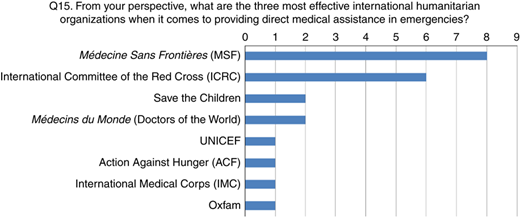
The “expertise and logistical capacity to respond in emergencies” has been identified by IHO6 as the main reason for MSF’s effectiveness in providing medical assistance. This viewpoint was also confirmed by other survey responders by stating that “emergency preparedness, reactivity and independence” (IHO7) and “speed, quality and good logistics” (IHO9) are what make MSF one of the most effective IHOs. In addition, “they [MSF] are able to access remote areas quickly, mobilize people and equipment at a rapid time scale” (IHO3). This ability to be positioned in the affected region in a timely manner is critical to immediate post-disaster response and is how the interviewees defined effectiveness. There are a number of factors identified by the interviewees that facilitate MSF fast deployment: “[MSF is a] big independent medical responder, also recognized as international pre-qualified vendor by the European Commission’s Humanitarian Aid and Civil Protection Department (ECHO) and USAID” (IHO5) [mission]. IHO2 attributed MSF’s “emergency response capacity” [capacity] and “highly standardized approach of medical kits system” [capacity] to their success. Some IHOs’ representatives also commended the organization’s “experience and capacity to work in conflict areas” (IHO2) [capacity] and “financial and logistical capacity and experience in high volatile contexts” (IHO11) [capacity]. In summary, MSF is characterized by the responders as a well-established and internationally recognized organization, which through standardization and logistical expertise is able to rapidly deploy to the affected region, regardless of the region’s remote or conflict status.
Similar factors were attributed to ICRC’s effectiveness in medical response. More specifically, IHO2 praises ICRC’s “highly standardized approach; range of resources and international standing; experience and capacity to work in conflict areas,” [mission, capacity] and IHO9 commends their “quality and logistics” [capacity]. In addition, ICRC has “longer experience in dealing with health emergencies” (IHO3) [mission] and the well-established status of the organization world-wide results in “[an] international mandate that allows them [(ICRC)] to enter very quickly into the affected country” (IHO7) [mission]. The financial stability of the organization is another factor acknowledged: “financial resources and warehouses” (IHO4) and “an economic/financial volume so they do not have funding constraints” (IHO7) [capacity]. Moreover, their “global network of people in-country and global expertise. Their local knowledge enables them to move quickly and deal with the emergency” (IHO3) [capacity]. This aspect of the operation is quite unique to ICRC and its organizational structure with the “previous presence on the ground through national societies and volunteers, world-wide network and ERU system” (IHO11) [capacity].
We observe a number of similarities between interview participants’ discussions of the factors presenting current challenges for effective HMSC operations and what makes a specific organization a successful medical response assistant. These similarities include the expertise of the IHO’s workforce, supply chain operations and capacity (mobilize personnel and equipment, standardized approach, emergency preparedness), access to beneficiaries, donations (independent, financial stability), mission (work in conflict areas, international mandate) and organizational structure.
4.4 Updated supply chain theoretical framework
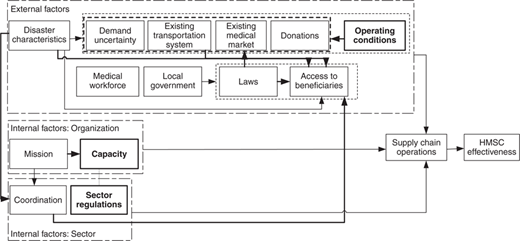
Using the findings from the interviews, we update the list of factors affecting the supply chain operations and the effectiveness of HMSC in disaster response. Figure 4 presents the updated diagram, where with bold font we include the additional factors and relationships between different factors.
4.4.1 External factors
Operating conditions have been brought up by the practitioners as an external factor outside the direct control of the IHOs involved in the disaster response:
Operating conditions: the specific conditions under which the HMSC operates, such as the emergency situation, the area’s infrastructure and security issues, affect the supply chain operations and effectiveness of HMSC. The status of the existing transportation system and the medical market depend on the country’s conditions even before a disaster occurs, and they can certainly deteriorate after its occurrence. Under such hard operating conditions the demand uncertainty increases, as well as the uncertainty of the donations.
4.4.2 Internal factors
Capacity and sector regulations are directly affected by the IHOs or the humanitarian aid sector:
Capacity: the mission of the IHO, for example the types of disasters that it responds to, directly affects IHO’s capacity to develop effective HMSC. IHO’s capacity depends on the financial resources, experience and skills of the available workforce and standardized processes that it developed.
Sector regulations: the IHOs operating medical programs follow the quality standards developed by organizations with expertise in HMSC. Examples of such quality standards are suggested by the WHO and the Food and Drug Administration.
5. Validation of the factors in case of medical emergencies: the Ebola case
The medical aspect of responding to non-medical disasters is secondary compared to the primary role that the MSC has when a medical emergency occurs, such as the cholera outbreak following the 2010 Haiti earthquake or the Ebola outbreak in 2014. While the focus of our study and interviews is on medical response following a disaster, rather than a medical emergency, given the timing of our interviews (April–September 2015), all participants discussed numerous examples specific to the Ebola outbreak in their efforts to elaborate and reiterate the factors affecting HMSC. Subsequently, our more in-depth analysis of the Ebola 2014 outbreak further validates the factors identified in Sections 3 and 4. In this section, we corroborate the factors impacting the effectiveness of HMSC by drawing a parallel between the findings in our earlier sections and cases of response to health related crises, by analyzing the public health literature and studying one of the biggest and most recent medical humanitarian disaster response (the Ebola crisis) with the help of the practitioners we have interviewed (Table I).
5.1 Medical emergencies: literature review
Ayer et al. (2014) separated infectious diseases into three categories: endemic, epidemic and pandemic and discussed the conditions under which a pandemic flu can occur, where the immunity that people have to the virus is an important factor [disaster characteristics]. The authors also present modeling of the spread of an infectious disease, intervention strategies and examples of work of public health in the USA in infectious diseases.
Zachariah et al. (2009) presented an overview of the OR/management science literature related to infectious diseases. One of the highlighted works is Wein and Atkinson (2009), which assesses the effectiveness of infection control measures on the transmission of pandemic influenza. Kaplan and Wein (2003a, b) and Kaplan et al. (2002, 2003) look at the emergency response and intervention strategies used for smallpox eradication. Alistar and Brandeau (2012), Alistar et al. (2011), D’Amato et al. (2000), Enns et al. (2011), and Shechter et al. (2008) modelled HIV infection transmission and the effectiveness of different intervention strategies, such as the antiretroviral therapy. Yarmand et al. (2014) studied vaccine allocation in case of infectious diseases.
Penchansky and Thomas (1981) discussed that the effectiveness of the MSC depends on accessibility, which refers to the spatial location of supply and demand over the network [access to beneficiaries, existing transportation system] and availability [existing medical market, capacity]. Lam et al. (2011) identified surveillance and planning activities to be also very important.
Ekici et al. (2014) used American Red Cross as a case in their study of food distribution planning during an influenza pandemic. They recognize the initial location and geographic spread of the disease as important characteristics, which are affected, amongst others, by the human travel volumes, the chance of an individual getting affected and the ease of the recovery [disaster characteristic]. They found that the effectiveness of the MSC depends on the preparedness, such as through prepositioning of the antiviral drugs [capacity], on the behavior of the victims and the population as a whole (e.g. voluntary quarantine [operating conditions]), and on the location of the medical centers [existing medical market].
5.2 The case of Ebola
The Ebola outbreak in western Africa was first officially reported on March 22, 2014 by the Guinea Ministry of Health. Liberia confirmed cases on March 31, and the Ministry of Health in Sierra Leone confirmed the first case on May 26, 2014 (MSF, 2015). Up until May 31, 2015, the Ebola had an average case fatality rate of 50 percent (WHO, 2015b) and had killed a total of 11,162 people in six countries (WHO, 2015a). Unfortunately there are no specific therapies or vaccinations approved for the cure of this illness, so during its treatment supportive care with essential medicines is provided to lengthen the life of the patient (WHO, 2015c). The healthcare workers assisting the patients, as well as cleaning and conducting safe burials, have to wear a personal protective equipment (PPE) (WHO, 2015d). The PPE consists of goggles or face shield, fluid-resistant medical/surgical mask or fluid-resistant particulate respirator, double gloves, protective body wear, waterproof boots and head cover (WHO, 2014a).
The response to Ebola outbreak required multiple supply chain activities (Infirri and Boulet-Desbareau, 2014). First, the Ebola care units, Ebola treatment centers, the work sites and the accommodation of the teams responding to it had to be set up, including provision for food, maintenance, electricity and water supply systems, as well as a waste disposal area. Ebola care units are “established as complementary approach to prevent transmission in affected areas at community level” (WHO, 2014b). An Ebola treatment center “is where initial triage is done and patients with suspected Ebola are strictly separated from those in whom the disease has been confirmed, and then treated” (WHO, 2014b). The IHOs’ logistics teams were also in charge of organizing the procurement of the supplies needed, the transportation of personnel, including the outreach activities, as well as the transportation of patients and needed supplies.
The magnitude of the disaster was unprecedented for a number of reasons. The lack of preparedness along with the limited available donations, the uncertainty in the demand of PPEs (DFID, 2014), the sudden increase in the PPE orders (to the level that the existing medical market and the transportation system could not cover) and the lack of coordination between the different stakeholders challenged the effectiveness of the HMSC. As multiple interviewed practitioners noted “In regards to the late response, I think it was not avoidable since no one was prepared for this type of emergency” [capacity on preparedness] (IHO3), “Yes, there was a late response regarding to the international preparedness in terms of funding allocation. Once the funds were allocated, by UN, governments, IHOs, the implementation was done very quickly. Especially because WFP/Logistics cluster provided free airlifts and Maersk free container shipments. There were some delays in the production of the necessary quantities (there was a very high demand) of PPE, but we were able to source for alternative products” (IHO8) [donations, capacity, existing medical markets, existing transportation system]. “We were too late, we were not prepared enough, and we were not familiar enough with the situation. We [have not] arrived until December 2014. We had never collaborated with the Ebola outbreaks in the past so we had no experience on this type of virus” (IHO9) [coordination].
Uncertainty in the demand of PPEs was caused by several factors. For example, the diagnose of infected people was problematic since the symptoms are similar to the ones caused by malaria, cholera and influenza (MSF, 2015; WHO, 2015c). Therefore, the quantity of healthcare goods needed for assistance was uncertain (DFID, 2014). This uncertainty provoked an underestimation on the demand and, therefore, an urgency in upcoming purchasing orders. Indeed, MSF reported that it was not until September 2014 that the orders were forecasted based on real consumptions (Infirri and Boulet-Desbareau, 2014). The shortage of PPEs affected the scale of response to the outbreak with some organizations being unwilling to open a new clinic or expand their operations if they did not have enough PPEs available for their healthcare workers. “During the Ebola response, the health security of the staff involved was a challenge. It was the first time of an outbreak of this size, which was also a challenge.” (IHO4) [operating conditions, disaster characteristics, capacity]. In addition, the difficulty of forecasting requirements based on uncertain demand provoked a bullwhip effect in the decentralized supply chain (POMS, 2015). This phenomenon caused the PPE manufacturers, such as DuPont to triple their production rate (Mcavoy and Kase, 2014).
The lack of global coordination among the humanitarian agencies regarding the supplies of PPEs is another challenge characterizing this response (Infirri and Boulet-Desbareau, 2014). Due to the nature of the virus, more than 50 percent of the protective gear is single use, and only the goggles, boots and aprons could be disinfected and re-utilized (Infirri and Boulet-Desbareau, 2014). This situation provoked a high level of demand that led to competition among supplier agencies and consequential price increase. The lack of coordination and poor information flow were raised by some interviewed practitioners. “Awareness and accurate information of the virus could have helped to bring the response faster and in a more effective way” (IHO5) [disaster characteristics, capacity]. “In the case of Ebola response, even if requires huge logistic capacity particularly to set up the compound/field hospital and WASH, the bottleneck was HR and a proper medevac system.” (IHO11) [coordination and existing medical market]. Furthermore, “in the response to the Ebola outbreak, the structure of the Ebola treatment centers previously validated was for smaller outbreaks” (IHO6) [existing medical market].
Most IHOs responding did not really have the background and experience responding to such outbreaks. “Apart from MSF, nobody was ready to such a huge outbreak. No rapid response mechanism was activated and from March to July the outbreak was growing slowly. Very limited presence of IHO in Guinea (also in SL and Liberia) avoided more voices alerting from the risk. When the situation exploded in July–August, three months were wasted. Then, new and innovative set-up/consortium were launched (military, NGO, laboratories, etc.). It was the first time that those configurations were taking place, so it took time to draft MoU and other agreements.” (IHO11) [mission and background, existing medical market and coordination]. “Training for the staff adapted to this specific disease. […] We did not have Ebola kits in place” (IHO9) [capacity].
Finally, the existing transportation system reached its limits in response to Ebola crisis since governments banned access to flights coming from the affected countries [laws, existing transportation system] (Infirri and Boulet-Desbareau, 2014). Furthermore, the arrival of large quantities of materials into airports with weak infrastructure challenged the teams of logisticians to come up with viable solutions to move the items quickly from the airports to the Ebola care units and treatment centers. In this respect, the USAID and the WFP built a system of five different warehouses located in strategic zones for the operations in Liberia (Han, 2015). In terms of storage, the DFID (2014) reported that “securing private contractor for in-country services such as facilities management has been a considerable challenge.”
6. Implications for research community
In addition to the large number of factors affecting HMSC in disaster response, as can be seen on Figure 4, one should note the intricate and complex interdependences among these factors. Thus, it is important to consider all of the factors in a holistic manner from a system-wide perspective, rather than individual entities. Furthermore, the diversity of the factors requires approaches that bring together experts from various fields of studies and backgrounds to be able to accurately capture each of these components. This establishes a need for inter-disciplinary research, beyond the more traditional approaches. While operation management researchers have made significant contributions to the problems laid out above, that is not enough to fully handle the complexities of the HMSC.
What is next? There are two main questions that one might aim to answer. How can one improve the operational system in the current environment faced by HMSC in a post-disaster setting? How can we change the operational environment to increase participation of IHOs in medical response?
As one studies the diverse and somewhat overwhelming number of factors affecting medical response, it is natural to wonder whether each disaster is so unique that there is not a “one-fits-all” approach to improving response operations. The question then becomes whether solutions should be customized to each individual disaster on a case-by-case bases, rendering case studies of the past experiences and decision-support models inadequate. In fact, the interviewed IHOs often referred to not being prepared to handle a specific disaster as reasons for not participating in medical response operations (see Subsection 5.2). However, when they were asked about some specific organizations that in their view are successful in medical response, independently of each other the overwhelming majority identified MSF and ICRC (Figure 3) as the leaders in the field. And when prompted to provide the reasons for their success, “being well prepared” and “extensive prior experience in operating in similar situations” were discussed. Thus, developing strategies to improve HMSC operations within the constraints of the current environment can have a significant impact.
The interdependency and complexity of the operating conditions require interdisciplinary teams in order to improve the operational environment. Such teams would require experts from political science to accurately capture the complexities of armed conflicts and roles of various governments tangent to the relief operations. The involvement of policy makers is critical to addressing the policy-type factors, such as access to beneficiaries and import restrictions, among others. Law experts with focus on medical patents and import/export regulations, as well as local laws, are also important to capturing some of the external factors identified above. Of course, medical doctors and epidemiology experts are needed to capture the complexities of medical needs and their potential progressions depending on the interventions and external factors that are beyond one’s control. Finally, the logisticians, civil engineers and operational leaders can accurately assess and advise on infrastructure and supply chain decisions.
Ultimately, the issues faced by the HMSC are complex and require an inter-disciplinary ream of experts to make a meaningful contribution to addressing this problem.
7. Conclusion
This study identifies the logistical challenges of the medical assistance in emergencies. A theoretical framework is developed based on academic and practitioner literature. The later includes the reports of the logistical challenges encountered during the response to the Ebola outbreak in 2014. The framework also comprises the challenges indicated during structured interviews with experts in the field of humanitarian and medical logistics. The logistical challenges are classified in external and internal factors to the management of an IHO.
Challenges outside the direct management of an IHO were classified as external challenges. Within the external challenges, laws and regulations are a great concern within the IHO. National regulations of importation of drugs are increasing and pushing the organizations to procure drugs in the local markets. The IHOs have to assure that the national suppliers meet the WHO standards of quality to avoid counterfeit and substandard products. Furthermore, a competition between IHOs occurs when the number of certified national wholesalers is not able to meet the demand, leading to price increase of the products.
Demand uncertainty is another external challenge that impacts humanitarian assistance. For example, during the Ebola response, uncertainty in the demand of PPEs greatly affected the decentralized supply chain. The manufacturers of PPEs did not produce the required number of items, and the subsequent lack of protective gears for the healthcare workers prevented some organizations from opening new Ebola treatment centers.
The weak infrastructure of the affected country exemplifies another external challenge. The IHOs commonly have to come up with creative solutions to bring the relief items to the beneficiaries.
Additional to external challenges are the internal challenges. The latter are directly managed by the IHO. Lack of expertise is a clear example. Capacity of fast deployment is also an internal challenge that impacts the effectiveness of HMSC. The medical assistance given in the first days after a natural disaster differs from the assistance provided after several weeks have passed. The cold chain exemplifies another internal challenge. The quality of the drugs could be highly impacted in cases where the cold chain requirements are not met; therefore, the temperature plays an important role during the transportation and storage of medications. The framework then leads to a discussion of research implications.
This research has some limitations. First, it is limited to 11 interviews with the field practitioners. This was necessary to get an expert opinion on the major logistical challenges of the medical assistance in emergencies; however, it limits the generalization of the findings. Second, the interviews were mostly conducted with IHOs. Further research needs to be extended to broader involvement of donors, governmental organizations and UN agencies.
References
Further reading
Appendix. Interviewer-administered questionnaire